News related to
trade

HONG KONG SAR – Media OutReach Newswire – 18 September 2025 – On the occasion of the 100-day countdown to the island-wide special customs operations of the Hainan Free Trade Port (FTP), the Hainan FTP Promotion and Policy Interpretation Conference was organized at the Hong Kong Convention and Exhibition Center on Sept. 9th. On Sept. 9th, enterprises from Hainan and Hong Kong signed agreements at the Hong […]

Curve DAO is considering a proposal to pre-mint 60 million crvUSD to support its new Yield Basis AMM, a mechanism designed to use leveraged Bitcoin pools to eliminate impermanent loss while boosting yield. The crvUSD would be borrowed and paired with BTC in liquidity positions rather than sold on the open market, avoiding direct dilution of circulating stablecoin supply.

Proposed by Curve founder Michael Egorov, Yield Basis is expected to launch with three capped pools, each for BTC wrappers, with deposit limits of about US$10 million per pool. The proposal claims that Yield Basis returns value to both veYB holders and to Curve / veCRV holders through trade-and-fee flows, vote incentives, and other revenue mechanisms.

However, the plan has met with resistance in Curve’s governance forums. Critics warn that pre-minting unbacked crvUSD introduces systemic risk, including potential for unmanageable supply growth, governance overreach, and threats to the peg of crvUSD. One commenter described the risk of minting “out-of-thin-air, unbacked, 60M crvUSD”. Some community members argue the DAO’s current permissions already allow arbitrary minting of crvUSD, a concern in light of past vulnerabilities.

Risk mitigation is a major topic of debate. Suggestions include turning the pre-mint into a strict credit line structure, with per-pool limits, a governance-controlled kill-switch, staged rollout starting with a single BTC wrapper, insurance or first-loss vaults, and better transparency via telemetry dashboards. Yield Basis proponents have responded by noting that the protocol has passed six audits to date, is running a Sherlock bug bounty, and intends to enforce caps at launch. They emphasise that crvUSD in Yield Basis is minted only when BTC is deposited.

Scale and revenue projections form a core of the discussion. The proposal argues that Yield Basis solves what’s known as the demand-side absorption issue for crvUSD: rather than minting tokens that are sold, pairing them internally with BTC leverages LP positions, creating supply sinks and revenue flows. Fee distributions—from arbitrage trades, stablecoin pair pools involving crvUSD, and trading commissions—are structured to benefit veCRV holders, veYB holders, and liquidity providers. The DAO ecosystem is slated to receive a share of YB token inflation for vote incentives in major stablecoin pools.

Stakeholders are closely watching governance dynamics. veCRV voting power is fragmented, voter turnout on high-stakes proposals is variable, and some members say optics could affect market confidence. The precedent set by this mint could influence how future protocol decisions are made.


Matein Khalid Mauritius, an island archipelago state in the Indian ocean, has long maintained extensive economic and cultural ties with the GCC. Thanks to tax treaties with India, Mauritius is a favourite domicile for wealthy Indian expatriate residents of the UAE and Saudi Arabia. GCC citizens and residents are prominent investors in some of Africa’s most expensive luxury beach resorts located in the island nation, where property […]

AIA Live Better Study highlights a critical gap between retirement aspirations and readiness, with social connections emerging as an unsung hero for a fulfilling later life. SINGAPORE – Media OutReach Newswire – 17 September 2025 – AIA Singapore today announced findings from the eighth edition of the AIA Live Better Study, which reflects the evolution of mindsets where retirement in Singapore is being perceived as a new […]

Vitol and Sunoco have taken delivery of the first U. S.-bound gasoline shipment from Nigeria’s Dangote refinery, marking a milestone in its global trade profile. The cargo, about 320,000 barrels, was loaded aboard the tanker Gemini Pearl, purchased from Mocoh Oil by Vitol and mostly resold to Sunoco, and discharged at Sunoco’s Linden facility in New York Harbor. Dangote’s refinery, the largest single-train facility in Africa with […]

Shiba Inu is drawing increased attention after the project’s team outlined how a prospective spot SHIB exchange-traded fund could enhance demand for its Layer-2 blockchain, Shibarium, and its gas/governance token, BONE.

Speculation about a SHIB ETF has intensified as SHIB retains a multi-billion dollar market cap, maintains listings on major global exchanges, and commands one of the stronger retail investor communities in crypto. The Shib Inu ecosystem team emphasised that while no asset manager or regulator has yet submitted an approved SHIB ETF, the token’s scaling infrastructure and utility features parallel those that aided Bitcoin and Ethereum. Analysts suggest these attributes may not only raise SHIB’s institutional legitimacy but also funnel value into Shibarium and BONE.

Shibarium, launched in August 2023, serves as Shiba Inu’s native Layer-2 network. Its design aims for fast, low-cost transactions while pushing gas fees to be paid in BONE. Any amplification of SHIB demand could indirectly drive more activity on Shibarium, reinforcing BONE’s utility. In commentary, the SHIB team has framed this as a rising inflection point: greater visibility for SHIB might translate into growing network usage, with BONE benefiting from both transaction volume and staking demand.

Events in the Shibarium ecosystem heighten the urgency. A flash-loan exploit allowed an attacker to purchase about 4.6 million BONE tokens, gain validator voting power, then execute a malicious state change to siphon assets from the Shibarium bridge. The team paused staking operations, moved certain funds to a secure multi-signature hardware wallet, froze the compromised BONE, and launched investigations with security firms. While the exploit dented confidence temporarily, it also drew attention to the importance of infrastructure security in scaling projects.

Market response to these developments has been mixed but leaned positive in some respects. BONE surged by about 40 % at one point after the exploit was revealed, before correcting. SHIB also saw modest gains as traders reacted to the possibility of more institutional participation. Some analysts caution, however, that regulatory hurdles and timing remain uncertain. A SHIB ETF would likely require clear alignment with securities laws in multiple jurisdictions, plus concrete backing from major asset managers.

Institutional exposure is being eyed not just via a direct SHIB ETF but through alternate paths: DeFi-oriented funds, layer-2 infrastructure products, or token baskets that include SHIB and BONE. Shibarium’s base of wallets—numbering over 21 million during earlier phases—and its integration with Ethereum and DeFi protocols are being cited as evidence that usage is scaling.

Saudi entities Hassana Investment Company and AviLease have formed a joint venture to offer aircraft-leasing opportunities, signalling a major step in the Kingdom’s drive to build up its aviation financing infrastructure under its National Aviation Strategy. Hassana will own a majority of the new venture; AviLease—backed by the Public Investment Fund—will supply aircraft servicing.

The joint venture’s launch includes a deal to acquire a fleet of ten fuel-efficient, new-technology aircraft from AviLease, all currently leased to carriers based in Saudi Arabia. The portfolio reflects a shift towards greener, more sustainable aviation assets.

Hassana, which manages funds for the General Organization for Social Insurance, sees this as a chance to deepen exposure to resilient asset classes that generate long-term cash flows. Hani Al-Jeha­ni, Acting CEO and CIO of Hassana, emphasised the partnership aligns with its mandate to pursue investments that offer sustainable returns while supporting national aviation goals.

AviLease, established in 2022 as part of the sovereign wealth fund’s expanding portfolio, is expanding rapidly. The company has placed large orders for new Boeing and Airbus aircraft and completed a sizeable financing facility earlier this year. It manages a global portfolio worth several billion dollars. Edward O’Byrne, CEO of AviLease, described the joint venture as foundational to scaling up Saudi Arabia’s aviation ecosystem and creating a platform attractive to both domestic and international investors.

Fahad Al-Saif, Chairman of AviLease, noted that the partnership marks one of the first private-sector-led steps into the aviation financing domain within Saudi Arabia, reinforcing the role of investment institutions in strengthening the sector.

The move supports Saudi Arabia’s ambition to draw 150 million visitors annually by 2030, up from earlier targets, and to enhance the economic multiplier effects of tourism, trade, and transport infrastructure. Aviation financing is seen as a key enabler in achieving these goals, since airlines often face high capital costs.

Advertisements

ADQ and Azerbaijan Investment Holding have signed a memorandum of understanding to pursue joint projects in the financial services sector, aiming to improve market connectivity and bolster the investment environment for sustainable economic growth.

The agreement follows their establishment of a joint investment platform in December 2023, under which both organisations committed equal capital to developing sectors such as agriculture, technology, pharmaceuticals and energy infrastructure across Azerbaijan, the UAE, and Central Asia—with possible expansion beyond those regions.

Mohamed Hassan Alsuwaidi, Managing Director and Group Chief Executive Officer of ADQ, said the deal exemplifies the strategy of deploying patient capital and leveraging investment know-how to stimulate economic diversification, foster industrial expansion, and enhance regional connectivity and competitiveness.

Ruslan Alikhanov, Chief Executive Officer of AIH, described the partnership as a key move to unlock new growth opportunities for Azerbaijan, emphasising that combining capital and expertise will support more diversified development and position Azerbaijan as a proactive actor in regional investment networks.

AIH, founded in 2020, manages strategic state-owned enterprises, enhancing governance, boosting operational efficiency and channeling investment into national priorities. ADQ is recognised for investing in critical infrastructure, global supply chains, and strategic sectors that align with broader national and regional economic transformation agendas.

Trade between the UAE and Azerbaijan has been strengthening, with non-oil trade rising 43 per cent year-on-year to reach about USD 2.4 billion in 2024. UAE investments into Azerbaijan have crossed USD 1 billion, reflecting the deepening economic partnership.

Nasdaq has mandated that listed companies obtain shareholder approval before issuing new shares to acquire cryptocurrencies, and must disclose fuller justifications and risk assessments for large-scale crypto purchases.

The exchange’s enhanced oversight aims to guard investors, particularly retail traders, from underestimating the high volatility and speculative nature of cryptocurrencies. Companies must now explain why they are buying substantial amounts of crypto and articulate the associated financial, regulatory and market‐risk implications.

Under the new requirements, issued by Nasdaq earlier this month, firms proposing to issue equity to raise funds for crypto purchases must secure affirmative vote from their shareholders. Non‐compliance may result in trading suspension or delisting. Nasdaq is also tightening disclosure obligations: entities must show how much crypto they hold, the rationale for those holdings, and how they plan to manage the risks.

Architect Partners reports that over 120 US‐listed companies have announced plans to raise more than US$130-billion this year for cryptocurrency acquisitions, nearly 100 of which are listed on Nasdaq. Many of these firms have adopted “crypto-treasury” strategies—allocating a significant portion of their balance sheets to digital assets. Some high-profile companies have already attracted scrutiny for the size of their holdings and for the effects on shareholder dilution.

Nasdaq justifies the changes by citing investor protection. Wholesale accumulation of crypto assets can dramatically affect stock price volatility. There is concern that some retail investors may not fully grasp how crypto’s price swings, regulatory uncertainty or tax treatment risk hurting returns, or causing losses.

Critics worry the new rules could slow innovation or deter companies considering crypto exposure. Companies accustomed to quickly buying digital assets may face delays because shareholder voting cycles are time-consuming and costly. Some argue that imposing blanket rules could punish well-prepared firms that already maintain strong governance, transparency, and risk controls.

Regulators such as the US Securities and Exchange Commission and the Commodity Futures Trading Commission have been increasing pressure on exchanges and firms around crypto disclosures, anti‐fraud measure and governance. Nasdaq’s move aligns with broader regulatory momentum in financial markets toward more oversight of firms with substantial crypto exposure.

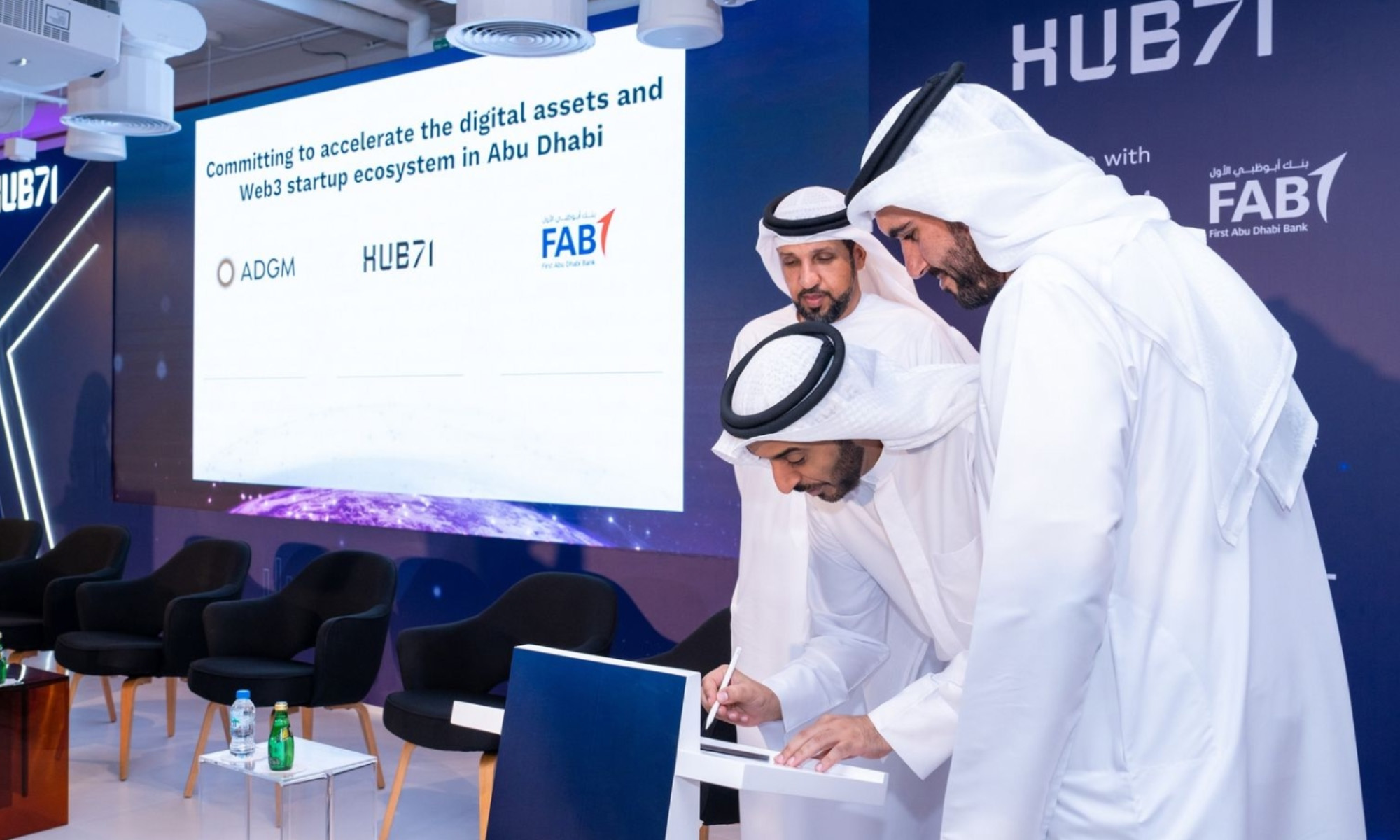
Abu Dhabi’s Hub71 has forged a strengthened alliance with the Japan External Trade Organization aimed at building deeper cross-border innovation, particularly in Web3, AI, spatial intelligence and sustainable tech sectors. Hub71 used its presence at Tokyo’s WebX and the Blockchain Leaders Summit to push forward new collaboration programmes and investment pathways.

At these events, Hub71 spotlighted a number of startups from Abu Dhabi—among them bitgrit, xMap, Aqua Development, Chainsight, Nodeshift, Bit2Me and 1Money—making connections with Japanese investors, corporate entities and ecosystem partners. The showcasing was closely aligned with Japan’s innovation priorities, including governance in blockchain and sustainable water solutions.

Key to the partnership is the launch of the J-StarX Programme, developed jointly by Hub71, JETRO and Elixir Capital, which will host seven Japanese Web3 startups in Abu Dhabi to facilitate scale-ups, market access, and ecosystem integration. Entrepreneurs in this programme will benefit from capital, mentoring, regulatory guidance and networking in the UAE’s tech environment.

Hub71 also assumed title-sponsorship of the Blockchain Leaders Summit in Tokyo, delivering the opening keynote. Executives emphasised the UAE’s position as an enabling region for innovators seeking overseas expansion, and positioned Abu Dhabi as a gateway for startups to penetrate Asia on one side and Middle East markets on the other.

Peter Abou Hachem, Head of Growth and Strategy at Hub71, stated that the collaboration underscores “the value of global connectivity”, and that Japan’s leadership in Web3 and innovation aligns with Hub71’s mission. He noted that through partners like JETRO, both ecosystems can unlock opportunities in market reach, talent exchange and frontier technologies.

By Nitya Chakraborty Europe which was the main centre of two world wars in the last century is showing signals of many of the features of the politics of the continent in the pre- second world period spanning 1925 to 1939 in political and military terms. Though in term of economy, the threat of great […]

Rhenus adds a new air freight gateway in Bangkok for in/outbound & transshipment from/to Southeast Asia The new airfreight gateway will also see the use of electric vehicles (EV) for sustainable first/last mile transportation usage The gateway strengthens Rhenus’ capabilities to connect businesses globally with new customer-centric solutions and vertical approaches BANGKOK, THAILAND – Media OutReach Newswire – 16 September 2025 – Leading global logistics provider Rhenus […]

A framework agreement has been reached between the United States and China that will shift control of TikTok to a US‐based ownership, while aiming to protect both national security and the app’s “Chinese characteristics,” Treasury Secretary Scott Bessent said after trade talks in Madrid. The deal, though lacking full disclosure of commercial details, is to be finalised when President Donald Trump and President Xi Jinping speak on […]

Australian legislation banning under-16s from holding social media accounts will permit platforms to make some errors when checking age, government and watchdog officials have clarified, as new trials show limits in technology and equity in age verification. The law, passed in November 2024, comes into force on 10 December 2025, obliging “age-restricted social media platforms” to take “reasonable steps” to stop users under 16 from creating or […]

HONG KONG SAR – Media OutReach Newswire – 16 September 2025 – Allianz Trade in Asia Pacific is pleased to appoint Hassan Omaish to the role of CEO for Hong Kong, South Korea and Taiwan (collectively Hong Kong Hub) with effect from 1 October 2025. He will succeed Edmond Lee who is retiring after spending 12 years with the company. Mr Omaish will be based in Hong […]

Arabian Post Staff India’s Rana Group has launched Erisha Smart Manufacturing Hub that will see the development of 150 large industries with an investment outlay of US$10 billion (Dh3.7 billion) at Al Ghail Industrial Area in Ras Al Khaimah, UAE, in the next five years. Rana Group has recently signed an agreement with Ras Al Khaimah Economic Zones (RAKEZ) to acquire the license and the industrial plots […]

Matein Khalid I go into purdah for Wednesday’s FOMC D-Day secure in the knowledge, based on CME futures probability that the most important central bank in the world will cut its overnight borrowing policy rate by at least 25 basis points on Wednesday. Yet there are also “known unknowns” with the Fed’s decision that will haunt and reshape the financial markets as well as America’s toxic politics […]

The Federal Reserve sets the price of money for the world’s largest economy, but the battle now unfolding in Washington is about far more than the next rate decision. President Donald Trump and his economic advisors are pushing to narrow the central bank’s mission and pull it closer to the White House. For international investors, this is not a distant Beltway turf fight. It’s a direct threat […]

BEIJING, CHINA – Media OutReach Newswire – 15 September 2025 – In Shougang Park, a former ironworks site in western Beijing, new technologies from AI to cloud computing and green innovation are on display amid the rusty blast furnaces and steel relics. The 2025 China International Fair for Trade in Services (CIFTIS), featuring digital innovation and intelligent technologies, is underway in the park, gathering nearly 2,000 enterprises, […]

Gold surged past levels not seen in over four months after growing confidence that the Federal Reserve will cut interest rates this month boosted demand for bullion, while silver climbed above $40 per ounce for the first time in over a decade.

Spot gold rose around 0.9% to roughly US$3,486.86 per ounce, reaching highs last marked in late April. US gold futures for December delivery also advanced, riding momentum from dovish comments by San Francisco Fed President Mary Daly and a U. S. appeals court decision that struck down most of former President Trump’s tariffs, which weighed on the dollar. Silver jumped about 2.2%, to near US$40.56, its best since September 2011. Other precious metals followed: platinum added 1.5% and palladium rose around 0.8%.

Investors have been digesting a weakening US dollar, cautious labour market indicators, and signals from policymakers suggesting the Fed could lower rates by 25 basis points. Some traders contemplate a larger cut, although forecasts remain varied. Demand for gold as a hedge has been reinforced by geopolitical uncertainty and concerns around the independence of central banking.

Analysts at ANZ and UBS have revised their forecasts for gold upward. ANZ now expects gold to average about US$3,800 per ounce by year-end, with upside toward US$4,000 by mid-2026. UBS similarly raised its year-end target, citing robust central bank buying, persistent inflation pressures, and the likelihood of further policy easing.

Silver’s rally, driven by industrial demand and tight supply, outpaces gold in percentage gains. ETF inflows have also favoured silver, reflecting investor appetite for high-beta exposure in the precious metals space.

JAKARTA, INDONESIA – Media OutReach Newswire – 15 September 2025 – Finex, an acclaimed Indonesian broker, announces the grand winner of the Get X2 promo, a 2025 New Year’s promotion celebrating skill, persistence, and rewarding trading. Finex started 2025 with an ambitious event: the Get X2 promo. Finexers were invited to showcase their trading skills while exchanging traded lots for valuable prizes. The promotion ended with the […]

Memecoins have surged across cryptocurrency markets as traders shift bets toward a probable interest-rate cut by the Federal Reserve and the possibility of U. S. altcoin ETF approvals. Bitcoin’s market share has declined by about 3.5% over the past month, while indexes comparing altcoin performance versus Bitcoin have entered so-called “altseason” territory.

Expectations that the Federal Reserve may reduce rates by 25 basis points later this month are currently priced in at over 90% by market observers using tools such as Polymarket and the CME’s FedWatch. A rate cut is widely seen as a trigger boosting risk-assets by lowering the comparative appeal of fixed-income securities.

The CoinDesk Memecoin Index rose roughly 7.1% over 24 hours, led by tokens like SHIB and BONE. These gains came despite Shiba Inu’s layer-2 network, Shibarium, being hit by a flash-loan exploit, which did not dampen investor enthusiasm.

Analysts point out that falling Bitcoin dominance, which reflects a shrinking slice of total crypto market capitalisation for the biggest token, often heralds a shift into altcoins. Indexes from providers including CoinMarketCap and CoinGlass have signalled this rotation of capital away from Bitcoin toward altcoins.

Institutional momentum is also tightening around altcoin exchange-traded funds; proposals for ETFs covering DOGE and TRUMP tokens are reportedly under consideration for U. S. markets in the final quarter of the year. Approval of such funds could draw both retail and institutional capital into memecoin-adjacent assets.

The India-Nepal border has begun reopening across several crossings following days of closure caused by violent protests in Nepal. Checkpoints at Sonauli, Rupaidiha, Kheri, Siddharthnagar and Balrampur have resumed partial movement of goods, under enhanced security and supervision by the Nepal Army.

At Rupaidiha’s Integrated Check Post, over 20 tankers loaded with petroleum, diesel, cooking gas and medicines have entered Nepal, helping to curb shortages of essentials. Nearly 1,000 trucks carrying foodstuffs, machinery and medical supplies await clearance amid prioritisation of life-saving and energy supplies. Market traders and transporters, impacted by steep price rises of commodities such as biscuits and cooking gas, have expressed relief. The border reopening comes amid tight controls, with curfews still in place in sensitive areas and heightened security patrols, including drone surveillance. Authorities warn that full restoration of trade and cross-border traffic will be gradual, given damage to infrastructure and logistical disruptions caused during the unrest.

Nepal is now under an interim government led by Sushila Karki, who took office after anti-corruption protests driven by Gen Z activists forced Prime Minister K. P. Sharma Oli to resign. Her appointment as the first woman to lead the government was confirmed after negotiations involving the president, military leadership and protest representatives. Parliament has been dissolved, and new elections are scheduled for 5 March 2026.

Protesters had demanded transparency, political accountability and an end to nepotism and corruption. The protests were triggered by a controversial social media ban, but escalated rapidly, resulting in more than 50 deaths and over 1,300 injuries in clashes with security forces. Many government buildings, including parliament and the presidential residence, were set ablaze. Curfews were imposed in Kathmandu and neighbouring districts while transport, banking and other services came to a standstill.

With the new government now operating, authorities in Nepal are prioritising restoring law and order and ensuring that those who died or lost property during the unrest receive appropriate investigation and accountability. International reaction has been largely supportive of the transition, with neighbouring countries invoking hopes of stability and peace.

By Nitya Chakraborty Prime Minister Narendra Modi has been talking of Neighbourhood First programme since he took over power in 2014. In these eleven years of his rule, India has got isolated from most of the countries who are its neighbours and belong to the South Asian Association of Regional Cooperation (SAARC). The latest developments […]
VISHNU RAJA
RYO YAMADA
HITORI GOTOH
IKUYO KITA