News related to
trade

Alona Shevtsova, CEO of the British fintech company Sends, will moderate a panel discussion at the Middle East Banking Innovation Summit (MEBIS) 2025 in Dubai. The session will focus on strategies for banking technology innovation and scale-up. Alona Shevtsova is a moderator of a panel discussion titled “Navigating the digital frontier: Strategies for banking technology leaders in a rapidly evolving landscape” at the Middle East Banking Innovation Summit […]

Northern Ireland stands to benefit significantly from growing economic and technological ties with India, as boosted trade, tariff relief, and joint research initiatives begin to materialise. A free-trade agreement between India and the United Kingdom promises a settlement that could deliver a multi-million-pound boost to Northern Ireland’s economy, particularly in advanced engineering, technology, and services. At the same time, enhanced academic and innovation partnerships are expanding the region’s opportunities.

Northern Ireland’s technology, services and manufacturing sectors are especially poised for growth under the new trade agreement, which includes substantial tariff reductions and near-elimination on key exports such as medical devices and engineering goods. Analysis shows that the deal is expected to generate around £50 million in economic benefit for the province. The agreement also unlocks access to India’s growing services market, opening new pathways for Northern Irish firms to scale internationally and enhance competitiveness.

Simultaneously, India and the UK have elevated their broader strategic engagement, having signed the Comprehensive Economic and Trade Agreement on 24 July 2025. This landmark deal opened India’s government procurement market—worth £38 billion annually—to UK businesses for the first time, offering additional opportunities for Northern Ireland firms in technology, infrastructure and innovation services sectors. Negotiations had culminated in May 2025, after extensive rounds that resolved issues including visas, whisky, automobiles and pharmaceuticals.

Beyond trade, there is growing momentum in research collaboration. Imperial College London has launched a global science hub in Bengaluru, aiming to deepen its research alliances across AI, climate resilience, food security and antimicrobial resistance. Such initiatives highlight the intensifying India–UK scientific partnership, which Northern Ireland research institutions could tap into—particularly given the province’s established strengths in digital innovation and software engineering, with major global tech firms like Microsoft, Nvidia and SAP already present.

The launch of a joint India–Ireland Joint Economic Commission, as agreed by Indian External Affairs Minister S Jaishankar and Irish counterparts, further sets the stage for elevated economic and tech engagement involving Northern Ireland. The commission aims to enhance trade, investment and technology linkages; discussions have also included cybersecurity, artificial intelligence, fintech, semiconductors and higher education cooperation. Moreover, a new Indian consulate in Belfast reflects deepening diplomatic and commercial engagement with the region.

Northern Ireland benefits not only economically but also in innovation ecosystems. The UK–India Technology and Security Initiative, launched in July 2024, emphasises strategic collaboration across seven core areas including semiconductors, AI, quantum, biotech and advanced materials. The initiative is being overseen and reviewed by senior officials from both nations, reinforcing a structured framework for bilateral tech partnerships and supply-chain resilience; Northern Irish tech organisations with capabilities in cybersecurity, data analytics and smart infrastructure are well-positioned to participate.

These developments dovetail with the broader UK-wide free-trade agenda and strategic dialogues. India is the United Kingdom’s fastest-growing trade partner, with goods trade up to £17.8 billion in 2024 and services trade exceeding £24 billion—both substantial increases from pre-pandemic levels. Yet, awareness among UK firms, including in Northern Ireland, remains low, with only a small fraction actively exporting to India, despite high willingness among Indian consumers to pay premiums for UK products. Areas such as advanced engineering, manufacturing, and innovation services remain ripe for expansion.

Northern Ireland’s existing attributes further reinforce its readiness. The region hosts a cluster of world-class tech operations, supported by local firms such as Kainos and FD Technologies, and connectivity to universities and innovation centres. Access to India’s large and diverse markets—combined with policy support under the free-trade agreement—sets the scene for emerging partnerships in fintech, med-tech, smart infrastructure, and green technologies.

Finally, though not specific to Northern Ireland, institutions such as the UK India Business Council provide advisory networks and policy advocacy that can help local businesses navigate market entry, regulatory frameworks, and collaboration models with Indian partners across sectors including digital innovation, life sciences and advanced manufacturing.

A looming technical hurdle has landed Bitcoin in precarious territory as veteran trader Peter Brandt cautions that the asset must reclaim the $117,570 level to avoid triggering a bearish reversal known as a double‑top formation. This warning comes amid growing supply pressure and heightened selling activity, marking a defining moment for market direction.

Bitcoin is grappling with the aftermath of a substantial sell‑off, attributed to a major “whale” sale of 24,000 BTC—worth an estimated $2.7 billion—which has intensified caution among traders. Brandt emphasised that such sizable supply events cannot be overlooked, stressing that market tops are often formed through supply or distribution.

Market observers note that Bitcoin’s price now hovers in a seven‑week double‑top pattern, a configuration often associated with impending declines if price resistance remains unbroken. Brandt maintains a strictly neutral stance, drawing attention to the chart’s technical signals rather than issuing a directional forecast.

On‑chain metrics compound the caution. The Taker Buy/Sell Ratio, a measure of buying and selling pressure, has fallen to its lowest point since May 2018—a worrying sign of sustained selling momentum. In addition, Bitcoin’s ability to reclaim $117,570 will play a pivotal role in determining whether bullish momentum holds or falters.

Yet, institutional backing offers a counterbalance to technical concerns. Spot Bitcoin ETFs have attracted considerable institutional inflows, indicating that Bitcoin’s role within global finance continues to strengthen. JPMorgan has also highlighted that Bitcoin appears undervalued relative to gold, estimating that fair‑value models place it approximately $16,000 higher, around $126,000, supported by decreasing volatility and growing corporate treasury holdings.

Technical signals remain mixed. While the double‑top pattern persists as a warning, some analysts underscore Bitcoin’s resilience. Swissblock Technologies, for example, asserts that on‑chain indicators show no decisive bearish divergence, suggesting that the broader trend could still favour upward movement. Others, including Jacob King of WhaleWire, point to past double‑top patterns—such as those in 2017, 2019, and 2021—that preceded steep corrections, reinforcing the need for caution if support fails. Should Bitcoin break above the $117,570 threshold, some analysts suggest that $125,000 or beyond could become realistic targets.

Meanwhile, market activity has remained volatile. Bitcoin is trading in the range of approximately $109,000 to $112,000, with intraday swings reflecting persistent uncertainty. Traders are closely watching for shifts in momentum, knowing that a break above resistance could reignite bullish sentiment, while failure could deepen losses.

Amid these developments, the broader narrative treads between technical fragility and growing financial legitimacy. As Bitcoin straddles this crossroads, its next directional move may be shaped as much by whether it can muster the strength to surpass $117,570 as by the strength of institutional confidence and macroeconomic tailwinds.

Dubai Chambers, together with the International Chamber of Commerce and its World Chambers Federation, introduced a new digital platform designed to elevate the performance of chambers of commerce worldwide. Unveiled at the 14th World Chambers Congress in Melbourne, the Chamber Benchmarking Tool offers structured data analysis, best-practice comparisons and a repository of global insights to help chambers advance operational standards.

The launch was witnessed by over 1,200 chamber officials representing more than 100 countries, reaffirming the tool’s role as a global platform for strategic exchange.

The Chamber Benchmarking Tool evaluates performance across seven principal functions of chamber institutions—spanning economic research and business intelligence, advocacy and policy representation, trade and investment facilitation, workforce training and support, networking, advisory services and legal or dispute resolution. These are assessed alongside eight dimensions of operational excellence, including strategic alignment, innovation, governance and financial impact.

Mohammad Ali Rashed Lootah, President and CEO of Dubai Chambers, described the initiative as emblematic of the emirate’s ambition to lead in institutional innovation, enabling chambers to elevate their value to business communities through streamlined services and resilient strategies. John W. H. Denton AO, Secretary‑General of the ICC, hailed the tool as a “milestone,” praising Dubai Chambers for their leadership in bringing the platform to fruition.

Built from research examining 19 diverse chambers, the tool rests on a foundation of empirical insight. It offers a data-driven framework of self-assessment, enabling chambers to compare their metrics against anonymised regional and global averages and receive tailored strategic guidance drawn from global case studies.

Developed in confidence under ICC‑WCF’s secure, cloud‑based infrastructure, the platform ensures high standards of data confidentiality. Only aggregated benchmarking results are shared publicly, with each chamber’s data kept private unless explicit consent is granted.

The tool assigns two access roles: the ‘chamber steward’, who leads data submission, assessment completion and case‑study creation; and ‘chamber staff’, who receive view‑only access to performance dashboards, insights and the best‑practice library.

Participation remains voluntary and open to all types of chambers—whether national, regional, thematic or international—particularly those connected to the ICC‑WCF network. Non‑members may apply for membership to gain access.

Chambers that perform well in given categories become eligible to develop case studies, using an integrated creator to document initiative details, global trends addressed, outcomes and lessons learned. Authors may enrich submissions with supporting documents, media, and contact details. Approved case studies are added to the global repository, fostering peer learning and strategic inspiration.

With an emphasis on continuous improvement, the platform allows chambers to refresh their assessments annually—or after major organisational shifts—and to update roles and responsibilities over time, ensuring the tool remains current with evolving strategic priorities.

Beyond benchmarking, the platform is a strategic intelligence system. Chambers gain access to emerging trends, visibility into gaps and growth opportunities, and direction for innovation and future readiness. It fosters cross‑border collaboration, data‑led decision‑making and collective excellence across the global chamber ecosystem.

A wave of profit‑taking sent the Nigerian equities market lower, with the NGX All‑Share Index falling by around 0.7 per cent to approximately 138,737 points on Tuesday—equivalent to a loss of nearly 0.67 per cent in market capitalisation, which dropped to about ₦87.8 trillion. The sell‑off was driven largely by pressure on heavyweight stocks such as Lafarge Africa and Transnational Corporation, while market breadth skewed negative, with far more declines than gains. […]

A federal district court in Virginia has ruled that Google unlawfully monopolised its publisher ad‑server and ad‑exchange markets, a decision that has now been met with a pause in Brussels, where regulators have deferred a long‑anticipated fine while awaiting developments in U. S. trade policy. A U. S. judge determined that Google secured illegal dominance in the open‑web display advertising ecosystem, by tying its ad‑server to its […]

By Nitya Chakraborty After successfully passing the test of strategic autonomy for India at the just concluded summit of the Shanghai Cooperation Organisation (SCO) at Tianjin in China on August 31 and September 1, Prime Minister Narendra Modi faces another test on Monday September 8 at the virtual meeting of the BRICS nations convened by […]
Advertisements

Growth in the United Arab Emirates’ non‑oil private sector held above the threshold indicating expansion in August, buoyed by stronger output, even as sales registered their weakest performance in more than four years. The S&P Global UAE Purchasing Managers’ Index edged up to 53.3 from July’s reading of 52.9, affirming ongoing growth but reflecting persistent underlying challenges. Despite the headline PMI maintaining expansionary territory, new orders – […]

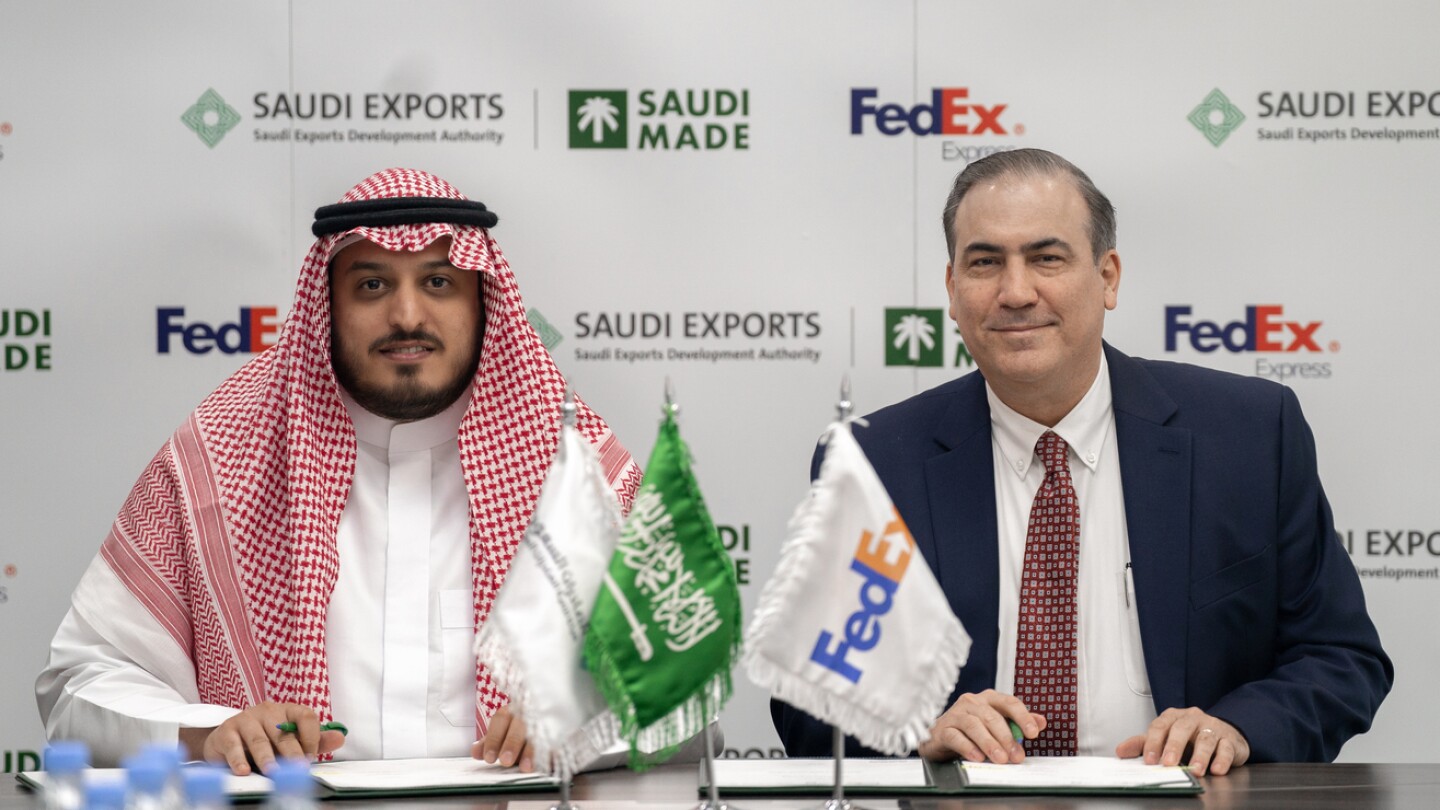
FedEx has gained an economic licence from Saudi Arabia’s General Authority of Civil Aviation to operate as a foreign air carrier, marking a significant expansion of its logistics footprint in the Kingdom. The move equips FedEx to conduct scheduled cargo services via King Khalid International Airport in Riyadh, with plans to operate 24 flights per month from early September 2025, establishing Riyadh as its regional hub linking continents.

The licence, granted on 2 September 2025, grants FedEx the ability to fly directly and to integrate air and ground operations across the Gulf Cooperation Council states. The announcement was made during a ceremony in Diriyah, attended by senior officials including Saleh Al‑Jasser, Minister of Transport and Logistics Services and Chairman of GACA; Abdulaziz Al‑Duailej, GACA President; and Dr Rumaih Al‑Rumaih, Acting President of the Transport General Authority, alongside FedEx executives.

FedEx introduced its first nonstop freighter service from the United States and Europe into Riyadh, operating six times a week with Boeing 777 aircraft. This route is the only express logistics connection offered by FedEx that bypasses other hubs, and continues onward to Guangzhou and Shanghai.

This direct link strengthens trade routes, particularly for high-priority sectors like energy, manufacturing, mining, healthcare and automotive, enabling temperature‑controlled, heavy, oversized or hazardous shipments. FedEx complements this airlift with its FedEx Logistics suite—air, road and sea freight forwarding, customs brokerage, and transit cargo support—aimed at enhancing supply chain resilience across the GCC, South Asia and Africa.

The company has developed end‑to‑end capabilities in the Kingdom, directly managing pickup, delivery and customs clearance through four gateways and four stations, supplemented by digital tools for shipping visibility and efficiency.

FedEx leadership emphasises Saudi Arabia’s role as a strategic logistics hub connecting Asia, Europe and the Americas. Richard Smith, Chief Operating Officer, International and CEO of the Airline at FedEx, cited the Kingdom’s infrastructure as a vital link in their global network. Kami Viswanathan, President of FedEx Middle East, Indian Subcontinent and Africa, underlined the integration of infrastructure, digital innovation and integrated solutions to aid Saudi businesses in competing globally.

These moves align closely with Saudi Vision 2030. The Aviation Programme aims to elevate Saudi Arabia’s aviation sector to the highest regional standards, targeting 330 million passengers, 4.5 million tonnes of air cargo, and air connectivity to 250 destinations by 2030. FedEx’s operations support these objectives by advancing industry capacity and reinforcing Riyadh’s prominence in logistics.

The expansion follows challenges earlier this year, when FedEx suspended economy parcel and freight services to the Kingdom from countries including India, Japan and the UK in March 2025. Service was halted temporarily, with FedEx noting it would resume “as soon as possible.”

Trade levels in Saudi Arabia have surged. The Kingdom posted a trade surplus of US$ 16.8 billion in Q1 2025, up 52 percent on the prior quarter, reflecting strong exports and demand for logistics infrastructure that FedEx is now well‑positioned to serve.

With strategic investments—including the creation of a global head office in Riyadh to oversee operations across Saudi Arabia, Bahrain, Kuwait and Qatar—FedEx reinforces its long‑term commitment to the region.

This expansion signals a departure from reliance on intermediaries or regional hubs outside the Kingdom; FedEx now controls its entire customs-to-delivery chain in Riyadh, laying the groundwork for faster transit, improved service reliability and deeper integration into global trade networks.

Emerging trends include rising demand for integrated logistics services, investment in digital tools for customs and tracking, and regional consolidation of supply chain operations. Key players alongside FedEx include Saudi authorities driving Vision 2030’s transport strategy, while GCC markets and commercial sectors increasingly rely on swift, dependable global connectivity.


Yunfeng Financial Group, a Hong Kong‑listed firm with ties to Alibaba’s Jack Ma, has acquired 10,000 ETH—valued at approximately $44 million—using its own cash reserves. The firm intends to list Ether as an investment on its balance sheet as part of a strategic shift towards blockchain-enabled finance.

Yunfeng’s move aligns with its broader blueprint unveiled in July, which sets Web3 technologies, real-world asset tokenisation and artificial intelligence at the heart of its expansion strategy. The company emphasises that including Ether among its strategic reserve assets supports tokenisation efforts and integrates its financial operations with Web3 infrastructure. The firm also plans to explore Ethereum’s uses in insurance services and decentralised finance applications, signalling ambitions beyond treasury diversification.

This step places Yunfeng alongside a growing list of publicly traded firms embracing Ether as a reserve asset. Notable peers include SharpLink Gaming, BitMine Immersion Technologies and Ether Machine, which collectively reflect a broader institutional enthusiasm for Ethereum amid increasing corporate treasury adoption. The trend echoes earlier Fortune 500 strategies for Bitcoin, with Ethereum emerging as a comparable asset in this evolving corporate playbook.

Ether’s market resilience underpins Yunfeng’s strategy. Despite subdued crypto market conditions, ETH continues to trade above the psychologically significant $4,000 threshold, noted by analysts as a key marker of investor confidence. Technical analysis by market watchers, including the chartist CryptoGoos, suggests ETH is maintaining an upward breakout trend from a falling wedge formation, with potential upside targets stretching to $6,000—driven by heightened institutional inflows.

Yunfeng’s approach signals a calculated embrace of digital assets that transcends short‑term speculation. By positioning Ethereum at the foundational level of its Web3 and AI strategy, the company is asserting the utility of the token within financial services, as well as its role as a long‑term reserve option. Ether holdings will offer an alternative to traditional fiat reliance while granting greater operational flexibility across emerging business lines.

EU regulators have suspended the anticipated antitrust penalty against Google over its advertising technology practices, prioritising trade negotiations with the United States. A modest fine, expected after a four‑year investigation sparked by a complaint from the European Publishers Council, has been put on hold as the EU awaits a commitment from Washington to reduce tariffs on European car imports from 27.5 percent to 15 percent.3 sources familiar with the […]

A sharp rebound in the Taiwan dollar has intensified financial pressure on exporters, undermining earnings and dampening competitiveness in overseas markets. The appreciation, driven by a blend of strong trade inflows, hedging activities, and speculative pressures, has prompted swift policy attention and heightened concern among industry observers.

Taiwan’s currency surged to its highest level since early 2022—landing near NT$29 per U. S. dollar—amid a weakening U. S. dollar and heightened equity inflows. The rally, measuring around 12 per cent so far this year, has inflicted renewed strain on leading exporters, including Taiwan Semiconductor Manufacturing Company and Foxconn, which report substantial margin erosion when the Taiwan dollar strengthens.

Exporters are finding that every one‑unit appreciation of the currency can slash revenue by roughly 3 per cent and chip away at gross margins—Foxconn estimates its margins dip by 0.1 percentage point per NT$1 gain. Smaller, traditional manufacturers—especially machinery producers—are even more exposed, with limited hedging capacity and tighter operating margins.

Life insurers are not spared. Many hold a sizable portion of assets in U. S. dollars—Fubon Financial, for example, has about 70 per cent of its portfolio in foreign holdings—and face amplified foreign‑exchange losses as the local currency climbs.

Regulators are treading a delicate line. Taiwan’s central bank has urged restraint, discouraging speculative trades through vehicles such as ETFs, and cautioning against exaggerated market commentary. It has also issued warnings to foreign investors who may be circumventing capital controls by not deploying inflows into domestic securities—a move intended to curb volatility without triggering accusations of currency manipulation from Washington.

Policy shifts and trade developments elsewhere may be compounding the pressures. Analysts observe that rapid appreciation could weaken Taiwan’s offerings amid looming U. S. tariffs and a lack of definitive agreements with Washington. Others point to structural shifts: Asian economies, Taiwan included, are unwinding dollar‑heavy positions amid growing concern over U. S. policy and economic fragility. One commentator dubbed this a “reverse Asian crisis,” pointing to a regional transfer of purchasing power back to local currencies.

Reactions continue to unfold across sectors. The logistics industry, for instance, is grappling with imbalances in shipping flows and heightened forex risk; yet it also sees potential growth through import logistics and value‑added FX‑savvy services for clients.

Altogether, Taiwan confronts a complex convergence of forces: strong export volumes feeding currency strength, speculators and hedgers accelerating the appreciation, and policy efforts seeking to stabilise markets without undermining global credibility. With export earnings vulnerable, insurers weighed down by FX losses, and the broader economy exposed to tariff dynamics, the coming months could heighten the stakes if the exchange rate remains elevated, especially in the absence of agreements that mitigate trade frictions.

Journalistic due diligence underscores that the data and figures—such as the currency’s 12 per cent gain, margin impacts for Foxconn and others, and the insurers’ USD-exposure ratios—have been corroborated across reputable sources. Reporting maintains a balanced perspective, acknowledging both the financial risks and policy responses shaping Taiwan’s export-heavy economy.

Greenlogue/AP Dubai is gearing up to host the 11th World Green Economy Summit on 1–2 October 2025 at the Dubai World Trade Centre, where green finance will sit at the forefront of global climate discussions. Under the theme ‘Innovating for Impact: Accelerating the Future of the Green Economy’, the summit will convene policymakers, investors, business leaders, academics and innovators to mobilise capital toward equitable, sustainable growth. Organised […]

By T N Ashok NEW YORK: For the first time since 2018, Indian Prime Minister Narendra Modi landed in China in late August 2025, greeted warmly by President Xi Jinping for the annual Shanghai Cooperation Organisation (SCO) Summit. Alongside Russian President Vladimir Putin, the trio projected a striking image of solidarity—three leaders from the world’s […]

Canada is advancing its Arctic security and defence strategy by expanding collaborations with NATO’s newest members—Finland and Sweden. As the geopolitical landscape shifts, Ottawa is actively moving beyond traditional reliance on the United States to forge deeper military, industrial and technological ties with Nordic allies, reinforcing its sovereignty and resilience in the High North. The Honourable Anita Anand, Minister of Foreign Affairs, has formalised a Canada–Finland strategic […]

Banque de Commerce et de Placements, the Swiss private bank based in Geneva, has elevated its presence in the Middle East by transforming its Dubai Representative Office into a fully operational branch under a Category 4 licence from the Dubai Financial Services Authority within the Dubai International Financial Centre. This development empowers BCP to offer comprehensive advisory services across the region. The move reflects BCP’s dedication to expanding […]

Launch of RJJ Hotels and multiple agreements position Malaysia as the hub for regional tourism and investment growth KUALA LUMPUR, MALAYSIA – Media OutReach Newswire – 2 September 2025 – Malaysian-owned hospitality group, RIYAZ International Sdn. Bhd., has formalised a strategic partnership with Jin Jiang Hotels China Region to launch RJJ Hotels Sdn. Bhd. and expand its footprint across Southeast Asia and the wider Asia Pacific region. […]

WorldShards has revealed that its Token Generation Event will take place on 5 September 2025, aligned with its debut listing on Bybit’s Spot market. The collaboration has been formalised through a partnership with Bybit, the world’s second‑largest cryptocurrency exchange by trading volume, setting the stage for the $SHARDS token to embrace broader market accessibility.

The partnership entails a Bybit Megadrop promotion, offering participants opportunities to stake USDT or MNT and earn from a 60 million SHARDS prize pool. This initiative runs from 5 to 9 September and is intended to support early liquidity and user engagement.

WorldShards is a downloadable Web3 MMORPG developed by Lowkick Studio, rooted in a fantasy sandbox universe filled with crafting, exploration, and dynamic role‑playing. It blends blockchain elements such as NFT‑authenticated content into its interactive gameplay. The $SHARDS token adheres to a “fair launch” model, with no allocations reserved for the development team or early investors—enhancing perceived transparency and community ownership.

Ahead of its TGE, WorldShards will offer a 30‑day free access period to new players. Those who remain active for at least 25 days within that window will unlock full and permanent access to the game at no additional cost. This incentive is limited to new accounts and is designed to accelerate early engagement.

WorldShards operates on a fixed total supply model, capped at 5 billion tokens. Tokenomics are structured to distribute 60 percent for player rewards and 25 percent for ecosystem liquidity, with the remainder supporting broader community initiatives; remaining tokens are vested over six years to safeguard economic equilibrium.

Industry observers note that Bybit’s participation brings critical market exposure, offering access to its global user base—which exceeds 70 million accounts—and enhancing $SHARDS’ market liquidity and visibility. This positions $SHARDS amid the growing momentum of GameFi, where blockchain technology merges with immersive gaming economies.

While specific user metrics for WorldShards remain undisclosed, broader gaming industry data suggests a robust opportunity: in 2025, there are an estimated 3.43 billion active online gamers, with mobile gaming accounting for more than half of platform usage. Regions such as the Middle East, North Africa and Turkey have displayed notable growth in mobile gaming revenue, signalling favourable markets for adoption.

Lowkick Studio, the developer based in Abu Dhabi and founded in 2022, comprises industry veterans formerly involved in games such as World of Tanks and Allods Online. The studio’s trajectory includes partnerships with Abu Dhabi Gaming and OpenLoot, rapid community expansion exceeding half a million members, $8.6 million in NFT sales during 2024, and over 600,000 unique active wallets prior to TGE.

Within the WorldShards ecosystem, $SHARDS serves multiple functions—including item upgrades, rarity enhancements, rift processing, stat re‑rolling, and external trade—solidifying ties between in‑game progression and broader market dynamics.

Spot gold surged past the $3,500 mark, reaching new record highs amid mounting anticipation of Federal Reserve interest rate reductions and a weakening dollar. Bullion briefly traded near $3,508 an ounce, extending its year-to-date gains to around 30%, as markets grow increasingly uneasy over central bank independence and geopolitical stress.

Markets are pricing in a high likelihood—approaching 90%—that the Fed will proceed with a 25-basis-point cut at its upcoming meeting in mid-September, following dovish signals from Fed Chair Powell and softening macro data. A key US non-farm payrolls release this Friday is expected to reinforce the case for monetary easing, given signs of cooling in the labour market. Lower rates would reduce the appeal of interest-bearing assets, boosting demand for non-yielding gold.

The US dollar’s decline has played a significant role in elevating gold’s appeal, making bullion more attractive to global buyers. Safe-haven flight intensified after mounting investor concern regarding the Fed’s autonomy, stemming from high-profile political pressure, including moves to dismiss Governor Lisa Cook—actions perceived as jeopardising monetary policy credibility.

Investor sentiment has translated into tangible market flows: holdings in gold-backed ETFs have climbed steadily, piling pressure on available stockpiles and raising lease rates, especially in London’s bullion markets. Central banks, including those in emerging economies, continue to accumulate gold, adding institutional momentum to the rally. As a result, gold is increasingly viewed as a strategic hedge amid persistent inflation uncertainty, trade tensions, and an unpredictable global political landscape.

Strategists at UBS have noted that softer economic indicators, lower interest-rate environments, and elevated macro-geopolitical risks enhance gold’s function as a portfolio diversifier. Their outlook anticipates continued upward price movement into the coming quarters. Likewise, Goldman Sachs has raised its year-end target, citing strong central bank demand and ETF inflows despite broader market volatility.

As the first event held at the newly inaugurated Vietnam Exposition Center in Hanoi, the exhibition titled “80 Years of Independence – Freedom – Happiness” has become a symbol of a modern, ambitious, and globally engaged Vietnam. HANOI, VIETNAM – Media OutReach Newswire – 2 September 2025 – Anyone who finds themselves in Hanoi these days can sense that history is not just something written on faded […]

HUZHOU, CHINA – Media OutReach Newswire – 2 September 2025 – A series of activities highlighting ecological progress were held on August 15th as the country embraces its third National Ecology Day. The focus is on protecting the ecological environment, addressing climate change and how China’s meteorological departments are taking action. This year it was Yucun Village, nestled in Anji County of Zhejiang Province in eastern China […]

Lunate has unveiled a new thematic ETF offering, marking the first of its kind in the region, aimed squarely at quantum computing—a field rapidly reshaping sectors from pharmaceuticals to cybersecurity. The Boreas Solactive Quantum Computing UCITS ETF, developed under Lunate’s newly introduced Boreas range, is set to debut on the Abu Dhabi Securities Exchange on 22 September under the ticker QUANTM.

The fund traces the Solactive Developed Quantum Computing Index and encompasses 25 firms spanning pure-play quantum specialists like IonQ and Rigetti, alongside technology giants at the vanguard of quantum research such as Microsoft, Nvidia, and IBM. Lunate, acting through its regulated affiliate in Abu Dhabi, is spearheading the investor-facing programme, which integrates active thematic research with transparent, index‑based selection.

Geir Espeskog, an industry veteran, heads the specialist team behind the Boreas suite, reinforcing Lunate’s intensified investment in its ETF platform. Following the addition of this thematic ETF to its portfolio, Lunate will manage a total of 19 offerings, combining traditional and thematic strategies.

ADX’s Group Chief Executive, Abdulla Salem Alnuaimi, highlighted the significance of this launch, noting that QUANTM will serve as the 17th ETF listed on the exchange. He underscored its value in granting investors direct access to global leaders in quantum computing, including Alphabet and Amazon.

Solactive, the index provider, described the collaboration as a milestone both for itself and for thematic ETFs in the region. Its ARTIS® natural language processing power plays a central role in categorising companies across hardware, software & algorithms, and communication & sensing segments—applying a rank-weighted methodology that ensures balanced exposure within the index.

Market trends underpinning this launch are compelling. The global thematic fund arena has nearly doubled in size over five years, reaching roughly $562 billion. In the U. S. and Europe, thematic ETFs have also surged; by early 2025, the U. S. counted 473 listings, while Europe hosted 748, with assets concentrated in tech-heavy strategies such as AI and digital infrastructure.

Investors may subscribe to QUANTM between 10 and 16 September via six authorised participants or the ADX eIPO portal. The fund will carry a total expense ratio of 0.49 percent.

By Nitya Chakraborty Prime Minister Narendra Modi’s bilateral talks with the Chinese President Xi Jinping on Sunday at Tianjin in China on the sidelines of Shanghai Cooperation Organisation (SCO) summit have sent some very positive signals which may herald the evolution of an independent foreign policy of India voicing the interests of the Global South. […]

SINGAPORE – Media OutReach Newswire – 1 September 2025 – Leading health insurance provider AIA Singapore today announced that it has engaged Singapore Airlines Academy, the training arm of Singapore Airlines, to develop a curated talent development program for AIA Singapore. This initiative will see AIA Singapore collaborating with Singapore Airlines Academy to create a series of workshops focused on enhancing customer experience (CX) capabilities and building […]

VISHNU RAJA
RYO YAMADA
HITORI GOTOH
IKUYO KITA