News related to
trade

Australia is rolling out a law that will bar under-16s from holding or creating accounts on major social media platforms — a first for any democracy — setting a possible precedent for other countries to follow. From 10 December 2025, services such as Facebook, Instagram, TikTok, Snapchat, YouTube, Reddit, X, Threads, Twitch and Kick must ensure no user under 16 is registered, or face fines of up […]

Forecasts from major US banks suggest the bull market will remain intact in 2026, with some projecting the S&P 500 above 7,500 by year end. The latest Financial Times survey, covering nine major investment banks, reinforces this confidence with an average forecast of roughly 10% upside from current levels. I understand why that optimism exists. The US economy continues to outperform expectations, corporate earnings have held up, […]

Sui’s token structure is drawing heightened attention as analysts warn that the network’s locked supply and insider concentration could influence market behaviour during the next phase of token distribution. A new assessment suggests that questions around the durability of Sui’s rally persist despite the project’s growing activity in decentralised applications and its positioning as an alternative to high-throughput chains. The concerns have surfaced as market participants look for signals on whether Sui could mirror the type of extended rally seen in Solana during its strong periods of expansion.

Sui’s token model includes a large quantity of locked tokens that are programmed to enter circulation according to a long-term schedule. Data compiled by blockchain monitoring platforms indicates that more than half of the total supply, around 50.57 per cent, remains locked. The release of these tokens is staggered, but analysts note that the size of the locked tranche means the market will continue to grapple with questions about absorption capacity and price impact. A cohort of early backers and core contributors holds about 15.3 per cent of the supply, a figure that has prompted market watchers to examine whether insider allocations could add to selling pressure once vesting windows open.

Developers behind the network emphasise that the emissions framework was designed to support long-term decentralisation and sustainable staking rewards. They argue that the programme aligns incentives for validators, node operators and builders working on the Layer-1 blockchain. However, the scale of the locked supply and the pace at which it is due to unlock have remained central to external evaluations, especially against the backdrop of aggressive capital rotation across digital asset markets.

Sui has promoted itself as a platform capable of handling high transaction throughput through its parallel execution model, distinguishing itself from chains that rely heavily on sequential processing. The project has advocated for its ability to support complex applications, with gaming, asset tokenisation and digital commerce cited as core areas of growth. Activity on the network has picked up over multiple trading cycles, with decentralised exchanges and gaming protocols playing a visible role in boosting usage. Even so, market analysts caution that network adoption alone cannot insulate the token from structural risks tied to large unlocks.

The comparison with Solana has intensified as traders search for the next high-growth ecosystem. Solana’s expansion was driven by rising developer activity, strong venture backing and an improving macro climate for risk assets, elements that contributed to a prolonged appreciation in its token price. Some traders argue that Sui possesses a similar mix of technical ambition and ecosystem investment. Others counter that Solana’s earlier supply dynamics were markedly different, with less pronounced unlocking over short intervals. These observers state that expectations of a parallel trajectory should be tempered until Sui demonstrates a firmer balance between token issuance and organic demand.

Several research desks have highlighted that tokenomics alone do not determine the long-term trajectory of a blockchain project but can exert considerable influence during early growth phases. Analysts tracking the project have pointed to previous unlock waves that resulted in more volatile trading sessions. They note that liquidity conditions matter significantly when large quantities of tokens transition from locked to tradable status, particularly during market downturns. Market participants monitoring derivatives markets also report that funding rates and open interest data reflect cautious positioning around major unlock dates.

The project’s foundation continues to emphasise builder incentives, community grants and ecosystem expansion. Grants directed towards game studios, consumer applications and infrastructure tools have created steady interest among developers seeking alternatives to more congested chains. Daily active accounts and transaction counts have shown periodic spikes, although interpreters of blockchain data stress that differentiating genuine usage from opportunistic activity remains essential when evaluating the long-term strength of an ecosystem.

A growing number of young people in the UK are trading ambition for a university degree in favour of apprenticeships and vocational training in skilled trades — a shift driven by worries that artificial-intelligence tools will undermine the viability of many white-collar careers. At London’s City of Westminster College, enrolments in plumbing, electrical work, construction, carpentry and similar hands-on courses are climbing sharply. Among those heading to […]

A curious experiment in automated finance has produced a result that is raising questions about the limits of machine-driven markets. A trading tournament built to showcase the sophistication of competing AI systems has ended in a collective stumble, with every participating model posting losses. The outcome is fuelling debate over whether advanced algorithms are as market-ready as their creators claim, and whether any model can reliably navigate […]

Manchester City and Etihad Airways unveiled a new immersive content piece, “Lights Out”, which places players Erling Haaland, Rayan Aït-Nouri and Nico O’Reilly inside a virtual version of the Yas Marina Circuit, blending advanced augmented-reality highlights and player-tracking data to re-imagine key moments from Manchester City’s season. The launch coincides with heightened interest in the 2025 Etihad Airways Abu Dhabi Grand Prix, adding a fresh digital spectacle to build fan excitement ahead of one of motorsport’s biggest weekends.

This marks the latest collaboration between the club and airline following their “Beyond Borders” campaign earlier this year, which first brought match highlights into stylised virtual worlds tied to Etihad’s expanding global destinations — notably highlighting new routes including Krabi, Hanoi and Sumatra. The “Lights Out” video replicates defining plays and celebrations from the 2024/25 campaign such as deft finishes and memorable goals, now reframed within the futuristic circuit environment of Yas Marina.

Beyond just replaying match footage, the content integrates virtual storytelling features. Fans witness Haaland’s trademark celebration as a robotic animation, while Aït-Nouri appears to race through Hanoi’s iconic Train Street — a nod to Etihad’s global network and its commitment to linking sport with travel experiences. This blend of sport and travel marketing reflects a broader trend among major clubs and sponsors seeking to expand engagement beyond traditional media into immersive digital formats.

For supporters of the Abu Dhabi Grand Prix, the timing amplifies the atmosphere surrounding the 2025 season finale. Organisers say this edition will be the largest yet, with enhanced fan experiences, expanded cultural access and expected turnout surpassing past years. The convergence of a high-stakes motorsport finale and a high-tech football release highlights how sports entities are increasingly cross-pollinating content across disciplines to tap into global fan bases.

Cybersecurity officials have issued a coordinated alert on a malware strain known as BRICKSTORM after identifying a wave of intrusions targeting VMware ESXi hosts and Windows environments across several sectors. The advisory, released by national defence and cyber agencies in the United States and Canada, underscores mounting concern over activity linked to operators aligned with the People’s Republic of China, whose campaigns have been tracked exploiting virtualisation […]

Advertisements

Seamless Access Across Time Zones with Preferential Brokerage Fee HONG KONG SAR – Media OutReach Newswire – 4 December 2025 – Dah Sing Bank, Limited (“the Bank”) announced the extension of its US stock trading service to 24 hours*, offering investors round-the-clock trading experience. The US equity market remains the largest globally by market capitalisation and continues to be a key focus for investors. In recent years, […]

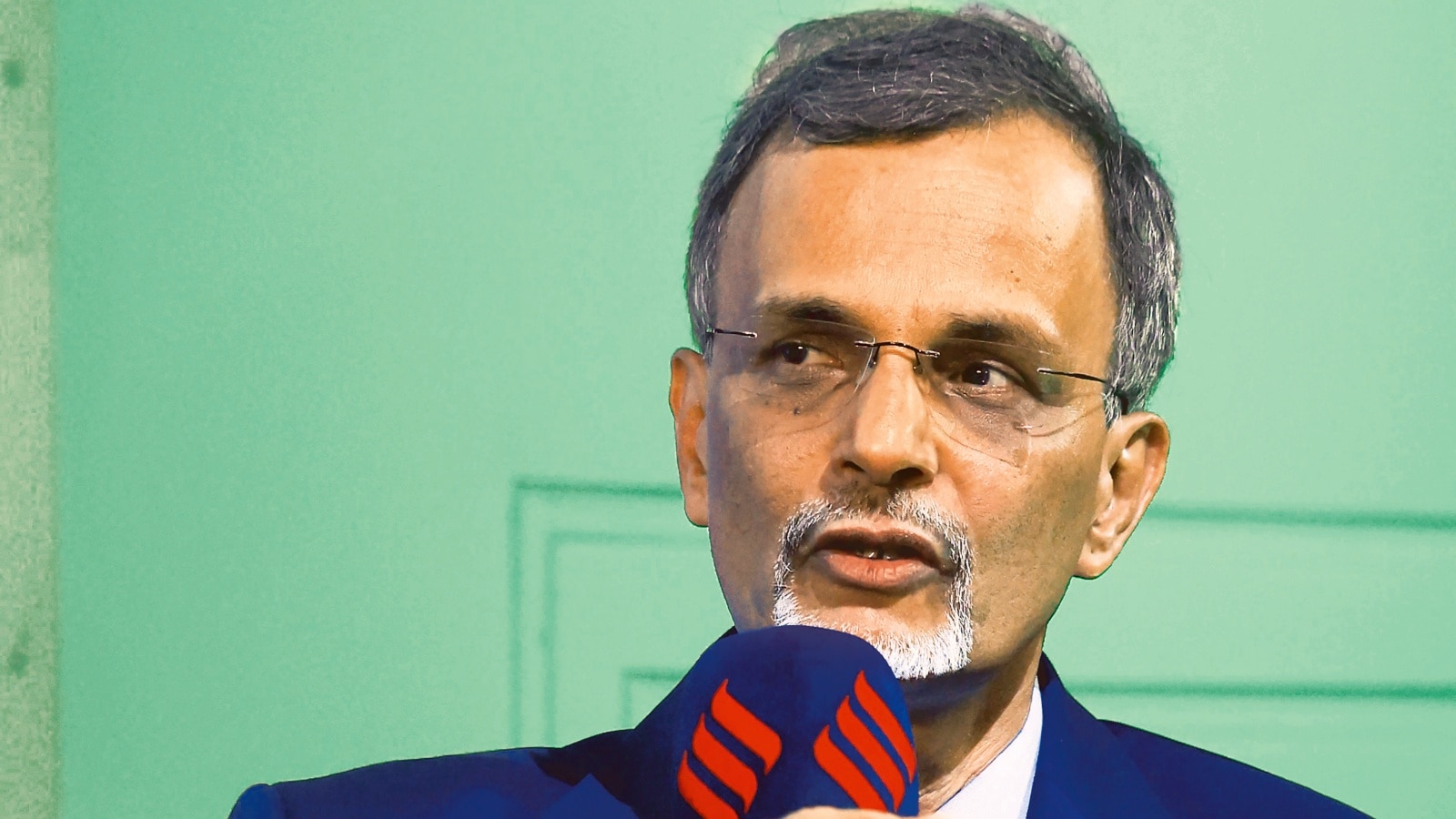
By Dr. Gyan Pathak When Indian rupee was falling in the Mumbai market against US dollar on Wednesday, December 3, 2023 – sliding past the 90-a-dollar mark for the second day, plumbing a new low of 90.29 in the morning trade after opening flat at 89.96, analysts were pegging the next level for the beleaguered […]

The article CEA’s Calmness Over Steep Fall Of Rupee Ignores Key Risks To India appeared first on Latest India news, analysis and reports on Newspack by India Press Agency).

HONG KONG SAR – Media OutReach Newswire – 3 December 2025 – XTransfer, World’s Leading B2B Cross-Border Trade Payment Platform, announces the publication of the industry’s first Unified Global B2B Trade Settlement Network and Risk Control Platform Whitepaper. The whitepaper presents an end-to-end framework designed to resolve long-standing inefficiencies in B2B cross-border payments and establish a secure, scalable, and standardized global trade infrastructure for SMEs. X-Net, a […]

United Kingdom legislation now formally recognises digital assets such as cryptocurrencies and stablecoins as personal property, offering holders protections under established property law. The Property Act 2025 — previously a bill — received royal assent, confirming that digital tokens may be treated as a third category of personal property alongside traditional “things in possession” and “things in action.” This marks a decisive shift from earlier reliance on case-by-case rulings by courts.

Legal recognition ensures that crypto-owners gain enforceable rights in instances of theft, fraud or insolvency, and enables digital assets to be included in estates or bankruptcy proceedings under the same protections afforded to conventional property. The Act does not itself define which digital assets qualify — courts will decide those details over time.

Judicial developments had already begun to lay the groundwork for this change. As early as 2019, the UK Jurisdiction Taskforce concluded that crypto-assets met criteria for property under English law: they could be defined, identified, transferred and treated as assets capable of value retention. A key case, AA v Persons Unknown, saw the High Court of England and Wales recognise Bitcoin provided as ransom in a cyber-attack as property, granting the insurer a proprietary injunction.

Advocates of the law hailed it as providing clarity long sought by individuals and businesses holding crypto-assets. CryptoUK, a leading trade body for digital assets, noted that while courts had already treated crypto as property in some cases, codifying the principle into statute removes uncertainty and streamlines legal protections across theft, insolvency and estate-related scenarios.

Legal experts say the Act reflects the recommendations laid out by the Law Commission in a 2023 report, which urged reform to ensure the law could accommodate emerging digital assets under a flexible yet robust framework. The Commission argued that existing categories of personal property under law were too rigid to account for assets that lacked physical form or contractual rights.

This statutory change arrives as UK regulators concurrently refine the broader regime for crypto-assets. Draft legislation published earlier this year already seeks to amend the Financial Services and Markets Act 2000 to designate certain “qualifying cryptoassets” and “qualifying stablecoins” as regulated investments, bringing market-level rules for trading, custody and compliance under formal oversight.

While the law does not render cryptocurrency a legal tender — meaning it still cannot be used to settle debts in substitute for currency — its classification as property gives holders legal certainty over ownership and enforceable rights. Taxation and regulatory treatment will continue to follow established frameworks, though this legal milestone reduces ambiguity over the status of crypto-assets in private law contexts.

Judges, lawyers and market participants anticipate that the Act will lead to a more stable and predictable legal environment for crypto-asset ownership, enabling individuals and institutions to treat tokens with the same legal respect accorded to traditional assets. As the courts start applying the new law in real cases, the boundaries of which digital assets qualify will grow clearer — and the UK’s position as a regulatory pioneer in digital asset law will be reaffirmed.


The grip of Chromium on the global browser ecosystem has grown so wide that many users now assume every modern browser is built on Google’s open-source architecture. That perception has taken root partly because major names such as Microsoft Edge, Opera, Brave, Vivaldi and Arc all rely on Chromium’s Blink rendering engine, creating a sense that browsing itself has become synonymous with Google-aligned foundations. The dominance is […]

Solana has formed a double-bottom reversal pattern around the $125 support level, setting up bulls for a possible surge past the $145 resistance zone.

Price data shows that SOL is trading near $143, with technical indicators on daily charts signalling a strong buy: moving averages across 5-, 10-, 20- and 50-day periods align bullish, while MACD, CCI and other oscillators support renewed upward momentum.

Longer-term studies point to a bullish swing if SOL clears $145, a level viewed by many as a crucial barrier to resetting next-leg targets. One prominent analysis suggests that if SOL flips this resistance to support, upside zones near $165 and $179 could come into play — levels that previously acted as consolidation thresholds.

Support near $125 has been repeatedly defended following a dip from higher levels. That makes the double-bottom pattern more credible: the chart shows two distinct troughs at roughly the same price, followed by a rebound — a textbook technical reversal signal.

Traders are watching on-chain metrics as well. The blockchain’s ecosystem remains active with strong total value locked and steady stablecoin and DEX activity, providing some fundamental stability alongside the technical setup.

Geopolitical and macroeconomic uncertainty, tariffs, and cyber risks pose liability challenges for the boards of corporations of all sizes. The increasing number of insolvencies around the globe is becoming a major issue for executives. Claims severity and settlement costs are increasing, especially in the US, while the commercial financial lines insurance market remains highly dynamic. SINGAPORE – Media OutReach Newswire – 3 December 2025 – Around the […]

HANOI, VIETNAM – Media OutReach Newswire – 2 December 2025 – In December 2025, UnionPay International (UPI) and the National Payment Corporation of Vietnam (NAPAS) officially launched a pilot program for cross-border QR payments connecting China and Vietnam. This program aims to further enhance the mobile payment experience for Chinese tourists in Vietnam and foster closer economic, trade, and cultural exchanges between the two countries. In October […]

The Arab Investment & Export Credit Guarantee Corporation reported that the collective gross domestic product of Arab countries rose by 1.7 percent to about US$3.8 trillion in 2025, even as the region grappled with significant geopolitical tensions. The bulk of the growth remained concentrated in a handful of large economies — Saudi Arabia, United Arab Emirates, Egypt, Algeria and Iraq — which together account for nearly 73 […]

Smartwatch pioneer Pebble has returned under the stewardship of its original founder, with both software and hardware released as openly available to developers and tinkerers. The relaunch is driven by Eric Migicovsky and his new venture Core Devices, aimed at reviving the once-beloved e-paper wristwear in a more transparent, sustainable form. Migicovsky confirmed that the entire software stack behind modern Pebble devices — including the smartwatch OS, […]

Russian President Vladimir Putin arrived in New Delhi for a two-day visit aimed at reviving and expanding energy and defence cooperation with India. His agenda includes proposals for increased Russian oil exports alongside renewed offers of missile systems and fighter jets, as part of efforts to restore ties challenged by global pressure on Moscow.

The visit coincides with heightened scrutiny of India’s oil and weapon imports from Russia, but also signals Moscow’s determination to deepen the “special and privileged strategic partnership” with New Delhi. Kremlin officials, including Russia’s deputy prime minister overseeing trade, emphasised that the India-Russia forum planned around the summit would explore ways to diversify bilateral trade, extend industrial cooperation and foster joint investments across high-technology and raw-material sectors.

On offer are new arms deals including advanced air-defence platforms and additional batches of combat aircraft. Negotiations are expected to cover the procurement of more units of the S-400 missile system and potential acquisition of fifth-generation Su-57 jets and the next-generation S-500 air-defence shield. Although India has widened its defence procurement sources over recent years, Moscow remains one of its leading suppliers, bolstered by long-standing familiarity and legacy hardware in the armed forces. Analysts note that these proposed arms deals would reaffirm Russia’s influence in India’s defence posture, even as New Delhi attempts to balance Western and Russian dependencies.

Energy cooperation is another key pillar. Russia is offering discounted crude oil supplies under new trade arrangements, including through intermediaries and possibly via joint ventures or extraction projects in Russia’s Far East and Arctic regions. This appears geared toward circumventing Western sanctions on Russian energy exports, while ensuring that India retains access to competitively priced hydrocarbons. At the same time, Indian officials are conscious of growing trade imbalances caused by large-scale Russian imports and have flagged the need to augment Indian exports to Russia, particularly in equipment, raw materials and food products.

Efforts to revive large-scale trade go beyond energy and defence. The India-Russia forum accompanying the summit is expected to chart cooperation in civil nuclear projects, space technology, and high-tech industrial ventures. Signals from the Russian side underscore a long-term vision of a resilient, multifaceted partnership rooted in historical ties. While geopolitical pressures from Western capitals and tariffs on Indian goods pose real challenges, both Moscow and New Delhi appear keen to insulate their bilateral engagement from external strains.

Arabian Post Staff -Dubai Motorola appears poised to challenge the high-end smartphone segment with its upcoming Motorola Edge 70 Ultra, which likely adopts Qualcomm’s Snapdragon 8 Gen 5 chipset instead of the more powerful “Elite” variant. Early benchmark scores tied to a Motorola handset show single-core and multi-core results of 2,636 and 7,475 respectively — impressive but short of Elite-class performance. The device is expected to ship […]

Strategy, the publicly traded firm widely known for holding the largest corporate stash of Bitcoin, has drawn a line under doubts over its ability to meet dividend and debt obligations without selling crypto by creating a $1.44 billion U. S.-dollar reserve backed by share sales. This move reflects a deeper shift in the company’s risk management as the digital-asset market endures sharp price swings.

According to disclosures, the cash reserve was funded through the company’s at-the-market sales program, under which Strategy issued new Class A common stock in November, raising nearly $1.5 billion. Those proceeds now serve to fund preferred stock dividends and interest payments on outstanding convertible debt, obligations that had sparked investor concern amid a steep slide in Bitcoin valuations.

Alongside the cash build-up, Strategy added another 130 Bitcoin to its holdings, raising its total cache to 650,000 BTC — reaffirming its long-term bullish stance even as market conditions deteriorate. Executive chairman Michael Saylor reiterated commitment to Bitcoin as core to the firm’s identity, signalling confidence that the underlying asset remains a compelling store of value despite pressure.

Still, Strategy trimmed its fiscal-year 2025 guidance on operating income and diluted earnings per share, reflecting the volatile environment. Earlier projections assumed a markedly higher Bitcoin price range; the company now expects end-of-year BTC valuations between $85,000 and $110,000, a significant downgrade from prior assumptions near $150,000. Analysts caution this wide range introduces considerable uncertainty for cash-flow forecasts and valuation models.

The need for a cash reserve stems from one of the harshest drawdowns Bitcoin has faced this year. Bitcoin surged past $126,000 in early October but surrendered those gains over the subsequent weeks. The broader crypto sell-off, combined with liquidity constraints and high correlation between digital assets and riskier financial instruments, has erased much of the 2025 rally.

Industry-wide, firms that built large digital-asset treasuries this year are now navigating amplified risk. A recent study modelling “Digital Asset Treasury” companies warns that those relying solely on mark-to-market gains are especially vulnerable in bear markets — a problem compounded when accounting for debt and fixed-income obligations. The authors argue that cash-flow generation independent of crypto price swings, such as fee-based services on payment rails, could offer a path to stability; for now, Strategy’s cash reserve seems to be its principal line of defence.

Market reaction was swift. Shares of Strategy dropped more than 10 per cent following the announcement, extending a decline that has taken the stock down over 50 per cent in 2025. Some investors remain unconvinced that the company’s liquidity buffer is sufficient, pointing to its substantial convertible debt load and the challenge of generating recurring operational revenue. Others see the reserve as a pragmatic step — a signal that Strategy is prioritising financial resilience over ideological purity.

Crypto markets endured a sharp shake-out as leveraged positions worth roughly $800 million were liquidated within a single 24-hour span, wiping out a wave of long bets across major digital assets.

The dump was triggered when Bitcoin slipped below a key price threshold, pressuring highly leveraged long positions on futures markets and prompting a cascade of forced sell-offs. Platforms such as Hyperliquid and Bybit reportedly absorbed the majority of the liquidations, underscoring how overextended trader leverage remains widespread even after prior volatility.

Data compiled by derivatives-monitoring firms shows hundreds of thousands of traders saw their positions wiped out, reflecting a broad-based unwind rather than a handful of large outliers. Long positions accounted for the lion’s share of the losses, a pattern that analysts argue deepens near-term downside risk while simultaneously resetting excessive leverage.

Market participants suggest the liquidation sequence was worsened by macroeconomic uncertainty. Signals from major central banks hinting at tighter monetary policy have quelled risk appetite, undermining speculative crypto bets built on hopes of renewed easy capital. A stronger dollar and rising bond yields weighed on crypto sentiment and intensified pressure on leveraged positions.

Declines weren’t limited to Bitcoin. Ethereum and other large-cap altcoins also suffered sharp drawdowns as falling prices triggered liquidation cascades across the derivatives market. As leverage unwinding rippled through the system, traders who had bet on a sustained rebound found themselves among the hardest hit.

Some investors framed this purge of leverage as a potential reset for the crypto market. Clearing out excessive long exposure might pave the way for more stable price action if broader buying support returns. Others, however, cautioned that forced liquidations could destabilise confidence and deepen volatility — especially if macro headwinds persist.

By Nantoo Banerjee It is encouraging to note that the government has decided to invest large sums of money in support of rare earth magnet manufacturing and substantially improve the country’s rare earth-based metals production to escape China’s global chokehold in this strategic sector. Presently, there are a few small Indian companies engaged in manufacturing […]

The article India’s Push For Self-Reliance In Rare Earth Magnet Making Is Laudable appeared first on Latest India news, analysis and reports on Newspack by India Press Agency).

Japan’s 10-year government bond yield jumped to 1.84 percent, marking its highest level since 2008, sending ripples across global financial markets. Equities and risk assets came under pressure while investors reassessed portfolios built on cheap Japanese funding.

The surge reflects an abrupt shift away from decades of near-zero rates in Japan, transforming the dynamics of global capital flows. Long considered a foundation of stability, Japanese government bonds are now drawing fresh interest, prompting capital repatriation as investors seek higher yields at home. This shift threatens to unwind the entrenched “yen carry trade,” where investors borrowed yen cheaply to pour money into higher-yielding markets abroad — including equities and cryptocurrencies. With yen-denominated debt now offering compelling returns, such cross-border funding strategies are losing appeal.

As liquidity conditions tighten, markets for risk assets are being reshaped. Cryptocurrencies and tech stocks, once buoyed by easy global credit, have borne the brunt of investor risk aversion. Traders point out that this yield shock was partly triggered by a shift in market expectations around the Bank of Japan, which has signalled the possibility of further rate increases in its upcoming policy review. That, combined with concerns over Japan’s sizeable fiscal obligations and growing government borrowing, is pushing bond yields across the maturity curve higher — including 20-, 30- and 40-year maturities that recently recorded historic highs.

For global investors, the implications are stark. Funds and hedge-fund managers that relied on yen-funded carry trades now face rising funding costs and diminishing returns. Emerging markets and growth-oriented sectors that thrived on abundant liquidity may see capital outflows as investors retreat to safer, yield-bearing bonds. Currency markets have already reacted: the yen has strengthened sharply, adding pressure on exporters and raising the cost of dollar-denominated investments for Japan-based holders.

Analysts note that this yield shock does not necessarily spell widespread collapse — but signals a structural recalibration. Portfolios will need to adapt to a world where Japanese bonds are no longer a funding tool, but a competing asset class in their own right. For risk assets to recover, markets will need fresh capital inflows rather than the easy money of the past.

Oil prices climbed as OPEC+ upheld a halt on output increases through the first quarter of 2026, prompting traders to weigh the repercussions of escalating geopolitical tensions around Venezuela. Brent crude futures hovered close to $63 a barrel while U. S. West Texas Intermediate rose above $59, reflecting tentative optimism in energy markets. The group’s decision to maintain the pause—originally declared at the start of November—was confirmed […]

VISHNU RAJA
RYO YAMADA
HITORI GOTOH
IKUYO KITA