News related to
trade

A high-level delegation from China plans to meet officials in Brussels this month to discuss tightening restrictions on rare earths and other critical minerals after the bloc flagged the controls as a threat to its key industrial sectors. The European Union has increased pressure on Beijing to restore stable access to materials essential for electric vehicles, semiconductors and defence capabilities while also advancing its own diversification plan […]

A new financial entity, Evernorth Holdings Inc., backed by Ripple Labs and a cadre of major investors, is embarking on a substantial accumulation of the cryptocurrency XRP, aiming to raise more than US$1 billion via a merger with Armada Acquisition Corp II and list on the Nasdaq Stock Market under the ticker “XRPN”. According to on-chain data, the firm has acquired around 388.7 million XRP at an average price of US$2.44 per token, representing roughly 95 per cent of its initial US$1 billion target.

Evernorth’s structure diverges from typical passive crypto funds by seeking to deliver regulated, liquid equity exposure to XRP while simultaneously building a dedicated treasury operation. The company plans to deploy acquired XRP into lending programmes, liquidity-provision initiatives and decentralised-finance protocols, rather than simply holding the tokens. This approach is led by CEO Asheesh Birla, and supported by strategic advisors including Ripple’s CTO. Major backers include SBI Holdings, Pantera Capital, Kraken and Ripple co-founder Chris Larsen.

Market observers draw a parallel between Evernorth’s accumulation strategy and the approach taken by MicroStrategy Incorporated with its Bitcoin holdings, suggesting a potential supply constraint in XRP that could influence pricing dynamics. Analysts estimate Evernorth’s holding could absorb up to 2 per cent of XRP’s liquid supply within a year, tightening available tokens for retail circulation. The company’s public-market vehicle may further attract institutional capital that would be channelled into open-market purchases of XRP by the treasury arm.

The strategic significance of Evernorth extends beyond token accumulation. By enabling a publicly traded entity dedicated to XRP exposure, it lowers traditional institutional barriers—such as asset custody, regulatory transparency and mandate-compliance—that have impeded large-scale crypto adoption. Evernorth’s design allows corporate treasuries, pension funds and asset managers to gain direct exposure to XRP through an equity wrapper, bypassing conventional hurdles of spot-token holdings. Concurrently, its active deployment of XRP into yield-generating operations seeks to drive liquidity, on-chain utility and ecosystem momentum, aligning its interests with Ripple’s broader infrastructure objectives in cross-border settlement and network expansion.

Arabian Post Staff -Dubai Apple plans to equip its next-generation iPad Pro with a vapor chamber cooling system, marking a significant step for heat management in the tablet line. The upgrade is expected to accompany the launch of the M6 chip, built on TSMC’s 2-nanometre process, with a product refresh anticipated in spring 2027. The change responds to increasing thermal demands as the iPad Pro evolves into […]

By Nantoo Banerjee If global oil giant BP plc’s ‘Energy Outlook 2025’ proves to be true, India will be a global leader in energy consumption, outpacing all other countries by 2050. The country will account for 12 percent of the global demand, up from seven percent from 2023, according to BP’s chief economist Spencer Dale. […]

The article India Is At The Heart Of Driving The Global Energy Process appeared first on Latest India news, analysis and reports on Newspack by India Press Agency).

KUALA LUMPUR, MALAYSIA – Media OutReach Newswire – 27 October 2025 – JFOODO (Japan Food Product Overseas Promotion Center) proudly announces its annual sake pairing campaign in Malaysia, returning under the theme “Discover New Harmonies with Japanese Sake.“ Launching on 1 November 2025, this year’s edition expands its reach and repertoire, inviting diners to explore the remarkable versatility of Japanese sake across 15 celebrated restaurants in Kuala […]

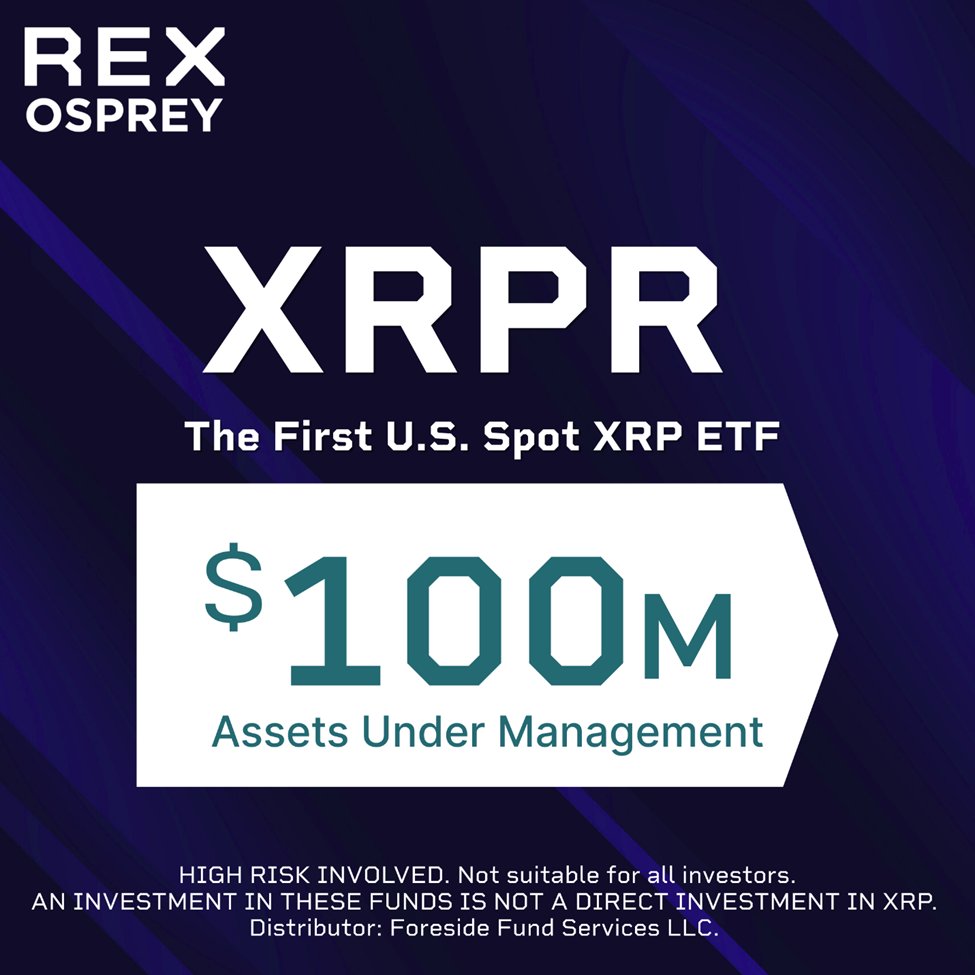
The REX-Osprey XRP ETF, the first U. S. exchange-traded fund offering direct exposure to XRP, has surpassed $100 million in assets under management within a month of its launch. Launched on September 18, the fund provides investors with a unique opportunity to gain direct exposure to XRP, the fourth-largest cryptocurrency by market capitalization, without the complexities of purchasing the digital asset itself.

According to REX Osprey, the firm behind the launch of the ETF, the rapid growth in AUM highlights the increasing interest in digital assets and their integration into mainstream investment products. The ETF, which trades on the Cboe BZX Exchange, allows investors to gain exposure to XRP through a traditional brokerage account, making it more accessible than purchasing the cryptocurrency directly on exchanges.

XRP has long been one of the most controversial and volatile cryptocurrencies, primarily due to its ongoing legal battle with the U. S. Securities and Exchange Commission. The SEC initially filed a lawsuit against Ripple Labs, the company behind XRP, alleging that the cryptocurrency is an unregistered security. However, recent developments in the case, including partial victories for Ripple, have given a boost to investor sentiment, contributing to XRP’s price increase and the subsequent success of the ETF.

Since its launch, the XRP ETF has attracted both institutional and retail investors seeking exposure to the cryptocurrency market in a more regulated, liquid form. The growth in AUM also underscores the growing demand for innovative financial products that allow mainstream investors to participate in the digital asset space without directly owning the underlying cryptocurrencies.

The popularity of cryptocurrency ETFs has been rising globally, and the launch of XRPR marks a significant milestone in the U. S. market, which has been cautious in approving crypto-based exchange-traded products. The approval of the XRP ETF comes at a time when other digital asset ETFs, such as those based on Bitcoin and Ethereum, have seen significant traction. The success of these products has raised expectations for further expansion of the cryptocurrency ETF market, especially as regulatory clarity surrounding digital assets continues to improve.

The launch of the REX-Osprey XRP ETF also reflects broader trends in the financial markets, with traditional financial institutions increasingly integrating cryptocurrencies into their offerings. Institutional investors, who have historically been wary of the volatility and regulatory uncertainty surrounding digital assets, are now more open to exploring the potential of blockchain technology and digital currencies as part of a diversified investment portfolio.

XRP, which has faced significant volatility over the years, has experienced a surge in value following key legal victories in its ongoing battle with the SEC. Ripple’s partial legal wins have boosted investor confidence, and many view the outcome of the case as a critical factor in the future of XRP’s market position. The cryptocurrency’s price has seen a sharp upward movement in response to the more positive outlook surrounding the lawsuit.

The success of the XRP ETF reflects growing confidence in XRP as an investment vehicle, despite the regulatory uncertainties that continue to surround it. While there are still ongoing legal challenges, the launch of this ETF signals a shift in how the cryptocurrency market is viewed by investors and regulators alike. The ability to trade XRP through an exchange-traded fund allows for more streamlined access to the asset, eliminating some of the complexities involved in handling digital currencies directly.

India is positioning itself as a global food supplier using Dubai as the logistical gateway, according to statements made by Chief Minister N. Chandrababu Naidu of Andhra Pradesh during his visit to the UAE. He declared that India’s strengths in agriculture, horticulture, aquaculture and logistics will enable the country to serve “the global community” through Dubai’s market access.

Naidu spoke of the UAE city’s strategic connectivity and global reach as ideal for scaling Indian-food exports. He noted that the Andhra Pradesh government is aiming to reduce logistics costs by integrating inland waterways, railways, road and seaports, and by spending around 14 per cent of the state’s GDP on logistics infrastructure as part of the drive to increase efficiency. His role as chief minister of Andhra Pradesh places him at the centre of an ambitious push to offer the state as a manufacturing and supply-chain hub with Indian agriculture at its core.

The announcement comes amid a broader investment road-show in which Naidu met with senior policymakers and business leaders in the UAE to discuss partnerships across multiple sectors, including food processing, green energy, AI and infrastructure. During a dialogue in Dubai the chief minister stated that India will supply food to the global community through Dubai as a hub, adding that he met ministers, family-business leaders and airlines executives during the visit. He praised the Indian diaspora for their contributions and flagged the state’s goal of making the new capital Amaravati a “green and blue city” built around water, greenery and advanced infrastructure.

Andhra Pradesh’s food-processing ambitions are a central plank of the strategy. The state government has invited investment from UAE food-conglomerates to scale cocoa cultivation, chocolate manufacturing, aquaculture and related logistics. The Chinese food-industry trend of “value-added exports” is echoed by India’s attempt to move beyond raw agricultural exports towards packaged, processed and high-logistics-integrated supply chains.

From a trade perspective, positioning Dubai as a re-export hub can offer Indian producers quicker access to Middle East, African and European markets. Dubai’s status as a global logistics and trading hub gives India the opportunity to piggy-back on existing infrastructure and reach. It also offers investors assurances of regulatory, financial and physical connectivity.

However, a number of challenges stand in the way. India already faces structural issues in agriculture: fragmented landholdings, variable productivity, post-harvest losses, and high domestic logistics costs. While Naidu cites a logistics cost of about 14 per cent of GDP for Andhra Pradesh, the national average remains higher and such a figure implies major optimisation ahead. The use of Dubai as a hub also raises questions of tariff regimes, transit duties, warehousing handling cost and competition from other international producers using the Gulf as re-export platforms.

Critics also point to the risk of over-promising on export capacity. India’s agriculture export ratio remains modest relative to the size of its production, and moving up the value chain into globally competitive processed foods will require investment in cold-chain infrastructure, quality standards and market-specific certifications. The reliance on a single state’s announcement may also raise concerns about federal coordination and falling short of expectations if broader national agricultural reforms lag.

Advertisements

By Nitya Chakraborty The U.S. President Donald Trump is finally meeting the Chinese President Xi Jinping in Seoul by this month end, possibly on October 30, on the sidelines of the Asia-Pacific Economic Cooperation Summit in the South Korean capital scheduled for October 31 and November 1. Both the leaders are attending APEC summit, but […]

The article Will Trump-Xi Summit In Seoul Lead To A Serious Trade Deal? appeared first on Latest India news, analysis and reports on Newspack by India Press Agency).

Matein Khalid The supply glut in crude oil, the fragile geopolitics of the Levant, the Gaza wars, the thinnest sovereign credit spreads since the summer of 2006 have not ended the scramble to pick up MENA credit when the issuer is not a serial borrower/distressed credit and the bonds issue reflects improving political/economic fundamentals. The year ago, Oman and Bahrain provided some amazing opportunities for capital gains […]

Dr Imran Khalid In an era when the global economy staggers under the weight of inflation, trade wars, and geopolitical fractures, China’s Communist Party has just unveiled a roadmap that feels less like a policy document and more like a quiet revolution. The fourth plenary session of the 20th Central Committee, which wrapped up in Beijing on October 23, adopted recommendations for the 15th Five-Year Plan, covering […]

The Ministry of Finance has introduced the “Retail Sukuk” programme enabling citizens and residents to purchase government-backed Treasury Sukuk via participating banks with a minimum investment of AED 4,000. The first bank partner will be announced on 3 November 2025.

The move directly expands access to sovereign Islamic finance instruments previously reserved for institutional investors. According to the announcement, the scheme permits investment in Shariah-compliant Islamic treasury securities through fractionalised digital platforms operated by the banks. Leader Sheikh Maktoum bin Mohammed bin Rashid Al Maktoum described the initiative as “translating our leadership’s vision of empowering individuals, promoting a culture of saving and developing government investment instruments that enhance individual participation in economic growth and provide a direct opportunity to contribute to the national development journey.”

The initiative aligns with the nation’s financial-inclusion agenda and the strategy to deepen local capital markets. By lowering the threshold to AED 4,000, the scheme reduces entry barriers for retail investors and broadens the investor base for the domestic sovereign debt market. Analysts point out that universal access to such instruments represents a structural shift in how governments engage with individual savers.

Industry experts say this development reflects emerging trends in the Gulf’s Islamic finance sector, particularly the fractionalisation and tokenisation of Sukuk products. A legal-advisory report on the Gulf Cooperation Council’s Sukuk market noted that digital platforms and smaller tickets are “redefining how Sharia-compliant capital is structured, distributed and accessed.” The Abu Dhabi Islamic Bank earlier launched a “Smart Sukuk” platform allowing retail investment from about USD 1,000 in fractionalised Sukuk.

Governance stakeholders emphasise that the retail programme remains denominated in dirhams and linked to sovereign-backed Sukuk already traded in the market, ensuring exposure to high-quality government assets rather than untested structures. The Ministry reaffirmed that the rollout will follow the “highest standards of transparency and quality.”

Financial institutions stand to benefit from expanded customer-base growth and increased assets under management, while retail investors gain a compliant savings vehicle offering diversification beyond deposits and conventional investments. Yet risks remain. While sovereign-backed, Sukuk carry credit, liquidity and market-risk dimensions; beginners may require enhanced education around profit-sharing-based returns, Shariah-compliance nuances and secondary-market liquidity.

Some market participants caution that the success of the scheme will depend on the secondary-market functioning and investor confidence in digital platforms. Previous fractional-Sukuk roll-outs in the region flagged the need for robust regulatory oversight, clear smart-contract frameworks, and standardised product terms to build long-term participation.

MADRID, SPAIN – Media OutReach Newswire – 25 October 2025 – OPPO, a leading global smart device brand, today announced a deeper collaboration with Google to redefine personalized and secure mobile AI, focusing on personalized AI capabilities, AI model deployment, and AI privacy. Through this technical cooperation, OPPO aims to deliver more intuitive, secure, and comprehensive mobile AI experiences to users worldwide. “Working closely with partners like […]

   By K Raveendran   The market seems to have already done its arithmetic on the new US sanctions on two major Russian oil companies, Rosneft PJSC and Lukoil, gauging the immediate and medium-term consequences for energy supply lines stretching from Moscow to Mumbai. In a matter of hours, crude prices spiked, reflecting not just […]

The article Latest Trump Sanction On Russian Oil Companies Gives Escape Route To India appeared first on Latest India news, analysis and reports on Newspack by India Press Agency).

Global oil prices climbed sharply following new sanctions targeting Russia’s major producers, underscoring how geopolitical risk is once again reshaping the energy sector. The United States moved to impose measures against Rosneft and Lukoil, companies that together account for roughly half of Russia’s oil production. The measures froze U. S. assets of the companies, barred American business dealings and threatened secondary penalties for third-party entities dealing with them.

The immediate market reaction was decisive. Brent crude rose by about 5.7 per cent after the announcement, while U. S. futures recorded their most significant one-day jump in over four months. Supply concerns and uncertainty around the disruption of Russian flows have added a new premium to oil prices. Some analysts describe this as the return of the “geopolitical risk premium” that had subsided earlier this year.

Key dynamics are emerging in the global energy landscape. One of them is the pressure on refineries in China and India that have heavily relied on Russian crude. With sanctions threatening secondary penalties, buyers are reconsidering their linkages. The ramifications extend beyond immediate flows: Russia’s ability to route crude via its so-called ‘shadow fleet’ of tankers and opaque trading chains may be challenged further, complicating its export capacity.

From the Russian side, President Vladimir Putin described the U. S. move as “unfriendly” and warned it could backfire by pushing up global oil costs. However, Moscow also signalled that production would continue, and previous sanctions have not immediately led to a collapse in output, suggesting resilience and adaptation persist in the Russian energy sector.

For the buyer nations, the calculus is shifting. Indian and Chinese refineries, which have depended on discounted Russian grades, now face the risk of being cut off from Western-dollar financing, insurance and shipping links if they flout U. S. rules. The potential loss of Russian supply at discount could create a scramble for alternative sources. Meanwhile, Russia may turn more aggressively towards friendly states or deepen barter trade, but such shifts would likely come with higher costs and logistical complexity. Analysts argue that the global spare capacity outside OPEC is already thin, so any reduction in Russian supply could tighten the market further.

In financial markets the impact is tangible. Energy stocks in Europe rose alongside oil prices, while Russian stock indices registered losses on the back of sanction pressure. Firms in the Asia-Pacific region with exposure to Russian crude may face heightened risk premiums or supply disruptions. The confluence of sanctions and market reactions underscores how inter-linked energy flows, geopolitics and financial exposure have become.

On the structural front, situation highlights the ongoing challenge of sanction enforcement. The U. S. Treasury and allied agencies are increasingly focusing not just on Russia’s producers but the broader ecosystem: shipping, insurance, finance. The effectiveness of these measures depends upon the willingness of non-U. S. players to comply and the ability of Russia to create work-arounds through alternative trade routes. The efficiency of existing infrastructure, the cost of shipping to farther markets, and the reliability of insurance all factor into how quickly Russian production or exports may come under strain.

Mumbai-based crypto exchange WazirX has enabled both Indian-rupee and cryptocurrency deposits as it moves toward resuming full trading and withdrawal services, signalling a critical recovery phase after its high-profile $230-million hack. The platform will initiate trading on 24 October 2025, launching with zero trading fees across all pairs for at least 30 days, and is rolling out withdrawals gradually.

WazirX’s comeback is anchored on a restructuring plan approved by the Singapore High Court for its parent company Zanmai Labs Private Limited, which had been navigating creditor claims and asset recovery since the breach. The company has partnered with US-based custodian BitGo to manage digital-asset wallets and bolster security with insured, institutional-grade custody solutions.

Operating under a phased restart, WazirX will first enable crypto-to-crypto markets and the USDT/INR pair from 24 October, with other INR pairs added later. Deposits are active now; withdrawals will follow in stages. Users who opted in to the restructuring will receive so-called “Recovery Tokens” within ten business days, representing claims on illiquid or frozen assets.

This relaunch occurs after the July 2024 hack — attributed to the Lazarus Group by multiple governments — in which WazirX exposed vulnerabilities that resulted in loss of approximately $234 million in digital assets and triggered a suspension of trading, withdrawals and deposits. The setback had eroded trust among India’s crypto retail community and drawn regulatory scrutiny.

WazirX co-founder and CEO Nischal Shetty acknowledged the challenge of restoring confidence, stating on social media: “Our focus is only YOU — we are committed to a secure and transparent restart.” Still, some users have raised concerns over discrepancies in post-rebalancing balances, alleging that their credited holdings were lower than earlier display values. WazirX has pledged to release a detailed audit and reconcile any shortfalls.

Industry analysts view WazirX’s relaunch as a litmus test for Indian crypto exchanges, which have faced security, regulatory and trust-deficit issues. While the zero-fee offer may stimulate trading volume and liquidity, questions remain over how effectively WazirX can demonstrate enhanced operational resilience and compliance oversight. Further complicating matters is India’s evolving regulatory landscape: a proposed crypto-assets bill is under discussion, and exchange-licensing frameworks remain undefined.

For traders, the phased rollout presents both opportunity and risk. Market-makers caution that liquidity may be thin in the initial days, potentially creating wider spreads or slippage. WazirX’s blog announcement advises users to monitor token availability, confirm order execution conditions and treat first-day price action with caution. With a delisting of some tokens and swaps or mergers during the downtime, certainty over token status is also being tested.

Cape Town — South Africa’s agricultural exports to the United States rose sharply in the second quarter of 2025, hitting US$161 million and marking a 26 per cent year-on-year increase despite the imposition of heavy tariffs by the U. S. administration. The growth is attributed to strong harvests and increased shipments of high-value produce, but concerns linger over how sustainable the trend is given the trade headwinds. […]

Cybersecurity firm Sophos has unveiled its new solution, Sophos Identity Threat Detection and Response, offering organisations continuous monitoring of identity risks, dark-web credential tracking and automated response capabilities within its Sophos Central platform. The UK-headquartered company positions the product as a strategic response to the “never-ending” rise of identity-based attacks. The new ITDR module integrates with Sophos’ existing Extended Detection and Response and Managed Detection and Response […]

The implied volatility of Bitcoin has remained unusually elevated even as the equity-market gauge of fear, the S&P 500 Volatility Index, has receded to its usual levels. Data show Bitcoin’s 30-day implied volatility hovering above 50 % after the October 10 market shake-up, while the VIX slipped back below 20 %. This divergence signals a significant recalibration of risk within crypto markets.

Analysts point to a cluster of structural pressures within the crypto ecosystem that are now being priced in: chief among them are auto-deleveraging mechanisms on exchanges, thinning liquidity depth, and offshore funding stress. According to Wintermute co-founder Yoann Turpin, “Bitcoin volatility was subdued earlier… It has now become clear that new risks … such as ADL were underestimated and are now being fully priced in.” In practice, when an exchange triggers ADL it forces closure of profitable offsetting positions when an insurance fund is depleted—this introduces an additional risk vector not present in the mainstream equity markets. The residual impact of a major liquidation event on October 10–11, estimated at over billion, has sharpened market caution.

Liquidity concerns are compounded by the behaviour of market-makers during the crash. According to a recent study, market makers withdrew roughly million from key order-books within hours of the triggering event, creating a vacuum in bid-ask depth and amplifying price moves. Participants say that while the VIX drop reflects a return of calm to equity markets after the shock, Bitcoin’s elevated IV suggests the market is in a higher-volatility regime rather than merely bouncing back. Liquidity in offshore markets, which heavily influences Bitcoin trading, appears particularly tight: for example, the Hong Kong Interbank Offered Rate has returned to pre-May levels even as the U. S. dollar index has risen, signalling funding stress that tends to feed into crypto volatility.

Another factor cited is the rapid growth of exchange-traded funds and over-the-counter desks absorbing Bitcoin supply, creating a supply-shock risk for derivatives and making hedging more expensive. A report warned of a potential “liquidity crisis” within six months for Bitcoin ETF structures unless infrastructure adapts. Meanwhile, the macro backdrop of easing interest-rates and previously abundant liquidity has given way to tighter conditions, which amplify volatility across leveraged assets.

Institutional interest in hedging Bitcoin risk has surged. Following the liquidation that knocked Bitcoin from about to roughly, investors rushed into options contracts that bet on further price drops—put-buying spiked as a hedge against renewed turbulence. Such demand for protection keeps implied volatility elevated even if spot prices settle. At the same time, the VIX’s retreat suggests equity investors believe the shock has passed; crypto markets apparently disagree.

The divergence is significant because implied volatility represents the market’s expectation of future price swings. A 50 % annualised IV for Bitcoin implies expected one-month moves of roughly; by contrast, a 20 % IV for the S&P 500 implies one-month moves of around. Such a gap underscores the unique risk environment in which crypto operates—where leverage, thin liquidity and exchange-specific infrastructure risk matter significantly. Academic research supports this: a recent study found Bitcoin’s risk-premia vary across volatility regimes, and that downside risk is significantly more priced in than with equities.

Market makers and trading desks are adapting. Some are widening spreads, reducing inventory and limiting exposure during volatile episodes—actions that in effect undermine liquidity further and contribute to the “sticky” implied volatility. One trader said that “no one slept” during the weekend of October 10–11, as the cascade of liquidations forced hedge funds and desks to scramble for cover amid evaporating depth.

Moscow has authorised the use of cryptocurrencies in cross-border payments for trade, marking a significant departure from previous policy. The Ministry of Finance of the Russian Federation and the Bank of Russia have reached an agreement to legalise digital-asset settlements in foreign trade transactions, while simultaneously tightening regulatory oversight of the wider crypto market.

Finance Minister Anton Siluanov said the step was necessary because imports are already being paid for with crypto assets and the existing regulatory framework was inadequate. He emphasised that the legalisation would be accompanied by “proper legislative regulation” to restore order in the sector.

Under the new framework, firms engaged in exports and imports will be able to transact using cryptocurrencies—but only via authorised channels that meet stringent anti-money-laundering and know-your-customer standards. The shift builds on an earlier “experimental legal regime” that allowed limited crypto use in foreign trade and by select investors.

The Bank of Russia remains cautious. Its governor Elvira Nabiullina continues to resist full recognition of cryptocurrencies as a means of payment domestically, and proposed restricting use to cross-border trade and wealthy “qualified” investors under licensed firms.

Market analysts interpret the decision in the context of pressures from Western sanctions, which have constrained access to global payment systems. The move is seen as part of Russia’s strategy to bolster trade flows, particularly in energy and commodities, by bypassing traditional channels.

Still, legalisation is selective rather than broad. The regime applies for now only to foreign-trade transactions; the domestic use of cryptocurrency for everyday payments or retail investments remains prohibited. The Bank of Russia argues allowing wide retail access poses “financial and social” risks.

For domestic investors, the path to broader engagement remains narrow. Earlier this year the regulator proposed allowing only those with assets above 100 million roubles or annual incomes above 50 million roubles to participate in a crypto-investment experiment.

Industry players say the legalisation will create new opportunities. Top banks—such as Sberbank and Alfa‑Bank—had warned that millions of Russians hold crypto assets despite being excluded from the formal regime. They argued the grey market status of holdings was a risk for the broader financial system.

Critics caution that regulatory oversight and enforcement will be key. The Prosecutor-General’s Office, under Alexander Gutsan, highlighted that the new framework includes tools to monitor transactions linked to corruption, terrorism, extremism, and illicit financial flows.

Observers outside Russia are weighing potential ripple effects. Some suggest the policy could encourage other sanctioned or emerging-market nations to adopt crypto-based trade settlement models, challenging the dominance of traditional systems such as SWIFT.

For Russian exporters and importers, the shift may offer relief from constrained access to Western-dominated financing and payment networks. Nonetheless, firms must still operate within Bank of Russia-endorsed platforms and are subject to rigorous compliance oversight—so adoption may remain cautious in the near term.

From the government’s perspective the move attempts to draw the large informal crypto-market inside the regulatory perimeter. Holding of crypto assets by Russian users has been estimated in the hundreds of billions of roubles, according to central bank data.


By Nitya Chakraborty   The twist and turns in Prime Minister Narendra Modi’s dealing with the overtures to him from the US President Donald Trump in the last three weeks speak eloquently of the tussle that is going on at the highest level of the BJP leadership and the RSS over how to send the […]


The article Sangh’s Nationalist Line Restrains Modi From Early Deal With Trump appeared first on Latest India news, analysis and reports on Newspack by India Press Agency).

Oil prices shot up by around 3% Thursday, driven by fresh US sanctions on Russia’s top oil producers and signs that major buyers are rethinking their purchases. Brent crude futures rose to approximately $64.53 per barrel, while US West Texas Intermediate climbed to about $60.39.

The sanctions, targeting Rosneft and Lukoil, mark a marked escalation by the US in response to Russia’s war-time exports. The measures were accompanied by a US warning that further action could follow unless Moscow commits to a cease-fire.

A key knock-on effect: Indian refiners, including state-owned entities, have begun reviewing trade documents to ensure they are not sourcing crude directly from the sanctioned suppliers. With India having become one of the largest importers of discounted Russian oil following Western withdrawals, the scale of this review is significant.

The sanctions underscore a new risk premium in the oil market. Unlike previous rounds of sanctions—which largely constrained financing, insurance and shipping without substantially affecting physical oil flows—this move seeks to directly curtail output from Russia’s two largest producers. Rosneft and Lukoil collectively account for a large share of Russian crude exports and fuel the Kremlin’s budget.

Analysts caution, however, that while the immediate reaction has been sharp, structural supply disruption is not guaranteed. Russia retains significant production capacity and a sophisticated network of intermediaries and a “shadow fleet” of tankers that have helped maintain exports despite earlier sanctions. Nevertheless, the combination of curtailed Russian supply and potential reductions in purchases by major refiners sets the scene for tighter market conditions.

In India, refiners such as Indian Oil Corporation, Bharat Petroleum Corporation and Hindustan Petroleum Corporation are scrutinising bills of lading and cargo origins to ensure compliance. India imported roughly 1.7 million barrels per day of Russian crude in the first nine months of the year, predominantly via intermediaries rather than directly from Rosneft or Lukoil. The new sanctions give insurers, banks and traders until 21 November to wind down transactions involving the sanctioned firms.

The US move also dovetails with other sanctions developments: the EU approved a 19th package targeting Russia’s energy exports, including a ban on Russian liquefied natural gas imports and restrictions on shadow-fleet tankers. The combined effect is to intensify pressure on Russia’s energy supply chains.

From a market-demand vantage point, the worry is whether alternative sources can swiftly fill any gap. OPEC+ producers have some spare capacity but not enough to instantly offset a major Russian shortfall. Meanwhile, the US inventory situation added fuel to the rally: US crude stockpiles declined unexpectedly, reinforcing supply-tightness perceptions.

Energy-market specialists say the key factors to watch include India’s crude-import strategy, China’s stock-building trends and how aggressive Russia’s response will be—whether via production cuts or leveraging its ties with China and others. One observer noted the sanctions could be “a knee-jerk reaction” rather than a structural pivot, given Russia’s past ability to maintain volumes despite sanctions.

Purchasers of Russian crude face a growing compliance burden. Firms must navigate insurance exclusions, shifting shipping patterns and potential secondary sanctions from the US. Some refiners may opt to ramp up purchases from the US Gulf and other non-Russian sources, which could reorient trade flows and raise Atlantic-coast pricing.

For years, the cryptocurrency debate has centred on price. Every discussion returned to charts, volatility, and market speculation. The fixation on value swings has distracted from a much more important story. The future of digital finance is not about price movement. It is about infrastructure. Regulated stablecoins are emerging as the foundation of a new global financial system. They combine the trust of established currencies with the […]

Japan’s exports rose by 4.2 % in September compared with a year earlier, marking the first increase after five consecutive months of decline. The rebound was driven by a 12.6 % jump in shipments of semiconductors and electronic components as demand across Asia strengthened. Meanwhile shipments to the United States fell by 13.3 %, reflecting persistent tariff pressures.

The official data released by the Ministry of Finance show total export value reached ¥9.41 trillion, while imports rose 3.3 % to ¥9.65 trillion, resulting in a trade deficit of ¥234.6 billion. Economists had expected exports to climb about 4.4 %.

The shift in trade dynamics highlights Japan’s evolving export mix. Analysts attribute the up-turn primarily to regional technology supply-chain demand, particularly from China and other parts of Asia, where exports climbed by around 9.2 %. Shipments to mainland China rose approximately 5.8 %. By contrast, the United States market remained weak, hit by ongoing tariffs and cooling automotive exports.

Japan has been repositioning itself within the global semiconductor industry, capitalising on strengths in chip-making equipment and materials, even as it lags peers in logic-chip fabrication. According to the ASEAN+3 Macroeconomic Research Office, Japanese firms still hold about 30 % of global equipment market share and roughly half of materials supply, although they are behind in advanced logic nodes.

With global demand shifting toward next-generation technologies such as artificial-intelligence servers and 5G infrastructure, Japan’s export engine appears to be realigning. The sharp rise in chip-related shipments suggests that Japanese firms are responding to increased regional tech investment and supply-chain diversification away from the US-China axis.

Japan’s auto industry remains under pressure, however. The drop in exports to the US was exacerbated by a 15 % tariff on Japanese autos imposed in July, which continues to dampen shipments to that key destination. This has left Japan reliant on growth elsewhere. Japan’s new prime minister, Sanae Takaichi, who took office amid this trade shift, sees the export data as an early boost; her government has pledged fiscal stimulus and monetary support to sustain momentum.

The export recovery still carries caveats. While the semiconductor and electronic component sectors are expanding, traditional export categories such as automobiles and machinery have not yet shown comparable strength. Imports rising faster than forecast reflect continuing underlying demand for energy and raw-material inputs, and the trade deficit underscores Japan’s ongoing reliance on external inputs despite the export uptick.

Japan’s export performance could indicate a structural shift rather than a temporary bounce. The country’s strategy to revive its chip industry through initiatives such as the Rapidus consortium and the Japan Advanced Semiconductor Manufacturing venture illustrates a long-term push into advanced-node technologies and supply-chain resilience. These initiatives, supported by government subsidies targeting thousands of billions of yen, aim to re-establish Japan as a key node in advanced electronics manufacturing.

By Nantoo Banerjee     There is nothing to be particularly shocked about Tata Capital stocks declining 2.4 percent below the company’s IPO issue price of Rs. 326 per share a day after its debut in intraday trade on the Bombay Stock Exchange. Tata Capital, a Tata Sons subsidiary, made a flat debut on Dalal Street on […]

The article SEBI Fails To Prevent Aggressive IPO Pricing To Protect Investors appeared first on Latest India news, analysis and reports on Newspack by India Press Agency).

VISHNU RAJA
RYO YAMADA
HITORI GOTOH
IKUYO KITA