Apache OFBiz users have been urged to move to version 24.09.06 after disclosure of an authentication bypass flaw that can be chained to remote code execution, exposing enterprise resource planning systems to takeover through a manipulated password-change workflow. Tracked as CVE-2026-45434, the vulnerability affects Apache OFBiz versions before 24.09.06. It stems from improper authentication handling in the platform’s password-change logic, where a forced password reset condition may […]
Sui has launched gasless stablecoin transfers on its mainnet, allowing users and businesses to send supported dollar-pegged tokens without paying network fees or holding SUI separately for gas. The protocol-level feature, backed at launch by Fireblocks, marks a push by the layer-1 blockchain to strengthen its role in payments, treasury movement and on-chain settlement. The change applies to supported stablecoins including USDC, USDsui, suiUSDe, AUSD, FDUSD, USDB […]
HO CHI MINH CITY, VIETNAM – Media OutReach Newswire – 21 May 2026 – Vietnam International Financial Center in Ho Chi Minh City (VIFC-HCMC), in collaboration with Gemadept Corporation and the Ho Chi Minh City Institute for Development Studies, today hosted a high-level forum to officially launch the International Maritime Financial Ecosystem (IMFE) — one of the four strategic pillars of VIFC-HCMC.
Assoc. Prof. Dr. Nguyen Huu Huan (left), Vice Chairman of VIFC-HCMC, and Mr. Nguyen Thanh Binh, General Director of Gemadept Corporation, at the official launch ceremony of the International Maritime Financial Ecosystem (IMFE) in Ho Chi Minh City.
The forum, themed “Developing the International Maritime Financial Ecosystem within the Vietnam International Financial Center in Ho Chi Minh City,” took place at the VIFC-HCMC Building, 08 Nguyen Hue Street, District 1, and drew more than 100 senior delegates. Attendees included leaders from central ministries and agencies, the Ho Chi Minh City People’s Committee, representatives from coastal provinces (Da Nang, Khanh Hoa, Kien Giang), domestic and international financial institutions, port and logistics enterprises, and international organisations.
The day’s agenda focused on three headline moments: a strategic industry report by Roland Berger, titled “Vietnam Maritime Industry: A Strategic Opportunity for Breakthrough Growth,” which benchmarked leading global maritime financial hubs and mapped a roadmap to raise Vietnam’s domestic value retention from the current 4–5% to 15% by 2035; the official launch ceremony of the IMFE initiative within VIFC-HCMC; and a memorandum of understanding signed between VIFC-HCMC and Gemadept Corporation, owner and operator of Gemalink International Port in Cai Mep – Thi Vai, formalising Gemadept’s role as a founding lead of the initiative. The forum also saw the introduction of the first maritime financial products and initiatives to be developed within the VIFC-HCMC framework.
A seaport system of growing global weight
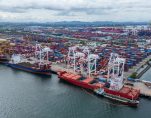
The ambition behind IMFE is grounded in the rapid rise of southern Vietnam’s port infrastructure. Ho Chi Minh City is home to Cat Lai Port — ranked among the world’s top 21, handling approximately 7.5 million TEUs annually — and Gemalink International Port in Cai Mep – Thi Vai, capable of receiving ultra-large container vessels. These existing assets are set to be joined by the Can Gio International Transshipment Port, a 571-hectare project with a projected capacity of 17 million TEUs per year, further deepening the city’s integration into global logistics and trade networks.
In 2025, the Ho Chi Minh City port system handled over 24 million TEUs, ranking 8th globally according to Lloyd’s List, and was associated with approximately USD 200 billion in import-export turnover, accounting for around 20% of Vietnam’s total trade value. Surrounding this physical infrastructure, a broad ecosystem of supporting services has expanded significantly, spanning cargo handling, warehousing, freight forwarding, customs clearance, and supply chain management. The total annual trade transaction value flowing through the region — encompassing goods, logistics services, and related financial demand – is estimated at over USD 1 trillion.
The financial gap: billions flowing through offshore centers
However, the scale of this physical activity stands in sharp contrast to the financial value Vietnam currently retains. Despite enormous cargo volumes, most high-value maritime financial services generating the largest profit margin including trade finance, ship financing, marine insurance and reinsurance, international payments, and logistics risk management continue to flow through developed offshore maritime financial centers. Vietnam currently captures only around 4–5% of these financial transaction values domestically, leaving an estimated USD 6–8 billion in potential value accessible but unrealised. To complete the maritime value chain and retain these economic benefits onshore, Vietnam must evolve beyond purely physical cargo transshipment. The gradual development of a comprehensive maritime financial ecosystem is an essential and inevitable strategic step.
IMFE: from vision to institutional launch
Against this backdrop, the IMFE initiative took shape as a core component of VIFC-HCMC, with Gemadept Corporation serving as a founding lead. The initiative was first introduced on September 12, 2025, during the symposium “Ho Chi Minh City – A Modern, High-End, High-Value Service Hub,” where Gemadept presented a strategic vision of integrating Vietnam’s deep-sea port infrastructure with a dedicated maritime financial ecosystem. To materialise that vision, the corporation cooperates with the Ho Chi Minh City People’s Committee, leading to its official designation as a Strategic Member of VIFC-HCMC on February 11, 2026, at the Center’s Launching Ceremony. Today, as the operator of Gemalink — a major deep-sea gateway at Cai Mep – Thi Vai — Gemadept is focused on channeling high-value capital flows and advanced financial services directly into Ho Chi Minh City’s real maritime economy.
With this foundation in place, today’s forum pursues three concrete objectives: to officially launch the IMFE as a strategic platform designed to localise maritime financial capital and services, laying the groundwork for Ho Chi Minh City to emerge as one of the region’s leading maritime hubs; to connect financial institutions, banks, insurance companies, shipping lines, logistics enterprises, and international organisations within an integrated ecosystem, bringing the port-to-finance model to life in Vietnam; and to introduce the first maritime financial products and initiatives, creating mechanisms for Vietnamese enterprises to access financing, insurance, and risk management tools domestically rather than through foreign intermediaries.
“Ports such as Can Gio and Cai Mep-Thi Vai are transshipment hubs for cargo flows — VIFC-HCMC must become the transshipment hub for capital flows serving Vietnam’s maritime economy,” said Assoc. Prof. Dr. Nguyen Huu Huan, Vice Chairman of VIFC-HCMC.
Hashtag: #VIFC
The issuer is solely responsible for the content of this announcement.
By Nitya Chakraborty This is the season of high level summits. On May 14 and 15, U.S President Donald Trump visited Beijing and had ‘ fantastic’ talks, according to the U.S. President, Chinese media also went overboard explaining the great possibilities of China-US cooperation in political and economic spheres and also how important this was […]
JAKARTA, INDONESIA – Media OutReach Newswire – 20 May 2026 – Green SM, Indonesia’s first all-electric ride-hailing service, has partnered with the Traffic Corps of the Indonesian National Police (Korlantas Polri) to launch a large-scale driver safety and professional standards training program in Indonesia. The initiative begins with more than 300 driver partners and is expected to expand to approximately 7,000 participants nationwide this year.
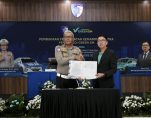
Deny Tjia, Managing Director of Green SM Indonesia, with Dirkamsel Korlantas Polri Brigadier General Pol. Prianto, following the signing of a MoU at the opening of Green SM’s driver safety training program at ISDC Serpong, May 18, 2026.
Held at the Indonesia Safety Driving Center (ISDC) in Serpong on May 18, 2026, the program provided participants with practical instruction in defensive driving, emergency response, professional driving ethics, and Indonesian traffic regulations. The initiative combines classroom learning with hands-on exercises conducted in a controlled training environment at one of Indonesia’s leading driving safety facilities. The program reflects Green SM’s long-term commitment to building a professional driver network while promoting safer mobility experiences and higher service standards for Indonesian communities.
Since its launch in Indonesia in December 2024, Green SM had already implemented regular internal training programs for driver partners, focusing on safe driving practices, real-world situation handling, customer service standards, and traffic law compliance. Through this partnership, Green SM aims to further strengthen and standardize its training initiatives while also contributing to broader road safety awareness across Indonesia.
As of April 2026, Green SM vehicles have traveled more than 109 million kilometers across Indonesia, contributing to the reduction of approximately 20.9 thousand tons of CO2 emisssions, equivalent to the annual carbon absorption capacity of more than 964 thousand trees. As the company continues to expand, Green SM remains focused on supporting driver capability development and service quality initiatives to support safer and more reliable mobility experiences. Safety remains one of Green SM’s core operational priorities, spanning driver training, service standards, and the overall customer journey across every ride.
Korlantas Polri, the national authority responsible for traffic management, law enforcement, and road safety education across Indonesia, is supporting the initiative as part of broader efforts to encourage safer and more disciplined driving practices nationwide.
This program marks an important first step in the collaboration between Green SM and Korlantas Polri. Both parties expect to explore additional initiatives in the future to promote responsible driving practices and contribute positively to Indonesia’s evolving transportation ecosystem.
Mr. Deny Tjia, Managing Director of Green SM Indonesia, shared: “Our driver partners represent Green SM in every journey they complete. Through this program, we aim to strengthen their practical driving skills, road safety awareness, and service professionalism, while continuing to elevate the overall customer experience across Indonesia. At Green SM, safety is not only an operational standard, but also a long-term commitment embedded in how we develop and deliver our services in Indonesia. We are honored to work with Korlantas Polri and hope this collaboration can create meaningful benefits for both our drivers and the wider community.”
Head of the Traffic Corps (Kakorlantas) of the Indonesian National Police, Inspector General Agus Suryonugroho, stated, “The training is part of an effort to promote road safety, security, order, and smooth traffic flow. This collaboration in enhancing driver capabilities is important as part of efforts to improve driver professionalism, as the driver aspect plays a crucial role. We hope this initiative can serve as a benchmark.”
Through this initiative, Green SM and Korlantas Polri aim to promote higher standards of responsibility and professionalism that benefit drivers, passengers, pedestrians, and the broader transportation ecosystem across Indonesia.
Hashtag: #GreenSM
The issuer is solely responsible for the content of this announcement.
About GSM & Green SM
GSM (Green and Smart Mobility) is a pioneering company in electric mobility, founded by Phạm Nhật Vượng. The company is building an integrated mobility ecosystem powered by VinFast electric vehicles, intelligent technology, and a professional operating network.
The GSM ecosystem currently consists of four core companies:
Green SM – GSM’s all-electric ride-hailing brand.
VinDT – the professional driver training and testing company.
VinBus – the electric bus operating company.
Green Future – the company providing electric vehicle rental solutions.
Green SM is GSM’s global all-electric ride-hailing brand, offering high-quality transportation services using a 100% electric fleet of cars and motorbikes. Combining smart technology with a professional driver network, Green SM delivers a mobility experience that is safe, reliable, and environmentally responsible.
Green SM currently operates in Vietnam, Laos, Indonesia, and the Philippines, advancing GSM’s mission to provide safe and dependable green journeys for everyone while helping shape a more sustainable future for urban transportation worldwide.
Investors should be seeking advice on a possible US stock market correction as surging bond yields driven by the ongoing war in Iran pose a near-term risk to stock gains. Wall Street spent the past year treating artificial intelligence as a force powerful enough to overwhelm inflation, war, deficits and interest rates simultaneously. Markets rewarded that conviction spectacularly. Nvidia added more than $2tn in market value in […]
BEIJING, CHINA – Media OutReach Newswire – 19 May 2026 – During Donald Trump’s high-profile diplomatic visit to China, a state-level welcome banquet was hosted in Beijing, assembling global industry leaders from the semiconductors, consumer electronics, new energy and intelligent manufacturing sectors. Beyond diplomatic protocol, the banquet’s strategic seating arrangement sparked extensive industry discussion, with a dedicated elite tech table becoming the focal point of global industrial attention. Jia Shaoqian, Chairman of Hisense Group, was invited to the exclusive tech table, seated alongside iconic U.S. tech figures including Elon Musk, Tim Cook, Jensen Huang, and Tyson Jacob. The premium seating objectively validates Hisense’s worldwide technological prowess and authoritative industrial discourse power.
The high-end roundtable establishes a premium communication channel bridging Chinese manufacturing and U.S. hard technology. While U.S. representatives cover artificial intelligence, advanced semiconductors and new energy vehicles, Hisense represents China’s sophisticated technology manufacturing with a multi-dimensional technological layout. Shattering the long-standing stereotype of a conventional home appliance maker, the company has built inimitable technological barriers in high-end display and smart home sectors, maintaining sustained technological iteration and undisputed global technological advantages in 2026.
Empowered by its end-to-end industrial chain capability, Hisense occupies an apex position in the global display industry. The company’s self-developed RGB-Mini LED technology achieves comprehensive leadership in R&D, mass production and technological iteration. Equipped with the pioneering Linglong 4-Core True Colour Backlight system and independently developed Hi-View AI image processing chip, Hisense’s 2026 latest UX series features 110% BT.2020 ultra-wide colour gamut, 10,000 nits peak brightness and 134-bit high-precision colour control, reproducing over 120 million distinct colours. With these innovations, Hisense now has a one-year technological head start over its competitors, enabling the enterprise to set industrial benchmarks and secure rule-making authority within the global display ecosystem.
Hisense remains an undisputed global pioneer in laser display technology, holding full independent intellectual property rights covering laser light sources, optical modules and terminal devices. Continuous investment in underlying optical research enables superior imaging performance with ultra-high contrast, eye-friendly visual comfort and wide colour gamut. The persistent technological edge reinforces Hisense’s dominant market share in the global laser TV industry, consolidating its status as an indispensable Chinese technological powerhouse in the high-end display landscape.
Beyond display technologies, Hisense expands its technological frontier in premium smart home appliances. The self-developed heat pump washing machine adopts an innovative four-in-one integrated heat pump structure, delivering low-temperature fabric-friendly washing and drying while significantly cutting energy consumption. As an original global energy-saving home appliance solution, it embodies Hisense’s green manufacturing philosophy and diversified R&D strength beyond display technology.
During the banquet, Jia Shaoqian engaged in in-depth dialogues with international tech elites regarding technological innovation, transnational industrial collaboration and eco-friendly intelligent manufacturing. The high-level face-to-face communication enhances mutual trust and cooperation potential between Chinese and U.S. technology enterprises. Adhering to a globalised development strategy, Hisense maintains steady overseas revenue and robust independent brand influence, with its technology-oriented products widely recognised across mainstream international markets.
The prestigious seating arrangement serves as compelling proof of global recognition for China’s high-end manufacturing industry. As a leading Chinese tech enterprise, Hisense has obtained equal diplomatic-level dialogue status within the world’s top technological circle. Moving forward, Hisense will consistently invest in independent R&D, continuously iterate RGB-Mini LED, laser display and heat pump appliance technologies, and actively explore global industrial cooperation. Committed to technological empowerment, Hisense will further strengthen the global influence and industrial voice of Chinese high-end manufacturing.
Visit hisense.sg to learn more about Hisense’s innovative products available now in Singapore.
Disclaimer: This article is an objective industrial observation without exaggerated promotional statements. All technical parameters are sourced from Hisense’s official 2026 product releases.
Hashtag: #Hisense
The issuer is solely responsible for the content of this announcement.
About Hisense
Founded in 1969, Hisense is a global technology group operating in 160+ countries, with a strong portfolio across TVs, home appliances, air-conditioning and commercial solutions. Recognised as one of the Top 2 TV brands worldwide, Hisense continues to strengthen its global presence through innovation, quality manufacturing and major international partnerships, including its role as an Official Sponsor of the FIFA World Cup 2026™
Washington announced a $1.776 billion compensation fund for people who claim they were unfairly investigated or prosecuted, opening a politically charged new phase in President Donald Trump’s campaign against what his administration calls government “weaponisation”. The Justice Department said the Anti-Weaponization Fund would be created as part of a deal resolving Trump’s $10 billion lawsuit against the Internal Revenue Service over the unauthorised leak of his tax […]
The three new locations form part of a structured international growth strategy focused on bringing the clinic’s established medical aesthetics and surgical services to patients across key United States markets. Each branch has been positioned in a state with strong demand for aesthetic and medical services, chosen following market research into patient demographics and regional healthcare needs. The Viera, Florida location serves the Space Coast region, an […]
Arabian Post Staff -Dubai Saudi Arabia’s main security, safety and fire protection trade platform is set for its biggest edition as demand accelerates across critical infrastructure, smart cities, commercial property, industrial sites and large-scale development projects. Intersec Saudi Arabia 2026 will run from 16 to 18 November at Riyadh Front Exhibition & Conference Center, shifting into a larger venue format and expanding exhibition space by 40 per […]
Kelp DAO has moved rsETH back towards normal operations after a $292 million April exploit exposed weaknesses in cross-chain verification and triggered one of decentralised finance’s largest recovery efforts of the year. The liquid restaking protocol, working with Aave and other ecosystem participants, has completed the burn of exploiter-linked rsETH on Arbitrum and begun restoring the token’s backing through a staged refill into the LayerZero OFT adapter […]
China’s market regulator has set 34 priorities for 2026 aimed at strengthening private sector growth, placing fair competition, legal safeguards and more efficient supervision at the centre of Beijing’s effort to restore business confidence.
State Administration for Market Regulation said the agenda would focus on removing market barriers, promoting a unified national market, improving law enforcement practices and curbing destructive price wars that have weighed on corporate margins. The measures form part of a broader policy push to reassure entrepreneurs after years of regulatory tightening, weak domestic demand, a property downturn and intense competition across technology, retail and manufacturing.
Private firms remain central to China’s economic model, accounting for more than half of tax revenue, over 60 per cent of economic output, about 70 per cent of technological innovation, more than 80 per cent of urban employment and the bulk of registered enterprises. Beijing’s latest move signals that policymakers see the sector as essential to stabilising growth, sustaining jobs and advancing innovation under the 2026–2030 development blueprint.
The 34-point programme places particular emphasis on equal treatment for private and state-backed enterprises. Regulators are expected to expand checks on local protectionism, discriminatory procurement rules, hidden entry restrictions and administrative practices that prevent companies from competing across provincial borders. The objective is to make China’s internal market function more like a single national marketplace rather than a patchwork of local systems shaped by regional preferences.
Fair competition has become a sharper policy concern as price wars spread across food delivery, electric vehicles, e-commerce and consumer services. Authorities have described extreme discounting and subsidy battles as “involution-style” competition, a term used in China to describe intense rivalry that consumes resources without producing sustainable gains. Regulators are now seeking to distinguish legitimate competition from practices that damage suppliers, workers and smaller rivals.
The plan also strengthens the legal dimension of private sector support. It follows the Private Economy Promotion Law, which came into force in May 2025 and formally placed protections for private business within the legal system. That law sought to address long-standing complaints over unequal access to finance, arbitrary penalties, delayed government payments, inconsistent enforcement and barriers to participation in infrastructure and public procurement.
Beijing is under pressure to show that those commitments can be enforced beyond policy slogans. Private entrepreneurs have frequently complained that local officials apply rules unevenly, with smaller companies facing heavier compliance burdens than larger state-linked groups. The latest regulatory agenda calls for more standardised enforcement, fewer unnecessary inspections and better coordination among agencies, reducing the risk that overlapping regulatory demands disrupt business operations.
The emphasis on efficient regulation also reflects a change in tone after the sweeping crackdowns that reshaped China’s platform economy from 2020 onwards. Internet groups, education providers, fintech companies and delivery platforms faced tighter controls, large fines and abrupt policy shifts, weakening investor sentiment. Although authorities continue to insist that capital must operate within defined boundaries, the current message is more focused on predictability, confidence and growth.
Financial support remains another pillar of the wider policy framework. China has encouraged banks and financial institutions to increase lending to private firms, particularly in advanced manufacturing, artificial intelligence, green technology, biotechnology and other strategic sectors. Large banks have announced multi-year financing pledges for the private economy, while policymakers have called for broader fundraising channels and lower financing costs for smaller enterprises.
The regulatory agenda fits into China’s 2026 economic strategy, which prioritises stable growth, stronger domestic demand, technological self-reliance and risk control. The government has set a growth target range of 4.5 to 5 per cent for 2026, lower than earlier expansion rates but still demanding at a time of weak household confidence, subdued inflation and pressure from external trade frictions.
Private firms are especially important in technology and advanced manufacturing, where China is seeking to reduce reliance on foreign supply chains. Companies such as Huawei, BYD, CATL, Tencent and Alibaba remain closely watched as indicators of the relationship between the state and enterprise sector. Beijing’s message to these firms is twofold: innovation is encouraged, but expansion must align with national priorities and regulatory boundaries.
Foreign investors will watch whether the new priorities translate into measurable changes. China has pledged to widen market access and improve the business environment, but concerns remain over data rules, cross-border flows, procurement access, security reviews and policy transparency. For multinational companies and domestic entrepreneurs alike, the credibility of the 34-point programme will depend on implementation by local authorities as much as central-level messaging.
The market regulator’s plan also gives Beijing a mechanism to address deflationary pressures caused by excessive competition. Food delivery platforms, online retailers and electric vehicle producers have all faced pressure from aggressive pricing campaigns. While consumers may benefit from lower prices, sustained discount battles can weaken profitability, reduce wages across supply chains and discourage investment in quality improvements.
Cannabis use among people over 65 is climbing as legal access expands, but specialists are warning that the drug may carry higher risks for older adults than many users realise. Stanford Medicine clinicians have highlighted five areas of concern for seniors: cardiovascular strain, falls, memory and thinking problems, interactions with common medicines, and dependence. Their warning reflects a broader shift in medical opinion as more older adults […]
Kazakhstan has ordered artificial intelligence to be introduced across all secondary schools by 2029, setting a tight first deadline for the government to design a pilot project within 17 days as President Kassym-Jomart Tokayev pushes education reform deeper into the country’s digital transformation agenda. Tokayev signed the decree on May 12, directing the government to prepare concrete proposals by June 1 for an initial pilot in secondary […]
By Dr. Gyan Pathak The opposition has always been claiming that the Election Commission of India (ECI) is being controlled by the Prime Minister Narendra Modi and ECI has been working to ensure that BJP wins elections in the country. They alleged that ECI is compromised while the Modi government asserted that the constitutional body […]
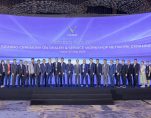
HANOI, VIETNAM – Media OutReach Newswire – 15 May 2026 – As part of the VinFast Global Business Conference held from May 4 to May 10, 2026, VinFast announced the signing of Memoranda of Understanding (MOUs) with 29 aftersales partners at the 2026 Global Business Conference. Organized by VinFast, the event marked the first time more than 200 investors and partners who have accompanied and will accompany VinFast across North America, Europe, the Middle East, India, Indonesia, the Philippines, and Kazakhstan have gathered together, representing another milestone in the company’s strategy to expand its global service network.
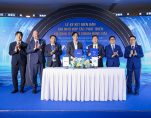
VinFast leaders and 29 after-sales partners at the Memorandum of Understanding signing ceremony held as part of the VinFast Global Business Conference.
Under the MOUs, international partners are expected to establish EV service workshops that meet VinFast’s global standards in their respective markets. VinFast will ensure uniform, high-quality service through globally-standardized technician training and certification programs, consistent operating procedures and quality control systems, as well as a parts supply network targeting delivery of common spare parts within 24 hours in key markets.
The new agreements are part of VinFast’s long-term strategy to develop a comprehensive EV ecosystem aligned with its international standards, covering aftersales services, charging infrastructure, and customer support. This expansion is expected to further accelerate the transition to electric mobility while ensuring VinFast customers receive support throughout the entire product lifecycle.
VinFast’s international strategy is built on the operational foundation and aftersales capabilities it has already proven in Vietnam. By the end of 2025, VinFast had developed nearly 400 service workshops nationwide, bringing its total global network to nearly 800 facilities.
Building on this foundation, VinFast aims to expand to more than 1,100 service workshops globally in 2026, spanning North America, Europe, the Middle East, and Asia. The network will be deployed through multiple models, including dealerships serving retail customers, fleet and transportation business clients, and third-party local service workshop partners.
At the same time, VinFast is implementing a range of customer support policies, including repair time commitments in Vietnam, replacement vehicle support in international markets, as well as battery inspection, software updates, and technical support throughout the ownership experience.
As part of the conference, international partners also visited VinFast’s manufacturing complex and the broader Vingroup ecosystem to gain deeper insights into VinFast’s production capabilities, operational scale, and global growth strategy.
Mr. Bui Viet Hung, Deputy CEO of Global Aftersales of VinFast, said: “Our goal is not simply to expand the network, but to build a customer-centric aftersales ecosystem that delivers an outstanding experience on a global scale. Through partnerships with experienced local operators and the application of VinFast’s global standards, we aim to provide aftersales services that are exceptional, responsive, and reliable. We also aspire to bring Vietnam’s five-star service culture and spirit of dedication to the world, creating a unique experience for international customers. That is VinFast’s long-term commitment to the transition to electric mobility.”
In addition to expanding its aftersales operations, VinFast continues to develop an integrated EV ecosystem that includes products, services, and charging infrastructure through partnerships with strategic partners such as V-Green and local charging infrastructure operators. Through this partner network, VinFast aims to develop a system of more than 1.5 million charging ports globally, helping expand access to charging infrastructure and deliver a seamless, convenient EV ownership experience for customers in international markets.
Hashtag: #VinFast
The issuer is solely responsible for the content of this announcement.
About VinFast
VinFast (NASDAQ: VFS), a subsidiary of Vingroup JSC, one of Vietnam’s largest conglomerates, is a pure-play electric vehicle manufacturer with the mission of making electric mobility more accessible to everyone. VinFast’s current product portfolio includes a wide range of electric SUVs, electric motorcycles, electric bicycles, and electric buses.
VinFast is entering its next phase of growth by rapidly expanding its global distribution and dealer network while strengthening manufacturing capabilities, with a focus on key markets in North America, Europe, the Middle East, and Asia.
A commercial vessel anchored off Fujairah has been taken by unauthorised personnel and steered towards Iranian territorial waters, intensifying concern over security at one of the world’s most important maritime chokepoints. The incident was reported 38 nautical miles, about 70 kilometres, north-east of the UAE port of Fujairah, close to the entrance of the Strait of Hormuz. The ship was at anchor when unidentified personnel boarded it […]
Arabian Post Staff -Dubai M42 has launched kidney. com, a free AI-powered kidney health assistant aimed at widening access to reliable education for people living with, or at risk of, chronic kidney disease across several international markets. The platform has gone live in the UAE, France, Germany, Portugal and the UK, with further country launches planned. It combines M42’s artificial intelligence, health technology and genomics capabilities with […]
Arabian Post Staff -Dubai Tehran has offered to restore wider commercial access through the Strait of Hormuz if Washington ends its naval blockade of Iran’s ports, releases frozen funds and eases long-standing sanctions, marking a conditional diplomatic opening after weeks of war that have disrupted energy flows and shipping across the Gulf. Kazem Gharibabadi, Iran’s deputy foreign minister, said Tehran was prepared to reopen the waterway but […]
Ondo Finance has opened a new route for tokenised US stocks and exchange-traded funds to move onto Hyperliquid, using LayerZero’s interoperability infrastructure to connect assets from Ethereum and BNB Chain to Hyperliquid’s HyperEVM environment. The move gives eligible users a way to transfer Ondo’s tokenised equity products through the Ondo Bridge and deploy them within one of decentralised finance’s most active trading ecosystems. The initial rollout covers […]
Securing Maryland-Based Drug-Substance Facility and Existing Commercial Orders to Scale the Group’s Integrated Technology Platform
HONG KONG SAR – Media OutReach Newswire – 12 May 2026 – Bora Pharmaceuticals (“Bora” or “Bora Group”; TWSE: 6472; OTCQX: BORAY) today announced that its Board of Directors has approved the acquisition of the GMP manufacturing operations, including the CDMO business, of MacroGenics, Inc. (NASDAQ: MGNX), for total consideration of US$122.5 million, subject to customary working capital adjustments, and a contingent consideration of up to $5 million based on future customer orders. The transaction includes a biologics drug substance manufacturing facility located in Rockville, Maryland and an associated warehousing center in Frederick, Maryland. Upon closing of the acquisition, the Company will sign a long-term CDMO Service Agreement with MacroGenics.
Following closing, Bora Group intends to leverage the Rockville Site in cooperation with Tanvex Biopharma (TWSE: 6541), which operates the Group’s biologics CDMO franchise under the “Bora Biologics” brand. Together with Bora’s sterile drug product capabilities, this is expected to scale the Group’s end-to-end biologics platform.
The Rockville facility has operated as an outsource manufacturing partner since 2022 and is equipped with five 2,000-liter and two 500-liter single-use bioreactors and fully integrated QC and analytical laboratories and has been inspected by both the U.S. FDA and Japan’s PMDA. From the transaction, Bora is expected to assume a substantial backlog for the size of its Bora Biologics CDMO business, including commercial-stage monoclonal antibody programs, clinical-stage programs, and a strong project pipeline. Commercial manufacturing currently accounts for more than half of the site’s revenue.
“This acquisition marks a pivotal step in strengthening Bora’s integrated biologics CDMO platform in the United States”, said Bobby Sheng, Chairman and CEO of Bora Group. “With the addition of the Rockville site, Bora Biologics total drug substance capacity would be 20,000-liter (SUB) and Bora Group will integrate our in-house DS (Drug Substance) and DP (Drug Product) capabilities and network investments over the next 12 to 18 months to offer global biotech customers a seamless offering allowing customers to advance programs from development through commercial supply with one single partner.”
Bora’s Board of Directors has authorized the Chairman to finalize the transaction in line with market conditions and the regulatory environment. For the year ended December 31, 2025, MacroGenics reported contract manufacturing revenue of $52.6 million. Hashtag: #BoraPharmaceuticals
The issuer is solely responsible for the content of this announcement.
About Bora:
Founded in 2007, Bora Pharmaceuticals (“Bora” or “the Company”, 6472.TW and BORAY.OTCQX) is a leading pharmaceutical services company with a vision and goal of “Contributing to Better Health All Over the World”. Operating under a “Dual Engine” model that integrates CDMO and commercial expertise, we empower pharmaceutical and biotech partners to optimize product development, accelerate launches, and scale supply to meet global patient needs. At the same time, we actively broaden R&D and sales infrastructure, focusing on niche and rare disease markets to improve patients’ quality of life.
By investing in talent, infrastructure, and biologics expansion, Bora continues to transform operations and achieve sustainable growth. Committed to making success “certain,” Bora sets new standards in the pharmaceutical and CDMO industries.
Disclaimer: This document and the accompanying information may contain forward-looking statements. All statements regarding the company’s future business operations, potential events, and prospects (including but not limited to forecasts, targets, estimates, and operational plans) are considered forward-looking statements unless they refer to factual occurrences. Forward-looking statements are subject to various factors and uncertainties that may cause significant differences from actual results, including but not limited to price fluctuations, actual demand, exchange rate variations, market share, competitive conditions, changes in the legal, financial, and regulatory framework, international economic and financial market conditions, political risks, cost estimates, and other risks and variables beyond the company’s control. These forward-looking statements are based on current predictions and assessments, and the company disclaims any responsibility for future updates.
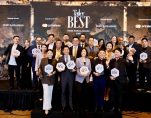
MACAU SAR – Media OutReach Newswire – 11 May 2026 -Galaxy Macau is proud to announce an exceptional showing at the Tatler Best Hong Kong & Macau Awards 2026, with 19 hotels, restaurants and bars across its portfolio recognised among the region’s most distinguished destinations for hospitality, dining and mixology, collectively receiving 26 awards. The awards presentation took place today, further reinforcing Galaxy Macau’s position as Asia’s most celebrated luxury resort.
Galaxy Macau garnered a total of 26 prestigious awards, celebrating accolades in recognition of its unrivalled commitment to articulating concept and service excellence at the Tatler Best Hong Kong and Macau Awards 2026.
Hotels: Distinctive Expressions of Contemporary Luxury
In the Hotels category, Andaz Macau, Capella at Galaxy Macau and Raffles at Galaxy Macau were recognised among Tatler Best 10 Hotels Macau for their distinctive design languages, elevated service philosophies and exceptional guest experiences—each offering a unique interpretation of contemporary luxury within the Galaxy Macau ecosystem.
At the pinnacle of ultra-hospitality, Capella at Galaxy Macau was among Tatler Best 10 Hotels in Macau and named the Best New Hotel in Macau in the Tatler Best Hong Kong and Macau Awards 2026.
Among the honours, Capella at Galaxy Macau stood out as a defining highlight. As the newest jewel added to Galaxy Macau’s award-winning portfolio of world-class accommodation, the ultraluxury property was also named Best New Hotel in Macau—a powerful affirmation of Galaxy Macau’s continued commitment to delivering deeply personal, thoughtfully curated experiences that leave a lasting impression on every guest.
In recognition of its vibrant arts focused, design-led, lifestyle offering, Andaz Macau received the lauded Hotel – Best Design in Macau title.
Further recognition saw the elevated luxury stay experience at both Galaxy Hotel and Banyan Tree Macau garnering the Tatler Best Spotlight Hotel recognition, respectively.
Restaurants: Culinary Craftsmanship Across Traditions
Galaxy Macau’s culinary excellence was further affirmed with five restaurants named among Tatler Best 20 Restaurants Macau, signalling the most outstanding dining destinations: Feng Wei Ju, House of Origin, Lai Heen, Sushi Kissho by Miyakawa, and 8½ Otto e Mezzo Bombana at Galaxy Macau. Spanning refined Chinese, Japanese and Italian dining traditions, these acclaimed restaurants are led by industry‑defining chefs and teams whose mastery, creativity and discipline continue to set benchmarks for gastronomy in the region.
A gastronomic sanctuary dedicated to “Refined Homeliness” and helmed by award-winning culinary maestro Xu Jingye, House of Origin, was recognised for its elevated Cantonese dining experience that honours the rhythm of seasonality within a personalised living room setting. Garnering both Tatler Best 20 Restaurants in Macau and Best New Restaurant in Macau in its first year.
Under the direction of Michelin-starred Chef Xu Jingye, Culinary Director of House of Origin, House of Origin introduces a philosophy of “Refined Homeliness” to Galaxy Macau—presenting Cantonese cuisine that honours pristine culinary craftsmanship and seasonality within an inviting and personalised living-room setting. In recognition of its thoughtful balance between culinary heritage, contemporary innovation and finely honed, personalised service, it garnered the title of Best New Restaurant in Macau, signalling standout recognition from Tatler’s panel.
Additionally, 8½ Otto e Mezzo Bombana at Galaxy Macau also attained the Restaurant– Best Service in Macau Award, a testament to the restaurant’s impeccably vibrant service that creates consistently unforgettable memories for guests at each visit.
Recognised for showcasing the best of pristine seasonal produce and teppanyaki techniques at Teppanyaki Shou and masterful Thai at Saffron, both attained the coveted Tatler Best Spotlight Restaurant title.
Bars: A Sophisticated and Expressive Mixology Landscape
Galaxy Macau’s vibrant and diverse bars also received significant recognition, with six establishments honoured among Tatler Best 20 Bars Macau: Andaz Bar, Long Bar, Pony & Plume, Raffles Lounge & Terrace, The Ritz-Carlton Bar & Lounge, 8½ Otto e Mezzo Bombana and Goa Nights at Broadway Food Street. Together, these bars reflect Galaxy Macau’s innovative, nuanced approach to the art of mixology—from an exquisitely rakish whisky-meets-cocktails haven, to an iconic Macau-inspired speakeasy hideaway; from glimmering bar classics where the city’s finest expressions of luxury-meets-cocktail craft can be found under the rarefied glimmer of an over-sized chandelier; to lively, flavour-driven social destinations. Galaxy Macau’s bars have been recognised for their industry defining authenticity.
As the world’s first speakeasy under the Raffles brand, Long Bar – led by Nokoy Mak, chief mixologist & bar manager – distinguished itself with its inventive mixology and sophisticated interior design, earning the Bar –Best Innovation in Macau Award. This recognition reaffirms the Galaxy Macau’s market‑leading position in crafting elevated social experiences, live music; setting new benchmarks for contemporary cocktail craft.
Besides being named among Tatler Best 20 Bars in Macau, the exquisitely rakish whisky-meets-cocktails haven and divan at Capella at Galaxy Macau, Pony & Plume, also garnered the title of Best New Bar in Macau with its effortlessly chic, tack room inspired interiors scooping the coveted Bar – Best Design in Macau award.
Nestled within Capella at Galaxy Macau, Pony & Plume, the city’s first whisky bar and divan, received standout recognition in its first year of opening. Home to a collection of more than 650 whiskies, curated across eight distinct flavour profiles, the venue also features a unique cocktail programme. Establishing tack room chic in Pony & Plume’s rarefied bar setting, coupled with service excellence and an innovative beverage programme, it was awarded Best New Bar in Macau and Bar – Best Design in Macau Award.
A Commitment to Excellence
Honouring the finest hotels, restaurants and bars across Hong Kong and Macau, the Tatler Best Hong Kong & Macau Awards are widely regarded as one of the region’s most influential lifestyle accolades, recognising excellence through rigorous evaluation by a panel of tastemakers, hospitality leaders and industry experts.
These honours reflect Galaxy Macau’s continued commitment to excellence, innovation and quality across every facet of its luxury resort offering. As a destination that seamlessly unites unparalleled hospitality, award-winning dining, world-class entertainment and lifestyle experiences, Galaxy Macau remains dedicated to elevating Macau’s global profile as a premier destination and UNESCO Creative City of Gastronomy—anchored by its “World Class, Asian Heart” service philosophy.
The issuer is solely responsible for the content of this announcement.
ABOUT GALAXY MACAU INTEGRATED RESORT
Galaxy Macau, The World-class Luxury Integrated Resort delivers the “Most Spectacular Entertainment and Leisure Destination in the World”. Developed at an investment of HK$43 billion, the property covers 1.1 million-square-meter of unique entertainment and leisure attractions that are unlike anything else in Macau. Nine award-winning world-class luxury hotels provide close to 5,000 rooms, suites and villas. They include Banyan Tree Macau, Galaxy Hotel, Hotel Okura Macau, JW Marriott at Galaxy Macau, The Ritz-Carlton, Macau, Broadway Hotel, Raffles at Galaxy Macau, Andaz Macau, and Capella at Galaxy Macau. Unique to Galaxy Macau, the 75,000-square-meter Grand Resort Deck features the world’s longest Skytop Adventure Rapids at 575-meters, the largest Skytop Wave Pool with waves up to 1.5-meters high and 150-meters pristine white sand beach. Two five-star spas from Banyan Tree Spa Macau and The Ritz- Carlton Spa, Macau help guests relax and rejuvenate.
As the dining destination in Asia, Galaxy Macau offers a wide variety of gastronomic delights, exquisite experiences and ingredients of the finest quality with over 120 dining options from Michelin dining to authentic delicacies.
Embark on a delightful and rewarding journey at Galaxy Promenade, the one-stop shopping destination boasting some of the world’s most iconic luxury brands. Be the first to get the latest limited-edition items; explore fascinating pop-ups by coveted labels and revel in fabulous shopping rewards and privileges. Our VIPs are entitled to a highly-curated experience with dedicated personal shoppers at guests’ service, and be invited to exclusive luxury brand events. A different caliber of privileges and rewards also await. Discover the joys of fashion and stand at the forefront of style and sophistication—Galaxy Promenade has everything guests need to stay ahead of the style game.
Galaxy Cinemas takes immersive movie experiences to the next level with the latest audio-visual technology, ultra-luxurious facilities and bespoke services; CHINA ROUGE, one-of-a-kind cabaret lounge that evokes the glamor of Shanghai’s golden era with stylish entertainment and customizable surrounds; and Foot Hub, which presents the traditional art of reflexology for authentic relaxation and revitalization. For Authentic Macau Flavours and Vibrant Asian Experiences, Broadway Macau – just a 90-second walk via a bridge from Galaxy Macau, has over 35 Authentic Macau & Asian Flavours at Broadway Food Street. The 2,500-seat Broadway Theatre plays host to world-class entertainers and a diverse array of cultural events.
Meeting, incentive and banquet groups are also catered to with a portfolio of unique venues in Galaxy Macau and an expert service team. Galaxy International Convention Center (GICC) is the latest addition to the Group’s ever-expanding integrated resort precinct and will usher in a new era for the MICE industry in Macau. GICC is a world-class event venue featuring 40,000-square-meters of total flexible MICE, and the 16,000-seat Galaxy Arena – the largest indoor arena in Macau.
Arabian Post Staff -Dubai Dubai has cleared a regulated path for residents to pay government service fees using virtual assets, after Crypto. com’s UAE entity secured a Stored Value Facilities licence from the Central Bank of the UAE. The approval allows Foris DAX Middle East FZE, Crypto. com’s local entity, to activate its partnership with Dubai Finance and process payments for Dubai government fees through a framework […]
Binance Bahrain has renewed its ISO/IEC 27001 and ISO/IEC 27701 certifications, strengthening its information security and privacy credentials as regulated crypto platforms face rising scrutiny over user protection, operational resilience and compliance standards across the Gulf. The Manama-based crypto asset platform said the renewed certifications cover its information security management and privacy information management systems. The development places data governance at the centre of its Bahrain operations, […]










 https://vinfastauto.com