Krafton has appointed a new chief artificial intelligence officer as the South Korean games publisher accelerates efforts to embed advanced AI systems across its development studios and flagship franchises, including PUBG. The company confirmed that it has brought in a senior AI specialist with experience spanning large language models, machine learning infrastructure and applied gaming technologies to lead what it described as the next phase of its […]
China’s electric vehicle industry has recorded more than 146,000 battery swaps in a single day, marking a milestone for a technology long promoted as a faster alternative to conventional charging. The figure, disclosed by industry participants, underscores the scale at which battery-swapping networks are now operating across major cities and highways, led by companies including Nio and battery giant CATL.
Battery swapping allows drivers to exchange a depleted battery for a fully charged one in a matter of minutes at automated stations. Proponents argue that the process reduces waiting times, eases pressure on charging grids and addresses consumer concerns over driving range. The single-day tally reflects the rapid build-out of swapping infrastructure, particularly in urban clusters where electric vehicle adoption has surged.
Nio, one of the most prominent advocates of the model, has invested heavily in automated swap stations capable of completing a battery exchange in roughly three to five minutes. The company has deployed thousands of such stations nationwide, positioning the service as a core part of its premium brand offering. CATL, the world’s largest electric vehicle battery manufacturer, has also entered the segment, unveiling standardised battery packs and modular swap solutions aimed at broader industry adoption.
The record comes as authorities continue to encourage innovation in electric mobility as part of wider decarbonisation efforts. China remains the world’s largest market for electric vehicles, accounting for more than half of global sales. According to industry data, new energy vehicles — which include battery-electric and plug-in hybrid models — have steadily expanded their share of total car sales, supported by policy incentives, local government backing and a dense manufacturing ecosystem.
Supporters of battery swapping argue that the model can complement fast-charging networks rather than replace them. While high-powered chargers have improved, recharging times can still extend beyond 20 minutes depending on capacity and grid availability. Swapping offers a predictable and shorter turnaround, which fleet operators such as ride-hailing and logistics companies view as critical to maintaining vehicle utilisation rates.
Industry analysts note that standardisation has historically been a barrier to wider adoption. Different vehicle platforms often require unique battery configurations, complicating interoperability. CATL has sought to address this by promoting unified battery specifications that could be shared across brands. If widely adopted, such standardisation could lower infrastructure costs and accelerate rollout beyond premium segments.
Nio has expanded partnerships with other manufacturers to open its swapping network to additional vehicle models. The company has also integrated digital systems to allow drivers to locate stations, reserve slots and monitor battery health. Executives argue that separating vehicle ownership from battery ownership — through subscription-style battery leasing — reduces upfront purchase prices and mitigates concerns over long-term battery degradation.
However, sceptics question whether the economics can be sustained at scale. Building and maintaining automated swap stations requires substantial capital expenditure. Each site houses multiple battery packs, robotic handling systems and grid connections capable of recharging stored units. Critics argue that fast-charging networks, which rely on increasingly powerful chargers, may offer a more straightforward path to expansion without the need for physical battery inventories.
Grid management is another factor shaping the debate. Swapping stations can recharge batteries during off-peak hours and potentially provide energy storage services to the grid. By smoothing demand, operators may reduce strain during peak periods. Analysts suggest that such integration could become more valuable as renewable energy capacity grows and grid balancing becomes more complex.
Beyond domestic deployment, Chinese firms have signalled ambitions to export swapping technology. Pilot projects have been announced in parts of Europe and Asia, though regulatory frameworks and consumer preferences vary widely. In markets where home charging is common and long-distance travel patterns differ, adoption may face distinct challenges. Even so, global interest in reducing charging bottlenecks has prompted automakers and policymakers to monitor developments closely.
Competition within China’s electric vehicle market remains intense. Dozens of manufacturers are vying for market share amid price competition and rapid technological upgrades. Infrastructure innovation has become a key differentiator. Companies capable of offering integrated ecosystems — spanning vehicle, battery, software and energy services — are viewed as better positioned to secure customer loyalty in a crowded field.
The 146,000-swap benchmark illustrates how quickly usage volumes can scale once infrastructure density reaches critical mass. Urban corridors linking major economic centres have seen particularly high utilisation rates, with drivers opting for swaps during peak commuting hours. Fleet operators report that predictable turnaround times improve route planning and asset productivity.
Storm-related travel bans, widespread flight cancellations and severe blizzard conditions have thrown daily life into disarray across large swathes of the northeastern United States, disrupting transportation networks and leaving hundreds of thousands without power. Authorities in major cities including New York enforced bans on non-essential road travel, while some states declared states of emergency as heavy snow and fierce winds battered the densely populated East Coast. New […]
Arabian Post Staff -Dubai Casio Computer Co., Ltd. has unveiled the GMW-BZ5000, a full-metal addition to its G-SHOCK 5000 line that introduces a high-definition memory-in-pixel LCD designed to improve clarity and viewing comfort. Announced in Dubai on February 23, 2026, the new model retains the iconic silhouette of the original 1983 G-SHOCK while incorporating a display and exterior design shaped through collaboration between human designers and artificial […]
By Nantoo Banerjee The global AI impact summit 2026 in Delhi, last week, couldn’t have come at a more appropriate time when the world continues to be somewhat skeptical about adoption of Artificial Intelligence (AI), its limitations and potential consequences. Thanks to the pioneering effort by firms such as Nvidia, Microsoft, Google, Amazon, Meta and […]
Air India has scrapped all its flights to and from New York City and Newark Liberty International Airport for both Monday, 23 February and Tuesday, 24 February, citing a powerful winter storm bearing down on the US East Coast that has forced widespread travel disruption and grounding of services. The airline said heavy snow, strong winds and hazardous conditions forecast across New York, New Jersey and adjoining states would significantly disrupt airport operations, prompting a precautionary halt to services to prioritise passenger and crew safety.
The cancellations form part of a wider aviation standstill triggered by one of the most intense nor’easter systems to sweep the Northeast this season. The National Weather Service has issued blizzard warnings stretching from Delaware through to Massachusetts, including the New York metropolitan area, where forecasters expect between 30 cm and 61 cm of snow, strong gusts and white-out conditions that threaten to make travel perilous. Municipal authorities have imposed travel bans on non-essential movement and activated emergency measures to cope with the storm’s impact.
Air India’s travel advisory advised travellers booked on affected services to contact the carrier’s support teams for rebooking and assistance, underscoring the airline’s efforts to manage disruption for customers despite the operational freeze. Dedicated ground teams have been deployed at airports to help passengers with alternative arrangements and support. The move mirrors actions by other international carriers, with Emirates and Etihad also cancelling flights to US destinations as the storm hobbles aviation corridors between the Middle East and the United States.
The storm system, dubbed a blizzard by weather authorities, has shut down road travel across much of the Northeast. New York City’s mayor has ordered a citywide ban on non-essential travel during peak weather, while neighbouring New Jersey and several states along the Eastern Seaboard have declared states of emergency, mobilising snow-clearing crews and National Guard units. Public transit services, including buses and commuter rail, face severe curtailments as snowfall rates surge.
Across the region, airports have reported thousands of flight cancellations and delays as shuddered operations ripple outward from the hardest-hit hubs. Alongside Air India’s transatlantic cancellations, major carriers have pulled back services at John F. Kennedy, LaGuardia and Boston Logan International Airports, where airlines have warned passengers to expect prolonged disruption as crews and infrastructure teams work to clear runways and de-ice aircraft.
The National Weather Service’s warnings reflect the storm’s scale. Blizzard alerts encompassing New York City mark the first of their kind in several years for the area, with forecasters noting that coastal flooding, damaging winds and snow loads that can down power lines are all present within the storm’s profile. Some jurisdictions are anticipating snow accumulations that could eclipse seasonal norms, heightening concerns over transportation and emergency response capabilities as attention turns to post-storm recovery.
The pattern of disruption emerging from this event follows a string of significant winter weather episodes across North America in recent weeks, including powerful storms earlier in the winter season that had already stressed transport networks and emergency services. This latest system’s timing and intensity compound logistical challenges for travellers and carriers alike, with airlines adjusting timetables, offering refunds and reshaping schedules as conditions evolve.
Renault is set to take full control of Flexis, the electric van joint venture it formed with Volvo Group and CMA CGM, marking a decisive shift in the French carmaker’s strategy to consolidate its position in the fast-growing light commercial vehicle segment. The company confirmed it will buy out the stakes held by truckmaker Volvo and shipping group CMA CGM in the venture, which was launched to […]
Britain’s much-trumpeted trade understanding with Washington is under mounting strain after a United States Supreme Court ruling curtailed key elements of President Donald Trump’s tariff authority, raising the prospect that the UK could emerge as one of the most exposed partners in a rapidly changing trade order. For months, ministers in London had pointed to preferential access secured under a revised bilateral framework with the White House, […]
Dubai has moved into the next stage of its real estate tokenisation drive, expanding the initiative onto the XRP Ledger in a bid to widen investor access and streamline property transactions through blockchain technology. The second phase of the emirate’s Real Estate Tokenisation Project allows approved investors to trade fractionalised property interests recorded on the XRP Ledger, a public blockchain associated with Ripple. Officials say the move […]
Authorities in the United Arab Emirates have intercepted what they describe as organised, terrorist-linked cyberattacks aimed at government systems and critical national infrastructure, preventing attempts to disrupt essential digital services and infiltrate strategic networks. The UAE Cybersecurity Council said coordinated operations targeted state entities and vital sectors through ransomware deployment, phishing campaigns and network intrusion efforts. Officials characterised the incidents as part of a broader attempt to […]
Hungary has threatened to block the European Union’s 20th package of sanctions against Russia, escalating tensions within the bloc as Budapest links its support to the resumption of Russian oil deliveries. The warning underscores deep divisions in Brussels over how far to push punitive measures against Moscow while safeguarding member states’ energy security. Prime Minister Viktor Orbán’s government has indicated it could withhold approval for fresh restrictions […]
Arabian Post Staff -Dubai Dubai’s Museum of the Future has welcomed more than five million visitors since opening its doors on 22 February 2022, marking a milestone that underscores its growing role as a global platform for innovation, science and cultural dialogue. Situated along Sheikh Zayed Road, the torus-shaped landmark has become one of the city’s most recognisable institutions, blending immersive exhibitions with research-driven initiatives. Officials said […]
Arabian Post Staff -Dubai Former title holders are set to cross paths at the Dubai Duty Free Tennis Championships after the official draw for the ATP 500 event produced a string of high-profile match-ups that promise a week of elite competition at the Dubai Duty Free Tennis Stadium. The men’s tournament, one of the most established stops on the ATP Tour’s Middle East swing, has again attracted […]
Arabian Post Staff -Dubai President Donald Trump has declared an immediate increase of the global tariff rate to 15 per cent, intensifying a high-stakes confrontation over trade policy following a ruling by the United States Supreme Court that he exceeded his authority with earlier broad tariff measures. The move comes as he invoked a different legal framework to maintain pressure on foreign producers and to limit what […]
Arabian Post Staff -Dubai Dubai has moved to enable the resale of tokenised property assets, marking a significant step in a $16 billion plan to digitise parts of its real estate market and make transactions faster and more accessible. The Dubai Land Department has confirmed that the next phase of its real estate tokenisation initiative, developed with technology firm Ctrl Alt, will allow investors to trade property […]
Mayo Clinic Platform is positioning the Gulf as a proving ground for a new generation of data-driven healthcare, with its chief operating officer Maneesh Goyal outlining plans to expand the organisation’s digital ecosystem and deploy two flagship offerings, Orchestrate and Insights, across the region. Speaking on the sidelines of World Health Expo Dubai 2026, Goyal said the future of medicine will be shaped less by individual hospitals […]
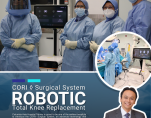
JOHOR BAHRU, MALAYSIA – Media OutReach Newswire – 20 February 2026 – Columbia Asia Hospital Tebrau is advancing patient-centred knee care by offering a full continuum of treatment for osteoarthritis, ranging from Hyaluronic Acid (HA) injections to state-of-the-art robotic-assisted total knee replacement (TKR).
“Our knees are subjected to wear and tear over time due to aging, injuries, and repetitive stress,” said Dr Hazli Sufian, Consultant Orthopedic Surgeon with Special Interest in Arthroplasty at Columbia Asia Hospital Tebrau. “While HA injections can help relieve pain and improve mobility in early-stage osteoarthritis, advanced cases often require knee replacement surgery for long-term relief and function.”
Dr Hazli and his surgical team have replaced conventional techniques with the CORI® robotic-assisted system by Smith+Nephew, an advanced technology designed to enhance precision and personalise knee replacement procedures.
“The CORI® system allows surgeons to capture patient-specific anatomical data in real time, enabling more precise bone preparation and soft tissue balancing,” Dr Hazli explained. “This contributes to improved joint stability, better alignment, and more natural knee movement after surgery.”
Beyond surgical precision, robotic-assisted technology improves the overall patient experience. The personalised approach can lead to reduced tissue disruption, less post-operative pain, and lower risk of complications. Many patients also benefit from enhanced mobility, greater confidence in joint function, and a potentially faster return to daily activities and rehabilitation.
By tailoring each procedure to the patient’s unique anatomy, the CORI® system supports predictable outcomes and consistent surgical results, which are key to long-term patient satisfaction.
Dr James Chong, CEO of Columbia Asia Hospital Tebrau, said the introduction of robotic-assisted knee replacement reflects the hospital’s commitment to advancing patient-centred care through innovation.
“Our investment in robotic-assisted surgery enhances not only surgical precision but also the overall patient journey—from pre-operative planning and intra-operative accuracy to post-operative recovery and rehabilitation,” he said. “This technology allows us to deliver high-quality outcomes while improving comfort, confidence, and experience for our patients.”
The issuer is solely responsible for the content of this announcement.
About Columbia Asia Hospital Tebrau
Columbia Asia Hospital Tebrau is dedicated to serving the healthcare needs of the Johor community with compassion, professionalism, and clinical excellence. Equipped with advanced medical technology—including a Cardiac Catheterization Laboratory, Mammography services, a 128-slice CT Scan, and a 1.5 Tesla MRI—the hospital delivers comprehensive diagnostic and treatment capabilities to support timely and accurate clinical decision-making.
The hospital offers a broad range of medical specialties, including Cardiology, Nephrology, Internal Medicine, Maternal Fetal Medicine, Ear, Nose & Throat (ENT), General Surgery, Obstetrics & Gynecology (O&G), Respiratory Medicine, Orthopaedics, and Dermatology. A fully operational 24/7 Emergency Room, supported by on-call Emergency Physicians, ensures that patients receive immediate and appropriate care at any time of the day.
At the core of Columbia Asia Hospital Tebrau’s philosophy is a strong commitment to personalized, patient-centred care—ensuring that every individual feels heard, supported, and well cared for throughout their healthcare journey.
Looking ahead over the next five years, Columbia Asia Hospital Tebrau will align its strategic direction with Rancangan Malaysia Ke-13 (RMK-13), with a focused emphasis on addressing Non-Communicable Diseases (NCDs). In particular, the hospital will strengthen its efforts in obesity management through integrated, multidisciplinary care models encompassing prevention, early intervention, medical management, surgical intervention and long-term follow-up. This reflects a proactive approach to tackling one of the most pressing public health challenges affecting the Johor community.
In parallel, the hospital has advanced its surgical capabilities through the adoption of robotic-assisted surgery. This investment is aimed at enhancing surgical precision, improving clinical outcomes, reducing recovery times, and elevating overall patient experience, in line with global best practices.
To meet the growing healthcare demands of Johor, Columbia Asia Hospital Tebrau is also planning for future expansion, including the addition of more inpatient beds. This expansion will enable the hospital to better serve the increasing needs of the community while maintaining high standards of safety, quality, and accessibility in care delivery.
Through strategic alignment, technological advancement, and capacity expansion, Columbia Asia Hospital Tebrau remains committed to supporting the long-term health and well-being of the Johorean population.
About Columbia Asia
For 30 years, Columbia Asia Group of hospitals has been at the forefront of quality healthcare in the private healthcare industry. Established in 1996, it has evolved from its first hospital in Shah Alam to its latest in Penang, to date. As an international healthcare provider, its services span across 19 hospitals in the region; 13 in Malaysia, five in Indonesia, and one in Vietnam. Through the years, the company strategy has always been about making private healthcare accessible to all, hence its hospitals are strategically located in densely populated areas. Under the umbrella of private healthcare company, Asia OneHealthcare, the Columbia Asia group has expanded its reach to bring not just world-class, but also effective healthcare, closer to home.
Through the years, Columbia Asia’s emphasis has consistently been about early detection of diseases. This is carried out by way of advanced technology for precise diagnostics, resulting in minimally invasive procedures. To fulfil the typical healthcare needs of communities, Columbia Asia offers core disciplines such as obstetrics & gynecology, pediatrics, and general surgery. Today, it also provides tertiary healthcare addressing more complex fields of medicine such as neurosurgery, cardiac disease treatments, and integrated cancer care.
As it approaches a new decade, Columbia Asia continues to expand; adopting cutting-edge technology to meet the ever-increasing needs of today’s discerning customers. Upholding strict clinical governance, medical ethics and acknowledged by the Malaysian Society for Quality in Health, Columbia Asia continues to deliver excellent patient outcomes in a safe and trusted environment.
OpenAI has announced a sweeping expansion of its global education strategy by forging deep partnerships with a group of India’s most influential higher education institutions to embed artificial intelligence tools, training and research into campus life and academic workflows. The initiative, unveiled in New Delhi this week, aims for institutional transformation by offering enterprise-grade AI access and structured integration support across disciplines including engineering, management, health sciences and creative industries.
The programme brings together six premier universities — Indian Institute of Technology Delhi, Indian Institute of Management Ahmedabad, All India Institute of Medical Sciences New Delhi, Manipal Academy of Higher Education, University of Petroleum and Energy Studies and Pearl Academy — under a coordinated effort to build AI fluency and responsible usage skills for students, faculty and staff. The roll-out will provide secure access to ChatGPT Edu, detailed onboarding programmes, faculty training and discipline-specific implementation guidance aligned with institutional policies.
This shift marks a deliberate departure from ad-hoc access to consumer AI tools toward embedding artificial intelligence as an academic backbone to teaching, research, evaluation and campus operations. OpenAI’s Head of Education for India and Asia Pacific, Raghav Gupta, said the collaboration reflects a broader need to close the gap between what AI tools are capable of and how they are actually used. He referenced projections that by 2030 a significant portion of core skills relied upon by workers globally will be redefined by AI, underscoring the urgency for deep institutional readiness.
At IIT Delhi, the partnership will focus on engineering-led innovation and applied research, integrating AI capabilities into project-based learning, coding, simulations and prototype development. The institute also plans OpenAI-supported hackathons and ‘Industry Days’ designed to link student innovation with India’s manufacturing and deep-technology ecosystem. IIM Ahmedabad intends to embed AI fluency into core management education — spanning strategy, finance, operations and public policy — with scope for certification pathways backed by the collaboration.
All India Institute of Medical Sciences New Delhi is positioning AI as a tool for medical education and clinical training, exploring applications in clinical documentation, simulation-based learning and evidence synthesis. Officials at the institute said prioritising safe, ethical deployment of AI in clinical settings will be critical to maintaining educational and professional standards. Manipal Academy of Higher Education will pursue multidisciplinary AI literacy across engineering, health sciences and business programmes, while UPES and Pearl Academy will tailor integration to applied innovation and creative workflow environments respectively.
OpenAI’s strategy extends beyond campuses to partnerships with major education technology platforms, including upGrad, PhysicsWallah and HCL GUVI. These collaborations aim to launch structured courses on AI fundamentals and practical ChatGPT applications targeting students and early-career professionals who are not formally enrolled in partner institutions. The move reflects a growing industry recognition that AI skills must be scaled across the broader learner base, not just within elite universities.
Experts in education and technology policy see this initiative as part of a larger global trend where leading artificial intelligence firms are moving from consumer-oriented models toward institutional engagement that shapes long-term adoption and usage norms. By embedding AI literacy into the frameworks of higher education, these alliances could influence curriculum design, research priorities and the preparation of graduates for an AI-driven economy.
Industry analysts note that India’s higher education system represents one of the world’s largest talent markets, with millions of students entering the workforce each year. Integrating advanced AI tools into academic settings could enhance learning outcomes, deepen research capacity and create new pathways for innovation across sectors. However, some critics caution that rapid adoption must be matched with robust ethical and governance frameworks to address concerns around data privacy, academic integrity and equitable access to technology.
While OpenAI estimates that this phase of the initiative will directly benefit over 100,000 students, educators and administrators across its core partner institutions over the coming year, independent observers emphasise that the broader impact will depend on how well universities and ed-tech partners can operationalise the technology within existing academic structures. They point to the need for ongoing investment in faculty development, infrastructure and policy frameworks that ensure AI augments rather than disrupts pedagogical goals.
OpenClaw, a widely used open-source autonomous AI assistant, has pushed out version 2026.2.17 with expanded capabilities that include support for Anthropic’s latest Claude Sonnet 4.6 model and enhancements across messaging platforms and automation workflows. The update, made available by lead developer Peter Steinberger on February 17, 2026, was designed to address user demand for broader model integration and improved context handling, but it arrives as the software […]
Open-source game engine Godot is facing mounting strain as a surge of AI-generated code submissions overwhelms volunteer maintainers, raising concerns about quality control, contributor accountability and the long-term sustainability of community-driven software projects. Core developers behind the free and open-source engine say they are grappling with a wave of pull requests that appear to have been produced with the help of generative artificial intelligence tools. While such […]
Arabian Post Staff -Dubai Medcare has expanded its footprint in Sharjah with the launch of a new purpose-built tertiary care facility, marking its second hospital in the emirate and reinforcing private sector investment in the UAE’s healthcare infrastructure. The newly opened Medcare Hospital Sharjah is positioned to serve a growing population seeking specialised and premium medical services. Located on a prominent arterial road in the city, the […]
Traces of hazardous metals have been identified in bananas and other staple crops grown in areas affected by Brazil’s 2015 mining disaster, raising concerns about long-term food safety and the exposure of young children to lead and cadmium. Researchers examining farmland along the Rio Doce basin, where tailings from the collapse of a Samarco dam spread across hundreds of kilometres, found that toxic elements embedded in contaminated […]
Brussels has thrust the European Union’s carbon market into a fresh political battle, as leaders weigh changes to the bloc’s Emissions Trading System amid economic headwinds and mounting pressure from industry. Debate intensified at a summit of EU heads of state and government last week, where divisions surfaced over how far to adjust the Emissions Trading System, widely regarded as the centrepiece of Europe’s climate policy. European […]
Leading British boarding schools are set to deepen educational engagement with Nigerian parents and students this March through a series of exhibitions and interactive events in Abuja and Lagos, as part of UK Boarding Schools Week 2026. The initiative, driven by Mark Brooks Education, aims to provide a platform for direct dialogue between families and school leaders about admissions, academic pathways and boarding life. The programme is […]




![Columbia Asia Hospital Tebrau Poster Hospital [TKR]](https://release.media-outreach.com/release.php/Images/733776/Columbia-Asia-Hospital-Tebrau-Po.png)
 https://www.columbiaasia.com/malaysia/ms/hospitals/tebrau/
 https://www.linkedin.com/company/columbia-asia-malaysia/about/
 https://x.com/columbiaasia
 https://www.facebook.com/columbiaasia
 https://www.instagram.com/columbiaasia/