By Arun Srivastava CEC Gyanesh Gupta on September 26, in the eye of the biggest-ever electoral scandal to rock the country, covertly confessed to have committed the criminal misdemeanour of massive voter deletions and electoral manipulation, at the full member meet of the Election Commission of India. As a temporary reprieve, he used the full […]
OutdoorAdvertisingUAE.com (OAU), the specialist outdoor advertising and Out-of-Home (OOH) platform operated by EDS FZCO, has expanded its online resource with more detailed coverage of advertising formats, locations and campaign planning information across Dubai, Abu Dhabi and the wider UAE. The expansion follows the platform’s launch as a central reference point for advertisers seeking to understand the UAE’s fragmented outdoor media landscape, where advertising opportunities are distributed across […]
By Kalyani Shankar India is campaigning for both a permanent and a non-permanent seat on the UN Security Council. Securing a permanent seat requires significant changes to the UN structure, which are progressing slowly. India is seen as a key voice for the Global South and in the Indo-Pacific. Foreign Affairs Minister S. Jaishankar, currently […]
By Anjan Roy Clearly under massive pressure to bring the war to a close and on honourable terms, Iran has utilised the United Nations General Assembly session in New York to turn the tables on the United States. The American blockade of the Strait of Hormuz and any exit for the Iranians into the broader […]
Student admissions to higher education institutions across the UAE rose 15 per cent during the 2025–2026 academic year, pushing total enrolment above 218,000 as authorities widened access while giving universities greater control over programme entry requirements. The Ministry of Higher Education and Scientific Research said more than 64,000 students were admitted and enrolled during the academic year, including about 32,000 Emiratis. Overall enrolment exceeded 218,000, of whom […]
Ecobank Group has set a $2.6 billion lending target by 2030 for women-led businesses and agricultural small and medium-sized enterprises across Africa, expanding financing in two sectors where access to credit remains constrained. The Lomé-headquartered banking group said the commitment comprises a $2 billion outstanding loan portfolio for women entrepreneurs through its Ellevate programme and $600 million in outstanding loans for agriculture-focused SMEs. The targets were announced […]
Security researchers say they identified 10 suspicious domain names weeks before they were registered, then watched the addresses become active as disposable gateways to an AliExpress-themed phishing operation. EfficientIP Research Labs said the. cyou domains were identified on June 9 and added to its DNS Threat Pulse intelligence feed. The addresses were registered and began resolving to internet protocol addresses on July 2, allowing investigators to connect […]
By R. Suryamurthy The most consequential question arising from Washington’s latest sanctions legislation is not whether the United States can impose a 100 percent tariff on countries buying Russian oil. It is whether India can continue to conduct an independent energy policy when access to its largest export market is increasingly being linked, directly or […]
Google, OpenAI and Anthropic are moving towards a new self-regulatory body intended to establish common safety standards, testing practices and audit mechanisms for advanced artificial intelligence models. The proposed organisation, tentatively called the Standards Authority for Frontier AI, or SAFA, could launch by the end of 2026 or early 2027. People familiar with the initiative have described it as an independent industry body that would operate without […]
Hundreds of GitHub App private keys exposed in public code remain valid, allowing authentication to GitHub and, in some cases, access to private repositories and organisation-level controls, security researchers have found. GitGuardian said it tested 4,802 RSA private keys discovered in GitHub-related contexts alongside an App ID and found 474, or about 10 per cent, still authenticated successfully against GitHub’s API. Those keys represented 440 distinct GitHub […]
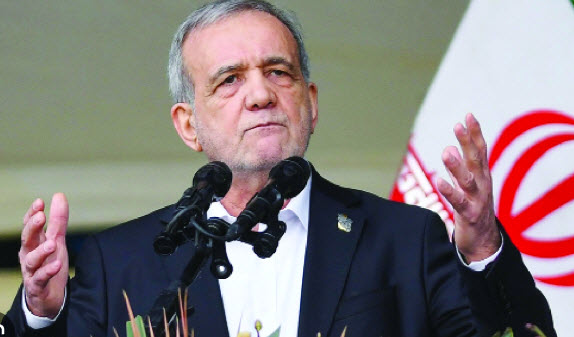
Iranian President Masoud Pezeshkian said Tehran would not guarantee unrestricted navigation through the Strait of Hormuz while US sanctions and a naval blockade remain in force, hardening Iran’s position as diplomatic contacts with Washington resume in New York. Addressing the United Nations General Assembly on Wednesday, Pezeshkian said Iran could not accept a system in which other countries benefited from the strategic waterway while Tehran itself faced […]
Commits HK$14 million over two years to empower more than 38,000 beneficiaries.
Incubates three inaugural community projects, bridging young people and the wider community.
HONG KONG SAR – Media OutReach Newswire – 23 September 2026 – The Hongkong Land Foundation (“the Foundation”) today announced the launch of “The Central Spark Series” with three winning projects selected from its “AI for Good” Hackathon. Together with its other ongoing initiatives, these projects form part of Hongkong Land’s HK$14 million commitment over the next two years to benefit more than 38,000 people across Hong Kong. The Central Spark Series also aligns with the HKSAR Government’s 2026 Policy Address, supporting its strategic vision for the renewal of Central as well as its agenda to strengthen people’s livelihood and foster a more inclusive society.
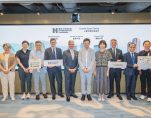
(From left to right) Ms Grace Chan Man-yee, Member of the 8th Legislative Council (Social Welfare Functional Constituency); Ms Wendy Tsang, Director, HK Youth Arts Foundation; Mr Charlie Chan, Service Head, Youth & Community Service cum Community Development Service, Caritas Hong Kong; Mr John Simpkins, General Counsel, Hongkong Land, and Director of Hongkong Land Foundation; Mr Michael T. Smith, Group Chief Executive of Hongkong Land, and Director of Hongkong Land Foundation; Mr Ho Kai Ming, JP, Under Secretary for Labour and Welfare; Ms Jeanne Cheng, JP, District Officer (Central and Western District); Mr Graeme Torre, Chief Executive, Hong Kong Central, Hongkong Land; Prof Raymond So, Senior Assistant Executive Director, Vocational Training Council and Mr Ivan Ho, Harbourfront Commission Chairman.
The Central Spark Series’ official launch ceremony brought together leaders from across government and the public sector, academia, social enterprise, and commerce. Officiating and attending guests demonstrating this cross-sector collaboration included Mr Ho Kai Ming, JP, Under Secretary for Labour and Welfare; Ms Grace Chan Man-yee, Member of the 8th Legislative Council (Social Welfare Functional Constituency); Ms Jeanne Cheng, JP, District Officer (Central and Western District); Mr Ivan Ho, Harbourfront Commission Chairman; Ms Sam Lam, Interim Director of the Jockey Club Design Institute for Social Innovation at The Hong Kong Polytechnic University; Prof Esterina Nervino, Associate Director of Global Governance & Innovation for a Shared Future at City University of Hong Kong; and Prof Howard Ling, Chief Consultant of Impact Incubator.
In March 2026, the Foundation organised the “AI for Good” Hackathon, a collaborative social innovation programme developed in partnership with The Jockey Club Design Institute for Social Innovation of The Hong Kong Polytechnic University. Ten NGOs and educational institutions pitched proposals to a panel of industry and community leaders. Three winning projects were selected: Central Connect by the Hong Kong Design Institute, Central as Canvas by Caritas Hong Kong, and Central POP! by the Hong Kong Youth Arts Foundation. These three projects form the foundation of The Central Spark Series, with further details outlined in the appendix.
The Central Spark Series leverages Hongkong Land’s Central portfolio in the heart of Hong Kong as a dynamic platform for learning, public participation and community engagement. By bringing young people, NGOs, tenants, employees and the wider public into the district, it translates the Foundation’s People, Place and Culture pillars into visible, on-the-ground experiences. Together, these projects demonstrate how different sectors can collaborate to build longer-term partnerships and create measurable social impact by creating more inclusive and resilient communities. They also nurture the next generation in art and culture, heritage and creativity, building a talent pipeline for Hong Kong’s creative industries.
Beyond Hong Kong, the Foundation extends its reach into other communities where Hongkong Land operates. The Foundation recently backed the Cultural Legacy Innovation Challenge in Beijing, supporting local young people to reimagine the travel route along the Beijing Central Axis. The project promotes the city’s heritage and history to residents and visitors from around the world. In addition to monetary support, Hongkong Land volunteers also give back to the community by offering their time and effort. This year, volunteers across Hong Kong, the Chinese Mainland, Singapore and South Asia have contributed more than 3,000 hours to various projects.
Michael T. Smith, Group Chief Executive of Hongkong Land, and Director of Hongkong Land Foundation, said “Businesses thrive only when their communities flourish. Through our Hongkong Land Foundation, we are committed to unlocking upward social mobility for the next generation through meaningful mentorship, networks, and opportunities. Central, Hong Kong has long stood as the preeminent financial district. Through the Central Spark Series, we will bring together non-profit, academia, talent, commercial partners, tenants, and the wider community to broaden that identity to help make it a vibrant hub for creativity, collaboration, and community.”
Hongkong Land has a longstanding commitment to corporate social responsibility. Since its establishment in November 2020, the Foundation (formerly Hongkong Land HOME FUND) has committed more than HK$133 million in community initiatives benefiting more than 760,000 people. Working alongside its partners over the long term, Hongkong Land remains committed to creating lasting impact for the communities of Hong Kong and beyond.
Appendix: Winning projects of the Central Spark Series
Project
Details
Central Connect by the Hong Kong Design Institute
The project will activate Central as a living classroom, empowering the next generation to reimagine its rich history as a visionary blueprint for the future.
Over 2,400 students will come to Central to get involved in learning activities such as urban sketching, film making and learning the history of the CBD.
Central as Canvas by Caritas Hong Kong
This project supports 300 young people with special needs to build confidence and practical art skills through guided art training and collaboration with local artists, tenants, Basehall and tramplus. Their creative work will be transformed into a moving tram gallery, bringing inclusive art into Central and enabling the wider public to experience the district’s heritage and diverse community talent.
Central POP! by the Hong Kong Youth Arts Foundation
The project engages around 1,600 young people, working alongside tenants and local artists to activate Hongkong Land’s Central portfolio through art education, exhibitions, art stations, guided tours and live performances. Inspired by Central’s history, architecture and public spaces, the project will create accessible cultural experiences for tenants, visitors and the wider community, enriching daily life in the district while nurturing young creative talent.
Hashtag: #HongkongLand
The issuer is solely responsible for the content of this announcement.
Hongkong Land
Hongkong Land is a major listed property development, investment and management group. It focuses on developing, owning and managing ultra-premium mixed-use real estate in Asian gateway cities, featuring Grade A office, luxury retail, residential and hospitality products. With over US$50 billion in assets under management, Hongkong Land’s premium and ultra-premium mixed-use real estate footprint spans over 1.82 million sq. m. lettable area in operation and 1.57 million sq. m. lettable area under development, with flagship mixed-use projects in Hong Kong, Singapore and Shanghai. Its properties hold industry leading green building certifications and attract the world’s foremost companies and luxury brands. Established in 1889, Hongkong Land takes a long-term view, investing significantly alongside its capital partners and concentrating its portfolio where it can create the most value for tenants, customers and investors. Hongkong Land Holdings Limited has a primary listing on the London Stock Exchange, with secondary listings in Singapore and Bermuda. Hongkong Land is a member of the Jardine Matheson Group.
Hongkong Land Foundation
The Hongkong Land Foundation was established in November 2020 (formerly the Hongkong Land HOME FUND) to underscore our long-term commitment to liveable cities and vibrant communities. Building on our legacy of innovation, placemaking, and sustainability, the Foundation focuses on three interconnected pillars: People, Place, and Culture. Through these pillars, we drive social engagement and community development, acting as a catalyst for meaningful social impact. We address long-term socio-economic challenges and enrich lives across the communities we serve – creating lasting positive change, enhancing well-being, and fostering shared prosperity and resilience wherever Hongkong Land operates.
By Ashok Nilakakntan Ayers WASHINGTON: The confrontation between Donald Trump and the American press has entered a new phase. What began on Friday as a presidential declaration against three news organizations — CNN, MS NOW and Politico — became a physical ban on Saturday, when reporters from the three organizations were stopped at the White […]
Air India Express has been directed to pay ₹27,000 to a passenger after a consumer commission found that his racing bicycle was placed on a regular baggage conveyor despite a separate fee for special equipment handling.
The District Consumer Disputes Redressal Commission in Dakshina Kannada held that the airline had failed to provide the level of care it had undertaken to offer after collecting ₹2,000 from passenger Sushanth N. G. for special handling. The order, passed on August 31, directed the carrier to refund that fee and pay additional compensation and legal costs.
The commission awarded ₹20,000 for deficiency in service, mental agony and inconvenience, along with ₹5,000 towards litigation expenses. It gave the airline 45 days to comply, failing which the amount will carry interest at 6 per cent a year from the date of default until payment.
Sushanth had booked an Air India Express flight from Chennai to Mangalore for July 27, 2025. He was travelling with a bicycle used for training and competitive racing, which he valued at more than ₹3 lakh. At the time of booking, he paid ₹2,000 for one-piece special equipment handling.
He told the commission that airline staff at Chennai airport had assured him the bicycle would receive special care. After reaching Mangalore, however, he found the bicycle circulating on the ordinary baggage carousel along with other passengers’ luggage.
Sushanth questioned airline staff at the airport and later raised the issue by email on July 31, 2025, seeking a refund of the special handling charge. The airline initially told him the matter was being examined but subsequently closed the complaint, prompting him to approach the consumer forum.
Air India Express acknowledged that the special handling fee had been collected but disputed the passenger’s interpretation of the service. It argued that payment for special equipment did not mean the bicycle had to be manually carried at every stage of the journey.
The airline maintained that special handling involved additional attention and protection where operationally required and permissible. It also contended that baggage within allowed belt dimensions could be delivered through the normal arrival carousel and that the bicycle fell within those limits.
The carrier further submitted that staff had noticed the bicycle on the conveyor and removed it by hand, limiting its exposure to contact with other baggage. It stressed that the bicycle had reached Sushanth without physical damage, wear, tear or loss.
The commission rejected the argument that absence of damage was sufficient to defeat the complaint. It examined documents produced by both sides, including the airline’s terms governing special equipment handling, photographs, email correspondence and video footage showing the bicycle on the baggage belt.
The bench, comprising President-in-charge Somashekarappa K. Handigol and member Sharadamma H. G., found that the footage was inconsistent with the standard of special care promised for the paid service. It held that a passenger who pays an additional charge for handling delicate or valuable equipment is entitled to expect treatment different from ordinary baggage processing.
The commission said the airline’s own service terms contemplated care and caution in dealing with special equipment. By placing the bicycle on the regular belt despite accepting the additional handling fee, it found Air India Express had failed to perform the service in the manner promised.
The panel therefore treated the conduct as a deficiency in service under the Consumer Protection Act, 2019, and also found that the handling arrangement had not been honoured as represented to the passenger.
Sushanth had sought refund of the ₹2,000 fee, ₹40,000 as compensation for mental agony and ₹10,000 towards litigation expenses. The commission partly allowed the complaint, awarding a lower compensation amount while granting the full refund and litigation costs.
The ruling turned on the distinction between successful delivery and fulfilment of a paid service commitment. Although the bicycle arrived intact, the commission found that its placement on the ordinary baggage system showed that the special handling Sushanth had purchased was not provided as agreed.
HONG KONG SAR – Media OutReach Newswire – 21 September 2026 – Phancy Group Co., Ltd. (“Phancy” or “the Group”, stock code: 6682.HK), a leading full-stack enterprise-AI cloud services platform, ranked first overall in the latest 2026 China AI Computing Resource Management Platform Technology Capability Assessment, published by International Data Corporation (“IDC”), a global technology intelligence firm.
The assessment evaluated multiple leading AI computing resource management platform providers in China and noted Phancy’s industry-leading technological maturity across heterogeneous accelerator compatibility and adaptation, large-scale cluster operations, and delivery in hybrid cloud environments. Drawing on its accumulated capabilities in heterogeneous computing resource management, fine-grained GPU virtualization and agent-oriented computing services, Phancy received full scores and outperformed the industry benchmark in four out of six evaluated dimensions[1].
According to the IDC report, as AI moves into large-scale deployment, the growing adoption of AI agents is reshaping cloud infrastructure. In the meantime, AI infrastructure is evolving beyond basic computing capacity to become a core part of the enterprise technology stack, supporting digital and intelligent transformation.
Dr. Dai Wenyuan, Founder and Chief Executive Officer of Phancy, said: “The AI industry is moving beyond the ‘model race’ and entering a new phase of large-scale deployment. For enterprises, the real challenge is no longer whether they can access large language models, but about how to translate agentic AI capabilities into sustained productivity while keeping costs under control and operations stable. IDC’s assessment reflects the growing importance of unified management, flexible scheduling and fine-grained operations for heterogeneous computing resources. Phancy will continue to advance its capabilities in heterogeneous computing resource scheduling and agent infrastructure, helping more enterprises unlock the value of AI with greater efficiency, cost-effectiveness and reliability.”
Five Core Capabilities Behind Phancy’s Vendor-Neutral Unified Management Platform
At the core of Phancy’s offering is vendor-neutral unified management software that supports large-scale training and high-concurrency inference for mainstream models across chips from over ten leading vendors[2]. Its core technological capabilities include:
Code-compatible multi-chip virtualization: Phancy supports the partitioning of a single AI accelerator across multiple workloads, enabling mainstream frameworks and inference engines, including PyTorch, TensorFlow, vLLM and SGLang, to run without changes to application code. Resource quotas help maintain stability when multiple workloads run concurrently.
Three-tier resource pools and intelligent workload scheduling: Phancy’s platform provides three types of resource pools: dedicated, shared and overcommitted pool. Resources can be intelligently scheduled based on four dimensions (workload priority, hardware topology, real-time load and resource requirements), enabling large-scale training and high-concurrency inference workloads to run on the same infrastructure.
AI gateway and dual-track metering: The AI gateway provides unified management of model routing, API calls and audit activities. Usage is measured through both accelerator hours and token consumption, helping enterprises track costs and resource utilization from the perspectives of both resource consumption and model usage.
Agent-oriented computing services: Phancy’s platform turns heterogeneous computing resources into standardized services that AI agents can call on demand. These services support partitioning, reuse and elastic scaling. Combined with intelligent routing through the AI gateway, this accommodates the frequent calls and fluctuating workloads associated with AI agents, while token quotas and circuit-breaking mechanisms also help enterprises manage usage risks and costs when predefined limits are exceeded.
Operations and maintenance for heterogeneous computing resources: Phancy’s platform provides end-to-end observability spanning nodes, accelerators, workloads and model services. It supports fault isolation, workload rescheduling and private deployment in environments without public internet access, helping enterprises improve operational efficiency across complex heterogeneous computing environments.
The report highlighted a use case in which a Chinese policy bank significant improved resource utilization by using Phancy’s three-tier resource pool architecture to manage computing resources across three data centers in two locations, while also enabling a smooth business migration.
Looking ahead, Phancy will continue to advance its AI computing resource management platform as AI infrastructure shifts from traditional “cloud + AI” architectures toward greater cloud-native, agent-oriented integration. The Group will continue to help enterprises manage computing resources more efficiently, deploy AI across a wider range of production environments, and turn AI into sustainable business productivity at scale.
[1] The assessment evaluated platforms across six dimensions: computing resource management, computing service management, compute operations, Technical architecture, business scenario support, and delivery services. According to the IDC report, the findings are intended to help enterprises evaluate and select the platforms best suited to their needs.
[2] Phancy’s platform now supports accelerators from more than ten vendors, including Ascend, Hygon DCU, Cambricon, Iluvatar CoreX, MetaX, Moore Threads, Kunlunxin, Enflame, T-Head and Biren Technology.
Hashtag: #Phancy
The issuer is solely responsible for the content of this announcement.
About Phancy Group
Phancy Group (6682.HK) is a leading full-stack AI cloud services platform, providing comprehensive solutions for the AI 2.0 era. Our offerings include SageAIOS, HAMi vGPU and ModelHub XC, delivering efficient and scalable AI infrastructure with end-to-end capabilities. We provide a complete solution from heterogeneous compute resource management and optimization to the deployment of intelligent agent models. These solutions empower digital transformation across a wide range of industries, supporting our vision of building a large-scale and efficient “Token Factory.”
Guided by the mission of “AI for Everyone” and positioned as the “Navigator of AI,” Phancy Group is committed to becoming a global leader in Artificial General Intelligence.
CANNES, FRANCE – Media OutReach Newswire – 21 September 2026 – MIRAVA, the smart boat technology company behind the M800 platform, has concluded its debut at the Cannes Yachting Festival 2026, marking an important step in its European market expansion.
Presented at Port Canto, the M800E attracted strong interest from boat owners, industry professionals, dealers and international media. During the show, MIRAVA received dozens of serious expressions of interest and prospective orders, providing early market feedback on its new approach to smart boating.
The M800 combines intelligent technology with a modular design focused on freedom and versatility on the water. Its intelligent system integrates functions including assisted navigation, automatic docking, position holding and safety features, while a wearable smart band allows users to interact with the boat and enables the vessel to follow them during activities such as swimming, paddleboarding or exploring with the detachable electric tender.
The platform is designed around different ways of enjoying time on the water. Its flip-up stern mechanism transforms the rear area for easier access and greater flexibility, while the bow can be equipped with a removable hammock and shelter, creating a dedicated space for relaxing, socialising or enjoying the surroundings.
The Cannes debut is only the beginning of MIRAVA’s European journey. The company will next present its products and technology at boot Düsseldorf in January 2027, followed by a European sea-trial tour beginning in May 2027 across Netherlands, Germany, Switzerland, Northern Italy, Austria, and Hungary.
The sea-trial program will give prospective customers, dealers and industry partners the opportunity to experience the M800 platform and its intelligent boating system directly on the water.
Attackers are actively exploiting a critical vulnerability in the WooCommerce Wholesale Lead Capture plugin to upload PHP webshells onto WordPress sites, with more than 100,000 exploit attempts blocked since June, Wordfence data shows. The flaw, tracked as CVE-2026-27540, affects versions 2.0.3.1 and earlier of the premium plugin and allows unauthenticated attackers to upload arbitrary files to a vulnerable server. Wordfence rates the bug 9.8 on the CVSS […]
HONG KONG SAR – Media OutReach Newswire – 19 September 2026 – Hong Kong’s Chief Executive John Lee rolled out various measures to develop Hong Kong’s key economic centres when he unveiled the First Five-Year Plan for Economic and Social Development of the Hong Kong Special Administrative Region (HKSAR) (2026-2030) and his fifth Policy Address on September 16.
Under Hong Kong’s First Five-Year Plan, Hong Kong will focus on strengthening the four centres, developing the hub for high-calibre talent, consolidating and enhancing its competitive edge as an international city.
Hong Kong’s status as world-renowned international financial, maritime and trade centres as well as an international aviation hub underpin the city’s high-quality development and provide a firm foundation for the city’s long-term stability and prosperity.
“We will consolidate and enhance Hong Kong’s status as an international financial centre, and stay committed to our global positioning,” Mr Lee said. “Hong Kong will deepen the development of its global offshore Renminbi business and capital market, develop an international asset and wealth management centre and international risk management centre, enhance the securities market and expand fixed income and commodity trading.”
Hong Kong has become the world’s largest cross‑boundary wealth management centre this year, and the HKSAR Government will continue to develop a more attractive asset and wealth management ecosystem, Mr Lee said.
Hong Kong will develop a commodity trading ecosystem with gold as an entry point by driving the development of the clearing system, storage, supply, and infrastructure related to gold trading. The city’s central clearing and settlement system for gold will be officially launched in the first quarter of 2027.
“The significance of the First Five-Year Plan for Hong Kong lies in a mindset shift; we must plan Hong Kong’s financial development with a longer-term vision and broader perspective to adapt with flexibility and diversity,” said Christopher Hui, Hong Kong’s Secretary for Financial Services and the Treasury. “Each of our initiatives centres around one objective, which is to elevate Hong Kong from a ‘corridor of capital’ to a ‘destination of choice’.”
Hong Kong was ranked the world’s fifth‑largest entity in merchandise trade in 2025. The HKSAR Government announced plans to consolidate and enhance Hong Kong’s status as an international trade centre, playing a greater role in the high‑level opening up of the Chinese Mainland.
Since the Task Force on Supporting Mainland Enterprises in Going Global was established last October, it has provided assistance, including listing and raising capital in Hong Kong, aligning with overseas standards, acquiring industry certifications and fulfilling compliance requirements for more than 340 Mainland enterprises.
The Task Force will strengthen collaboration with professional organisations to train talent for the GoGlobal initiative and enhance professional services, among other areas.
“In alignment with the National 15th Five-Year Plan’s call to advocate and practise true multilateralism, the First Five-Year Plan proposes to continue expanding international economic and trade network,” said Algernon Yau, Hong Kong’s Secretary for Commerce and Economic Development.
“We will actively forge free trade agreements and investment agreements with economies that are of development potential or strategic locations. Meanwhile, we will expand our network of overseas offices, and leverage the combined networks of our overseas Economic and Trade Offices, InvestHK, and the Hong Kong Trade Development Council offices globally to deepen overseas ties and step up trade and investment promotion.”
As an international maritime centre, Hong Kong has ranked fourth globally in maritime comprehensive strength for seven consecutive years. The Five-Year Plan will drive a “volume to value” transformation of the Hong Kong Port, capitalising on its strengths in high value‑added maritime services, to develop Hong Kong into a “Global Maritime Capital”.
To promote high value-added services, the industry will develop “Finance + Shipping”.
Taking advantage of the city’s well‑established maritime finance, insurance and maritime arbitration under common law, Hong Kong will build an integrated ecosystem under which Hong Kong‑invested enterprises adopt Hong Kong law, take out Hong Kong insurance and choose for arbitration to be seated in Hong Kong.
Regarding aviation, Hong Kong’s passenger throughput recorded a year‑on‑year increase of 15% last year, to 61 million, with flights to over 220 destinations. The city’s air cargo throughput reached 5.07 million tonnes, making its airport the world’s busiest cargo airport for the 15th year since 2010.
To strengthen development as international aviation hub, Hong Kong will expand its aviation network, and diversify business opportunities.
The HKSAR Government will continue to take the initiative to visit South America, Africa, Central Asia, the Middle East and the Caucasus to expedite the conclusion of new air services agreements and the expansion of traffic rights, thereby assisting the industry in exploring new passenger and cargo sources.
As for building Hong Kong as an international innovation and technology centre, the HKSAR Government will step up its efforts to promote artificial intelligence (AI) applications across various trades, and continue to strike a balance between encouraging innovation and protecting security, thereby enhancing Hong Kong’s international competitiveness in AI development.
In alignment with the national strategic technology areas, Hong Kong will focus on core technologies such as life and health, AI and robotics, microelectronics, new energy, advanced manufacturing and new materials. It will also continue to raise the ratio of Total Domestic Expenditure on Innovation Activities to Gross Domestic Product, striving to reach 3% after 2030.
A United Nations-backed fact-finding mission has found reasonable grounds to believe United States forces committed war crimes in two February strikes in Iran, including an attack on a primary school in Minab that killed more than 150 people. The Independent International Fact-Finding Mission on Iran said the strikes amounted to indiscriminate attacks that caused civilian deaths, injuries and damage to civilian objects. Its findings were submitted to […]
The model supports multimodal inputs including text, images and video, and generates high-fidelity 1080p videos of 5 to 20 seconds with natively synchronized audio
BEIJING, CHINA – Media OutReach Newswire – 17 September 2026 – HiDream.ai, an AI company specializing in foundation models and generative AI, announced the launch of HiDream-O1-Video-1.0, or HiDream V1, its native omnimodal video generation model.
Designed around a deeper understanding of creative intent and real-world physics, HiDream V1 supports multimodal inputs including text, images and video. It can generate high-fidelity 1080p videos ranging from 5 to 20 seconds, with enhanced narrative planning, character consistency, physical plausibility and audiovisual synchronization.
In its debut on two independent international benchmarks, HiDream V1 ranked No. 4 globally on the Artificial Analysis Image to Video Leaderboard (With Audio) and No. 8 on the Arena.ai Image-to-Video leaderboard, placing it among the world’s leading video generation models.
A Strong Debut on Two International AI Benchmarks
Artificial Analysis independently evaluates leading AI models through standardized and reproducible benchmark testing. Arena.ai uses anonymous head-to-head comparisons and user voting to assess model outputs. Together, the two platforms provide third-party perspectives on model performance based on both standardized testing and real-world user preferences.
HiDream V1’s results demonstrate its competitiveness across key dimensions including visual quality, prompt adherence, motion quality, narrative coherence and audiovisual coordination.
The global AI video generation market has become increasingly competitive, with models developed by Chinese teams—including Seedance and MiniMax H3—maintaining strong positions on international leaderboards. HiDream V1’s top-tier debut further expands China’s presence among the world’s leading video generation models.
“The next generation of video models will not be defined solely by higher resolution or longer duration,” said Yao Ting, Chief Technology Officer of HiDream.ai. “What matters is whether a model can genuinely understand a creator’s intent and how objects, actions and sounds interact in the real world. HiDream V1 was designed from the outset to represent text, video and audio within a unified framework. Our goal is to move video generation beyond simply looking sharp and moving smoothly toward understanding instructions, sustaining coherent performances and keeping sound aligned with visuals. Its performance on two independent international benchmarks provides encouraging validation of our native omnimodal approach.”
Upgrades in Visual Fidelity, Narrative Coherence and Character Consistency HiDream V1 introduces broad improvements in high-fidelity rendering, narrative continuity and character consistency. Rather than optimizing only for the quality of individual frames, the model is designed to maintain coherence across an entire video sequence.
Once characters, emotions, motivations and physical rules are placed within a continuous sequence, each element can affect the others. HiDream therefore uses a technical framework built around three stages: planning first, followed by joint generation, and then alignment through multimodal reward signals.
Under this approach, the model first plans the narrative and character states at a global level. It then jointly constrains visuals, movement and semantics during generation, before using multimodal reward signals to align visual quality, continuity and physical plausibility.
Native Omnimodal Architecture for Better Intent and Physics Understanding The central challenge in AI video generation is shifting from the quality of individual frames to a broader understanding of complex instructions, continuous motion and the rules governing the physical world.
User prompts often contain multiple layers of information, including characters, actions, settings, camera directions, dialogue and sound. To handle these requirements more effectively, HiDream V1 incorporates multimodal intent understanding and planning. Before generation begins, the model structures the user’s request across elements such as shot duration, setting, character state, movement, facial expression, composition, camera motion, dialogue and ambient sound.
Through this “understand, plan and generate” workflow, HiDream V1 plans narrative development and character states at a global level, while coordinating visuals, motion, semantics and audio during generation. This is designed to improve content completeness, character consistency and continuity between shots.
Physical reasoning is another core capability of HiDream V1. The model incorporates factors such as gravity, inertia, collisions, deformation, materials, lighting and spatial continuity into the generation process. As a result, object movement, character actions and environmental responses can more closely reflect the behavior of the real world.
This approach moves video generation beyond reproducing visual appearances and toward modeling how a dynamic world operates over time.
Content-Adaptive Video Duration Most current video generation models require users to specify a fixed duration in advance, forcing the content to fit within a predetermined time window. This can lead to unnecessary pauses after an action has ended or the use of slow motion to fill the remaining time.
HiDream V1 instead incorporates duration into its narrative planning process. Within a range of 5 to 20 seconds, the model can determine an appropriate video length based on how an event unfolds, how long an action takes to complete and the pacing required by the content.
The capability is not simply a matter of adding or removing frames. It is designed to make duration serve the narrative, producing more natural pacing and more complete sequences. Users can focus on describing the event and intended outcome, while the model plans the corresponding temporal structure.
Joint Modeling of Text, Video and Audio
Conventional AI video generation systems often follow a staged workflow in which visuals are generated first and sound is added afterward. This can lead to mismatches between lip movements, physical actions, ambient sound and sound effects.
HiDream V1 uses a native omnimodal architecture to jointly model text, video and audio signals. The three modalities constrain and inform one another within a single generation process. Visual motion influences sound timing, dialogue and sound effects contribute to the emotional tone of a scene, and text conditions guide the generation process throughout.
This unified approach is designed to improve synchronization across character performance, environmental changes and physical actions.
During post-training, HiDream uses Diffusion Reinforcement Learning and a multimodal reward model aligned with human perception and aesthetic preferences. Generated content is evaluated across multiple dimensions, including visual quality, semantics, motion, physical plausibility and sound, helping improve overall consistency and realism.
Completing HiDream’s Native Omnimodal World Model Portfolio HiDream V1 is not a standalone model. It is a core component of HiDream’s native omnimodal world model strategy.
Built on a unified UiT, or Unified Transformer, foundation, the company’s portfolio now comprises four major model families:
HiDream-O1-Image, for image understanding and generation;
HiDream-O1-Video, for dynamic content generation and temporal storytelling;
HiDream-O1-World, for 3D environment simulation and real-time interaction; and
HiDream-O1-Embodied, for spatial reasoning, action planning and feedback in embodied AI.
Rather than operating as four separate technology stacks, the models are designed to evolve from the same unified architecture. Together, they cover spatial understanding, temporal modeling, 3D interaction and embodied action, creating an integrated system for perceiving, understanding, generating, interacting with and acting upon the physical world.
HiDream’s models have previously achieved leading results on several independent benchmarks. HiDream-O1-Image 1.5, the commercial version of the company’s image model, ranked No. 2 globally and No. 1 among Chinese models on the Artificial Analysis text-to-image leaderboard, while its open-source edition also reached No. 2. HiDream-O1-World ranked No. 1 overall on WBench, a benchmark for interactive world models. HiDream-O1-Embodied achieved first-place results in the disturbance adaptation and spatial reasoning categories of RoboColiseum.
“We are not building four isolated model product lines,” said Dr. Mei Tao, founder and CEO of HiDream.ai. “We are building a native omnimodal system that shares a unified technical foundation and continues to evolve toward a deeper understanding of the real world. Competition among the next generation of foundation models will depend not only on improvements in individual capabilities, but also on whether different modalities can understand, generate and interact within a unified architecture.”
From understanding and generating the world to simulating and acting within it, the launch of HiDream V1 completes a key part of HiDream’s native omnimodal world model portfolio.
HiDream Completes Series C+ Financing
Alongside the launch of HiDream V1, HiDream announced the completion of a Series C+ financing round backed by New Micro Capital, Jiaozi Capital and ICBC Capital. The proceeds will support native omnimodal model research and development, product iteration, AI computing infrastructure and the expansion of industry applications.
New Micro Capital was jointly established by Shanghai New Micro Technology Group, Shanghai Science and Technology Venture Capital Group and its management team. The firm manages nearly RMB 10 billion in assets.
As the corporate venture capital arm of New Micro Technology Group, New Micro Capital is expanding its investments in artificial intelligence. Drawing on the group’s industrial capabilities in specialty integrated-circuit manufacturing, it seeks to advance collaboration across AI infrastructure, model technologies and end-user applications.
Jiaozi Capital is a wholly owned state-backed equity investment platform under Chengdu Jiaozi Financial Holding Group. The firm focuses on artificial intelligence and other strategic technology sectors, using long-term capital and industrial resources to accelerate technology commercialization and ecosystem development.
With the launch of HiDream V1, HiDream’s native omnimodal world model strategy is moving from a technical roadmap toward an integrated system supported by a unified foundation, a coordinated model portfolio and deployable product capabilities.
Availability
HiDream V1 is currently in internal testing and is expected to become available in the near future. Users can learn more at: https://hiharness.ai/
Hashtag: #HiDreamAI
The issuer is solely responsible for the content of this announcement.
About HiDream.ai
HiDream.ai is an artificial intelligence company focused on generative AI and native omnimodal world models. Built on its unified UiT architecture, the company’s model portfolio spans image generation, video generation, interactive world simulation and embodied intelligence. HiDream aims to develop AI systems capable of understanding, generating, simulating and acting upon the real world.
Leaderboard disclaimer: Rankings cited in this release reflect publicly available results at the time of publication and may change as participating models, evaluation data or platform methodologies are updated.
PayitFast has signed a memorandum of understanding with Dubai-based luxury travel company Zameera to give members access to curated high-end journeys through Verati, its lifestyle and concierge platform. The agreement, announced in Dubai on September 16, brings Zameera’s travel portfolio into the PayitFast ecosystem, extending the digital payments company’s member offering beyond financial services. The companies said the first selection will include a private safari camp in […]
HONG KONG SAR – Media OutReach Newswire – 16 September 2026 – Hong Kong’s Chief Executive, John Lee, today (September 16) announced his fifth Policy Address, putting forward a series of measures to create development opportunities and enhance the well-being of the people.
“This year marks the opening year of the National 15th Five-Year Plan. In the thick of accelerating global changes not seen in a century, the vibrant momentum driven by our country’s robust strength, enormous market and high-quality development presents Hong Kong with boundless opportunities. We will better develop our economy and boost social well-being, starting a bright new chapter for Hong Kong,” Mr Lee said.
Entitled “A Strategic Vision for a Bright New Era, Driving Reform and Boosting Development, Unleashing Opportunities and Enhancing Livelihood”, the Policy Address takes the First Five-Year Plan for Economic and Social Development of the Hong Kong Special Administrative Region (2026-2030) (Hong Kong’s First Five-Year Plan) as its blueprint, and proposes numerous key measures focusing on five major development opportunities to advance high-quality development.
To attract and retain high-calibre talent, the Hong Kong Special Administrative Region (HKSAR) Government will expedite the development of the Northern Metropolis University Town to strengthen the city’s position as an international education hub. The HKSAR Government will also increase the research postgraduate places by around 30 per cent and the quota for government scholarships by 200, and establish five new major academies for training international talent: the International Clinical Trial Academy, Maritime Academy, Hong Kong International Legal Talents Training Academy, Hong Kong Intellectual Property Academy and Hong Kong International Academy of Policing.
To promote industry development, the Policy Address proposes to accelerate development of an international gold trading market and to explore a proposal to provide tax concessions for qualifying activities within the gold and commodity trading ecosystem. The HKSAR Government will also announce details of the new Renminbi-denominated and physically settled gold futures contracts; explore the possibility of increasing the Exchange Fund’s gold holdings, and gradually transfer its physical gold holdings to designated vaults appointed by the Hong Kong Precious Metals Central Clearing Company Limited.
A number of policies are proposed to promote industry development, including introducing specialty insurance (e.g. commodity, commercial aerospace, etc.); injecting funding into the Artificial Intelligence Subsidy Scheme to support the development of the intelligent computing industry; accelerating the adoption of medical innovation and industry chain development to enable the public to benefit from better and newer drugs; and fostering a new economic landscape for the low-altitude and emerging industries, such as commercial aerospace.
The Government is developing six special industry parks, including the Loop Hong Kong Park, San Tin Technopole, Hung Shui Kiu Industry Park, Sandy Ridge Data Facility Cluster and Hung Shui Kiu/Ha Tsuen modern logistics cluster. Land is also earmarked for building an advanced construction industry park to increase investment opportunities for enterprises.
To attract enterprises to establish a foothold in Hong Kong, tax concessions will be granted on the basis of the value brought by enterprises, instead of solely considering the industry sector. The Government will introduce an amendment bill this year, providing preferential tax rates of 5 per cent, or half-rate, for selected enterprises operating in key sectors such as finance, advanced manufacturing, innovation and technology, as well as research and development, headquarters activities and logistics and supply chain management.
The HKSAR Government will fully support the work of the International Organization for Mediation headquartered in Hong Kong, and build a global capital of mediation. It will also drive the establishment of the International Institute for the Unification of Private Law in Hong Kong, support the Judiciary to advance the development of the International Commercial Court, and establish the “Strategy Committee on Intellectual Property Trading Development” to assist the Government in formulating strategies and support measures for the promotion of intellectual property trading.
Regarding international co-operation, two United Nations (UN) organisations, the centre of excellence on global advanced manufacturing and the Office on Drugs and Crime’s GlobE Network Asia Pacific Regional Bureau, will establish their presence in Hong Kong respectively. Elsewhere, the new WestK Performing Arts Centre, scheduled to open next year, will feature four performance venues built to the highest international theatre standards, while Asian and international sports associations will be encouraged to establish a presence in Hong Kong.
“Today, Hong Kong is at a critical juncture in advancing from stability to prosperity. We are fully aware that formulating a comprehensive, strategic roadmap is integral to our long-term development. The Government has been persistent in mapping our way by driving development through reform. The primary goal of our policies is to enable economic development that can benefit the people of Hong Kong, and meet their aspirations for a better life,” Mr Lee said.
By P. Sreekumaran THIRUVANANTHAPURAM: A big salute to the CPI(M)’s lower-level leaders and the party cadres. For, it was their bold, open and trenchant criticism of the leadership which forced the party to go for a change for the better. The party’s central leadership, ably led by general secretary M. A. Baby, also deserves full […]
Response by KK Chiu, International Director, Chief Executive, Greater China, Cushman & Wakefield:
Optimising the Housing Ladder and Improving Living Conditions
We welcome the Government’s commitment to increase housing supply, shorten the Composite Waiting Time for public rental housing and further strengthen the housing ladder. The adoption of a long-term housing supply framework comprising 40% public rental housing, 30% subsidised sale housing and 30% private housing, together with the delivery of approximately 196,000 public housing units over the next five years, will provide a clearer housing and homeownership pathway for different income groups.
We believe that increasing the supply of subsidised sale housing and enhancing the housing ladder will help more public housing tenants progress towards homeownership, accelerate housing mobility and enable families with genuine housing needs to gain access to public housing more quickly.
We support the Government’s efforts to increase public housing supply, continue the Light Public Housing programme and implement the Basic Housing Units regime in an orderly manner to phase out substandard subdivided units. This approach is consistent with our long-held view that increasing housing supply is the fundamental solution to improving inadequate housing conditions. With the Government targeting the resolution of substandard subdivided units in domestic buildings by 2030, we expect living conditions for grassroots households to improve progressively.
Urban Renewal Incentives
We support the Government’s more flexible approach to urban renewal, including transferable plot ratio arrangements and measures to unlock redevelopment potential. These initiatives will help enhance market participation, accelerate renewal in areas with pressing redevelopment needs and contribute to overall housing supply growth. We recommend the Government provide clearer guidance on application requirements and further streamline cross-departmental approval procedures to facilitate implementation.
Advancing the Yacht Economy
We welcome the Government’s continued efforts to promote the yacht economy. Beyond increasing marina berth supply and enhancing supporting infrastructure, we believe it is equally important to further facilitate cross-boundary initiatives, allowing greater mobility of yachts within the Greater Bay Area and fostering regional collaboration.
As more superyachts and high-net-worth visitors arrive in Hong Kong, demand is expected to rise across luxury tourism, hospitality, food and beverage, retail, marine services and waterfront commercial facilities, helping unlock the economic potential of Hong Kong’s coastline and island resources. At the same time, Hong Kong has the potential to develop a more comprehensive marine industry ecosystem encompassing yacht repair and maintenance, refitting services and specialised professional services. The development of a holistic marine services value chain will further strengthen Hong Kong’s competitiveness as a regional and international yachting hub.
Response by John Siu, Managing Director, Hong Kong, Cushman & Wakefield:
Planning Ahead for AI and Data Centre Infrastructure
We welcome the Government’s commitment to accelerate the development of the Sandy Ridge Data Facility Cluster, which is expected to provide computing power equivalent to 36 times Hong Kong’s current capacity by 2032, alongside a HK$1 billion injection into the Artificial Intelligence Subsidy Scheme. These initiatives will provide important support for the development of Hong Kong’s artificial intelligence and data centre sectors, further strengthening the city’s position as a regional digital and innovation hub.
However, with rapid advancements in artificial intelligence, large language models and cloud computing, demand for computing power is expected to grow significantly in the coming years. We believe that, in addition to planning data centre sites, the Government should proactively review long-term requirements for power supply, electricity grid capacity and related infrastructure. As AI adoption becomes more widespread, access to reliable power and supporting infrastructure will be a key factor in maintaining Hong Kong’s competitiveness as a technology and data centre hub.
We support the Government’s stated direction of pursuing “high-efficiency computing power, stable electricity supply and low-carbon transition”. Looking ahead, we recommend that the Government regularly review future demand for land, power supply and supporting infrastructure arising from the growth of artificial intelligence and data centre activities, particularly within the Northern Metropolis and other strategic development areas. A coordinated approach to computing, energy and digital infrastructure planning will help attract more data centre operators and technology companies to Hong Kong, while supporting the city’s long-term development as a regional hub for data and artificial intelligence.
Response to the Budget 2026/2027 by Rosanna Tang,Deputy Managing Director, Head of Research, Hong Kong, Cushman & Wakefield:
Clear Industry Positioning for the University Towns
We welcome the Government’s efforts under Hong Kong’s First Five-Year Plan to further define the positioning of the three university towns in the Northern Metropolis University Town, and are encouraged by its strategy to promote synergy among the university towns, the San Tin Technopole and surrounding industry parks. As the only city in the world with five universities ranked among the global top 100, Hong Kong possesses a strong foundation in higher education and research. At the same time, the San Tin Technopole is set to become a key innovation and technology hub. The complementary strengths of these two pillars, both geographically and strategically, provide a solid foundation for building a globally competitive innovation ecosystem in Hong Kong.
We are particularly encouraged by the Government’s emphasis on integrated industry-academia-research collaboration. The university towns should not be viewed merely as educational developments, but as strategic platforms for research commercialisation, international talent attraction and the cultivation of emerging industries. Closer collaboration among universities, research institutes, innovation and technology enterprises and industry parks will help establish a complete innovation value chain covering talent development, scientific research, technology transfer and industrial implementation.
In addition, the Plan proposes approximately 300 hectares of educational facilities as the core of the university towns, connected with adjacent strategic industry areas, distinctive conservation areas, sports and cultural facilities, and surrounding communities, bringing the overall development footprint to more than 1,000 hectares. Such a large-scale integrated education and industry development model is rare in Hong Kong’s urban planning history and clearly demonstrates the Government’s long-term vision of creating a knowledge-based city cluster and an international education hub in the Northern Metropolis.
Attracting Signature Industry Projects and Anchor Institutions to Enhance the Northern Metropolis’ Global Appeal
We welcome the Government’s efforts to establish differentiated industry positioning through the three university towns, while integrating key development nodes such as the San Tin Technopole, the Hong Kong Park of the Hetao Shenzhen-Hong Kong Science and Technology Innovation Co-operation Zone, the Hung Shui Kiu Industry Park and Ta Kwu Ling. This provides a clearer direction for industrial development in the Northern Metropolis and helps address long-standing market concerns regarding overlapping functions and unclear district positioning.
As highlighted in our previous research, we believe the next critical stage for the Northern Metropolis will be its ability to attract influential anchor institutions and leading enterprises. By bringing together universities, research institutes and industry leaders, Hong Kong can foster the clustering of businesses, talent and capital, gradually forming industry clusters with scale and international competitiveness. Hong Kong should also capitalise on its common law system, international financial centre status, intellectual property protection framework and global talent network by focusing on high value-added segments such as research and testing, intellectual property management, fundraising and listing activities, and international accreditation services. This will help Hong Kong establish an irreplaceable role within the Greater Bay Area industrial value chain.
Beyond strategic industries, we believe the Northern Metropolis could also explore internationally recognised and iconic industry projects to further enhance its global profile and attractiveness. For example, the Government may consider developing initiatives around new energy vehicles, smart mobility and advanced technologies, while exploring the feasibility of internationally recognised racing events, testing facilities or technology R&D platforms, such as those associated with Formula One. By leveraging motorsport-related economic activities and innovation-led development, Hong Kong could attract international automotive manufacturers, mobility technology companies and research institutions to establish regional headquarters, R&D centres or testing facilities in the city. This would in turn support the growth of engineering, intelligent transport, advanced manufacturing, tourism, hospitality, retail and convention and exhibition industries, further enriching the Northern Metropolis industrial ecosystem.
Accelerating Land Supply While Advancing Industries and Infrastructure in Parallel
We note that Hong Kong’s First Five-Year Plan proposes a significant acceleration in land and housing supply within the Northern Metropolis. Residential completions are expected to increase substantially from approximately 11,000 units during 2021/22 to 2025/26 to around 70,000 units during 2026/27 to 2030/31. Over the same period, the supply of “spade-ready sites” will rise from approximately 120 hectares to around 900 hectares, representing an increase of around 7.5 times. These figures demonstrate that the Northern Metropolis is transitioning from a planning and land formation phase to a new stage characterised by large-scale development, industrial implementation and population intake.
However, we believe the success of the Northern Metropolis should not be measured solely by the volume of land or housing delivered. As substantial residential, innovation and technology, and industrial sites come on stream, the focus should gradually shift from land supply to city-building. The Government should ensure the coordinated delivery of railway and cross-boundary infrastructure networks, industry parks, commercial facilities, public services and community amenities, while accelerating the introduction of leading enterprises and strategic industries to create sufficient, high-quality employment opportunities and achieve a genuine jobs-housing balance.
In particular, we believe the Northern Metropolis should be driven by industry-led development, with the San Tin Technopole, the Hetao Shenzhen-Hong Kong Science and Technology Innovation Co-operation Zone, the university towns and major industry parks serving as key growth engines. This would create a virtuous cycle in which industry attracts population, population supports consumption, and consumption drives urban development. Only through the coordinated growth of industry, talent, infrastructure and communities can the Northern Metropolis evolve from a large-scale land development project into a modern metropolitan district integrating industry, education, living and international exchange.
Response by Tom Ko, Executive Director, Head of Capital Markets, Hong Kong of Cushman & Wakefield:
New Opportunities for Student Accommodation Market
We welcome the Government’s initiatives to deepen Hong Kong’s development as an international hub for post-secondary education through the “Hong Kong: Your World-class Campus” campaign, expanded global student recruitment efforts and the extension of the Immigration Arrangements for Non-local Graduates pilot arrangement to graduates from Greater Bay Area campuses of Hong Kong universities. These initiatives will further enhance Hong Kong’s attractiveness to overseas students and talent while reinforcing the “Study in Hong Kong” brand.
We are encouraged by the continued progress of the Hostels in the City Scheme. The scheme has already received 41 confirmed applications, providing approximately 10,800 bed spaces and demonstrating strong market confidence in the long-term growth of Hong Kong’s education sector.
The scheme has opened up a new supply channel for converting commercial buildings into student accommodation. At a time when hotel conversion opportunities are becoming more limited as tourism continues to recover, it provides an alternative pathway for investors while helping unlock the value of underutilised commercial assets and meet rising demand for student housing. As the Government prepares to tender the first dedicated student hostel site, we believe purpose-built student accommodation will gradually emerge as a distinct and scalable asset class within Hong Kong’s real estate market.
To further increase supply, we recommend that the Government continue reviewing and refining approval procedures for student hostel conversions. Greater flexibility and streamlined processes, while maintaining appropriate safety and operating standards, would encourage wider market participation and support Hong Kong’s ambition to become a leading international education destination.
The issuer is solely responsible for the content of this announcement.
About Cushman & Wakefield
Cushman & Wakefield (NYSE: CWK) is a leading global commercial real estate services firm for occupiers and investors with approximately 53,000 employees in over 350 offices and nearly 60 countries. In Greater China, a network of 23 offices serves local markets across the region. In 2025, the firm reported revenue of $10.3 billion across its core services of Valuation, Consulting, Project & Development Services, Capital Markets, Project & Occupier Services, Industrial & Logistics, Retail, and others. Built around the belief that Better never settles, the firm receives numerous industry and business accolades for its award-winning culture. For additional information, visit www.cushmanwakefield.com.hk or follow us on LinkedIn (www.linkedin.com/company/cushman-&-wakefield-greater-china).










 https://www.brandhk.gov.hk/
 https://www.linkedin.com/company/brand-hong-kong/
 https://x.com/Brand_HK/
 https://www.facebook.com/brandhk.isd
 https://www.instagram.com/brandhongkong