Remote working has emerged as a key vulnerability in the UAE’s digital landscape, prompting authorities to warn of a sharp rise in cyber attacks targeting individuals operating outside traditional office networks. The UAE Cyber Security Council has called on employees working from home to act as the “first line of defence”, stressing that human error and weak personal security practices are increasingly being exploited by cybercriminals. Officials […]
A new strain of the malware-as-a-service infostealer known as VoidStealer has introduced a technique that allows attackers to extract sensitive data from Google Chrome without relying on privilege escalation or code injection, marking a shift in how browser security defences are being bypassed. Security researchers tracking the campaign say the updated variant leverages a debugger-based method to defeat Chrome’s Application-Bound Encryption, a protection designed to secure stored […]
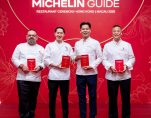
MACAU SAR – Media OutReach Newswire – 19 March 2026 – Galaxy Macau and StarWorld Hotel have once again reinforced their position as key drivers of Macau’s gastronomic excellence with a collective Five MICHELIN stars in the MICHELIN Guide Hong Kong and Macau 2026. In the 18th edition of the authoritative dining guide and the centenary of the star-rating system – Galaxy Macau and StarWorld Hotel crystalise Galaxy Macau’s leading position at the forefront of the city’s dining scene. The results affirm the Group’s long‑standing commitment to elevating the region’s culinary landscape and cultivating talent, innovation, and consistency across its dining portfolio.
Now in its second year of operation, Sushi Kissho by Miyakawa retains its MICHELIN Star, while 8½ Otto e Mezzo BOMBANA and Lai Heen continue their one‑star standing. Over on the Macau Peninsula, Feng Wei Ju at StarWorld Hotel maintains its unrivalled Two‑Star recognition for the tenth consecutive year.
Culinary Excellence Led by Visionary Chefs
Sushi Kissho by Miyakawa, the first international outpost of three‑star sushi master Chef Masaaki Miyakawa, continues to distinguish itself through its meticulous Edomae craftsmanship. Seasonal ingredients sourced directly from Japan ensure the restaurant delivers an experience defined by purity, precision, and the chef’s well‑established and tightly-held relationships with artisanal producers.
Sushi Kissho by Miyakawa continues its stellar trajectory by earning One MICHELIN Star for the second year in a row. Master Chef Masaaki Miyakawa personally accepted the award on behalf of his elite team.
At 8½ Otto e Mezzo BOMBANA, Executive Chef Marino D’Antonio showcases Italian cuisine rooted in tradition yet shaped by contemporary technique. Highlighting an unyielding commitment to ingredient‑driven cooking and refined execution, he builds on the culinary legacy of the legendary Chef Umberto Bombana, whose pursuit of “tradition, quality, and consistency” has defined the restaurant’s ethos.
For 11 consecutive years, 8½ Otto e Mezzo BOMBANA at Galaxy Macau has held its One MICHELIN Star honour. Executive Chef Marino D’Antonio accepted the 2026 One-star accolade.
Scaling on the 51st floor of The Ritz‑Carlton, Macau, Lai Heen maintains its MICHELIN Star for the tenth year. Under Chinese Executive Chef Jackie Ho Hon Sing, the restaurant demonstrates mastery of Cantonese culinary arts through thoughtful sourcing and a disciplined, technique‑forward approach.
Lai Heen at The Ritz-Carlton, Macau has been awarded the prestigious One MICHELIN Star” for 10 consecutive years. Jackie Ho Hon-sing, Chinese Executive Chef of The Ritz-Carlton, Macau accepted the prestigious award.
Feng Wei Ju, guided by Chef Chan Chek Keong, continues to define Hunan and Sichuan dining in Macau. Its tenth standout consecutive Two‑Star accolade reflects a menu that balances regional authenticity with elevated refinement—where bold, aromatic profiles are executed with exceptional skill.
Feng Wei Ju at StarWorld Hotel has boasted an impressive 10 consecutive years of two-Michelin-starred recognition. Chan Chek Keong, Assistance Vice President of Food & Beverage Culinary of StarWorld Hotel and Executive Chef of Feng Wei Ju accepted the award on behalf his team.
Special Menus Celebrating The 2026 MICHELIN Accolades
To commemorate the MICHELIN Guide distinctions, Galaxy Macau will present a curated series of limited‑time dining experiences:
Sushi Kissho by Miyakawa will host exclusive sake‑pairing dinners on March 20–21, featuring seasonal ingredients paired with Sake Hundred and guided by Sommelier Ivan Au Yang, one of only 604 Sakasho sake master sommeliers worldwide.
8½ Otto e Mezzo BOMBANA introduces an “Award‑winning Indulgent Lunch” featuring classic Sardinian flavours, available from Thursday to Sunday.
Lai Heen launches the commemorative “Splendid Stars Menu,” presenting signature creations such as Crispy Foie Gras Mousse Fritter and Stir‑fried Lobster with Himematsutake and Caviar.
Feng Wei Ju unveils a celebratory Degustation Menu showcasing ingredients such as beef loin and sea cucumber, exemplified by its signature Stewed Minced Chicken and Egg White with Matsutake in Bouillon—a hallmark of its culinary craftsmanship.
Committed to Advancing Macau’s Gastronomy Landscape
In a year marked by renewed MICHELIN acclaim, Galaxy Macau and StarWorld Hotel once again demonstrate how heritage‑driven craft and forward‑looking creativity can coexist at the highest level.
In the 18th MICHELIN Guide Hong Kong Macau 2025, Galaxy Macau, the world-class luxury resort, has once again proven its commitment to pushing standards of excellence and shaping new dining experiences that keep Macau firmly on the global gastronomic map.
Both properties will continue to champion Macau’s status as a global dining destination by investing in talent development, ingredient excellence, and guest‑centric gastronomic experiences. Their culinary teams remain committed to elevating standards and shaping new dining experiences that keep Macau firmly on the global gastronomic map.
Hashtag: #GalaxyMacau
The issuer is solely responsible for the content of this announcement.
About Galaxy Macau Integrated Resort
Galaxy Macau, The World-class Luxury Integrated Resort delivers the “Most Spectacular Entertainment and Leisure Destination in the World”. Developed at an investment of HK$43 billion, the property covers 1.1 million-square-meter of unique entertainment and leisure attractions that are unlike anything else in Macau. Nine award-winning world-class luxury hotels provide close to 5,000 rooms, suites and villas. They include Banyan Tree Macau, Galaxy Hotel, Hotel Okura Macau, JW Marriott Hotel Macau, The Ritz-Carlton, Macau, Broadway Hotel, Raffles at Galaxy Macau, Andaz Macau, and Capella at Galaxy Macau. Unique to Galaxy Macau, the 75,000-square-meter Grand Resort Deck features the world’s longest Skytop Adventure Rapids at 575-meters, the largest Skytop Wave Pool with waves up to 1.5-meters high and 150-meters pristine white sand beach. Two five-star spas from Banyan Tree Spa Macau and The Ritz- Carlton Spa, Macau help guests relax and rejuvenate.
As the dining destination in Asia, Galaxy Macau offers a wide variety of gastronomic delights, exquisite experiences and ingredients of the finest quality with over 120 dining options from Michelin dining to authentic delicacies.
Embark on a delightful and rewarding journey at Galaxy Promenade, the one-stop shopping destination boasting some of the world’s most iconic luxury brands. Be the first to get the latest limited-edition items; explore fascinating pop-ups by coveted labels and revel in fabulous shopping rewards and privileges. Our VIPs are entitled to a highly-curated experience with dedicated personal shoppers at guests’ service, and be invited to exclusive luxury brand events. A different caliber of privileges and rewards also await. Discover the joys of fashion and stand at the forefront of style and sophistication—Galaxy Promenade has everything guests need to stay ahead of the style game.
Galaxy Cinemas takes immersive movie experiences to the next level with the latest audio-visual technology, ultra-luxurious facilities and bespoke services; CHINA ROUGE, one-of-a-kind cabaret lounge that evokes the glamor of Shanghai’s golden era with stylish entertainment and customizable surrounds; and Foot Hub, which presents the traditional art of reflexology for authentic relaxation and revitalization. For Authentic Macau Flavours and Vibrant Asian Experiences, Broadway Macau – just a 90-second walk via a bridge from Galaxy Macau, has over 35 Authentic Macau & Asian Flavours at Broadway Food Street. The 2,500-seat Broadway Theatre plays host to world-class entertainers and a diverse array of cultural events.
Meeting, incentive and banquet groups are also catered to with a portfolio of unique venues in Galaxy Macau and an expert service team. Galaxy International Convention Center (GICC) is the latest addition to the Group’s ever-expanding integrated resort precinct and will usher in a new era for the MICE industry in Macau. GICC is a world-class event venue featuring 40,000-square-meters of total flexible MICE, and the 16,000-seat Galaxy Arena – the largest indoor arena in Macau.
About StarWorld Hotel Macau StarWorld Hotel, Galaxy Entertainment Group’s (GEG) first five-star flagship hotel, is located in the heart of Macau’s business and entertainment hub on the Macau Peninsula. The iconic 39-storey hotel is famed for its distinctly Asian characteristics of intelligence, experience and innovation and its star-rated quality in hospitality, entertainment, accommodation and dining.
Opened in 2006, StarWorld Hotel is the hub to see everything the city has to offer, and it appeals to tourists from all over the world. Renowned for its ultra-high levels of personal services to guests, StarWorld has won numerous prestigious awards including the 5-Star Diamond Award from the American Academy of Hospitality Sciences, the Top 100 Hotels of China designation from the China Hotel Industry Summit, the Top 10 Glamorous Hotels of China designation from the China Hotel Starlight Awards, the Supreme Award for the Most Glamorous Hotel of Asia from the Golden Horse Awards of China Hotels and the “Top Class Comfort Hotels” from Michelin Guide Hong Kong & Macau from 2014 to 2020.
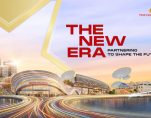
HO CHI MINH CITY, VIETNAM – Media OutReach Newswire – 23 March 2026 – On March 20, 2026, in Ho Chi Minh City, Vincom Retail hosted the event “The New Era – Partnering to Shape the Future”, welcoming more than 500 domestic and international partners. The large-scale forum served as a platform for stakeholders to exchange market perspectives, update on emerging trends, and explore collaboration opportunities as Vietnam’s retail sector enters a new growth cycle.
The event brought together 500 key partners, including leading international retail brands such as UNIQLO, MUJI, Decathlon, Pandora, CGV, AEON Beta Cinema, SuperPark, KOHNAN, Central Retail, WinMart, Starbucks, Dookki, Guardian, and MEDICARE, alongside major domestic brands and chains including ACFC, Maison, Phoenix Group, Golden Gate, Aladdin Group, Takahiro, RuNam, Highlands Coffee, and The New Playground…
At the event, Vincom Retail’s leadership emphasized the rapid transformation of the retail industry, where shopping malls and commercial streets are evolving beyond traditional retail spaces to become lifestyle destinations. These destinations integrate immersive experiences, foster community connections, and lead modern consumption trends. This shift reflects changing consumer behavior, with a growing preference for experience, emotion, and interaction over mere purchasing and ownership.
Setting the direction for future growth, Vincom Retail unveiled its strategic vision toward 2030, focusing on developing world-class destinations. The company aims to position itself as a leading retail real estate developer and operator in Asia, setting benchmarks in trend leadership and customer experience, with a diverse and expansive asset portfolio and an extended international footprint supported by a global ecosystem. This unique platform enables pioneering brands and concepts to converge and co-create breakthrough experiences, many of which are being introduced in Vietnam for the first time, delivering fresh value to consumers while shaping the future of retail and establishing new regional standards.
In terms of product strategy, Vincom Retail is focusing on two core formats. Vincom Mega Mall is positioned as a “Mega Shoppertainment Destination”, a large-scale experiential hub that leads market trends. Meanwhile, Vincom Collection is developed as a “Retail-tainment Destination”, combining shopping and tourism, built around five key pillars: Play – Discover – Shop – Savor – Relax.
A prime example is the “super destination” model integrating Retail – Tourism – Entertainment at Vinhomes Green Paradise Can Gio, featuring 15 next-generation retail complexes. Among them, Vincom Mega Mall Can Gio and Vincom Collection Cosmo Bay are the first projects to be unveiled, promising multi-layered experiences that harmonize with nature and prioritize sustainable operations.
Beyond strategic insights, the forum also featured real-world success stories and forward-looking perspectives from pioneering brands that have helped shape Vietnam’s evolving experiential retail landscape. Mr. Vu Ngoc Thuan, Founder of restaurant chains Longwang, Tianlong, Bo To Quan Moc, and GMaster, shared: “Partnering with platforms like Vincom provides a strong launchpad for brands to accelerate growth, expand further, and professionalize according to international standards.”
Mr. Shin Jae Hyuk, representative of Dookki, also highlighted growth strategies to capture market opportunities: “Together with our trusted partner Vincom, we will continue to create new milestones for Vietnam’s F&B market. Our goal is not only to sell tteokbokki, but to deliver the joyful culture of Korean cuisine to customers at an accessible price point.”
Vincom Retail plays a critical role as a developer, platform, and connector, bringing international brands to Vietnam while supporting Vietnamese brands in their journey to expand globally.
Additionally, SuperPark, a global indoor activity park brand, shared insights into the development of family-oriented active entertainment, one of the fastest-growing trends in next-generation shopping malls. These real-world examples highlight the strong opportunities for brands to collaborate with Vincom Retail to scale operations, develop innovative retail concepts, optimize performance, and enhance customer experience.
As the market enters a new phase of growth, the event not only facilitated strategic dialogue but also strengthened sustainable partnerships between Vincom Retail and its stakeholders. As a market pioneer, the company continues to support brands in scaling up, elevating business models, and capturing long-term growth opportunities. Notably, emerging super destinations such as Can Gio – envisioned as a future national tourism hub – are expected to serve as powerful growth drivers, contributing to the transformation of Vietnam’s retail landscape.
Vincom Retail is currently the largest retail real estate developer in Vietnam and ranks among the top three in Southeast Asia by scale. The company operates 90 shopping malls with a total gross leasable area of 1.9 million square meters, and manages 5,500 shophouses totaling 1.5 million square meters across 31 out of 34 provinces and cities nationwide, partnering with more than 1,000 brands.
Hashtag: #VincomRetail
The issuer is solely responsible for the content of this announcement.
Sticker prices for website domains are drawing fresh scrutiny after a developer’s account of soaring renewal fees for a. online address highlighted what analysts describe as a structural imbalance in the domain name market, where low entry costs can mask significantly higher long-term expenses. The case centres on a developer who secured a. online domain at a heavily discounted introductory rate, only to face a sharp increase […]
Greenlogue/AP Environmental, social and governance investing is undergoing a marked transformation as regulatory scrutiny, political pushback and shifting market dynamics compel investors to recalibrate strategies once seen as central to sustainable finance. Assets tied to ESG-labelled funds have shown uneven growth across regions, reflecting a broader reassessment of how sustainability metrics are defined and applied. While global flows into ESG funds slowed compared with earlier peaks, institutional […]
Rhino.fi has introduced a cross-chain settlement product designed to simplify how financial technology firms handle dollar-pegged digital assets, seeking to address persistent pricing inconsistencies and operational complexity in stablecoin transactions. The platform, branded Stablecoin 1:1, enables neobanks and fintech companies to accept and settle USD-linked stablecoins across more than 25 blockchain networks while maintaining a one-to-one conversion rate. The offering aims to eliminate hidden spreads and opaque […]
Cannabis fails to demonstrate meaningful effectiveness in treating anxiety, depression or post-traumatic stress disorder, according to one of the most extensive analyses of medicinal use to date, raising fresh concerns among clinicians and regulators as consumption expands across several regions. The large-scale review, which evaluated hundreds of clinical studies and patient data sets, found no consistent evidence that cannabis-based products alleviate core symptoms of common mental health […]
Cushman & Wakefield Interpretation Report Highlights Eight Impact Areas for Real Estate Market
HONG KONG SAR – Media OutReach Newswire – 20 March 2026 – Global real estate services firm Cushman & Wakefield has released its China’s Two Sessions 2026: Interpreting the Government Work Report publication. Against a backdrop of increasingly complex domestic and international conditions, the 2026 government work report outlines more flexible and adaptive targets for national economic development. These policy directions will have a profound influence on the real estate sector. The market’s transition from focusing on incremental expansion to revitalizing and optimizing existing assets — combined with the accelerating integration of artificial intelligence across industries —will reshape market structures, redefine asset values, and reconfigure spatial development patterns in far-reaching ways.
Macroeconomic Stability Strengthens the Foundation for Commercial Real Estate Stabilization
China’s core economic targets for 2026 are clearly defined, with GDP growth set between 4.5%–5%, balancing the dual objectives of stabilizing growth and adjusting structure. This forms a strong macro foundation for the stabilization and gradual recovery of the commercial real estate sector. Between 2024 and 2025, GDP growth remained steady at around 5.0%. For 2026, the fiscal deficit ratio is maintained at a relatively high 4.0%, with RMB4.4 trillion in local special‑purpose bonds. The quota for ultra‑long‑term special treasury bonds is further expanded to RMB1.3 trillion. Coordinated fiscal and monetary policies will continue to support leasing demand recovery and improved business sentiment in the commercial property market.
Accelerated Industry Transformation Sees Quality Enhancement of Existing Assets Become the Core Theme
The report emphasizes a three‑pronged approach of “city‑specific policies to control new supply, reduce inventory, and improve quality”, while encouraging diverse channels to revitalize existing housing stock and advancing the construction of “good homes.” This marks an accelerated shift from incremental expansion to quality enhancement of existing assets. In 2024, China’s real estate value‑added as a proportion of GDP was just 6.3%, far below the 12.56% average of developed economies. This reflects a structural imbalance characterized by heavy investment in development and insufficient focus on services and leasing. The ongoing transition will make asset management, property services, and leasing operations increasingly central to asset valuation.
Consumption‑Driven Momentum Creates a New Growth Window for Retail Properties
Consumption‑boosting policies are injecting new vitality into the retail property market. The government work report allocates RMB250 billion of ultra‑long‑term special treasury bonds to support product upgrades and replacement, complemented by RMB100 billion in coordinated fiscal‑financial funds — creating a RMB350 billion consumption stimulus package. In 2025, China’s total retail sales of consumer goods exceeded RMB50 trillion, with per‑capita GDP reaching USD13,953, signaling a critical inflection point where service‑oriented consumption accelerates. With services currently accounting for just 46.1% of consumption, there remains significant room for growth. Policies promoting “high‑quality service consumption” and “new consumption scenarios,” combined with the promotion of staggered school holidays in spring and autumn, will create opportunities for high‑quality shopping centers focused on experiential and social retail formats.
AI‑Powered Intelligent Economy Drives an Upgrade in Office Market Demand
The rapid evolution of the intelligent economy is reshaping office market demand. The work report calls for expansion of “AI+,” wider deployment of intelligent agents, and accelerated development of large‑scale computing clusters, indicating the transition of AI into commercialized and scaled applications. In 2025, China’s core digital economy industries accounted for more than 10.5% of GDP, with the target set at 12.5% during the 15th Five‑Year Plan. AI‑related companies are expected to become key new leasing drivers in 2026. This will also stimulate a fresh investment cycle for data centers and industrial parks, with core computing hub cities — in the Beijing‑Tianjin‑Hebei region, Yangtze River Delta, and the Guangdong‑Hong Kong‑Macao Greater Bay Area — set to benefit first.
Capital Market Reforms Expand, Enabling a Full “Investment–Financing–Management–Exit” Cycle for Commercial Real Estate
Capital market reforms continue to support expansion in commercial real estate investment. The work report calls for deepened reform of comprehensive investment and financing mechanisms, expanded exit channels for private equity and venture capital, and accelerated growth of the public REITs market. By 2025, China’s public REITs issuance exceeded RMB210 billion, making it the largest REITs market in Asia. In 2026, commercial public REITs enter their first year of development, with pilots extended to hotels and commercial offices. This establishes a “dual‑engine” landscape of “infrastructure + commercial real estate” and enables a more complete investment‑financing‑management‑exit cycle
Further Opening‑Up Boosts Cross‑Border Logistics and Foreign Investment Demand
China’s opening‑up objectives in 2026 feature two core characteristics: expanding services sector openness to attract foreign investment, and promoting standardized, high‑quality development of cross‑border e‑commerce. In 2025, China’s cross‑border e‑commerce imports and exports totaled RMB2.75 trillion, with growth outpacing overall trade for the fourth consecutive year. The sector’s demand for high‑specification warehouses — characterized by high density and rapid turnover —continues to rise. Cushman & Wakefield data shows that the warehouse market is experiencing volume growth alongside price adjustment, with notable regional differences. As cross‑border e‑commerce becomes more regulated, and cold‑chain logistics demand continues to expand, green‑certified, intelligent high‑spec warehouses are expected to gain a competitive advantage.
Advancement of New Urbanization Brings Opportunities for Urban Clusters and Urban Renewal
A notable highlight among 2026 urbanization policies is the first‑ever proposal to build “innovation‑driven industrial communities and business communities.” This concept breaks the traditional boundary between industrial parks and business districts, fostering integrated complexes that combine office, commercial, and residential functions. The report also supports the development of world‑class city clusters in the Beijing‑Tianjin‑Hebei region, the Yangtze River Delta, and the Greater Bay Area, while enhancing the dual‑city Chengdu‑Chongqing Economic Circle and accelerating growth in the middle‑Yangtze city cluster — further intensifying regional differentiation in the commercial property market. Urban renewal and revitalization of existing stock assets are core pillars of the current urbanization strategy. Policies promoting the reuse of existing land and idle buildings align closely with efforts to revitalize existing housing stock. For owners and operators of prime urban assets, regeneration projects offer strategic opportunities for repositioning and value enhancement.
Green Transformation Prompts Sustainability Certifications to Become a Key Competitive Advantage
The work report dedicates a standalone section to the green transition, announcing dual controls on total carbon emissions and intensity, as well as new policy tools such as zero‑carbon parks and a national low‑carbon transition fund. In 2025, China’s national carbon market saw 235 million tons of allowances traded, with transaction value reaching RMB14.63 billion, up approximately 24% year‑on‑year. Carbon costs have become an increasingly important factor in corporate leasing and location decisions. With 97.9% of newly built urban buildings in 2024 meeting green standards, green retrofits of existing buildings are gaining momentum. Commercial properties certified under LEED, WELL, and China’s Green Building Label standard enjoy notable advantages in rental premiums and tenant attraction.
Sabrina Wei, Chief Policy Analyst and Head of Research, North China, Cushman & Wakefield, said, “The 2026 government work report outlines a clear development vision for commercial real estate characterized by macroeconomic stability, targeted policies, and structural transformation. A GDP growth rate of 4.5%-5% will provide market stability, a RMB350 billion consumption stimulus will activate demand for retail properties, “AI+” will reshape the office market; capital market reforms and public REITs will enable a full “Investment–Financing–Management–Exit” cycle, urban renewal will unlock values of existing assets, and green certification will define new competitiveness for the industry. As the real estate industry transitions from a construction‑focused model to one centered on operations and services, institutions with strong capabilities in asset management and high‑quality operational service delivery will be best positioned to capture the emerging opportunities of this transformative new cycle.”
To access the full report please click here. Hashtag: #CushmanWakefield
The issuer is solely responsible for the content of this announcement.
About Cushman & Wakefield
Cushman & Wakefield (NYSE: CWK) is a leading global commercial real estate services firm for occupiers and investors with approximately 53,000 employees in over 350 offices and nearly 60 countries. In Greater China, a network of 23 offices serves local markets across the region. In 2025, the firm reported revenue of $10.3 billion across its core services of Valuation, Consulting, Project & Development Services, Capital Markets, Project & Occupier Services, Industrial & Logistics, Retail, and others. Built around the belief that Better never settles, the firm receives numerous industry and business accolades for its award-winning culture. For additional information, visit www.cushmanwakefield.com.hk or follow us on LinkedIn (www.linkedin.com/company/cushman-&-wakefield-greater-china).
Air defence systems in Abu Dhabi intercepted attempted strikes targeting key energy infrastructure, prompting a sharp condemnation from authorities who described the incident as a serious escalation and a breach of international law. The Ministry of Foreign Affairs confirmed that no casualties were reported after the attempted attacks on the Habshan gas facility and the Bab field, both central to the country’s hydrocarbon production network. Officials said […]
Arabian Post Staff -Dubai Dubai has activated a “Green Corridor” with ports in the Sultanate of Oman, aiming to streamline the movement of sea and air cargo while cutting transit times and reducing environmental impact across key Gulf trade routes. The initiative, announced by authorities overseeing logistics and customs operations in the emirate, is designed to enable faster clearance of goods through pre-approved procedures, digital documentation, and […]
Iran will not play any of its World Cup matches on United States soil if it qualifies for the expanded 2026 tournament, the country’s football chief has indicated, deepening uncertainty over one of Asia’s leading teams amid escalating geopolitical tensions. The statement follows Iran’s early qualification for the finals, making it among the first nations to secure a place in the 48-team competition jointly hosted by the […]
HONG KONG SAR – Media OutReach Newswire – 20 March 2026 – PFIS Group, a Swiss-rooted wealth structuring advisory firm, today announced a comprehensive rebranding to Alpina Legacy. This strategic transformation marks a significant milestone in the firm’s history, aligning its corporate identity with its profound Swiss heritage and its core mission of safeguarding cross-generational wealth.
Mr. Samy Reeb, CEO of Alpina Legacy
Refining our Identity After Years of Strategic Growth
Since its inception, PFIS Group has undergone an extraordinary journey of expansion. What began as a specialised boutique advisory practice in cross-border insurance has evolved into a formidable international platform. Today, the firm operates 8 offices worldwide, holds intermediation licenses in 34 countries, and has successfully advised on the structuring and restructuring of over USD 1 billion in private wealth.
“After years of rapid international expansion and hundreds of complex client engagements, we realised that our identity needed to catch up with our evolution,” said Mr. Samy Reeb, CEO of Alpina Legacy. “This rebranding comes at a pivotal moment. After establishing a robust global footprint, we are returning to our roots—not by shrinking our horizons, but by deepening the Swiss values that have always been the bedrock of our success.”
A Name that Bridges Heritage and Future
The new name, Alpina Legacy, was meticulously chosen to reflect the dual pillars of the firm’s value proposition:
Alpina: A tribute to the firm’s Swiss foundation. It symbolises the precision, discretion, and unwavering regulatory discipline associated with the Swiss financial tradition. In an increasingly volatile global landscape, “Alpina” represents the stability and rigour that the firm’s institutional partners and clients rely upon.
Legacy: Defines the firm’s ultimate purpose. It underscores a commitment to helping internationally mobile families, entrepreneurs, and investors protect and transmit their wealth across jurisdictions and generations through compliant, sophisticated insurance solutions.
Strengthening Partnerships and Roots
The transition to Alpina Legacy also reinforces the firm’s commitment to its global network of private banks, asset managers, and institutional partners.
“Our business partners are the lifeblood of our operation. By rebranding to Alpina Legacy, we are signalling our long-term commitment to the standards they expect from a Swiss-rooted firm,” added Samy Reeb. “As we look back on our years in operation, we recognise that our growth was only possible because we remained close to our roots while remaining agile in the face of complex regulatory environments.”
A New Chapter in Wealth Structuring
While the name and visual identity have changed, Alpina Legacy’s dedication to excellence remains constant. The firm will continue to provide bespoke cross-border planning and international insurance solutions, ensuring that the wealth created today becomes the enduring legacy of tomorrow. Hashtag: #AlpinaLegacy
The issuer is solely responsible for the content of this announcement.
About Alpina Legacy
Alpina Legacy (formerly PFIS Group) is a leading international insurance and wealth structuring firm. With a global reach spanning 8 offices and licenses in 34 countries, Alpina Legacy specialises in providing compliant, cross-border life insurance and wealth planning solutions for high-net-worth individuals and international families.
For more information, please visit the newly launched website at: https://www.alpinalegacy.com/ (formerly https://www.pfisgroup.com/).
By Nitya Chakraborty The U.S.-Israel combo’s war against Iran entered its 20th day on March 19 with global diplomats monitoring closely the Chinese reaction to the continued decimation of Iran’s leadership and key installations by Trump and Netanyahu and also Tehran’s fierce retaliatory attacks against Israel as also the US allies in West Asia including […]
A coordinated cybercrime operation built around a fraudulent cryptocurrency tool branded “ShieldGuard” has been dismantled after investigators confirmed it functioned as a malicious browser extension harvesting user credentials and digital assets. Security researchers say the campaign had been active across multiple platforms, targeting retail crypto investors through deceptive online promotions and fake security assurances. The extension, presented as a protective utility for safeguarding cryptocurrency wallets, was distributed […]
United Arab Emirates authorities have condemned what they described as a direct attack on critical energy infrastructure after air defences intercepted missiles targeting the Habshan gas facility and the Bab oil field in Abu Dhabi, with officials confirming no casualties or significant damage. A statement issued by the Ministry of Foreign Affairs characterised the incident as a “dangerous escalation” and a breach of international law, warning that […]
Arabian Post Staff -Dubai Donald Trump has called on Israel and Iran to cease targeting energy infrastructure, warning that continued strikes on gas facilities risk escalating tensions across West Asia and disrupting global energy markets. The former US president’s remarks come amid heightened hostilities between Israel and Iran-linked forces, where attacks on gas and energy installations have emerged as a new flashpoint. Trump framed the issue as […]
Arabian Post Staff -Dubai Jasem Mohamed Albudaiwi, Secretary-General of the Gulf Cooperation Council, issued a forceful denunciation of what he described as Iran’s targeting of Ras Laffan Industrial City in Qatar, calling it a grave escalation that threatens regional stability and global energy security. The remarks followed reports of a strike affecting the strategic energy complex, one of the world’s largest liquefied natural gas hubs. The facility […]
Inviting visitors to Hong Kong Art Month for a cultural journey connecting art and the city
HONG KONG SAR – Media OutReach Newswire – 18 March 2026 – Art Central, in collaboration with the Hong Kong Tourism Board, is launching a digital Hong Kong Art Month Discovery Guide alongside a series of travel and experience packages for the Fair’s eleventh edition. These offerings bring visitors from the Greater Bay Area and overseas a seamless art travel experience, allowing them to enjoy Hong Kong’s diverse hotels, dining, attractions, and transport networks alongside their visit to the Fair.
As a cornerstone event of Hong Kong Art Month, Art Central returns to the iconic Central Harbourfront from 25 to 29 March 2026. The Fair brings together contemporary art, curated programmes, and a vibrant community of galleries, artists, collectors, overseas visitors, and local audiences to build a dynamic platform for artistic exchange. Art Central 2026 is financially supported by the Mega Arts and Cultural Events Fund under the Culture, Sports and Tourism Bureau of the Hong Kong Special Administrative Region Government.
Entering its second decade, Art Central 2026 will assemble 117 galleries and 500 artists from Hong Kong, Asia, and around the world, further reinforcing its position as an integral platform for discovery and exchange among collectors and curators. Co-curated by Enoch Cheng and Zoie Yung, the Fair’s eleventh edition will present a series of artistic programmes—including performances, video art, large-scale installations, and talks—examining the frictions and intimacies that shape contemporary social and virtual life, foregrounding emergent Asian voices.
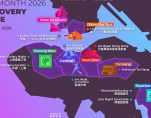
To enrich the artistic journey for visitors, Art Central, in partnership with the Hong Kong Tourism Board, proudly presents the digital Hong Kong Art Month Discovery Guide. The guide compiles exciting events across the city’s art districts, covering gallery exhibitions, special museum showcases, and performing arts programmes across Central, Sheung Wan, Wan Chai, Tai Hang, the Southern District, Tsim Sha Tsui, and the West Kowloon Cultural District. Beyond visual arts, the guide offers detailed dining recommendations in the vicinity, perfectly illustrating Hong Kong’s diverse culinary culture. The curated selections range from local street food and refined Cantonese cuisine to Michelin-starred contemporary European dining. Featured establishments include MIAN, Amber, Belon, L’Atelier de Joël Robuchon, Chinesology, Gu Liang Cai, and the historic Luk Yu Tea House. Through this comprehensive guide, visitors can easily navigate the city’s streets and alleys alongside their visit to Art Central, seamlessly transitioning from visual arts to culinary delights while deeply experiencing Hong Kong’s unique charm as Asia’s events capital. Explore more in the Hong Kong Art Month Discovery Guide.
To allow visitors to incorporate the Fair into their broader Hong Kong itineraries with ease, Art Central has introduced a brand-new Flexible Date Ticket, available in limited quantities exclusively during the advance sale period. Holders of the Flexible Date Ticket may select any single day between 25 and 29 March 2026 for entry during general admission hours without the need for advance date selection.
Art Central has also launched comprehensive packages on various travel platforms covering accommodation, attractions, and transportation for the convenience of visitors. For example, through Ctrip, visitors can book curated packages combining Fair admission with selected offers and enjoy a HK$50 no-minimum-spend Uber Taxi promo code with the purchase of any ticket, easily charting a cultural journey connecting art and city life.
Ctrip’s accommodation bundles span top-tier five-star luxury properties such as Four Seasons Hotel Hong Kong, Mandarin Oriental Hong Kong, and The Murray, Hong Kong, as well as boutique options including The Pottinger Hong Kong, offering convenient and elevated choices for cultural getaways and weekend itineraries.
Additionally, attraction bundles will extend the Fair experience to multiple transportation options and popular leisure destinations, including the Peak Tram, the Hong Kong Observation Wheel, the Star Ferry, and the Airport Express. This allows visitors to integrate transportation, accommodation, and urban cultural experiences, extending their exhibition visit into a city journey exploring Hong Kong’s art and lifestyle.
Furthermore, Art Central has launched combo packages on Klook, pairing the Flexible Date Ticket with admission to the Hong Kong Observation Wheel at the Central Harbourfront (HK$302) or a Cupping Room coffee e-voucher (HK$314). These allow visitors to take in the spectacular views of Victoria Harbour or take a relaxing coffee break following their visit to the Fair. After viewing the exhibition, visitors can also take the “WestK Ferry” from Central Pier 9—a short eight-minute ferry ride—to effortlessly reach the West Kowloon Cultural District and continue their exploration at M+, the Hong Kong Palace Museum, and the WestK FunFest.
Package offers are exclusively available for purchase via Ctrip and Klook. For more details regarding participating hotels, dining, attractions, and transport partners, please visit artcentralhongkong.com/tickets. Ticket Packages might be subject to change without prior notice and are available in limited quantities while stocks last.
Hong Kong Observation Wheel Ticket + Uber Taxi HK$50 Promo Code
Adult: HK$164 Child: HK$54
Ctrip
Experience
Art Central Advance Ticket + Star Ferry World Star / Shining Star Water Tour Ticket + Uber Taxi HK$50 Promo Code
Adult: HK$351 Child: HK$188
Ctrip
Transport
Art Central Advance Ticket +
Airport Express Ticket to/from Central (Hong Kong Station) + Uber Taxi HK$50 Promo Code
Child: HK$89
Ctrip
F&B
Art Central Advance Flexible Date Ticket +
Cupping Room HK$50 Coffee E-Voucher
HK$314
Klook
Experience
Art Central Advance Flexible Date Ticket +
Hong Kong Observation Wheel Ticket
HK$302
Klook
Hotel
Art Central Advance Ticket + Hotel Bundle
RMB ¥581+
Ctrip
Options include: Four Seasons Hotel Hong Kong / The Upper House / Mandarin Oriental Hong Kong / Island Shangri-La, Hong Kong / The Murray, Hong Kong, a Niccolo Hotel / JW Marriott Hotel Hong Kong / The Pottinger Hong Kong / Two MacDonnell Road, Hong Kong / Lan Kwai Fong Hotel @ Kau U Fong / Bishop Lei International House
Opening Dates and Hours Tuesday 24 March VIP Preview (by invitation)
Wednesday 25 March Fair Hours 12 pm – 5 pm Night Central 5 pm – 9 pm
Thursday 26 March Fair Hours 12 pm – 7 pm
Friday 27 March Fair Hours 12pm – 7 pm
Saturday 28 March Fair Hours 11 am – 7 pm
Sunday 29 March Fair Hours 11 am – 5 pm
Venue Central Harbourfront Hong Kong, 9 Lung Wo Road Hashtag: #ArtCentralHK #ArtCentralUOB #HongKongArtWeek
The issuer is solely responsible for the content of this announcement.
About Art Central
Art Central, a cornerstone event of Hong Kong Art Week, presents the next generation of talent from Asia’s most forward-thinking galleries alongside celebrated artists from across the globe. Since its inaugural edition in 2015, Art Central has established itself as a leading platform for innovation in contemporary art, advancing the profiles of artists and galleries and reinforcing their presence within the international art landscape. Today, the Fair is recognised for the strength of its curatorial programming and as a vital meeting point for discovery and exchange among collectors and curators representing private, corporate, and institutional collections worldwide.
Fair Director Corey Andrew Barr joined Art Central as Fair Director in 2019. A champion of Hong Kong artists, Barr has expanded the Fair’s platform to highlight local talent and underscore its position as a benchmark for aspiring galleries from around the world. He was formerly the director of a prominent Hong Kong- and London-based gallery focusing on contemporary Asian art, and prior to that, served as Specialist and Head of Sales for Phillips in New York, where he also organised exhibitions of contemporary art, photography, and design by leading international artists.
Curator Enoch Cheng is an artist-curator whose work spans curation, moving image, installation, performance, dance, and fashion. His cross-disciplinary multimedia practice reinterprets norms, stories, and myths through contemporary lenses, drawing on a range of creative practices and engaging audiences through diverse cultural traditions. Cheng was awarded the Asian Cultural Council Fellowship (2020) and held artist residencies at the Museum of Arts and Design, New York (2022), and the American Museum of Natural History, New York (2020). He was most recently named Artist of the Year (Visual Arts) at the 2025 Hong Kong Arts Development Awards, recognising his contributions to the arts, including his role at Art Central since 2024.
Curator Zoie Yung, currently based in Hong Kong, is an independent exhibition consultant and curator, and former exhibition manager of chi K11 art museum in Shanghai. She provides a unique approach to exhibition production by combining practice in exhibition spatial arrangement and her knowledge of Chinese Xuanxue as well as Western astrology. Selected recent exhibitions include Wonder-verse (chi K11 art space, Hong Kong, 2022) and Curve of Buoyancy (Duddell’s, Hong Kong, 2021). She also actively organises public education campaigns; she has collaborated with local organisations, including Tai Kwun Contemporary, Para Site, 1a Space, and Hong Kong Visual Arts Centre.
About UOB UOB is a leading bank in Asia. Operating through its head office in Singapore and banking subsidiaries in China, Indonesia, Malaysia, Thailand and Vietnam, UOB has a global network of more than 470 branches and offices in 19 markets in Asia Pacific, Europe and North America. Since its incorporation in 1935, UOB has grown organically and through a series of strategic acquisitions. Today, UOB is rated among the world’s top banks: Aa1 by Moody’s Investors Service and AA- by both S&P Global Ratings and Fitch Ratings.
For nine decades, UOB has adopted a customer-centric approach to create long-term value by staying relevant through its enterprising spirit and doing right by its customers. UOB is focused on building the future of ASEAN – for the people and businesses within, and connecting with, ASEAN.
The Bank connects businesses to opportunities in the region with its unparalleled regional footprint and leverages data and insights to innovate and create personalised banking experiences and solutions catering to each customer’s unique needs and evolving preferences. UOB is also committed to helping businesses forge a sustainable future, by fostering social inclusiveness, creating positive environmental impact and pursuing economic progress. UOB believes in being a responsible financial services provider and is steadfast in its support of art, social development of children and education, doing right by its communities and stakeholders.
About Mega Arts and Cultural Events (ACE) Fund The Culture, Sports and Tourism Bureau of the Hong Kong Special Administrative Region Government sets up the Mega ACE Fund to attract and support international or large-scale arts and cultural events which bring significant arts, cultural or economic values and can be recurrent and anchored in Hong Kong, or events which can bring exceptionally significant arts or cultural merit, as well as publicity and image building values to Hong Kong as an arts and cultural hub with a view to contributing to Hong Kong’s development into an arts and cultural metropolis as well as a tourist destination, providing development opportunities for the arts, cultural and creative sectors, and facilitating arts and cultural exchange.
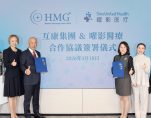
SHANGHAI / HONG KONG – Media OutReach Newswire – 18 March 2026 – HealthMutual Group (HMG) and SinoUnited Health (SUH) today signed a collaboration agreement to establish a comprehensive cross-border medical service framework. This partnership is designed to meet the clients’ growing demand for high-quality medical services in China.
Under this agreement, SinoUnited Health will serve as HMG’s anchor hospital and primary healthcare hub in Shanghai. The partnership establishes a standardized framework for cross-border care, focusing on clinical excellence and financial predictability. HMG members will gain access to SinoUnited Health’s elite specialist network across Shanghai, Hangzhou, and Suzhou, supported by fully transparent fee structures.
The collaboration is backed by HMG’s significant operational scale. Currently ranking within the top three in the industry for total new business premium, HMG supports its insurance partners in serving over 700,000 clients. With HK$150 million in medical expenses processed to date, HMG’s network connects 700 specialists and 13 private hospitals in Hong Kong with over 2,000 hospitals across Mainland China.
“The demand for cross-border medical services is increasing rapidly,” said Mr. KC Chan, Founder of HealthMutual Group. “Partnering with SinoUnited Health is a natural expansion of our robust GBA network. SUH’s reputation for excellence ensures that our vision—maintaining medical insurance as a sustainable funding source for quality care—now extends firmly into the Shanghai region.”
Sharon Cheng, Vice President of Business Development, SinoUnited Health added: “This collaboration aligns perfectly with our ‘patient-first’ philosophy. By combining HMG’s massive regional reach with our world-class medical care, we are creating a seamless ‘home-away-from-home’ experience for patients. We are proud to serve as the Shanghai gateway for HMG’s 700,000+ policyholders, offering them professional integrity and access to the latest medical technologies.”
To ensure long-term service quality, the two groups will conduct quarterly professional exchanges and site inspections, allowing Hong Kong insurance partners to directly interface with SUH’s international medical teams and advanced clinical facilities.
The issuer is solely responsible for the content of this announcement.
About HealthMutual Group
Established in 2014, HealthMutual Group has emerged as a premier leader in healthcare management across Hong Kong and the Greater China Region. We are committed to leveraging healthcare management to position insurance as a sustainable funding source for healthcare through our Medical Concierge and other essential value-added services. Our knowledge-based, transparent and innovative approach benefits all stakeholders: the insured, insurers and the medical sector, fostering sustainable growth and development. Headquartered in Hong Kong, HMG also operates branch offices in Qianhai and Hainan.
About SinoUnited Health
SinoUnited Health, founded in 2016 and headquartered in Shanghai, ranks among the largest premium private healthcare providers in the Eastern China. As a “physician-driven” medical institution, our “General practitioner + Specialist” model provides patients with holistic, professional, and customized solutions, making high-quality private healthcare truly accessible for every family.
A Federal High Court ruling in Nigeria has affirmed that citizens are entitled to record police officers performing their duties in public, while also awarding damages in a case that challenged unlawful stop-and-search practices. The decision marks a significant judicial intervention in ongoing debates over police accountability and civil liberties in Africa’s most populous nation. Justice in the case brought through a public interest action by rights […]
KUALA LUMPUR, MALAYSIA – Media OutReach Newswire – 18 March 2026 – Inspired by the values of compassion and the importance of sharing rezeki (blessings) during this blessed month, AEON Bank, Malaysia’s first digital Islamic bank, has brought to life its Ramadan and Syawal campaign themed “Niat di Hati, Budi Terpateri.”
The campaign is anchored on the principle that good intentions (niat yang baik), when demonstrated through kind and thoughtful actions (amal budi yang indah) will lead to meaningful outcomes. This theme is brought to life through a self-produced Ramadan Aidilfitri 2026 brand video, available on the Bank’s official YouTube channel. NIAT TO EMPOWER THE COMMUNITY : SALAM PRIHATIN 4.0
The beneficiaries of Salam Prihatin 4.0, alongside the committee of Pertubuhan Kebajikan Masyarakat Penyayang Lembah Pantai (PERKEMP), senior leadership of AEON Bank and AEON BiG, and AEON Bank’s volunteers
As part of its Shared Value Creation (SVC) commitment, AEON Bank continues to drive its flagship community impact initiative, Salam Prihatin. Targeted Support and Value Added Impact
This year, Salam Prihatin 4.0 engaged 100 households, amounting to more than 400 beneficiaries from the community Perumahan Pantai Permai, Kuala Lumpur. The engagement was held on 3 March 2026, in collaboration with AEON BiG Wangsa Maju and a local NGO, Pertubuhan Kebajikan Masyarakat Penyayang Lembah Pantai (PERKEMP) Lembah Pantai.
Fostering Financial Inclusion and Enabling Budget Savvy Autonomy Among the Beneficiaries
Fostering financial inclusion among the community, the beneficiary families were guided by AEON Bank team to plan for purposeful purchase of grocery and essential items, giving them the autonomy to optimise their budget, based on the needs of their respective families – be it multigenerational households, or families with small children or those caring for persons with disabilities (PWD).
Each beneficiary family received a RM300 grocery budget, which rounded up AEON Bank’s contribution this year to RM30,000 in total. In order to assist the families with their grocery shopping on the event day, more than 50 of AEON Bank employees, including the Bank’s senior leadership, were paired up with the families during the engagement. To date, AEON Bank has engaged almost 2,000 beneficiaries throughout 4 years, under its Salam Prihatin community impact initiative.
Now in its fourth year, AEON Bank has engaged almost 2,000 beneficiaries throughout 4 years, under its Salam Prihatin community impact initiative.
NIAT TO BE MORE RINGGIT SAVVY : SMART SAVINGS AND VALUE ADDED REWARDS
In the effort to help Malaysians manage the rising cost of living, AEON Bank has introduced several financial tools in its digital banking app and meaningful rewards for its customers, including :
(i) Neko Sensei : AEON Bank’s very own in-app financial coach designed to empower customers to track and manage their finances wisely.
(ii) RM30 Raya Cashback : Customers can earn RM30 cashback when paying with their AEON Bank Debit Card-i at stores participating in the MyDebit campaign, valid from 1 February to 15 April 2026.
(iii) Competitive Rate for Savings Pot : Enjoy a high 3.00% p.a. profit rate for the Savings Pot to help keep your financial goals on track, valid until 31 May 2026.
(iv) Personal Financing-i (PF-i) : Financing options from RM1,000 to RM100,000 with a profit rate starting at 3.88% p.a. and flexible tenures from 3 to 84 months. PF-i application process fully takes place online via the app, available to Malaysians with a minimum monthly gross income of RM2,500 including salaried employees, self-employed individuals, freelancers and gig economy workers.
(v) Neko Missions : A gamified digital banking experience that offers RM5 cashback for DuitNow QR transactions via AEON Bank app, valid until 15 May 2026.
(vi) JomPay : Customers can also make their JomPay transactions, including telco and utility bills via the AEON Bank app. providing a centralised platform for all essential online payments.
(vii) Inclusivity and Flexibility : Effective 17 March 2026, AEON Bank has removed the minimum balance requirement, ensuring Shariah-compliant digital banking is more inclusive and accessible for Malaysians.
NIAT TO FULFILL RELIGIOUS OBLIGATIONS : SAH AND SEAMLESS ZAKAT PAYMENT VIA AEON BANK APP
Starting from the month of Ramadan this year, Zakat payment feature has been made available on the AEON Bank app. With just a few easy steps, customers can fulfill the contribution for 11 types of Zakat with a sah Aqad, including Zakat Fitrah, Zakat Pendapatan (Income), Zakat Perniagaan (Business), Zakat Emas (Gold) and more.
Made possible through the strategic partnership with Tulus Digital, the Zakat payment feature currently facilitates payments to Lembaga Zakat Selangor and PPZ-MAIWP, with more states and Zakat authority to be added in the near future.
NIAT TO BRING DIGITAL BANKING TO THE MASSES : O2O WONDERS
Beyond the digital screens, throughout four weeks of Ramadan, AEON Bank brought the O2O (online to offline) wonders to the crowd at the Bazaar Ramadan Seksyen 2 and 23, Shah Alam, in partnership with Persatuan Penjaja & Peniaga Kecil Melayu Negeri Selangor (PPPKMNS). On 16 March 2026, from 4.00 pm onwards, come on over to the Bazaar Ramadan Seksyen 23 and stand a chance to win AEON Bank merchandise and surprise goodies.
Better Banking – The Digital Way, Better Banking – The Shariah Way
As a cloud-native AI-powered digital bank, AEON Bank remains dedicated in its commitment to provide accessible financial solutions for Malaysians, while empowering communities to pursue their financial aspirations and achieve economic independence. Striving to foster a more inclusive financial future for all, AEON Bank will continue to offer a better banking experience for the larger demographic and contribute towards the development of Islamic banking in the region and the nation’s digital economy.
Click HERE to visit AEON Bank’s website and download the AEON Bank app. Don’t forget to view AEON Bank’s Ramadan Aidilfitri 2026 video, available on the Bank’s official YouTube channel.
The issuer is solely responsible for the content of this announcement.
ABOUT AEON BANK (M) BERHAD
AEON Bank (M) Berhad is the first digital Islamic bank in Malaysia, licensed and regulated by Bank Negara Malaysia and the Ministry of Finance. Officially launched on 26 May 2024, we currently offer a suite of Shariah-compliant products and services under the Personal Banking and Business Banking (AEON Bank Biz).
Our Personal Banking offerings are 100% accessible via the AEON Bank app, namely the deposit Savings Account-i, AEON Bank x Visa Debit Card-i, Personal Financing-i, Term Deposit-i, Savings Pots, DuitNow QR, utility bill payments, personal financial management and budgeting tools with Neko Sensei, and a range of digital payment services with strategic partners and merchants, as well as Neko Missions, Malaysia’s first gamified digital banking interactive rewards programme.
On 8 August 2025, AEON Bank (M) Berhad officially launched AEON Bank Biz, anchored by the Current Business Account-i and integrated cash management capabilities, alongside Biz Term Deposit-i. AEON Bank Biz offers streamlined processes for account onboarding, credit assessments and financial services, utilising AI-driven fintech solutions to enable simplified procedures, faster approvals, and an enhanced digital banking experience for SMEs and micro entrepreneurs.
Being part of the AEON Group conglomerate, AEON Bank (M) Berhad is equally held by AEON Financial Service Co. Ltd. (AFS Japan) and AEON Credit Service (M) Berhad (ACSM). AFS Japan is responsible for the AEON Group’s financial services businesses, with strong roots in the retail sector which operates in Japan and 10 countries across Asia. AEON Group is Japan’s largest retail group and it is a pure holding company that comprises eight core businesses.
AEON Group Malaysia consists of several entities, namely, AEON Co. (M) Bhd, AEON Credit Service (M) Berhad, AEON Bank (M) Berhad, AEON BiG (M) Sdn Bhd, AEON Fantasy (M) Sdn Bhd, AEON Delight (M) Sdn Bhd, AEON Global Supply Chain Sdn Bhd and Malaysian AEON Foundation (MAF). AEON Group has been a recognizable household brand with more than 200 years of history and evolution in Japan since the Edo era, along with 4 decades of growth in Malaysia, providing consumers with daily financial solutions and diversified retail convenience.
Our cloud native agility and AI optimisation, combined with the strength of our Shariah DNA, Malaysian roots and Japanese heritage are our distinguishing factors, while the integration with the AEON ecosystem gives us a competitive advantage of being the only bank in Malaysia with its own nationwide retail network. On top of that, AEON Points loyalty programme offers customers value-added benefits and meaningful rewards, as the AEON Points can be redeemed into cash value, deposited directly into customers’ AEON Bank Savings Account-i.
AEON Bank (M) Berhad is committed to provide accessible financial solutions for Malaysians and we aim to empower the community in pursuing their financial aspirations and achieve economic independence, hence fostering a more inclusive financial future for all. We will continue to contribute towards the Islamic banking development in the region and the nation’s digital economy.
New Takaful travel product launched in same month to celebrate life’s journeys
SINGAPORE – Media OutReach Newswire – 18 March 2026 – Etiqa Insurance Singapore, a leading general and life insurer, returns to the National Association of Travel Agents Singapore (NATAS) Travel Fair 2026 as the Official Travel Insurer for the fifth consecutive year. Themed “Be A NATAS World Traveller”, Singapore’s largest premier travel fair will be held at the Singapore Expo Hall from 27 to 29 March 2026, offering exciting promotions for travellers.
Customers can enjoy special promotions exclusively available at the NATAS Fair. With up to 45 per cent off Etiqa Travel Infinite and a special $100 shopping voucher given to every 200th customer, Etiqa continues to make travel insurance more rewarding to all valued customers.
In addition, every customer will receive a complimentary gift with every purchase. From must-have travel essentials such as a versatile sports duffel bag, to a portable cooling fan to keep you cool on holiday, every traveller can enhance their journey with added convenience.
Celebrating Life’s Journeys with the Launch of Travel Takaful
In the same celebratory month, Etiqa is simultaneously extending its “With You” brand promise to the wider community. Beyond the excitement at NATAS Travel Fair, Etiqa is proud to announce the launch of Travel Takaful, a Shariah-compliant travel protection plan designed to support world travellers across different life stages — whether travelling for leisure, family commitments, or Umrah journeys.
“At Etiqa Insurance Singapore, we are committed to being With You, at every stage of life and on every journey. Our continued partnership with NATAS reflects our commitment to helping travellers explore the world with confidence, while the launch of Travel Takaful extends inclusive, Shariah-compliant protection to customers seeking values-based coverage. Whether travelling for leisure, business, or faith-based journeys, we want Singaporeans to travel with complete peace of mind,” said Claudia Soh, Acting CEO and CFO of Etiqa Insurance Singapore.
Guided by Takaful principles of shared responsibility and mutual care, Travel Takaful provides comprehensive coverage for overseas medical needs and unexpected travel disruptions:
Comprehensive Medical Support: Coverage for overseas medical expenses ranging from S$200,000 to S$2.5 million, supported by Etiqa’s 24-hour worldwide emergency assistance.
Trip Cancellation Coverage: Trip cancellation coverage of up to S$20,000 to mitigate unexpected changes in travel plans.
Tailored for All Stages: Optional add-ons for pre-existing medical conditions and senior protection, offering flexibility for multi-generational travel.
By expanding its portfolio with this new offering, Etiqa reinforces its commitment to serving Singapore’s diverse community with inclusive and meaningful protection solutions, that aligns with values-driven financial planning.
Enjoy journeys with Etiqa Insurance Singapore this March:
Visit the NATAS Fair (Booth 4H49 at Singapore Expo Hall 4 and 5): For exclusive Travel Infinite discounts, complimentary travel gifts, and the chance to win special shopping vouchers.
Explore the full suite of travel insurance products online: To learn more about the newly launched Travel Takaful and secure Shariah-compliant protection for your next journey, visit us at etiqa.com.sg.
*Terms and Conditions This policy is underwritten by Etiqa Insurance Pte. Ltd. (Company Reg. No. 201331905K), a member of Maybank Group. This content is for reference only and is not a contract of insurance. Full details of the policy terms and conditions can be found in the policy contract. Protected up to specified limits by SDIC.
Hashtag: #EtiqaSingapore #EtiqaSG
The issuer is solely responsible for the content of this announcement.
About Etiqa Insurance Pte. Ltd (Etiqa Insurance Singapore)
Protecting customers since 1961, Etiqa Insurance Singapore is a licensed life and general insurance company regulated by the Monetary Authority of Singapore (MAS) and governed by the Insurance Act 1966. The local insurer is the Singapore operating entity of Etiqa Insurance Group – a leading insurance and Takaful business in ASEAN offering life and general insurance and family and general Takaful products through its agents, branches, offices and bancassurance network in the region. Etiqa Insurance Singapore is rated ‘A’ by credit rating agency Fitch for the group’s ‘Favorable’ business profile and ‘Very Strong’ capitalisation.
Etiqa Insurance Singapore is owned by Maybank Ageas Holdings Berhad, a joint venture company that combines local market knowledge with international insurance expertise. The company is 69% owned by Maybank, the fourth largest banking group in Southeast Asia, and 31% by Ageas, an international insurance group with footprints across 13 countries and a heritage that spans over 190 years.
TPConnects Technologies has introduced a Model Context Protocol integration within its Astra NDC platform, positioning the Dubai-based firm at the forefront of efforts to standardise how artificial intelligence systems interact with airline retailing infrastructure. The move signals a shift in how carriers and travel sellers deploy AI-driven tools, with the company describing the MCP layer as a step towards more interoperable and context-aware digital commerce in aviation. […]




 www.broadwaymacau.com.mo



 www.linkedin.com/company/cushman-&-wakefield-greater-china





 https://www.facebook.com/artcentralhk
 https://www.instagram.com/artcentralhk/