By K Raveendran When the Supreme Court of India struck down the electoral bond scheme introduced under the government led by Narendra Modi, it did so on the realisation that the anonymity offered by the bonds, far from curing the malaise of black money, had institutionalised it. But the alternative of electoral trusts that the […]
SHANGHAI, CHINA – Media OutReach Newswire – 22 January 2026 –DHL Global Forwarding, the air and ocean freight specialist of DHL Group, has recently launched TRUCKAIR, a new cost-efficient multimodal service designed to support large-volume and bulky shipments moving between China and Europe. This new service meets the growing demand for flexible and reliable logistics amid evolving global trade dynamics.
Connecting China and Europe-DHL’s TRUCKAIR offers speed and cost efficiency
The TRUCKAIR solution integrates road and air freight to strike an optimal balance between cost and speed. Following inland pickup in China, the goods are transported via truck to Tashkent, Uzbekistan, where they are transferred via air freight for onward delivery to Istanbul, and thereafter onwards to other European destinations via various modes of transport. While costs may vary from shipment to shipment for this tailor-made solution, customers have reported six-digit figures in savings over the two months of adopting TRUCKAIR multimodal solution over airfreight solution. Additionally, with the TRUCKAIR multimodal service, the total transit time from China to Türkiye is approximately 9 to 11 days, only 4 to 5 days longer than usual transit time of 4 to 7 days by only air freight, making this service a prime choice for companies seeking a reliable and cost-effective solution for high-volume shipments.
“Demand for agile and cost-efficient logistics solutions continues to rise, backed by sustained growth in China–Europe and broader Asia–Europe trade. DHL’s latest market update points to tight capacity and rate increases into Chinese New Year, with a demand peak expected in early February 2026; TRUCKAIR helps customers avoid short term volatility while maintaining predictable lead times. China’s total imports and exports of goods grew 3.6% in the first eleven months of 2025, signaling a steady recovery in trade momentum. The European Union was also China’s second-largest trading partner in 2025, with bilateral trade up 5.4% year-on-year to RMB 5.37 trillion,” said Aditi Rasquinha, CEO of DHL Global Forwarding Greater China. “TRUCKAIR was developed to meet this growing demand for greater flexibility and predictability in cross-border shipments, enabling businesses to control costs without compromising speed.”
Designed for high-volume, general cargo shipments, the TRUCKAIR solution offers customers a cost-effective alternative to traditional air freight while maintaining delivery timelines suitable for retail and other time-sensitive and high-volume industries. Customers may also integrate TRUCKAIR with DHL’s broader portfolio of forwarding services to build customized, end-to-end supply chain solutions.
“The strategic design of the TRUCKAIR route reflects China’s pivotal role as a global trade hub,” Aditi added. “With its vast network, well-developed logistics infrastructure and rapid adoption of smart technologies and automation, the country is uniquely positioned to maintain strong connectivity with international markets. Leveraging these strengths, TRUCKAIR helps businesses to navigate supply chain challenges amid evolving global trade patterns and serves as a gateway for other Asia-Pacific markets to access Europe efficiently.
Hashtag: #DHL
The issuer is solely responsible for the content of this announcement.
DHL – The logistics company for the world
DHL is the leading global brand in the logistics industry. Our DHL divisions offer an unrivalled portfolio of logistics services ranging from national and international parcel delivery, e-commerce shipping and fulfillment solutions, international express, road, air and ocean transport to industrial supply chain management. With approximately 400,000 employees in more than 220 countries and territories worldwide, DHL connects people and businesses securely and reliably, enabling global sustainable trade flows. With specialized solutions for growth markets and industries including technology, life sciences and healthcare, engineering, manufacturing & energy, auto-mobility and retail, DHL is decisively positioned as “The logistics company for the world”.
DHL is part of DHL Group. The Group generated revenues of approximately 84.2 billion euros in 2024. With sustainable business practices and a commitment to society and the environment, the Group makes a positive contribution to the world. DHL Group aims to achieve net-zero emissions logistics by 2050.
Cybersecurity firm Rubrik has rolled out a sovereign version of its Rubrik Security Cloud, positioning the offering as a response to mounting pressure from governments and regulated industries to keep sensitive data under national control and outside the reach of foreign jurisdictions. Rubrik said the sovereign capability is designed to ensure that customer data, encryption keys, operations and support remain confined within specific countries or regions, aligning […]
Policy makers and technology leaders are pressing ahead with a governance-by-design approach to artificial intelligence as deployment accelerates across public services, finance, manufacturing and health care, even as scepticism around generative systems keeps trust, data ethics and measurable returns at the centre of decision-making.
Momentum has gathered through a series of policy signals that place safeguards alongside scale. Draft frameworks circulated by NITI Aayog and implementation roadmaps led by Ministry of Electronics and Information Technology have reinforced principles around responsible data use, model transparency and accountability for outcomes, while stopping short of prescribing one-size-fits-all rules that could chill innovation. Officials involved in consultations say the intent is to embed risk controls early—covering bias, explainability and security—rather than bolting them on after systems are deployed.
Enterprise adoption has followed a similar trajectory. Banks, insurers and large manufacturers are prioritising AI programmes that demonstrate near-term productivity gains and compliance readiness, favouring narrowly scoped applications over open-ended generative tools. Executives interviewed across sectors point to fraud detection, demand forecasting and maintenance optimisation as areas where benefits can be quantified and audited. By contrast, unrestricted text and image generation remains subject to tighter internal review, particularly where customer-facing outputs could expose firms to reputational or regulatory risk.
Scepticism has not slowed investment, but it has reshaped it. Venture funding has tilted towards platforms that promise governance controls by default—model cards, audit trails and data lineage—alongside performance. Start-ups building on foundation models increasingly highlight enterprise-grade safeguards as differentiators, responding to procurement teams that now treat ethics and security as commercial requirements rather than public-relations add-ons. Industry analysts note that this shift mirrors global buyer behaviour, but localised rules on data residency and consent amplify its importance.
Public-sector pilots underscore the same pattern. State administrations experimenting with AI for grievance redressal, traffic management and land records have emphasised human oversight and explainability, often keeping decision authority with officials while using algorithms to triage or recommend. Procurement documents reviewed by this publication show explicit clauses on dataset provenance and bias testing, reflecting lessons from earlier digital programmes where opaque automation triggered legal challenges.
At the national level, interoperability with global standards remains a priority. Engagements with multilateral bodies and peer regulators have sought alignment with emerging norms on risk classification and model evaluation, while retaining flexibility for domestic conditions. Officials argue that a principles-based stance will allow rapid adaptation as technology evolves, avoiding the lock-in that can follow prescriptive rules. Critics, however, warn that voluntary compliance may prove uneven without clear enforcement pathways.
Talent development forms another pillar of the blueprint. Universities and skilling platforms are expanding curricula that combine machine learning with ethics, law and product management, aiming to produce practitioners who can translate policy into code. Industry groups say demand is strongest for professionals able to design systems that pass audits and deliver return on investment, rather than purely experimental research. This has influenced hiring, with firms rewarding cross-disciplinary expertise.
Cloud providers and chipmakers are also recalibrating offerings for a market that prizes trust. Secure enclaves, confidential computing and on-premise deployment options are being pitched to enterprises wary of exposing sensitive data. Partnerships between domestic integrators and global technology companies have focused on localisation—language support, regulatory reporting and sector-specific controls—over raw model size.
UAE and India have elevated their strategic partnership with a sweeping set of agreements signed during the visit of Sheikh Mohamed bin Zayed Al Nahyan, signalling a calibrated push to broaden cooperation across defence, energy, space, trade, investment and food safety. The pacts, endorsed alongside Narendra Modi, reflect a shared intent to anchor bilateral ties in long-term economic and security interests while navigating a volatile global environment.
The visit culminated in the exchange of multiple memoranda of understanding that collectively aim to translate political goodwill into operational outcomes. Officials from both sides framed the agreements as an expansion of the Comprehensive Strategic Partnership, emphasising implementation timelines and institutional coordination rather than aspirational language. At the centre of the package is a defence cooperation framework that strengthens military-to-military engagement, joint exercises, training exchanges and defence industrial collaboration, an area that has gathered momentum as both countries diversify security partnerships.
Energy cooperation featured prominently, with accords spanning hydrocarbons, clean energy and grid resilience. State-linked firms and private players outlined pathways to scale joint investments in upstream oil and gas while accelerating collaboration in renewables, green hydrogen and energy storage. The emphasis on clean energy dovetails with the UAE’s net-zero ambitions and India’s drive to expand non-fossil capacity, positioning both as partners in technology transfer and project financing across third markets.
Space cooperation agreements mark another pillar of the evolving relationship. Space agencies from Abu Dhabi and New Delhi committed to deeper collaboration in satellite development, earth observation, data sharing and human spaceflight training. The arrangements are designed to support applications ranging from climate monitoring and disaster management to urban planning and agriculture, underscoring the commercial and societal dividends of space-based assets.
Trade and investment pacts seek to build on the momentum generated by the Comprehensive Economic Partnership Agreement, which has reshaped tariff structures and supply chains between the two economies. New understandings focus on easing customs procedures, aligning standards and expanding market access for small and medium-sized enterprises. Investment promotion agencies agreed to coordinate sectoral roadmaps in manufacturing, logistics, digital services and infrastructure, with sovereign investors and development funds expected to play a catalytic role.
Food safety and agricultural cooperation agreements address a strategic priority for both governments. Protocols on standards, certification and inspection aim to streamline the movement of agri-food products while safeguarding consumer interests. Joint research initiatives are set to target crop resilience, post-harvest technologies and cold-chain logistics, reflecting lessons from climate stress and supply disruptions that have sharpened the focus on food security.
Diplomatic engagements during the visit also underscored people-to-people ties, education and skills. Universities and research institutions announced partnerships in advanced materials, artificial intelligence and health sciences, while vocational training programmes were aligned to labour market needs in construction, healthcare and digital services. These measures are intended to deepen the talent pipeline that underpins commercial ties.
Officials were careful to situate the agreements within a broader regional and global context. With shipping lanes under strain and commodity markets exposed to geopolitical shocks, both sides highlighted coordination on maritime security and supply chain resilience. The defence and logistics components of the package are expected to reinforce cooperation in the Indian Ocean region, where the UAE’s ports and India’s maritime capabilities intersect.
Economists note that the breadth of the accords reduces concentration risk by spreading cooperation across multiple sectors, while governance mechanisms embedded in the agreements could improve execution. Joint working groups, periodic reviews and dispute-resolution channels were outlined to ensure progress is measurable. Business leaders welcomed the clarity on standards and compliance, arguing that predictability lowers the cost of capital and accelerates project timelines.
Critics caution that delivery will depend on regulatory alignment and the pace of domestic approvals, particularly in capital-intensive sectors such as energy and defence manufacturing. Past initiatives have sometimes faced delays linked to procurement processes and technology transfer rules. Both governments acknowledged these constraints and signalled intent to address bottlenecks through empowered committees.
Scientists have demonstrated a dependable method to generate large numbers of helper T cells from stem cells, removing a long-standing obstacle that has limited immune-based cancer treatments. The advance centres on mastering a developmental signal that decides which subtype of T cell emerges, allowing researchers to consistently produce the immune system’s key coordinators rather than a mixed and unpredictable population. Helper T cells do not usually kill […]
Arabian Post Staff -Dubai EDGE, a specialised business unit operating under Trust’s industrial solutions portfolio, has signed a dealership agreement with Allison Transmission, marking a strategic step that broadens its footprint in high-performance propulsion systems and aftersales support across key regional markets. The agreement positions EDGE as an authorised dealer for Allison Transmission’s fully automatic transmissions, covering sales, service, genuine parts and technical support. The partnership […]
By Nitya Chakraborty For the two main contenders in the coming assembly elections in West Bengal in March/ April 2026, every week is important in the present electoral battle as fresh developments take place needing for a relook at the poll strategy. The ruling Trinamool Congress led by the Chief Minister Mamata Banerjee and the […]
Raaga, a Chennai-based music streaming platform with a large global audience, has confirmed a significant data breach that led to the exposure of personal information linked to more than 10.2 million user accounts, triggering renewed scrutiny of data protection practices across consumer digital platforms. The company acknowledged that a database containing user details was unlawfully accessed and later advertised for sale on an underground hacking forum during […]
Vercel has unveiled a new product called Skills, positioning it as a shared marketplace of reusable capabilities for AI coding assistants and framing it internally as an “npm for AI agents”. The launch reflects growing pressure on developers and platform companies to bring consistency, security and best practices to the rapidly expanding use of autonomous and semi-autonomous coding tools across production environments. According to the company, Skills […]
France has moved to convene a meeting of Group of Seven finance ministers this week as tensions escalate with the United States over proposed tariffs linked to a high-profile dispute about Greenland. Paris is spearheading coordinated Western efforts to address what it and other European capitals describe as coercive trade threats from Washington, and to explore collective avenues for diplomatic and economic response amidst deepening strain in […]
Poppy Playtime’s fifth chapter is set to launch in February, extending the indie horror series into its most claustrophobic and confrontational instalment yet as players are driven deeper into the ruins of the Playtime Co. factory. The new chapter escalates the narrative stakes by placing the player under constant threat from a puppetmaster figure who has lurked at the edges of the story, while expanding the game’s […]
By Nitya Chakraborty The annual summit of World Economic Forum began in the Alpine hills of Davos in Switzerland on January 19 with the European leaders and the businessmen rattled over the confrontationist approach taken by the U.S. President Donald Trump on Greenland annexation. After imposing 10 per cent tariff on the EU countries taking […]
Vertiv has widened the scope of its MegaMod HDX modular platform, adding new configurations designed to handle the surging power density and thermal demands of artificial intelligence workloads as data centre operators accelerate capacity builds across North America, Europe and parts of Asia. Vertiv said the expanded MegaMod HDX range integrates higher-capacity power distribution, advanced liquid cooling options and prefabricated deployment models aimed at facilities supporting racks […]
Arabian Post Staff -Dubai Sharjah’s cultural publishing push is being highlighted at one of the Arab world’s most prominent literary gatherings, with more than 1,000 publications showcased by the Sharjah Institute for Heritage at the 57th edition of the Cairo International Book Fair, opening on January 21 and running until February 3, 2026. Sharjah Institute for Heritage is presenting a wide-ranging catalogue that reflects decades of research […]
Malaysia’s United Malays National Organization, long the central pillar of the country’s political establishment, has begun working with erstwhile rivals from the Malay-Muslim opposition, signalling a recalibration that underscores how far the nation’s politics has shifted since the party’s electoral dominance fractured.
The cooperation, confirmed through parallel statements and joint appearances by party leaders, reflects UMNO’s attempt to consolidate Malay political influence at a time when its authority has been diluted by years of electoral setbacks, internal splits and the rise of competing blocs. While the party remains a key component of the ruling coalition led by Prime Minister Anwar Ibrahim, its outreach to former adversaries has fuelled debate about whether Malaysia is entering a new phase of pragmatic alliances driven less by ideology and more by survival.
UMNO governed Malaysia almost uninterrupted for more than six decades after independence in 1957, anchoring the Barisan Nasional coalition and shaping state institutions. That grip was broken in 2018 when voters punished the party over corruption scandals and governance concerns, leading to a series of unstable administrations. Since then, UMNO has struggled to define its role in a crowded political field that includes Anwar’s reformist bloc and the Malay-Muslim opposition alliance led by Parti Islam Se-Malaysia and Parti Pribumi Bersatu Malaysia.
The current cooperation has emerged against that backdrop. Senior figures from UMNO have acknowledged coordination with opposition leaders on issues framed as safeguarding Malay-Muslim interests, including economic equity policies and the position of Islam in public life. Though party officials have stopped short of describing the engagement as a formal pact, they have not ruled out deeper collaboration if it serves what they describe as national stability and communal interests.
This posture has drawn mixed reactions within UMNO itself. Reform-minded members argue that aligning, even tactically, with parties that have attacked UMNO in past campaigns risks alienating centrist voters and undermining the party’s commitment to multiracial governance within the current administration. Others counter that the political landscape no longer allows rigid red lines, pointing to successive elections that showed Malay votes splintering among multiple parties.
Political analysts say the outreach reflects both opportunity and vulnerability. UMNO’s share of parliamentary seats has shrunk sharply compared with its peak years, reducing its leverage inside the ruling coalition. By engaging with rivals who command strong grassroots support in rural and conservative constituencies, the party may be seeking to reassert relevance and prevent further erosion of its base.
At the same time, the move complicates Prime Minister Anwar’s delicate balancing act. His coalition spans ideologically diverse partners, from UMNO’s traditionalists to reform-oriented parties and regional allies from East Malaysia. Any perception that UMNO is hedging its bets with the opposition could strain internal trust, even as Anwar has publicly emphasised unity and policy-driven governance.
The opposition, for its part, has responded cautiously. Leaders have framed the cooperation as issue-based rather than strategic, mindful that their core supporters view UMNO as emblematic of past excesses. Yet the willingness to engage suggests an acknowledgment that Malaysia’s fragmented politics makes absolute isolation costly.
Electoral arithmetic also looms large. Several state and parliamentary contests are approaching, and past results have shown that three-cornered fights often benefit Anwar’s coalition or regional parties, leaving Malay-based rivals divided. Limited coordination could alter outcomes in closely contested seats, though it also risks backlash from voters wary of perceived opportunism.
Beyond elections, the discussions point to broader questions about Malaysia’s political trajectory. The country’s multiracial framework has historically rested on bargaining among communal parties, with UMNO as the dominant broker. Its weakened position has opened space for ideological competition and policy debate, but also for sharper identity politics. Whether UMNO’s outreach tempers or intensifies those dynamics remains uncertain.
Business groups and civil society organisations have reacted with caution, urging political leaders to prioritise economic reform and institutional stability over tactical manoeuvring. Malaysia’s economy faces pressures from global volatility, fiscal constraints and the need to attract investment, issues that many argue require coherent policymaking rather than shifting alliances.
Goldman Sachs is examining whether to engage with the fast-growing prediction-markets sector, a move that could reshape how Wall Street views platforms long seen as niche or legally ambiguous. Chief executive David Solomon has confirmed that the bank has held discussions with executives from Polymarket and Kalshi, describing these venues as sophisticated markets that resemble derivatives trading more than online betting. The conversations underscore a strategic recalibration […]
Dubai’s financial regulator has rolled out a strengthened framework for crypto tokens in the Dubai International Financial Centre, marking a significant step in the evolution of the emirate’s digital assets oversight as global scrutiny of the sector intensifies. The updated regime, announced on Tuesday by the Dubai Financial Services Authority, replaces and expands the rules introduced in 2022 and applies to all crypto token activities conducted within […]
Alarmist predictions about artificial intelligence wiping out humanity are diverting attention from tangible harms already unfolding across workplaces, courts and online platforms, according to a senior academic who says the fixation on speculative futures is allowing powerful technology firms to sidestep accountability for present-day abuses. Speaking amid intensifying debates over AI governance, Professor Tobias Osborne argues that the dominance of “doomsday” narratives has distorted public understanding of […]
HONG KONG SAR – Media OutReach Newswire – 15 January 2026 – HKU Business School unveiled the “Hong Kong Economic Policy Green Paper 2026” (“Green Paper”). This comprehensive document delves into various facets of Hong Kong’s economic domain, covering everything from trade finance and Hong Kong’s role in the Greater Bay Area (GBA) startup ecosystem to green finance, the IP economy, social and shareholder value for Hong Kong-listed companies, and pressing social issues such as housing affordability and overcrowding in emergency departments. Moreover, with the emergence of AI, the Green Paper examines the impact of AI on the labour market, cybersecurity, and the development of a Web 3.0 ecosystem.
This is the fifth edition of the Hong Kong Economic Policy Green Paper, released by HKU Business School, with the aim of providing recommendations on how Hong Kong can effectively tackle these challenges.
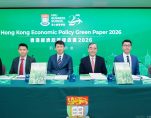
HKU Business School today unveils the Hong Kong Economic Policy Green Paper 2026. From left: Prof. Huiyin Ouyang, Associate Professor in Innovation and Information Management of HKU Business School, Prof. Dragon Tang, Professor in Finance in HKU Business School, Professor Hongbin CAI, Dean and Chair of Economics of HKU Business School, Prof. Richard Wong, Provost and Deputy Vice-Chancellor of The University of Hong Kong and Director, Hong Kong Institute of Economics and Business Strategy, Prof. Heiwai Tang, Associate Vice-President of The University of Hong Kong and Associate Dean of HKU Business School, and Dr. Tingting Fan, Principal Lecturer in Marketing of HKU Business School.
Prof. Richard Wong, Provost and Deputy Vice-Chancellor of The University of Hong Kong and Director, Hong Kong Institute of Economics and Business Strategy said, “This Green Paper was released after months of rigorous research by the scholars from HKU Business School. Grounded in an academic perspective and guided by a pragmatic, problem-solving approach, we have conducted objective analyses and in-depth investigations into core issues and real-world challenges currently facing Hong Kong’s development in political and economic operations, people’s livelihood, and industrial upgrading. Our aim is to provide the Government and relevant authorities with valuable insights and actionable policy recommendations.”
Professor Hongbin Cai, Dean and Chair of Economics of HKU Business School, said, “As a ‘super-connector’ bridging China and the world, Hong Kong’s unique role remains indispensable. Looking ahead, Hong Kong must deeply integrate into China’s national development plans, and also take a more prominent role on the international stage, with an in-depth understanding of the global market and active engagement with its international collaborators.
With campuses in Beijing, Shanghai, and Shenzhen, and an expanding presence in Vietnam and Europe, HKU Business School embodies our unique proposition: deeply rooted in Hong Kong, fully engaged with the Chinese Mainland, and truly international. This year’s Green Paper reflects our dedication to inspiring solutions based on rigorous research. As a world-class institute of higher education, we are committed to enabling Hong Kong to further unleash its core values and usher in a new era of high-quality development.”
Prof. Heiwai Tang, Associate Vice-President of The University of Hong Kong and Associate Dean of HKU Business School, added, “This Green Paper features research papers from ten teams of scholars with diverse backgrounds and varied expertise. Based on profound insights into Hong Kong’s development, they offer unique and targeted policy recommendations, building a rich and multifaceted framework of issues for the Green Paper. At the same time, behind these research achievements lies the scholars’ deep affection for and sense of responsibility toward Hong Kong.”
Regarding how digital technology can boost Hong Kong’s trade finance, he emphasised: “Both data and industry feedback clearly demonstrate the core value of trade finance. However, we need more synergy in the trade finance ecosystem and to catch up in digitisation. To address this, we must strengthen the governance and standard promotion of digital trade platforms and tools, deepen the cross-border interoperability of trade data, expand the functions of the Hong Kong Export Credit Insurance Corporation, focus on high-value-added trade enterprises, extend the coverage of Free Trade and Double Taxation Avoidance agreements, and promote responsible stablecoin adoption and Renminbi internationalisation.”
Prof. Dragon Tang, Professor in Finance at HKU Business School, stated, “Hong Kong is uniquely positioned to lead in the integration of blockchain technology within green finance, exemplified by our pioneering issuance of the world’s first tokenised green bonds, totalling HKD 6 billion in February 2024. With green finance representing a critical avenue for sustainable development, the global market is projected to grow significantly, emphasising the importance of transparency and trust. To capitalise on this opportunity, we must enhance our blockchain infrastructure, establish clear regulatory standards, and promote cross-border integration with initiatives like Core Climate. By leveraging blockchain’s capabilities, we can significantly reduce costs, improve transparency, and engage a broader investor base, ultimately driving our transition to a sustainable finance future.”
Prof. Huiyin Ouyang, Associate Professor in Innovation and Information Management, HKU Business School, commented on her study, saying, “Two weeks post-implementation of the hospital fee reform, the media reported no significant change in emergency department crowding, which aligns with what our analysis predicted. Overcrowding isn’t simply about patient behaviour – it’s a structural issue. Demographics are shifting, capacity is constrained, and alternative treatment options remain limited. What we now need is a careful, systematic evaluation of the fee changes. Where are vulnerable patients going for care? Are some patients delaying treatment? What unintended effects are emerging? Effective reform requires pairing fee adjustments with expanded primary care access. We can’t solve a capacity problem with pricing alone.”
Dr. Tingting Fan, Principal Lecturer in Marketing at HKU Business School, presented as well, spoke on her study and asked, “Why did Pop Mart go public in Hong Kong but register IP in Singapore? Or why was Molly ‘born’ in Hong Kong but did not go viral from Hong Kong? Why have local companies not managed to turn these homegrown IPs into major business triumphs? Learning from the past and looking forward, Hong Kong can leverage its financial market, legal system, as well as talents to build a comprehensive IP industry infrastructure and become an IP hub.”
The Green Paper includes ten articles; the key points are as follows:
Empowering Merchandise Trade Finance with Digital Technology in Hong Kong Author: Prof. Heiwai Tang, Associate Vice-President (Global), The University of Hong Kong; Associate Dean (External Relations), HKU Business School; Associate Director, Hong Kong Institute of Economics and Business Strategy; Victor and William Fung Professor in Economics
Trade is an essential lifeline for Hong Kong; its total merchandise trade was three times the city’s HKD3.2 trillion GDP in 2024. Trade finance is thus equally important, yet research shows that the total loans extended for trade finance have been declining.
As geopolitical and technological shifts reshape trade, Hong Kong must upgrade its trade finance services. With consumer-goods trade shifting to smaller, more frequent orders and shorter cycles, financial institutions need to streamline approvals and develop flexible products for e-commerce and logistics-driven cash cycles. Banks also need to digitise core processes in fund settlement. The article cautions that platforms directly connecting mainland manufacturers with overseas buyers disintermediate Hong Kong’s traditional hub-and-spoke role.
To address this, the article suggests the government leverage digital technologies to elevate the adoption of Hong Kong’s digital trade platforms through unifying core digital trade functions. Moreover, speeding up interoperability of trade data platforms with the Chinese Mainland and other economies will enable seamless data exchange.
Rebuilding Hong Kong as the Catalyst to the Greater Bay Area (GBA) Startup Ecosystem Prof. Alberto Moel, Professor of Practice in Finance, HKU Business School Prof. Joseph Chan, Associate Professor of Practice in Management and Strategy, HKU Business School; Associate Director, Centre for Innovation and Entrepreneurship
Offering a quantitative analysis of the evolution of Hong Kong’s startup landscape, the article found that post-2019 activity has slowed, mirroring global venture capital trends, with most failing to grow beyond 50 employees due to scarce late-stage capital despite early-stage availability. While fintech and logistics dominate and AI/blockchain grow quickly, deep tech lags—authors view this as temporary and highlight Hong Kong’s alignment in financial innovation, regtech, and GBA supply chains to attract investment and support corporate transformation.
To strengthen Hong Kong as the GBA’s premier startup hub and international financial centre, the article recommends nine policies—including fixing funding gaps, closing academia-market divides through industry-focused research for tech transfer, attracting/retaining talent, integrating Northern Metropolis with GBA supply chains, pivoting to high-value services, and drawing large tech platforms to incubate local startups.
The Applications of Blockchain in Green Finance: Hong Kong’s Experience and Opportunities Author: Prof. Dragon Tang, Professor in Finance, HKU Business School; Associate Director, Centre for Financial Innovation and Development
The green finance market has entered an important new phase. Hong Kong became the world’s first issuer of sovereign tokenised green bond when it priced an HKD800 million one-year note in February 2023. Despite this, Hong Kong faces several challenges in the practical implementation of using blockchain to advance green finance. This is due to the limited interoperability between blockchain platforms and existing financial infrastructure, which hinders cross-market transactions. Real-time settlement for tokenised assets is also difficult because of scalability constraints.
The article argues that the future success of blockchain development in green finance will depend on progress in three areas: standardisation, scalability, and security. Clear regulatory frameworks and common technical protocols are needed to provide legal certainty and interoperability across platforms. While collaboration among regulators, technology providers, and energy-market participants can align rules for tokenisation. Blockchain can also connect Hong Kong’s Core Climate platform with overseas counterparts, as cross-border integration is crucial to the inherently international nature of climate finance.
Can Hong Kong be an IP hub for Future Labubu? An Overview of Hong Kong’s IP Industry Dr. Tingting Fan, Principal Lecturer in Marketing, HKU Business School Prof. Heiwai Tang, Associate Vice-President (Global), The University of Hong Kong; Associate Dean (External Relations), HKU Business School; Associate Director, Hong Kong Institute of Economics and Business Strategy; Victor and William Fung Professor in Economics
As Labubu’s success turns the spotlight on the growing importance of the IP industry, the authors propose that this can inspire more creators and businesses to invest in branding, licensing, and cross-border collaborations. This can also attract policymakers’ attention to the emerging IP sector as a key driver of innovation and economic growth.
To position Hong Kong as a leading regional IP trading centre, the authors recommend that stakeholders—including IP developers, entrepreneurs, and government agencies—coordinate efforts across key areas. These include building a robust IP financing ecosystem, such as through government-issued IP bonds replicating the green finance model; enhancing infrastructure and platforms to support IP development; developing specialised talent and professional services in the IP sector; promoting IP initiatives throughout the Greater Bay Area; and strengthening IP protection alongside a solid legal framework.
Thematic Research: Maximisation of Social Value and Shareholder Value – Insights from Hong Kong-listed Companies Across Sectors Author: Prof. Sean Chang, Associate Professor of Practice in Finance, HKU Business School
Through a triangulation research approach, the article examines how social policies, international frameworks, and corporate social responsibility influence a company’s valuation and capital budgeting decisions. Using insights from major Hong Kong-listed companies across nine sectors—spanning transport, utilities, financials, banking, conglomerates, technology, real estate, consumer, and hotel servicing—the research highlights CSR’s role in enhancing long-term firm performance.
Key findings show that corporate risk assessment, company valuation, and stock performance are significantly influenced by CSR-linked socially responsible investing (SRI) factors. Hong Kong-specific social values, such as equality and sustainability, shape investor preferences, guiding finance managers to tailor solutions and adapt regulatory standards. While conventional metrics remain dominant, incorporating social value boosts long-term firm value by building shareholder trust and mitigating risks; companies can pursue CSR projects financed via SRI bonds to create dual economic and societal benefits.
The study recommends embedding core values like equality and sustainability into corporate strategies, aligning budgeting processes with social objectives to pinpoint investments yielding both returns and positive impacts, and urging Hong Kong-listed firms to sustain capital budgeting aligned with enduring societal values.
Housing Affordability and Homeownership in Hong Kong, 1985-2023 Mr. Allen W. Huang, Student Researcher, Hong Kong Future Economy Institute Mr. Alex Ngau, Research Associate, Hong Kong Future Economy Institute Prof. Michael B. Wong, Assistant Professor in Economics, Management and Strategy, HKU Business School
Hong Kong’s housing market has grown increasingly unaffordable, hindering upward mobility for younger generations. Main findings from the research reveal that since the 2002 suspension of the Home Ownership Scheme (HOS), homeownership has declined sharply, rendering private housing “impossibly unaffordable” for median-income households. A wide public-private rent gap drives young people to accept lower-paying or part-time jobs to qualify for public rental housing (PRH), distorting labour supply, stifling human capital investment, and fuelling a surge in adult co-living with parents; younger cohorts (born 1980-1999) face far lower access to public housing and ownership than prior generations at the same age.
Taking Hong Kong Island as an example, between 2003 and 2024, the rent-to-income ratio for a typical 400-sq-ft private unit jumped from 35% to 60% of median household income, peaking at 65% in 2015 and 2019—far exceeding the UN-Habitat and World Bank’s 30% affordability threshold. Public housing rents stayed dramatically lower at just 7%–11% of median household income from 1985 to 2024. For home purchases, it now takes 18.2 years of median income to buy a 500-sq-ft private unit (up from 7.4 years in 2003), placing it in the “impossibly unaffordable” zone per the Demographia International Housing Affordability report, where ≤3.0 years is considered affordable and 9.0+ years is impossibly unaffordable. After the 2002 Home Ownership Scheme suspension, even subsidised HOS units now require 15.8 years of income on Hong Kong Island (up from 7.4 years in 2007), shifting them from moderately unaffordable to severely or impossibly unaffordable in urban cores.
To reverse these trends, the authors recommend ramping up production of high-quality ownership units, easing resale and leasing restrictions on existing subsidised sale flats to boost residential mobility and enable “trading up” the housing ladder, setting housing price and affordability targets over mere supply goals, and adopting responsive mechanisms to balance demand and supply.
Beyond Crisis Management: Structural Reform for the Overcrowding in Hong Kong’s Emergency Departments Prof. Huiyin Ouyang, Associate Professor in Innovation and Information Management, HKU Business School Ms. Yiran Zhang, PhD student, HKU Business School
Hong Kong’s public emergency departments (EDs) handle over 2.14 million annual attendances. This crisis, exacerbated by an ageing population, results from a structural mismatch: the majority of the attendances are for non-emergency conditions, leading to staff burnout and compromised care.
The article proposes three comprehensive structural reforms. First, improving operational efficiency with accurate wait time information systems is crucial. Second, increasing the ED fee (categories III–V) aims to divert non-critical patients. Success for this hinges on assumptions about patient responses, particularly how varied population segments will react to the price signal. International evidence raises concerns, showing that higher ED fees can reduce overall utilisation, but with the decrease primarily occurring among price-sensitive groups who may risk delays in receiving serious care. Therefore, for this reform to succeed, the public must have genuine access to alternative care pathways that can accommodate acute but non-emergency needs outside regular business hours, with pricing acceptable to price-sensitive populations. Third, AI can augment the workforce and manage demand (e.g., through telemedicine).
Ultimately, sustainable reform demands robust evaluation, political courage, and a commitment to address root causes, not just symptoms.
Initial Efforts to Empirically Measure AI Activity and Its Impacts on Hong Kong’s Labour Market Prof. Alan Kwan, Associate Professor in Finance, HKU Business School Prof. Mingzhu Tai, Associate Professor in Finance, HKU Business School; Associate Director, Institute of Behavioural and Decision Science Mr. Zihan Wang, Master student, HKU Business School
In an effort to empirically measure the impact of AI on Hong Kong’s labour force, the researchers observe that firms with a higher adoption of AI experience lower headcount growth. However, the scale of impact appears small in the city, which could be due to several potential reasons. One of these is the different composition of Hong Kong’s labour force compared with other countries. For instance, Hong Kong has a high proportion of finance or managerial talent, which is harder to displace; the city also features older or more elite workers. On the other hand, much of the impact of AI, particularly generative AI, is on the less elite and younger populations.
As such, the authors recommend policymakers produce more labour market statistics that track the impact of AI, particularly by occupation. On the rate of AI adoption in Hong Kong through innovation, the authors find that the city is heavily skewed towards research, but not commercialisation. This means that the quality and quantity of academic research is not translating to commercial use. To address this decoupling, the authors propose that the government tweak its existing early-stage startup funding platforms to encourage streamlining and higher utilisation of existing government resources.
The Impact of Generative Artificial Intelligence on Cybersecurity in Hong Kong Author: Prof. Michael Chau, Professor in Innovation and Information Management, HKU Business School
As GenAI can produce human-like text, code, images, and audio, cybersecurity crimes have become easier and faster to perpetrate. Not only have data leaks and hacks into security systems led to significant financial losses in Hong Kong, but they also hurt confidence in the city’s digital infrastructure.
The article recommends using AI to fortify Hong Kong’s cyber defence, such as using biometric verification and deepfake detection technologies, especially in areas involving critical infrastructure and high financial stakes. It is also important to prevent data leakage and other threats in using GenAI.
Hong Kong’s Next Growth: Pioneering the Web 3.0 Ecosystem Prof. Yulin Fang, Professor in Innovation and Information Management, HKU Business School; Director, Institute of Digital Economy and Innovation Mr. Yangchen Mou, PhD student, HKU Business School
Given the inherent risks in Web 3.0 operational models—most notably within Decentralised Finance (DeFi) systems—striking a balance between fostering the development of the Web 3.0 ecosystem and implementing appropriate regulation to maintain financial stability is and should be a key priority for Hong Kong authorities. To support this, the article categorises the industry into three distinct systems—Centralised Finance (CeFi), the integration of Traditional Finance and Centralised Finance (TradFi-CeFi), and Decentralised Finance (DeFi)—and put forward targeted policy recommendations for each.
For the CeFi system, the authors recommend creating a more conducive environment for development by refining specialised auditing frameworks, promoting a local Web 3.0 talent certification system, and introducing global leading CeFi institutions to the local market. For the TradFi-CeFi system, they suggest upgrading audit standards for traditional firms holding digital assets and upskilling traditional finance professionals with Web 3.0 expertise. In contrast, for the DeFi system, which carries higher inherent risks and poses greater regulatory challenges, the authors advise authorities to adopt a prudent stance while keeping monitoring its latest technological developments.
The full version of the Green Paper can be accessed here. Hi-res photos are available here.
Hashtag: #HKUBS
The issuer is solely responsible for the content of this announcement.
About HKU Business School
Established in 2001, HKU Business School is one of the youngest and most dynamic members of The University of Hong Kong (HKU). The School strives to nurture first-class business leaders and foster academic and relevant research that serves the needs of Hong Kong, China and the rest of the world in the new Asia-led economy. As a top international business school, the School has established its place as a globally impactful institution that leads the way through timely thought leadership, pioneering research, and educational excellence. Deeply rooted in Hong Kong and fully engaged with China, the School’s world-class faculty equip students with global knowledge and perspectives.
HKU Business School offers business education across a full range of disciplines, while achieving remarkable growth in faculty strength and research capabilities. The School ranks Asia’s No.1 in Financial Times’ Aggregated Research Ranking for two consecutive years, 2024 and 2025, while the University of Hong Kong ranked 11th in the world and No. 1 in Asia according to the QS World University Rankings 2026. The School has strategic partnerships with world-renowned universities and corporate partners, providing market-oriented content, superior learning, and instrumental resources.
To better serve our students and alumni in various cities and regions, and to facilitate collaboration opportunities with business communities around the globe, HKU Business School has established a unique international network that extends to Beijing, Shanghai, Shenzhen and Ho Chi Minh City.
HKU Business School is fully accredited by the European Quality Improvement Systems (EQUIS) and the Association to Advance Collegiate Schools of Business (AACSB).
HONG KONG SAR – Media OutReach Newswire – 14 January 2026 – Initiated by Ge Jun, Chairman and CEO of TOJOY Enterprise Services, Shape the Era, Pioneer the Times — Ge Jun 2026 New Year Eve’s Talk was grandly held at the Guangzhou Baiyun International Convention Center. At the crossroads of 2025 and 2026, more than a thousand entrepreneurs, founders, and distinguished guests gathered for this landmark intellectual event—one that blended trend foresight, humanistic reflection, and purposeful recharging. Together, they listened to the narrative of the times, and explored the path to becoming true pioneers of the era.
The “Ge Jun 2026 New Year Eve’s Talk” was grandly held in Guangzhou, bringing together prominent business leaders and more than 1,000 entrepreneurs to share insights on the AI revolution, economic transformation, and the future pathways of high-quality development.
From Hidden Cornerstones to Transformation Pioneers — Painting the Resilient Foundation of China’s Economy
In his keynote address, Ge Jun outlined a vivid panorama of “Era Pioneers.” The picture encompassed technology trailblazers riding the crest of the AI wave, transformation leaders revitalizing traditional industries, and countless unsung yet indispensable cornerstone entrepreneurs. Together, these diverse figures revealed an essential truth: regardless of scale or spotlight, true pioneers are those who continuously create value in their fields.
“If these stories from across the country are not shared more widely, it would be unfair to the entrepreneurial community—and irresponsible to our times.” Ge remarked with conviction. Over the past six years, he has traveled across the country, engaging with countless SME founders. In his view, it is precisely these resilient, often unsung enterprises that underpin the most authentic strength and enduring warmth of China’s economy.
A New Generation Takes the Stage — Writing New Answers with New Tools
Midway through the address, Ge shifted focus to the rising generation of entrepreneurs. He depicted their multifaceted profiles, and emphasized that the new generation is redefining what it means to be an era pioneer. With new perspectives, new tools and new value systems, they inject fresh momentum into the future.
Addressing the critical issue of generational succession in the private economy, Ge highlighted developments ranging from the revival of legacy brands to IP-driven transformation, and revolutionary changes in manufacturing and communications. True succession, as he emphasized, is never a simple replication of experience. It is the continuation of a courageous, innovative spirit, paired with comprehensive renewal of tools, methodologies and connection models.
The Future Is Now — Finding the “Boarding Pass” and “Charging Station” in the AI Era
Standing at the threshold of a new technological revolution, Ge raised a profound question: “As AI redefines the core of productivity, how can enterprises and individuals ensure they are not left behind?”
In response, he laid out three crucial action pillars, forming a clear strategic framework for enterprises to navigate transformation and unlock new growth:
All Things Reborn — Every industry can be renewed with new technologies and new ways of thinking. New value always emerges from the reshaping and integration of traditional business models.
Local-Driven Prosperity — By deeply cultivating local markets, leveraging regional advantages and policy dividends, and building competitiveness within the dual-circulation framework, enterprises can realize “globalization at their doorstep.”
Purposeful Recharging — In an age of accelerating technological changes, emotional connection and the shared pursuit of meaning are becoming the ultimate “charging stations,” something AI can never replace.
According to relevant reports, this New Year Eve’s Talk marks an important milestone in Ge Jun’s ongoing commitment to empowering the entrepreneurial community. In this year’s Grain Rain season, he will continue to provide forward-looking perspectives and long-term growth companionship for entrepreneurs navigating an increasingly complex era.
Hashtag: #TOJOY
The issuer is solely responsible for the content of this announcement.
HONG KONG SAR – Media OutReach Newswire – 13 January 2026 – Today, KGI has released its 2026 Global Market Outlook, covering markets in the US, Mainland China, Hong Kong, Taiwan, and Singapore.
(From left) James Chu, Chairman at KGI Securities Investment Advisory; James Wey, Head of International Wealth Management at KGI; Cusson Leung, Chief Investment Officer at KGI
After a turbulent year of trade disruptions and policy uncertainty under President Trump, investors face new questions. China has unveiled its 15th Five-Year Plan, as policymakers aim to support domestic growth amid global challenges. The market outlook for 2026 is shaped by interest rate decisions, economic resilience, and shifting international dynamics.
Under this backdrop, we propose the “LEAD” strategy for 2026:
Liquidity Shift
Earnings Focused
Adding Credit
Diversified Assets
Cusson Leung, Chief Investment Officer at KGI, says: “Looking ahead to 2026, investors can adopt a LEAD strategy: L stands for Liquidity Shift, benefiting from a weakening US dollar and interest rate cuts, with funds expected to flow to non-US dollar and Asian currencies; E stands for Earnings Focused, focusing on earnings growth to support valuations and allocating to US, European, and Japanese stocks; A stands for Adding Credit, locking in the credit of leading companies and increasing holdings of A-rated investment grade bonds; and D stands for Diversified Assets, responding to the upward trend in both stocks and bonds by including alternative assets to optimize asset allocation.”
Macro & US Markets The US economy will experience a more pronounced downturn in 4Q25, which will extend into 1H26, and this will have a negative impact on consumption, slowing investment activity. Nevertheless, AI-driven productivity gains should provide some support, with US GDP growth in 2026 forecast at 2.2%. The eurozone will see moderate growth, with Germany benefiting significantly from fiscal expansion and economic improvement. Japan’s economy will strengthen on domestic demand, aided by additional fiscal stimulus. China has demonstrated resilience under trade protectionism in 2025. With inflation risks easing and labor market risks rising, the US Fed cut the interest rates in September 2025, with a total reduction of 75 bps in 2025, followed by an additional 50-75 bps in 2026.
Regarding US stocks, AI-driven productivity gains and cost reductions should sustain solid profitability, with S&P 500 earnings projected to grow by 13.55% year-on-year (YoY) in 2026. However, higher risk premiums may cap valuation upside, leading us to project a year-end target of 7,650 points. Market performance will reflect risk-driven declines in 1Q26, stabilize and recover in 2Q26, and rally significantly around the midterm elections in 4Q26. By sector, among AI-related themes we favor technology, semiconductors, utilities (on higher power demand), machinery for advanced manufacturing, and industrial REITs. Non-AI beneficiaries include aerospace and defense (on higher military spending), pharmaceuticals (on tariff benefits), and capital market segments (supported by active investment banking). As for fixed income, US economic weakness and Fed rate cuts will drive Treasury yields lower, with 10-year yields expected to fall to 3.5-3.7% by 2Q26. We recommend allocating to US Treasuries or high-rated investment-grade corporate bonds in 1H26, then rotating into high-yield bonds in 2H26 as policy rates and economic conditions reach a bottom.
James Chu, Chairman at KGI Securities Investment Advisory, says:“AI is triggering a new productivity revolution, supporting economic growth and strengthening corporate earnings. While the US economy is expected to slow, a recession remains unlikely, and the short-term impact of tariff policies should gradually fade by the first quarter of 2026. Although the Fed may shift from cutting rates at every meeting to cutting at alternating meetings, the overall environment remains a rate-cutting cycle. In a non-recession backdrop, lower interest rates should continue to support equity market performance.”
Mainland China and Hong Kong Markets In terms of the macroeconomy, with the conclusion of trade agreements among many countries, risks have subsided. However, due to external drag, China’s GDP growth is expected to slow slightly to 4.6% in 2026. In 2026, investors should focus on four key areas for Hong Kong and mainland China markets: (1) In the consumption sector, domestic demand continued to be the core growth driver, contributing more than half of GDP. As the “trade-in” effect diminishes, the central government is expected to implement the “15th Five-Year Plan” and economic conference plans, launching a new round of subsidies covering culture, entertainment, and sports to continuously boost consumer spending. (2) In the financial market, risk appetite has increased. Given the narrowing spread between bond yields and fixed deposit rates, large amounts of savings are flowing into the capital market seeking returns. The fundamentals of the banking and insurance industries have bottomed out, and the credit structure is accelerating its shift from real estate to supporting the real economy. (3) Regarding the issue of “anti-involution,” the PPI remains weak, and capacity reduction has become a focus. Compared to 2015, this round involves more downstream private enterprises and needs to consider employment, presenting greater challenges. While industry consolidation is expected to be lengthy, the impact is controllable and beneficial for long-term healthy development. (4) Regarding new quality productive forces, this will replace real estate and infrastructure as the main investment focus. Digital infrastructure supports AI and embodied intelligence, and humanoid robots are expected to see commercialization in 2026, “iPhone moment.” Leading companies with core technological autonomy in innovative drugs will enjoy higher valuation premiums.
Overall, we are optimistic on Hang Seng Index. We expect the Federal Reserve’s interest rate cuts to drive fund inflows to the Hong Kong and mainland stock markets. Based on an upward revision of the forward PE ratio to 13.5x and 8% earnings growth, we set a target of 30,000 points for the Hang Seng Index by the end of 2026, representing a potential upside of approximately 14%. As confidence recovers, the investment style is expected to shift from defensive to growth stocks. Recommended 12 stocks: XPeng Motors (9868), UBTECH (9880), Tencent Holdings (700), Alibaba (9988), China Hongqiao (1378), AIA Group (1299), Ping An Insurance (2318), China Merchants Bank (3968), Akeso Biopharma (9926), Pop Mart (9992), Tencent Music (1698), and Sino Land (83).
Cusson Leung, Chief Investment Officer at KGI, says: “2026 marks a crucial turning point for the Chinese economy. While the market anticipates GDP growth to slow to 4.6%, “new quality productive forces,” resembling humanoid robots, is taking over as a new growth engine. The most critical signal in the market is the “awakening” of idle cash—massive savings are flowing from low-interest fixed deposits to the capital market seeking returns. With risk appetite returning and policy support intensifying, now is the time to shift investment strategies from “defensive” to “growth.” Driven by both valuation repair and earnings growth, we are optimistic that the Hang Seng Index will reach 30,000 points, and the allocation value of Hong Kong and mainland China stocks has reappeared.”
Taiwan Market Compared to the dot-com era bull run, which lasted almost five years, the current AI frenzy has been around for about three years, suggesting that the uptrend is still in its middle phase and could extend through 2026.
AI plays are trading at high PEs, such valuations are backed by strong fundamentals. In fact, the PEG ratio of Taiwan’s AI supply chain has yet to surpass 1x. We estimate that aggregate earnings of AI plays will grow by 21% YoY in 2026, following impressive upticks of 35% in 2024 and 43% in 2025. AI stocks now account for more than 60% of TAIEX earnings, and with the ongoing AI arms race, overall TAIEX earnings growth is projected to accelerate from 14% in 2025F to 20% in 2026.
Although the AI frenzy should keep the bull market intact, volatility will rise in tandem due to: (1) substantial cumulative gains, and the fact that valuations are approaching historic highs; (2) policy and political uncertainty surrounding the US midterm elections; and (3) potential changes in the US Fed’s rate-cut pace. We expect the TAIEX to repeat a “smile-curve” pattern, featuring continued strength in 1Q26, followed by healthy corrections in 2Q-3Q26 before closing the year with a renewed upswing.
We think investors need to pay attention to two major themes. The first is a broad-based product spec upgrade trend across the AI supply chain, which will drive the industry into a new growth phase, with beneficiaries including foundries, GPU and ASIC designers, advanced packaging (such as CoWoS), and ODMs, as well as testing interfaces, memory, thermal solutions, CCL, ABF substrates, PCBs, switches, and power component suppliers amid strong AI computing demand and ongoing GPU platform upgrades. The second is diversification and defensive asset allocation. Innovations in consumer electronics, such as foldable iPhones and smart wearables, will provide growth opportunities, while companies with resilient domestic demand and stable high dividend yields offer a balanced strategy combining growth and income. Overall, investors should strike a balance between growth and resilience against volatility in their portfolios, in the face of market fluctuations.
James Chu, Chairman at KGI Securities Investment Advisory, says:“The solid earnings growth driven by AI and still reasonable valuations form a strong foundation for the ongoing bull market in Taiwanese equities. With AI adoption accelerating across enterprises and consumers, demand for computing power is rising rapidly. Yet supply remains constrained by chip and power bottlenecks, meaning hardware suppliers are likely to face continued shortages through 2026. Taiwan’s AI supply chain is set to remain a key beneficiary, particularly those tied to next-generation specification upgrades.”
Singapore Market In 9M25, the overall performance of Singapore’s economy was better than expected as the global trade tensions eased after the US pivoted on its reciprocal tariffs and reached deals with its major trading partners. The manufacturing, wholesale trade and finance & insurance sectors remained the growth pillars of the Singapore economy, and each sector delivered decent growth. In particular, manufacturing’s growth has been robust, driven by the electronics, transport engineering and biomedical manufacturing clusters. The full year outlook is upbeat, as the growth momentum shall continue till the end of the year.
Looking ahead, the global economic outlook for 2026 suggests slower GDP growth for most of Singapore’s key trading partners, including China and the Eurozone, largely due to the impact of US tariffs, which will temper demand for Southeast Asian exports, though US growth is expected to remain resilient from AI investment. Consequently, Singapore’s outward-oriented sectors, particularly manufacturing and trade-related services, are projected to expand at a slower pace than in 2025, although the electronics and related sectors will benefit from AI demand, while some precision engineering and biomedical output may moderate domestically, the construction sector is set to grow, but consumer-facing sectors are likely to remain subdued. However, the relatively low interest rates and continuous government support shall buffer the impact of the slowdown, and the capital market will still benefit from the upward re-rating catalysts.
Chen Guangzhi, Head of Research at KGI Singapore, says: “Thanks to trade de-escalation and the AI wave, Singapore experienced significant economic expansion in 2025. Proactive government initiatives turbo-charged the equity bull run, and this strong momentum is expected to deliver an optimistic economic outlook for 2026.” Hashtag: #KGI #MarketOutlook
The issuer is solely responsible for the content of this announcement.
KGI
KGI* has been a leading financial institution in Asia since 1997. Our scope of business encompasses wealth management, brokerage, fixed income, and asset management. We are committed to offering a comprehensive range of financial products and services to corporate, institutional, and individual clients throughout Asia. Backed by KGI Financial Group, we have a robust footprint in Asia, covering Taiwan, Hong Kong, Singapore, Indonesia, and Thailand^.
*KGI refers to KGI Asia Limited and its affiliates. ^an investee enterprise of KGI Securities, not a subsidiary.
DISCLAIMER
All the information contained in this document is not intended for use by persons or entities located in or residing in jurisdictions which restrict the distribution of this document by KGI Asia Limited (“KGI”), or any other affiliates of KGI. Such information shall not constitute investment advice, or an offer to sell, or an invitation, solicitation or recommendation to subscribe for or invest in any securities, insurance or other investment products or services nor a distribution of information for any such purpose in any jurisdiction. In particular, the information herein is not for distribution and does not constitute an offer to sell or the solicitation of any offer to buy any securities in the United States of America, or to or for the benefit of United States persons (being residents of the United States of America or partnerships or corporations organised under the laws of the United States of America or any state, territory or possession thereof). All the information contained in this document is for general information and reference purpose only without taking into account of any particular investor’s objectives, financial situation or needs and may not be redistributed, reproduced or published (in whole or in part) by any means or for any purpose without the prior written consent of KGI. Such information is not intended to provide any legal, financial, tax or other professional advice and should not be relied upon in that regard.
All investments involve risks. The prices of securities fluctuate, sometimes dramatically. The price of a security may move up or down, and may become valueless. It is as likely that losses will be incurred rather than profit made as a result of buying and selling securities.
Bond investment is NOT equivalent to a time deposit. It is NOT protected under the Hong Kong Deposit Protection Scheme. Bondholders are exposed to a variety of risks, including but not limited to: (i) Credit risk – The issuer is responsible for payment of interest and repayment of principal of bonds. If the issuer defaults, the holder of bonds may not be able to receive interest and get back the principal. It should also be noted that credit ratings assigned by credit rating agencies do not guarantee the creditworthiness of the issuer; (ii) Liquidity risk – some bonds may not have active secondary markets and it would be difficult or impossible for investors to sell the bond before its maturity; (iii) Interest rate risk – When the interest rate rises, the price of a fixed rate bond will normally drop, and vice versa. If you want to sell your bond before it matures, you may get less than your purchase price. Do not invest in bond unless you fully understand and are willing to assume the risks associated with it. Please seek independent advice if you are unsure.
You are advised to exercise caution and undertake your own independent review, and you should seek independent professional advice before making any investment decision. You should carefully consider whether investment is suitable in light of your own risk tolerance, financial situation, investment experience, investment objectives, investment horizon and investment knowledge.
No representation or warranty is given, whether express or implied, on the accuracy, adequacy or completeness of information provided herein. In all cases, anyone proposing to rely on or use the information contained herein should independently verify and check the accuracy, completeness, reliability and suitability of the information. Simulations, past and projected performance may not necessarily be indicative of future results.
Information including the figures stated herein may not necessarily have been independently verified, and such information should not be relied upon in making investment decisions. None of KGI, its affiliates or their respective directors, officers, employees and representatives will be liable for any loss or damage of any kind (whether direct, indirect or consequential losses or other economic loss of any kind) suffered or incurred by any person or entity due to any omission, error, inaccuracy, incompleteness or otherwise, or any reliance on such information. Furthermore, none of KGI, its affiliates or their respective directors, officers, employees and representatives shall be liable for the content of information provided by or quoted from third parties.
Members of the KGI group and their affiliates may provide services to any companies and affiliates of such companies mentioned herein. Members of the KGI group, their affiliates and their directors, officers, employees and representatives may from time to time have a position in any securities mentioned herein.
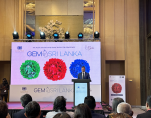
Colombo, Sri Lanka – Media OutReach Newswire – 12 January 2026 – From January 7 to 9, Gem Sri Lanka 2026 was successfully held at the Shangri-La Hotel in the heart of Colombo, the capital of Sri Lanka. Her Excellency Dr. Harini Amarasuriya, Prime Minister of Sri Lanka, attended the official opening ceremony as the distinguished guest. From its beginnings as a specialized industry exhibition, GEM SRILANKA has grown into a landmark international event.
Gem Sri Lanka 2026 Concludes Successfully: Platinum Sponsor GUILD Propels Industry Growth
GEM SRILANKA is organized by the Ceylon Gem and Jewellery Traders Association (CGJTA).It has over 2,000 members covering key gem-producing regions in Sri Lanka, including Beruwala, Ratnapura, and Galle, providing a professional platform for gemstone industry professionals worldwide to network, collaborate, and explore the world of gemstones in depth.
The exhibition set new records in both scale and attendance
This edition of the exhibition featured a total of 150 booths, attracting a large number of local and international buyers. Mr. Sunil Handunnetti, Minister of Industry and Enterprise Development of Sri Lanka; Rizwan Naeem, Vice Chairman of CGJTA,Mr. Andrew Lucas, President of GUILD Gemology Education and active field gemologist, Ms Ruby Liu, President of GUILD Gem Laboratories, and other distinguished guests attended the event.
At the Gem Sri Lanka 2026 gemstone exhibition, exhibitors comprehensively showcased their professional expertise across all stages of the gemstone industry value chain. Covering key areas such as mining, cutting, polishing, and heat treatment, the exhibition was guided by the core values of integrity and transparency, ensuring consistently high professional standards throughout. At the same time, this edition presented an immersive experience showcasing the long and diverse history of Sri Lanka’s gemstone industry, with detailed introductions to the country’s renowned sapphires and star sapphires. A dedicated premium exhibition zone was also curated to highlight exceptional sapphires and high-end colored gemstone collections.
According to data from GUILD Gem Laboratories, the number of gemstone samples submitted during the exhibition reached a new record high, directly reflecting the strong activity of the Sri Lanka trading market and further indicating a recovery trend in the global gemstone market at the beginning of the year.”The colored gemstone market in 2025 continues to evolve in terms of supply chains and color preferences. Although the market faced numerous supply-side challenges in 2024, against the backdrop of current conditions in the diamond market and rising gold prices, colored gemstones still demonstrate strong potential to gain increased market share.”Andrew Lucas noted in the opening of the GUILD 2025 Colored Gemstone Market Report.
Sri Lanka — a world-renowned gemstone trading hub
Sri Lanka has a thriving and highly valuable trade in precious and semi-precious gemstones, earning international recognition for its high-quality gemstones as well as its exceptional cutting and finishing craftsmanship. The gemstones produced in Sri Lanka consistently meet—and often exceed—the highest industry standards.
The country has long occupied a pivotal position in the global gemstone industry, serving as an integrated global hub encompassing mining, cutting, treatment, and trade. Buyers from major markets such as Japan, India, and China continue to travel to Sri Lanka, where they can observe the entire colored gemstone supply chain. Supported by a deep-rooted gemstone culture, extensive expertise, and an innovative mindset, Sri Lanka has developed a keen understanding of global market dynamics.
In recent years, by combining rough gemstone sourcing from Africa, Madagascar, and Southeast Asia with its renowned local cutting craftsmanship, Sri Lanka has further strengthened its position in the global gemstone industry.
GUILD Made a Dual-Booth Appearance at Gem Sri Lanka
As an internationally recognized gemstone testing authority, GUILD has long been committed to the study of field gemology, collecting A-type reference samples from major mining regions around the world to provide global industry professionals with accurate, authoritative, and efficient testing services. Since the inception of the exhibition, GUILD has served as a Platinum Sponsor of Gem Sri Lanka for three consecutive editions. At this year’s event, GUILD made its first-ever dual-booth appearance, featuring both GUILD Gem Laboratories and GUILD Gemology Education.
At the GUILD Gem Laboratories booth, a team of senior gemologists from GUILD Beruwala offered 24–48 hour rapid testing services to exhibitors and buyers, covering gemstone identification, treatment detection, and related services, providing reliable support for global gemstone trading and procurement. During the exhibition, the 2025 GUILD Colored Gemstone Market Report was also launched in limited quantities, serving as an important reference for industry trends and market direction.
Making its debut, the GUILD Gemology Education booth focused on the knowledge needs of professionals from both domestic and international markets, comprehensively presenting GUILD’s education and training programs as well as its overseas study tours. The booth showcased the English editions of Journey of Gems, professional color charts, and the combined volume of Microscopic Wonders: A Gemstone Inclusion Atlas, all of which were warmly received by industry professionals from around the world.
Focusing on a global perspective, driving the advancement of industry development
GUILD will continue to deepen its presence in the international gemstone market, leveraging its professional expertise to support the transparency and standardization of the global gemstone industry. Working together with industry peers, GUILD aims to explore new possibilities in source-origin trade and looks forward to even more highlights at the next edition of Gem Sri Lanka.
The issuer is solely responsible for the content of this announcement.
Greenlogue/AP Abu Dhabi Future Energy Company PJSC – Masdar has signed a long-term power purchase agreement for a 150-megawatt solar photovoltaic project in Angola, marking its first contracted power deal in the country and extending the company’s African portfolio at a time when regional governments are accelerating grid expansion and energy diversification. The agreement covers the Quipungo Solar PV project, located in Angola’s southern region, and was […]



 By K Raveendran When the Supreme Court of India struck down the electoral bond scheme introduced under the government led by Narendra Modi, it did so on the realisation that the anonymity offered by the bonds, far from curing the malaise of black money, had institutionalised it. But the alternative of electoral trusts that the […]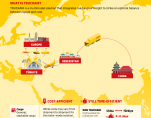




 https://www.hkubs.hku.hk/




 https://www.linkedin.com/company/kgi-hongkong/
 https://www.facebook.com/KGI.HongKong?mibextid=JRoKGi&rdid=a4NoCGXY72nFghtQ&share_url=https%3A%2F%2Fwww.facebook.com%2Fshare%2F15kKKLreMr%2F%3Fmibextid%3DJRoKGi#
 https://www.instagram.com/kgi.hongkong?igsh=MTI5ems1ZzNlZ3YyMQ==