Just in:
Microfinance case trouble for Vellappally // OpenAI introduces GPT-6 Cyber with restricted security access // HKUST President Prof. Nancy IP Receives UNESCO–Equatorial Guinea International Prize for Research in Life Sciences // Technology shares plunge as Nasdaq enters correction // Ningbo Consensus on Collaborative Development released at 2026 Global Mayors Dialogue · Ningbo // Dubai Future District Fund and Buimerc formalise cooperation // HKUST President Prof. Nancy IP Receives UNESCO–Equatorial Guinea International Prize for Research in Life Sciences // Geely’s i-HEV Intelligent Hybrid Technology Offers a New Direction for Gasoline-Powered Vehicles // The “1st Greater Bay Area Health and Longevity Summit & Awards Ceremony” concludes successfully in Macao // Miss Universe Hong Kong Jen Zhou Departs for Puerto Rico to Compete in the 75th Miss Universe World Final // Kochi police detain two actors over bid to honey trap doctor // Dubai details five-year visa benefits for returning visitors // Trump’s Iran War Has A Share Of Contribution To His Midterm Debacle // TVM –Mangaluru Vande Bharat claims top spot // Geely’s i-HEV Intelligent Hybrid Technology Offers a New Direction Vision for Gasoline-Powered Vehicles // Oil advances towards $100 as tanker attacks persist // India Under Pressure To Join RCEP On The Eve Of ASEAN Summit In Manila On Nov 15-17 // HKUST President and Chinese Academy of Sciences Academician Prof. Nancy Ip Receives UNESCO Honor for a Second Time // ADNOC secures decade-long LNG supply pact with Gujarat Energy // Excise chief shunted out in bar licence dispute //

News related to
robot

TONGXIANG, CHINA – Media OutReach Newswire – 6 November 2026 – A robot makes coffee. Others dance, patrol exhibition halls or trade mock blows in choreographed demonstrations. Scenes like these were on full display at this year’s World Internet Conference Wuzhen Summit, which concluded on Nov 5 in the canal town of Wuzhen in eastern China.

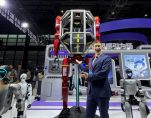
American content creator Evan Kail poses for a photo with Unitree Robotics' GD01, a robot designed for emergency-response scenarios, at the summit.
American content creator Evan Kail poses for a photo with Unitree Robotics’ GD01, a robot designed for emergency-response scenarios, at the summit.

Companies including Unitree Robotics, AgiBot and UBTECH used the “Light of Internet” Expo to show how far robots have come — and how close they may be to becoming part of everyday life.

But the expo was not only about spectacle. Many of the machines on display were being developed for tasks beyond the exhibition hall.

Evan Kail, an American content creator visiting the expo, paused in front of Unitree Robotics’ GD01, a robot designed for emergency-response scenarios.

Kail said the machine captured the pace of China’s progress in robotics. A few years ago, he said, Unitree robots were widely known for dancing in televised gala performances. Now, machines such as the GD01 pointed to more practical roles, including disaster response and search-and-rescue operations.

“The leaps of technology in China are very impressive,” Kail said. “As climate change gets worse and worse, robots like this can make a difference if they are used to save lives.”

The shift from eye-catching demonstrations to practical deployment was a recurring theme across the expo. But for robots to work reliably in crowded streets, disaster zones or industrial sites, the machine itself is only part of the equation. It also needs a network capable of carrying huge amounts of data, responding almost instantly and supporting AI decisions close to where they are needed.

At China Mobile’s booth, a display highlighted one example: traffic-management robots deployed in Hangzhou, the eastern Chinese city that hosted the 2023 Asian Games.

Earlier this year, during a peak holiday travel period, Hangzhou deployed 15 robots at major intersections in tourist areas and downtown districts. Part of the Hangzhou Police Smart Mobility program, they can answer questions, guide pedestrians and vehicles, and warn people about traffic violations.

The deployment illustrates how connectivity is becoming central to the usefulness of intelligent machines. The current system uses 5G and 5G-Advanced connections and typically supports one camera on each robot. Future versions are expected to carry as many as six cameras and operate more independently within defined areas.

That will require latency below 10 milliseconds, uplink speeds above 100 Mbps and positioning accurate to within centimeters — demands that are helping shape the development of 6G.

The next generation of mobile technology is still years from commercial deployment. But its ambitions extend beyond faster download speeds. Industry plans for 6G include combining communications with sensing, edge computing and satellite connectivity.

“With 6G, networks will effectively gain radar-like eyes — the ability to sense and understand their surroundings — while AI will give them a brain,” said Liang Zeshuai, a network optimization engineer at China Mobile Zhejiang.

In this vision, a base station would do more than transmit data. Equipped with radar-like sensing capabilities, it could detect a nearby drone, identify obstacles around a blind corner or provide an autonomous machine with a more detailed understanding of its surroundings. Edge computing, meanwhile, would allow AI tasks to be processed closer to the user, rather than sending every request to a distant data center.

That could matter especially in the kinds of situations Kail had in mind: complex and dangerous environments where time, connectivity and situational awareness can make a difference.

Satellite connectivity could provide another layer of resilience when typhoons, earthquakes or other disasters damage ground-based infrastructure. China Mobile has launched a direct-to-handset service using the Tiantong and BeiDou satellite systems.

For now, 5G-Advanced — a network that goes beyond 5G in speed and performance — has already been widely rolled out across China. In Wuzhen, a 5G-Advanced “super uplink” network with upload speeds of up to 1,000 Mbps covered the conference venue for the first time. Robot dogs used the network to patrol the area, transmitting 4K video and location data in real time.

A girl reaches out to shake hands with a robot dog used for patrol demonstrations at the summit.

The same combination of connectivity, computing and AI is moving into industries where the gains may be less visible than a dancing robot, but potentially more consequential.

China Mobile and Sinopharm, China’s state-owned pharmaceutical and healthcare conglomerate, for example, have developed an AI-enabled cold-chain logistics platform that has reduced delivery costs by 65% and cut delivery times by 70%. The system is designed to help manage the transport of temperature-sensitive products, where delays or poor monitoring can lead to waste.

At Ningbo-Zhoushan Port, China Mobile has built what it describes as the world’s largest 5G private network for port operations. Such networks can support real-time coordination among cranes, vehicles, cameras and control systems across a vast, fast-moving industrial site.

The company is also applying AI and connected systems to public safety and emergency management, including flood-control planning and drone inspections of buildings. The aim is not only to respond faster after an emergency, but to identify risks before they become crises.

At Wuzhen, the robots remained the most visible attraction. They made coffee, danced for visitors and posed for cameras. Yet the more consequential story was happening behind them — in the networks, computing systems and satellite links that could determine how quickly AI moves from a trade-show novelty into a tool for cities, industries and, potentially, lifesaving work.

Hashtag: #TongxiangNewsOffice

The issuer is solely responsible for the content of this announcement.

HANGZHOU, CHINA – Media OutReach Newswire – 6 November 2026 – As the global automotive industry accelerates its shift toward electrification, some have questioned the long-term role of gasoline-powered vehicles. Geely Auto Group sees a different path forward. Earlier this year, the group launched its i-HEV Intelligent Hybrid technology system, which brings together AI-powered energy management, a high-C-rate battery and a high-efficiency engine. This hybrid system is designed to improve fuel economy, driving performance, intelligent features, safety and reliability.

Geely's i-HEV Intelligent Hybrid Technology Offers a New Direction for Gasoline-Powered Vehicles
Geely’s i-HEV Intelligent Hybrid Technology Offers a New Direction for Gasoline-Powered Vehicles

Gasoline-powered vehicles are unlikely to disappear in the near term, but their continued relevance will depend on becoming more efficient, more intelligent, and increasingly electrified. Hybrid electric vehicles (HEVs) offer one way to achieve that transition. Since the first-generation Prius debuted in 1997, Toyota has played a major role in bringing hybrid technology into the mainstream, with fuel efficiency and durability among its principal strengths. As battery, electric motor, power electronics and connected-vehicle technologies have advanced, however, hybrid development has expanded beyond fuel economy to encompass performance, intelligent features and safety. Geely i-HEV Intelligent Hybrid System is designed to build on that progress.

Fuel efficiency remains the primary consideration for hybrid vehicles buyers. Geely Auto Group has continued to improve the thermal efficiency of its internal combustion engines, and the engine developed for the i-HEV Intelligent Hybrid System achieves a peak thermal efficiency of 48.41%, which the group describes as the highest among engines currently in mass production.. The Group also reports fuel consumption 12% lower than that of the Japanese hybrid models used in its benchmark comparison. In a highway fuel-economy test on the Hainan Ring Expressway, the fifth-generation Emgrand i-HEV recorded fuel consumption of 2.22 L/100 km, a result that earned a Guinness World Records title. In a separate real-world test, the larger XINGRUI L PLUS recorded a combined fuel consumption of 2.58 L/100 km. These figures reflect specific tests rather than standardized combined-cycle ratings.

Unlike conventional hybrid layouts in which the engine and electric motor operate more closely together, the i-HEV system uses an architecture designed to allow the engine and electric motors to operate independently. This enable electric propulsion to take the lead when conditions allow, while helping the engine operate within a more efficient range. The system incorporates an 11-in-1 hybrid electric drive unit, with peak electric motor output of up to 230 kW. According to Geely Auto Group, electric drive provides propulsion for more than 80% of driving time under the WLTC test cycle, reducing engine operating time by more than 27% compared with the conventional hybrids used in its assessment. Geely also reports pure-electric operation at speeds of up to 66 km/h, acceleration from 0 to 30 km/h in 1.84 seconds and a power response time of 10 milliseconds. These capabilities are intended to combine fuel savings and responsive performance.

Intelligent energy management is another important element of the Geely i-HEV Intelligent Hybrid System Its AI-based platform analyzes conditions such as temperature, humidity and altitude in real time, then adjusts the balance between engine and electric power to improve overall energy efficiency by more than 10%. The Geely i-HEV also supports advanced electronic and electrical architectures, allowing compatible vehicles to incorporate intelligent cockpit systems and driver-assistance features.

The system also incorporates a patented power redundancy safety design intended to improve resilience. The engine, P1 motor, and P3 motor are configured to operate independently – if any one of these power sources becomes unavailable, the remaining two can continue to provide propulsion. Separate pathways for the fuel, electrical, coolant and exhaust systems are designed to reduce the risk of interference between systems. For reliability, Geely reports that the system has completed a cumulative 15,000 hours of bench durability testing, equivalent to approximately 4.8 million kilometers of vehicle mileage. The engine is also designed to accommodate different gasoline octane grades, supporting use across markets with varying fuel specifications.

Geely Auto Group is bringing i-HEV hybrid technology to multiple production models. The recently launched XINGRUI L PLUS hybrid sedan accelerates from 0 to 100 km/h in 7.7 seconds and has a WLTC combined fuel-consumption ratings of just 3.98 L/100 km. Additionally, the XINGYUE L PLUS, scheduled to launch in Nov 2026, is set to introduce the 2.0TD i-HEV hybrid technology, pairing an engine delivering a maximum power output of 160 kW with a P3 electric motor rated at 230 kW. Depending on the model and trim, the vehicles also offers technologies including radar and the G-ASD H5 driver-assistance system and the EVA smart robot, extending advanced vehicle features to the group’s hybrid lineup.

In markets where charging infrastructure remains limited and running costs are a priority, HEVs can offer a particle route to lower fuel consumption without requiring external charging. Geely’s i-HEV Intelligent Hybrid System reflects the group’s approach to that opportunity: improving the efficiency of the internal combustion engine while using electrification and AI to enhance the performance, energy management and the driving experience. Rather than treating hybrid technology as a transitional solution focused solely on fuel savings, Geely Auto Group is developing it as a platform for broader advances in efficiency, intelligence and reliability.

Hashtag: #Geely

The issuer is solely responsible for the content of this announcement.

SHANGHAI, CHINA – Media OutReach Newswire – 4 November 2026 – Arrow Electronics is bringing together hundreds of customers, technology suppliers and ecosystem partners at its flagship Arrow Technology Showcase in Shanghai. Held under the theme “Collaborating to Build an Intelligent World,” the event explores technologies shaping the future of intelligent robotics, mobility and digital infrastructure.

Arrow Electronics showcases technologies advancing intelligent robotics, mobility and digital infrastructure

The event showcases more than 160 technology demonstrations and solutions spanning AI infrastructure, robotics, automotive electronics, interconnect, passive and electromechanical technologies, power management, industrial automation, edge AI and green energy applications, offering practical approaches to customers’ evolving design and engineering challenges.

The growing adoption of robotics, software-defined and electric vehicles, and AI-driven infrastructure is transforming industries worldwide. As companies navigate increasingly complex design requirements, rising performance demands and evolving sustainability goals, they are seeking new ways to accelerate development, optimize operations and bring innovative solutions to market faster.

“As AI, automation and electrification reshape industries, customers are navigating increasingly complex design, power and system requirements,” said Jacky Wan, vice president of sales components, China, at Arrow Electronics. “By bringing together engineering expertise, technologies and supply chain capabilities, Arrow enables customers to address these challenges and accelerate the development of next-generation solutions.”

The showcase highlights solutions across four key technology domains:

Robotics
Advanced robotics solutions demonstrate how AI, sensing, motion control and automation technologies can support the development of more intelligent robotic systems. Exhibits feature AI-integrated motion control, machine vision, Holoscan Sensor Bridge (HSB) sensor-over-Ethernet technology, ROS-based embedded control, EtherCAT industrial automation, and motor control solutions. These technologies enable applications such as autonomous inspection, dexterous manipulation, and intelligent operations and maintenance, helping companies improve efficiency and deploy advanced automation across manufacturing, logistics and other industrial environments.

Automotive Electronics
Automotive technology demonstrations showcase solutions supporting the transition to smarter, more connected and electrified vehicles. Featured technologies include CAN/LIN central gateways, ambient and matrix lighting, digital dashboards, OLED tail lights, thermal management systems, zonal control units (ZCUs), ultra-wideband passive entry passive start (UWB PEPS), sentry camera systems, high-voltage battery management systems (HVBMS), and high-power DC fast-charging systems. These technologies can help automotive manufacturers enhance safety, connectivity, efficiency and vehicle performance while advancing software-defined and electric vehicle development.

AI Infrastructure and Power Management
Integrated solutions for AI infrastructure, power management and industrial automation include Arrow’s Next-Gen 800VDC AI Data Center architecture. The exhibit encompasses renewable energy integration, energy storage, intelligent power distribution, high-density AI server power delivery, liquid and immersion cooling, and intelligent building automation. Together, these technologies can help companies and enterprises improve energy efficiency, increase power density, optimize resource use and support more sustainable AI and industrial operations.

IP&E Solutions
Arrow’s interconnect, passive and electromechanical (IP&E) technologies support reliable connectivity, power management, sensing and system performance. With specialized IP&E expertise, Arrow helps customers accelerate design-to-production, improve product availability and simplify sourcing.

To explore Arrow’s technologies, engineering, and supply chain capabilities, visit arrow.com.

Hashtag: #ArrowElectronics

The issuer is solely responsible for the content of this announcement.

About Arrow Electronics

Arrow Electronics (NYSE:ARW) sources and engineers technology solutions for thousands of leading manufacturers and service providers. With 2025 sales of $31 billion, Arrow’s portfolio enables technology across major industries and markets. Learn more at .

  • Mr Drew Chen’s appointment as Co-CEO strengthens BDC’s leadership team as the Company surpasses one gigawatt of capacity in 2026 and accelerates its growth across Asia Pacific.


SINGAPORE – Media OutReach Newswire – 3 November 2026 – Bridge Data Centres (BDC) is pleased to announce
the appointment of Mr Drew Chen as Co-Chief Executive Officer (Co-CEO), effective 1 November 2026. He will work alongside Mr Eric Fan, BDC’s Co-CEO, as a key member of the leadership team to accelerate the Company’s growth across Asia Pacific and beyond.

Mr Drew Chen, Co CEO of Bridge Data Centres

Mr Chen brings over 20 years of private equity experience, with a focus on the telecommunications, media, technology, and business services sectors. He previously served as a Senior Partner at Bain Capital and was a founding member of the firm’s Asia Pacific private equity team. Prior to Bain Capital, Mr Chen worked at Bain & Company. He holds a bachelor’s degree in economics from Harvard University and an MBA from Harvard Business School.

Mr Eric Fan, Co-CEO of Bridge Data Centres, said, “On behalf of Bridge Data Centres, we would like to welcome Drew. His appointment strengthens our leadership team at an important point in BDC’s growth, as we surpass one gigawatt of capacity in 2026. Drew’s experience and deep domain knowledge of the data centre sector will support our strategy as we scale BDC into a multi-gigawatt digital infrastructure platform in the coming years.”
Mr Drew Chen, Co-CEO of Bridge Data Centres, said, “The Asia Pacific data centre sector is at inflection point for growth, fuelled by surging cloud adoption and the rapid expansion of AI workloads. BDC is well positioned to capture this opportunity, backed by our world class engineering and design team, longstanding partnerships with global clients, and a decade of experience developing and operating next-generation digital infrastructure. I am excited to partner with Eric and the leadership team to scale BDC’s footprint across Asia Pacific and support our customers’ ambitious growth plans.”
Mr Jonathan Zhu, Partner and Chair of China at Bain Capital, said, “Drew possesses deep expertise in the digital infrastructure space and an intimate knowledge of BDC’s business, having played a pivotal role in the buildout of BDC and its sister company ChinData. We are delighted that, as the Co-CEO, Drew will continue to bring strategic foresight and robust business building capabilities to BDC. Together, he and Eric are well positioned to lead BDC through its next chapter of growth.”
Headquartered in Singapore, BDC is one of Asia Pacific’s top three next-generation digital infrastructure platforms by live capacity, with a presence across Malaysia, Thailand, Singapore, and India.

Hashtag: #BridgeDataCentres


The issuer is solely responsible for the content of this announcement.

About Bridge Data Centres

Bridge Data Centres (BDC) is a Singapore headquartered digital infrastructure platform delivering next-generation data centres across Asia Pacific and beyond.
Backed by Bain Capital, BDC operates in Malaysia, Thailand, India, and other high-growth markets, with an ambition to scale into a multi-gigawatt digital infrastructure platform in the near future.

Arabian Post Staff -Dubai OpenAI chief executive Sam Altman has described the UAE as the world’s most forward-looking country for artificial intelligence adoption, as his company agreed to deploy advanced AI technology across ADNOC’s energy operations. Speaking at ADIPEC 2026 in Abu Dhabi on Monday, Altman praised the country’s commitment to integrating AI into government and business. His remarks accompanied a multiyear agreement between OpenAI, Abu Dhabi […]

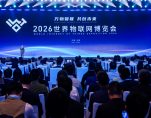
WUXI, CHINA – Media OutReach Newswire – 2 November 2026 – The 2026 World Internet of Things Expo opened Saturday in Wuxi, an eastern Chinese city, with a focus on the growing integration of artificial intelligence and the Internet of Things.

2026 World IoT Expo in Wuxi, China

The event focuses on the development of intelligent connectivity and its potential to create shared benefits, showcasing how connected devices are evolving beyond collecting and transmitting data to analyzing information, making decisions and taking action.

Organizers said the exhibition covers more than 50,000 square meters and has attracted more than 400 companies from nearly 20 countries and regions. Key exhibits include smart sensors, satellite-based Internet of Things technologies, embodied artificial intelligence robots and next-generation smart devices, with applications spanning manufacturing, transportation and everyday life.

A central theme of this year’s expo is the increasingly close relationship between IoT and artificial intelligence. Sensors allow devices to perceive their surroundings, networks enable information sharing, and AI systems help interpret data and determine appropriate responses.

Exhibits include robotics, machine vision systems and industrial AI models. International companies such as Bosch and Siemens are displaying their technologies alongside Chinese technology firms, highlighting opportunities for cooperation across different parts of the industrial supply chain.

For Wuxi, a city with a strong manufacturing base, the expo also offers a glimpse into its efforts to upgrade its industrial economy.

Since being designated a national demonstration zone for sensor network innovation in 2009, Wuxi has steadily developed its IoT industry. Revenue at major IoT companies in the city reached 318.4 billion yuan ($44.7 billion) in 2025, according to publicly available data.

The city’s established capabilities in sensors, industrial internet systems and connected vehicles are increasingly being extended into artificial intelligence and robotics.

The transition is also receiving policy support. A three-year action plan released by Jiangsu province this year identifies Wuxi as the core of its IoT industry development strategy and calls for deeper integration of IoT and AI technologies, particularly in core industrial production processes.

For participating companies, the expo offers more than an opportunity to showcase new products. It also provides a platform to connect with manufacturers, identify potential business partners and explore international cooperation.

Hashtag: #2026WorldIoTExpoCommittee

The issuer is solely responsible for the content of this announcement.
Arabian Post Staff -Dubai Smart home buyers have more practical choices as the Matter connectivity standard expands support for cameras, energy management and household automation, making compatibility an important consideration alongside price and convenience. The Connectivity Standards Alliance introduced Matter 1.6 in June 2026, extending work on simpler device setup and interoperability. Its earlier updates added camera support and improved energy monitoring, although individual products and platforms […]

Advertisements

A subscription-based Android malware operation is targeting bank customers across India, allowing criminals to create fraudulent applications that intercept security codes, steal financial credentials and divert verification calls. Cybersecurity company CloudSEK identified the operation, named MR ROBOT, in an investigation published on 28 October. Its findings show that one affiliate controlled 153 compromised devices and intercepted 5,407 text messages, offering a documented glimpse of how the criminal […]

Arabian Post Staff -Dubai BYD has designated the Gulf Cooperation Council its leading international expansion priority, announcing plans for additional investment, a regional spare-parts hub and broader technology operations beyond vehicle sales. Executive vice-president Stella Li said the Chinese automotive group intends to strengthen its dealership network and after-sales services while exploring opportunities in battery storage, autonomous driving and robotics across Gulf markets. “The GCC is my […]

Britain’s competition regulator has launched an investigation into Meta Platforms over proposed commercial terms that could allow the technology company to use publishers’ website content for its own products, including artificial intelligence services. The Competition and Markets Authority announced the investigation on Friday, saying it would examine whether Meta was abusing a dominant market position by imposing unfair conditions on publishers, advertisers and other businesses using its […]

Arabian Post Staff -Dubai The United Arab Emirates and Canada have signed a Comprehensive Economic Partnership Agreement to lower trade barriers and encourage bilateral investment. The agreement was signed in Ottawa on 27 October by UAE Minister of Foreign Trade Dr Thani bin Ahmed Al Zeyoudi and Canada’s Minister of International Trade Maninder Sidhu. Abu Dhabi Crown Prince Sheikh Khaled bin Mohamed bin Zayed Al Nahyan and […]

A UAE business delegation led by Foreign Trade Ministry Undersecretary Fahad Al Gergawi held talks with Russian companies at the Russian Industrialist International Forum and Exhibition in St Petersburg, seeking opportunities for investment, technology partnerships and industrial cooperation. The delegation attended the 30th edition of the forum, held from October 22 to 24, with support from the Russia-UAE Business Council and coordination with the UAE Embassy in […]

New capital positions the robotics and industrial automation group to expand hardware automation across KitchenBASE sites in Hong Kong, Singapore, Taiwan, Japan, Korea, and Australia

HONG KONG SAR – Media OutReach Newswire – 27 October 2026 – Six markets across Asia-Pacific stand to gain from a $1.7 billion investment into Atoms, the robotics and industrial automation group founded by Uber co-founder Travis Kalanick. Andreessen Horowitz (a16z) led the round, joined by Uber, Bain Capital, Fifth Wall, and other institutional investors. The result strengthens a group that includes KitchenBASE, a commercial kitchen network spanning six of the most active food markets in the region.

New Capital, New Capability

The a16z-led round also adds Ben Horowitz, co-founder of the firm, to the Atoms board. This positions the group to push harder into robotics across food, mining, and transport. Within Atoms Food, KitchenBASE sits alongside hardware projects such as automated bowl-builders and order conveyance robots built to cut labour friction inside commercial kitchens. Fresh capital gives these projects more room to develop, with knock-on gains for the KitchenBASE network across Hong Kong, Singapore, Taiwan, Japan, Korea, and Australia.

A Boost for Regional Operators

For operators across Asia-Pacific, the benefits are practical. KitchenBASE facilities come licensed and ready-to-fit, and this lets food businesses move in under flexible contracts without the capital outlay of a traditional lease.

Brands that want to test a single market or push into several at once find a foothold in high-demand delivery zones across all six markets. New investment from Atoms in hardware automation and physical workflow management is expected to further sharpen efficiency and reliability, giving KitchenBASE operators a faster path to scale.

Hashtag: #ATOMS

The issuer is solely responsible for the content of this announcement.

About Atoms

is an industrial automation and robotics company founded by . Atoms Food includes KitchenBASE alongside food-tech hardware projects. Autonomous haulage and machine systems sit under Atoms Mining. Robotic wheelbases and autonomous movement systems for heavy industry fall under Atoms Transport.

About KitchenBASE

is the food infrastructure arm behind six brands trading across Asia-Pacific. Formally known as in Hong Kong, in Singapore, in Taiwan, in Japan, in Korea, and in Australia. Each brand equips food businesses with licensed kitchen space built for speed to market, so operators can rely on a steady base to launch, test, and expand.

The Mosprom Export Support Center arranged a series of meetings between Moscow industrial companies and potential clients in Manama. The parties to the talks discussed joint projects in construction, IT and telecoms, as well as supplies of sweet goods to the local market. This was reported by Maksim Liksutov, Deputy Mayor of Moscow for Transport and Industry. “The capital is a confident leader among Russian regions in […]

300+ AI Applications Delivering Surges in Core Metrics and Annual Cost Reduction of Over CNY100 Million (Approx. US$15 Million)

NANJING, CHINA – Media OutReach Newswire – 26 October 2026 – Nanjing Iron & Steel Co., Ltd. (NISCO) has worked with Huawei and ecosystem partners to commercially deploy the world’s first steel model powered by swarm intelligence—the YuanYe Steel Large Model (YuanYe)—across multiple scenarios at scale. This helps NISCO transition its core operations from relying on experience to being powered by data and intelligence collaboration.

NISCO's intelligent operations center that covers the widest business range in the industry and uses 5-dimensional digital twins to deliver integrated production and operations management across spaces, boundaries, organizations, and equipment
NISCO’s intelligent operations center that covers the widest business range in the industry and uses 5-dimensional digital twins to deliver integrated production and operations management across spaces, boundaries, organizations, and equipment

As a traditional manufacturer navigating the challenges of transformation and cost efficiency, NISCO has built a robust digital and intelligent foundation by adopting industry-leading products including Ascend, Kunpeng, Huawei Cloud Stack, and Pangu models. By embedding AI into every core stage of production—ironmaking, steelmaking, rolling, and quality inspection—NISCO is forging green and high-end AI-powered super steel plants.

Unlike general-purpose monolithic models, YuanYe innovatively fuses multiple AI models with the steel industry’s metallurgical mechanism models to create a dual-drive, multi-model cluster architecture. This architecture features a “right brain” for probabilistic computing and a “left brain” for precise and scientific decision-making. Powered by massive amounts of sensing data aggregated from millions of operational technology (OT) data points across 26 business domains, NISCO has achieved real-time digital twin mapping within its intelligent operations center, laying solid data and scenario foundations for YuanYe. This enables the entire steelmaking process to become not only visible, but also capable of precise control and intelligent assessment. Now 100% of NISCO’s key equipment is connected and digitally controlled and its new product R&D cycles have been shortened by 50%, reducing annual costs by over CNY100 million (approx. US$15 million).

As the model continues to iterate, NISCO had launched 25 business agents by October 2026. These agents cover a wide range of scenarios, from visual quality inspection and process optimization to production scheduling and operations management, setting a new benchmark for digital and intelligent steel transformation.

NISCO's hot-rolling production line in its heavy plate plant
NISCO’s hot-rolling production line in its heavy plate plant

Breakthroughs in four core scenarios: YuanYe redefines traditional operations for significant safety, efficiency, and quality gains

  • In the ironmaking stage, AI makes traditionally invisible blast furnaces transparent. YuanYe leverages blast furnaces’ internal sensor data and metallurgical mechanism analysis to perform real-time dynamic simulations of the ironmaking process. Assisted by furnace temperature prediction and health diagnosis models, furnace operators can predict temperatures and identify issues two hours in advance, with over 90% accuracy. This shifts furnace operations from reactive post-event remediation to proactive pre-control, increasing prime-grade molten iron yield by over 10% while significantly cutting unit energy consumption.
  • In the rolling stage, AI drives precise predictions and codifies expert experience to enhance the operational stability of steel rolling and secure leadership in product quality. To tackle the highly dynamic and complex operating conditions during the rolling process, YuanYe’s rolling-force prediction model achieves millisecond-level response, narrowing the thickness tolerance to ±0.2 mm and reducing the steel thickness deviation to 1.9% to reach a world-leading standard. The rolling-force hit rate has jumped from 88% to 98%, supporting a steady annual output of over 2.5 million tons of steel plates and increasing the overall yield rate by 0.5%. Enhanced dimensional precision and physical-chemical stability allow NISCO’s products to meet demanding steel specifications across diverse applications, ranging from mega stadiums and oil pipelines to 10,000-ton cruise ships and LNG storage tanks.
  • In quality inspection, the synergy between robots and AI models serves as a discerning “eagle eye”, doubling metallographic inspection efficiency. During metallographic inspection for finished steel, the integrated smart metallographic inspection system built on YuanYe has achieved full-process automation, covering sample grinding and polishing, image acquisition, and smart grading. Inspection accuracy has risen to over 95%, while per-sample inspection time has been shortened from 10 minutes down to 3–5 minutes. This 80% increase in overall inspection efficiency frees human operators to focus on anomaly analysis and high-level decision-making.
  • In the energy and environmental control stage, NISCO leverages the YuanYe architecture to develop the S-Link Intelligent Agent for Gas and Flue Gas Sulfur Control. Integrating 602 process parameters alongside multi-modal image and knowledge capabilities, the agent achieves a smart closed loop across source prediction, process optimization, and end-of-pipe compliance. By combining mechanism inversion with time-series forecasting, it issues precise sulfur-risk warnings one hour in advance, achieving a sulfur prediction accuracy of over 95%. Operational optimization algorithms then calculate the optimal gas blending scheme within seconds. Finally, game-theoretic models dynamically allocate emission quotas, slashing natural gas co-firing consumption by nearly 50%. This has reduced downtime caused by emission exceedance by over 25%, and delivered more than CNY600,000 (approx. US$90,000) in annual economic benefits—securing both environmental compliance and drastic cost reduction.

From automating labor to empowering people: Defining a new paradigm of inclusive AI

Li Jinyan, General Manager of the Digital and Intelligent Integrated Development Department and Director of the AI Research Institute at NISCO, said: “Digital and intelligent transformation is inherently human-centric. Its purpose is not to replace people, but to unleash human potential. Our goal is to lift employees out of the endless sea of data, empowering them to direct their creative energy toward work of higher value.” To date, NISCO has deployed over 300 AI models across its plants, alongside more than 1,000 low-code agents and lightweight applications built independently by frontline employees.

As Cheng Yongfu, Senior Industrial Solution Expert at Huawei’s Steel & Non-ferrous BU, noted: “The real value of industrial AI can only be realized when it expands from single-point applications to comprehensive integration with production, operations, and management, which can unlock sustained, scalable empowerment.”

Looking ahead, as model deployment expands and computing demands continue to grow, NISCO will team up with Huawei and other partners to explore the construction of dedicated data centers for smart steel plants. Centered on the AI-native three-tier architecture (AI-native OS, AI-native factory, and AI-native enterprise) and powered by the YuanYe model, NISCO is accelerating high-quality steel development, aiming to provide a replicable and scalable benchmark for the digital and intelligent transformation of the global steel and manufacturing industries.

Hashtag: #Huawei #NISCO

The issuer is solely responsible for the content of this announcement.

Britain has committed £100 million to establish an artificial intelligence biosecurity laboratory, supported by OpenAI, Anthropic and Google DeepMind, to strengthen defences against biological threats. The AI Biosecurity Lab will use advanced models to identify emerging dangers, improve disease surveillance and accelerate development of vaccines and treatments, the government announced on Saturday. OpenAI and Anthropic have pledged up to £200 million in computing resources, model credits and […]

Exploring Emerging Opportunities in AI, Smart Supply Chain Management, ESG and Sustainability

Free Admission Open for Public Registration Now

HONG KONG SAR – Media OutReach Newswire – 24 October 2026 – Amid the reshaping of global supply chains, the rapid advancement of artificial intelligence (AI) technologies, and the rise of emerging industries such as the low-altitude economy, the logistics industry is entering a new wave of smart transformation. Organised by the Hong Kong Productivity Council (HKPC) and funded by the Logistics Promotion Funding Scheme (LPFS) under the Maritime and Aviation Training Fund of the Transport and Logistics Bureau of the HKSAR Government, LogTech Expo 2026 will take place on 29 October (Thursday) at the InnoCentre in Kowloon Tong. Under the theme “Smart-Driven Transformation, Leading the Future of Logistics”, the Expo will bring together more than 50 logistics, supply chain and innovation and technology enterprises, alongside logistics industry leaders and experts, to share insights through a series of forums and discussions. The event will provide a one-stop platform for the industry to stay abreast of the latest logistics technology trends and developments. Admission is free, and online registration is now open.

As one of the major annual events in Hong Kong’s logistics technology sector, the Expo will feature the latest applications and achievements in smart logistics. From AI and big data analytics, smart warehousing and robotics, and automated supply chain management systems, to cross-border e-commerce logistics, green logistics, new energy transportation and drone delivery solutions, visitors will be able to experience first-hand how technology is reshaping logistics operations and helping enterprises enhance efficiency and competitiveness.

Renowned Enterprises and Organisations Showcase the Entire Smart Logistics Value Chain
This year’s Expo will bring together renowned brands and organisations from the logistics and technology sectors, including SF Supply Chain, Hong Kong Customs and Excise Department, Hongkong Post, Auto-ID Technology, HSM Industrial Solution, Tradelink, GS1 Hong Kong, ShipAny and Axis Communications, showcasing innovative solutions that support digital transformation and intelligent operations across the logistics industry. Visitors can explore the following technology zones:

  • AI and Data Applications Zone: Leveraging AI, big data and automation technologies to enhance logistics planning and operational efficiency;
  • Smart Warehousing and Robotics Zone: Showcasing intelligent sorting systems, automated warehousing and robotics solutions;
  • Smart Supply Chain and Digital Platform Zone: Featuring WMS, TMS and digital supply chain management systems;
  • Cross-border E-commerce and Delivery Zone: Showcasing innovative models in global fulfilment and smart delivery;
  • ESG and Green Logistics Zone: Focusing on new energy transportation, carbon reduction technologies and sustainable logistics development;
  • Low-Altitude Economy Zone: Exploring emerging applications such as drones and last-mile delivery solutions.

Visitors will not only be able to learn how innovative technologies are applied in real-world business scenarios but also engage directly with solution providers and industry experts to explore opportunities for collaboration and transformation.

10 Thematic Seminars and Sharing Sessions Focus on the Future of Logistics
In addition to the exhibition, the Expo will feature 10 thematic forums and technical sharing sessions covering key industry topics including AI, supply chain digitalisation, cross-border e-commerce, the low-altitude economy and logistics innovation.

The opening seminar, “Smart Tools for Logistics: Practical AI Applications and Insights”, will be moderated by Ryan IP, Vice President and Executive Director of the Public Policy Institute of Our Hong Kong Foundation, and feature a panel comprising Professor Kee-hung LAI, Head of the Department of Logistics and Maritime Studies and Chair Professor of Shipping and Logistics at The Hong Kong Polytechnic University; Sunny HO, MH, JP, FCILT, Executive Director of the Hong Kong Shippers’ Council; Keno Tai-yip CHEUNG, President of The Chartered Institute of Logistics and Transport in Hong Kong; and Suki CHEUNG Shuk-ming, Chief Executive Officer of MG Ship. Together, they will discuss how AI can enhance logistics operational efficiency, drive supply chain digitalisation, and support Hong Kong’s development as a smart logistics hub.

In addition, experts from organisations including Profit Sky International Industrial, ShipAny, Tradelink, Axis Communications and GS1 Hong Kong will share real-life business cases, enabling visitors to gain deeper insights into digital twins, cross-border e-commerce, supply chain visibility and AI applications in logistics.

Promoting Cross-sector Collaboration to Shape the Future of Logistics
The Expo is supported by more than 20 industry organisations, including the Airport Authority Hong Kong, Cathay Cargo, Hong Kong Shippers’ Council, Hong Kong Logistics Association, Chartered Institute of Logistics and Transport in Hong Kong, Cyberport and the Logistics and Supply Chain MultiTech R&D Centre. It serves as an effective platform for industry exchange and business matching, fostering innovative collaboration and industry upgrading.

Admission is free. Logistics practitioners, supply chain professionals, manufacturers, e-commerce businesses, technology solution providers, academics, and members of the public interested in the development of logistics technology are welcome to attend.

Event Details
LogTech Expo 2026
Date: 29 October 2026 (Thursday)
Time: 10:00 am – 5:30 pm
Venue: InnoCentre, 72 Tat Chee Avenue, Kowloon Tong
Admission Fee: Free (Advance registration required)
Register Now: https://campaigns.hkpc.org/zh-hk/tc-rsvp-logtech_expo_2026
Exhibitor List: View Exhibitor List

Hashtag: #HKPC

The issuer is solely responsible for the content of this announcement.

About the Hong Kong Productivity Council

The Hong Kong Productivity Council (HKPC) is a statutory body established in 1967, dedicated to enhancing the productivity and competitiveness of Hong Kong enterprises through world-class applied R&D, innovative technology services, and integrated manufacturing solutions. As a market-oriented, international R&D organisation, HKPC leverages its deep expertise and extensive industry experience in key areas such as AI, advanced manufacturing, life and health technology, green technology and new energy to drive new industrialisation and support the growth of emerging and future industries.

HKPC focuses on addressing businesses challenges and industrial technology needs, promoting the full integration between technological and industrial innovation. Through technology transfer, product innovation, intellectual property protection and commercialisation of R&D outcomes, the Council fosters collaboration with the local business community as well as top global R&D institutions, delivering added value to industries and advancing the development of new productive forces. HKPC’s world-class R&D achievements have been widely recognised over the years, winning an array of local and overseas accolades, reinforcing Hong Kong’s role as an international innovation and technology centre and a smart city.

To help enterprises capitalise on Hong Kong’s strengths in international connectivity to expand into global markets, HKPC offers comprehensive overseas expansion services tailored to critical areas including product development, technology, manufacturing, and management, enabling businesses to successfully go global from Hong Kong.

HKPC is also committed to providing timely and practical support to SMEs and startups with timely and practical, assisting them in accessing Government funding programmes. Through its FutureSkills training initiatives, HKPC helps both industry and academia stay ahead in latest digital and STEM technologies, nurturing a future-ready talent pool for Hong Kong.

For more information, please visit HKPC’s website: .

The partnership pairs LeapThought’s own AI with Google Cloud’s Gemini models and sovereign Cloud offering, giving infrastructure owners control of their data and connected intelligence across the full project and asset lifecycle.

SINGAPORE – Media OutReach Newswire – 23 October 2026 – LeapThought and Google Cloud today announced a strategic partnership to bring sovereign, domain-native AI to the owners and operators of critical building infrastructure, giving them control of their data and sharper decision-making across the full value chain, from delivery through operations.

Ratnakar Garikipati, Founder, Chair, and CEO of LeapThought, alongside Rahul Sharma, Google Cloud Managing Director, APAC Public Sector. The partnership combines LeapThought's specialized AI with Google Cloud's Gemini models and sovereign infrastructure to deliver secure data control and end-to-end intelligence for infrastructure assets.
Ratnakar Garikipati, Founder, Chair, and CEO of LeapThought, alongside Rahul Sharma, Google Cloud Managing Director, APAC Public Sector. The partnership combines LeapThought’s specialized AI with Google Cloud’s Gemini models and sovereign infrastructure to deliver secure data control and end-to-end intelligence for infrastructure assets.

The partnership has two priorities. The first is value chain integration, which connects everyone involved in delivering and running an asset — owners, operators, developers, consultants, contractors, and suppliers — on one governed platform. The second is security and sovereignty: owners can keep control of their data, within compliant, standardized frameworks that can be repeated from one program to the next.

FULCRUMHQ, LeapThought’s globally recognized Integrated Digital Delivery (IDD) platform, gives infrastructure owners the option to run on Google Cloud, including Google’s sovereign, air-gapped solutions for defense, public sector, and private sector environments requiring high security. At its core is GENIEHQ, LeapThought’s own Industrial AI, embedded directly into the platform and built to reason over the structured and unstructured data that defines a capital program — BIM models, GIS and geospatial data, ERP financials, schedules, contracts, reality capture, telemetry, and data from field robotics and sensors. The partnership pairs GENIEHQ with Google Cloud’s Gemini models, giving owners and their delivery teams natural-language access to that data across a project and a portfolio.

The partnership delivers on these two priorities as follows:

1. Value Chain Integration: One Governed Record, Natural-Language Insight

Major capital and building infrastructure programs span owners, operators, developers, consultants, contractors, and suppliers — each typically working in separate systems, with design, construction, and operational data fragmented across handovers. LeapThought’s FULCRUMHQ platform brings this information together into a single governed record that follows an asset from design through operation, giving owners a consistent view across their portfolio, not just a single project.

By running FULCRUMHQ — and the GENIEHQ Industrial AI embedded within it — on Google Cloud, and integrating LeapThought’s proprietary data architecture with Google’s Gemini models, the partnership enables:

  • Interactive Model and Portfolio Querying: Combining GENIEHQ’s deep understanding of project and portfolio data with the multimodal capabilities of Gemini, owners, engineers, project managers, and field teams can ask complex, plain-language questions directly against BIM models and portfolio data — instead of manually clicking through complex 3D CAD/BIM model trees or running predefined filter scripts — such as identifying clash detections, extracting exact material quantities, verifying regulatory code compliance, or surfacing risk trends across a program (e.g., “Show me all fire-rated doors on Level 3 that don’t match the latest spec,” or “Which contractors across our portfolio have the highest rate of non- conforming work this quarter”).
  • Global Scale and Reliability: Google Cloud provides the high-performance compute and elastic scalability needed to process compute-intense multi-gigabyte 3D models and point-cloud datasets, across a single project or an entire portfolio, in real time.

2. Security and Sovereignty: Full Control on Google Cloud’s Sovereign Solutions

For critical civil assets, defense installations, public sector agencies, and private sector owners where data cannot traverse the public cloud, LeapThought gives owners the choice to deploy on Google Cloud’s data residency solutions, including Google Cloud Data Boundary, Google Cloud Dedicated, and Google Distributed Cloud. In these environments, GENIEHQ, LeapThought’s Industrial AI embedded within FULCRUMHQ, runs alongside Gemini locally, within the owner’s chosen security boundary, ensuring zero cross-boundary exposure or unauthorized external telemetry.

“The value of an asset now lies as much in the intelligence around it as in its physical form. That intelligence belongs to the owner, and it must be secure, sovereign, and shared across the whole value chain. Demand for this is growing quickly, in Asia and around the world, and that is what brought us and Google Cloud together. We’re starting from Singapore and building toward a standard for critical infrastructure everywhere,” said Ratnakar Garikipati, Founder, Chairman, and CEO of LeapThought.

“Public sector and critical infrastructure agencies manage some of the most intricate engineering and regulatory datasets in the world. The partnership between Google Cloud and LeapThought enables project teams and portfolio owners to quickly surface actionable insights directly from complex BIM models and program data using everyday language. Combined with Google’s sovereign, air-gapped solutions, we’re providing agencies with the option to modernize project workflows while maintaining strict data governance, residency, and operational sovereignty,” said Rahul Sharma, Managing Director, APAC Public Sector, Google Cloud.

Hashtag: #LeapThought

The issuer is solely responsible for the content of this announcement.

About LeapThought

LeapThought is a US technology company that builds software connecting people, data, and AI across the infrastructure lifecycle. It is headquartered in Bellevue, Washington, has its Asia headquarters in Singapore, and operates across the United States, Brazil, Singapore, and New Zealand. Its FULCRUMHQ platform and embedded GENIEHQ Industrial AI serve public agencies, developers, consultants, contractors, and universities and institutes of higher learning. Clients include Singapore’s Land Transport Authority, Building and Construction Authority, and JTC. The company was founded and led by Ratnakar Garikipati.

SoftBank Group shares fell sharply on Thursday, bringing the Japanese investment company’s market value close to half its June peak as investors questioned the cost of financing its expanding artificial intelligence commitments. The stock dropped more than 5% in Tokyo trading, extending a retreat that has accompanied broader selling across Asian technology markets. The decline has put renewed attention on SoftBank’s reliance on borrowing and the uncertain […]

Arabian Post Staff -Dubai BlackRock has launched a robotics-focused exchange-traded fund, widening its artificial intelligence investment range as investors become more selective about exposure to the technology. The iShares Future Robotics and Related Technologies Active ETF began trading on NYSE Arca on Wednesday, 21 October, under the ticker RBTX. The fund seeks investments across businesses developing, supplying and deploying intelligent machines that automate physical tasks, including operations […]

TONGXIANG, CHINA – Media OutReach Newswire – 20 October 2026 – The 2026 World Internet Conference Wuzhen Summit will open on Nov. 2, bringing technology leaders, researchers and companies to the historic water town as Tongxiang firms expand AI applications from commercial cleaning and autonomous delivery to industrial control and data-center cooling.

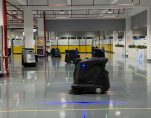
The CenoBot S5 autonomous cleaning robot undergoes real-world testing at a demonstration site in Tongxiang.

For Tongxiang, long associated with the annual internet conference, the summit is also a chance to demonstrate how local companies are commercializing AI technologies for customers at home and abroad.

Ahead of the event, reporters visited seven Tongxiang-based companies working in robotics, intelligent vehicles, synthetic data, industrial automation, logistics and computing infrastructure.

Singapore Changi Airport earlier this year placed a fourth order for commercial cleaning robots from CenoBots, a Tongxiang-based company whose machines are used in airports, supermarkets, hospitals, factories and warehouses.

CenoBots has sold products in more than 40 countries and regions. Its customers include Changi Airport, British retailer Tesco, the University of Minnesota and pharmaceutical company Novo Nordisk. This year, the company supplied about 600 autonomous cleaning robots for Tesco Express stores across the United Kingdom.

“Cleaning robots are appearing in more and more settings,” said Shen Jizhong, CenoBots’ co-founder and vice president. “It is much like electric vehicles becoming a familiar sight on the roads — a trend that is gathering pace.”

The company’s machines are adapted to different settings. Hospital robots must move through busy corridors without disrupting patient care, while those used in supermarkets navigate around shoppers and carts. Factory robots operate near forklifts, and airport models must handle both fine debris in carpeted areas and small obstacles on smooth floors.

CenoBots continues to refine its robots through real-world testing, focusing on reliable operation and consistent cleaning performance across diverse environments. The company has expanded its research, development and production facilities in Tongxiang from approximately 3,000 square meters in its early years to more than 20,000 square meters. Local malls, hospitals and sports venues have also served as long-term testing sites.

While CenoBots focuses on service robots, TEEMO is developing the vehicle platforms that support autonomous mobility. The company makes drive-by-wire skateboard chassis and core components for autonomous vehicles used in last-mile delivery, patrols and logistics.

Its standardized chassis can be equipped with different vehicle bodies and hardware for specific uses. One of TEEMO’s strategic customers, autonomous delivery-vehicle maker Zelos, was selected for all lots in China Post’s centralized procurement program for 7,000 autonomous delivery vehicles.

TEEMO’s customers already span the United States, the Middle East, India and Russia, said Zhang Yongjian, the company’s director of operations.

“In some overseas markets, distances are long, populations are dispersed and last-mile delivery is difficult to staff,” Zhang said. “Autonomous delivery vehicles have strong potential there, and overseas business will become an important growth driver for us.”

Other Tongxiang companies are concentrating on the data and perception systems that allow machines to function in physical environments.

Dayan Technology, founded in Tongxiang in May 2025, provides synthetic-data and toolchain services for autonomous-driving and humanoid-robotics companies. It combines real-world data collection, digital twins and simulated training environments to help developers train robots before they are deployed.

Its wearable devices record human movement and interactions with objects. A haptic glove uses liquid-metal and pressure sensors to capture hand gestures, finger movements and contact force. A multi-camera headset records a user’s visual field, body posture, hand movements and the position of nearby objects.

Dayan said its tactile-perception model can process touch signals in milliseconds. The technology is intended to help robots do more than identify objects visually: They can learn how firmly to grip an item, recognize when it is slipping and apply force without causing damage.

Freetech Intelligent Factory

Freetech is applying related sensing and decision-making capabilities to intelligent driving. The company develops intelligent-driving systems and 4D imaging radar for passenger and commercial vehicles, and said its technology has been selected for hundreds of vehicle programs.

Its ODIN AI platform supports products at different levels of driving automation. The radar is designed to complement cameras in heavy rain, fog, darkness and abrupt changes in light, including when vehicles enter or leave tunnels.

At its intelligent-manufacturing base in Wuzhen, Freetech is also using AI in production. An in-house system reads customer orders and calculates the components and materials needed for each production line before manufacturing begins. The company said the system has increased overall efficiency by more than 20%.

“Transportation combined with a specialized function will be an important direction for the future,” said Dr. Zhang Lin, Freetech’s founder and CEO.

Freetech sees potential applications beyond passenger vehicles, including robots, elder-care vehicles, mining equipment and agricultural machinery.

Beyond mobility, Tongxiang firms are using AI to address the complexity of industrial operations. Founded in 2019, Shuhan Technologies provides on-premises industrial AI for chemical plants, energy facilities and wastewater-treatment systems. Its AI-driven control layer continuously ingests data from central control systems and field sensors, identifies dynamic conditions and autonomously adjusts operating parameters in real time.

“Fundamentally, all industrial process challenges can be framed as control and optimization problems,” said Zhai Zhengjun, Shuhan’s Chief Technology Officer.

At a coal chemical plant with annual capacity of 1.2 million metric tons, Shuhan said its system reduced raw-material consumption by 6%. The company estimated that the deployment generated more than 176 million yuan, or about $26 million, in annualized economic benefits and reduced carbon emissions by more than 500,000 metric tons.

SENAD is targeting bottlenecks in logistics operations, including loading, unloading, sorting and pallet handling. It develops autonomous loading and unloading robots, as well as a multimodal logistics model called Robot Insight, for sectors including beverages, tobacco, consumer goods, pharmaceuticals and logistics.

Tongxiang’s AI sector also includes companies addressing the infrastructure needed to run increasingly powerful computing systems. SynthCool is tackling a basic constraint of the AI boom: heat.

SynthCool develops two-phase liquid-cooling systems to address the heat generated by increasingly powerful processors. Inadequate cooling can trigger thermal throttling, reducing performance and energy efficiency.

“Heat dissipation is infrastructure,” said Zhu Zhijiang, SynthCool’s general manager.

SynthCool’s two-phase cooling technology uses the latent heat of vaporization to remove heat from processors. The cooling fluid absorbs heat and boils into vapor, which is then condensed back into liquid and recirculated.

Depending on ambient conditions and system design, two-phase cooling can also support free cooling and reduce reliance on compressor-based refrigeration. Waste heat may be recovered where temperatures and local demand make reuse practical.

According to SynthCool, its technology supports heat dissipation of more than 3,000 watts per chip and heat flux above 250 watts per square centimeter. Under comparable cooling requirements, the system requires approximately one-third of the flow needed by conventional single-phase water-cooled cold plates, helping reduce piping requirements and pumping demand.

SynthCool’s portfolio includes two-phase direct-to-chip and immersion cooling solutions, along with distribution units and control systems for AI data centers.

Hashtag: #Tongxiang

The issuer is solely responsible for the content of this announcement.

Tesla has demonstrated a redesigned Roadster climbing an inverted ramp, flipping through the air and landing on its wheels during a presentation led by Elon Musk at a SpaceX facility in Texas. The driverless prototype completed the manoeuvre on 15 October before an audience of invited guests, with Tesla broadcasting the demonstration online. Its ability to remain attached to the curved structure while upside down and then […]

OpenAI chief executive Sam Altman expects the company to demonstrate a humanoid robot in 2027, confirming an expansion into machines that could eventually compete with products developed by robotics businesses it previously supported. Altman outlined the timetable in a September interview, describing an impressive demonstration next year while cautioning that robots operating routinely in public spaces would take several more years. His remarks establish a development target […]

Signing of strategic collaboration agreement deepens collaboration on PCIM Asia Shanghai, opening international opportunities for microelectronics companies

HONG KONG SAR – Media OutReach Newswire – 19 October 2026 – From efficient power supply for artificial intelligence (AI) data centres to precision control in smart robotics, power electronics is enabling the next wave of industrial innovation. Hong Kong Science and Technology Parks Corporation (HKSTP) and PCM Asia Shanghai signed a strategic collaboration agreement at Hong Kong Science Park to strengthen their collaboration on PCIM Asia Shanghai, Asia’s premier exhibition for power electronics exhibition.

Together, the two organisations also co-hosted the “Power Electronics Innovation Across Asia” seminar, bringing together international technology companies, academics from local universities, innovators and investors to explore advances in power electronics and power semiconductors, as well as trends and opportunities shaping Asia’s industrial future.

Deepening Cross-Boundary Collaboration to Expand International Market Access

The partnership aims to extend professional exchange into sustained collaboration across the innovation and technology (I&T) ecosystem. By combining the corporate networks, industry platforms, and regional strengths of HKSTP and PCIM Asia Shanghai, the partnership will foster knowledge exchange and industry collaboration across power electronics, semiconductors, electrification and renewable energy.

Through annual cross-boundary exchange activities, coordination meetings, and showcasing opportunities for start-ups, innovative solutions and ecosystem participants, the two parties plan to raise the international profile of emerging technologies and ventures, and help companies to build vital market connections.

The collaboration will also strengthen Hong Kong’s role as a hub for strategic partnerships and bring together international research institutions, integrated circuit (IC) design houses, technology developers and investors, while providing access to the manufacturing capabilities in the Greater Bay Area (GBA) and the Chinese Mainland, driving technologies from R&D, device design and prototyping, and pilot production to market adoption.

Mr Terry Wong, Chief Executive Officer of HKSTP, said: “We are entering an era where AI is ubiquitous, embedded in vehicles, factories, power grids, communications networks and smart devices. None of these systems can function without efficient power conversion, power control and power management. That is why power electronics is becoming one of the most important enabling technologies of the next industrial era. With Hong Kong’s strengths in design-led electronics and the manufacturing capabilities of the Greater Bay Area, HKSTP provides an end-to-end pathway from research and prototyping to pilot production, manufacturing and market adoption. Through our partnership with Messe Frankfurt on PCIM Asia, we can help innovators raise their international profile, connect with new partners and expand into global markets. Together, we aim to build Hong Kong into a leading centre for research, design and system integration in power semiconductors, and strengthen its role as a regional gateway for global power microelectronics collaboration.”

Mr. Richard Li, Executive Director of Messe Frankfurt (HK) Ltd cum Chairperson of the Board of Management, Guangzhou Guangya Messe Frankfurt Co Ltd, said, ‘With 25 years of history, the PCIM Asia series of events has consistently brought together power electronics companies, engineers, and researchers from Asia and around the world. After having held in Shanghai and Shenzhen, PCIM Asia has built a professional exchange platform focusing on power semiconductors, intelligent motion control, renewable energy, and energy management. Meanwhile, Hong Kong possesses outstanding R&D capabilities and global business network, backed by the robust manufacturing base of the Guangdong-Hong Kong-Macao Greater Bay Area. HKSTP has attracted over 300 micro-e companies and has been equipped with comprehensive infrastructure for R&D, prototyping and pilot production. Leveraging Messe Frankfurt’s global exhibition resources as well as the local industrial ecosystem of HKSTP, this strategic collaboration aims to connect Hong Kong’s research capabilities with the Asian power electronics industry. It will elevate the industry exposure of the city’s innovative technologies, and promote long-term sustainable partnerships among industry partners in the Chinese mainland, Hong Kong, and the world”

Connecting Research with Industry Needs in AI and Advanced Energy Applications

The event attracted representatives from industry, academia and the wider I&T ecosystem. Through keynote presentations, expert discussions, technology demonstrations, company pitches and talent networking session, the event explored opportunities to bring power electronics innovations to market.

Experts from international technology leaders, including Mitsubishi Electric, Infineon Technologies, Bosch, STMicroelectronics, Murata, SMC and Vtech, as well as scholars from four local universities discussed AI data centre power supply, smart robotics and advanced energy applications. Discussions focused on translating power semiconductor and intelligent control technologies into integrated, market-ready solutions.

On-site showcases featured gallium nitride (GaN) motor drives, silicon carbide (SiC) chips and power modules, and advanced packaging solutions for AI data centres, intelligent robots and energy systems. The exhibits highlighted how microelectronics can improve energy efficiency and support emerging industries, while creating opportunities for researchers, technology companies and industry partners to collaborate.

Strengthening the Pathway from Research to Pilot Production

HKSTP is home to more than 300 microelectronics companies. Its facilities—including the Hardware Lab, Sensor Packaging and Integration Lab, Heterogeneous Integration Lab and Pilot-Scale Manufacturing Lab—support companies across design, prototyping, and trial production.

Located at the Microelectronics Centre in Yuen Long InnoPark within the Northern Metropolis, the Hong Kong Microelectronics Research and Development Institute (MRDI) supports semiconductor product development and trial production through its pilot lines, helping accelerate the translation of research into practical applications.

HKSTP is also advancing the Microelectronics Centre expansion project (MECX), which will provide approximately 7,500 square metres of additional floor space to attract and support companies across the semiconductor value chain, fostering industry clustering and collaboration.

Hashtag: #HKSTP #PCM

The issuer is solely responsible for the content of this announcement.

VISHNU RAJA
RYO YAMADA
HITORI GOTOH
IKUYO KITA