News related to
Vehicle

BlackRock’s spot Bitcoin exchange-traded fund has experienced a significant surge in inflows, with 5,250 BTC entering the fund, reflecting the increasing institutional demand for crypto assets. This rise follows a broader market recovery, which has driven Bitcoin and other digital assets into the spotlight, pushing the total market capitalization of cryptocurrencies above $3.3 trillion. The success of Bitcoin ETFs, particularly BlackRock’s, has underscored the growing appetite among institutional investors for exposure to cryptocurrency markets, especially after the U.S. Securities and Exchange Commission greenlit these funds.

The surge in BlackRock’s Bitcoin ETF is one of the most notable movements in recent weeks, especially as it coincides with a resurgence in cryptocurrency prices. As Bitcoin’s value continues to fluctuate, its potential as both a store of value and an investment tool remains compelling for large-scale investors. For BlackRock, the ETF has become a cornerstone of their digital asset strategy, marking the company’s significant step into the volatile yet potentially lucrative world of cryptocurrencies.

Institutional interest in Bitcoin and other digital assets has surged since the SEC’s approval of Bitcoin ETFs, leading to a broader rally within the crypto market. Bitcoin, the largest cryptocurrency by market capitalization, has long been a focal point for institutional investors, many of whom view it as a hedge against traditional market risks. With financial giants like BlackRock now offering dedicated Bitcoin investment products, the narrative surrounding cryptocurrency as an asset class is shifting, with many believing it is no longer a speculative investment but a legitimate alternative to traditional assets.

The latest data highlights that Bitcoin ETFs, such as BlackRock’s, have not only attracted substantial capital but also created a pathway for retail investors to participate in the cryptocurrency market without directly owning or managing the assets themselves. This shift towards ETFs has been partly attributed to their ease of use and the regulatory clarity provided by the SEC, which has made crypto more palatable to a wider range of investors, including pension funds, endowments, and other institutional players.

The inflow of Bitcoin into BlackRock’s ETF is a sign that the broader market is beginning to favor regulated vehicles for cryptocurrency exposure, further diminishing the stigma associated with digital assets. Since the approval of Bitcoin ETFs, the landscape has seen an influx of institutional capital, which, in turn, has helped stabilize Bitcoin prices in the face of volatility. The continuous entry of large sums into ETFs signals confidence among institutional players, marking a shift from the past where digital assets were mostly considered a speculative tool for individual investors.

Despite the momentum, questions remain about whether this rally can be sustained. As Bitcoin’s price continues to rise, it attracts more attention from both institutional and retail investors. However, concerns about regulatory scrutiny and market volatility persist. While the SEC’s approval of Bitcoin ETFs has provided some regulatory certainty, the broader regulatory landscape surrounding cryptocurrency remains uncertain. This could influence the long-term viability of the current rally and determine the future trajectory of Bitcoin and other cryptocurrencies.

Bitcoin’s price remains highly susceptible to broader market dynamics. The cryptocurrency market is notorious for its extreme volatility, and any negative news or shifts in investor sentiment can lead to sharp price corrections. While the current market conditions appear favorable, investors must tread carefully given the cyclical nature of crypto markets and the inherent risks involved. Many analysts suggest that while the inflows into Bitcoin ETFs are encouraging, the true test will come if the market faces a significant downturn or if new regulatory hurdles arise.

Another important factor that could influence the future performance of BlackRock’s Bitcoin ETF is the competition from other asset management firms. With the growing popularity of Bitcoin ETFs, several major financial institutions are racing to introduce their own crypto-focused funds. While BlackRock has established itself as a key player in this space, it faces increasing competition from firms like Fidelity and Grayscale, both of which have been eyeing the market for Bitcoin ETFs for some time. The competition could lead to further innovation and product differentiation, which might benefit investors but could also put pressure on market prices if supply outpaces demand.

On the technical side, the performance of Bitcoin ETFs like BlackRock’s will depend on how well the underlying assets are managed. Bitcoin’s price is driven by various factors, including demand, technological developments, macroeconomic trends, and investor sentiment. The ability of firms like BlackRock to effectively manage and hedge against Bitcoin’s volatility will play a crucial role in maintaining investor confidence and ensuring the longevity of the product.


Japan has taken a major step toward bolstering its space capabilities with the successful launch of a navigation satellite aboard its new H3 rocket on February 3, 2025. The launch marks a significant milestone in Japan’s pursuit of an independent, more precise satellite-based positioning system, designed to reduce reliance on foreign alternatives such as the United States’ GPS system.

The satellite, launched from the Tanegashima Space Center, is part of the country’s efforts to enhance its infrastructure and technological prowess. Japan’s space agency, JAXA, led the mission, which aims to place the country on a trajectory to develop a more autonomous and reliable global navigation system. This ambitious project, known as the Quasi-Zenith Satellite System , has been under development for several years and is seen as vital for both national security and economic growth.

The QZSS is expected to complement, and eventually replace, some aspects of global positioning systems , providing more reliable and accurate data in urban areas, mountainous regions, and other places where satellite signals from foreign systems can be weak or blocked. This development is seen as part of Japan’s broader efforts to ensure its technological sovereignty in the face of global geopolitical shifts, as well as a response to growing concerns about cybersecurity and the risks of dependency on external sources for critical navigation information.

One of the key features of the QZSS is its ability to offer highly precise positioning in regions where the GPS system struggles. Unlike GPS, which relies on a constellation of satellites orbiting the Earth, the QZSS will use a combination of geostationary and inclined geosynchronous satellites. This arrangement allows for better coverage over Japan and surrounding areas, ensuring more consistent and accurate positioning, even in dense urban areas or mountainous terrain.

The launch of this satellite represents the latest development in Japan’s space exploration efforts, which have accelerated in recent years. The country has made significant investments in space technologies, with a focus on both civilian and military applications. This new positioning system will not only improve navigation for the general public but also support the country’s burgeoning space industries, autonomous vehicle technologies, and the Internet of Things .

Japan’s focus on self-reliance in space technology is also a reflection of the evolving global space race. With countries like China and the United States making rapid advancements in space exploration and satellite systems, Japan aims to position itself as a leader in space technology. The success of the H3 rocket launch further strengthens Japan’s ambitions, as the H3 is designed to be a more cost-effective and reliable means of deploying satellites into orbit.

The H3 rocket, which carried the new navigation satellite, is an upgraded version of Japan’s H-IIA rocket, which has been used for a variety of missions over the past two decades. The new design is intended to lower the cost of launching satellites while maintaining the high reliability that Japan’s space programs are known for. This successful mission signals that Japan’s space agency has overcome some of the technical challenges associated with the H3’s development, and it sets the stage for future satellite launches.

The H3 rocket’s successful deployment of the QZSS satellite is expected to open new opportunities for Japanese companies involved in satellite manufacturing and launch services. It also positions Japan as a potential player in the global satellite services market, where demand for accurate and secure positioning data is growing rapidly. As global navigation and communication systems become more integral to economies and military operations, the ability to control and operate one’s own satellite network is viewed as an increasingly important asset.

In addition to its economic and security benefits, Japan’s new navigation satellite system will also have applications in disaster management. Japan, which is prone to earthquakes, tsunamis, and typhoons, could benefit greatly from having a more reliable navigation system in place during natural disasters. The QZSS can provide real-time data that can help coordinate rescue operations, monitor disaster zones, and even support evacuation efforts, ensuring that critical services can be delivered in times of crisis.

The QZSS satellite is the first in a series of planned launches as Japan builds out its own navigation system. The country aims to have a full constellation of satellites in orbit by the early 2030s, providing global coverage and ensuring that it has a fully operational navigation system that can compete with international systems. As Japan moves forward with this initiative, it is also exploring potential collaborations with other nations and private companies to enhance its capabilities and expand its reach in the global space community.

Bitcoin and Ethereum exchange-traded funds have drawn significant investment inflows, despite a sharp decline in cryptocurrency prices. A notable $318.56 million was poured into Bitcoin ETFs, while Ethereum ETFs saw a more modest but still considerable $27.78 million, signaling investor confidence in these digital assets even amid market uncertainty.

The surge in Bitcoin ETF investments comes at a time when the cryptocurrency has seen substantial volatility. Bitcoin’s value has fluctuated dramatically, yet it remains a central figure in the broader digital asset landscape. Despite this instability, investors have expressed their continued belief in the long-term potential of Bitcoin, driven by increasing institutional interest and Bitcoin’s role as a store of value.

Ethereum, although less volatile than Bitcoin, has also experienced challenges in recent months, but its relatively stable performance in comparison to other altcoins has contributed to its steady inflow of investment into ETFs. Ethereum’s role as the underlying network for decentralized finance applications, alongside its recent network upgrades, has maintained its appeal.

The rise of Bitcoin and Ethereum ETFs is a reflection of a broader trend where institutional investors are beginning to explore digital assets through traditional financial vehicles, providing a sense of legitimacy and accessibility to cryptocurrency markets. These ETFs allow investors to gain exposure to cryptocurrencies without directly holding the underlying assets, providing a safer option for those wary of the risks of self-custody and the volatility in crypto markets.

The appeal of Bitcoin ETFs has been particularly strong in the United States, where regulatory developments have slowly begun to shape the future of cryptocurrency trading. The U.S. Securities and Exchange Commission has been cautious about approving crypto ETFs but has recently signaled increasing openness to their potential. This regulatory stance, while stringent, has created a foundation for the growing number of Bitcoin ETFs, making the asset more accessible to a wider audience. A Bitcoin ETF effectively offers exposure to the digital asset with the benefits of liquidity, security, and the oversight of regulated financial markets.

Ethereum ETFs, though not as numerous, have gained traction as investors look to capitalize on the expanding Ethereum ecosystem. Ethereum’s move to proof-of-stake with the Ethereum 2.0 upgrade has made the network more energy-efficient and scalable, which in turn bolstered its investment prospects. The Ethereum network’s prominence in smart contracts and DeFi projects positions it well for future growth, maintaining investor enthusiasm even when broader market conditions are challenging.

Despite the downturn in the broader crypto market, where other digital currencies have suffered heavy losses, Bitcoin and Ethereum continue to be seen as strong pillars in the space. According to recent reports, Bitcoin’s dominance in the market remains high, and Ethereum’s blockchain continues to be the backbone of many decentralized applications , providing further justification for the influx into their respective ETFs.

The cryptocurrency market’s decline, however, has not been without its consequences. The broader market correction has led to a drop in valuations across the board, impacting altcoins and other tokens. Despite this, Bitcoin and Ethereum remain relatively insulated due to their established networks and larger market caps. As a result, institutional investors are likely to continue favoring these two cryptocurrencies, not only because of their relative stability but also because of the increasing institutional infrastructure that supports their adoption.

Crypto ETFs have also grown in popularity outside the U.S., with Canadian and European markets seeing an influx of Bitcoin and Ethereum-focused ETFs. These markets have been more progressive in embracing crypto-based ETFs, which have now become a significant part of the investment landscape. Europe, in particular, has seen rapid adoption of cryptocurrency ETFs as investors look for more regulated exposure to digital assets.

The correlation between traditional financial markets and cryptocurrency prices has been a focal point for analysts. Many believe that the increase in ETF inflows into Bitcoin and Ethereum may be a sign of institutional investors diversifying their portfolios to hedge against inflation and economic uncertainty. The expansion of ETFs into the crypto space reflects broader trends in the financial markets, where there is growing interest in incorporating alternative assets into investment portfolios.

Salik, Dubai’s toll operator, has implemented a new variable pricing system aimed at enhancing traffic management and offering a more efficient driving experience across the city. The updated pricing structure applies to all Salik gates throughout the year, except during the holy month of Ramadan, and introduces distinct toll rates based on the time of day. The move is expected to improve traffic flow during peak hours […]

Abu Dhabi sovereign wealth fund ADQ has entered into a strategic joint venture with global investment firm Orion Resource Partners to focus on investments in metals and mining. The announcement was made on Thursday, marking a significant expansion of ADQ’s portfolio in critical minerals. This partnership is expected to inject $1.2 billion over the next four years, targeting mining operations in emerging markets across Africa, Asia, and Latin America.

The 50-50 joint venture will be headquartered in Abu Dhabi, reinforcing the UAE’s growing influence in global resource investment. The capital infusion will be deployed across a wide range of asset classes, including equity, senior debt, and production-linked instruments such as royalties, enabling the partners to diversify their approach while providing flexible financial support to mining companies.

This collaboration comes as demand for critical minerals, particularly those essential for green energy and technology, continues to surge worldwide. By strategically positioning itself in emerging markets, ADQ aims to tap into the growing potential of these sectors, while also ensuring a steady supply of materials for industries such as electric vehicles, renewable energy, and technology manufacturing.

The UAE has increasingly sought to diversify its investments, with sovereign wealth funds like ADQ playing a central role in expanding the nation’s economic footprint beyond oil. This partnership with Orion represents a key step in the UAE’s strategy to enhance its global financial influence, especially in sectors aligned with future growth, such as critical minerals.

The joint venture is expected to leverage Orion’s expertise in the mining sector, with the firm’s global experience providing a competitive edge in identifying and managing investments. Orion Resource Partners, known for its investments in natural resources and energy, will bring its deep market insights and operational capabilities to ensure the success of the venture.

The partners have already identified several opportunities in the target regions, which have abundant mineral reserves but often face challenges such as political instability, infrastructure limitations, and regulatory hurdles. By focusing on emerging markets, ADQ and Orion hope to unlock value in these regions, driving economic development while securing access to essential resources.

The decision to focus on mining companies in Africa, Asia, and Latin America aligns with global trends indicating a growing shift toward these regions, which have vast untapped mineral potential. These markets are becoming increasingly attractive to investors looking to capitalize on the expanding demand for metals critical to clean energy transitions. As nations commit to reducing their carbon footprints, the need for raw materials like lithium, cobalt, and nickel is escalating, placing these regions in the spotlight.

For ADQ, the partnership with Orion reflects its broader strategy to develop a well-rounded investment portfolio that includes not only traditional assets but also strategic holdings in critical industries. This move also signals ADQ’s commitment to responsible and sustainable investments, with the fund placing a strong emphasis on environmental, social, and governance factors in its investment decisions.

The joint venture’s investments will not be limited to equity stakes but will also include senior debt and other instruments such as royalties, allowing the partners to support mining companies with the flexibility to meet their funding needs across different stages of their development. This varied approach provides opportunities for both high-growth and stable, income-generating assets.

The UAE’s growing focus on the mining sector is also linked to its efforts to enhance energy security and ensure the long-term availability of essential raw materials. By forming such partnerships and investing in mining, the UAE can build stronger links with emerging markets while ensuring that its own economic and industrial sectors are less dependent on external sources of critical minerals.

ADQ’s decision to form this venture with Orion comes at a time when other global investors are also increasing their exposure to the mining sector. With the rise of sustainable investment practices and the need to secure critical minerals for the global green energy revolution, mining is set to remain an important area for international capital flows.

Through this partnership, ADQ and Orion aim to establish themselves as key players in the global mining sector, specifically targeting regions that are expected to become increasingly central to the global supply chain for critical minerals. As the world transitions to cleaner energy and technology, the demand for these minerals is only expected to increase, making such investments highly strategic for the long-term success of the partners involved.

The venture also highlights the UAE’s growing role in shaping the future of global industries. As one of the world’s leading financial hubs, Abu Dhabi is positioning itself to attract international capital and play a key role in industries that will drive future economic growth, from sustainable energy to advanced technology.

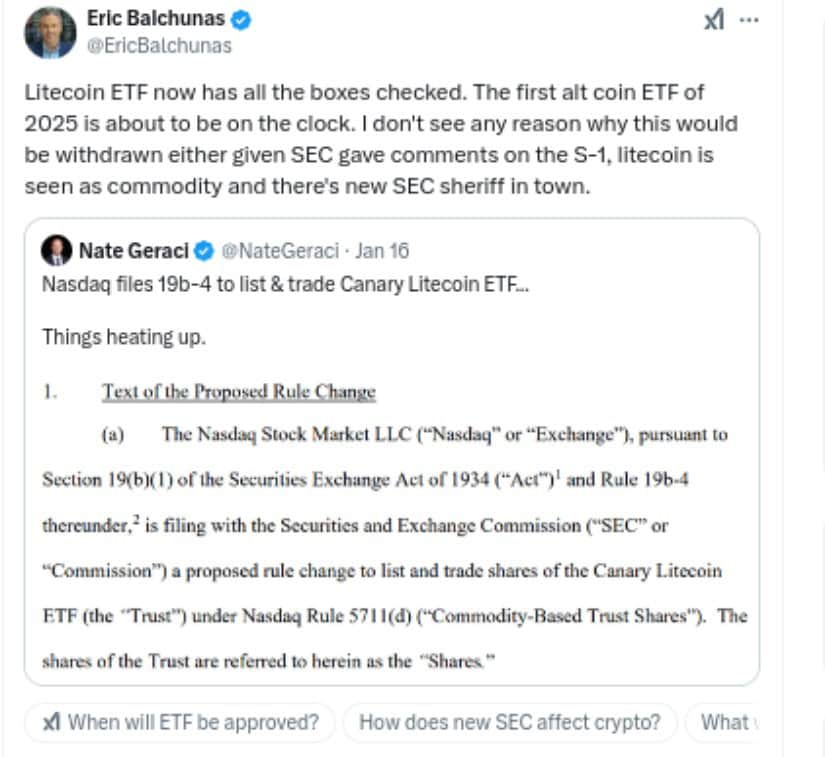
Nasdaq has officially filed a 19b-4 form with the U.S. Securities and Exchange Commission in support of the Canary Litecoin ETF proposal, marking a significant step towards the launch of a new cryptocurrency-focused exchange-traded fund . This move follows earlier discussions with the SEC, which had requested Canary Capital to amend its S-1 filing for the proposed ETF.

The Canary Litecoin ETF, first introduced by Canary Capital in October 2024, aims to provide investors with direct exposure to Litecoin , one of the top cryptocurrencies by market capitalization. Unlike traditional ETFs, which typically track stocks or commodities, the Litecoin ETF would provide a structured way to invest in the digital currency, bringing the asset class closer to mainstream financial markets.

The filing of the 19b-4 form with the SEC is a crucial step in the approval process for the ETF. This form is used by exchanges to propose rule changes related to the listing and trading of securities. By submitting the form, Nasdaq is seeking approval to list the Canary Litecoin ETF on its exchange, a move that could open the door for broader institutional and retail investor participation in the Litecoin market.

The SEC’s role in the process is central to the success of the proposal. The regulatory body has long been cautious about approving cryptocurrency-based ETFs, primarily due to concerns about market volatility, liquidity, and potential manipulation. However, recent developments, including the approval of Bitcoin ETFs, have sparked renewed optimism that Litecoin, as a leading cryptocurrency, may also be considered for ETF approval.

Nasdaq’s filing comes after the SEC’s request for amendments to the S-1 form, which is required for the registration of the proposed ETF. The amendments were aimed at clarifying certain aspects of the ETF’s structure and compliance with SEC regulations. Canary Capital responded to the SEC’s concerns and has now moved forward with the 19b-4 filing, signaling confidence in the proposal’s approval.

If approved, the Canary Litecoin ETF would be the first of its kind to offer exposure to Litecoin, allowing investors to buy shares in the fund without needing to directly hold or manage the cryptocurrency. This would simplify the process for those looking to invest in Litecoin while also providing the regulatory oversight that traditional ETFs enjoy. It could also have a significant impact on the adoption of Litecoin as an asset class, especially among institutional investors who may have been hesitant to invest in digital currencies without a regulated investment vehicle.

The move aligns with a broader trend in the cryptocurrency industry, where more companies are attempting to bridge the gap between traditional finance and digital assets. Bitcoin ETFs, which track the price of Bitcoin, have gained traction in the past few years, prompting a reassessment of how other major cryptocurrencies could also be packaged in a similar way for investors. Litecoin, which was created in 2011 by Charlie Lee as a “lighter” alternative to Bitcoin, has gained substantial traction in the crypto space and is often considered one of the more stable digital assets, making it a prime candidate for an ETF product.

The filing also comes amid growing interest in alternative investment products, especially in the wake of a year marked by significant price volatility in traditional financial markets. Investors are increasingly turning to cryptocurrencies as a hedge against inflation and economic uncertainty, and an ETF could provide a more accessible route for them to gain exposure to the digital asset class.

Despite the excitement surrounding the potential approval of a Litecoin ETF, the SEC’s cautious stance on cryptocurrency products means the approval process is unlikely to be straightforward. The regulatory body has previously expressed concerns about the potential for market manipulation in the cryptocurrency space, and the Canary Litecoin ETF will likely face intense scrutiny. However, the SEC’s approval of Bitcoin ETFs has created a more favorable environment for other digital assets, and many market participants are hopeful that the SEC will ultimately grant approval for the Litecoin ETF as well.

For Nasdaq, the filing represents a key strategic move in solidifying its position as a leader in the growing cryptocurrency market. As more institutional investors seek regulated ways to engage with cryptocurrencies, exchanges like Nasdaq are well-positioned to capitalize on the trend by offering products like the Canary Litecoin ETF.

The approval of a Litecoin ETF would not only provide a new investment opportunity for retail and institutional investors but also send a strong signal to the broader financial markets that digital currencies are becoming increasingly integrated into traditional investment frameworks. It would also mark another milestone in the ongoing evolution of the cryptocurrency market, which continues to attract the attention of both investors and regulators.

El Salvador’s legislative assembly has passed a major reform to its Bitcoin law, a move aimed at aligning the country’s cryptocurrency framework with broader financial goals, particularly following an agreement with the International Monetary Fund . The reform has been met with mixed reactions both within the country and internationally, raising questions about its impact on the nation’s economic strategy.

The proposed amendments focus on ensuring that Bitcoin operates as a legal currency in the country but with significant modifications to the conditions under which it can be used. Key adjustments include enhancing regulatory oversight and establishing clearer parameters for businesses involved in cryptocurrency transactions. The reform aims to address concerns raised by both domestic and international financial institutions regarding the volatility and risks associated with Bitcoin, which was adopted as legal tender in the country back in 2021.

This shift comes in the wake of a formal agreement between the Salvadoran government and the IMF, which had previously expressed concerns over the country’s reliance on Bitcoin as a central part of its economic strategy. The IMF had cautioned against the risks of using a highly volatile asset as an official currency, urging El Salvador to exercise caution. The reformation of the Bitcoin law is seen as a response to these international pressures, signaling a more cautious approach to the integration of cryptocurrency into the country’s financial system.

President Nayib Bukele, a strong advocate for Bitcoin adoption, has repeatedly touted the cryptocurrency as a vehicle for financial inclusion and a potential catalyst for economic growth. Despite skepticism from various sectors, Bukele maintained that Bitcoin would bring long-term benefits by providing access to financial services for the unbanked population and attracting foreign investment. However, critics have pointed to the lack of widespread adoption, citing a significant portion of the population still hesitant or unfamiliar with the digital currency.

The IMF’s role in pushing for the law reform underscores the complexities of El Salvador’s economic situation, especially as the country grapples with its growing debt levels and reliance on foreign aid. The approval of the Bitcoin law reforms is a step toward meeting conditions set by international lenders, who have been cautious about the potential destabilizing effects of cryptocurrency on traditional financial systems. For El Salvador, it marks a delicate balancing act between maintaining Bukele’s vision of innovation and securing crucial international financial support.

Supporters of the reform argue that the changes will provide greater clarity for businesses and consumers alike, reducing the legal and economic uncertainty surrounding Bitcoin transactions. By introducing new regulations, such as anti-money laundering provisions, the government aims to ensure that Bitcoin is not used for illicit purposes, while maintaining the broader goal of financial modernization.

On the other hand, critics of the reform are concerned that the amendments do not go far enough in addressing the fundamental issues with Bitcoin’s integration into the national economy. For instance, while the new rules may curb some of the more problematic aspects of cryptocurrency adoption, they may not alleviate the inherent risks tied to Bitcoin’s market fluctuations. The cryptocurrency has demonstrated significant price volatility, which has led to financial instability in countries that have taken similar paths to adopting Bitcoin.

The reform also comes at a time when the global cryptocurrency landscape is facing increasing scrutiny. In the U.S., regulatory bodies are tightening their stance on digital currencies, raising concerns over security, transparency, and the potential for fraud. Similarly, countries such as China and India have taken a more restrictive approach to cryptocurrency, while others like El Salvador and Paraguay have embraced it with varying degrees of enthusiasm and regulation.

This complex global backdrop means that El Salvador’s decision to overhaul its Bitcoin law is not just a domestic issue but part of a broader dialogue on the future of cryptocurrencies in national economies. Some observers argue that the reform may be part of a broader trend where countries reconsider their initial forays into cryptocurrency adoption, especially as economic realities evolve and financial pressures mount.

The Salvadoran government’s decision to overhaul the Bitcoin law also has implications for its wider economic policies. It highlights the ongoing tensions between innovation and regulation, as well as the balancing act that small economies must perform when navigating the global financial system. As the country continues to depend on foreign aid and investment, including funds from the IMF, the path forward for Bitcoin in El Salvador remains uncertain.

El Salvador’s experience with Bitcoin has served as a case study for other countries contemplating similar moves. The nation’s attempt to embrace the digital currency as a national legal tender has been watched closely by governments and financial institutions around the world. With the reform, El Salvador seems to be taking a more cautious approach to cryptocurrency, which may signal a shift away from its previously bold stance on Bitcoin.

Advertisements

Tesla continues to hold a substantial amount of Bitcoin, reaffirming its position as one of the largest corporate holders of the cryptocurrency. In its latest shareholder update for the fourth quarter of 2024, the company revealed that it did not sell any of its Bitcoin during the period. This follows a trend from previous quarters where the electric vehicle giant chose to maintain its cryptocurrency assets instead of liquidating them for cash.

As of the end of Q4 2024, Tesla holds 9,720 Bitcoins, a figure that has remained consistent since its last quarterly report. The company’s Bitcoin holdings are valued at approximately $250 million based on current market prices, a significant sum given the volatility of the cryptocurrency market. Despite fluctuations in the value of Bitcoin, Tesla has opted to retain its investment in the digital asset, signaling its long-term outlook on the future of cryptocurrency.

Tesla first announced its Bitcoin purchase in early 2021, acquiring $1.5 billion worth of Bitcoin. The announcement caused a surge in the price of the cryptocurrency and drew considerable attention to Tesla’s unconventional move in adopting digital currency. The company’s CEO, Elon Musk, has been a vocal proponent of Bitcoin, and Tesla’s move was seen as a significant endorsement of the cryptocurrency by a major publicly traded company.

However, Tesla’s Bitcoin strategy has not been without its challenges. In 2021, the company temporarily halted Bitcoin payments for its electric vehicles, citing concerns over the environmental impact of Bitcoin mining. This decision led to a dip in Tesla’s stock price and raised questions about the company’s stance on Bitcoin. Despite this, Tesla continued to hold its Bitcoin reserves, and its Q4 2024 update confirms that no changes were made to its position.

The company’s stance on cryptocurrency remains a topic of interest, particularly as other major corporations and institutional investors are also increasing their exposure to Bitcoin. Investment firms and asset managers are increasingly exploring ways to integrate digital currencies into their portfolios, and some have followed Tesla’s example in purchasing Bitcoin as part of their investment strategies. Tesla’s decision to hold Bitcoin through volatile market periods has drawn attention from investors who are keen to understand how the company balances its crypto holdings with its core automotive and energy businesses.

While Tesla has made no significant changes to its Bitcoin strategy, the company’s continued commitment to cryptocurrency reflects broader trends in the financial and technology sectors. Bitcoin has become an increasingly important asset in global markets, and its role as a store of value and potential hedge against inflation is being widely discussed. Despite some regulatory challenges and environmental concerns, Bitcoin remains a key focus for many investors and companies.

Tesla’s involvement in cryptocurrency is also linked to its broader vision of advancing renewable energy and adopting innovative technologies. Elon Musk has frequently expressed interest in integrating clean energy solutions with emerging technologies, including digital currencies. Tesla’s commitment to Bitcoin could be seen as part of its larger strategy to position itself at the intersection of technology, finance, and sustainability.

The broader landscape of corporate Bitcoin adoption is evolving, with many companies taking a cautious approach in managing their digital assets. While Tesla continues to hold its Bitcoin reserves, it has refrained from making further purchases or sales, leaving some to speculate about its long-term strategy. It remains to be seen whether Tesla will increase its holdings or make adjustments based on market conditions or regulatory developments.

Tesla’s decision to hold onto its Bitcoin could also be influenced by regulatory uncertainty surrounding cryptocurrency. Governments and financial regulators worldwide are closely scrutinizing digital assets, with varying degrees of regulation being implemented in different regions. Some countries have moved towards stricter regulations, while others have embraced cryptocurrencies as part of their financial systems. Tesla, like many other companies, is likely monitoring these developments as it assesses its cryptocurrency strategy.

As of now, Tesla’s Bitcoin holdings are a relatively small portion of its overall market capitalization, which is primarily driven by its electric vehicle sales and clean energy products. Nevertheless, the company’s ongoing engagement with Bitcoin highlights the growing intersection of technology and finance and signals its willingness to take calculated risks in exploring new markets.

Cboe BZX Exchange has refiled its application for spot Solana exchange-traded funds , paving the way for potential market shifts in the cryptocurrency space. The move comes after the U.S. Securities and Exchange Commission delayed decisions on previous submissions, signaling growing interest and evolving regulatory scrutiny around crypto-based ETFs.

The refiled application is an important step for four companies looking to launch products that will directly track the price of Solana, one of the top digital assets by market capitalization. These filings represent a significant push by crypto-focused financial institutions to bring more crypto exposure to traditional investors via regulated market products.

Despite growing enthusiasm in the market for blockchain-based investment opportunities, the SEC remains cautious, having postponed previous decisions on a range of cryptocurrency-linked ETFs. Historically, the SEC has been slow to approve such products, citing concerns over market manipulation, liquidity issues, and the volatile nature of the assets involved. The approval of such ETFs could represent a landmark development in how cryptocurrencies like Solana are integrated into mainstream financial markets.

The companies involved in the application process are seeking to offer products that provide direct exposure to Solana’s price movements. By tracking the value of Solana in real-time, the ETFs would provide a vehicle for investors who want to gain exposure to the cryptocurrency without having to directly purchase or store the asset themselves. This development reflects the increasing integration of digital assets into mainstream finance, with institutions and retail investors alike seeking easier, regulated pathways to access the growing cryptocurrency market.

While Solana’s blockchain is known for its speed and scalability, it has also faced significant challenges, including network outages and security concerns. These hurdles, along with the overall volatility of cryptocurrency markets, have been key points of debate surrounding the approval of digital asset ETFs. However, the renewed push for the approval of Solana-based ETFs highlights a broader trend of growing institutional and regulatory acceptance of blockchain technology, despite these risks.

Crypto investors have been closely monitoring the SEC’s stance on spot crypto ETFs, as these products would provide a more direct link between the digital assets and traditional financial markets. The approval of such ETFs could bring more legitimacy to cryptocurrencies and attract a broader investor base. Traditional financial firms, including major investment banks, have shown increasing interest in offering crypto-related products, with some already creating futures-based ETFs. The approval of a spot Solana ETF could help solidify the case for cryptocurrencies as an asset class.

Solana’s standing in the cryptocurrency market, along with its strong community support, has been a driving factor in the latest push for ETFs. Despite the challenges the network has faced, including a series of technical difficulties and market volatility, Solana has remained a major player among blockchain platforms, with strong development and a growing list of decentralized applications. The platform’s rapid transaction speeds and lower costs compared to other blockchain networks, such as Ethereum, make it a strong candidate for institutional investment products.

Several key players in the crypto asset management industry are behind the push for spot Solana ETFs. These include well-established investment firms with a track record in crypto and traditional finance, aiming to bridge the gap between digital assets and more traditional investment products. Their strategic efforts to file applications reflect a broader vision of integrating blockchain-based assets into existing financial systems.

The SEC’s decision on spot crypto ETFs has been highly anticipated within both the crypto industry and the broader financial sector. As regulatory frameworks for digital assets evolve, market participants expect increased clarity from the SEC on the rules governing the creation and operation of such products. The outcome of this application process could have far-reaching implications, not only for the Solana ecosystem but also for the entire cryptocurrency market, setting a precedent for other blockchain-based ETFs in the future.

The approval of a spot Solana ETF would provide investors with a way to bet on Solana’s long-term potential without the complications associated with owning the digital asset directly. This could lead to increased participation in the cryptocurrency market, allowing more retail and institutional investors to engage with Solana through a product that fits within traditional financial structures. Additionally, the launch of such a product could bolster Solana’s visibility among investors who may be unfamiliar with its underlying technology but are interested in its financial performance.

China’s newest artificial intelligence innovation, DeepSeek, has made waves globally, causing major disruptions in the U.S. tech sector. Following its surprising success, U.S. technology stocks experienced a sharp sell-off, with investors expressing concerns over the rapidly evolving AI landscape. The emergence of DeepSeek has raised alarms among key players in the tech industry, particularly regarding China’s growing prowess in AI development and its potential to outpace American […]

Bitwise Asset Management has formally submitted a registration statement to the U.S. Securities and Exchange Commission for a spot Dogecoin exchange-traded fund . This move positions Bitwise alongside other asset managers aiming to capitalize on the burgeoning interest in cryptocurrencies, particularly those associated with internet culture, known as “memecoins.”

The filing, submitted on January 28, 2025, marks a significant step in Bitwise’s strategy to expand its cryptocurrency investment offerings. The proposed ETF would provide investors with exposure to Dogecoin, a digital asset that has garnered attention for its volatility and strong community following. This initiative follows Bitwise’s earlier applications for ETFs linked to other cryptocurrencies, including XRP and Solana.

The SEC’s decision on Bitwise’s Dogecoin ETF application will be closely watched, as it could set a precedent for future approvals of cryptocurrency-based investment products. The regulatory body has previously approved ETFs for more established cryptocurrencies like Bitcoin, but the approval of a Dogecoin ETF would represent a significant expansion into the memecoin sector.

The growing interest in memecoins has led several asset managers to seek approval for related ETFs. Rex Financial and Osprey Funds have filed with the SEC to create ETFs focused on the $TRUMP coin and other memecoin-based assets. These developments highlight the increasing demand for investment vehicles that offer exposure to the diverse and rapidly evolving cryptocurrency market.

Despite the enthusiasm surrounding these investment products, there are concerns about the speculative nature of memecoins. Bryan Armour from Morningstar has criticized such instruments, likening them to gambling rather than investment. The high volatility and lack of intrinsic value in many memecoins contribute to the skepticism among traditional investors and financial analysts.

The outcome of these ETF filings will test the SEC’s approach to digital assets under its current leadership. The regulatory climate is evolving, with some anticipating a more crypto-friendly stance from the SEC. However, the commission has historically been cautious regarding the approval of investment products linked to cryptocurrencies, especially those with less established track records.

Arabian Post Staff -Dubai The United Arab Emirates (UAE) is implementing a series of strategic initiatives to enhance its property sector and attract increased investment. These measures come on the heels of significant growth in the real estate market, which has experienced substantial expansion in recent years. In 2023, the UAE’s property market demonstrated remarkable resilience and growth. The International Monetary Fund (IMF) reported that property prices […]

Secures 16 Oakwood signings in 2024, reflecting a 30% year-on-year growth Adds four new Oakwood Premier properties in Adelaide, Bali, Shenzhen and Singapore Adds Bali to Oakwood’s growing portfolio of resort destinations, which includes Batam, Chongli and Ha Long SINGAPORE – Media OutReach Newswire – 23 January 2025 – The Ascott Limited (Ascott), the lodging business unit wholly owned by CapitaLand Investment (CLI), has accelerated the expansion […]

Abu Dhabi-based private equity firm MGX has made a substantial contribution to former President Donald Trump’s ambitious $100 billion artificial intelligence (AI) initiative. This investment, reportedly one of the largest in the tech space, is set to fuel groundbreaking developments in AI technology, specifically in areas like data processing and autonomous systems. The strategic partnership between MGX and Trump’s venture signals the UAE’s growing interest in the AI sector and positions both entities as key players in the global AI race.

The AI project, which aims to revolutionize industries such as healthcare, finance, and manufacturing, is part of Trump’s broader strategy to solidify his legacy in technological innovation. The initiative, described as the largest private-sector investment in AI, is intended to foster a new era of automation and machine learning. Experts in the field believe the collaboration with MGX could accelerate the timeline for implementing AI technologies at scale.

MGX, which has a history of backing high-profile ventures, is known for its investments in technology startups and its involvement in cutting-edge sectors. The firm’s decision to back Trump’s AI initiative underscores the growing convergence between Middle Eastern capital and American tech ventures. This partnership comes at a time when both the UAE and the United States are competing to lead in the rapidly evolving AI landscape.

The move also aligns with the UAE’s vision to diversify its economy and establish itself as a global leader in emerging technologies. Through strategic investments, the country has sought to expand its footprint in the global tech market, which is rapidly becoming dominated by AI-driven advancements. In recent years, the UAE has invested heavily in tech startups and AI research, positioning itself as a hub for innovation in the Middle East.

MGX’s contribution to the AI initiative marks a significant step in its expansion plans, particularly in terms of its growing influence in the global tech industry. The firm’s investment in AI technologies follows its track record of supporting businesses that aim to revolutionize established sectors. By entering the AI space, MGX not only bolsters its portfolio but also positions itself at the forefront of a rapidly evolving field.

Trump’s AI venture is expected to have far-reaching implications, particularly in sectors such as autonomous vehicles, smart cities, and healthcare. The potential of AI to automate complex tasks and process massive datasets holds the promise of transforming industries and improving efficiency across multiple sectors. However, experts warn that the ethical and societal impacts of widespread AI adoption will need to be carefully managed, with attention to issues such as job displacement and data privacy.

While the details of the deal between MGX and Trump’s venture remain closely guarded, insiders suggest that the collaboration will focus on the development of AI systems capable of transforming traditional industries. This includes advancements in predictive analytics, machine learning algorithms, and natural language processing, all of which have the potential to revolutionize how businesses operate.

The partnership is also expected to draw attention from policymakers and regulators, especially as the global debate over the regulation of AI intensifies. As AI becomes an increasingly powerful tool, questions about its ethical use, data security, and impact on employment will likely become central to the political discourse. Trump’s backing of AI is likely to spur more interest from global governments seeking to navigate the complex issues surrounding AI deployment.

At the heart of this initiative is the drive to position AI as a catalyst for economic growth and technological advancement. By aligning himself with MGX, Trump is positioning his venture at the intersection of innovation and capital, securing the funding necessary to scale his AI vision. The partnership serves as a demonstration of how private sector investments can shape the future of technological development, particularly in a field as dynamic and impactful as artificial intelligence.

For MGX, this deal represents a further expansion into the global tech sector, adding to its diverse portfolio of high-value investments. The firm’s deep pockets and commitment to backing groundbreaking technologies make it an influential player in the AI field. As the demand for AI solutions grows, particularly in sectors like healthcare and finance, MGX’s stake in the AI space is poised to yield substantial returns in the coming years.

As AI technology continues to evolve, both MGX and Trump’s venture are betting on its transformative power. The partnership serves as a reminder of the growing influence of private equity in shaping the future of technological development. With the combined resources of MGX and Trump’s ambition, the AI venture is set to become a cornerstone in the next wave of technological innovation.

BAODING, CHINA – Media OutReach Newswire – 23 January 2025 – As the winter chill sets in and the world transforms into a glistening wonderland, Great Wall Motor (GWM) takes center stage at its spectacular Ice and Snow Off Road Carnival, reaffirming its prowess in the off-road domain and captivating enthusiasts from all over the world. GWM, GO WITH MORE in the New Year——GWM Celebrates White New […]

HANOI, VIETNAM – Media OutReach Newswire – 22 January 2025 – V-GREEN has signed a Memorandum of Understanding (MoU) with eTreego, a Taiwanese green energy company, to significantly expand VinFast electric vehicle charging station infrastructure. This partnership aims to install 100,000 charging portals in VinFast’s three key Southeast Asian markets, Indonesia, the Philippines and Vietnam, underscoring V-GREEN’s commitment to building a comprehensive electric vehicle ecosystem and meet […]

SINGAPORE – Media OutReach Newswire – 22 January 2025 – Mr Kool, a premier destination for car air conditioner service, is proud to introduce the K11HV+ AC Flushing Station, a cutting-edge solution designed to optimise air conditioning performance in electric and hybrid vehicles. The system exclusively uses polyolester (POE) oil, known for its superior insulating properties, to ensure the efficiency, safety, and longevity of Heating, Ventilation, and […]

CommerceDotCom: Championing Sustainable Innovation SELANGOR, MALAYSIA – Media OutReach Newswire – 21 January 2025 – CommerceDotCom (CDC) is proud to collaborate with researchers from the College of Engineering, Universiti Teknologi MARA (UiTM), in their research to develop an innovative hydrogen-powered urban concept vehicle. Earlier today, a formal signing collaboration ceremony was held with the College of Engineering to initiate this partnership, marking a significant milestone in empowering […]

President Donald Trump’s declaration of a national energy emergency can be expected to spark seismic shifts in global markets and create a wave of opportunities for investors, predicts the CEO of one of the world’s largest independent financial advisory and asset management organizations. deVere Group’s Nigel Green’s comments come as the new administration’s focus will be on ramping up domestic energy production, particularly in Alaska, and rolling back […]

Arlo becomes the exclusive worldwide provider of Origin’s AI Verified Human PresenceTM detection technology to be integrated into new innovative security solutions SINGAPORE – Media OutReach Newswire – 15 January 2025 – Arlo Technologies, Inc. (NYSE: ARLO), a leading smart home security brand, recently announced a strategic partnership agreement with Origin AI, pioneers in AI SensingTM technology. Sharing a common mission to protect customers through advanced AI-powered […]

NEW DELHI, INDIA – Media OutReach Newswire – 18 January 2025 – VinFast officially announces its first electric vehicles for the Indian market at the Bharat Mobility Global Expo 2025. The Vietnamese Nasdaq-listed automaker introduced two all-electric B-segment and C-segment SUVs, the VF 6 and VF 7, demonstrating its commitment to the market with high-quality, smart, and modern products. VinFast India officially launched at the Bharat Mobility […]

Hot weather makes keeping a car looking good very important. The intense sun and high temperatures create problems. These pose important challenges for vehicle owners. UV rays rapidly oxidize paint, causing colors to fade as well as surfaces to dull. Heat, furthermore, can worsen minor imperfections like swirl marks as well as scratches, thus increasing their visibility in addition to making them more difficult to fix later. […]

HONG KONG SAR – Media OutReach Newswire – 17 January 2025 – Habitat Property, Hong Kong’s award-winning specialist in unique luxury properties, is thrilled to announce the details of its latest project, ‘Stanley House Project’. After more than four years of careful planning, ‘Stanley House Project’ is now ready for construction. Victoria Allan, Founder and Managing Director of Habitat Property, has secured permits and approvals, sparing buyers […]

HONG KONG SAR – Media OutReach Newswire – 16 January 2025 – The Transport Department of the HKSAR Government recently announced an increase in the daily processing capacity for “Northbound Travel for Hong Kong Vehicles”, raising the limit from 400 to 500 applications per working day, reflecting a growing demand in the market. Automotive Platforms and Application Systems (APAS) R&D Centre has been actively working with professional […]

VISHNU RAJA
RYO YAMADA
HITORI GOTOH
IKUYO KITA