BYD is exploring talks with Stellantis and other European carmakers over underused plants, marking a potentially significant step in the Chinese group’s push to localise electric vehicle production in one of the world’s most contested auto markets. The discussions, disclosed by BYD executive vice-president Stella Li, include possible deals for factories in countries such as Italy, where established manufacturers are grappling with weak demand, high production costs […]
Arabian Post Staff -Dubai Dubai Holding has become the largest shareholder in Emaar Properties after Investment Corporation of Dubai transferred its entire 22.2723 per cent stake in the Burj Khalifa developer to Emirates Power Investment, a wholly owned Dubai Holding subsidiary. The transaction lifts Dubai Holding’s total ownership in Emaar to 29.73 per cent, giving the group a commanding position in one of the emirate’s most […]
Sharjah has approved a AED140 million bridge project on Mleiha Road to improve traffic movement at one of the emirate’s important road connections, with work scheduled to begin immediately and completion targeted within one year. His Highness Sheikh Dr Sultan bin Mohammed Al Qasimi, Supreme Council Member and Ruler of Sharjah, cleared the project as part of continuing efforts to upgrade the emirate’s transport network and ease […]
Washington has widened the corporate stakes around President Donald Trump’s China visit by inviting Elon Musk and Apple chief executive Tim Cook to join a business delegation accompanying him to Beijing for talks with President Xi Jinping. The trip, scheduled around high-level meetings on May 14 and 15, is being shaped as a test of whether the world’s two largest economies can stabilise a relationship strained by […]
Arabian Post Staff -Dubai Space42 has selected Skylo Technologies to provide standards-based direct-to-device connectivity through Thuraya-4, advancing plans to merge mobile satellite services with mainstream telecom networks across underserved land, sea and remote industrial zones. The Abu Dhabi-listed space technology company said the partnership will use Skylo’s 3GPP-compliant non-terrestrial network platform with Thuraya-4, Space42’s next-generation geostationary mobile communications satellite. The integration is designed to allow ordinary compatible […]
Porsche AG will shut down its e-bike drive-system subsidiary as part of a wider restructuring that underscores a sharper turn back towards its core sports-car business after weaker sales, tariff pressure and a costly recalibration of its electrification plans. The decision affects Porsche eBike Performance GmbH, the unit set up to develop high-performance electric bicycle drive systems for global markets, and forms part of a package that […]
Dubai has opened its first smart bus station at Mall of the Emirates, giving commuters round-the-clock digital services, live travel information and AI-supported safety systems at one of the emirate’s busiest transport interchange points. The Mall of the Emirates Smart Bus Station, developed by the Roads and Transport Authority, is directly connected to the Mall of the Emirates Metro Station and serves 11 bus routes. The network […]
UAE defence companies used SAHA 2026 in Istanbul to turn a national showcase into a platform for export promotion, technology partnerships and global industry engagement as the five-day exhibition closed on 9 May at the Istanbul Expo Centre. The UAE National Pavilion drew about 5,000 visitors during the event, including senior military officials, defence technology specialists, government representatives and international delegations from the security, aerospace and aviation […]
Cinema star C. Joseph Vijay took office as Tamil Nadu Chief Minister on Sunday after his Tamilaga Vettri Kazhagam secured outside support from smaller parties, ending decades of dominance by the DMK and AIADMK in one of the country’s most industrialised states.
Vijay was sworn in by Governor Rajendra Vishwanath Arlekar in Chennai after TVK, which emerged as the single largest party in the 234-member assembly, crossed the majority threshold with backing from allies and smaller groups. The result marks a dramatic transition for a politician who launched his party only two years ago and built his campaign around welfare promises, anti-corruption messaging, youth mobilisation and a direct appeal to voters frustrated with entrenched Dravidian party structures.
TVK won 108 seats, short of the 118 needed for a simple majority, but support from Congress, Left parties, Viduthalai Chiruthaigal Katchi and the Indian Union Muslim League gave Vijay the numbers to stake claim to power. The Bharatiya Janata Party said it would neither support nor participate in government formation, leaving the new administration dependent on a coalition arrangement that will test Vijay’s ability to move from mass politics to legislative management.
The swearing-in has wider economic significance because Tamil Nadu is a key manufacturing base for automobiles, electronics, textiles, renewable energy components and iPhone assembly. The state hosts major production networks linked to Apple suppliers, including Foxconn near Chennai, Tata Electronics in Hosur and facilities connected with Pegatron’s operations. Its industrial corridors around Chennai, Sriperumbudur, Hosur, Coimbatore and Tiruchirappalli have made it central to efforts to expand high-value manufacturing supply chains outside China.
Vijay’s first orders signalled an effort to combine welfare politics with a law-and-order pitch. His early decisions included 200 units of free electricity for households, a dedicated anti-drug task force and a separate mechanism for women’s safety. He also moved to seek a white paper on the outgoing government’s finances, a step likely to shape the first phase of political confrontation with the DMK.
The new Chief Minister used his first speech to frame the victory as a social justice mandate, telling supporters that his government would represent ordinary people rather than political dynasties. His language echoed themes that powered TVK’s campaign: dignity for poorer households, jobs for young voters, clean administration and a break from the established rivalry between the DMK and AIADMK.
Tamil Nadu’s business community will be watching how the new government handles investment approvals, land acquisition, labour relations, power subsidies and infrastructure spending. The state has attracted large investments in electronics and electric vehicles while retaining a strong automobile base built over several decades. Any uncertainty in policy execution could affect expansion plans, but a stable administration could strengthen Tamil Nadu’s position as a production hub at a time when global manufacturers are diversifying supply chains.
Vijay’s cabinet includes a mix of TVK loyalists and figures brought in to manage administration, political outreach and coalition discipline. N. Anand, Aadhav Arjuna and other senior party functionaries are expected to play central roles in converting a campaign-driven organisation into a governing machine. The inclusion of experienced political hands will be closely scrutinised because TVK lacks the administrative depth of the DMK and AIADMK.
The DMK, led by M. K. Stalin, now faces a sharp reversal after years in office, while the AIADMK’s weakened position raises questions about the future of the opposition space. Vijay’s rise has disrupted the familiar structure of Tamil Nadu politics, where cinema and politics have long intersected but power has remained largely within parties rooted in the Dravidian movement. His victory shows that celebrity appeal, when tied to welfare messaging and anti-incumbency sentiment, can still reshape electoral arithmetic.
Coalition pressures may emerge quickly. Parties extending support to TVK will expect policy consultation, constituency-level influence and space in governance decisions. Welfare commitments, including subsidised power, will also place pressure on state finances unless matched by revenue growth and investment-led job creation.
Bitcoin’s April rally lifted the broader digital-asset market, with the Coinbase 50 Index advancing 11.05 per cent for the month as investors moved back into major tokens and higher-risk pockets such as memecoins. The rebound marked a sharp shift from the pressure seen earlier in 2026, though the market remains well below the speculative peaks that defined the previous cycle. COIN50, a benchmark tracking 50 of the […]
SpaceX has moved closer to a vast semiconductor manufacturing project in Texas that could require as much as $119 billion if fully built, placing Elon Musk’s companies at the centre of a high-stakes push to secure advanced chips for artificial intelligence, robotics, vehicles and space-based computing. Filings in Grimes County show Space Exploration Technologies Corp. is seeking a property tax abatement for a proposed facility at the […]
As Gulf markets accelerate toward smart and sustainable mobility, VinFast is expanding its EV presence in the Middle East with technology-focused products, connected vehicle capabilities, and long-term ownership solutions.
DUBAI, UAE – Media OutReach Newswire – 8 May 2026 – The Middle East is increasingly emerging as one of the next major battlegrounds for global electric vehicle brands, particularly as younger consumers across Gulf countries show rising interest in smart, technology-focused mobility solutions that combine premium specifications with advanced software and digital experiences. That shift has opened the door for newer EV manufacturers to compete alongside more established automotive brands.
The opportunity reflects larger market dynamics already transforming the region. Asian EV brands have rapidly expanded their footprint across Gulf countries in recent years, supported by growing demand for feature-rich vehicles, manufacturing scale advantages, and increasingly competitive pricing.
Against that backdrop, VinFast is positioning itself as part of a broader transformation reshaping the automotive landscape across the region. As governments accelerate investments in renewable energy, charging infrastructure, and smart city development, the transition toward electric mobility is gaining momentum across the Gulf.
For VinFast, the Middle East represents a strategic growth market within its wider international expansion plan. The company has been strengthening its presence with the VF 8 electric SUV, targeting consumers seeking a combination of advanced technology, premium features, and long-term ownership value.
VinFast’s broader strategy aligns closely with those changing consumer expectations. Rather than operating solely as a conventional carmaker, the company is developing a vertically integrated EV ecosystem that combines intelligent software, connected services, and smart manufacturing capabilities.
Globally, VinFast has delivered more than 400,000 vehicles and accumulated several years of real-world driving data. That foundation has supported the development of Advanced Driver Assistance Systems, connected vehicle technologies, and over-the-air software capabilities designed to continuously improve the ownership experience.
In the Middle East market, the VF 8 is positioned around technology, comfort, and practicality for regional driving conditions. The all-electric SUV offers dual-motor all-wheel drive capability with up to 402 horsepower in the Plus variant and a driving range of up to 493 km on a full charge under the NEDC standard.
Developed in collaboration with Italian design house Pininfarina, the VF 8 combines a modern exterior design with a spacious cabin focused on digital integration and passenger comfort. Available features include a 15.6-inch infotainment display, ventilated seats, a panoramic sunroof, an air ionization-equipped climate control system, and multiple ADAS technologies, including Highway Assist, Adaptive Cruise Control, Blind Spot Detection, and 360-degree Surround View Monitoring.
VinFast is also emphasizing after-sales support and ownership assurance as key differentiators in the region. The company offers a 10-year vehicle warranty or 200,000 km, alongside a 10-year unlimited-kilometer battery warranty. Customers additionally receive access to mobile services, roadside assistance, DC fast charging networks, and over-the-air software updates.
As Gulf markets continue embracing electrification and smart mobility concepts, VinFast is seeking to establish itself as a long-term player in the region’s evolving automotive sector. By combining advanced technology, connected vehicle capabilities, and scalable EV solutions, the company is reinforcing its ambition to compete in one of the world’s fastest-changing mobility markets.
Hashtag: #VinFast
The issuer is solely responsible for the content of this announcement.
UAE air defence systems were activated early on Friday after authorities detected incoming missile and drone threats from Iran, the third such episode this week as Gulf security tensions deepened around the Strait of Hormuz. The National Emergency Crisis and Disasters Management Authority issued an alert shortly after 6.30am UAE time on May 8, urging residents to remain in safe locations and follow official channels for warnings […]
Arabian Post Staff -Dubai Dubai’s automotive data market is moving deeper into predictive intelligence after Seez entered a strategic collaboration with AutoData Middle East to strengthen vehicle valuation and market analytics across the region. The agreement brings Seez’s artificial intelligence models into AutoData Analytics, with an immediate focus on the platform’s Future Residual Value module. The integration is intended to improve projections of how vehicles retain value […]
Wall Street’s biggest financial groups are expanding digital-asset hiring, signalling that blockchain, tokenisation and crypto-linked trading are moving deeper into mainstream finance after years of caution. BlackRock, JPMorgan Chase and Morgan Stanley have advertised a fresh batch of roles tied to digital assets, blockchain engineering, tokenised products, risk controls and wealth-management infrastructure. The openings span senior product posts, software engineering, fraud-risk oversight, programme management and operations strategy, […]
Adnoc Distribution will roll out an artificial intelligence-powered self-checkout system across 50 Oasis by Adnoc convenience stores from the second quarter of 2026, marking a new phase in the company’s push to turn its fuel-station retail network into a digitally enabled mobility and convenience platform. The agreement with UAE-based DTEK. ai will introduce SWIFT, a computer-vision and machine-learning checkout system designed to recognise products instantly and allow […]
Tesla’s China-made electric vehicle sales rose sharply in April, extending a rebound that has strengthened the Shanghai plant’s role as the company’s key export and volume hub.
Deliveries of Model 3 and Model Y vehicles built at Tesla’s Shanghai factory reached 79,478 units in April, including exports to Europe and other overseas markets. The figure was 36% higher than a year earlier, marking a sixth straight month of year-on-year growth, though it was 7.2% lower than March as the market moved through a seasonally softer month after a stronger end to the first quarter.
The April performance signals that Tesla is regaining some stability after a difficult stretch in 2025, when competition, pricing pressure and consumer fatigue weighed on its standing in major electric vehicle markets. Shanghai remains central to that recovery because it supplies the domestic market while also serving as a major export base for Europe, Asia-Pacific and other regions. The plant produces Tesla’s two highest-volume models, leaving its monthly output closely watched as a gauge of both local demand and overseas momentum.
Tesla sold 85,670 China-made vehicles in March, giving it a stronger base heading into the second quarter. April’s decline from that level suggests the rebound remains uneven, but the year-on-year rise points to healthier order flow than at the same point last year. The recovery has been helped by adjustments to production, export allocation and the refreshed Model Y cycle, while Tesla has continued to use financing incentives and targeted promotions to defend its share.
China’s electric vehicle market remains the world’s most competitive, with new energy vehicles accounting for a growing majority of passenger-car retail sales. April industry estimates pointed to new energy vehicle retail sales of about 860,000 units and a penetration rate above 60%, underscoring how quickly battery-electric and plug-in hybrid models are displacing petrol vehicles. That shift benefits Tesla’s broader addressable market, but it also exposes the company to fierce price competition from domestic manufacturers with faster model cycles and wider product ranges.
BYD remains Tesla’s most formidable rival, with a broad line-up spanning mass-market cars, plug-in hybrids, premium models and exports. Geely, Chery, Leapmotor, Xpeng, Li Auto, Nio and Xiaomi are also pressing deeper into the market, competing not only on price but on software, cabin technology, driving-assistance features and charging convenience. Several of these manufacturers are expanding overseas, putting pressure on Tesla in Europe and other export markets that were once more heavily dominated by the US company.
Tesla’s challenge is sharpened by the age of its core passenger line-up. The Model Y and Model 3 remain strong global sellers, but rivals are launching fresh sport-utility vehicles, sedans and compact models at a faster pace. Tesla has been working on lower-cost products and software-led upgrades to protect volumes, but investors and customers are watching closely for evidence that the company can broaden its appeal beyond its two main models.
Europe has become a key test of whether Shanghai’s output can translate into renewed international growth. Tesla sales have improved in several European markets after a weak 2025, helped by stronger demand for electric vehicles and a recovery from earlier supply disruptions. Yet the company faces a more crowded field, with BYD, Xpeng and other manufacturers gaining visibility through competitive pricing, longer equipment lists and expanded dealer networks.
Regulatory approval for advanced driver-assistance technology remains another variable. Tesla’s Full Self-Driving package is central to its long-term positioning, but approvals in China and Europe have moved cautiously. Wider deployment could support margins and brand differentiation, though regulators continue to scrutinise safety, data handling and driver-monitoring requirements. Without a faster software rollout, Tesla’s sales recovery will depend more heavily on vehicle pricing, product updates and production efficiency.
Tesla’s first-quarter global deliveries stood at 358,023 vehicles, with Model 3 and Model Y accounting for 341,893 units. That concentration highlights the importance of Shanghai’s April result: the plant is not merely a regional asset but a major pillar of the company’s global volume strategy. Stronger China-made deliveries can ease pressure on other factories, support export flexibility and help Tesla manage inventory across markets with uneven demand.
The five-year extension ensures operational continuity at one of Thailand’s leading container terminals, supporting the country’s expanding role in intra-Asian trade
BANGKOK, THAILAND – Media OutReach Newswire – 7 May 2026 – DP World, through its joint venture Laem Chabang International Terminal Co., Ltd. (LCIT), has secured a five-year concession extension to continue operating the B5 container berth at Laem Chabang Port. The extension comes at a time of increasing intra-Asian trade and evolving supply chain dynamics, reinforcing the port’s role as a critical gateway for Thailand’s economy.
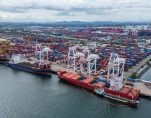
Terminal and yard at Laem Chabang Port
The contract, granted by the Port Authority of Thailand (PAT), will run from May 2026 to April 2031, reinforcing DP World’s central role in bolstering regional trade flows.
LCIT operates both B5 and C3 berths at Laem Chabang, Thailand’s principal deep-sea gateway and the country’s largest container hub supporting international trade. The terminals can accommodate up to four vessels simultaneously along 900 meters of berth length and are supported by 4,420 sqm of on-dock container freight station (CFS) facilities. In 2025, LCIT handled a record 1.936 million twenty-foot equivalent units (TEUs), its highest annual throughput to date, reflecting sustained growth in container volumes.
Glen Hilton, CEO & Managing Director, Asia Pacific, DP World, said: “This concession extension at Laem Chabang Port ensures continuity and service stability for our customers at a time when supply chains face increasing pressure and complexity. As Thailand strengthen its position as a regional trade hub, this extension allows us to continue investing in capacity, efficiency and sustainable operations. Together with our partners at LCIT, we are well positioned to support growing intra-Asia trade and deliver long-term value for customers across the Asia Pacific region.”
This concession will enable continued investment by DP World in operational efficiency and sustainability at Laem Chabang. In 2025, five electric internal transfer vehicles (eITVs) were deployed at LCIT, reducing emissions by approximately 60% compared to diesel alternatives while supporting faster vessel handling. Further upgrades are planned in 2026, including the installation of additional eITVs, electric reach stackers, and an electric empty container handler.
Complementing its operations at Laem Chabang Port, DP World has an integrated logistics network throughout Thailand, including cross-border trucking, landside logistics and freight forwarding. The company also recently launched a rail-connected inland container yard in Khon Kaen with a dedicated thrice-weekly rail shuttle to Laem Chabang, enhancing connectivity for exporters in Thailand’s Northeastern region.
These services and solutions aim to strengthen Thailand’s domestic and export trade by enabling the seamless movement of goods and materials from port to domestic hinterlands, and to markets across the wider Asia Pacific region. Hashtag: #DPWorld
The issuer is solely responsible for the content of this announcement.
About DP World
DP World is reshaping the future of global trade to improve lives everywhere. Operating across six continents with a team of over 125,000 employees, we combine global infrastructure and local expertise to deliver seamless supply chain solutions. From Ports and Terminals to Marine Services, Logistics and Technology, we leverage innovation to create better ways to trade, minimising disruptions from the factory floor to the customer’s door.
In Asia Pacific, DP World employs over 15,000 people across 22 geographies. We operate 17 ports and terminals, complemented by a comprehensive suite of end-to-end supply chain solutions – to connect the region to the rest of the world.
Ethereum Foundation has sold another 10,000 ETH to BitMine Immersion Technologies through an over-the-counter transaction, extending a series of treasury sales that has drawn scrutiny from the crypto market as staking withdrawals climb and institutional ETH accumulation intensifies. The latest deal was priced at an average of $2,292.15 per ETH, raising about $22.9 million for the non-profit organisation behind Ethereum’s core development ecosystem. It followed a 10,000 […]
China’s push into humanoid robots is emerging as a new test of its ability to convert industrial policy, supply-chain depth and scale manufacturing into export power, with Morgan Stanley research arguing that the sector could help lift the country’s share of global manufacturing by the end of the decade.
Economists led by Chetan Ahya have drawn a parallel with electric vehicles, where early policy support, component localisation and aggressive production expansion turned China from a fast follower into the world’s dominant exporter. Their research projects China’s share of global manufacturing could rise to 16.5 per cent by 2030, from about 15 per cent now, as advanced automation and embodied artificial intelligence move from demonstration projects into factory and logistics use.
The bullish case rests on China’s widening lead in humanoid robot production. Industry estimates show the country produced about 12,800 humanoid robots in 2025, close to 90 per cent of global output, though the market remains tiny compared with conventional industrial robotics. China also remains the world’s largest industrial robot market, accounting for more than half of global factory robot installations in 2024, with an operational stock above 2 million units.
That foundation matters because humanoid robots require the same manufacturing strengths that supported China’s rise in solar panels, batteries and electric vehicles: precision motors, sensors, actuators, batteries, control systems, machine vision and low-cost assembly. Local companies are building ecosystems around these components, while provincial governments are offering subsidies, industrial parks and procurement support to accelerate commercial deployment.
Beijing has identified humanoid robots as a strategic industry, setting targets for mass production and global leadership while integrating robotics into wider plans for artificial intelligence and advanced manufacturing. The 15th Five-Year Plan framework is expected to place AI-powered robots near the centre of industrial upgrading, although large-scale commercialisation is more likely toward the later part of the plan period than immediately.
The sector’s momentum has drawn major private capital. Start-ups such as Unitree, UBTech, AgiBot and Fourier Intelligence have moved quickly from stage demonstrations to pilot factory and warehouse deployments. Linkerbot, a fast-growing maker of dexterous robotic hands, is seeking a valuation of about $6 billion after building a strong position in high-degree-of-freedom robotic hands used in humanoids and industrial systems. Its modular products point to an important feature of the market: some of the earliest profits may come from components rather than complete humanoid machines.
Automakers and electronics groups are also moving into the field. Xpeng has said humanoid robotics could become a long-term investment area alongside electric vehicles, while other manufacturers are testing robots for inspection, sorting, materials handling and repetitive shop-floor tasks. The logic is clear. China faces an ageing workforce, rising labour costs in coastal manufacturing hubs and growing pressure from tariff barriers. A successful humanoid robotics industry could help preserve competitiveness even as low-cost labour advantages fade.
The export implications are broader than robot sales. If humanoids improve productivity in Chinese factories, they could lower production costs across electronics, machinery, appliances and consumer goods. That would reinforce the country’s position in global supply chains at a time when the United States, Europe and several Asian economies are trying to reduce dependence on Chinese manufacturing. It could also create a new export category in robots, components, software and maintenance services.
Yet the constraints remain substantial. Humanoid robots are still expensive, often have limited battery life and struggle with unstructured environments. Many can perform scripted tasks in controlled settings but fall short when asked to handle the speed, judgement and dexterity of human workers. Even executives in China’s robotics industry acknowledge that factory humanoids remain less efficient than people in many jobs. Safety certification, liability rules, data protection and workplace integration will also affect adoption.
Dependence on high-end chips and advanced software ecosystems is another weakness. US restrictions on AI semiconductors have pushed Chinese firms to localise more hardware, but training and deploying capable embodied AI systems remains compute-intensive. Without steady access to cutting-edge chips, progress may be uneven, particularly in models that require real-time perception, movement planning and continuous learning.
MANILA, PHILIPPINES – Media OutReach Newswire – 6 May 2026 – VinFast has officially launched the VF MPV 7 electric vehicle in the Philippines, marking the third international market where the model is present. The launch further strengthens VinFast’s diverse product portfolio in the country and reaffirms its commitment to making electric mobility more accessible, thereby accelerating the transition toward greener transportation in the Philippines.
In the Philippines, the VF MPV 7 is priced at PHP 1,518,000 for the battery-included version and PHP 1,239,000 under the battery subscription model.
In the Philippines, the VF MPV 7 is priced at PHP 1,518,000 for the battery-included version and PHP 1,239,000 under the battery subscription model. The flexible battery subscription policy is tailored to real-world usage needs, with a monthly fee of PHP 2,700 for distances of up to 2,000 km and PHP 4,150 for distances exceeding 2,000 km.
Starting from May 5, 2026, customers can place orders for the VF MPV 7 through VinFast dealerships nationwide. Notably, until May 31, 2026, the first 1,000 customers will be entitled to a promotional program, including one year of free battery subscription for usage of up to 2,000 km per month. Customers opting to purchase the vehicle with battery included will receive a direct discount of PHP 27,200.
Positioned as a versatile 7-seater electric MPV for families, the VF MPV 7 targets customers seeking a meaningful upgrade from conventional MPVs. With the MPV segment accounting for nearly 20% of total automotive sales in the Philippines, the VF MPV 7 offers a well-balanced solution combining spaciousness, strong performance, and competitive ownership costs, addressing the most critical criteria for family vehicle buyers.
The VF MPV 7 measures 4,740 x 1,872 x 1,734 mm with a 2,840 mm wheelbase, delivering interior space that exceeds typical segment standards and suits the needs of multi-generational families. The vehicle is developed around the “golden ratio” characteristic of MPVs, with wheels pushed toward the corners to optimize cabin space. This is combined with a modern design language, VinFast’s signature V-shaped LED daytime running lights, and 19-inch alloy wheels, creating a well-balanced and robust appearance.
The interior is configured to maximize space and practicality, ensuring comfort for all occupants, including those in the third row. Cargo capacity reaches up to 1,240 liters, providing flexibility for both daily use and long-distance travel. The VF MPV 7 is equipped with an electric motor delivering 150 kW of power and 280 Nm of torque, paired with a 60.13 kWh battery, enabling a driving range of up to 450 km on a full charge under NEDC standards. Fast-charging capability allows the battery to charge from 10% to 70% in approximately 30 minutes, ensuring flexible operation in real-world conditions.
Notably, the VF MPV 7 offers a clear advantage in monthly operating costs, as energy expenses remain stable and significantly lower than those of gasoline-powered vehicles in the same segment, helping optimize total cost of ownership over the long term. Owners also benefit from free charging at V-Green stations across the Philippines through March 2029, along with a 7-year or 160,000 km vehicle warranty and a 10-year or 200,000 km battery warranty, among the best in the segment.
Mr. Antonio Zara, CEO of VinFast Southeast Asia, said: “The launch of the VF MPV 7 in the Philippines marks another step forward in VinFast’s global expansion strategy and demonstrates our long-term commitment to this market. With its spacious interior, strong performance, optimized operating costs, and sustainable ownership value, we believe the VF MPV 7 will serve as a comprehensive upgrade for Filipino families and set a new benchmark in the MPV segment.”
Alongside the product introduction, VinFast has continued to strengthen its comprehensive electric mobility ecosystem in the Philippines by expanding its dealership and aftersales network. The company is also implementing attractive policies such as free charging, long-term warranties, and flexible buying solutions to lower barriers to EV adoption and enhance the overall ownership experience.
Arabian Post Staff -Dubai Abu Dhabi’s EDGE Group and France-headquartered ICAPE Group have signed an agreement to explore joint development and local supply of critical electronic subsystems, strengthening the UAE’s drive to build more resilient defence and advanced-technology manufacturing chains. The memorandum of understanding was signed on 5 May at Make it in the Emirates 2026 in Abu Dhabi, where industrial localisation, supply-chain security and high-value manufacturing […]
Danish shipping group A. P. Moller–Maersk has confirmed that its US-flagged vehicle carrier Alliance Fairfax has left the Arabian Gulf through the Strait of Hormuz under US military escort, giving Washington’s effort to reopen one of the world’s most important maritime chokepoints its most visible commercial test so far. The vessel, operated by Maersk’s Farrell Lines subsidiary, completed the passage on May 4 accompanied by US military […]
Arabian Post Staff -Dubai UAE authorities condemned a wave of missile and drone attacks on civilian sites after national air defence systems intercepted 12 ballistic missiles, three cruise missiles and four unmanned aerial vehicles on May 4, preventing wider damage in an escalation that has sharpened security concerns across the Gulf. Three people suffered moderate injuries and were taken to hospital, with officials identifying them as […]





 https://www.dpworld.com
 https://www.linkedin.com/company/dp-world
 https://twitter.com/DP_World