News related to
Vehicle

Police evacuated homes near RAF Fairford in Gloucestershire on Sunday and arrested several men on suspicion of offences under the Explosives Act after declaring a major incident in the nearby village of Whelford. Gloucestershire Police said an Army specialist explosive ordnance disposal team was examining a number of vehicles as officers maintained a cordon around the affected area. Residents from several properties were moved to a nearby […]

Green SM has begun pilot operations for its fully electric taxi service in Amsterdam, making the Netherlands its eighth market worldwide and its second European market after Denmark. The mobility company held a technical opening on September 25 and said the trial would initially cover Amsterdam’s Centrum, West and Zuid districts. Operations are planned to extend progressively to Oost, Noord, Nieuw-West and Zuidoost as the company tests […]

Tesla’s Bitcoin holdings moved close to the $1 billion mark after the cryptocurrency’s sharp weekly advance added about $122.6 million to the market value of the electric-vehicle maker’s position without any fresh purchase. The company held 11,509 bitcoin at the end of June, its latest regulatory filing shows, matching the balance tracked on-chain by blockchain intelligence platform Arkham. At a Bitcoin price of about $86,700, that position […]

Three-phase roadmap prioritizes photonics, power semiconductors, and sensors to advance the “Made in Thailand” chip initiative, targeting over 230,000 new jobs.

BANGKOK, THAILAND – Media OutReach Newswire – 24 September 2026 – Thailand has approved its first national strategy for the semiconductor and advanced electronics industry, establishing a long-term framework to build an integrated domestic ecosystem spanning chip research and design, front-end manufacturing, conventional and advanced assembly, packaging and testing, and high-value electronics applications.

Thailand Unveils First National Semiconductor Strategy

Approved on Thursday by the National Semiconductor and Advanced Electronics Policy Board, chaired by Deputy Prime Minister and Finance Minister, Mr. Ekniti Nitithanprapas, the strategy targets about $80 billion in cumulative investment and about $150 billion in annual industry revenue by 2050. It also aims to create more than 230,000 new jobs under Thailand’s long-term “Made in Thailand” chip initiative.

“This is Thailand’s first comprehensive national framework for building semiconductor capabilities and moving the country into higher-value activities across the global supply chain,” said Mr. Ekniti. “It gives investors a clear view of our technology priorities, infrastructure commitments and workforce-development plan through 2050.”

The roadmap will be implemented in three phases. By 2030, Thailand will reinforce its established assembly and testing base, scale advanced packaging capabilities and lay the foundations for front-end wafer production. By 2040, it will seek more anchor investors in upstream activities, including chip design, wafer fabrication and advanced-technology manufacturing, to fill gaps in the supply chain. By 2050, Thailand aims to have a complete domestic supply chain. Thai companies are expected to grow into local champions that co-develop innovation and hold key positions in the chain.

The strategy identifies three priority technology platforms aligned with Thailand’s industrial strengths and global demand: photonics for artificial intelligence, data centers and high-speed communications; power semiconductors for electric vehicles, energy-storage systems and power grids; and sensors, building on Thailand’s micro-electro-mechanical systems (MEMS) capabilities, for connected devices, automation, automotive, smart devices and medical applications.

Implementation will be supported through five coordinated mechanisms: tax incentives, grants and low-interest financing; high-skilled workforce development with industry and academic partners; upgraded research and chip-design infrastructure and partnerships between foreign and Thai companies; investment-ready infrastructure, including cluster sites, reliable water and electricity, clean energy and disaster-resilience systems; and regulatory reform and business facilitation for foreign investors and Thai suppliers including a broader market access through FTAs.

The board also approved a workforce program under the national strategy coordinated by the Ministry of Higher Education, Science, Research and Innovation with universities, research institutes, industry and international partners. By 2030, the program aims to develop 86,600 people, including 84,900 highly skilled personnel and approximately 1,700 advanced researchers, through specialized curricula, industry placements, overseas training, and programs for faculty members, researchers and technical instructors.

The strategy builds on strong investment momentum. From 2023 through the first half of 2026, the BOI received investment-promotion applications for 879 semiconductor and advanced electronics projects worth about $27.2 billion (909 billion baht). The projects span chip production at various stages, printed circuit boards (PCBs), hard disk drives, AI servers, networking and power-management equipment, and electronic parts for vehicles and office equipment.

Infineon Technologies, the world’s largest maker of power semiconductors and automotive chips, will open its first Thai factory in Samut Prakan on Oct. 1. The facility will produce and package advanced power modules for electric vehicles, energy storage, clean energy and advanced electronics. Infineon also plans to establish an R&D center, develop joint curricula with Thai educational institutions and employ more than 5,000 people in Thailand at full operation.

Thailand’s expanding ecosystem also includes Foxsemicon Integrated Technology in semiconductor-equipment supply, Analog Devices in analog and mixed-signal chips, Zhen Ding Technology in printed circuit boards, Terahop in optical communications, and Malaysian Pacific Industries (MPI) in semiconductor assembly, packaging and testing.

“The ‘Made in Thailand’ chip initiative will bring together the country’s technology, infrastructure, investment and talent through a strong, coordinated and comprehensive national plan to turn this ambition into reality,” said Mr. Narit Therdsteerasukdi, Secretary General of the Thailand Board of Investment (BOI). “For semiconductor investors, specialized talent is as critical to site selection as infrastructure and incentives. The strategy is also designed to provide a dependable workforce pipeline for faster ramp-up and long-term expansion.”


Note: Investment, revenue and job figures are strategy targets. The U.S. dollar equivalent of 909 billion baht is based on an exchange rate of approximately 33.44 baht per dollar.

Hashtag: #Thailandboardofinvestment #BOI #FDI #Investment

The issuer is solely responsible for the content of this announcement.

Thailand Board of Investment (BOI)

Established in 1966, the Office of the Board of Investment (BOI) has continuously played an essential role for over 60 years in promoting value-adding investment for the country, from both foreign and Thai investors, to enhance national competitiveness and drive towards a new era of sustainable and balanced growth.

Investment Services Center- PR Section, The Office of the Board of Investment (BOI)

555 Vibhavadi-Rangsit Road, Chatuchak Bangkok 10900 Tel. +66 (0) 2553 8111, Fax: +66 (0) 2553 8222

Global investors go into Thursday’s talks between Donald Trump and Xi Jinping with one overriding demand. They want predictability, and they want it with a long runway attached. Markets have already placed a bet on a calm outcome. Wall Street’s benchmark index climbed 1.5% this week to post its best session since early August, while the main US tech index notched its first record close since June. […]

China has placed another batch of low-Earth-orbit internet satellites into orbit after a Long March-8A rocket lifted off from Hainan, extending the build-out of the country’s state-backed satellite communications network.

The rocket launched at 9.32 pm Beijing time on Wednesday from the Hainan Commercial Space Launch Site in Wenchang and successfully delivered the 26th group of internet satellites into their designated orbit, China Aerospace Science and Technology Corporation said. Independent launch trackers identified the mission as carrying nine communications satellites for the SatNet constellation.

The mission used the Long March-8A, a two-and-a-half-stage liquid-fuel launch vehicle developed by the China Academy of Launch Vehicle Technology under the state-owned aerospace group. The manufacturer said the rocket is designed for constellation deployment missions to low and medium Earth orbit and uses a 3.35-metre core first stage, a hydrogen-oxygen second stage, two liquid boosters and a 5.2-metre payload fairing.

Wednesday’s flight was the 669th launch of the Long March rocket family, according to the aerospace corporation. Launch tracking services recorded liftoff at 13.32 UTC and classified the mission as successful.

The launch followed another satellite-internet deployment from Hainan on September 17, when a Long March-12 rocket carried the 25th group of low-orbit internet satellites into space. That mission was also declared successful, putting the payloads into their planned orbit. The succession of launches underscores the accelerated cadence being used to assemble China’s large communications constellation.

The latest deployment also marks the third numbered internet-satellite group sent up in little more than five weeks. The 24th group flew on a Long March-12 from Hainan on August 16, followed by the 25th group on September 17 and Wednesday’s 26th group. Official launch announcements for those missions have not disclosed satellite counts, while independent orbital and launch databases identify nine spacecraft on the latest flight after successful deployment into orbit.

The satellites form part of a national low-Earth-orbit broadband system associated with China Satellite Network Group, the state-owned operator commonly linked with the SatNet programme. Specialist launch databases list the planned network at roughly 13,000 satellites, although Chinese authorities have disclosed limited technical and commercial detail about individual spacecraft and the timetable for completing the full constellation.

Low-Earth-orbit communications systems are designed to provide broadband links with lower latency than traditional geostationary satellites because they operate much closer to Earth. Large constellations require frequent launches to establish coverage, replace spacecraft and maintain orbital capacity, making launch rate and manufacturing scale central to deployment.

The Long March-8A has become one of the vehicles assigned to that role. Launch data show Wednesday’s mission was the rocket variant’s 11th flight and its fifth mission of 2026. The vehicle entered active service in 2025 and is rated by launch databases to carry up to about 9.8 tonnes to low Earth orbit, depending on mission profile.

The Hainan commercial launch facility is also playing a larger role in China’s launch programme. Its location near Wenchang gives launch vehicles access to trajectories over the sea and supports missions carrying larger payloads from a relatively low latitude. China has increasingly used the site for commercial and constellation missions alongside its established inland spaceports.

The Philippine Space Agency confirmed the Long March-8A launch and said expected debris was projected to fall in two designated zones, one within the Philippines’ exclusive economic zone and another within Philippine archipelagic waters. The agency said the zones were identified through a Notice to Airmen issued before the flight.

Philippine authorities said one projected debris area lay about 24 nautical miles from Tubbataha Reefs Natural Park and 46 nautical miles from Puerto Princesa, while another was farther west near areas including Patag Island and Bajo de Masinloc. No debris was projected to fall on land or inhabited areas.

Arabian Post Staff -Dubai Saudi Arabia is driving a $90 billion hotel and resort development pipeline across the Gulf and North Africa, accounting for about 110,000 of nearly 200,000 rooms planned across the region, new HVS data show. The pipeline would expand the region’s existing hotel room supply by about 27 per cent, underlining the scale of investment continuing across major tourism markets despite a more selective […]

Advertisements

Greenlogue/AP Beam Middle East and Masdar City Free Zone have signed a memorandum of understanding to explore the deployment of smart-energy and clean-mobility technologies across the Masdar City ecosystem in Abu Dhabi. The agreement will allow Beam Middle East to introduce and supply advanced energy systems for potential use within the sustainable urban district, including off-grid electric-vehicle charging infrastructure, solar-integrated e-bike systems and other clean-energy mobility technologies. […]

JAKARTA, INDONESIA – Media OutReach Newswire – 20 September 2026 – Green SM, an all-electric ride-hailing platform, officially launches its 6-seat electric taxi service, Green Limo, in Indonesia, with 100% of its fleet featuring the spacious and well-equipped Limo Green, aiming to elevate the mobility experience in the premium electric taxi segment. On the occasion, the company also introduces a new vehicle rental program, “Rent a VinFast. Become a Green SM Driver. Be Your Own Boss,” offering a range of benefits for driver partners, including a low initial payment, access to brand-new VinFast vehicles, earnings of up to IDR 14 million per month, and revenue sharing of up to 92%.

Green SM hands over the first Limo Green vehicles to driver partners in Jakarta.

Green Limo is the third four-wheel service launched by Green SM in the market, following Green Car and Green Premium, providing a mobility option specifically designed for families, larger groups, business travelers, passengers carrying more luggage, and customers who value greater space, comfort and a smooth ride throughout their journeys.

Featuring a modern exterior design and a spacious three-row cabin, the Limo Green offers the “3 Nos” advantages of an electric vehicle: no emissions, no fuel odors and no engine noise. The vehicle is also equipped with features including a multi-purpose phone charging cable, automatic air conditioning, dedicated air vents for the two rear rows, and an air filtration and deodorizing system, helping maintain a fresh, clean and comfortable cabin environment.

From September 19 to 29, 2026, Green SM will officially hand over the first batch of 500 Limo Green vehicles in Jakarta to pioneering Green SM drivers at the Green SM Kemayoran Depot. In addition to vehicle handovers to pioneer driver partners, the event features test drives, program consultations and application intake, allowing prospective partners to experience VinFast’s modern electric vehicles firsthand, learn more about the new vehicle rental program and receive valuable gifts when placing a deposit.

To celebrate the launch of the new service, Green SM is offering a special promotion for customers using Green Limo for the first time, with 20% off the trip fare, up to IDR 50,000. The promotion is valid for 15 days from September 19 through October 3, 2026, giving customers an opportunity to experience the premium 6-seat electric taxi service at a special introductory fare.

On the same day, Green SM announces its new vehicle rental program, “Rent a VinFast. Become a Green SM Driver. Be Your Own Boss,” for driver partners. With an initial payment starting from just IDR 2 million and rental fees starting from IDR 254,000 per day, the program offers a range of VinFast vehicle options to suit individual needs, including Limo Green, VF e34/Nerio Green, VF 5/Herio Green and VF 6.

Notably, to give driver partners greater confidence as they get started with Green SM, the program provides guaranteed daily earnings of up to IDR 400,000 during the first two months, depending on the applicable conditions, along with revenue sharing of up to 92%. Driver partners can also benefit from a range of incentives, including a sign-up bonus of IDR 1,000,000 per month, a brand bonus of IDR 676,000 per month, and an operating bonus of up to IDR 1,340,000 per month. In addition, driver partners receive free charging at V-Green charging stations, helping reduce operating costs and improve business efficiency.

Mr. Pham Nhat Minh Hoang, Global CEO of Green SM, said: “Green Limo not only adds a new model to Green SM’s fleet, but also offers a suitable option for journeys where space and comfort are priorities. Alongside the Green Limo service, the new vehicle rental program with flexible options gives driver partners an easier way to earn stable income with modern, cost-efficient VinFast electric vehicles. We expect the combination of suitable products, practical policies and Green SM’s 5-star service standards to deliver meaningful value to both driver partners and customers, thereby helping raise the standard of transportation services in Indonesia.”

Throughout its global development journey, Green SM has completed approximately 850 million rides covering nearly 6 billion kilometers, helping reduce more than 800,000 tons of CO₂ emissions, equivalent to the amount of carbon absorbed by approximately 36 million trees. In Indonesia, Green SM continues to expand its all-electric mobility options, increase its coverage and enhance service quality, in line with its “5 Green Promises” commitment, contributing to greener transportation and creating positive value for local communities, the environment and the local economy./.

Hashtag: #GreenSM

The issuer is solely responsible for the content of this announcement.

Waymo will launch a fully autonomous ride-hailing service in Singapore in 2028, making the city-state its first Southeast Asian market as the Alphabet-owned company accelerates its international expansion.

The company said an initial fleet of all-electric Jaguar I-PACE vehicles will arrive in Singapore over the coming months, with preparations beginning before a phased testing programme in 2027. Trained autonomous specialists will initially drive the vehicles manually while Waymo maps roads and adapts its self-driving system to local conditions.

The programme will expose the Waymo Driver to Singapore’s road geometry, dense traffic environment and monsoon weather patterns before the company seeks to move towards autonomous operation. Commercial rides are scheduled to be offered through the Waymo app in 2028, subject to regulatory approvals.

Initial operations are expected to focus on western Singapore, including the Labrador and HarbourFront area, before any broader passenger rollout is considered locally.

Singapore’s Land Transport Authority said Waymo would become the country’s newest autonomous vehicle operator, joining ComfortDelGro and Grab. The authority said it would work closely with the company to ensure deployments meet safety and regulatory requirements and help build public confidence in autonomous vehicles.

Waymo is entering a market where autonomous transport is already moving from trials towards limited passenger services. Public rides on autonomous shuttle services began in Punggol in April, while operators including Grab, WeRide, ComfortDelGro and Pony. ai are expanding deployments and testing additional routes.

Waymo’s arrival therefore adds a major US developer to a field that already includes regional and China-based autonomous driving companies. Singapore has sought to attract multiple operators as it develops a competitive autonomous mobility sector and evaluates how driverless vehicles could supplement existing public transport.

Transport Minister Jeffrey Siow said Waymo would bring technology and operational expertise while supporting Singapore’s goal of creating additional transport options. Authorities have also stressed that autonomous vehicle deployment will not be allowed to move faster than measures to retrain and support drivers whose jobs could be affected.

The government announced a manpower transition package in July aimed at helping drivers acquire new skills and, where appropriate, move into jobs created by the autonomous vehicle sector. The issue has become more prominent as testing expands from controlled trials towards services carrying members of the public.

Singapore’s regulatory framework requires autonomous vehicles to clear technical and operational assessments before carrying passengers and progressing towards driverless operation. The Land Transport Authority assesses performance on authorised routes, including whether vehicles can cover sufficient distance without intervention and handle a range of traffic situations within their approved operating areas.

The Ministry of Transport also opened a public consultation this year on a broader legislative framework covering autonomous vehicles, including responsibility, licensing, insurance, liability and enforcement. Existing rules already require authorisation for autonomous vehicle trials and use on public roads.

Waymo said its Singapore expansion would follow the phased approach it has used elsewhere. The company has completed more than 20 million fully autonomous passenger rides and more than 300 million autonomous kilometres, according to company figures, giving it one of the largest operating datasets among commercial robotaxi developers.

Its overseas push is gathering pace. Waymo is preparing for commercial autonomous services in Tokyo and has also announced plans involving London and Munich, as it seeks to extend technology developed largely on US roads to markets with different driving environments, regulations and weather conditions.

Singapore offers a compact but demanding testing ground. Heavy rainfall, complex urban traffic, motorcycles, cyclists and dense interactions around public transport infrastructure create operating conditions that differ from many of Waymo’s established US service areas.

The company says its vehicles use lidar, radar and cameras to maintain a 360-degree view of their surroundings. The Singapore fleet will initially use Jaguar I-PACE sport utility vehicles, although Waymo has not disclosed how many vehicles will be deployed at launch or the eventual size of its commercial fleet.

Hackers who physically removed a Flock Safety roadside camera were able to copy much of its internal storage, uncover an encryption key and access tens of thousands of video clips and data linked to about 1.6 million images generated over 21 days. The compromise involved a single camera taken from above a roadway and did not amount to a remote breach of Flock Safety’s cloud network. The […]

Westinghouse Electric is seeking a valuation above $50 billion for a planned US initial public offering, people familiar with the preparations said, as the nuclear technology group moves towards a potential public filing as early as October. The proposed valuation has not been announced by Westinghouse or its owners and could change as preparations advance. The number of shares to be sold, the price range and the […]

Dubai has cleared an 80-kilometre Fourth Corridor road project linking Abu Dhabi, Dubai and Sharjah, adding a major new route intended to ease pressure on the emirate’s existing inter-emirate network. Sheikh Hamdan bin Mohammed bin Rashid Al Maktoum, Crown Prince of Dubai, Deputy Prime Minister and Minister of Defence of the UAE, and Chairman of The Executive Council of Dubai, approved implementation of the project under directives […]

Arabian Post Staff -Dubai Abu Dhabi Investment Authority has been allocated shares worth about 2 billion rupees in the National Stock Exchange of India’s anchor book, placing the sovereign wealth fund among the largest institutional investors in the exchange’s 67.46 billion-rupee pre-IPO placement. NSE allotted 37.79 million shares to 189 anchor investors at 1,785 rupees each, the top of its 1,700-1,785 rupee price band, according to the […]

More than 2,000 African business leaders, heads of state, investors and policymakers are set to gather in New York on September 20 and 21 for Unstoppable Africa 2026, with investment, trade and ownership of African value chains at the centre of the agenda. The fifth edition of the Global Africa Business Initiative’s flagship forum will be held at the New York Marriott Marquis during the opening of […]

Tesla has begun making its Grok artificial-intelligence companion available to eligible vehicles in the UAE through software version 2026.32.6, extending hands-free conversational and vehicle-control features to owners without a separate Grok subscription. The update gives drivers access to Grok through the car’s touchscreen, steering-wheel microphone control or the “Hey Grok” wake phrase where voice activation is enabled. Tesla says the assistant remains in beta and requires either […]

Dubai has approved an 80-kilometre road corridor linking Abu Dhabi and Sharjah through the emirate, a two-phase project intended to divert through traffic, strengthen freight movement and sharply reduce journey times on key sections of the network. Sheikh Hamdan bin Mohammed bin Rashid Al Maktoum, Crown Prince of Dubai, Deputy Prime Minister and Minister of Defence, approved implementation of the New Fourth Corridor, which will run from […]

Houthi forces in Yemen are experimenting with advanced maritime weapons, including possible “loitering torpedoes”, as evidence points to efforts to expand their arsenal and reduce dependence on imported systems. Conflict Armament Research said investigators had identified navigation modules and propellers that could be used in such torpedoes, technology it has not documented in the possession of any other armed group. The organisation said the components could allow […]

Arabian Post Staff -Dubai Emirates NBD has provided Cars24 Arabia with a digital revolving short-term financing facility to support the used-car platform’s expansion across the UAE and speed access to working capital for eligible dealers and business partners. The Dubai-based bank said the facility is built around an application programming interface, or API, that links its automated lending capabilities directly with Cars24 Arabia’s digital platform. Eligible businesses […]

HANOVER, GERMANY – Media OutReach Newswire – 16 September 2026 – JAC Motors is making its second appearance at IAA Transportation At Hall 12, Stand C08. The line-up is headlined by the European premiere of the electric van SUNRAY PRO. JAC Motors’ commercial vehicle business is moving beyond vehicle supply to become a partner in Europe’s green logistics ecosystem—supporting the electrification of European commercial fleets and delivering low-carbon, intelligent solutions for urban logistics in Europe.

Press Conference: For Greener Cities, NOW!

On Press Day, 14 September, JAC Motors held a press conference at its booth under the theme “For Greener Cities, NOW!,” presenting four electrified models to the European market. Partners, fleet operators, and trade media from Germany, France, Spain, Italy, Poland, and other countries attended.

At the press conference, Oscar Yu, General Manager of JAC International, stated that Europe is a key market in the company’s global expansion. JAC commercial vehicles are already present in Germany, Spain, France, Norway, Denmark, Sweden, and Switzerland, with a target of full European coverage by 2028. Since IAA Transportation 2024, JAC has established one subsidiary in Europe and built a localised marketing and service system covering 13 countries, including 8 regional strategic partners, over 50 authorised sales outlets, and more than 100 after-sales service outlets. In Spain, JAC holds a 41% market share in the medium-duty electric truck segment, ranking first. (Source: Spanish Directorate-General for Traffic (DGT) registration data, Jan–Jun 2026.)

The solutions JAC offers European customers go beyond the vehicles themselves. JAC’s subsidiary in Italy serves as a regional parts centre, covering warehousing, service and technical support, customer operations, and marketing. On financing, JAC has partnered with Santander and others to offer finance leasing, operating leasing, PCP (Personal Contract Purchase)/TCM (Trade Cycle Management), and flexible instalment plans, covering needs from fleets to individual users. On complete vehicle solutions, JAC works with bodybuilder partners such as Infore Environment to cover refrigerated transport, municipal sanitation, rescue, and other specialist applications.

The press conference also showcased JAC’s progress in Europe: JAC Motors Italy is now operational, the German dealer network is taking shape, and the parts logistics system already covers all of Germany. As JAC’s European business gradually moves from building its footprint to day-to-day operations, the atmosphere of conversations at this year’s booth has changed noticeably compared with 2024. Conversations at the booth now go straight to operations: Is the range enough? How long does charging take? Can this vehicle save the fleet money?

Looking ahead, JAC will continue to advance product introduction and channel expansion, targeting full coverage of the European market by 2028, participating in Europe’s urban green logistics transition with a complete electrified product portfolio and localised service capabilities.

Hashtag: #JACMOTORS

The issuer is solely responsible for the content of this announcement.

HONG KONG SAR – Media OutReach Newswire – 16 September 2026 –

Response by KK Chiu, International Director, Chief Executive, Greater China, Cushman & Wakefield:

Optimising the Housing Ladder and Improving Living Conditions

We welcome the Government’s commitment to increase housing supply, shorten the Composite Waiting Time for public rental housing and further strengthen the housing ladder. The adoption of a long-term housing supply framework comprising 40% public rental housing, 30% subsidised sale housing and 30% private housing, together with the delivery of approximately 196,000 public housing units over the next five years, will provide a clearer housing and homeownership pathway for different income groups.

We believe that increasing the supply of subsidised sale housing and enhancing the housing ladder will help more public housing tenants progress towards homeownership, accelerate housing mobility and enable families with genuine housing needs to gain access to public housing more quickly.

We support the Government’s efforts to increase public housing supply, continue the Light Public Housing programme and implement the Basic Housing Units regime in an orderly manner to phase out substandard subdivided units. This approach is consistent with our long-held view that increasing housing supply is the fundamental solution to improving inadequate housing conditions. With the Government targeting the resolution of substandard subdivided units in domestic buildings by 2030, we expect living conditions for grassroots households to improve progressively.

Urban Renewal Incentives

We support the Government’s more flexible approach to urban renewal, including transferable plot ratio arrangements and measures to unlock redevelopment potential. These initiatives will help enhance market participation, accelerate renewal in areas with pressing redevelopment needs and contribute to overall housing supply growth. We recommend the Government provide clearer guidance on application requirements and further streamline cross-departmental approval procedures to facilitate implementation.

Advancing the Yacht Economy

We welcome the Government’s continued efforts to promote the yacht economy. Beyond increasing marina berth supply and enhancing supporting infrastructure, we believe it is equally important to further facilitate cross-boundary initiatives, allowing greater mobility of yachts within the Greater Bay Area and fostering regional collaboration.

As more superyachts and high-net-worth visitors arrive in Hong Kong, demand is expected to rise across luxury tourism, hospitality, food and beverage, retail, marine services and waterfront commercial facilities, helping unlock the economic potential of Hong Kong’s coastline and island resources. At the same time, Hong Kong has the potential to develop a more comprehensive marine industry ecosystem encompassing yacht repair and maintenance, refitting services and specialised professional services. The development of a holistic marine services value chain will further strengthen Hong Kong’s competitiveness as a regional and international yachting hub.

Response by John Siu, Managing Director, Hong Kong, Cushman & Wakefield:

Planning Ahead for AI and Data Centre Infrastructure

We welcome the Government’s commitment to accelerate the development of the Sandy Ridge Data Facility Cluster, which is expected to provide computing power equivalent to 36 times Hong Kong’s current capacity by 2032, alongside a HK$1 billion injection into the Artificial Intelligence Subsidy Scheme. These initiatives will provide important support for the development of Hong Kong’s artificial intelligence and data centre sectors, further strengthening the city’s position as a regional digital and innovation hub.

However, with rapid advancements in artificial intelligence, large language models and cloud computing, demand for computing power is expected to grow significantly in the coming years. We believe that, in addition to planning data centre sites, the Government should proactively review long-term requirements for power supply, electricity grid capacity and related infrastructure. As AI adoption becomes more widespread, access to reliable power and supporting infrastructure will be a key factor in maintaining Hong Kong’s competitiveness as a technology and data centre hub.

We support the Government’s stated direction of pursuing “high-efficiency computing power, stable electricity supply and low-carbon transition”. Looking ahead, we recommend that the Government regularly review future demand for land, power supply and supporting infrastructure arising from the growth of artificial intelligence and data centre activities, particularly within the Northern Metropolis and other strategic development areas. A coordinated approach to computing, energy and digital infrastructure planning will help attract more data centre operators and technology companies to Hong Kong, while supporting the city’s long-term development as a regional hub for data and artificial intelligence.

Response to the Budget 2026/2027 by Rosanna Tang,Deputy Managing Director, Head of Research, Hong Kong, Cushman & Wakefield:

Clear Industry Positioning for the University Towns

We welcome the Government’s efforts under Hong Kong’s First Five-Year Plan to further define the positioning of the three university towns in the Northern Metropolis University Town, and are encouraged by its strategy to promote synergy among the university towns, the San Tin Technopole and surrounding industry parks. As the only city in the world with five universities ranked among the global top 100, Hong Kong possesses a strong foundation in higher education and research. At the same time, the San Tin Technopole is set to become a key innovation and technology hub. The complementary strengths of these two pillars, both geographically and strategically, provide a solid foundation for building a globally competitive innovation ecosystem in Hong Kong.

We are particularly encouraged by the Government’s emphasis on integrated industry-academia-research collaboration. The university towns should not be viewed merely as educational developments, but as strategic platforms for research commercialisation, international talent attraction and the cultivation of emerging industries. Closer collaboration among universities, research institutes, innovation and technology enterprises and industry parks will help establish a complete innovation value chain covering talent development, scientific research, technology transfer and industrial implementation.

In addition, the Plan proposes approximately 300 hectares of educational facilities as the core of the university towns, connected with adjacent strategic industry areas, distinctive conservation areas, sports and cultural facilities, and surrounding communities, bringing the overall development footprint to more than 1,000 hectares. Such a large-scale integrated education and industry development model is rare in Hong Kong’s urban planning history and clearly demonstrates the Government’s long-term vision of creating a knowledge-based city cluster and an international education hub in the Northern Metropolis.

Attracting Signature Industry Projects and Anchor Institutions to Enhance the Northern Metropolis’ Global Appeal

We welcome the Government’s efforts to establish differentiated industry positioning through the three university towns, while integrating key development nodes such as the San Tin Technopole, the Hong Kong Park of the Hetao Shenzhen-Hong Kong Science and Technology Innovation Co-operation Zone, the Hung Shui Kiu Industry Park and Ta Kwu Ling. This provides a clearer direction for industrial development in the Northern Metropolis and helps address long-standing market concerns regarding overlapping functions and unclear district positioning.

As highlighted in our previous research, we believe the next critical stage for the Northern Metropolis will be its ability to attract influential anchor institutions and leading enterprises. By bringing together universities, research institutes and industry leaders, Hong Kong can foster the clustering of businesses, talent and capital, gradually forming industry clusters with scale and international competitiveness. Hong Kong should also capitalise on its common law system, international financial centre status, intellectual property protection framework and global talent network by focusing on high value-added segments such as research and testing, intellectual property management, fundraising and listing activities, and international accreditation services. This will help Hong Kong establish an irreplaceable role within the Greater Bay Area industrial value chain.

Beyond strategic industries, we believe the Northern Metropolis could also explore internationally recognised and iconic industry projects to further enhance its global profile and attractiveness. For example, the Government may consider developing initiatives around new energy vehicles, smart mobility and advanced technologies, while exploring the feasibility of internationally recognised racing events, testing facilities or technology R&D platforms, such as those associated with Formula One. By leveraging motorsport-related economic activities and innovation-led development, Hong Kong could attract international automotive manufacturers, mobility technology companies and research institutions to establish regional headquarters, R&D centres or testing facilities in the city. This would in turn support the growth of engineering, intelligent transport, advanced manufacturing, tourism, hospitality, retail and convention and exhibition industries, further enriching the Northern Metropolis industrial ecosystem.

Accelerating Land Supply While Advancing Industries and Infrastructure in Parallel

We note that Hong Kong’s First Five-Year Plan proposes a significant acceleration in land and housing supply within the Northern Metropolis. Residential completions are expected to increase substantially from approximately 11,000 units during 2021/22 to 2025/26 to around 70,000 units during 2026/27 to 2030/31. Over the same period, the supply of “spade-ready sites” will rise from approximately 120 hectares to around 900 hectares, representing an increase of around 7.5 times. These figures demonstrate that the Northern Metropolis is transitioning from a planning and land formation phase to a new stage characterised by large-scale development, industrial implementation and population intake.

However, we believe the success of the Northern Metropolis should not be measured solely by the volume of land or housing delivered. As substantial residential, innovation and technology, and industrial sites come on stream, the focus should gradually shift from land supply to city-building. The Government should ensure the coordinated delivery of railway and cross-boundary infrastructure networks, industry parks, commercial facilities, public services and community amenities, while accelerating the introduction of leading enterprises and strategic industries to create sufficient, high-quality employment opportunities and achieve a genuine jobs-housing balance.

In particular, we believe the Northern Metropolis should be driven by industry-led development, with the San Tin Technopole, the Hetao Shenzhen-Hong Kong Science and Technology Innovation Co-operation Zone, the university towns and major industry parks serving as key growth engines. This would create a virtuous cycle in which industry attracts population, population supports consumption, and consumption drives urban development. Only through the coordinated growth of industry, talent, infrastructure and communities can the Northern Metropolis evolve from a large-scale land development project into a modern metropolitan district integrating industry, education, living and international exchange.

Response by Tom Ko, Executive Director, Head of Capital Markets, Hong Kong of Cushman & Wakefield:

New Opportunities for Student Accommodation Market

We welcome the Government’s initiatives to deepen Hong Kong’s development as an international hub for post-secondary education through the “Hong Kong: Your World-class Campus” campaign, expanded global student recruitment efforts and the extension of the Immigration Arrangements for Non-local Graduates pilot arrangement to graduates from Greater Bay Area campuses of Hong Kong universities. These initiatives will further enhance Hong Kong’s attractiveness to overseas students and talent while reinforcing the “Study in Hong Kong” brand.

We are encouraged by the continued progress of the Hostels in the City Scheme. The scheme has already received 41 confirmed applications, providing approximately 10,800 bed spaces and demonstrating strong market confidence in the long-term growth of Hong Kong’s education sector.

The scheme has opened up a new supply channel for converting commercial buildings into student accommodation. At a time when hotel conversion opportunities are becoming more limited as tourism continues to recover, it provides an alternative pathway for investors while helping unlock the value of underutilised commercial assets and meet rising demand for student housing. As the Government prepares to tender the first dedicated student hostel site, we believe purpose-built student accommodation will gradually emerge as a distinct and scalable asset class within Hong Kong’s real estate market.

To further increase supply, we recommend that the Government continue reviewing and refining approval procedures for student hostel conversions. Greater flexibility and streamlined processes, while maintaining appropriate safety and operating standards, would encourage wider market participation and support Hong Kong’s ambition to become a leading international education destination.

(Click here for high-res pictures)

Hashtag: #Cushman&Wakefield

The issuer is solely responsible for the content of this announcement.

About Cushman & Wakefield

Cushman & Wakefield (NYSE: CWK) is a leading global commercial real estate services firm for occupiers and investors with approximately 53,000 employees in over 350 offices and nearly 60 countries. In Greater China, a network of 23 offices serves local markets across the region. In 2025, the firm reported revenue of $10.3 billion across its core services of Valuation, Consulting, Project & Development Services, Capital Markets, Project & Occupier Services, Industrial & Logistics, Retail, and others. Built around the belief that Better never settles, the firm receives numerous industry and business accolades for its award-winning culture. For additional information, visit or follow us on LinkedIn ().

  • Launched in H1 2026, Heavy Weight Express service saw a 16% increase in Weight per Day growth for the region (excluding China)
  • High-value, technology-related cargo, engineering & manufacturing, and automotive are the biggest drivers, making up two-thirds of the total weight of heavyweight segment

SINGAPORE – Media OutReach Newswire – 16 September 2026 – Following DHL Express’s introduction of Heavy Weight Express (HWX) this year, DHL Express recorded a 16% growth in its Time Definite International Weight per Day in Asia Pacific (excluding China) between January and July2026. This reflects how DHL’s Smart Industrial Growth Strategy is yielding positive outcomes as businesses are moving heavier, critical components, machinery, and industrial equipment across borders.

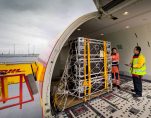
DHL Express heavy weight cargo

The heavyweight market has been gaining traction in recent years. Industry research shows that an estimated 10.2 million tons of heavyweight shipments¹ are being moved in Asia Pacific (excluding China) each year. Many companies have spent years reducing inventory and improving efficiency across their supply chains. However, companies today operate in a far less predictable environment marked by trade disruptions, manufacturing bottlenecks, and fluctuating demand. The rise in heavyweight shipment volumes mirrors a shift in how businesses are managing supply chain risks, as they increasingly turn to express logistics not only to handle sudden shifts in demand but also to have greater agility, certainty and control over timelines.

“Behind the numbers is a simple reality: Businesses are shipping heavy when timing matters and when it’s critical,” said Ken Lee, CEO for Asia Pacific, DHL Express. “As companies continue to navigate a complex landscape where uncertainty has become the norm, speed and reliability have also become part of the business decision. Customers are making deliberate decisions on what they ship through our network. Our Heavy Weight Express solution helps companies avoid downtime, protect working capital and keep operations moving when supply chains don’t go exactly as planned.”

Technology, Engineering & Manufacturing, and Automotive top Asia Pacific’s heavyweight contributors

Across the region, high-value, technology-related cargo, such as computer chips and semiconductors, accounts for the largest share of DHL Express’s heavyweight segment at over 34%, driven by rapid investment in data centers to support the growing demandfor computing capacity, data storage, cloud services, as well as artificial intelligence. This has fueled demand for technology-related shipments, from semiconductors and servers to cooling systems and electrical infrastructure. However, a data center crunch is creating supply chain bottlenecks as demand for semiconductor manufacturing outpaces infrastructure supply. As a result, express logistics services are urgently activated to move critical components quickly and efficiently, helping to keep projects on schedule.

The other main contributors to the heavyweight segment are businesses in engineering & manufacturing as well as the automotive industry.

Automotive is the fastest growing sector

HWX service is also gaining strong momentum in the automotive sector, with its shipment weight increasing at a rate of nearly 20%. As the leading export region for this sector, Asia Pacific is also seeing a surge in Asian automotive brands, particularly Electric Vehicle (EV) manufacturers from China and Southeast Asia. As these brands expand into new markets, they are also moving vehicle parts sourced from different suppliers and manufacturers across borders. This has created the appetite for expedited shipments to keep production running. In this sector, a single late or failed shipment could instantly cost automotive manufacturers millions of dollars.

Asia affirms role as a vital trading hub

In Asia Pacific (excluding China), the fastest growth in heavyweight shipments for the first seven months of the year came from India, the Philippines, Vietnam, Japan and Hong Kong. These markets reflect two of the region’s strongest trade corridors – Southeast Asia’s firm role as a manufacturing and sourcing base, and North Asia’s strategic position as a hub for high-value technology, industrial and automotive supply chains. Additionally, India, the Philippines, and Vietnam are also recognized as key markets of the geographic tailwinds initiative.

“As companies continue to manufacture out of Asia, balancing project timelines and building more resilient and agile supply chains become a priority. To maintain production continuity and ensure certainty, they are consolidating goods into heavier shipments. These non-negotiable conditions are also “urgency drivers” that put us at an advantage to help deliver our customers’ shipments at a definite time,” said Ken Lee, CEO for Asia Pacific, DHL Express.

In recent years, DHL Express has added several new infrastructures across the region, including an expanded global hub in Hong Kong, facilities near Cebu and Manila airports, gateway at Christchurch airport, Hanoi gateway near Noi Bai airport, as well as Delhi gateway, culminating in approximately 1,000 facilities in the Asia Pacific region. This is further supported by a robust aviation network of around 810 flights per day.

¹McKinsey/IHS Markit (2024)
Hashtag: #DHLExpress #GlobalTrade #HeavyWeightExpress

The issuer is solely responsible for the content of this announcement.

DHL – The logistics company for the world

DHL is the leading global brand in the logistics industry. Our DHL divisions offer an unrivaled portfolio of logistics services ranging from national and international parcel delivery, e-commerce shipping and fulfillment solutions, international express, road, air and ocean transport to industrial supply chain management. With approximately 389,000 employees in more than 220 countries and territories worldwide, DHL connects people and businesses securely and reliably, enabling global sustainable trade flows. With specialized solutions for growth markets and industries including technology, life sciences and healthcare, engineering, manufacturing & energy, auto-mobility and retail, DHL is decisively positioned as “The logistics company for the world”.

DHL is part of DHL Group. The Group generated revenues of approximately 82.9 billion euros in 2025. With sustainable business practices and a commitment to society and the environment, the Group makes a positive contribution to the world. DHL Group aims to achieve net-zero emissions logistics by 2050.

Arabian Post Staff -Dubai Dubai has introduced a round-the-clock service at Dubai International Airport allowing eligible UAE citizens and residents to obtain an International Driving Permit within five minutes before travelling abroad. The service is available at the Customer Happiness Centre in Terminal 3 Arrivals and is open to people holding a valid UAE driving licence. It brings permit issuance directly into the airport environment, giving travellers […]

Arabian Post Staff -Dubai Al-Futtaim Motors has begun two safety recall campaigns covering 6,933 Lexus LX500 and LX600 sport utility vehicles in the UAE, addressing separate engine software and transmission defects in models built in Japan between 2021 and 2024. The larger programme is being conducted in coordination with the Ministry of Economy and Tourism and requires affected owners to have their vehicles inspected or reprogrammed without […]

VISHNU RAJA
RYO YAMADA
HITORI GOTOH
IKUYO KITA
Just in: