News related to
Vehicle

A landmark judicial ruling on the taxation of foreign investments routed through Mauritius has sent ripples across global financial markets, unsettling investors who have long relied on the island nation as a preferred gateway into India. The decision, delivered by the Supreme Court of India, upholds the government’s right to tax certain capital gains arising from indirect transfers and treaty-based structures, reinforcing a tougher stance on what authorities describe as aggressive tax planning.

India’s decisive stand on Mauritius-linked investments has revived debate over the balance between sovereign tax powers and investor certainty. Government data underline the scale of what is at stake. Over the 23 years leading up to 2023, cumulative foreign direct investment routed from Mauritius amounted to about $171 billion, making it the single largest source of inflows. For decades, the India–Mauritius Double Taxation Avoidance Agreement enabled investors to claim capital gains tax exemptions, helping fuel equity investment, private equity deals and strategic acquisitions.

The court’s ruling addresses disputes that intensified after New Delhi amended tax laws and renegotiated treaties to curb what it saw as treaty abuse. While the revised tax treaty signed in 2016 had already limited exemptions for new investments, the judgment clarifies that authorities may scrutinise older structures if they lack commercial substance. Tax officials argue the decision closes loopholes without violating treaty commitments, while investors warn it introduces uncertainty for legacy holdings.

Officials from the finance ministry maintain that the ruling aligns with international norms promoted by the Organisation for Economic Co-operation and Development, particularly the Base Erosion and Profit Shifting framework. They stress that genuine investors with demonstrable economic substance in Mauritius have little to fear. However, fund managers say the practical test will lie in how tax authorities interpret “substance” and whether retrospective demands emerge through reassessments.

Market reaction has been cautious. Legal advisers report a spike in queries from foreign portfolio investors and multinational corporations reassessing exposure to India-linked assets held through Mauritius vehicles. Some funds have begun exploring alternative jurisdictions such as Singapore or the Netherlands, though treaty benefits in those routes have also narrowed over time. The broader concern is not a single treaty, but a pattern of assertive tax enforcement that could complicate exit planning.

Mauritius itself faces strategic implications. The island has worked to reposition its financial sector beyond treaty advantages, emphasising regulatory credibility, compliance standards and links to African markets. Authorities in Port Louis have reiterated that the country remains committed to transparency and cooperation, noting that the revised treaty framework already reflects shared objectives with New Delhi.

Economists note that India’s investment landscape has changed markedly since the era when Mauritius structures dominated. Domestic capital markets are deeper, startup funding has diversified, and manufacturing-linked incentives are attracting strategic investors less dependent on tax arbitrage. Even so, foreign capital remains critical for sectors such as infrastructure, renewable energy and technology, making predictability in tax policy a sensitive issue.

Corporate leaders caution that while sovereign governments have the right to protect revenues, abrupt shifts can affect perceptions of stability. Several high-profile disputes in the past decade, including cases involving telecom and energy companies, continue to shape investor memory. The latest ruling, they say, reinforces the need for clear administrative guidance to avoid prolonged litigation.

From the government’s perspective, the judgment strengthens its hand in ongoing tax assessments and signals continuity in policy direction. Officials argue that aligning domestic law with treaty intent ultimately supports fair competition and long-term growth. They also point to dispute resolution mechanisms and advance rulings as safeguards for investors seeking clarity.

Dubai has rolled out a pilot shared school transport service that aims to reshape the daily school run by combining technology-enabled operations with shared mobility, as the emirate seeks to ease congestion, improve safety standards and cut the cost burden on families. The initiative is being led by Dubai Roads and Transport Authority in partnership with Yango Group, a global technology firm with experience in mobility platforms […]

Arabian Post Staff -Dubai Abu Dhabi National Oil Company, the United Arab Emirates’s flagship petroleum producer, is evaluating options to enter Venezuela’s energy industry with a focus on gas projects, signalling a potential strategic pivot that could reshape international investment patterns in one of the world’s most under-utilised hydrocarbon reserves. This deliberation forms part of Adnoc’s broader international expansion plans via its overseas investment arm, XRG, and […]

Abu Dhabi has constituted the board of its new sovereign investment platform, L’IMAD Holding Company, marking another step in the emirate’s drive to broaden revenue streams and deepen its presence in global deal-making. The formation of the board, announced by the Abu Dhabi Media Office, places the vehicle alongside a growing roster of state-backed investors tasked with deploying capital across sectors seen as strategic to long-term growth. […]

HO CHI MINH CITY, VIETNAM – Media OutReach Newswire – 12 January 2026 – Ho Chi Minh City Development Commercial Bank (HDBank, ticker symbol: HDB) has successfully issued a second tranche of international green bonds worth US$50 million to the Dutch Entrepreneurial Development Bank (FMO) and British International Investment (BII), the UK’s development finance institution and impact investor, completing its $100 million international green bond initiative in 2025.

HDBank's international green bond programme strengthens funding diversification and supports sustainable, green and inclusive finance initiatives in Vietnam.
HDBank’s international green bond programme strengthens funding diversification and supports sustainable, green and inclusive finance initiatives in Vietnam.

The announcement was made at “The USD100 Million Green Bond Issuance Disclosure Ceremony” recently held between HDBank and its green bond investors including FMO, BII and the International Finance Corporation (IFC) – a member of the World Bank Group in the presence of the Deputy Consul General of the Netherlands and representatives from the British Consulate General in Ho Chi Minh City.

The bonds included $30 million privately issued to FMO and $20 million to BII. The first tranche was issued to IFC, which facilitated the participation of FMO and BII in the second tranche.

The bonds have a three-year term, are non-convertible and unsecured and issued without warrants.

Nguyen Huu Dang, HDBank’s CEO, said: “Sustainable development goals lie at the heart of HDBank’s strategy, which is centred on delivering the best value for customers, partners and the community. This international green bond initiative marks an important stepping stone on our journey towards achieving those goals.”

The issuance help diversify HDBank’s funding sources, support its sustainable growth strategy and create a foundation for it to continue attracting additional international capital for green finance, sustainable development and inclusive finance initiatives in Vietnam.

This, in turn, helps customers access capital to deploy solar energy projects, electric vehicles, green buildings, and other energy-saving solutions.

Projects financed by the green bond proceeds must undergo rigorous screening, meet environmental and social risk management requirements, and comply with eligibility criteria under the Bank’s Sustainable Finance Framework. These projects are expected to reduce approximately 102,000 tons of CO₂ over 10 years, improve environmental quality and contribute to Vietnam’s Net Zero 2050 commitment.

Weichuan Xu, IFC’s lead for the Financial Institutions Group in Vietnam, Cambodia and Lao PDR, said the issuance marked a significant step in expanding HDBank’s climate finance portfolio and advancing Vietnam’s economic and social progress.

“The funds raised will support projects that foster sustainable industries, generate jobs and strengthen communities,” he added.

Representatives from FMO and BII also highlighted the transaction as a strong signal of the growing readiness and potential of Vietnam’s sustainable finance ecosystem, helping attract more capital for climate-responsible projects.

With this milestone, HDBank reinforces its commitment to sustainable finance and the long-term prosperity of its customers, partners and the community, while expanding its presence on the global financial map.

Hashtag: #HDBank

The issuer is solely responsible for the content of this announcement.

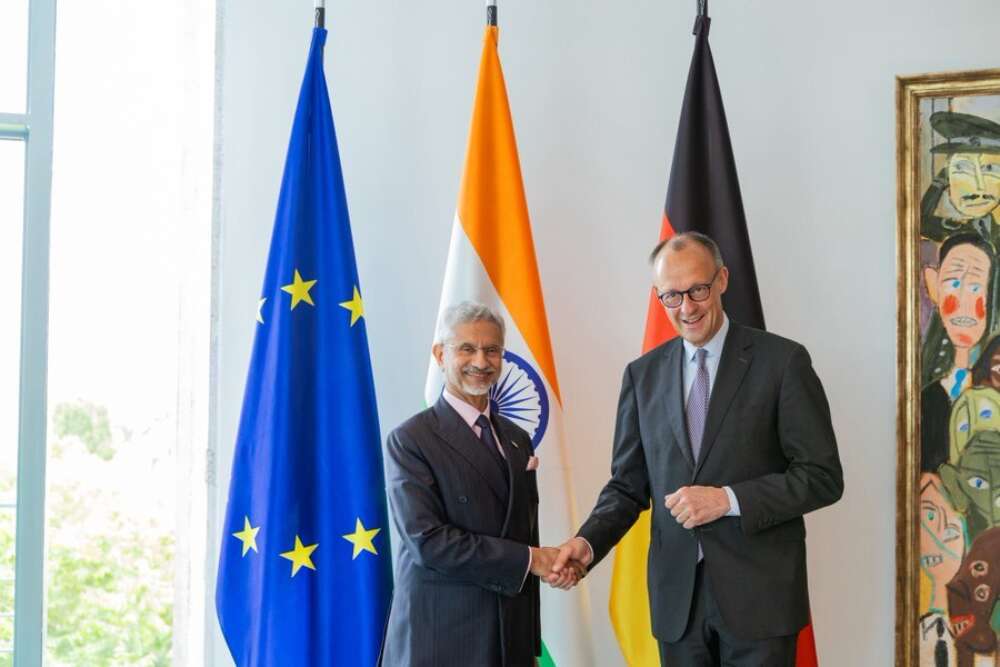
Germany’s opposition leader Friedrich Merz has suggested that a long-stalled trade agreement between the European Union and India could be clinched by the end of January, injecting momentum into negotiations that Brussels and New Delhi have struggled to close for more than a decade as global supply chains remain under strain from geopolitical frictions.

Speaking at a policy forum, Friedrich Merz said the bloc and India were “closer than many assume” to resolving key differences, adding that the economic case for a deal had sharpened after prolonged disruptions linked to strategic competition between major powers. His comments come as European manufacturers continue to grapple with uneven access to critical inputs following China’s tightening of export controls on minerals vital for electric vehicles, electronics and defence applications.

Negotiations for an EU–India free trade agreement were relaunched in 2022 after an eight-year hiatus, with both sides aiming to expand trade that exceeded €120 billion in goods and services last year. Officials involved in the talks say progress has been made on tariff reductions and rules governing digital trade, though sensitive areas such as agriculture, labour standards and intellectual property remain contentious. Merz’s remarks underscore a growing sense in Berlin and other capitals that the agreement has moved from a strategic aspiration to an economic necessity.

Germany, Europe’s largest economy, has been among the strongest advocates of diversifying trade ties beyond China, particularly after export controls imposed by Beijing on gallium, germanium and graphite created months of bottlenecks for automotive and renewable energy firms. Those controls, introduced amid the broader U. S.–China trade dispute, highlighted vulnerabilities in Europe’s dependence on a narrow set of suppliers for critical raw materials.

Executives in the auto sector say shortages of battery-grade materials last year forced production adjustments and delayed investment decisions. While some supply has since stabilised, industry groups argue that long-term resilience requires deeper partnerships with alternative producers and manufacturing hubs. India, with its expanding industrial base and policy push to attract foreign investment, has emerged as a central pillar of that strategy.

European officials note that the proposed agreement would not only cut tariffs—currently as high as 60 per cent on some vehicles entering India—but also establish clearer rules for public procurement and data flows. For India, the deal promises greater access to the European market for pharmaceuticals, textiles and IT services, while also encouraging technology transfer and skills development.

Trade analysts caution that closing the pact by late January would require political compromises on both sides. European negotiators have pressed for stronger environmental and labour commitments, while Indian counterparts have sought flexibility to protect small farmers and domestic manufacturers. Still, the geopolitical context is shifting calculations. The European Union has accelerated its “open strategic autonomy” agenda, seeking to balance openness with security of supply, and India has signalled willingness to align more closely with Western economies without abandoning its strategic independence.

Merz’s intervention also reflects domestic pressures within Germany, where exporters are seeking new growth markets as demand in China cools. German industry groups have repeatedly urged policymakers to prioritise agreements with fast-growing economies, arguing that delays risk ceding ground to competitors from East Asia and North America.

The broader backdrop includes intensifying scrutiny of China’s role in global supply chains. Beijing has defended its export controls as legitimate measures to safeguard national security and manage resources, but the ripple effects have reinforced calls in Europe for diversification. The European Commission has already launched initiatives to secure access to lithium, cobalt and rare earths through partnerships in Africa, Latin America and Asia, with India seen as both a market and a manufacturing partner.

Diplomats familiar with the EU–India talks say technical chapters are largely drafted, leaving political decisions to bridge remaining gaps. Any agreement would still need approval from member states and the European Parliament, a process that could extend beyond the negotiating deadline even if a political deal is struck.

BYD has begun integrating advanced LiDAR sensing into some of its lowest-priced electric vehicles, a move that signals a sharp escalation in the race to make assisted and autonomous driving features available to mass-market buyers. The Chinese automaker has confirmed that models including the Seagull and Dolphin will carry LiDAR-based perception as part of its proprietary “God’s Eye” driver-assistance system, despite starting prices that hover around the […]

Advertisements

  Changpeng Zhao, the former chief executive of Binance, has drawn attention to what he describes as a widening divide in the Bitcoin market, with large United States banks and institutional players accumulating the cryptocurrency while many retail investors sell amid price volatility and regulatory uncertainty. His remarks, circulated widely across market circles, have intensified debate about whether another structural shift is under way in the digital […]

Bangkok’s long-held reputation as the “Detroit of the East” is under strain as the global shift towards electric vehicles reshapes South-East Asia’s industrial map, with Vietnam emerging as a more agile rival built around a powerful domestic champion. For half a century, Thailand’s automotive sector has been the backbone of its manufacturing economy, contributing about a tenth of national output and supporting hundreds of thousands of jobs […]

  Bitcoin’s derivatives market has thinned to levels last seen in 2022, with aggregate open interest sliding sharply as leveraged traders cut exposure amid quieter price action and tighter funding conditions. Data compiled from major crypto derivatives venues show total open interest across futures and perpetual contracts falling to the lowest point in more than two years. The drawdown reflects a sustained retreat by speculative traders who […]

Arabian Post Staff -Dubai   Aldar Properties PJSC has priced $1 billion of subordinated dated hybrid notes, securing long-term capital to support its expansion plans as demand for Gulf real estate assets continues to draw global investors. The Abu Dhabi-based developer said the transaction was met with strong interest from international institutional accounts, reflecting confidence in its balance sheet and strategy at a time when funding costs […]

Arabian Post Staff -Dubai   Abu Dhabi Fund for Development has unveiled a new financing push aimed at reshaping how water projects are funded and delivered across developing economies, signalling a shift towards larger-scale capital mobilisation and technology-led solutions. The initiative, branded as the Abu Dhabi Global Water Platform, sets out to mobilise $2 billion from domestic and international financiers to back projects that improve water access, […]

Arabian Post Staff -Dubai UAE’s national railway operator Etihad Rail has outlined the rollout of the country’s first passenger railway network, marking a significant expansion of the federal transport system that will connect 11 cities and regions through a series of strategically located stations scheduled to become operational this year. The passenger rail service builds on the national freight network that has been running since 2023 and […]

Republic of Korea delivered its largest current account surplus ever recorded for a November, underpinned by a sharp rebound in exports led by semiconductors, according to data released by the central bank, reinforcing signs that Asia’s fourth-largest economy is benefiting from a global technology upcycle.

Figures published by Bank of Korea showed the surplus widened markedly from a year earlier, driven primarily by goods exports as overseas demand for memory chips and advanced components strengthened. The milestone November result adds to a sequence of solid monthly balances this year and signals improving external resilience after a period of volatility linked to energy prices and weaker global trade.

Exports rose at a double-digit pace year on year, with semiconductors once again the dominant contributor. Chip shipments, which had slumped during the global downturn in memory prices, rebounded strongly as inventories normalised and orders increased from data-centre operators and manufacturers deploying artificial intelligence workloads. Analysts said demand for high-bandwidth memory and advanced logic chips has been particularly supportive for Korean producers.

The current account surplus, which measures the balance of trade in goods and services alongside income flows, was also supported by a narrower energy import bill. Lower prices for crude oil and liquefied natural gas compared with last year reduced the cost of imports, amplifying the positive effect of export growth. Services remained in deficit, reflecting outbound travel by residents, but the shortfall was smaller than earlier in the year.

Economists link the export recovery to the improving cycle in global technology spending. Korean chipmakers, led by Samsung Electronics and SK Hynix, have benefited from rising prices for dynamic random-access memory and NAND flash products, as well as from long-term contracts tied to AI infrastructure. Both firms have announced higher capital expenditure plans focused on advanced memory and packaging technologies, moves that are already filtering through trade data.

Beyond semiconductors, shipments of automobiles, machinery and petrochemical products also contributed positively. Vehicle exports remained robust despite softer demand in some advanced economies, reflecting competitive pricing and the growing popularity of electric and hybrid models produced by Korean manufacturers. Machinery exports gained from infrastructure and energy projects across the Middle East and parts of Southeast Asia.

Income from overseas investments added another layer of support. Dividend and interest receipts from Korean companies’ foreign assets increased, offsetting profit repatriation by foreign firms operating domestically. This helped keep the overall current account firmly in surplus despite the persistent services deficit.

Policy makers view the November outcome as confirmation that the economy is on a steadier footing. The central bank has previously signalled that a sustained export-led recovery would ease pressure on monetary policy, even as it remains cautious about household debt and property-market risks. A strong external balance also provides a buffer against currency volatility, a concern earlier in the year when the won weakened amid global interest-rate uncertainty.

Still, officials and analysts warn that risks remain. The export outlook is closely tied to the durability of the global technology rebound and to geopolitical developments that could disrupt supply chains or dampen investment sentiment. Slower growth in major trading partners or renewed trade frictions could weigh on momentum in coming months. Services exports, particularly tourism, have yet to return to levels seen before the pandemic, limiting diversification of the external balance.

Internet access and telephone networks across Iran were cut late on Thursday after crowds poured onto streets and residents shouted from rooftops in multiple cities, according to witnesses and digital rights monitors, marking a sharp escalation in nationwide unrest. Demonstrations flared after an appeal by exiled crown prince Reza Pahlavi for a coordinated show of defiance, prompting gatherings in the capital Tehran and other urban centres. Within […]

SINGAPORE – Media OutReach Newswire – 18 July 2025 – As more people choose to age independently at home, ensuring safety and security has never been more important. Arlo Technologies, Inc. (NYSE: ARLO), a leader in smart home security, is helping seniors and their families stay protected, connected, and reassured, with smart features that are easy to use and designed to fit seamlessly into everyday life.

WHY HOME SECURITY MATTERS FOR SENIORS
Living alone can bring unique challenges for the elderly, from rising concerns around home break-ins, to the growing need for remote support from family members, security plays a vital role in enabling seniors to confidently remain in their own homes.

HOW ARLO SUPPORTS SENIOR SAFETY
Simplicity For Peace Of Mind

  • Simple, Wire-Free Setup: No complicated installations – Arlo’s cameras are designed for easy placement indoors or outdoors, perfect for seniors who want hassle-free security.
  • Hassle-Free Power Options: From solar panels to wired security options, Arlo offers flexible power solutions, so seniors don’t need to worry about changing batteries.
  • Share Access with Family: Multiple family members can be granted access through the Arlo Secure Plus app, making it easier for loved ones to stay connected and support from afar.
  • Easy Remote Check-Ins: Arlo’s Secure mobile app lets family members check in on loved ones in real time, viewing live feeds or receiving alerts, offering peace of mind from anywhere.
  • Two-Way Communication: Arlo’s cameras are designed with built-in microphones and speakers allowing seniors to speak directly with family or carers.
  • Deterrence Features: Built-in sirens and spotlight capabilities can help deter potential intruders before anything happens.

Smart AI For Peace Of Mind

  • Smart Alerts: Customisable motion alerts will notify caregivers by sending a notification to their smartphones – helping to facilitate prompt responses to potential dangers.
  • Know Who’s At The Door: Arlo’s wire-free video doorbells and cameras let seniors see and speak to anyone at the door without getting up or opening it, offering both convenience and security. Arlo’s cameras can also be personalised to recognise familiar faces. When a known person is detected, their name can appear directly in the notification, ideal for seniors with vision challenges.
  • Know Whose Vehicle Is On The Property: Personalised vehicle alerts also provide extra reassurance, helping seniors confirm when a family member has arrived or a known car is in the driveway. Again, ideal for seniors with vision challenges.
  • Custom Detection Zones: Set up alerts for things that might be forgotten, such as a side gate left open. Keeping seniors aware without relying on memory alone.
  • Fire & Smoke Alarm Detection: For seniors who are still confidently cooking at home, Arlos’ AI-powered notifications alert you when a flame is detected. Whether it’s an unattended stovetop or a forgotten oven, Arlo can instantly alert caregivers or family members, helping prevent accidents before they escalate.
  • Advanced Audio Detection: For seniors using an Essential Indoor 2K camera, Arlo’s Advanced Audio Detection capability notifies users when critical sounds such as screams, gunshots, dog barks, glass breaking, or Smoke/CO alarms are detected. Bringing added security to everyday tasks such as cooking & putting glassware away.

As our loved ones age, their safety and well-being becomes even more important. We want to support them with the care they deserve, while respecting their independence. Arlo’s technology adds an extra layer of reassurance without being invasive, making home security smarter and safer for older people living alone. From smart alerts to remote check-ins, Arlo understands independence without compromise.

For more information on the full range of Arlo smart security products and services, visit https://www.arlo.com/asia/.
Hashtag: #Arlo

The issuer is solely responsible for the content of this announcement.

About Arlo Technologies, Inc.

Arlo is an award-winning, industry leader that is transforming the ways in which people can protect everything that matters to them with advanced home, business, and personal security solutions. Arlo’s deep expertise in AI- and CV-powered analytics, cloud services, user experience and product design, and innovative wireless and RF connectivity enables the delivery of a seamless, smart security experience for Arlo users that is easy to set up and interact with every day. Arlo’s cloud-based platform provides users with visibility, insight, and a powerful means to help protect and connect in real-time with the people and things that matter most, from any location with a Wi-Fi or a cellular connection. Arlo has recently launched several categories of award-winning connected devices, software, and services. These include wire-free, smart Wi-Fi and LTE-enabled security cameras, video doorbells, floodlights, security system, and Arlo’s subscription services: Arlo Secure and Arlo Safe.

With a mission to bring users peace of mind, Arlo is as passionate about protecting user privacy as it is about safeguarding homes and families. Arlo is committed to implementing industry standards for data protection designed to keep users’ personal information private and in their control. Arlo provides enhanced controls for user data, supports privacy legislation, keeps user data safely secure, and puts security at the forefront of company culture.

ADNOC Drilling has formally entered Oman’s onshore drilling services sector, marking a strategic expansion beyond its core home market after completing the purchase of a controlling stake in a land-rig joint venture with SLB that operates six rigs in the sultanate. The move positions the company to participate more directly in Oman’s upstream development plans at a time when regional producers are prioritising operational efficiency, drilling intensity […]

VinFast’s breakout year, capped by its 200,000th vehicle and growing presence from India to the Middle East, shows how Vietnam is rewriting its industrial reputation, with electric cars leading the charge.

HAI PHONG, VIETNAM – Media OutReach Newswire – 8 January 2026 – On the final day of 2025, VinFast’s Hai Phong manufacturing complex ended the year at full throttle, rolling off the 200,000th vehicle from its production line. For Vietnam’s first and only global carmaker, the number capped off a year of achievements that highlighted Vietnam’s growing capability as a manufacturing hub.

VinFast's Hai Phong manufacturing complex ended the year at full throttle, rolling off the 200,000th vehicle from its production line.
VinFast’s Hai Phong manufacturing complex ended the year at full throttle, rolling off the 200,000th vehicle from its production line.

For more than a year, VinFast has led Vietnam’s car market, outselling brands that once defined what success on four wheels looked like, a welcome change in a country long used to importing its automotive identity. VinFast vehicles are now part of daily traffic as commuter cars, family haulers, and long-distance companions, judged and praised with the same standards buyers apply to Japanese, Korean, or German imports.

Scale, however, tells only part of the story. In the same year, VinFast revealed a far more technical project: the Lac Hong 900 LX, an armored electric vehicle certified to meet the VPAM VR7 ballistic protection standard. Very few automakers globally can build vehicles at that level of protection, and even fewer can do so with a fully electric platform.

Outside Vietnam, over the past two years, VinFast has pushed into North America, Europe, Asia, and the Middle East. Notably, in 2025, three new plants came online, one in Vietnam and two more in India and Indonesia. The Indian factory in Tamil Nadu entered a market famous for thin margins and even thinner patience. It is not a place that waits politely for newcomers to find their footing. Yet by December, just months after starting sales, VinFast had risen to become India’s fourth largest EV brand, prompting one Indian outlet to note that its market entry “proved to be a huge success.”

Much of VinFast’s momentum, across every market it has entered, comes from how it thinks about ownership. Rather than treating sales as an endpoint, the company tends to enter markets with an entire support system designed to remove local anxieties. In regions where electric vehicles still prompt practical questions, those details carry weight.

VinFast VF 8 model in UAE.

The Middle East offers a clear case. There, the VF 8 is positioned as a premium midsize electric SUV, supported by policies designed to reduce hesitation. Buyers receive a ten-year or 200,000-kilometer vehicle warranty, a ten-year unlimited-mileage battery warranty, and five years of free servicing, along with mobile service units, round-the-clock roadside assistance, and guaranteed parts availability.

For many buyers in the Middle East, Vietnam was not previously associated with car manufacturing, an image VinFast is steadily undoing for a country long thought of mainly as an exporter of rice and shoes. Beyond the vehicles themselves, that kind of normalization may be VinFast’s most lasting export.

There was a time when cars from South Korea were treated as a punchline in Western markets, but those jokes have not aged well. Vietnam’s turn is arriving in a different moment, shaped by electrification and fewer fixed ideas about who belongs in the global auto club. And this time, nobody is laughing.

Hashtag: #VF8 #VinFast

The issuer is solely responsible for the content of this announcement.

BlueFive Capital has been appointed as the first General Partner for a newly established fund-of-funds created by CICC Capital, marking a strategic partnership that brings together global asset management expertise with Chinese industrial capital. The mandate also reflects the involvement of HBIS Group, one of the world’s largest steelmakers, whose industrial priorities will shape the investment direction of the vehicle. The fund-of-funds structure is designed to deploy […]

  • Geely returned to CES 2026 for the third time, unveiling Full-Domain AI 2.0 and G-ASD to redefine next-gen smart vehicle tech.
  • Geely advanced from “Full-Domain AI 1.0” to 2.0, while officially launching the G-ASD intelligent driving system to accelerate the transition to high-level autonomous driving.

LAS VEGAS, USA – Media OutReach Newswire – 7 January 2025 – Geely Auto Group attended the Consumer Electronics Show (CES) 2026 for the third consecutive year, reinforcing its commitment to leading the next era of intelligent mobility. As CES continues to evolve into an AI-driven cross-industry innovation platform, Geely took center stage to unveil two major breakthroughs that will redefine the technical foundation of next-generation smart vehicles: Full-Domain AI 2.0, Geely’s upgraded vehicle intelligence architecture, and G-ASD (Geely Afari Smart Driving), Geely’s newly launched intelligent driving system designed to accelerate the transition to high-level autonomous driving.

Full-Domain AI 2.0 marks a significant evolution from Geely’s previous Full-Domain AI 1.0, shifting from fragmented, module-based intelligence toward a unified vehicle-wide AI architecture. Geely has achieved deep integration of vehicle-level computing power, data, and models to establish a powerful central intelligent engine, effectively empowering all vehicle functions with a “super AI brain” capable of unified scheduling and efficient collaboration across domains. This approach enables intelligent systems across the cockpit, chassis, safety, and driving domains to achieve mutual access and real-time interaction.

G-ASD marks a major step forward toward high-level autonomous driving. Developed as Geely’s next-generation intelligent driving system, G-ASD combines advanced AI, large-scale real-world driving data, and high-performance sensing and computing hardware to enhance safety and driving confidence in complex traffic scenarios.

Jerry Gan, CEO of Geely Auto Group: “AI is reshaping the automotive industry in many ways, from powertrains and components to a systematic reconstruction of mobility ecosystems and lifestyles. Geely is committed to creating safe, sustainable, and intelligent mobility for the world.”

Li Chuanhai, CTO of Geely Auto Group: “By 2030, cars will evolve into ‘Super Intelligence’ with emotional awareness, proactive service, and continuous evolution. G-ASD and Full-Domain AI 2.0 are not distant concepts—they are tangible innovations that integrate with cockpits and chassis to deliver highly humanlike, super intelligent, and extremely user-friendly experiences.”

Hashtag: #Geely

The issuer is solely responsible for the content of this announcement.

Britain’s new car market crossed the two-million mark in 2025 for the first time since the pandemic, signalling a broad-based recovery powered by electric vehicle uptake and steady fleet demand, according to industry data compiled across manufacturers and dealers. Registrations reached about 2.02 million units, lifting volumes above levels seen during the disrupted years of supply shortages and subdued consumer confidence. Britain’s auto market clears two million […]

Apple’s next-generation CarPlay, unveiled for market release in 2025 through a high-profile partnership with Aston Martin, has entered showrooms with ambitions that go far beyond dashboard mirroring, yet its wider rollout is encountering resistance from parts of the global car industry that see strategic and commercial risks in the software’s reach. The updated CarPlay system is designed to extend across multiple vehicle screens, integrating deeply with core […]

Stone structures lying beneath the Atlantic off the western coast of France have drawn renewed scientific attention, with researchers saying the scale and organisation of the remains point to a large human settlement dating back about 7,000 years. The find centres on a sprawling network of granite walls resting on the seabed, including a continuous section extending close to 400 feet, assembled from megaliths whose combined weight […]

Sharjah Police have confirmed that January 10, 2026 will mark the final opportunity for motorists to clear traffic black points accumulated from violations recorded before December 1, 2025, setting a firm deadline on a measure that has drawn wide public attention across the emirate’s roads.

The announcement provides clarity after months of anticipation among drivers seeking to regularise their records. Authorities said the waiver applies only to black points linked to offences committed up to the specified date and does not extend to fines, vehicle impoundments, or violations registered after December 1, 2025. Officials stressed that the measure is designed as a one-off regulatory reset rather than a permanent policy shift.

Sharjah finalises deadline for black points waiver, police officials said, framing the move as part of a broader road safety strategy that balances enforcement with incentives for compliance. The initiative allows eligible motorists to have accumulated black points removed automatically, provided no outstanding legal conditions remain attached to the offences.

Traffic black points in Sharjah, as in other emirates, are imposed for serious or repeat violations such as excessive speeding, reckless driving, running red lights, or dangerous overtaking. Accumulating a certain number can lead to licence suspension, mandatory training, or other penalties. By offering a time-bound waiver, police aim to encourage drivers to correct their behaviour while easing administrative backlogs tied to older records.

Senior officers said the deadline is intended to prevent confusion and discourage last-minute assumptions that the relief period will be extended. “The date is final,” officials said in briefings, adding that motorists should not delay checking their driving records through official digital channels or service centres. Authorities have urged drivers to verify eligibility early to avoid congestion at service counters as the deadline approaches.

The waiver has been positioned as part of a preventive approach rather than a relaxation of standards. Sharjah Police emphasised that enforcement remains strict for new violations, with advanced monitoring systems continuing to track speed, signal compliance, and risky manoeuvres across major highways and residential areas. Any offence recorded after December 1, 2025 will continue to attract penalties, including black points, without exception.

Road safety analysts note that similar time-limited amnesty-style measures have been used internationally to reset driver records while reinforcing education and deterrence. In Sharjah, the initiative coincides with expanded awareness campaigns highlighting the consequences of distracted driving, speeding, and failure to observe pedestrian crossings. Officials said the objective is to translate administrative relief into safer behaviour, not complacency.

Data shared by traffic authorities over the past year indicate that black point systems have played a role in reducing repeat high-risk violations, particularly among younger drivers. However, legacy points tied to older offences have continued to affect licence renewals and insurance assessments, prompting calls for a structured reset. The current waiver responds to those concerns without altering the underlying penalty framework.

Motorists with suspended licences or court-linked cases have been advised that additional procedures may apply. Police clarified that the waiver does not override judicial rulings or ongoing legal actions, and drivers in such situations must resolve those matters separately before any administrative relief can take effect.

Insurance professionals say the deadline may also influence renewal cycles, as cleaner driving records can affect premium assessments. While insurers set their own criteria, a reduction in black points can improve a driver’s risk profile, creating an indirect financial incentive for compliance ahead of the cut-off date.

VISHNU RAJA
RYO YAMADA
HITORI GOTOH
IKUYO KITA