News related to
Vehicle

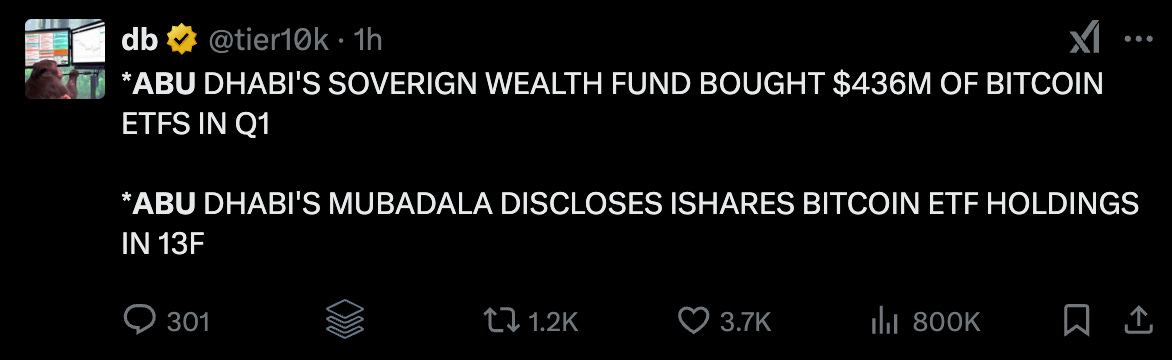
Abu Dhabi’s sovereign wealth fund, Mubadala Investment Company, has made a significant entry into the cryptocurrency market by acquiring $436.9 million worth of shares in BlackRock’s iShares Bitcoin Trust ETF during the fourth quarter of 2024. This move underscores the growing institutional interest in digital assets among sovereign wealth funds.

According to the latest 13F filings with the U.S. Securities and Exchange Commission, Mubadala purchased approximately 8.2 million shares of IBIT, marking its inaugural investment in a Bitcoin exchange-traded fund. This acquisition aligns with a broader trend of institutional investors increasing their exposure to cryptocurrency-linked financial products.

The fourth quarter of 2024 witnessed a surge in Bitcoin’s value, with the cryptocurrency appreciating by 47%. This upward trajectory has been a catalyst for various asset managers, including wealth management firms, hedge funds, and pension funds, to bolster their investments in Bitcoin ETFs. Notably, the State of Wisconsin Investment Board more than doubled its holdings in the iShares Bitcoin Trust ETF to 6 million shares by the end of December. Similarly, Tudor Investment Corp, a prominent hedge fund, increased its stake to 8 million shares, valued at $426.9 million at the close of the year.

Mubadala’s strategic investment reflects a growing confidence among sovereign wealth funds in the viability of digital assets. This move is particularly significant given the Middle East’s increasing engagement with blockchain technology and cryptocurrencies. In 2023, Abu Dhabi demonstrated its commitment to the digital asset space by investing in Bitcoin mining operations, collaborating with Marathon Digital and local firm Zero Two to develop a large-scale mining facility in the capital.

The iShares Bitcoin Trust ETF, managed by BlackRock, has emerged as a leading product in the market, amassing over $55 billion in assets under management. BlackRock’s expansion into Abu Dhabi in November 2024, securing a commercial license to operate, may have further facilitated Mubadala’s investment decision.

Industry experts view Mubadala’s substantial allocation to Bitcoin ETFs as a pivotal moment in the institutional adoption of digital assets. Anthony Pompliano, a well-known Bitcoin advocate, highlighted the strategic implications of such investments, suggesting that sovereign wealth funds’ involvement could prompt other nations to consider integrating Bitcoin into their reserves.

Financial advisory firms have also been active in this domain. Cetera Advisors and NewEdge Advisers, for instance, have increased their holdings across multiple Bitcoin ETFs, including those offered by Fidelity, ARK Investments, and Invesco. This trend indicates a rising demand from clients seeking exposure to digital assets through traditional investment vehicles.

While Mubadala’s investment marks a significant milestone, it is part of a broader pattern of institutional investors recognizing the potential of cryptocurrency assets. As digital currencies continue to gain mainstream acceptance, the involvement of sovereign wealth funds like Mubadala could signal a transformative shift in the global financial landscape.

The 13F filings provide a window into the investment strategies of large institutional players, offering insights into their positions at the end of each quarter. These disclosures, while not reflective of real-time holdings, are instrumental in understanding market dynamics and the evolving sentiment toward emerging asset classes like cryptocurrencies.

Mubadala’s foray into Bitcoin ETFs not only enhances its diversified investment portfolio but also positions Abu Dhabi as a forward-thinking participant in the rapidly evolving digital economy. As other sovereign wealth funds observe and assess the outcomes of such investments, a ripple effect leading to broader adoption of digital assets in institutional portfolios worldwide is plausible.

By T N Ashok WASHINGTON: Indian Prime Minister Narendra Modi’s visit the United States is more significant than ever at a time when the geo-political situation is fast changing, and new leaders take over in many countries. Modi’s scheduled meeting with US President Donald Trump on Thursday in White House offered positive results for the […]

Dubai’s Roads and Transport Authority has entered into a Memorandum of Understanding with Elon Musk’s The Boring Company to explore the development of the ‘Dubai Loop’ transport project. The agreement was formalized during the World Governments Summit in Dubai, in the presence of His Highness Sheikh Hamdan bin Mohammed bin Rashid Al Maktoum, Crown Prince of Dubai.

The proposed Dubai Loop is a 17-kilometer underground transport system featuring 11 stations, designed to transport over 20,000 passengers per hour. The system aims to connect major hubs throughout Dubai, significantly reducing travel times between key points in the emirate to just minutes. Utilizing electric vehicles traveling at speeds of up to 160 kilometers per hour, the loop will facilitate direct, non-stop journeys to destination stations.

This initiative aligns with Dubai’s vision for smart and sustainable transport solutions, leveraging advanced tunneling technologies to enhance urban mobility. The Boring Company’s loop system has been operational in Las Vegas since 2021, where it has transported over two million passengers. The Vegas Loop is currently under active development, with plans for 104 stations and 110 kilometers of tunnel, eventually transporting over 90,000 passengers per hour throughout the system.

The collaboration between RTA and The Boring Company will focus on exploring the use of sustainable, innovative technologies to safely and efficiently transport passengers via the loop system. The MoU includes research on tunneling technology, mobility trends, and safety standards, with a focus on pioneering solutions for Dubai’s evolving transportation needs.

Elon Musk, speaking at the World Governments Summit via video link, emphasized the advantages of tunnel systems over alternatives like flying cars, citing the practicality, safety, and efficiency of tunnels, which are protected from weather and noise, offering a smoother experience for passengers.

The Dubai Loop project is part of a larger plan to develop a citywide loop transportation system, aiming to alleviate traffic congestion by providing a high-speed underground alternative to traditional roadways. The initiative also supports Dubai’s ambitious sustainability goals, aligning with the Dubai Clean Energy Strategy 2050.

Honda and Nissan have terminated their merger discussions, a move that underscores the intensifying pressures Japanese car manufacturers confront in the rapidly evolving electric vehicle landscape. The proposed $60 billion merger, which aimed to create the world’s third-largest automaker, was abandoned due to disagreements over governance structures. Honda’s proposal to make Nissan a subsidiary was met with resistance from Nissan, which was unwilling to consider factory closures, leading to the collapse of the negotiations.

This development comes as Japanese automakers are losing market share at an alarming rate, particularly in China, where domestic EV manufacturers are gaining ground. Between 2019 and 2024, Japanese brands experienced significant declines in key Southeast Asian markets: a 5% drop in Malaysia, 6% in Indonesia, 12% in Thailand, and a notable 18% in Singapore. In China, the decline was 9%, attributed to the surge of local EV companies offering affordable, high-tech vehicles.

Nissan, in particular, is grappling with financial difficulties. The company has reported a significant anticipated net loss for the fiscal year and is implementing a turnaround plan that includes cutting 9,000 jobs and reducing global vehicle production. The collapse of the merger talks leaves Nissan seeking new partners to stabilize its finances and invest in new technology. Potential collaborations with companies like Taiwanese electronics manufacturer Foxconn have been speculated, though no formal discussions have been initiated.

Honda, on the other hand, has reported a 25% rise in pre-tax profit and is focusing on innovative projects, such as its collaboration with Sony to produce a tech-heavy EV and the revival of the Prelude model. Despite these initiatives, Honda faces challenges from potential US tariffs on vehicles from Mexico and Canada, which could impact its profitability.

JAKARTA, INDONESIA – Media OutReach Newswire – 13 February 2025 – At the Indonesia International Motor Show (IIMS) 2025, VinFast officially opened for sales for its mini-SUV VF 3. The company also announced a special policy providing free charging for all VinFast electric vehicles at VinFast charging stations operated by V-GREEN across Indonesia, reaffirming its commitment to delivering smart, accessible, and sustainable mobility solutions. VinFast announces the […]

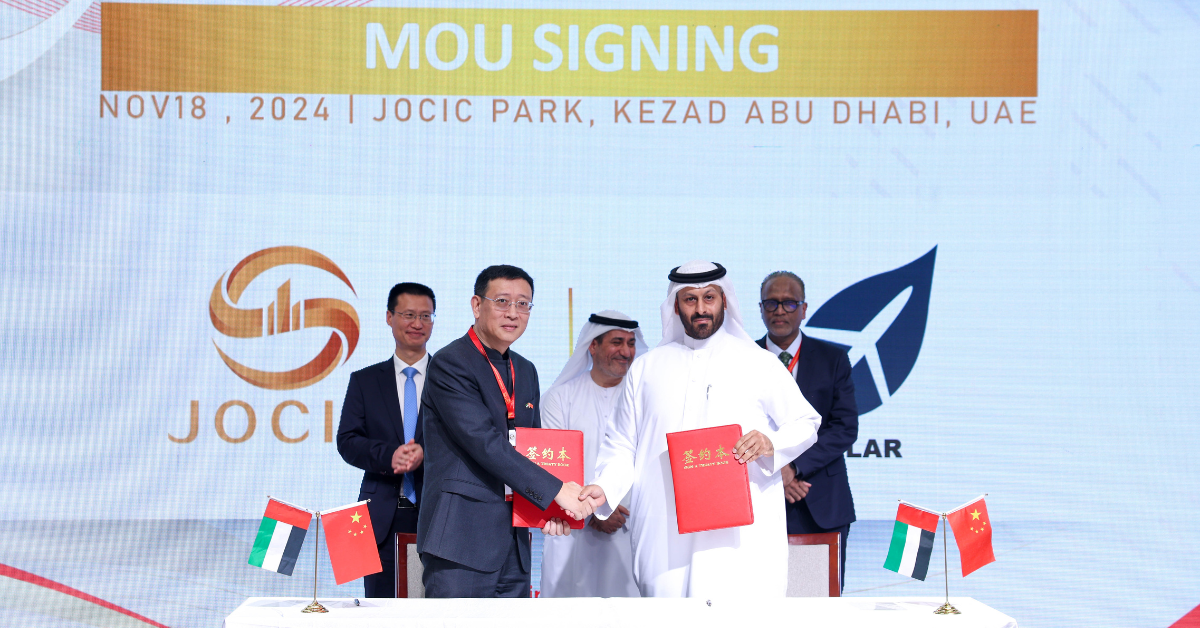
Hong Kong-based Volar Air Mobility has announced plans to manufacture electric aircraft in Abu Dhabi, aligning with the United Arab Emirates’ commitment to sustainable transportation. The company aims to produce the RX4E, a four-seater electric aircraft designed for various applications, including eco-tourism, pilot training, medical evacuations, border control, and surveillance. The RX4E has achieved a significant milestone by becoming the world’s first electric aircraft certified under Part 23 regulations for commercial use. citeturn0search3

Volar Air Mobility has been actively collaborating with UAE authorities to advance green aviation initiatives. In September 2024, the company signed a Memorandum of Understanding with the UAE’s General Civil Aviation Authority to establish a Green Aviation technological development hub in the country. Additionally, Volar partnered with Etihad Aviation Training to explore the development of a sustainability cluster focused on research and development in green aviation within the UAE. citeturn0search0

The UAE has been investing in sustainable transportation modes, including electric vehicles, buses, and the Dubai Metro system, significantly reducing the number of cars on the road. citeturn0search2 The UAE’s Net Zero 2050 Strategy aims to stimulate economic and societal advancement by leading the transition to net zero emissions. citeturn0search16

Volar’s decision to establish production facilities in Abu Dhabi aligns with the UAE’s strategic vision for sustainable development. The RX4E’s applications in eco-tourism and pilot training are expected to contribute to the nation’s environmental goals. The aircraft’s capabilities in medical evacuations, border control, and surveillance also offer potential enhancements to public services.

ADNEC Group has announced that TAG Dynamics, a globally recognised leader in manufacturing custom armoured and non-armoured vehicle solutions, will serve as a Premium Partner for the upcoming International Defence Exhibition and Naval Defence & Maritime Security Exhibition 2025. These events are scheduled from 17th to 21st February at the Abu Dhabi National Exhibition Centre .

IDEX and NAVDEX have, for over three decades, convened global leaders, policymakers, and experts to showcase the latest advancements in defence technologies. The exhibitions offer a comprehensive view of innovations shaping the future of international security.

Saeed Al Mansoori, Advisor for Defence Exhibitions at Capital Events, a subsidiary of ADNEC Group, emphasised the significance of this collaboration: “The partnership with TAG Dynamics highlights the true purpose of IDEX and NAVDEX: to bring the world together to showcase advanced technologies and forge meaningful collaborations, aligning with the UAE’s vision for progress and security through collaboration and partnership.”

TAG Dynamics plans to unveil a series of groundbreaking innovations designed to enhance security, mobility, and operational effectiveness. These developments reflect the company’s commitment to pushing the boundaries of technology in service of the defence sector.

Mahmoud Gharghar, Chief Executive Officer of TAG Dynamics, expressed the company’s enthusiasm: “IDEX and NAVDEX 2025 represent a cornerstone for innovation and collaboration in the defence industry, and TAG Dynamics is honoured to serve as the Premium Partner of this prestigious event. Our commitment to advancing safety through cutting-edge technologies such as AI and remote-controlled systems is at the heart of everything we do.”

IDEX and NAVDEX 2025 are anticipated to attract a significant number of international delegations, defence contractors, and industry professionals. The events will feature live demonstrations, product launches, and discussions on the latest trends in defence and maritime security.

The collaboration between ADNEC Group and TAG Dynamics underscores a shared vision of fostering innovation and strengthening global defence partnerships. As the defence landscape evolves, such alliances play a crucial role in addressing emerging security challenges and advancing technological frontiers.

The UAE continues to position itself as a central hub for international defence exhibitions, facilitating dialogue and collaboration among global stakeholders. The upcoming IDEX and NAVDEX 2025 are set to further this objective, providing a platform for showcasing cutting-edge technologies and fostering strategic partnerships.

TAG Dynamics’ participation as a Premium Partner highlights the company’s dedication to contributing to global security and its commitment to innovation in defence technology. Attendees can look forward to experiencing the latest advancements that TAG Dynamics and other industry leaders will present during the exhibitions.

As the defence sector faces rapidly changing challenges, events like IDEX and NAVDEX serve as vital platforms for collaboration, knowledge exchange, and the promotion of peace and security worldwide. The partnership between ADNEC Group and TAG Dynamics exemplifies the collaborative efforts necessary to navigate the complexities of modern defence and security landscapes.

Advertisements

MOSCOW, RUSSIA – Media OutReach Newswire – 13 February 2025 – SIBUR, the largest Russian manufacturer of synthetic materials, plans to increase the use of polymers in the production of components for the automotive industry. In February 2025, SIBUR signed an agreement with the auto parts manufacturer DIPO for the joint development of polymer-based body parts, exterior and interior components, structural frames, and lighting components. Earlier, SIBUR […]

The United Arab Emirates is intensifying its commitment to sustainable transportation by planning to install 500 electric vehicle charging stations nationwide by the end of 2025. This initiative aims to support the growing adoption of EVs and reduce carbon emissions, aligning with the country’s broader environmental objectives. Sharif Al Olama, Under-Secretary for Energy and Petroleum Affairs at the Ministry of Energy and Infrastructure, announced that over 100 […]

Grayscale Investments has filed an application with the U.S. Securities and Exchange Commission to list a Cardano exchange-traded fund on the New York Stock Exchange . This initiative marks Grayscale’s inaugural standalone ADA investment product, aiming to provide investors with regulated exposure to the Cardano blockchain’s native cryptocurrency.

The proposed ETF, designated to trade under the ticker symbol “GADA,” is structured to offer investors direct exposure to ADA without the need to hold the cryptocurrency directly. Each share of the trust would represent a proportional ownership of ADA, with pricing based on the CoinDesk Cardano Price Index . BNY Mellon Asset Servicing is slated to serve as the administrator, while Coinbase Custody Trust Company would act as the custodian for the assets.

Grayscale’s filing is part of a broader strategy to expand its cryptocurrency ETF offerings. In recent weeks, the firm has submitted applications for ETFs linked to other digital assets, including XRP, Solana , and Litecoin . These moves reflect a growing interest among asset managers to provide regulated investment vehicles that offer exposure to various cryptocurrencies.

The SEC’s stance on cryptocurrency ETFs has evolved, particularly under the current administration. The regulatory body’s recent openness to such products has encouraged firms like Grayscale to pursue ETF listings for a wider range of digital assets. However, it’s important to note that the SEC has previously classified certain cryptocurrencies, including ADA, as securities in past legal actions. This classification could present regulatory challenges for the approval of the proposed Cardano ETF.

During the Super Bowl LIX halftime performance at the Caesars Superdome in New Orleans, a protester brandishing a Palestinian flag disrupted Kendrick Lamar’s set. The individual, who was part of the 400-member field cast, ascended the stage and unfurled a flag that combined the Palestinian and Sudanese emblems, with the words “Gaza” and “Sudan” inscribed respectively. Security personnel swiftly intervened, apprehending the protester and escorting him off the field. The New Orleans Police Department is currently evaluating potential charges against the individual.

The National Football League confirmed that the protester had concealed the flag until the performance commenced, and that neither the production team nor the organizers were aware of his intentions. Roc Nation, the company responsible for producing the halftime show, stated that the act was neither planned nor part of the official production.

Kendrick Lamar continued his performance without interruption, delivering a set that included collaborations with artists such as SZA and Samuel L. Jackson. The halftime show was notable for Lamar’s position as the first solo hip-hop artist to headline the event.

The Super Bowl, attended by President Donald Trump, concluded with the Philadelphia Eagles defeating the Kansas City Chiefs 40-22. This victory served as redemption for the Eagles, who had previously lost to the Chiefs in an earlier Super Bowl matchup.

The incident occurred amidst a fragile ceasefire between Israel and Hamas, as well as ongoing civil unrest in Sudan since 2023. The protester’s actions have sparked discussions about the intersection of political expression and entertainment events, highlighting the challenges organizers face in maintaining security while respecting freedom of speech.

In the aftermath of the game, celebrations in Philadelphia escalated into chaos, with fans setting fires, climbing on police vehicles, and engaging in brawls. Law enforcement agencies are investigating the disturbances, aiming to identify and hold accountable those responsible for the disorderly conduct.

The Gulf Cooperation Council nations are confronting potential economic challenges following U.S. President Donald Trump’s imposition of tariffs on imports from Canada, Mexico, and China. These measures, which include a 25% tariff on steel and aluminum, have raised concerns about escalating inflation and the possibility of increased interest rates within the GCC region.

Global markets have already exhibited signs of distress in response to the tariffs. Asian shares displayed hesitation, and the U.S. dollar strengthened as investors anticipated the economic repercussions of the new trade barriers. Analysts suggest that the tariffs could lead to higher inflation in the United States, potentially limiting the Federal Reserve’s ability to implement rate cuts. This scenario may have a cascading effect on global markets, including those in the GCC.

In the Gulf region, stock markets have mirrored global trends, experiencing declines attributed to fears of a trade war. Saudi Arabia’s benchmark index, for instance, fell by 0.3%, influenced by drops in major companies such as ACWA Power Company and Saudi Awwal Bank. Similarly, the Qatari index decreased by 0.6%, primarily due to a significant profit drop in Industries Qatar.

Economists warn that the tariffs may disrupt global supply chains, leading to increased costs for imported goods. For the GCC countries, which rely heavily on imports for various sectors, this could translate into higher consumer prices, thereby fueling inflation. The potential rise in inflation may prompt central banks in the region to consider adjusting interest rates to maintain economic stability.

The automotive industry is one sector that could be significantly impacted. Vehicles imported from the affected countries may become more expensive, leading to higher costs for consumers in the GCC. Additionally, industries such as construction and manufacturing, which depend on imported raw materials, might face increased production costs, further contributing to inflationary pressures.

Dubai is advancing its sustainability agenda with the introduction of the Super Block initiative, aiming to establish car-free zones in key residential areas. This move seeks to enhance environmental quality and promote healthier urban living. The Super Block concept involves designating clusters of nine city blocks where non-essential vehicles are restricted, transforming streets into pedestrian-friendly spaces. Essential services and residents’ vehicles will have limited access, with speed […]

VinFast is redefining the EV market with industry-leading warranties, including a 10-year/200,000-kilometer vehicle warranty and unlimited mileage battery coverage, easing consumer doubts and building trust. MANILA, PHILIPPINES – Media OutReach Newswire – 6 February 2025 – Just a few years ago, car warranties were predictable: a standard three years or nearly 60,000 kilometers—whichever came first. It didn’t matter whether the vehicle was a luxury sedan or a […]

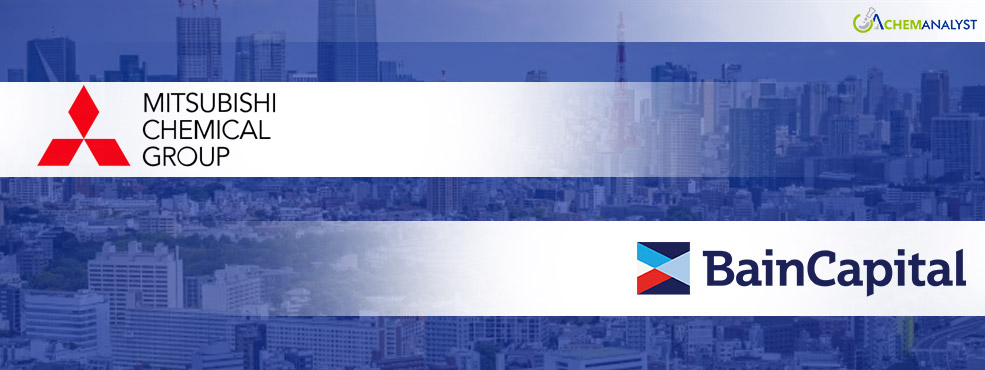
Bain Capital is in the final stages of negotiations to acquire Mitsubishi Chemical Group’s pharmaceutical subsidiary, Mitsubishi Tanabe Pharma, for over 500 billion yen . This move aligns with Mitsubishi Chemical’s strategy to streamline its operations and concentrate on core sectors such as vehicle electrification, semiconductor manufacturing, and food production.

Established over 90 years ago in Osaka, Mitsubishi Tanabe Pharma specializes in developing treatments for central nervous system disorders, immuno-inflammation, and oncology. The company has a global presence, with operations spanning multiple continents. Notably, its drug Radicava, used in the treatment of amyotrophic lateral sclerosis , has been a significant contributor to its revenue growth.

In the first half of the fiscal year ending March 2025, Mitsubishi Chemical’s pharmaceutical segment reported a 6% increase in sales revenue, reaching 232.5 billion yen, and a 28% rise in core operating income to 41.4 billion yen. Despite these positive figures, Mitsubishi Chemical has been reassessing its business portfolio to focus on areas with higher growth potential. The potential divestiture of its pharmaceutical unit is part of this broader strategy.

Bain Capital has been granted preferential negotiation rights, indicating its position as the leading candidate to finalize the acquisition. This development follows earlier reports that both Bain Capital and Blackstone were among the final bidders for Mitsubishi Tanabe Pharma, with valuations estimated between $3 billion and $3.5 billion. Local private equity firm Japan Industrial Partners was also reported to be in the bidding process.

This prospective acquisition is part of a broader trend of increased mergers and acquisitions activity in Japan. Bain Capital has been particularly active in the Japanese market, having previously led the acquisition of Kioxia Holdings, a prominent chipmaker. The firm’s interest in Mitsubishi Tanabe Pharma underscores its strategy to invest in sectors with strong growth prospects and innovative capabilities.

Mitsubishi Chemical has not provided specific comments on the ongoing negotiations but has stated that it is continuously reviewing its business portfolio, considering all options, including potential divestitures, to optimize its operations and focus on strategic areas. The company aims to better align its resources and capabilities to meet evolving market demands and technological advancements.

DeepSeek, a trailblazer in artificial intelligence, has unveiled a cutting-edge low-cost AI model poised to revolutionise the optical communication industry. This development is expected to significantly influence the growth of optical transceivers, with shipment projections indicating an impressive 56.5% increase in 2025. The widespread adoption of this technology is set to enhance data centre interconnectivity, positioning the sector for a new wave of demand driven by the […]

Elon Musk’s comments at a rally for Germany’s far-right Alternative for Germany party last weekend have sparked controversy and raised concerns over the tech mogul’s increasing involvement in global politics. Musk’s participation in the rally, which coincided with a surge in populist sentiment across Europe, was seen by many as an overt signal of his growing political influence outside the United States, particularly in Europe and Canada. Critics argue that Musk’s public endorsements and actions could amplify political divisions and contribute to the undermining of democratic processes in these nations.

Musk, who has been involved in numerous controversies and political statements over the years, appears to have intensified his political footprint with this latest move. At the rally, the Tesla and SpaceX CEO expressed support for AfD’s anti-immigration stance, which aligns with Musk’s previously stated preferences for limited government intervention and a more libertarian approach to policy. While Musk’s comments were framed as an endorsement of the AfD’s platform, they also touched on broader themes of individual freedom and skepticism toward governmental power, which have resonated with populist movements in various regions.

Musk’s involvement with far-right groups in Europe follows a similar pattern in North America. His outspoken political views have also made waves in Canada, where he has commented on the country’s handling of freedom of speech and its handling of protests in the past. Musk’s growing influence in foreign political spheres is raising alarms about the consequences of billionaire-led political activism, particularly in countries where political systems are grappling with rising extremism and division.

While many view Musk’s commentary as a sign of his personal beliefs, others see it as part of a wider trend of corporate elites exerting increasing power over political agendas globally. Musk’s companies, including Tesla, SpaceX, and Twitter , wield considerable influence in both the business and political realms, making his actions noteworthy beyond the realm of business. His comments on political matters, which some claim could shape elections and sway public opinion, have the potential to further erode public trust in political systems that are already fraught with challenges.

The AfD, a party that has been labeled as far-right and often criticized for its nationalist and anti-immigration rhetoric, has seen its support base grow in recent years. The party’s platform includes policies that have drawn support from voters disillusioned with the political establishment and its handling of issues like immigration, the European Union, and national identity. By aligning himself with the AfD, Musk has attracted both praise and condemnation. Supporters argue that Musk’s advocacy for personal freedom and his criticisms of government policies are aligned with broader values of individual autonomy and free markets. Critics, however, warn that his association with far-right groups could amplify extremist ideologies and fuel anti-democratic movements.

Musk’s remarks about the AfD echo his long-standing criticism of government regulations and his advocacy for deregulation in various sectors, from technology to energy. His stance on political issues has often been controversial, especially given his vast business empire, which includes electric vehicles, aerospace, and social media. The risk of his influence shaping national political agendas is amplified by his vast wealth and the global reach of his companies. Critics argue that such unchecked power poses a threat to the balance of power within democratic societies, potentially skewing political discourse and undermining the sovereignty of foreign governments.

The billionaire’s involvement in politics is not confined to his statements alone. Musk has previously made headlines for his public endorsements of political candidates and his support for controversial political initiatives in both the United States and abroad. His backing of certain candidates and policies, particularly in Europe, has fueled concerns about the corporate world’s increasing control over political landscapes, especially as populist movements gain momentum.

In Canada, Musk’s rhetoric about free speech and government overreach has been scrutinized, with some questioning whether his remarks will influence the country’s political climate, especially as tensions surrounding freedom of expression have become a prominent issue. Musk’s comments have drawn attention to the global nature of political discourse in the digital age, where the actions of influential business leaders can cross national borders and impact the political fabric of other nations.

While Musk’s supporters argue that his views on government regulation and individual liberties align with democratic ideals, his critics contend that his actions and words contribute to the growing polarization of global politics. Some view his influence as detrimental to political discourse, particularly in democracies that are already grappling with rising extremism and populism. The question remains whether Musk’s increasing political involvement will continue to shape public opinion in a way that exacerbates these issues or whether his influence will eventually wane as governments and citizens respond to his calls for more direct involvement in politics.

The content delivery network market is on track for remarkable growth, with estimates showing a surge in revenue from $26.8 billion in 2024 to $121.9 billion by 2033. This trajectory represents a compound annual growth rate of 18%, driven by a confluence of technological advancements, including artificial intelligence and the widespread adoption of 5G networks. As businesses worldwide increasingly rely on digital content delivery, the demand for […]

BlackRock’s spot Bitcoin exchange-traded fund has experienced a significant surge in inflows, with 5,250 BTC entering the fund, reflecting the increasing institutional demand for crypto assets. This rise follows a broader market recovery, which has driven Bitcoin and other digital assets into the spotlight, pushing the total market capitalization of cryptocurrencies above $3.3 trillion. The success of Bitcoin ETFs, particularly BlackRock’s, has underscored the growing appetite among institutional investors for exposure to cryptocurrency markets, especially after the U.S. Securities and Exchange Commission greenlit these funds.

The surge in BlackRock’s Bitcoin ETF is one of the most notable movements in recent weeks, especially as it coincides with a resurgence in cryptocurrency prices. As Bitcoin’s value continues to fluctuate, its potential as both a store of value and an investment tool remains compelling for large-scale investors. For BlackRock, the ETF has become a cornerstone of their digital asset strategy, marking the company’s significant step into the volatile yet potentially lucrative world of cryptocurrencies.

Institutional interest in Bitcoin and other digital assets has surged since the SEC’s approval of Bitcoin ETFs, leading to a broader rally within the crypto market. Bitcoin, the largest cryptocurrency by market capitalization, has long been a focal point for institutional investors, many of whom view it as a hedge against traditional market risks. With financial giants like BlackRock now offering dedicated Bitcoin investment products, the narrative surrounding cryptocurrency as an asset class is shifting, with many believing it is no longer a speculative investment but a legitimate alternative to traditional assets.

The latest data highlights that Bitcoin ETFs, such as BlackRock’s, have not only attracted substantial capital but also created a pathway for retail investors to participate in the cryptocurrency market without directly owning or managing the assets themselves. This shift towards ETFs has been partly attributed to their ease of use and the regulatory clarity provided by the SEC, which has made crypto more palatable to a wider range of investors, including pension funds, endowments, and other institutional players.

The inflow of Bitcoin into BlackRock’s ETF is a sign that the broader market is beginning to favor regulated vehicles for cryptocurrency exposure, further diminishing the stigma associated with digital assets. Since the approval of Bitcoin ETFs, the landscape has seen an influx of institutional capital, which, in turn, has helped stabilize Bitcoin prices in the face of volatility. The continuous entry of large sums into ETFs signals confidence among institutional players, marking a shift from the past where digital assets were mostly considered a speculative tool for individual investors.

Despite the momentum, questions remain about whether this rally can be sustained. As Bitcoin’s price continues to rise, it attracts more attention from both institutional and retail investors. However, concerns about regulatory scrutiny and market volatility persist. While the SEC’s approval of Bitcoin ETFs has provided some regulatory certainty, the broader regulatory landscape surrounding cryptocurrency remains uncertain. This could influence the long-term viability of the current rally and determine the future trajectory of Bitcoin and other cryptocurrencies.

Bitcoin’s price remains highly susceptible to broader market dynamics. The cryptocurrency market is notorious for its extreme volatility, and any negative news or shifts in investor sentiment can lead to sharp price corrections. While the current market conditions appear favorable, investors must tread carefully given the cyclical nature of crypto markets and the inherent risks involved. Many analysts suggest that while the inflows into Bitcoin ETFs are encouraging, the true test will come if the market faces a significant downturn or if new regulatory hurdles arise.

Another important factor that could influence the future performance of BlackRock’s Bitcoin ETF is the competition from other asset management firms. With the growing popularity of Bitcoin ETFs, several major financial institutions are racing to introduce their own crypto-focused funds. While BlackRock has established itself as a key player in this space, it faces increasing competition from firms like Fidelity and Grayscale, both of which have been eyeing the market for Bitcoin ETFs for some time. The competition could lead to further innovation and product differentiation, which might benefit investors but could also put pressure on market prices if supply outpaces demand.

On the technical side, the performance of Bitcoin ETFs like BlackRock’s will depend on how well the underlying assets are managed. Bitcoin’s price is driven by various factors, including demand, technological developments, macroeconomic trends, and investor sentiment. The ability of firms like BlackRock to effectively manage and hedge against Bitcoin’s volatility will play a crucial role in maintaining investor confidence and ensuring the longevity of the product.

Japan has taken a major step toward bolstering its space capabilities with the successful launch of a navigation satellite aboard its new H3 rocket on February 3, 2025. The launch marks a significant milestone in Japan’s pursuit of an independent, more precise satellite-based positioning system, designed to reduce reliance on foreign alternatives such as the United States’ GPS system.

The satellite, launched from the Tanegashima Space Center, is part of the country’s efforts to enhance its infrastructure and technological prowess. Japan’s space agency, JAXA, led the mission, which aims to place the country on a trajectory to develop a more autonomous and reliable global navigation system. This ambitious project, known as the Quasi-Zenith Satellite System , has been under development for several years and is seen as vital for both national security and economic growth.

The QZSS is expected to complement, and eventually replace, some aspects of global positioning systems , providing more reliable and accurate data in urban areas, mountainous regions, and other places where satellite signals from foreign systems can be weak or blocked. This development is seen as part of Japan’s broader efforts to ensure its technological sovereignty in the face of global geopolitical shifts, as well as a response to growing concerns about cybersecurity and the risks of dependency on external sources for critical navigation information.

One of the key features of the QZSS is its ability to offer highly precise positioning in regions where the GPS system struggles. Unlike GPS, which relies on a constellation of satellites orbiting the Earth, the QZSS will use a combination of geostationary and inclined geosynchronous satellites. This arrangement allows for better coverage over Japan and surrounding areas, ensuring more consistent and accurate positioning, even in dense urban areas or mountainous terrain.

The launch of this satellite represents the latest development in Japan’s space exploration efforts, which have accelerated in recent years. The country has made significant investments in space technologies, with a focus on both civilian and military applications. This new positioning system will not only improve navigation for the general public but also support the country’s burgeoning space industries, autonomous vehicle technologies, and the Internet of Things .

Japan’s focus on self-reliance in space technology is also a reflection of the evolving global space race. With countries like China and the United States making rapid advancements in space exploration and satellite systems, Japan aims to position itself as a leader in space technology. The success of the H3 rocket launch further strengthens Japan’s ambitions, as the H3 is designed to be a more cost-effective and reliable means of deploying satellites into orbit.

The H3 rocket, which carried the new navigation satellite, is an upgraded version of Japan’s H-IIA rocket, which has been used for a variety of missions over the past two decades. The new design is intended to lower the cost of launching satellites while maintaining the high reliability that Japan’s space programs are known for. This successful mission signals that Japan’s space agency has overcome some of the technical challenges associated with the H3’s development, and it sets the stage for future satellite launches.

The H3 rocket’s successful deployment of the QZSS satellite is expected to open new opportunities for Japanese companies involved in satellite manufacturing and launch services. It also positions Japan as a potential player in the global satellite services market, where demand for accurate and secure positioning data is growing rapidly. As global navigation and communication systems become more integral to economies and military operations, the ability to control and operate one’s own satellite network is viewed as an increasingly important asset.

In addition to its economic and security benefits, Japan’s new navigation satellite system will also have applications in disaster management. Japan, which is prone to earthquakes, tsunamis, and typhoons, could benefit greatly from having a more reliable navigation system in place during natural disasters. The QZSS can provide real-time data that can help coordinate rescue operations, monitor disaster zones, and even support evacuation efforts, ensuring that critical services can be delivered in times of crisis.

The QZSS satellite is the first in a series of planned launches as Japan builds out its own navigation system. The country aims to have a full constellation of satellites in orbit by the early 2030s, providing global coverage and ensuring that it has a fully operational navigation system that can compete with international systems. As Japan moves forward with this initiative, it is also exploring potential collaborations with other nations and private companies to enhance its capabilities and expand its reach in the global space community.

Bitcoin and Ethereum exchange-traded funds have drawn significant investment inflows, despite a sharp decline in cryptocurrency prices. A notable $318.56 million was poured into Bitcoin ETFs, while Ethereum ETFs saw a more modest but still considerable $27.78 million, signaling investor confidence in these digital assets even amid market uncertainty.

The surge in Bitcoin ETF investments comes at a time when the cryptocurrency has seen substantial volatility. Bitcoin’s value has fluctuated dramatically, yet it remains a central figure in the broader digital asset landscape. Despite this instability, investors have expressed their continued belief in the long-term potential of Bitcoin, driven by increasing institutional interest and Bitcoin’s role as a store of value.

Ethereum, although less volatile than Bitcoin, has also experienced challenges in recent months, but its relatively stable performance in comparison to other altcoins has contributed to its steady inflow of investment into ETFs. Ethereum’s role as the underlying network for decentralized finance applications, alongside its recent network upgrades, has maintained its appeal.

The rise of Bitcoin and Ethereum ETFs is a reflection of a broader trend where institutional investors are beginning to explore digital assets through traditional financial vehicles, providing a sense of legitimacy and accessibility to cryptocurrency markets. These ETFs allow investors to gain exposure to cryptocurrencies without directly holding the underlying assets, providing a safer option for those wary of the risks of self-custody and the volatility in crypto markets.

The appeal of Bitcoin ETFs has been particularly strong in the United States, where regulatory developments have slowly begun to shape the future of cryptocurrency trading. The U.S. Securities and Exchange Commission has been cautious about approving crypto ETFs but has recently signaled increasing openness to their potential. This regulatory stance, while stringent, has created a foundation for the growing number of Bitcoin ETFs, making the asset more accessible to a wider audience. A Bitcoin ETF effectively offers exposure to the digital asset with the benefits of liquidity, security, and the oversight of regulated financial markets.

Ethereum ETFs, though not as numerous, have gained traction as investors look to capitalize on the expanding Ethereum ecosystem. Ethereum’s move to proof-of-stake with the Ethereum 2.0 upgrade has made the network more energy-efficient and scalable, which in turn bolstered its investment prospects. The Ethereum network’s prominence in smart contracts and DeFi projects positions it well for future growth, maintaining investor enthusiasm even when broader market conditions are challenging.

Despite the downturn in the broader crypto market, where other digital currencies have suffered heavy losses, Bitcoin and Ethereum continue to be seen as strong pillars in the space. According to recent reports, Bitcoin’s dominance in the market remains high, and Ethereum’s blockchain continues to be the backbone of many decentralized applications , providing further justification for the influx into their respective ETFs.

The cryptocurrency market’s decline, however, has not been without its consequences. The broader market correction has led to a drop in valuations across the board, impacting altcoins and other tokens. Despite this, Bitcoin and Ethereum remain relatively insulated due to their established networks and larger market caps. As a result, institutional investors are likely to continue favoring these two cryptocurrencies, not only because of their relative stability but also because of the increasing institutional infrastructure that supports their adoption.

Crypto ETFs have also grown in popularity outside the U.S., with Canadian and European markets seeing an influx of Bitcoin and Ethereum-focused ETFs. These markets have been more progressive in embracing crypto-based ETFs, which have now become a significant part of the investment landscape. Europe, in particular, has seen rapid adoption of cryptocurrency ETFs as investors look for more regulated exposure to digital assets.

The correlation between traditional financial markets and cryptocurrency prices has been a focal point for analysts. Many believe that the increase in ETF inflows into Bitcoin and Ethereum may be a sign of institutional investors diversifying their portfolios to hedge against inflation and economic uncertainty. The expansion of ETFs into the crypto space reflects broader trends in the financial markets, where there is growing interest in incorporating alternative assets into investment portfolios.

Salik, Dubai’s toll operator, has implemented a new variable pricing system aimed at enhancing traffic management and offering a more efficient driving experience across the city. The updated pricing structure applies to all Salik gates throughout the year, except during the holy month of Ramadan, and introduces distinct toll rates based on the time of day. The move is expected to improve traffic flow during peak hours […]

Abu Dhabi sovereign wealth fund ADQ has entered into a strategic joint venture with global investment firm Orion Resource Partners to focus on investments in metals and mining. The announcement was made on Thursday, marking a significant expansion of ADQ’s portfolio in critical minerals. This partnership is expected to inject $1.2 billion over the next four years, targeting mining operations in emerging markets across Africa, Asia, and Latin America.

The 50-50 joint venture will be headquartered in Abu Dhabi, reinforcing the UAE’s growing influence in global resource investment. The capital infusion will be deployed across a wide range of asset classes, including equity, senior debt, and production-linked instruments such as royalties, enabling the partners to diversify their approach while providing flexible financial support to mining companies.

This collaboration comes as demand for critical minerals, particularly those essential for green energy and technology, continues to surge worldwide. By strategically positioning itself in emerging markets, ADQ aims to tap into the growing potential of these sectors, while also ensuring a steady supply of materials for industries such as electric vehicles, renewable energy, and technology manufacturing.

The UAE has increasingly sought to diversify its investments, with sovereign wealth funds like ADQ playing a central role in expanding the nation’s economic footprint beyond oil. This partnership with Orion represents a key step in the UAE’s strategy to enhance its global financial influence, especially in sectors aligned with future growth, such as critical minerals.

The joint venture is expected to leverage Orion’s expertise in the mining sector, with the firm’s global experience providing a competitive edge in identifying and managing investments. Orion Resource Partners, known for its investments in natural resources and energy, will bring its deep market insights and operational capabilities to ensure the success of the venture.

The partners have already identified several opportunities in the target regions, which have abundant mineral reserves but often face challenges such as political instability, infrastructure limitations, and regulatory hurdles. By focusing on emerging markets, ADQ and Orion hope to unlock value in these regions, driving economic development while securing access to essential resources.

The decision to focus on mining companies in Africa, Asia, and Latin America aligns with global trends indicating a growing shift toward these regions, which have vast untapped mineral potential. These markets are becoming increasingly attractive to investors looking to capitalize on the expanding demand for metals critical to clean energy transitions. As nations commit to reducing their carbon footprints, the need for raw materials like lithium, cobalt, and nickel is escalating, placing these regions in the spotlight.

For ADQ, the partnership with Orion reflects its broader strategy to develop a well-rounded investment portfolio that includes not only traditional assets but also strategic holdings in critical industries. This move also signals ADQ’s commitment to responsible and sustainable investments, with the fund placing a strong emphasis on environmental, social, and governance factors in its investment decisions.

The joint venture’s investments will not be limited to equity stakes but will also include senior debt and other instruments such as royalties, allowing the partners to support mining companies with the flexibility to meet their funding needs across different stages of their development. This varied approach provides opportunities for both high-growth and stable, income-generating assets.

The UAE’s growing focus on the mining sector is also linked to its efforts to enhance energy security and ensure the long-term availability of essential raw materials. By forming such partnerships and investing in mining, the UAE can build stronger links with emerging markets while ensuring that its own economic and industrial sectors are less dependent on external sources of critical minerals.

ADQ’s decision to form this venture with Orion comes at a time when other global investors are also increasing their exposure to the mining sector. With the rise of sustainable investment practices and the need to secure critical minerals for the global green energy revolution, mining is set to remain an important area for international capital flows.

Through this partnership, ADQ and Orion aim to establish themselves as key players in the global mining sector, specifically targeting regions that are expected to become increasingly central to the global supply chain for critical minerals. As the world transitions to cleaner energy and technology, the demand for these minerals is only expected to increase, making such investments highly strategic for the long-term success of the partners involved.

The venture also highlights the UAE’s growing role in shaping the future of global industries. As one of the world’s leading financial hubs, Abu Dhabi is positioning itself to attract international capital and play a key role in industries that will drive future economic growth, from sustainable energy to advanced technology.

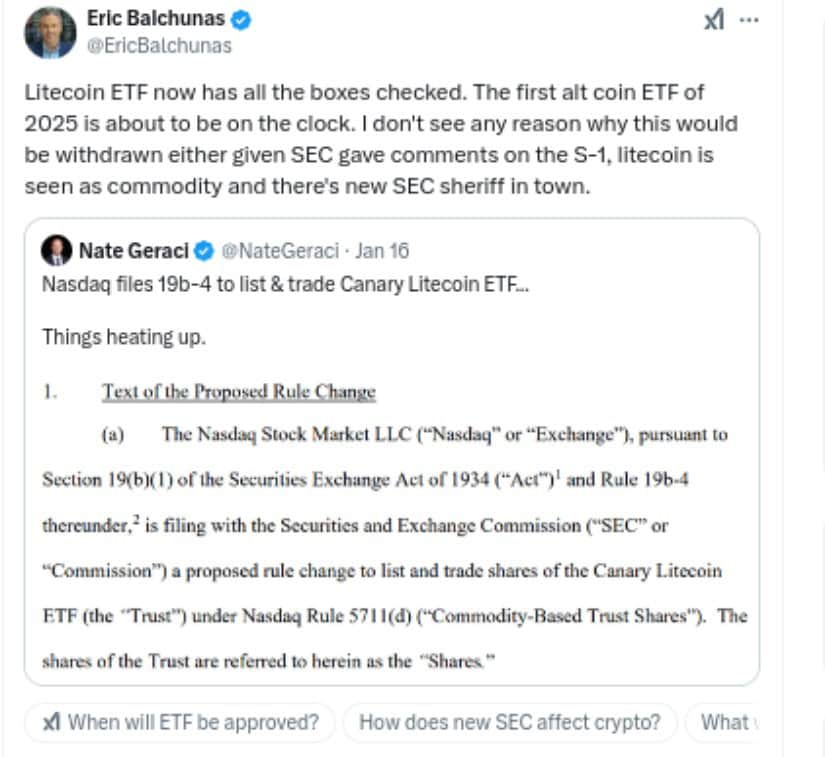
Nasdaq has officially filed a 19b-4 form with the U.S. Securities and Exchange Commission in support of the Canary Litecoin ETF proposal, marking a significant step towards the launch of a new cryptocurrency-focused exchange-traded fund . This move follows earlier discussions with the SEC, which had requested Canary Capital to amend its S-1 filing for the proposed ETF.

The Canary Litecoin ETF, first introduced by Canary Capital in October 2024, aims to provide investors with direct exposure to Litecoin , one of the top cryptocurrencies by market capitalization. Unlike traditional ETFs, which typically track stocks or commodities, the Litecoin ETF would provide a structured way to invest in the digital currency, bringing the asset class closer to mainstream financial markets.

The filing of the 19b-4 form with the SEC is a crucial step in the approval process for the ETF. This form is used by exchanges to propose rule changes related to the listing and trading of securities. By submitting the form, Nasdaq is seeking approval to list the Canary Litecoin ETF on its exchange, a move that could open the door for broader institutional and retail investor participation in the Litecoin market.

The SEC’s role in the process is central to the success of the proposal. The regulatory body has long been cautious about approving cryptocurrency-based ETFs, primarily due to concerns about market volatility, liquidity, and potential manipulation. However, recent developments, including the approval of Bitcoin ETFs, have sparked renewed optimism that Litecoin, as a leading cryptocurrency, may also be considered for ETF approval.

Nasdaq’s filing comes after the SEC’s request for amendments to the S-1 form, which is required for the registration of the proposed ETF. The amendments were aimed at clarifying certain aspects of the ETF’s structure and compliance with SEC regulations. Canary Capital responded to the SEC’s concerns and has now moved forward with the 19b-4 filing, signaling confidence in the proposal’s approval.

If approved, the Canary Litecoin ETF would be the first of its kind to offer exposure to Litecoin, allowing investors to buy shares in the fund without needing to directly hold or manage the cryptocurrency. This would simplify the process for those looking to invest in Litecoin while also providing the regulatory oversight that traditional ETFs enjoy. It could also have a significant impact on the adoption of Litecoin as an asset class, especially among institutional investors who may have been hesitant to invest in digital currencies without a regulated investment vehicle.

The move aligns with a broader trend in the cryptocurrency industry, where more companies are attempting to bridge the gap between traditional finance and digital assets. Bitcoin ETFs, which track the price of Bitcoin, have gained traction in the past few years, prompting a reassessment of how other major cryptocurrencies could also be packaged in a similar way for investors. Litecoin, which was created in 2011 by Charlie Lee as a “lighter” alternative to Bitcoin, has gained substantial traction in the crypto space and is often considered one of the more stable digital assets, making it a prime candidate for an ETF product.

The filing also comes amid growing interest in alternative investment products, especially in the wake of a year marked by significant price volatility in traditional financial markets. Investors are increasingly turning to cryptocurrencies as a hedge against inflation and economic uncertainty, and an ETF could provide a more accessible route for them to gain exposure to the digital asset class.

Despite the excitement surrounding the potential approval of a Litecoin ETF, the SEC’s cautious stance on cryptocurrency products means the approval process is unlikely to be straightforward. The regulatory body has previously expressed concerns about the potential for market manipulation in the cryptocurrency space, and the Canary Litecoin ETF will likely face intense scrutiny. However, the SEC’s approval of Bitcoin ETFs has created a more favorable environment for other digital assets, and many market participants are hopeful that the SEC will ultimately grant approval for the Litecoin ETF as well.

For Nasdaq, the filing represents a key strategic move in solidifying its position as a leader in the growing cryptocurrency market. As more institutional investors seek regulated ways to engage with cryptocurrencies, exchanges like Nasdaq are well-positioned to capitalize on the trend by offering products like the Canary Litecoin ETF.

The approval of a Litecoin ETF would not only provide a new investment opportunity for retail and institutional investors but also send a strong signal to the broader financial markets that digital currencies are becoming increasingly integrated into traditional investment frameworks. It would also mark another milestone in the ongoing evolution of the cryptocurrency market, which continues to attract the attention of both investors and regulators.

VISHNU RAJA
RYO YAMADA
HITORI GOTOH
IKUYO KITA
Just in:
Sun World Ba Den Mountain marks Vietnam Culture Day, welcoming Cambodian visitors over Bon Om Touk // Woman found dead as bank moves to repossess home // Rooftop solar planning gaps behind power shortages // Hackers falsify NVIDIA GPU readings to mask cryptomining // Messi affair SIT finds all-round violations // Salik posts Dhs1.045bn profit despite lower toll traffic // TORRAS Launches Two New iPhone Duo Cases from Its Popular Ostand Series, Addressing Foldable Phone Users’ Concerns About Difficult Stand Positioning and Scratches // Electoral register gains 2.17 lakh voters // Microsoft apologises as Outlook services recover after outage // Fujairah highway pile-up leaves 14 dead and 30 injured // October Food Price Shock Has Far Reaching Consequences // Yicura BioMed Advances Dual Capital and Industrial Strategy: Completes First Closing of Series B Financing Led by Gobi Partners // Crescent Enterprises venture arm funds Oyster Therapeutics development // From Dubai to the EU: how UAE-based crypto firms can expand under MiCA // EBANX and Eneba strengthen partnership in Latin America with 138% YoY growth in payment volume // Nvidia appoints Colette Kress interim chief after Huang departure // L’OCCITANE Celebrates 50 Years Of Provençal Craftsmanship With Holiday 2026 Collection // Saudi fund assets forecast to cross $400 billion // Lego restores BrickLink marketplace after security investigation // US authorities dismantle North Korean cryptocurrency deception infrastructure //