News related to
Vehicle

Greenlogue/AP TotalEnergies and Abu Dhabi Future Energy Company PJSC – Masdar have signed a binding agreement to create a $2.2 billion joint venture that will combine their onshore renewable energy activities across nine Asian markets, in a move that underlines how large energy groups are shifting capital towards power demand growth in the region. The partners said the new platform will be owned equally, based in Abu […]

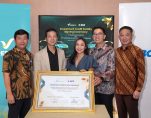
JAKARTA, INDONESIA – Media OutReach Newswire – 3 April 2026 – Green SM Indonesia and Bank Central Asia (BCA) today announced the signing of a five-year investment loan agreement with a total value of IDR 600 billion, marking the formalization of a long-term financial partnership between the two parties.

Green SM Indonesia has officially signed a IDR 600 billion investment loan agreement with BCA, strengthening its long-term financial foundation and advancing sustainable urban mobility in Indonesia.

The agreement marks the next phase of cooperation between Green SM Indonesia and BCA, reflecting a shared commitment to supporting sustainable, well-governed business development in Indonesia’s urban mobility sector.

The investment loan facility is intended to support Green SM Indonesia’s operational readiness and service continuity. The facility provides a stable financial structure to underpin the company’s disciplined growth approach and support consistent service delivery across its existing urban operations.

The signing builds on earlier cooperation between the two parties, which began with Green SM’s market launch in Jakarta in December 2024. Since then, BCA and Green SM Indonesia have collaborated on customer-focused programs and initiatives to improve service accessibility and raise awareness of environmentally responsible transportation solutions. The transition from cooperation activities to a formal financing arrangement reflects the maturation of this partnership and BCA’s support in Green SM Indonesia’s operational model and governance standards.

The cooperation also reflects BCA’s broader role in supporting business sectors that are adapting to evolving urban development needs, including shifts toward more efficient and forward-looking mobility solutions.

Representing BCA, Mr. Denny Haryanto, SVP Corporate Banking BCA said: “This agreement reflects our approach to supporting businesses with a long-term outlook. Sustainable transportation is increasingly important to Indonesia’s urban development. Through this cooperation, we support initiatives that align with long-term economic resilience and environmental responsibility.”

Mr. Deny Tjia, Managing Director of Green SM Indonesia, said the agreement reflects trust built through consistent cooperation and shared values. “The investment loan agreement reflects recognition of the disciplined operating model and long-term development orientation that Green SM Indonesia has pursued since its early stages. The facility further strengthens the company’s financial foundation, supporting stable and consistent service delivery across the cities where it operates.”

Since commencing operations, Green SM Indonesia has established a presence in several major urban centers, including Jakarta, Makassar, Bekasi, Surabaya, and Bali. These cities face increasingly complex urban mobility requirements alongside rising expectations for cleaner, more responsible transport solutions. In the Indonesian market, Green SM provides all-electric taxi services that support routine urban travel while reducing emissions and noise. The company’s operating approach emphasizes reliability, professional service standards, and scalability aligned with city-level transport planning.

Through this agreement, Green SM Indonesia and BCA reaffirm their shared view that the transition to sustainable urban mobility requires not only electric vehicle technology but also sound financial structures, responsible governance, and long-term commitment. The investment loan agreement is a practical step to support that transition in Indonesia’s evolving mobility landscape.

Hashtag: #GreenSM

The issuer is solely responsible for the content of this announcement.

About GSM & Green SM

GSM (Green Smart Mobility) is the world’s first company to operate an all-electric ride-hailing service across multiple platforms. As a pioneer in sustainable transportation, GSM has built the foundation for a cleaner, smarter, and more responsible mobility model powered entirely by VinFast electric vehicles. GSM is committed to developing a future-ready mobility ecosystem and inspiring greener lifestyles in countries rapidly embracing sustainability.

Green SM is GSM’s official global brand, representing the company’s vision and values in every market it serves. In Southeast Asia, Green SM operates in Indonesia; under the name Xanh SM in Vietnam and Laos; and as Green GSM in the Philippines. Across all markets, the brand offers a refined travel experience with VinFast electric cars, professional drivers, and a service culture centered on safety and care.

Green SM represents progress toward a future where technology, the environment, and humanity advance together in harmony. The brand is committed not only to providing zero-emission transportation but also to fostering an environmentally conscious society in every market it serves.

Masdar and TotalEnergies have signed a binding agreement to combine their onshore renewable energy portfolios across nine Asian markets into a 50:50 joint venture valued at $2.2 billion, marking one of the more significant cross-border clean energy tie-ups involving Gulf and European players this year. The new platform, to be headquartered in Abu Dhabi, is set to become the exclusive vehicle through which the two companies develop, […]

China’s central bank has pulled cash from the banking system for the first time in about a year, signalling a more cautious near-term approach to liquidity management as higher oil prices begin to feed into factory costs, transport bills and corporate margins.

The People’s Bank of China conducted a small reverse repo operation on 2 April while a far larger batch matured, producing a net daily withdrawal of 223.5 billion yuan. The move came after policymakers had spent months leaning towards support for growth, and it suggests Beijing is trying to preserve room for manoeuvre rather than rushing into broader easing while imported inflation risks build.

That calibration matters because China is facing two conflicting pressures at once. On one side, domestic demand remains weak, producer prices are still soft, and policymakers have already acknowledged that supply continues to outstrip demand in parts of the economy. On the other, the oil shock linked to the Middle East conflict is lifting input costs and complicating the case for an immediate flood of fresh liquidity. China’s central bank said after its first-quarter monetary policy committee meeting that it would maintain an “appropriately loose” stance while keeping liquidity ample and supporting a recovery in prices.

The timing of the drain is striking because it follows signs that parts of the economy had started to stabilise before energy costs became a bigger threat. Official manufacturing activity returned to expansion in March, with the PMI rising to 50.4 from 49.0 in February, while a private survey showed factory output and orders still growing even as cost pressures intensified. Those readings pointed to a modest improvement in momentum, but they also showed that the rebound is vulnerable to rising commodity prices and longer supplier delivery times.

Economists and policy advisers in China have begun to frame the challenge less as a choice between stimulus and restraint, and more as a balancing act between supporting growth and containing imported inflation. Huang Yiping, a central bank adviser, said this week that oil-led price pressure was hurting profitability and narrowing the room for policy to respond, even though broader inflation remains below the official target. China’s consumer inflation rose 1.3% in February, the highest in more than three years, but still below Beijing’s target of around 2% for 2026.

For markets, the signal is not that Beijing has turned hawkish. The seven-day reverse repo rate remained unchanged at 1.4%, and the central bank has continued to stress that it can still use rate cuts, reserve requirement reductions and other tools if needed. What has changed is the sequencing. Officials appear unwilling to react to every external shock with an immediate dose of easier money, especially when higher oil prices could push up headline inflation even as underlying demand stays fragile.

That caution is also tied to the broader policy picture. China set a 2026 growth target of 4.5% to 5%, below last year’s goal, reflecting weaker confidence in the external environment and the unfinished task of shifting growth away from debt-heavy sectors and towards household consumption. Policymakers have pledged to support demand, private investment and prices, but the tone from Beijing has been measured rather than aggressive. The central bank’s liquidity withdrawal fits that pattern: it does not amount to a policy reversal, but it does show a preference for targeted fine-tuning over blunt stimulus.

The oil backdrop helps explain why. China has entered the current energy shock in a stronger position than some of its Asian peers, with strategic stockpiles, diversified power supply and a large electric-vehicle base helping to soften the blow. That resilience has supported Chinese assets during wider market turbulence. Yet the country is not immune. Independent refiners have already been cutting processing rates as crude costs climb and domestic fuel demand stays under pressure, while manufacturers are reporting the fastest increase in output prices in years.

Arabian Post Staff -Dubai Dubai’s transport authority and the Ministry of Family have moved to place mobility at the centre of family policy, signing a strategic partnership that will reshape parts of the emirate’s transport system, public amenities and urban spaces under the UAE’s “Family First” programme. The agreement, announced in Dubai on 2 April, is designed to make everyday travel easier for families while aligning transport […]

Dubai Taxi Company and Baidu’s Apollo Go have begun fully driverless commercial ride-hailing in Dubai, opening public bookings through the Apollo Go app in what Baidu said is the platform’s first international app deployment. The launch adds a new commercial channel for autonomous transport in the emirate and gives Dubai one of the clearest live tests yet of how driverless taxis can move from controlled trials into […]

Arabian Post Staff -Dubai ADNOC Drilling shareholders have approved a final 2025 dividend of $250 million, taking the company’s total payout for the year to $1 billion and cementing a more ambitious cash-return policy that promises at least 5% annual dividend growth from 2026 through at least 2030. The approval, secured at the company’s annual general meeting, marks an important step for one of Abu Dhabi’s most […]

Advertisements

BYD’s overseas business accelerated in March as higher fuel costs linked to the Iran war pushed more buyers towards electric vehicles, offering the carmaker a crucial buffer while its home market performance remained under pressure from fierce competition and softer demand. The Shenzhen-based group’s vehicle sales fell for a seventh straight month in March, but exports and overseas sales climbed sharply, underlining how quickly BYD is leaning […]

KKR is preparing to take Taiyo Holdings private in a deal that values the Japanese electronics materials and pharmaceuticals group at about ¥528.56 billion, marking one of the bigger private equity transactions in Japan this year and signalling renewed appetite for take-private deals built around manufacturing, healthcare and semiconductor-linked supply chains. Taiyo’s board has backed the move, while major shareholders including DIC, Kowa and Oasis Management have agreed to participate in the transaction or related steps, giving KKR support tied to roughly 42.2% of the company’s outstanding shares.

The proposed tender offer price is ¥4,750 a share. That figure carries an unusual wrinkle: Reuters reported it stood 4.7% below Taiyo’s last closing price, reflecting how market speculation had already lifted the stock, while the joint company release framed the offer as carrying a steep premium to unaffected average prices before the bidding process became public and before activist-related filings stirred the shares. The contrast underlines how Japan’s take-private deals are increasingly playing out in markets already primed by rumour, activism and expectations of strategic change.

Taiyo is not a household consumer name, but it sits in businesses that have become more visible to global investors. The group is a leading producer of solder resist and other materials used in printed circuit boards and semiconductor packaging substrates, while also operating a medical and pharmaceutical arm that makes prescription drugs and provides contract development and manufacturing services. In its own long-term planning, Taiyo has pointed to growth opportunities from generative AI, data centres and communications infrastructure on the electronics side, alongside structural reform and expansion in contract manufacturing for pharmaceuticals.

That mix helps explain why KKR sees room for a private-market strategy. Taiyo said privatisation would allow it to pursue long-term investments and quicker decision-making with less pressure from the public market. The company’s “Beyond Imagination 2030” plan targets a rise in net sales to ¥180 billion by fiscal 2031 from ¥119 billion in fiscal 2025, while operating income is targeted to more than double to ¥47 billion from ¥22 billion. Management has also been trying to improve capital efficiency after sustained dialogue with shareholders, including a focus on profitability in the medical and pharmaceuticals unit and a review of portfolio positioning across the group.

For KKR, the Taiyo bid fits a broader pattern in Japan. The firm said it has been investing in the country for two decades and manages more than $20 billion there. Its existing investments span semiconductor equipment, pharmaceuticals, information technology and logistics, sectors where global funds have been seeking companies with specialised technology, export potential or scope for operational overhaul. Taiyo gives KKR exposure to electronics materials tied to advanced manufacturing as well as a pharmaceuticals platform that could benefit from demand for contract manufacturing and stable domestic drug supply.

The shareholder line-up behind the offer is also notable. DIC, Taiyo’s largest shareholder, and Kowa, which is affiliated with the founding family, have agreed to sell through a share consolidation and buyback process after the tender offer is completed. The founding family plans to reinvest in the KKR-managed vehicle that will own Taiyo after privatisation. Oasis Management, long known for active positions in Japan, has separately agreed to tender shares representing about 15.62% of the company. That combination reduces execution risk and suggests the deal has been designed to balance continuity with outside capital and governance pressure.

Still, the transaction comes with questions that investors and analysts will watch closely. A take-private at a headline valuation above ¥500 billion will invite scrutiny over whether minority holders are being offered enough upside after the stock’s sharp re-rating. The tender offer has yet to begin formally and remains subject to customary conditions, including regulatory approvals. Any delays or shifts in market conditions could test sentiment, especially at a time when deal financing and foreign buyouts in Japan are being judged against a higher bar on governance, transparency and shareholder treatment.

Taiyo’s business profile gives the story wider significance than a conventional chemicals buyout. Its electronics arm remains the core earnings driver, but the medical and pharmaceuticals business has been gaining attention as order volumes rise in contract manufacturing and as the group tries to lift margins. Taiyo’s own targets show electronics sales climbing to ¥128 billion by fiscal 2031 and medical and pharmaceuticals sales to ¥43 billion, with the latter expected to deliver a marked improvement in profitability. That combination of steady industrial demand and a healthcare growth angle is the sort of hybrid case private equity firms have been seeking across Japan’s listed mid-cap sector.

French President Emmanuel Macron is due to meet Japanese Prime Minister Sanae Takaichi in Tokyo on Wednesday, with the war involving Iran and the growing scramble for critical minerals set to dominate talks that reach far beyond bilateral ties. The meeting comes as Japan and France face the same strategic question from different angles: how to protect economic security in a world where energy supplies, shipping routes […]

Baidu’s Apollo Go robotaxi service suffered a sharp setback in Wuhan after a system failure caused more than 100 driverless taxis to stop on roads across the city late on March 31, stranding passengers, disrupting traffic and triggering a wave of police calls that has revived scrutiny of autonomous vehicle safety in China’s biggest testing grounds. Police said no injuries were reported, but the scale of the […]

Questions over staffing and tower procedures at New York’s LaGuardia Airport have intensified after documents indicated air traffic control roles may have been combined before the time allowed under local operating rules on the night an Air Canada regional jet collided with a fire truck, killing both pilots. The collision took place at about 11:37 pm local time on March 22, when Air Canada Express Flight 8646, […]

Samsung is betting that a minute of low-frequency audio can help settle uneasy stomachs on the move, launching its Hearapy app with a claim that a 100Hz tone played through earbuds can reduce motion-sickness symptoms for up to two hours. The pitch is simple: listen before or during travel, stimulate the inner ear’s balance system, and blunt the sensory mismatch that often triggers nausea, dizziness and cold […]

Volvo Cars is moving towards tighter operational links with its Chinese parent group as chairman Li Shufu presses for closer co-operation across brands to cut costs and make better use of factory capacity in an industry weighed down by weak electric-vehicle demand, trade barriers and mounting price pressure. At Volvo’s annual general meeting, Li said the company should work more closely with sister marques including Polestar, Geely […]

SHENZHEN, CHINA – Media OutReach Newswire – 31 March 2026 – On March 31, 2026, Linklogis Inc. (09959.HK, “Linklogis”) released its 2025 annual results. During the year, the total revenue and income amounted to RMB983 million. Revenue and income in the second half of the year increased significantly by 62% compared with the first half of the year, reaching RMB608 million. In 2025, the total volume of supply chain assets processed by its technology solutions reached RMB508.1 billion, representing a 27% year-on-year increase, while the number of anchor enterprises served increased to 3,145. As of the end of 2025, Linklogis had cumulatively served more than 430,000 SMEs with efficient and convenient digital inclusive fintech services. The company maintained a solid financial position, with cash reserves reaching RMB4.9 billion, while liquidity remained ample.

In addition, Linklogis has always placed shareholder interests at the core of its corporate governance, rewarding investors’ trust through sustained and tangible actions. In August 2025, the Board approved a new share repurchase program of no less than US$80 million to be implemented over a one-year period. Under this repurchase program, the company has cumulatively repurchased shares totaling HK$365 million (approximately US$47 million), demonstrating its confidence in its long-term value through concrete actions.

Focusing on Core Business, Accelerating Business Structure Optimization

In 2025, Linklogis remained focused on its core business and accelerated the optimization of its business structure. The total volume of supply chain assets processed by its technology solutions reached RMB508.1 billion, up 27% year-on-year. With a market share of 22%, the company ranked first in the industry for the sixth consecutive year. The number of anchor enterprises served increased to 3,145, including 54 of China’s Top 100 enterprises and 151 of China’s Top 500 enterprises, while the number of financial institution partners reached 428, further improving the efficiency of industry-finance collaboration.

Linklogis’ supply chain finance technology solutions include Anchor Cloud, which consists of Multi-tier Transfer Cloud, AMS Cloud and Treasury Cloud, as well as FI Cloud, which consists of ABS Cloud and eChain Cloud. In 2025, the total volume of supply chain assets processed by Anchor Cloud reached RMB369.6 billion, representing a year-on-year increase of 31%. The total volume of supply chain assets processed by Multi-tier Transfer Cloud reached RMB304.2 billion, surging 47% year-on-year, with its contribution to the group’s total asset volume rising from 52% in 2024 to 60% in 2025. The total volume of supply chain assets processed by AMS Cloud, however, was RMB65.4 billion, down 13% year-on-year due to the continued decline in issuance volume in the supply chain asset securitization market.

The total volume of supply chain assets processed by FI Cloud reached RMB128.9 billion, up 20% year-on-year. Both ABS Cloud and eChain Cloud recorded solid double-digit growth in transaction volume, contributing to a 25% year-on-year increase in FI Cloud revenue. In the ABS Cloud segment, the total volume of supply chain assets processed reached RMB69.1 billion, rising 28% year-on-year. In the eChain Cloud segment, the total volume of supply chain assets processed reached RMB59.7 billion, increasing 13% year-on-year.

Linklogis focused on six key industries, including infrastructure and construction, new energy and advanced manufacturing, and worked with its subsidiary Bytter Technology to deepen targeted cross-selling, achieving breakthroughs in high-quality customer acquisition. Leveraging its one-stop comprehensive industrial-finance solutions and innovative scenario-based applications, Linklogis worked with a number of central and state-owned enterprises and leading private enterprises, including Shougang Group, China Coal Mine Construction Group Corporation and JA Solar Technology, to launch integrated industrial-finance platform projects. At the same time, it provided targeted support to 17 high-quality enterprises, including Shanghai Construction Group, Yunnan Construction and Investment Holding Group and Luzhou Laojiao, covering scenarios such as order financing, bill collateral, and supply chain bill transfer, supporting coordinated growth in both scale and value creation.

Building the “Second Growth Curve”, Unlocking Global Trade Finance Potential

2025 marked a pivotal year for Linklogis’ international business as the company embarked on a new chapter and accelerated the development of its “second growth curve.” During the year, Linklogis officially launched a comprehensive rebranding of its international business, introducing “Unloq” as its new identity for the global market, reflecting its vision of unlocking the potential and efficiency of global trade finance. Guided by a core strategy centered on cross-border trade corridors, scenario-based finance and technology-driven risk management, Unloq is committed to building a globally connected digital supply chain finance platform with strong local execution capabilities.

In line with its core strategy, the company has leveraged its cloud-native technology to launch the innovative “SC+ Platform”, designed to connect global real-world trade with digital finance. The “SC+” signifies its core function of connecting smart contracts with compliant digital payment instruments, forming a technology-enabled solution for global trade finance. The platform is dedicated to building the next-generation digital infrastructure for global trade finance and addressing systemic challenges in cross-border trade, including credit verification, fund turnover, and clearing and settlement efficiency. Through the platform, funders can utilize various compliant payment methods to purchase trade receivables.

To date, Unloq has completed the deployment of the core architecture of the SC+ Platform. Working with multiple commercial partners, Unloq has advanced the rollout of innovative applications leveraging compliant digital payment methods. In 2025, Linklogis successfully secured the bid for a Web3.0-based supply chain finance platform project for a leading central state-owned enterprise, marking a new milestone in its technological capabilities and industry recognition in the field of digital trade infrastructure.

In its international business, Unloq accelerated the expansion of cross-border trade services. In addition to traditional B2B goods trade, cross-border e-commerce and online travel agencies, it also expanded into cross-border logistics, bringing the total number of platform customers to 1,550, representing a net year-on-year increase of 451. With the deeper penetration of the SC+ Platform in cross-border trade finance, the continued expansion of its global localized service network, and the accelerated integration of solutions supporting Chinese enterprises’ overseas expansion, Linklogis’ cross-border and international business is expected to enter a phase of exponential growth in both asset volume and revenue in 2026, embarking on a new chapter of high-quality and sustainable development.

Advancing the “AI-powered Industrial Finance” Strategy: From Internal Empowerment to Industry Value Co-Creation

Linklogis remains committed to its “AI-powered Industrial Finance” strategy and continues to promote the deep integration of AI with supply chain finance across the entire value chain. Built on years of technological expertise and scenario-based refinement, its AI capabilities have evolved from internal productivity tools into a sophisticated intelligence engine that empowers the entire industrial ecosystem. By deeply integrating leading domestic large language models with its proprietary supply chain finance scenario knowledge graph and multimodal business elements, the company has systematically advanced the ongoing iteration and capability enhancement of its self-developed vertical model, LDP-GPT. Building on this foundation, Linklogis has developed the “BeeLink AI Agent” product matrix, covering more than ten core scenarios including intelligent trade document checking, intelligent PBOC registration, intelligent KYC, and intelligent risk management.

In 2025, BeeLink AI Agent continued to deliver breakthroughs in market penetration and commercialization. The number of customers served rose to 42, including domestic and overseas financial institutions and industry leaders such as Standard Chartered Bank, Bank of Hangzhou, and China Electrical Equipment Finance. Processing efficiency improved by 20 times, while accuracy in key processes reached 99%. As AI continues to evolve toward an agent-based paradigm, Linklogis will take “AI Agent+” as a strategic lever to comprehensively upgrade BeeLink AI Agent from functional tools to intelligent collaboration. It will prioritize breakthroughs in advanced capabilities such as cross-system task coordination, natural-language interactive decision-making, and adaptive workflow optimization, enabling customers to move from point intelligence to enterprise-wide intelligence, and from business insights to intelligent decision-making, thereby delivering end-to-end value across the entire value chain.

Linklogis actively responded to China’s “dual carbon” strategy and high-quality development agenda by embedding ESG principles into product innovation and the entire service lifecycle, leveraging technology to advance green finance, inclusive finance, and sustainable development. In 2025, the volume of sustainable supply chain assets served by the company exceeded RMB66.8 billion, representing a year-on-year increase of 80%, with its share of total serviced assets rising from 9% in 2024 to 13% in 2025. During the year, SMEs that obtained financing through Linklogis Supply Chain Multi-tier AR Transfer Platform benefited from an average financing cost of only 2.85%. The company continued to deepen its presence in four key sectors—renewable energy, rural revitalization, environmental protection, and public health—while further expanding into sustainable sectors such as the new energy vehicle supply chain, green buildings, and the circular economy. Through these initiatives, it directed financial resources more precisely to key segments that generate both green and low-carbon benefits and strong social impact, gradually building a broader and more influential sustainable development ecosystem that integrates industry and finance.

Expanding Full-scenario Deployment, Enhancing the Smart Industrial Finance Treasury Product Matrix

Through the acquisition of Bytter Technology, Linklogis made a strategic entry into the corporate treasury management sector. By synergizing management teams and business operations, the company successfully established the Treasury Cloud product line, providing diverse customers with end-to-end treasury management services covering settlement operations, cash planning, financing management, risk monitoring, and intelligent decision-making. As a key component of Linklogis’ “Smart Industrial Finance Treasury” strategy, Treasury Cloud is anchored by a dual-engine approach powered by AI and data, and has established a comprehensive product matrix, including the F1 treasury management system and T6 cash management system for anchor enterprises, the bank treasury system for financial institutions, and the Yingzilian SaaS platform for SMEs.

Since September 11, 2025, Bytter Technology has been consolidated into the group’s financial statements. The integration of the Treasury Cloud business has been fully completed. Linklogis will continue to deepen resources integration and business collaboration between Treasury Cloud and the group’s other supply chain finance technology businesses in areas such as product R&D, channel expansion and customer service. The company will accelerate the development of an integrated, intelligent and scalable Smart Industrial Finance Treasury platform, providing customers with one-stop digital solutions covering treasury management and industrial-finance collaboration.

Charles Song, founder, Chairman and CEO of Linklogis, said: “The year 2026 marks the tenth anniversary of Linklogis. As we stand at the threshold of a new decade, we will remain firmly committed to a core strategy of being technology-driven and globally connected, while steadfastly advancing our dual-engine approach of deepening domestic industrial finance and expanding global digital trade. We will seize opportunities amid transformation and strengthen our competitive advantages through innovation. In the domestic market, we will continue to advance the “AI-powered Industrial Finance” strategy. Anchored by the comprehensive upgrade of BeeLink AI Agent, we will accelerate AI’s evolution from scenario-based enablement to ecosystem-level collaboration. At the same time, leveraging our full-stack capabilities in Smart Industrial Finance Treasury solutions, we will continue to refine our integrated one-stop solutions, consolidate our market leadership, and ensure the steady growth of our core business. In international markets, we will accelerate the expansion of global cross-border digital trade networks through Unloq and roll out the SC+ Platform along key global trade corridors. We aim to become a key builder and connector in the ongoing digital and intelligent transformation of global trade finance. The future is already unfolding. Only the adaptable can prevail, and only the persistent can go the distance. With technology as our oar and industry as our vessel, Linklogis will continue to join forces with our partners, embarking together on the magnificent journey toward a digital and intelligent future for global industrial finance.”

Hashtag: #Linklogis

The issuer is solely responsible for the content of this announcement.

English Schools Foundation, one of Hong Kong’s biggest international school operators, is seeking an investment adviser to help oversee an endowment valued at about $400 million, according to people familiar with the matter, in a move that underscores how large education groups are taking a more institutional approach to treasury and long-term capital planning. The development comes as ESF, which operates 22 schools and serves about 18,500 students, balances fee pressures, capital spending and the management of a growing pool of investable assets.

The adviser search points to a shift in how school systems with substantial reserves are treating their balance sheets. What might once have been handled more conservatively through deposits and internal oversight is now increasingly being managed with the same disciplines used by foundations, family offices and other long-horizon institutions. In ESF’s case, the task appears especially significant because the group’s endowment is no longer a marginal reserve but a material financial resource that can influence scholarships, strategic projects, property decisions and resilience during periods of market or enrolment volatility.

ESF’s own disclosures show why the mandate matters. In its 2023/24 annual report, the foundation said its endowment includes both a residential property portfolio and investments held in ESF Investments Limited. It reported that the fair value of investments held in that vehicle rose 13.4% to HK$587.7 million from HK$518.2 million a year earlier, while finance and investment committees continued to focus on asset performance monitoring and strategic asset allocation. The same report said three companies had been set up to restructure the holding of residential assets within the ESF endowment, with a new operating model expected to launch in the first half of 2025.

That helps explain why an external adviser would be attractive now. Once a fund reaches this scale, the main challenge is not simply preserving capital. It is deciding how much risk an education group should take, how liquid the portfolio needs to be, whether alternative assets belong alongside traditional holdings, and how to align returns with liabilities such as campus upgrades, technology spending and support programmes. For a school operator, there is also a reputational dimension: parents and staff expect prudence first, even when boards are under pressure to extract higher returns from idle capital.

ESF’s finances show both stability and constraints. The group reported total operating income of HK$2.85 billion in 2022/23, with tuition fees accounting for 84.3% of operating income and government grants 5.3%. It also said the long-running phase-out of government subvention, which began in 2016/17, was continuing, with the phase-out for secondary schools having started in 2022/23. By 2023/24, ESF said strong interest income had allowed it to seed a HK$10 million scholarship fund and a HK$30 million development fund, including support for a project researching the use of AI in teaching and learning.

Those figures matter because they show that investment income is becoming more relevant to the group’s strategic flexibility even as tuition remains the dominant revenue line. They also suggest that endowment governance is no longer peripheral to education policy inside ESF. A stronger investment framework could help smooth cyclical swings in income, but it could also expose the group to debate over mandate design, manager selection and tolerance for drawdowns in volatile markets. Educational institutions globally have wrestled with that trade-off for years: conservative portfolios can struggle to keep pace with inflation and capital needs, while more ambitious allocations can attract scrutiny when markets turn.

The Hong Kong backdrop adds another layer. Authorities are trying to reinforce the city’s appeal as an asset and wealth management centre, with proposed tax reforms aimed at making it easier to attract managers and capital. The Securities and Futures Commission said total assets under management in Hong Kong’s asset and wealth management business rose 13% to HK$35.1 trillion at the end of 2024, while the number of firms licensed for asset management increased 4% to 2,212. That means ESF is seeking advice in a market that is both deep and actively competing for institutional mandates.

Founded by ordinance in 1967, ESF occupies an unusual place in Hong Kong’s education landscape: a statutory body with a large footprint, significant fee income and a legacy of government support that is being phased out over time. Its latest public materials describe a group with more than 18,500 students and a broad mix of Hong Kong permanent residents and overseas passport holders, reflecting its role as a major English-medium provider in the city. That scale means any change in how it manages long-term capital is likely to be watched closely by school operators, fund managers and policymakers alike.

Lloyds Banking Group has disclosed that an IT defect exposed the personal data of up to 447,936 customers after a faulty overnight software update allowed some mobile app users to see other people’s current-account transactions. The incident, which affected the Lloyds, Halifax and Bank of Scotland apps on 12 March, has intensified scrutiny of operational resilience at major lenders as more banking activity shifts to digital channels. […]

South Korea is weighing whether to extend car-use restrictions beyond the public sector as oil prices climb sharply, a step that would amount to the country’s first nationwide driving curbs since the 1991 Gulf War if it is applied broadly to the public. Finance Minister Koo Yun-cheol said wider restrictions could come into play if crude prices rise into a $120-$130 a barrel range, up from about $100-$110 now, as Seoul tries to contain fuel demand and cushion the economic shock from turmoil in the Middle East.

The discussion marks an escalation from measures already in force. Public institutions are operating under a five-day vehicle rotation system, while large companies including Samsung Electronics and SK Group have begun urging staff to cut private car use, reduce parking demand and adopt other energy-saving practices. Officials have also left open the possibility of further fuel-tax relief to soften the burden on households and businesses, though no final decision has been announced on compulsory curbs for private motorists.

At the centre of Seoul’s concern is its exposure to imported energy. About 70% of South Korea’s oil imports come from the Middle East, leaving the country highly sensitive to any disruption in supplies or shipping routes. The government raised its crude oil supply disruption alert to Level 2 on March 18 as tensions mounted, signalling a more serious official assessment of the risks facing one of Asia’s largest energy importers.

The external shock has been severe. Reuters reported that Brent crude climbed to nearly $115 a barrel over the weekend and above $116 on Monday, putting it on course for its biggest monthly jump on record, while US crude also surged past $100. The rally has been driven by a widening conflict linked to Iran and growing anxiety over disruptions around the Strait of Hormuz, a vital artery for global oil flows. That backdrop has sharpened pressure on Asian economies that rely heavily on imported fuel, with South Korea among the most exposed.

For policymakers in Seoul, the issue is no longer only about fuel bills. Higher oil prices threaten to spill into inflation, transport costs, industrial input prices and consumer sentiment. A Reuters poll published on Monday projected that South Korea’s imports rose 18% in March, the fastest pace since September 2022, largely because of elevated oil prices, even as exports remained buoyant on strong semiconductor demand. That split picture captures the dilemma facing the government: trade performance is being helped by chips and artificial intelligence-linked demand, but the economy’s dependence on imported energy is pushing up costs and widening vulnerability.

President Lee Jae Myung has responded by urging a nationwide energy-saving drive, while Energy Minister Kim Sung-whan has pushed demand management and warned against panic behaviour. The government has promoted 12 power-saving practices, from shorter showers to shifting electricity use away from peak hours, and has also moved to restart several nuclear reactors, loosen coal plant restrictions and expand renewable energy to offset pressure on gas imports. The mix underlines how Seoul is trying to balance short-term crisis management with longer-term energy security, even as those goals can pull in different directions.

That tension is visible in the broader regional response. Across Asia, governments are looking again at emergency stock releases, fuel-saving directives and, in some cases, greater coal use to bridge supply gaps. Analysts say such measures may shield economies from the immediate shock, but they also expose how quickly climate and transition goals can be tested when energy security comes under strain. In South Korea’s case, the administration’s public emphasis on renewables sits alongside plans to lean harder on nuclear and coal generation if needed.

The market fallout has already been visible in financial assets. South Korean equities were hit as investors fled Asian markets on fears of a prolonged oil shock, though some analysts argue the sell-off has reflected panic rather than a collapse in fundamentals. Technology and industrial names remain central to the country’s earnings outlook, but energy-intensive sectors face a tougher operating environment if high crude prices persist or if physical shortages emerge.

U. S. spot Bitcoin exchange-traded funds recorded their heaviest one-day net withdrawals in three weeks on Thursday, with investors pulling about $171.2 million as Bitcoin slid below the $70,000 mark and broader market nerves rose over the risk of a fresh flare-up in the conflict involving the United States, Israel and Iran. The outflow, based on market data compiled by SoSoValue and widely tracked across the crypto […]

Arabian Post Staff -Dubai Exeed has opened a new showroom in Jeddah through Arabian Heritage Motors, part of Al Ghurair Mobility, extending the premium vehicle brand’s physical presence in Saudi Arabia as competition intensifies among Chinese carmakers across the Gulf. The Jeddah launch was disclosed by Al Ghurair in a corporate post and comes after Exeed appointed Al Ghurair as its exclusive distributor in the Kingdom in […]

Tiger Woods was arrested in Florida on Friday after a rollover crash near his Jupiter Island home, with authorities saying he showed signs of impairment after his Land Rover struck a truck trailer while attempting to pass on a two-lane residential road. Officers said a Breathalyzer test found no alcohol, but Woods refused a urine test, leading to an additional misdemeanour charge under Florida law. He was […]

Morgan Stanley has moved to shake up the crowded US spot bitcoin exchange-traded fund market by proposing a fee of 14 basis points for its planned Morgan Stanley Bitcoin Trust, a level that would make it the cheapest fund in the segment if regulators clear the product for launch. The filing marks a sharper price challenge than many on Wall Street expected from a late entrant and […]

MANILA, PHILIPPINES – Media OutReach Newswire – 9 October 2025 – Green GSM, the all-electric ride-hailing brand under the GSM ecosystem, has signed a memorandum of understanding with AMRC Renewable Corporation/Xentro Motors, a subsidiary of the Philippine-based Xentro Group of Companies, for the supply of 2,000 VinFast electric vehicles to support future operations under the Green GSM platform. The collaboration supports the Philippines’ transition to cleaner and more inclusive mobility, reflecting both companies’ shared commitment to sustainability and community impact.

Under the MOU, Green GSM will supply 2,000 VinFast Nerio Green electric vehicles to AMRC Renewable Corp/Xentro Motors. The first 1,000 units have already been secured, with the remaining to be delivered within two years. The fleet will operate under the co-branding “Green Xentro powered by Green GSM” across Metro Manila and key urban centers, following the completion of all necessary regulatory and accreditation processes.

The Green Xentro fleet will showcase Green GSM’s signature cyan color and follow eco-friendly standards, similar to those used in other markets. Known for their quiet operation, zero tailpipe emissions, and comfortable interiors, VinFast electric vehicles aim to offer passengers a cleaner and more enjoyable ride.

Green GSM, which began deploying its all-electric ride-hailing service in the Philippines earlier this year, is developing a partner-based operational approach to increase EV adoption while fully complying with local regulations. AMRC Renewable Corp/Xentro Motors viewed this collaboration as an opportunity to contribute to the country’s growing sustainable transportation movement. Once all approvals are secured, the fleet will begin operations under the Green GSM platform.

Through this partnership, Xentro Motors will also utilize its nationwide Xentro Malls network to offer accessible pick-up zones, EV charging stations, and parking areas, improving convenience for passengers and drivers. This initiative supports the group’s broader goal of incorporating sustainability into its retail and property ecosystem.

The partnership will also benefit from VinFast’s service ecosystem, which includes fleet maintenance, charging infrastructure, and driver support, strengthening Xentro’s collaboration with the Vietnamese automaker.

“We are honored to partner with Green GSM in bringing all-electric ride-hailing closer to Filipino communities,” said Mr. Noel M. Ignacio, CEO of Xentro Motors. “This collaboration reflects our belief that sustainability and progress can go hand in hand. By integrating electric mobility into our ecosystem, we aim to support the country’s long-term transport modernization goals and enhance daily commutes for users.”

“This partnership with Xentro Motors marks another important step in our regional journey,” said a representative of Green GSM. “Green GSM always welcomes and creates favorable conditions for local businesses to collaborate on the GSM platform. Across the countries where GSM operates, we have successfully partnered with and supported more than 100 enterprises in building sustainable business models within the electric mobility ecosystem. Xentro is the first of such valued partners in the Philippines, and we believe this cooperation will set a positive example for future collaborations. Our mission remains clear, to work alongside partners who share the same vision for cleaner, smarter, and more inclusive mobility, because when communities and businesses move together, everyone benefits”.

The collaboration represents a shared belief that meaningful change in mobility begins with collective effort. By combining Green GSM’s expertise in electric ride-hailing with Xentro Motors’ strong local network, the two companies aim to make sustainable transport accessible to more Filipinos and to inspire a growing movement toward cleaner, smarter everyday journeys.

Hashtag: #GSM

The issuer is solely responsible for the content of this announcement.

High-Quality Growth with Improved Gross Profit Margin, increasing R&D Investment and Strategic Focus on Trustworthy Agents Ecosystem

HONG KONG SAR – Media OutReach Newswire – 27 March 2026 – Voicecomm Technology Co., Ltd. (“Voicecomm Technology” or the “Company“, Stock Code: 2495.HK), a core technology provider and ecosystem operator of trustworthy conversational AI in China, announced its annual results for the year ended December 31, 2025. Leveraging its deep technological expertise and forward-looking strategic initiatives in trustworthy conversational AI, the Company achieved steady revenue growth, continuous improvement in profitability, and a significant enhancement in operating cash flow, further strengthening its competitive edge in the enterprise-level trustworthy Agent sector.

Gross Profit Margin Steadily Improves, Operating Cash Flow Turns Strongly Positive

In 2025, the Company’s total revenue successfully exceeded the RMB1 billion mark, reaching RMB1,006.9 million, representing a year-on-year increase of 7.0%. Gross profit amounted to RMB551.2 million, increased by 8.0% from the previous year, while the gross profit margin increased by 0.5 percentage point to 54.7% from 54.2% in the same period last year, reflecting the high-value-added products and technical services of the Company, as well as effective cost control.

Notably, the Company’s net cash generated from operating activities turned strongly positive, reaching a net inflow of RMB212.5 million, compared to a net outflow of RMB129.2 million in the same period last year. This improvement underscores enhanced operational efficiency and reflects strengthened receivables management, which accelerated cash collection.

Profit for the year amounted to RMB140.2 million. The significant increase in net profit compared to the same period last year was mainly attributable to eliminating the impacts of changes in carrying amount of redeemable capital contributions, an accounting adjustment arising from financing agreements entered into with shareholders prior to the Listing and completion of the Global Offering.

Increasing R&D Investment to Strengthen the Trustworthy Agent Technology Foundations

As a technology-centric product company, Voicecomm Technology remains committed to the independent R&D and innovation of underlying technologies. In 2025, the Company’s research and development expenses reached RMB224.3 million, representing a substantial year-on-year increase of 67.7%. The investment was primarily directed towards developing Agents with continuous learning capabilities and a technical framework for Multi-agent collaboration, aiming to enhance technological capabilities and elevate the level of product innovation. This reinforces our trustworthy Agent technical architecture composed of three layers: “Multimodal Perception + Multi-model Thinking + Multi-agent Collaboration”.

This architecture takes the “meta-model” as the core to effectively alleviate the common pain points of in enterprise-level implementation, such as hallucinations, controllability and data security, by integrating the generalization capabilities of large language models with the precision of vertical domain knowledge. On this basis, the Company have formed a deliverable and operable trustworthy Agent product system, to ensure that the Agents are usable, manageable, and controllable in enterprise environments, thereby powering the intelligent upgrade of six core application scenarios: City management and administration, Automotive and transportation, Telecommunications, Finance, Healthcare, and Energy management.

Productization Strategy Drives Deep Application across Six Core Scenarios

Voicecomm Technology focuses on empowering various industries through superior products and technologies. In 2025, leveraging its mature product matrix, the Company successfully established replicable benchmark standards across multiple application scenarios.

City Management and Administration: As a leading solution provider in the smart government sector in China, the Company’s business has covered more than 130 prefecture-level cities. The “Smart Government Agent” deeply integrates the capacities of large language models, enabling more intelligent and automated government services with standardized and intelligent applications in scenarios such as government hotlines and city governance.

Automotive and Transportation: The Company successfully established benchmark autonomous driving projects in cities such as Mianyang, Zibo, and Ezhou, building a successful and replicable “Smart Transportation Agent” solution. For the Mianyang Science and Technology New City project, a total of 96 autonomous vehicles have been deployed, and the project was successfully selected as a National AI Application Pilot Testing Base in the transportation sector. In January 2026, the Company newly won the bid for the “Ezhou Huahu Airport Smart Port” autonomous driving bus procurement and operation project, further expanding its application boundaries.

Healthcare: In January 2026, the Company successfully won the bid for the “Chuannan Smart Valley AI Vertical Large Model Innovation Platform – Silver Economy Construction and Operation Project” in Neijiang City, Sichuan Province, with a total contract value of nearly RMB300 million. This project represents the Company’s first “AI + Elderly Care” city-level benchmark demonstration project. It adopts a closed-loop collaborative model of “online platform + offline service network + home terminals,” integrating Agents capabilities with the Company’s “vertical small model microservices” system in areas such as Health Early Warning, Cognitive Ability Assessment, and emotional companionship into a productized solution, thereby establishing rapidly replicable city-level smart elderly care operational benchmark.

Telecommunications, Finance, and Energy Management: The Company continues to deepen collaborations with leading enterprises in the telecommunications and finance sectors, leveraging the “Telecommunication Service Agent” and “Financial Service Agent” to enhance service efficiency and user service value. Meanwhile, its AI-powered smart charging solution has been progressively integrating charging pile networks in China and across several Southeast Asian countries.

Benefiting from the successful implementation of the Company’s productization strategy and the high level of market recognition for its trustworthy Agent solutions, as of December 31, 2025, the Group’s project pipeline and orders in hand saw significant growth. The number of ongoing projects at year-end increased to 320, representing a year-on-year increase of 41.6%, while the outstanding contract sum at year-end rose to RMB1,048.9 million, a year-on-year increase of 57.4%, reflecting the continued expansion of the Company’s business.

Future Outlook: Focusing on the Trustworthy Agents Ecosystem with Four Strategic Priorities

Looking ahead, the Company will firmly focus on its goal of “building a trustworthy conversational AI ecosystem” and will advance the following strategic priorities:

Overall and Technology Strategy: Continue to focus on R&D and innovation in frontier technologies such as multi-modal fusion and trustworthy intelligence, promoting the deployment of trustworthy agents across more application scenarios. By creating open technology platforms and standards, the Company will attract more developers and partners to jointly build a prosperous and win-win industrial ecosystem.

Market Strategy: Establish benchmarks for quality and innovation within the industry and deepening partnerships with various service channels. At the same time, the Company will actively expand into the C-end market, extending cutting-edge technologies to a wider user base, thereby expanding the influence and commercial value of the ecosystem.

Regional Strategy: Domestically, the Company will continue to deepen its partnerships with major cooperating cities to create smart city benchmark cases. Internationally, the Company will actively respond to the “Belt and Road” initiative, grasp the tremendous potential of emerging markets, and promote the Company’s trustworthy Agent products and services globally to enhance its international brand image.

Investment Strategy: Through prudent strategic investments and M&A, the Company will optimize the layout of the upstream and downstream industry chains and consolidate the stability and competitiveness of the ecosystem.

DR.Tang Jinghua, Chairman ofVoicecomm Technology Co., Ltd., said: ” 2025 was a landmark year for Voicecomm Technology. We not only achieved a strong turnaround in operating cash flow and a steady increase in gross profit margin financially, but we also completed a strategic leap at the technological and business level towards becoming a ‘a core technology provider and ecosystem operator of trustworthy conversational AI.’ We deeply understand that the essence of enterprise-grade AI lies in creating replicable and reliable products and technology foundations. During the year, we significantly increased R&D investment and successfully applied our trustworthy Agents across six core scenarios, particularly in city-level benchmark projects in emerging fields like smart elderly care, showing the strong competitiveness of our productization strategy. Looking to the future, we will continue to pursue the goal of ‘building a trustworthy conversational AI ecosystem,’ leveraging an open platform to gather ecosystem partners and empowering diverse industries with innovative technology, thereby creating long-term sustainable value for our shareholders and society. ”

Hashtag: #Voicecomm

The issuer is solely responsible for the content of this announcement.

Voicecomm Technology Co., Ltd.

Founded in 2005 and headquartered in Wuhan, Voicecomm Technology is one of the leading core technology providers and ecosystem operators of trustworthy conversational AI listed on the Main Board of the Hong Kong Stock Exchange, and obtained the qualification as National-level SRDI, Technology Little Giant and High-Tech Enterprise. Leveraging its proprietary trustworthy Agent,the Company overcomes pain points in the commercialization of large language models, such as hallucinations and compliance issues, ensuring AI is usable, manageable, and controllable in enterprise environments. For enterprise-level customers, the Company provides AI services covering the entire process of “communication –decision – execution”. Its trustworthy Agent solutions have been widely deployed across multiple scenarios, including City management and administration, Automotive and transportation, Telecommunications, Finance, Healthcare, and Energy management, and it is dedicated to empowering the intelligent transformation of diverse industries.

VISHNU RAJA
RYO YAMADA
HITORI GOTOH
IKUYO KITA