Just in:

News related to
Vehicle

China has showcased a fish-shaped autonomous underwater robot in Beijing, demonstrating biomimetic navigation technology that could support inspection, environmental monitoring, search operations and defence-related missions.

The BG-5 Golden Dragon Fish was demonstrated at the 2026 China International Fair for Trade in Services, held at Shougang Park from September 9 to 13. Developed by Boyagongdao Marine Technology Group, the robot is designed to resemble a golden arowana and propel itself through water with a flexible, multi-joint tail rather than a conventional propeller.

The machine can detect obstacles and adjust its route autonomously instead of following only a fixed, pre-programmed path, according to information released by the developer and statements made at the exhibition. Its fish-like movement is intended to improve manoeuvrability while giving the platform a less conspicuous profile than many conventional underwater vehicles.

Boyagongdao lists the BG-5 as a 640-millimetre-long robot weighing about 3 kilograms. The published specifications give it a maximum operating depth of 5 metres and a top speed of 0.6 metres per second. The company says infrared recognition supports autonomous obstacle avoidance, while wireless communications allow online debugging and control.

The manufacturer also offers a BG-5V configuration that combines the robotic fish with a software platform for more advanced experiments. The listed capabilities include global and local path planning, task allocation, formation control, cooperative transport and coordinated operations involving multiple robots.

Those functions broaden the possible uses beyond a single demonstration unit. Groups of small robotic fish could, in principle, divide an underwater area for inspection or monitoring, maintain formations and coordinate tasks in locations where larger vehicles would be harder to deploy. The company presents the platform for research and teaching as well as operational fields including search and salvage, hydropower, safety and rescue and national defence.

Claims that the robot has been formally deployed as an underwater surveillance system have not been substantiated by publicly available official information. The specifications and the developer’s stated defence-related work show that reconnaissance or monitoring applications are technically plausible, but the model displayed at CIFTIS was presented as a biomimetic robotic platform rather than as an announced military deployment.

Boyagongdao says its bionic robot series draws on more than a decade of research associated with Peking University’s College of Engineering. The systems use high-speed biomimetic drive mechanisms and central pattern generator control algorithms intended to reproduce the smooth, rhythmic movement of aquatic animals.

The company has also disclosed work on defence-oriented underwater technology. Its website says technologies developed for military-related directions have been adapted for higher education products, and company material from earlier exhibitions describes unmanned and intelligent underwater equipment as an area of military development. It has separately publicised the ROBO-SHARK, a larger shark-inspired underwater robot developed with a military unit.

The BG-5 itself is not a newly created model. Boyagongdao had displayed the robotic fish before this month’s services trade fair and promoted it earlier this year at Beijing technology events. The latest CIFTIS appearance nevertheless drew renewed attention because of the machine’s autonomous obstacle avoidance and increasingly realistic biomimetic movement.

China’s work on underwater robotics extends well beyond fish-shaped machines. Universities, research institutes and commercial groups are developing autonomous systems for coral monitoring, infrastructure inspection, marine ranching, emergency rescue and deep-sea research. Some platforms are designed to carry cameras, sonar or environmental sensors, while others use robotic arms for intervention tasks.

A separate ecological-monitoring deployment in Hangzhou has used biomimetic robotic fish to patrol West Lake, measuring indicators including water temperature and pH, detecting invasive species and transmitting data to monitoring centres. Other Chinese underwater robots have been used for reef observation and for identifying and removing crown-of-thorns starfish.

The BG-5 demonstration at CIFTIS focused on embodied intelligence underwater, where navigation software, sensing and propulsion are integrated into a machine that moves more like a living animal than a standard remotely operated vehicle.

A new round of 50 per cent US tariffs on Canadian goods took effect early Tuesday, adding the levy to 110 tariff items while removing 10 others from the list. The changes, effective from 12.01am Eastern Time on September 15, cover products including selected cheeses, motorboats, all-terrain vehicles, furniture, mattresses, lamps, aluminium products, paper goods and iron or steel structures. They form part of a package of […]

Zurich Airport has moved two autonomous electric shuttle buses to Level 4 operation without a driver or safety monitor on board, shifting human oversight entirely to a remote control centre after an 18-month testing programme. The airport said the first fully automated runs began in early September, marking the latest stage of a pilot launched with autonomous-driving technology company WeRide in March 2025. The two Robobus vehicles […]

By R Suryamurthy The 2026 New Delhi Declaration arrives at a revealing moment for BRICS: two decades after the grouping emerged as a shorthand for the rising economic weight of the Global South, it is no longer merely demanding a larger seat at the table of global governance, but is beginning to construct the institutional […]

The article BRICS is not building a new order, but a hedge against the old one appeared first on Latest India news, analysis and reports on Newspack by India Press Agency).

Egypt and India have agreed to pursue concrete steps towards lifting bilateral trade to $12 billion, with President Abdel Fattah El-Sisi and Prime Minister Narendra Modi also discussing ways to expand investment ties during talks on the sidelines of the 18th BRICS Summit in New Delhi.

The leaders met on Sunday as Egypt pressed for faster progress on a trade goal first set during El-Sisi’s state visit to New Delhi in January 2023. Egypt’s presidency said the discussions covered measures to strengthen the strategic partnership, increase commerce and encourage more investment from India in sectors including manufacturing, technology, clean energy and the automotive industry.

El-Sisi stressed the importance of translating the economic relationship into projects and commercial flows capable of taking trade to the $12 billion target. The two sides also reviewed opportunities for companies from India to expand their presence in Egypt, which Cairo has promoted as a production and export base serving markets in Africa, the Middle East and Europe.

Bilateral merchandise trade stood at about $6.5 billion in the 2025-26 financial year, according to figures cited by India’s embassy in Cairo. That leaves the two countries seeking almost to double the current level if they are to reach the objective discussed by their leaders.

Investment formed a central part of the meeting. Egypt highlighted manufacturing, information technology, renewable and clean energy, and vehicle production as areas where it wants to attract additional capital. Cairo has also sought greater participation by overseas companies in the Suez Canal Economic Zone and other industrial centres as it works to raise exports and secure more foreign currency.

Modi and El-Sisi reviewed the broader strategic partnership and discussed cooperation in economic and commercial fields, along with regional and international developments. Their meeting came as New Delhi hosted the September 12-13 BRICS summit under the theme of resilience, innovation, cooperation and sustainability.

Egypt joined BRICS at the start of 2024 and has since used the grouping to widen economic links with major emerging economies. The New Delhi summit brought together an expanded bloc whose agenda included trade, finance, technology, energy, climate issues and greater use of national currencies in cross-border transactions.

The trade push also builds on institutional contacts between Cairo and New Delhi. Egypt’s Foreign Minister Badr Abdelatty said during BRICS ministerial meetings in May that the two countries wanted to raise bilateral trade to $12 billion over five years and strengthen cooperation in investment, technology and other economic sectors.

El-Sisi and Modi upgraded relations to a strategic partnership in 2023, creating a framework for closer coordination across trade, investment, defence, energy and political consultation. The latest talks focused more narrowly on turning the economic component of that partnership into measurable gains, particularly through private-sector investment and expanded market access.

Egypt has been courting manufacturers as it seeks to increase domestic production and exports, while companies from India already operate in industries including chemicals, textiles, food processing and manufacturing. Cairo’s investment campaign has emphasised projects that can supply the domestic market while using Egypt’s trade agreements and transport links to reach neighbouring regions.

The two leaders also discussed international and regional issues, according to Egypt’s presidency, without announcing a separate bilateral agreement during the meeting. Their talks were among a series of leader-level engagements held around the BRICS gathering as member states sought to advance economic cooperation alongside the summit’s wider diplomatic agenda.

For Egypt, the $12 billion goal provides a benchmark for a relationship that has expanded beyond traditional merchandise trade into investment-led cooperation. For India, stronger commercial ties with Egypt offer access to a major Arab and African market and to production locations close to the Suez Canal, one of the world’s principal shipping routes.

Metaplanet has cut the potential share pool attached to its Series 10 stock acquisition rights by 41.1%, reducing possible issuance to 188.19 million shares after shareholders challenged the dilution created by the executive compensation structure. The Tokyo-listed bitcoin treasury company said on September 11 that it would lower the number of shares underlying each Series 10 right from 696 to 410. The change reduces the aggregate potential […]

METRO MANILA, PHILIPPINES – Media OutReach Newswire – 13 September 2026 – Green GSM Philippines will host the Green GSM Platform Driver Partner Festival from September 12-14, 2026, expected to bring together up to 5,000 current and prospective Driver Partners, with the handover of 1,000 electric vehicles to Green Driver Partners as the centerpiece of the event at The Tent in Las Piñas City and Green GSM’s depots. The event aims to meet the growing demand for the green transition among Driver Partners and the public transport community, while marking a new step in the expansion of Green GSM’s service ecosystem in the Philippines.

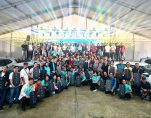
Green GSM Philippines and Driver Partner community at the Green GSM Platform Driver Partner Day.

One of the highlights of the event is the handover of the first 1,000 electric vehicles to Green GSM Platform Driver Partners, expanding their business options and giving the driver community access to more suitable and efficient operating models. The addition of more vehicles will also help Green GSM strengthen its service capacity and better meet customers’ growing mobility needs, while contributing to the transition to green transportation in the Philippines.

Building on the cooperation between VinFast and Green GSM, the event will further introduce the vehicle rental model designed for Driver Partners, with an initial investment starting from just PHP 5,000, opening up additional business options and reducing barriers for drivers to participate in electric vehicle operations. The program reflects Green GSM’s “5 Green Promises” commitment, with a focus on providing better vehicles, suitable operating models, and sustainable livelihood opportunities for the Driver Partner community.

Under this partnership model, eligible Driver Partners can choose from VinFast electric vehicles such as the 4-seater Herio Green/VF 5 and the 7-seater Limo Green. These all-electric models are designed to meet the needs of service operations, offering smooth performance, ease of use, and optimized energy, maintenance, and servicing costs compared with gasoline vehicles in the same segment. Through support programs for pioneering partners, including free charging and VinFast warranty coverage of up to 7 years/160,000 km for the Limo Green and the VF 5/Herio Green, drivers can significantly reduce operating costs, improve business efficiency, and increase their long-term earnings.

As part of the event series, Green GSM continues to reaffirm its long-term commitment to the Green Driver Partner community in the Philippines, with a focus on enhancing service quality, professionalism, and community engagement through the launch of the Global Green GSM Driver Partner Community in the Philippines. The Community serves as a platform to connect and support Driver Partners, while strengthening engagement across the broader Green GSM ecosystem.

Through the Community, members will be able to share and learn from one another’s experiences in operating electric vehicles and providing mobility services, stay updated on the latest information and policies, and work together to build an increasingly professional, connected, and sustainable Driver Partner community.

Through the “Green GSM Platform Driver Partner Festival,” Green GSM is committed to supporting the sustainable development of the driver community in the Philippines, raising awareness and encouraging the green transition, while expanding livelihood opportunities for drivers to increase their income. At the event, Driver Partners will have the opportunity to test-drive VinFast electric vehicles, receive answers from Green GSM regarding electric vehicles, learn about relevant policies and benefits, and receive prompt assistance in completing the registration procedures required to transition to providing services with electric vehicles.

The event forms part of Green GSM’s development plan to strengthen its ability to meet market demand, with the goal of providing more vehicles, faster service, and progressively higher service quality in line with five-star standards, delivering a more satisfying experience for customers on every green journey.

Ms. Le Thi Thu Trang, CEO of Green GSM Philippines, said: “Through the Green GSM Platform Driver Partner Festival and Car Handover Week, Green GSM aims to accompany the driver community in its development and expansion while enhancing both quality and professionalism. We seek to create more livelihood opportunities for drivers to access optimized and efficient operating models that can significantly increase their earnings. At the same time, we expect the event to inspire and help lay the foundation for the next phase of green mobility development in the Philippines.”

Green GSM currently operates electric taxi services in key urban areas across the Philippines, including Metro Manila in Luzon, Central Visayas, and Mindanao. Its two service offerings – Green GSM Car and Green GSM Limo, a 7-seater Premium Taxi – cater to customers’ diverse mobility needs.

In addition to its direct operations, Green GSM is expanding partnerships with local taxi operators to accelerate the green transition through diverse, flexible, and cost-efficient partnership programs.

Going forward, Green GSM will continue improving service quality and expanding its network, consistent with its “5 Green Promises” commitment, with the aim of raising service standards and contributing to greener urban mobility in the Philippines./.

Hashtag: #GreenSM

The issuer is solely responsible for the content of this announcement.

Advertisements
PALEMBANG, INDONESIA – Media OutReach Newswire – 12 September 2026 – Green SM has officially launched its electric taxi service in Palembang, making it the second city in Sumatra, after Bandar Lampung, to welcome the service. The expansion further affirms Green SM’s mission of bringing green mobility closer to the people of Indonesia while offering local residents a modern, comfortable, and zero-emission transportation experience.

Green SM officially launches all-electric taxi service in Palembang, expanding its presence across Sumatra, Indonesia.

To mark its official launch in Palembang, Green SM has also introduced the “Green Your Move, Refresh Your City” campaign, in support of initiatives led by the Ministry of Environment/Environmental Control Agency (KLH/BPLH) under the theme “Ecosystem & Air Protection” (Perlindungan Ekosistem & Udara).

The campaign encourages citizens to embrace more environmentally friendly modes of transportation, highlighting how every green journey in daily life can contribute to better air quality and a healthier urban environment.

Powered by a 100% electric vehicle fleet, Green SM is committed to delivering a 5-star mobility experience through its professional drivers, transparent pricing, and consistent service quality. By combining technology, service excellence, and sustainable mobility solutions, Green SM aims to set new standards for modern urban transportation.

Green SM’s presence in Palembang continues its journey of advancing green mobility in Indonesia, following its expansion into Jakarta, Makassar, Surabaya, Bali, and Bandar Lampung. This milestone also reaffirms the company’s long-term commitment to delivering reliable and sustainable mobility solutions to an increasing number of Indonesians.

As one of Sumatra’s largest hubs for trade and services, with a population of more than 1.8 million people, Palembang continues to see dynamic economic growth and rising demand for mobility. The city’s commitment to sustainable development and smart city initiatives also provides a strong foundation for advancing green, modern, and environmentally friendly transportation solutions that contribute to improving residents’ quality of life.

Mr. Pham Nhat Minh Hoang, Global CEO of Green SM, said: “I am delighted that Green SM has another opportunity to bring the positive values of green mobility to even more people across Indonesia. We believe that through our consistent service quality, professional drivers, and the outstanding benefits that green mobility offers, Green SM will become a trusted companion for the people of Palembang in their daily journeys, while contributing to ecosystem protection and cleaner air in Indonesia.”

To mark its launch in Palembang, Green SM is rolling out a series of special promotions. Riders can enjoy a 100% discount of up to Rp50,000 from September 12 to 16, 2026, followed by a 50% discount of up to Rp50,000 from September 17 to 25, and a 35% discount of up to Rp50,000 from September 26 to October 2, 2026. Green SM will continue introducing programs and offers designed to make travel more comfortable and affordable, while encouraging more residents of Palembang to make the switch to greener mobility.

Alongside providing all-electric transportation services, Green SM is committed to building a sustainable green mobility ecosystem through job creation, local talent development, and collaboration with stakeholders. As the company continues expanding across Indonesia, Green SM aims to improve access to modern mobility solutions while creating positive value for communities, the environment, and local economies.

Over the course of its global expansion, Green SM has completed approximately 850 million trips covering nearly 6 billion kilometers, helping reduce more than 800,000 tons of CO₂ emissions, equivalent to the carbon absorption capacity of approximately 36 million trees.

Hashtag: #GreenSM

The issuer is solely responsible for the content of this announcement.

VinFast has signed memoranda of understanding with 13 dealer groups to develop 27 new showrooms across the Philippines, advancing a plan to build a 60-dealership network in the country during 2026.

The Vietnamese electric-vehicle maker said the proposed outlets would span Luzon, Visayas and Mindanao, extending its reach beyond major centres such as Metro Manila and Cebu into markets including Cagayan de Oro, Tacloban and Subic Bay. The sites are expected to combine vehicle display, customer consultations, sales and after-sales services under VinFast’s global showroom standards.

The agreements, announced on September 11, bring together Elite North Auto Cars Inc., MG Gateway Mantrade Corp., Grand Canyon Multi Holdings Inc., Britannica United Motors Incorporated, VF Auto Sto Tomas Inc., GR8 Marketing Motors Inc., ARCMA Motors Corporation, Autonomics Motor Corp., Gershom Car Trading Corp., Areza Motor Sales Inc., Central Auto Resources Inc., Autolink Global Motors Inc. and Greenport Mobility Inc.

VinFast said the partners’ distribution experience and regional networks would help accelerate expansion and improve access to its electric cars and support services. The company did not disclose investment values, opening dates for individual locations or how many of the 27 sites would provide full workshop facilities.

Antonio Zara, chief executive of VinFast Southeast Asia, said the Philippines remained a key market in the company’s longer-term regional and global plans. He said VinFast was seeking to develop not only its retail footprint but also products, services, infrastructure and the wider electric-vehicle ecosystem, working with local partners to make battery-powered mobility more accessible.

The latest dealer push builds on a network expansion already under way. VinFast said in April 2025 that it had reached agreements with six Philippine dealers to establish more than 60 new showrooms, including planned locations in Metro Manila, Quezon City and other urban centres. Its third-quarter 2025 financial disclosure later said the company had nine showrooms operating nationwide, underscoring the gap between announced development plans and sites actually opened.

That distinction remains important for the new programme: the 27 outlets are covered by memoranda of understanding and are expected to be developed, rather than being newly opened locations. VinFast’s stated target is to develop a total network of 60 dealerships in the Philippines in 2026.

The company has also been adding after-sales and charging capacity as it seeks to reduce practical barriers to electric-vehicle ownership. VinFast previously signed an agreement with Motech aimed at bringing up to 63 service workshops into its authorised repair, warranty and maintenance network. It has also worked with other service partners and has promoted charging infrastructure through V-Green, the charging-network business associated with the wider Vingroup ecosystem.

VinFast entered the Philippine passenger-vehicle market with a battery-electric range that has included the VF 3, VF 5, VF 6, VF 7 and VF 9. At the Philippine International Motor Show in June 2026, the company displayed its broader mobility offering and highlighted programmes combining vehicle access, charging and transport services.

Its expansion comes as carmakers compete for position in a Philippine electric-vehicle market supported by government measures intended to encourage cleaner transport. The Electric Vehicle Industry Development Act established a national policy framework for EV adoption, charging infrastructure and industry development, while tariff measures have lowered import costs for qualifying electric vehicles and components.

Dealer coverage is a central challenge for newer entrants because buyers expect servicing, spare parts and warranty support alongside vehicle sales. VinFast has increasingly used local dealer partnerships across Southeast Asia and other markets rather than relying solely on company-owned retail outlets, allowing it to add sales points faster while drawing on established operators’ local knowledge.

The 13 new partners are expected to help VinFast reach customers across several island groups, where distribution and after-sales logistics can be more complicated than in a single contiguous market. VinFast has separately worked with logistics providers in the Philippines to support vehicle inspection, distribution and servicing as its product range expands.

HANOI, VIETNAM – Media OutReach Newswire – 11 September 2026 – VinFast has announced the signing of strategic Memoranda of Understanding (MOUs) with 13 dealer partners in the Philippines to develop 27 new showrooms nationwide. The agreements mark an important step in VinFast’s plan to expand its electric automotive distribution network in the Philippines, while laying a strong foundation for the brand to reach its goal of developing a total of 60 dealerships in the country in 2026.

Representatives of VinFast Philippines and 13 dealer groups at the Memorandum of Understanding (MOU) signing ceremony, aimed at expanding VinFast's nationwide dealer network.
Representatives of VinFast Philippines and 13 dealer groups at the Memorandum of Understanding (MOU) signing ceremony, aimed at expanding VinFast’s nationwide dealer network.

Under the agreements, the 27 VinFast showrooms are expected to be developed across all three major geographical regions of the Philippines: Luzon in the north, Visayas in the central region, and Mindanao in the south. The network will strengthen VinFast’s presence in major urban centers such as Metro Manila and Cebu, while extending its reach to new, high-potential areas including Cagayan de Oro, Tacloban, and Subic Bay. This will bring VinFast’s electric vehicles and services closer to customers nationwide.

Developed in line with VinFast’s global standards, the showrooms will offer modern and convenient spaces where customers can learn about and experience the brand’s products, as well as access sales and after-sales services. The expanded network will also improve access to electric vehicles and related services, helping meet the growing demand for EVs in the Philippine market.

Supporting VinFast in the development of its new showroom network are 13 established local partners: Elite North Auto Cars Inc., MG Gateway Mantrade Corp., Grand Canyon Multi Holdings Inc., Britannica United Motors Incorporated, VF Auto Sto Tomas Inc., GR8 Marketing Motors Inc., ARCMA Motors Corporation, Autonomics Motor Corp., Gershom Car Trading Corp., Areza Motor Sales Inc., Central Auto Resources Inc., Autolink Global Motors Inc., and Greenport Mobility Inc.

These 13 companies bring extensive experience in automotive distribution in the Philippines and share VinFast’s commitment to advancing the green transition. Their market knowledge, operational capabilities, and extensive networks will provide additional momentum for VinFast to accelerate the development of its distribution system, expand customer access, and enhance service quality across the country.

Mr. Antonio Zara, CEO of VinFast Southest Asia, said: “The Philippines is one of the key markets in VinFast’s long-term growth strategy in the region and globally. Here, we are not only focused on expanding our sales network, but also on building a sustainable foundation for growth spanning products, services, infrastructure, and the broader EV ecosystem. With the support of our local partners, VinFast will continue to expand our operations in the years ahead, gradually making green mobility a more accessible and convenient choice for Filipino consumers.”

VinFast is steadily building a comprehensive “For a Green Future” electric vehicle ecosystem across key markets in Southeast Asia. In the Philippines, VinFast continues to invest in products, services, and infrastructure to make EV ownership as convenient as possible for customers. Alongside a diverse EV lineup and attractive customer support policies, VinFast is placing a strong focus on expanding its after-sales service network and charging infrastructure with the support of V-Green and local partners. Through these efforts, the brand reaffirms its long-term commitment to investing in the Philippines and supporting the country’s transition to green mobility.

Hashtag: #VinFast

The issuer is solely responsible for the content of this announcement.

Grindstone Ventures has launched a R500 million venture capital fund aimed at technology-enabled African businesses from seed to Series A, seeking to bridge the financing gap between early commercial traction and the larger institutional rounds needed for expansion. The fund, led by Grindstone Ventures chief executive Thandiwe Maqetuka and established with Knife Capital and Thinkroom, is targeting an initial close of R150 million. It plans to invest […]

China exported more passenger cars in the first eight months of 2026 than during all of 2025, underscoring a sharp acceleration in overseas shipments as electric and plug-in hybrid models gain ground abroad.

Passenger-car exports reached more than 6.2 million units between January and August, according to the China Association of Automobile Manufacturers, already topping the roughly 6.04 million passenger vehicles exported during 2025. August shipments alone climbed 67.1% from a year earlier to about 890,000 units.

The milestone highlights how overseas demand has become an increasingly important outlet for China’s automotive manufacturing capacity while its home market weakens. Domestic passenger-car sales fell sharply in August, even as manufacturers pushed record volumes into foreign markets.

Exports of passenger vehicles measured by the China Passenger Car Association rose 77.5% year on year in August to 894,000 units. The association’s figures, compiled on a different basis from those of the broader industry group, also showed particularly rapid growth in exports of battery-electric and plug-in hybrid vehicles, which rose 154.7% from a year earlier.

China’s wider vehicle export sector has expanded at a pace well above expectations set at the start of the year. Total vehicle exports exceeded one million units in a single month for the first time in June and remained above that level in July. The first half alone produced 5.096 million vehicle exports, up 65.3% from a year earlier.

New-energy vehicles have supplied much of the increase. Exports of such vehicles reached 553,000 units in July, up about 150% year on year, after crossing 500,000 for the first time in June. During the first seven months, China exported 2.909 million new-energy vehicles, more than double the level a year earlier.

Conventional fuel vehicles also continued to contribute. July exports of petrol and diesel vehicles totalled about 490,000 units, up 40% from a year earlier, showing that the overseas expansion is not confined to electric models.

The surge has pushed full-year expectations higher. S&P Global Ratings expects China’s passenger-vehicle exports to grow by roughly 50% to 70% this year. The China Passenger Car Association has projected overall vehicle exports could reach about 12 million units in 2026 if the current pace is sustained.

That trajectory would place exports far above the industry’s own initial forecast. CAAM said in January that it expected total vehicle exports of about 7.4 million units this year, an increase of just 4.3% from 2025, when all vehicle exports exceeded seven million.

Manufacturers are increasingly relying on international markets as sales at home come under pressure from softer consumer demand and intense price competition. BYD and Geely have been among the companies reporting record overseas deliveries, while other producers are accelerating plans to sell or manufacture vehicles outside China.

Europe, Latin America, Southeast Asia, the Middle East and Africa have become major destinations as companies diversify away from markets where tariffs are high. Chinese-built electric vehicles face additional duties in the European Union, while access to the United States remains constrained by steep tariffs and regulatory barriers.

Automakers have responded by building assembly plants and manufacturing bases abroad, a strategy that can reduce shipping costs, shorten delivery times and, depending on local rules, limit exposure to import duties. Several groups are also expanding dealer networks and adapting models to local safety, software and charging requirements.

Beijing has sought to curb practices it says could damage the industry’s overseas reputation. Authorities and industry bodies have urged manufacturers to avoid destructive price competition and disorderly exports as the scale of shipments rises, while companies have pledged to comply with guidance aimed at maintaining fair competition.

The automotive boom is also visible in China’s broader trade figures. Customs data showed the value and volume of car exports both increased by more than 50% during the first eight months, helping lift total goods exports by 14.6% in yuan terms from a year earlier.

Advancing low-altitude economy development across the Belt and Road regions

HONG KONG SAR – Media OutReach Newswire – 10 September 2026 – HKT (SEHK: 6823) – PCCW Global, the international telecommunications service provider under HKT, and Harmony Tech Innovation signed a Memorandum of Understanding (MoU) at the 11th Belt and Road Summit to jointly promote the low‑altitude economy across the Belt and Road regions, facilitating Chinese enterprises and innovative technologies as they expand overseas.

Frederick Chui, CEO, PCCW Global (left) and Jacqueline Kang, Chairman, Harmony Tech Innovation (right) signed a Memorandum of Understanding at the Belt and Road Summit 2026.

PCCW Global plans to leverage its global communications networks and international market resources, together with Harmony Tech Innovation’s low-altitude airspace traffic management technology, to explore and promote low‑altitude airspace traffic management solutions and related smart city solutions in Belt and Road markets. The collaboration will also explore applications in areas such as transportation, logistics, and emergency rescue, to support the development of smart cities and the low-altitude economy in local markets.

Frederick Chui, CEO of PCCW Global, said: “The low-altitude economy is a strategically important emerging industry for the nation, and also a key direction for developing new quality productive forces. As countries along the Belt and Road accelerate urban development, demand for low-altitude airspace management and communications technologies continues to grow. PCCW Global is ready to further extend our network capabilities into the low‑altitude economy, providing efficient and reliable communications support for low‑altitude airspace traffic management. In collaboration with Harmony Tech Innovation, we will help bring Chinese innovative technologies to the global market, and support the advancement of smart cities and the digital economy along the Belt and Road.”

Jacqueline Kang, Chairman, Harmony Tech Innovation said: “Communications networks and management systems are critical foundations for the low-altitude economy. We are delighted to collaborate with PCCW Global, combining our digital management capabilities with PCCW Global’s extensive communications networks to provide robust support for low-altitude operations. Looking ahead, we look forward to continuing our collaboration, driving the practical application of low-altitude technologies, and seizing opportunities in overseas markets.”

Harmony Tech Innovation is a global leading provider of low-altitude airspace traffic management and unmanned aerial vehicle ecosystem, focusing on low‑altitude economy and 3D low‑altitude traffic management platform. Its “Low Altitude Airspace Coordination and Service System”, launched in Zhuhai in 2024, is interconnected with China’s Unmanned Aircraft Integrated Management Platform and offers capabilities including regional remote low‑altitude surveillance, centimetre‑level satellite positioning, providing data support for smart city management and laying the foundation for the development of the low-altitude economy in the Greater Bay Area.

PCCW Global’s network infrastructure spans five continents and is backed by extensive international operational experience, enabling it to actively help drive the overseas expansion of China’s advanced technologies. PCCW Global delivers customised network solutions for low‑altitude economy scenarios, supporting real‑time data transmission and the management of low‑altitude aircraft.

Hashtag: #HKT #PCCWGlobal

The issuer is solely responsible for the content of this announcement.

About PCCW Global

PCCW Global is a leading digital infrastructure provider, empowering businesses with agile, scalable and secure connectivity solutions. By combining a best-in-class network with our award-winning on-demand platform Console Connect, we help businesses navigate the network complexities of the digital world with ease. With extensive reach across international markets, we make it simple to connect and move data between clouds, apps, data centres and devices. At the core of our business is a belief that automated, high-performance network infrastructure has the power to elevate business and society. For more information, visit .

At least five people were killed and 86 remained unaccounted for on Thursday after a passenger-and-cargo ferry caught fire off Palawan in the western Philippines, triggering a large search operation involving coast guard, military and civilian vessels. The Philippine Coast Guard said 43 people had been rescued from the MV June Aster, which was carrying 117 passengers and 17 crew members on a voyage from Manila to […]

Malone Lam, a 22-year-old Singapore citizen and former Miami resident, has pleaded guilty in Washington to leading an international cybercrime enterprise that stole and laundered cryptocurrency worth more than $245 million.

Lam admitted one count of participating in a racketeering conspiracy before US District Judge Colleen Kollar-Kotelly on Tuesday, September 8. Prosecutors said he organised a network that targeted cryptocurrency holders through social engineering scams, online intrusions and, on some occasions, break-ins at victims’ homes.

The US Attorney’s Office for the District of Columbia said the criminal enterprise operated from at least October 2023 until May 2025 and included participants based in California, Connecticut, New York, Florida and overseas. Lam, who also used several online aliases, identified targets and coordinated roles among members of the group.

One of the organisation’s largest thefts occurred in August 2024, when Lam and associates obtained more than 4,100 bitcoin from a victim in Washington. Court records say conspirators impersonated representatives of trusted companies, including Google and cryptocurrency exchange Gemini, and persuaded the victim to provide access information and authentication codes.

Those details allowed the group to gain control of the victim’s cryptocurrency holdings and transfer the bitcoin. Prosecutors have placed the value of that theft at more than $245 million for the purposes of the case, while earlier court filings valued the same 4,100 bitcoin at about $263 million at the time of the alleged transaction.

The broader racketeering case involves 18 defendants, with Lam becoming the 11th to plead guilty. Prosecutors described him as an organiser who played several roles in the enterprise and directed associates involved in obtaining credentials, moving stolen assets and laundering cryptocurrency through exchanges and other channels.

The plea marks a step in the prosecution of a network that authorities say grew out of contacts made through online gaming communities. Investigators allege members specialised in different parts of the operation, including identifying wealthy holders, impersonating corporate security staff, gaining account access and converting stolen cryptocurrency into cash or goods.

Federal authorities have pursued the case under the Racketeer Influenced and Corrupt Organizations Act, a statute more commonly associated with organised criminal enterprises. The charge allows prosecutors to treat coordinated fraud, laundering and related acts as part of one conspiracy rather than as isolated offences.

Court documents also describe occasional home invasions or break-ins used to obtain information from cryptocurrency holders. The Justice Department said the group combined those physical intrusions with deceptive calls and other social engineering methods designed to gain passwords, seed phrases, security codes and related information needed to access digital wallets.

The stolen proceeds financed extensive spending by members of the group. Authorities said the conspiracy paid for private jets, rental properties in Miami, Los Angeles and the Hamptons, luxury clothing, handbags, watches, private security and a fleet of exotic cars. Some vehicles were valued at as much as $3.8 million.

Nightclub spending was another major outlet for the proceeds. Court records cited services costing as much as $500,000 per evening, while Lam was linked to a $569,000 bill during one night at a Los Angeles club. Luxury watches purchased by members of the group were valued from about $100,000 to more than $500,000.

Lam was arrested in Miami after the August 2024 bitcoin theft. The guilty plea followed months of negotiations over whether he would accept an agreement or proceed to trial. Several alleged co-conspirators had indicated they were prepared to testify if the case went before a jury.

At the plea hearing, Lam acknowledged the prosecution’s account and entered his guilty plea to the RICO conspiracy charge. The offence carries a maximum prison term of 20 years, although the sentence will be determined later under federal law and sentencing guidelines.

Judge Kollar-Kotelly scheduled a status hearing for December 8, when the court is expected to address the next steps towards sentencing. Lam and other participants have also been ordered to repay more than $245 million in stolen funds to victims.

Arabian Post Staff -Dubai The Boring Company has secured $3 billion in a Series D funding round led by the United Arab Emirates and affiliated investment entities, lifting the Elon Musk-founded tunnelling startup’s valuation to $23 billion. The financing will support an expanded partnership to develop more than 150 kilometres of underground infrastructure across the UAE, building on the company’s Dubai Loop project, as well as hiring […]

Uber has invested $100 million in Atoms, the industrial artificial intelligence company founded by its former chief executive Travis Kalanick, as the start-up develops autonomous-driving technology that could eventually be used on Uber’s ride-hailing network. The investment forms part of Atoms’ $1.7 billion equity financing announced in July and led by Andreessen Horowitz, with Ben Horowitz joining the company’s board. Uber’s participation reconnects the ride-hailing group with […]

Canada has used its lead-nation role at Poland’s MSPO arms fair to push its defence industry more forcefully into European markets, pairing a large trade mission with a renewed defence agreement with Warsaw. Defence Minister David McGuinty and International Trade Minister Maninder Sidhu led Ottawa’s presence at the International Defence Industry Exhibition in Kielce, where Canada was designated the 2026 lead nation. The government said its mission […]

Uber and Wayve have begun offering supervised autonomous rides to London passengers, deploying 15 electric vehicles in the first public robotaxi service of its kind in the UK. The service, launched on September 3, allows customers booking UberX, Uber Electric or Uber Comfort to be matched with a Ford Mustang Mach-E fitted with Wayve’s autonomous-driving system. A trained, Transport for London-licensed private hire driver remains behind the […]

President Donald Trump warned Iran on Wednesday that the United States could strike Pickaxe Mountain after Washington detected activity at the deeply buried site near the damaged Natanz uranium enrichment complex. “We notice there’s a little activity at Pickaxe. I would advise Iran not to get cute because we will have to hit them very hard,” Trump told a Republican midterm convention in Dallas, sharpening warnings he […]

China’s oil demand is expected to fall by 600,000 barrels a day, or 8.9%, in 2026, marking a third consecutive annual decline as high crude prices and faster electric-vehicle adoption curb fuel consumption, according to Sinopec Group’s research arm.

The Sinopec Economics & Development Research Institute said petrol and diesel would account for most of the reduction, with petrol demand projected to drop 8.7% from a year earlier to 149 million tonnes and diesel consumption to fall 11.4% to 164 million tonnes. Jet fuel demand, by contrast, is forecast to rise 1.3% to 41.55 million tonnes.

The forecast underscores a sharper structural shift in the world’s biggest crude importer, where transport electrification is steadily reducing dependence on petroleum fuels while the US-Iran war has pushed up energy prices and disrupted supplies through the Strait of Hormuz. The institute said the combination of high prices and changing transport patterns was weakening consumption across key refined products.

China’s oil demand has now declined for three straight years, according to the institute, strengthening evidence that growth in transport fuel use has peaked. The International Energy Agency has separately estimated that electric vehicles displaced about one million barrels a day of oil demand in China during 2025, roughly 15% of the road-transport demand that would otherwise have been required if the fleet had remained dominated by internal-combustion vehicles.

The IEA expects the displacement effect to deepen as the electric fleet expands, with electric vehicles in China projected to displace about 2.7 million barrels a day by 2030 under current policy settings. China already has the world’s largest stock of electric vehicles, and electrification is spreading beyond passenger cars into buses and heavy trucks, where diesel use has historically been substantial.

The IEA has said China’s transport oil consumption has flattened despite economic growth, as electric vehicles, gas-powered trucks and high-speed rail increasingly replace petroleum-based travel and freight.

The Sinopec research unit also lowered its outlook for crude processing, putting China’s 2026 refinery throughput at 697 million tonnes. Sinopec itself, the world’s largest refiner by capacity, has set a second-half oil throughput target of 113 million tonnes, broadly unchanged from the first half, according to its interim results.

Refining capacity is nevertheless expected to reach 952 million tonnes a year, equivalent to about 19.04 million barrels a day, in 2026. The research institute said tighter policy requirements and falling domestic demand would speed the closure of inefficient plants, particularly smaller and medium-sized refineries with limited product ranges.

It estimated that facilities representing 80 million to 100 million tonnes of annual refining capacity could leave the market. That would reduce national refining capacity to between 900 million and 910 million tonnes a year by the end of 2030, a contraction of as much as 5.5% from the 2026 level.

Weakness is also evident in petrochemicals. Although profits in China’s chemical industry rose by more than 50% year on year during the first seven months of 2026, the institute said apparent demand remained subdued. It forecast full-year ethylene-equivalent consumption to decline 8% because of high costs and inventory pressures.

The demand outlook has wider implications for global oil markets because China’s purchases have long been a major source of incremental consumption. Lower demand has helped restrain crude imports and limit price gains even as the conflict involving the United States and Iran has disrupted Gulf supply routes and tightened physical markets.

Brent crude climbed above $100 a barrel on Wednesday as renewed attacks raised fears of further supply losses. Yet weaker consumption in China remains an important counterweight to the supply shock, with traders weighing the effects of reduced imports against disruption across the Middle East.

Arabian Post Staff -Dubai Abu Dhabi’s International Hunting and Equestrian Exhibition ended its 23rd edition with more than 481,576 visitors over 10 days, a 27 per cent increase from 2025, setting new records for attendance, participation and exhibition scale. The event, held from August 28 to September 6 at ADNEC Centre Abu Dhabi, brought together 2,405 exhibitors and brands from 71 countries across 15 sectors. Six countries […]

Arabian Post Staff -Dubai Saudi Arabia’s Public Investment Fund has established Gulf Coast Development Company to build a large tourism and residential destination along the Al-Khafji coastline near Kuwait, extending the sovereign wealth fund’s investment drive into the northern Eastern Province. PIF said on Monday the new company would develop the project with private-sector partners and local and regional investors, targeting demand for housing, hospitality and tourism […]

IDScan. net is facing a growing wave of proposed class action lawsuits in Louisiana over allegations that its identity-verification systems were connected to a massive exposure of driver’s licence and other government-issued identification records. At least eight federal complaints had been filed against the New Orleans-based company by September 4 in the US District Court for the Eastern District of Louisiana, court dockets show. Plaintiffs include Marc […]

VISHNU RAJA
RYO YAMADA
HITORI GOTOH
IKUYO KITA