Arabian Post Staff -Dubai Capital from a subsidiary of Abu Dhabi Investment Authority has flowed into Hong Kong-based Dignari Capital Partners, strengthening investor interest in real estate-linked private credit across developed markets in the Asia-Pacific region. The commitment targets Dignari’s Asia Pacific Developed Markets Private Credit Strategy, a fund designed to finance property-related opportunities through structured lending and credit investments. The sovereign wealth fund’s wholly owned […]
Arabian Post Staff -Dubai Emirates airline said on Monday it expects to operate a limited flight schedule from Dubai after 10am local time, following disruption caused by a drone attack that triggered a fire near the city’s main airport and forced the temporary suspension of operations. Airport authorities halted flights after emergency services responded to a blaze sparked by the incident in the vicinity of Dubai International […]
Arabian Post Staff -Dubai National Human Rights Institution has issued a strong condemnation of Iranian military attacks targeting the United Arab Emirates, describing the strikes as a grave violation of sovereignty and a direct threat to civilian safety and fundamental human rights. The institution said the attacks, which have involved missiles and drones striking or attempting to strike locations across the country since late February, amount to […]
Britain’s counter-drone and air-defence units have shot down multiple Iranian drones across the Gulf theatre as London expands what it describes as a strictly defensive military posture, with ministers arguing the operations are aimed at protecting British personnel, allied states and vital regional infrastructure rather than joining any offensive campaign against Tehran. The latest intercepts come as tensions around the Gulf and the wider Middle East continue […]
China’s industrial sector expanded at a faster pace during the opening months of 2026, offering a lift to the world’s second-largest economy as policymakers balance external uncertainties and fragile domestic demand.
Official data released by the National Bureau of Statistics showed value-added industrial output rose 6.3 per cent year on year during January and February combined. The figure marked an acceleration from the 5.2 per cent growth recorded in December and exceeded forecasts by economists who had anticipated a more modest rise of around five per cent.
Authorities combine the first two months of the year when reporting major economic indicators to smooth distortions created by the Lunar New Year holiday, which shifts between January and February and can disrupt production schedules and consumer spending patterns.
The latest figures indicate that industrial activity remains one of the more resilient pillars of China’s economic performance. Manufacturing, mining and utilities production all contributed to the increase, with higher-value sectors linked to technology and advanced equipment manufacturing continuing to expand.
Stronger factory output came alongside moderate improvement in other key indicators. Retail sales, a broad measure of consumption, climbed 2.8 per cent during the same period, signalling some recovery in household spending after a subdued end to the previous year. Fixed-asset investment, which tracks spending on infrastructure, property and equipment, rose 1.8 per cent after contracting during 2025.
Analysts view the combination of rising industrial production and steady investment as evidence that state-backed infrastructure projects and export-oriented manufacturing are helping stabilise growth, even as other sectors continue to face pressure.
Manufacturing linked to high-technology and green industries has been a central driver of output gains. Production of computers, communications equipment and advanced machinery has expanded more rapidly than traditional heavy industries, reflecting Beijing’s push to upgrade the country’s industrial base and strengthen technological self-reliance. Data on industrial structure show that more than thirty of the country’s forty-one major manufacturing categories recorded growth during the past year, underlining the breadth of activity across sectors.
Exports have also provided support. Overseas shipments from China surged at the start of the year, led by electronics, semiconductors and equipment associated with artificial intelligence infrastructure. Robust global demand for solar panels, electric vehicles and lithium batteries has further reinforced factory activity, with these sectors often described as part of China’s emerging “new three” export engines.
Despite the stronger industrial figures, economists caution that the broader economic outlook remains uneven. Domestic consumption has not fully regained momentum, and households continue to show caution in discretionary spending. Retail sales growth, although improving, still lags behind pre-pandemic levels, highlighting lingering uncertainty among consumers.
A prolonged downturn in the property sector remains one of the most significant drags on economic confidence. Investment in real estate development has declined sharply over the past several years, and housing sales have contracted as developers grapple with high debt levels and weak buyer demand. The downturn has had ripple effects across construction, steel, cement and household goods industries, sectors traditionally linked to housing activity.
Labour market conditions also present a mixed picture. Urban unemployment rates have edged higher, with the jobless rate reaching slightly above five per cent early in the year. Rising employment pressure, particularly among younger workers and graduates, has become a focus of policy discussions as authorities seek to sustain economic stability.
Manufacturing sentiment indicators underscore these challenges. Official purchasing managers’ surveys have slipped below the expansion threshold of 50, suggesting some factories are experiencing slower order growth and cautious business expectations. Analysts note that while export-oriented companies continue to benefit from global demand, firms dependent on domestic consumption face more subdued conditions.
Beijing has set a national economic growth target of around 4.5 to 5 per cent for 2026, the lowest range in decades and a signal that policymakers are preparing for a more moderate expansion phase as structural adjustments reshape the economy. The leadership has repeatedly emphasised the need to strengthen domestic demand while maintaining technological advancement and industrial upgrading.
Infrastructure spending remains a key policy lever. Local governments have accelerated projects in transportation networks, energy systems and digital infrastructure, helping sustain industrial demand for materials and equipment. Investment in strategic industries, including renewable energy and advanced manufacturing, continues to receive policy support.
Global developments also weigh on the outlook. Geopolitical tensions and fluctuations in energy prices could affect trade flows and production costs, while shifting trade policies among major economies present another layer of uncertainty for exporters.
Arabian Post Staff -Dubai Dubai Municipality has introduced an artificial intelligence-powered beach safety system combining aquatic rescue robots with aerial drones, marking a significant expansion of the city’s coastal safety infrastructure and reinforcing its strategy to integrate advanced technologies into public services. Officials said the new system links robotic lifeguards operating in the water with unmanned aerial vehicles capable of detecting distressed swimmers and delivering flotation devices […]
Bitcoin has pushed firmly above its 50-day moving average, signalling strengthening bullish momentum in the digital asset market as traders and institutional investors watch for confirmation of a sustained upward trend. The move above the widely followed technical benchmark is viewed by market participants as a sign that buying pressure is building after months of volatile trading. Analysts say the development could encourage additional inflows into the […]
Four new Changan models debuted in Mexico: CHANGAN Alsvin PLUS, CS35 MAX, new CS55 PLUS, and CS75 PLUS.
With responsive powertrains, intelligent safety and spacious interiors, the four models delivered proven performance and comfort.
MEXICO CITY, MEXICO – Media OutReach Newswire – 15 March 2026 –Changan has launched four all-new upgraded models in Mexico—the CHANGAN ALSVIN PLUS sedan and three SUVs: the CS35 MAX, CS55 PLUS, and CS75 PLUS—responding to growing market demand for vehicles that integrate technology and efficiency.
Following the launch, more than 150 dealers, investors, and media had a 287-km test drive across Yucatán Peninsula as part of the 2026 Changan Global Testing Season. The route, from Cancún to Playa del Carmen via Chiquilá and Holbox, spanned highways, coastal roads, and rural paths, where stability, intelligence, safety, and long-distance comfort were proven.
Performance Meets Comfort: New Models for Every Journey
Powered by the BlueCore 3.0 engine and 7-speed DCT, the new CHANGAN CS55 PLUS delivered responsive performance across the route. Its Ark Cage body structure combined with 12 intelligent safety features, including IACC, LCC, FCW, and AEB, and 540° camera assist, provided reassuring protection on the rugged and windy jungle roads and coastal highways.
The ADAS system was also integrated into the CS75 PLUS to reduce driver fatigue, while the 37-inch triple-screen display provided easy access to navigation and entertainment. The ventilated front seats ensured comfort in temperatures exceeding 30°C, and the zero-gravity passenger seat enhanced relaxation with a massage function during extended drives.
All four models feature multi-screen smart cockpits with wireless CarPlay/Android Auto, voice control, OTA updates, and remote app control. Spacious interiors and the BlueCore 3.0 powertrain system also extend to the Alsvin PLUS and CS35 MAX, delivering a blend of performance and comfort.
Growth in Action: Changan’s Local Commitment to Mexico
In 2025, Changan achieved over 56% sales growth in Latin America, with Mexico growing 184%. In terms of local operations, a new 8,000+ m² parts warehouse, operational in early 2026, will further enhance service capacity and parts supply. Mexico has become increasingly central to Changan’s global footprint.
This commitment was on full display in Yucatán. The route captured the country’s iconic landscapes while reflecting real-world driving conditions: unpredictable weather and varied terrain. Changan’s expanded portfolio reaffirms its dedication to delivering products that combine global innovation with local needs. Hashtag: #Changan
The issuer is solely responsible for the content of this announcement.
Bitcoin surged past the $72,000 mark on 13 March, buoyed by a sustained inflow of institutional capital into spot exchange-traded funds and improving market sentiment following a volatile start to the year. The rally lifted the world’s largest cryptocurrency to its highest level in more than a week, strengthening a rebound that has unfolded alongside growing interest from large investors and asset managers. Market data showed Bitcoin […]
Arabian Post Staff -Dubai Firefighters and emergency teams contained a blaze in the emirate of Fujairah after debris from an intercepted drone fell in the area on Saturday, authorities said, with no injuries reported. Officials confirmed that air-defence systems intercepted the unmanned aerial vehicle before it reached its intended target, but fragments from the interception landed on the ground and ignited a fire. Civil defence crews responded […]
Greenlogue/AP Thick clouds of smoke rising over fuel depots and refineries in Iran have triggered growing concern among scientists and public-health experts that the environmental impact of the ongoing US and Israeli military campaign could linger for decades. Fires sparked by strikes on energy infrastructure have released a complex mix of toxic pollutants into the atmosphere, raising fears of long-term contamination of air, soil and water across […]
Long range, premium comfort, and five-star safety—the CHANGAN DEEPAL S05 delivers a high-tech electric driving experience.
Cutting-edge EV technology that brings together global design, engineering, and manufacturing.
BIRMINGHAM, UK – Media OutReach Newswire – 14 March 2026 – Changan UK has launched the all-electric CHANGAN DEEPAL S05, a compact C-SUV blending premium design, intelligent technology, and everyday practicality.
“The CHANGAN DEEPAL S05 is designed for people who want an electric SUV that fits effortlessly into everyday life,” Nic Thomas, Managing Director of Changan UK, said, “It delivers reassuring performance, thoughtful comfort, and technology that simply works—all without the premium price tag. ”
The CHANGAN DEEPAL S05: Range, Comfort, Safety
Powered by a 68.8kWh LFP battery, the CHANGAN DEEPAL S05 delivers WLTP ranges of up to 303 miles (RWD) and 278 miles (AWD). Inside, the aircraft-inspired cockpit features vegan leather heated and ventilated front seats, including a full-recline zero gravity passenger seat. A 15.4-inch rotating touchscreen, AR-HUD, 14-speaker audio system, and wireless smartphone connectivity complete the high-tech cabin.
Safety is central to the CHANGAN DEEPAL S05, earning it a five-star Euro NCAP rating. It comes standard with 17 intelligent driver assistance systems, enabling L2 autonomous driving through a network of cameras, radars, and ultrasonic sensors—including a 540-degree surround-view camera system.
More Than a Model: How the CHANGAN DEEPAL S05 Embodies a Global Vision
Changan is now present in 16 European markets, with launches in Italy, Spain, and Poland coming soon. The UK anchors this footprint as a strategic hub for local development. Leading this momentum is the CHANGAN DEEPAL S05, a model built on a truly global foundation. Designed at Changan Design Center Europe in Turin and calibrated at the Changan UK R&D Centre in Birmingham, it has been meticulously tuned for local roads.
For the UK market, the CHANGAN DEEPAL S05 is produced at Changan Rayong Factory in Thailand—established in 2023 as a dedicated hub for global right-hand drive markets. With approximately 60% local sourcing, the facility ensures consistent quality, testing, and supply, while its strategic location enables worldwide logistics. More than a new model, the S05 stands as a testament to Changan’s global ambitions—integrating design, engineering, and production across continents to deliver a truly international electric vehicle.
Hashtag: #Changan
The issuer is solely responsible for the content of this announcement.
Arabian Post Staff -Dubai Conflict involving Iran, Israel and the United States has entered a second week, prompting heightened caution across financial markets in the Gulf while investment banks operating in the region signal that their local operations remain in place despite escalating security warnings. Financial institutions active in the Gulf Cooperation Council have indicated that dealmaking teams and advisory units will continue functioning as normal even […]
United States military authorities have dispatched thousands of interceptor drones originally refined on the battlefields of Ukraine to the Middle East, aiming to counter Iranian aerial attacks while reducing reliance on expensive missile defences. Officials say about 10,000 drones were moved to the region within days of a joint US–Israeli military campaign against Iranian targets that began in late February. The deployment reflects a broader shift in […]
Government plans to establish an $11 billion fund aimed at accelerating semiconductor development, a move designed to strengthen the country’s position in the global electronics supply chain and reduce dependence on imported chips. The proposed initiative, valued at more than ₹1 trillion, is under active discussion and could be unveiled within months as part of a broader push to expand domestic technology manufacturing.
Semiconductors form the backbone of modern technology, powering devices ranging from smartphones and laptops to vehicles, industrial equipment and artificial intelligence systems. Officials believe the new fund will provide subsidies for chip design, semiconductor manufacturing equipment and the development of supporting supply chains, while encouraging investment from both domestic conglomerates and international technology companies.
Policy planners view the programme as a key step in transforming the country into a major centre for semiconductor manufacturing and design. Industry specialists say the fund would complement earlier government initiatives aimed at building a full semiconductor ecosystem, including design, fabrication, assembly, testing and packaging capabilities.
The proposal builds on earlier efforts launched in 2021 under the semiconductor incentive scheme, which earmarked about $10 billion to attract chip manufacturers and component makers. That programme sought to cover a significant share of the capital costs associated with establishing fabrication and assembly plants, a strategy widely adopted by governments worldwide seeking to secure technology supply chains.
Authorities have framed semiconductor development as a strategic priority amid rising global demand for advanced electronics. The push is also tied to ambitions of expanding the domestic electronics manufacturing sector, which has grown rapidly over the past decade as multinational companies diversify production away from traditional manufacturing hubs.
Major industrial projects linked to this strategy are already underway. A semiconductor assembly and testing facility led by Tata Group in the northeast is expected to become one of the country’s first large-scale chip processing plants, while U. S. firm Micron is developing a packaging facility valued at about $2.7 billion. These projects represent early steps toward creating an integrated semiconductor ecosystem spanning design, fabrication and advanced packaging.
Other proposals include joint ventures between technology firms and global chipmakers. One such project involves a partnership between HCL Group and Taiwan’s Foxconn to establish a semiconductor unit near Jewar airport in Uttar Pradesh. The facility is designed to produce display driver chips used in consumer electronics and could reach an output of tens of millions of units annually once operational.
Government officials have also focused on strengthening the talent pipeline required for the semiconductor industry. A national programme known as “Chips to Startups” aims to train around 85,000 engineers in chip design across more than 300 academic institutions, reflecting recognition that workforce development is critical for sustaining a competitive semiconductor sector.
Industry leaders note that chip manufacturing remains one of the most capital-intensive segments of the technology economy. Fabrication plants require investments that can exceed $10 billion, along with long development timelines and highly specialised expertise. As a result, government subsidies and strategic partnerships are widely seen as essential for building a viable domestic semiconductor base.
Global competition in the semiconductor sector has intensified as governments race to secure supply chains for critical technologies. The United States has enacted multi-billion-dollar incentives through its CHIPS and Science Act, while China continues to channel state funding into chip design and manufacturing. Similar programmes have emerged in Europe, Japan and South Korea, underscoring the geopolitical significance of semiconductor production.
Economic planners argue that strengthening chip capabilities could support broader industrial growth, particularly in sectors such as electric vehicles, telecommunications, defence electronics and artificial intelligence infrastructure. Demand for semiconductors is expected to surge as digitalisation spreads across industries and emerging technologies such as machine learning, cloud computing and smart devices expand globally.
Technology companies have shown growing interest in establishing operations in the country as electronics manufacturing scales up. Smartphone assembly has expanded sharply, with global firms increasing production capacity and boosting exports, reflecting a shift in supply chains that had previously centred heavily on East Asia.
Private investment in semiconductor start-ups has also gained momentum. State-backed funds and regional initiatives have begun supporting chip design ventures working on networking processors and communications hardware, signalling a move toward building indigenous intellectual property alongside manufacturing capacity.
Challenges remain significant. Establishing advanced chip fabrication facilities requires complex infrastructure, steady power supply, large water resources and access to specialised equipment dominated by a small number of global suppliers. Analysts say progress will depend on sustained policy support, long-term financing and collaboration with established semiconductor companies.
Arabian Post Staff -Dubai Global aviation authorities have begun rolling out a new digital platform designed to eliminate paper documentation for hazardous air cargo shipments, a move aimed at improving safety and efficiency across the air freight industry. The International Air Transport Association has launched DG Digital, a technology integrated into its DG AutoCheck compliance platform that enables shippers, airlines and logistics companies to create and approve […]
Ferrari has introduced the Amalfi Spider, a V8-powered 2+ convertible designed to blend grand touring comfort with the marque’s hallmark performance engineering, marking another expansion of the company’s front-mid-engine sports car line-up. Revealed as part of Ferrari’s evolving range of high-performance open-top models, the Amalfi Spider features a front-mid-mounted V8 engine configuration and a 2+ seating layout intended to combine everyday usability with the brand’s racing-derived dynamics. […]
Arabian Post Staff -Dubai Autonomous taxi operations in Abu Dhabi are expanding across Yas Island as authorities push forward with plans to integrate self-driving transport into everyday mobility. The Integrated Transport Centre, operating under the Department of Municipalities and Transport, announced the extension of commercial driverless taxi services across the island, marking a further step in the emirate’s strategy to build a technology-driven transport ecosystem. The initiative […]
Digital asset markets received renewed attention after Coinbase chief executive Brian Armstrong argued that tokenisation of financial assets could remove entrenched inequities in global finance by widening participation in investment markets and lowering structural barriers that historically limited access. Armstrong, speaking in comments circulated across financial and crypto industry platforms, said tokenisation could “strip away a huge amount of unfairness from the system by increasing asset access […]
Motorists navigating through Dubai have reported unusual glitches in digital navigation systems, with some drivers briefly appearing to travel across open water or far from their actual locations on popular mapping applications. The phenomenon, noticed by commuters across parts of the emirate, has drawn attention to the growing vulnerability of satellite-based navigation systems to interference and technical anomalies. Drivers using applications such as Google Maps and […]
Capital from a subsidiary of Abu Dhabi’s sovereign wealth fund has flowed into a Hong Kong-based private credit manager, signalling continued appetite among Gulf investors for property-linked lending opportunities across developed Asia-Pacific markets. Dignari Capital Partners said a wholly owned unit of the Abu Dhabi Investment Authority has committed capital to its Asia Pacific Developed Markets Private Credit Strategy, a fund designed to finance real-estate-related projects and […]
Hosting New Energy Summit to Connect Global Experts Insights on New Energy Landscape
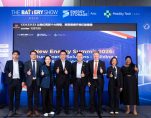
HONG KONG SAR – Media OutReach Newswire – 13 March 2026 – Centre of Advanced Power and Autonomous Systems (APAS), under the Hong Kong Productivity Council (HKPC),made its debut at The Battery Show Asia held from 10 to 12 March. During the exhibition, APAS set up a dedicated showcase area to present eight innovative battery technology solutions featuring high safety standards and intelligent capabilities for the first time. In parallel, APAS hosted the second edition of the New Energy Summit during the exhibition. The summit brought together five industry experts and scholars from Hong Kong, Singapore, Thailand, India and Switzerland to deliver speeches on various topics related to new energy and energy storage. Speakers shared the latest industry developments and application trends, fostering international technology exchange and collaboration.
During the exhibition, APAS hosted the second New Energy Summit, inviting industry experts and scholars from Hong Kong, Singapore, Thailand, India and Switzerland to speak and share the latest technological developments and application trends in the fields of new energy and advanced materials.
Mr Yonghai DU, Chief Innovation Officer of HKPC and General Manager of APAS, said, “In line with the strategic priorities set out in the outline of the 15th Five-Year Plan for emerging and future industries such as new energy, advanced energy storage and hydrogen energy, energy technologies are entering an unprecedented period of growth. The outline also emphasise the pursuit of smart, green, and integrated development of industry, injecting long-term momentum for the new energy development. For many years, HKPC has been committed to market-led technology R&D. APAS focuses on areas including new energy technologies, green transportation, smart mobility, intelligent systems and emerging applications, actively translating research outcomes into market-ready solutions to help industries enhance technological capabilities and industrial value.”
He added, “Through this international platform, we hope to strengthen our collaboration with enterprises and research institutions from around the world. Hong Kong can play a more proactive role as a connector between Chinese Mainland and the global market in the development of innovation, international standards and the practical application of new energy technologies, thereby enhancing the city’s global competitiveness in the new energy industry. Looking ahead, APAS will continue to focus on research and practical applications in new energy and intelligent systems, while advancing technological innovation and cross-regional collaboration to support both the nation and Hong Kong in fostering emerging industries and future industries.”
First Participation in The Battery Show Asia, Highlighting Battery Technology Achievements
The Battery Show Asia brings together more than 20,000 industry representatives from Chinese Mainland, Japan, Korea, Southeast Asia, India, Europe and the United States, including policymakers, technology innovators, engineers, manufacturers and industry experts. Covering battery manufacturing, energy storage solutions and new energy transportation industries, the exhibition serves as an international platform integrating technology showcase, industry exchange and business collaboration.
In its first participation in the exhibition, APAS showcased its research strengths in new energy technologies and emerging applications by presenting a range of innovative battery technology solutions. The showcase aims to contribute to the development of the battery industry while providing an important platform for Hong Kong to connect with global technologies and markets, facilitating cross-regional exchange and collaboration.
APAS set up a dedicated exhibition area to present several research outcomes developed in collaboration with industry partners, including:
Battery Cell Technologies:
High-performance Sodium-ion Battery: Using stable poly-anionic phosphate cathode, the battery enables rapid storage and release of sodium-ions while offering high safety and cost efficiency. It is suitable for applications such as low-speed electric vehicles, power batteries and large-scale energy storage. Looking ahead, APAS will collaborate with industry partners to establish large-scale production capabilities for high-performance sodium-ion battery, further optimising its performance and cost-effectiveness while exploring deployment in low-speed electric vehicles and utility-scale energy storage systems.
Battery Systems and Solutions:
Explosion-Proof High-Energy Battery Systems:This solution features proprietary safety technology that prevents thermal runaway, delivering reliable power in the most challenging environments, engineered for demanding marine and portable power applications. APAS will assist partners in optimising battery module design and thermal management systems to enhance product performance and align R&D processes with industry standards. This will support partners in establishing manufacturing facilities in Hong Kong and expanding into overseas markets.
Yacht Battery System: The system integrates advanced solid-state battery technology with an intelligent Battery Management System (BMS) to eliminate risks associated with traditional liquid electrolytes, including leakage, corrosion and thermal runaway. It is specifically designed to withstand the high-humidity, high-vibration and salt-spray conditions inherent to open-water yacht operations. APAS is currently supporting partners in obtaining international battery standard certifications to facilitate entry into the global market.
These solutions feature high safety standards, intelligent capabilities, and flexible applications. They support a wide range of sectors, including electric transportation and smart mobility, marine and industrial applications, specialised equipment, aerospace and high-end manufacturing, medical devices, consumer electronics, home assistive equipment and portable energy storage for travel.
Hosting New Energy Summit to Jointly Build a Sustainable Future
During the exhibition, APAS also hosted the second New Energy Summit, which brought together industry leaders and academic experts from Hong Kong, Singapore, Thailand, India and Switzerland. The summit focused on key topics related to new energy development and applications, providing a platform for speakers to share insights and engage in discussions with industry professionals in attendance.
The summit focused on two key themes — new energy and advanced materials — bringing together global experts to explore technological development and industrial applications. In the new energy sector, a representative from The Hong Kong and China Gas Company Limited introduced innovative hydrogen energy technologies and their potential applications in promoting clean energy development in Hong Kong. Representatives from energy technology companies and alliances in Switzerland, India and Thailand shared the latest trends and practical applications in energy storage technologies, as well as the integration of renewable energy with smart infrastructure. In the field of advanced materials, a scholar from the Department of Materials Science and Engineering at the National University of Singapore highlighted the critical role of nanotechnology in energy and sustainable development, offering insights into the future landscape of sustainable new energy.
Through this cross-regional and cross-industry platform, APAS aims to promote international technology exchange and collaboration, accelerate the application of new energy technologies and drive industry transformation, contributing to a more resilient and sustainable future energy ecosystem.
Advancing Technologies onto the Global Stage, Reinforcing Hong Kong’s Connectivity Advantages
HKPC actively participates in various international exhibitions and industry exchange activities to showcase innovative solutions co-developed with industry partners. Leveraging Hong Kong as a platform, HKPC supports enterprises in expanding into international markets and advancing cutting-edge technologies and standards worldwide.
Through international exhibitions and collaboration initiatives, HKPC further strengthens Hong Kong’s role as an important connector between Chinese Mainland and the world. In line with the Government’s 2026-27 Budget to attract large-scale international exhibitions to Hong Kong and promote the city’s exhibition brand globally, HKPC will continue to participate in international exhibitions and foster industry exchanges to drive innovation showcase and collaboration.
Hashtag: #APAS
The issuer is solely responsible for the content of this announcement.
About Centre of Advanced Power and Autonomous Systems (APAS)
Centre of Advanced Power and Autonomous Systems (APAS) (formerly Automotive Platforms and Application Systems R&D Centre) was established in 2006 and is fully integrated as a business division under HKPC on 1 April 2025. APAS continues to undertake market-led R&D programmes spanning green transportation, smart mobility, intelligent systems and emerging applications, as well as commercialises R&D results in collaboration with industry, universities and technology institutes to enhance the competitiveness of Hong Kong’s automotive and other transportation sectors in new energy and smart driving.
About Hong Kong Productivity Council
The Hong Kong Productivity Council (HKPC) is a statutory body established in 1967, dedicated to enhancing the productivity and competitiveness of Hong Kong enterprises through world-class applied R&D, innovative technology services, and integrated manufacturing solutions. As a market-oriented, international R&D organisation, HKPC leverages its deep expertise and extensive industry experience in key areas such as AI, advanced manufacturing, life and health technology, green technology and new energy to drive new industrialisation and support the growth of emerging and future industries.
HKPC focuses on addressing businesses challenges and industrial technology needs, promoting the full integration between technological and industrial innovation. Through technology transfer, product innovation, intellectual property protection and commercialisation of R&D outcomes, the Council fosters collaboration with the local business community as well as top global R&D institutions, delivering added value to industries and advancing the development of new productive forces. HKPC’s world-class R&D achievements have been widely recognised over the years, winning an array of local and overseas accolades, reinforcing Hong Kong’s role as an international innovation and technology centre and a smart city.
To help enterprises capitalise on Hong Kong’s strengths in international connectivity to expand into global markets, HKPC offers comprehensive overseas expansion services tailored to critical areas including product development, technology, manufacturing, and management, enabling businesses to successfully go global from Hong Kong.
HKPC is also committed to providing timely and practical support to SMEs and startups with timely and practical, assisting them in accessing Government funding programmes. Through its FutureSkills training initiatives, HKPC helps both industry and academia stay ahead in latest digital and STEM technologies, nurturing a future-ready talent pool for Hong Kong.
For more information, please visit HKPC’s website: www.hkpc.org/en.
Arabian Post Staff -Dubai Saudi oil producer Aramco has rejected claims that it is negotiating with Ukrainian companies to acquire interceptor drones to defend its oilfields, pushing back against reports that the energy giant was seeking aerial defence systems amid escalating regional security threats. The company issued a statement saying reports of discussions with Ukrainian manufacturers were inaccurate, after media coverage suggested Aramco was exploring purchases […]
BlackRock has introduced a new exchange-traded fund offering investors exposure to ethereum alongside staking-based income, marking another step in the expansion of institutional products tied to digital assets. The fund, trading under the ticker ETHB, opened with more than $100 million in assets and generated over $15 million in trading volume during its first day on the market, signalling strong early demand from investors seeking yield in […]






 www.hkpc.org/en