Just in:
e-Crime Bureau Signs Cybersecurity Partnership With Smart Africa, Reinforcing Its Global Expansion // Millions Of Indians May Soon Be Deprived Of Government Assistance // Oil advances towards $100 as tanker attacks persist // Geely’s i-HEV Intelligent Hybrid Technology Offers a New Direction Vision for Gasoline-Powered Vehicles // Motorola introduces Signature 27 flagship priced at $1,599 // Trump’s Iran War Has A Share Of Contribution To His Midterm Debacle // CR Longdation Aethereal Cybersecurity × Global Cybersecurity Alliance (GCSA) Join Hands to Establish the “AI and Cybersecurity Research Centre” // India Under Pressure To Join RCEP On The Eve Of ASEAN Summit In Manila On Nov 15-17 // Kochi police detain two actors over bid to honey trap doctor // Miss Universe Hong Kong Jen Zhou Departs for Puerto Rico to Compete in the 75th Miss Universe World Final // Technology shares plunge as Nasdaq enters correction // Ousted top Kochi cop gets IG post // Emaar approves Development buyout ahead of planned delisting // Beyond the exhibition floor: How robots, AI and networks are moving into the real world // OpenAI abandons secrecy agreements for future data centres // Geely’s i-HEV Intelligent Hybrid Technology Offers a New Direction for Gasoline-Powered Vehicles // CM disputes Vijayan’s claims // Xi Jinping Preparing For A Trilateral Summit With Trump And Putin At APEC Summit On Nov 18-19 // Excise chief shunted out in bar licence dispute // Private varsities bill all set to face the axe //

News related to
currency

Market speculation around XRP has intensified after a well-known digital asset commentator argued that the token could climb from around $2 to $10 in less than a year, reigniting debate over whether structural shifts in payments, regulation and market plumbing could support such a move. XRP, the token associated with Ripple’s cross-border payments network, has spent much of its existence oscillating between bouts of optimism and prolonged […]

Engineered for the AI era, MIMO delivers breakthrough metrics: 400 GB/s bandwidth, 54 million IOPS, and 40–90 μs latency—all within a form factor comparable to a large suitcase. MIMO serves as both a high-performance data hub for large-scale GPU clusters and a flexible edge deployment platform, extending seamlessly to desktop environments where it orchestrates workflows with various DGX Spark units based on NVIDIA’s GB10 Grace Blackwell superchip. […]

The Tor Project has marked a significant milestone in its multi-year effort to reengineer its core software by advancing Arti, the Rust-based implementation of the anonymity network, with the launch of version 1.8.0. The update introduces enhanced circuit isolation to reduce fingerprinting risks and new tools designed to streamline the migration of critical onion service keys from the legacy C codebase — part of a broader shift […]

Borrowing against physical and financial assets has become a defining feature of credit markets as more companies look for flexible funding beyond traditional loans. The model, known as asset-based lending, is drawing interest from mid-sized firms facing tighter bank standards and from fast-growing businesses seeking to unlock capital tied up in receivables, inventory, or machinery. This shift reflects an environment where cash-flow volatility, higher borrowing costs, and […]

The Central Bank of the UAE confirmed that the Digital Dirham — its central-bank-issued digital currency — is poised for phased rollout, following the nation’s first government-level payment settled in Digital Dirham. The transaction, processed in under two minutes via the mBridge multi-CBDC platform, involved the Ministry of Finance and the Dubai Department of Finance, underscoring readiness of infrastructure and institutional coordination. This marks a transition from […]

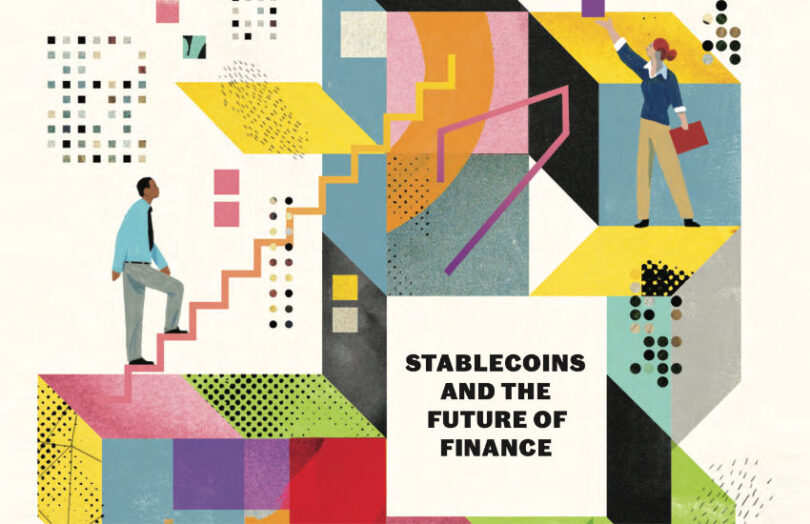
Growing concerns over the expansion of dollar-linked digital tokens have prompted the International Monetary Fund to issue a caution over the strain stablecoins could place on emerging markets, with the institution arguing that widespread use of these instruments risks weakening domestic monetary frameworks. The warning centres on the potential for currency substitution and accelerated outflows should stablecoins gain traction in jurisdictions where confidence in local units is fragile. This caution mirrors the broader message conveyed in IMF warns of stablecoin strain on emerging economies, underscoring the possibility of digital tokens amplifying financial vulnerabilities.

The Fund’s latest assessment highlights the challenge posed by USD-pegged tokens such as USDT and USDC, which together dominate the global stablecoin market. Analysts tracking flows note that these instruments have evolved into widely used vehicles for cross-border transfers, digital asset trading and store-of-value purposes in countries with volatile currencies. The IMF argues that their adoption can reduce the capacity of central banks to manage liquidity conditions, especially in economies where monetary authorities already contend with limited tools to stabilise inflation and anchor expectations. The institution has urged regulators to assume a proactive posture, particularly in markets where capital controls or shallow financial systems heighten the risk of abrupt movements.

The concerns reflect a shift from earlier phases of the digital asset cycle, when stablecoins attracted regulatory scrutiny largely due to their reserve backing and operational transparency. With greater clarity emerging around reserve audits and redemption mechanisms, policymakers are now looking beyond technical design and towards systemic implications. Economic experts cautioned that dollar-denominated tokens might evolve into parallel settlement channels, enabling households and corporates to bypass domestic banking systems during periods of stress. For countries with restricted foreign exchange markets, that pattern could complicate monetary management and accelerate the erosion of trust in local units.

Despite these warnings, several analysts point out that the scale of stablecoin adoption across developing economies remains uneven. Data from blockchain analytics firms suggests that while usage has grown in parts of Latin America, Africa, Eastern Europe and South Asia, activity is still far from the threshold that would trigger systemic currency substitution. Experts add that stablecoins often function as short-term hedging tools rather than long-term savings instruments, meaning their impact on monetary sovereignty is not yet of the magnitude implied by more pessimistic scenarios. Many economists argue that structural weaknesses in local economies, such as persistent inflation or fiscal imbalances, are more significant drivers of currency instability than the availability of digital dollar substitutes.

Regulators in several markets have already begun drafting frameworks to govern stablecoin issuance and use. Authorities in regions including the Gulf, the European Union, Singapore and parts of East Asia have introduced licensing requirements and reserve rules to ensure issuers maintain high-quality backing assets. These frameworks emphasise transparency and redemption at par, which policymakers view as essential to preventing destabilising runs. Some central banks are also exploring bilateral agreements to manage cross-border flows facilitated by stablecoins, particularly where local banks have limited capacity to monitor or report such transactions.

Several financial commentators suggest that concerns over capital flight through stablecoins stem from gaps in existing capital control regimes rather than from the forms of technology used to move funds. They argue that digital tokens merely enhance the speed and efficiency of transfers that might otherwise occur through informal channels. Nonetheless, the IMF stresses that the visibility and liquidity offered by stablecoins could encourage larger volumes to exit strained economies during periods of uncertainty. The institution asserts that emerging markets could face amplified volatility if households and corporates shift towards digital dollars at scale.

The rise of stablecoins has also coincided with broader experimentation in monetary innovation, with more than one hundred central banks evaluating options for digital currencies. Some economists view central bank digital currencies as a potential counterbalance to dollar-pegged private tokens, offering residents a regulated alternative for digital payments while preserving oversight. Others note that CBDCs alone will not offset the appeal of USD-linked tokens in countries where macroeconomic fundamentals drive demand for safer units. Policymakers face the challenge of building credibility, strengthening reserves and reinforcing inflation-targeting regimes while managing digital asset adoption.

While a number of market strategists acknowledge the IMF’s concerns, they contend that fears of widespread dominance of dollar-linked tokens may be overstated at the current stage of development. Adoption depends heavily on access to smartphones, internet connectivity, financial literacy and the availability of compliant service providers. These conditions vary widely across emerging economies, limiting the capacity of stablecoins to displace formal banking for now. Yet industry participants agree that the trajectory of digital finance warrants close oversight as stablecoin issuers expand their footprint and integration with payment networks.

A token linked to the brand of popular creator-entrepreneur Jimmy Donaldson — known globally as MrBeast — saw price gains of nearly 900 per cent in 24 hours, reflecting growing investor speculation around the newly filed fintech trademark by his corporate group. The rally has thrust the unofficial memecoin spotlit by social-media buzz, despite clear warnings that the currency remains unauthorised and unconnected to any official launch.

The underlying spark appeared after his firm, Beast Holdings, submitted a trademark application in October 2025 for a brand called MrBeast Financial. The filing outlines services ranging from mobile banking, crypto payment processing, exchange and decentralized-trading tools to loans, credit cards and financial-education offerings.

Soon after media and investor attention picked up, the BEAST token’s trading volume soared — a pattern analysts attribute to a mix of hype, confusion with other meme coins referencing MrBeast, and overbought technical indicators that often precede sharp reversals.

Insiders at Beast Industries, including CEO Jeffrey Housenbold, have confirmed that financial-services expansion is part of a broader diversification strategy. At the summit event where the plan was publicly discussed, Housenbold said the company aims to package banking, fintech and creator economy functions under one umbrella — potentially offering fans access to financial services via a recognised brand.

Beast Industries’ market valuation has reportedly reached around US $5 billion. That, combined with MrBeast’s social-media reach, fuels investor optimism that “MrBeast Financial” — if realised — might attract millions of users instantly. This visibility helps explain why speculative investors clung to BEAST token amid the buzz.

Yet experts caution over regulatory and structural hurdles before any fintech project materialises. A US trademark filing does not equate to regulatory clearance; launching banking or crypto-exchange services would require compliance with complex licensing regimes, including money-transmitter permits, anti-money-laundering protocols and possibly oversight by financial authorities.

This is not the first time the MrBeast brand has floated multiple trademarks without launching full-fledged products. Past filings — ranging from burgers to gaming to snacks — have produced mixed results, with some evolving into real ventures and others quietly fading. That casts ambiguity over whether “MrBeast Financial” will ever become a functioning platform.

Despite that, investor appetite for BEAST appears to remain driven by two forces: the fear of missing out characteristic of crypto cycles, and hope that a fintech rollout tied to a globally recognised creator could upend traditional financial models. Until regulators weigh in or Beast Industries announces concrete partnerships, however, BEAST remains a speculative asset — its value tied more to branding buzz than fundamentals.

Advertisements

Matein Khalid When the rats scramble to escape a sinking ship as hungry sharks circle the blood red water, the end is near. 100 insider Johnnies sold $6.5 billion in OpenAI shares in a recent employee tender. Why bailout now at $500 billion if OpenAI is a slam dunk for a trillion dollar IPO next year? Simp​le. The 100 newly minted decamillionaires know that OpenAI can no […]

Bank lending across the UAE, Saudi Arabia and wider Middle East is projected to gather momentum next year as resilient economic conditions and steady financing demand strengthen the outlook for regional lenders. The assessment reflects the prevailing view among major rating analysts that banks have entered the coming year with solid balance sheets, expanding pipelines in corporate and retail credit, and a supportive macroeconomic environment. Fitch Ratings […]

Shares of Twenty One Capital, the newly public Bitcoin-native company, plunged sharply as trading began on the New York Stock Exchange under ticker “XXI”. The decline, amounting to roughly 24-26%, underscores investor unease even as the firm debuts with substantial holdings — over 43,500 bitcoins, valued at nearly US$4 billion, making it one of the largest corporate Bitcoin treasuries globally.

The decline came just as the firm completed a merger with special-purpose acquisition company Cantor Equity Partners, a process that had secured shareholder approval earlier this month. The combined entity began trading today, marking the formal public debut of Twenty One Capital.

The backers behind Twenty One include stablecoin issuer Tether, trading platform Bitfinex, and investment-holding conglomerate SoftBank Group — with the SPAC sponsored by global financial firm Cantor Fitzgerald.

Leadership under co-founder and CEO Jack Mallers has portrayed Twenty One as more than a treasury — the firm aims to build Bitcoin-centric financial services, capital markets advisory, lending and education operations. The business model seeks to marry a large Bitcoin reserve with recurring-revenue operations, offering investors both exposure to crypto and conventional business growth potential.

Despite the ambitious roadmap and deep institutional backing, investor sentiment appears cautious. The dip in share price comes amid a broader downturn in cryptocurrency valuations; bitcoin itself has fallen more than 28% since hitting a peak in October. That decline has put pressure on companies with large digital-asset treasuries.

Market watchers note that the stumble highlights the risks inherent in combining a speculative asset like bitcoin with public equity. Treasury-centric crypto firms have gained attention in recent months for treating bitcoin as a corporate reserve asset — yet, as volatility returns, their valuations are bearing the brunt. Some analysts argue the drop may force such firms to rethink reliance solely on crypto-treasury value, especially if markets remain turbulent.

For now, Twenty One’s challenge is to reassure shareholders that the business side will grow fast enough to absorb volatility in bitcoin prices. Its future will depend on execution: whether it can build a sustainable loan, advisory or media business around Bitcoin — and whether that strategy can hold up even if crypto markets remain unpredictable.

Swiss-registered fintech firm TrustLinq has rolled out a crypto-to-fiat payment platform designed to let holders of digital currencies send real-world payments in over 70 local currencies — without requiring a bank account. Users can fund transfers from holdings of cryptocurrencies such as USDT, USDC and EURC; the platform then converts and routes the funds through traditional banking rails, so recipients receive standard fiat via bank transfer.

The push addresses a long-standing barrier in the adoption of cryptocurrencies: while there are more than 580 million crypto users globally, under 0.005 percent of businesses currently accept digital currencies directly. As a result, many holders have struggled to use their crypto for everyday needs — rent, supplier bills, international transfers, or payroll. TrustLinq aims to bridge that divide.

Unlike traditional crypto payment gateways that require merchants to accept crypto directly, TrustLinq enables users to pay any individual or business worldwide, using crypto funds while sending fiat to the recipient’s bank account. Recipients do not need a digital wallet or to handle crypto; they receive funds just like a regular bank transfer.

For businesses — especially those operating across borders — the implications are significant. Vendors, employees, contractors, or suppliers can be paid in their local currency without the hassle of crypto-to-fiat conversion or the need for them to manage digital assets. In effect, TrustLinq offers companies a way to manage vendor payments, international payroll, and operational expenses via crypto without forcing counterparties into crypto adoption.

From a regulatory standpoint, TrustLinq operates under Swiss oversight, providing bank-grade compliance and secure automation. That regulatory clarity may matter more than ever as regulatory landscapes shift across regions for crypto payments.

Observers in the payments industry see TrustLinq’s entry as part of a larger pattern: financial firms and fintech companies are increasingly building infrastructure to integrate digital assets with traditional finance. Crypto payment solutions are evolving beyond speculative trading or niche peer-to-peer transfers; they are morphing into tools that can plug directly into legacy banking systems and everyday commerce.

Still, hurdles remain. While TrustLinq enables individuals to pay in fiat using crypto, global compliance regimes differ widely. Some jurisdictions continue to impose restrictions on crypto-to-fiat transfers, stablecoin use, or crypto payments — a fragmentation that can hinder adoption. Furthermore, currency volatility may still pose a concern for users who bring in crypto at one exchange rate and transfer to fiats pegged to different currencies. Analysts caution that until broader regulatory clarity and merchant acceptance emerges, such payment platforms may remain niches rather than mainstream alternatives.

TrustLinq has announced that it plans to launch its own debit cards in the first quarter of 2026, which could further expand usability for holders wanting to pay with crypto-backed fiat in everyday contexts — physical stores, online purchases, subscription services.

Global corporate crypto holdings took a dramatic leap as Strategy disclosed acquiring 10,624 more bitcoins between 1 and 7 December 2025, at an average price of $90,615 per coin. That purchase—amounting to about $962.7 million—raises the firm’s total holdings to 660,624 BTC, equivalent to roughly 3 % of the entire Bitcoin supply. The acquisition was funded primarily through the company’s at-the-market equity programme. According to the company’s […]

Abu Dhabi’s transformation into a leading centre for digital asset regulation is gathering global recognition, with legal and financial experts pointing to its advanced regulatory framework and investor-friendly environment as key drivers for growing crypto-sector confidence.

At the sidelines of Abu Dhabi Finance Week, compliance specialist Magdalena Boškić of Swiss firm Kellerhals Carrard declared that the UAE has firmly established itself as a global hub for digital-asset businesses, drawing major international players thanks to robust legislation and transparent licensing regimes. She highlighted the role of regulatory bodies such as the Financial Services Regulatory Authority at Abu Dhabi Global Market, the Virtual Assets Regulatory Authority in Dubai, the Dubai Financial Services Authority, and the Central Bank of the UAE, describing their collective efforts as among the most advanced globally.

Under the UAE’s multi-jurisdictional model, companies involved in trading, custody, asset-management or tokenisation can select the regulatory framework that matches their business model, offering flexibility without sacrificing oversight. The regime is built on principles like technology neutrality, activity-based licensing and strict compliance with investor-protection standards — features that offer legal clarity and attract institutional as well as retail participation. Boškić noted that this environment has led several prominent Swiss digital-asset banks such as Sygnum and AMINA to expand their presence in the Emirates.

A 2025 ranking by the Global Finance & Technology Network, in collaboration with consultancy Arthur D. Little, placed the UAE alongside jurisdictions such as Switzerland and Singapore among the most advanced globally for crypto regulation. The report credited the UAE for its comprehensive approach to tokenised assets, stablecoins, virtual-asset service providers and other fintech innovations — moving the country from ambition into execution.

Institutional adoption has risen sharply. Data on inflows between mid-2023 and mid-2024 show digital-asset investments of more than US$30 billion — roughly 10 percent of the Middle East and North Africa region’s total — with institutional-sized transfers jumping about 55 percent year-on-year. Simultaneously, retail participation has surged; the number of daily active crypto traders in the UAE has reportedly crossed 500,000, underscoring broad public engagement with digital-asset markets.

Fiscal incentives have added to the appeal. The absence of personal income tax or capital-gains tax, combined with exemptions on value-added tax for trading and conversion of virtual assets, offers one of the most favourable tax regimes globally. These conditions, combined with regulatory clarity, help explain the influx of both specialized crypto firms and traditional financial institutions adapting to digital-asset offerings.

The expansion also includes the tokenisation of real-world assets — such as real estate, aviation and even sovereign bonds — indicating that the UAE’s digital-asset market is evolving beyond speculative cryptocurrency trading into structured financial instruments. This opens pathways for sophisticated investors and enterprises seeking to integrate blockchain-based financing or asset-tokenisation into mainstream operations.

Still, rapid growth is not without risks. Observers caution that heightened crypto activity brings exposure to money laundering, unregulated peer-to-peer trading, cybersecurity threats and uneven investor protection. Regulators must balance fostering innovation with safeguarding financial integrity.

A milestone for regulatory trust came this week when Binance secured a global licence under the ADGM framework granted by the FSRA. The approval of the world’s largest crypto exchange underlines the UAE’s drive to cement its status as a credible, regulated base for digital-asset operations.


Arabian Post Staff -Dubai Asia Pacific borrowers have significantly increased euro-denominated bond issuance this year, signalling a notable shift away from reliance on the US dollar as a financing standard. According to data compiled this year, euro-denominated issuance accounted for a record 23 per cent of all hard-currency bonds from Asia Pacific borrowers — up six percentage points compared with 2024. The total volume of euro-note sales […]

By Nitya Chakraborty The India-Russia joint statement issued on December 5 after two days of talks between President Vladimir Putin and the Indian Prime Minister Narendra Modi is more a vindication of India’s renewed exercise of its geopolitical status defying the pressure from the USA and the other western powers rather than a document on […]

The article Modi-Putin Summit Reinforces India’s Geopolitical Identity Amidst Headwinds appeared first on Latest India news, analysis and reports on Newspack by India Press Agency).

VTB — Russia’s second-largest bank by assets — has announced plans to allow its clients to directly buy, sell and hold cryptocurrencies through its brokerage accounts starting in 2026. The move was disclosed by the head of its brokerage services at an investment conference in Moscow, signalling a shift from derivatives-based crypto exposure toward full asset-level trading.

At present, VTB already offers clients access to cryptocurrency derivatives. The planned service would enable investors to acquire digital assets such as Bitcoin through regular investment or brokerage accounts once regulatory approval is secured. The bank is canvassing regulators and expects authorisation to come through within months.

This development comes against a broader backdrop of rapid evolution in Russia’s digital-asset infrastructure. The Moscow Exchange has recently launched ruble-settled Bitcoin futures and other crypto-linked instruments for institutional investors — part of a broader effort to open new investment channels under carefully structured legal regimes.

Under the current regulatory framework, only “specially qualified” investors — those with high net worth or significant annual income — can directly engage in cryptocurrencies. VTB’s new offering may broaden participation beyond derivatives and institutional-only vehicles, assuming the financial regulator approves the shift.

For VTB, the initiative represents a diversification of its services at a time when Russian banks face mounting pressures. The bank is grappling with new capital requirements imposed by the Central Bank of Russia, which its chief has described as a major challenge going forward.

By Dr. Gyan Pathak When Indian rupee was falling in the Mumbai market against US dollar on Wednesday, December 3, 2023 – sliding past the 90-a-dollar mark for the second day, plumbing a new low of 90.29 in the morning trade after opening flat at 89.96, analysts were pegging the next level for the beleaguered […]

The article CEA’s Calmness Over Steep Fall Of Rupee Ignores Key Risks To India appeared first on Latest India news, analysis and reports on Newspack by India Press Agency).

HONG KONG SAR – Media OutReach Newswire – 3 December 2025 – XTransfer, World’s Leading B2B Cross-Border Trade Payment Platform, announces the publication of the industry’s first Unified Global B2B Trade Settlement Network and Risk Control Platform Whitepaper. The whitepaper presents an end-to-end framework designed to resolve long-standing inefficiencies in B2B cross-border payments and establish a secure, scalable, and standardized global trade infrastructure for SMEs. X-Net, a […]

United Kingdom legislation now formally recognises digital assets such as cryptocurrencies and stablecoins as personal property, offering holders protections under established property law. The Property Act 2025 — previously a bill — received royal assent, confirming that digital tokens may be treated as a third category of personal property alongside traditional “things in possession” and “things in action.” This marks a decisive shift from earlier reliance on case-by-case rulings by courts.

Legal recognition ensures that crypto-owners gain enforceable rights in instances of theft, fraud or insolvency, and enables digital assets to be included in estates or bankruptcy proceedings under the same protections afforded to conventional property. The Act does not itself define which digital assets qualify — courts will decide those details over time.

Judicial developments had already begun to lay the groundwork for this change. As early as 2019, the UK Jurisdiction Taskforce concluded that crypto-assets met criteria for property under English law: they could be defined, identified, transferred and treated as assets capable of value retention. A key case, AA v Persons Unknown, saw the High Court of England and Wales recognise Bitcoin provided as ransom in a cyber-attack as property, granting the insurer a proprietary injunction.

Advocates of the law hailed it as providing clarity long sought by individuals and businesses holding crypto-assets. CryptoUK, a leading trade body for digital assets, noted that while courts had already treated crypto as property in some cases, codifying the principle into statute removes uncertainty and streamlines legal protections across theft, insolvency and estate-related scenarios.

Legal experts say the Act reflects the recommendations laid out by the Law Commission in a 2023 report, which urged reform to ensure the law could accommodate emerging digital assets under a flexible yet robust framework. The Commission argued that existing categories of personal property under law were too rigid to account for assets that lacked physical form or contractual rights.

This statutory change arrives as UK regulators concurrently refine the broader regime for crypto-assets. Draft legislation published earlier this year already seeks to amend the Financial Services and Markets Act 2000 to designate certain “qualifying cryptoassets” and “qualifying stablecoins” as regulated investments, bringing market-level rules for trading, custody and compliance under formal oversight.

While the law does not render cryptocurrency a legal tender — meaning it still cannot be used to settle debts in substitute for currency — its classification as property gives holders legal certainty over ownership and enforceable rights. Taxation and regulatory treatment will continue to follow established frameworks, though this legal milestone reduces ambiguity over the status of crypto-assets in private law contexts.

Judges, lawyers and market participants anticipate that the Act will lead to a more stable and predictable legal environment for crypto-asset ownership, enabling individuals and institutions to treat tokens with the same legal respect accorded to traditional assets. As the courts start applying the new law in real cases, the boundaries of which digital assets qualify will grow clearer — and the UK’s position as a regulatory pioneer in digital asset law will be reaffirmed.

Regulators at the Federal Reserve are moving to formalise rules for stablecoins, signalling a shift in how banks may soon treat these digital assets under supervision. The Vice Chair for Supervision at the Fed, Michelle Bowman, emphasised that banks should be able to engage with digital currencies — including stablecoins — under new regulatory guardrails. She argued that existing regulations, many crafted in the aftermath of the 2008 financial crisis, may no longer be appropriate given how much the economy and technology have evolved. Her remarks came against the backdrop of recent legislation that lays the groundwork for stablecoin regulation, prompting an overhaul of existing frameworks to encourage innovation while managing risk.

The regulatory momentum follows the passage of the Guiding and Establishing National Innovation for U. S. Stablecoins Act — known as the GENIUS Act — which establishes a comprehensive legal framework for payment stablecoins. Under the law, issuers of stablecoins must back tokens on a one-to-one basis with U. S. dollars or other low-risk assets, provide regular disclosure of reserves, and maintain transparent redemption processes. This marks a turning point: stablecoins officially enter the regulated financial system, opening the door for banks and other financial institutions to participate under defined standards.

Bowman has signalled that the Federal Reserve, alongside agencies such as the Office of the Comptroller of the Currency and the FDIC, intends to craft tailored supervisory guidelines rather than impose a one-size-fits-all regulatory model. She has called for regulators to abandon what she described as an “overly cautious mindset” that has slowed the banking sector’s ability to embrace digital innovation. According to her, banks seeking to engage in stablecoin activities must separate those assets from their traditional banking operations. This segregation, she said, is necessary to preserve the safety and soundness of the banking system even as banks expand into digital asset services.

The move has drawn cautious optimism from some quarters of the financial world, particularly among proponents of digital assets and stablecoin issuers, who view increased regulatory clarity as critical for broader adoption. They argue that a well-designed framework will enable mainstream financial institutions to offer digital asset services, increasing legitimacy and liquidity in the stablecoin market. Analysts point to academic research suggesting stablecoins have evolved from niche cryptocurrency experiments to integral components of payments infrastructure worldwide — with stablecoins’ market capitalisation estimated to exceed several hundred billion dollars. Some experts have proposed hybrid models that combine fiat-backed stablecoins with central-bank anchored systems to mitigate liquidity risks and improve stability, particularly in volatile market conditions.

At the same time, concerns remain about potential threats to financial stability. Regulators such as the Fed must weigh the risk of deposit outflows, competition between banks and non-bank issuers, and the challenge of preventing money-laundering or illicit finance through digital assets. Financial supervisors globally are wrestling with how to calibrate capital requirements and risk-weighting rules for banks engaging with stablecoins and digital tokens — taking into account factors like volatility, liquidity stress, and redemption risk.

Japan’s 10-year government bond yield jumped to 1.84 percent, marking its highest level since 2008, sending ripples across global financial markets. Equities and risk assets came under pressure while investors reassessed portfolios built on cheap Japanese funding.

The surge reflects an abrupt shift away from decades of near-zero rates in Japan, transforming the dynamics of global capital flows. Long considered a foundation of stability, Japanese government bonds are now drawing fresh interest, prompting capital repatriation as investors seek higher yields at home. This shift threatens to unwind the entrenched “yen carry trade,” where investors borrowed yen cheaply to pour money into higher-yielding markets abroad — including equities and cryptocurrencies. With yen-denominated debt now offering compelling returns, such cross-border funding strategies are losing appeal.

As liquidity conditions tighten, markets for risk assets are being reshaped. Cryptocurrencies and tech stocks, once buoyed by easy global credit, have borne the brunt of investor risk aversion. Traders point out that this yield shock was partly triggered by a shift in market expectations around the Bank of Japan, which has signalled the possibility of further rate increases in its upcoming policy review. That, combined with concerns over Japan’s sizeable fiscal obligations and growing government borrowing, is pushing bond yields across the maturity curve higher — including 20-, 30- and 40-year maturities that recently recorded historic highs.

For global investors, the implications are stark. Funds and hedge-fund managers that relied on yen-funded carry trades now face rising funding costs and diminishing returns. Emerging markets and growth-oriented sectors that thrived on abundant liquidity may see capital outflows as investors retreat to safer, yield-bearing bonds. Currency markets have already reacted: the yen has strengthened sharply, adding pressure on exporters and raising the cost of dollar-denominated investments for Japan-based holders.

Analysts note that this yield shock does not necessarily spell widespread collapse — but signals a structural recalibration. Portfolios will need to adapt to a world where Japanese bonds are no longer a funding tool, but a competing asset class in their own right. For risk assets to recover, markets will need fresh capital inflows rather than the easy money of the past.

China’s central bank has reaffirmed its prohibition on cryptocurrency use and announced a renewed enforcement drive targeting stablecoins and underground trading networks. At a high-level interagency meeting convened in Beijing by the People’s Bank of China, officials declared that all virtual currencies remain outside the legal tender framework and insisted that any related business activity constitutes illicit financial conduct.

The PBOC underscored heightened concerns over what it described as a resurgence in speculative trading and misuse of stablecoins. According to the statement delivered at the meeting, stablecoins fail to meet mandatory requirements for identity verification and anti-money-laundering safeguards — deficiencies that increase their vulnerability to use in fraud, money laundering and unauthorised cross-border transfers.

China outlawed trading and mining of cryptocurrencies in 2021, with regulators barring financial institutions and intermediaries from facilitating such activity. The current announcement makes explicit that the ban also extends to stablecoins — digital assets whose value is typically pegged to fiat currencies or other claims — signalling a shift from broad prohibition to more specific targeting.

Officials from thirteen government agencies, including judicial and cyberspace regulatory bodies, participated in the enforcement meeting, indicating that anti-crypto efforts are being treated as a coordinated, cross-sector priority. The agencies pledged to intensify monitoring, crack down on underground trading platforms, clamp down on illicit payment flows and coordinate information sharing across law enforcement and regulatory bodies.

The renewed clampdown comes even as some on-the-ground activity suggests partial revival of mining in certain energy-rich provinces, driven by low electricity costs and data-centre growth. Reports indicate that a segment of cryptocurrency miners have quietly restarted operations despite the 2021 ban, suggesting enforcement may be uneven across China’s vast terrain.

Regulators framed the move as necessary to safeguard financial and economic stability, citing recent upticks in speculation, fraud and illegal cross-border capital flows linked to virtual currencies. The articulation of fresh enforcement measures and explicit inclusion of stablecoins reflects a shift in China’s regulatory approach — from discouragement to active suppression.

Given the global ripple effects of China’s policy, observers expect tightening enforcement to influence not only domestic underground markets but also international crypto platforms, stablecoin issuers and cross-border payment flows that might involve Chinese users or capital.

The Ministry of Finance, acting as issuer alongside Central Bank of the UAE as the issuing and payment agent, has completed the November 2025 auction of dirham-denominated Islamic Treasury Sukuk with a total issuance of AED 1.1 billion. This marks the final scheduled T-Sukuk auction under the 2025 issuance programme. Demand outpaced supply sharply: bids submitted for the auction totalled AED 5.48 billion, implying an oversubscription of […]

HONG KONG SAR – Media OutReach Newswire – 28 November 2025 – HONMA Golf Limited (“HONMA”; together with its subsidiaries, the “Group”; HKEx stock code: 6858), one of the world’s most prestigious golf brands, announces its consolidated interim results for the six months ended 30 September 2025 (the “Period”). Financial Highlights In the face of a slowing global economy, heightened policy uncertainty and intensified competition across the […]

VISHNU RAJA
RYO YAMADA
HITORI GOTOH
IKUYO KITA