Amazon Web Services has attributed a series of compromises involving widely used npm software packages, including Axios, Debug and Chalk, to a financially motivated hacking group linked to North Korea. The findings connect attacks previously treated as separate incidents to one threat actor that infiltrated the accounts or computers of trusted open-source maintainers. The attackers then published malicious updates capable of stealing credentials, installing remote-access tools and […]
Roblox reported fewer daily active users than Wall Street expected in the second quarter, as stricter child-safety controls and changes to content recommendations disrupted engagement and spending across its gaming platform. Average daily active users reached 123 million during the three months ended June, up 10% from a year earlier but down 7% from the first quarter. The sequential decline was sharper than investors had anticipated and […]
Arabian Post Staff -Dubai Dubai-based DeNet has launched the fourth version of its decentralised storage protocol, opening infrastructure supported by more than seven million registered users to the public. Storage Protocol v4 connects customers seeking encrypted data storage with independent operators supplying unused device capacity. DeNet said its operating ecosystem includes more than 2,000 active storage providers, known as Datakeepers, and about 2.9 million Watcher Nodes that […]
Russia has moved closer to opening a regulated cryptocurrency market while Washington struggles to complete its own digital-asset framework, creating a sharp contrast between state-controlled certainty in Moscow and political deadlock in the United States. The State Duma approved legislation governing cryptocurrency trading in its second and third readings on July 21. The measure must complete the remaining constitutional steps, including consideration by the Federation Council and […]
Robinhood Markets shares dropped about 4% in extended trading after the brokerage reported stronger-than-expected quarterly earnings, as investors focused on falling cryptocurrency revenue and higher operating costs. The trading platform generated $100 million from cryptocurrency transactions during the second quarter, down 38% from a year earlier. The decline was offset by sharp gains in options, equities and prediction markets, helping total net revenue rise 32% to a […]
Apple is facing a federal lawsuit from three investors who allege that a fraudulent cryptocurrency wallet distributed through its App Store enabled scammers to steal Bitcoin worth about $1.8 million. The complaint, filed on July 24 in the US District Court for the Northern District of California, accuses Apple of negligence, misrepresentation and failing to adequately review or monitor applications offered through its tightly controlled digital marketplace. […]
HANOI, VIETNAM – Media OutReach Newswire – 30 July 2026 – Moody’s Ratings has released its latest credit rating report on Southeast Asia Commercial Joint Stock Bank (SeABank, HOSE: SSB), upgrading several key credit rating categories, including the Baseline Credit Assessment (BCA) to Ba3, the Long-term Counterparty Risk Rating (CRRs) to Ba2, and the Long-term Counterparty Risk (CR) Assessment to Ba2(cr); while maintaining SeABank’s Ba3 Long-term (LT) bank deposit and issuer ratings. Moody’s also changes the Bank’s outlook to Positive from Stable.
The ratings reflect SeABank’s increasingly strengthened financial fundamentals and governance capabilities.
Accordingly, the reaffirmation of SeABank’s Ba3 local currency (LC) and foreign currency (FC) LT bank deposit and issuer ratings, together with the change in outlook to Positive from Stable, reflects the Bank’s strengthened intrinsic credit profile. This is evidenced by the upgrade of SeABank’s BCA and Adjusted BCA from B1 to Ba3, reflecting Moody’s view that the Bank’s solvency profile has strengthened, supported by stable asset quality, stronger capital and risk management.
In addition, the upgrade of SeABank’s LT FC and LC CRRs to Ba2 and LT CR Assessment to Ba2(cr) demonstrates a positive assessment of the Bank’s ability to meet its financial obligations to counterparties. These upgrades further reinforce SeABank’s reputation in the financial market and enhance its ability to expand partnerships and access funding from domestic and international financial institutions.
Moody’s also expects SeABank’s credit profile to benefit from ongoing efforts to diversify its funding base and improve funding stability over the next 12–18 months. The agency also believes SeABank has the potential for a one-notch rating upgrade if Vietnam’s sovereign rating is upgraded in the future.
The report also notes that SeABank’s asset quality remained broadly stable, with non-performing loans ratio (NPL) maintained at an appropriate level and new delinquencies expected to remain low over the next 12–18 months, underpinned by the supportive operating environment and the bank’s adequate track record in asset quality management.
Furthermore, Moody’s expects SeABank to maintain a solid capital position, with its tangible common equity to risk-weighted assets (TCE/RWA) ratio remaining above 12%, in line with domestic peers.
Moody’s also noted that SeABank’s growing access to long-term funding from development financial institutions will further enhance the stability of funding structure, mitigate refinancing risks, and support the Bank’s sustainable growth in the years ahead. Hashtag: #SeABank
The Supreme Court has urged Parliament to create distinct criminal offences for “digital arrest” scams and artificial intelligence-generated deepfakes, warning that existing laws do not adequately address technology-enabled fraud that has cost citizens about ₹54,000 crore over six years. Solicitor General Tushar Mehta told a bench headed by Chief Justice Surya Kant that the Centre was preparing legislation covering digital arrests, deepfakes and related cyber offences. The […]
Tokyo’s Nikkei 225 fell sharply on Wednesday as investors cut exposure to semiconductor and artificial intelligence-linked shares, extending a technology sell-off that swept through major Asian markets.
The benchmark closed at 61,434.19, down 930.73 points, or 1.49%, after briefly dropping to 60,448.90. The index moved through a range of almost 2,700 points, having reached a session high of 63,138.04 during early trading.
The intraday slide from the high exceeded 1,700 points, reflecting unusually volatile trading rather than a fall of that size from Tuesday’s closing level. The index had ended the previous session at 62,364.92 after losing more than 2,500 points.
Semiconductor companies led the decline as investors questioned whether the vast sums being invested in AI infrastructure would generate returns quickly enough to justify elevated technology valuations. The selling was amplified by weakness in South Korea and Taiwan, whose markets contain some of the world’s largest memory-chip and contract-manufacturing companies.
Asian chipmakers had benefited from expectations that spending on data centres, advanced processors and high-bandwidth memory would continue expanding. Those assumptions are now facing closer scrutiny as capital expenditure rises, borrowing costs remain high and earnings expectations become more difficult to exceed.
The shift was visible in South Korea, where the Kospi suffered another severe fall and chip heavyweights came under sustained pressure. Taiwan’s benchmark also declined as investors sold shares exposed to the global semiconductor supply chain.
Tokyo-listed equipment makers and chip-related companies were caught in the same retreat. Their large influence on the price-weighted Nikkei magnified the index’s movements, leaving the broader market vulnerable to concentrated selling in a small group of expensive stocks.
Investors were also awaiting quarterly results from major US technology companies, including businesses whose spending plans have become central to demand forecasts for advanced chips. Any indication that data-centre expenditure is slowing could deepen concerns about the durability of the AI investment cycle.
The Nikkei’s decline followed a powerful rally that had carried the benchmark above 70,000 earlier in July. Despite the pullback, the index remained substantially higher than a year earlier, showing how quickly valuations had expanded during the AI-driven advance.
Currency movements added another layer of uncertainty. The yen remained near its weakest level against the dollar in about four decades, despite gaining slightly during Wednesday’s trading. A weaker currency generally supports exporters by increasing the yen value of overseas earnings, but an extreme decline raises import costs and complicates monetary policy.
Japan depends heavily on imported energy and raw materials. The yen’s depreciation, combined with higher oil prices, threatens to intensify inflation and squeeze household spending. It has also increased speculation that authorities may intervene in foreign-exchange markets.
Markets are watching for any disruption to the yen carry trade, in which investors borrow cheaply in Japan and direct the funds towards assets offering higher returns elsewhere. A sudden strengthening of the yen can force traders to unwind those positions, producing rapid declines across equities, bonds and currencies.
The Bank of Japan begins a two-day policy meeting on Thursday. Traders are assessing whether persistent currency weakness and rising energy costs could push officials towards tighter policy, even as instability in equity markets increases the risks surrounding another rate move.
Oil prices climbed more than 3% as conflict in the Middle East threatened shipping and energy supplies. Higher crude prices added to inflation concerns ahead of the US Federal Reserve’s policy announcement and reduced investors’ willingness to hold high-valuation growth stocks.
The dollar remained supported near a one-month high as traders considered whether the Federal Reserve could maintain a restrictive policy stance. Higher US yields tend to pressure technology valuations by reducing the present value of expected future earnings.
The US goods trade deficit narrowed in June as imports fell more sharply than exports, with a notable drop in capital goods purchases reversing part of the surge linked to business investment and inventory building earlier in the quarter. The merchandise trade gap decreased 4.2% to $101.5 billion from a revised $105.9 billion in May. Imports dropped $8.2 billion to $306.2 billion, while exports declined $3.8 billion […]
The following announcement was issued today to a Regulatory Information Service approved by the Financial Conduct Authority in the United Kingdom.
DFI RETAIL GROUP HOLDINGS LIMITED
HALF-YEAR RESULTS FOR THE SIX MONTHS ENDED 30 JUNE 2026
Highlights
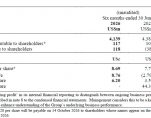
Underlying profit from continuing businesses1 grew 44% to US$117 million
Reported profit was US$118 million, compared to a US$38 million loss in the prior year period
Like-for-like (LFL) subsidiary sales growth from continuing businesses2 improved to 3%
Health & Beauty sustained strong LFL sales; Convenience and Home Furnishings returned to growth
E-commerce and DFIQ Media contributed to approximately 35% of sales growth
Return on capital employed improved to 12%, up from 9% as of December 2025
Interim dividend of US¢6.20 per share, up 77% year-on-year. Maintain full-year dividend payout of 70%
Raised full-year organic revenue3 growth guidance to be between 3.0% and 4.0%, and underlying profit to be between US$285 million and US$305 million
Announced 100% interest acquisition of Cody Hong Kong (Cody HK), one of the leading outdoor advertising solution providers in Hong Kong
HONG KONG SAR – Media OutReach Newswire – 28 July 2026 – “Our first-half performance, with underlying profit1 growth of 44% and a consistently improving LFL subsidiary sales trend, reflects the strength of our strategy in action – a sharper value for customers, a strong focus on returns and execution with discipline. This was supported by sustained momentum in Health & Beauty, as well as strong recovery in Convenience and Home Furnishings segments. Our acquisition of Cody HK’s extensive outdoor media portfolio, together with its experienced leadership team, strengthens our capability to deliver full-funnel, omnichannel advertising solutions while accelerating the growth of DFIQ Media. As we continue to deepen customer engagement and build new profit pools through the DFI Omni Platform, we are well-positioned to deliver sustainable long-term value with greater earnings resilience.”
Scott Price
Group Chief Executive
DFI RETAIL GROUP HOLDINGS LIMITED
HALF-YEAR RESULTS FOR THE SIX MONTHS ENDED 30 JUNE 2026
OVERVIEW
The Group delivered strong performance in an evolving macroeconomic climate, underpinned by disciplined execution and a focus on driving higher returns. A portfolio built on everyday essentials, combined with a strong value proposition with convenience, continues to resonate with customers against the backdrop of oil price volatility. For the first half of 2026, subsidiary LFL sales growth from continuing businesses4 further improved to 3%. This was driven by sustained strong momentum in the Health & Beauty segment, as well as a return to growth in both the Convenience and Home Furnishings businesses. Price reinvestment, supported by a reset in sourcing strategy, drove Food volume growth with Wellcome’s basket price now trading at a discount relative to the Greater Bay Area5, compared to a premium in the prior year.
The Group’s commitment to retail excellence, a lean overhead structure and expanded omnichannel touchpoints enables us to serve our customers with better pricing and better experience. The DFI Omni Platform further strengthens this by seamlessly integrating our extensive store network with digital capabilities, delivering greater convenience and personalisation while unlocking new value pools through rich, cross-format data insights. Developing and scaling high-margin revenue streams, including retail media (DFIQ Media) and insights monetisation (DFIQ Insights), will diversify our profit base and support long-term value creation.
To enhance operational efficiency and improve productivity of team members, the Group introduced GenAI-powered tools in the first half of 2026, with plans to scale deployment across operating markets in the coming months. In parallel, AI capabilities are increasingly embedded across core retail functions, including assortment optimisation, promotion planning and demand forecasting, to drive better, more data-driven decisions.
The Group undertook a thorough review of the cost structure with the aim of driving sustainable savings and improving long-term cost efficiency. This has led to a reallocation of resources and costs toward format-level operations, driving greater agility and responsiveness to evolving market conditions, while continuing to reduce central selling, general and administrative (SG&A) costs through overhead optimisation. Combined with improving digital economics, underlying operating profit from continuing businesses6 grew 14% year-on-year in the first half of 2026. Improved operating performance and lower financing costs contributed to an 11% increase in underlying profit attributable to shareholders, or 44% from continuing businesses7 only.
The Group maintained a healthy balance sheet with a net debt position of US$22 million as of 30 June 2026. Return on capital employed further improved to 12%, up from 9% as of December 2025.
The Group declared an interim dividend of US¢6.20 per share, representing a significant increase of 77% compared to the same period last year. This enhanced interim dividend distribution underscored the Board’s confidence in the Group’s underlying business momentum and strong cash flow generation, while ensuring sufficient capital for future growth in line with our 70% payout policy.
OPERATING PERFORMANCE
Overall For the first half of 2026, underlying subsidiary revenue from continuing businesses6 was US$4.1 billion, up 4% year-on-year and 3% on a LFL basis. The growth was driven by strong performance in the Health & Beauty division, as well as a return to growth in the Convenience and Home Furnishings segments. Total revenue, including Maxim’s, was US$5.6 billion. Excluding divestments7, total revenue increased by approximately 4%.
Overall underlying profit attributable to shareholders from continuing businesses7 grew 44% year-on-year to US$117 million, primarily driven by improved operating profit and lower financing costs.
Underlying subsidiary profit from continuing businesses6 was US$101 million, reflecting a 49% year-on-year increase, primarily driven by earnings recovery in the Home Furnishings and Food segment with lower SG&A expenses as a result of overhead reduction.
Underlying profit from associates was US$16 million, down from US$30 million in the prior comparable period, which included share of profits from Robinsons Retail ahead of its disposal. Excluding this, profit contribution from associates was up 22% year-on-year due to robust sales growth and effective cost optimisation at Maxim’s.
The Group reported operating cash flow after lease payments of US$178 million, 16% higher than the prior year period, driven by underlying operating profit growth. Free cash flow for the period was a net inflow of US$85 million, down 5% year-on-year, due to increased capex investment in priorities that will further strengthen the Group’s competitive position while driving long-term value for shareholders.
Digital Capturing a significant share of daily essential customer missions in Hong Kong, the DFI Omni Platform – powered by yuu – enables deeper customer engagement across offline and online touchpoints, maximises data capture and unlocks incremental margin opportunities beyond core retail through DFIQ Media and DFIQ Insights. Overall digital turned profitable, with e-commerce and DFIQ Media contributing to approximately 35% of total revenue growth in the first half of 2026. This was supported by improved underlying e-commerce economics, a rising online sales penetration8 to 6.9% and 3 times in DFIQ Media revenue compared to first half of 2025. As of June 2026, more than 10,000 digital media-ready screens were available across DFI outlets.
Subsidiaries Sales for the Health & Beauty division were US$1.4 billion, up 8% year-on-year from continuing businesses9, 7% in constant currency, or 6% on a LFL basis, with continued market share gains across key operating markets. Mannings and Guardian deepened their leadership as the trusted advisors for wellness through an enhanced, wellness-focused assortment and continued roll-out of skin and scalp assessment services across a wider store network. The recently announced exclusive distribution partnership with Holland & Barrett, a leading UK health and wellness retailer, will further expand customer access to trusted wellness solutions in Hong Kong and Singapore, followed by a broader rollout across selected Asia markets in the coming years. In Hong Kong and Macau, Mannings delivered 5% LFL sales growth, driven by increased basket size and robust tourist store sales amid higher visitor arrivals. In Southeast Asia, Guardian achieved strong LFL sales growth of 9%, supported by higher basket sizes and improved promotional efficiency, with Indonesia and Vietnam delivering close to 20% LFL growth. Excluding the impact of cost reallocation and closure of Mannings China offline stores, divisional profit increased moderately by 2% to US$109 million. Margin declined primarily due to increased strategic promotions to drive stronger sales and market share in Southeast Asia, particularly in Malaysia where health & beauty retailers did not benefit from the SARA Cash Aid Programme.
Total Convenience sales were US$1.2 billion, up 4% year-on-year or 2% on a LFL basis, as continued growth in higher-margin categories, including ready-to-eat (RTE) and exclusive collectibles, more than offset the decline in lower-margin cigarette volumes. Hong Kong LFL sales returned to growth in the second quarter following ten consecutive quarters of decline, supported by RTE and an expanded non-food assortment, including limited-edition collectibles and K-pop merchandise. Excluding cigarettes, LFL sales were up 3% for the period. In Singapore, effective promotional campaigns and collectible product launches drove strong LFL sales growth of 8%. In South China, continued store network expansion through a capex-light franchise model – including a net addition of 112 stores since June 2025 to nearly 1,980 locations – contributed to 12% sales growth year-on-year or 6% on constant currency basis. LFL sales were 1% higher compared to the prior year period, driven by the successful launch of Own Brand in key categories of frozen products and packaged drinks. The team remains focused on driving footfall and sales through further expansion of the RTE offering across both offline and online channels. This includes a broader rollout of the Food Bar to 453 stores as of June 2026, up from 325 at year-end 2025, and strong overall online sales growth of more than 35%. Excluding cost reallocation impact, profit for the division increased by 2% to reach US$37 million.
Reported sales for the Food division from continuing businesses10 were US$1.1 billion, up 1% year-on-year. LFL sales returned to positive growth of 0.5% in the second quarter of 2026. In Hong Kong, investment in reduced pricing on core basket items, a stronger fresh proposition, and Own Brand offering drove 2% increase in total volume and 0.5% LFL sales growth in the first half of 2026. As of June 2026, Wellcome’s “Everyday Value” range has expanded to nearly 500 items, offering savings of up to 40%, bringing its basket price down from a premium to a discount relative to the Greater Bay Area. The team also accelerated omnichannel growth with more than 35% growth in online order volume. In Cambodia, Lucky reported strong double-digit sales growth, with profit more than doubling year-on-year. The plan to open 50 new stores over the next few years remains on track. Macau Food sales remained challenging as a result of cross-border grocery shopping. Excluding the impact of cost reallocation and the divestment of Singapore Food, overall divisional profit increased by 27% year-on-year to US$17 million.
The Home Furnishings division delivered strong recovery in performance during the first half of 2026, with LFL sales growth of 4%, compared to a decline of 6% in the prior year period. Price reinvestment in core value SKUs, a stronger focus on locally relevant ranges and IKEA Food innovation drove increased footfall and items per baskets, resulting in a 3% LFL sales growth in Hong Kong and 5% in Taiwan. IKEA Food remains a critical traffic and revenue driver, accounting for 15% of total sales. In Indonesia, while offline sales momentum remained soft, LFL sales trend improved on a strengthening IKEA’s omnichannel proposition with online sales penetration reaching 24%. Sales recovery and effective cost optimisation measures contributed to 85% growth in overall divisional profit, excluding cost reallocation impact.
Associates The Group’s share of Maxim’s underlying profits was US$16 million for the first half of 2026, up 15% year-on-year, underpinned by continued cost optimisation and operational efficiency measures. Sales for the period increased by 4%, driven by strong restaurant performance in Southeast Asia and a return to growth in the Chinese mainland, partially offset by weaker sales in Hong Kong.
RECENT BUSINESS DEVELOPMENTS
On 30 June 2026, the Group announced the acquisition of 100% interest in Cody Hong Kong (Cody HK), one of the leading outdoor advertising solution providers in Hong Kong, for a cash consideration of HK$30.2 million (approximately US$3.8 million) from ARN Media Network Limited (ASX: A1N), subject to customary adjustments.
The acquisition advances DFI’s strategy to build a full-funnel advertising solution in Hong Kong through DFIQ Media. By integrating Cody HK’s strategic assets – including multi-year exclusive advertising rights with Kowloon Motor Bus (KMB) and Hong Kong Tramways (HKT) – with DFI’s extensive store network, growing online user base, and closed-loop measurement capabilities, DFIQ Media strengthens its ability to deliver high-impact advertising solutions to a broader advertiser base across online, in-store, and outdoor channels.
Subject to satisfaction of third-party consents, the transaction is expected to complete in the second half of 2026.
PEOPLE
On 6 July 2026, the Group announced four senior leadership appointments effective from 1 August 2026. These moves reflect the Group’s continued focus on strengthening its leadership pipeline and driving the next phase of growth with experienced, proven leaders.
Andrew Wong will be appointed Chief Executive Officer, DFI IKEA. Formerly CEO of Health & Beauty, Andrew brings extensive experience in driving customer-led growth, operational discipline and in-store digitalisation across multiple markets. His earlier leadership of franchise operations at Jardine Restaurant Group positions him well to lead the IKEA business into its next phase of development.
Curtis Liu, having most recently served as Chief Executive Officer of Food, will be appointed Chief Executive Officer, Health & Beauty. His proven leadership in driving customer value repositioning in Hong Kong, combined with deep operational retail knowledge and digital experience at JD.com, positions him well to drive continued momentum and omnichannel growth in Health & Beauty.
Tom van der Lee will be appointed Chief Executive Officer, Food. Tom has played an instrumental role as Group Chief Financial Officer, driving financial discipline and supporting key strategic decisions across the Group. His prior experience at FrieslandCampina, a global food company, and his broad financial leadership across DFI banners in Southeast Asia supported his strong commercial grounding to lead the Food business.
Kaizhi Wu will succeed Tom as Group Chief Financial Officer. Kaizhi currently serves as Group Finance Director, Planning & Reporting, based in Hong Kong. Prior to joining DFI, he served as Executive Vice President and Chief Financial Officer of Yonghui Superstores Co., and earlier held senior roles at Jardine Matheson, Fosun Group and PwC in London. Kaizhi will join the Group’s Management Committee upon assuming his new role.
OUTLOOK
The Group remains confident in our ability to navigate the evolving trading environment, supported by sharpened business priorities, a strong balance sheet and low-cost operating model. Financial outlook outlined at the Investor Day in December 2025 remains intact as DFI continues to execute our multi-year strategic initiatives that are critical to driving sustainable revenue and earnings growth. These initiatives include strengthening our value proposition, strategically expanding store network, enhancing omnichannel capabilities and accelerating digital asset monetisation through data-driven insights. In particular, the growing DFI Omni Platform will deepen our customer engagement, further reinforce our core retail strength and enhance overall earnings resilience in the long term.
Despite an elevated oil price outlook for the remainder of the year, the Group expects to deliver stronger profitability supported by enhanced operational efficiency. As a result, the Group revises up its full-year organic revenue growth11 outlook to be between 3.0% and 4.0% (up from previously 2.0% to 3.0%), and underlying profit attributable to shareholders to be between US$285 million and US$305 million (up from previously US$270 million and US$300 million).
Scott Price Group Chief Executive
—————– 1 Excluding impacts of divestment of Singapore Food business, closure of Mannings China and disposal of minority stake of Robinsons Retail 2 Excluding impacts of divestment of Singapore Food business and closure of Mannings China 3 Excluding Singapore Food and Mannings China 4 Excluding impacts of divestment of Singapore Food business and closure of Mannings China 5 Based on a third-party assured price comparison of a 200-item comparable basket between DFI and Shenzhen 6 Excluding impacts of divestment of Singapore Food business and closure of Mannings China 7 Excluding impacts of divestment of Singapore Food business, closure of Mannings China and disposal of minority stake of Robinsons Retail 8 Excluding cigarettes under Convenience and IKEA Food 9 Excluding Mannings China 10 Excluding Singapore Food business 11 Excluding Singapore Food and Mannings China Hashtag: #DFIRetailGroup #Mannings #Guardian #7-Eleven #Wellcome #MarketPlace #IKEA #yuu #Maxim’s
The issuer is solely responsible for the content of this announcement.
DFI Retail Group
DFI Retail Group (the Group) is a leading Asian retailer, driven by its purpose to ‘Sustainably Serve Asia for Generations with Everyday Moments’.
At 30 June 2026, the Group and its associates operated 7,659 outlets across 12 markets, of which 5,593 stores were operated by subsidiaries. The Group, together with its associates, employed over 81,000 people, with more than 43,000 people employed by subsidiaries. The Group had reported revenue of US$8.9 billion in 2025.
The Group is committed to delivering quality, value and service to consumers across the region through trusted brands, strong local market positions, and a broad retail ecosystem supported by extensive store networks, digital capabilities and efficient supply chains.
The Group and its associates operate a portfolio of well-known brands across five key divisions. The principal brands are:
Health and Beauty
Mannings in Hong Kong and Macau S.A.R.; Guardian in Brunei, Indonesia, Malaysia, Singapore and Vietnam.
Convenience
7-Eleven in Hong Kong and Macau S.A.R., Singapore and Southern China.
Food
Wellcome and Market Place in Hong Kong S.A.R.; San Miu in Macau S.A.R.; Lucky in Cambodia.
Home Furnishings
IKEA in Hong Kong and Macau S.A.R., Indonesia and Taiwan.
Restaurants
Hong Kong Maxim’s group on the Chinese mainland, Hong Kong and Macau S.A.R., Cambodia, Laos, Malaysia, Singapore, Thailand and Vietnam.
The Group’s parent company, DFI Retail Group Holdings Limited, is incorporated in Bermuda and has a primary listing in the equity shares (transition) category of the London Stock Exchange, with secondary listings in Bermuda and Singapore. The Group’s businesses are managed from Hong Kong. DFI Retail Group is a member of the Jardine Matheson group.
Arabian Post Staff -Dubai Emirates has launched Crypto. com Pay across its website and mobile application, allowing eligible UAE residents to purchase flight tickets using cryptocurrency while the airline receives settlement in UAE dirhams. The new payment option is available for bookings priced and settled in dirhams. Customers must hold a verified Crypto. com account and complete the transaction through the platform’s application. The rollout turns a […]
Attackers are exploiting a critical vulnerability in Alibaba’s Fastjson library that can allow unauthenticated remote code execution on Java servers, raising urgent concerns for organisations running older versions of the widely deployed software component. The flaw, tracked as CVE-2026-16723, affects Fastjson 1. x installations under specific configurations and carries a severity score of 9.0 out of 10. Successful exploitation can give an attacker control of a vulnerable […]
A malvertising operation targeting traders and cryptocurrency users is assembling malicious Windows software inside victims’ browsers, allowing each downloaded file to evade conventional fingerprint-based security checks. The campaign, known as SourTrade, uses sponsored advertisements and imitation websites resembling TradingView, Solana and Luno. Rather than transmitting a complete malicious program, the sites send instructions and separate components that the browser combines into an executable file on the user’s […]
A critical vBulletin vulnerability has exposed unpatched forum servers to remote takeover through malicious requests that require no login credentials or user interaction. Tracked as CVE-2026-61511, the flaw allows an unauthenticated attacker to inject code into vBulletin’s template-processing system and execute arbitrary PHP commands on the underlying server. Successful exploitation could enable intruders to steal data, modify forum content, install malware, create backdoors or use the compromised […]
Prime Minister Sanae Takaichi’s falling public support is sharpening investor concern that her government may respond with tax cuts and heavier spending, adding pressure on the yen and Japan’s government bond market.
A July poll showed approval for Takaichi’s Cabinet dropping to 57% from 69% in June, as households grew more dissatisfied with rising living costs. Other surveys have also pointed to weakening support, though the level varies considerably among polling organisations.
The decline has placed greater scrutiny on the government’s economic strategy. Takaichi has defended an expansionary programme built around public and private investment in strategic industries, arguing that stronger productivity and economic growth will ultimately restore confidence in the currency.
Market strategists see a growing risk that weaker ratings could push the administration towards measures offering faster political relief. These could include reductions in consumption taxes, expanded subsidies or additional spending aimed at cushioning households from food and energy inflation.
Such steps may prove popular with voters but could unsettle investors unless the government provides a credible funding plan. Japan already carries one of the world’s largest public debt burdens, exceeding twice the size of its economy, while higher interest rates are raising the cost of servicing that debt.
The yen has been trading near 160 to the dollar, increasing the price of imported fuel, food and industrial materials. Its weakness has become a political problem because the benefits to exporters and tourism are being offset by pressure on household purchasing power.
Takaichi has rejected the argument that government policy alone determines exchange rates. She has said stronger investment, competitiveness and economic expansion are essential to rebuilding market trust, while acknowledging that currency movements reflect a range of domestic and international factors.
Investors remain sensitive to any indication that the government could pursue fiscal expansion while discouraging tighter monetary policy. The Bank of Japan raised its benchmark rate to 1% in June, the highest level in more than three decades, and economists expect another increase before the end of 2026 if inflation or yen weakness intensifies.
The central bank is expected to keep rates unchanged at its next policy meeting while signalling that further tightening remains possible. Its challenge is to contain import-driven inflation without weakening an economy facing demographic pressures, soft consumption and a heavy public debt load.
More than four-fifths of economists surveyed this month expect the policy rate to reach 1.25% by December. A rise could support the yen by narrowing the interest-rate gap with the United States, but it would also put upward pressure on government borrowing costs.
Long-dated government bond yields have already climbed to levels not seen for decades. Traders are demanding higher returns as the central bank reduces its dominance of the bond market and investors reassess the sustainability of fiscal policy in an inflationary environment.
Takaichi’s growth blueprint envisages about ¥370 trillion in public and private investment through 2040 across 17 strategic sectors. Artificial intelligence, semiconductors, defence, energy security and advanced manufacturing are among the areas targeted for support.
The government says the programme will raise productivity, reduce vulnerabilities in critical supply chains and lift Japan’s underlying growth rate. Critics argue that its scale and financing remain insufficiently defined, increasing the possibility of additional bond issuance or pressure for higher taxes later.
A proposed temporary suspension of the consumption tax on food has emerged as a particularly sensitive issue. The measure could ease household costs but would also reduce government revenue unless accompanied by spending cuts or alternative funding.
Political pressure is building inside the ruling Liberal Democratic Party as lawmakers consider how to reverse the erosion in public confidence. Speculation about a Cabinet reshuffle has increased, although Takaichi has given no indication that she plans to retreat from her investment-led strategy.
Her political position remains stronger than the approval figures alone suggest. The Liberal Democratic Party secured a commanding majority in the February election, giving the government substantial room to pass legislation. However, falling popularity could make lawmakers less willing to support policies seen as worsening inflation or market instability.
Foreign-exchange traders are watching whether the government steps up verbal warnings or direct intervention to support the yen. Previous interventions have produced only temporary gains when they were not backed by a sustained change in interest-rate expectations or fiscal policy.
Japan’s large pool of domestic savings and the substantial holdings of government debt by local institutions continue to provide stability. The country also possesses sizeable foreign reserves and remains a major external creditor.
Cybersecurity researchers have renewed warnings over SparkKitty, a cross-platform mobile Trojan that steals photographs from compromised Android and iOS devices and transfers them to attacker-controlled command servers. The malware targets images that may expose cryptocurrency wallet recovery phrases, passwords, identity documents, QR codes and financial information. Its ability to capture entire photo libraries also creates risks beyond digital-asset theft, including account takeover, identity fraud, surveillance and extortion. […]
Arabian Post Staff -Dubai The UAE and Indonesia are moving to deepen financial cooperation through interconnected payment systems, local-currency transactions and digital innovation aimed at making cross-border transfers faster and less costly. Central Bank of the UAE Governor Khaled Mohamed Balama discussed the proposals with Indonesia’s Ambassador to the UAE, Judha Nugraha, during a meeting at the central bank’s headquarters in Abu Dhabi. Assistant governors and senior […]
Arabian Post Staff -Dubai Abu Dhabi Global Market has recognised Tether Gold as an Accepted Spot Commodity, opening the way for licensed financial firms in the centre to provide regulated services involving the gold-backed digital token. The designation covers XAU₮, issued by Tether through its commodities business. Each full token represents ownership of one fine troy ounce of physical gold allocated from a London Good Delivery bar […]
Shiba Inu surged as much as 36 per cent during weekend trading, with concentrated demand on South Korean cryptocurrency exchanges pushing the meme token to its strongest turnover levels in months despite no verified project announcement or fundamental catalyst. The Ethereum-based token climbed to about $0.0000057 on Sunday, briefly adding close to $1 billion to its market value. Its capitalisation approached $3.4 billion at the rally’s peak, […]
Europe’s tougher digital-asset rules are creating conditions for a new wave of mergers and acquisitions as crypto companies seek licences, compliance expertise, customers and stronger links with established banks. The European Union’s Markets in Crypto-Assets regulation, known as MiCA, entered a decisive phase on July 1, when the final transitional arrangements expired across the bloc. Crypto exchanges, custodians and other service providers can no longer rely on […]
Infostealer malware is giving ransomware operators a faster route into corporate networks by supplying stolen passwords, browser cookies and authentication tokens that can defeat conventional identity controls. The growing trade in “stealer logs” has turned infections on individual computers into a dependable source of access for organised cybercrime groups. Criminals can search the harvested data for corporate email addresses, virtual private network credentials, cloud accounts, remote desktop […]
XRP traded in a narrow range after a turbulent week as smaller holders continued reducing their exposure while large wallets accumulated hundreds of millions of tokens, widening a divide between retail caution and longer-term institutional positioning. The cryptocurrency hovered near $1.10 during Thursday’s session, struggling to sustain advances after repeated attempts to recover from a sharp market-wide correction. XRP remained below several closely watched moving averages, while […]
Cryptocurrency markets face renewed volatility as an Ethereum developer warns that expectations surrounding the United States’ CLARITY Act could trigger a deeper sell-off if lawmakers fail to deliver the regulatory breakthrough already anticipated by traders. Econar, a long-time Ethereum builder and commentator, said digital assets could stage only a limited rise as speculation about the legislation intensifies. Failure to pass the bill could then push prices below […]




 https://seabank.com.vn/