News related to
data

By Sushil Kutty Ahead of the expansion of SIR to the rest of the Union of States, the Election Commission of India has rejected Leader of Opposition Rahul Gandhi’s fresh charge on Thursday against CEC Gyanesh Kumar as ‘baseless’. “Allegations made by Shri Rahul Gandhi are incorrect and baseless. No deletion of any vote can […]

The article CEC Officially Refutes Fresh Allegations By Rahul Gandhi Against Him On Vote Chori appeared first on Latest India news, analysis and reports on IPA Newspack.

DUBAI, UAE – Media OutReach Newswire – 18 September 2025 – VinFast has officially announced a strategic partnership with the Arabian Automobile Association (AAA), a leading provider of vehicle support services in the Middle East, to launch comprehensive roadside assistance for VinFast customers across six countries: the United Arab Emirates (UAE), Saudi Arabia, Kuwait, Qatar, Bahrain, and Oman. This collaboration marks a significant milestone in VinFast’s ongoing […]

Trusted by Municipalities in Japan, Tackling Water Infrastructure Challenges Globally TOKYO, JAPAN – Media OutReach Newswire – 18 September 2025 – Tenchijin Inc., a space-tech innovator transforming sustainable water infrastructure management, announced today that “KnoWaterleak,” a water leakage assessment and management system, has surpassed 50 cumulative municipal contracts. KnoWaterleak Achieves Cumulative Milestone of 50 Municipal Contracts in Japan The milestone demonstrates accelerating market adoption, with contract numbers […]

Paradox Interactive and The Chinese Room have reversed course: two key vampire clans, Lasombra and Toreador, will no longer be locked behind paid DLC for Vampire: The Masquerade ‒ Bloodlines 2. They will be included in the base game at launch on 21 October 2025. Originally, those clans were set to be part of the “Shadows & Silk” add‐on pack or accessible via the Premium Edition. That […]

Wild chimpanzees in Uganda’s Kibale National Park and Côte d’Ivoire’s Taï National Park consume enough ethanol from naturally fermenting fruit to equal around 14 grams a day—roughly two standard alcoholic drinks for a human of similar size. That is the finding of a new study published in Science Advances, offering fresh support for the “drunken monkey” hypothesis, which argues that human attraction to alcohol has deep evolutionary […]

Abu Dhabi-based AD Ports Group has struck a deal with Azerbaijan Transport and Communication Holding to build two shallow-draft container ships of 780 TEUs each at Baku Shipyard. The vessels, intended for operation across the Caspian Sea, are scheduled for delivery in the fourth quarter of 2027. The contract marks the first time an international company has placed a cargo-ship order with Baku Shipyard. The agreement was […]

Abu Dhabi has become the newest member of a 14-country initiative called the Future of Investment and Trade Partnership, a coalition committed to defending “open and free” trade in response to rising global protectionism. The partnership, unveiled with a joint declaration, seeks to tackle barriers that impede cross-border commerce, amplify foreign direct investment, and ensure that trade rules are inclusive and transparent. Its launch reflects growing concern […]

Advertisements

Dubai Investments has unveiled plans to sell up to 25 per cent of its real-estate arm, Dubai Investments Park, through an initial public offering that may value the unit at $2.5 billion. The company is in discussions with banks, while key details — including exact timing — are yet to be finalised. The mixed-use development across 2,300 hectares comprises industrial, commercial and residential zones, housing over 160,000 […]

HONG KONG SAR – Media OutReach Newswire – 18 September 2025 – On the occasion of the 100-day countdown to the island-wide special customs operations of the Hainan Free Trade Port (FTP), the Hainan FTP Promotion and Policy Interpretation Conference was organized at the Hong Kong Convention and Exhibition Center on Sept. 9th. On Sept. 9th, enterprises from Hainan and Hong Kong signed agreements at the Hong […]

Gulf Cooperation Council central banks have lowered key interest rates across the region after the United States Federal Reserve reduced its benchmark rate by 25 basis points. The move marks the Fed’s first rate cut this year, and Gulf economies have quickly aligned their monetary policy to maintain currency pegs, apart from Kuwait, which pegs its dinar to a basket of currencies rather than solely to the dollar.

Saudi Arabia cut its repo rate to 4.75% and its reverse repo rate to 4.25%. The UAE lowered its overnight deposit facility rate to 4.15%. Qatar reduced its deposit, lending, and repo rates each by 25 basis points. Bahrain, Oman, and Kuwait also followed suit with 25 basis point cuts to their key rates.

The rationale driving these moves lies in the Gulf states’ monetary frameworks. Most GCC currencies are pegged to the US dollar, meaning their central banks generally mirror US monetary policy to preserve exchange rate stability. Kuwait stands out as it links its currency to a basket of currencies, weakening the direct link to Fed actions.

Economic analysts note that easing borrowing costs could help stimulate sectors beyond oil, such as real estate, tourism and manufacturing—areas that have strong roles in GCC diversification plans. The UAE expects its non-oil economy to grow by 5.1% this year, while inflation remains modest, easing pressure on rate cuts.

In the United States, the Fed’s decision also signalled expectations of further cuts before the end of the year, setting a stage for global monetary easing. Chair Jerome Powell emphasised that although inflation remains above target, the labour market has weakened enough to justify the cut, but that future reductions will be measured.

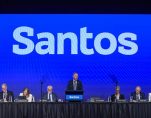
Shares in Santos plunged by up to 13.6% as the Abu Dhabi National Oil Company-backed XRG consortium formally withdrew its A$36.4 billion takeover offer, stating it could not reach agreement with Santos on critical commercial terms.

The consortium, which includes ADQ and Carlyle alongside XRG, had proposed A$8.89 per share in June, equivalent to US$5.76 at the time. Santos had adjusted that for a dividend and told XRG on Monday that it was prepared to accept US$5.626 per share.

This marks the third unsuccessful major offer for Santos over seven years, including a rejected bid from Harbour Energy in 2018 and abandoned merger talks with Woodside Energy. Analysts warn that repeated deal failures erode investor confidence in the company’s ability to seal a large-scale acquisition.

Investor concern was immediately reflected in the market. Santos shares dropped to A$6.61 in early trading, their lowest level since June 10, as the premium embedded in the bid evaporated. The benchmark S&P/ASX200 index was marginally down.

Analysts and banks responded by downgrading the stock. Jarden cut its rating from “overweight” to “underweight”, lowering its 12-month target from A$8.40 to A$7.05 per share. turn0news10turn0search1turn0search2

Santos leadership emphasised its strong project pipeline, pointing to the Barossa gas project in northern Australia and the Pikka oil venture in Alaska as key future growth drivers. Company chair Keith Spence reiterated that Santos has a clear strategy to generate cash, reward shareholders, reinvest in infrastructure and grow production while maintaining safety and reliability.

XRG stated that a “combination of factors, when considered collectively, have impacted the Consortium’s assessment of its indicative offer”, including inability to agree on terms under the Scheme Implementation Agreement. Among sticking points was the demand that the consortium assume certain regulatory and tax-risk obligations, which XRG considered unacceptable.

/India Press Agency/

By Nitya Chakraborty Prime Minister Narendra Modi has stepped into his 75th year on Wednesday, September 17.His birthday is being celebrated by the BJP nationally. The significance is much more as PM’s 75th birthday celebrations have coincided with the centenary programmes on the founding of the RSS in 1925.On October 2 this year, Vijaya Dasami […]

The article Decoding Prime Minister Narendra Modi As A Political Leader On His 75th Birthday appeared first on Latest India news, analysis and reports on IPA Newspack.

Adamu Aliyu, a member of the Plateau State House of Assembly, handed himself over to the Independent Corrupt Practices and Other Related Offences Commission in Abuja, after a Federal High Court issued a declaration that he was wanted on charges arising from contract fraud allegations. Justice Emeka Nwite made the order on ICPC’s request after investigators said Aliyu failed to respond to repeated summonses. Court documents show […]

Government officials in New Delhi have unveiled a secure integrated circuit solution, fully developed within India, designed to underpin future digital identity systems including e-passports. All intellectual property is said to reside domestically, marking a significant milestone in the nation’s tech self-sufficiency drive.

The secure IC is embedded with a “smart OS”, enabling secure authentication, encryption, and identity verification. It is intended for deployment in identity credentials issued by federal authorities. Verification features include tamper resistance, cryptographic protection of stored data, and interoperability with global identity verification standards. The OS is modular, allowing updates and extension of features such as biometric modules, NFC, and remote authentication.

The development is part of the broader India Semiconductor Mission and Semicon India Programme, with an investment outlay of ₹76,000 crore supporting chip fabrication, assembly, display fabs, and design projects. The pilot line for this secure chip is being hosted in Gujarat at an OSAT facility.

Sources indicate that ten semiconductor manufacturing projects have been approved across six states—Gujarat, Assam, Uttar Pradesh, Punjab, Odisha, and Andhra Pradesh—with total investment commitments exceeding ₹1.60 lakh crore. These projects include multiple fabs, ATMP/OSAT facilities, and chip design initiatives.

Among recent achievements is the development of Vikram-3201, a 32-bit space-grade processor by the ISRO Semiconductor Laboratory, presented to the Prime Minister at Semicon India 2025. It has been validated in the PSLV-C60 mission and is said to be robust under extreme launch-vehicle conditions. It was fabricated using a 180 nm CMOS process.

The secure IC is expected to be somewhat different in specifications from Vikram-3201: targeted more towards identity and citizen services rather than space applications. Performance metrics are likely less extreme, but security requirements—such as resistance to physical tampering, side-channel attack mitigation, secure boot, and cryptographic module certification—are being prioritised. Implementation of secure OS standards is underway.

In tandem with hardware development, the government has accelerated IP and design ecosystem support. Under the Design Linked Incentive scheme, 23 design projects have been approved to foster startups, MSMEs, and academic participation. Skill development in VLSI design, packaging, EDA tools, and fab-operations is being emphasised.

Policy observers note that global supply-chain disruptions and geopolitical shifts have provided a backdrop that intensifies India’s push for technological sovereignty. External partnerships—for example in materials, equipment, packaging technologies—are being pursued to fill gaps in the domestic ecosystem.

Challenges remain. Process node maturity is one area—while the 180 nm node is proven and reliable for many applications including space, more advanced nodes dominate consumer electronics and high-performance identity solutions globally. Also, certifications for security standards, supply of trusted materials, secure hardware lifecycle management, and scaling production to volumes needed for national identity issuance will test capacity. Ensuring interoperability with international identity verification frameworks will also be essential.


Samsung Electronics has secured the largest exhibit space in its history for CES 2026, relocating its main showcase to the Wynn and Encore Las Vegas. The company’s pavilion will span approximately 4,628 square metres, about 40 per cent larger than its display at CES 2025, making it the biggest individual booth among all exhibitors. Taking place from 6 to 9 January in Las Vegas, CES is drawing […]

Curve DAO is considering a proposal to pre-mint 60 million crvUSD to support its new Yield Basis AMM, a mechanism designed to use leveraged Bitcoin pools to eliminate impermanent loss while boosting yield. The crvUSD would be borrowed and paired with BTC in liquidity positions rather than sold on the open market, avoiding direct dilution of circulating stablecoin supply.

Proposed by Curve founder Michael Egorov, Yield Basis is expected to launch with three capped pools, each for BTC wrappers, with deposit limits of about US$10 million per pool. The proposal claims that Yield Basis returns value to both veYB holders and to Curve / veCRV holders through trade-and-fee flows, vote incentives, and other revenue mechanisms.

However, the plan has met with resistance in Curve’s governance forums. Critics warn that pre-minting unbacked crvUSD introduces systemic risk, including potential for unmanageable supply growth, governance overreach, and threats to the peg of crvUSD. One commenter described the risk of minting “out-of-thin-air, unbacked, 60M crvUSD”. Some community members argue the DAO’s current permissions already allow arbitrary minting of crvUSD, a concern in light of past vulnerabilities.

Risk mitigation is a major topic of debate. Suggestions include turning the pre-mint into a strict credit line structure, with per-pool limits, a governance-controlled kill-switch, staged rollout starting with a single BTC wrapper, insurance or first-loss vaults, and better transparency via telemetry dashboards. Yield Basis proponents have responded by noting that the protocol has passed six audits to date, is running a Sherlock bug bounty, and intends to enforce caps at launch. They emphasise that crvUSD in Yield Basis is minted only when BTC is deposited.

Scale and revenue projections form a core of the discussion. The proposal argues that Yield Basis solves what’s known as the demand-side absorption issue for crvUSD: rather than minting tokens that are sold, pairing them internally with BTC leverages LP positions, creating supply sinks and revenue flows. Fee distributions—from arbitrage trades, stablecoin pair pools involving crvUSD, and trading commissions—are structured to benefit veCRV holders, veYB holders, and liquidity providers. The DAO ecosystem is slated to receive a share of YB token inflation for vote incentives in major stablecoin pools.

Stakeholders are closely watching governance dynamics. veCRV voting power is fragmented, voter turnout on high-stakes proposals is variable, and some members say optics could affect market confidence. The precedent set by this mint could influence how future protocol decisions are made.

The visit showcased Hong Kong’s appeal as a launchpad for global talent and startups to the winners of a pitch competition hosted by Hong Kong Talent Engage in partnership with Germany’s Young Founders Network HONG KONG SAR – Media OutReach Newswire – 17 September 2025 – Twelve outstanding young innovation and technology (I&T) talents and six organisers from Germany completed an intensive five-day trip to Hong Kong […]

ManageEngine has rolled out substantial enhancements to its unified security solution, Log360, aimed at reducing the volume of false alarms faced by security operations centre teams. The upgraded detection system introduces over 1,500 prebuilt, cloud-delivered detection rules mapped to MITRE ATT&CK and SIGMA frameworks, along with advanced filtering and prioritisation features. The alert fatigue that has long plagued SOC analysts is being addressed through a reengineered detection […]

Single-family housing starts in the United States dropped by 7.0 per cent in August to a seasonally adjusted annual rate of about 890,000 units, marking the lowest level since April 2023, according to Commerce Department data. Permits for future single-family construction fell 2.2 per cent to roughly 856,000 units, underscoring weakening builder confidence. Overall housing starts, including multifamily units, tumbled 8.5 per cent month-on-month to 1.307 million […]

HONG KONG SAR – Media OutReach Newswire – 17 September 2025 – Response to the Policy Address 2025/26 by KK Chiu, International Director, Chief Executive, Greater China of Cushman & Wakefield: Housing Supply and Land Policy Optimize land resource allocation and accelerate public housing supply Hong Kong’s land allocation policies have a profound impact on people’s lives. We are pleased to see the government actively promoting Light […]

Prosus NV has raised its holding in Urban Company Ltd to 7.35 per cent, after acquiring roughly an additional 4 percentage points by investing about $139 million, ahead of the home services startup’s Initial Public Offering. This move positions Prosus as one of Urban Company’s largest shareholders and signals strong institutional faith in the firm’s prospects.

Urban Company’s IPO drew overwhelming demand — it was subscribed over 103 times — and its shares listed at a premium of about 57.5 per cent over the issue price on the National Stock Exchange, opening at ₹162.25 versus the ₹103 issue price. The listing surged the company’s market valuation to nearly $2.8 billion.

According to Ashutosh Sharma, head of Prosus India Ecosystem, the firm increased its stake during the IPO allotment. Prosus first backed Urban Company in 2021; this latest acquisition underscores its continued appetite for stakes in Indian startups with domestic consumer and service-led business models.

Urban Company, founded in 2014 by Abhiraj Singh Bhal, Varun Khaitan, and Raghav Chandra, operates across home services such as beauty, cleaning, appliance repair and plumbing. It has expanded into over 50 cities in India and also operates in international markets including UAE and Singapore. The company reported strong financial performance in its fiscal year ending 2025, with revenue growth of around 36 per cent year-on-year and its first net profit of approximately ₹239–₹240 crore.

Investor enthusiasm was evident in the IPO process. Qualified Institutional Buyers led the subscription with particularly strong bids. The grey market premium, which reflects expectations ahead of listing, had risen to over 50 per cent above the issue price, signalling investor confidence in an upward listing trajectory.

Prosus’s move comes amid a broader trend of institutional investors increasing their exposure to Indian startups ahead of IPOs, particularly those in consumer-facing, service-oriented sectors. Earlier urban and tech-led listings have attracted robust demand, and IPOs that show solid unit economics—strong margins, revenue growth, steps toward profit—are being favoured by capital.

Urban Company’s stock market debut saw a steep rise: the shares not only opened with a 57.5 per cent premium on NSE, but trading surged further, reflecting both investor optimism and perceived underpricing in its IPO offer.

Prosus, headquartered in the Netherlands and known for its early stake in Tencent Holdings, has invested over $8-9 billion in the Indian startup ecosystem. It has backed firms such as Swiggy, Meesho, and PayU. Its amplified investment in Urban Company exemplifies a strategy of anchoring bets on firms that combine growth potential with improving financial metrics.

A constitutional referendum in Guinea is scheduled for 21 September 2025 under the government led by General Mamady Doumbouya, with a draft constitution that would allow him to run for president, extend presidential term limits, and reshape the country’s political structures. The proposal removes a provision in the current transition charter that bars junta members from contesting elections. It introduces a seven-year presidential term renewable once, up […]

Security systems observed a sharp increase in API incidents in the first half of 2025, with over 40,000 security events targeting more than 4,000 environments globally. These incidents indicate that APIs — the unseen conduits connecting apps, payments and authentication — are now at the forefront of cybercriminal strategies. Thales’ API Threat Report for H1 2025, built on Imperva telemetry, shows APIs represent about 14 percent of […]

Hong Kong’s technology sector soared as benchmarks hit their highest point since 2021, supported by mounting investor confidence in China’s artificial intelligence ambitions. The Hang Seng Tech Index jumped about 4.2%, reaching a level not seen since November 2021, while Alibaba, Baidu and other major players saw robust gains on optimism around AI innovation.

Baidu led the charge, climbing roughly 16% in Hong Kong trading—its biggest surge since March 2022—as analysts upgraded its outlook in light of growing belief in its chip-development strategy. Alibaba also rose strongly; its Hong Kong-listed shares have reached levels unseen since late 2021, bolstered by its expanding cloud and AI-linked operations. Market watchers noted increasing activity in China Unicom and internal chip design projects contributing to the momentum.

This surge comes amid broader trends: domestic AI developers are accelerating roll-outs of proprietary chips, cloud computing investment is rising, and regulatory signals suggest stronger support for technology self-reliance. Meanwhile, progress in international matters—such as negotiations over TikTok’s operations—has reduced investor uncertainty, further boosting risk appetite in equity markets.

While enthusiasm is widespread, concerns persist among analysts over the sustainability of growth. High valuations have raised questions about how quickly revenue from AI and cloud services can scale. The technical challenge of chip design and the global competition in semiconductor technology remain formidable barriers.

VISHNU RAJA
RYO YAMADA
HITORI GOTOH
IKUYO KITA