News related to
data

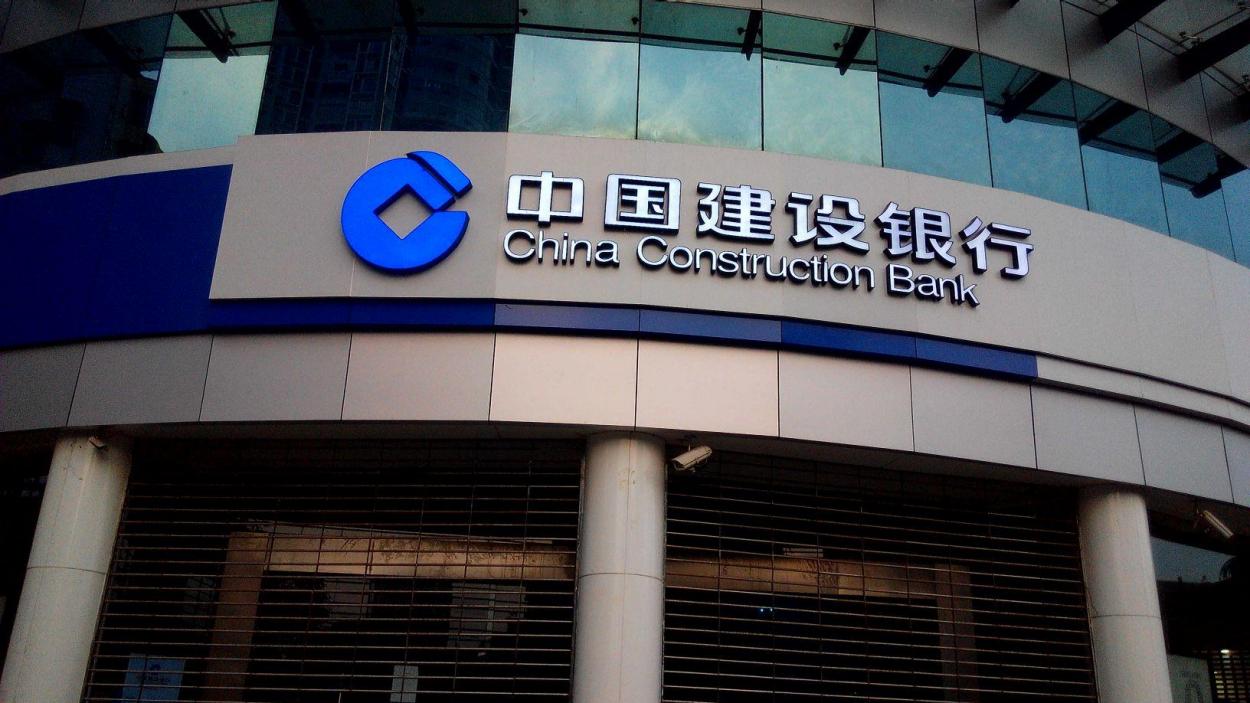
China’s largest state banks have committed over $3.75 billion in debt financing to Saudi Aramco’s Jafurah gas project, while Chinese investment funds have declined to take equity stakes in the venture, sources told Reuters.

The bulk of this funding comes from Bank of China, ICBC and China Construction Bank, each contributing around $1 billion, and Agricultural Bank of China adding roughly $750 million. This debt financing accounts for more than one-third of the total capital sought for what is expected to be the largest shale gas development outside the United States.

Aramco’s deal involves an $11 billion lease-and-leaseback agreement signed in August with a consortium led by Global Infrastructure Partners, an arm of BlackRock. Under the arrangement, a new entity called Jafurah Midstream Gas Company will lease processing assets to Aramco for 20 years. Aramco retains a 51 per cent stake, while the consortium holds the remaining 49 per cent.

Despite the opportunity to join the equity syndicate, several Chinese state-linked funds declined to participate, a move that sources attribute to heightened U. S.–China tensions. Beijing is said to have discouraged fund-level engagement with U. S.-affiliated private capital firms, even when such firms do not have overt U. S. exposure.

The Chinese banks’ decision to provide senior debt but avoid equity signals a calibrated strategic posture: backing the project financially without direct governance alignment with U. S.-linked investors.

Aramco’s broader ambition is to expand its gas production capacity by 60 per cent over 2021 levels by 2030. The Jafurah basin is estimated to contain 229 trillion standard cubic feet of raw gas and 75 billion stock tank barrels of condensate.

The BlackRock-led consortium is also negotiating additional capital of around $10.3 billion with a mix of debt instruments; participants in those talks include JPMorgan and Sumitomo Mitsui Banking Corporation. Those financial structures are intended to support the lease-and-leaseback model without ceding control of core infrastructure assets to external parties.

Within the Gulf, Chinese lenders’ prominent involvement in Jafurah’s financing echoes a broader trend. Analysts note that China is repositioning its role in Gulf energy infrastructure by leveraging its strengths in project debt and export credit rather than co-investment in U. S.-sponsored equity schemes.

Saudi Arabia is concurrently expanding its gas network. It has signed over $25 billion in contracts for the second phase of Jafurah development and further gas-network enhancements, including pipeline extensions of 4,000 km to increase capacity by 3.2 billion standard cubic feet per day. Chinese firms, such as Sinopec, are among the contractors participating in these projects.

For Aramco, the dual approach of securing large-scale debt from Chinese banks while partnering with international investors via the leaseback model helps it mobilise capital without relinquishing decisive control. The arrangement offers investors predictable tariff-based returns.

Chinese banks’ exposure gives them influence over covenant terms, loan pricing and repayment schedules. That leverage, without the burdens or political friction associated with equity, aligns with Beijing’s financial diplomacy toward strategic energy corridors.

The full constellation of debt and equity deals around Jafurah—and the dynamics among Gulf producers, Chinese state capital, and U. S.-linked private investors—will be among the key nodes shaping the next wave of energy infrastructure financing.

Meta has started deploying a new “communities” feature in Threads, allowing users to join dedicated spaces centred on specific interests such as basketball, TV, K-pop or books. These communities, currently live across more than 100 curated topics, build on Threads’ existing topic tags and custom feeds, but now bring a more structured environment for focused conversations. When a user joins a community, it will be pinned to […]

Space42 has issued its Foresight Constellation Viewpoint, a strategic dossier that underscores how Synthetic Aperture Radar satellite systems, when paired with artificial intelligence, can reshape decision making for governments and industries. The viewpoint emphasises the capacity for persistent imaging, all-weather operation and near-instant analytics — capabilities that are becoming mission-critical in an era of intensifying climate, security and infrastructure challenges.

At the heart of the Viewpoint is GIQ, Space42’s AI engine that converts raw SAR data streams into decision-grade intelligence within minutes. The report argues that the combination of high-resolution persistent coverage and AI transforms Earth observation from static imagery into a dynamic intelligence layer for monitoring, planning and emergency response. Launching Foresight-1 in August 2024 and Foresight-2 in January 2025 has already bolstered the UAE’s Earth observation capability.

Space42 frames its approach as not just a technological upgrade, but a sovereign asset: reliance on third-party satellite data leaves states vulnerable to disruptions, but a domestic SAR-analytics ecosystem offers resilience and control. The global SAR market, currently estimated around $5.8 billion, is forecast to nearly double to $9.8 billion by 2030. According to the Viewpoint, deployment of integrated SAR systems can yield cost savings — for instance, reducing predictive maintenance expenses by up to 30 per cent while improving emergency response by as much as 90 per cent.

The technical backbone of this strategy depends on both the satellite constellation and ground systems. Space42 has entered into a joint venture with ICEYE to localise manufacturing of SAR satellites in the UAE, aiming to strengthen supply chains and transfer expertise. The joint venture builds on prior collaboration: ICEYE’s technology underpins the Foresight satellites, and cooperation is intended to deepen over coming years.

Foresight-2 was successfully deployed via a rideshare launch on 14 January 2025, expanding the constellation’s capabilities and reinforcing its ability to revisit areas multiple times per day. With Foresight-1 and 2 in orbit, the full constellation is expected by 2027. The satellites exploit SAR’s unique ability to image through clouds and in darkness — a significant advantage over optical systems, especially in disaster and high-latency environments.

The Viewpoint also positions its narrative with real-world scenarios. It cites the 2023 Turkey earthquake, in which optical systems were hindered by cloud cover, while SAR satellites continued functioning — enabling assessments of a major dam’s structural integrity in crisis conditions. That example supports the argument that SAR ecosystems must be treated not as supplements but as core infrastructure for resilience and security.

Space42 positions itself as a full-stack player: not merely a satellite operator but a systems integrator combining space services, geospatial analytics and AI. Its dual business units—Space Services and Smart Solutions—serve satellite operations and downstream intelligence markets respectively. Among its touted use cases are border surveillance, maritime monitoring, infrastructure health, mobility and disaster management.

Yet challenges remain. Building sovereign SAR ecosystems demands investment in ground infrastructure, antenna networks, data processing centres and skilled personnel. Market competition is increasing: global players—commercial and governmental—are accelerating developments in miniaturised SAR payloads, hybrid optical/SAR systems and edge AI processing. Moreover, the cost dynamics of deploying dense constellations must be managed against returns from clients in defence, environment and infrastructure sectors.

Citi has revised its cryptocurrency outlook with a bold projection that Bitcoin will reach $181,000 within the next 12 months, while lowering its year-end 2025 target to $133,000 amid macro headwinds. The bank’s analysts emphasise that sustained inflows from exchange-traded funds and institutional adoption will serve as the key drivers behind this forecast.

In its latest note to clients, Citi outlined a base case assuming roughly $7.5 billion of inflows into Bitcoin through ETFs and corporate digital treasuries. In its bullish scenario, that figure could accelerate, boosting the upper bound estimate to $156,000 by year-end 2025. On the other hand, if recessionary pressures intensify, the bear case puts Bitcoin as low as $83,000.

Citi trimmed its near-term outlook slightly, revising the 2025 year-end Bitcoin target downward from $135,000 to $133,000. The bank cited factors such as a stronger U. S. dollar and softer gold prices as constraining forces even as demand remains intact. Ethereum’s forecast was upgraded: the bank now expects it to close 2025 at $4,500 and rise to $5,440 over 12 months. The increased optimism for Ethereum stems from its yield-producing features, staking potential and growing institutional interest.

These adjustments came amidst a backdrop of accelerating ETF inflows across asset classes. U. S.-listed ETFs have now amassed roughly $917 billion this year alone, following on from a record $1.1 trillion in the prior year. Bitcoin‐linked ETFs such as BlackRock’s IBIT have contributed meaningfully to that tally, while ETFs offering derivative strategies or income-oriented profiles have also drawn substantial capital.

Market commentators point out that ETFs offer a more accessible, regulated path for institutional investors and financial advisors to gain crypto exposure. That ease of entry, combined with the liquidity and scale of Bitcoin as the “digital gold” play, underpins Citi’s conviction that Bitcoin remains poised to absorb a disproportionate share of new capital entering the crypto sector.

Still, Citi emphasises that its bullish scenario depends heavily on flow continuity. Should macro conditions deteriorate—whether through tighter monetary policy, weaker risk appetite, or geopolitical stress—those inflows could slow or reverse. In such a scenario, Citi’s downside targets become relevant.

Other analysts echo a cautiously bullish tone. Some foresee Bitcoin reaching $160,000 to $200,000 by year-end, citing seasonal patterns and regulatory tailwinds, especially developments in U. S. crypto policy. Others warn that high valuations and volatility could invite sharper pullbacks if sentiment weakens.

The tension between macro headwinds and structural drivers is particularly evident in Ethereum’s case. Unlike Bitcoin, Ethereum supports staking and decentralized finance activity, making it more sensitive to adoption metrics and usage growth. Citi believes that those features make Ethereum increasingly appealing to yield-seeking institutions, especially as its ecosystem matures.

Crypto markets have responded positively to the outlook. Bitcoin has recently moved past $120,000 levels, reaching two-month highs, while Ethereum’s price has also climbed steadily. Some of this momentum, analysts say, appears driven by ETF allocations and strong demand from institutional flows.

Lucid Games is relocating its headquarters to a larger space in Liverpool’s Baltic Triangle, aiming to boost capacity and reinforce its footprint in the UK gaming scene. The new office, opening in November, will occupy a refurbished Victorian grain mill and span roughly 13,192 square feet, while retaining heritage elements such as brickwork, exposed timber, and original mechanical features. The studio has appointed the design firm Oktra—known […]

A newly devised artificial intelligence system dubbed Diag2Diag is poised to reshape how physicists observe and control the seething plasma inside fusion reactors. The tool generates synthetic diagnostic data to compensate for gaps left by conventional sensors, particularly at the plasma’s elusive edge, enhancing stability control and reducing hardware demands. Diag2Diag emerges from a cross-institutional effort led by Princeton University and the Princeton Plasma Physics Laboratory, with […]

HANGZHOU, CHINA – Media OutReach Newswire – 3 October 2025 – Geely Riddara launches the RD6 Econ all-electric pickup in Laos and the Philippines, with rollouts to Thailand, Malaysia, and Pakistan—Positioned as an economical, dual-use pickup for commercial and personal needs, the RD6 Econ combines outstanding cost efficiency with optimized energy consumption to offer global markets a more sustainable, value-driven choice. Geely Riddara Launches RD6 Econ All-electric […]

Advertisements

A plunge of nearly 90 percent in blockchain-related job postings across Europe underscores a stark contraction in the sector, even as industry leaders plan to rally through the 11th European Blockchain Convention in Barcelona. By one estimate, Europe went from over 100,000 jobs referencing “blockchain” in 2022 to roughly 10,000 in 2025, representing the dramatic erosion in demand. Analysts cite regulatory complexity, high energy costs, and capital […]

The US Commerce Secretary has warned that reliance on DeepSeek’s artificial intelligence models is “dangerous and shortsighted,” amid findings that they are more vulnerable to hacking and underperform against US systems. An evaluation by the Center for AI Standards and Innovation within NIST compared DeepSeek’s R1, R1-0528 and V3.1 models with leading US systems—including OpenAI’s GPT-5 series and Anthropic’s Opus 4—on 19 performance and safety benchmarks. The […]

Austria’s armed forces have shifted from Microsoft Office to the open-source LibreOffice platform on approximately 16,000 desktops, a move framed by defence authorities as a step toward digital sovereignty rather than cost cutting. Michael Hillebrand, head of Directorate 6 ICT and Cyber, emphasised that data processing will now remain entirely in-house under strictly auditable systems. He told ORF radio that dependency on external cloud providers was considered […]

Dubai’s ride-hailing landscape has shifted dramatically as the UAE-based Zed app now encompasses 10,764 taxis across the emirate—equivalent to more than four in five licensed cabs. The move was enabled through strategic partnerships with Dubai Taxi Corporation and National Taxi, folding in the fleets of three major operators.

Under the new arrangement, DTC’s entire fleet and those of National Taxi and Kabi by Al Ghurair become bookable via the Zed platform, effectively making Zed the host of Dubai’s second-largest taxi fleet. Zed executives describe the expansion as a means of enhancing coverage, cutting cancellations, and lowering wait times, especially across areas traditionally underserved.

Badr Al Ghurair, Zed’s Chief Executive, emphasised the home-grown nature of the platform and its deep knowledge of Dubai’s commuting patterns: “this collaboration … further strengthens Dubai’s mobility ecosystem while ensuring that our communities have access to reliable, everyday transport solutions” he said. Abhinav Patwa, Zed’s EVP and Head, added that the alliances provide scale and reliability without losing sight of a customer-first approach.

The accord comes amid Dubai’s broader ambition of converting 80 per cent of taxi bookings to digital platforms—a target within reach through the emirate’s Smart City 2025 programme. The integrated fleet also introduces more electric and hybrid taxis into Zed’s pool, aligning with the city’s sustainability goals.

This consolidation represents a notable realignment in Dubai’s mobility market. For years, taxis and e-hailing apps operated largely in parallel, with limited overlap in booking channels. The new model bridges that divide, bringing traditional operators into the digital fold via a single platform. Analysts say the move may accelerate the decline in usage of standalone taxi apps and push rivals to forge similar alliances or risk falling behind.

Dubai Taxi Company, now a public joint stock firm under Law No. 21 of 2023, operates more than 10,000 vehicles, of which 6,200 taxis were folded into the agreement. Kabi by Al Ghurair contributed another 3,680 vehicles under the tie-up. According to RTA data, Dubai’s taxi sector expanded by 7 per cent in the first half of 2025 compared with the same period in 2024, signalling growing demand for urban mobility services.

Through the arrangement, newly commissioned taxis across the partner fleets will automatically integrate into Zed’s system—making service expansion incremental and scalable. Several of the added vehicles are electric or hybrid, helping Zed accelerate its greening efforts.

Passengers can now access all these taxis via Zed’s iOS and Android apps, with the platform continuing to offer features such as guaranteed on-time pickups for pre-booked premium rides. The enhanced capacity is expected to reduce wait times during peak hours, improve service in remote zones, and lower the incidence of ride cancellations.

Bitwise has rolled out the Bitwise Avalanche Staking ETP on Deutsche Börse Xetra, offering investors regulated access to AVAX price movements along with integrated staking income. The product is fully backed by physical AVAX, with staking rewards credited daily and reinvested.

The Avalanche staking ETP joins Bitwise’s suite of index-linked staking vehicles in Europe, designed to cater to institutional demand for yield-bearing crypto exposure through familiar capital markets structures. Listing documents show that the ETP carries an annual management fee of 0.85 per cent and that approximately a third of staking rewards will be retained as a service fee to cover operational costs.

Deutsche Börse’s listing announcement notes that AVNB is tradable in both euros and US dollars and that all staking income is automatically reinvested to boost underlying token holdings. The product is being presented as a way to participate in Avalanche’s ecosystem without having to manage technical staking infrastructure, custody, or validator responsibilities.

Bradley Duke, Head of Europe at Bitwise, said the launch “opens the door for investors to access exposure to price movements in AVAX coupled with staking rewards through an exchange-traded total return product.” He emphasised Bitwise’s mission to make digital assets accessible to institutional investors via regulated, transparent instruments. John Wu, President of Ava Labs, welcomed the development, saying that access through established market structures broadens participation in the Avalanche network.

Avalanche operates as a high-throughput, energy-efficient layer-1 blockchain that enables subnetworks tailored for compliance, governance, and performance use cases. Its growing adoption in tokenisation, decentralized finance, gaming, and payments has made it increasingly of interest to institutional players. The ETP references the “CF AVAX Staked Return Index” benchmark to track performance net of costs and staking fees.

Regulators and exchanges across Europe have gradually warmed to crypto staking products, particularly as demand rises for yield-oriented digital assets within regulated frameworks. Bitwise has already launched similar staking ETPs in the region, including for Ethereum, and says its European product line is domiciled in Germany under oversight by BaFin. Critics caution, however, that staking rewards are subject to network conditions, validator performance, slashing risk, volatility, and protocol governance changes, meaning returns are not guaranteed.

Visitors in Saudi Arabia will be able to open local bank accounts using their “Visitor ID,” following a decision by the Saudi Central Bank to accept the identification document issued by the Ministry of Interior. This marks a major regulatory shift in how non-residents can access financial services in the Kingdom.

SAMA’s directive mandates that banks recognise the Visitor ID—traditionally used for immigration and internal tracking—as a valid identity document for account onboarding, provided it is digitally verifiable through government-authorised platforms. According to SAMA, this adjustment will enable banks to reach new customer segments without altering their existing account-opening rules.

This change aligns with Saudi Arabia’s push under Vision 2030 to expand financial inclusion and improve the visitor experience. By lowering barriers to formal banking, the Kingdom aims to reduce dependence on cash, support digital payments, and draw more tourists, business travellers and pilgrims into regulated financial channels.

Banks will be required to adjust verification systems and compliance protocols to integrate the new policy. Many are expected to link the Visitor ID to local digital check platforms and mobile wallets, allowing holders to conduct everyday transactions. Some limitations may apply: banks may restrict access to credit, loans or other advanced banking services until further identification or residency status is established.

Under existing SAMA account rules, banks already require robust customer identification steps for all new accounts. These include verifying identity documents, screening for anti-money laundering, and collecting customer contact and address details. The updated regulation does not eliminate those checks but changes the baseline identity document accepted for visitors.

Observers see this as one of several steps in a broader regional movement. While Gulf states have long required residence permits or more rigid documentation to open standard accounts, the Saudi reform may test whether similar access models are feasible elsewhere. Already, financial technology and tourism stakeholders are evaluating the competitive edge this gives Saudi Arabia.

Critics caution that implementation risks must be managed carefully. Allowing visitor-based accounts introduces potential anti-money laundering and fraud vulnerabilities. Banks will need to balance user convenience with real-time monitoring, transaction limits, and strong identity verification safeguards.

From the visitor standpoint, the reform reduces friction in accessing local banking: new arrivals will no longer have to rely solely on foreign banks, prepaid cards or cash. Pilgrims and business travellers handling local payments, donations, or services should benefit directly.

SAMA emphasised that the change came through its periodic policy review, intended to keep regulations in line with evolving financial technology trends and market needs. The central bank said it expects the reform to reinforce the Kingdom’s cashless payments infrastructure and strengthen the banking ecosystem’s responsiveness to global customer expectations.

The policy rollout may occur in phases, as banks update internal systems, train staff, and obtain approvals from compliance units. Over the coming weeks, banks are likely to issue guidelines explaining account features, permissible transaction types, and validity periods tied to the Visitor ID status.

HONG KONG SAR – Media OutReach Newswire – 2 October 2025 – Henderson Sunlight Asset Management Limited (the “Manager“) is pleased to announce that Sunlight REIT has attained the highest five-star rating in the 2025 GRESB Real Estate Assessment (“GRESB Assessment“), as well as a Grade A rating in Public Disclosure for the third consecutive year. GRESB Assessment is a worldwide recognized environmental, social and governance (“ESG“) […]

Celebrating life through innovation and compassion in reproductive medicine. KOTA DAMANSARA, MALAYSIA – Media OutReach Newswire – 2 October 2025 – Thomson Fertility is shining a spotlight on In Vitro Activation (IVA), an advanced technique that provides renewed possibilities for women diagnosed with Primary Ovarian Insufficiency (POI) (due to follicular dysfunction or early loss of eggs) and diminished ovarian reserves (DOR), two conditions that significantly reduce fertility […]

OpenAI has surged past its prior valuation to reach an estimated $500 billion after current and former employees sold approximately $6.6 billion worth of shares to a consortium of investors. The deal, structured as a secondary share transaction, elevates OpenAI to the top of private tech valuations globally. Buyers in the transaction include Thrive Capital, SoftBank, Dragoneer Investment Group, Abu Dhabi’s MGX and T. Rowe Price. Although […]

BERLIN, GERMANY – Media OutReach Newswire – 2 October 2025 – Under the theme “Travel Taipei – A City of Layers”, Taipei is strengthening its promotion in Europe, presenting itself as a city where modern lifestyle, cultural depth, natural landscapes, and culinary excellence converge. From September 20 to 25, the campaign rolled out a series of events in Germany and the Czech Republic to showcase the city’s […]

A wave of investor appetite lifted the combined market cap of the top 15 public bitcoin miners to $58.1 billion in September, up from $41.6 billion in August and nearly three times the March low of $19.9 billion. That gain vastly outpaced bitcoin’s six-month rise of 21 per cent.

Iris Energy delivered a standout return of +624 per cent, while Applied Digital jumped +345 per cent and Cipher Mining rallied +321 per cent. Other strong performers included TeraWulf, Hut 8 and Bitfarms, up between +179 and +280 per cent; Riot Platforms added +147 per cent, HIVE rose +133 per cent, and Core Scientific gained +105 per cent. Even industry heavyweights such as CleanSpark, Bitdeer and Mara Holdings posted returns well above bitcoin’s own gain.

The bullish momentum coincided with accelerating pivots by mining firms into high-performance computing and AI infrastructure. Cipher Mining secured a 10-year colocation deal with AI cloud provider Fluidstack worth $3 billion, supported by $1.4 billion in backing from Google for lease obligations in return for share warrants. This deal boosted investor confidence and underscored the strategic shift beyond raw bitcoin mining.

Analysts note that miners with credible AI/HPC pivots posted average gains of roughly 57 per cent over the past month, significantly beating more traditional or “pure-play” miners. Those gains also outstripped bitcoin’s roughly 9 per cent rise in the same period.

At the same time, the bitcoin network’s hash rate jumped 9 per cent month on month, reaching an average of about 1,031 exahashes per second. That increase intensified competition and compressed margins: daily block reward revenue fell 10 per cent, and gross profit dropped 17 per cent compared to August.

Although elevated valuations reflect renewed investor faith in the mining sector, concerns about sustainability persist. The widening gap between equity valuations and operating revenues prompts questions about whether mining operators can sustain growth amid rising electricity costs, regulatory risks and hardware supply constraints.

Several firms are doubling down on their diversification efforts. Iris Energy has expanded into cloud services, while Core Scientific is pushing deeper into enterprise AI hosting. TeraWulf recently announced multi-year AI hosting contracts backed by Google and leased deployment capacity across its sites.

Oil prices moved higher on Thursday as the market reacted to fresh signals of tightening supply and geopolitical risks that dampen prospects for aggressive output growth. Brent crude rose to around $65.70 per barrel, while U. S. West Texas Intermediate climbed above $62.00. Markets had been under pressure earlier in the week after crude dropped nearly 7 percent across three sessions, largely driven by expectations that OPEC+ […]

Global investment giant KKR has acquired a minority stake in the entity leasing Abu Dhabi National Oil Company’s gas pipeline assets, bridging further into the Gulf’s energy infrastructure sphere. The financial terms were undisclosed; key rights and management powers remain with ADNOC. This marks a continuation of KKR’s partnership with ADNOC: in 2019, it invested in the oil pipeline business—then among the first foreign institutional investments into […]

Electronic Arts, creator of blockbuster franchises like “Battlefield” and “Madden NFL,” has agreed to be acquired by a consortium led by Saudi Arabia’s Public Investment Fund, private equity firm Silver Lake, and Jared Kushner’s Affinity Partners, in what would be the largest leveraged buyout in history. Under the terms, EA shareholders will receive $210 per share in cash, valuing the company at roughly $55 billion. The transaction […]

The spectacular showcase reaffirms Bangkok’s rising status as a premier global destination for luxury watches. BANGKOK, THAILAND – Media OutReach Newswire – 2 October 2025 – Siam Paragon, a legendary landmark in the heart of Bangkok, Thailand, and a must-visit destination for local and international visitors, has solidified its reputation as the premier luxury watch destination with the success of “Siam Paragon Bangkok Watch Week 2025.” Recognized […]

Kuwait has issued $11.25 billion in sovereign bonds split across three maturities, marking its first successful US dollar debt sale since 2017 and signalling a renewed re-entry into global capital markets. The offering drew strong investor demand, allowing the country to secure attractive pricing even as it seeks to diversify its funding amid mounting fiscal pressures.

The issuance comprised $3.25 billion in three-year bonds at 40 basis points over US Treasuries, $3 billion in five-year bonds also at 40 bps, and $5 billion in ten-year bonds at 50 bps. Order books reached as high as $28 billion—roughly 2.5 times oversubscribed—enabling Kuwait to tighten guidance from initial levels. Over two-thirds of the allocations went to investors outside the Middle East and North Africa, with significant participation from the United States, Europe, the United Kingdom and Asia.

Acting Finance Minister Subaih Al-Mukhaizeem described the deal as “historic”, citing that it reflects “global markets’ confidence in Kuwait’s financial strength, prudent policies, and solid reserves.” He added that this issuance reinforces Kuwait’s reputation as a credible sovereign issuer while supporting the New Kuwait 2035 vision of economic transformation.

Analysts noted that the spreads achieved in this issuance are significantly tighter than Kuwait’s inaugural dollar bond sale in 2017, underscoring market optimism about its credit metrics and macro outlook. Its low debt burden—currently less than 10 percent of GDP—offers the space for measured borrowing, even while the International Monetary Fund projects that the ratio may rise toward 25 percent by 2030 as deficits widen.

The path to this issuance was opened in March with the passage of a long-delayed public debt law, which raised the borrowing ceiling from KD 10 billion to KD 30 billion and permitted longer maturities. That law had been stalled for years due to clashes between the appointed government and the elected parliament; in response, the emir dissolved parliament for up to four years, clearing the way for reform.

Kuwait is the latest Gulf sovereign to take advantage of favourable global interest rates and strong investor appetite, joining others such as Saudi Arabia, the United Arab Emirates and Bahrain in tapping dollar markets to address fiscal gaps and finance diversification programmes.

While the bond sale delivers fresh funding, questions remain about Kuwait’s strategy for deploying the proceeds. Its economy remains heavily dependent on hydrocarbon revenues, which accounted for nearly 90 percent of government income in the most recent fiscal year. Previous reporting indicates that proposed projects include infrastructure upgrades such as a new port and airport expansion, intended to generate non-oil revenue streams.

GlobalSource Partners had speculated earlier that Kuwait’s general deficit could rise to between 7 and 8 percent of GDP in the current year, with this issuance expected to cover a large portion of the shortfall. The country has also tapped local debt markets, issuing about $5 billion in domestic bonds before turning to international markets.

Riyadh has unveiled a bold draft plan to permit all non-resident foreign investors direct access to the main Saudi stock market, eliminating the need for the current Qualified Foreign Investor framework and abolishing swap agreements. The Capital Market Authority has opened a 30-day public consultation on the proposal, which, if adopted, would mark a major liberalisation in the Kingdom’s capital markets.

Under the draft, non-resident investors would no longer need to satisfy eligibility thresholds currently required for QFI status, and would be permitted to hold shares in listed companies in their own names. The plan would also phase out swap arrangements that allow foreign parties to obtain economic exposure to Saudi stocks without holding legal title. The consultation period runs until 31 October 2025.

The CMA says the changes aim to broaden the investor base, increase liquidity and attract a wider pool of capital. Foreign holdings in the main market had already reached SAR 412 billion by mid-2025, comprising more than 471 percent growth from SAR 72 billion in 2015. Non-resident capital under the QFI regime, combined with swap exposure, totals over SAR 528 billion.

The QFI system currently imposes strict entry criteria — one requirement is minimum assets under management of SAR 1.875 billion. QFIs also enjoy direct ownership and voting rights, whereas swap-based investors operate indirectly. Under the rules, non-resident foreign investors face a cap of 10 percent in any listed firm, while aggregate foreign ownership in a company is capped at 49 percent. Swap contracts are legally structured to grant economic benefits without formal shareholding rights under the depositary centre system.

Market analysts say lifting QFI restrictions could lower barriers for small and mid-sized international asset managers that presently cannot meet the QFI thresholds. “This is a structural shift — it moves Saudi from a screened-access regime to an open one,” commented a Gulf region investment strategist. Observers note, however, that tightening surveillance, settlement and disclosure mechanisms will be essential to managing risks of volatility and capital flight.

Under the draft, swap accounts held by foreign investors would need to be converted to direct shareholding accounts within a transition period of up to 12 months. The CMA also proposes adjustments to reporting, market conduct and corporate governance rules to ensure fairness.

The consultation draft aligns with broader reforms introduced in 2025, including simplification of account opening for some foreign investor categories, especially GCC-residents or overseas investors with prior residency in the region. That move had already signalled a gradual loosening of restrictions.

Equity markets in the Gulf contrast in openness. The UAE and Qatar allow broader foreign participation, while Saudi’s incumbent QFI plus swap structure has long been viewed as more restrictive. Proponents of liberalisation contend that full direct access may raise Saudi’s appeal as a regional hub and deepen cross-border portfolio flows.

VISHNU RAJA
RYO YAMADA
HITORI GOTOH
IKUYO KITA