News related to
data

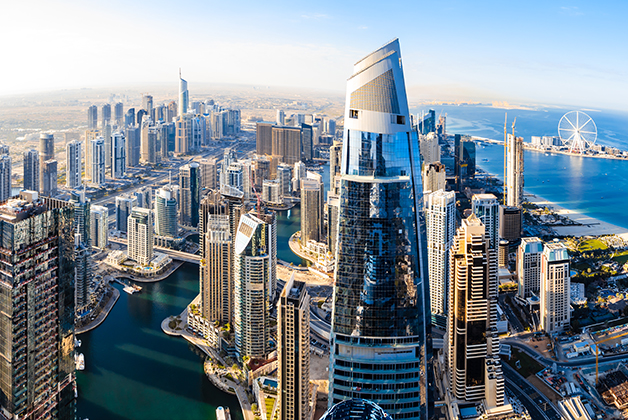
India is positioning itself as a global food supplier using Dubai as the logistical gateway, according to statements made by Chief Minister N. Chandrababu Naidu of Andhra Pradesh during his visit to the UAE. He declared that India’s strengths in agriculture, horticulture, aquaculture and logistics will enable the country to serve “the global community” through Dubai’s market access.

Naidu spoke of the UAE city’s strategic connectivity and global reach as ideal for scaling Indian-food exports. He noted that the Andhra Pradesh government is aiming to reduce logistics costs by integrating inland waterways, railways, road and seaports, and by spending around 14 per cent of the state’s GDP on logistics infrastructure as part of the drive to increase efficiency. His role as chief minister of Andhra Pradesh places him at the centre of an ambitious push to offer the state as a manufacturing and supply-chain hub with Indian agriculture at its core.

The announcement comes amid a broader investment road-show in which Naidu met with senior policymakers and business leaders in the UAE to discuss partnerships across multiple sectors, including food processing, green energy, AI and infrastructure. During a dialogue in Dubai the chief minister stated that India will supply food to the global community through Dubai as a hub, adding that he met ministers, family-business leaders and airlines executives during the visit. He praised the Indian diaspora for their contributions and flagged the state’s goal of making the new capital Amaravati a “green and blue city” built around water, greenery and advanced infrastructure.

Andhra Pradesh’s food-processing ambitions are a central plank of the strategy. The state government has invited investment from UAE food-conglomerates to scale cocoa cultivation, chocolate manufacturing, aquaculture and related logistics. The Chinese food-industry trend of “value-added exports” is echoed by India’s attempt to move beyond raw agricultural exports towards packaged, processed and high-logistics-integrated supply chains.

From a trade perspective, positioning Dubai as a re-export hub can offer Indian producers quicker access to Middle East, African and European markets. Dubai’s status as a global logistics and trading hub gives India the opportunity to piggy-back on existing infrastructure and reach. It also offers investors assurances of regulatory, financial and physical connectivity.

However, a number of challenges stand in the way. India already faces structural issues in agriculture: fragmented landholdings, variable productivity, post-harvest losses, and high domestic logistics costs. While Naidu cites a logistics cost of about 14 per cent of GDP for Andhra Pradesh, the national average remains higher and such a figure implies major optimisation ahead. The use of Dubai as a hub also raises questions of tariff regimes, transit duties, warehousing handling cost and competition from other international producers using the Gulf as re-export platforms.

Critics also point to the risk of over-promising on export capacity. India’s agriculture export ratio remains modest relative to the size of its production, and moving up the value chain into globally competitive processed foods will require investment in cold-chain infrastructure, quality standards and market-specific certifications. The reliance on a single state’s announcement may also raise concerns about federal coordination and falling short of expectations if broader national agricultural reforms lag.

Microsoft has introduced a new avatar named Mico to lead its latest update of the Copilot assistant, marking a strategic move in how the company presents AI interactions. The Mico character joins an array of twelve new enhancements in the Copilot Fall Release, positioning the assistant as more expressive, collaborative and user-friendly. The visual identity of Mico is intentionally playful—an abstract, floating shape capable of changing colour […]

By Nitya Chakraborty The U.S. President Donald Trump is finally meeting the Chinese President Xi Jinping in Seoul by this month end, possibly on October 30, on the sidelines of the Asia-Pacific Economic Cooperation Summit in the South Korean capital scheduled for October 31 and November 1. Both the leaders are attending APEC summit, but […]

The article Will Trump-Xi Summit In Seoul Lead To A Serious Trade Deal? appeared first on Latest India news, analysis and reports on Newspack by India Press Agency).

US-based data-centre specialist Crusoe Energy Systems LLC has secured approximately $1.38 billion in a Series E funding round, raising its valuation to more than $10 billion underlining the intensity of demand for artificial-intelligence infrastructure. The equity fundraising was co-led by Mubadala Capital and Valor Equity Partners, and attracted backing from major investors including Nvidia Corporation, Fidelity Management & Research Company and Founders Fund. Crusoe, founded in 2018, […]

Dubai-based Emirates Integrated Telecommunications Company PJSC announced that its third-quarter results delivered a 7.9 per cent year-on-year jump in revenues to AED 3.87 billion, underpinned by growth in mobile, fixed and ICT businesses. The company reported an EBITDA of AED 1.85 billion, which equated to a margin of 47.8 per cent, while normalised net profit rose by 25.8 per cent to AED 732 million. Chief Executive Fahad […]

KINSHASA, CONGO – Media OutReach Newswire – 25 October 2025 – The Government of Kinshasa, the capital of the Democratic Republic of the Congo, and Vingroup (Vietnam) have signed a Memorandum of Understanding (MoU) to collaborate on research and development of large-scale urban projects and green mobility. The agreement marks an important milestone in the cooperation between Vietnam and Democratic Republic of the Congo, reflecting the shared […]

Gulf states are emerging as influential players in digital assets, with governments across the region intensifying efforts to regulate cryptocurrencies, tokenisation and Web3 innovations. A growing number of jurisdictions are introducing licensing frameworks for virtual asset service providers, stablecoin regimes and asset-tokenisation structures, signalling a shift in strategy from reactive oversight to proactive design.

The Central Bank of the United Arab Emirates has introduced a Payment Token Services Regulation that obliges issuers, distributors and custodians of payment tokens to maintain full reserve backing, undergo mandatory licensing and meet robust anti-money-laundering and cybersecurity standards, thereby positioning the UAE as a regulatory pioneer in the region. Across the region, countries such as Bahrain and Saudi Arabia have developed layered digital-asset frameworks, with Bahrain’s central bank among the earliest movers and Saudi launching fintech sandboxes and pilot token-asset schemes under its Vision 2030 plan.

Market data underline these developments. Analysis shows that between July 2023 and June 2024 the Middle East and North Africa region handled some US$338.7 billion in on-chain crypto value, accounting for approximately 7.5 per cent of global transaction volume. Institutional flows dominate: about 93 per cent of value transferred in the region came in amounts of US$10,000 or more.

Several regional platforms have obtained new licences under this regulatory push. The region’s first licensed crypto-asset service provider, Rain Financial Inc., has expanded its services under licence from both Bahrain’s regulator and Abu Dhabi’s ADGM-FSRA. In Bahrain, over 50 firms including nearly half focused on digital-assets are in discussions to establish operations under the Central Bank’s regime.

The tokenisation of real-world assets is gaining traction, with banks and global institutions exploring issuance of token-backed bonds, real estate and commodity-linked tokens. According to consultancy research, tokenisation could add as much as US$230 billion annually to MENA-region GDP. Major international exchanges and asset-managers are establishing footholds: for instance, the global exchange Binance uses the UAE as its regional base and has obtained a licence under Dubai’s Virtual Assets Regulatory Authority.

Despite this momentum, the region faces challenges. Implementation remains uneven: regulatory capacity across jurisdictions varies, local consumer-protection rules are still emerging and cybersecurity vulnerabilities in wallet providers and exchanges pose material risk. Energy-use and environmental impacts of crypto-mining have also drawn regulatory scrutiny: in one Gulf city, electricity consumption fell by over fifty per cent after enforcement of mining curbs.

Taxation and corporate-governance issues are also under development. In Saudi Arabia individuals currently pay no capital-gains tax on crypto, though businesses may face up to 15 per cent tax with corporate income taxed at 20 per cent plus a 2.5 per cent zakat levy. Given the youth-skewed demographics of Gulf markets and high smartphone penetration, regulators see digital-assets as both a diversification lever and a conduit to broader fintech innovation.

For global crypto and Web3 players the Gulf region offers a combination of clear regulation, large capital pools and government-driven ambition. However firms must navigate rigorous licensing conditions, reserve-backing rules, AML frameworks and evolving governance standards. The regulatory focus on stability and consumer protection underscores that the region expects digital-asset innovation to be embedded in mainstream finance rather than existing outside it.

Advertisements

The Ministry of Finance has introduced the “Retail Sukuk” programme enabling citizens and residents to purchase government-backed Treasury Sukuk via participating banks with a minimum investment of AED 4,000. The first bank partner will be announced on 3 November 2025.

The move directly expands access to sovereign Islamic finance instruments previously reserved for institutional investors. According to the announcement, the scheme permits investment in Shariah-compliant Islamic treasury securities through fractionalised digital platforms operated by the banks. Leader Sheikh Maktoum bin Mohammed bin Rashid Al Maktoum described the initiative as “translating our leadership’s vision of empowering individuals, promoting a culture of saving and developing government investment instruments that enhance individual participation in economic growth and provide a direct opportunity to contribute to the national development journey.”

The initiative aligns with the nation’s financial-inclusion agenda and the strategy to deepen local capital markets. By lowering the threshold to AED 4,000, the scheme reduces entry barriers for retail investors and broadens the investor base for the domestic sovereign debt market. Analysts point out that universal access to such instruments represents a structural shift in how governments engage with individual savers.

Industry experts say this development reflects emerging trends in the Gulf’s Islamic finance sector, particularly the fractionalisation and tokenisation of Sukuk products. A legal-advisory report on the Gulf Cooperation Council’s Sukuk market noted that digital platforms and smaller tickets are “redefining how Sharia-compliant capital is structured, distributed and accessed.” The Abu Dhabi Islamic Bank earlier launched a “Smart Sukuk” platform allowing retail investment from about USD 1,000 in fractionalised Sukuk.

Governance stakeholders emphasise that the retail programme remains denominated in dirhams and linked to sovereign-backed Sukuk already traded in the market, ensuring exposure to high-quality government assets rather than untested structures. The Ministry reaffirmed that the rollout will follow the “highest standards of transparency and quality.”

Financial institutions stand to benefit from expanded customer-base growth and increased assets under management, while retail investors gain a compliant savings vehicle offering diversification beyond deposits and conventional investments. Yet risks remain. While sovereign-backed, Sukuk carry credit, liquidity and market-risk dimensions; beginners may require enhanced education around profit-sharing-based returns, Shariah-compliance nuances and secondary-market liquidity.

Some market participants caution that the success of the scheme will depend on the secondary-market functioning and investor confidence in digital platforms. Previous fractional-Sukuk roll-outs in the region flagged the need for robust regulatory oversight, clear smart-contract frameworks, and standardised product terms to build long-term participation.

A partnership between the investment firm Orion Resource Partners, the U. S. International Development Finance Corporation and sovereign investor ADQ has launched a major critical-minerals fund, mobilising an initial $1.8 billion in capital with a target of up to $5 billion to support supply-chain development of essential raw materials. The initiative, known as the Orion Critical Mineral Consortium, aims to invest in and scale near-term producing assets for minerals such as copper, cobalt and rare earths, in line with partner-government industrial and security goals. The DFC has confirmed its cornerstone commitment, matched by funds managed by Orion and ADQ, creating the foundation of the expanding pool of capital.

The fund emerges amid heightened concern in Washington over the concentration of critical-minerals processing in rival economies and the lag in Western investment, with deferred permitting, falling ore grades and decelerating mine-development pipelines cited as systemic pressures. Orion, which manages around $8 billion in assets and has global mining-finance experience, brings its platform into the consortium, while ADQ’s prior joint venture with Orion—announced earlier this year for $1.2 billion—provides a blueprint for the strategic partnership. The fresh consortium will prioritise assets capable of delivering supply within a shorter timeframe rather than frontier exploration, signalling a shift towards faster-payback, lower-development-risk opportunities.

The strategic calculus ties directly into U. S. national-security and industrial-policy ambitions. “Securing critical minerals is a paramount matter of U. S. strategic interest and economic prosperity,” said DFC CEO Ben Black. Orion founder and CEO Oskar Lewnowski described the consortium as a “bridge” between emerging-market production jurisdictions and advanced-manufacturing demand in the U. S. and among allies. The fund will focus on eligible jurisdictions for DFC investment and will integrate production, processing and offtake structures.

The $1.8 billion commitment represents the current scale of the vehicle, with Orion CMC envisaged to grow further as aligned investors join. Observers note that while the headline target is $5 billion, execution will depend on securing suitable assets, navigating permitting and securing host-nation partnerships. The model mirrors the earlier ADQ-Orion joint venture launched in January, which committed to deploy $1.2 billion over its first four years across metals-and-mining investments in Africa, Asia and Latin America.

For Orion and ADQ, this represents an expansion of their earlier alliance: the Abu Dhabi-based JV served both to secure long-term resource links and to align with ADQ’s infrastructure-and-critical-minerals cluster. For the U. S., the consortium marks one of the largest private-sector-linked initiatives in the critical-minerals domain, aligning DFC’s mandate of mobilising private capital abroad with the administration’s aim to reduce strategic vulnerabilities in supply chains.

Challenges remain. Mining projects are long-horizon endeavours, and merely committing funds does not guarantee results. Host-country regulatory regimes, permitting timelines, environmental and social governance constraints and market-price volatility all play roles in investment outcomes. Industry analysts caution that while the push for supply-chain resilience is timely, the gap between intent and delivery is sizeable. Even with $5 billion in capital, global demand for some critical minerals is projected to outstrip supply capacity.

Operationally, the consortium’s emphasis on “existing or near-term producing assets” rather than early-stage exploration is intended to accelerate results and mitigate development risk. That strategy reflects frustration in industry circles with projects that take a decade or more to bring into production. The presence of sovereign-wealth capital, allied-government backing and private-sector mining-finance expertise may create a differentiated pathway for this fund compared with earlier, traditional mining-investment funds.

MADRID, SPAIN – Media OutReach Newswire – 25 October 2025 – OPPO, a leading global smart device brand, today announced a deeper collaboration with Google to redefine personalized and secure mobile AI, focusing on personalized AI capabilities, AI model deployment, and AI privacy. Through this technical cooperation, OPPO aims to deliver more intuitive, secure, and comprehensive mobile AI experiences to users worldwide. “Working closely with partners like […]

The lead up to the table tennis contests at the 15th National Games of China take place next month at the Galaxy Arena, embracing the spirit of ‘National Games for All’ with the unique integration of record-breaking ‘sports-meet-art’ activations MACAU SAR – Media OutReach Newswire – 24 October 2025 – In celebration of the 15th National Games of China, which will be hosted in the Guangdong-Hong Kong-Macao […]

   By K Raveendran   The market seems to have already done its arithmetic on the new US sanctions on two major Russian oil companies, Rosneft PJSC and Lukoil, gauging the immediate and medium-term consequences for energy supply lines stretching from Moscow to Mumbai. In a matter of hours, crude prices spiked, reflecting not just […]

The article Latest Trump Sanction On Russian Oil Companies Gives Escape Route To India appeared first on Latest India news, analysis and reports on Newspack by India Press Agency).

HANOI, VIETNAM – Media OutReach Newswire – 24 October 2025 – 8Wonder Winter 2025 officially announces its full lineup, featuring global music icon Alicia Keys, “the songbird of America” with 17 prestigious GRAMMY Awards; K-pop’s new-generation phenomenon aespa; “the limitless voice” Dimash; and top Vietnamese artists Van Mai Huong, HIEUTHUHAI, and Maydays. With a grand scale, the “Symphony of Stars” concert, taking place on December 6 at […]

MANILA, PHILIPPINES – Media OutReach Newswire – 24 October 2025 – Green GSM has been honored with the E-Mobility Award for Technology Adoption by the Electric Vehicle Association of the Philippines (EVAP), recognizing its outstanding contribution to promoting electric mobility and supporting the country’s transition to sustainable transportation. Green GSM honored with E-Mobility Award at the 13th Philippine Electric Vehicle Summit (PEVS). The 13th Philippine Electric Vehicle […]

Emirates National Oil Company and Amazon UAE have signed a memorandum of understanding to broaden customer access and enhance shopping experiences across the country by combining ENOC’s extensive retail footprint with Amazon’s advanced logistics and digital-retail technologies. The agreement allows Amazon to leverage ENOC’s fuel-station and convenience-store network, converting selected locations into quick-fulfilment hubs aimed at shortening last-mile delivery times and reducing urban traffic congestion. Amazon also […]

The manufacturing sector in the United Arab Emirates, accounting for 15 per cent of gross domestic product, is set to become the main engine of the country’s next economic phase, according to entrepreneur Mohamed Alabbar, founder of Emaar Properties and Noon. com and chairman of Eagle Hills. Speaking at the eighth Sharjah Investment Forum–World Investment Conference 2025, he emphasised that while real estate contributes around 12 per […]

The kingdom is committing multibillion-dollar investments into artificial intelligence, high-tech manufacturing and gaming as it repositions its economy away from a flagship megacity project. Officials have indicated that the NEOM venture will receive a smaller share of funding as more capital flows into next-generation industries. The move reflects a pivot by policymakers toward technology-driven growth sectors. Top-level figures including the Public Investment Fund highlight that the ecosystem […]

Global oil prices climbed sharply following new sanctions targeting Russia’s major producers, underscoring how geopolitical risk is once again reshaping the energy sector. The United States moved to impose measures against Rosneft and Lukoil, companies that together account for roughly half of Russia’s oil production. The measures froze U. S. assets of the companies, barred American business dealings and threatened secondary penalties for third-party entities dealing with them.

The immediate market reaction was decisive. Brent crude rose by about 5.7 per cent after the announcement, while U. S. futures recorded their most significant one-day jump in over four months. Supply concerns and uncertainty around the disruption of Russian flows have added a new premium to oil prices. Some analysts describe this as the return of the “geopolitical risk premium” that had subsided earlier this year.

Key dynamics are emerging in the global energy landscape. One of them is the pressure on refineries in China and India that have heavily relied on Russian crude. With sanctions threatening secondary penalties, buyers are reconsidering their linkages. The ramifications extend beyond immediate flows: Russia’s ability to route crude via its so-called ‘shadow fleet’ of tankers and opaque trading chains may be challenged further, complicating its export capacity.

From the Russian side, President Vladimir Putin described the U. S. move as “unfriendly” and warned it could backfire by pushing up global oil costs. However, Moscow also signalled that production would continue, and previous sanctions have not immediately led to a collapse in output, suggesting resilience and adaptation persist in the Russian energy sector.

For the buyer nations, the calculus is shifting. Indian and Chinese refineries, which have depended on discounted Russian grades, now face the risk of being cut off from Western-dollar financing, insurance and shipping links if they flout U. S. rules. The potential loss of Russian supply at discount could create a scramble for alternative sources. Meanwhile, Russia may turn more aggressively towards friendly states or deepen barter trade, but such shifts would likely come with higher costs and logistical complexity. Analysts argue that the global spare capacity outside OPEC is already thin, so any reduction in Russian supply could tighten the market further.

In financial markets the impact is tangible. Energy stocks in Europe rose alongside oil prices, while Russian stock indices registered losses on the back of sanction pressure. Firms in the Asia-Pacific region with exposure to Russian crude may face heightened risk premiums or supply disruptions. The confluence of sanctions and market reactions underscores how inter-linked energy flows, geopolitics and financial exposure have become.

On the structural front, situation highlights the ongoing challenge of sanction enforcement. The U. S. Treasury and allied agencies are increasingly focusing not just on Russia’s producers but the broader ecosystem: shipping, insurance, finance. The effectiveness of these measures depends upon the willingness of non-U. S. players to comply and the ability of Russia to create work-arounds through alternative trade routes. The efficiency of existing infrastructure, the cost of shipping to farther markets, and the reliability of insurance all factor into how quickly Russian production or exports may come under strain.

Dubai-based investment platform Green Dome Investments has signed a binding agreement to acquire the entire equity stake in cold-chain specialist Transcorp International for AED 225 million. The transaction is subject to customary regulatory approvals and is expected to complete in the coming weeks.

GDI’s shareholder backing includes SISCO Holding, the Saudi-listed infrastructure investment company that holds a 31.67 per cent stake in GDI. SISCO will contribute AED 75 million towards the acquisition price, with the remainder to be financed through equity from GDI’s shareholders. Transcorp, founded in 2013, operates across the UAE, Saudi Arabia and Qatar and has built a substantial cold-chain logistics footprint, including warehousing, transportation and last-mile delivery for temperature-sensitive cargo in 50 key cities across the Gulf region, supported by more than 1,000 employees.

GDI’s strategy for the deal is driven by its desire to accelerate growth in the fast-growing temperature-controlled supply-chain segment in the Gulf Cooperation Council markets. The investment complements its existing logistics arm, Elite Co., which focuses on fulfilment, middle-mile and last-mile services, and will now incorporate Transcorp’s cold-chain infrastructure and expertise. According to GDI’s chairman, the acquisition gives the group a stronger presence in Saudi Arabia and positions it to capitalise on what is described as one of the fastest-growing logistics segments in the region.

From a financial performance viewpoint, Transcorp reported revenues of AED 60.8 million in 2022, AED 75.8 million in 2023 and AED 109.4 million in 2024.. Its compound annual growth rate across that period has reportedly been strong, reflecting rising demand in cold-chain services tied to e-commerce, pharmaceuticals and food-service sectors in the GCC. The acquisition therefore aligns with broader regional trends in logistics expansion, infrastructure investment under national initiatives and growing interest from institutional investors in supply-chain resilience.

Analysts note that the deal is part of a wave of consolidation in the Gulf logistics market, especially in niche segments such as temperature-controlled transport and last-mile fulfilment. By integrating Transcorp into its logistics ecosystem, GDI stands to enhance its service offering, widen geographic reach and deepen its customer base. However, risks remain. Integration of operations across multiple jurisdictions and alignment of management, systems and culture will demand careful oversight. The transaction’s successful execution will hinge on regulatory approvals, seamless operational integration and the maintenance of service quality levels which are critical in cold-chain logistics.

From SISCO’s perspective, the investment into GDI underscores its strategy of enabling portfolio companies to capture growth opportunities that bolster long-term value creation. SISCO’s backing of AED 75 million represents a material commitment and underscores confidence in GDI’s growth roadmap. The deal also reinforces the increasing role of Saudi institutional capital in regional logistics expansion, in line with broader economic diversification efforts.

For customers and clients in the logistics market, the enlarged platform that emerges from this transaction could offer more integrated solutions—from cold-storage warehousing and temperature-controlled freight to last-mile delivery capabilities—across multiple Gulf countries. That could translate into improved efficiency, faster delivery cycles and access to a broader network for firms in high-growth sectors such as e-commerce, healthcare and retail. On the flip side, the enlarged scale could bring complexity in operations and may put pressure on margins if the competitive dynamics intensify or if cost inflation rises.

Unveils Bold Innovations, Strategic Partnerships, and a Vision for a Sustainable Tomorrow Revolutionary Vision: Michelin showcases its strategy to become a world-leading manufacturer of life-changing composites and experiences, driven by its All-Sustainable framework: People × Profit × Planet. Powerful Partnerships: Industry leaders and KOL joined Michelin in a panel discussion to share real-world sustainability collaborations and measurable impact. Culinary Innovation: GOAT Bangkok, a One MICHELIN Star restaurant, […]

!Image!Image!Image A landmark leap in quantum computing has been announced by Google Quantum AI, which reports that its 105-qubit processor, named Willow, running the newly developed algorithm called Quantum Echoes, achieved a speed-up of approximately 13,000 times over the most advanced classical algorithms on supercomputers. According to the company, this is the first instance of a quantum algorithm that is both verifiable and out-of-reach for classical computation. […]

Mumbai-based crypto exchange WazirX has enabled both Indian-rupee and cryptocurrency deposits as it moves toward resuming full trading and withdrawal services, signalling a critical recovery phase after its high-profile $230-million hack. The platform will initiate trading on 24 October 2025, launching with zero trading fees across all pairs for at least 30 days, and is rolling out withdrawals gradually.

WazirX’s comeback is anchored on a restructuring plan approved by the Singapore High Court for its parent company Zanmai Labs Private Limited, which had been navigating creditor claims and asset recovery since the breach. The company has partnered with US-based custodian BitGo to manage digital-asset wallets and bolster security with insured, institutional-grade custody solutions.

Operating under a phased restart, WazirX will first enable crypto-to-crypto markets and the USDT/INR pair from 24 October, with other INR pairs added later. Deposits are active now; withdrawals will follow in stages. Users who opted in to the restructuring will receive so-called “Recovery Tokens” within ten business days, representing claims on illiquid or frozen assets.

This relaunch occurs after the July 2024 hack — attributed to the Lazarus Group by multiple governments — in which WazirX exposed vulnerabilities that resulted in loss of approximately $234 million in digital assets and triggered a suspension of trading, withdrawals and deposits. The setback had eroded trust among India’s crypto retail community and drawn regulatory scrutiny.

WazirX co-founder and CEO Nischal Shetty acknowledged the challenge of restoring confidence, stating on social media: “Our focus is only YOU — we are committed to a secure and transparent restart.” Still, some users have raised concerns over discrepancies in post-rebalancing balances, alleging that their credited holdings were lower than earlier display values. WazirX has pledged to release a detailed audit and reconcile any shortfalls.

Industry analysts view WazirX’s relaunch as a litmus test for Indian crypto exchanges, which have faced security, regulatory and trust-deficit issues. While the zero-fee offer may stimulate trading volume and liquidity, questions remain over how effectively WazirX can demonstrate enhanced operational resilience and compliance oversight. Further complicating matters is India’s evolving regulatory landscape: a proposed crypto-assets bill is under discussion, and exchange-licensing frameworks remain undefined.

For traders, the phased rollout presents both opportunity and risk. Market-makers caution that liquidity may be thin in the initial days, potentially creating wider spreads or slippage. WazirX’s blog announcement advises users to monitor token availability, confirm order execution conditions and treat first-day price action with caution. With a delisting of some tokens and swaps or mergers during the downtime, certainty over token status is also being tested.

A leading voice at the United Nations General Assembly roundtable pressed for stablecoins and blockchain-based identity systems as crucial tools in closing the gap for the 1.7 billion people globally who remain outside formal financial services. Adrian Wall, managing director of the Digital Sovereignty Alliance, moderated a session on global digital identity and financial inclusion on 22 October 2025 at the UN headquarters in New York, asserting that inclusive digital ecosystems must go hand in hand with personal data ownership.

Wall declared that “financial inclusion without financial literacy is a bridge to nowhere. It is access without empowerment,” emphasising that agency begins with ownership of data and dignity begins with choice. The DSA event convened 48 policy-makers, technology leaders and sustainable-development practitioners to explore frameworks combining blockchain, stablecoins and digital identity protocols in Africa, Asia and Latin America.

The discussion centred on how stablecoins—cryptocurrency units pegged to fiat currencies—and decentralised ledger infrastructures can extend access to payments, savings and credit for those shut out of traditional banking. Wall highlighted that data sovereignty underpins financial sovereignty: by empowering individuals to control their digital identity, systems can shift from passive access to active agency. He noted the critical role of stablecoins in environments where banking infrastructure is weak, pointing to pilots in sub-Saharan Africa where mobile wallets linked to digital identity verify transactions in previously unbanked communities.

Yet speakers also raised caution about stablecoins’ risks. Regulatory oversight remains uneven, with concerns about reserve transparency, anti-money-laundering compliance and the possibility of financial exclusion if digital identity systems mis-function. One attendee warned that “if identity platforms fail, we may deepen the exclusion we’re trying to solve.” The DSA stressed the need for multi-stakeholder governance: national regulators, technology providers and civil-society organisations must co-design the protocols to safeguard inclusion rather than displace it.

Beyond Africa, the dialogue extended to how stablecoins might support cross-border remittance flows, reducing cost and settlement delay. With global remittances hitting over US$700 billion annually, the potential for digital-asset rails has attracted attention from development lenders and fintech firms. Wall suggested that stablecoins anchored to trusted fiat liabilities could complement central bank digital currencies where those are nascent, offering a hybrid model for underserved markets.

Microsoft has raised the price of its Xbox development kit from US$1,500 to US$2,000—a jump of approximately 33 per cent. Sources familiar with the matter state that the price increase applies globally, covering regions beyond the United States. The move follows earlier price hikes for the Xbox Series X and S consoles and increases to the Xbox Game Pass subscription. Microsoft attributes the change to broad “macroeconomic […]

VISHNU RAJA
RYO YAMADA
HITORI GOTOH
IKUYO KITA