News related to
data

Perplexity now offers its AI-enabled browser Comet free to users worldwide, removing its earlier US$200/month subscription restriction. The company also launched Comet Plus, a paid tier offering curated news content and revenue sharing with publishers. Comet integrates Perplexity’s AI directly into the browsing experience, combining the firm’s answer-engine with an assistant that can summarise pages, complete tasks, and guide users across tabs. It was first released in […]

Goldman Sachs Bank Europe Se-ODI has sold 8.1 crore shares in Eternal Limited, parent company of Zomato, in a block transaction worth about ₹266.1 crore, marking its fourth offloading in a month.

The shares were priced at ₹328.45 each, roughly 2 per cent below the stock’s prior closing. The buyer was BofA Securities Europe SA, which absorbed the entire block.

Earlier in October, Goldman Sachs sold 8.2 crore shares to Morgan Stanley for ~₹266.9 crore, and executed a ₹355.3-crore deal—offloading 1.08 crore shares at ₹329 apiece—to BofA. Prior to that, it disposed of 9.52 lakh shares in September for ₹31.6 crore. From these four block transactions, the firm has realised over ₹900 crore.

The continuous divestment follows a rally in Eternal’s share price. Over the past three months, the stock surged by approximately 26 per cent, reaching a high of ₹343.95 in late September, and has clocked an 18 per cent gain year to date.

Despite the strong top-line momentum, Eternal’s profitability has come under significant strain. In the first quarter of fiscal year 2025–26, consolidated net profit plunged over 90 per cent to ₹25 crore, while operating revenue rose 70 per cent to ₹7,167 crore.

Goldman Sachs’ repeated stake reductions evoke questions over motive, especially as its own brokerage arm continues to maintain a bullish stance. In September, it reaffirmed a “Buy” rating on Eternal and raised the price target to ₹360 from ₹340, citing the growth potential of its quick-commerce vertical Blinkit.

The buyer, BofA Securities, could be positioning itself on expectations of long-term value, absorbing these large blocks. The handling of these blocks at slight discounts suggests a balance between exit urgency and price discipline.

Analysts are watching closely for further block deals from Goldman Sachs, and whether these are timed to capitalise on current valuations or signal a recalibration of confidence. The broader investor community may interpret the continuous divestment, despite favourable stock momentum, as a nuanced signal regarding risk, liquidity or internal reshuffling.

The Labour Fund, Tamkeen, has confirmed it will organise the Kingdom of Bahrain’s pavilion at GITEX Global 2025 in Dubai, featuring 14 Bahraini technology start-ups and small and medium enterprises alongside the Economic Development Board and ARRAY Innovations.

The event, scheduled from 13 to 17 October 2025, promises to provide the participating firms with access to global investors, partners and industry networks. The pavilion’s aim is explicit: to boost the international visibility of Bahrain’s ICT ecosystem and facilitate business growth.

Tamkeen’s announcement places it firmly in a leadership role for the pavilion’s curation and operations. The decision aligns with its 2025 strategic priorities, which emphasise supporting enterprise growth, promoting digitalisation, strengthening private-sector competitiveness and fostering sustainability.

Officials from Tamkeen and the Economic Development Board have highlighted that the selection of the 14 entities spans multiple subsectors within ICT, including software, data analytics, cybersecurity, and emerging technologies. They say the mix is intended to reflect both Bahrain’s current strengths and its ambitions for diversification.

In past editions of GITEX, Bahrain’s pavilion drew attention from regional and international delegations. During GITEX Global 2024, the pavilion was credited with facilitating multiple memoranda and partnership discussions. Tamkeen’s continued involvement signals its belief that sustained pavilion presence is critical to maintaining momentum in Bahrain’s tech diplomacy.

Some observers note that Bahrain’s tech infrastructure and regulatory environment are increasingly seen as competitive in the Gulf region. Over the past few years, the kingdom has liberalised foreign ownership rules in certain sectors and introduced incentives for startups and innovation funds. This pavilion engagement is viewed by analysts as part of a broader soft-power strategy to position Bahrain as a hub for digital investment.

However, challenges remain. For many Bahraini startups, scaling beyond domestic markets continues to be difficult. Access to international capital, navigating cross-jurisdictional regulation, and building brand recognition are persistent hurdles. Critics caution that pavilion exposure does not always translate into long-term market entry, and that stronger post-exhibition support is needed to ensure sustained growth.

Tamkeen has stated that it plans to accompany pavilion exposure with mentorship, investor matchmaking and export facilitation services for participating firms. The hope is that a combination of showcase visibility and structural support will help convert leads into lasting collaborations.

Already, the pavilion has generated interest among regional stakeholders. Several Gulf regional delegations and venture capital firms have expressed intent to engage with Bahrain’s teams during the event. The EDB is reportedly coordinating bilateral sessions between Bahrain’s entrants and visiting foreign trade missions.

For the 2025 edition, organisers have introduced a more structured schedule for pitch sessions, one-on-one meetings and thematic forums. This signals learning from past editions, where informal networking sometimes overshadowed targeted client engagement. Tamkeen officials have emphasised tighter alignment of startup offerings with investor interest sectors like fintech, AI and cloud services.

Within Bahrain’s domestic ecosystem, private sector associations and incubators have welcomed the announcement. Some have pushed for better curation, arguing that selecting firms with proven traction or clear roadmaps increases the chance that pavilion participation yields concrete contracts or investment.


Google has chosen Saudi startup Lahint for inclusion in its Growth Academy: AI for GovTech 2025 cohort, positioning the company among 24 global government-technology innovators supported by Google. The move aims to strengthen Lahint’s capacity to deliver AI-enabled public services and further Saudi Arabia’s push for digital transformation under Vision 2030.

Lahint, established in 2023 by Ahmed Saber and Mohamed Ibrahim, secured a $1 million pre-seed investment earlier this year to scale its AI and automation offerings in government services. The platform currently manages more than 60 digital government services and serves over 200 businesses, integrating robotic process automation and AI to streamline licensing, permits and administrative workflows.

By integrating Lahint into its accelerator, Google pledges technical support, mentorship and access to cloud infrastructure—tools that could accelerate Lahint’s roadmap to full automation of priority public services. Lahint has already earned multiple ISO certifications and is accredited by the Saudi Data & AI Authority with a Waee badge for AI ethics compliance.

Lahint has advanced its internal timeline for key automation milestones. The company is now targeting completion of its GovTech automation program by early 2026, a shift from an earlier 2027 target. This acceleration comes alongside newly signed partnerships with government entities to deploy real-time status reporting and predictive compliance tools covering domain areas such as licensing, taxation and corporate registration.

Saudi Arabia’s broader AI landscape is scaling rapidly. In 2025, the kingdom announced over $14.9 billion in investments at LEAP and pursued MoUs under SDAIA to reinforce its data and AI infrastructure. The establishment of HUMAIN, a state-backed AI company under the Public Investment Fund, is central to that strategy. HUMAIN, launched in May 2025, has already inked collaboration agreements with Nvidia, AMD and Qualcomm to develop AI factories and Arabic large language models.

Google’s AI programme in Saudi Arabia is part of a wider arrangement. A $10 billion joint investment by Google Cloud and the Public Investment Fund backs a national AI hub to reinforce the local ecosystem and serve regional demand.

Glencore has entered a 20-year agreement with Discovery Green to supply renewable energy for four of its South African mining operations, beginning 2027. The deal is expected to deliver over 290 GWh annually to mines in the eMalahleni area, replacing the bulk of their existing power demand with wind and solar energy. Under the terms of the agreement, renewable power will be delivered from Discovery Green’s contracted […]

Logitech will unveil a range of AI-enabled collaboration tools at GITEX Global 2025 in Dubai from 13 to 17 October, aiming to show how hardware and software can merge to support hybrid and human-centred work environments.

Under its “AI-Enabled Collaboration” theme, the company plans live demonstrations of its next-generation video conferencing, audio, and workspace peripherals. These products are designed to deliver equitable meeting experiences, seamless plug-and-play deployment, and sustainability throughout the product lifecycle.

Murad Ali, Head of GCC for Logitech for Business, says GITEX offers a stage to highlight innovations in “smart collaboration” that address evolving work trends in the Middle East, and that the company is committed to sustainable design practices. Logitech will host customers and partners at its Hall 3-C30 booth to showcase these developments.

A key highlight is the Rally Board 65, an all-in-one mobile conferencing device tailored to simplify complex meetings. The system combines a 65-inch touchscreen with built-in AI features such as RightSight 2 auto-framing, Depth Blur to reduce visual distractions, and sensors that measure occupancy and room health parameters. When unused, it can automatically shift into a lower power state to conserve energy—part of Logitech’s drive to embed sustainability into its hardware.

Logitech’s approach is underscored by statements from Moninder Jain, VP & Head of Global Emerging Markets. He notes that Logitech views AI not merely as a productivity tool, but as a means to deliver “more equitable collaboration experiences.” According to him, AI is embedded in features that equalise participation between in-room and remote contributors, including consistent audio/video quality, auto framing, and cloud-based device management that lets users carry settings across devices.

In recent months, Logitech has pushed AI integration further across its product lines. It has expanded its portfolio of Intel Evo-verified peripherals, reinforcing its strategy to support high-performance, low-latency user experiences. The company continues to evolve its Rally and video bar offerings, embedding AI to enhance meeting dynamics and reduce friction for IT teams managing hybrid environments.

Logitech’s sustainability credentials also receive attention in its corporate activities. The company’s “Future Positive” programme continues to support innovation in circular design. Past initiatives include collaborations on AI-powered e-waste recycling bins and exploration of alternative magnet materials to reduce reliance on rare earth elements.

Organisers have confirmed that Future Blockchain Summit x Fintech Surge will take place at Dubai Harbour from 12 to 15 October 2025, positioning the event as a central nexus for blockchain, digital assets, and fintech innovation across the MENA region. The four-day gathering, held alongside Expand North Star and powered by GITEX GLOBAL, aims to attract regulators, investors, entrepreneurs and technologists to shape emerging frameworks for finance.

Attendance is expected to exceed 70,000, with over 1,200 investors and more than 225 speakers scheduled to participate, alongside 150 exhibitors showcasing new products and solutions. A feature highlight is the Digital Assets Forum, which brings regulators, banks, and innovators together for intensive discussions on topics such as CBDCs, stablecoins, tokenised capital markets, cross-border regulation and the role of AI in compliance.

Speakers confirmed include Jimmy Su, Lily Liu, Eric Piscini, Oliver Stauber, Helen Liu and Kevin Lee. The event also features the Supernova Challenge, a startup pitch competition offering equity-free prizes totalling US$214,000 to finalists presenting to global judges and investors. Corporations such as Ruya, OKX and DKK Partners anchor the sponsorship tiers, while YPAY backs the Digital Assets Forum.

Dubai has been steadily reinforcing its position in the digital asset ecosystem. Earlier this year, the DAMAC Group signed a $1 billion contract with blockchain platform MANTRA to tokenise its real-world assets, a move aligned with the UAE’s aspirations to become a global digital assets hub. The country has been actively implementing regulatory frameworks, particularly in free zones like ADGM and DMCC, to attract blockchain firms and promote tokenisation of assets.

Investment momentum in the broader crypto and fintech sphere in the UAE has been robust. In the first quarter of 2025, global venture capital funding into cryptotech startups reached $5.4 billion, its highest quarterly total since 2022. Dubai has hosted major conferences such as TOKEN2049, drawing tens of thousands of participants and signalling regional leadership, though industry sentiment currently balances optimism with caution amid regulatory uncertainty and macro-economic pressures.

Technology trends driving this year’s agenda include the convergence of AI and blockchain, regulatory clarity for digital assets, tokenised infrastructure, and embedded finance. A newly published academic framework proposes integrating blockchain with Zero Trust security models to improve protection against insider threats in fintech ecosystems — a demonstration of how research is intersecting with commercial deployment.

Organisers emphasise that the event’s format is more than a conference: it is designed to enable deal-making, pilot launches and real partnerships. One-to-one investor matchmaking, live product demonstrations, and structured labs are scheduled to convert ideas into actionable projects. Startups exhibiting at Expand North Star receive automatic inclusion in the Supernova Challenge, deepening integration between the startup and blockchain-fintech community.

Regulators from the MENA region and beyond are expected to engage at the forum. Discussions will centre on harmonising cross-border rules, interoperability of digital asset legislation, and pathways for institutional adoption of tokenised assets. Several central banks may share updates on central bank digital currency explorations.

Advertisements

BitMine Immersion Technologies has disclosed crypto and cash holdings amounting to $13.4 billion, with 2,830,151 ETH tokens forming the bulk of its position, according to its latest statement.

The company’s portfolio also includes 192 Bitcoin, $113 million in “moonshot” equity investments such as Eightco Holdings, and $456 million in unencumbered cash, positioning it as one of the largest public crypto treasuries by ETH exposure.

BitMine’s ETH stash represents roughly 2 percent of total Ethereum supply, underscoring the firm’s aggressive accumulation strategy. In its announcement, the company reaffirmed its ambition to reach a “5 percent alchemy” threshold—i. e., to hold 5 percent of ETH’s total circulation.

Thomas “Tom” Lee of Fundstrat, chairman of BitMine, framed ETH as the “premier choice” for its reliability, 100 percent uptime, and alignment with institutional and AI adoption in blockchain infrastructure. He argued that as Wall Street and AI increasingly anchor on the blockchain, Ethereum offers structural advantage.

The disclosed holdings mark a dramatic acceleration in BitMine’s pivot from bitcoin mining toward becoming a major Ethereum treasury vehicle. The firm claims it now leads all publicly traded companies in ETH holdings, and ranks second globally in treasury scale behind Strategy, Inc.

Investors and markets responded swiftly to BitMine’s disclosures and related developments. In July, shares soared following a regulatory filing revealing that Peter Thiel’s Founders Fund had taken a 9.1 percent stake in the company, making him its largest known institutional shareholder. That news helped drive BitMine’s stock to near-record intraday gains.

Analysts view the firm’s strategy as part of a broader trend: smaller-cap crypto and blockchain firms are increasingly diversifying beyond bitcoin into ETH-focused treasury allocations. BitMine’s velocity of accumulation and the high liquidity of its stock have drawn comparisons to Michael Saylor’s bitcoin strategy at MicroStrategy.

Regulatory and market timing factors may amplify or constrain BitMine’s ambition. The U. S. SEC’s evolving posture toward digital asset teams—including Project Crypto and the so-called “GENIUS Act” proposals—could shape the framing of Ethereum as a mainstream institutional asset, or alternatively intensify scrutiny of crypto treasury holdings.

Sceptics point to concentration risk and valuation vulnerability. Holding such a large share of a single token leaves BitMine exposed to ETH price swings, smart contract risks, network upgrades, and macro-crypto sentiment downturns. As the firm presses toward its 5 percent goal, it will also face growing attention from regulators, market participants, and the Ethereum community around centralisation concerns.

Still, BitMine’s approach stands out for its bold scale and speed. The company argues that the “power law benefits” favour large holders of ETH, and that a discount between ETH price and its future utility—particularly under rising AI and blockchain convergence narratives—makes accumulation compelling.

HANOI, VIETNAM – Media OutReach Newswire – 6 October 2025 – Vingroup today announced the establishment of VinMetal Joint Stock Company for Manufacturing and Trading, officially entering the metallurgy industry and expanding its existing Industrials & Technology pillar. The new company aims to meet the internal material needs of Vingroup’s ecosystem while contributing to the development of Vietnam’s heavy industry. VinMetal is launching with an initial investment […]

Robinhood’s platform is showing no signs of disruption after earlier reports emerged of a service breakdown affecting user access to its trading tools.

The company’s official status portal now declares “All Systems Operational,” even as its legacy status page has been retired. Meanwhile, independent monitors such as StatusGator and Uptime report no active outages.

Accounts of platform failure surfaced earlier today, with multiple users posting screenshots of login failures, trading delays and “app frozen” errors. Robinhood’s support centre responded with standard troubleshooting advice: update the app, check network connectivity, and switch to cellular data if needed.

Analysts and platform watchers say the timing of such incidents often elevates anxiety in retail trading communities, particularly when broader market volatility is feeding uncertainty. Past disruptions at Robinhood have been linked to temporary liquidity shifts and skewed price responses in thinly traded stocks. A study published in a financial markets journal suggests that outages on digital trading platforms tend to reduce order imbalances—but only until normal service resumes.

The brokerage has faced similar failures before, most notably during the meme-stock frenzy and other high-volume trading periods. In 2020, service breakdowns prompted class-action lawsuits, claiming users lost money because orders could not be processed. The company later agreed to settle those lawsuits and paid penalties to state regulators.

Regulators have continued to scrutinise Robinhood’s operations. In March, the company agreed to pay $29.75 million to settle a FINRA probe over inadequate supervision, lax anti-money laundering controls, and failures in handling order execution policies. Under that settlement, $26 million is assigned as a fine and $3.75 million as customer restitution. The firm did not admit wrongdoing.

Market observers say this backdrop intensifies scrutiny over any glitch at Robinhood. Trust in digital brokerages hinges on uninterrupted service, especially for retail investors who often enter or exit positions during sharp market moves.

Robinhood recently announced moves to expand in the UK, directly challenging legacy platforms like Hargreaves Lansdown and AJ Bell. Its planned British entry includes proposals for a no-fee stocks and shares ISA and prediction market offerings, pending discussions with the UK’s Financial Conduct Authority.

Internal sources suggest the company is investing heavily in backend resilience and redundancy to mitigate future downtime risks. Whether today’s incident will spur formal review or regulatory inquiry remains to be seen.

Teams at GITEX Global 2025 in Dubai will put liquid-cooled AI laptops under extreme thermal stress, testing whether advanced cooling systems can uphold sustained performance in one of the world’s harshest climates. Omnix International’s HOT Systems division, in partnership with PNY, will unveil a lineup of AI workstations, liquid-cooled laptops and the new HOT Guard monitoring suite, aiming to prove that these machines can maintain stability in high ambient temperatures.

At the heart of the exhibit is the challenge posed by regional heat: daytime temperatures in Dubai frequently exceed 40 °C, while indoor exhibition halls still pose cooling constraints. For high-performance AI workloads—particularly those involving CAD, BIM and machine learning—thermal throttling can cripple throughput. HOT Systems claims its integrated cooling and hardware optimisation can circumvent that performance drop. The accompanying HOT Guard software will monitor temperatures, fan and pump behaviour and security in real time on site.

Liquid cooling is no novelty in high-density server enclosures, but applying it in portable form factors presents a tougher engineering problem. In data centres, the shift from air to liquid systems has accelerated because conventional cooling struggles to keep up with power densities above 10–15 kW per rack. Liquid systems offer reduced power use, higher thermal headroom and often reclaimed waste heat reuse. But translating that to mobile form demands compact and robust fluid paths, efficient pumps, and risk control against leakage.

Advances in chip cooling are reinforcing that liquid systems represent more than a marginal improvement. Microsoft engineers have developed a microfluidics cooling technique that embeds coolant channels within the silicon substrate itself, enhancing heat removal efficiency at the chip level. That suggests future AI hardware may increasingly rely on liquid solutions at a micro scale.

Regional data centre operators are already embracing the shift: Khazna Data Centres, active across the UAE, has rolled out the country’s first liquid-cooled AI data centre and is developing more AI-optimised campuses. The move reflects recognition that standard cooling infrastructure cannot scale profitably with AI workloads.

Technical design choices behind liquid cooling include direct-to-chip systems, which place cold plates atop CPUs or GPUs, and immersion cooling, where liquid envelops hardware. The former is more suited for modular, retrofit deployments; the latter can offer full heat removal but introduces maintenance and material challenges, especially for localised devices. A recent review in AI systems architecture emphasises single-phase direct cooling as a flexible compromise for power levels below extreme thresholds, though it demands high reliability in fluid delivery and sealing.

Within the exhibition context, the HOT Systems demo will likely emphasise sustained throughput rather than peak benchmarks. The company plans real-world workflows—such as rendering, simulation and AI model inference—to demonstrate how the cooling system maintains clock speeds under load. PNY’s involvement underlines the reliance on qualified memory, GPUs and driver support, ensuring that thermal gains translate into usable computing stability.

End-users in architecture, media, engineering and AI fields are closely watching such developments. If heat throttling can be mitigated in this climate, portable AI rigs could expand in markets previously constrained to air-conditioned labs. But adoption depends on how well the solutions resist failure under harsh dust, vibration and heat cycles inherent to Gulf environments.

Prinker, a South Korea–based self-expression technology firm, is launching its full suite of personalization solutions in the Middle East and North Africa region at GITEX GLOBAL 2025, seeking to penetrate a market showing robust growth in beauty and personal care.

At its Dubai showcase, Prinker will debut Prinker POP, a smart beauty kiosk that enables users to mix and preview custom makeup palettes via a touchscreen interface and AI-driven simulation. It will also bring its handheld devices—Prinker S and Prinker M—capable of applying temporary, skin-safe tattoos within seconds, as well as a standalone Prinker Tattoo Kiosk allowing users to self-apply designs in malls or entertainment venues without staff assistance.

The company aims to tap into accelerating demand for experiential retail and personalisation in beauty, positioning itself at the intersection of tech and aesthetics as regional consumers and retailers seek interactive, low-risk forms of self-expression.

The MENA beauty and personal care market is projected to expand sharply, with estimates placing its value at around USD 95.2 billion by 2030 and an annual growth rate of 9.0 %. Rising digital penetration, social media influence, and youthful demographics are driving demand for personalised and immersive beauty experiences.

Prinker’s approach reflects broader industry trends in tech-infused beauty. Beauty firms worldwide are increasingly adopting AR mirrors, AI skin diagnostics, and custom formulation platforms. Yet few have ventured into on-demand, skin-printing devices in public retail spaces. Prinker positions its handheld and kiosk systems as a bridge between digital and physical engagement.

Retailers and salon operators in the region may see appeal in integrating Prinker’s solutions as a customer acquisition tool. By offering interactive touchpoints, brands can boost dwell time and cross-sell products. Prinker’s machines also reduce staff overhead and allow consistent brand experiences across locations.

Prinker’s global track record includes deployments for brand activations and content creation campaigns in Asia and the United States. However, scaling into MENA requires navigating regulatory regimes for cosmetic safety, cultural sensibilities around appearance, and localisation of designs to reflect regional tastes.

Prinker faces competition from AR/VR beauty apps that let users visualise makeup digitally, as well as legacy cosmetic brands developing custom blends in stores. But none currently replicate live, direct-to-skin printing in physical venues. Prinker’s advantage lies in marrying hardware and software with a frictionless user experience.

Executives leading Prinker’s expansion emphasise strategic partnerships. They plan to collaborate with regional beauty chains, department stores and mall operators, integrating kiosks into high-footfall environments. They also intend to localise design libraries—such as Arabic calligraphy motifs and regionally relevant patterns—to enhance appeal.

Analysts note that success will depend on commercial viability: cost per use, durability, and consumer uptake. Prinker will need to balance affordability with perceptible novelty so that users perceive value in transient tattoos or customised palettes.

Lagos welcomed commissioners for Innovation, Science and Technology from states across Nigeria to a high-level roundtable held under the aegis of the GITEX Africa tech gathering. The objective: align digital agendas, forge inter-state partnerships, and drive inclusive growth in a rapidly evolving ICT landscape.

The meeting convened key figures including Senator Shuaib Afolabi Salisu, chairman of the Senate Committee on ICT and Cybersecurity, and Lagos Commissioner Olatunbosun Alake, together with commissioners from Enugu, Cross River, Jigawa, Katsina, Kaduna, Yobe, Nasarawa, Ogun, Niger, Plateau, Borno, Zamfara and Ondo. Lagos State’s Permanent Secretary for Innovation, Science and Technology, Ibilola Kasunmu, also participated in framing the discussions. Observers noted that the roundtable sought to embed state-level digital initiatives into Nigeria’s broader national strategy.

Alake emphasised Lagos’s ambition to serve as a model for digital infrastructure, talent development and regulatory innovation. He proposed that states engage in exchange programmes, technical cooperation, and peer learning in domains ranging from broadband deployment to digital skills training. Salisu urged the participants to tie ICT plans to each state’s development priorities—education, healthcare, finance—to ensure sustained political will and funding. He flagged work underway in the National Assembly on bills to strengthen cybersecurity, data protection, and innovation regulation.

The roundtable in Lagos marks a shift toward greater coordination among sub-national actors in Nigeria’s digital transition. Until now, many states have pursued ICT policies in isolation, often duplicating efforts or confronting resource gaps. This initiative signals more strategic collaboration.

Beyond the roundtable, Lagos reiterated its commitment to leading the digital transformation. The state has pledged to sustain investment in fibre networks, smart city systems, regulatory reform and innovation hubs. Officials announced that Lagos will increase support for start-ups through grants, incubators and mentorship programmes. The state also seeks to broker partnerships between academic institutions, the private sector and state governments to expand capacity in AI, cloud computing and cybersecurity.

Voices from attending states expressed cautious optimism. Cross River’s commissioner described the roundtable as “the first step toward removing silos” and noted plans to adopt digital identity and analytics platforms in her jurisdiction. Enugu’s commissioner underscored the need for shared platforms rather than bespoke solutions in each state, to reduce costs and foster interoperability.

Atelic today unveiled Atelic Studio, a new toolkit designed to help companies deploy enterprise-grade AI solutions with enhanced security, streamlined integration and measurable business returns. The Dubai-based firm says Studio represents a shift toward more accessible, modular and trustworthy AI for sectors such as industry, healthcare and energy markets.

Atelic presents Studio as a vendor-agnostic, multi-tenant platform that supports organisations in managing AI model deployment, data pipelines and governance from a unified interface. The company emphasises that the goal is to deliver “trusted AI” at scale — giving enterprises control over security and compliance while achieving return on investment.

According to Atelic, Studio’s architecture layers include model management, access control, explainability tools and deployment orchestration. It supports hybrid and cloud environments and allows users to plug in models from existing AI providers or open-source frameworks. In promotional documentation, the company describes Studio as both “secure” and “strategic” — stressing that enterprises should not just build models but build them for business impact.

Atelic’s background lies in AI software, chatbots, predictive analytics and data engineering across markets. Earlier projects focused on custom AI solutions, but the push with Studio marks a move toward a standardised platform offering. The firm’s public profile positions it as a tech partner aiming to help organisations “automate, innovate, and grow.”

Industry analysts note that the challenge Atelic is trying to solve is not trivial: many enterprises struggle with integrating AI into legacy infrastructure, managing security risks, and proving business value. Such obstacles have prevented AI pilots from crossing into production in many firms. If Studio lives up to its claims, it could attract customers looking for a balanced bridge between agility and control.

In the Middle East, the push for digital transformation has seen strong governmental and corporate backing. Atelic anticipates demand from local energy, healthcare and industrial firms that are under pressure to adopt AI responsibly. The company says it will offer pilot engagements through regional partnerships to demonstrate local compliance, security and use-case feasibility.

Atelic has not publicly disclosed pricing or commercial terms for Studio. Observers believe the platform market is crowded—competitors include major cloud AI platforms, AI ops tools, and niche MLOps startups. The success of Studio will hinge on differentiation: the promise of enterprise trust, modular integration, and clear business metrics.

Technical job listings from Atelic suggest the company is building out the platform’s infrastructure: a Full Stack Software Developer role cites work on an “AI industrial platform” using a multi-tenant architecture. Meanwhile, a short video presentation of Studio describes it as a secure, vendor-agnostic AI user interface that aims to future-proof enterprises as requirements evolve.

iFLYTEK is stepping up its engagement in the Middle East, unveiling two flagship AI products at GITEX 2025 in Dubai as part of a broader strategy to localise its offerings and anchor its presence in the region.

The company’s showcase spans three core portfolios—AI Translation, AI Infrastructure and AI Solutions—tailored for Gulf markets, with particular emphasis on Arabic dialect support and secure deployment. Among the new offerings is the AI Translation Earbuds, designed to enable seamless multilingual communication, and the e-ink AINote 2 work device, both making their global debut at the event. The debut underscores iFLYTEK’s intent to go beyond product marketing, emphasising solutions that address regional business needs.

Vincent Zhan, Vice President of iFLYTEK, asserted that the company is focused “to deliver intelligent solutions that address real business challenges” rather than merely present tech demonstrations. The firm has already placed a local team in Dubai to oversee deployment, maintenance, and customer support. It also customised algorithms to handle multiple Arabic dialects, expecting that linguistic responsiveness will differentiate it from global rivals.

iFLYTEK’s portfolio for the event includes the Spark WallEX system, designed for intelligent space management, along with Spark Smart Blackboard and Spark GuideX. The firm says these are engineered to support a range of sectors, including education, healthcare, enterprise operations and government. Its “All-in-One AI Solution” is positioned as a secure infrastructure package for organisations seeking turnkey AI adoption.

The Middle East expansion is part of a larger international push. Outside Asia, iFLYTEK is targeting Europe, as trade tensions and regulatory pressures create incentives to diversify markets. It is reportedly planning offices in France and Hungary, with growth ambitions in Spain and Italy. In March 2025, Zhan cited tariffs in the US as influencing iFLYTEK’s decision to look more aggressively into Europe and the Gulf.

China’s AI giant also faces headwinds. It was placed on a US trade blacklist in 2019, making procurement of certain high-end components dependent on US approvals. To mitigate vulnerability, iFLYTEK has shifted many of its models to Huawei’s chip platforms. It developed its Xinghuo X1 large language model in partnership with Huawei, reportedly running entirely on domestic chips. The firm claims to have pushed chip efficiency from 20 per cent to nearly 80 per cent of equivalent U. S. hardware, though Huawei leadership acknowledges that domestic chips still lag behind by a generation.

Market observers note that iFLYTEK’s shift toward the Gulf aligns with governments in the UAE and Saudi Arabia pushing AI-first national strategies. However, the company must navigate regulatory, data residency and market competition risks. In the Gulf, local AI and language processing firms are emerging, and global players like Amazon and Microsoft are pressing deeper into the region.

iFLYTEK’s presence at major global events is integral to its positioning. In July 2025, at MWC Shanghai, it launched the Spark All-in-One AI Machine and Dual-Screen Translator 2.0—capable of handling translation across dozens of languages—to reinforce its push into enterprise AI. The company has also rolled out smart products such as the AINOTE Air 2 across Asia and Gulf markets, with strong uptake in multilingual productivity segments.

Rania Gule Over the past few months, silver prices have witnessed a strong rally — not only as a safe-haven asset alongside gold, but also due to fundamental factors rooted in industrial supply and demand dynamics. As of early October 2025, silver is trading around $48.65 per ounce in spot market data, while ETFs such as iShares SLV show a slightly lower net asset value (NAV), reflecting […]

From left, Kamran Muhammad (6th in frame), CEO of Mashriq Elite, and from right, Aamil Tabani (4th in frame), CEO of Golden Bridge. Launched in September 2023, the project has progressed to delivery as committed, a milestone that underscores investors’ confidence in Dubai’s real estate market  Mashriq Elite Developments and Golden Bridge (exclusive sales and marketing partner) have marked the successful on-time handover of Floarea Residence in […]

Grayscale Investments has enabled staking on its Grayscale Ethereum Trust and Grayscale Ethereum Mini Trust, making them the first U. S.-listed spot exchange-traded products to support native staking functions. In tandem, its Solana trust has also activated staking, pending regulatory approval for an exchange listing.

The introduction means investors in ETHE and ETH can now earn staking rewards while retaining exposure to Ether’s spot price. Grayscale says staking operations will be managed via institutional custodians and a distributed network of validator providers. The firm emphasises that staking is passive, intending to support protocol security while offering additional yield.

ETHE and ETH are not registered under the Investment Company Act of 1940, placing them outside the conventional ETF regulatory regime. That structure allows flexibility but also exposes investors to different oversight and risk frameworks. GSOL, currently quoted over the counter, must undergo a formal uplisting process to align with exchange-traded product standards.

The regulatory environment has posed ongoing challenges for staking-enabled products. Earlier in 2025, the U. S. Securities and Exchange Commission delayed decisions on staking features in ether ETFs proposed by major issuers. The SEC has articulated concerns that staking may constitute an offer of securities, complicating how such products can be structured under existing law. Grayscale’s new move comes amid evolving guidance around liquid staking receipts and the broader regulatory calibration of crypto ETPs.

Grayscale currently controls approximately half of U. S. ETP-held Ethereum, and as of the end of September 2025, the firm reported around $35 billion in assets under management. The firm has already staked tens of thousands of ETH, deploying mechanisms to balance liquidity demands with staking commitments. It uses what it calls a “liquidity sleeve”—a pool of unstaked tokens and short-term financing—to meet redemption requests without forcing premature withdrawals from staking pools.

Analysts note that Ethereum staking yields in the market range around 2 per cent annually, while Solana’s higher inflation and protocol incentives can push staking returns to double digits. For yield-seeking investors, a staking-enabled ETP structure promises a more seamless way to tap into rewards without managing validator nodes or staking accounts directly.

Yet the innovation also carries risks: validator slashing penalties, network downtime, and the volatility of token prices remain material. Because Grayscale’s staking is passive, investors’ rewards reflect aggregated validator performance. The firm has committed to transparency through regular reports disclosing validator partnerships, staking activity, and operational metrics.

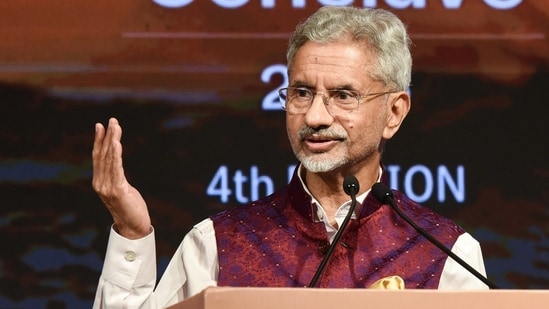
By Nitya Chakraborty Indian foreign policy makers have at last showing some mature understanding of the geopolitics of the post-Trump.2 months if the external affairs minister Dr. S Jaishankar’s observations at the concluding session of Kautilya Economic Conclave in New Delhi on Sunday, are any indication. The minister was quite candid in explaining the complexity […]

The article EAM Jaishankar Is Right: Trump Has To Respect India’s Red Lines appeared first on Latest India news, analysis and reports on Newspack by India Press Agency).

HONG KONG SAR – Media OutReach Newswire – 6 October 2025 – The anime IP “BUCKET MAN”, created by filmmaker Stephen Fung, has been awarded the Rising IP Award at DesignerCon 2025, held at AsiaWorld-Expo, in recognition of its outstanding potential in creativity, technology, and cultural development. “BUCKET MAN”, created by filmmaker Stephen Fung DesignerCon (DCon) first launched in California in 2005 as a gathering for toy […]

HANOI, VIETNAM – Media OutReach Newswire – 6 October 2025 – This November, for the very first time, Vietnamese audiences will be immersed in an unprecedented music event: the global superstar G-DRAGON’s world tour, landing right on the Eastern bank of Hanoi. Few realize that securing the nod from G-DRAGON required 8Wonder, the mega-festival brand of Vingroup, to overcome the incredibly stringent standards set by this S-tier […]

DP World has signed a memorandum of understanding with PayPal to roll out a digital payments solution meant to accelerate cross-border trade, bringing settlement times down from days to minutes. The agreement is part of DP World’s broader Digital Payments programme, targeting merchants, shippers, exporters, importers and marketplaces with a more transparent, lower-cost infrastructure. Under the deal, DP World will not itself act as a regulated payments […]

A major cross-border deal is underway as Abu Dhabi’s International Holding Company will invest about ₹8,850 crore to acquire a 43.5 per cent stake in Sammaan Capital, formerly Indiabulls Housing, making IHC the company’s key promoter and granting it control over board appointments. Sammaan Capital, a publicly listed non-bank financial company specialising in mortgage lending, will issue 330 million equity shares and 306.7 million convertible warrants to […]

More than 640,000 companies have registered under the UAE’s corporate tax scheme as the Federal Tax Authority reported strong uptake in tax returns and payments. The filings cover entities whose financial year ended 31 December 2024, and the FTA credited its digital infrastructure and awareness efforts for high compliance rates. Khalid Ali Al Bustani, Director-General of the FTA, announced that “hundreds of thousands” of corporate tax returns […]

VISHNU RAJA
RYO YAMADA
HITORI GOTOH
IKUYO KITA