News related to
data

OPEC+ is poised to approve another lift in oil output of at least 137,000 barrels per day when its core members convene on 5 October to finalise November quotas, according to three individuals familiar with the discussions. The decision is part of the alliance’s broader push to reclaim lost market share amid surging crude prices. Since April, the group has reversed earlier production cuts, having already raised […]

Sheikh Mohammed bin Zayed Al Nahyan received Sam Altman, chief executive of OpenAI, in Abu Dhabi on Saturday, where they engaged in talks designed to deepen AI collaboration between UAE institutions and OpenAI. The meeting concentrated on intensifying research cooperation, advancing practical AI applications, and aligning strategies to bolster the UAE’s integrated AI ecosystem. The UAE’s state media noted the partnership “aligns with the UAE’s ambition to […]

A shareholder meeting of Kuwait Airways authorised an accounting manoeuvre to eliminate 300 million dinars in accumulated losses by reducing its paid-up capital, the official gazette confirmed. The extraordinary general assembly, convened on 2 September, approved a cut in paid-up capital from 977.7 million dinars to 683.7 million dinars, and a 6 million dinar diminution of its legal reserve. Simultaneously, issued capital will be increased by 300 […]

QNB Group has shifted its US dollar corporate payment operations in Qatar onto JPMorgan’s blockchain-based platform, enabling business clients to execute dollar payments within minutes, around the clock. The move marks a notable milestone in the uptake of decentralised ledger technology in mainstream banking.

The Doha-based lender will use JPMorgan’s Kinexys Digital Payments system to facilitate 24/7 USD transfers for its corporate clientele. Traditional banking rails, by contrast, typically operate during business days and may take several days to complete a transfer. The QNB–JPMorgan tie-up underscores the intensifying push by major financial institutions to modernise payment infrastructure.

Kinexys, previously known as JPMorgan’s payments and tokenisation arm, has seen growing traction across the Middle East and North Africa. QNB became one of the first banks in the region to adopt the system, following Saudi National Bank’s earlier deployment. The platform allows programmable payments, enabling banks to embed automated rules or compliance checks directly into settlement flows.

Under its new arrangement, QNB clients in Qatar will now enjoy significantly improved settlement speed and liquidity management. Instead of waiting for traditional cut-off windows, funds flow without interruption, reducing operational risk and improving cash-flow efficiency. Internally, the system allows QNB to manage its USD liquidity more dynamically across its branches and treasury operations.

JPMorgan’s wider strategy with Kinexys spans tokenised deposit accounts, cross-border settlements, and programmable payment capability. Earlier this year, the firm announced a GBP-denominated blockchain deposit offering, complementing its USD tokenisation efforts. JPMorgan has also piloted USD deposit tokens built on its Base blockchain in collaboration with institutional clients.

Across the MENA region, several leading banks have gone live on Kinexys. Commercial Bank of Dubai, First Abu Dhabi Bank and Bank ABC are among the adopters. Saudi National Bank currently uses the system for its U. S. dollar-denominated flows and plans to extend the infrastructure to large corporates in its domestic market.

With prime city locations and unparalleled convenience, Shama offers the perfect rejuvenating retreat to meet the growing demand for medical and wellness tourism. BANGKOK, THAILAND – Media OutReach Newswire – 29 September 2025 – ONYX Hospitality Group, a leading hospitality management company with a portfolio spanning hotels, resorts, serviced apartments, and luxury residences, is capitalising on the rapid growth of medical and wellness tourism through the expansion […]

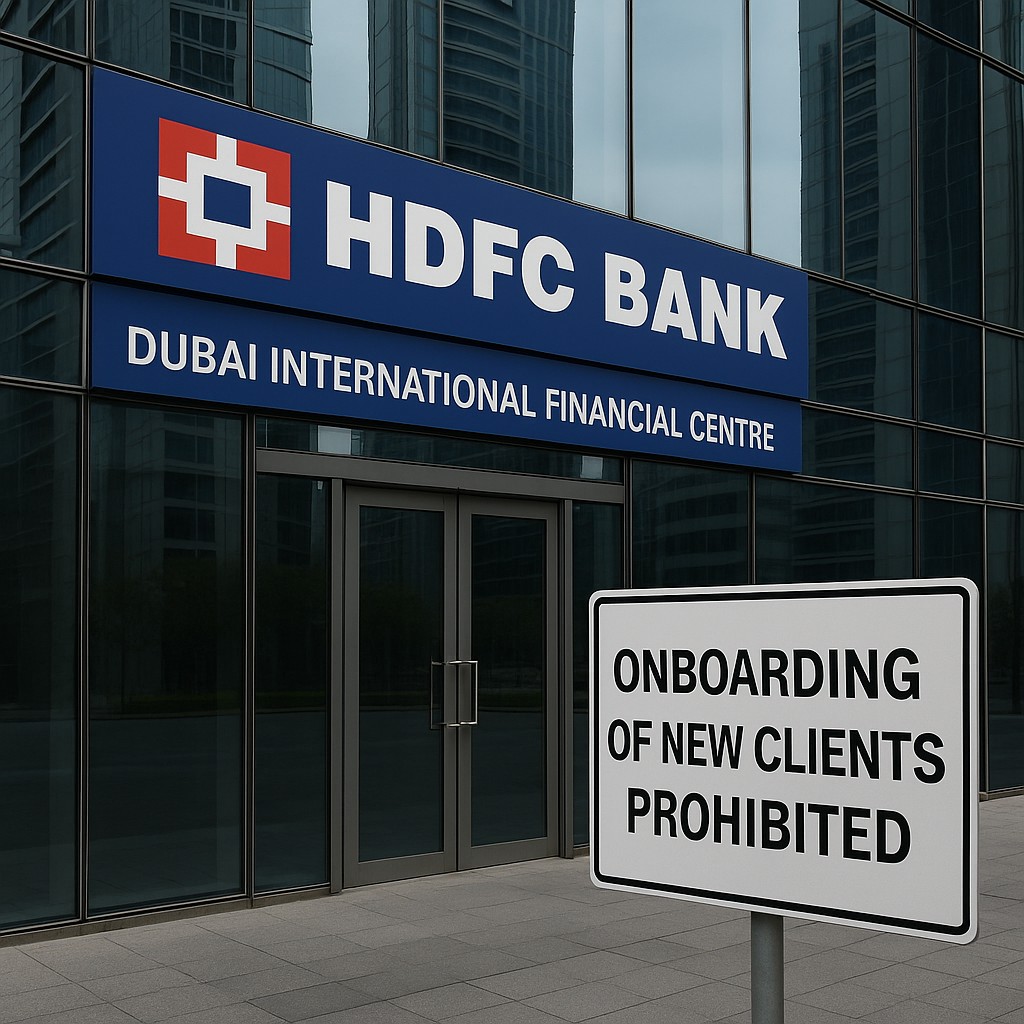
Dubai’s financial regulator has barred HDFC Bank’s Dubai International Financial Centre branch from soliciting, onboarding or servicing new clients, citing compliance lapses.

The order, issued by the Dubai Financial Services Authority and effective from 26 September, remains in force “until otherwise amended or revoked,” the bank stated. HDFC said it is taking steps to comply with the directive while engaging with the DFSA to address concerns.

HDFC clarified that the restriction does not apply to existing clients of the DIFC branch, nor to those who had already been offered services prior to the notice. As of 23 September, the branch had 1,489 customers, including joint holders.

According to HDFC, the bank does not expect this to materially affect its overall operations or financial position, noting that the Dubai branch’s business is not significant relative to its global activities.

The DFSA’s decision notice accuses the branch of servicing clients who were not properly onboarded, deficiencies in client onboarding processes, and other unspecified compliance shortcomings. The prohibition extends to advising on financial products, arranging deals, extending credit, custodial services, and financial promotions for new clients.

Analysts point to a backdrop of scrutiny over HDFC’s role in selling risky instruments—particularly Credit Suisse additional tier-1 bonds—to retail investors in the UAE. Those clients accused the bank of misclassification and inadequate risk disclosures. Investor accounts allege that KYC records were manipulated to designate them as “professional clients,” a requirement under DIFC rules for high-risk products.

Some UAE-based investors welcomed the DFSA’s move but urged stronger action, stating the suspension of new client intake is a limited measure given potential damage already done.

HDFC has a broader international presence including representative offices in Abu Dhabi, Kenya, London and Singapore, and branches in Bahrain and Hong Kong. The bank faces parallel scrutiny in India regarding related sales practices, prompting investigations by Indian enforcement agencies.

As the DFSA and HDFC engage in remediation talks, markets will closely watch whether the regulator escalates sanctions or lifts the ban after compliance is demonstrated.

BEIJING, CHINA – Media OutReach Newswire – 28 September 2025 – As the Xinjiang Uygur Autonomous Region marks its 70th founding anniversary, a special report titled “Great Love for My Land Xinjiang” highlights the region’s transformation through groundbreaking projects and ecological perseverance. The Tianshan Mountains, which span across one-third of Xinjiang, long stood as a natural barrier between north and south. The completion of the Tianshan Shengli […]

Advertisements

Dubai police have announced an extensive set of security measures and entry restrictions for spectators attending the Asia Cup 2025 final between India and Pakistan at the Dubai International Cricket Stadium. Violations of the rules could trigger fines of up to Dh30,000 and imprisonment under federal law governing sports venues.

Every seat for Sunday’s showdown has been sold, with organisers confirming a full capacity of 28,000 spectators. With the historic match being the first final between these arch-rivals in Asia Cup history, expectations of heightened emotions have driven authorities to step up security preparations.

The police directive mandates that attendees arrive at least three hours before the start and that each ticket admits a single entry—re-entry will not be allowed. All spectators must enter through gates assigned by organisers, follow instructions from stewards and security staff, and park only in specified areas. Any departure from the stadium during the match will forfeit re-entry.

The list of prohibited items is comprehensive. Fireworks, flares, laser pointers, and any flammable or hazardous materials are banned outright. Sharp objects, weapons, toxic substances, remote-controlled devices, large umbrellas, camera rigs, tripods, selfie sticks, and unauthorised photographic equipment are also barred. Flags, banners, or placards without official approval, pets, bicycles, skateboards, scooters, glass items, and outside food or drink are disallowed. Smoking or carrying any item that could endanger public safety will attract penalties.

Under the Federal Law on the Security of Sports Facilities and Events, the penalties range from Dh5,000 to Dh30,000 for breaches such as entering the pitch, carrying banned items or misbehaving. More severe violations — including throwing objects, abusive or racist language — may lead to fines in the Dh10,000 to Dh30,000 range or imprisonment for up to three months.

Multiple specialised police units and surveillance teams will be deployed around the stadium. Authorities have urged full cooperation from fans to allow the match to proceed without incident. The Events Security Committee is jointly monitoring crowd movement, traffic, and stadium access.

On the transport front, traffic congestion is expected to peak along Al Khail Road, Sheikh Mohammed bin Zayed Road, Hessa Street, Umm Al Suqeim Street, and via routes through Al Barsha, Dubai Motor City and surrounding neighbourhoods. Alternate routes such as Umm Al Suqeim Street or Al Fay Road via Sheikh Mohammed bin Zayed Road are being recommended, especially for motorists approaching from the south.

Parking zones P1 to P4 at the stadium are allocated, and overflow areas in Dubai Motor City and Dubai Studio City will provide shuttle services. Some park-and-ride facilities near Mall of the Emirates and First Abu Dhabi Bank Metro stations will function, connecting visitors to the venue via feeder services and taxis.

Dubai police have also issued multilingual advisories to reach a broader cross-section of fans. Authorities emphasise that the cooperation of spectators will be crucial to preserving a safe environment and ensuring that the focus remains on the cricketing spectacle.


A new study argues that the prevalence of autism in human populations may reflect an evolutionary trade-off embedded within our genetic heritage. Researchers say that rapid changes in certain brain neuron types and shifts in autism-linked genes likely promoted advanced cognition at the cost of increased neurodiversity. The analysis, published in Molecular Biology and Evolution, focuses on a class of outer-layer neurons called L2/3 intratelencephalic cells, which […]

A surge of new initiatives is underway across the UAE ahead of the upcoming global heart-health campaign, as health authorities intensify efforts to curb cardiovascular risks among residents. The Ministry of Health and Prevention is urging citizens to monitor blood pressure and cholesterol levels, adopt healthier diets and exercise regimens, and steer clear of tobacco, underscoring that cardiovascular disease remains the leading cause of death globally. Officials […]

Air raid sirens blared across Ukraine before dawn on 28 September as waves of Russian drones and missiles struck Kyiv and multiple regions, leaving fatalities and dozens of injuries while the assault continued into the morning, according to officials. Authorities in the capital reported deaths and widespread damage across more than 20 sites, including homes, a medical facility and a kindergarten; emergency services worked through debris as […]

Harrods has informed certain customers that their names and contact details were exposed after a system belonging to one of its third-party service providers was compromised, though account passwords and payment information remain unaffected. The luxury retailer emphasised the breach was isolated and has been contained, reiterating that Harrods’ core internal systems remained untouched. The compromised data is said to be limited to basic identifiers. The company […]

Digital asset treasury firms, which raise capital to accumulate crypto assets on their balance sheets, are being reimagined by market analysts as possible long-term powerhouses akin to Berkshire Hathaway. Ryan Watkins, co-founder of Syncracy Capital, argues that the more successful of these firms—currently seen by many as speculative vehicles—could evolve into permanent capital engines that deploy resources, build operating businesses, and influence ecosystem governance.

These treasury firms already collectively manage over $105 billion in crypto holdings, across assets such as Bitcoin, Ethereum and others. Watkins emphasises that the largest winners will be those that transition from mere accumulation into diversified operations across staking, lending, infrastructure and enterprise investment.

The model diverges from traditional crypto “hoard and hope” strategies. Rather than simply acting as passive holders, Watkins projects that top-tier treasury companies will adopt a hybrid role: asset manager, growth investor, and operational builder. In his view, they may eventually resemble conglomerates that deploy capital into promising ventures, fund ecosystem projects, and re-invest profits strategically.

Some firms already reflect parts of this shift. MicroStrategy remains a benchmark, having raised capital through equity and convertible debt to purchase Bitcoin. As of mid-2025, dozens of public and private entities have announced intentions to create treasury arms or adopt treasury strategies. Firms are expanding beyond Bitcoin into Ethereum, Solana and other networks, seeking yield diversification.

A newly announced example is AVAX One, backed by Anthony Scaramucci and Hivemind Capital, which aims to raise $550 million to acquire AVAX tokens and expand into fintech and insurance acquisitions on the Avalanche network. This signals growing appetite for treasury firms to enter adjacent sectors and integrate vertically.

At the same time, regulatory and ethical challenges loom. Critics warn that some treasury firms may disguise self-dealing as capital deployment, favouring projects in which insiders hold undue influence. Without rigorous governance, the line between strategic investment and insider enrichment can blur.

Regulatory scrutiny is also emerging: authorities like the U. S. Securities and Exchange Commission and FINRA have initiated probes into suspicious trading around announcements by publicly traded firms adopting crypto treasury plans, seeking to determine whether some investors benefitted from non-public disclosures. Meanwhile, treasury entities face pressure to provide transparency in reserves and audit practices, especially as they reassure investors about balance sheet integrity.

HANGZHOU, CHINA – Media OutReach Newswire – 27 September 2025 – As east China’s digital tech hub Hangzhou is gearing up for the 4th Global Digital Trade Expo (September 25–29), a globally watched digital gala centered on “deep integration of digital trade and AI,” many would wonder who are the creators of the world-leading computing infrastructure, large models, embodied intelligent robots, and over 100 AI application scenarios […]

By K Raveendran The global oil market is once again caught between geopolitics and fundamentals, as a new set of developments forces traders, producers, and consumers to recalibrate expectations. With the United States and the European Union signalling a hardening of positions on Russian oil, and with the Middle East simmering in heightened tensions, Brent […]

The article World Oil Flows At A Critical Juncture As India, US Try To Hammer Out A Deal appeared first on Latest India news, analysis and reports on Newspack by India Press Agency).

Bitcoin nudged higher overnight, trading around $109,448, as markets showed signs of stabilisation following a wave of forced liquidations across crypto derivatives.

Stock market information for Bitcoin
Bitcoin is a crypto in the CRYPTO market.
The price is 109448.0 USD currently with a change of 30.00 USD from the previous close.
The intraday high is 110305.0 USD and the intraday low is 108741.0 USD.

Ethereum outperformed, crossing the $4,000 threshold, while broader sentiment remains under strain amid macro uncertainty.

Crypto markets endured brutal deleveraging earlier in the week, with more than $1.5 billion in long positions wiped from derivatives across major tokens. Analysts report that Ether accounted for a significant share of that, prompting cascade liquidations in leveraged positions. Some firms with heavy Bitcoin exposure have seen their stock valuations collapse below the value of token holdings.

Investors tagged this as the sharpest deleveraging event of 2025, emphasising how excess leverage built up in recent months is being violently unwound. That same vulnerability leaves markets sensitive to any surprise in macro data or central bank commentary.

The immediate bounce in Bitcoin and Ether is viewed as corrective rather than structural—several traders suggest the market may trade sideways or drift lower unless fresh catalysts emerge. The rebound succeeded in erasing some losses, but resistance above $110,000 for Bitcoin and around $4,200 for Ether remained challenging.

The U. S. personal consumption expenditures index for August showed year-on-year inflation of 2.7%, broadly in line with expectations. That alignment suggests policymakers are threading a narrow path between supporting growth and avoiding inflation surprises. Some strategists believe the muted inflation reading reduces pressure on central banks to delay easing; others caution that sticky core inflation still leaves room for hawkish surprises.

Crypto sentiment has weakened sharply. The Fear & Greed Index plunged to levels last seen in mid-April, underscoring elevated trader anxiety. According to strategists, over $3 billion of leveraged long positions have been liquidated in the past few sessions, pushing the long-to-short ratio in many tokens toward one-to-nine. That extreme positioning could set the stage for short squeezes—but not without attendant risk.

On-chain flows hint at institutional accumulation, a counterpoint to retail panic. Ethereum has seen meaningful inflows tied to existing ETH ETFs, while some large wallets have made ETH-to-BTC swaps. That movement could reflect growing conviction in Ethereum as a structural play for DeFi and smart contract demand, rather than a pure speculative asset. But challenges remain: Ethereum’s fee-based economics have softened, and alternative chains are gaining traction in niche sectors.

Seasonal models bolster optimism toward the year-end. Historically, Bitcoin has delivered an average return of over 80 per cent in the final quarter, with November being the strongest month on record. Ether, though more volatile, also has a track record of strong Q4 performance. These patterns are not guarantees, but they influence positioning among quantitative funds.

The Dubai Financial Services Authority has issued a decision notice barring HDFC Bank’s Dubai International Financial Centre branch from onboarding or engaging new clients, citing deficiencies in its onboarding procedures and promotional practices.

Under the DFSA’s directive dated 25 September 2025, the branch is prohibited from soliciting or conducting any business with clients who had not already completed the onboarding process by that date. The restrictions span across a range of financial services: advising on financial products, arranging investment deals, arranging or advising credit, custody services, and engaging in financial promotions.

HDFC Bank has confirmed the measure, stating the branch’s Dubai operations are not “material to [the] overall business or financial position.” It said it has initiated steps to engage with the DFSA and address the regulator’s concerns.

Existing customers of the DIFC branch remain unaffected by the decision, and clients who had already been offered services may still be served.

The DFSA’s public register confirms the restrictions imposed on HDFC DIFC under Article 75 of the Regulatory Law 2004.

Concern over HDFC’s UAE operations has been mounting since investigations linked to the mis-selling of Credit Suisse Additional Tier-1 bonds surfaced. High-net-worth non-resident Indian investors alleged that HDFC’s UAE arms had pushed leveraged exposure to these risky instruments without adequate disclosure. When Credit Suisse’s AT1 bonds were written down in 2023, several clients in the Middle East faced losses and margin calls.

Regulatory scrutiny has coalesced around whether the branch’s client onboarding systems sufficiently aligned with the stricter DIFC regime for assessing and classifying “professional clients.”

Observers note that the regulatory move at HDFC’s DIFC arm fits a broader trend in the UAE: ensuring that financial institutions operating in its free zones adhere to rigorous compliance standards. While the central bank has in recent months fined other banks and suspended new customer intake over Sharia or anti-money laundering violations, this is a rare case targeting the onboarding practices of a foreign bank’s offshore branch.

Market analysts suggest the restriction could dampen HDFC’s ambitions in the Gulf region. The DIFC branch caters largely to high-net-worth and institutional clients, a growing segment across the Middle East.

Analysts also note that, though the branch is currently a limited part of HDFC’s global footprint, reputational damage and extended regulatory enforcement could constrict cross-border investment programmes tied to its UAE hub.

HDFC’s next steps include formal remediation under DFSA oversight, and the bank will need to demonstrate that its compliance and client due diligence processes meet the regulator’s expectations. Meanwhile, the directive will remain active until the DFSA issues a written amendment or revocation.

A stylised throwback to its 1998 branding greeted millions of users today as Google celebrated its 27th birthday, reviving its very first logo in a specially designed doodle. The artwork, published on Google’s official doodle site, reintroduces the original wordmark as a nod to its early days, while signalling the company’s ambition to balance heritage with future ambitions. Although Google was officially incorporated on 4 September 1998, […]

Beacon Media, the entertainment venture co-founded by wellness advocate Dr Deepak Chopra, has joined forces with MovieVerse Studios — the mainstream content arm of IN10 Media Network — to launch a content alliance aimed at elevating storytellers across the Global South. The partnership seeks to establish a “borderless content ecosystem” connecting Hollywood, India, the Middle East, Africa and Latin America — with a prospective audience reach exceeding […]

Abu Dhabi raised $1 billion from a three-year bond sale at 3.625 per cent, about 10 basis points over U. S. Treasuries, and simultaneously issued $2 billion in a 10-year tranche at 4.25 per cent, 18 basis points over Treasuries, drawing a combined order book of over $16 billion. The Reg S senior unsecured bonds will be rated AA by S&P and Fitch, matching the issuer’s credit […]

Emergent today announced it has secured a total of USD 30 million in funding, led by a USD 23 million Series A round from Lightspeed, marking a strategic push into the Middle East and North Africa region. The Bengaluru-based startup, founded in 2025, is already claiming USD 15 million in annual recurring revenue within 90 days of launch, underlining strong investor confidence in its rapid growth model. […]

Dubai has secured a position among the world’s top four FinTech centres, according to the latest Global Financial Centres Index published on 25 September, signalling a pivotal shift in the emirate’s financial technology trajectory.

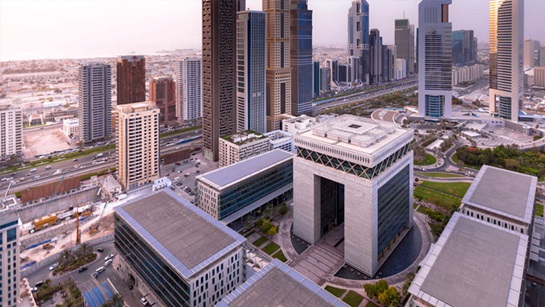
The GFCI report places Dubai at 11th globally in the overall ranking of financial centres, but underscores its standing as one of the most dynamic hubs for FinTech innovation. The Dubai International Financial Centre has played a central role in driving this transformation.

DIFC now houses over 1,500 companies focused on AI, FinTech, and innovation, making it the region’s largest cluster of its kind. These firms have collectively raised more than US$4.2 billion in funding, strengthening the UAE’s appeal as a destination for growth-stage tech ventures. Sheikh Maktoum bin Mohammed bin Rashid Al Maktoum, First Deputy Ruler of Dubai and Minister of Finance, credited the rise to the strategic goals of the Dubai Economic Agenda D33 and to Dubai’s business-friendly infrastructure and regulatory regime.

Essa Kazim, Governor of the DIFC, stressed that the momentum reflects long-term planning and deep investment. He noted that positioning Dubai among the top global FinTech players has required calibrated incentives, robust legal frameworks, and international partnerships. Arif Amiri, Chief Executive Officer of the DIFC Authority, said the locale’s success stems from synergy among institutional support, talent attraction, and ecosystem-building efforts.

Dubai’s ascent in the FinTech league emerges amid intensifying global competition. Traditional financial centres such as London, Singapore, and Hong Kong continue to maintain strong footholds, leveraging established networks, global institutions, and mature regulatory systems. Yet Dubai’s rapid rise indicates that newer hubs with nimble regulation and aggressive incentives can leapfrog in the tech-driven financial services landscape.

The GFCI 38 ranking shows Dubai overtaking several peers in the Gulf and Asia, with the city gaining one rank to 11th place overall and closing gaps in score metrics used to assess competitiveness, such as human capital, reputation, and business environment. The GFCI emphasises that “expected future significance” is one of the domains in which Dubai leads globally—an indication that market participants foresee further growth in its influence.

Dubai’s Roads and Transport Authority has revealed a 15-kilometre Dubai Autonomous Zone, an integrated corridor designed to link driverless land and water transport modes. The zone will stretch from Creek Station on the Metro Green Line through Al Jaddaf toward Dubai Creek Harbour and Festival City. The plan aims to weave Metro, RoboTaxis, RoboBuses, self-driving shuttles, autonomous abras, driverless logistics vehicles and street-sweeping bots into one seamless […]

The Union Cabinet has cleared a major scheme under the Department of Scientific and Industrial Research and the Council of Scientific and Industrial Research to infuse ₹2,277.397 crore into capacity building and human resource development in science and technology over the 2021–22 to 2025–26 span.

The “Capacity Building and Human Resource Development ” scheme will be implemented by CSIR and will extend support to research and development institutions, national laboratories, Institutes of National Importance, Institutes of Eminence and universities across the country. It aims to nurture talent in fields spanning science, technology, engineering, medicine and mathematics.

Officials describe the initiative as a strategic instrument to shore up India’s research ecosystem. It offers four sub-programmes: doctoral and postdoctoral fellowships; an extramural research scheme including Emeritus and Bhatnagar Fellowships; awards for scientific excellence; and grants to promote travel and symposia.

Science and Technology Minister Jitendra Singh stated that the scheme will “strengthen the research and development ecosystem by training researchers, nurturing scientific talent and promoting innovation to build a future-ready India.” Under this plan, promising scientists will receive institutional support through mentoring, infrastructure access and networking opportunities.

The government places renewed emphasis on bridging gaps in the researcher base. India currently ranks 39th in the Global Innovation Index, and the authorities expect the new scheme to push that further upward. Higher numbers of researchers per million population, more publications, and stronger institutional linkages are cited as expected outcomes.

Within CSIR, the umbrella programme is designed to consolidate scattered efforts and reduce duplication. Many laboratories and institutes already run fellowships or grant schemes; under CBHRD, these are to be aligned, coordinated and accelerated. CSIR is now in its 84th year of operation and oversees the umbrella scheme.

One critical ambition is to stem brain drain, particularly among early-stage researchers. The fellowship provisions and funding for travel and international collaboration are meant to give Indian-based scientists incentives to stay. Experts in the policy space note that merit, institutional support and continuity of funding will be decisive in preventing talent outflow.

A potential challenge lies in implementation. Institutions in more remote or underserved regions may lack existing capacity in infrastructure or mentoring frameworks. Ensuring equitable distribution of resources will test administrative agility. Monitoring and evaluation mechanisms will be crucial to track how funds are deployed and whether intended outcomes are achieved.

Beyond the scheme, India is deploying complementary initiatives. For example, the National Quantum Mission—approved earlier—allocates over ₹6,000 crore to develop quantum technology capabilities from 2023 to 2031. This too hinges on a pool of highly qualified researchers and labs equipped for frontier science.

The CBHRD scheme also dovetails with India’s Sustainable Development Goals in science and technology, aiming to boost research intensity and capacity across states and institutions. Coordinated investments and policy coherence may drive systemic transformation in the scientific sector.

Critics caution that past announcements in the research domain often fall short in sustaining funding beyond initial phases. Long-term maintenance, recurring costs, infrastructure upkeep and human capital churn are likely stress points. The success of this scheme will depend on consistent funding flows, institutional accountability, and adaptability.

VISHNU RAJA
RYO YAMADA
HITORI GOTOH
IKUYO KITA