Just in:
Vance attributes Republican midterm defeats to Iran conflict // Kochi police detain two actors over bid to honey trap doctor // Middle East governments assess Iran war after US vote // SC to examine students’ exam plea today // Trump’s Iran War Has A Share Of Contribution To His Midterm Debacle // Cloudflare unveils Zero Wire vulnerability intelligence service // Emirates Group records AED 4.1 billion half-year profit // Xi Jinping Preparing For A Trilateral Summit With Trump And Putin At APEC Summit On Nov 18-19 // Fast Just Got Fastest: STING Energy Boost™ Celebrates Kimi Antonelli’s Formula 1® World Championship and the Fan Energy Behind It // Cyberport Venture & Capital Forum 2026 Grand Opening // After Reaching 7 Million Users in the Philippines, Skyro Launches Transparent Cash Loans in Malaysia // CR Longdation Aethereal Cybersecurity × Global Cybersecurity Alliance (GCSA) Join Hands to Establish the “AI and Cybersecurity Research Centre” // Private varsities bill all set to face the axe // Hong Kong mandates crypto transaction disclosures to tax authorities // Asia Left Behind: Ten international companies have yet to report delivering on their cage-free egg pledges across the region // Ta’ziz finalises $1.39bn funding for Ruwais industrial facilities // TVM –Mangaluru Vande Bharat claims top spot // OpenAI identifies 948 Linux privilege escalation flaws using AI // Oil and chip shares retreat after Democratic victories // APT29-linked campaign exploits outdated Apple and Android software //

News related to
data

Gold prices escalated early on Saturday, drawing fresh investor interest as the U. S. Federal Reserve’s quarter-point rate reduction to the 3.75 %-4.00 % range reinforced the appeal of non-yielding assets. Spot gold edged up 0.3 % to US$4,034 an ounce, and bullion is positioned to record a third consecutive monthly gain driven by both bargain buying and institutional demand. The backdrop includes a sharp rise in […]

The blockchain platform admittedly known as Qtum has rolled out a new desktop artificial-intelligence agent called “Ally”, aiming to shift the landscape of AI productivity from cloud-only assistants to desktop-native, multi-model orchestration. The launch positions Qtum as a player in both blockchain and artificial-intelligence domains as users increasingly demand local control, privacy and advanced automation beyond chat-based tools. Ally can run on both Windows and macOS platforms […]

The DFA Design for Asia Awards 2025 has opened its submission window for entries, signalling a heightened push to elevate Asian-led design onto the global stage. Organised by the Hong Kong Design Centre in partnership with the Cultural and Creative Industries Development Agency of the Hong Kong Special Administrative Region, the awards target projects that demonstrate innovation, social impact and cross-border relevance. The entry period runs from 1 April to 7 July 2025, allowing participants to apply across six design disciplines and 30 diverse categories.

The competition spans Communication Design, Digital & Motion Design, Fashion & Accessory Design, Product & Industrial Design, Service & Experience Design, and Spatial Design. Eligibility is specified for projects launched in one or more Asian markets between 1 January 2023 and 31 May 2025, signalling a forward-looking emphasis on design influenced by the region’s evolving markets. A 50 per cent early-bird discount on the entry fee is offered for submissions by 30 April, roughly halving the cost to HKD 1,100 from the standard HKD 2,200 per entry.

The competition’s organising body emphasises that submitted projects should go beyond aesthetic appeal to reflect cultural values, social responsibility and human-centred innovation. The awards platform is positioned as a launchpad for designers and companies to gain international recognition, network globally and exhibit work in both online and physical showcases. The judging panel comprises design professionals from across the world, applying rigorous assessment criteria including creativity, usability, sustainability, aesthetic quality, and impact in Asia.

Key strategic shifts in this edition include an extended submission deadline and an expanded suite of benefits for winners, which include trophies, certificates, inclusion in an awards publication, eligibility for exhibitions and an online gallery, as well as invitations to high-profile events such as the Business of Design Week. This broadening of value-added rewards underscores the awards’ intent to deepen its role not merely as a recognition mechanism but as an accelerator of design careers and commercial opportunities.

Emerging design hubs across Asia stand to gain elevated visibility through this platform. Analysts observe that as demand grows for design solutions rooted in local culture yet globally scalable, events like these help bridge creativity with market viability. One jury member from a previous edition noted that a winning spatial design in Hong Kong “interprets what a library should be architecturally” and “brings the outdoor space indoor,” illustrating how design can engage both aesthetic and functional concerns.

Challenges persist for participants, particularly in meeting the criteria of “impact in Asia” while maintaining global relevance. Designers must navigate a competitive field: in the 2024 edition, 215 awardees were recognised across Grand, Gold, Silver, Bronze and Merit levels. The ability to demonstrate both commercial success and societal benefit is increasingly important, underscoring the awards’ focus on real-world outcomes rather than purely conceptual achievements.

Corporate and design-studio entrants will need to align submissions with multiple review dimensions: geographical market launch, human-centred innovation, sustainability credentials, and cultural resonance. A deeper trend is evident in how the awards reflect the evolving design ecosystem in Asia: beyond Hong Kong and major capitals, secondary cities and cross-border design collaborations are gaining traction. The judging criteria explicitly reward cross-market impact and innovation that resonates beyond local boundaries.

For the design industry, participation offers strategic advantages. Winning projects receive global exposure through awards publications and exhibitions, enabling both established studios and emerging talent to secure business leads and partnerships. The inclusion of the online showcase platform ensures that award-winning work reaches a wider audience beyond the physical event footprint. Observers suggest that for design firms seeking to expand internationally, a credential from this awards programme adds credibility in a crowded market.

Financially, the fee structure and early-bird promotion lower barriers to entry, but entrants must commit to a publication and promotion fee if selected as winners. This consideration means designers must evaluate the return on investment in terms of exposure and business potential. The awards’ transparency around deliverables and eligibility criteria signals a mature stage in its evolution since its launch in 2003.

Organisers have emphasised that the awards welcome designs with “deep Asian cultural roots” yet global aspirations, underscoring a dual objective of cultural preservation and market expansion. As the platform attracts entries from across the Asia-Pacific region, this edition could reveal emerging trends in spatial design, sustainable product systems, inclusive services and motion design. The overarching theme is that design is not simply aesthetic but a tool for transformation—economically, socially and culturally. Entrants are therefore expected to present work that balances form and function, local context and global relevance.


The Washington-based media outlet Radio Free Asia announced that it will suspend all editorial content production from Friday, citing critical funding shortfalls triggered by the federal government shutdown and delays in appropriations. The decision marks the first full shutdown of its news services since the broadcaster’s founding in 1996.

Chief Executive Bay Fang explained that the organisation is “forced to suspend all remaining news content production … for the first time in its 29 years of existence” and that operations in several overseas bureaus across Asia will close while staff are formally laid off and severance paid. The organisation reported that many employees have been on unpaid leave since March owing to previous funding cuts.

Analysts say the board’s move underscores a precarious moment for U. S.-backed international broadcasting. Radio Free Asia, which has delivered news in Mandarin, Burmese, Khmer, Korean, Vietnamese and Uyghur since the mid-1990s, has come under mounting pressure from a combination of political directives and fiscal constraints. In March the United States Agency for Global Media terminated its grant under a presidential executive order, prompting legal challenges. Over the following months the service slashed language operations, placed staff on extended leave and shrank its footprint.

The trigger for the complete pause is the failure of Congress to pass a full-year funding resolution, resulting in the federal shutdown beginning October 1 and the impasse over the 2026 fiscal year budget. The shutdown left USAGM unable to disburse new funding, forcing Radio Free Asia to exhaust reserves. The suspension leaves fewer than 30 employees in place, according to internal documents.

Supporters of the broadcaster warn that the shutdown of its services will leave a significant information gap in parts of Asia where independent media are scarce and press freedom is under threat. The outlet has been credited with investigative reporting on China’s Uyghur population, coverage of North Korean defectors and analysis of the 2021 Myanmar coup. Its multilingual services have made it one of the few external voices operating inside closed societies.

Critics of U. S. international broadcasting say that the funding model, which ties outlets to federal grants, is inherently unstable when funding is politicised. They argue that the reliance on appropriations makes such organisations vulnerable to shifts in administration priorities and partisan standoffs. The halt in operations at Radio Free Asia has already been welcomed by governments it has criticised, including Cambodia and China, which view the move as a blow to U. S. soft-power broadcasting efforts.

Industry observers note that other USAGM-funded broadcasters are also under strain. The Radio Free Europe/Radio Liberty has retained legal protection via a court injunction but still faces cash-flow challenges. The broader trend suggests that U. S. international media assets may have thoroughly entered a phase of retreat just as global information competition—particularly from China and Russia—is intensifying.

The implications of the suspension extend beyond media-industry metrics. Some Asian governments that had viewed the broadcaster’s presence as adversarial are already reclaiming influence. Beijing had added state-run radio frequencies in regions formerly served by Radio Free Asia’s Mandarin service, and Phnom Penh’s leadership publicly thanked Washington in March for the cuts, calling them “a major contribution to eliminating fake news” in the region.

A memecoin tied to a golden statue of Changpeng Zhao, founder of Binance, erected near the U. S. Capitol, plunged roughly 99 per cent after he publicly disowned it. The token, dubbed “CZStatue”, surged by more than 27,000 per cent in a single day before crashing from around 17.5 cents to near zero. It recorded approximately $1.2 billion in trading volume during its brief high—raising red flags around market manipulation and the underlying token contract.

Zhao labelled the project a “quick-buck” scheme and urged his followers not to buy the token, writing: “While I want to appreciate the gesture, the fact that there is a meme coin associated with this means the creator probably just wanted to make a quick buck off an interaction from me. This is something I don’t appreciate. Don’t buy the meme.” Analysts say this public warning triggered a swift loss of confidence among retail investors.

Blockchain data reveals the token contract restricted selling only to the creator, effectively creating a honeypot scenario in which buyers were unable to exit their positions. More than 1,100 wallets remain stuck holding near-worthless tokens, prompting concerns of investor harm and potential regulatory scrutiny. One observer remarked that the episode bore the hallmarks of a “pump and dump” disguised as a fan-driven initiative.

The statue, reportedly a four-metre high golden representation of Zhao making his signature “ignore FUD” gesture, was commissioned by his fan community with plans to gift it to Zhao or auction it for his charity project. The token’s launch capitalised on the statue event, tying the hype to Zhao’s personal brand and the physical monument’s publicity. Zhao issued a social-media statement clarifying he had neither authorised the token nor requested the statue, and reaffirmed his disapproval of profit-driven uses of his likeness.

Cryptocurrency analysts warn that this incident spotlights broader vulnerabilities in the memecoin ecosystem: a blend of social-media hype, celebrity association and unregulated token mechanics. One metrics firm noted that more than 80 per cent of new memecoins in 2025 displayed non-standard contract features that favour insiders and restrict liquidity for retail investors. Regulators in several jurisdictions are stepping up monitoring of such tokens, given concerns around investor protection and potential financial losses.

A new wave of digital activity has shifted the balance of the internet as automated bots now account for over half of global web traffic. Cybersecurity data shows that traffic from non-human sources rose to 51 per cent in 2024, overtaking human‐generated traffic for the first time. Behind this shift lies a complex web of generative-AI, automated crawlers and malicious botnets, raising questions about the role of […]

BANGKOK, THAILAND – Media OutReach Newswire – 31 October 2025 – The journey of Mr. Sansern Kiattivejsoonthorn, Founder of COSDENT Dental Clinic, encompasses resilience, creative design, and digital transformation—a journey recently celebrated with the Master Entrepreneur Award at the prestigious Asia Pacific Enterprise Awards (APEA) 2025 Thailand Chapter. With an education spanning Architecture and Urban Design, Sansern entered the healthcare sector with a unique vision: to fuse […]

Advertisements

Swiss privacy firm Proton AG has unveiled its new “Data Breach Observatory”, a live-monitoring platform designed to track organisations’ data leaks by scanning hacker-forums and underground marketplaces on the dark web. According to the company, the tool has already identified 794 unique breach incidents in 2025 alone, exposing over 300 million records linked to identifiable companies. If broader data-compilations are included, the number of incidents rises to […]

Allianz Trade extends geographical footprint to new location Vietnam HONG KONG SAR – Media OutReach Newswire – 22 October 2025 – Allianz Trade in Asia Pacific is pleased to announce the opening of its first office in Vietnam. Headquartered in Ho Chi Minh City, the new office will provide comprehensive trade credit solutions to local exporters, catering to their increasing demand resulting from the country’s outperforming exports […]

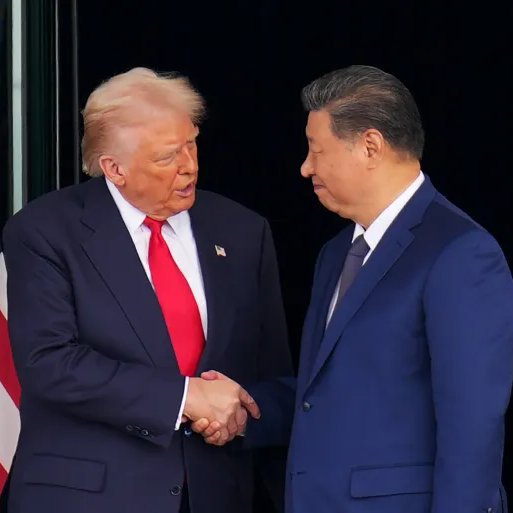
By Nitya Chakraborty   The much-awaited meeting between US President Donald Trump and the Chinese President Xi Jinping ended on Thursday morning at Busan in South Korea with both expressing high optimism at the outcome of the talks. Trump described the talks as “amazing” saying that their dispute over the supply of rare earths had […]

The article Is Xi Jinping Working For A Bipolar World Along With Donald Trump? appeared first on Latest India news, analysis and reports on Newspack by India Press Agency).

An international distinction celebrating the company’s culture of human excellence and innovation PARIS, FRANCE – Media OutReach Newswire – 30 October 2025 – HepTa Advisory-Labs has earned the Best Place to Work 2024 certification, joining the exclusive community of organizations recognized for the exceptional quality of their workplace environment and their commitment to employee well-being. This distinction, awarded following a rigorous evaluation conducted among employees and the […]

Tech giant Google has announced a $2.85 million funding package to support artificial-intelligence skills development, education, online safety and cybersecurity in South Africa. The funding was disclosed at the AI Expo Africa event in Johannesburg and forms part of Google’s broader continental strategy to cultivate an AI-ready workforce and digital ecosystem. The funding will be channelled through Google. org, the company’s philanthropic arm, and it builds upon […]

The African Development Bank has approved a US$75 million financing package for Nyanza Light Metals Pty Ltd of South Africa to construct an 80 000-tonne-per-year titanium dioxide pigment production facility at the Richards Bay Industrial Development Zone. The plant will process locally and regionally sourced ilmenite ore into high-value pigment used in paints, coatings, cosmetics, food processing and medical applications. The financing deal includes US$50 million drawn […]

A configuration error in the cloud infrastructure of the software giant caused its service platform to falter around 16:00 UTC on October 29, affecting productivity tools, gaming services and enterprise systems worldwide. The company reported that the fault stemmed from a change to its global delivery network and ensuing DNS problems, which triggered widespread failures across key offerings. The affected services included the productivity suite used by […]

HONG KONG SAR – Media OutReach Newswire – 30 October 2025 – Hotel Artz Fair is proud to announce the artist and program highlights for its much-anticipated second edition, taking place from 21–23 November 2025 at Conrad Hong Kong. This boutique Fair offers a uniquely intimate experience, transforming hotel rooms into warm, homelike art spaces where works by over 40 artists from 12 countries and regions will […]

Matein Khalid Critical minerals have become a national security priority for GCC states as China has weaponised its dominance over supply chains, refining capacity and magnet production. These materials, including lithium, nickel, cobalt, tin, tungsten, vanadium and germanium, are essential for defence systems such as Lockheed’s F-35 stealth fighters, Raytheon’s hypersonic missiles and General Dynamics’ Virginia-class submarines, as well as civilian applications in advanced semiconductors, electric vehicles, […]

Shareholders of the Zurich-listed skincare company Galderma Group AG have secured approximately SFr 2.6 billion through a sale of an 8.4 per cent stake via accelerated book-building, making it the largest secondary share placement since the firm’s IPO. The sale by the consortium led by the private-equity house EQT AB along with the Abu Dhabi Investment Authority and Auba Investment Pte. Ltd. comes after the Swiss dermatology […]

A new product has been launched by Microchip Technology Inc., the TimeProvider 4500 v3 grandmaster clock, offering sub-nanosecond time-transfer capabilities across up to 800 kilometres of long-haul optical fibre. Its arrival addresses the growing demand among network operators, utilities and government agencies for a robust alternative to satellite-based timing systems tied to global navigation satellite systems. The device achieves alignment with the international standard ITU‑T G.8271.1/Y.1366.1 for […]

Most central banks in the Gulf Cooperation Council moved swiftly to lower key interest rates after the Federal Reserve trimmed its policy rate by 25 basis points, reinforcing the strong alignment between Gulf monetary policy and that of the United States. The decision saw the Central Bank of the UAE reduce its overnight deposit facility base rate to 3.90 per cent from 4.15 per cent, while the Saudi Central Bank trimmed its repo rate to 4.50 per cent and reverse-repo rate to 4.00 per cent.

This round of cuts marks the second such move by the Federal Reserve this year and comes amid a backdrop of moderating inflation globally and a focus on supporting non-oil growth across the region. Two Fed policymakers dissented in the decision, and Chair Jerome Powell cautioned that a December rate cut was not assured.

The Gulf region’s strong inclination to follow U. S. monetary policy stems from the fact that five of the six GCC currencies, including the Saudi riyal, UAE dirham and Qatari riyal, are pegged to the U. S. dollar. Only the Kuwaiti dinar is linked to a pegged basket of currencies of which the dollar is the dominant component, giving Kuwait greater policy flexibility.

Beyond the peg dynamics, the rate cuts serve a broader strategic goal: to reduce borrowing costs and stimulate investment in sectors aligned with the region’s diversification agenda, such as real-estate, manufacturing and tourism. According to analysis by CFI, inflation in the Gulf is projected to hover around 1.9 per cent in 2025, with GDP growth estimated at 4.0 per cent on average, meaning there is space to ease monetary policy without immediate inflation risk.

While the broad pattern across the region is one of alignment with Washington, there are subtle distinctions. Kuwait opted to hold its rates unchanged, signalling that local conditions rather than external alignment would guide its stance. Analysts say that Kuwait’s stronger inflation headwinds and different economic profile justify such a deviation.

Market watchers note that the rate cuts may deliver stimulus to credit growth, though some risks remain. Lower interest rates could dampen returns on traditional savings vehicles and simultaneously sharpen competition among banks. For governments and businesses in Gulf economies, cheaper financing may bolster infrastructure projects and non-oil activities. A weaker US dollar, another by-product of U. S. policy easing, could lend further support to oil prices—helping export-based economies—but it also carries the risk of higher import costs.

In the UAE, the central bank’s move to 3.90 per cent marks the lowest policy rate since 2022. This step is expected to make loans and mortgages more affordable, offering a boost to the non-oil sector and domestic demand. In Saudi Arabia, the rate adjustment is directly aligned with the broader reform agenda under its Vision 2030, which hinges on greater private-sector participation and attraction of foreign investment requiring cheaper capital.

Some central bankers caution that while rate cuts provide stimulus, they cannot fully offset structural headwinds such as global energy demand shifts, supply chain disruptions and geopolitical uncertainty. The Federal Reserve’s cautious tone — emphasising that further cuts are not guaranteed — adds an extra layer of uncertainty for regional banks that shadow U. S. policy.

In this context, Gulf monetary authorities appear to be striking a careful balance between maintaining currency stability, supporting growth and safeguarding financial stability. As their economies strive to scale non-hydrocarbon sectors, the timing and scale of rate cuts are being calibrated not only to external headwinds but also to domestic structural priorities.

Dubai-listed developer Emaar Properties is sharpening its global expansion strategy by placing a stronger emphasis on India while exercising caution over entry into China’s troubled housing market, according to chief executive and founder Mohamed Alabbar.

Alabbar told the Future Investment Initiative conference in Riyadh that India would be “our next big step,” citing two decades of operations in the country and significant growth potential. He emphasised that, while Emaar remains “very interested in China,” it is holding off until the market shows clear signs of recovery, noting that “it is a different world. Let them recover.”

The directive comes after Emaar posted strong financial results: net profit jumped 25 per cent to AED 18.9 billion last year and rose a further 34 per cent in the first half of 2025, conditions that Alabbar says position the firm to target large market acquisitions rather than start-ups abroad. Emaar’s land-bank footprint already spans more than 1.87 billion sq ft globally, including a 122 million sq ft stake in India and around 175 million sq ft outside the UAE.

In India the driver is rising urbanisation, youthful demographics and a housing deficit that Emaar believes it is well placed to address. Alabbar signalled that the company is pursuing joint-venture partnerships with local groups rather than divesting its Indian operations, dismissing reports of a sale to one of the country’s major conglomerates. By contrast, China presents multiple headwinds including a pronounced housing market slump: new-home prices in 63 out of 70 major Chinese cities fell in September, reflecting a 0.4 per cent month-on-month drop and a 2.2 per cent year-on-year fall.

Analysts say Emaar’s bifurcated strategy makes sense in the context of broader market dynamics. India’s economy is forecast to grow about 6.7 per cent in fiscal 2025-26, according to a Reuters poll, while China is projected to expand by roughly 4.8 per cent amid real-estate weakness. Alabbar noted that the company sees China’s environment as “still suffering with their housing problem, but they’ll come up with it,” stating that Emaar wants to be ready rather than reactive.

Emaar’s preferred mode of overseas expansion appears to be acquiring significant stakes in existing developers, upgrading business models and rolling out its integrated real-estate offering rather than green-field launches. “Maybe you go and buy a majority stake in a developer and then change the way they do business … or maybe they already do good business and we learn from them,” Alabbar explained. That approach aligns with Emaar’s low net debt, elevated cash position and willingness to invest in large markets such as the US, Europe and China.

Critics caution that while India holds promise, foreign developers often face regulatory, land-title and partner-alignment risks. Emaar’s long-standing Indian venture, launched in 2005, endured partner disputes and execution delays, a history that Alabbar acknowledged when he said “we’ve been there 20 years. That’s big for us.” He further noted that successful growth in India depends on selecting the proper location and product mix. Meanwhile, China’s structural property problems are deep-rooted: unsold inventory and falling valuations continue to impair home­buyer confidence, raising questions about the timing of any major developer expansion into the market.

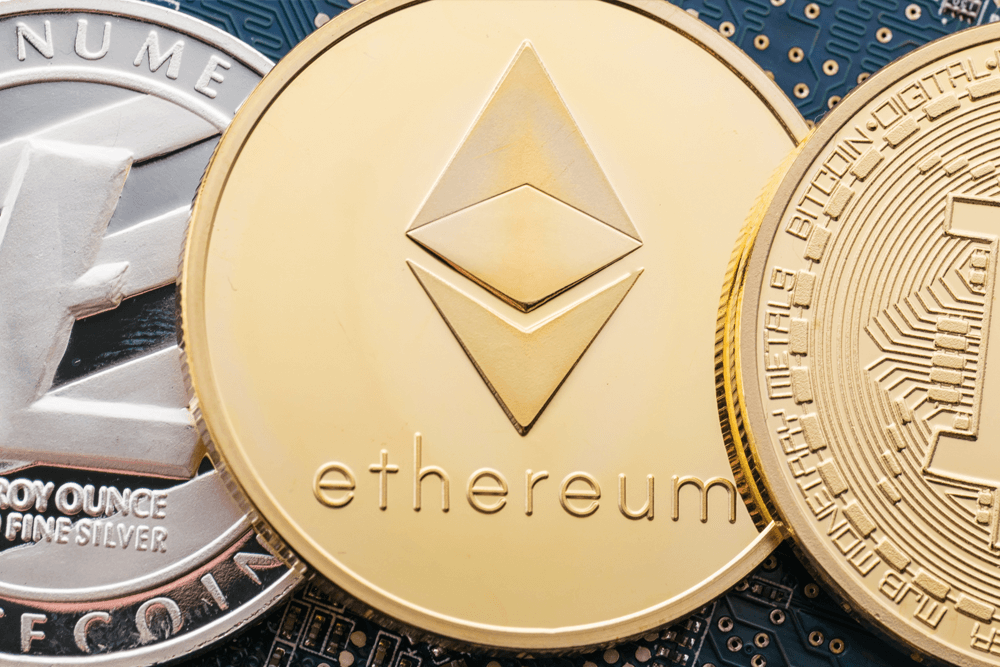
Ethereum’s trajectory is showing signs of strengthening as institutional demand, staking growth and protocol upgrades converge to position the network for a possible lead in the upcoming crypto cycle. The asset has been trading in a holding pattern around the $4,000–$4,300 range while market watchers debate whether this consolidation presages a breakout or a renewed test of support. According to exchange-data and on-chain indicators, Ethereum’s fundamentals are increasingly robust as it faces critical technical levels.

Institutional flows into Ethereum-related products have doubled since early 2025, with fund holdings reaching an estimated 6.5 million ETH and staking totals climbing to a record near 36.1 million. These developments reflect rising confidence in the network’s long-term value proposition as more traditional investors enter the space. On-chain records show that major whale wallets and “smart money” participants are accumulating, while staking reduces circulating supply and enhances scarcity dynamics.

Ethereum’s dominance in the decentralised finance and stable-coin settlement sectors amplifies that structural momentum. The network remains the foundational layer for smart-contract use-cases, layer-2 roll-ups and tokenised assets, lending greater weight to its ecosystem compared with more speculative cryptocurrencies. Developer-activity metrics place Ethereum ahead in creating new builds, deploying upgrades and supporting applications, reinforcing its role as a critical infrastructure asset rather than simply a trading vehicle.

On the technical front, key resistance near $4,250–$4,300 has become a focal point for analysts. A sustained breakout beyond that zone could unlock targets in the $5,000–$6,000 range and potentially much higher over the next year or two. Conversely, failure to clear that barrier could invite a re-test of support zones around $3,900–$4,000, a scenario flagged by bearish analysts. Macro-conditions such as global interest-rate policy, liquidity flows and risk-appetite remain wild cards, keeping short-term momentum fragile even as the long-term case strengthens.

Competition from alternative layer-1 blockchains and regulatory uncertainties remain headwinds. While Ethereum remains the ecosystem leader, other chains are gaining traction with lower fees and faster speeds; the extent to which Ethereum preserves its dominance will depend on its ability to scale and manage cost pressures. Moreover, regulatory scrutiny of crypto assets and staking vehicles may alter the institutional adoption timeline, requiring cautious interpretation of bullish narratives.

Emerging upgrades to the network architecture provide a catalytic backdrop. The so-called “Fusaka” upgrade, scheduled for late 2025, aims to deliver enhancements to sharding and data-availability that should improve throughput and reduce fees. These technical improvements may lower entry barriers for decentralised-applications and stimulate further ecosystem growth, thereby reinforcing Ethereum’s value proposition. At the same time, staking yields continue to incentivise long-term holders and reduce the liquid supply, offering a structural support mechanism for price.

LOS ANGELES, US / BEIJING, CHINA – Media OutReach Newswire – 30 October 2025 – Hujing Digital Media & Entertainment Group (the “Company”), the cultural and entertainment subsidiary of Alibaba Group Holding Limited (HKEX: 9988), is accelerating its global talent strategy. The Company recently hosted its “2025 North America Talent Collaboration Roadshow” in Los Angeles, where it connected with young Chinese-language directors, screenwriters, and producers trained at […]

All-New Cardo BEYOND Helmet Represents Two Decades of Innovation Culminating in a Groundbreaking Fusion of Safety, Sound & Intuitive Technology SYDNEY, AUSTRALIA & WILLINGTON, NEW ZEALAND – Media OutReach Newswire – 30 October 2025 – Cardo Systems, the leader in wireless communication solutions for powersports riders, proudly introduces BEYOND GTS and BEYOND GT, the brand’s first-ever fully integrated sport-touring motorcycle helmets. The BEYOND line of helmets deliver […]

President Donald Trump is advancing plans to nominate Ryan Baasch, a senior aide within the White House’s economic policy team, for a commissioner seat at the Federal Trade Commission. Sources familiar with the matter say the 37-year-old special assistant at the National Economic Council would step into the post vacated by Commissioner Melissa Holyoak, who is expected to be tapped for the role of U. S. Attorney […]

VISHNU RAJA
RYO YAMADA
HITORI GOTOH
IKUYO KITA