Just in:
OpenAI identifies 948 Linux privilege escalation flaws using AI // ADIA and partners establish $1.4 billion aviation venture // Middle East governments assess Iran war after US vote // The “1st Greater Bay Area Health and Longevity Summit & Awards Ceremony” concludes successfully in Macao // Vance attributes Republican midterm defeats to Iran conflict // UK air traffic outage inflicted £33m financial losses // AI trust gap reveals distinct retail priorities: Divergent paths to consumer growth in Hong Kong and the GBA // Cyberport Venture & Capital Forum 2026 Grand Opening // Fast Just Got Fastest: STING Energy Boost™ Celebrates Kimi Antonelli’s Formula 1® World Championship and the Fan Energy Behind It // After Reaching 7 Million Users in the Philippines, Skyro Launches Transparent Cash Loans in Malaysia // Cloudflare unveils Zero Wire vulnerability intelligence service // xCube Access Welcomes Entrust Capital Limited  Expanding Access to Professional Portfolio Management // APT29-linked campaign exploits outdated Apple and Android software // Asia Left Behind: Ten international companies have yet to report delivering on their cage-free egg pledges across the region // Utilities pursue ₹1,992 cr in unpaid bills // Govt opposes Arlekar’s PSC action // As AI Reshapes Education, Singapore Convenes Global Dialogue on the Future of Early Childhood Education // Dubai boat show confirms international shipyard line-up for November // e-Crime Bureau Signs Cybersecurity Partnership With Smart Africa, Reinforcing Its Global Expansion // Oil and chip shares retreat after Democratic victories //

News related to
data

Eight Democratic senators, led by Adam Schiff of California, have formally asked Steve Witkoff—the U. S. Special Envoy to the Middle East—for detailed explanations regarding his continued involvement with crypto assets tied to World Liberty Financial, a venture he co-founded with the family of Donald Trump. The lawmakers’ letter highlights potential conflicts of interest stemming from Witkoff’s dual role as a diplomat and investor.

Their concerns centre on Witkoff’s asset disclosures, which indicate he still holds stakes in entities tied to World Liberty and other crypto businesses as of his 13 August 2025 financial report. The senators press him to clarify whether he has divested these holdings, whether he has obtained ethics waivers, and whether his official capacities have overlapped with personal financial interests.

World Liberty Financial launched the stable-coin USD1, and in May 2025 a firm linked to the Abu Dhabi sovereign investment arm reportedly committed around US$2 billion to the venture. The same Gulf-state entity is connected to high-level U. S. export approvals of advanced semiconductor chips, a situation that lawmakers see as raising grave ethical questions.

Witkoff, a New York real-estate magnate and longtime Trump associate, was appointed envoy in early 2025 despite limited experience in diplomacy. While his defenders say he has taken steps to divest and comply with regulation, critics say he remains financially tied to ventures that stand to benefit from his government role. The administration has signalled it is reviewing his disclosures and ethics compliance.

In their letter, the senators request responses to seven key questions by 31 October 2025. They ask how Witkoff could sell off a real-estate holding of about US$120 million while retaining crypto interests; whether he or his family hold additional digital assets beyond those disclosed; when he divested, if at all; whether he holds any interests in Trump-family business ventures; whether he has obtained ethics guidance from the U. S. Office of Government Ethics; and whether any waiver was granted allowing him to participate in matters in which he had a financial interest.

Separately, lawmakers highlight the chronology of events: after World Liberty received the Gulf-state investment commitment, the White House approved export of advanced U. S. chips to the United Arab Emirates—raising the appearance of intertwined public and private interests. Ethics experts say this conflation of diplomacy and private profit may run afoul of federal rules under 18 U. S. C. § 208 and the constitutional emoluments clause, which bars public officials from participating in matters in which they have a financial interest.

Riyadh is advancing its push into artificial intelligence, sidestepping some of the previous fanfare around the massive urban-megaproject Neom, and signalling a new strategic pivot by its sovereign wealth arm Public Investment Fund. The fund is repositioning to attract global AI investment, deepen partnerships with major tech players and harness data-centre infrastructure at scale.

The kingdom’s leadership is steering resources away from grand construction ambitions to technology-driven growth. The newly formed Humain — a PIF-backed AI company — was launched in May with the mission of establishing Saudi Arabia as a global hub for AI. The firm plans to build advanced data centres, cloud services and one of the world’s most powerful Arabic large-language models.

Strategic deals have followed. U. S. chip-maker Nvidia has agreed to ship some 18,000 Blackwell chips to Saudi Arabia to support a 500-megawatt data-centre facility coordinated by Humain. PIF and international analysts say the move reflects a shift in focus: less emphasis on sprawling “giga-projects” of construction, more on the digital-infrastructure layer that underpins a future knowledge-economy.

Globally, transformative AI applications — from generative-AI language models to edge computing in industries — require vast compute power, energy and state coordination. PIF’s governor Yasir Al‑Rumayyan has said the kingdom is well-placed, given its energy resources and large-scale capital, to become a “hub outside the U. S.” for AI development. Analysts suggest the pivot acknowledges market realities: mega-cities like Neom have proved slower to materialise than envisaged, while digital-economy bets offer faster, more measurable returns.

The megacity Neom and its flagship component – The Line – have faced scepticism over timelines, cost-overruns and foreign investor pull-back. Executive reshuffles in Neom’s leadership and recalibrated investment priorities have signalled the shift. Meanwhile, PIF has begun trimming the proportion of its portfolio allocated to global investments — moving foreign-allocation toward 18 per cent from previous targets — to double-down on domestic strategic sectors like AI.

The investment case for Saudi Arabia is sizeable. Humain aims to tap into the Arab-language market of over 450 million people, while deploying data-centre capacity measured in gigawatts. Academic and industry voices say the kingdom has already built one of the strongest AI-ready physical infrastructures in the Middle East: multiple super-computers, data centres and training programmes are in motion. On the human-capital front, programmes to train 20,000 data/AI experts by 2030 are underway through partnerships with international firms such as Microsoft, Accenture and Huawei Technologies.

For global tech firms and investors, Saudi Arabia’s offer now centres around “sovereign AI infrastructure” rather than purely construction or real-estate play. The deal with Nvidia is seen as precedent-setting: Nvidia’s CEO told reporters that AI infrastructure is “essential infrastructure” akin to power and internet. Moreover, the shift aligns with the kingdom’s broader strategic framework Vision 2030 — which seeks to reduce oil-dependence and build a diversified economy.

Nevertheless, risks remain. Observers caution that the AI ambition is spectacular in scale yet faces operational and regulatory challenges — from data-governance to talent retention and ideological scrutiny. The push may also attract geopolitical scrutiny given the involvement of U. S. technology in Saudi infrastructure. The earlier mega-project model illustrates how bold vision can be slowed by delivery hurdles.

Semiconductor giant Broadcom Inc. on 14 October 2025 launched its first 800 gigabit-per-second AI Ethernet Network Interface Card named the “Thor Ultra”, a product the company says enables interconnection of hundreds of thousands of XPUs and supports trillion-parameter artificial-intelligence workloads. Broadcom describes Thor Ultra as the “industry’s first 800G AI Ethernet NIC” that adheres fully to the open standard of the Ultra Ethernet Consortium. The card supports […]

Moscow has authorised the use of cryptocurrencies in cross-border payments for trade, marking a significant departure from previous policy. The Ministry of Finance of the Russian Federation and the Bank of Russia have reached an agreement to legalise digital-asset settlements in foreign trade transactions, while simultaneously tightening regulatory oversight of the wider crypto market.

Finance Minister Anton Siluanov said the step was necessary because imports are already being paid for with crypto assets and the existing regulatory framework was inadequate. He emphasised that the legalisation would be accompanied by “proper legislative regulation” to restore order in the sector.

Under the new framework, firms engaged in exports and imports will be able to transact using cryptocurrencies—but only via authorised channels that meet stringent anti-money-laundering and know-your-customer standards. The shift builds on an earlier “experimental legal regime” that allowed limited crypto use in foreign trade and by select investors.

The Bank of Russia remains cautious. Its governor Elvira Nabiullina continues to resist full recognition of cryptocurrencies as a means of payment domestically, and proposed restricting use to cross-border trade and wealthy “qualified” investors under licensed firms.

Market analysts interpret the decision in the context of pressures from Western sanctions, which have constrained access to global payment systems. The move is seen as part of Russia’s strategy to bolster trade flows, particularly in energy and commodities, by bypassing traditional channels.

Still, legalisation is selective rather than broad. The regime applies for now only to foreign-trade transactions; the domestic use of cryptocurrency for everyday payments or retail investments remains prohibited. The Bank of Russia argues allowing wide retail access poses “financial and social” risks.

For domestic investors, the path to broader engagement remains narrow. Earlier this year the regulator proposed allowing only those with assets above 100 million roubles or annual incomes above 50 million roubles to participate in a crypto-investment experiment.

Industry players say the legalisation will create new opportunities. Top banks—such as Sberbank and Alfa‑Bank—had warned that millions of Russians hold crypto assets despite being excluded from the formal regime. They argued the grey market status of holdings was a risk for the broader financial system.

Critics caution that regulatory oversight and enforcement will be key. The Prosecutor-General’s Office, under Alexander Gutsan, highlighted that the new framework includes tools to monitor transactions linked to corruption, terrorism, extremism, and illicit financial flows.

Observers outside Russia are weighing potential ripple effects. Some suggest the policy could encourage other sanctioned or emerging-market nations to adopt crypto-based trade settlement models, challenging the dominance of traditional systems such as SWIFT.

For Russian exporters and importers, the shift may offer relief from constrained access to Western-dominated financing and payment networks. Nonetheless, firms must still operate within Bank of Russia-endorsed platforms and are subject to rigorous compliance oversight—so adoption may remain cautious in the near term.

From the government’s perspective the move attempts to draw the large informal crypto-market inside the regulatory perimeter. Holding of crypto assets by Russian users has been estimated in the hundreds of billions of roubles, according to central bank data.

HONG KONG SAR – Media OutReach Newswire – 23 October 2025 – The Hong Kong Productivity Council (HKPC) today released the results of the “AI Readiness in Workplace Survey 2025”, which delves into the overall readiness, actual needs, challenges and future development opportunities of local enterprises in the application of artificial intelligence (AI). Building on these insights, HKPC set out eight strategic recommendations to drive broad and […]

By Nitya Chakraborty   The twist and turns in Prime Minister Narendra Modi’s dealing with the overtures to him from the US President Donald Trump in the last three weeks speak eloquently of the tussle that is going on at the highest level of the BJP leadership and the RSS over how to send the […]

The article Sangh’s Nationalist Line Restrains Modi From Early Deal With Trump appeared first on Latest India news, analysis and reports on Newspack by India Press Agency).

The urban development landscape of the Emirate of Ras Al Khaimah is being reshaped as Marjan and RAK Hospitality Holding announced a landmark merger to form a unified entity under the Marjan brand, merging land-development and hospitality arms into one. Under the partnership, Marjan will consolidate real-estate development, hospitality operations and lifestyle offerings, effectively becoming one of the largest property developers in the United Arab Emirates. According […]

Advertisements

Dubai – The classifieds operator Dubizzle Group announced its decision to postpone its initial public offering on the Dubai Financial Market, citing the need to evaluate optimal timing for the listing. The company, which had filed an IPO prospectus around ten days ago, was preparing to open the book-building phase when it elected to defer the listing. The group had proposed offering approximately 30.34 % of its […]

The company formed by Hyperliquid Strategies Inc. has filed a registration statement with the U. S. Securities and Exchange Commission, seeking to raise up to US$1 billion by issuing up to 160 million shares of common stock. According to the filing, the share-offering will be handled underwritten by Chardan Capital Markets LLC, acting as financial advisor for the transaction.

HSI is the combined entity formed via the business combination between Sonnet BioTherapeutics, Inc. and Rorschach I LLC, a special-purpose vehicle affiliated with Atlas Merchant Capital LLC and Paradigm Operations LP. That merger agreement valued HSI at approximately US$888 million, comprising roughly US$583 million in the native token HYPE and at least US$305 million in cash.

In its S-1 filing, HSI states the capital will support “general corporate purposes, including the acquisition of HYPE tokens and other digital-asset treasury activities.” Analysts interpret this as an indication that HSI intends to deepen its exposure to the HYPE ecosystem and position itself as a publicly-listed vehicle for crypto-asset treasury management.

Leadership for the combined company is drawn from the sponsors behind Rorschach I. At closing, the board will include Bob Diamond and David Schamis. Current independent directors from Sonnet will also roll over into the new board structure.

Market observers point out that the transaction marks a significant shift from the biotech credentials of Sonnet to a crypto-treasury focus at HSI. At the time of the agreement, the value of HYPE tokens held by HSI was based on a spot price of approximately US$46.37. The shift has drawn scrutiny: one investor-rights law firm is investigating whether the minority stakes to legacy Sonnet shareholders create equity fairness issues.

The $1 billion raise is notable for several reasons. First, it underscores the trend of publicly-listed companies forming or converting into crypto treasury vehicles, providing regulated-market access to digital-asset exposure. Second, by aligning its strategy around HYPE token accumulation, HSI is building a sector-specific reserve, akin to what several other companies have done with Bitcoin in prior years. Third, the timing — amid heightened regulatory discussions around crypto infrastructure and token-linked public entities — places HSI at a crossroads of capital-markets innovation and regulatory risk.

Abu Dhabi has unveiled Hub71+ Life Sciences, a specialist platform designed to speed up the path from laboratory research to patient-ready products across biotechnology, medical technology and digital health, with the launch staged at Hub71’s Impact Event 2025 in the UAE capital. Founders are promised streamlined access to regulators, hospitals, investors and corporate partners to test, validate and scale products from the emirate. New platform powers Abu […]

Global investment bank Goldman Sachs has secured the richest place in regional mergers and acquisitions activity in the Middle East and North Africa market, advising on 24 deals worth a combined US$104 billion in the first nine months of 2025, according to data from LSEG Deals Intelligence. The firm’s Co-head of Investment Banking for the Middle East & North Africa, Jassim AlSane, said the growth was driven by “national champions … with significant growth objectives” and government-backed strategies.

M&A volumes across the region have picked up substantially, supported by sovereign backing and major consolidation efforts. According to LSEG’s broader MENA investment banking review, M&A activity hit US$66.4 billion in the first quarter alone, illustrating a robust trajectory for the region. The strong performance underscores an increasingly active market for deals even amid global macro-economic headwinds.

Goldman’s dominance emerged as national-champion companies in the Gulf co-led big transactions. These firms often benefit from state support and predefined strategic mandates that accelerate investment decisions. AlSane highlighted that the top-10 deals for the firm in the region were “underpinned by an approved strategy” and “government-backed,” signalling a close alignment between private investment banks and states seeking large-scale diversification.

Key sectors powering the deal flow include energy-transition assets, infrastructure, and digital platforms. Observers note that the MENA region is embracing its role as a growth frontier for capital deployment, leveraging both private and sovereign funds to consolidate industries and build scale quickly. In particular, Saudi Arabia and the United Arab Emirates continue to push forward national frameworks that incentivise large transactions.

Despite the gains, the environment is not without uncertainty. Globally, deal volume has not uniformly increased — while deal value is up, the overall number of transactions in certain markets remains flat or declining. In the MENA context, some deals have faced delays or regulatory hurdles associated with cross‐border scrutiny and the need for state coordination. Critics argue that heavy reliance on government-backed mandates may reduce private-sector initiative and create hurdles in negotiation and valuation.

Goldman’s rise in the region also reflects wider trends in global investment banking. The firm posted a 42 per cent jump in investment-banking fees in the third quarter of 2025, citing advisory revenue jolts of 60 per cent year-on-year. While that data is global rather than specifically MENA-focused, it indicates that investment banking hunger for strategic transactions is rising and Goldman is benefiting. These elevated fee levels are the highest the firm has seen in years and point to a structural shift in deal-making dynamics.

Oil prices shot up by around 3% Thursday, driven by fresh US sanctions on Russia’s top oil producers and signs that major buyers are rethinking their purchases. Brent crude futures rose to approximately $64.53 per barrel, while US West Texas Intermediate climbed to about $60.39.

The sanctions, targeting Rosneft and Lukoil, mark a marked escalation by the US in response to Russia’s war-time exports. The measures were accompanied by a US warning that further action could follow unless Moscow commits to a cease-fire.

A key knock-on effect: Indian refiners, including state-owned entities, have begun reviewing trade documents to ensure they are not sourcing crude directly from the sanctioned suppliers. With India having become one of the largest importers of discounted Russian oil following Western withdrawals, the scale of this review is significant.

The sanctions underscore a new risk premium in the oil market. Unlike previous rounds of sanctions—which largely constrained financing, insurance and shipping without substantially affecting physical oil flows—this move seeks to directly curtail output from Russia’s two largest producers. Rosneft and Lukoil collectively account for a large share of Russian crude exports and fuel the Kremlin’s budget.

Analysts caution, however, that while the immediate reaction has been sharp, structural supply disruption is not guaranteed. Russia retains significant production capacity and a sophisticated network of intermediaries and a “shadow fleet” of tankers that have helped maintain exports despite earlier sanctions. Nevertheless, the combination of curtailed Russian supply and potential reductions in purchases by major refiners sets the scene for tighter market conditions.

In India, refiners such as Indian Oil Corporation, Bharat Petroleum Corporation and Hindustan Petroleum Corporation are scrutinising bills of lading and cargo origins to ensure compliance. India imported roughly 1.7 million barrels per day of Russian crude in the first nine months of the year, predominantly via intermediaries rather than directly from Rosneft or Lukoil. The new sanctions give insurers, banks and traders until 21 November to wind down transactions involving the sanctioned firms.

The US move also dovetails with other sanctions developments: the EU approved a 19th package targeting Russia’s energy exports, including a ban on Russian liquefied natural gas imports and restrictions on shadow-fleet tankers. The combined effect is to intensify pressure on Russia’s energy supply chains.

From a market-demand vantage point, the worry is whether alternative sources can swiftly fill any gap. OPEC+ producers have some spare capacity but not enough to instantly offset a major Russian shortfall. Meanwhile, the US inventory situation added fuel to the rally: US crude stockpiles declined unexpectedly, reinforcing supply-tightness perceptions.

Energy-market specialists say the key factors to watch include India’s crude-import strategy, China’s stock-building trends and how aggressive Russia’s response will be—whether via production cuts or leveraging its ties with China and others. One observer noted the sanctions could be “a knee-jerk reaction” rather than a structural pivot, given Russia’s past ability to maintain volumes despite sanctions.

Purchasers of Russian crude face a growing compliance burden. Firms must navigate insurance exclusions, shifting shipping patterns and potential secondary sanctions from the US. Some refiners may opt to ramp up purchases from the US Gulf and other non-Russian sources, which could reorient trade flows and raise Atlantic-coast pricing.

Michelin-starred 8½ Otto e Mezzo BOMBANA recognized for the second year running while Long Bar makes the prestigious list just one year after opening MACAU SAR – Media OutReach Newswire – 23 October 2025 – Galaxy Macau™, the world-class luxury integrated resort, garnered two more accolades to its glittering array of honours with 8½ Otto e Mezzo BOMBANA at Galaxy Macau and Long Bar both being named […]

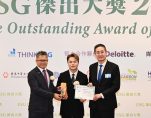
Uunderscoring HGC’s Dedication to Embed ESG into Business Operation HONG KONG SAR – Media OutReach Newswire – 23 October 2025 – HGC Global Communications (“HGC” or the “Group”), a fully-fledged ICT service provider and network operator with extensive global coverage, today announced it has been awarded “The Outstanding Award of ESG 2025”, making it the only telecom operator in Hong Kong recognized this award in 2025. This […]

Africa is entering a phase of accelerated digital inclusion, backed by substantial investment and strategic partnerships, yet persistent infrastructure and cybersecurity gaps pose growing concerns. The World Bank Group recently co-chaired the launch of the Mobilizing Access to the Digital Economy Alliance: Africa, aimed at bringing 100 million individuals and enterprises online by 2034. According to the World Bank’s data, broadband access across Africa rose from 26 […]

Lagos-based fintech firm Moniepoint Inc. has secured more than USD 200 million in its Series C equity funding round, a move that underscores its rapid growth, profitability at scale and continental ambition. The funding was led by Development Partners International’s African Development III fund and included heavyweight participation from LeapFrog Investments, Visa Inc., Google LLC’s Africa Investment Fund, the International Finance Corporation, Proparco, Swedfund and others. Moniepoint […]

Cybersecurity firms have uncovered a sophisticated backdoor dubbed ChaosBot, written in the Rust programming language, that uses the chat-and-voice platform Discord for command-and-control traffic, marking a distinct shift in how threat actors are orchestrating cyber-intrusions. The campaign appears to have begun in a financial-services environment, with attackers leveraging compromised credentials and advanced evasion methods to sidestep detection. According to reports from the vendor eSentire, the incident first […]

CHANGSHA, HUNAN – Media OutReach Newswire – 22 October 2025 – On the morning of October 13, a ceremony for the transfer and incorporation of the Zidanku Chu Silk Manuscripts (Volumes Ⅱ and Ⅲ), namely The Five Elements Decree and The Offence and Defense Divination, into the collection of Hunan Museum was grandly held. Present at the ceremony were guests from both China and the United States, […]

Visitors to the heart of Australia’s Red Centre are being drawn to Uluru‑Kata Tjuta National Park by a confluence of cultural significance, unique experiences and strategic branding that spotlight the historic destination for 2026. Plunge into the landscape and traditions of this immense sandstone formation and its neighbouring domes, and you’ll discover a land of deep meaning, geological wonder and evolving travel dynamics. Standing 348 metres tall and […]

  K Raveendran   The very idea of a Lokpal riding in a BMW, reeks of irony so strong that it almost feels like satire. The institution that stands as the sentinel of public probity, the watchdog against corruption, has managed to draw ridicule upon itself by its desire for luxury wheels. A BMW-driven Lokpal […]

The article Lokpal’s BMW Fixation Is Outright Corruption, If Not Vulgar appeared first on Latest India news, analysis and reports on Newspack by India Press Agency).

A survey by Ipsos, sponsored by GSK, found that while 63% of adults aged 50 years or over in Singapore were aware of shingles, only 29% recognised that 1 in 3 may develop the disease in their lifetime. Less than half of respondents (44%) understood that shingles can increase the risk of stroke or heart attack; fewer (36%) knew that the risk for shingles further increases amongst […]

The free, cross-platform kart­ing game SuperTuxKart has officially released version 1.5, bringing a suite of graphic upgrades and performance enhancements as the project transitions into its next major chapter. The announcement by the development team highlights this as the final update of the 1. x series and sets the stage for the forthcoming “Evolution” version. Among the headline changes in version 1.5 are enhanced rendering capabilities, including […]

Japan’s exports rose by 4.2 % in September compared with a year earlier, marking the first increase after five consecutive months of decline. The rebound was driven by a 12.6 % jump in shipments of semiconductors and electronic components as demand across Asia strengthened. Meanwhile shipments to the United States fell by 13.3 %, reflecting persistent tariff pressures.

The official data released by the Ministry of Finance show total export value reached ¥9.41 trillion, while imports rose 3.3 % to ¥9.65 trillion, resulting in a trade deficit of ¥234.6 billion. Economists had expected exports to climb about 4.4 %.

The shift in trade dynamics highlights Japan’s evolving export mix. Analysts attribute the up-turn primarily to regional technology supply-chain demand, particularly from China and other parts of Asia, where exports climbed by around 9.2 %. Shipments to mainland China rose approximately 5.8 %. By contrast, the United States market remained weak, hit by ongoing tariffs and cooling automotive exports.

Japan has been repositioning itself within the global semiconductor industry, capitalising on strengths in chip-making equipment and materials, even as it lags peers in logic-chip fabrication. According to the ASEAN+3 Macroeconomic Research Office, Japanese firms still hold about 30 % of global equipment market share and roughly half of materials supply, although they are behind in advanced logic nodes.

With global demand shifting toward next-generation technologies such as artificial-intelligence servers and 5G infrastructure, Japan’s export engine appears to be realigning. The sharp rise in chip-related shipments suggests that Japanese firms are responding to increased regional tech investment and supply-chain diversification away from the US-China axis.

Japan’s auto industry remains under pressure, however. The drop in exports to the US was exacerbated by a 15 % tariff on Japanese autos imposed in July, which continues to dampen shipments to that key destination. This has left Japan reliant on growth elsewhere. Japan’s new prime minister, Sanae Takaichi, who took office amid this trade shift, sees the export data as an early boost; her government has pledged fiscal stimulus and monetary support to sustain momentum.

The export recovery still carries caveats. While the semiconductor and electronic component sectors are expanding, traditional export categories such as automobiles and machinery have not yet shown comparable strength. Imports rising faster than forecast reflect continuing underlying demand for energy and raw-material inputs, and the trade deficit underscores Japan’s ongoing reliance on external inputs despite the export uptick.

Japan’s export performance could indicate a structural shift rather than a temporary bounce. The country’s strategy to revive its chip industry through initiatives such as the Rapidus consortium and the Japan Advanced Semiconductor Manufacturing venture illustrates a long-term push into advanced-node technologies and supply-chain resilience. These initiatives, supported by government subsidies targeting thousands of billions of yen, aim to re-establish Japan as a key node in advanced electronics manufacturing.

Trend Vision One™ ranked among top vendors in the NAV solutions market HONG KONG SAR – Media OutReach Newswire – 22 October 2025 – Trend Micro Incorporated (TYO: 4704; TSE: 4704) announced today that it has been named a Leader in Network Analysis and Visibility (NAV) solutions by Forrester. The analyst firm’s independent market evaluation scores the flagship Trend Vision One™ platform highest among all 12 evaluated […]

VISHNU RAJA
RYO YAMADA
HITORI GOTOH
IKUYO KITA
Just in:
CR Longdation Aethereal Cybersecurity × Global Cybersecurity Alliance (GCSA) Join Hands to Establish the “AI and Cybersecurity Research Centre” // Burying Head In “India Made Poverty Reduction” Data Is Dangerous // Pinarayi faults UDF over mounting road crashes // Hong Kong mandates crypto transaction disclosures to tax authorities // AI trust gap reveals distinct retail priorities: Divergent paths to consumer growth in Hong Kong and the GBA // After Reaching 7 Million Users in the Philippines, Skyro Launches Transparent Cash Loans in Malaysia // UK air traffic outage inflicted £33m financial losses // ADIA and partners establish $1.4 billion aviation venture // OpenAI identifies 948 Linux privilege escalation flaws using AI // APT29-linked campaign exploits outdated Apple and Android software // Ta’ziz finalises $1.39bn funding for Ruwais industrial facilities // Anthropic to prohibit persistent abuse of Claude chatbot // Emirates Group records AED 4.1 billion half-year profit // As AI Reshapes Education, Singapore Convenes Global Dialogue on the Future of Early Childhood Education // Cyberport Venture & Capital Forum 2026 Grand Opening // Oil and chip shares retreat after Democratic victories // xCube Access Welcomes Entrust Capital Limited  Expanding Access to Professional Portfolio Management // Asia Left Behind: Ten international companies have yet to report delivering on their cage-free egg pledges across the region // Utilities pursue ₹1,992 cr in unpaid bills // Middle East governments assess Iran war after US vote //