News related to
data

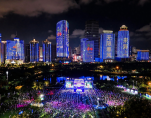
HAIKOU, CHINA – Media OutReach Newswire – 11 October 2025 – From September 28 to October 8, Haikou, the capital of China’s Hainan Province, won global attention with its colorful public art activities. Nearly 150 events, including lawn concerts, opera salons and street parades, have transformed this “Land of International Performing Arts” in the East into a boundless palace of art. Caption: A bird’s-eye view of the […]

Dubai — DOOGEE is rolling out a bold “Tech For Nature” showcase at GITEX GLOBAL 2025, positioning itself at the intersection of rugged devices and sustainability. From 13 to 17 October, the company will host its exhibit at booth A40 in Hall 13, where its outdoor-oriented hardware and eco-aware design features will be on full display.

DOOGEE describes the exhibit as centred around its “Tech Impact” zone, a curated space meant to demonstrate how its devices can withstand extreme conditions while serving the needs of explorers, scientists, and rescue personnel. The lineup includes models engineered for shock, heat, immersion, and drops — with features aimed at bridging utility and resilience.

Among the highlight products is the V Max Play, which pairs a high-capacity battery with a 200 MP main camera and integrates a mini projector for on-the-go displays. DOOGEE also plans to exhibit the S200 Ultra, built with aluminium-titanium alloy framing and a rear display for rapid glanceable information. Wearables and peripheral devices are similarly designed for outdoor resilience: the Anywise W1 Pro watch offers dual-band GPS, 5ATM water resistance, and offline map capability, while BoneAir Swim provides bone conduction audio under IP68 waterproof rating.

The firm frames “Tech For Nature” as both a mission and a product philosophy—suggesting that its devices should “coexist with nature” rather than merely tolerate it. In its public communications, DOOGEE emphasises use of sustainable materials and energy-efficient design elements. For instance, it references the use of recycled coffee grounds in casing composites and UV-responsive surfaces that shift hues with ambient light.

DOOGEE is no stranger to rugged or niche technology showcases. Earlier in 2025, the company participated in GITEX Europe, where it spotlighted AI-enhanced rugged devices and wearables built for industrial and outdoor environments. The Dubai event, by contrast, marks its largest commitment yet to the consumer-facing “outdoor tech” narrative.

Analysts note that DOOGEE is entering a competitive space where brands like CAT, Ulefone, and Blackview already target the rugged market segment. To distinguish itself, DOOGEE appears to lean into hybrid positioning: ruggedness plus eco credentials. “The idea is to appeal to users who don’t want to sacrifice environmental sensibility for durability,” commented one industry observer.

GITEX GLOBAL 2025 is itself a major platform: this 45th edition of the event draws participants across AI, quantum, data centres, and startup ecosystems. DOOGEE’s exhibit is aligned with the trend of hardware firms emphasizing sustainability, resilience, and experience-driven product showcases.

Visitors at booth A40 will have hands-on access to the full “Tech For Nature” suite, including tablets, phones, wearables, and audio gear. DOOGEE is also promoting discounts on first orders for attendees and encouraging media and partners to trial devices on-location. Beyond demonstration, the firm is signalling intention to gear up distribution and service channels in regions where demand for rugged outdoor gear is rising.

Dubai’s GITEX GLOBAL 2025 is turning the spotlight on East Africa as a rising force in the artificial intelligence landscape, with regional governments and private players leveraging the event to signal ambition across infrastructure, AI research and startup ecosystems. More than 6,800 tech enterprises and 2,000 startups from 180 countries will convene in Dubai from 13 to 17 October under the GITEX banner, showcasing breakthroughs in biotech, […]

Qualcomm has confirmed its acquisition of Arduino, the Italian open-source electronic prototyping platform used by more than 33 million developers worldwide, in a move intended to deepen the chipmaker’s stake in edge computing and AI development. Under terms not disclosed publicly, Arduino will retain its brand, tools and mission, while joining Qualcomm’s broader technology and development ecosystem. As part of the deal, the two firms unveiled the […]

Ethereum’s value slipped beneath the psychologically and technically significant $4,000 mark today, intensifying fears that the second-largest cryptocurrency may be entering a deeper correction. On Binance, ETH dipped to $3,988.89, down almost 8 per cent in 24 hours.

The abrupt drop triggered widespread liquidations, especially among leveraged positions. On-chain liquidation trackers show nearly $188 million in crypto was liquidated in just one hour during the sharp move.

Persistent macroeconomic headwinds, alongside renewed U. S.–China trade tensions, appear to have compounded selling pressure. The Nasdaq and other equity benchmarks also suffered, amplifying risk aversion among crypto investors.

Technical analysts now view the breakdown below $4,000 as a turning point. From a charting perspective, the fall invalidated previously bullish setups such as bull flags, leaving Ethereum exposed to further downside. One analyst cautioned that extended weakness could push ETH toward the $3,750 to $3,500 zone if pivotal support fails.

Support between $4,200 and $4,300 had held in recent sessions, but now that zone is under siege. Should it collapse, the stage may be set for a retest of $3,900 or lower. Traders are watching whether buyers will defend this corridor or capitulate.

Despite today’s plunge, some investors see accumulation underway. Ethereum’s total on-exchange supply has declined to a nine-year low, with large holders withdrawing ETH from exchanges—an indicator that long-term confidence may still remain intact.

Longer term, expectations remain cautiously optimistic. Standard Chartered recently raised its year-end target for ETH to $7,500, citing heightened institutional adoption and increasing use of the Ethereum network in stablecoin and DeFi infrastructures. Meanwhile, Citigroup offers a more conservative forecast of $4,300 by end-2025, warning that current prices may be more sentiment-driven than fundamentals-rooted.

Major upgrades on Ethereum’s roadmap could yet shift sentiment. Among them: the Glamsterdam upgrade, which integrates enhanced proposer-builder separation. However, a fresh academic study warns of a “free option” risk under high volatility, whereby builders may cancel committed payloads without penalty—posing challenges to network liveness during stress.

In the short term, analysts are split. Some argue that the slide is a healthy reset before ETH resumes an uptrend, provided support zones hold. Others say the breach of $4,000 suggests a loss of momentum strong enough to spark a deeper correction.

Crypto markets are already exhibiting signs of strain beyond Ethereum. Bitcoin is under pressure as well, and risk assets broadly are being squeezed by mixed macro data and higher real-interest rates. Some strategists say the crypto pullback could morph into a broader derisking wave unless fresh catalysts emerge.

Looking ahead, observers point to a few key variables: whether ETH can reclaim and sustain above $4,500; whether buyers will step in at $4,200–$4,300; and whether the network upgrades can deliver tangible improvements to gas, scalability, and decentralisation.


Matein Khalid Private equity and money center banks on Wall Street are in free fall even as the private credit market is in classic contagion mode, without a lender of the last resort for overleveraged shadow banks/hedge funds whose illiquid assets now disappear into Wall Street’s structured vehicles blackholes. Peekaboo Finance 101! When Citigroup and Brent crude both fall 8% in a synchronized bearish death dive, I […]

HANOI, VIETNAM – Media OutReach Newswire – 10 October 2025 – The Vietnamese music scene is experiencing an unprecedented seismic event: G-DRAGON has assented to fan demands, officially announcing a second performance for his highly anticipated G-DRAGON 2025 WORLD TOUR [Übermensch] IN HANOI. The decision to add a second show on Sunday, November 9, at the 8Wonder Ocean City follows a ticket phenomenon that has redefined the […]

Advertisements

A ceasefire between Israel and Hamas has entered into force, with the Israel Defence Forces confirming a suspension of major offensive operations and stepping back from parts of Gaza. The armistice supports a mediated exchange: Hamas will release 20 living hostages within 72 hours, and Israel will free a broad list of Palestinian detainees. The ceasefire commenced at midday local time, with Israeli troops withdrawing to a […]

A coalition of leading banks including Bank of America, Goldman Sachs, Deutsche Bank, BNP Paribas, Santander, Barclays, TD Bank, MUFG, UBS and Citi has unveiled a joint exploratory effort to design a blockchain-based stablecoin pegged to G7 currencies. The banks say the asset would maintain a fixed 1:1 value relative to existing fiat currencies, issued on public blockchains.

The initiative enters a financial landscape intensely focused on regulation, institutional adoption, and the evolving dynamics between corporate and sovereign digital currencies. According to statements from the banks, the plan is still in its early phase, focused on technical design and governance frameworks before market launch.

Under the plan, participating banks would cooperate on shared standards for transparency, reserve backing, compliance, and interoperability across financial systems. The banks emphasise that regulatory alignment will be central, particularly given heightened scrutiny in major jurisdictions. Some participants have intimated that this consortium initiative is intended to forestall fragmentation in the stablecoin space and ensure that banks maintain influence over the structure of digital money networks.

Sources familiar with the project note that discussions centre on multiple core challenges: how to segregate reserves to maintain full backing, how to deal with liquidity and redemption demands, how to interface with central bank digital currencies without cannibalising them, and how to meet anti-money laundering and know-your-customer mandates.

This bank-led initiative aligns with a broader pattern: European banks recently formed a consortium to launch a euro-denominated stablecoin under MiCAR compliance, aiming to counter the dominance of U. S. dollar–based tokens. That project includes ING, UniCredit, CaixaBank, and others.

Analysts say the involvement of global banks is a signal that stablecoins are no longer confined to fintechs or crypto firms. Goldman Sachs has forecast that the stablecoin market could expand into the trillions of dollars over time. Banks are increasingly seeing stablecoins as tools to support liquidity management, payments, and tokenised financial infrastructure.

The dominance of U. S. dollar–backed stablecoins is also one driver of such moves. A Standard Chartered forecast predicts that the total stablecoin savings held globally could climb to $1.22 trillion by 2028, a shift that could disintermediate banks in emerging markets.

Critics caution that bank-issued stablecoins must avoid replicating past financial crises: if redemption runs occur, banks issuers must be prepared to redeem at par value in all circumstances, including stress periods. Proper separation of reserves, legal structuring to prevent creditor claims on reserve pools, and independent auditing will be crucial. Regulatory authorities will need to decide whether bank-issued stablecoins should be treated as depository liabilities or securities.

Some central banks may view such bank initiatives as competitive to their CBDC ambitions. Others in regulation may welcome the partnership as allowing private-sector innovation within compliant guardrails. The outcome could reshape how payments and money move across borders.

By Girish Linganna In a move that would have seemed unthinkable just a few years ago, Taliban Foreign Minister Amir Khan Muttaqi arrived in New Delhi on October 9 for an eight-day official visit that marks a watershed moment in India’s foreign policy. His meetings with External Affairs Minister S. Jaishankar, followed by visits to […]


The article The Price Of Pragmatism: What India Gains (And Loses) By Courting The Taliban appeared first on Latest India news, analysis and reports on Newspack by India Press Agency).

India is dispatching over 450 technology firms and startups to GITEX Global 2025 in Dubai, anchoring the India Pavilion under the aegis of ESC. The pavilion will span multiple halls and spotlight more than 100 Indian enterprises across sectors such as AI, cybersecurity, cloud computing, IoT, smart mobility, fintech and digital infrastructure. Organisations will also engage in high-stakes networking, investor roundtables and B2B matchmaking.

GITEX Global 2025, running from 13 to 17 October at the Dubai World Trade Centre, draws more than 6,800 tech companies and some 2,000 startups from about 180 countries. It is expected to be the largest edition to date, integrating themes such as physical AI, quantum computing, biomedicine and semiconductor innovation. Across the co-located Expand North Star event, over 1,200 investors managing assets exceeding US$1.1 trillion will scout opportunities among scale-ups and unicorns.

The India Pavilion marks a concerted push to convert India–UAE strategic frameworks into tangible tech commerce. With the India–UAE Comprehensive Economic Partnership Agreement and the Local Currency Settlement System operational, cross-border ICT trade has surged. Bilateral trade crossed US$100 billion during fiscal year 2024–25, and electronics exports alone reached US$3.7 billion, positioning the UAE as a key destination for Indian hardware shipments.

At a preparatory briefing, Kamal Vachani, ESC’s regional director for Dubai, described the pavilion as more than a display — “a living showcase of India’s tech prowess and growing synergy with the UAE.” ESC’s CEO, Gurmeet Singh, noted that many participating companies are MSMEs or first-time exporters, and that the pavilion aligns with India’s ambition to emerge as a global electronics hub.

India’s strategy at GITEX goes beyond sheer numbers. Firms are bringing solutions purpose-built for global markets — from smart city platforms to blockchain-enabled supply chains. The pavilion will host curated sessions on cross-border compliance, regulatory alignment, and scalable deployment across Middle Eastern and African markets.

For the UAE, the event reinforces its vision of acting as a global nexus for innovation and capital. Major corporate names such as G42, e&, IBM, AMD, Huawei, Microsoft, Oracle and Amazon Web Services will anchor the exhibitions. New entrants including Cerebras, Tata Electronics, Qualcomm and Tenstorrent will attempt to break in. The show also emphasises future-critical infrastructure: hyperscale data centres, quantum systems, and semiconductor roadmaps are front and centre.

Globally, one of the event’s linchpin themes is the maturation of AI into domain-specific systems. The AI Semicon track will address sovereign technology imperatives in chip design, while the Quantum Expo will present fault-tolerant architectures. At the intersection of AI and healthcare, companies like Mammoth Biosciences and Paradromics will illustrate how gene-editing and neurotech are being reimagined. Robotics firms will showcase humanoid prototypes and autonomous “robocars,” underscoring the pivot to “physical AI.”

Strategic partnerships form a parallel narrative. India and the UAE are finalising memorandum exchanges via the UAE-India Business Council to deepen collaboration across fintech, logistics, digital infrastructure and state-level investment. The CEPA Start-up Series launched earlier this year in New Delhi underscores a joint intent to foster innovation-led cross-border growth.

Xogot has extended its reach: the full Godot engine can now run natively on iPhone, allowing developers to build, edit, test and export games entirely from their pocket. Xogot, developed by Xibbon Inc., launched for iPad earlier in 2025, and its iPhone version is built upon Godot 4.4 with a rewritten user interface in SwiftUI, tailored for touch and smaller screens. The app supports both 2D and […]

HANOI, VIETNAM – Media OutReach Newswire – 10 October 2025 – This November, Hanoi is set to become more than just a destination for Vietnamese music fans. The city will turn into the emotional center of Asia as K-pop’s “King” G-DRAGON brings his 2025 WORLD TOUR [Übermensch] to 8Wonder Ocean City. The event marks a new milestone for Vietnam on the global concert scene and signals the […]

Luxembourg’s Intergenerational Sovereign Wealth Fund has placed 1 per cent of its assets into Bitcoin exchange-traded funds, making it the first sovereign fund in the Eurozone to adopt such exposure. The move was unveiled during the presentation of the 2026 national budget by Finance Minister Gilles Roth.

Under a new investment mandate approved in July 2025, the FSIL is authorised to allocate up to 15 per cent of its portfolio into alternative investments, including private equity, real estate, and digital assets. The 1 per cent allocation to Bitcoin ETFs reflects a cautious approach: the fund avoids direct crypto holdings to limit custody and operational risk.

At present, the fund’s total assets are estimated between €700–900 million, with the Bitcoin allocation amounting to about €7–9 million. Bob Kieffer, Director of the Treasury, described the sum as a symbolic yet measured step. He noted that given FSIL’s mission and structure, the 1 per cent level “strikes the right balance while sending a clear message about Bitcoin’s long-term potential.”

Advocates argue the allocation signals growing institutional acceptance of digital assets within sovereign portfolios. Critics caution that Bitcoin’s volatility may be ill-suited for public-sector funds. Some observers contend that 1 per cent is negligible in impact yet potent in signalling. The fund’s leadership anticipates that monitoring performance will shape future adjustments within the 15 per cent limit.

Luxembourg’s decision departs from the pattern of European states owning Bitcoin only through seizure or law-enforcement action; here, the allocation is proactive and policy-based. Analysts place the development in the context of Luxembourg’s ambition to serve as a crypto and fintech hub under the European Union’s Markets in Crypto-Assets regime. Already hosting numerous crypto firms, Luxembourg aims to reinforce credibility by integrating digital assets into sovereign investment strategy.

Other European institutions have taken indirect exposure paths. Norway’s sovereign fund has gained crypto-linked exposure through equities, while some central banks in Finland and the Czech Republic have expressed interest in digital assets. The Luxembourg move may prompt broader rethinking of asset allocation norms among state funds.

FSIL’s strategy places the Bitcoin position in ETFs rather than direct holdings, a choice intended to manage custody risk and improve regulatory oversight. The law permitting cryptocurrency exposure came amid internal policy debates, with critics warning of reputational and financial risk in volatile markets. Kieffer acknowledged that “some may argue that we’re committing too little too late; others will point to the volatility and speculative nature of the investment.”

Luxembourg’s financial regulator, the Commission de Surveillance du Secteur Financier, has adapted rules governing virtual assets and alternative funds, creating a regulatory backdrop conducive to this experiment. The fund will continue to invest primarily in bonds and equities, with the digital assets portion complementing a diversified portfolio.

Cameroonian fintech startup REasy has secured a $1.8 million pre-seed investment to expand its cross-border payment and trade infrastructure for small and medium enterprises. The funding was led by Ingressive Capital, Launch Africa, 54 Collective and Digital Africa, alongside fintech angels including Christophe Chausson, Mathias Léopoldie and Joël Nana Kontchou. REasy intends to deploy the capital toward technology development, regulatory licensing across new markets and accelerated customer […]

Ethiopia’s central bank has held its benchmark rate at 15 per cent while expanding the cap on credit growth to 24 per cent for the 2025/26 fiscal year, balancing a cautious monetary stance with support for economic expansion. The move coincided with the country’s inaugural export shipments under the African Continental Free Trade Area, marking a defining moment in Ethiopia’s trade and financial policy strategy. The National […]

Macau has unveiled an integrated resort-hospital at Studio City, combining high-end medical services with entertainment in a move aimed at redefining medical tourism. The facility, operated by Hong Kong’s iRad in partnership with Melco Resorts, features on-site MRI and CT capabilities within a 15,000 sq ft footprint — a first of its kind globally.

This development marks a deliberate pivot in Macau’s strategy to reduce its dependence on gambling revenues by cultivating alternate growth sectors. The resort hospital offers health screening, diagnostic imaging, longevity treatments, aesthetic services and medical concierge offerings, positioning itself as a premium healthcare destination linked to leisure.

Melco’s chairman and CEO, Lawrence Ho, described the facility as both “the world’s first and Macau’s only hospital with MRI and CT facilities within an integrated resort,” emphasising its alignment with the local government’s “1+4” economic diversification framework. The facility is located inside Studio City, one of Melco’s flagship casino-resorts.

The Macau administration has endorsed the venture as part of a broader push to transform the city into “one centre” that integrates tourism, medical services and other growth industries. The hospital is expected to attract visitors who might extend their stays and spend more across the city’s hospitality and leisure ecosystem.

While the resort hospital is a novel concept, Macau already maintains a public health infrastructure comprising three hospitals: Conde S. Januário, Kiang Wu and Macau University of Science and Technology Hospital. The new facility, however, is unique in being embedded within a casino resort environment and dedicated primarily to elective, wellness and diagnostic services.

Industry observers note that iRad’s entry signals confidence in the region’s potential to capture high-value medical travellers — especially those seeking convenience, privacy and a fusion of health and leisure experiences. Hong Kong’s leading imaging diagnostics group, iRad, became part of Black Spade Capital’s portfolio in 2021, positioning it to spearhead this cross-border integration.

Some specialists caution that success will depend on regulatory approvals, insurance linkages, and quality accreditation. Converting high net-worth travellers into medical tourists requires trust in outcomes, cost transparency and continuity of care. Macau’s public hospitals already contend with capacity pressures; the resort hospital will need to clarify patient referral protocols and emergency support linkages.

A fresh campaign deploying SnakeKeylogger is targeting users with weaponized emails that lead to the execution of PowerShell scripts and ultimately exfiltrate sensitive data. Security analysts warn that the threat now blends social engineering with native Windows scripting to evade detection. Emails purporting to be from “CPA-Payment Files” or similar remittance services carry attachments—most often ISO or ZIP files. Once opened, these contain a malicious BAT file […]

Deloitte Australia has agreed to partially refund AU$440,000 to the federal government after a commissioned report attributed to it was found to include fabricated citations, invented legal quotations, and other inaccuracies. The firm disclosed that the report’s drafting had involved the use of a generative AI system, prompting sharp debate over how much control and transparency clients should demand when consultants deploy such tools in high-stakes settings. […]

Saudi Arabia’s sovereign wealth fund, the Public Investment Fund, has scaled back work on a number of planned share sales inside the kingdom, people with knowledge of the matter said, indicating shifting strategy amid weak valuations and soft investor appetite. Bloomberg first reported the development, and its reporting aligns with assessments in market commentary. Executives and advisers close to the red-sea fund say that a subdued climate […]

The Government of Sharjah, rated Ba1/BBB–/AAA by Moody’s, S&P and Lianhe respectively, has mandated several major banks to explore a new Panda Bond issuance in China’s onshore bond market. The Finance Department has appointed Bank of China as lead underwriter and bookrunner, with Crédit Agricole, JP Morgan Chase, ICBC, China Bohai Bank, Citic Securities, the Export-Import Bank of China, and Shenwan Hongyuan Securities acting as joint lead underwriters and bookrunners.

This initiative marks Sharjah’s second foray into the Panda Bond space; it first tapped the Chinese domestic bond market in February 2018 with a RMB 2 billion issue, becoming the Middle East’s first Panda issuer. That issuance carried a coupon rate of 5.8 per cent and matured in 2021.

Market participants say Sharjah’s renewed interest signals increasing appetite among Gulf issuers for renminbi funding, especially given the growing scale of China’s interbank bond market and its accessibility to international issuers. The Panda market is seen as a way to diversify funding sources away from traditional dollar or euro issuance, while deepening engagement with China’s capital markets.

Observers note that the list of joint bookrunners and underwriters—including both Chinese and Western entities—reflects a strategic bridging between global and Chinese investor bases. Bank of China’s role as lead suggests that Chinese financial institutions will play a key role in structuring and distributing the bonds to domestic accounts. The presence of Crédit Agricole and JP Morgan, meanwhile, may facilitate cross-border investor participation.

Industry sources expect the issuance to follow the standard procedure under China’s bond regulations governing overseas issuers. This includes registration with NAFMII, compliance with disclosure requirements, and pricing via roadshows to institutional investors in China. The timeline, tenor and final coupon structure have not yet been disclosed, but sources familiar with the matter suggest Sharjah is seeking favourable market conditions to launch.

Issuers of Panda Bonds have historically benefitted from lower yields relative to comparable offshore RMB options, thanks to the liquidity and depth of China’s domestic markets. That said, success depends heavily on investor confidence in the issuer’s credit profile, transparency in the bond documentation, and the relative attractiveness of coupon spreads over domestic benchmarks.

Sharjah’s credit ratings present both strengths and challenges. Its triple-A rating from Lianhe bolsters credibility in the Chinese market. However, its non-investment grade rating from Moody’s and S&P may weigh on perceptions among global investors. How Sharjah positions itself to bridge that gap will be critical, particularly in roadshow messaging and bond structuring.

This development arrives at a time when Panda bond issuance is gaining momentum. The Asian Infrastructure Investment Bank, for example, raised CNY 2 billion in its latest two-year Panda issuance, achieving oversubscription and attracting new investor accounts. The New Development Bank further expanded its onshore footprint earlier this year, issuing RMB 7 billion under its registered Panda Bond Programme.

Dubai — Hytera Communications unveiled a slate of artificial intelligence-driven communication tools designed specifically for public safety, law enforcement and defence sectors in the Gulf region, ahead of its showcase at GITEX Global 2025.

At the heart of Hytera’s push is a vision of integrated, mission-critical communications that fuse voice, video, and data streams with AI analytics to improve situational awareness, incident response speed and evidence handling.

The company will debut the P60 Smart PoC Radio, a compact device marrying push-to-talk over cellular capability with 3GPP-aligned mission-critical services. This enables frontline users to stream video, send data, and communicate via voice over a single radio interface. Also on display will be the SC700 LTE Body Camera, built for continuous field operation with extended battery life, high-definition video capture and advanced noise reduction in audio. The SC700 is integrated with Hytera’s upgraded Digital Evidence Management system, which automates evidence ingestion, classification and secure sharing while preserving a chain of custody.

Hytera also plans to demonstrate its Intelligent Mobile Enforcement Solution, an ecosystem combining body cameras, in-vehicle video units and AI models for real-time analytics such as facial recognition and licence plate detection. From command centres, data from multiple sensors can be aggregated and visualised to support dispatch decisions and resource allocation.

According to Stanley Song, Vice President at Hytera, the Middle East market represents one of the fastest growing regions for professional communication technologies. He emphasised that public safety systems must go beyond simple coverage — they must protect the integrity of data, location privacy, and resilience against cyber threats. Given the rising challenges of urban security, cross-border crime and regional instability, Song argued that interoperable, secure, AI-augmented communications can help authorities maintain continuity under stress.

Hytera’s roadmap reflects broader shifts in the mission-critical communications sector. Competing firms are also embedding AI capabilities and federated data architectures so that frontline devices act as sensors, not just radios. In parallel, regional governments in Gulf Cooperation Council states are investing heavily in smart city, surveillance and emergency response infrastructures, creating receptive demand for advanced solutions.

Matein Khalid Gold is in its most spectacular bull run since 1976-1980, when prices rocketed from $91 to over $800 an ounce. The current cycle found its floor near $1,800 in late 2022, as the Powell Fed’s rate-hike campaign peaked and Washington froze $300 billion in Russian reserves in response to the invasion of Ukraine. “Dr Auric” now trades at just over $4,000 an ounce – a perfect vindication of […]

Greenlogue/AP First Abu Dhabi Bank has launched its second blue bond, raising USD 20 million through a three-year issuance, to support marine conservation, wastewater recycling and renewable-powered desalination in Abu Dhabi and Al Ain. With this issuance, FAB’s cumulative blue bond volume reaches USD 70 million, following the bank’s inaugural blue bond in August. The funds are aligned with FAB’s 2023 Sustainable Finance Framework and governed by […]

VISHNU RAJA
RYO YAMADA
HITORI GOTOH
IKUYO KITA