News related to
data

MACAU SAR – Media OutReach Newswire – 24 November 2025 – Melco Resorts & Entertainment is proud to announce that House of Dancing Water’s Premiere project has been honored at the 2025 TITAN Brand Awards with two major distinctions — the Platinum Award for Best Brand Awareness Campaign and the Gold Award for Best Integrated Marketing Campaign. These prestigious accolades celebrate Melco’s strategic marketing excellence and reinforce […]

Dubai’s leadership has endorsed a comprehensive architectural identity for the emirate’s road network, signalling a major shift in how transport infrastructure is designed and experienced. Sheikh Hamdan bin Mohammed bin Rashid Al Maktoum, in his capacity as Chairman of the Executive Council of Dubai, approved the framework that aligns with the city’s broader ambition to deliver integrated, sustainable and visually coherent urban environments. The initiative, overseen by […]

Greenlogue/AP Riyadh – Tanmiah Food Company, one of Saudi Arabia’s largest vertically integrated poultry and food producers, has signed three strategic memoranda of understanding and launched what it calls the region’s first geothermal-cooled poultry facility, marking a significant move in its sustainability and decarbonisation drive. The agreements were unveiled during the inaugural Saudi Agri‑Food Tech Alliance Forum at the headquarters of the Ministry of Environment, Water and […]

Tickets will go on public sale on December 4, 2025 MACAU SAR – Media OutReach Newswire – 24 November 2025 – International film star and stand-up comedy icon Jimmy O. Yang is making a triumphant return to Galaxy Macau™, taking centre stage at the Galaxy Arena – Macau’s largest indoor arena – for a spectacular night of laughter in “Galaxy Macau Presents: The Jimmy O. Yang Chinese […]

Abu Dhabi-listed NMDC Energy has launched a full branch in Taiwan and a commercial office in Shanghai, marking a strategic move into the Asia-Pacific region to support its project pipeline and strengthen supply-chain relationships. The company also sealed a memorandum of understanding with CITIC Steel, one of China’s largest steel producers, signalling a concerted effort to lock in reliable sourcing for its energy-services operations. NMDC Energy’s decision […]

The world’s largest cryptocurrency, Bitcoin, fell swiftly this week as a sustained sell-off put the token on track for its steepest monthly decline since 2022. It slipped as much as 7.6 per cent to around $80,553 before trimming losses, while the broader crypto market cap fell below $3 trillion for the first time since April.

Forced liquidations, institutional outflows and thin liquidity emerged as key drivers of the slide. Analysts at Ergonia pointed to a convergence of derivative blow-outs and structural selling via exchange-traded products as factors creating a “particularly vulnerable state” where even stabilisation efforts face immediate supply pressure. Futures liquidations exceeded $1 billion, and data highlight more than 30 per cent in market cap erasure since early October.

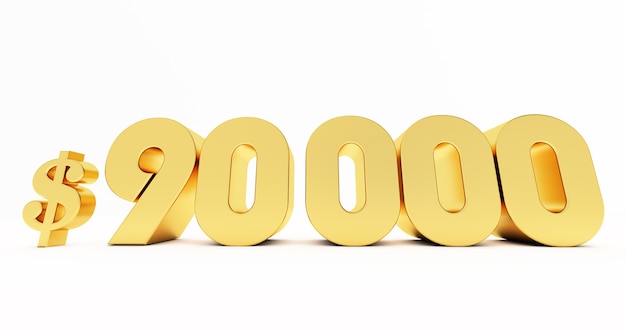
While Bitcoin climbed to an all-time high near $126,000 in early October, the recent downturn amounts to roughly a 25 per cent retreat within the month. Bloomberg data confirm this represents the largest monthly fall since June 2022. The correction has triggered a reevaluation of year-end positioning, with derivatives markets assigning around a 50 per cent chance that Bitcoin finishes the year under $90,000 — marking a significant sentiment shift in a matter of weeks.

One root cause of the near-term pressure lies in the unwind of leveraged positions. Many traders who piled into futures and perpetual contracts saw funding rates turn against them, triggering cascaded liquidations. Binance chief executive Richard Teng described the move as a “healthy consolidation” for the industry, albeit one that comes amid rising risk aversion and tighter macro conditions. The wave of deleveraging has spilled into alt-coins and broader risk assets, emphasising how crypto still mirrors the wider market’s orientation toward volatility and liquidity stress.

Institutional-product flows add another level of challenge. The launch of spot Bitcoin ETFs earlier this year raised expectations of large capital inflows, but the current environment has seen outflows, particularly from funds that repositioned, hedged or redeemed positions. This structural selling has combined with retail and leveraged exits to deepen the draw-down.

Despite the short-term strain, some analysts suggest the correction may clear the way for a healthier structure going forward. Liquidity indicators normally near major crypto rallies are showing signs of restocking, and some models view the current phase as a reset rather than the end of the cycle. However, sceptics caution that macro risks — including higher rates, regulatory headwinds and geopolitical stress — continue to hang over the sector and may dampen the timing or pace of any recovery.

Among market participants, sentiment has shifted markedly. Portfolio manager Nigel Green of deVere Group noted that heavy borrowing in speculative positions meant “any reversal triggers liquidations that accelerate the move”. Others highlight that although corrections of 20–30 per cent have occurred in past Bitcoin bull markets, the current confluence of leverage, product flows and liquidity outflows is unique, suggesting this phase may represent more than a standard dip.

With December positioning now in focus, the coming days will be closely watched. The monthly close looms large — if Bitcoin avoids a full 25 per cent drop it could blunt the signal of stress; if it does not the message to markets could be more definitive. The broader crypto ecosystem will also look for signs of capitulation or stabilisation — levels of derivative stress, fund flows and institutional signals will inform whether this is a tactical pull-back or the early stages of a deeper consolidation.

As one of the first major asset-classes to undergo structural institutional adoption, Bitcoin’s current draw-down serves as a test of how the market absorbs large-scale flows and macro shocks. The unfolding developments will have implications well beyond the crypto world, casting light on how digital assets behave within the larger financial system.

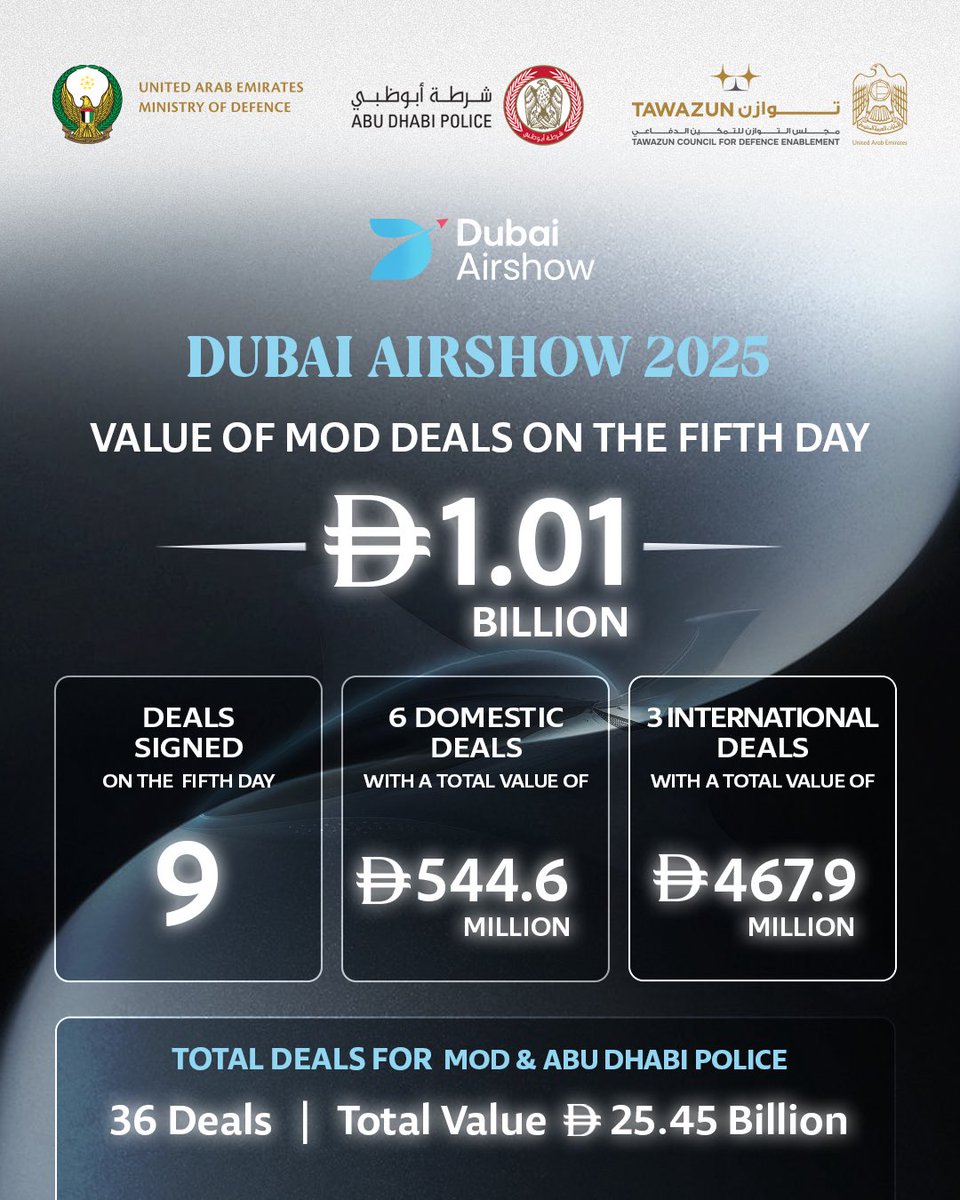
The Tawazun Council for Defence Enablement recorded nine new contracts worth AED 1.012 billion on behalf of the Ministry of Defence on the fifth and final day of the Dubai Airshow 2025, elevating the event’s five-day total to 36 agreements with a cumulative value of AED 25.455 billion.

At a press conference in Dubai attended by spokespersons Majed Ahmed Al Jaberi, Abdulla Ahmed Al Saeedi and Manea Abdulkarim Al Mansoori, the council detailed that six of the final-day contracts, sized at AED 544.675 million, were with local firms, while the balance, AED 467.913 million, involved international companies.

Among the domestic deals, two contracts with the Abu Dhabi-based M4 Trading comprised a AED 57.636 million order for a Grand Control Station and a AED 161.634 million deal for aircraft procurement. A AED 29 million contract went to Al Taif Technical Services Company for cooling-equipment and power-generator maintenance, while MP3 Company secured a AED 154.5 million agreement for aerial-rescue systems and spare parts. International Golden Group received AED 65.905 million for aerial drop systems and AED 76 million went to Abu Dhabi Autonomous Systems Investments for drone procurement.

On the global front, two agreements with Lockheed Martin amounted to AED 184 million and AED 63.551 million respectively for maintenance and spare-parts support. A third contract with Raytheon Technologies was valued at AED 220.362 million for friendly-force identification systems.

Across the event, earlier announcements show the council had already signed 20 contracts worth AED 18.01 billion during the first three days of the airshow. This underlines a consistent pace of deal-making spanning both national and international industrial partners.

The contract portfolio highlights the UAE’s emphasis on building a robust domestic defence-and-security-industrial ecosystem, spanning aircraft systems, drones, radars, simulation and service-support infrastructure. Analysts note this reflects a shift from traditional procurement towards localisation, technology transfer and national capability building.

Tawazun’s officials emphasised that the partnerships frame more than incremental orders; they represent structural steps toward embedding industry in sovereign defence strategy. Ms Mansoori observed that the council “continues to foster a competitive and enabling environment for the private sector” and that the outcomes achieved through the airshow “reflect the UAE’s vision of developing an integrated, innovative and strategically driven defence and security sector.”

While the headline figure of AED 25.455 billion positions Dubai Airshow 2025 among the region’s most commercially active defence gatherings, some independent observers caution that the true measure of success will rest on execution, delivery timelines and domestic-industry uptake. Questions remain about how many contracts include meaningful offsets, R&D components and long-term local value-creation versus straightforward procurement.

Nevertheless, the event’s records reinforce Dubai’s growing role as a hub for aerospace-defence engagement, with deals touching both military and dual-use capabilities. Compared with earlier editions, this year’s flow involves a higher proportion of contracts that combine hardware, maintenance-services and technology-transfer features — signalling deeper industrial ambition rather than purely kit acquisition.

The spread of contract-values — from tens of millions of dirhams for niche specialised systems to multi-hundred-million agreements with global primes — reveals a multipronged strategy. Domestic SMEs are being drawn into the supply chain alongside major established defence-sector players, thereby diversifying participation and reducing reliance on external supply.

As the UAE moves ahead with its national defence-industrial roadmap, the final-day flurry of deals from Tawazun brings the focus firmly onto the implementation phase of those agreements and the strategic partnerships that will underpin them over the coming years.

Advertisements

Arabian Post Staff -Dubai A major Abu Dhabi conglomerate has confirmed that it has formally expressed interest in acquiring overseas assets of a large Russian oil group, aligning with other global energy players eyeing the same prize. International Holding Company said it has notified the U. S. Treasury Department of its interest in buying foreign-based assets of Lukoil, placing it in active contention alongside the likes of […]

MELBOURNE, AUSTRALIA – Media OutReach Newswire – 24 November 2025 – Lee Kum Kee, the global leader in Asian sauces and condiments, joined forces with Chef Vincent Liew, Executive Chef at The Star Sydney, to deliver an inspiring culinary seminar at Le Cordon Bleu’s Moorabbin campus on 20 October. The exclusive event brought together over 60 passionate culinary students for a dynamic showcase of how Lee Kum […]

A super-charged solar storm known as the “Gannon event” forced the Earth’s plasmasphere—a doughnut-shaped shell of charged particles that normally envelops the planet—to shrink to roughly one-fifth of its usual size, exposing satellites, communications networks and power infrastructure to elevated risks. Scientists tracking the process say the collapse was rapid and the recovery slowed significantly, offering a rare window into how extreme space weather reshapes our planet’s […]

During the G20 Leaders’ Summit in Johannesburg, the Managing Director of the International Monetary Fund, Kristalina Georgieva, stated that the Fund expects the Group of Twenty major economies to place sustained emphasis on global debt vulnerabilities, particularly in developing nations. She warned that global public debt is projected to exceed 100 % of world GDP by 2029 without decisive action, and added that the IMF intends to […]

Microsoft has officially opened the source code of the original Zork trilogy—Zork I, Zork II and Zork III—making the foundational text-adventure games freely available under the MIT licence. The company’s Open Source Programs Office, working alongside its Xbox and Activision divisions, announced that the historic repositories now include source code, build notes, comments and documentation intended to support study, teaching and development. The release does not grant […]

Organizations are deploying artificial-intelligence-driven defences to counter increasingly sophisticated cyber threats as attackers harness the same technology to mount agile attacks. Leaders at major cybersecurity firms say the conflict between defenders and adversaries has entered a new phase, where speed, adaptability and automation are critical. The security firm Palo Alto Networks announced upgraded platforms designed to protect cloud assets and AI-based applications, citing the need to monitor […]

City streets that normally teem with early-morning traffic transformed into vast running lanes as the seventh edition of the event drew a record turnout. More than 307,000 participants took part in the event, surpassing the previous year’s figure of 278,000. The highly inclusive free event offers both 5 km and 10 km distances and is open to people of all ages and fitness levels. The race commenced […]

A major step in electric-vehicle battery technology has been reached as GAC Group announced the completion of China’s first large-capacity all-solid-state battery production line capable of manufacturing vehicle-grade cells of 60 ampere-hours or more. According to company statements, the new line has achieved an areal capacity of 7.7 mAh/cm², compared with under 5 mAh/cm² for many conventional lithium-ion cells, signalling a potential leap in energy storage performance.

GAC’s research director, Qi Hongzhong, said that the energy density of the new solid-state cells is nearly double that of traditional liquid-electrolyte batteries and that vehicles currently capable of about 500 km range could stretch beyond 1000 km once the technology is integrated. The production line is presently in small-batch testing; vehicle integration trials are planned for 2026, with full mass-production targeted between 2027 and 2030.

This development places GAC among the first manufacturers globally to deploy large-format all-solid-state technology, an area in which automakers and battery firms in Japan, Korea and the United States have long been striving. Analysts observe that scaling solid-state technology from lab cells to industrial manufacturing has been a major bottleneck, primarily due to challenges around thick-electrode fabrication, solid-electrolyte interface stability, and cost. GAC’s ability to hit the 7.7 mAh/cm² threshold suggests the company has resolved at least one of the key obstacles.

The solid-electrolyte used in the new cells reportedly allows higher thermal thresholds—tolerating 300-400 °C compared to about 200 °C for conventional cells—and the battery manufacturing process incorporates a “dry” anode method that combines slurry mixing, coating and rolling into a single step. These process innovations are claimed to reduce energy consumption during manufacture and increase yield.

Alongside GAC’s progress, Dongfeng Motor Corporation is advancing its own all-solid-state agenda, targeting mass production of a 350 Wh/kg solid-state battery in September 2026, which it says will enable electric vehicles to achieve a range in excess of 1,000 km. Dongfeng already operates a 0.2 GWh pilot line and is working on variants of 400 Wh/kg and 500 Wh/kg solid-state batteries. The firm states that its 350 Wh/kg battery retains over 72% of its capacity at –30 °C and passed a 170 °C thermal safety test, surpassing current national standards.

Together these announcements reinforce the increasing pace of commercialization in the solid-state battery sector. Manufacturers hope such cells will deliver significant advantages over conventional lithium-ion chemistry: higher energy density, faster charging, better cold-weather performance and improved safety due to the absence of flammable liquid electrolytes. In GAC’s case, the large-cell format means fewer cells are needed per pack, potentially reducing packaging complexity, cost and weight.

However, experts caution that substantial hurdles remain before widespread adoption. Solid-electrolyte materials and manufacturing infrastructure are still costly, and long-term durability in automotive conditions – repeated charge/discharge cycles, thermal stress and mechanical vibration – must be validated. Further, supply-chain constraints for key materials such as solid-electrolyte precursors, special anode/cathode materials and high-purity manufacturing equipment continue to pose risks. GAC and Dongfeng both emphasise the need for ecosystem readiness, including new cell formats, pack integration and vehicle platforms designed for solid-state cells.

The strategic dimension of this move is significant: as China consolidates its leadership in electric vehicles and battery manufacturing, gaining industrial-scale capabilities in solid-state technology could confer a competitive edge. The reported 7.7 mAh/cm² areal capacity and 60 Ah cell format indicate that GAC is not simply experimenting in the lab but making strides towards production-level readiness. Whether the transition to full-scale mass manufacture meets the timetable will be closely watched by global automakers and battery suppliers alike.

Authorities in Kerala have issued widespread weather warnings as a strengthening atmospheric circulation over the southeast Arabian Sea intensifies rainfall across multiple districts. The India Meteorological Department has placed seven districts—Thiruvananthapuram, Kollam, Pathanamthitta, Alappuzha, Kottayam, Idukki and Ernakulam—under a yellow alert, signifying expected rainfall between 64.5 mm and 115.5 mm in a 24-hour period. The advisory also highlights the possibility of thunderstorms, lightning and gusty winds reaching up to 40 km/h.

The underlying weather trigger is a low-pressure system that formed over the Strait of Malacca and adjoining Andaman Sea around 22 November, and is forecast to develop into a depression over the southeast Bay of Bengal by 24 November. This system is expected to bring moisture-laden winds into the region, maintaining wet conditions over the coming days.

Forecasters report that isolated areas in Kerala may receive 7–11 cm of rainfall in a 24-hour window between 22 and 26 November, with similar conditions flagged for the nearby Lakshadweep archipelago. Fisherfolk along coastal waters have been advised to refrain from venturing out due to rough sea conditions and winds of 35–55 km/h.

The yellow alert classifications carry significant implications for life and infrastructure. Local officials note heightened risk of waterlogging on roads, reduced visibility in hill-tracks and potential disruption of the ongoing Sabarimala pilgrimage season. Devotees travelling between Sannidanam, Pampa and Nilakkal are being urged to adjust plans and monitor weather updates.

On the marine front, maritime authorities have warned deep-sea vessels to return to the nearest harbour by Tuesday and advised fishermen along the Kerala and Lakshadweep coasts to suspend operations. Similar advisories extend to the coast of south Tamil Nadu and the Gulf of Mannar up to Wednesday as the system may increase wave activity further.

Looking at district-specific schedules, the IMD indicates that on 24 November, yellow warnings will shift to Palakkad and Malappuram alongside the core list of districts; on 25 and 26 November, the alert is expected to persist in the earlier-listed seven districts.

While yellow alerts are not the most severe classification, the extended duration of the weather system and its broad geographic footprint warrant strong preparedness. Infrastructure officials are monitoring river and dam levels, road-maintenance crews are on standby for landslide-prone zones in the Western Ghats, and local governments have begun messaging on minimizing non-essential travel.

Kerala has faced heavy rainfall challenges in past years, including major landslides in 2024 and 2018 that underlined the vulnerability of hill-terrain regions. That history adds urgency to current warnings and reinforces the need for preventive action.

As the state transitions into the winter season, this spell of sustained rainfall poses a dual risk of flooding and landslides, especially where hillside stability has been compromised by prior weather events. Hydrology experts emphasise monitoring of water-storage levels in reservoirs, the drainage readiness of urban areas and the real-time condition of key pilgrimage routes and forest paths.

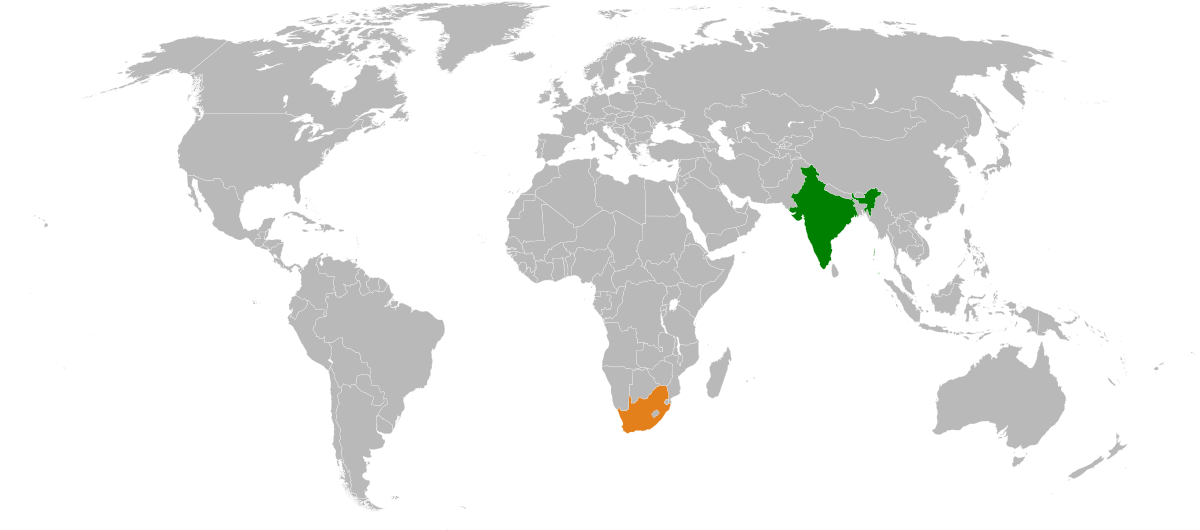
Leaders of India and South Africa affirmed a joint commitment to amplify the resonance of the Global South during a bilateral meeting on the margins of the G20 summit in Johannesburg. India’s Prime Minister met South African President Cyril Ramaphosa to review an expanding partnership that now encompasses trade, digital infrastructure and critical-minerals cooperation.

The leaders emphasised the historical foundation of bilateral ties, tracing back to shared anti-colonial struggles and longstanding people-to-people links. They identified emerging sectors of collaboration, including artificial intelligence and digital public platforms, as well as enhanced investment flows across innovation, infrastructure and mining sectors.

India expressed gratitude to South Africa for its role in relocating cheetahs to India and extended an invitation for South Africa to join the International Big Cat Alliance. At the G20 held in Johannesburg, which is the first summit of its kind hosted on African soil, South Africa has sought to spotlight issues of development, sustainability and Global South equity.

The two countries signalled their readiness to facilitate mutual investments, noting the growing footprint of Indian firms in South Africa and a shared interest in deepening bilateral ties in mining, start-ups, technology and infrastructure. They agreed to enhance support frameworks for these sectors.

In the domain of digital transformation, the meeting explored ways in which India’s Digital Public Infrastructure experience could be shared with South Africa, with the leaders discussing a roadmap for cooperation in those digital arenas that support transparency, inclusion and scalability.

On critical minerals—the backbone of technologies from electric vehicles to renewable energy systems—the dialogue underscored the strategic convergence of India’s growth ambitions and South Africa’s resource endowment. Both governments emphasised sustainable extraction, value-chain development and mutual investment as priorities.

The meeting also took place against the backdrop of global institutional reform debates, where developing countries increasingly seek to adjust frameworks such as the IMF and development banks. South Africa, as serving G20 chair, has framed its presidency around the themes of solidarity, equality and sustainability, particularly as representative of countries in the Global South.

While the two leaders concentrated on bilateral priorities, they also discussed multilateral coordination and collective platforms. They welcomed South Africa’s initiative to convene the IBSA leaders meeting and affirmed cooperation ahead of India’s upcoming chairship of BRICS in 2026.

Observers note that India–South Africa ties have evolved from traditional trade and diplomacy to a more strategic convergence around technology, investment, and global governance. According to experts, this shift reflects the changing priorities of middle powers in a multipolar world, where alignment on development and technological sovereignty is rising.

However, there remain practical challenges. For South Africa, translating resource-rich endowments into sustainable, inclusive growth has long been a domestic policy hurdle. For India, ensuring that digital partnerships respect both sovereignty and local capacity presents implementation risks. Critics argue that while high-level pledges are valuable, they must be matched by concrete mechanisms, regulatory clarity and project-level follow-through.

In trade terms, the two countries’ discussions come at a time when global supply-chain realignments and technology competition are raising the stakes for investment in emerging markets. Indian companies entering South Africa will need to navigate regulatory complexity, local participation requirements and the country’s infrastructure bottlenecks. South Africa, for its part, will have to ensure that its mining and start-up ecosystem attract and retain investment while meeting environmental and community benchmarks.

The diplomatic messaging also signals a broader orientation for both nations. India’s engagement with Africa has increasingly focused on capacity-building and infrastructure, while South Africa has positioned itself as a voice for Africa in global forums. Their joint push to amplify the Global South suggests an intention to influence agendas around debt relief, climate finance, digital equity and reform of global institutions.


Gamers facing unexpected slowdowns on the PlayStation 5 are turning to a set of practical optimisation steps that have gained wide attention across the gaming community, as players report smoother gameplay and shorter load times after fine-tuning system settings and improving network configurations. The guidance reflects broader efforts by console owners to get the best possible performance from the device as game file sizes grow, online titles […]

A pioneering bio-textile crafted from marine algae has been rolled out by the Fashion Commission of Saudi Arabia at the Misk Global Forum in Riyadh, marking a bold step into sustainable fashion. The initiative, termed the Red Sea Seaweed Project, turns algae harvested from the Red Sea into fabric through a collaboration with King Abdullah University of Science and Technology and the fibre-specialist PYRATEX. The unveiling took place during a panel titled “Fabric of the Future: Red Sea Seaweed Textile” and was led by the commission’s CEO Burak Çakmak.

The textile is created by integrating seaweed biomass with Lyocell and organic cotton to form a sustainable fibre. Py­ra­tex’s expertise in seaweed-based fabrics—previously applied in other regions—has been adapted here for local algae species. The venture relies on KAUST’s research unit KAUST Beacon Development to harvest Red Sea algae while maintaining its bioactive properties and supporting a traceable supply chain. Çakmak said the material “marks a defining moment in our journey to build a future-ready sustainable fashion ecosystem. By transforming a local natural resource into a fully traceable, sustainable textile, we are demonstrating the power of science, creativity and industry working together.”

KAUST’s involvement builds on its broader algal biotechnology work, including the DABKSA initiative set up with the Ministry of Environment, Water and Agriculture to establish local algae-based industries. That scheme originally focused on animal feed, but now its marine-species work is feeding into fashion applications. PYRATEX’s page confirms seaweed-based fabrics offer anti-irritation and skincare benefits—though that model was previously developed in Iceland.

The project is designed not only as a material innovation but as a symbol of economic diversification. The Fashion Commission says it aims to strengthen the Kingdom’s domestic fashion ecosystem by embedding sustainability principles and leveraging local resources. The Lab, the commission’s in-house development studio, converted the seaweed fibre into wearable garments, emphasising full supply-chain transparency.

Analysts note that the fashion industry globally is under rising pressure to reduce its environmental footprint. The Guardian estimated the sector accounts for up to 10 per cent of global greenhouse-gas emissions. By tapping coastal biomass, the Saudi initiative could offer a distinct regional advantage. The Red Sea region’s marine environment provides access to algae species adapted to high salinity and heat, meaning less intensive cultivation may be required. KAUST’s earlier trials with extremophile algae in desert conditions underline that point.

However, questions remain about how the new textile will scale commercially and how its sustainability claims will hold in full life-cycle analyses. Industry watchers emphasise that adopting bio-based textiles is only part of the solution; supply-chain energy use, water consumption, and end-of-life recyclability also matter. The Fashion Commission acknowledged those challenges in its public statement but noted this is a “first step” in a broader innovation roadmap.

Beyond the material itself, the move aligns with broader strategic priorities such as Vision 2030 and the Saudi Green Initiative, which call for economic diversification and sustainable development across the Kingdom. It also positions Saudi fashion as a player in the global sustainability agenda, where brands are looking for story-driven innovation and regional supply-chain transparency. The Fashion Commission’s statements emphasise that this home-grown development can contribute meaningful solutions to the global fashion landscape.

Bitcoin climbed to just below $88,000, with fresh momentum in the market fuelling optimism among traders and analysts. The broad crypto ecosystem responded in kind, bringing the total market capitalisation close to the $3 trillion mark — a figure emblematic of expanding institutional interest and regulatory shifts. A growing number of market participants now expect the flagship crypto-asset to press higher, although analysts caution that volatility remains elevated and support levels are becoming increasingly critical.

The asset’s ascent has been driven by multiple factors. Anticipation of potential interest-rate easing by the Federal Reserve, combined with favourable regulatory developments in the US, has bolstered investor confidence. Support from institutional flows appears meaningful: large asset-managers and first-time institutional entrants are moving into crypto-related products. Some technical analysts highlight that the jump above $86,000 marks a breakout from prior resistance, reinforcing bullish narratives.

Key support is identified in the $84,000–$86,000 zone. One analyst from block-chain data firm Glassnode warns that a slip below $88,000 could set up a descent back toward that lower band, which would challenge bullish momentum. The same company points out that trading volumes are lighter than during major rallies of the past, suggesting caution until stronger confirmation arrives.

Looking ahead, technical-chart readings suggest a potential push toward $90,000-plus levels, possibly reaching into the $92,000–$100,000 range if momentum holds and major resistance is overcome. Several analysts highlight the $92,000-$93,000 region as a key hurdle, with failure to clear it likely to trigger a thinned advance. Others remain more cautious, pointing to broader macro and regulatory risks.

From a structural standpoint, one scenario treats the move as part of a wave-four corrective bounce, implying that a wave-five surge could follow. Under that model the next leg upward might push toward $100,000+. On the flip side, critics note that weekend trading volumes typically shrink, making such breakouts less reliable and opening the possibility of false moves.

Altcoins are broadly echoing the trend. Ethereum and major tokens have posted gains, though their trajectories remain more muted compared with Bitcoin’s. The dominance of Bitcoin in the crypto-market cap has widened slightly, underlining that many investors remain focused on the primary asset while altcoin sentiment remains cautious.

Regulatory dynamics are playing a significant role. The US Congress and regulators have advanced legislation and guidance that facilitate crypto-asset integration into mainstream financial systems, including retirement-account access and clearer tax/data rules. Such changes are interpreted by institutional investors as de-risking signals that could unlock further flows.

The Fund offers a flexible revenue-share token, unlocking AI infrastructure access from US$1,000 HONG KONG SAR – Media OutReach Newswire – 23 November 2025 – Pioneer Asset Management Limited (“Pioneer“), a subsidiary of Tykhe Capital Group Limited (“Tykhe Capital“), a leading Real-World Asset (RWA) and Security Token Offering (STO) innovator in the Asia-Pacific region and Skyvast Digital Sdn. Bhd. (“Skyvast“), today announced the launch of the world’s […]

By Nitya Chakraborty The meeting on Friday November 21 between the U.S. President Donald Trump and the New York Mayoral-elect Zohran Mamdani produced a win-win situation for both leaders. The maverick Republican President who earlier called Mamdani a lunatic communist and the 34 year old firebrand democratic socialist who calls even now Trump a fascist, […]


The article Trump-Mamdani Meet: It Was A Win-Win Situation For Both Leaders appeared first on Latest India news, analysis and reports on Newspack by India Press Agency).

A first-of-its-kind facility has begun operations in Fukuoka, Japan, tapping the natural movement of water between freshwater and seawater to generate electricity around the clock. The plant, developed by the Fukuoka District Waterworks Agency and inaugurated on 5 August 2025, is the first commercial-scale osmotic power facility in Asia and only the second in the world. It is designed to produce approximately 880,000 kWh annually—enough to power […]

Cloud-software giant Salesforce has announced that it is investigating unauthorised activity involving applications published by vendor Gainsight, which may have enabled access to customer data through the Salesforce platform. The firm said it revoked all active access and refresh tokens related to the Gainsight apps and temporarily removed those applications from its marketplace. It emphasised this incident does not stem from a vulnerability in the Salesforce core […]

VISHNU RAJA
RYO YAMADA
HITORI GOTOH
IKUYO KITA