Just in:
Motorola introduces Signature 27 flagship priced at $1,599 // Beyond the exhibition floor: How robots, AI and networks are moving into the real world // Meraas showcases five residential zones at Dubai Design Week // TVM –Mangaluru Vande Bharat claims top spot // The “1st Greater Bay Area Health and Longevity Summit & Awards Ceremony” concludes successfully in Macao // Xi Jinping Preparing For A Trilateral Summit With Trump And Putin At APEC Summit On Nov 18-19 // Millions Of Indians May Soon Be Deprived Of Government Assistance // Oil and chip shares retreat after Democratic victories // UK air traffic outage inflicted £33m financial losses // Geely’s i-HEV Intelligent Hybrid Technology Offers a New Direction for Gasoline-Powered Vehicles // Hong Kong mandates crypto transaction disclosures to tax authorities // Trump’s Iran War Has A Share Of Contribution To His Midterm Debacle // OpenAI introduces GPT-6 Cyber with restricted security access // CR Longdation Aethereal Cybersecurity × Global Cybersecurity Alliance (GCSA) Join Hands to Establish the “AI and Cybersecurity Research Centre” // Geely’s i-HEV Intelligent Hybrid Technology Offers a New Direction Vision for Gasoline-Powered Vehicles // Asia Left Behind: Ten international companies have yet to report delivering on their cage-free egg pledges across the region // e-Crime Bureau Signs Cybersecurity Partnership With Smart Africa, Reinforcing Its Global Expansion // Technology shares plunge as Nasdaq enters correction // Dubai boat show confirms international shipyard line-up for November // Dubai details five-year visa benefits for returning visitors //

News related to
data

An Israeli airstrike in Doha targeting Hamas leaders and a large drone incursion by Russian forces into Poland have severely challenged the United States’ standing among allies and adversaries alike. These events have intensified debates over Washington’s influence and reliability in preserving international norms and regional security. The Doha attack struck a compound used by senior Hamas political figures, including some negotiating with Qatar over a proposed […]

Singapore is gearing up to reveal a comprehensive “value unlock” package by the end of the year aimed at reviving the nation’s stock market, regulators said. Key initiatives will likely build on the Equity Market Development Programme, stronger listing incentives, streamlined regulations and enhanced shareholder rights, intended to improve liquidity, listings and investor confidence.

The EQDP, a S$5 billion programme announced earlier in the year, will see its first tranche of S$1.1 billion allocated to three asset managers—Avanda Investment Management, JP Morgan Asset Management and Fullerton Fund Management—to invest in Singapore-listed equities. These selections were made partly based on alignment with objectives to broaden participation beyond large-cap stocks and strengthen asset-management capabilities.

Alongside co-investment funding, tax incentives are being offered for primary and secondary listings. A 20 per cent corporate income tax rebate applies for qualifying new primary listings, and a 10 per cent rebate for secondary ones. There is also pressure to ease regulatory requirements around prospectus disclosures, shorten IPO-approval timelines, and allow earlier investor outreach in IPOs.

Regulatory reforms under consideration include reducing the profit requirement for Mainboard listings, aligning secondary listing rules with international disclosure standards, and possibly removing the financial watch-list mechanism for loss-making firms while increasing the role of disclosure over prescriptive reporting.

Market analysts welcome the measures but caution that they may not address deeper structural weaknesses. Singapore’s exchange has seen more delistings than IPOs in many months, a low number of growth-stage listings, a prevalence of companies with weak profitability, and low free floats among many issued shares. These factors have limited trading depth and made it harder for mid-caps to attract institutional investors.

Insolvency reform is also part of the picture. Proposed changes to Singapore’s Companies Act would broaden the so-called cross-class “cram-down” powers, letting restructuring plans be imposed even over dissenting shareholders in certain cases. The proposals include streamlining processes for issuing new shares or disposing of assets during restructuring, and revising compensation frameworks for restructuring managers.

Regulatory agencies such as the Monetary Authority of Singapore, Singapore Exchange Regulation, and the Equities Market Review Group are all involved in shaping the yet-to-be-announced package. Public consultations on many proposals have taken place or are underway, especially around IPO rules, listing thresholds, and listing admission criteria.

Via Transportation raised US$492.9 million through its initial public offering, with the shares priced notably higher than expected. The transit-tech company sold 10.7 million Class A common shares at US$46 apiece, above its marketed range of US$40 to US$44. The valuation implied by this pricing is around US$3.65 billion. Founded in 2012 and headquartered in New York, Via specialises in software and technology solutions that optimise public […]

Pi Network is poised for a high-profile showing at TOKEN2049 in Singapore on 1–2 October, where co-founder Dr Chengdiao Fan will present the project’s vision amid concerns over price decline, token unlocks, and technological progress. As a Gold Sponsor of the event, Pi is seeking to use the platform to address major challenges to its growth and credibility.

Dr Fan’s speech is expected to centre on blockchain’s capacity for real-world societal utility, tackling Web3 obstacles such as governance, decentralisation, and adoption in under-served regions. The Pi Core Team says she will offer updates on how Pi plans to translate its mobile-mining community into meaningful applications and ecosystem engagement. The announcement confirms both the speaking engagement and the sponsorship role.

The project confronts several critical headwinds. The native token PI has lost substantial value in recent months, dropping from highs to levels around US$0.34, placing it near a psychological resistance zone. Market watchers note that upcoming token unlocks—scheduled for late September—may significantly increase supply, potentially weighing further on price. Liquidity concerns and limited exchange listings continue to cast doubt on how quickly Pi can scale beyond its existing user base.

Even so, community sentiment has perked up. Many Pioneers believe TOKEN2049 could act as a catalyst for a short-term breakout, with expectations of new roadmap disclosures, technological upgrades or partnerships. Some analysts caution that past events—such as previous conference appearances—have triggered spikes followed by sell-pressure, a pattern called “sell-the-news.”

Another issue for Pi Network is how it balances hype with substance. Technical progress, including support for Linux nodes, decentralized KYC procedures, and scalability upgrades, is viewed as crucial if the network is to build trust with developers, regulators and investors. On governance, Dr Fan’s academic background in social computing and anthropology has raised expectations that she will address how Pi plans to foster community-led consensus and trust.

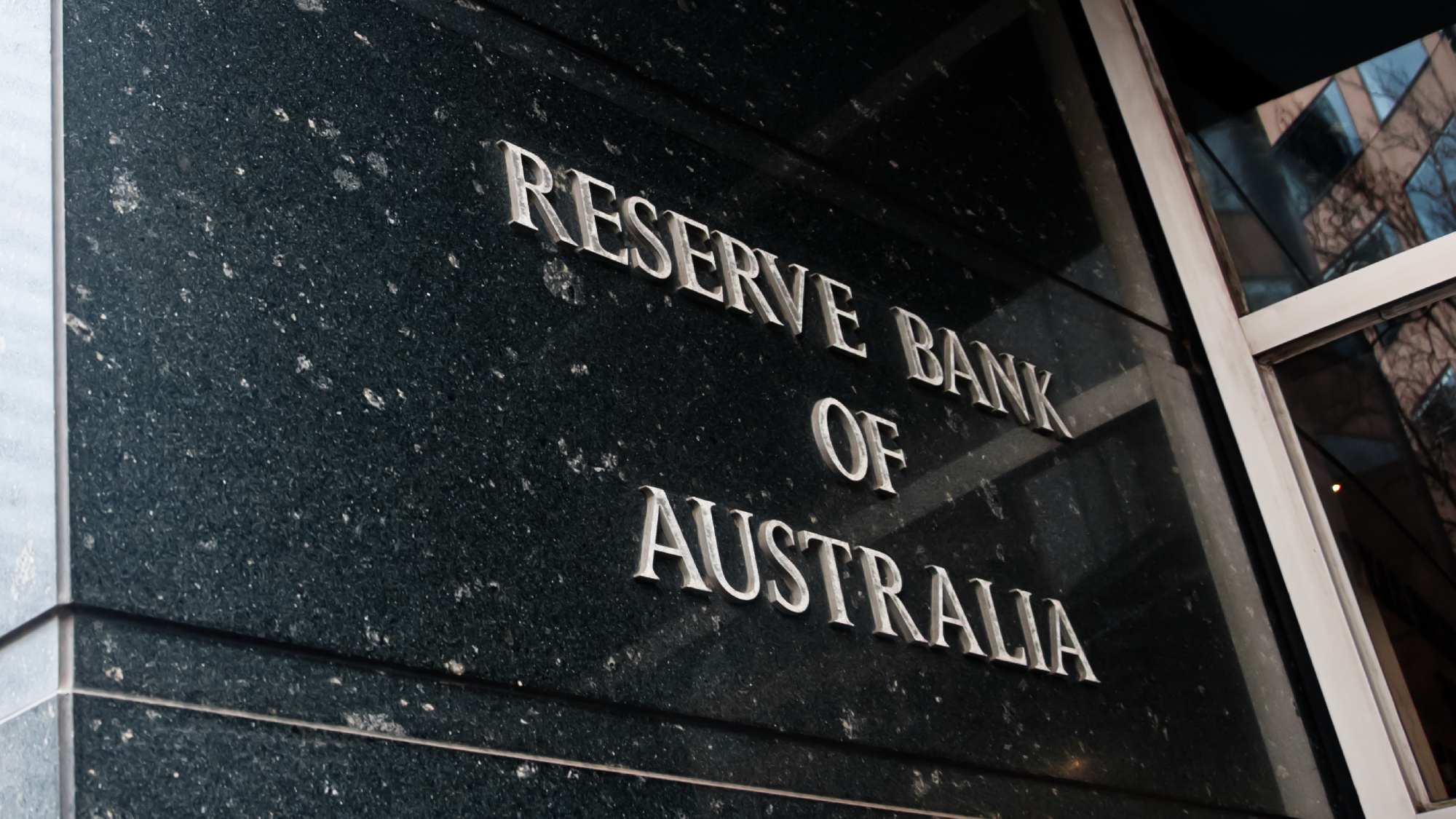
Australia’s Reserve Bank, through Assistant Governor Brad Jones, has warned that the era of stability and integration following the Cold War has given way to a more contested strategic environment that carries elevated risk for governments, financial institutions, and markets. At a FINSIA event in Sydney on 12 September, Jones declared that “the era of the peace dividend is over,” citing geopolitical, technological and operational disruptions reshaping the global financial order.

Jones described the international security and economic system as undergoing “seismic adjustment — on a scale and speed unseen in eight decades.” He flagged multiple forces contributing to instability: rising strategic rivalry, weakening tenets of the rules-based order, frictions in globalisation, and increasing emphasis on self-insurance by nations and firms against a broader set of possible harms.

Technological advances form one front of the risk profile. Jones spoke of an expanding surface for cyber-attacks driven by digitalisation, concerns over concentration risk in cloud services, and quantum computing’s looming threat to encryption systems. Artificial intelligence, while promising productivity gains, poses risks of misinformation, fraud, and systemic instability due to herding behaviour.

Critical infrastructure exposures were cited as especially vulnerable: telecommunications networks, the electrical grid, payment systems, and market infrastructure. Jones referenced a recent example in Europe, where cascading power outages in the Iberian Peninsula disrupted both households and economic activity, pointing out that such disruptions would be far more dangerous if key financial infrastructure were affected.

To respond, the RBA is pressing for what it calls an “anti-fragile” financial system—one not simply capable of withstanding shocks but able to adapt and improve because of them. Innovation, competition, and efficiency are being positioned not as opposing goals to resilience but as complementary. Initiatives under way include work with industry to bolster payments resilience, frameworks to ensure that future payments systems embed reliability and recoverability, migration to quantum-safe encryption standards, and reforms aimed at enabling new entrants in financial market infrastructure to reduce concentration risk.

These concerns build on earlier warnings in the RBA’s Financial Stability Review, which noted that heightened geopolitical tensions, trade uncertainty, and technological vulnerabilities could interact with existing financial system risks. The review flagged operational risks from interconnectedness and dependency on third parties for infrastructure and services.

The shift has implications for monetary policy, regulatory oversight, and business strategy. Regulators are likely to place greater emphasis on risk scenarios involving geopolitics, cyber-threats and supply-chain disruptions; financial institutions will need to review and stress-test against non-traditional threats while ensuring agility; and policy frameworks may need to evolve to address threats outside standard macroeconomic shocks.


HONG KONG SAR – Media OutReach Newswire – 12 September 2025 – Zentrogene Laboratory, an international genetic testing institution based in Hong Kong (under Sanai Health Industry Group 01889.HK), announced the launch of its ‘Y Precision’ testing technology based on Next-Generation Sequencing (NGS). This locally developed innovation in Hong Kong addresses longstanding industry challenges in gender determination for twin pregnancies. It overcomes the limitations of traditional qPCR […]

Microsoft has revealed Visual Studio 2026 Insiders, a major update to its flagship integrated development environment that weaves artificial intelligence into core workflows, boosts performance, and delivers a modernised user interface. The rollout introduces new features and channels aimed at enhancing developer productivity and addressing long-standing feedback. Visual Studio 2026 integrates GitHub Copilot across the IDE to understand the coding context, make suggestions, and automate repetitive tasks. […]

Advertisements

Saudi Arabia is set to increase its crude oil exports by roughly 500,000 barrels per day this month, driven by heightened production and weaker domestic oil consumption. These shifts are intensifying concerns that the global oil market may swing into oversupply later this year. Aramco and Saudi authorities have scaled back domestic crude burn for power generation, particularly as cooling demand following the summer peak reduces the […]

A senior Tesla engineer has resigned, accusing Chief Executive Elon Musk of leading with what he describes as “seriously compromised” leadership. He claims the company’s mission and integrity are being undermined, citing concerns about dishonesty, manipulation of public discourse and support for climate change denial. Giorgio Balestrieri, who had spent eight years at Tesla and worked on the company’s European energy trading algorithms—specifically the Autobidder platform that […]

Shares of Orascom Construction leapt sharply when the company began trading on the Abu Dhabi Securities Exchange, underscoring investor appetite for infrastructure-linked growth in the Gulf. The stock closed its first session up about 27 per cent at AED 38.10, having opened near AED 30.15, valuing the company at approximately AED 4.2 billion. Orascom Construction shifted its primary listing from Nasdaq Dubai, while maintaining its secondary listing […]

Dubai’s Roads and Transport Authority has opened a newly widened section of Sheikh Zayed Road near the Umm Al Sheif Street exit, expanding one direction from six lanes to seven over a 700-metre stretch. The upgrade increases capacity by about 16 per cent, allowing up to 14,000 vehicles per hour through that section. The work focuses on traffic flowing from Abu Dhabi towards central Dubai, a corridor […]

Infosys Ltd cleared a share buyback plan worth ₹18,000 crore, its biggest to date, offering ₹1,800 per share under a tender‐route offer. The price represents a 19% premium over closing levels on the BSE and NSE.

The company intends to repurchase roughly 10 crore shares, amounting to about 2.41% of its equity. Approval came through a board resolution disclosed in regulatory filings.

Infosys’s share price had been under pressure, falling more than 1% on the day prior. The buyback announcement triggered mixed reactions: U. S.‐listed ADS shares edged up marginally, while shares in Mumbai closed lower, reflecting investor caution.

Company financials show free cash flow at ₹7,533 crore for the quarter ending 30 June, down about 17.7% year-on-year, though still exceeding net profit by a small margin. The firm held cash and investments totalling ₹45,204 crore at that date.

Analysts view the buyback as a signal of confidence in long-term cash flows, but also warn that slowing revenue growth in some verticals could weigh on future performance. The move follows pressure from investors for IT companies to not just return capital but also step up investments in cloud, AI, and product development.

Taraf, the real-estate arm of Yas Holding, has entered a joint venture with Masdar City to build a residential community covering 1.4 million square metres within Masdar City, Abu Dhabi’s flagship sustainable innovation hub. The development will offer over 1,000 homes, including two- to six-bedroom villas and townhouses, with freehold ownership options.

Designed around a neighbourhood cluster model, the community emphasises human-centred amenities: shaded walkways, cycling routes linked to Al Masar Park, numerous parks, and extensive open spaces for wellbeing and active lifestyles. The layout will also include family-friendly infrastructure: dedicated clubs, safe environments for children, and walkable areas throughout.

Low Ping, Group CEO of Yas Holding, said that this project reflects Taraf’s strategy of building “design-led communities that inspire modern living where sustainability and innovation come together,” and that it aligns with Abu Dhabi’s Falcon Economy Vision for dynamic, connected growth. Ahmed Baghoum, CEO of Masdar City, emphasised the intention for the development to combine Taraf’s design focus with Masdar’s sustainability framework, creating a place “where people can live, work, learn, and innovate” under low-carbon principles.

This project represents a growing trend in the UAE towards full-community developments built on sustainable, low-carbon design and green infrastructure. Masdar City has already established itself as a leader in eco-innovation, hosting many businesses, research centres and incubation hubs under strict environmental standards. The inclusion of freehold ownership is relatively rare in developments of this nature in Masdar City, potentially making the homes attractive to investors and owners seeking long-term assets.

Investors and urban planners are likely to monitor how the community balances high design and sustainable living with affordability and infrastructure delivery. Ensuring that walkable, shaded and bike-friendly pathways are effectively integrated, as well as ensuring accessibility of services such as schools, healthcare and public transport, will be critical to the success of the development.

Regulatory and market conditions in Abu Dhabi have been increasingly favourable to sustainable urban development, with government policy pushing for low-carbon goals, renewable energy adoption, and integrated infrastructure. Abu Dhabi’s Falcon Economy Vision is central to this, aiming for economic diversification and environmental sustainability together.

Discussions between Washington and New Delhi are said to have reached a critical stage, with US officials making India’s cessation of buying Russian oil a central condition for sealing a bilateral trade agreement. Ambassador-nominee Sergio Gor, during his Senate Foreign Relations Committee hearing, stated that the two sides are “not that far apart” and are now negotiating “the nitty-gritty” of deal terms. He added that ending oil purchases from Russia is one of the Trump administration’s highest priorities. Those talks are expected to involve India’s trade and commerce ministers in Washington next week.

Commerce Secretary Howard Lutnick echoed Gor’s position in an interview, saying the US will resolve trade barriers with India once India stops purchasing Russian oil. The US has imposed a 50% tariff on certain Indian goods, partly as a penalty tied to India’s energy imports from Russia, while insisting that market openness and reciprocal concessions are essential.

India’s leadership has defended its energy procurement strategy as aligned with national interests, citing economic factors and global market conditions. Finance Minister Nirmala Sitharaman reaffirmed that New Delhi intends to continue buying Russian crude, describing it as a practical choice given price and supply stability. She referenced the high import dependency for energy and refined fuels and argued that decisions about suppliers are driven by utility and cost.

Diplomatic signals suggest that the trade impasse stems from more than tariffs and oil. Gor characterised previous delays as “hiccups” and praised the personal rapport between President Donald Trump and Prime Minister Narendra Modi as playing a pivotal role in reopening the dialogue. He noted shared strategic goals, including countering Chinese influence, enhancing regional stability, and expanding cooperation in defence and infrastructure.

Analysts warn that making the Russian oil condition a non-negotiable requirement may limit India’s flexibility. New Delhi has maintained that certain sectors — agriculture, dairy, small producers — cannot absorb full opening of its markets without harming domestic stakeholders. As US pressure mounts through tariffs and public statements, India seeks assurances about trade access, particularly for its exports, while preserving sovereign control over energy policy.

At least 19 people have died and hundreds have been injured amid escalating protests, as Nepal rescinds its recent ban on social media platforms. Thousands of young demonstrators—largely students—took to the streets in Kathmandu and other cities to oppose the ban on 26 online services, including Facebook, Instagram, WhatsApp, X and YouTube, imposed for failing […]


AACHEN, GERMANY – Newsaktuell – 11 September 2025 – FEV, a leading global engineering and consulting service provider for the energy industry has announced a strategic partnership with the Japan-based Chiyoda Corporation (Chiyoda). The company is one of the world’s leading integrated engineering firms, active in a wide range of business areas including energy, decarbonization, and life sciences. FEV and Chiyoda combine their expertise to offer customers […]

BEIJING, CHINA – Media OutReach Newswire – 11 September 2025 – Against the backdrop of repurposed blast furnaces and industrial relics of Shougang Park in western Beijing, the 2025 China International Fair for Trade in Services (CIFTIS) opened on Wednesday, striking a tone of open markets and digital innovation. People visit a booth of Pop Mart during the 2025 China International Fair for Trade in Services (CIFTIS) […]

By Sushil Kutty Nepal burned and continues to simmer. Next, France is in turmoil. French citizens have invaded streets and roads blocking all that stands in their way, from roads and buildings and commercial establishments. The agitators are calling it ‘Block #verything Movement’, which is not only telling, prophetic and on the dot but is […]

A surge in cyberattacks targeting U. S. schools and colleges is being met with increasing resistance, but experts warn that serious vulnerabilities remain. Data from multiple cybersecurity firms and institutions show that ransomware incidents rose by 23% year-on-year for the first half of 2025 among educational organisations—around 130 confirmed or probable attacks—at an average ransom demand of approximately US$556,000. Check Point Research finds that from January to […]

Wynn Resorts and its partners have earmarked land for a potential second integrated resort in Ras Al Khaimah, signaling long-term ambitions for expanding its gambling and hospitality footprint in the UAE. Under a shareholders’ agreement signed on 21 June 2024, Wynn, RAK Hospitality Holding and Al Marjan Island LLC designated multiple development plots on Al Marjan Island beyond their main Wynn Al Marjan Island project. The “Second […]

SINGAPORE – Media OutReach Newswire – 11 September 2025 – Singapore has long been recognized as a pivotal hub in Gree’s Southeast Asia growth strategy. With its advanced infrastructure, strong sustainability agenda, and dynamic role in the Asia-Pacific market, Singapore provides the ideal platform for Gree to showcase cutting-edge technologies that combine comfort, energy efficiency, and environmental responsibility. This vision was further reinforced at the recent event, […]

SwissBorg has lost about $41 million worth of Solana after a breach in a third-party API linked to its staking partner Kiln, which facilitated its SOL Earn programme. The incident affected fewer than 1% of users and represented roughly 2% of SwissBorg’s total assets under management.

The vulnerability originated in Kiln’s API — the software interface SwissBorg uses to communicate with Solana’s staking network. By exploiting that interface, attackers manipulated staking requests tied to the SOL Earn product and diverted approximately 192,600 SOL to an external wallet. SwissBorg and Kiln stated that the main SwissBorg app and all other Earn products remain secure. SwissBorg has paused Solana staking transactions while investigations continue.

SwissBorg CEO Cyrus Fazel described the event as “a bad day,” assuring customers that operations remain stable. The company pledged to reimburse all affected users, confirmed it has sufficient treasury reserves to cover losses, and is working with law enforcement, white-hat hackers, and security firms to block stolen transactions and trace funds. Some transfers have already been intercepted, according to its statement.

Kiln acknowledged that the breach involved “unauthorised access to a wallet used for staking operations.” SwissBorg and Kiln jointly activated their incident response protocols upon detection, aiming to contain the damage.

Industry experts flag this as yet another example of how dependence on external service providers exposes crypto platforms to infrastructure-level risk. In recent years, comparable API and smart-contract vulnerabilities have been exploited across the sector, prompting calls for more rigorous audits and redundancy in trust relationships.

Anthropic has launched a file-creation and editing feature for its AI assistant Claude, enabling users to generate Excel spreadsheets, PowerPoint presentations, Word documents, and PDFs via Claude. ai and its desktop application. The capability is now in preview for users on the Max, Team, and Enterprise plans; Pro-plan access will follow in the coming weeks. Claude now supports crafting working spreadsheets with formulas, project trackers with automated […]

China has seen financial flows totalling about US$4.5 trillion, a figure that many analysts believe marks a turning point in how its markets are engaging with the world. The scale of cross-border investment—both inbound and outbound—is now surpassing trade in many respects, reflecting Beijing’s accelerating liberalisation efforts and a growing confidence among foreign and domestic investors.

The financial sum comprises equity, bond, and other capital movements, and corresponds with recent policy moves designed to reduce restrictions and open up China’s capital markets. One key driver is the Stock Connect programme, which allows mainland Chinese investors to purchase eligible Hong Kong–listed stocks and gives international investors access to A-shares. Southbound flows—money moving from mainland China into Hong Kong—have been especially significant, gathering close to US$100 billion within the first half of 2025. That alone matched the total stock in 2024 via that channel.

Yields on Chinese government bonds have hit highs not seen since late 2024, suggesting investors are now demanding greater returns, but also that they perceive risks such as inflation and currency pressures to be easing. The 10- and 30-year yields climbing indicates that institutions expect stabilization in key macro indicators, even if headline economic growth remains uneven. The bond market, however, has also become more volatile, driven by leveraged buying of equities and speculative pressure in certain sectors.

Another contributing factor is the behaviour of domestic institutional investors. With over 160 trillion yuan in household savings, China’s policy makers are encouraging pension funds, insurance companies, and sovereign funds to shift more capital into domestic equities. These kinds of flows reinforce the internal market strength, even as external capital enters or exits depending on global risk appetite.

Hong Kong’s IPO market has benefited greatly. Several major mainland firms—including tech and battery makers—have either listed in Hong Kong or signalled plans to do so. This has helped Hong Kong reclaim its spot among the world’s most active IPO hubs in 2025. The changes to listing rules, including shorter approval times for eligible mainland firms, have been essential in this revival.

VISHNU RAJA
RYO YAMADA
HITORI GOTOH
IKUYO KITA
Just in:
Ningbo Consensus on Collaborative Development released at 2026 Global Mayors Dialogue · Ningbo // OpenAI abandons secrecy agreements for future data centres // CR Longdation Aethereal Cybersecurity × Global Cybersecurity Alliance (GCSA) Join Hands to Establish the “AI and Cybersecurity Research Centre” // Dubai details five-year visa benefits for returning visitors // Trump’s Iran War Has A Share Of Contribution To His Midterm Debacle // Beyond the exhibition floor: How robots, AI and networks are moving into the real world // Technology shares plunge as Nasdaq enters correction // Emirates Group records AED 4.1 billion half-year profit // Ousted top Kochi cop gets IG post // The “1st Greater Bay Area Health and Longevity Summit & Awards Ceremony” concludes successfully in Macao // Geely’s i-HEV Intelligent Hybrid Technology Offers a New Direction Vision for Gasoline-Powered Vehicles // Millions Of Indians May Soon Be Deprived Of Government Assistance // Asia Left Behind: Ten international companies have yet to report delivering on their cage-free egg pledges across the region // OpenAI introduces GPT-6 Cyber with restricted security access // Miss Universe Hong Kong Jen Zhou Departs for Puerto Rico to Compete in the 75th Miss Universe World Final // UK air traffic outage inflicted £33m financial losses // Xi Jinping Preparing For A Trilateral Summit With Trump And Putin At APEC Summit On Nov 18-19 // e-Crime Bureau Signs Cybersecurity Partnership With Smart Africa, Reinforcing Its Global Expansion // Kochi police detain two actors over bid to honey trap doctor // Motorola introduces Signature 27 flagship priced at $1,599 //