Mubadala Investment Company and Bain Capital have completed the acquisition of Service Logic, a major provider of commercial heating, ventilation and air-conditioning services, marking a significant private equity investment into North America’s building services sector. The transaction, announced on Wednesday, transfers ownership from Leonard Green & Partners and positions the company for an accelerated expansion phase under joint sponsorship by the Abu Dhabi-based sovereign investor and the […]
Arabian Post Staff -Dubai Hotel occupancy across the UAE climbed to 79.3 per cent during the first ten months of 2025, underlining the sector’s sustained momentum as visitor flows, air connectivity and investment continue to reinforce the country’s position as a global tourism hub. The figure marks an increase from 78 per cent a year earlier and places the UAE among the strongest performers both regionally and […]
Cisco has said that a sophisticated group of China-linked hackers is actively exploiting a previously unknown vulnerability to breach the networks of its customers, raising concerns across governments and large enterprises that rely on the company’s equipment for critical communications and data traffic. The company disclosed that the attackers have been using a zero-day flaw to gain unauthorised access to affected systems before patches were available, allowing […]
HONG KONG SAR – Media OutReach Newswire – 18 December 2025 – IX Asia Indexes today announced the 2nd Half 2025 Review of the IX Digital Asset Industry Classification System (“DAICS®“), aiming to provide professionals worldwide with a transparent and standardized classification scheme to determine sector and exposure of particular digital assets. DAICS® classifies digital assets into 2 main categories: a) Cryptocurrencies and b) Asset Backed Tokens (ABTs) in a 3-tier system for each category. For Cryptocurrencies: Tier 1-Industry/ Tier 2-Sector/ Tier 3-Sub-sector; and for ABTs: Tier 1-Asset Type/ Tier 2-Branch/ Tier 3-Sub-branch. The results are as follows:
DAICS® coin coverage: As of 3rd December, the top 50 coins by average market capitalization across the past 90 days
DAICS®market capitalization coverage: 96.98%*
The % coverage of market capitalization of the 50th ranked coin: 0.048%**
Member changes within the Top 50 Coins in DAICS®: eight coins added and nine coins deleted
Additions: Zcash (ZEC), World Liberty Financial USD (WUSD), PayPalUSD (PYUSD), Memecore (M), Worldcoin (WLD), Story (IP), Arbitrum (ARB), KuCoin (KCS)
Deletions: Mantra (OM), GateToken (GT), Official Trump (TRUMP), VeChain (VET), Render (RENDER), First Digital USD (FDUSD), Filecoin (FIL), Cosmos (ATOM), Algorand (ALGO)
9 Green Coins labelled: Cronos (CRO), Pi (PI), Internet Computer (ICP), Hedera, Sui (SUI), Toncoin (TON), Arbitrum (ARB), Mantle (MNT), Tron (TRX)
Note: *Special currency treatment of DAICS®applies, where any wrapped or second-level cryptocurrency is not considered in the calculation for the market capitalization of DAICS® **Based on 3rd December 2025 G: Green Coin
The rankings of additions and deletions for the DAICS® top 50 cryptocurrencies are listed in Appendix 1. All classification changes, including the ixCrypto Infrastructure Index and ixCrypto Stablecoin index, will take effect on 23rd January 2026, with market capitalization, rankings, and weightings available at www.ix-index.com.
1. Cryptocurrencies
1.1. Structure and Definitions
Tier 1: Industry Changes The industry groups remain unchanged, with 5 industries and the respective weightings as follows:
Industry
Weighting (%)
Payment (110)
73.87%
Infrastructure (120)
19.89%
Financial Services (130)
4.82%
Tech & Data (140)
0.22%
Media & Entertainment (150)
1.20%
Tier 2: Sector Changes The number of sectors has increased from 17 to 18. There is one new sector added under the industry group “Tech & Data (140)”:
Identification (14040) Definition: Cryptocurrencies that facilitate decentralized identity authentication and/or blockchain-based validation of digital intellectual property rights. The classification emphasizes trust, data consent, and privacy as core architectural features while the crypto by itself is not an identity token.
1.2. Reclassification Changes This review doesn’t have any reclassification of the existing coins. The DAICS® 2H 2025 cryptocurrencies classification is available in Appendix 2.
1.3. Green Coin Label This review identifies 9 Green Coins, classified based on their energy-per-unit-transaction, which is defined as the amount of energy consumed for a successful single unit transaction of the coin in the blockchain network. The coins selected rank in the top 20 percentile of the least energy-consuming cryptocurrencies out of the 50 DAICS® constituents. The top 20 percentile’s threshold in this review is ≤ 0.150 Wh. The table below lists these low-energy coins.
Industry
Low Energy-per-transaction (≤ 0.150 Wh)
Payment (110)
CROG PIG
Infrastructure (120)
ICPG SUIG ARBG TRXG
HBARG TONG MNTG
Financial Services (130)
NIL
Tech & Data (140)
NIL
Media & Entertainment (150)
NIL
Note:G as ‘Green Coin‘ labelling for cryptocurrencies that adhere to the principles of sustainability
2. Asset Backed Tokens (ABT) 2.1. Structure and Definitions
Tier 1: Asset Type Changes The asset types remain unchanged at 6 as follows: 1) Culture (205), 2) Real Estate (215), 3) Financials (235), 4) Entertainment (255), 5) Natural Resources (265), and 6) Green Economy (275)
Tier 2: Branch Changes The number of branches has increased from 31 to 32, with a new branch added under Financials (235): Tokenized funds (23540).
2.2. Classification Changes This review doesn’t have any reclassification of the existing assets.
2.3. Coverage of DAICS® A classification summary and definition table of both cryptocurrencies and ABTsare available in Appendices 3 and 4. For further information regarding the methodology of the DAICS®, please refer to the “IX Digital Asset Industry Classification System”- principle and guiding methodology on the company website https://ix-index.com/daics.html.
For more details on DAICS® qualification criteria, please email [email protected].
Appendix 1
Additions and Deletions in DAICS® Top 50 Cryptocurrencies
Additions
Current Rank
Cryptocurrencies
28
Zcash (ZEC)
31
World Liberty Financial USD (WUSD)
41
PayPal USD (PYUSD)
45
MemeCore (M)
46
Worldcoin (WLD)
49
Story (IP)
50
Arbitrum (ARBG)
51
KuCoin (KCS)
Deletions
Prev. Rank
Cryptocurrencies
Current Rank
34
Mantra (OM)
300+
41
GateToken (GT)
67
43
OFFICIAL TRUMP
56
45
VeChain (VET)
55
46
Render (RNDR)
58
47
First Digital USD (FDUSDG)
71
48
Filecoin (FIL)
61
50
Cosmos (ATOM)
54
51
Algorand (ALGO)
52
G: Green Coin
Appendix 2
Classification of the Top 50 Coins by Industry and Sector
Category
Industry
Sector
Cryptocurrencies
Cryptocurrencies (1)
Payment:
Blockchain based money, designed for transactional purposes. This includes daily transactions usage and stablecoins.
Transaction & Payment
BTC XRP BCH XLM LTC
XMR CROG ZEC PIG KAS
Stablecoin
USDT USDC USDe
DAI WUSD PYUSD
Infrastructure:
Bedrock blockchain that facilitates the operation of other decentralised applications. This includes the creation and running of dedicated blockchain platforms, achieving interoperability between networks, increasing the amount or speed of transactions etc
Application Development Protocol & Smart Contract
ETH SOL TRXG ADA HYPE SUIG AVAX
HBARG TONG NEAR ETC APT ICPG
Interoperability
LINK DOT
ATOM
Scaling & Sharding
MNTG ARBG
POL
Supporting System
NIL
Financial services:
Tokens that provide on-chain asset management services, crypto-exchange services, funding, lending and other capital markets related services
Exchange Tokens
BNB LEO BGB
UNI OKB KCS
Lending & Borrowing
AAVE
Staking
ENA
Financial Asset Tokenization
ONDO
Tech & Data:
Provision of data management and storage, and development of innovative crypto technology
Storage & Sharing
NIL
Data Management
NIL
Artificial Intelligence
TAO
Identification (NEW)
WLD
IP
Media & Entertainment:
Recreational and media services. Including content creation and distribution, advertising through crypto-asset incentive mechanisms, gaming and collectibles
Social Media & Community
DOGE SHIB
PEPE M
Streaming
NIL
Gaming
NIL
Metaverse
NIL
Note: G as ‘Green Coin‘ for cryptocurrencies that adhere to the principles of sustainability NEW for newly added sector
Appendix 3
DAICS® Industry and Sector Definition
Category
Industry
Sector
Sector definition
Cryptocurrencies (1)
Payment: (110)
Definition Blockchain based money, designed for transactional purposes. This includes daily transactions usage and stablecoins.
Transaction & Payment (11010)
Cryptocurrencies that are used for store of value, unit of account, medium of exchange
Stablecoin (11020)
Cryptocurrencies where price is pegged to a / a basket of, reference asset
Infrastructure: (120)
Definition Bedrock blockchain that facilitates the operation of other decentralised applications. This includes the creation and running of dedicated blockchain platforms, achieving interoperability between networks, increasing the amount or speed of transactions etc.
Application Development Protocol & Smart Contract (12010)
layer-1 blockchain network that facilitates DApp creation and smart contract execution and smart contract
Interoperability (12020)
Network that increases inter-connectivity and integration of the fragmented cryptocurrency ecosystem
Scaling & Sharding (12030)
Networks that increase the ability to cope with the influx of many transactions at a time and blockchain network that can be split into smaller partitions, to improve scalability and process transactions quicker
Supporting System (12040)
Networks/sidechains that improve functionality of layer-1 network
Financial services: (130)
Definition Tokens that provide on-chain asset management services, crypto-exchange services, funding, lending, and other capital markets related services
Exchange Tokens (13010)
Cryptocurrencies that represent the stable coin in the exchange ecosystem and allow users to covert from digital asset on decentralised or centralised system int fiat currencies
Lending & Borrowing (13020)
Borrowing and lending crypto assets with interest in return and other secondary financial tools derived from primary underlying asset, such as crypto futures and options
Staking (13030)
Holding and “staking” of certain amount of cryptocurrency in a wallet to facilitate network operations
Financial Asset Tokenization (13040)
Cryptocurrencies/protocols that focus on the tokenized issuance and management of financial assets
Tech & Data: (140)
Definition Provision of data management and storage, and development of innovative crypto technology
Storage & Sharing (14010)
Crypto protocols that provide decentralized storage and/or sharing of data filing and resources.
Data Management (14020)
Networks/Protocols that facilitate the indexing and querying of data from blockchain(s), enabling efficient data retrieval and management for decentralized applications
Artificial Intelligence (14030)
Cryptos/Protocols that facilitate the use of AI powered apps or projects directly using blockchain platform.
Identification (14040) (NEW)
Cryptocurrencies that facilitate decentralized identity authentication and/or blockchain-based validation of digital intellectual property rights. The classification emphasizes trust, data consent, and privacy as core architectural features while the crypto by itself is not an identity token.
Media & Entertainment: (150)
Definition Recreational and media services. Including content creation and distribution, advertising through crypto-asset incentive mechanisms, gaming and collectibles
Social Media & Community (15010)
Cryptos that provides mast social community and followers without a close secondary industry sector
Streaming (15020)
Cryptos that provides rights to access decentralised video-streaming sites
Gaming (15030)
Cryptos which mainly used in gaming or gaming supporting industry
Metaverse (15040)
Cryptos that is commonly used in collective virtual open space, created by the convergence of virtually enhanced physical and digital reality. This includes the use of VR and/or AR and/or 3D.
Note: NEW for newly added sector
Appendix 4
DAICS® Asset Type and Branch Definition
Category
Asset Type
Branch
Sub -branch
Asset-Backed Tokens (2)
Culture: (205)
Definition Real asset relating to sports, art, cultural drama, festive collectibles and design IPs etc.
Art (20510)
This shall be further developed in the future with more digital assets available in the market
Sports (20520)
Festive Collectibles (20530)
Design IPs (20540)
Drama and Play IPs (20550)
Real Estate:(215)
Definition Assets that mainly derived its valuation from property, real estate, and land
Commercial Property (21510)
Residential Property (21520)
Governmental Property (21530)
Residential and Commercial Land (21540)
Financials: (235)
Definition Real financial asset including listed company shareholdings on regulated centralised exchanges and private company shareholdings; debt instruments; property trusts and derivatives that settled on regulated exchange (CeFi and DeFi).
Definition Ownership of the IPs assets in the area of entertainment in real world such as concert, play, shows, circus, musicals, songs, movies, games, events and programs, and souvenir collectibles that is derived from the above areas.
Movies (25510)
This shall be further developed in the future with more digital assets available in the market
Songs (25520)
Concerts (25530)
Gaming (25540)
All Other Entertainment Events and Collectibles (25550)
Natural Resources: (265)
Definition Natural resources asset that derived directly from sea, sky, atmosphere and underground and can be classified as a commodity with standardisation such as precious metals, agricultural, energy and metals.
Precious Metals (26510)
Agricultural (26520)
Energy (26530)
Metals (26540)
Green Economy (275)
Definition Ownership of Projects Asset that falls under the definition of the UN 17SDG²s, with over 80% of the income or jobs provided on these 17 initiatives.
No Poverty & Zero Hunger (27510)
Following definition of the United Nations 17 sustainable development goals²
Good Health and Well-Being (27520)
Quality Education (27530)
Gender Equality (27540)
Clean Water and Sanitation/Affordable and Clean Energy (27550)
Decent Work and Economic Growth/ Industry, Innovation, and Infrastructure/ Partnerships for the Goals (27560)
Reduced inequalities/ Peace, Justice and Strong Institutions (27570)
Sustainable Cities and Communities/Responsible Consumption and Production (27580)
Climate Action (27590)
Life Below Water & Life on Land (27500)
Note: NEW for newly added branch
² United Nations 17 sustainable development goals covering 1) No Poverty 2) Zero Hunger 3) Good Health and Well-Being 4) Quality Education 5) Gender Equality 6) Clean Water and Sanitation 7) Affordable And Clean Energy 8) Decent Work and Economic Growth 9) Industry, Innovation and Infrastructure 10) Reduced inequalities 11) Sustainable Cities and Communities 12) Responsible Consumption and Production 13) Climate Action 14) Life Below Water 15) Life on Land 16) Peace, Justice and Strong Institutions and 17) Partnerships for the Goals https://sdgs.un.org/goals
The issuer is solely responsible for the content of this announcement.
About DAICS®
DAICS® covers both cryptocurrencies and asset-backed tokens (“ABTs”), to be reviewed semi-annually at the end of June and December. On the cryptocurrency side, it is a three-tier system that groups cryptocurrencies into 5 main industries: 1) Payment, 2) Infrastructure, 3) Financial services, 4) Technology & Data, and 5) Media & Entertainment. These industries are further divided into sectors and sub-sectors to be introduced in the future. Under asset-backed tokens, there are 6 asset types: 1) Culture, 2) Real Estate, 3) Financials, 4) Entertainment, 5) Natural Resources, 6) Green Economy. These asset types are further divided into branches and sub-branches to be introduced in the future.
About the IX Asia Tokenization Advisory Committee and Working Group
The establishment of the IX Asia Tokenization Advisory Committee (“Advisory Committee”) is to pursue the goal and vision of formulating a standard for a global tokenization framework in a compliant and transparent way. The key role of the Advisory Committee is to formulate the guidelines and references for tokenization in terms of infrastructure, business, financial stability, sustainability, internal control, and classification. The Advisory Committee is comprised of industry-recognised leaders from blockchain consultancy, sustainable projects, and the field of the Art industry.
The establishment of the Working Group is to identify, evaluate and recommend key directions and founding principles according to their specific industry knowledge and expertise in relating to the creation of the specified token. It will examine and propose improvements to the guidelines and references for tokenization. The working group is formed of a diverse group of market experts representing relevant sectors and markets, to provide input and discuss case studies for creation of tokenization framework, best practices and development of real-world projects.
Hang Lung’s Vision for Academic Excellence Drives Hong Kong’s Global Competitiveness
HONG KONG SAR & SHANGHAI, CHINA – Media OutReach Newswire – 17 December 2025 – The winners of the 2025 Hang Lung Mathematics Awards (“HLMA”), co-organized by Hang Lung Properties Limited (SEHK Stock Code: 00101) (“Hang Lung” or the “Company”) and the Hong Kong University of Science and Technology (“HKUST”), have been announced. Siu Man Li from the Hong Kong Chinese Women’s Club College received the Gold Award for his research report titled “Markov Chains Associated with Ultraspherical Polynomials: An Analysis of Weak Convergence and First Passage Time Functionals”.
Dr. Choi Yuk-lin, Secretary for Education of the Hong Kong Special Administrative Region (left) and Professor Richard Schoen, Chair of the 2025 HLMA Scientific Committee (right) present the Gold Award to winner Siu Man Li from Hong Kong Chinese Women’s Club College at the 2025 Hang Lung Mathematics Awards.
The Silver Award and the Bronze Award were won by Augus Kui Lam Huang, Inna Belle Lee, Chun Lam Lo, Lok Hei Qiao, and Cheuk Lok Wong from St. Paul’s Co-educational College, and Edison Sze Ho Fu, Yun Tung Ko, Hoi Chun Puk, and Wai Kwan Yeung from Queen’s College, respectively. All winning teams demonstrated exceptional problem-solving abilities, creativity, and academic rigor evident in their work on challenging mathematical topics.
The awards were presented at tonight’s ceremony, celebrating the remarkable achievements of the student finalists and reaffirming HLMA’s sustained contribution to advancing STEM education in Hong Kong. In her opening remarks, Dr. Choi Yuk-lin, JP, Secretary for Education of the Hong Kong Special Administrative Region, said, “The Hang Lung Mathematics Awards not only honours mathematical endeavours, but also reflects its enduring commitment to inspiring a continued passion for mathematics among our students and nurturing Hong Kong’s young talents. This aligns well with the promotion of self-directed learning, problem solving and creativity in Hong Kong’s school education. I hope all of us in the society can join hands in the promotion of digital education and mathematical modelling for the benefit of our students.”
Mr. Adriel Chan, Chair of Hang Lung Properties, also addressed the audience, stating, “As we celebrate the winners of the Hang Lung Mathematics Awards, we are reminded that talent development is a long-term investment. HLMA embodies our commitment to nurturing the next generation of thinkers and leaders who will navigate an increasingly complex world. We are heartened by the strong support from students, schools, and the academic community, which reinforces our shared mission to advance mathematics education and push the boundaries of excellence. Together, we are empowering young minds to pursue their passion and unlock their potential in mathematics, science, and technology.”
Professor Nancy Ip, President of HKUST, said, “HKUST is pleased to continue our partnership with Hang Lung in this biennial competition. Hang Lung Mathematics Awards is more than an academic contest; it is a platform that challenges students to push the boundaries of their knowledge and apply rigorous methodology to original research. By cultivating a community of aspiring mathematicians and providing them with access to world-class training, we are advancing our shared vision of transforming Hong Kong into a global hub for innovation and technology.”
A group photo of the winning teams of the 2025 Hang Lung Mathematics Awards with Dr. Choi Yuk-lin, Secretary for Education of the Hong Kong Special Administrative Region; Mr. Ronnie C. Chan, Honorary Chair of Hang Lung Properties; Mr. Adriel Chan, Chair of Hang Lung Properties; Mr. Weber Lo, Chief Executive Officer of Hang Lung Properties; Kenneth Chiu, Chief Financial Officer of Hang Lung Properties; Professor Nancy Ip, President of HKUST; Professor Richard Schoen, Chair of the HLMA Scientific Committee; Professor Ngaiming Mok, Chair of the HLMA Steering Committee; and members of the Scientific Committee, Steering Committee, Executive Committee, and Screening Panel.
During the ceremony, a lively Panel Discussion was held on the theme of “Ubiquity of Mathematics: the Language of Discovery.” The discussion featured Professor Richard Schoen, 2017 Wolf Prize Laureate in Mathematics and Chair of the 2025 HLMA Scientific Committee, and Professor Ngaiming Mok, 2022 Future Science Prize Laureate, Chair of the HLMA Steering Committee and member of the Scientific Committee. Moderated by Ms. Jennifer Zhu Scott, Co-founder and Chief Executive Officer of Power Dynamics, the distinguished speakers shared their insights on the evolving landscape of mathematics education and the essential skills required for the next generation to thrive in a technology-driven era.
The 2025 Hang Lung Mathematics Awards attracted the participation of close to 100 teams from over 50 secondary schools in Hong Kong. Under the guidance of a supervising teacher, each team decided on a mathematics topic, designed and conducted research, and compiled their findings into a research report. This impactful initiative is pivotal in the cultivation of future mathematical and scientific minds.
Appendix
Founded in 2004, the Hang Lung Mathematics Awards is a biennial competition that inspires secondary school students to formulate their own research journey and realize their creative potential in mathematics. Throughout its illustrious history, 2,800 students from over 200 schools have participated, submitting more than 500 research reports. Hang Lung donates HK$2.5 million for each competition—HK$1 million is allocated as prize money with the remainder supporting HKUST in providing vital initiatives including academic consultation, assessment, administration, and educational outreach activities. HKUST also offers scholarships for teachers nominated by the winning schools to further their studies through the Master of Science Program in Mathematics for Educators.
Over the past two decades, the HLMA has made a profound impact on cultivating young mathematical talent, with many past winners having gone on to graduate from top universities worldwide and now contributing significantly to society through work in academia and professional fields. HLMA plays an important role in recognizing and fostering a lasting love of mathematical inquiry that extends far beyond secondary school.
This year, the Hang Lung Mathematics Awards drew participation from nearly 100 teams across over 50 secondary schools in Hong Kong. A total of 15 teams were shortlisted for the Oral Defense stage, where a Scientific Committee comprising internationally renowned scholars and educators evaluated the research reports through a rigorous, multi-step review process. The teams were invited to present and defend their findings before the Scientific Committee in a formal setting, an experience that closely resembles the oral defense process required for a postgraduate degree.
For a detailed list of winners of the 2025 Hang Lung Mathematics Awards, please refer to the attachment.
Attachment
List of Winners of the 2025 Hang Lung Mathematics Awards
Award
Research Title
Team Member(s)
Teacher
School Name
Gold
Markov Chains Associated with Ultraspherical Polynomials: an Analysis of Weak Convergence and First Passage Time Functionals
Siu Man Li
Mr. On Ping Chung
Hong Kong Chinese Women’s Club College
Silver
Incentric Subdivisions of Triangles and Iterated Function Systems
Augus Kui Lam Huang
Inna Belle Lee Chun Lam Lo Lok Hei Qiao Cheuk Lok Wong
Mr. Pak Leong Cheung
St. Paul’s Co-educational College
Bronze
On the Generalisations of the No-Three-in-Line Problem
Edison Sze Ho Fu Yun Tung Ko Hoi Chun Puk Wai Kwan Yeung
Mr. Hang Chun Chan
Queen’s College
Honorable Mentions (listed by school name in alphabetical order)
Research Title
Team Member(s)
Teacher
School Name
On the Number of Multiplicative Type En Friezes
Lok Him Chan David Kai Hei Gu Sui Ping Tang Ho Wong
Mr. Yuk Lun Fong
HKUGA College
What Can You Split and Draw?
Triton Cheuk Lok Kho Eron Ching Long Kwok Man Hei Tung
Mr. Yuk Lun Fong
HKUGA College
The Mathematics of Riffle Shuffling from Single to Multi-Deck Card Games
Daniel Haifeng Wang Justin Haisong Wang
Ms. Alexandra Streeter
King George V School
On the Images of Rational Numbers under a Certain Type of Fractal Interpolation Function
Tsz Hei Chiu Alex Sheung Fai Lam Hin Chun Lee Jamie Chun Hin Ng Ka Lam Tang
Dr. Wai Shan Cheung
St. Joseph’s College
Producing Annoying Sounds with Chalk by Varying Angle of Contact
Joshua Cheung Haoyang Dong Jizheng Li Ming Ze Li Maximilian Ng
Mr. David Bian
Victoria Shanghai Academy
Hashtag: #HangLungProperties
The issuer is solely responsible for the content of this announcement.
About Hang Lung Properties
Hang Lung Properties Limited (SEHK stock code: 00101) creates compelling spaces that enrich lives. Headquartered in Hong Kong, Hang Lung Properties develops and manages a diversified portfolio of world-class properties in Hong Kong and the nine Mainland cities of Shanghai, Shenyang, Jinan, Wuxi, Tianjin, Dalian, Kunming, Wuhan and Hangzhou. With its luxury positioning under the “66” brand, the company’s Mainland portfolio has established its leading position as the “Pulse of the City”. Hang Lung Properties is also recognized for leading the way in enhancing sustainability initiatives in the real estate industry, all the while pursuing sustainable growth by connecting customers and communities.
About The Hong Kong University of Science and Technology
The Hong Kong University of Science and Technology (HKUST) (https://hkust.edu.hk/) is a world-class university known for its innovative education, research excellence, and impactful knowledge transfer. With a holistic and interdisciplinary pedagogy approach, HKUST was ranked 6th in the QS Asia University Rankings 2026, 3rd in the Times Higher Education’s Young University Rankings 2024, and 19th globally and 1st in Hong Kong in the Times Higher Education’s Impact Rankings 2025. Thirteen HKUST subjects were ranked among the world’s top 50 in the QS World University Rankings by Subject 2025, with “Data Science and Artificial Intelligence” coming in 17th worldwide and first in Hong Kong. Our graduates are highly competitive, consistently ranking among the world’s top 30 most sought-after employees. In terms of research and entrepreneurship, over 80% of our work was rated “internationally excellent” or “world leading” in the Research Assessment Exercise 2020 of the Hong Kong’s University Grants Committee. As of July 2025, HKUST members have founded over 1,900 active start-ups, including 10 Unicorns and 17 exits (IPO or M&A).
Abu Dhabi-listed Two Point Zero Group has moved to full ownership of fintech platform Maseera, completing the acquisition of the remaining minority stake and consolidating its position in the fast-growing digital finance space. The transaction marks another step in the group’s strategy of scaling consumer-facing financial services across the Middle East and North Africa through tightly integrated platforms. Two Point Zero confirmed that its subsidiary, E Point […]
Arabian Post Staff -Dubai Dubai-based Emirates NBD Bank has launched a $700 million seven-year bullet term loan aimed at lenders across Asia, marking a notable cross-border funding move as regional banks continue to diversify their funding bases amid shifting global liquidity conditions. The facility carries an interest margin of 100 basis points over term SOFR and includes a $200 million accordion option, allowing the borrower to increase […]
KUALA LUMPUR, MALAYSIA – Media OutReach Newswire – 17 December 2025 – The SME100 Awards has become one of the most trusted and influential platforms for high growth Malaysian enterprises, recognised for its rigorous evaluation standards and its role in identifying the country’s most promising businesses. Over the years, the programme has evolved into more than an award. It has become a springboard for SMEs seeking credibility, visibility and a supportive ecosystem in an increasingly volatile business landscape.
That landscape has grown more challenging than ever. Malaysian SMEs are operating in a climate defined by rising costs, talent shortages, complex regulatory requirements and tightening cash flow. Inflation continues to push operational expenses upward, while difficulties in hiring and retaining skilled talent have slowed growth for many. These pressures have created a harsh reality. Companies that lack adaptability risk losing market share, while those that act decisively are discovering opportunities in places previously overlooked.
Despite these obstacles, the SME sector has demonstrated a remarkable ability to rebound. Recent data shows that SME GDP grew by 11.6 percent, surpassing the national average and signalling that transformation, not stability, is driving growth. Many businesses have embraced digital tools, streamlined operations and explored new revenue pathways. The divide between surviving and thriving is becoming clearer, and it is defined by mindset, capability and speed.
In this environment, the SME100 Awards serves as a crucial platform for SMEs to strengthen their position. The programme provides a structured pathway for benchmarking performance, accessing regional networks and gaining recognition that matters to customers, partners and investors. By combining quantitative financial indicators with qualitative assessments and a full interview process, SME100 identifies companies that are not only resilient, but ready for the next phase of growth. For winners, the programme offers visibility, connection to a strong ASEAN SME community and access to continuous learning and collaboration opportunities.
Datuk William Ng, National President of SAMENTA, underscored the importance of this support. He said, “Malaysian SMEs are confronting some of the toughest market realities in decades. Yet the most progressive among them are proving that adversity can be a turning point. The SME100 Awards highlight these companies not simply for their achievements, but for the mindset they represent. They show the entire SME sector what is possible when we combine innovation, discipline and the willingness to change.”
The SME100 programme is further strengthened by the involvement of key industry partners. CTOS serves as the official credit reporting partner, Baker Tilly Malaysia as the official auditor and CGC Digital as the gold sponsor. Together, they enhance the transparency, credibility and relevance of the awards while reinforcing the broader ecosystem that supports SME growth.
For more information about the SME100 Awards 2025 Malaysia and the complete list of winners, please visitwww.sme100.asia
LIST OF WINNERS OF THE MALAYSIA SME100 AWARDS 2025 (IN ALPHABETICAL ORDER):
YBHG. DATO’ RAVINTHRAN S/O BALAH – INDAH CLEANING SERVICES & MAINTENANCE (M) SDN BHD
MR. BENJAMIN GUNG SIE KAI – JIN SAN CONCRETE SDN BHD
MR. CHIN KAH SHING – NURSERY HONG SOON SDN BHD
MR. YEE HONG HO – RFY ACES (M) SDN BHD
MR. DESMOND GOH – SKY POWER SDN BHD
MR. SIEW YOUNG MING – SSEMEDX SERVICES SDN BHD
IR. BAVANANTHAN A/L SELVAMANY – TERAS IMPIANA SDN BHD
SME100 SUSTAINABLE BRAND AWARDS 2025
EDCA ENERGY – EDCA ENERGY SDN BHD
JardinPèau – SKINVILLE SOLUTION SDN BHD
SAI COND – SAI COND SALES & ENGINEERING SDN BHD
IDMS TECHNOLOGIES – IDMS TECHNOLOGIES SDN BHD
UbinGO VACATIONS – UBINGO VACATIONS SDN BHD
SME100 WOMEN ENTREPRENEUR AWARDS 2025
MS. YUNLU LEE – AUTHENTIC TIMBER RESOURCES SDN BHD
MS. NURUL AIN BINTI MOHAMAD KHDRI – ARVIA SOLUTIONS
MS. FLORENCE GOH SIEW BOEY – CRT INSIGHTS TECHNOLOGIES SDN BHD
MS. DOREEN DING – INDS CAPITAL SDN BHD
MRS. SURIA HANI BINTI AFFANDI CHEW – MERAQUE SERVICES SDN BHD
MS. ELLEN LIM – SKA TRANSPORT (M) SDN BHD
TS. KOK SHIN LIN – SUSTEN SDN BHD
MS. MICHELLE YEONG – THONG WORLD SDN BHD
SME100 CTOS CREDIT EXCELLENCE AWARDS 2025
BUMI SENDAYAN SDN BHD
IDPM ENGINEERING SDN BHD
JNDESIGN MARKETING SDN BHD
KMS MANUFACTORY SDN BHD
NURSERY HONG SOON SDN BHD
Hashtag: #SME100Awards
The issuer is solely responsible for the content of this announcement.
About SAMENTA
Established in 1986, SAMENTA is Malaysia’s largest association of SMEs, with over 5,500 members across the country. A multi-racial, multi-sector association, SAMENTA has been at the forefront of championing a SME-friendly business environment and connecting SMEs to regional and global opportunities.
About Business Media International
Business Media International is a subsidiary of Audience Analytics Limited, a regional leader in promoting growth for companies in Asia through data-driven brands and initiatives. We own renowned media brands such as SME Magazine, HR Asia, Capital Asia, Energy Asia, Logistics Asia, TruthTV, and CXP Asia as well as business impact assessment brands such as SME100, HR Asia Best Companies to Work for in Asia, Golden Bull Awards and CXP Asia Best Customer Experience Awards. Audience Analytics also owns a number of exhibition brands and has the proprietary software-as-a-service – Total Engagement Assessment Model.
EcoFlow Technology Inc is preparing to file for an initial public offering in the United States that could make the Shenzhen-headquartered portable power specialist one of the most high-profile mainland technology firms to seek equity funding on American exchanges, according to people familiar with the matter. The company is working with financial advisers and is exploring a share sale that could raise several hundred million dollars, signalling growing investor appetite for clean energy and battery technology stocks despite volatility in global markets.
The draft IPO plan represents a strategic pivot for EcoFlow as it seeks broader capital access and enhanced global recognition. Backed by HSG, the firm formerly known as Sequoia Capital China, EcoFlow has grown rapidly by tapping into surging demand for portable and home battery solutions used for outdoor recreation, emergency backup and renewable energy integration. Market participants suggest that the public listing could value the company at billions of dollars, though final pricing and timing remain under consideration.
EcoFlow’s potential move to a US exchange underscores the increasingly international ambitions of Chinese technology manufacturers. While many domestic companies opt to list on local boards such as Shanghai’s STAR Market or Shenzhen’s ChiNext, EcoFlow’s planned New York or Nasdaq debut highlights a shift among select innovators seeking to capitalise on deeper liquidity and global investor bases. Industry analysts note that the IPO could open doors for other clean energy and hardware enterprises from Asia if executed successfully.
Founded in 2017 by former engineers from the drone industry, EcoFlow has established itself as a leading global supplier of portable power stations and energy storage systems. Its product lines include the DELTA and RIVER series, which have gained traction among consumers and businesses looking to reduce reliance on fossil fuel generators. The company’s expansion has also been punctuated by new product launches and partnerships in major retail chains, broadening its footprint in the United States and Europe.
Industry observers say EcoFlow’s performance in the US market will be closely watched by investors assessing the health of hardware-oriented technology firms amidst broader economic uncertainty. Portable power and battery technology have seen increasing interest as climate change concerns boost demand for resilient and sustainable energy solutions. Analysts point to strong year-on-year sales growth through online and in-store channels, including collaborations with national warehouse clubs, as evidence of the company’s commercial momentum.
The proposed IPO is expected to involve at least $300 million in primary share sales, though people familiar with the discussions caution that the figure could shift based on market conditions and investor feedback. An offering of this scale would position EcoFlow alongside a select group of cleantech and energy storage names that have reached public market debuts in recent years. Executives and bankers are said to be conducting roadshows and investor engagements to gauge demand and refine the company’s messaging ahead of filing.
Financial advisers engaged by EcoFlow are reportedly preparing registration statements and compliance documentation required by US regulators. This process typically involves scrutiny of business models, revenue figures and risk factors, and the company will need to articulate its strategy for scaling production, managing supply chains and navigating potential geopolitical tensions affecting Chinese-linked firms listed abroad. If cleared by regulators, the IPO could take place in the first half of next year, subject to market receptivity and pricing dynamics.
Investors familiar with EcoFlow’s trajectory describe the company’s leadership as focused on diversifying revenue streams through both consumer-facing products and partnerships with enterprise clients. The product portfolio emphasises modular and scalable energy solutions that can serve residential, commercial and recreational needs. Market research suggests that consumer interest in backup power and off-grid energy has been buoyed by extreme weather events and grid reliability concerns in developed markets, further enhancing appetite for resilient technologies.
Critics caution that hardware companies face challenges maintaining margins and growth rates as competition intensifies and component costs fluctuate. They note that EcoFlow will need to demonstrate sustained profitability and efficient supply-chain management to satisfy public investors, particularly in an environment where tech valuations are more scrutinised than in prior years. Effective communication of long-term strategy and risk mitigation will be key to fostering confidence among institutional and retail shareholders.
IHBMSU and The Digital School have formalised a memorandum of understanding aimed at accelerating digital education initiatives, widening access to cross-border learning programmes and building structured pathways that connect education to employment, according to statements issued by the two institutions.
The agreement outlines cooperation across curriculum design, online delivery platforms and faculty collaboration, with a stated focus on making accredited learning more accessible to learners who face economic or geographic barriers. Officials involved in the partnership said the MoU is intended to combine IHBMSU’s academic framework with The Digital School’s digital infrastructure to support scalable, internationally oriented education models.
Under the terms of the arrangement, the two entities will jointly develop online and blended courses aligned with industry demand, covering areas such as business management, technology, data literacy and applied digital skills. Programmes are expected to be structured to allow flexible pacing and modular certification, enabling learners to accumulate credentials that can be stacked towards full degrees or professional qualifications.
Representatives from both sides said a core pillar of the collaboration is the creation of “learning-to-earning” pathways, particularly for underserved communities. This includes aligning course content with employer needs, embedding practical projects into curricula and facilitating links with industry partners for internships, apprenticeships and job placements. The aim is to reduce the gap between academic training and labour-market outcomes, an issue that has drawn growing attention from policymakers and education providers worldwide.
The MoU also commits the partners to mobilising technical and financial resources to ensure the long-term sustainability of joint initiatives. This may involve co-investment in digital platforms, outreach programmes and learner support systems, as well as engagement with philanthropic organisations, development agencies and corporate sponsors interested in workforce development and social impact education.
IHBMSU officials said the partnership reflects a broader shift within higher education towards digitally enabled delivery and international collaboration. Universities across regions have been under pressure to modernise teaching methods, expand access beyond traditional campuses and respond more quickly to evolving skill requirements. By working with a digital-first education provider, IHBMSU aims to extend its reach to learners outside its conventional geographic footprint while maintaining academic standards.
The Digital School, for its part, said the collaboration strengthens its mission to provide affordable, technology-driven education at scale. The organisation has positioned itself as a platform that blends online instruction, adaptive learning tools and partnerships with accredited institutions. Executives involved in the MoU said working with IHBMSU would allow it to offer learners recognised qualifications alongside practical, employment-focused training.
Education analysts note that such partnerships have become more common as institutions seek to balance quality assurance with the need for speed and flexibility. Digital platforms can lower delivery costs and reach large audiences, but questions around accreditation, assessment integrity and learner outcomes remain central. Collaborations with established universities are often seen as a way to address these concerns while retaining the benefits of digital scale.
The agreement also places emphasis on global learning opportunities, including cross-border classrooms, virtual exchange programmes and collaborative projects involving students from multiple countries. Advocates argue that exposure to international peers and perspectives can enhance employability and cultural competence, particularly in sectors where remote and distributed work has become standard.
While financial terms of the MoU were not disclosed, both parties indicated that pilot programmes would be rolled out in phases, with feedback from learners and employers used to refine course offerings. Metrics such as completion rates, job placement outcomes and learner satisfaction are expected to play a role in evaluating the partnership’s impact.
The move comes against a backdrop of heightened demand for reskilling and upskilling, driven by technological change and shifting labour markets. Employers in fields ranging from information technology to digital marketing and business analytics have reported difficulties finding candidates with job-ready skills, even as large numbers of graduates struggle to secure suitable employment. Education providers have been under pressure to demonstrate that qualifications translate into tangible economic opportunities.
Washington’s state dinner honouring Saudi Arabia’s crown prince offered a carefully curated guest list that blended politics, finance and technology. Alongside executives such as Apple chief Tim Cook and Citigroup head Jane Fraser sat Lubna Olayan, placed next to Elon Musk, a seating choice that quietly reflected her standing as one of the most connected figures linking Wall Street and the Gulf. The gathering drew attention to […]
Arabian Post Staff -Dubai Mubadala Investment Company and Barings have launched a $500 million global real estate debt partnership, signalling growing institutional appetite for private credit strategies tied to property markets across major economies. The partnership brings together Mubadala’s balance sheet strength and global reach with Barings’ long-standing experience in real estate debt, at a time when banks have become more selective in property lending and borrowers […]
Kuwait has moved to deepen its role in Gulf maritime trade after the Kuwait Ports Authority said it signed a memorandum of understanding with Abu Dhabi Ports Group to develop and operate the container terminal at Shuaiba port under a concession agreement. The arrangement places a major state-backed ports operator from Abu Dhabi at the centre of a facility that has long served as a backbone of Kuwait’s seaborne commerce, signalling a shift towards international partnerships to modernise ageing infrastructure and boost competitiveness.
The memorandum outlines a framework for collaboration that could see Abu Dhabi Ports Group involved in terminal operations, capacity upgrades and efficiency improvements at Shuaiba, subject to regulatory approvals and the finalisation of commercial terms. While financial details have not been disclosed, officials described the understanding as a step towards unlocking investment, technology transfer and operational expertise at Kuwait’s oldest port, which has faced mounting pressure from larger and more automated hubs elsewhere in the region.
Shuaiba port was established in the 1960s and remains a critical gateway for imports and exports despite growing competition from newer facilities along the Gulf. The port covers a total area of about 2.2 million square metres and has 20 berths, according to data published by the Kuwait Ports Authority. Its container terminal includes a storage area of roughly 318,000 square metres, making it a significant asset in a country that relies heavily on maritime trade for food, consumer goods and industrial inputs.
Officials familiar with the discussions said the focus of the partnership would be on improving berth productivity, reducing vessel turnaround times and expanding container-handling capacity to meet shifting trade patterns. Kuwait’s logistics sector has faced challenges linked to congestion, limited automation and slower clearance processes compared with regional peers. Partnering with an experienced international operator is seen as a way to narrow that gap without placing the entire investment burden on the state.
Abu Dhabi Ports Group has expanded rapidly beyond the UAE over the past few years, building a portfolio that spans ports, terminals, maritime services and logistics corridors across the Middle East, Africa and South Asia. Its strategy has centred on long-term concessions and joint ventures that integrate port operations with industrial zones and inland logistics. The Shuaiba memorandum aligns with that approach, offering access to a mature but under-optimised port in a strategically located market.
For Kuwait, the agreement reflects a broader policy push to diversify the economy and improve infrastructure efficiency as part of long-term development plans. While the country has invested heavily in oil and gas facilities, progress in logistics and transport has been slower, partly due to regulatory complexity and limited private-sector participation. Bringing in a regional operator with a track record in terminal modernisation could help accelerate reforms that have proved difficult to deliver through public investment alone.
Industry analysts note that container volumes in the Gulf are increasingly concentrated at mega-ports with deep drafts, advanced cranes and integrated digital systems. Smaller or older ports risk being sidelined unless they upgrade or specialise. Shuaiba’s location near industrial zones and population centres gives it an advantage, but sustaining that position requires capital spending and operational know-how. The proposed concession model would allow Kuwait Ports Authority to retain ownership while delegating day-to-day operations to a specialist partner.
The memorandum also carries geopolitical and commercial significance. Closer cooperation between Kuwait and Abu Dhabi in maritime infrastructure adds to a growing web of Gulf logistics partnerships aimed at strengthening regional supply chains. As global trade routes adjust to disruptions in other corridors, Gulf ports are competing to attract transshipment traffic and value-added services. Collaboration rather than rivalry is increasingly seen as a way to enhance resilience and bargaining power with global shipping lines.
Hassan Allam Construction has secured a contract valued at about $250 million to deliver the new headquarters of the African Export-Import Bank in Egypt, marking one of the most significant institutional construction awards in the country’s financial infrastructure sector this year. The project will house Afreximbank’s global headquarters and is positioned as a flagship development reflecting the lender’s expanding role in trade finance across the continent. The […]
SINGAPORE – Media OutReach Newswire – 15 December 2025 – MyRepublic today announced the official launch of Card Arena, a dedicated Trading Card Game (TCG) community hub dedicated to local TCG players and collectors in Singapore. Card Arena is a neutral hub for local card shops, distributors, community groups, and new trading card game IP creators to showcase their products, host events, and grow their communities under […]
Quality of life has emerged as the defining differentiator in Dubai’s luxury real estate market, overtaking the earlier emphasis on global brand names as affluent buyers continue to flow into the emirate, according to senior industry voices tracking buying behaviour at the top end of the sector.
Developers and brokers say high-net-worth individuals are no longer drawn solely by branded residences, waterfront addresses or headline prices. Instead, purchasing decisions are increasingly shaped by liveability factors such as community design, access to green space, wellness infrastructure, privacy, security, and the integration of daily services within residential districts. This shift reflects the changing profile of buyers, many of whom are relocating families or establishing long-term bases rather than acquiring purely investment assets.
Dubai’s luxury segment has expanded sharply over the past few years, with prime residential areas such as Palm Jumeirah, Emirates Hills, Jumeirah Bay Island and Dubai Hills Estate recording strong demand across villas and high-end apartments. Transaction values at the upper end of the market have risen, supported by sustained interest from buyers based in Europe, the Middle East, East Asia and parts of Africa. Market participants note that this demand has remained resilient despite global economic uncertainty, underpinned by Dubai’s status as a low-tax jurisdiction, political stability and international connectivity.
Industry executives argue that the maturation of buyer expectations is a sign of a more sophisticated market. Luxury purchasers are placing greater weight on neighbourhood planning, walkability, schools, healthcare access and leisure amenities, alongside the quality of construction and long-term maintenance standards. Smart home technology, energy efficiency, noise management and private outdoor space have become standard expectations rather than premium add-ons.
Wellness has become a particularly influential theme. Developers are incorporating features such as landscaped parks, jogging tracks, cycling paths, spa facilities and air-quality controls into master-planned communities. Water access, whether through beachfront living, marinas or canal-side developments, remains a powerful draw, but buyers are increasingly scrutinising how these elements support daily living rather than visual appeal alone.
The rise of liveability as a core selling point has altered developer strategies. Several major players are prioritising mixed-use developments that blend residential, retail, hospitality and office components into self-contained ecosystems. This approach is designed to reduce commuting times and create neighbourhoods where residents can live, work and socialise within a short radius, aligning with broader urban planning goals set out by Dubai authorities.
Pricing dynamics also reflect the shift. Properties that combine prime locations with strong community features have outperformed standalone luxury units that rely mainly on branding or architectural statement. Analysts observe that buyers are willing to pay premiums for homes that offer privacy, low density and access to well-managed communal spaces, while overly dense developments face greater scrutiny.
Rental demand in the luxury segment has mirrored these trends. Executive tenants and relocating families are seeking properties that provide stability and lifestyle benefits, driving demand for villas and larger apartments in established communities. This has supported yields in select areas, reinforcing the appeal of liveability-focused developments to both end users and long-term investors.
Dubai’s regulatory environment has also played a role in shaping buyer confidence. Clear property ownership rules, long-term residency options linked to investment, and transparent transaction processes have helped position the city as a secure destination for capital. Market participants say this framework encourages buyers to consider lifestyle factors, confident that their legal and financial interests are protected.
Competition among developers has intensified as a result. Rather than competing solely on scale or brand partnerships, firms are differentiating through design quality, community management and post-handover services. Some developers have expanded in-house property management and concierge offerings to ensure consistent standards after completion, addressing a long-standing concern among luxury buyers.
Acquisition creates a fully integrated regional connectivity platform, enabling seamless, low-latency connectivity that supports ASEAN’s expanding digital economy SINGAPORE/KUALA LUMPUR, MALAYSIA – Media OutReach Newswire – 13 December 2025 – SEAX Global (“SEAX”), a leading wholesale connectivity provider in Southeast Asia, today announced it has acquired a major stake in Interlink Telecom Public Company Limited (“ITEL”), a prominent Thai fixed network telecommunications provider. This acquisition consolidates SEAX’s […]
LUANDA, ANGOLA – EQS Newswire – 12 December 2025 – The Ministry of Transport of The Republic of Angola (www.MinTrans.gov.ao) has today launched, 5th December, the Public Tender for the Concession of the Right to Operate, Manage and Maintain the Namibe Corridor. Interested entities may submit their proposals until 4 May 2026. The concession, with an initial duration of 30 years, extendable up to 50 years, covers […]
Chinese autonomous driving companies are accelerating plans to deploy self-driving taxi fleets across the Middle East, betting on strong government backing, advanced urban infrastructure and public openness to new mobility technologies to turn pilot projects into commercial services. Dubai has emerged as a key entry point. The Roads and Transport Authority issued its first autonomous driving trial permits in September, allowing Pony. ai, WeRide and Baidu’s Apollo […]
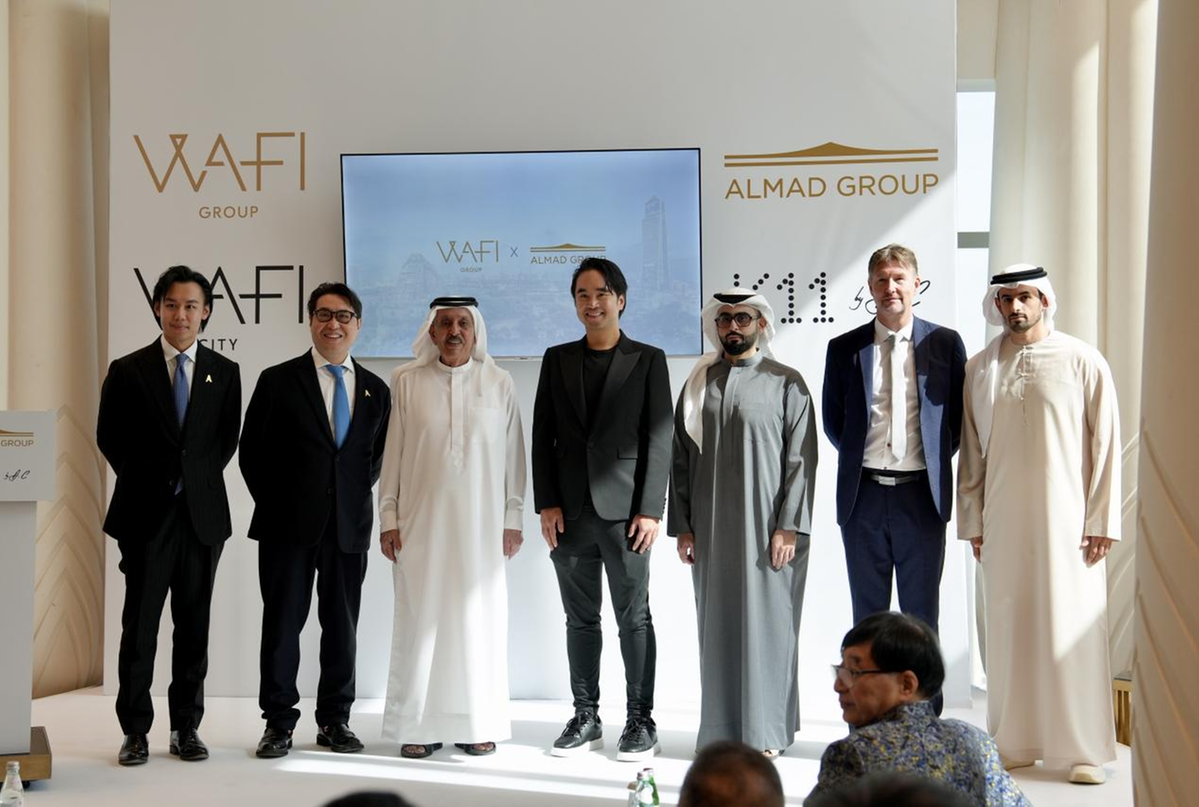
Hong Kong-based Almad Group and Dubai-based Wafi Group have formalised a strategic partnership aimed at tapping the fast-expanding animation, retail and cultural entertainment market in the Gulf, marking a notable deepening of commercial and cultural ties between East Asia and the Middle East.
The agreement, signed on December 11 in Dubai, brings together Almad Group’s lifestyle and cultural development arm, K11 by AC, and Wafi Group, one of the city’s established real estate and hospitality players. At the centre of the cooperation is the creation of a new joint venture entity, Wafi Anime 11, designed to anchor animation-led retail, immersive entertainment and intellectual-property-driven experiences in the UAE, with an eye on regional expansion.
Senior executives and representatives from both sides attended the signing, including Richard Cheung, group chief executive of K11 by AC; Dr Adrian Cheng, founder and executive chairman of K11 by AC of Almad Group; Sheikh Mana bin Khalifa Al Maktoum, founder and chairman of Wafi Group; and Sheikh Rashid bin Mana Al Maktoum, director of Wafi Group. The presence of Dubai Chambers’ executive vice-president for international relations, Salem Al Shamsi, underscored the broader trade and investment significance of the deal.
The partnership goes beyond a single retail concept. According to the framework outlined at the ceremony, Wafi Anime 11 will serve as a platform for developing themed cultural and entertainment projects, hosting IP-exclusive activities, and curating experiences aimed at both residents and international visitors. These initiatives are intended to align with Dubai’s wider strategy of positioning itself as a global hub for creative industries and experiential tourism.
A key commercial pillar of the agreement involves leasing and brand-entry cooperation for Hong Kong and the Chinese mainland labels seeking a foothold in the Middle East. The partners plan to introduce a portfolio of lifestyle, fashion and cultural brands that reflect contemporary Chinese creativity while adapting to local consumer tastes and regulatory environments. This approach reflects a growing trend among Asian brand owners to use Dubai as a gateway to the Gulf and wider Middle East and North Africa markets.
Tourism collaboration also features prominently. Almad Group and Wafi Group will roll out targeted incentive strategies aimed at visitors from Hong Kong and the Chinese mainland, encouraging longer stays and deeper engagement with Dubai’s retail and cultural offerings. Under the plan, travellers will be guided towards premium hospitality assets such as Sofitel Dubai The Obelisk and Raffles Dubai, both located within or adjacent to Wafi City, while being introduced to curated shopping, dining and entertainment itineraries.
Wafi City itself is expected to play a central role in the initiative. Long known as a mixed-use destination combining retail, hospitality and leisure, the complex will host several of the new animation-themed and IP-driven concepts. The partners believe this integrated environment provides a ready-made ecosystem for blending retail with storytelling, live events and digital engagement, a model increasingly favoured by younger consumers and families.
Another element of the cooperation involves the expansion of Gentry Club, a private members’ lifestyle concept, into the Middle East and North Africa. While details remain under development, the inclusion of Gentry Club signals an ambition to build community-based, experience-led offerings alongside mainstream retail, catering to affluent and culturally engaged audiences.
Richard Cheung said the agreement followed extensive groundwork and market analysis. “Our team has been studying the Middle East market since 2024 and is well aware of its immense development potential,” he noted. Cheung added that the first phase of cooperation would focus on brand introduction and ecosystem building, with several flagship labels representing Chinese cultural aesthetics expected to open by 2026.
Industry observers see the partnership as part of a broader shift in how cultural IP and retail are being deployed globally. Animation, gaming and character-driven franchises are no longer confined to screens or merchandise, but are increasingly used to anchor physical destinations, from themed malls to pop-up exhibitions and interactive spaces. The UAE, with its diversified economy, strong tourism flows and appetite for experiential formats, has emerged as a testing ground for such concepts.
Dubai Chamber of Commerce has launched the Bulgarian Business Council, marking a new institutional step aimed at expanding bilateral trade, strengthening commercial partnerships and encouraging mutual investment between Dubai and Bulgaria.
The council has been established under the umbrella of Dubai Chambers and is intended to serve as a structured platform for companies from both markets to collaborate, exchange market intelligence and identify joint opportunities. Officials involved in the initiative said the move reflects growing interest among Bulgarian firms in using Dubai as a regional base, while Dubai-based businesses increasingly view Bulgaria as a gateway to the European Union and South-Eastern Europe.
The new body brings together representatives from key sectors including manufacturing, logistics, food and agriculture, information technology, tourism, construction and renewable energy. Its mandate includes organising business delegations, facilitating B2B meetings, supporting regulatory understanding and helping members navigate investment frameworks in both jurisdictions. Dubai Chamber of Commerce indicated that the council will also work closely with public institutions and trade promotion agencies in Bulgaria to ensure alignment with national economic priorities.
Speaking at the launch, Dubai Chambers officials said the council was designed to “build stronger partnerships between business communities and unlock new opportunities for joint investment”, highlighting a shared interest in diversifying trade flows and deepening private-sector engagement. Bulgarian representatives echoed that view, noting that Dubai’s position as a global trade and logistics hub offers Bulgarian exporters and investors access to markets across the Middle East, Africa and Asia.
Trade ties between Dubai and Bulgaria have been expanding steadily, supported by improved logistics links and a broader push by Dubai to strengthen economic relations with European economies. Non-oil trade between the UAE and Bulgaria has grown over the past decade, driven by machinery, metals, chemicals, food products and pharmaceuticals, according to publicly available trade data. Dubai’s role as a re-export centre has also helped Bulgarian firms reach third markets more efficiently.
The launch of the Bulgarian Business Council fits into Dubai Chamber of Commerce’s wider strategy of establishing country-specific business councils to institutionalise trade relations and provide structured support to foreign investors. Dubai Chambers now hosts dozens of such councils, covering markets across Europe, Asia, Africa and the Americas. These councils have become a central tool in Dubai’s efforts to attract foreign direct investment, promote cross-border partnerships and reinforce the emirate’s status as a preferred base for international companies.
Analysts note that Bulgaria’s competitive advantages include its EU membership, relatively low operating costs, skilled workforce and strategic location linking Europe, the Balkans and the Black Sea region. For Dubai-based companies, these factors make Bulgaria an attractive destination for manufacturing, near-shoring, logistics and technology development. At the same time, Bulgarian companies see Dubai as a stable business environment with advanced infrastructure, business-friendly regulations and strong connectivity.
Investment interest between the two sides has been widening beyond traditional trade. Sectors such as renewable energy, agri-tech, fintech, health care and tourism development have emerged as areas of mutual focus. Bulgarian technology firms have shown growing interest in Dubai’s innovation ecosystem, while companies from Dubai are exploring opportunities in Bulgaria’s industrial zones, real estate and tourism assets.
The Bulgarian Business Council is expected to play a coordinating role in these areas by aligning private-sector initiatives with broader economic strategies. Its agenda includes promoting joint ventures, supporting start-ups seeking cross-border expansion and encouraging knowledge exchange in areas such as digitalisation and sustainability. Council members will also work to address practical barriers faced by businesses, including regulatory clarity, market entry requirements and partner identification.
Diplomatic and business officials involved in the initiative stressed that the council is intended to complement, rather than replace, existing government-to-government frameworks. By focusing on commercial engagement, it aims to translate high-level economic cooperation into tangible outcomes for companies operating on the ground. Similar councils under Dubai Chambers have previously been credited with accelerating deal-making and improving investor confidence by providing direct access to market insights and decision-makers.
Paramount Skydance’s decision to bring three Gulf sovereign wealth funds into its $108 billion hostile bid for Warner Bros Discovery has highlighted a rare convergence of interests among Saudi Arabia, Abu Dhabi and Qatar, as the states accelerate efforts to secure influence across the global entertainment industry. Paramount said the Saudi Public Investment Fund, Abu Dhabi’s L’imad Holding Company and the Qatar Investment Authority have agreed to […]
Engineered for the AI era, MIMO delivers breakthrough metrics: 400 GB/s bandwidth, 54 million IOPS, and 40–90 μs latency—all within a form factor comparable to a large suitcase. MIMO serves as both a high-performance data hub for large-scale GPU clusters and a flexible edge deployment platform, extending seamlessly to desktop environments where it orchestrates workflows with various DGX Spark units based on NVIDIA’s GB10 Grace Blackwell superchip. […]
Fatima Al Hammadi’s outline of Abu Dhabi’s financial innovation ambitions underscores a drive to build a deeper, more connected ecosystem designed to accelerate growth across fintech, insurance, digital assets and emerging financial technologies. Her comments highlight a strategy aimed at consolidating the emirate’s position among global financial centres while creating a broader platform for sector-wide collaboration. Abu Dhabi’s FinTech, Insurance, Digital and Alternative Assets cluster has been […]




 https://ix-index.com/tokenization-committee.html