Just in:
Oil advances towards $100 as tanker attacks persist // Trump’s Iran War Has A Share Of Contribution To His Midterm Debacle // Ousted top Kochi cop gets IG post // Miss Universe Hong Kong Jen Zhou Departs for Puerto Rico to Compete in the 75th Miss Universe World Final // After Reaching 7 Million Users in the Philippines, Skyro Launches Transparent Cash Loans in Malaysia // Geely’s i-HEV Intelligent Hybrid Technology Offers a New Direction Vision for Gasoline-Powered Vehicles // Xi Jinping Preparing For A Trilateral Summit With Trump And Putin At APEC Summit On Nov 18-19 // Dubai details five-year visa benefits for returning visitors // Cloudflare unveils Zero Wire vulnerability intelligence service // Emaar approves Development buyout ahead of planned delisting // UK air traffic outage inflicted £33m financial losses // OpenAI identifies 948 Linux privilege escalation flaws using AI // CR Longdation Aethereal Cybersecurity × Global Cybersecurity Alliance (GCSA) Join Hands to Establish the “AI and Cybersecurity Research Centre” // Oil and chip shares retreat after Democratic victories // Millions Of Indians May Soon Be Deprived Of Government Assistance // Dubai boat show confirms international shipyard line-up for November // OpenAI introduces GPT-6 Cyber with restricted security access // e-Crime Bureau Signs Cybersecurity Partnership With Smart Africa, Reinforcing Its Global Expansion // APT29-linked campaign exploits outdated Apple and Android software // Private varsities bill all set to face the axe //

News related to
research

Enterprise technology budgets are increasingly tilted towards AI, with artificial intelligence infrastructure and software commanding the lion’s share of growth while traditional hardware investment shows signs of stagnation. IDC projects global AI spending will surge to over US $632 billion by 2028, propelled by an almost 30 percent compound annual growth rate between 2024 and 2028. Generative AI alone is expected to capture roughly one‑third of this, driven by a […]

Arabian Post Staff -Dubai Night Vision Pro driving glasses claim to reduce glare and enhance low-light viewing through yellow‑tinted lenses and anti‑reflective coatings. User testimonials often echo these benefits, reporting clearer contrast and less eye strain behind the wheel. But independent experts and research cast doubt on whether these lenses truly deliver improved safety and visibility. Night Vision Pro glasses are described as non‑prescription eyewear with yellow‑tinted […]

Lunate has unveiled a new thematic ETF offering, marking the first of its kind in the region, aimed squarely at quantum computing—a field rapidly reshaping sectors from pharmaceuticals to cybersecurity. The Boreas Solactive Quantum Computing UCITS ETF, developed under Lunate’s newly introduced Boreas range, is set to debut on the Abu Dhabi Securities Exchange on 22 September under the ticker QUANTM.

The fund traces the Solactive Developed Quantum Computing Index and encompasses 25 firms spanning pure-play quantum specialists like IonQ and Rigetti, alongside technology giants at the vanguard of quantum research such as Microsoft, Nvidia, and IBM. Lunate, acting through its regulated affiliate in Abu Dhabi, is spearheading the investor-facing programme, which integrates active thematic research with transparent, index‑based selection.

Geir Espeskog, an industry veteran, heads the specialist team behind the Boreas suite, reinforcing Lunate’s intensified investment in its ETF platform. Following the addition of this thematic ETF to its portfolio, Lunate will manage a total of 19 offerings, combining traditional and thematic strategies.

ADX’s Group Chief Executive, Abdulla Salem Alnuaimi, highlighted the significance of this launch, noting that QUANTM will serve as the 17th ETF listed on the exchange. He underscored its value in granting investors direct access to global leaders in quantum computing, including Alphabet and Amazon.

Solactive, the index provider, described the collaboration as a milestone both for itself and for thematic ETFs in the region. Its ARTIS® natural language processing power plays a central role in categorising companies across hardware, software & algorithms, and communication & sensing segments—applying a rank-weighted methodology that ensures balanced exposure within the index.

Market trends underpinning this launch are compelling. The global thematic fund arena has nearly doubled in size over five years, reaching roughly $562 billion. In the U. S. and Europe, thematic ETFs have also surged; by early 2025, the U. S. counted 473 listings, while Europe hosted 748, with assets concentrated in tech-heavy strategies such as AI and digital infrastructure.

Investors may subscribe to QUANTM between 10 and 16 September via six authorised participants or the ADX eIPO portal. The fund will carry a total expense ratio of 0.49 percent.

EdgeConneX has secured a second site in the Greater Osaka–Yawata region, expanding its Japanese data centre capacity to a combined total of 350 MW of utility power. The newly acquired location is slated to deliver an additional 150 MW once fully built, complementing the 200 MW project unveiled earlier in the year.

A formal ceremony marking this milestone occurred on 7 August, in partnership with Keihan Real Estate — a subsidiary of the Keihan Group, rooted in over a century of railway heritage and now operating across transportation, property, retail and leisure sectors.

EdgeConneX’s entry into Japan began in January 2025 with the announcement of its inaugural 200 MW campus in the Greater Osaka–Kyoto area. Construction of that site is slated to commence in early 2026, with the first phase expected to be operational by the fourth quarter of 2027.

The company’s rapid expansion—achieving 350 MW in just over six months—underscores the burgeoning requirement for cloud and high‑density AI infrastructure in one of Asia’s most dynamic digital markets.

Designed to support workloads exceeding 600 kW per rack, both facilities will deploy EdgeConneX’s “Ingenuity” high-density product suite, tailored to accommodate advanced hardware from NVIDIA, AMD and Intel.

EdgeConneX has reaffirmed its commitment to sustainability, aiming for carbon, waste and water neutrality by 2030. All Japanese data centres are to be powered by renewable energy, efforts that have helped the firm earn top marks in both efficiency and transparency in Structure Research’s 2023 and 2024 Environmental Impact rankings.

Masahiko Inoue, Head of Japan for EdgeConneX, conveyed that the swift deployment demonstrates the firm’s vision taking tangible form, reinforcing Japan’s role as a global Cloud and AI frontrunner. Sam Lee, Managing Director for Market & Commercial Development, highlighted that this expansion reflects EdgeConneX’s strategy to deliver scalable, dependable and eco-conscious infrastructure in a market facing power constraints amid rising digital demand.

This development underscores Osaka’s evolving status as a critical node for digital infrastructure in Japan, aligning with national ambitions such as the “Digital Garden City Nation” vision. As the Japanese government and private sector chart pathways toward accelerated digital transformation, EdgeConneX’s presence positions it among the largest data centre operators in the Kansai region.

Novacore Innovations, based in Mumbai, has launched India’s inaugural GPU cloud platform built around NVIDIA’s Blackwell‑based B200 servers. The platform, powered by a ₹44.6 crore line of credit led by Rashi Fincorp with backing from U. S. and Abu Dhabi investors, is being deployed in Hyderabad to serve startups, researchers and enterprises across India, the U. S. and the Middle East.

This GPU‑as‑a‑service offering centres on the NVIDIA B200, an iteration of the Blackwell architecture that boasts up to 2.3× higher peak performance and double the real‑world AI speed over its predecessors. It is equipped with 192 GB of HBM3e memory, 8 TB/s bandwidth, fifth‑generation tensor cores and dual transformer engines, which collectively accelerate training by up to 3× and inference throughput by as much as 15×, while enhancing energy efficiency up to 25×.

Novacore’s co‑founders, Ranbir Badwal and Aryamaan Singhania, credit India’s low energy costs, technical workforce and Hyderabad’s robust data‑centre ecosystem for enabling this development. They emphasise that the platform offers lower hosting costs, rapid provisioning, and scalable compute for generative AI, large language models, scientific computing and real‑time analytics.

As an incentive to foster uptake, Novacore is offering trial access to qualifying startups and research labs across its target markets.

The platform also aligns with wider developments in India’s AI infrastructure. NVIDIA is collaborating with major domestic firms such as Reliance and Tata to expand locally hosted AI data‑centre capabilities powered by renewable energy, supporting India’s sustainability and net‑zero objectives. Meanwhile, the domestic AI‑as‑a‑service market is forecast to expand at a compound annual growth rate of roughly 26.4 percent, reaching an estimated $31.94 billion by 2031.

The launch of this platform by Novacore marks a significant enhancement in India’s ability to support advanced, high‑performance AI workloads locally. Transactions such as a similar move by CoreWeave in North America—deploying Blackwell Ultra GPUs commercially in July 2025—highlight a global push toward increasingly capable and efficient AI infrastructure.

A striking nebula shaped like a cosmic hand has emerged even more mysterious in a newly released composite view that blends X‑ray and radio data. At its centre lies the pulsar B1509‑58—an intensely rotating neutron star barely 12 miles across—which drives a vast nebula, MSH 15‑52, extending some 150 light‑years. Astronomers, led by Shumeng Zhang of the University of Hong Kong, have juxtaposed imagery from NASA’s Chandra X‑ray […]

A client‑side remote code execution flaw in Google Web Designer for Windows poses a severe threat, allowing attackers to inject malicious CSS into configuration files to subvert internal APIs and seize full control of affected systems. The bug impacts every build prior to version 16.4.0.0711, and a fix has already been deployed in that release. Security researcher Bálint Magyar publicly disclosed the vulnerability, tracked as CVE‑2025‑4613, by demonstrating […]

Advertisements

Okta Threat Intelligence has uncovered a widespread campaign exploiting malicious online ads to tempt hotel and vacation rental professionals into disclosing access credentials. Attackers have been deploying paid search advertisements on platforms such as Google Search, impersonating familiar hospitality service providers. These deceptive ads lead victims to counterfeit login portals of cloud‑based property management and guest messaging systems, with the goal of harvesting usernames, passwords and one‑time authentication codes.

The adverts specifically mimic legitimate service providers—Okta researchers identified at least thirteen hospitality‑focused brands being spoofed. Rather than redirecting users to authentic company sites, these ads channel them to typosquatted domains that host visually convincing but fraudulent login pages. Through these pages, attackers collect credentials and MFA codes, undercutting security even when multi‑factor authentication is in place.

The phishing sites also incorporate tracking capabilities—collecting geolocation, session data, bot detection metrics and analytics—to better tailor the campaign and measure its effectiveness.

This strategy exemplifies the growing menace of malvertising, where advertisements themselves become vectors for malware distribution or phishing. Malwarebytes data reflects dramatic growth in such campaigns: a 42 per cent month‑on‑month escalation in fall 2023, followed by another rise of 41 per cent between July and September. Malicious ads frequently appear alongside legitimate search results, granting them apparent credibility and increasing the chance of successful deception.

Experts point out the dual advantage these tactics offer to threat actors: extensive reach through ad networks and a veneer of trust derived from the proximity to legitimate search results.

The hospitality sector faces unique vulnerabilities as hotels and rental operators increasingly rely on cloud systems to manage bookings, guest interactions and operational workflows. With projections indicating that by 2028 some 76 per cent of travel and tourism revenues will be generated online, these sectors have become especially tempting targets.

This campaign represents a convergence of two escalating cybersecurity concerns: the explosive growth of malvertising and the rising exposure of hospitality infrastructure to credential-based attacks. While the ads serve as the initial lure, the fraudulent credential capture enables potential downstream compromises across cloud services that manage guest data, reservations and even messaging systems.

For hotel and rental operators, the implications are severe—a breach of access credentials might cascade into broader system intrusions, guest data exposure and operational disruption. Preventive measures should include rigorous verification of URLs before entering credentials, vigilant monitoring of sponsored search results for impostor ads, widespread staff awareness and training, and robust technical controls like domain-based message authentication and behavioural anomaly detection.

Journalistic integrity demands careful cross-verification of details. Okta’s findings were drawn from their threat intelligence and threat detection capabilities tailored to enterprise identity environments. Malvertising trends are substantiated by independent cybersecurity data from industry researchers such as Malwarebytes. The convergence of these findings draws a consistent picture: the hospitality industry must brace for sophisticated phishing campaigns delivered via the same channels they rely on for marketing.

A new AI-driven system developed by researchers at the University of Colorado Boulder is screening open-access publications for signs of predatory behaviour, and has already flagged more than 1,000 questionable titles. The AI platform combs through metadata—such as website design, domain registration, editorial board listings, grammar quality and citation patterns—to identify red flags. From a sample of about 15,200 journals, the system initially marked over 1,400 as […]

StuDIYo Lab, a design‑technology and woodworking centre for young learners based in Dubai, has entered into a five‑year memorandum of understanding with the Bhubaneswar City Knowledge Innovation Cluster Foundation, under the Office of the Principal Scientific Adviser to the Government of India. The agreement sets a clear trajectory for rolling out maker‑based education, inclusive workshops, bootcamps and vocational training across India and the UAE.

The collaboration begins by launching School Innovation Labs in targeted Indian states. Over the next six months, the partners plan to establish up to four pilot labs, train some 20 educators, and engage over 500 learners. The agenda emphasizes accessibility for underserved groups, including tribal communities and neurodiverse participants, aiming to extend the reach of creative, skill‑based education beyond urban centres.

As part of the initiative, vocational programmes will be tailored specifically for women and youth, while inclusive workshops will cater to special‑needs learners. Innovation and entrepreneurship bootcamps are also planned to nurture student‑led startups and ideas.

This partnership represents a strategic convergence of StuDIYo Lab’s international pedagogical expertise and BCKIC’s deep grassroots network in India, reflecting a commitment to equitable and experiential learning. Capt. G. S. R., Adviser to the foundation, and Lina Sadek, founder and CEO of StuDIYo Lab, were present during the signing of the MoU in August 2025.

StuDIYo Lab has earned the Certified Autism Center™ designation, a mark of its dedication to inclusive environments and creative engagement for sensory‑sensitive individuals. The CAC accreditation underscores the lab’s commitment to accessibility and may enhance the quality and inclusivity of programmes deployed under the new agreement.

BCKIC has a track record of forging multi‑sector partnerships to support innovation, sustainable livelihoods, and inclusive growth across communities. Its ecosystem‑building efforts have previously included collaborations with educational institutions, startups, NGOs and research organisations.

This latest MoU follows a pattern of strategic alliances BCKIC has been cultivating. Earlier in August 2025, BCKIC signed a pact with AIIMS Bhubaneswar and KIIT‑TBI to support healthcare innovation, start‑up incubation and the development of joint Centres of Excellence. The new partnership with StuDIYo Lab signals an expansion of its mandate into design-oriented and maker-based learning pathways.

The timing reflects growing attention to bridging practical skill development with innovation ecosystems. By emphasising maker labs, vocational training, and inclusion across demographic and geographic lines, the pact contributes to a broader agenda of democratizing access to creative and technological learning.

This alliance also opens doors for corporate social responsibility initiatives from Middle Eastern and philanthropic partners, creating a channel for investment into inclusive educational infrastructure and innovation in India.

With its applied learning model and certified inclusivity, StuDIYo Lab brings a distinctive approach that complements BCKIC’s innovation cluster framework. The aim is to replicate scalable, equitable education solutions across diverse Indian regions—encompassing tribal, rural, urban and neurodiverse communities alike.

The experimental nature of the pilot labs and the focused goals for learner and teacher engagement indicate a test-and-scale strategy. If successful, this could form a template for expanding maker-based, design-driven learning nationwide.

By linking UAE’s expertise in accessible, hands-on learning with a credible Indian innovation ecosystem actor, the partnership may serve as a model of cross-border collaboration in education—a bridge between global pedagogy and local implementation at scale.


Dubai is poised to welcome a wave of new educational institutions in the 2025–26 academic year, with 25 private schools, early childhood centres, and universities slated to open their doors. This initiative is designed to add more than 11,700 school seats and 2,400 places at early childhood centres, significantly expanding learning options for families across the emirate.

Investors continue to express strong confidence in Dubai’s education sector. The new openings include six private schools offering a diversity of curricula—ranging from British to American and International Baccalaureate styles—16 early childhood centres, and three internationally renowned universities. These developments align closely with Dubai’s Education 33 strategy, which aims to elevate the emirate as a global centre for quality education and to boost its socio-economic growth.

The higher education expansion includes flagship additions: the Indian Institute of Management Ahmedabad, the American University of Beirut, and Fakeeh College for Medical Sciences. IIM Ahmedabad stands out with its global presence and reputation for top-tier business and management programmes, AUB holds a strong international ranking, and Fakeeh College brings expertise in medical sciences to the Dubai education landscape.

GEMS Education is also making headlines with the upcoming launch of the GEMS School of Research and Innovation in August 2025. Situated in Dubai Sports City, this school is being billed as Dubai’s most expensive to date, with a build cost of approximately US$100 million. It will follow the British National Curriculum and focus heavily on artificial intelligence, offering world-class facilities including an Olympic‑standard 50‑metre swimming pool and helipad. School fees are expected to be the highest in the country.

Regulatory oversight remains a critical component of Dubai’s educational expansion. The Knowledge and Human Development Authority has approved a 2.35 per cent Education Cost Index for tuition fee adjustments in for-profit private schools for 2025–26, based on audited financials. The ECI covers teacher and staff salaries, support services, and facility rentals. Established institutions—those operating for over three years—may apply for fee increases up to this limit, subject to KHDA review and quality assurance criteria.

This expansion comes amid growing enrolment demands. Sources suggest that student numbers across the UAE’s K‑12 segment are expected to rise sharply, with a forecast of over 150,000 new students by 2027. By 2040, higher education enrollment is also expected to more than double, necessitating an additional 10–15 branch campuses to cater to demand.

Dubai’s private education sector currently encompasses 331 early childhood centres, 233 private schools, and 44 higher education institutions. The forthcoming additions will further diversify program offerings and increase accessibility across the education spectrum.

Beyond capacity, this expansion reinforces strategic priorities. The new institutions are expected to support Dubai’s ambition to scale up educational tourism, foster a generation equipped for future-facing sectors, and reinforce its status as a major global economic and educational hub.

HONG KONG SAR – Media OutReach Newswire – 31 August 2025 – The augmented reality (AR) industry is witnessing an unprecedented surge, propelled by Rokid Glasses’ record-breaking single-day sales of over 10,000 units and revenues surpassing RMB 30 million. At the forefront of this global phenomenon, Lens Technology emerges as a pivotal player, capitalizing on its dual role as the exclusive device manufacturer and strategic investor to […]

Meta’s bold $14.3 billion investment in a 49 per cent stake in data‑labeling firm Scale AI—designed to accelerate its AI advancement—has quickly encountered turbulence. Only months into the venture, key technical leaders from Scale AI and veteran Meta researchers have exited, while concerns over data quality and internal culture clashes have prompted some Meta teams to turn to rival providers. Meta appointed Scale AI’s founder, Alexandr Wang, to oversee its […]

A sophisticated cyber‑espionage operation is exploiting Windows shortcut files disguised alongside seemingly genuine PDF newsletters to surreptitiously infiltrate institutions across Asia and the Middle East. This deeply orchestrated campaign has been attributed to APT‑37, a North Korean‑linked group known for precision targeting. Threat actors dispatch archives containing a PDF titled “National Intelligence Research Society Newsletter” together with a malicious companion: an LNK file that mirrors the PDF’s […]

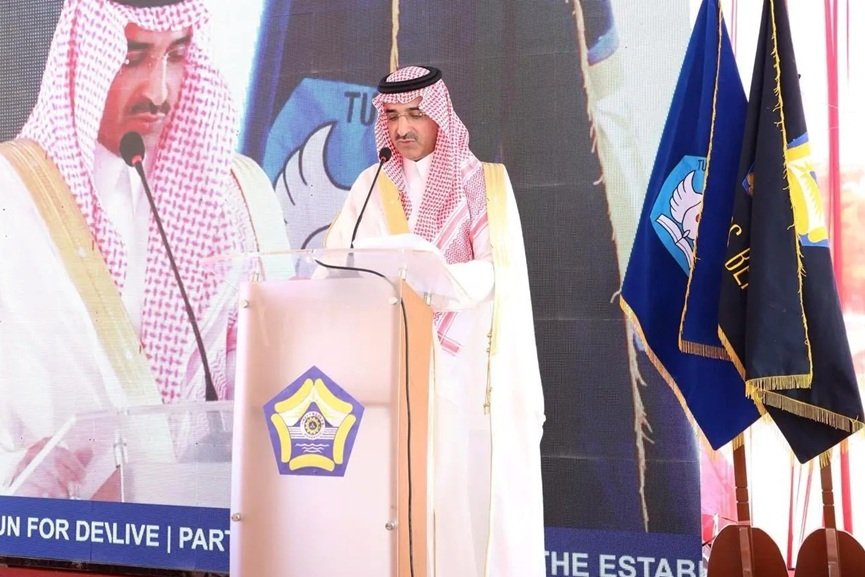
A new teaching and research hospital at the University of Bengkulu opened its doors this week, backed by a $22 million concessional loan from the Saudi Fund for Development. The facility is expected to bolster healthcare delivery and medical training in the region, reinforcing nearly five decades of strategic collaboration between SFD and Indonesia.

Sultan bin Abdulrahman Al-Marshad, Chief Executive Officer of SFD, presided over the inauguration on Friday, joined by Dr Retno Agustina Ekaputri, Rector of the University of Bengkulu, and Ir H Mian, Vice-Governor of Bengkulu Province. The hospital promises expanded healthcare access for local communities while serving as an academic hub for medical students and professionals.

At the ceremony, Al-Marshad emphasised that the facility represents “an important milestone in strengthening healthcare services for the people of Bengkulu and beyond,” highlighting the nearly 49-year trajectory of cooperation between SFD and Indonesia and affirming their mutual commitment to advancing the Sustainable Development Goals.

Functioning as both a medical facility and a teaching and research institution, the hospital is poised to enhance the region’s health system resilience, improve community health outcomes, and deliver hands-on training for new generations of medical staff.

Since its initial engagement in Indonesia in 1976, SFD has financed 12 development projects through over $396 million in loans, spanning healthcare, education, infrastructure and other vital sectors.

These initiatives illustrate a model of long-term development partnerships, tailored to local priorities while reinforcing broader global development objectives.

Al-Marshad’s visit also recalls a prior milestone when he laid the foundation stone for the hospital as part of a cluster of projects, including educational campuses in Jakarta and East Java, during his 2022 trip—an early indicator of the project’s eventual realisation. That plan had projected serving over 328,000 beneficiaries annually across Indonesia.

The Ministry of Economy and Tourism has signed a Memorandum of Understanding with Dubai Science Park to reinforce legal and technical assistance for patent registration and intellectual property protection. The agreement is set to ease processing procedures and support businesses across TECOM Group’s business districts.

Support will extend to companies located in Dubai Science Park and other hubs such as Dubai Internet City, Dubai Media City, and Dubai International Academic City. The collaborative framework introduces expert guidance and streamlined mechanisms for innovators, aiming to enhance patent registration and commercialisation both locally and internationally.

Dr Abdulrahman Al Muaini, Assistant Undersecretary for the Intellectual Property Sector at the Ministry, emphasised a sustained commitment to fostering the national innovation ecosystem through partnerships that bolster IP protection capabilities. Marwan Abdulaziz Janahi, Senior Vice‑President of Dubai Science Park along with Dubai Knowledge Park and Dubai International Academic City, described the pact as a catalyst for accelerating research and innovation with global resonance.

Growth in patent activity underscores the impetus for such a partnership. From January to July 2025, the Ministry recorded 1,221 patents, up from 466 for the equivalent period in the prior year. Meanwhile, patent applications rose to 2,430 from 1,996 in the same timeframe. This solid year‑on‑year increase signals both institutional and societal recognition of the strategic importance of intellectual property.

Dubai Science Park serves as a key component of the UAE’s innovation infrastructure, hosting over 500 entities—including global firms such as AstraZeneca, BeiGene, and Pfizer—and facilitating the work of more than 6,500 professionals in the life sciences, energy and environmental sectors. Facilities include Grade‑A offices, LEED‑certified laboratories, and sophisticated logistics infrastructure.

The MoU also introduces outreach initiatives—for instance, workshops, training sessions, and awareness campaigns—designed to enhance IP literacy among business owners and innovators across TECOM’s network of districts.

This agreement aligns with the UAE’s long‑term strategy to transform into a knowledge‑based economy by 2031. It reflects a broader ambition to position the nation as a global centre for innovation and research by providing creators with robust protections for their intellectual property.

The new MoU follows earlier initiatives such as the Accelerated Patent Grant agreement with the United States Patent and Trademark Office, which aimed to speed up UAE patent approvals for inventions granted in the United States. Furthermore, the Ministry’s ‘Green IP Roadmap’ introduced accelerated registration for sustainable and eco‑friendly innovations—pushing to reduce registration timelines from 42 months to six and increasing patent numbers to 6,000 by 2026.

Highlights of the Interim Results for the Six Months Ended June 30, 2025: Benefiting from the sustained growth in AI computing power demand, the demand for chips has grown significantly across related industries, driving the Group’s revenue up by approximately 54.5% year-on-year to RMB6,676.5 million. The Group recorded a gross profit of approximately RMB585.9 million, and a net profit of approximately RMB190.0 million. Profit attributable to equity […]

Featuring ISO-Certified, High-Performance Products from Korea’s Leading Manufacturers — Meet Them at Hall 1, Booths 1801–1812, Kuala Lumpur Convention Centre, 2–4 September 2025 KUALA LUMPUR, MALAYSIA – Media OutReach Newswire – 25 August 2025 – Korean companies engaged in the manufacturing of products in the oil & gas field are scheduled to participate in the upcoming Oil & Gas Asia exhibition (OGA 2025), to be held at […]

Cloudflare has unveiled a novel tool to help organisations assess the safety and trustworthiness of third-party AI tools. Dubbed the Cloudflare Application Confidence Score, this metric provides transparent, structured evaluations of both general SaaS applications and generative AI services. As part of Cloudflare One’s AI‑Security Posture Management suite, it equips security, IT, legal and governance teams with objective insights for policy decisions. The initiative aims to address […]

A comprehensive analysis has revealed that prenatal exposure to acetaminophen—more commonly known as paracetamol—might elevate the likelihood of children developing neurodevelopmental disorders such as autism spectrum disorder and attention‑deficit/hyperactivity disorder. The findings arise from a landmark review led by the Icahn School of Medicine at Mount Sinai in conjunction with other prestigious institutions, including Harvard T. H. Chan School of Public Health, and draw upon data from […]

A wave of innovations powered by artificial intelligence, wearable devices and data analytics is accelerating change in South Africa’s healthcare landscape. AI‑enabled mobile X‑ray units are now detecting tuberculosis signs—even in asymptomatic individuals—within high‑risk communities, enabling earlier diagnoses and reducing transmission. Controllers also report that healthcare providers are integrating AI more deeply than the global average, using it not only for in-hospital patient monitoring but also for […]

Paragraf has clinched a $55 million Series C financing round, anchored by a $35 million injection from Mubadala Investment Company—the sovereign wealth fund of Abu Dhabi—earning Mubadala a 12.8 per cent equity stake in the UK-based firm. The deal, formally approved under the National Security and Investment Act, will underpin Paragraf’s bid to scale up production of graphene-based semiconductors and pursue global expansion plans. Leading the company’s development, co‑founder […]

Shark teeth — evolution’s finely tuned cutting tools — show early signs of weakening as seawater pH levels shift. A German-led experiment found that teeth from blacktip reef sharks immersed in water with a pH around 7.3—an acidity projected by the year 2300 if carbon emissions continue unchecked—displayed significantly more structural damage than those in water at the current average of 8.1. Observations included widespread corrosion, surface cracks, and erosion […]

Hackers are employing sophisticated phishing tactics to deploy a malware loader known as UpCrypter, granting them long-term control over Windows devices worldwide. Disguised as voicemails or purchase order messages, these phishing emails redirect recipients to highly personalised spoofed sites. Those who download the attachments are compromised through a multi-stage infection chain that ultimately installs powerful Remote Access Trojans. Fortinet’s FortiGuard Labs has tracked the campaign, observing how […]

VISHNU RAJA
RYO YAMADA
HITORI GOTOH
IKUYO KITA