News related to
stake

By K Raveendran Public anger has a strange way of finding symbols. Sometimes it gathers around a saintly figure in a white cap, sometimes around an unlikely political label that sounds almost like a joke until it begins to speak for a generation. The overwhelming response from Gen Z to the Cockroach party carries unmistakable […]

The article Cockroach Politics And The Limits Of Public Anger appeared first on Latest India news, analysis and reports on Newspack by India Press Agency).

Abu Dhabi Gaming has signed a strategic partnership with ASPIRE to accelerate AI-led game development, linking the emirate’s interactive entertainment ambitions with advanced research capabilities from one of its key technology institutions. The agreement was formalised during the A2RL Summit at ADNEC Centre Abu Dhabi, where global technology, mobility, autonomy and gaming specialists gathered to examine how artificial intelligence is reshaping industries built around real-time decision-making and […]

Sui’s mainnet disruptions over May 28 and May 29 have put renewed pressure on the Layer-1 blockchain’s engineering controls after three separate halts were traced to bugs connected with its v1.72 software release and the handling of gas payments, validator restarts and on-chain randomness. The network has since returned to operation, but the episode has sharpened scrutiny of Sui’s upgrade process because the outages occurred in close […]

Qatar Investment Authority has raised its exposure to Anthropic by joining the artificial intelligence company’s $65 billion Series H financing, marking its third consecutive investment in the Claude maker and signalling a deeper Gulf move into frontier AI infrastructure, enterprise software and advanced computing. The Series H round values Anthropic at $965 billion post-money, placing the San Francisco-based company among the most highly valued private technology groups […]

Arabian Post Staff -Dubai Abu Dhabi’s AD Ports Group has agreed to acquire Corredor Logística e Infraestrutura, a São Paulo-based agribulk terminal operator, in an AED3.1 billion deal that gives the company its first operating platform in Latin America and a stronger position in global food supply chains. The transaction, valued at about $835 million, is the largest acquisition undertaken by AD Ports Group and is expected […]

Beijing’s new trade secret rules have taken effect, bringing data, algorithms, computer programs and source code explicitly within the country’s administrative protection system as China moves to curb technology leaks during a sharper contest with the United States over artificial intelligence, advanced computing and strategic know-how.

The Provisions on the Protection of Trade Secrets, issued by the State Administration for Market Regulation under Order No. 126, came into force on 1 June 2026 and replace rules first introduced in 1995. The overhaul gives regulators clearer authority to handle disputes involving digital assets that now sit at the centre of corporate value, from AI model architecture and training datasets to platform recommendation systems, software code and commercially valuable operational data.

The change marks a significant shift in China’s treatment of intangible technology assets. Earlier rules were drafted before cloud computing, AI systems and large-scale data operations became central to business competition. The new framework defines trade secrets as technical or business information that is not publicly known, has commercial value and has been subject to confidentiality measures by the rights holder. Technical information now expressly covers data, algorithms, computer programs and code, while business information can include management, sales, finance, planning, customer and operational data.

The timing gives the regulation wider strategic weight. China and the United States are locked in a prolonged technology rivalry involving semiconductor controls, restrictions on advanced computing hardware, limits on investment in sensitive sectors and scrutiny of cross-border technology transfers. Washington has tightened export controls on high-end chips and chipmaking equipment, while Beijing has expanded its own legal toolkit to protect critical technology, secure data flows and prevent overseas transfer of capabilities it regards as strategically important.

The new rules do not create a separate trade secret law, but provide more detailed administrative guidance under China’s Anti-Unfair Competition Law. They clarify how regulators should assess whether information is secret, whether it has commercial value, what counts as reasonable confidentiality measures and how infringement should be investigated. For companies, the central message is that protection will depend not only on the value of the information, but also on whether internal controls, access limits, confidentiality agreements, digital safeguards and evidence trails are in place.

The provisions also recognise that unsuccessful research can have commercial value. Stage-by-stage technical results, failed experimental data and development paths that save time or cost in future research may qualify for protection if they meet the legal conditions. That is especially relevant for AI labs, pharmaceutical developers, electric vehicle makers, chip design firms and advanced manufacturing groups, where failed trials can reveal important technical boundaries and prevent competitors from repeating expensive mistakes.

Regulators have been given practical enforcement tools, including powers to inspect business premises, question individuals, copy documents, examine electronic records and take action against materials linked to suspected infringement. Penalties can include orders to stop unlawful conduct, confiscation of illegal gains and fines that may reach CNY5 million in serious cases. The framework also covers improper acquisition, disclosure, use or permission to use trade secrets obtained through theft, bribery, fraud, coercion, electronic intrusion or breach of confidentiality obligations.

For multinational companies operating in China, the new rules create a mixed picture. Stronger protection could help firms defend proprietary data, software systems and industrial processes in a market where trade secret disputes have often been difficult to pursue. At the same time, wider protection for data and algorithms may increase compliance complexity, particularly in joint ventures, outsourced research, cloud services, employee mobility, cross-border collaboration and licensing arrangements.

Technology companies are likely to face tougher expectations over documentation. Firms seeking protection will need to show that the information was not easily accessible, carried economic value and was actively protected. Generic claims that an algorithm or dataset is confidential may not be enough. Companies will be expected to classify sensitive assets, restrict access by role, track downloads and transfers, maintain logs, use encryption or watermarking where appropriate, and ensure that employment and partnership contracts define confidentiality obligations with precision.

The rules also sit alongside China’s broader data and security regime, including laws on data security, personal information protection, cybersecurity and export control. That overlap could make enforcement more powerful but also more complicated. A dataset may be a trade secret, a regulated data asset and a cross-border transfer concern at the same time. Businesses handling AI training material, user behaviour data or industrial performance data will need to assess those obligations together rather than treating trade secret protection as a standalone issue.


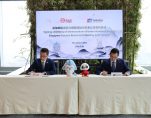
SINGAPORE – Media OutReach Newswire – 2 June 2026 – UnionPay International (UPI) and the Singapore Tourism Board (STB) have renewed their strategic partnership to jointly promote Singapore tourism and enhance payment experiences for international travelers through integrated marketing campaigns, merchant collaborations, and cross-border payment initiatives.

Signing ceremony of Memorandum of Understanding between Singapore Tourism Board and UnionPay International

The renewed three-year Memorandum of Understanding (MOU) builds on previous successful collaborations between both parties and aims to drive tourism spending by combining STB’s destination marketing resources with UnionPay’s global payment network and regional marketing channels.

Under the partnership, both parties will jointly launch tourism and payment campaigns targeting key visitor markets including China and other regional outbound travel segments. Campaigns will promote Singapore tourism offerings alongside UnionPay’s payment privileges, merchant promotions, and acceptance network across shopping, dining, attractions, transportation and hospitality sectors.

The collaboration will also focus on premium travel and MICE segments through partnerships with banks, luxury travel platforms and tourism stakeholders to introduce tailored privileges and curated experiences for UnionPay cardholders visiting Singapore.

According to STB, Singapore welcomed approximately 16.9 million international visitors in 2025, with China’s mainland remaining the country’s largest source market. As international travel demand continues to recover, seamless and secure payment experiences are playing an increasingly important role in enhancing visitor satisfaction and driving tourism consumption.

Over the past cooperation period, UPI and STB jointly launched multiple tourism campaigns through leading travel and digital platforms, generating more than 40 million impressions and strengthening UnionPay’s presence among travelers visiting Singapore.

Moving forward, both parties will continue to explore new opportunities in tourism marketing, merchant collaboration, and consumer engagement to further support Singapore’s tourism growth and cross-border travel ecosystem.

Hashtag: #Unionpay

The issuer is solely responsible for the content of this announcement.

Advertisements

Emirates Telecommunications Group Company PJSC, known as e&, has agreed to sell part of its stake in Careem Technologies to Uber Technologies for $100 million in cash, reducing its majority position in the Dubai-based platform while keeping a sizeable exposure to one of the region’s best-known technology businesses. The binding agreement covers 12.5 per cent of e&’s 50.03 per cent holding in Careem Technologies. Once the transaction […]

Shareholders of ČEZ have approved a far-reaching plan to separate key customer and network assets from the Czech Republic’s dominant power utility, advancing a government-backed strategy to secure full control over the company’s core electricity generation business. The vote at the group’s general meeting marks a pivotal step in one of Central Europe’s most closely watched energy restructurings. The plan will carve out electricity and gas distribution […]

Video assistant referees will have wider authority at the 2026 World Cup after football’s lawmakers approved a clarification allowing intervention for clear attacking fouls committed before the ball is put into play at corners and free kicks. The change means a goal, penalty decision or disciplinary sanction can be reviewed if an attacking player blocks, holds, impedes or otherwise fouls an opponent before the set-piece is taken, […]

Millions of Ethiopians began voting on Monday in the country’s 7th General Election, a high-stakes parliamentary and regional contest expected to consolidate Prime Minister Abiy Ahmed’s ruling Prosperity Party while testing public confidence in the electoral process. More than 50 million people are registered to vote across Africa’s second most populous country, where polling stations opened after months of voter registration, candidate nominations, political campaigns, public debates […]

Arabian Post Staff -Dubai Washington has tightened its warning to shipping, energy and insurance companies, saying US-linked parties cannot seek safe-passage arrangements from Iran for vessels moving through the Strait of Hormuz, even when no money changes hands. The updated position, issued on 29 May, broadens earlier sanctions guidance that focused on tolls, donations, offsets, digital assets and other indirect payments demanded in connection with passage through […]

Seoul’s push to turn humanoid robots into mainstream entertainers moved onto the fashion runway as Galaxy Corporation paired human models with Unitree G1 machines in a staged show of cowboy hats, silk dresses, metallic jackets and 1970s-inspired trousers.

The Mach33: Physical AI Fashion Show, held on 28 May at Galaxy Robot Park in Gangdong District, was presented as more than a novelty catwalk. Galaxy Corporation framed the event as an experiment in coexistence, asking how people and robots might share cultural spaces rather than treating humanoids only as factory tools, laboratory platforms or service machines.

Each model appeared with a shorter humanoid counterpart, often wearing matching or complementary outfits. A tasselled blue Texan-style look, complete with a robot-sized cowboy hat, stood alongside retro silver outerwear, silky dresses fitted to rigid frames and space-age black trousers reminiscent of David Bowie’s 1970s stage style. The styling made the mechanical bodies appear less like exposed prototypes and more like performers entering a commercial entertainment format.

Galaxy Corporation founder and chief executive Choi Yong-ho said the company had realised that robots “need to wear clothes” and argued that robots, like people, should have distinct identities. The company designed the outfits and intends to launch them under the MACH 33 name by the end of the year, positioning robot fashion as a potential extension of its entertainment-technology business.

The event followed the opening phase of Galaxy Robot Park, a 16,500-square-metre venue in eastern Seoul designed around robot concerts, interactive shows, robotic portrait drawing, boxing-style demonstrations and visitor experiences. The park is part of Galaxy Corporation’s effort to create a new live-entertainment category built around “physical AI”, a term used to describe artificial intelligence moving from screens and software into embodied machines operating in shared human spaces.

Galaxy Corporation, known for managing cultural figures including G-Dragon, Taemin and actor Song Kang-ho, has been seeking to merge K-pop spectacle with robotics. Its robot performances have included choreographed dance routines, synchronised stage movement and plans for several shows a day. The company has said it wants to stage more than 1,000 robot performances annually and ultimately take robot-led shows beyond South Korea.

The robot models appeared to be Unitree G1 humanoids, a relatively low-cost platform made by Hangzhou-based Unitree Robotics. The G1 is widely used in demonstrations because of its compact size, balance control, range of motion and comparatively accessible pricing for developers and institutions. Its ability to walk, turn, gesture and respond to programmed choreography makes it suitable for controlled performances, though it remains far from a fully autonomous general-purpose worker.

The show also highlighted the gap between polished presentation and engineering reality. Humanoid robots are becoming more agile, but smooth movement in a runway setting still requires careful staging, reliable control systems and predictable conditions. Research into whole-body teleoperation, motion retargeting and autonomous loco-manipulation continues to point to unresolved challenges, including latency, balance recovery, hand dexterity, human-robot interaction and safe operation in crowded public spaces.

For South Korea’s entertainment sector, the Galaxy event fits a broader pattern of experimentation with virtual idols, AI-generated content, immersive fan platforms and digitally enhanced performances. K-pop’s visual emphasis makes it a natural testing ground for robotic spectacle, but the commercial test will be whether audiences view robot performers as compelling cultural products or as temporary curiosities.

Fashion offers Galaxy a softer route into that debate. Unlike industrial robotics, a runway show does not require humanoids to prove productivity. It asks whether machines can be styled, branded and given a visible role in popular culture. The clothes also conceal some of the awkwardness of exposed mechanical frames, making the robots appear less clinical and more theatrical.

The commercial stakes are growing. Forecasts for humanoid robotics vary widely, but major financial institutions and technology analysts expect the sector to expand sharply over the next two decades as costs fall and AI systems improve. Optimistic projections point to hundreds of millions, or even more than a billion, humanoids by 2050, though adoption is expected to move gradually as companies work through safety, reliability, regulation and public acceptance.

Russia-linked cyber operators tracked as GREYVIBE have used generative artificial intelligence tools including ChatGPT and Google Gemini to widen cyber-espionage operations against Ukraine-linked targets, signalling a shift in how lower-skilled threat groups can build lures, malware and infrastructure at speed. The activity, active since at least August 2025, has targeted military, government, civilian and business-related organisations through phishing emails, fake verification pages, fraudulent websites and custom malware. […]

By Nitya Chakraborty Facing the big possibility of China taking control of the new Junta government in Myanmar which took office last month, Indian policy makers are now very keen to give a big push to the India-Myanmar relations covering both economy and security aspects. Myanmar President U Min Aung Hlaing is in India visit […]

The article Facing Major Challenge From China, India Set To Improve Bilateral Relations With Myanmar appeared first on Latest India news, analysis and reports on Newspack by India Press Agency).

Arabian Post Staff -Dubai Sony’s Bravia 7 II has emerged as one of the clearest signs yet that RGB LED television technology is moving from demonstration floors into premium living rooms, with the company using its latest 4K HDR set to challenge OLED’s colour reputation while retaining the brightness advantage of advanced LED displays. The new television sits below the flagship Bravia 9 II but carries the […]

Humanoid robots shared the catwalk with human models in Seoul as Galaxy Corporation turned a fashion show into a test of how artificial intelligence, entertainment and daily life may begin to overlap.

The Mach33 Physical AI Fashion Show, staged on May 28 at Galaxy Robot Park in Gangdong District, placed robots in coordinated outfits beside models wearing matching designs. The display was built around a simple proposition from the company: if robots are moving into public spaces, homes, workplaces and entertainment venues, they may also need a visual identity.

Galaxy Corporation, known for linking entertainment with technology, presented the event as more than a novelty performance. Its founder and chief executive, Choi Yong-ho, has described Mach33 as a marker for a “physical AI” era in which technology is no longer confined to screens but appears in bodies that walk, gesture and interact with people. The runway show sought to show that clothing could become part of that transition, shaping how humans perceive machines and how robots fit into social settings.

The event took place inside Galaxy Robot Park, a 16,500-square-metre venue that opened in eastern Seoul on May 5. The park features humanoid robots performing K-pop routines, mock boxing matches, interactive demonstrations and other entertainment formats. The company has positioned the site as a testing ground for robot-led performance, with ambitions that extend beyond Korea into touring shows and global entertainment products.

The fashion show reflected Galaxy Corporation’s broader attempt to build a cultural brand around robotics. The company manages high-profile entertainment names including G-Dragon and Taemin, while also promoting itself as an “enter-tech” business. That combination of pop culture, stagecraft and robotics has helped it attract attention in a field often dominated by industrial automation, warehouse systems and laboratory prototypes.

The robots that appeared on the runway were not presented as replacements for human models, but as co-performers. Their value lay in the spectacle of synchronisation, movement and visual contrast. Matching outfits reduced the distance between human and machine, while the robots’ mechanical gait reminded audiences that the technology still carries limitations. The result was less a conventional fashion presentation than a staged experiment in public acceptance.

The concept also raised practical questions. Robots designed for hotels, retail, care homes, theme parks or public-facing service roles may require clothing that does more than decorate. Garments may need to allow joint movement, protect sensors, signal function, reduce intimidation and make machines more approachable. Fashion for humanoids could therefore become a niche within industrial design, combining textiles, robotics engineering and brand strategy.

Seoul’s robot catwalk arrives as Korea deepens its push into humanoid robotics. The K-Humanoid Alliance, launched in 2025, brought together major companies, universities and research institutes with the aim of strengthening national capability in AI-driven robots by 2030. Samsung Electronics has increased its stake in Rainbow Robotics to 35 per cent, while Hyundai Motor Group has expanded its work with Boston Dynamics and outlined plans tied to large-scale robot production.

Global competition is also intensifying. Tesla’s Optimus, Figure AI’s humanoid systems, Agility Robotics’ Digit and Boston Dynamics’ Atlas have pushed humanoids into investor presentations, factory trials and public demonstrations. The race is no longer limited to whether robots can walk or lift objects. Companies are now trying to define where robots will be commercially useful, how they will be priced, and how people will respond when machines occupy spaces once reserved for human workers and performers.

Fashion may appear peripheral to that contest, but public trust could become a decisive issue. Humanoids must navigate human environments where appearance, motion and social cues matter. A robot dressed for a hospital will need to project cleanliness and calm. A retail robot may need to look welcoming. A performer may need costume, hair, lighting and choreography as carefully planned as any human act.

Galaxy Corporation’s Seoul event leaned heavily into spectacle, but it also exposed the unsettled state of humanoid design. Robots still move with visible constraints, and the emotional connection that human performers build with audiences remains difficult to reproduce. The company’s bet is that entertainment can accelerate familiarity, making robots less alien before they move into other parts of daily life.

OKX Ventures and Korea Investment & Securities are set to inject KRW 80 billion each into Coinone, strengthening the Seoul-based crypto exchange’s capital base as it prepares a broader push into stablecoins and tokenised securities. The planned investment, worth about $53 million from each backer, would give the two investors strategic exposure to one of Korea’s five licensed won-based cryptocurrency exchanges. Coinone is expected to use the […]

By Krishna Jha The entire origin and development of living world has led to the emergence of complicated natural environment of which human beings are part and parcel. Environment and society are inter-related and inter-dependent. Society has come to rely on the natural environment for its existence. Any destruction of environment is sure to pose […]

The article Supreme Court Bench Has To Give More Clarity To Their Views On Aravalli Hills appeared first on Latest India news, analysis and reports on Newspack by India Press Agency).

Arabian Post Staff -Dubai Gas engine maker Innio is seeking a valuation of up to $20.25 billion in a New York listing, placing the Munich-based company at the centre of investor demand for businesses tied to artificial intelligence infrastructure and data centre power. AI Alpine, Innio’s principal shareholder and an entity co-owned by funds managed by Advent International and the Abu Dhabi Investment Authority, plans to sell […]

Liberia’s push to link women’s livelihoods with protection from violence has moved into a new phase after UN Women Liberia and its partners convened an inception meeting in Monrovia for the Spotlight Initiative 2.0 Women’s Economic Empowerment component. The meeting, held at the One UN House, brought together government representatives, civil society organisations, private sector actors and development partners to align implementation plans for a programme designed […]

Cybercriminals are exploiting mounting demand for the 2026 FIFA World Cup by creating spoofed FIFA-themed websites designed to steal personal details, payment data and money from fans seeking tickets, hospitality packages, jobs and tournament information. The warning, issued by the Federal Bureau of Investigation on May 27, 2026, places FIFA impersonation scams among the key online threats facing supporters before and during the tournament across the United […]

Google Cloud has moved deeper into AI-native cybersecurity with Google AI Threat Defence, an autonomous security platform aimed at helping enterprises detect, prioritise and remediate attacks at machine speed as rivals Anthropic and OpenAI push frontier models into vulnerability discovery and code defence. The launch marks a sharper contest in enterprise security, where artificial intelligence is shifting the centre of gravity from manual patching and alert handling […]

Phuket’s private-island hospitality market has gained a sharper luxury edge as The Naka Island, a Luxury Collection Resort & Spa, Phuket, rolls out upgraded villas, refreshed dining venues, expanded wellness facilities and a Michelin One Key distinction that places the property among Thailand’s recognised high-end stays.

The resort, located on Naka Yai Island off Phuket’s east coast, has completed a series of enhancements designed to strengthen its appeal to affluent leisure travellers seeking privacy, wellness and destination-led experiences. The upgrades cover its Beachside Infinity Pool, villa interiors, spa facilities, restaurants, bar concepts and event spaces, reflecting a broader shift in Phuket’s luxury sector towards secluded, experience-rich stays rather than conventional beach resort offerings.

A central feature of the refresh is the transformed Beachside Infinity Pool, positioned against the Andaman Sea and redesigned as one of the resort’s main visual anchors. Its shape draws on Naka Yai Island and the resort’s own brand identity, while a new deck and cabana area add a stronger leisure component for guests using the beach and pool zones. The redesign gives the property a more defined social space without diluting its private-island positioning.

The villa upgrades are aimed at travellers prioritising seclusion and personal space. The resort has enhanced its private pool villas with updated interiors, bespoke furnishings and fully air-conditioned spa-style bathrooms. The emphasis on private pools in every villa aligns with demand from couples, families and long-haul guests who increasingly favour self-contained accommodation after the pandemic-era shift towards privacy-led luxury travel.

Spa Naka by HARNN has also been expanded from six to eight treatment rooms, adding capacity at a time when wellness remains one of the strongest growth areas in resort hospitality. The spa refresh includes replenished tropical gardens, upgraded pathways and new relaxation areas, reinforcing the property’s pitch as a wellness retreat rather than only a beach escape.

Dining has received equal attention. Aiyara, the resort’s signature restaurant, has been repositioned around Thai cuisine with design cues inspired by the elephant and the country’s cultural heritage. Veranda, the all-day dining venue, focuses on international menus in a beachfront setting, using natural materials such as reclaimed driftwood, rattan and pottery to reflect the surrounding marine environment. Rum Chapel offers Mediterranean flavours, seafood and imported premium ingredients, while Z Bar continues to serve as the sunset venue overlooking the Andaman.

The improvements come as Phuket’s luxury and upscale hotel market remains highly competitive, with resort operators seeking to differentiate through design, privacy, food and wellness. The island continues to attract travellers from Europe, the Middle East, Asia-Pacific and domestic markets, although Thailand’s broader tourism recovery has been uneven. Foreign arrivals rebounded strongly after border restrictions were lifted, but market composition has shifted, with softer Chinese demand and stronger competition from other regional destinations influencing pricing and occupancy.

Thailand welcomed nearly 33 million international visitors in 2025, below the previous year’s level but still among the strongest performances in Southeast Asia. Phuket remained one of the country’s most resilient destinations, supported by direct air links, villa-led accommodation, marine tourism and a mature luxury hospitality base. Upscale properties have benefited from travellers willing to spend more on privacy, wellness, curated activities and recognised hospitality standards.

The Michelin One Key recognition gives The Naka Island an additional credential in a crowded market. The Michelin hotel key system evaluates stays on criteria including architecture, character, service, comfort and value relative to the experience offered. Thailand’s 2025 selection included 62 key hotels, with The Naka Island listed among One Key properties, a category described as a very special stay. The distinction is expected to support international visibility, particularly among travellers who use independent hotel rankings to choose high-value resort stays.

The resort’s owner and operator ecosystem also adds weight to its positioning. The property is part of Marriott’s Luxury Collection portfolio, while The Erawan Group is associated with the asset as a hotel investor and operator in Thailand’s hospitality sector. The combination gives the resort access to global distribution, loyalty demand and professional asset management, while still allowing it to market itself around local identity and island seclusion.

Access remains central to the resort’s appeal. The property is reached by a short speedboat transfer from Phuket, creating a sense of separation while keeping it close to the island’s airport and main tourism infrastructure. Its location on Naka Yai allows the resort to market mangrove discovery, coastal activities, beach experiences and private dining as part of a contained luxury journey.

VISHNU RAJA
RYO YAMADA
HITORI GOTOH
IKUYO KITA