News related to
stake

SpaceX has signalled a major shift in its financial strategy by setting internal share prices that imply a valuation of about $800 billion and signalling plans for an initial public offering in 2026, according to communication to investors and financial institutions. The insider share sale, priced at roughly $421 per share, more than doubles the company’s valuation from mid-year levels and comes as SpaceX lays the groundwork for what could become one of the largest public market debuts ever.

Chief Financial Officer Bret Johnsen communicated to employees that the rocket and satellite operator founded by Elon Musk is preparing for a potential flotation in 2026, though the precise timing and structure remain contingent on market conditions and business milestones. SpaceX’s statement highlights that the internal valuation proposition is part of broader fundraising and liquidity arrangements rather than a definitive IPO roadmap.

Starlink, SpaceX’s satellite internet arm, underpins much of the valuation optimism. The constellation of thousands of low-Earth orbit satellites has expanded its service footprint significantly, adding millions of users globally and pushing the company’s revenue trajectory upward. Analysts say that this growth, alongside Starlink’s planned expansion into direct-to-mobile services and other connectivity niches, is central to investor enthusiasm for a public listing.

The valuation implied by the secondary offering eclipses previous private market benchmarks. SpaceX had been valued at about $400 billion earlier in 2025, and the $800-billion marker would place it among the most valuable pre-IPO companies globally. OpenAI’s valuation peak of $500 billion has been surpassed by this internal pricing, although that figure is not a public market price. SpaceX remains the second-most valuable private startup after OpenAI.

Despite speculation over the $800 billion figure, Musk has publicly questioned such valuation assertions, describing some of the media characterisations as inaccurate and emphasising the company’s strong cash flow and internal liquidity mechanisms. Musk’s comments reflect the tension between private market hype and management’s more cautious public posture on valuation and IPO timing.

SpaceX’s broader IPO strategy appears to be evolving. Reports indicate that the company has held discussions with investment banks about potentially raising over $25 billion in a 2026 offering, which could value SpaceX at more than $1 trillion. Multiple sources familiar with the talks suggest that a mid- to late-2026 timetable is under consideration, though this could shift depending on market conditions and regulatory factors.

Market participants are weighing the implications of a SpaceX public listing against broader trends in the US equity markets, which are exhibiting renewed IPO activity after a period of subdued issuance. A successful SpaceX listing at the projected scale would not only set new records in terms of funds raised but also provide a benchmark for other high-growth private companies that have been delaying public offerings.

Investors and analysts have reacted to the buildup in valuations with a mix of enthusiasm and caution. EchoStar, a significant stakeholder in SpaceX’s satellite ventures, saw its shares rise on increased IPO chatter, reflecting broader investor appetite for exposure to the commercial space sector. But concerns linger around execution risk and the technical challenges inherent in SpaceX’s ambitious projects, including the Starship launch vehicle and long-term goals such as lunar and Martian missions.

Critics of the current valuation narrative highlight that private share prices do not always translate into market realities once a company lists publicly. They note that factors such as regulatory scrutiny, evolving market sentiment and the inherent risks of aerospace and satellite operations could temper the ultimate IPO trajectory. Nonetheless, the expanded focus on Starlink’s recurring revenue streams and SpaceX’s diversified business portfolio underlines investor interest in the company’s long-term growth potential.


Acquisition creates a fully integrated regional connectivity platform, enabling seamless, low-latency connectivity that supports ASEAN’s expanding digital economy SINGAPORE/KUALA LUMPUR, MALAYSIA – Media OutReach Newswire – 13 December 2025 – SEAX Global (“SEAX”), a leading wholesale connectivity provider in Southeast Asia, today announced it has acquired a major stake in Interlink Telecom Public Company Limited (“ITEL”), a prominent Thai fixed network telecommunications provider. This acquisition consolidates SEAX’s […]

Paramount Skydance’s decision to bring three Gulf sovereign wealth funds into its $108 billion hostile bid for Warner Bros Discovery has highlighted a rare convergence of interests among Saudi Arabia, Abu Dhabi and Qatar, as the states accelerate efforts to secure influence across the global entertainment industry. Paramount said the Saudi Public Investment Fund, Abu Dhabi’s L’imad Holding Company and the Qatar Investment Authority have agreed to […]

Arabian Post Staff -Dubai Abu Dhabi’s sovereign investor Mubadala Investment Company plans to almost double its exposure to Asia to around a quarter of its global portfolio over the next decade, signalling a long-term shift in capital allocation as the region’s digital economy, energy transition and infrastructure needs accelerate. Speaking at Abu Dhabi Finance Week, Mohamed Albadr, Mubadala’s Head of Asia, said Asia’s share of assets under […]

A fresh layer of speculation has emerged around Helldivers 2 after Arrowhead Game Studios’ chief creative officer, Johan Pilestedt, disclosed that a prototype for a roguelite mode has been developed, signalling a potential shift in how players may engage with the fast-growing multiplayer title. The comment surfaced through a social media exchange, where Pilestedt noted that the experimental mode alters the structure of the game in a […]

OpenAI has appointed Denise Dresser, the chief executive of Slack, as its first-ever chief revenue officer, a decisive move aimed at accelerating the artificial intelligence giant’s commercial push and enterprise expansion. Dresser, a veteran of more than a decade at Salesforce and head of Slack since 2023, will oversee OpenAI’s global revenue strategy, encompassing enterprise sales and customer success as the company navigates mounting competition and seeks […]

Abu Dhabi’s drive to deepen its role as a global financial and technology destination accelerated with the Abu Dhabi Investment Office and cross-border payments firm YeePay announcing the establishment of YeePay’s regional headquarters and technology hub in the emirate. The collaboration, unveiled at Abu Dhabi Finance Week 2025, positions the new base to serve the Middle East and Africa while bolstering digital payment links between the UAE, […]

Advertisements

Dubai’s skyline is poised for a new addition as Dar Global, a London-listed luxury real estate developer, has appointed Edrafor Emirates LLC to carry out enabling and foundational works for the Trump International Hotel & Tower project along Sheikh Zayed Road, marking a significant early stage in the development of what is set to be one of the city’s most ambitious luxury properties. The contract covers the […]

SINGAPORE – Media OutReach Newswire – 11 December 2025 – Credo Assurance, an ACRA-registered audit firm in Singapore, has obtained the ISCA Professional Certification in Sustainability Assurance. The recognition has reflected its readiness to conduct independent reviews of environmental, social and governance (ESG) reporting in accordance with established standards. Credo Assurance Earns ESG Certification to Support Sustainability Reporting A Response to a Changing Regulatory Environment Singapore’s corporate […]

Senegal is moving to start construction of a domestic gas pipeline network before the end of 2025, marking a decisive step in its strategy to channel offshore gas discoveries into power generation and industrial development. The announcement from Petroleum and Energies Minister Birame Soulèye Diop signals that the government aims to accelerate the transition from planning to execution as major gas projects come onstream. The minister confirmed […]

Figma chief executive Dylan Field admitted he struggled as a manager during the company’s formative years but has since used those shortcomings to forge a leadership style rooted in clarity, feedback and self-improvement — a transformation that comes at a critical time as the company navigates public markets, AI-led expansion and investor scrutiny. Field told the “First Time Founders” podcast that when he launched Figma with co-founder […]

Matein Khalid When the rats scramble to escape a sinking ship as hungry sharks circle the blood red water, the end is near. 100 insider Johnnies sold $6.5 billion in OpenAI shares in a recent employee tender. Why bailout now at $500 billion if OpenAI is a slam dunk for a trillion dollar IPO next year? Simp​le. The 100 newly minted decamillionaires know that OpenAI can no […]

Long-term operating lease to expand Center 66’s retail area by nearly 40% HONG KONG AND SHANGHAI – Media OutReach Newswire – 9 December 2025 – Hang Lung Properties Limited (SEHK Stock Code: 00101) (“Hang Lung” or the “Company”) today announced a partnership with Wuxi Liangxi City Development Group Co., Ltd.* to secure a long-term operating lease for a landmark commercial redevelopment project in central Wuxi. Expected to […]

Alpha Dhabi Holding moved to reassure investors with confirmation of a new three-year dividend framework and a parallel plan to repurchase a portion of its shares, signalling a strategic effort to sustain value creation across its portfolio. The Abu Dhabi-listed conglomerate said the policy is designed to provide predictable returns while supporting the group’s long-term expansion. The company said the proposed framework targets annual dividends of AED […]

Man Group Plc has moved to secure a regulatory licence to establish an Abu Dhabi office next year, signalling a deeper shift among global asset managers toward the Gulf as the region accelerates its ambitions to become a leading centre for alternative investments. The London-listed hedge fund confirmed the application, underscoring its intention to broaden its footprint in a market that has drawn some of the world’s […]

Abu Dhabi’s biggest sovereign investors —Abu Dhabi Investment Authority, Mubadala Investment Company and ADQ— have significantly increased their global footprint in finance, energy and artificial-intelligence infrastructure, edging the emirate ever closer to a central role in global capital flows and technology investment. ADIA has expanded its exposure to public and alternative asset managers, allocating roughly $40 billion to hedge funds in 2025, part of a long-term strategy […]

A dramatic shift in digital asset markets unfolded as one of the year’s fastest-rising crypto trades, which surged more than 2,600% at its peak, unravelled with an 86% wipeout, shaking confidence across a sector already grappling with volatility, liquidity strains, and shifting regulatory expectations. The abrupt reversal, mirrored in the steep fall of smaller token clusters linked to speculative momentum strategies, highlighted how rapidly sentiment can turn in an ecosystem vulnerable to leverage-driven cycles.

Market data from major exchanges showed that the trade, centred on a group of micro-capitalisation tokens propelled by algorithmic buying, began losing momentum after a wave of profit-taking by early entrants. Traders close to proprietary desks reported that liquidation cascades—triggered as automated systems unwound positions—accelerated the decline. The severe downturn echoed patterns seen during previous speculative surges, where liquidity gaps magnified losses within hours.

Analysts tracking blockchain activity noted that the rally’s ascent had attracted retail inflows, partly due to social-media-driven narratives framing the tokens as high-growth opportunities. As prices climbed, leverage amplified exposure, drawing in traders seeking outsized returns. Once selling pressure gained traction, that leverage turned into a critical vulnerability, forcing positions to unwind just as liquidity thinned. Several independent market researchers observed that the velocity of the downturn suggested a structural fragility, rather than a simple correction.

The collapse also revived discussion about the role of automated strategies in amplifying market instability. Many of the instruments involved were linked to quant-driven flows, where bots responded to volatility triggers rather than underlying fundamentals. As one portfolio strategist explained, these systems can cause price swings that move far beyond what traditional finance would consider tolerable, adding that crypto lacks the circuit-breaker mechanisms that help stabilise other asset classes. This dynamic, according to several fund managers, remains one of the most persistent challenges for institutions considering deeper exposure to decentralised markets.

Regulatory uncertainty added to the unease. Authorities in key jurisdictions have been scrutinising high-risk digital asset structures, and policymakers have signalled the possibility of tighter oversight for tokens driven by momentum rather than intrinsic value. Market observers said that while there is no direct link between regulatory commentary and the downturn, the broader environment has weighed on risk appetite. Investor caution intensified as questions resurfaced about transparency in the trading strategies behind the surge.

The downturn also exposed liquidity fragmentation across exchanges. Some platforms reported delays in order execution as volumes spiked, and spreads widened sharply during peak selling. Professional traders said this fragmentation remains a major impediment to maturing the sector, as it complicates price discovery and heightens vulnerability to abrupt swings. Several firms specialising in market-making suggested that the episode would likely prompt renewed calls for better liquidity management frameworks within decentralised ecosystems.

Amid the turmoil, major digital assets such as Bitcoin and Ether showed relative resilience, though both experienced elevated intraday volatility. Their ability to avoid the extreme swings seen in smaller tokens prompted commentary that the market may be entering a phase where speculative micro-caps detach from more established assets. Still, derivatives positions linked to broader sentiment recorded notable adjustments, indicating that traders remain sensitive to signs of systemic stress.

Industry insiders highlighted that the steep crash follows a pattern of momentum-driven phases that have punctuated crypto cycles since the first wave of retail adoption. A veteran analyst noted that while earlier episodes centred on initial coin offerings or meme-driven tokens, the current one underscores how algorithmic and social-media amplification have merged, producing sharper and faster boom-and-bust phases. The analyst added that such swings complicate long-term valuation models, as fundamental metrics often become secondary to speculative flows.

Venture-backed projects tied to the affected tokens faced heightened scrutiny as investors assessed whether the price collapse would impair broader ecosystem development. Some founders sought to reassure stakeholders by highlighting active user bases and ongoing technical upgrades, although several funds acknowledged that valuation resets were unavoidable. Market participants stressed that while token prices do not always reflect underlying project viability, extreme volatility can hinder funding conversations and stall adoption.

A new specialised laboratory for testing and certifying sustainable aviation fuel is being set up in Fujairah, marking a significant expansion of the UAE’s ambitions to become a leading hub for low-carbon aviation fuels across the Middle East and North Africa. The project, developed by MENA Biofuels in partnership with Saybolt, is positioned as the first facility of its kind in the country dedicated to sustainable aviation fuel testing and is expected to strengthen the supply chain for carriers adopting cleaner fuel blends.

The laboratory will be located within the Fujairah Oil Industry Zone, one of the region’s key energy storage and logistics centres. According to the developers, the facility will operate under internationally recognised standards and provide independent verification and certification services for SAF produced in the UAE and the wider region. This will allow aviation fuel suppliers to meet the stringent quality and sustainability benchmarks required by global regulators and airlines, many of which are targeting large-scale SAF adoption over the coming decade.

MENA Biofuels and Saybolt have indicated that the lab is being designed to serve both domestic producers and international clients moving fuel through Fujairah’s terminals. Industry analysts note that Fujairah’s strategic location on the global maritime route linking the Gulf to Asia and Europe gives the new testing operation considerable potential to influence regional fuel flows. The developers said the initiative reflects growing demand among airlines for certified SAF, which is viewed as one of the most immediate pathways to reducing aviation emissions.

The UAE has been expanding investments in biofuels as part of its broader decarbonisation strategy, with several aviation stakeholders stepping up procurement of SAF blends for commercial flights. Etihad Airways and Emirates have both trialled SAF operations, while Abu Dhabi and Dubai authorities have emphasised the need for stronger regional production capacity. Industry data indicates that SAF supply remains constrained worldwide, making certification infrastructure a critical component for scaling up output. The new Fujairah lab aims to close a gap in regional capabilities by offering end-to-end testing that aligns with international requirements established by organisations such as ASTM International, which governs SAF specifications.

Saybolt, an inspection and testing group with long-standing operations in global energy markets, is expected to lead the technical management of the laboratory. Its role will involve implementing fuel-testing protocols, quality assurance systems and sustainability verification frameworks. Executives familiar with the arrangement said the partnership combines Saybolt’s technical expertise with MENA Biofuels’ regional network and logistics access. Market observers believe this gives the venture a strong foundation to support both emerging SAF producers and established energy companies evaluating diversification into aviation biofuels.

The decision to anchor the lab within the Fujairah Oil Industry Zone aligns with local authorities’ push to broaden the zone’s portfolio beyond crude and refined products. The zone already hosts significant tank storage, bunkering and refining infrastructure, and expanding into sustainable fuels aligns with the UAE’s national energy transition commitments. Investors and analysts have pointed to Fujairah’s ability to handle large volumes of fuel as an advantage for SAF certification, particularly for producers that require rapid turnaround on testing to meet airline delivery schedules.

Aviation industry figures have highlighted that the move addresses a structural bottleneck in the SAF market. Certification processes are often conducted in Europe or the United States, adding cost and delay for producers operating in the Gulf. By offering testing capacity locally, the Fujairah lab is expected to reduce lead times and encourage investment in regional SAF manufacturing. Some analysts say the initiative may draw interest from energy companies in neighbouring Gulf states exploring SAF pathways as part of their decarbonisation agendas.

Airline industry targets have accelerated demand for SAF, with global carriers collectively aiming for significant emissions reductions by 2030. Several Gulf-based airlines, including those operating through Abu Dhabi, Dubai and Sharjah, have pledged to expand their use of sustainable fuel blends once supply becomes more stable. SAF production in the region remains at an early stage, but energy firms have been evaluating waste-to-fuel pathways, renewable feedstocks and partnerships with technology providers to scale output. The establishment of credible certification capacity is viewed as an essential precursor to commercial production.

A decision to withdraw a controversial directive on compulsory smartphone app preinstallation has been taken by the authorities after sustained objections from device makers and technology firms. The policy reversal follows intense debate over whether phone manufacturers should be required to preload the government’s Sanchar Saathi platform, amid concerns about user privacy, operating system integrity and compliance burdens. The shift comes less than two days after reports that Apple had declined to adopt the mandate, setting off a wider industry pushback that accelerated the measure’s rollback.

Officials confirmed that the mandatory installation plan has been shelved, indicating that further consultations will be held before any such directive is reconsidered. The original order sought to ensure that every new smartphone sold in the country carried Sanchar Saathi, a platform designed to help users trace lost devices, block stolen handsets and verify mobile connections. While the tool is already available for voluntary download, stakeholders argued that forcing manufacturers to embed it at the system level risked creating fragmentation across devices, complicating software updates and compromising user choice.

Senior executives from major handset brands expressed relief at the reversal, noting that the directive had introduced uncertainty at a time when the phone market is preparing for a competitive year-end cycle. Apple, which typically restricts preinstalled third-party apps to maintain strict control over its ecosystem, had reportedly conveyed through official channels that compliance would conflict with long-standing platform policies. That position highlighted the technical complexities of enforcing a uniform preinstallation rule across operating systems that function on entirely different architectures. Android phone makers had also raised procedural questions, cautioning that mandatory system additions could require extensive vetting, security reviews and manufacturer-specific testing.

The broader industry reaction underscored concerns about data governance and user rights. Digital rights groups argued that preloading state-linked applications without explicit user consent could set a troubling precedent, even if the stated aim of the app was consumer protection. Cybersecurity specialists added that any software embedded at the system level must undergo rigorous, transparent auditing to prevent vulnerabilities that malicious actors could exploit. They warned that compulsory integration could expand the attack surface on devices at a time when financial fraud, phone cloning and identity theft cases continue to grow.

Officials involved in policymaking acknowledged that the industry’s logistical and legal objections played a decisive role in halting the order. They said the withdrawal would allow departments to reassess the technical feasibility of the measure and examine alternative ways to boost the adoption of Sanchar Saathi without imposing new conditions on manufacturers. The platform, launched by the Department of Telecommunications, has gained traction through voluntary use, particularly for blocking stolen phones via the Central Equipment Identity Register. Policymakers are studying whether awareness campaigns, improved onboarding flows and coordination with telecom operators could enhance user uptake more effectively than preinstallation.

Market analysts described the reversal as a pragmatic move aimed at preventing friction between the government and global technology firms, particularly at a time when the country’s digital manufacturing ambitions remain in focus. Apple, which has expanded iPhone assembly through local partners, is seen as a critical participant in that strategy. Analysts said any regulatory action that appears to conflict with its operating standards risks diluting investment momentum. They added that Android manufacturers, many of whom operate extensive local supply chains, would also have faced significant re-engineering work to align with the directive.

Industry groups emphasised that while supporting consumer safety initiatives, they prefer interventions that preserve user autonomy and maintain consistent software governance standards. Stakeholders reiterated that preinstallation mandates, unless narrowly tailored and transparently justified, can lead to compatibility issues and unintended consequences across a diverse device ecosystem. They also highlighted that global smartphone markets increasingly recognise the importance of limiting bloatware and avoiding compulsory system-level apps that cannot be removed by users.

Manchester City and Etihad Airways unveiled a new immersive content piece, “Lights Out”, which places players Erling Haaland, Rayan Aït-Nouri and Nico O’Reilly inside a virtual version of the Yas Marina Circuit, blending advanced augmented-reality highlights and player-tracking data to re-imagine key moments from Manchester City’s season. The launch coincides with heightened interest in the 2025 Etihad Airways Abu Dhabi Grand Prix, adding a fresh digital spectacle to build fan excitement ahead of one of motorsport’s biggest weekends.

This marks the latest collaboration between the club and airline following their “Beyond Borders” campaign earlier this year, which first brought match highlights into stylised virtual worlds tied to Etihad’s expanding global destinations — notably highlighting new routes including Krabi, Hanoi and Sumatra. The “Lights Out” video replicates defining plays and celebrations from the 2024/25 campaign such as deft finishes and memorable goals, now reframed within the futuristic circuit environment of Yas Marina.

Beyond just replaying match footage, the content integrates virtual storytelling features. Fans witness Haaland’s trademark celebration as a robotic animation, while Aït-Nouri appears to race through Hanoi’s iconic Train Street — a nod to Etihad’s global network and its commitment to linking sport with travel experiences. This blend of sport and travel marketing reflects a broader trend among major clubs and sponsors seeking to expand engagement beyond traditional media into immersive digital formats.

For supporters of the Abu Dhabi Grand Prix, the timing amplifies the atmosphere surrounding the 2025 season finale. Organisers say this edition will be the largest yet, with enhanced fan experiences, expanded cultural access and expected turnout surpassing past years. The convergence of a high-stakes motorsport finale and a high-tech football release highlights how sports entities are increasingly cross-pollinating content across disciplines to tap into global fan bases.

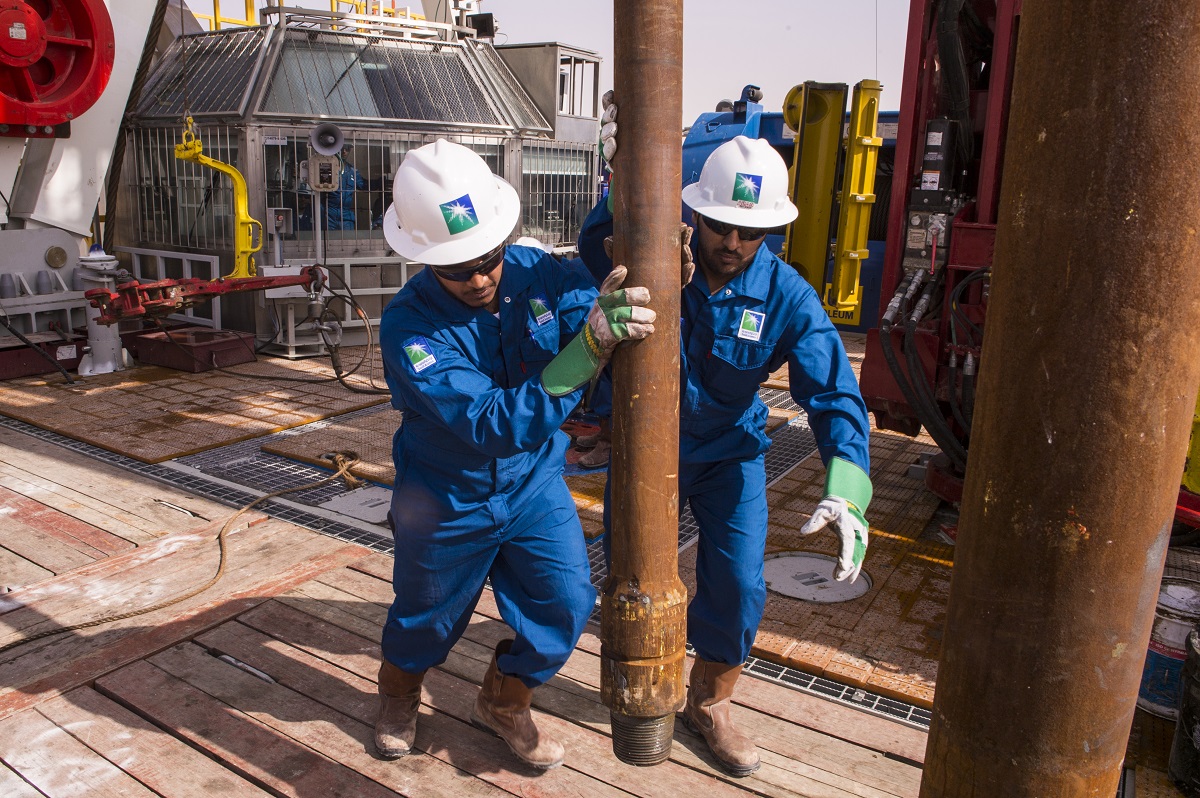
Saudi energy giant Saudi Aramco has begun output from the first phase of its vast Jafurah gas field, signalling a major milestone in the Kingdom’s shift toward natural gas. The project, valued at around $100 billion, has an initial production capacity of 450 million cubic feet per day, according to the Saudi Finance Ministry’s 2026 budget statement.

The field holds an estimated 229 trillion standard cubic feet of raw gas along with 75 billion stock tank barrels of condensate—making Jafurah the largest non-associated gas development in Saudi Arabia and among the largest shale-gas plays outside the United States.

Completion of the first development phase allows Aramco to begin supplying sales gas domestically. The company plans to ramp production gradually and aims to reach a sustainable output of 2 billion cubic feet per day by 2030.

To support its gas-processing infrastructure, Aramco earlier sealed an $11 billion lease-and-leaseback agreement with a consortium led by Global Infrastructure Partners, part of BlackRock. Under the deal, a newly formed subsidiary, Jafurah Midstream Gas Company, will lease the processing and fractionation facilities — which Aramco will then lease back for a 20-year period. Aramco retains majority ownership with a 51% stake, while the investor group holds 49%. The transaction is designed to inject capital without constraining production volumes.

Aramco’s move reflects a broader strategic shift. By ramping up gas production, the company aims to reduce domestic reliance on crude oil for power generation — thereby freeing more crude for export. Gas from Jafurah is expected not only to meet domestic power and utility needs but also to provide feedstock for petrochemicals, hydrogen, and potentially emerging sectors such as AI data-centres.

Analysts view Jafurah as a potential game-changer for both Saudi Arabia and global gas markets. With reserves comparable to major U. S. shale plays and a projected daily output of 2 bcf by 2030, the project could make Saudi Arabia a more prominent natural-gas exporter or LNG player — a significant rebalancing from its traditional role as an oil-dominated supplier.

Through this transformation, Aramco underlines its long-term aim of reinventing its energy portfolio — aligning with efforts to diversify the country’s economy and meet shifting global demand patterns.

An East-meets-West digital fashion experience — uniting Paris Fashion Week insights with local talent in a fun, future-forward showcase for all ages, driving Hong Kong’s digital economy From 22 November – 2 December 2025 at AIRSIDE Gate33 Gallery HONG KONG SAR – Media OutReach Newswire – 4 December 2025 – Organised by the Hong Kong Design Centre (HKDC), curated by digital fashion innovator FabriX, and sponsored by […]

Finding the best conference room in Abu Dhabi is essential for hosting productive meetings, impactful presentations, and memorable corporate events. As the emirate continues to grow as a global business hub, its meeting and event spaces have evolved to match world class standards.  Whether you are planning a board meeting, training session, investor presentation, or full scale corporate gathering, Abu Dhabi offers state of the art venues […]

Millions of Americans are heading into 2026 facing sharply higher health-insurance costs. Employer-based insurance premiums are projected to rise by nearly 9 percent, marking the steepest increase in fifteen years. For families paying for their own coverage through public marketplaces created under the Affordable Care Act, the shock will likely be greater. Premiums on those plans are expected to jump by roughly 26 percent, and enhanced subsidies […]

VISHNU RAJA
RYO YAMADA
HITORI GOTOH
IKUYO KITA