Just in:
HKUST President and Chinese Academy of Sciences Academician Prof. Nancy Ip Receives UNESCO Honor for a Second Time // ADIA subsidiary seeks $7.5 billion private investment financing // Trump’s Iran War Has A Share Of Contribution To His Midterm Debacle // Motorola introduces Signature 27 flagship priced at $1,599 // Emaar approves Development buyout ahead of planned delisting // Geely’s i-HEV Intelligent Hybrid Technology Offers a New Direction for Gasoline-Powered Vehicles // Oil advances towards $100 as tanker attacks persist // Dubai Future District Fund and Buimerc formalise cooperation // Geely’s i-HEV Intelligent Hybrid Technology Offers a New Direction Vision for Gasoline-Powered Vehicles // Kochi police detain two actors over bid to honey trap doctor // Excise chief shunted out in bar licence dispute // Ningbo Consensus on Collaborative Development released at 2026 Global Mayors Dialogue · Ningbo // Battle Uttar Pradesh Will Be Tougher For Yogi Than Expected // OpenAI abandons secrecy agreements for future data centres // Beyond the exhibition floor: How robots, AI and networks are moving into the real world // Elephant calf on death line airlifted for treatment in Gujarat // The “1st Greater Bay Area Health and Longevity Summit & Awards Ceremony” concludes successfully in Macao // Private varsities bill all set to face the axe // Democrats Gearing Up For 2028 Presidential Elections To Gain Full Power // Dubai details five-year visa benefits for returning visitors //

News related to
stake

The Ministry of Finance has introduced the “Retail Sukuk” programme enabling citizens and residents to purchase government-backed Treasury Sukuk via participating banks with a minimum investment of AED 4,000. The first bank partner will be announced on 3 November 2025.

The move directly expands access to sovereign Islamic finance instruments previously reserved for institutional investors. According to the announcement, the scheme permits investment in Shariah-compliant Islamic treasury securities through fractionalised digital platforms operated by the banks. Leader Sheikh Maktoum bin Mohammed bin Rashid Al Maktoum described the initiative as “translating our leadership’s vision of empowering individuals, promoting a culture of saving and developing government investment instruments that enhance individual participation in economic growth and provide a direct opportunity to contribute to the national development journey.”

The initiative aligns with the nation’s financial-inclusion agenda and the strategy to deepen local capital markets. By lowering the threshold to AED 4,000, the scheme reduces entry barriers for retail investors and broadens the investor base for the domestic sovereign debt market. Analysts point out that universal access to such instruments represents a structural shift in how governments engage with individual savers.

Industry experts say this development reflects emerging trends in the Gulf’s Islamic finance sector, particularly the fractionalisation and tokenisation of Sukuk products. A legal-advisory report on the Gulf Cooperation Council’s Sukuk market noted that digital platforms and smaller tickets are “redefining how Sharia-compliant capital is structured, distributed and accessed.” The Abu Dhabi Islamic Bank earlier launched a “Smart Sukuk” platform allowing retail investment from about USD 1,000 in fractionalised Sukuk.

Governance stakeholders emphasise that the retail programme remains denominated in dirhams and linked to sovereign-backed Sukuk already traded in the market, ensuring exposure to high-quality government assets rather than untested structures. The Ministry reaffirmed that the rollout will follow the “highest standards of transparency and quality.”

Financial institutions stand to benefit from expanded customer-base growth and increased assets under management, while retail investors gain a compliant savings vehicle offering diversification beyond deposits and conventional investments. Yet risks remain. While sovereign-backed, Sukuk carry credit, liquidity and market-risk dimensions; beginners may require enhanced education around profit-sharing-based returns, Shariah-compliance nuances and secondary-market liquidity.

Some market participants caution that the success of the scheme will depend on the secondary-market functioning and investor confidence in digital platforms. Previous fractional-Sukuk roll-outs in the region flagged the need for robust regulatory oversight, clear smart-contract frameworks, and standardised product terms to build long-term participation.

The kingdom is committing multibillion-dollar investments into artificial intelligence, high-tech manufacturing and gaming as it repositions its economy away from a flagship megacity project. Officials have indicated that the NEOM venture will receive a smaller share of funding as more capital flows into next-generation industries. The move reflects a pivot by policymakers toward technology-driven growth sectors. Top-level figures including the Public Investment Fund highlight that the ecosystem […]

Dubai-based investment platform Green Dome Investments has signed a binding agreement to acquire the entire equity stake in cold-chain specialist Transcorp International for AED 225 million. The transaction is subject to customary regulatory approvals and is expected to complete in the coming weeks.

GDI’s shareholder backing includes SISCO Holding, the Saudi-listed infrastructure investment company that holds a 31.67 per cent stake in GDI. SISCO will contribute AED 75 million towards the acquisition price, with the remainder to be financed through equity from GDI’s shareholders. Transcorp, founded in 2013, operates across the UAE, Saudi Arabia and Qatar and has built a substantial cold-chain logistics footprint, including warehousing, transportation and last-mile delivery for temperature-sensitive cargo in 50 key cities across the Gulf region, supported by more than 1,000 employees.

GDI’s strategy for the deal is driven by its desire to accelerate growth in the fast-growing temperature-controlled supply-chain segment in the Gulf Cooperation Council markets. The investment complements its existing logistics arm, Elite Co., which focuses on fulfilment, middle-mile and last-mile services, and will now incorporate Transcorp’s cold-chain infrastructure and expertise. According to GDI’s chairman, the acquisition gives the group a stronger presence in Saudi Arabia and positions it to capitalise on what is described as one of the fastest-growing logistics segments in the region.

From a financial performance viewpoint, Transcorp reported revenues of AED 60.8 million in 2022, AED 75.8 million in 2023 and AED 109.4 million in 2024.. Its compound annual growth rate across that period has reportedly been strong, reflecting rising demand in cold-chain services tied to e-commerce, pharmaceuticals and food-service sectors in the GCC. The acquisition therefore aligns with broader regional trends in logistics expansion, infrastructure investment under national initiatives and growing interest from institutional investors in supply-chain resilience.

Analysts note that the deal is part of a wave of consolidation in the Gulf logistics market, especially in niche segments such as temperature-controlled transport and last-mile fulfilment. By integrating Transcorp into its logistics ecosystem, GDI stands to enhance its service offering, widen geographic reach and deepen its customer base. However, risks remain. Integration of operations across multiple jurisdictions and alignment of management, systems and culture will demand careful oversight. The transaction’s successful execution will hinge on regulatory approvals, seamless operational integration and the maintenance of service quality levels which are critical in cold-chain logistics.

From SISCO’s perspective, the investment into GDI underscores its strategy of enabling portfolio companies to capture growth opportunities that bolster long-term value creation. SISCO’s backing of AED 75 million represents a material commitment and underscores confidence in GDI’s growth roadmap. The deal also reinforces the increasing role of Saudi institutional capital in regional logistics expansion, in line with broader economic diversification efforts.

For customers and clients in the logistics market, the enlarged platform that emerges from this transaction could offer more integrated solutions—from cold-storage warehousing and temperature-controlled freight to last-mile delivery capabilities—across multiple Gulf countries. That could translate into improved efficiency, faster delivery cycles and access to a broader network for firms in high-growth sectors such as e-commerce, healthcare and retail. On the flip side, the enlarged scale could bring complexity in operations and may put pressure on margins if the competitive dynamics intensify or if cost inflation rises.

A leading voice at the United Nations General Assembly roundtable pressed for stablecoins and blockchain-based identity systems as crucial tools in closing the gap for the 1.7 billion people globally who remain outside formal financial services. Adrian Wall, managing director of the Digital Sovereignty Alliance, moderated a session on global digital identity and financial inclusion on 22 October 2025 at the UN headquarters in New York, asserting that inclusive digital ecosystems must go hand in hand with personal data ownership.

Wall declared that “financial inclusion without financial literacy is a bridge to nowhere. It is access without empowerment,” emphasising that agency begins with ownership of data and dignity begins with choice. The DSA event convened 48 policy-makers, technology leaders and sustainable-development practitioners to explore frameworks combining blockchain, stablecoins and digital identity protocols in Africa, Asia and Latin America.

The discussion centred on how stablecoins—cryptocurrency units pegged to fiat currencies—and decentralised ledger infrastructures can extend access to payments, savings and credit for those shut out of traditional banking. Wall highlighted that data sovereignty underpins financial sovereignty: by empowering individuals to control their digital identity, systems can shift from passive access to active agency. He noted the critical role of stablecoins in environments where banking infrastructure is weak, pointing to pilots in sub-Saharan Africa where mobile wallets linked to digital identity verify transactions in previously unbanked communities.

Yet speakers also raised caution about stablecoins’ risks. Regulatory oversight remains uneven, with concerns about reserve transparency, anti-money-laundering compliance and the possibility of financial exclusion if digital identity systems mis-function. One attendee warned that “if identity platforms fail, we may deepen the exclusion we’re trying to solve.” The DSA stressed the need for multi-stakeholder governance: national regulators, technology providers and civil-society organisations must co-design the protocols to safeguard inclusion rather than displace it.

Beyond Africa, the dialogue extended to how stablecoins might support cross-border remittance flows, reducing cost and settlement delay. With global remittances hitting over US$700 billion annually, the potential for digital-asset rails has attracted attention from development lenders and fintech firms. Wall suggested that stablecoins anchored to trusted fiat liabilities could complement central bank digital currencies where those are nascent, offering a hybrid model for underserved markets.

SINGAPORE – Media OutReach Newswire – 24 October 2025 – Apical was awarded the Sustainable Supply Chain Partnership Award – Singapore at the ESGBusiness Awards 2025 in Kuala Lumpur, Malaysia. The honour recognises Apical’s leadership in building a responsible, deforestation-free palm oil sourcing model that supports inclusive growth across its value chain. The award highlights Apical2030, the company’s long-term sustainability strategy, built on four pillars: Transformative Partnerships, […]

LAGOS – Fintech company Moniepoint Inc. announced yesterday that it has raised more than US $200 million in a Series C equity financing round aimed at accelerating its expansion across Africa and into diaspora markets. The round was led by British private equity firm Development Partners International through its African Development Partners III fund, with participation from impact-investor LeapFrog Investments, Google Africa Investment Fund, global payments giant […]

The automaker Tesla, Inc. is recalling 63,619 units of its Cybertruck in the United States after regulatory scrutiny identified a software-driven fault that causes the front parking lights to exceed allowable brightness levels, potentially impairing the vision of on-coming drivers. The recall covers vehicles produced between November 13, 2023 and October 11, 2025 and running software versions earlier than 2025.38.3. Federal safety regulators including the National Highway […]

Advertisements

The Chief Executive of Tesla, Inc., Elon Musk, stands to become the first individual ever to reach a personal net worth of US$1 trillion if he fulfils the company’s newly unveiled incentive package that ties his compensation to the firm achieving an $8.5 trillion valuation. Tesla’s latest proxy filing reveals that Musk could be awarded up to 423.7 million shares, or roughly 12% of the company, if the […]

Eight Democratic senators, led by Adam Schiff of California, have formally asked Steve Witkoff—the U. S. Special Envoy to the Middle East—for detailed explanations regarding his continued involvement with crypto assets tied to World Liberty Financial, a venture he co-founded with the family of Donald Trump. The lawmakers’ letter highlights potential conflicts of interest stemming from Witkoff’s dual role as a diplomat and investor.

Their concerns centre on Witkoff’s asset disclosures, which indicate he still holds stakes in entities tied to World Liberty and other crypto businesses as of his 13 August 2025 financial report. The senators press him to clarify whether he has divested these holdings, whether he has obtained ethics waivers, and whether his official capacities have overlapped with personal financial interests.

World Liberty Financial launched the stable-coin USD1, and in May 2025 a firm linked to the Abu Dhabi sovereign investment arm reportedly committed around US$2 billion to the venture. The same Gulf-state entity is connected to high-level U. S. export approvals of advanced semiconductor chips, a situation that lawmakers see as raising grave ethical questions.

Witkoff, a New York real-estate magnate and longtime Trump associate, was appointed envoy in early 2025 despite limited experience in diplomacy. While his defenders say he has taken steps to divest and comply with regulation, critics say he remains financially tied to ventures that stand to benefit from his government role. The administration has signalled it is reviewing his disclosures and ethics compliance.

In their letter, the senators request responses to seven key questions by 31 October 2025. They ask how Witkoff could sell off a real-estate holding of about US$120 million while retaining crypto interests; whether he or his family hold additional digital assets beyond those disclosed; when he divested, if at all; whether he holds any interests in Trump-family business ventures; whether he has obtained ethics guidance from the U. S. Office of Government Ethics; and whether any waiver was granted allowing him to participate in matters in which he had a financial interest.

Separately, lawmakers highlight the chronology of events: after World Liberty received the Gulf-state investment commitment, the White House approved export of advanced U. S. chips to the United Arab Emirates—raising the appearance of intertwined public and private interests. Ethics experts say this conflation of diplomacy and private profit may run afoul of federal rules under 18 U. S. C. § 208 and the constitutional emoluments clause, which bars public officials from participating in matters in which they have a financial interest.

The urban development landscape of the Emirate of Ras Al Khaimah is being reshaped as Marjan and RAK Hospitality Holding announced a landmark merger to form a unified entity under the Marjan brand, merging land-development and hospitality arms into one. Under the partnership, Marjan will consolidate real-estate development, hospitality operations and lifestyle offerings, effectively becoming one of the largest property developers in the United Arab Emirates. According […]

The company formed by Hyperliquid Strategies Inc. has filed a registration statement with the U. S. Securities and Exchange Commission, seeking to raise up to US$1 billion by issuing up to 160 million shares of common stock. According to the filing, the share-offering will be handled underwritten by Chardan Capital Markets LLC, acting as financial advisor for the transaction.

HSI is the combined entity formed via the business combination between Sonnet BioTherapeutics, Inc. and Rorschach I LLC, a special-purpose vehicle affiliated with Atlas Merchant Capital LLC and Paradigm Operations LP. That merger agreement valued HSI at approximately US$888 million, comprising roughly US$583 million in the native token HYPE and at least US$305 million in cash.

In its S-1 filing, HSI states the capital will support “general corporate purposes, including the acquisition of HYPE tokens and other digital-asset treasury activities.” Analysts interpret this as an indication that HSI intends to deepen its exposure to the HYPE ecosystem and position itself as a publicly-listed vehicle for crypto-asset treasury management.

Leadership for the combined company is drawn from the sponsors behind Rorschach I. At closing, the board will include Bob Diamond and David Schamis. Current independent directors from Sonnet will also roll over into the new board structure.

Market observers point out that the transaction marks a significant shift from the biotech credentials of Sonnet to a crypto-treasury focus at HSI. At the time of the agreement, the value of HYPE tokens held by HSI was based on a spot price of approximately US$46.37. The shift has drawn scrutiny: one investor-rights law firm is investigating whether the minority stakes to legacy Sonnet shareholders create equity fairness issues.

The $1 billion raise is notable for several reasons. First, it underscores the trend of publicly-listed companies forming or converting into crypto treasury vehicles, providing regulated-market access to digital-asset exposure. Second, by aligning its strategy around HYPE token accumulation, HSI is building a sector-specific reserve, akin to what several other companies have done with Bitcoin in prior years. Third, the timing — amid heightened regulatory discussions around crypto infrastructure and token-linked public entities — places HSI at a crossroads of capital-markets innovation and regulatory risk.

Uunderscoring HGC’s Dedication to Embed ESG into Business Operation HONG KONG SAR – Media OutReach Newswire – 23 October 2025 – HGC Global Communications (“HGC” or the “Group”), a fully-fledged ICT service provider and network operator with extensive global coverage, today announced it has been awarded “The Outstanding Award of ESG 2025”, making it the only telecom operator in Hong Kong recognized this award in 2025. This […]

The Bank of England has committed to implementing a comprehensive regulatory framework for stablecoins by the end of 2026, signalling a significant shift in the United Kingdom’s approach to digital assets. According to government and central-bank sources, a formal consultation is scheduled for 10 November and the regulation is expected to align closely with forthcoming U. S. standards.

The framework will establish new standards for so-called “qualifying stablecoins” issued in the UK, stipulating full backing by secure liquid assets held in trust, mandatory redemption at par, and authorisation under the Financial Conduct Authority. For stablecoins deemed systemic—particularly those used for payments at scale—the BoE will assume additional supervisory and resolution responsibilities. The FCA’s Consultation Paper CP25/14 sets out much of this detail.

In public remarks, BoE Governor Andrew Bailey argued that widely-used stablecoins must be regulated in the same way as banks if they function as money-substitutes. He said they should access Bank accounts and adhere to depositor-protection regimes. The BoE itself has described the future payments landscape as one of “multi-money” — where tokenised deposits, central bank money and stablecoins coexist—provided the framework protects trust and financial stability.

The proposed regulatory timetable is part of a broader drive by UK authorities to maintain competitive positioning in global fintech, particularly as stablecoins gain traction in cross-border payments and tokenised-asset ecosystems. Industry experts note that the UK wants to keep pace with U. S. regulation to avoid regulatory arbitrage.

Under the current design, issuers of qualifying stablecoins will need authorisation by the FCA, must safeguard assets backing the coins by placing them in statutory trust arrangements, and maintain daily reconciliation between issued coins and backing assets. The consultation suggests a two-tier backing-asset regime: “core” assets and “expanded” assets subject to extra disclosure and modelling requirements.

From a technical infrastructure perspective, the BoE highlights that stablecoins may reduce the banking sector’s dominance over payments, but that the central bank must remain the settlement asset for systemically important markets. This position underpins the planned consultations and policy work around stablecoins’ role in the UK payments system.

Industry reaction is mixed. Some fintech firms and crypto-asset service providers welcome clarity, saying that clear rules reduce uncertainty and support investment. Others worry that too heavy or complex regulation might deter innovation or prevent start-ups from competing with global incumbents. One blog commentary described the framework as “a huge deal … but a nagging worry that too much focus on compliance might throw a wet blanket on the very innovation they are meant to encourage.”

The stakes are high for tokenised deposit initiatives within the UK banking system. Leading lenders including HSBC, NatWest Group and Lloyds Banking Group are pushing ahead with pilots of tokenised deposits through 2026. Regulators have been clear that although such deposits may be permitted within the current system, the stablecoin regulatory regime must take into account the potential threat of massive deposit flows leaving the banking sector.

One key tension lies in the setting of holding limits. The BoE has proposed initial caps on stablecoin holdings—for individuals perhaps in the order of £10,000 to £20,000—and higher for business entities, on the grounds that a swift migration out of bank deposits could undermine credit flows to households and firms. The caps would remain until the BoE is confident the stablecoin sector does not pose a systemic threat.

In this regulated-fork approach, oversight will be shared: The BoE will supervise systemic stablecoin issuers; the FCA will regulate non-systemic stablecoins and issuers under the regulated activities order. The Treasury has indicated that stablecoin issuance will not, for now, be brought directly into payment-services regulation.

Abu Dhabi — Multip­ly Group PJSC’s subsidiary Emirates Driving Company PJSC has secured a 22.5 per cent shareholding in Mwasalat Holdings LLC, the Abu Dhabi-based transport operator, with an option to raise its stake to 50.6 per cent pending regulatory approval and other conditions. The acquisition reflects Multiply Group’s push into the broader mobility sector beyond its legacy in driving education and training, positioning EDC as a […]

CHAOZHOU, CHINA – Media OutReach Newswire – 21 October 2025 – From November 28th to 30th, the city will host the 23rd Teochew International Convention, welcoming Teochew people from around the world and sharing the city’s cultural story on a global stage. Leveraging this opportunity, Chaozhou has prioritized engagement with the global Teochew diaspora, mobilizing the strength of overseas communities and entrepreneurs to enhance development capacity and […]

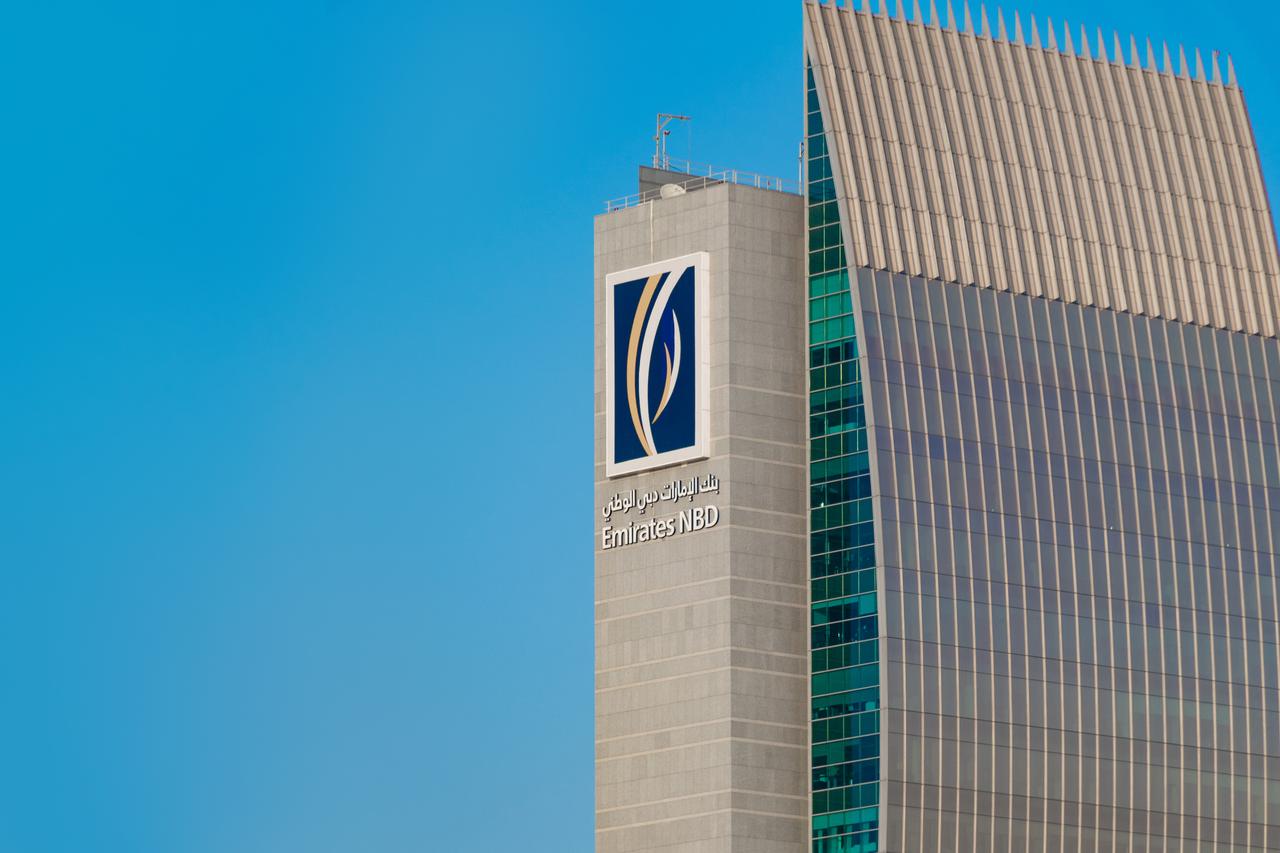
Dubai-based Emirates NBD PJSC is poised to acquire a 60 per cent stake in India’s RBL Bank via a $3 billion investment, marking the largest foreign direct investment ever recorded in India’s banking sector. The move, announced on 18 October 2025, is structured through a preferential share issuance of up to 959.04 million shares at ₹280 each and is subject to regulatory approvals.

RBL Bank’s management expects the deal to close within five to eight months, positioning the infusion within the current financial year, according to statements made by the lender’s leadership. Emirates NBD will assume promoter status at RBL, gaining board-nomination rights and solidifying its long-term presence in the Indian market.

The deal comes as India’s financial sector registers a surge in cross-border deals, with total deal-value reaching approximately $8 billion from January to September 2025—a 127 per cent increase over the same period last year. For its part, RBL Bank, a private lender headquartered in Mumbai with assets estimated at ₹1.46 trillion and a customer base of over 15 million, will benefit from the capital uplift and expanded ecosystem access.

Emirates NBD’s group chief executive, Shayne Nelson, said the investment underscores the bank’s confidence in India’s financial services growth trajectory and reflects its ambition to leverage RBL’s domestic franchise alongside Emirates NBD’s regional reach. RBL’s managing director & CEO, R Subramaniakumar, described the alliance as providing “an enormous opportunity” to move from mid-sized to large-bank status in India, reinforcing its ambitions to enter wealth management and strengthen corporate and retail lending.

Under the terms of the agreement, Emirates NBD will first subscribe to a preferential issue up to 60 per cent of RBL Bank, and then launch a mandatory open offer to public shareholders of up to 26 per cent at the same ₹280 per share price. The final stake will depend on maximum permissible foreign-investment limits and minimum public shareholding norms. The Indian regulatory framework allows up to 74 per cent foreign investment in private banks, but typically limits individual foreign investors to a maximum of 15 per cent unless an exemption is granted by the Reserve Bank of India, which is reported to have given informal backing to the deal.

Analysts say the deal is transformative for both parties: RBL stands to enhance its capital adequacy ratio—projected around 40 per cent post-transaction—and may scale up its corporate banking, digital payments and branch network expansion, tapping into ties between India and the Middle East. For Emirates NBD, the acquisition consolidates its Indian market access and complements its existing footprint in the Middle East, North Africa and Turkey.

Challenges remain. The transaction is subject to regulatory approvals in India and requires compliance with public-shareholding rules, which could complicate the open-offer structure. In addition, RBL has grappled with governance concerns in the past—its former CEO stepped down abruptly in 2021 following regulatory scrutiny—which means integrating under a foreign majority owner will require careful management of culture, controls and strategic alignment.

Observers suggest the deal may set a precedent for greater foreign involvement in India’s mid-sized banking sector, with implications for capital flows, market consolidation and competition. Brokers in Mumbai noted that the infusion of “confidence capital” into RBL could unlock higher credit growth and improve investor perception of the Indian private-banking sector. Meanwhile, the broader wave of cross-border activity, including Japanese and UAE groups entering Indian banks, highlights the shifting dynamics of the India-Middle East-Europe economic corridor.

Chicago-based hospitality group Hyatt Hotels Corporation has entered into a management agreement to bring its full-service Regency brand to Lusaka, Zambia. The five-star property, to be known as Hyatt Regency Lusaka The Pamodzi, will undergo substantial refurbishment and reopen in 2026 under the new branding. The deal partners Hyatt with affiliates of ASB Hotel Properties and Albwardy Investments, placing the landmark previously called The Pamodzi Hotel at the centre […]

The infrastructure platform of global alternative investment firm Investcorp—namely Aberdeen Investcorp Infrastructure Partners —has acquired a significant minority stake in the workforce-housing complex at Al Fadhili in Saudi Arabia, marking its first investment in the Kingdom under the asset class of social infrastructure. AIIP has joined a partnership spearheaded by logistic-solutions firm MAWREF Logistics Solutions in the company Al Fadhili Field House for Real Estate Development Company, which owns the sprawling housing development serving employees of Saudi Aramco. The complex spans about […]

Greenlogue/AP The 28th edition of the trade-fair and conference platform Ecomondo 2025 will convene from 4 to 7 November at the Rimini Expo Centre, Italy, with a reinforced international agenda that organisers expect will draw more than 1,000 exhibitors and upwards of 100,000 visitors. This year’s event is emphasising several strategic growth areas: climate-tech innovation, digitalisation in resource management, blue economy and Mediterranean-Africa partnerships. The organising body, […]

HONG KONG SAR – Media OutReach Newswire – 17 October 2025 – DL Holdings Group Limited (HKEX: 1709) today announced a comprehensive strategic partnership with Antalpha, a global leader in digital asset financial services. The collaboration—valued at up to US$200 million—covers tokenised gold assets and Bitcoin mining infrastructure, establishing a dual-track strategy that bridges traditional and digital finance. On the gold-asset side, DL Holdings is in the […]

Abu Dhabi’s Stargate UAE project is advancing swiftly, with G42 and its affiliate Khazna Data Centers confirming that construction has moved past preliminary stages and that the design-to-build effort is now in full execution. The first 200 MW of capacity is slated to go live in 2026, forming part of a 1 GW AI cluster within the broader 5 GW UAE–U. S. AI Campus. Civil, structural and […]

Citizens Bank has launched coverage of SharpLink Gaming, assigning it a “market outperform” rating and a price target of $50, implying upside in excess of 200 percent from current levels.

The bank’s analysis hinges on SharpLink’s positioning as a publicly traded entity that actively manages an Ether treasury, combining yield-bearing deployment strategies with equity-market mechanisms to enhance value. Citizens projects that ETH’s long-term price trajectory, together with SharpLink’s operational model, could underpin substantial growth.

Citizens expects SharpLink’s net asset value to rise as the company compounds returns from staking, liquid restaking, and other on-chain yield strategies. The bank cites management’s capacity to issue equity above NAV or repurchase shares when trading below NAV as a leverage point for shareholder value.

SharpLink is led by Ethereum co-founder Joseph Lubin, who serves as Chairman, and Joseph Chalom, formerly of BlackRock, as Co-CEO. The bank underscores this combination of crypto ecosystem pedigree and traditional capital markets acumen as a competitive advantage.

In its report, Citizens forecasts ETH could exceed $7,000 by 2026, potentially pushing beyond $20,000 by 2030, and argues that SharpLink offers one of the few pure-play equity vehicles tied to Ether exposure. The bank describes SharpLink’s operating model as a “flywheel” in which yield-generated returns accelerate NAV per share, further facilitating growth capital.

Citizens’ valuation assigns a premium multiple to SharpLink’s NAV, justified by management execution and the structural optionality inherent in an actively managed ETH treasury. The report points to the possibility that investor recognition of this optionality could drive valuation multiple expansion.

SharpLink has also taken steps consistent with the thesis. It has initiated a share buyback programme, repurchasing approximately 939,000 shares at an average price of $15.98, and the board has authorised up to $1.5 billion in share repurchases for capital allocation flexibility. In tandem, SharpLink disclosed it holds around $3.6 billion in ETH, nearly all staked to produce yield.

Meanwhile, B. Riley has initiated coverage of SharpLink with a “Buy” rating and a $32 target, casting some contrast in outlook. B. Riley emphasises that the company’s discount to modified NAV is attractive — currently trading at 0.8× mNAV — and expects upward re-rating to 1.5× mNAV within 12 months, contingent on ETH accumulation and damping equity issuance dilution.

South Korea’s Financial Intelligence Unit has authorised a change in GOPAX’s executive leadership, clearing the way for Binance’s acquisition of 67 per cent of the local exchange and formally restoring its presence in the country. The decision comes after over two years of regulatory review and internal scrutiny.

The executive registration approval by the FIU establishes Binance as the controlling shareholder of GOPAX, resolving a key hurdle that had delayed the deal since its initiation in early 2023. By acquiescing to the change, South Korean authorities have allowed Binance’s re-entry into one of Asia’s most active cryptocurrency ecosystems.

When Binance first acquired the majority stake in GOPAX in February 2023, it sought to stabilise the exchange following a liquidity crisis tied to frozen customer deposits connected to the GoFi yield product. That crisis was traced to exposure to Genesis Global Capital, whose own collapse triggered withdrawals being halted. Binance undertook a capital injection to support GOPAX’s recovery while awaiting formal regulatory sign-off on executive changes.

The FIU’s prior hesitancy centred on concerns that Binance’s international compliance record could clash with South Korea’s anti-money laundering oversight. Legal pressure from U. S. authorities, including enforcement actions and substantial fines, had raised red flags among domestic regulators. But the FIU’s acceptance now signals that uncertainties over Binance’s compliance credentials have been sufficiently addressed.

Under South Korean law, exchanges must report changes in executive or representative roles to the FIU, which effectively acts as a gatekeeper in approving foreign capital in the local crypto sector. No separate screening mechanism exists for major shareholders, making the executive registration process a de facto test of suitability. Delays in this case were reportedly driven by repeated demands for supplemental documentation by regulators.

GOPAX is one of only five exchanges in South Korea authorised to conduct cash-crypto transactions under strict regulatory norms. With Binance now in control, GOPAX could compete more aggressively against dominant local players such as Upbit and Bithumb. Yet entrenched banking relationships and compliance frameworks will still pose barriers to market share gains.

The approval reflects a shift in Korea’s regulatory posture toward greater openness—especially for exchanges that have resolved international legal disputes. Binance’s own settlements regarding AML and market conduct issues appear to have alleviated domestic regulatory apprehension. The acceptance also underscores the FIU’s judgment that Binance’s structural changes and compliance assurances now align with South Korea’s regulatory expectations.

CME Group has launched its first physical base in the Middle East with an office at the Dubai International Financial Centre, to serve as its hub for the region under a licence from the Dubai Financial Services Authority. Sharif Jaghman, relocated from London, will head the new Middle East and Africa operations. The move follows a 16 per cent rise in average daily trading volumes from the […]

VISHNU RAJA
RYO YAMADA
HITORI GOTOH
IKUYO KITA