Just in:
Asia Left Behind: Ten international companies have yet to report delivering on their cage-free egg pledges across the region // U.S. Mid Term Result Is A Clear Verdict Against Trump’s Authoritarianism // Cloudflare unveils Zero Wire vulnerability intelligence service // APT29-linked campaign exploits outdated Apple and Android software // Fast Just Got Fastest: STING Energy Boost™ Celebrates Kimi Antonelli’s Formula 1® World Championship and the Fan Energy Behind It // Democrats capture Senate majority with seven Republican seats // Hong Kong mandates crypto transaction disclosures to tax authorities // Ta’ziz finalises $1.39bn funding for Ruwais industrial facilities // OpenAI identifies 948 Linux privilege escalation flaws using AI // Meraas showcases five residential zones at Dubai Design Week // Middle East governments assess Iran war after US vote // Dubai boat show confirms international shipyard line-up for November // Vance attributes Republican midterm defeats to Iran conflict // SC to examine students’ exam plea today // ADIA and partners establish $1.4 billion aviation venture // BJP’s Aggressive Response Exposes Anxiety Over Opposition Unity // After Reaching 7 Million Users in the Philippines, Skyro Launches Transparent Cash Loans in Malaysia // Emirates Group records AED 4.1 billion half-year profit // As AI Reshapes Education, Singapore Convenes Global Dialogue on the Future of Early Childhood Education // Utilities pursue ₹1,992 cr in unpaid bills //

News related to
work

Lucid Games is relocating its headquarters to a larger space in Liverpool’s Baltic Triangle, aiming to boost capacity and reinforce its footprint in the UK gaming scene. The new office, opening in November, will occupy a refurbished Victorian grain mill and span roughly 13,192 square feet, while retaining heritage elements such as brickwork, exposed timber, and original mechanical features. The studio has appointed the design firm Oktra—known […]

A newly devised artificial intelligence system dubbed Diag2Diag is poised to reshape how physicists observe and control the seething plasma inside fusion reactors. The tool generates synthetic diagnostic data to compensate for gaps left by conventional sensors, particularly at the plasma’s elusive edge, enhancing stability control and reducing hardware demands. Diag2Diag emerges from a cross-institutional effort led by Princeton University and the Princeton Plasma Physics Laboratory, with […]

HANGZHOU, CHINA – Media OutReach Newswire – 3 October 2025 – Geely Riddara launches the RD6 Econ all-electric pickup in Laos and the Philippines, with rollouts to Thailand, Malaysia, and Pakistan—Positioned as an economical, dual-use pickup for commercial and personal needs, the RD6 Econ combines outstanding cost efficiency with optimized energy consumption to offer global markets a more sustainable, value-driven choice. Geely Riddara Launches RD6 Econ All-electric […]

A plunge of nearly 90 percent in blockchain-related job postings across Europe underscores a stark contraction in the sector, even as industry leaders plan to rally through the 11th European Blockchain Convention in Barcelona. By one estimate, Europe went from over 100,000 jobs referencing “blockchain” in 2022 to roughly 10,000 in 2025, representing the dramatic erosion in demand. Analysts cite regulatory complexity, high energy costs, and capital […]

The US Commerce Secretary has warned that reliance on DeepSeek’s artificial intelligence models is “dangerous and shortsighted,” amid findings that they are more vulnerable to hacking and underperform against US systems. An evaluation by the Center for AI Standards and Innovation within NIST compared DeepSeek’s R1, R1-0528 and V3.1 models with leading US systems—including OpenAI’s GPT-5 series and Anthropic’s Opus 4—on 19 performance and safety benchmarks. The […]

Austria’s armed forces have shifted from Microsoft Office to the open-source LibreOffice platform on approximately 16,000 desktops, a move framed by defence authorities as a step toward digital sovereignty rather than cost cutting. Michael Hillebrand, head of Directorate 6 ICT and Cyber, emphasised that data processing will now remain entirely in-house under strictly auditable systems. He told ORF radio that dependency on external cloud providers was considered […]

Dubai’s ride-hailing landscape has shifted dramatically as the UAE-based Zed app now encompasses 10,764 taxis across the emirate—equivalent to more than four in five licensed cabs. The move was enabled through strategic partnerships with Dubai Taxi Corporation and National Taxi, folding in the fleets of three major operators.

Under the new arrangement, DTC’s entire fleet and those of National Taxi and Kabi by Al Ghurair become bookable via the Zed platform, effectively making Zed the host of Dubai’s second-largest taxi fleet. Zed executives describe the expansion as a means of enhancing coverage, cutting cancellations, and lowering wait times, especially across areas traditionally underserved.

Badr Al Ghurair, Zed’s Chief Executive, emphasised the home-grown nature of the platform and its deep knowledge of Dubai’s commuting patterns: “this collaboration … further strengthens Dubai’s mobility ecosystem while ensuring that our communities have access to reliable, everyday transport solutions” he said. Abhinav Patwa, Zed’s EVP and Head, added that the alliances provide scale and reliability without losing sight of a customer-first approach.

The accord comes amid Dubai’s broader ambition of converting 80 per cent of taxi bookings to digital platforms—a target within reach through the emirate’s Smart City 2025 programme. The integrated fleet also introduces more electric and hybrid taxis into Zed’s pool, aligning with the city’s sustainability goals.

This consolidation represents a notable realignment in Dubai’s mobility market. For years, taxis and e-hailing apps operated largely in parallel, with limited overlap in booking channels. The new model bridges that divide, bringing traditional operators into the digital fold via a single platform. Analysts say the move may accelerate the decline in usage of standalone taxi apps and push rivals to forge similar alliances or risk falling behind.

Dubai Taxi Company, now a public joint stock firm under Law No. 21 of 2023, operates more than 10,000 vehicles, of which 6,200 taxis were folded into the agreement. Kabi by Al Ghurair contributed another 3,680 vehicles under the tie-up. According to RTA data, Dubai’s taxi sector expanded by 7 per cent in the first half of 2025 compared with the same period in 2024, signalling growing demand for urban mobility services.

Through the arrangement, newly commissioned taxis across the partner fleets will automatically integrate into Zed’s system—making service expansion incremental and scalable. Several of the added vehicles are electric or hybrid, helping Zed accelerate its greening efforts.

Passengers can now access all these taxis via Zed’s iOS and Android apps, with the platform continuing to offer features such as guaranteed on-time pickups for pre-booked premium rides. The enhanced capacity is expected to reduce wait times during peak hours, improve service in remote zones, and lower the incidence of ride cancellations.


Advertisements

Bitwise has rolled out the Bitwise Avalanche Staking ETP on Deutsche Börse Xetra, offering investors regulated access to AVAX price movements along with integrated staking income. The product is fully backed by physical AVAX, with staking rewards credited daily and reinvested.

The Avalanche staking ETP joins Bitwise’s suite of index-linked staking vehicles in Europe, designed to cater to institutional demand for yield-bearing crypto exposure through familiar capital markets structures. Listing documents show that the ETP carries an annual management fee of 0.85 per cent and that approximately a third of staking rewards will be retained as a service fee to cover operational costs.

Deutsche Börse’s listing announcement notes that AVNB is tradable in both euros and US dollars and that all staking income is automatically reinvested to boost underlying token holdings. The product is being presented as a way to participate in Avalanche’s ecosystem without having to manage technical staking infrastructure, custody, or validator responsibilities.

Bradley Duke, Head of Europe at Bitwise, said the launch “opens the door for investors to access exposure to price movements in AVAX coupled with staking rewards through an exchange-traded total return product.” He emphasised Bitwise’s mission to make digital assets accessible to institutional investors via regulated, transparent instruments. John Wu, President of Ava Labs, welcomed the development, saying that access through established market structures broadens participation in the Avalanche network.

Avalanche operates as a high-throughput, energy-efficient layer-1 blockchain that enables subnetworks tailored for compliance, governance, and performance use cases. Its growing adoption in tokenisation, decentralized finance, gaming, and payments has made it increasingly of interest to institutional players. The ETP references the “CF AVAX Staked Return Index” benchmark to track performance net of costs and staking fees.

Regulators and exchanges across Europe have gradually warmed to crypto staking products, particularly as demand rises for yield-oriented digital assets within regulated frameworks. Bitwise has already launched similar staking ETPs in the region, including for Ethereum, and says its European product line is domiciled in Germany under oversight by BaFin. Critics caution, however, that staking rewards are subject to network conditions, validator performance, slashing risk, volatility, and protocol governance changes, meaning returns are not guaranteed.

BERLIN, GERMANY – Media OutReach Newswire – 2 October 2025 – Under the theme “Travel Taipei – A City of Layers”, Taipei is strengthening its promotion in Europe, presenting itself as a city where modern lifestyle, cultural depth, natural landscapes, and culinary excellence converge. From September 20 to 25, the campaign rolled out a series of events in Germany and the Czech Republic to showcase the city’s […]

A wave of investor appetite lifted the combined market cap of the top 15 public bitcoin miners to $58.1 billion in September, up from $41.6 billion in August and nearly three times the March low of $19.9 billion. That gain vastly outpaced bitcoin’s six-month rise of 21 per cent.

Iris Energy delivered a standout return of +624 per cent, while Applied Digital jumped +345 per cent and Cipher Mining rallied +321 per cent. Other strong performers included TeraWulf, Hut 8 and Bitfarms, up between +179 and +280 per cent; Riot Platforms added +147 per cent, HIVE rose +133 per cent, and Core Scientific gained +105 per cent. Even industry heavyweights such as CleanSpark, Bitdeer and Mara Holdings posted returns well above bitcoin’s own gain.

The bullish momentum coincided with accelerating pivots by mining firms into high-performance computing and AI infrastructure. Cipher Mining secured a 10-year colocation deal with AI cloud provider Fluidstack worth $3 billion, supported by $1.4 billion in backing from Google for lease obligations in return for share warrants. This deal boosted investor confidence and underscored the strategic shift beyond raw bitcoin mining.

Analysts note that miners with credible AI/HPC pivots posted average gains of roughly 57 per cent over the past month, significantly beating more traditional or “pure-play” miners. Those gains also outstripped bitcoin’s roughly 9 per cent rise in the same period.

At the same time, the bitcoin network’s hash rate jumped 9 per cent month on month, reaching an average of about 1,031 exahashes per second. That increase intensified competition and compressed margins: daily block reward revenue fell 10 per cent, and gross profit dropped 17 per cent compared to August.

Although elevated valuations reflect renewed investor faith in the mining sector, concerns about sustainability persist. The widening gap between equity valuations and operating revenues prompts questions about whether mining operators can sustain growth amid rising electricity costs, regulatory risks and hardware supply constraints.

Several firms are doubling down on their diversification efforts. Iris Energy has expanded into cloud services, while Core Scientific is pushing deeper into enterprise AI hosting. TeraWulf recently announced multi-year AI hosting contracts backed by Google and leased deployment capacity across its sites.

Global investment giant KKR has acquired a minority stake in the entity leasing Abu Dhabi National Oil Company’s gas pipeline assets, bridging further into the Gulf’s energy infrastructure sphere. The financial terms were undisclosed; key rights and management powers remain with ADNOC. This marks a continuation of KKR’s partnership with ADNOC: in 2019, it invested in the oil pipeline business—then among the first foreign institutional investments into […]

Riyadh has unveiled a bold draft plan to permit all non-resident foreign investors direct access to the main Saudi stock market, eliminating the need for the current Qualified Foreign Investor framework and abolishing swap agreements. The Capital Market Authority has opened a 30-day public consultation on the proposal, which, if adopted, would mark a major liberalisation in the Kingdom’s capital markets.

Under the draft, non-resident investors would no longer need to satisfy eligibility thresholds currently required for QFI status, and would be permitted to hold shares in listed companies in their own names. The plan would also phase out swap arrangements that allow foreign parties to obtain economic exposure to Saudi stocks without holding legal title. The consultation period runs until 31 October 2025.

The CMA says the changes aim to broaden the investor base, increase liquidity and attract a wider pool of capital. Foreign holdings in the main market had already reached SAR 412 billion by mid-2025, comprising more than 471 percent growth from SAR 72 billion in 2015. Non-resident capital under the QFI regime, combined with swap exposure, totals over SAR 528 billion.

The QFI system currently imposes strict entry criteria — one requirement is minimum assets under management of SAR 1.875 billion. QFIs also enjoy direct ownership and voting rights, whereas swap-based investors operate indirectly. Under the rules, non-resident foreign investors face a cap of 10 percent in any listed firm, while aggregate foreign ownership in a company is capped at 49 percent. Swap contracts are legally structured to grant economic benefits without formal shareholding rights under the depositary centre system.

Market analysts say lifting QFI restrictions could lower barriers for small and mid-sized international asset managers that presently cannot meet the QFI thresholds. “This is a structural shift — it moves Saudi from a screened-access regime to an open one,” commented a Gulf region investment strategist. Observers note, however, that tightening surveillance, settlement and disclosure mechanisms will be essential to managing risks of volatility and capital flight.

Under the draft, swap accounts held by foreign investors would need to be converted to direct shareholding accounts within a transition period of up to 12 months. The CMA also proposes adjustments to reporting, market conduct and corporate governance rules to ensure fairness.

The consultation draft aligns with broader reforms introduced in 2025, including simplification of account opening for some foreign investor categories, especially GCC-residents or overseas investors with prior residency in the region. That move had already signalled a gradual loosening of restrictions.

Equity markets in the Gulf contrast in openness. The UAE and Qatar allow broader foreign participation, while Saudi’s incumbent QFI plus swap structure has long been viewed as more restrictive. Proponents of liberalisation contend that full direct access may raise Saudi’s appeal as a regional hub and deepen cross-border portfolio flows.

Shared services hub to build on early momentum and further enhance all-in-one platform to empower financial advisory firms SINGAPORE – Media OutReach Newswire – 2 October 2025 – PROPEL with Singlife, the one-stop shared services hub for financial advisory firms, announces today that it has onboarded over 1,300 financial adviser representatives (FARs), just nine months after its official launch. PROPEL continues to solidify its position as the […]

Elon Musk has become the first individual in recorded history to attain a net worth of $500 billion, according to the latest Forbes billionaire index. His estimated fortune stood at $499.5 billion as of October 1, driven by sharp gains in Tesla shares and upward revaluations of his other ventures. Tesla’s stock climbed nearly 4 per cent on that day, contributing over $7 billion to Musk’s wealth, […]

The cryptocurrency market saw more than US$330 million of short positions liquidated over a 24-hour span, reflecting mounting pressure on traders betting on a downturn in Bitcoin and Ethereum. Liquidations of this magnitude underscore the fragility of leveraged positions amid sudden price swings.

Data compiled from derivatives analytics shows that the bulk of the liquidations struck bears — traders who had placed bets that the prices of BTC and ETH would fall. While precise exchange-level breakdowns vary across analytics platforms, the overall magnitude points to a sharp reversal in market dynamics.

The liquidation wave was triggered as both Bitcoin and Ethereum posted upward moves, igniting what appears to be a short squeeze — a market condition where rising prices force short-sellers to cover positions, further accelerating the rally. On-chain volume and open interest metrics surged, suggesting that traders were forced to exit leveraged bets en masse.

Ethereum stood out in the mix: analysts attributed a substantial portion of the liquidated shorts to ETH derivatives. The second-largest cryptocurrency has often been more volatile in these situations, and its recent upward momentum inflicted considerable pain on those betting against it. The pressure on short positions flowed into Bitcoin markets as well, although to a lesser degree.

The exchange derivatives arena—spanning platforms such as Binance, Bybit and OKX—saw divergent stress levels. Some exchanges reported that short liquidations exceeded those of longs by a wide margin, suggesting that hedged strategies and aggressive shorting were particularly vulnerable during the surge. In several cases, individual orders topping tens of millions of dollars were forcibly closed.

Market analysts caution that such events can create feedback loops. Forced liquidations push prices higher, inflicting further losses on lagging short sellers, which in turn intensifies the rally. At the same time, elevated funding rates and reduced liquidity become major risks for momentum traders and institutional participants.

Macro and sentiment factors are believed to have played contributory roles. Speculation around easing monetary policy, stronger demand for risk assets, and renewed interest from institutional crypto funds have been cited by analysts as underlying catalysts. In particular, expectations that interest rates may soften have fuelled investor appetite for higher-volatility assets like Bitcoin and Ethereum.

Nevertheless, this kind of volatility also invites skepticism. Some market watchers warn that forced liquidations of this scale may not reflect genuine organic demand but rather mechanical stress in overleveraged market segments. The question is whether the rally can sustain itself once all forced short covering has played out.

ANSHUN, CHINA – Media OutReach Newswire – 1 October 2025 – From September 25 to 30, the event “Bond of Friendship in Natural Landscape and Works of Video and Audio – International Youth Traditional Villages Travel,” hosted by Guizhou Radio and Television Station and organized by Guizhou Colorful New Media Co., Ltd. and the International Communication Center of Guizhou Radio and Television Station, was successfully held. A […]

A hitherto unidentified Chinese-aligned advanced persistent threat group named Phantom Taurus has escalated cyber-espionage activities against government and telecommunications targets across Asia, Africa and the Middle East, employing a newly uncovered. NET malware suite called NET-STAR to penetrate Internet Information Services servers. Researchers say its refined tactics and stealthy architecture make it among the most sophisticated China-linked spy campaigns to date. Security analysts attribute Phantom Taurus to […]

A U. S. government shutdown commenced at 00:01 EDT after Congress failed to enact the necessary funding bills, placing an estimated 750,000 federal employees at risk of furlough or unpaid work, according to Congressional Budget Office projections. The Transportation Department has announced that more than 11,000 employees of the Federal Aviation Administration will be furloughed, even as over 13,000 air traffic controllers remain mandated to continue working […]

London-based CoinShares, a leading European digital asset manager with about US$10 billion in assets under management, has struck a deal to acquire FCA-regulated Bastion Asset Management. The transaction, which must clear approval from the UK Financial Conduct Authority, is intended to bolster CoinShares’ actively managed crypto offerings and accelerate its push into the US institutional market.

Under the agreement, Bastion’s strategies, quantitative team and leadership, including CEO Philip Scott and CIO Fred Desobry, will be integrated into CoinShares. Bastion is known for deploying market-neutral and systematic investment strategies tailored for institutional clients. The acquisition allows CoinShares to complement its existing passive exposure products with alpha-oriented solutions.

CoinShares is already positioning for expansion across the Atlantic. It is in the process of going public in the United States via a definitive business combination with SPAC Vine Hill Capital Investment Corp, valuing the firm at roughly US$1.2 billion on a pro forma basis. CoinShares currently holds a dominant 34 percent share of the EMEA crypto ETP market and ranks as the fourth largest global digital asset ETP manager after BlackRock, Grayscale and Fidelity.

With Bastion’s integration, CoinShares aims to fuse its Investment Advisor registration in the US with new actively managed strategies targeting institutional investors. By combining quantitative alpha models with its distribution infrastructure, the firm seeks to differentiate itself from both traditional asset managers entering the crypto space and crypto-native infrastructure providers.

Jean-Marie Mognetti, CEO and Co-Founder of CoinShares, described the acquisition as closely aligned with the firm’s goal of offering comprehensive digital asset solutions to its global clientele. Bastion’s team brings extensive expertise: Fred Desobry has over 17 years’ experience in systematic investing and quantitative research; Philip Scott brings more than 25 years in financial services.

The acquisition takes shape against evolving regulatory backdrops. In Europe, CoinShares recently secured Markets in Crypto-Assets authorisation for its French subsidiary, making it the only continental European asset manager to hold all three major regional licenses. The US regulatory environment is also shifting: the Securities and Exchange Commission’s adoption of generic listing standards for commodity-based exchange traded products is shortening approval timelines from roughly 240 days to 75 days. This regulatory clarity is viewed as conducive to faster rollout of actively managed crypto funds.

The U. S. Securities and Exchange Commission’s Division of Investment Management has issued a no-action stance confirming that registered advisers and regulated funds may use state-chartered trust companies for custody of crypto assets without fear of enforcement under certain conditions.

Under the letter released on 30 September, the SEC staff stated it “would not recommend enforcement action” against advisers or funds that treat state trust companies as a “bank” for purposes of holding digital assets and related cash, provided they adhere to strict safeguards and eligibility requirements. The letter stops short of legal advice, but marks a shift in how crypto custody might evolve under federal oversight.

While the no-action relief does not carry the force of a rule, it addresses long-standing ambiguity over whether state trust companies qualified as custodians under the Investment Advisers Act and the Investment Company Act. The guidance is conditional on advisers performing due diligence to confirm the trust’s authority, maintaining audited financial statements, segregating client assets, restricting rehypothecation without client consent, and verifying internal controls.

The SEC’s letter was precipitated by a request from law firm Simpson Thacher & Bartlett on behalf of financial advisers seeking formal assurances about using state trust entities for crypto custody. This marks the second such no-action letter from the agency in short order, reflecting a trend towards regulatory clarity in crypto frameworks.

Proponents argue the move broadens the pool of eligible custodians beyond a small set of federally chartered institutions. Many prominent crypto custodians already operate under state trust charters, including affiliates of Coinbase, Paxos, and others. Under previous regulatory interpretations, these firms faced uncertainty about whether they satisfied the “qualified custodian” requirement.

SEC Commissioner Hester Peirce applauded the letter, saying it ends the “guessing game” that advisers confronted in choosing custody providers. She suggested the guidance could pave the way for future reforms of custody rules that are more flexible and technology-aware. However, Commissioner Caroline Crenshaw dissented, warning that the agency’s move bypasses formal rulemaking and could undermine trust in the regulatory process by favouring state trust firms over applicants seeking national charters.

Market observers welcomed the clarity. James Seyffart, an ETF analyst, described the letter as “a textbook example of more clarity for the digital asset space.” Institutional participants, previously wary of custody risk, may now consider deeper allocations to crypto. The move may also prompt competition from new entrants able to operate under state trust frameworks.

Vanguard, the formidable asset manager overseeing over $9 trillion in assets, is reported to be preparing to permit its U. S. brokerage clients access to crypto exchange-traded funds offered by third parties, marking a notable departure from its previously cautious stance.

According to insiders, the firm has initiated internal evaluations and external consultations as demand from clients for exposure to digital assets has intensified. The move would not involve Vanguard issuing its own crypto products, but rather offering access to selected ETFs managed by external providers.

Vanguard’s transformation of its policy comes amid evolving regulatory signals. The Securities and Exchange Commission has recently approved a generic listing standard designed to streamline the approval process for new ETFs, including those that track cryptocurrencies. That change is credited with spurring wider institutional interest in crypto products.

At the centre of speculation is Vanguard’s CEO, Salim Ramji, who played a pivotal role in the development of BlackRock’s Bitcoin ETF. While Ramji has publicly reiterated that Vanguard has no immediate plans to launch proprietary crypto products, his background has heightened expectations that the firm’s strategic direction may be shifting.

Industry observers note that Vanguard’s entry into the crypto ETF space could provoke competitive pressures. Firms such as BlackRock and Fidelity have already embraced digital asset offerings; BlackRock’s Bitcoin ETF has attracted substantial inflows since its launch. This push by Vanguard suggests it is seeking to retain client engagement and not fall behind in the financial innovation race.

Despite momentum, significant uncertainties remain about the roadmap. There is currently no public timeline for the rollout, no confirmation on which crypto ETFs may be made available, and little clarity on eligibility criteria or platform integration. Some sources caution that regulatory, operational and compliance hurdles could delay or scale back the plans.

Sceptics argue that Vanguard’s caution is warranted. The inherent volatility of crypto markets, ongoing regulatory scrutiny, and custody risks for digital assets represent real challenges. For clients accustomed to Vanguard’s historically conservative and low-cost approach, the shift may raise questions about risk exposure and fee structures.

Still, proponents contend that the move is a logical evolution. With growing client appetite for digital exposure and a maturing ecosystem of regulated crypto products, access via established financial infrastructure may help reduce barriers and integrate crypto more deeply into mainstream investing.

HONG KONG SAR – Media OutReach Newswire – 1 October 2025 – Aluminium Products Company (ALUPCO), an aluminum extrusion producer in Saudi Arabia and Asia Aluminum Group (AAG), a leading Hong Kong aluminum extrusion manufacturer with a production base in Mainland China, signed an agreement on September 29 in Hong Kong. The partnership will form three joint ventures, including AAG member companies AluHouse and MacMetal, With a […]

By K Raveendran Bill Gates’ recent revelation about how a critical recruitment drive of fifteen Indian engineers had once saved Microsoft from slipping into irrelevance comes at a time when the United States under Donald Trump is imposing restrictive visa measures that are designed to block the very talent pool that had proven indispensable for […]

The article Trump’s Visa Tariff May Be Blessing In Disguise For India’s Talent Reservoir appeared first on Latest India news, analysis and reports on Newspack by India Press Agency).

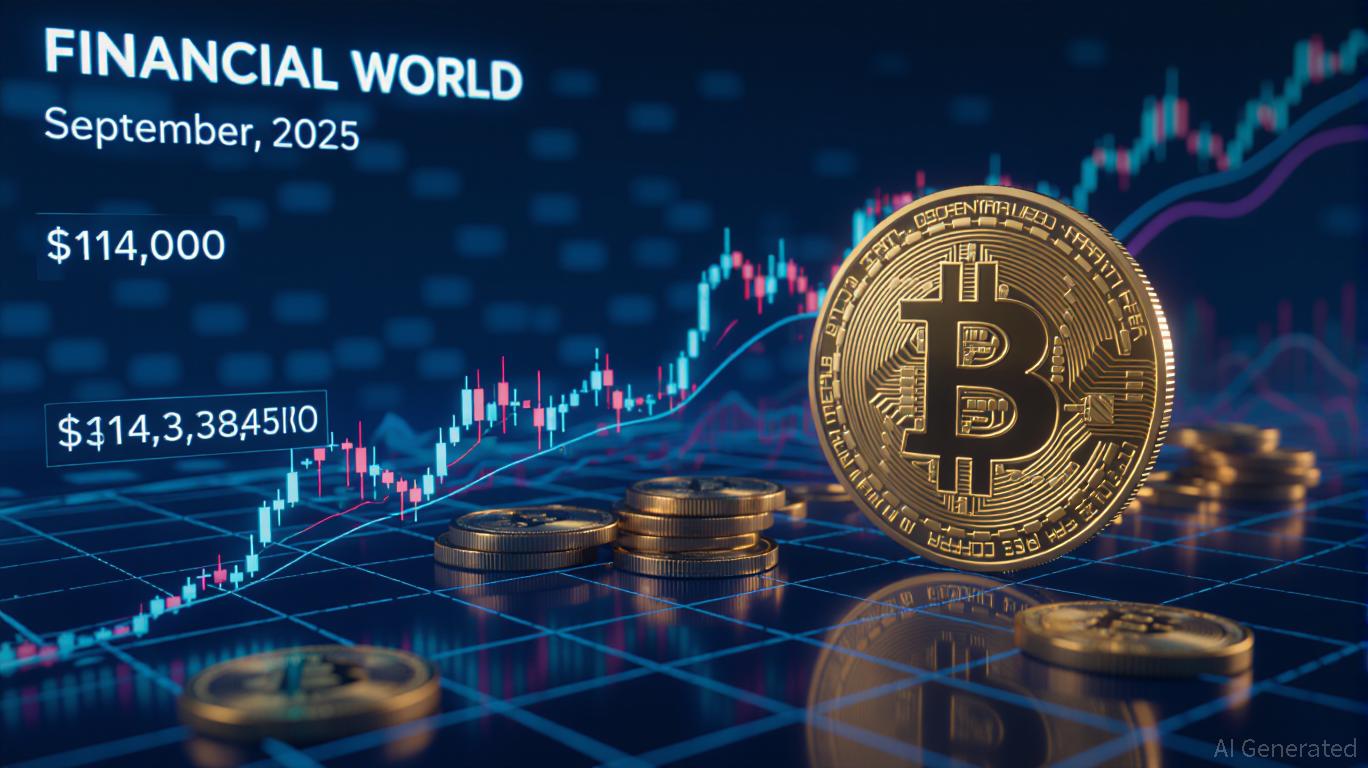
Bitcoin’s price has flirted with the $115,000 mark, only to pull back and settle into a tight range between about $108,750 and $112,000 as buying momentum weakens. Traders and analysts now await a decisive move in either direction to signal the next major trend.

After a breakout attempt stalled just above $115,000, liquidity cooled and buyers began to step aside, according to on-chain data and sentiment analysis. The 30-day momentum index on CryptoQuant dropped to –2 per cent from +1 per cent earlier in the week, underlining a loss of conviction behind the rally. The price action now shows descending highs, suggesting bulls are losing early ground. Resistance sits in the $111,000–$112,000 zone; only a sustained move here could re-ignite upward pressure. Failure to defend support around $108,600 could expose the market to a slide toward $106,000–$105,000.

Technical analysts point to a pattern of consolidation following the failed breakout above $115,000. While buyers attempted to push through, they lacked follow-through, leaving the market stuck in a neutral to slightly bearish posture. Axel Adler, whose work with CryptoQuant is cited in analyses, observed that sellers are stepping in at lower highs, limiting upside attempts. Market structure is now tilted toward volatility unless fresh demand emerges.

Institutional behaviour adds nuance. Whale wallets—those holding between 100 and 1,000 BTC—have accumulated roughly 65,000 BTC in recent sessions, bringing their aggregate holdings to an all-time high of about 3.65 million BTC. That accumulation suggests structural demand remains under the surface. At the same time, analysts note that technical indicators like moving averages have formed bullish signals—for instance, a “golden cross” between the 50-day and 100-day exponential moving averages on shorter timeframes is seen as supportive. Some forecasts even project a path toward $150,000 should momentum revive.

Macro drivers are also in focus. ETF inflows in the United States are injecting liquidity into the market and are widely regarded as a catalyst for continuation moves. Bitcoin has reclaimed its 100-day moving average, which had acted as resistance and is now a support anchor. RSI readings have turned positive, and the broader sentiment has shifted from outright bearish to cautiously optimistic as institutional capital flows reappear.

Still, not everyone is confident. Some analysts argue that despite price strength, the upside is structurally vulnerable. A technical review on Seeking Alpha has rated Bitcoin a “Sell” over the next 12 months, citing weaker momentum and divergence as signals that gains may not sustain without external catalysts.

Crucially, macroeconomic uncertainty looms. Market bets converge around expectations of U. S. Federal Reserve interest rate cuts in the final quarter. Should stimulus emerge, risk-assets including Bitcoin might rally; if inflation surprises or central banks hold firm, volatility could reverberate downward.

VISHNU RAJA
RYO YAMADA
HITORI GOTOH
IKUYO KITA
Just in:
Arrow Electronics showcases technologies advancing intelligent robotics, mobility and digital infrastructure // Fast Just Got Fastest: STING Energy Boost™ Celebrates Kimi Antonelli’s Formula 1® World Championship and the Fan Energy Behind It // xCube Access Welcomes Entrust Capital Limited  Expanding Access to Professional Portfolio Management // As AI Reshapes Education, Singapore Convenes Global Dialogue on the Future of Early Childhood Education // Cloudflare unveils Zero Wire vulnerability intelligence service // Ta’ziz finalises $1.39bn funding for Ruwais industrial facilities // Hong Kong mandates crypto transaction disclosures to tax authorities // APT29-linked campaign exploits outdated Apple and Android software // Cyberport Venture & Capital Forum 2026 Grand Opening // U.S. Mid Term Result Is A Clear Verdict Against Trump’s Authoritarianism // SC to examine students’ exam plea today // Utilities pursue ₹1,992 cr in unpaid bills // OpenAI identifies 948 Linux privilege escalation flaws using AI // After Reaching 7 Million Users in the Philippines, Skyro Launches Transparent Cash Loans in Malaysia // Asia Left Behind: Ten international companies have yet to report delivering on their cage-free egg pledges across the region // Democrats capture Senate majority with seven Republican seats // Oil and chip shares retreat after Democratic victories // Govt opposes Arlekar’s PSC action // ADIA and partners establish $1.4 billion aviation venture // Burying Head In “India Made Poverty Reduction” Data Is Dangerous //