Just in:
xCube Access Welcomes Entrust Capital Limited  Expanding Access to Professional Portfolio Management // Pinarayi faults UDF over mounting road crashes // Hong Kong mandates crypto transaction disclosures to tax authorities // ADIA and partners establish $1.4 billion aviation venture // Emirates Group records AED 4.1 billion half-year profit // Cloudflare unveils Zero Wire vulnerability intelligence service // Burying Head In “India Made Poverty Reduction” Data Is Dangerous // Asia Left Behind: Ten international companies have yet to report delivering on their cage-free egg pledges across the region // APT29-linked campaign exploits outdated Apple and Android software // Ta’ziz finalises $1.39bn funding for Ruwais industrial facilities // The “1st Greater Bay Area Health and Longevity Summit & Awards Ceremony” concludes successfully in Macao // Utilities pursue ₹1,992 cr in unpaid bills // Democrats capture Senate majority with seven Republican seats // CR Longdation Aethereal Cybersecurity × Global Cybersecurity Alliance (GCSA) Join Hands to Establish the “AI and Cybersecurity Research Centre” // SC to examine students’ exam plea today // OpenAI identifies 948 Linux privilege escalation flaws using AI // After Reaching 7 Million Users in the Philippines, Skyro Launches Transparent Cash Loans in Malaysia // AI trust gap reveals distinct retail priorities: Divergent paths to consumer growth in Hong Kong and the GBA // Anthropic to prohibit persistent abuse of Claude chatbot // e-Crime Bureau Signs Cybersecurity Partnership With Smart Africa, Reinforcing Its Global Expansion //

News related to
work

A new digital token, WallitIQ , has captured the attention of analysts and investors, with predictions suggesting it could achieve a massive 50,000% rally by mid-2025, eclipsing the popular cryptocurrency Dogecoin . The bold projections, which draw parallels between WLTQ and the early success of Dogecoin, have set the stage for what could become one of the most significant DeFi market shifts in the coming years.

WallitIQ, currently priced at approximately $0.0420 per token, has generated a considerable amount of buzz in cryptocurrency communities. Analysts are noting the token’s potential for rapid growth, especially in light of the ongoing boom in decentralized finance projects. Unlike Dogecoin, which initially gained popularity as a meme coin, WallitIQ is positioning itself as a functional asset within the expanding DeFi ecosystem, offering utilities that could drive its value through real-world adoption.

What differentiates WallitIQ from Dogecoin, and why are experts so optimistic? The DeFi sector, which WallitIQ is part of, has been on an upward trajectory, fueled by decentralized exchanges , yield farming, and liquidity pools. DeFi has redefined how digital assets are utilized, allowing for more utility and, by extension, more growth potential for tokens like WallitIQ. In contrast, Dogecoin, though immensely popular, remains limited in terms of real-world use cases outside of speculative trading and social media-driven movements.

The high expectations surrounding WallitIQ stem from its innovative features and its backing by a team of blockchain experts who have managed to secure strong partnerships within the DeFi space. This network of relationships could contribute significantly to the token’s adoption, boosting its value through greater use within decentralized applications and services. These developments are crucial, as cryptocurrencies with tangible applications tend to experience more sustained growth than those reliant solely on speculative interest.

The rise of WallitIQ has coincided with a growing interest in alternative cryptocurrencies to traditional tokens like Bitcoin and Ethereum. As investors look for new opportunities in the ever-evolving crypto space, many are turning their focus to promising altcoins, with WallitIQ being a prominent contender. The token’s relatively low price point also makes it an attractive option for those looking to capitalize on a potential long-term gain, especially given the expected surge in value predicted by leading market analysts.

Industry experts point to several factors that may contribute to WallitIQ’s rapid ascension. One of the most critical factors is the growing focus on token utility and the integration of real-world applications. WallitIQ’s team has reportedly been in talks with various companies across different sectors to integrate their token into products and services, potentially increasing its demand. This type of strategic partnership has been key to the success of other DeFi tokens, setting a strong precedent for WallitIQ’s potential growth.

The broader trend of increasing institutional interest in DeFi projects cannot be ignored. With major financial institutions and venture capital firms showing greater willingness to invest in decentralized finance, the influx of capital into promising projects like WallitIQ could drive its value to new heights. Unlike Dogecoin, which largely relies on community sentiment and social media trends, WallitIQ’s strong backing and institutional interest set it apart in a rapidly maturing market.

Despite the optimism surrounding WallitIQ, experts acknowledge that the cryptocurrency market remains volatile, and predictions of 50,000% returns should be viewed with caution. Historical trends show that while some tokens have achieved significant growth, the crypto market is still highly speculative and unpredictable. Investors are advised to consider the risks involved before diving into projects that promise astronomical returns.

However, the overarching trend of DeFi and the increasing acceptance of blockchain-based financial systems suggest that WallitIQ is well-positioned to capture a larger share of the market. As more individuals and institutions turn to decentralized platforms for their financial needs, WallitIQ’s utility could play a significant role in driving its value beyond even the most optimistic projections.

At the heart of WallitIQ’s anticipated growth is its potential to carve out a niche within the DeFi space that not only challenges Dogecoin’s dominance but offers a more robust, practical alternative for investors seeking tokens with long-term viability. If the predictions hold true, WallitIQ could soon become one of the most talked-about tokens in the cryptocurrency world, outpacing even the established giants of the market.

MANTRA, a blockchain platform for tokenizing real-world assets , has finalized a significant $1 billion agreement with DAMAC Group, a leading investment conglomerate in the UAE. This strategic partnership, announced on January 9, focuses on the tokenization of various assets within the Middle East region, bringing blockchain innovation into a thriving market.

The agreement underscores MANTRA’s commitment to expanding the use of decentralized finance solutions for asset management, leveraging blockchain’s potential to revolutionize traditional industries. DAMAC, known for its prominent presence in the real estate sector, will collaborate with MANTRA to tokenize a range of physical and financial assets, making them accessible through the blockchain.

DAMAC Group, founded by billionaire Hussain Sajwani in the early 2000s, has diversified its investments into several sectors, including real estate, hospitality, and entertainment. The company’s high-profile developments include luxury residential towers and resorts, which have shaped Dubai’s skyline. With a reputation for delivering upscale properties, DAMAC has long been recognized as one of the most influential developers in the region. By embracing blockchain technology, the firm seeks to modernize asset management and broaden the scope of its investment strategies.

MANTRA, on the other hand, has been gaining traction in the blockchain space for its unique approach to tokenizing real-world assets, including properties, commodities, and financial instruments. The platform’s capabilities allow users to invest in traditional assets using blockchain technology, enhancing liquidity and enabling fractional ownership. This process democratizes access to high-value assets, which was previously out of reach for smaller investors.

The partnership’s centerpiece is the tokenization of real estate assets, one of the most significant areas of focus. By converting physical properties into digital tokens, MANTRA and DAMAC aim to make real estate investment more inclusive and accessible. Investors can now trade or hold fractional ownership of properties without the traditional barriers of entry, such as the need for large capital investments or navigating complex ownership structures.

For DAMAC Group, this partnership represents an opportunity to broaden its investor base, reaching not only institutional investors but also individuals seeking exposure to high-end real estate. The ability to tokenize properties provides greater flexibility in managing assets and allows for more efficient transactions, as blockchain technology ensures transparency and reduces the need for intermediaries.

On a broader scale, the partnership aligns with global trends in digital finance, where the tokenization of real-world assets is seen as the next frontier for blockchain technology. While still a relatively new concept, the market for tokenized assets is rapidly growing, driven by increasing demand for alternative investment opportunities and the potential for blockchain to streamline asset trading.

The collaboration is also expected to have a broader economic impact in the UAE. The country has positioned itself as a global hub for technology and innovation, with several initiatives promoting the adoption of blockchain and other emerging technologies. This agreement between MANTRA and DAMAC highlights the UAE’s continued efforts to integrate cutting-edge technologies into traditional industries such as real estate.

Tokenization has the potential to address several challenges in the real estate sector, including illiquidity, high transaction costs, and the complexity of cross-border investments. Blockchain’s decentralized nature provides enhanced security and reduces the risks typically associated with traditional financial systems. Through tokenization, investors can gain access to a much broader array of real estate opportunities, including properties that were once considered inaccessible due to geographic or financial constraints.

The agreement between MANTRA and DAMAC could pave the way for future collaborations with other players in the real estate and investment sectors, both in the UAE and beyond. With the rise of digital assets, there is an increasing need for traditional businesses to adapt to the changing landscape of finance. Blockchain and tokenization offer a solution that meets this need, providing greater transparency, security, and efficiency in asset transactions.

The tokenization of RWAs is not just limited to real estate. Other sectors, including commodities, art, and even intellectual property, are beginning to explore how blockchain can enhance their operations. This trend is expected to accelerate in the coming years, as more businesses realize the potential benefits of tokenizing their assets. In this context, the MANTRA-DAMAC partnership could serve as a model for other companies looking to tap into the growing market for blockchain-based asset management.

As the global economy continues to evolve, so too does the role of blockchain in reshaping traditional industries. The MANTRA-DAMAC collaboration is a clear example of how blockchain technology can be leveraged to unlock new opportunities, reduce friction in asset transactions, and foster a more inclusive financial ecosystem. The success of this partnership will likely have far-reaching implications for the future of asset tokenization, setting the stage for further innovation in the years ahead.

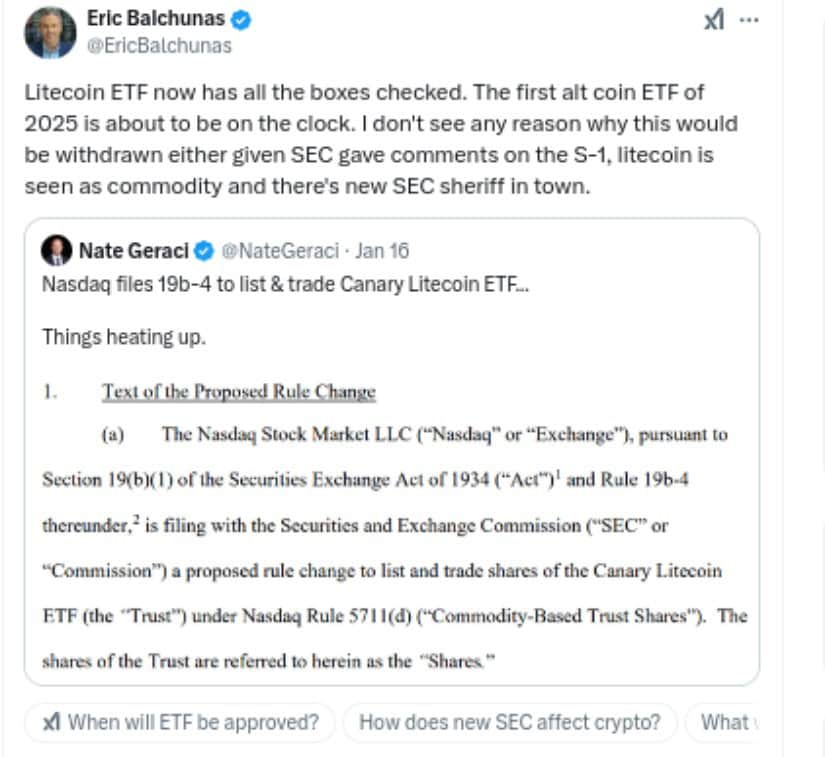
Nasdaq has officially filed a 19b-4 form with the U.S. Securities and Exchange Commission in support of the Canary Litecoin ETF proposal, marking a significant step towards the launch of a new cryptocurrency-focused exchange-traded fund . This move follows earlier discussions with the SEC, which had requested Canary Capital to amend its S-1 filing for the proposed ETF.

The Canary Litecoin ETF, first introduced by Canary Capital in October 2024, aims to provide investors with direct exposure to Litecoin , one of the top cryptocurrencies by market capitalization. Unlike traditional ETFs, which typically track stocks or commodities, the Litecoin ETF would provide a structured way to invest in the digital currency, bringing the asset class closer to mainstream financial markets.

The filing of the 19b-4 form with the SEC is a crucial step in the approval process for the ETF. This form is used by exchanges to propose rule changes related to the listing and trading of securities. By submitting the form, Nasdaq is seeking approval to list the Canary Litecoin ETF on its exchange, a move that could open the door for broader institutional and retail investor participation in the Litecoin market.

The SEC’s role in the process is central to the success of the proposal. The regulatory body has long been cautious about approving cryptocurrency-based ETFs, primarily due to concerns about market volatility, liquidity, and potential manipulation. However, recent developments, including the approval of Bitcoin ETFs, have sparked renewed optimism that Litecoin, as a leading cryptocurrency, may also be considered for ETF approval.

Nasdaq’s filing comes after the SEC’s request for amendments to the S-1 form, which is required for the registration of the proposed ETF. The amendments were aimed at clarifying certain aspects of the ETF’s structure and compliance with SEC regulations. Canary Capital responded to the SEC’s concerns and has now moved forward with the 19b-4 filing, signaling confidence in the proposal’s approval.

If approved, the Canary Litecoin ETF would be the first of its kind to offer exposure to Litecoin, allowing investors to buy shares in the fund without needing to directly hold or manage the cryptocurrency. This would simplify the process for those looking to invest in Litecoin while also providing the regulatory oversight that traditional ETFs enjoy. It could also have a significant impact on the adoption of Litecoin as an asset class, especially among institutional investors who may have been hesitant to invest in digital currencies without a regulated investment vehicle.

The move aligns with a broader trend in the cryptocurrency industry, where more companies are attempting to bridge the gap between traditional finance and digital assets. Bitcoin ETFs, which track the price of Bitcoin, have gained traction in the past few years, prompting a reassessment of how other major cryptocurrencies could also be packaged in a similar way for investors. Litecoin, which was created in 2011 by Charlie Lee as a “lighter” alternative to Bitcoin, has gained substantial traction in the crypto space and is often considered one of the more stable digital assets, making it a prime candidate for an ETF product.

The filing also comes amid growing interest in alternative investment products, especially in the wake of a year marked by significant price volatility in traditional financial markets. Investors are increasingly turning to cryptocurrencies as a hedge against inflation and economic uncertainty, and an ETF could provide a more accessible route for them to gain exposure to the digital asset class.

Despite the excitement surrounding the potential approval of a Litecoin ETF, the SEC’s cautious stance on cryptocurrency products means the approval process is unlikely to be straightforward. The regulatory body has previously expressed concerns about the potential for market manipulation in the cryptocurrency space, and the Canary Litecoin ETF will likely face intense scrutiny. However, the SEC’s approval of Bitcoin ETFs has created a more favorable environment for other digital assets, and many market participants are hopeful that the SEC will ultimately grant approval for the Litecoin ETF as well.

For Nasdaq, the filing represents a key strategic move in solidifying its position as a leader in the growing cryptocurrency market. As more institutional investors seek regulated ways to engage with cryptocurrencies, exchanges like Nasdaq are well-positioned to capitalize on the trend by offering products like the Canary Litecoin ETF.

The approval of a Litecoin ETF would not only provide a new investment opportunity for retail and institutional investors but also send a strong signal to the broader financial markets that digital currencies are becoming increasingly integrated into traditional investment frameworks. It would also mark another milestone in the ongoing evolution of the cryptocurrency market, which continues to attract the attention of both investors and regulators.

Circle has launched Paymaster, a new on-chain utility designed to simplify the payment of gas fees on Arbitrum and Base networks using USDC. The tool, which allows developers to integrate this service into their applications, aims to streamline the transaction process and reduce friction for users interacting with decentralized applications .

Paymaster offers a significant advantage for developers by allowing them to cover gas fees for their users, making transactions smoother and more cost-effective. This feature removes the typical barrier of needing Ether for transaction fees on Ethereum Layer 2 solutions, opening the door for a wider range of users who may not hold ETH but possess USDC. For users of Arbitrum and Base, this means they can conduct transactions without worrying about Ethereum gas fees.

Although Paymaster charges a 10% fee on each gas transaction, it offers a promotional period where the service is free until June 30, 2025. This strategic move is aimed at encouraging widespread adoption of the tool and attracting developers to integrate it into their applications during the promotional window. By removing the upfront costs associated with using the service, Circle hopes to increase the number of dApps leveraging Paymaster for smoother user experiences and broader accessibility.

The introduction of Paymaster comes as part of a broader trend of developing more user-friendly, accessible tools for the growing decentralized finance ecosystem. One of the ongoing challenges for the DeFi sector has been the complexity and cost associated with transaction fees, particularly on Ethereum-based networks. By introducing Paymaster, Circle is aiming to reduce some of these barriers, helping to bring the benefits of blockchain technology to a larger, more diverse group of users.

This launch also highlights Circle’s continued efforts to play a leading role in the broader blockchain ecosystem, particularly in the realm of stablecoins. USDC, Circle’s stablecoin, is already widely used across multiple networks, and the ability to use it for gas payments on Layer 2 solutions like Arbitrum and Base could increase its utility and solidify its position as a preferred digital dollar for decentralized applications.

By enabling gas fee payments in USDC, Circle is helping to reduce the friction that users and developers face when interacting with blockchain applications. It addresses the need for a more accessible way for users to participate in the growing ecosystem without needing to convert assets into ETH, simplifying the user experience and promoting the broader adoption of blockchain technology.

Developers stand to benefit from Paymaster as well, as it provides a way to ensure users can interact with their applications without worrying about transaction costs. This could make it easier for new users to enter the space, as the upfront costs for interacting with decentralized applications are often seen as a significant barrier to entry.

The promotional period of Paymaster being free until mid-2025 also serves as a clear invitation for developers to experiment with the tool and incorporate it into their applications without the concern of initial fees. By offering this incentive, Circle hopes to build a solid foundation of users and developers before the 10% fee becomes effective, which could lead to more long-term integration of Paymaster into various blockchain ecosystems.

As blockchain and crypto technology continue to evolve, the launch of services like Paymaster reflects the ongoing trend of trying to make the space more user-friendly and less daunting for new participants. With the promise of smoother transaction experiences and reduced costs, this service is expected to have a significant impact on the future development of decentralized applications and blockchain use cases.

The American Lung Association has called on New Jersey lawmakers to enact a comprehensive ban on smoking in the state’s casinos. This appeal comes as health advocates and public health organizations continue to push for stronger regulations to protect workers and patrons from the harmful effects of secondhand smoke in gaming environments. The association’s report, which examines the current state of smoking policies in New Jersey’s casinos, […]

The likelihood of wildfires in Los Angeles has increased by 35 percent due to climate change, a new report suggests. According to the findings, rising temperatures, altered precipitation patterns, and prolonged droughts, all exacerbated by global warming, have contributed to the current severity of wildfires in the region. Notably, the Palisades and Eaton Canyon fires are directly influenced by these climate-driven changes, pushing the local environment into […]

HSBC is focusing on enhancing its presence in Asia, leveraging strong growth from its Middle East and North Africa investment banking operations. By capitalizing on the economic momentum in the MENA region, the banking giant seeks to extend its influence in Asia, where it has a long-established footprint. The move is seen as a strategic effort to position HSBC as a leading financial institution in both regions, […]

Advertisements

Through this program, Swimwerks not only promotes water safety but also creates meaningful training opportunities for deserving individuals. SINGAPORE – Media OutReach Newswire – 30 January 2025 – Swimwerks, a leading authority in swimming education and water safety, has announced the launch of its Lifeguard Sponsorship Initiative, a social responsibility program designed to elevate water safety standards across Singapore. The initiative aims to empower up to 10 […]

Brad Garlinghouse, the CEO of Ripple, has expressed strong support for a diversified U.S. digital asset reserve, which would include a broad range of cryptocurrencies rather than focusing solely on Bitcoin or Ripple’s XRP. His remarks come amid growing discussions about the future of digital currencies and their role in the global financial system. In an interview, Garlinghouse underscored the importance of building a multi-asset reserve, arguing […]

Tyler Winklevoss, co-founder and CEO of cryptocurrency exchange Gemini, announced on January 30, 2025, that the company will not hire graduates or interns from the Massachusetts Institute of Technology as long as former U.S. Securities and Exchange Commission Chair Gary Gensler maintains any affiliation with the institution. This decision follows MIT’s recent reappointment of Gensler as a professor, a move that has sparked controversy within the cryptocurrency community.

Winklevoss expressed his stance on social media, stating, “As long as @MIT has any association with Gary Gensler, @Gemini will not hire any graduates from this school. Not even interns for our summer program.” This statement underscores the tension between Gemini and MIT, highlighting the significant impact of Gensler’s return on the hiring policies of leading cryptocurrency firms.

The reappointment of Gensler, who served as SEC Chair from 2021 to 2023, has been met with mixed reactions. Supporters view his return as a positive development for MIT, bringing a wealth of experience in financial regulation and policy. However, critics, including Winklevoss, argue that Gensler’s tenure at the SEC was marked by stringent regulations that they believe stifled innovation in the cryptocurrency sector. They contend that his policies were overly restrictive and detrimental to the growth of digital assets.

Gemini’s decision to halt hiring from MIT reflects broader concerns within the cryptocurrency industry regarding regulatory approaches to digital assets. The industry has long advocated for clearer and more favorable regulations to foster innovation and growth. The reappointment of Gensler, perceived by some as a proponent of stringent regulations, has intensified these concerns.

The move by Winklevoss has sparked discussions about the relationship between academia and the cryptocurrency industry. Universities like MIT have been at the forefront of blockchain and cryptocurrency research, often collaborating with industry leaders. However, the differing perspectives on regulation and innovation have led to tensions, as evidenced by Gemini’s stance.

Industry analysts are closely monitoring the situation, noting that such actions could influence future collaborations between academic institutions and cryptocurrency firms. The decision by Gemini may prompt other companies to reassess their engagement with MIT and similar institutions, potentially leading to a reevaluation of partnerships and hiring practices within the industry.

Whale Casino, a prominent name in the online gaming industry, has launched its highly anticipated multiplayer game, “Tribes,” signaling a bold move into the competitive multiplayer market. The game promises a unique gaming experience, blending strategy, social interaction, and dynamic gameplay mechanics. Whale Casino’s latest release comes amid increasing competition within the digital entertainment space, as more platforms aim to capture the attention of both casual players […]

El Salvador’s legislative assembly has passed a major reform to its Bitcoin law, a move aimed at aligning the country’s cryptocurrency framework with broader financial goals, particularly following an agreement with the International Monetary Fund . The reform has been met with mixed reactions both within the country and internationally, raising questions about its impact on the nation’s economic strategy.

The proposed amendments focus on ensuring that Bitcoin operates as a legal currency in the country but with significant modifications to the conditions under which it can be used. Key adjustments include enhancing regulatory oversight and establishing clearer parameters for businesses involved in cryptocurrency transactions. The reform aims to address concerns raised by both domestic and international financial institutions regarding the volatility and risks associated with Bitcoin, which was adopted as legal tender in the country back in 2021.

This shift comes in the wake of a formal agreement between the Salvadoran government and the IMF, which had previously expressed concerns over the country’s reliance on Bitcoin as a central part of its economic strategy. The IMF had cautioned against the risks of using a highly volatile asset as an official currency, urging El Salvador to exercise caution. The reformation of the Bitcoin law is seen as a response to these international pressures, signaling a more cautious approach to the integration of cryptocurrency into the country’s financial system.

President Nayib Bukele, a strong advocate for Bitcoin adoption, has repeatedly touted the cryptocurrency as a vehicle for financial inclusion and a potential catalyst for economic growth. Despite skepticism from various sectors, Bukele maintained that Bitcoin would bring long-term benefits by providing access to financial services for the unbanked population and attracting foreign investment. However, critics have pointed to the lack of widespread adoption, citing a significant portion of the population still hesitant or unfamiliar with the digital currency.

The IMF’s role in pushing for the law reform underscores the complexities of El Salvador’s economic situation, especially as the country grapples with its growing debt levels and reliance on foreign aid. The approval of the Bitcoin law reforms is a step toward meeting conditions set by international lenders, who have been cautious about the potential destabilizing effects of cryptocurrency on traditional financial systems. For El Salvador, it marks a delicate balancing act between maintaining Bukele’s vision of innovation and securing crucial international financial support.

Supporters of the reform argue that the changes will provide greater clarity for businesses and consumers alike, reducing the legal and economic uncertainty surrounding Bitcoin transactions. By introducing new regulations, such as anti-money laundering provisions, the government aims to ensure that Bitcoin is not used for illicit purposes, while maintaining the broader goal of financial modernization.

On the other hand, critics of the reform are concerned that the amendments do not go far enough in addressing the fundamental issues with Bitcoin’s integration into the national economy. For instance, while the new rules may curb some of the more problematic aspects of cryptocurrency adoption, they may not alleviate the inherent risks tied to Bitcoin’s market fluctuations. The cryptocurrency has demonstrated significant price volatility, which has led to financial instability in countries that have taken similar paths to adopting Bitcoin.

The reform also comes at a time when the global cryptocurrency landscape is facing increasing scrutiny. In the U.S., regulatory bodies are tightening their stance on digital currencies, raising concerns over security, transparency, and the potential for fraud. Similarly, countries such as China and India have taken a more restrictive approach to cryptocurrency, while others like El Salvador and Paraguay have embraced it with varying degrees of enthusiasm and regulation.

This complex global backdrop means that El Salvador’s decision to overhaul its Bitcoin law is not just a domestic issue but part of a broader dialogue on the future of cryptocurrencies in national economies. Some observers argue that the reform may be part of a broader trend where countries reconsider their initial forays into cryptocurrency adoption, especially as economic realities evolve and financial pressures mount.

The Salvadoran government’s decision to overhaul the Bitcoin law also has implications for its wider economic policies. It highlights the ongoing tensions between innovation and regulation, as well as the balancing act that small economies must perform when navigating the global financial system. As the country continues to depend on foreign aid and investment, including funds from the IMF, the path forward for Bitcoin in El Salvador remains uncertain.

El Salvador’s experience with Bitcoin has served as a case study for other countries contemplating similar moves. The nation’s attempt to embrace the digital currency as a national legal tender has been watched closely by governments and financial institutions around the world. With the reform, El Salvador seems to be taking a more cautious approach to cryptocurrency, which may signal a shift away from its previously bold stance on Bitcoin.

Propichain has seen a surge in interest, drawing attention from traders looking for high-return opportunities as Cardano’s price stagnates. Analysts, who remain optimistic about Cardano’s long-term prospects, are closely watching the rise of Propichain, a new player in the blockchain ecosystem with a focus on real estate applications. Despite Cardano’s past success, the recent downturn has led investors to explore alternatives, with Propichain emerging as a promising contender for those seeking greater gains.

Cardano, once a leader in the blockchain space, has seen its momentum slow down significantly. Price analysts and traders are increasingly concerned about its short-term performance, with some questioning whether the blockchain can deliver on its early promise in the face of emerging competition. Propichain, however, has gained traction quickly by offering a unique value proposition in the form of a real estate-focused ecosystem. This new approach is garnering attention for its potential to capitalize on the growing demand for blockchain technology in the real estate sector.

Propichain’s strategy revolves around integrating blockchain solutions with real estate transactions, offering transparency, efficiency, and security. Its platform is designed to simplify the process of buying, selling, and renting properties through smart contracts and decentralized finance mechanisms. This offers a more direct way to facilitate transactions while reducing the need for intermediaries, a key pain point in traditional real estate markets.

What sets Propichain apart from other blockchain projects is its commitment to solving real-world problems in an industry that has been slow to adopt blockchain technology. Real estate is a sector that has been plagued by inefficiencies, such as lengthy processes, high transaction costs, and issues with trust between parties. Propichain aims to address these challenges, providing a solution that could revolutionize the way properties are traded globally.

Propichain’s real estate tokenomics also offer a strong incentive for investors. The blockchain’s native token is used to facilitate transactions and incentivize participants within the ecosystem, including buyers, sellers, developers, and other stakeholders. Analysts have noted that the potential for massive returns in this sector is a key factor driving interest in Propichain, especially given its innovative approach to tackling the inefficiencies that have long hindered real estate transactions.

For Cardano enthusiasts, the slowdown in its price performance has led many to look for viable alternatives with more immediate growth potential. While Cardano continues to be viewed positively by many long-term investors, Propichain’s rise is providing an opportunity for traders seeking quicker returns. Cardano’s slower growth in the market, despite the continued development of its ecosystem, has left some investors feeling cautious. In contrast, Propichain’s rapid development and novel approach to real estate make it an appealing choice for those eager to capitalize on a potentially explosive market.

The growing interest in Propichain is further fueled by the increasing demand for blockchain solutions in sectors beyond cryptocurrency. Real estate, with its global appeal and the constant need for innovation, offers an ideal environment for blockchain to thrive. As more developers and real estate professionals explore the benefits of decentralized platforms, Propichain is positioning itself to become a key player in this emerging market.

Traders have taken notice of Propichain’s potential to deliver high returns in a relatively short period. With its strategic focus on real estate and a unique tokenomics structure, Propichain offers a compelling investment opportunity for those looking to diversify their portfolios and gain exposure to a rapidly growing industry. As blockchain adoption continues to expand across various sectors, Propichain’s real estate ecosystem could be well-positioned for a parabolic rally in the coming months.

Despite the excitement surrounding Propichain, analysts have cautioned that the volatility of the cryptocurrency market remains a factor to consider. As with all emerging technologies, there are inherent risks involved. However, the growing demand for innovative solutions in real estate, combined with Propichain’s early success, positions the platform as a potentially significant player in the blockchain space.

While Cardano’s price performance has left many investors feeling uncertain, the development of Propichain has provided an intriguing alternative. As blockchain technology continues to evolve, the real estate sector stands to benefit significantly from the adoption of decentralized solutions. Propichain’s ability to tap into this market, while offering a more efficient and secure way to conduct transactions, has led many to believe that it may soon become a key player in the cryptocurrency and real estate industries.

Tesla continues to hold a substantial amount of Bitcoin, reaffirming its position as one of the largest corporate holders of the cryptocurrency. In its latest shareholder update for the fourth quarter of 2024, the company revealed that it did not sell any of its Bitcoin during the period. This follows a trend from previous quarters where the electric vehicle giant chose to maintain its cryptocurrency assets instead of liquidating them for cash.

As of the end of Q4 2024, Tesla holds 9,720 Bitcoins, a figure that has remained consistent since its last quarterly report. The company’s Bitcoin holdings are valued at approximately $250 million based on current market prices, a significant sum given the volatility of the cryptocurrency market. Despite fluctuations in the value of Bitcoin, Tesla has opted to retain its investment in the digital asset, signaling its long-term outlook on the future of cryptocurrency.

Tesla first announced its Bitcoin purchase in early 2021, acquiring $1.5 billion worth of Bitcoin. The announcement caused a surge in the price of the cryptocurrency and drew considerable attention to Tesla’s unconventional move in adopting digital currency. The company’s CEO, Elon Musk, has been a vocal proponent of Bitcoin, and Tesla’s move was seen as a significant endorsement of the cryptocurrency by a major publicly traded company.

However, Tesla’s Bitcoin strategy has not been without its challenges. In 2021, the company temporarily halted Bitcoin payments for its electric vehicles, citing concerns over the environmental impact of Bitcoin mining. This decision led to a dip in Tesla’s stock price and raised questions about the company’s stance on Bitcoin. Despite this, Tesla continued to hold its Bitcoin reserves, and its Q4 2024 update confirms that no changes were made to its position.

The company’s stance on cryptocurrency remains a topic of interest, particularly as other major corporations and institutional investors are also increasing their exposure to Bitcoin. Investment firms and asset managers are increasingly exploring ways to integrate digital currencies into their portfolios, and some have followed Tesla’s example in purchasing Bitcoin as part of their investment strategies. Tesla’s decision to hold Bitcoin through volatile market periods has drawn attention from investors who are keen to understand how the company balances its crypto holdings with its core automotive and energy businesses.

While Tesla has made no significant changes to its Bitcoin strategy, the company’s continued commitment to cryptocurrency reflects broader trends in the financial and technology sectors. Bitcoin has become an increasingly important asset in global markets, and its role as a store of value and potential hedge against inflation is being widely discussed. Despite some regulatory challenges and environmental concerns, Bitcoin remains a key focus for many investors and companies.

Tesla’s involvement in cryptocurrency is also linked to its broader vision of advancing renewable energy and adopting innovative technologies. Elon Musk has frequently expressed interest in integrating clean energy solutions with emerging technologies, including digital currencies. Tesla’s commitment to Bitcoin could be seen as part of its larger strategy to position itself at the intersection of technology, finance, and sustainability.

The broader landscape of corporate Bitcoin adoption is evolving, with many companies taking a cautious approach in managing their digital assets. While Tesla continues to hold its Bitcoin reserves, it has refrained from making further purchases or sales, leaving some to speculate about its long-term strategy. It remains to be seen whether Tesla will increase its holdings or make adjustments based on market conditions or regulatory developments.

Tesla’s decision to hold onto its Bitcoin could also be influenced by regulatory uncertainty surrounding cryptocurrency. Governments and financial regulators worldwide are closely scrutinizing digital assets, with varying degrees of regulation being implemented in different regions. Some countries have moved towards stricter regulations, while others have embraced cryptocurrencies as part of their financial systems. Tesla, like many other companies, is likely monitoring these developments as it assesses its cryptocurrency strategy.

As of now, Tesla’s Bitcoin holdings are a relatively small portion of its overall market capitalization, which is primarily driven by its electric vehicle sales and clean energy products. Nevertheless, the company’s ongoing engagement with Bitcoin highlights the growing intersection of technology and finance and signals its willingness to take calculated risks in exploring new markets.

Utah is moving forward with legislation that would permit the state to invest a portion of its public funds in cryptocurrencies. The Utah House Economic Development Committee approved the bill, known as HB 230 or the Blockchain and Digital Innovation Amendments, by an 8-1 vote on January 28. Introduced by Representative Jordan Teuscher, the bill allows the state treasurer to allocate up to 5% of certain public funds into “qualifying digital assets,” including cryptocurrencies with a market capitalization exceeding $500 billion and approved stablecoins. The bill now proceeds to the full House for a vote. If approved, it will move to the Senate and, if passed there, will be sent to Governor Spencer Cox for final approval. Governor Cox has previously demonstrated support for cryptocurrency initiatives, having signed a bill in 2022 to establish a Blockchain and Digital Innovation Task Force in Utah. The proposed legislation also includes provisions for secure custody solutions, qualified custodians, and exchange-traded products to manage the digital assets. Additionally, it grants the treasurer the authority to engage in staking and lending of crypto assets under specific conditions and prohibits state and local governments from restricting the acceptance of cryptocurrencies as payment for legal goods and services. If the bill passes all necessary hurdles, it is slated to come into effect on May 7.

Kentucky is also taking steps to integrate cryptocurrency into its financial strategy. Representative TJ Roberts announced plans to introduce the Bitcoin Strategic Reserve Act in the coming weeks. Roberts aims to position Kentucky as the “Crypto Capital of the World” by removing sales tax on precious metals and establishing a Bitcoin reserve. He argues that inflation and flawed federal policies have made it necessary for states to take control of their financial future. The proposed legislation seeks to strengthen Kentucky’s economy by creating a strategic reserve of Bitcoin, potentially enhancing the state’s financial stability and attracting crypto-related businesses. Roberts’ initiative reflects a broader trend among U.S. states exploring the integration of cryptocurrencies into their financial systems.

These developments in Utah and Kentucky are part of a growing movement among U.S. states to incorporate cryptocurrencies into their financial frameworks. Lawmakers in South Dakota have also announced plans to introduce similar legislation to establish a Bitcoin reserve. Representative Logan Manhart stated his intention to bring forward a bill in the South Dakota House to create a strategic Bitcoin reserve, emphasizing the opportunity for proactive government action in this area. This initiative aligns with efforts in other states, such as Wyoming and Massachusetts, which have introduced Bitcoin-related legislation since December 2024.

Solana’s recent price surge has generated a wave of optimism in the cryptocurrency space, as investors speculate on the potential for the blockchain’s value to continue climbing. With buzz surrounding the approval of exchange-traded funds tied to cryptocurrencies and the increasing attention from large-scale users, Solana is positioned as one of the most promising assets. Its growing influence suggests significant shifts may be ahead in the broader digital asset landscape, making it essential to evaluate the factors driving this momentum.

The primary driver behind Solana’s resurgence is the anticipated approval of Bitcoin ETFs, which has sparked renewed investor interest in digital assets. While Bitcoin dominates the market, the potential for cryptocurrency ETFs to open up broader institutional participation could help raise the value of assets like Solana. The growing excitement around these ETFs is paving the way for more diversified exposure to cryptocurrencies, providing a foundation for other blockchain networks, including Solana, to gain substantial market share.

Beyond institutional investors, another factor contributing to Solana’s rise is the growing focus on the XYZVerse—a virtual ecosystem that is catching the attention of large users and influencers in the tech space. These large-scale actors, known as “whales” in crypto parlance, are starting to move significant amounts of capital into platforms like XYZVerse, further solidifying Solana’s potential for growth. This influx of attention from well-established players signals a shift in the broader digital landscape, as companies and investors alike look for opportunities to integrate blockchain technology into their existing infrastructure.

The XYZVerse, which is being touted as a decentralized metaverse, holds the promise of revolutionizing how users interact with the digital world. Built on a blockchain infrastructure, it offers opportunities for creating decentralized applications , handling financial transactions, and engaging with immersive virtual environments. As whales flock to this space, the demand for blockchain solutions that can scale and operate efficiently is higher than ever. Solana, with its high throughput and low transaction costs, has become an attractive option for developers looking to deploy services within this new digital ecosystem.

With the increased focus on these emerging platforms, the market is witnessing a renewed interest in Solana’s technical capabilities. The network’s ability to process transactions at high speed while keeping costs low gives it an edge over many of its competitors, positioning it well for future growth. For instance, Solana’s proof-of-history consensus mechanism ensures that data is time-stamped and verified in a highly efficient manner, making it an ideal candidate for large-scale applications. This has prompted both developers and investors to view the blockchain as a top contender in the race for dominance in the crypto space.

Solana’s ecosystem is seeing significant expansion, with new projects continuously emerging. From decentralized finance applications to non-fungible tokens and beyond, Solana’s ability to host and scale a wide range of use cases makes it a central figure in the future of decentralized technologies. As more developers build on Solana, the platform’s network effect grows, drawing in additional users and capital that could push the asset to new heights.

With Solana trading at a level that many observers consider undervalued, the potential for further price appreciation remains high. Analysts are already projecting a bullish outlook, with some forecasting that Solana could hit $400 per coin if the current trends continue. This optimism stems from a variety of factors, including increasing institutional participation, the burgeoning interest in virtual worlds like XYZVerse, and Solana’s technological advancements that set it apart from other blockchain platforms.

However, as with any market, there are risks to consider. The cryptocurrency space is known for its volatility, and Solana’s price movements are no exception. Regulatory challenges, network security concerns, and competition from other blockchain projects could temper its growth. Despite these risks, Solana’s strong fundamentals and growing adoption make it a strong contender for continued upward movement.

The rising optimism surrounding Solana’s future also highlights a broader trend in the digital asset space: the increasing institutionalization of cryptocurrency markets. As more financial institutions seek to integrate blockchain technologies and cryptocurrencies into their portfolios, assets like Solana are well-positioned to benefit. Solana’s speed, scalability, and affordability make it an appealing choice for both institutional investors and developers.

The increasing focus on Web3 technologies, which emphasize decentralized control of data and digital assets, adds another layer of growth potential for Solana. As more platforms and applications emerge that prioritize decentralization and blockchain-based solutions, the demand for platforms like Solana is likely to increase. This shift towards Web3 aligns with broader societal trends favoring privacy, security, and user autonomy, further enhancing Solana’s prospects in the digital economy.

The excitement surrounding Solana’s future is also tied to the rise of decentralized finance and the expanding role of blockchain in traditional finance. DeFi platforms, which operate without intermediaries, have seen massive growth in recent years, and Solana’s infrastructure has become an attractive base for these applications. The combination of low fees, fast transaction speeds, and the ability to scale make Solana an ideal choice for DeFi developers.

As the market continues to evolve, the interaction between established players, such as Bitcoin, Ethereum, and emerging platforms like Solana, will shape the future of digital assets. Solana’s rising prominence is a reflection of the increasing diversification within the cryptocurrency ecosystem, as investors look for projects that offer innovation, scalability, and real-world utility.

Ripple has minted 3.2 million RLUSD stablecoins at its RLUSD Treasury on January 29, following the issuance of 1,050,000 RLUSD stablecoins on January 28. This brings the total RLUSD supply outstanding to 77,208,201, with a market value of approximately $83.21 million. The reserves backing RLUSD are primarily composed of U.S. Treasury Bills, government money market funds, and cash deposits with U.S. financial institutions. This development underscores Ripple’s commitment to enhancing the utility and adoption of its stablecoin in the digital finance ecosystem.

The RLUSD stablecoin, launched in December 2024, is a centralized stablecoin issued by Ripple’s subsidiary under the approval of the New York Department of Financial Services. It is pegged 1:1 to the U.S. dollar and is designed to facilitate instant global payments, seamless on/off ramps, and access to real-world assets. The stablecoin operates on both the Ethereum and XRP Ledger blockchains, enabling its use in decentralized finance applications across these platforms. Ripple’s strategic move to launch RLUSD aims to provide a stable and efficient digital asset for cross-border payments and other financial services.

In addition to the recent minting, Ripple has secured listings for RLUSD on several prominent cryptocurrency exchanges, including Bitstamp, Uphold, Bullish, Independent Reserve, Moonpay, Bitso, and Coinmena. The stablecoin has also been listed on the high-leverage trading platform Margex, where it is available as collateral for trading crypto pairs. These listings are expected to enhance RLUSD’s liquidity and accessibility, further promoting its adoption in the cryptocurrency market.

To bolster the stability and reliability of RLUSD, Ripple has adopted the Chainlink standard for providing high-quality pricing data. By leveraging Chainlink’s Price Feeds, RLUSD’s pricing data is now available on the Ethereum mainnet, allowing developers to integrate RLUSD into their DeFi applications for use cases such as trading and lending. This integration aims to enhance the utility of RLUSD across the on-chain economy and support its adoption within the DeFi ecosystem.

Coinbase has recently strengthened its Advisory Board by appointing four influential political and financial experts. This move marks a strategic push by the cryptocurrency exchange to enhance its operations and reputation, particularly in navigating complex regulatory landscapes and expanding its influence in both the financial and governmental sectors.

The new appointments signal Coinbase’s ongoing commitment to improving its strategic positioning in the fast-evolving digital asset market. As the cryptocurrency industry faces heightened regulatory scrutiny, the company is keen on leveraging the expertise of these newly appointed advisors to help guide its operations through potential legislative challenges. The new advisory team consists of individuals with deep experience in policy-making, finance, and corporate governance.

The individuals appointed bring with them decades of experience in various sectors, including finance, law, and public policy. Their expertise is expected to play a pivotal role as Coinbase continues to refine its regulatory strategies while expanding its services to new markets. Their knowledge will also assist the company in strengthening its communication with regulators and policymakers, two key groups that have become increasingly important for the exchange’s future growth.

One of the notable appointments is that of a former U.S. senator, whose background in government service is expected to provide valuable insights as Coinbase works to influence and shape crypto-related legislation in Washington. This particular appointment aligns with the company’s ongoing efforts to establish strong relationships within the political sphere, a move considered vital to the success of crypto businesses in the U.S. amid growing concerns over regulatory frameworks.

Another prominent addition is a former senior executive from one of the world’s largest investment banks. The experience of this new advisory member in financial markets and risk management will likely benefit Coinbase as it navigates market volatility and continues to expand its institutional offerings. With increased institutional interest in cryptocurrencies, the advice of such an expert could prove instrumental in helping Coinbase better serve large-scale investors and ensure robust compliance practices.

The composition of the new advisory board also includes experts with vast experience in global financial markets and regulatory affairs. These appointments reflect Coinbase’s strategy to solidify its presence internationally, as the company has faced varying degrees of regulatory scrutiny in markets outside the United States, particularly in Europe and Asia. By bringing on board individuals who have worked with international regulators, Coinbase appears poised to strengthen its international operations and better understand the regulatory demands in multiple regions.

Coinbase’s decision to bolster its Advisory Board comes at a time when the cryptocurrency industry is grappling with an evolving regulatory environment. Global regulators have intensified their efforts to create clearer frameworks for digital assets, while lawmakers continue to debate the role of cryptocurrencies in the broader economy. By bringing in top-tier experts from political and financial backgrounds, Coinbase seeks to ensure that it remains at the forefront of the ongoing dialogue surrounding digital asset regulation.

As one of the largest cryptocurrency exchanges in the world, Coinbase’s moves to enhance its advisory resources come as no surprise. The company has consistently been proactive in addressing regulatory concerns and fostering relationships with policymakers. This commitment to advisory growth is part of Coinbase’s larger strategy to build a more secure and compliant foundation for its business operations while positioning itself for sustainable long-term growth.

In recent years, Coinbase has increasingly emphasized its role as a responsible market player, striving to lead the industry toward more robust standards and practices. The newly appointed members of the Advisory Board are expected to contribute significantly to the company’s efforts in this regard. Their deep insights will likely guide Coinbase in its ongoing discussions with regulators and legislators to influence the regulatory landscape, especially as governments worldwide continue to examine the broader implications of blockchain technologies and cryptocurrencies.

Coinbase’s latest move comes as the digital asset industry continues to evolve, with developments in blockchain technology and decentralized finance contributing to an increasingly complex ecosystem. As cryptocurrency adoption grows, so too does the need for clear and effective regulation. The expansion of Coinbase’s Advisory Board, particularly with such distinguished new members, demonstrates the company’s proactive approach to navigating the regulatory challenges that lie ahead.

Robinhood Markets has introduced Bitcoin and cryptocurrency futures trading, expanding its investment services to include crypto-based derivatives. The move aims to cater to the growing demand for cryptocurrency investment tools, allowing users to speculate on Bitcoin’s price movement without directly holding the cryptocurrency.

The company, which first gained popularity with its user-friendly stock trading app, has been expanding its portfolio to meet the evolving needs of retail investors. By adding crypto futures to its platform, Robinhood is positioning itself as a more versatile trading hub, aligning with the trend of traditional financial services adapting to the growing influence of digital assets.

Crypto futures are agreements to buy or sell an underlying asset at a future date for a predetermined price. Unlike spot trading, where investors purchase cryptocurrencies directly, futures allow traders to bet on price movements without owning the actual coins. This could attract more investors who prefer speculating on price fluctuations while avoiding the complexities of cryptocurrency storage and security.

The timing of Robinhood’s move comes at a moment when cryptocurrency markets are gaining broader attention and legitimacy, especially as institutional players like hedge funds and large banks enter the space. Futures trading offers a higher level of risk compared to traditional buying and selling, but it also provides significant opportunities for profit, making it an appealing option for both seasoned traders and newcomers to the digital asset space.

This expansion into futures trading also follows growing interest in Bitcoin and other cryptocurrencies from both individual and institutional investors. Bitcoin’s price has seen substantial fluctuations, and futures trading provides a method for hedging against these market swings. It is also seen as a strategic maneuver for Robinhood to compete with other trading platforms, such as Coinbase and eToro, which have been incorporating more cryptocurrency offerings.

Robinhood has long been known for its disruptive approach to finance, offering commission-free trading on stocks and options. Its decision to venture into cryptocurrency futures aligns with its broader goal of democratizing finance and making more sophisticated financial tools accessible to everyday investors. Crypto futures, however, come with unique risks, especially given the volatility of cryptocurrency prices. Critics have expressed concern over the potential for inexperienced investors to face significant losses.

Futures contracts are commonly used by institutional traders, but Robinhood’s entry into this market is designed to make these instruments more approachable for retail investors. The platform’s streamlined user interface could attract novice traders who may have shied away from futures trading due to its perceived complexity. With Bitcoin futures trading, investors will be able to enter both long and short positions on Bitcoin, allowing them to profit from price movements in either direction.

Robinhood’s push into cryptocurrency futures is not just a response to demand but also a calculated strategy to capture a larger share of the expanding digital asset market. As the cryptocurrency market continues to mature, the availability of new products like futures trading could play a key role in attracting more diverse investor participation. The move is also expected to bolster Robinhood’s position as a major player in the broader financial ecosystem, offering products ranging from equities to commodities, alongside digital assets.

While the crypto futures market is still evolving, regulatory scrutiny remains a key concern. The U.S. Commodity Futures Trading Commission and the U.S. Securities and Exchange Commission have both indicated their interest in providing clearer regulations around cryptocurrency derivatives. Future developments in regulatory policy will likely influence how Robinhood and other platforms navigate the crypto futures space.

For Robinhood, the integration of Bitcoin and cryptocurrency futures into its platform signifies an ongoing transformation of its business model. With an increasing number of retail traders showing interest in digital assets, the company’s ability to adapt and introduce new products will be pivotal in maintaining its competitive edge.

The platform’s expansion into this space also places additional focus on the growing trend of financial democratization. By bringing sophisticated trading tools like crypto futures to a broader audience, Robinhood continues to challenge traditional financial institutions and reshape the way investors access and trade various asset classes.

The introduction of crypto futures comes at a time when market volatility has been a consistent characteristic of the crypto landscape, with Bitcoin regularly experiencing dramatic price swings. This volatility, while presenting opportunities for skilled traders, also makes it crucial for retail investors to fully understand the risks involved in futures trading.

In offering crypto futures, Robinhood is also tapping into a demographic that seeks more diverse and complex financial products. Futures markets allow traders to speculate on the price of assets like oil, gold, and Bitcoin, providing exposure to various types of commodities in addition to traditional stocks. By integrating these financial instruments into its app, Robinhood positions itself as a go-to platform for users interested in broader investment opportunities.

President Donald Trump’s $TRUMP memecoin has proven to be a financial phenomenon, generating at least $11.4 million in fees, marking a notable chapter in the increasingly popular world of cryptocurrency. The memecoin, launched by an unofficial group, has attracted significant attention and sparked both excitement and skepticism within the crypto community. The surge in fees has come as a result of increasing transactions and a growing number of investors entering the market in hopes of capitalizing on its popularity.

The $TRUMP memecoin, which was launched following the former U.S. president’s name and brand, has drawn interest from a wide range of investors. While the token was initially viewed as a playful homage to Trump’s persona, it has rapidly gained traction, especially among those seeking to combine political celebrity with cryptocurrency. Analysts have noted that the surge in fees is indicative of both the growing adoption of meme-based tokens and the ongoing intersection between political figures and the cryptocurrency space. This rise in fees has been facilitated by a combination of high-volume trading and speculative buying, with enthusiasts hoping to see the token rise in value as a form of digital memorabilia tied to Trump’s political legacy.

The memecoin’s rapid ascent comes at a time when cryptocurrencies are experiencing a wave of renewed interest. The crypto market itself, which had witnessed fluctuations and regulatory challenges over the past few years, is now seeing more participants, particularly in the realm of meme tokens. While some analysts are cautious, pointing out the volatility and potential risks inherent in these kinds of investments, others see the success of $TRUMP as part of a larger trend where political figures or internet culture icons create their own digital currencies to capitalize on their fame.

Entities connected to the $TRUMP token have profited from the fees generated through the exchange of the memecoin. The transactions are processed through decentralized finance platforms, where users swap $TRUMP for other cryptocurrencies, thereby generating fees for both platform operators and token creators. These fees are not only driving profits for entities directly linked to the $TRUMP token but also generating significant income for those offering liquidity and transaction services.

Experts suggest that the appeal of memecoins like $TRUMP lies in their ability to merge entertainment, social influence, and financial speculation. In a market driven by community enthusiasm, the $TRUMP token has become a symbol of the growing fusion between entertainment and cryptocurrency, blurring the lines between the two sectors. While some argue that these tokens are fundamentally speculative and have no intrinsic value, others believe they serve as a tool for engagement in a market where the power of social media and online communities can push digital assets into the mainstream.

Despite the substantial fees generated, there are concerns about the sustainability of this model. Critics warn that the long-term viability of memecoins like $TRUMP may be uncertain, especially given their reliance on high volatility and the continued interest of investors. The memecoin’s success may depend on the public’s perception of Trump’s political future and the continued enthusiasm surrounding his name. With both political and financial unpredictability surrounding Trump’s future, experts are cautious about projecting the long-term trajectory of the memecoin market.

As with any digital currency, the regulatory landscape surrounding $TRUMP and similar tokens is an area of growing concern. Governments and regulatory bodies across the globe have expressed increasing interest in the regulation of cryptocurrency markets, with some looking to impose stricter rules around memecoins and other speculative digital assets. These regulatory developments may have a significant impact on the future of memecoins, potentially limiting their growth or introducing new compliance measures that could reduce their profitability.

The rise of memecoins has also sparked debates about their role in the broader cryptocurrency ecosystem. Proponents argue that tokens like $TRUMP help to introduce new audiences to the world of cryptocurrency, driving adoption and engagement. However, others fear that they contribute to the volatility and uncertainty that characterizes the market, particularly for less experienced investors who may be drawn in by the hype without fully understanding the risks involved.

The appeal of $TRUMP highlights the growing trend of celebrity-driven cryptocurrencies, where public figures are turning to digital currencies to capitalize on their fame and engage with their followers. This trend has been observed across various industries, with celebrities and influencers using social media to promote and encourage the trading of cryptocurrencies. As political figures, including Trump, continue to maintain strong media presences, their ability to generate interest in digital assets will likely play a significant role in shaping the future of the crypto landscape.

ElizaOS, formerly known as ai16z, has rebranded to enhance its collaboration with enterprises seeking advanced AI solutions. The project, which operates as a decentralized autonomous organization managed by AI agents, aims to solidify its position in the AI agent space.

The rebranding to ElizaOS reflects the project’s growing influence and commitment to developing cutting-edge AI technologies. The name change addresses concerns about brand confusion with the established venture capital firm Andreessen Horowitz, known as a16z.

Despite the rebranding, the ai16z ticker for its associated token will remain unchanged for now. Future updates, including potential changes to the ticker, will be determined through a DAO vote.

ElizaOS operates as a decentralized venture capital DAO run by autonomous AI agents. In January, Eliza Labs introduced ElizaOS, an open-source platform on Solana designed to build and manage AI agents and simulations.

The rebranding opens exciting doors to collaboration with established players eager to leverage ElizaOS’s groundbreaking technology. The project is now working on Eliza v2, aiming to create the most feature-rich agent framework ever developed.

Despite the rebranding, the ai16z ticker for its associated token will remain unchanged for now. Future updates, including potential changes to the ticker, will be determined through a DAO vote.

The ai16z token has experienced a sharp decline, dropping over 12% to $0.56 and marking a 53% drop in the last seven days. The broader AI crypto market cap has also suffered, falling to $37 billion, a 3.5% decline amid a downturn in AI-related assets.

Cboe BZX Exchange has refiled its application for spot Solana exchange-traded funds , paving the way for potential market shifts in the cryptocurrency space. The move comes after the U.S. Securities and Exchange Commission delayed decisions on previous submissions, signaling growing interest and evolving regulatory scrutiny around crypto-based ETFs.

The refiled application is an important step for four companies looking to launch products that will directly track the price of Solana, one of the top digital assets by market capitalization. These filings represent a significant push by crypto-focused financial institutions to bring more crypto exposure to traditional investors via regulated market products.

Despite growing enthusiasm in the market for blockchain-based investment opportunities, the SEC remains cautious, having postponed previous decisions on a range of cryptocurrency-linked ETFs. Historically, the SEC has been slow to approve such products, citing concerns over market manipulation, liquidity issues, and the volatile nature of the assets involved. The approval of such ETFs could represent a landmark development in how cryptocurrencies like Solana are integrated into mainstream financial markets.

The companies involved in the application process are seeking to offer products that provide direct exposure to Solana’s price movements. By tracking the value of Solana in real-time, the ETFs would provide a vehicle for investors who want to gain exposure to the cryptocurrency without having to directly purchase or store the asset themselves. This development reflects the increasing integration of digital assets into mainstream finance, with institutions and retail investors alike seeking easier, regulated pathways to access the growing cryptocurrency market.

While Solana’s blockchain is known for its speed and scalability, it has also faced significant challenges, including network outages and security concerns. These hurdles, along with the overall volatility of cryptocurrency markets, have been key points of debate surrounding the approval of digital asset ETFs. However, the renewed push for the approval of Solana-based ETFs highlights a broader trend of growing institutional and regulatory acceptance of blockchain technology, despite these risks.

Crypto investors have been closely monitoring the SEC’s stance on spot crypto ETFs, as these products would provide a more direct link between the digital assets and traditional financial markets. The approval of such ETFs could bring more legitimacy to cryptocurrencies and attract a broader investor base. Traditional financial firms, including major investment banks, have shown increasing interest in offering crypto-related products, with some already creating futures-based ETFs. The approval of a spot Solana ETF could help solidify the case for cryptocurrencies as an asset class.

Solana’s standing in the cryptocurrency market, along with its strong community support, has been a driving factor in the latest push for ETFs. Despite the challenges the network has faced, including a series of technical difficulties and market volatility, Solana has remained a major player among blockchain platforms, with strong development and a growing list of decentralized applications. The platform’s rapid transaction speeds and lower costs compared to other blockchain networks, such as Ethereum, make it a strong candidate for institutional investment products.

Several key players in the crypto asset management industry are behind the push for spot Solana ETFs. These include well-established investment firms with a track record in crypto and traditional finance, aiming to bridge the gap between digital assets and more traditional investment products. Their strategic efforts to file applications reflect a broader vision of integrating blockchain-based assets into existing financial systems.

The SEC’s decision on spot crypto ETFs has been highly anticipated within both the crypto industry and the broader financial sector. As regulatory frameworks for digital assets evolve, market participants expect increased clarity from the SEC on the rules governing the creation and operation of such products. The outcome of this application process could have far-reaching implications, not only for the Solana ecosystem but also for the entire cryptocurrency market, setting a precedent for other blockchain-based ETFs in the future.

The approval of a spot Solana ETF would provide investors with a way to bet on Solana’s long-term potential without the complications associated with owning the digital asset directly. This could lead to increased participation in the cryptocurrency market, allowing more retail and institutional investors to engage with Solana through a product that fits within traditional financial structures. Additionally, the launch of such a product could bolster Solana’s visibility among investors who may be unfamiliar with its underlying technology but are interested in its financial performance.

Aerodrome Finance, a decentralized exchange operating on the Base network, has suspended two contributors following allegations of insider trading during the launch of Venice’s VVV token. The swift action underscores the platform’s commitment to maintaining integrity within the cryptocurrency ecosystem.

The suspicious trading activity was detected within 30 minutes of the VVV token’s launch on January 27, prompting an immediate internal investigation. Within three hours, the two contributors were suspended. Aerodrome Finance stated, “The timing of a small percentage of the trading activity around the VVV launch was flagged by internal monitoring in less than 30 minutes – triggering an internal investigation.” The investigation is ongoing, with the platform pledging to take appropriate further action as necessary.

Venice, an AI-focused platform founded by Erik Voorhees, launched the VVV token on the Base network, an Ethereum Layer 2 solution backed by Coinbase. The VVV token aims to simplify economic interactions for AI agents by offering stakers access to generative text, images, and code, moving away from traditional pay-per-request models. Notably, 25% of the initial supply was allocated to AI community protocol accounts on the Base blockchain.

Toncoin’s price has experienced a notable decline, trading at $4.81 on January 29, 2025, reflecting a 13.2% decrease over the past month. This downturn has been accompanied by a significant increase in exchange inflows, with over 240,000 TON tokens, valued at approximately $1.16 million, moved to exchanges in the past week. This surge in exchange activity suggests a potential sell-off by investors, contributing to the downward pressure on Toncoin’s price.

The recent price movement aligns with a bearish technical pattern known as the “death cross,” where the 50-day moving average crosses below the 200-day moving average. This pattern often signals further price declines. Additionally, Toncoin’s price has fallen to a key support level between $4.50 and $4.84, indicating a critical point for potential price stabilization or further decline.

Market analysts have observed that the increase in exchange inflows and the formation of the death cross pattern are indicative of a bearish trend. The decline in Toncoin’s price and the rise in exchange inflows suggest that investors may be liquidating their positions, contributing to the downward pressure on the cryptocurrency.

VISHNU RAJA
RYO YAMADA
HITORI GOTOH
IKUYO KITA
Just in: