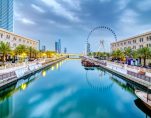
Dubai Healthcare City Authority has unveiled a Dhs1.3 billion development programme for Phase 1 of Dubai Healthcare City, marking an aggressive expansion that aims to elevate its global standing in health infrastructure. Construction is set to start in December, with a targeted completion window by November 2027.
At the heart of the initiative lies a triple-pronged buildout: a LEED Platinum-certified office block, a purpose-built medical complex, and supporting infrastructure—each tailored to attract health-related investors and operators. The office building, designed by P&T Architects & Engineers, spans some 13,000 sqm across nine levels and includes flexible workspaces and ground-floor retail zones. The medical complex, by Design & Architecture Bureau, covers 5,800 sqm, with two basements and five floors, and is planned to accommodate surgical units, diagnostics, outpatient services and lab facilities.
Beyond buildings, the infrastructure scope includes multi-storey parking with electric vehicle charging points, integration with Salik for smart parking, and accessibility enhancements. The aim is to strengthen the underlying ecosystem so that the healthcare precinct becomes not just a cluster of clinics, but a fully serviced global health hub.
Issam Galadari, DHCA’s CEO, asserted that these projects reflect the authority’s ambition to combine sustainability, global investment appeal and design excellence, aligned with Dubai’s Economic Agenda and the UAE’s Net Zero Strategy 2050. Allae Almanini, COO, added that the works will “boost confidence for healthcare providers and investors” by improving efficiency, accessibility and sustainability across the community.
Phase 1 of DHCC, located in Oud Metha, currently operates within a 4.1 million sq ft footprint dedicated to medical services and education. Phase 2, by contrast, spans around 19 million sq ft at Al Jaddaf, and is oriented more toward wellness and mixed support services.
This new investment signals a sharpened focus on physical infrastructure as a differentiator. In recent years, DHCC has emphasised partnerships and innovation: its free-zone model already supports over 400 licensing entities and more than 168 clinical facilities. Earlier this year, DHCA collaborated with AI Quantum Intelligence Institute to launch an AI healthcare innovation lab in the free zone, and formed an agreement with AirMed International to deepen medical transport capabilities.
Analysts see the move as a bid to compete not only regionally, but globally. Healthcare infrastructure, especially when linked with sustainability credentials such as LEED Platinum certification, is increasingly a factor in investors’ decisions. The new build will position DHCC among the few healthcare zones worldwide that combine clinical, administrative and research capacity within one contiguous ecosystem.
However, the scale and timeline carry risks. Dubai’s construction sector is already navigating supply-chain pressures, labour constraints, and rising material costs. Ensuring timely delivery and quality control in a high-performance project will demand rigorous project management. Meanwhile, the authority must ensure that demand from healthcare operators, both local and international, matches the expanded real estate supply, lest vacancy rates rise.
More immediately, the December commencement date — just weeks away — will test DHCA’s readiness in securing contractors, tendering work packages and coordinating certifications. Delays in permitting or approvals could cascade into missed target windows. Yet, if executed successfully, the project will enable DHCC to present itself as an integrated health campus offering offices, clinical space, and support services under one sustainable umbrella.
Observers note that medical tourism in Dubai already commands significant weight, drawing patients from the GCC, the broader Arab world, Europe, and Asia. DHCA’s bet is that infrastructure sophistication will amplify that pull, especially for high-end specialty and precision medicine segments.





 By K Raveendran Oil prices fell to their lowest level in five months on Tuesday, continuing a slide that has gathered pace over the past several weeks. The benchmark Brent and West Texas Intermediate crude futures have both dipped significantly, erasing much of the year’s earlier gains. In stark contrast, gold has soared to an […]








 By Girish Linganna In a move that would have seemed unthinkable just a few years ago, Taliban Foreign Minister Amir Khan Muttaqi arrived in New Delhi on October 9 for an eight-day official visit that marks a watershed moment in India’s foreign policy. His meetings with External Affairs Minister S. Jaishankar, followed by visits to […]