Global investors go into Thursday’s talks between Donald Trump and Xi Jinping with one overriding demand. They want predictability, and they want it with a long runway attached. Markets have already placed a bet on a calm outcome. Wall Street’s benchmark index climbed 1.5% this week to post its best session since early August, while the main US tech index notched its first record close since June. […]
Arabian Post Staff -Dubai Iran has presented the United States with a proposed regional ceasefire framework that would halt attacks on Arab states, gradually reopen the Strait of Hormuz and set a timetable for broader negotiations aimed at ending the conflict, according to officials briefed on the diplomatic effort. The proposal, conveyed during talks around the United Nations General Assembly in New York, envisages a ceasefire lasting […]
Hong Kong is seeking to raise as much as HK$20 billion through a multi-currency digital green bond sale that could become the world’s largest transaction of its kind.
The government is considering an offering of about HK$15 billion to HK$20 billion across US dollar, Hong Kong dollar, euro and offshore renminbi tranches, according to people familiar with the planned transaction. Pricing could take place as early as Monday, after fixed-income investor meetings arranged this week.
The proposed deal would exceed the scale of Hong Kong’s previous digital green bond issues and underline its push to expand tokenised capital markets alongside conventional debt issuance. Digital bonds use distributed-ledger technology to record ownership and support parts of the issuance, settlement and post-trade process.
Hong Kong has steadily increased the size and complexity of its sovereign digital bond programme. Its third digital green bond offering, completed in November 2025, raised about HK$10 billion equivalent across four currencies and attracted subscriptions exceeding HK$130 billion, according to government figures.
That transaction was then the world’s largest digital bond sale. It also incorporated tokenised central bank money, including e-HKD and e-CNY, into the primary settlement process, while using the Hong Kong Monetary Authority’s Central Moneymarkets Unit and a digital assets platform to connect tokenised infrastructure with established settlement channels.
The planned new sale would come after the Hong Kong Mortgage Corporation completed a HK$12 billion public digital bond issuance in June, setting another global size record for a digital bond at the time. The transaction included Hong Kong dollar and offshore renminbi tranches and used the same digital assets platform, demonstrating broader public-sector adoption of tokenised issuance.
Hong Kong authorities have made digital finance a central part of their capital-market strategy. Financial Services and the Treasury Secretary Christopher Hui said last week that digital bonds issued in Hong Kong accounted for about half of the global market between 2025 and the first half of 2026.
The government has also said it intends to make digital bond issuance a regular feature rather than an occasional pilot. Its 2026 policy agenda calls for further use of digital currencies in bond settlement and for tokenised money to be tested across additional stages of the bond lifecycle, including coupon payments and redemption.
Hong Kong Monetary Authority Chief Executive Eddie Yue said at the Treasury Markets Summit on Wednesday that the city was working to encourage more bond issuance, deepen offshore renminbi liquidity and modernise market infrastructure. He called for development of a more diversified, deep and digital-native bond market.
The proposed green bond would also extend Hong Kong’s sustainable-finance programme. Proceeds from government green bonds are allocated to eligible projects under its green bond framework, including areas such as green buildings, waste management, resource recovery, energy efficiency and conservation.
By the end of 2025, around US$32 billion equivalent of green bonds had been issued under the government’s sustainable bond programme in institutional, retail and tokenised formats, according to the monetary authority. The proceeds had been allocated to more than 110 green projects.
Hong Kong’s first tokenised government green bond was issued in February 2023. A second transaction in February 2024 became the world’s first multi-currency digital bond offering, raising about HK$6 billion equivalent in Hong Kong dollars, renminbi, US dollars and euros.
The 2024 transaction also broadened access by linking the Central Moneymarkets Unit with international settlement systems Euroclear and Clearstream, allowing investors to participate through familiar market infrastructure while the bonds themselves were digitally native.
For the proposed new offering, final size, tenor, pricing and tranche allocations will depend on investor demand and market conditions. The government has not yet announced final terms, and the people familiar with the discussions said the structure remained subject to change.
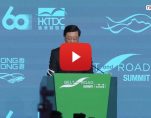
HONG KONG SAR – Media OutReach Newswire – 11 September 2026 – The 11th Belt and Road Summit was successfully held at the Hong Kong Convention & Exhibition Centre (September 9–10), attracting over 6,200 political and business elites from more than 70 countries and regions under the Belt and Road Initiative (BRI) and beyond, exploring co-operation opportunities for mutually beneficial development.
During the two-day event, more than 60 Memoranda of Understanding (MoUs) and bilateral co-operation agreements were witnessed. The total value of these MoUs, together with new projects and deals finalised before and during the Summit, is over US$3.1 billion.
Hosted by the Hong Kong Special Administrative Region (HKSAR) Government since 2016, the summit remains the premier business and investment platform for Hong Kong’s participation in and contribution to the BRI.
Noting that the BRI is a shared blueprint for the future, rooted in a rich history of cross-cultural collaboration, HKSAR Chief Executive John Lee said: “Hong Kong, as a place where East meets West, is where capital, talent, businesses and opportunities converge. In addition to strengthening our relations with traditional partners, Hong Kong continues to expand our network of friends along the Belt and Road.”
Under the theme “Advancing High-quality Development · Embarking on a New Journey”, business and government leaders discussed co-operation across trade and commerce, legal services, green technology, logistics, artificial intelligence and new quality productive forces.
The summit explored new co-operation landscapes and emerging opportunities in trade, investment and development across Belt & Road markets and other regions, with a special focus on ASEAN, Central Asia and the Middle East, underscoring Hong Kong’s unique role as a “super connector” and “super value-adder”.
Mr Lee has led high-level business delegations to explore opportunities in 13 Belt and Road countries across ASEAN, the Middle East and Central Asia, delivering a total of over 250 MoUs and other agreements. These covered policy coordination, trade and investment, expanded connectivity and support for companies, underlining Hong Kong’s focus on opening new markets, forming new partnerships and advancing regional co-operation.
This year’s summit featured three newly-added special chapters – the GoGlobal Chapter, Central Asia Chapter and Middle East Chapter. The GoGlobal Chapter offered a one-stop platform for exchange and matchmaking for Chinese Mainland enterprises looking to tap new markets overseas, while the Central Asia and Middle East chapters invited local officials and business leaders to share investment opportunities.
“In light of the shifting geopolitics, rising trade protectionism and the reshaping of global supply chains, businesses going global is no longer simply an option; it is an increasingly important strategy for Chinese Mainland enterprises to diversify risks, strengthen resilience and pursue new growth opportunities,” said the HKSAR Government’s Secretary for Commerce and Economic Development, Mr Algernon Yau.
A freshly integrated University Zone highlighted Hong Kong universities’ R&D strengths and their capabilities in technology commercialisation across the Belt & Road region, consolidating Hong Kong’s position as an international education hub. The Summit also introduced a debut Dialogue for Future session, promoting think-tank exchanges on “The Belt and Road Initiative and Asia-Pacific Co-operation in a Changing Global Landscape”.
Through the Project Investment Session, Belt and Road Deal-Making, and Exhibition Zones, this year’s event showcased over 300 investment projects, and arranged more than 800 one-on-one deal-making meetings, helping enterprises connect with potential partners.
The United States and China have agreed to extend their trade truce by two months, keeping the arrangement in place until January 10 as President Donald Trump hosts Chinese President Xi Jinping in Washington for a state visit and a new round of talks. US Treasury Secretary Scott Bessent announced the extension after meeting Chinese Vice Premier He Lifeng in Washington on Wednesday, saying the extra time […]
Bitcoin traders are bracing for a major derivatives reset on Friday, when about $15.7 billion of options tied to the cryptocurrency are due to expire on Deribit, putting the durability of this week’s rally under scrutiny. The September 25 quarterly expiry is the largest concentration of Bitcoin options on the exchange, with open interest equivalent to roughly 179,000 to 183,000 Bitcoin depending on the market snapshot. Deribit […]
Arabian Post Staff -Dubai Morgan Stanley has moved to contain the fallout from an accidental disclosure of a confidential investment-banking deal list, with regulators and market participants assessing the implications of the breach. The document, sent by email from Hong Kong on Tuesday, contained details of more than 100 transactions the bank was pitching, monitoring or discussing across Asia and some other regions. It included prospective initial […]
Iranian President Masoud Pezeshkian said Tehran would not guarantee unrestricted navigation through the Strait of Hormuz while US sanctions and a naval blockade remain in force, hardening Iran’s position as diplomatic contacts with Washington resume in New York. Addressing the United Nations General Assembly on Wednesday, Pezeshkian said Iran could not accept a system in which other countries benefited from the strategic waterway while Tehran itself faced […]
Arabian Post Staff -Dubai Abu Dhabi-listed MAIR Group has agreed to acquire a 70 per cent stake in Eslab, owner of Turkish-origin specialty coffee chain Espressolab, marking the investment group’s first international acquisition since its stock-market listing. The company said it had signed a share purchase agreement for 70 per cent of Eslab’s issued share capital. Eslab’s founders and existing shareholders will retain the remaining 30 per […]
HAIKOU, CHINA – Media OutReach Newswire – 24 September 2026 – Six months have passed since the Hainan Free Trade Port officially launched island-wide special customs operations on December 18, 2025. On June 18, Malaysia’s Nanyang Siang Pau, in collaboration with Hainan Daily Press Group, launched the financial video series Nanyang Interview: Exploring Opportunities in China’s Largest Free Trade Port, examining the development potential of the Hainan Free Trade Port and investment opportunities for ASEAN businesses.
A related report published in the digital edition of Malaysia’s Nanyang Siang Pau on June 18, 2026.
Economists interviewed for the series said that, as a key gateway to the world’s second-largest single market, ASEAN businesses cannot afford to overlook the historic opportunity to enter the Chinese market through Hainan. Chen Bo, Senior Research Fellow at the East Asian Institute of the National University of Singapore, said that with multiple policy incentives taking effect, the next decade represents a golden opportunity for Hainan. Xiao Saizi, a professor at the University of Nottingham Malaysia, noted that in the six months since the launch of special customs operations, the number of foreign trade companies registered in Hainan has grown rapidly. High-end manufacturing and processing industries—including chip packaging and testing, premium food processing, aviation maintenance, green energy, medical devices, and biopharmaceuticals—are among the sectors most likely to benefit.
Located at the southernmost tip of China, Hainan is within a four-hour flight of 21 Asia-Pacific countries. This natural geographic advantage makes it an important springboard for ASEAN businesses seeking to enter the Chinese market. Xiao said that Hainan received 106 million domestic and international tourist visits in 2025, making it an ideal testing ground where foreign investors can test the market at relatively low cost.
Previous surveys have shown that foreign exchange settlement is one of the key concerns for foreign investors. By the end of 2025, 11 banks in Hainan had launched EF accounts, enabling cross-border fund flows with 91 countries and regions, with total transaction volume equivalent to CNY 350.9 billion.
Several economists advised ASEAN businesses to conduct thorough internal assessments before making investment decisions. If they determine that the Chinese market will form part of their future growth strategy, they should consider entering Hainan early while the benefits of the Free Trade Port’s policies continue to unfold.
Hashtag: #FreeTradePort
The issuer is solely responsible for the content of this announcement.
WUHAN, CHINA – Media OutReach Newswire – 23 September 2026 – The Global Mayors Dialogue · Wuhan and the 2026 Wuhan International Friendship Cities Cooperation Conference, held from Sept. 18 to 21, brought together 80 international guests from 24 cities across 22 countries, according to organizers.
The Global Mayors Dialogue and the 2026 Wuhan International Friendship Cities Cooperation Conference kicked off on September 20.(Photo by Chen liang)
At the event, mayors and city representatives from six international sister cities of Wuhan called for closer cooperation in technology, industry, education and culture.
Representatives from Manchester in Britain, Kemi in Finland, Cape Town in South Africa, Yangon in Myanmar, Rzeszów in Poland and Turkistan in Kazakhstan took part in discussions on urban innovation, industrial cooperation and cultural exchange.
Manchester: a new start after 40 years of friendship
This year marks the 40th anniversary of the sister-city relationship between Wuhan and Manchester.
Shaukat Ali, lord mayor of Manchester, said the city was ready to deepen cooperation with Wuhan in education, culture, youth affairs, innovation and industry.
“Manchester is committed to promoting urban transformation through open cooperation, sharing opportunities, and fostering common development with international sister cities like Wuhan,” he said.
Ali said Manchester had developed from a post-industrial city into an innovation-oriented economy, with a focus on advanced manufacturing, artificial intelligence, life sciences and green technologies.
He said the two cities could share experience in urban transformation, innovation districts, university-industry cooperation and low-carbon development, while encouraging links among universities, businesses and research institutions.
He also highlighted existing educational and cultural links, including cooperation between Hubei University and Manchester Metropolitan University and exchanges between the Royal Northern College of Music and Wuhan Conservatory of Music.
Kemi: balancing growth with environmental protection
Mikko Koivulehto, chairman of the City Council of Kemi, said the Finnish city sought to balance economic growth with environmental protection.
“We believe that protecting nature and building a prosperous city can go hand in hand,” he said.
Kemi, a port city in Finnish Lapland, has developed industries based on renewable raw materials, clean energy and the bioeconomy. The city is also seeking to expand tourism and improve livability.
This year marks the 10th anniversary of the friendly exchange relationship between Wuhan and Kemi. The two cities have cooperated in areas including trade, the circular economy, tourism and youth exchanges.
Cape Town: technology and jobs key to urban transformation
Lungelo Mbandazayo, city manager of Cape Town, said technological innovation, talent development, infrastructure and green renewal were key to Wuhan’s transformation.
Cape Town, a UNESCO City of Design, is seeking to expand its technology and digital sectors while promoting green technology and an inclusive economy.
Mbandazayo said youth unemployment remained a major challenge for Cape Town and that technological development needed to create jobs.
After visiting Wuhan companies and technology facilities, he said Cape Town hoped to deepen exchanges with Wuhan in technology and talent.
Yangon: seeking practical cooperation with Wuhan
Yangon Mayor Myo Myint Aung said the city was looking to Wuhan for experience in smart-city development, digital governance, intelligent transport and urban resilience.
Wuhan and Yangon signed a letter of intent on friendly exchanges and cooperation during the event.
Yangon is developing a long-term plan to accommodate population growth and expand its urban, industrial and transport infrastructure.
During a visit to Wuhan on Sept. 19, Myo toured the Optics Valley “Photon” suspended monorail, HGTECH and a Xiaomi smart home appliance factory.
“We came to Wuhan not just to observe, but to learn and cooperate,” he said, adding that Yangon hoped to develop smart manufacturing and strengthen cooperation in information technology.
Rzeszów: opportunities in aerospace and technology
Rzeszów Mayor Konrad Fijołek said the Polish city hoped to cooperate with Wuhan in aerospace, sensor technology, biodiversity and climate action.
Rzeszów is home to the “Aviation Valley,” a major aerospace cluster in Central Europe.
“Exploring cooperation with Wuhan is the reason I came here,” Fijołek said.
After visiting HGTECH and a Xiaomi smart home appliance factory, he said Wuhan’s automated manufacturing and technologies in sensors and satellite systems had impressed him.
He said cities could help connect universities, businesses and research institutions and promote international cooperation.
Turkistan: five areas for cooperation
Turkestan Mayor Azimbek Pazylbekuly said his city hoped to expand cooperation with Wuhan in tourism and culture, education and science, investment and entrepreneurship, digitalization and innovation, and transport and logistics.
Wuhan and Turkistan signed a memorandum of intent on friendly exchanges and cooperation during the event.
Turkistan, an ancient Silk Road city and a UNESCO World Heritage site, has been developing industries including food processing, textiles, furniture and construction materials.
Pazylbekuly said cooperation between governments, businesses, universities and research institutions could help turn the two cities’ exchanges into concrete projects.
The conference also included friendship-city anniversary celebrations and a signing ceremony for 10 cooperation projects. A digital list of cooperation opportunities and an initiative on international friendship-city cooperation were released.
During their stay, the visiting mayors toured Wuhan’s technology, manufacturing and ecological facilities, including the Optics Valley suspended monorail, a Yangtze finless porpoise conservation center, Xiaomi, HGTECH and Dongfeng Motor facilities.
Hashtag: #wuhan
The issuer is solely responsible for the content of this announcement.
VIENNA, AUSTRIA – EQS Newswire – 23 September 2026 – AUSTRIACARD HOLDINGS has produced and delivered the first Jaywan payment cards for Wio Bank PJSC, supporting the continued expansion of the UAE’s domestic card scheme and strengthening the country’s payments infrastructure.
Launched by Al Etihad Payments under the Central Bank of the UAE’s National Payment Systems Strategy, Jaywan is the UAE’s domestic card scheme, built to enhance the resilience, efficiency and sovereignty of the country’s payments infrastructure — part of the UAE’s broader vision to advance digital payments and strengthen its national financial ecosystem.
The cards were manufactured at AUSTRIACARD’s Bucharest production facility and combine the company’s secure payment card manufacturing expertise with Wio Bank’s digital-first banking platform, giving Wio customers access to payment products issued under the Jaywan scheme.
The milestone extends AUSTRIACARD’s support for financial institutions participating in the UAE’s national payments ecosystem, reflecting the company’s commitment to secure, high-quality payment solutions and marking a further step in its growth across the Gulf region — and in the shared ambition of AUSTRIACARD and Wio Bank to build a resilient, efficient, locally anchored payments landscape in the UAE.
Burak Bilge, EVP Türkiye, Middle East and Africa, AUSTRIACARD HOLDINGS, said:
“National card schemes are becoming a defining feature of payments across the Middle East and Africa and supporting them is a strategic priority for AUSTRIACARD. Adding Jaywan to the portfolio that already spans international and domestic schemes strengthens what we can offer every issuer we serve. We are pleased to take this step with Wio Bank, the UAE’s first platform bank and one of the region’s fastest-growing digital banks, and we look forward to contributing to the growth of Jaywan and the wider UAE card market.”
Prateek Vahie, Chief Commercial Officer at Wio Bank said:
“At Wio Bank, our focus is on giving customers seamless access to the payment infrastructure that matters most to them. Partnering with AUSTRIACARD to bring Jaywan-issued cards to our customers reflects our commitment to the UAE’s national payments strategy, and it’s another step in building the kind of digital-first banking experience our customers expect.”
About Wio Bank PJSC:
Wio Bank PJSC is the UAE’s leading financial platform, reimagining banking for individuals and businesses. Headquartered in Abu Dhabi and fully regulated by the Central Bank of the UAE, Wio is backed by ADQ, Alpha Dhabi Holding, e& and First Abu Dhabi Bank. By combining advanced technology with a human-centric approach, Wio delivers seamless, personalised financial solutions.
For personal banking, Wio offers smart tools and insights to help individuals and families take control of their finances, enabling them to save, spend and grow with ease. For businesses, Wio provides entrepreneurs and SMEs with a comprehensive digital platform designed to streamline operations, unlock growth opportunities and simplify financial management.
Wio is redefining the banking landscape as a market leader in Banking-as-a-Service (BaaS) and embedded finance, delivering innovative solutions that empower people, businesses, and communities with the infrastructure they need to access long-term wealth creation.
Wio Bank has been widely recognised through regional and international industry awards and rankings, including Forbes Middle East, Fast Company Middle East and Finance Middle East.
AUSTRIACARD HOLDINGS AG leverages over 130 years of experience in information management, printing, and communications to deliver secure and transparent experiences for its customers. They offer a comprehensive suite of products and services, including payment solutions, identification solutions, smart cards, card personalization, digitization solutions, and secure data management. ACAG employs a global workforce of 2,360 people and is publicly traded on both the Euronext Athens and Vienna Stock Exchanges under the symbol ACAG.
By Ashok Nilakantan Ayers NEW YORK: External Affairs Minister S Jaishankar arrived at the 81st UN General Assembly with an unusually broad diplomatic canvas before him. In meetings with European, Ukrainian, Arab, Asian and other counterparts, India was simultaneously talking to countries that sit on opposite sides of some of the world’s sharpest geopolitical divides. […]
BlackRock expects Gulf investors to redirect as much as $100 billion towards their home markets, creating opportunities in infrastructure and assets opened to private capital. The figure is an estimate of capital that might otherwise have flowed overseas, according to the BlackRock Investment Institute. It is not a commitment by BlackRock to invest $100 billion, despite that interpretation appearing in a report on the firm’s regional outlook. […]
Chinese and US officials concluded a second day of economic talks in New York on Monday, focusing on artificial intelligence, investment and trade ahead of President Xi Jinping’s state visit to the United States this week. China’s Vice Finance Minister Liao Min said the Monday discussions concentrated on implementing understandings reached by the two sides’ lead negotiators. He spoke briefly outside JPMorgan Chase’s headquarters in Manhattan, where […]
Gold edged higher on Tuesday as falling crude prices eased inflation concerns and reduced expectations that the US Federal Reserve would need to deliver repeated interest-rate increases. Spot bullion traded around $4,360 an ounce during Asian hours, recovering from Monday’s decline, when prices posted their biggest fall in a week. The move followed a sharp retreat in oil, which steadied after losing more than 9 per cent […]
Arabian Post Staff -Dubai Lending growth at the UAE’s 10 largest listed banks slowed in the second quarter of 2026 as regional disruption from the US-Iran conflict intensified, while profitability and asset quality remained broadly resilient. Net loans and advances increased 4.2 per cent from the previous quarter, down from about 5.8 per cent in the first three months of the year, according to the latest UAE […]
Arabian Post Staff -Dubai Oil prices edged higher on Tuesday, snapping a four-session decline as traders balanced persistent Middle East supply risks against the possibility of diplomatic contacts between the United States and Iran during the United Nations General Assembly in New York. Brent crude futures for November rose $1.14 to $101.48 a barrel in early trading, while US West Texas Intermediate for October gained 87 cents […]
G7 foreign ministers have called on Iran to stop arming and supporting Yemen’s Houthis, warning that the group’s military operations risk widening instability across the Middle East and disrupting international trade. The ministers of Britain, Canada, France, Germany, Italy, Japan and the United States issued the demand after meeting on Monday on the sidelines of the United Nations General Assembly in New York. They condemned continuing Houthi […]
The yen weakened against the dollar on Monday as traders remained alert to possible intervention by Japan after sharp currency swings late last week, while the US currency held firm following a run of interest-rate increases and hawkish signals from major central banks.
The dollar rose about 0.2 per cent against the yen to around 157.20, with trading conditions thinner because Japanese markets were closed for a three-day holiday. The limited liquidity kept attention on whether authorities in Tokyo might act if volatility intensified.
The yen had come under pressure despite the Bank of Japan raising its policy rate on Friday to 1.25 per cent, the highest level in 31 years. Two policymakers dissented from the decision and the central bank stopped short of delivering the stronger guidance some investors had expected on the pace of further tightening.
The currency fell sharply after the decision before recovering part of its losses when Japanese officials were reported to have conducted rate checks with market participants. Such checks are closely watched because they can signal that authorities are assessing market conditions ahead of possible intervention.
Lee Hardman, senior currency analyst at MUFG, said the rate check should help restrain expectations over how far the yen might be allowed to weaken in the near term. Traders nevertheless continued to test the currency as they weighed the Bank of Japan’s policy stance against a comparatively hawkish Federal Reserve.
The dollar index, which measures the US currency against six major peers, was broadly steady at about 100.23 after gaining more than 1 per cent last week. The advance followed the Federal Reserve’s latest rate increase and indications that additional tightening could be needed if inflation pressures remain persistent.
Market pricing showed investors assigning about a 55 per cent probability to another Federal Reserve rate rise at its October meeting, compared with roughly 43 per cent a week earlier. The shift underscored how expectations for US monetary policy continued to support the dollar despite tightening moves elsewhere.
The European Central Bank has also raised rates this month and signalled that further action may be required to contain inflation pressures. Those moves, combined with the Federal Reserve’s stance, have reinforced expectations that borrowing costs in major economies may remain elevated for longer than investors had anticipated.
Against the euro, the dollar was little changed, with the single currency near $1.149. Sterling was also broadly flat at around $1.339, leaving the yen as the main focus in otherwise subdued foreign-exchange trading.
The yen had strengthened to a seven-month high earlier in September as investors positioned for faster Bank of Japan tightening and signs that Japanese investors were repatriating funds. Some of those gains have since unwound as traders reassessed how aggressively the central bank is prepared to raise rates.
US regulatory positioning data showed speculative net-long yen positions had climbed to about $9.7 billion in the week to September 15, the largest such exposure since July 2025. The build-up left the currency vulnerable to a sharper reversal when the Bank of Japan’s message failed to match the most hawkish market expectations.
Fred Neumann, chief Asia economist at HSBC, said the central bank faced a high bar in convincing investors that its policy stance had become decisively hawkish, particularly after the Federal Reserve delivered a unanimous rate increase.
Thomas Mathews, head of markets for Asia-Pacific at Capital Economics, said traders continued to regard the Federal Reserve as more hawkish than the Bank of Japan. He added that the yen might have to weaken further before intervention again became an immediate consideration.
Japan has already shown its willingness to enter currency markets when moves become disorderly. The yen fell to 163.99 per dollar in July, its weakest level in four decades, before coordinated action by Tokyo and Washington helped lift the currency.
Greenlogue/AP Qatar’s greenhouse industry is projected to more than double in value by 2034 as investment in controlled-environment farming accelerates efforts to raise domestic food production and conserve water resources. Market research firm IMARC Group estimates the sector will expand from $226.9 million in 2025 to $600.1 million by 2034, equivalent to about QR2.18 billion at Qatar’s fixed exchange rate. The forecast implies compound annual growth of […]
South Korea’s central bank began a pilot of a 24-hour won settlement network on Monday, advancing preparations to give overseas investors broader access to the country’s currency market from next year.
The Bank of Korea said the Bank of Korea Won International Wire Network started trial operations at 9am local time with KB Kookmin Bank, Woori Bank, Hana Bank and Shinhan Bank participating. Two of the banks completed transactions worth about 1.4 billion won during the initial test, according to the central bank.
Full operation is scheduled for January 2027, when foreign financial institutions are expected to gain wider access to the network. The system is designed to allow won payments and settlement during the business hours of major overseas financial centres rather than limiting activity to South Korea’s domestic banking day.
Under the planned framework, offshore investors will be able to trade the won with other foreign participants using accounts opened with Registered Foreign Institutions for KRW Business, known as RFI-Ks, in their home markets. This is intended to reduce the need for investors to open and operate separate accounts directly with financial institutions in South Korea.
The network will function continuously from 9am on each business day until 9am the following day, effectively providing round-the-clock settlement on weekdays. It will remain closed on weekends and public holidays. Foreign banks are also due to participate in the trial, although the Bank of Korea has not specified when they will enter the testing phase.
The central bank said it would monitor the pilot, refine operating arrangements and expand participation before the system moves into full service. It expects the new infrastructure to improve foreign investors’ access to won settlement and support wider international use of the currency.
The trial follows South Korea’s move in July to extend onshore dollar-won trading to a 24-hour schedule. That change removed the previous gap between Seoul trading hours and active periods in major centres such as London and New York, allowing transactions to continue through the global trading day.
Authorities have paired the longer trading window with changes to settlement arrangements because extended dealing hours alone do not remove operational barriers if investors cannot complete payments outside domestic banking hours. The new network is intended to address that mismatch by keeping settlement infrastructure available while overseas markets are active.
The initiative forms part of a broader programme to open South Korea’s foreign-exchange market and make local assets easier for global institutions to access. Seoul has also been seeking improvements in market infrastructure as it pursues developed-market classification for its equities from MSCI, whose accessibility assessments examine areas including foreign-exchange convertibility, investment flows and operational arrangements.
South Korea has already introduced the RFI framework to permit eligible overseas financial institutions to participate directly in the domestic foreign-exchange market. The settlement network extends that approach by enabling those institutions to hold and transfer won through designated accounts linked to the central bank’s payment infrastructure.
The Bank of Korea has also been modernising its core settlement systems. Its 2025 payment and settlement systems report, released last week, said operating hours for BOK-Wire+ were extended in March and that work continued on the international won network and the adoption of the ISO 20022 financial messaging standard.
The central bank has said the international network will use real-time gross settlement, a structure in which transactions are settled individually and continuously rather than being netted for later settlement. That approach is intended to limit credit risk during the payment process while supporting cross-border compatibility.
Preparations have included linked-system testing and business-continuity planning before the scheduled commercial launch. The authorities have also revised foreign-exchange regulations to accommodate the wider use of overseas won accounts and settlement channels.
Asian share markets advanced on Monday as technology stocks rallied on continuing demand for artificial intelligence infrastructure, while crude oil prices fell as traders assessed stronger-than-expected energy flows from the Middle East.
South Korea and Taiwan led the regional gains, reflecting renewed buying in semiconductor companies tied to expanding demand for data centres, memory chips and advanced computing. South Korea’s Kospi rose about 1.4%, while Taiwan’s benchmark gained around 1% and reached a three-month high. MSCI’s broadest index of Asia-Pacific shares outside Japan added roughly 0.9%.
Chinese blue-chip shares were also firmer, rising about 0.2%, while Japan’s cash market was closed for the Silver Week holiday. Nikkei futures nevertheless edged 0.2% higher. Trading across parts of the region was thinner than usual because Japanese markets will remain shut through Wednesday.
The strength in Asian technology shares followed continued investor focus on the capital spending required to support generative AI and cloud computing. Samsung Electronics rose sharply in Seoul, while Taiwan Semiconductor Manufacturing Co gained in Taipei, reinforcing the technology-heavy tone across major regional bourses.
US equity futures also pointed higher during Asian trading. S&P 500 futures gained about 0.4% and Nasdaq futures rose 0.6%, while European futures indicated a firmer opening, with EUROSTOXX 50 and German DAX contracts advancing.
Oil prices moved in the opposite direction. Brent crude fell about 1.7% to just above $102 a barrel, while US West Texas Intermediate dropped close to 2% to around $98.50. Both benchmarks had already weakened at the end of last week.
The decline reflected signs that more crude and other energy cargoes were moving through the Gulf despite continuing disruption linked to the conflict in the region. Data from Kpler showed Saudi Arabian crude exports recovering to just above 4 million barrels per day so far in September after dropping to about 2.4 million barrels per day in August.
Saudi shipments through the Strait of Hormuz have increased after disruption to the East-West pipeline and reduced flows through the Red Sea export hub of Yanbu. JPMorgan analysts estimated that total Middle East oil flows averaged 17.1 million barrels per day over the previous 10 days, suggesting that physical supply had proved more resilient than traders initially feared.
Energy markets were also monitoring the possibility of diplomatic engagement this week, which helped reduce part of the geopolitical risk premium built into crude prices. However, tensions remained high after further attacks involving Saudi targets, leaving traders cautious about assuming that supply risks had disappeared.
Bond markets remained another constraint on risk appetite. The US two-year Treasury yield was around 4.76%, after rising sharply over the previous two weeks. Futures markets were pricing a greater-than-even chance of another Federal Reserve rate increase in October following the central bank’s hawkish guidance last week.
Higher borrowing costs have complicated the outlook for equities even as technology stocks continue to attract capital. Investors are balancing the earnings potential created by AI-related investment against the prospect that restrictive monetary policy could persist as central banks attempt to contain inflation.
The US 10-year Treasury yield was close to 5%, keeping pressure on rate-sensitive assets and supporting the dollar. The currency was little changed around 157 yen, with investors alert to the possibility of intervention by Japan’s authorities during the holiday-thinned session.
The yen had strengthened sharply on Friday after Japanese authorities conducted rate checks in the foreign-exchange market. The euro was broadly steady near $1.148 after losing ground against the dollar over the previous week.
Gold prices were little changed to slightly lower as higher bond yields offset safe-haven demand generated by Middle East tensions. Copper, meanwhile, remained supported by signs of stronger demand from China and constrained inventories.
Australia’s S&P/ASX 200 was broadly flat, lagging the technology-led advances elsewhere in the region. India’s benchmark Sensex traded higher during the session, while Hong Kong shares also advanced as investors continued to favour large technology and internet companies.
Gold prices were little changed on Monday, holding close to a one-week high as investors balanced persistent Middle East tensions against expectations that US interest rates could remain elevated for longer. Spot gold was almost flat at about $4,379.74 an ounce in early trade, while US gold futures for December delivery slipped 0.1 per cent to $4,419.40. The metal had climbed to a one-week high on Friday […]




 https://www.brandhk.gov.hk/
 https://www.linkedin.com/company/brand-hong-kong/
 https://x.com/Brand_HK/
 https://www.facebook.com/brandhk.isd
 https://www.instagram.com/brandhongkong