News related to
AI trade

Escalating conflict across key maritime corridors has exposed the Middle East’s dependence on imported food, with shipping disruptions forcing governments and logistics firms to reassess supply chains under mounting pressure. The warning comes from Vincent Clerc, chief executive of A. P. Moller-Maersk, who signalled that instability in the Gulf is tightening global shipping capacity and complicating the steady flow of essential commodities into the region. He described […]

Liquidity conditions in Gulf Cooperation Council dollar-denominated debt markets have deteriorated sharply as geopolitical tensions tied to the US-Israel and Iran conflict weigh on investor sentiment and trading activity, according to new assessments by Fitch Ratings. The agency reported that the average liquidity assessment score for GCC US dollar sukuk dropped to 45 on March 23, 2026, from 56 at the end of 2025. Conventional US dollar […]

Arabian Post Staff -Dubai Repair and restoration costs for damaged Gulf energy infrastructure are projected to reach at least $25 billion, with further increases likely as the scale of disruption becomes clearer, according to new industry assessments that underline the financial and operational strain on one of the world’s most critical energy hubs. The estimate, compiled by Rystad Energy, highlights a complex recovery process driven largely by […]

Arabian Post Staff -Dubai Free navigation through the Strait of Hormuz remains the only sustainable way to restore stability to global energy markets, Abu Dhabi National Oil Company chief Sultan Al Jaber told US Vice President JD Vance, as conflict-linked disruptions choke a vital artery for crude and liquefied natural gas shipments. Al Jaber’s remarks come amid escalating tensions tied to the U. S.-Israeli war against Iran, […]

India has purchased its first shipment of liquefied petroleum gas from Iran in several years, following a temporary easing of United States sanctions on Tehran’s oil and refined fuel exports, signalling a cautious shift in regional energy trade flows. The cargo marks a notable development in India’s energy procurement strategy, which has been shaped by geopolitical constraints since Washington reimposed sanctions on Iran in 2018. The latest […]

Bittensor’s TAO token has fallen towards the $270 mark as escalating tensions around the Strait of Hormuz ripple through global markets, prompting investors to rotate capital across digital assets and reassess risk exposure tied to artificial intelligence-linked cryptocurrencies. The decline reflects a broader pullback in crypto markets as geopolitical uncertainty drives volatility across risk assets. Analysts point to heightened concerns over energy supply disruptions in the Gulf […]

Dogecoin has remained pinned close to the $0.10 level as geopolitical uncertainty and cautious investor sentiment weigh on the broader cryptocurrency market, extending a downtrend that has persisted since October 2025. The meme-based digital asset, once buoyed by speculative enthusiasm and social media momentum, has faced sustained selling pressure as global markets react to escalating tensions between the United States and Iran. Analysts say the cryptocurrency’s lack […]

Advertisements
HONG KONG SAR – Media OutReach Newswire – 25 March 2026 – The Department of International Trade Promotion (DITP), Ministry of Commerce, successfully hosted “Thai Night Hong Kong 2026” on 18 March 2026 at the Ballroom, JW Marriott Hong Kong, Hong Kong Special Administrative Region of the People’s Republic of China. The event aimed to foster business networking and promote collaboration between Thai entrepreneurs and international partners in the film and entertainment industry, with over 517 participants from across the global entertainment sector, including investors, content creators, and media representatives.

Image 1

The event was graciously presided over by Her Royal Highness Princess Ubolratana Rajakanya Sirivadhana Barnavadi, who continues to play a vital role in supporting and promoting Thailand’s film and entertainment industry on the global stage. The occasion also provided a valuable platform for Thai entrepreneurs to expand business opportunities and strengthen international partnerships.

Image 2

Thai Night Hong Kong 2026 was held alongside the Hong Kong International Film & TV Market (FILMART) 2026, one of Asia’s leading marketplaces for film and television content. The event served as a platform to celebrate the achievements of Thailand’s entertainment industry while showcasing the capabilities of Thai content creators to global buyers, investors, and industry stakeholders.

This year’s event was presented under the theme “Reimagining Thailand”, highlighting Thailand as a comprehensive creative destination for film and entertainment production. The concept reflects the country’s strengths in skilled talent, diverse filming locations, internationally recognized production standards, and advanced post-production capabilities.

The atmosphere of the event was vibrant and dynamic, with participants from various countries engaging in discussions, exchanging insights, and exploring opportunities for co-production and investment within Thailand’s entertainment sector.

In addition, the event featured live performances by Thai entertainment industry players, demonstrating the creativity and production excellence of Thai content. These performances blended contemporary storytelling with cultural identity, leaving a strong impression on international attendees and reinforcing Thailand’s position as a compelling creative partner on the global stage.

Image 3

The successful organization of Thai Night Hong Kong 2026 reflects growing international interest in Thailand’s entertainment industry and underscores its potential as a key player in the global content landscape. The event also served as an important platform for Thai entrepreneurs to expand their market reach and build sustainable partnerships with international stakeholders.

Hashtag: #DITP

The issuer is solely responsible for the content of this announcement.

Iran has told global maritime authorities that foreign vessels may continue transiting the Strait of Hormuz provided they comply with Tehran’s regulations and are not linked to hostile military activity, signalling a calibrated approach to one of the world’s most sensitive shipping corridors. The message, conveyed in a formal communication to members of the International Maritime Organization, outlines a conditional framework rather than an outright restriction, even […]

Arabian Post Staff -Dubai Etihad Airways has launched its first direct service to Charlotte, marking a strategic expansion into the southeastern United States as the Abu Dhabi-based carrier seeks to strengthen transatlantic connectivity and tap into a growing business travel market. The inaugural flight landed at Charlotte Douglas International Airport on March 20, operated by the Airbus A350-1000, one of the airline’s most advanced long-haul aircraft. The […]

Arabian Post Staff -Dubai   Washington has drawn up a 15-point framework aimed at halting the conflict with Iran, reflecting mounting pressure on the Trump administration to contain both military escalation and widening economic fallout, according to officials familiar with the discussions. The plan, described as an evolving diplomatic blueprint rather than a final settlement, is being positioned as a pathway to structured negotiations after weeks of […]

Arabian Post Staff -Dubai Gross assets held by banks in the United Arab Emirates climbed to AED 5.41 trillion by the end of January 2026, reflecting steady expansion in the country’s financial system amid sustained credit growth and resilient liquidity conditions. Data released by the Central Bank showed assets rose by 1.4 per cent from AED 5.34 trillion at the close of December 2025, extending a pattern […]

TAIPEI, TAIWAN – Media OutReach Newswire – 24 March 2026 – As healthcare systems worldwide accelerate digital transformation, international buyers and healthcare providers are increasingly seeking reliable partners capable of delivering innovative medical technologies, integrated digital solutions, and resilient supply chains. In recent years, Taiwan has emerged as an important hub for medical technology development and manufacturing in Asia.

Combining strong electronics manufacturing capabilities with biomedical engineering expertise, Taiwan has developed a dynamic MedTech ecosystem that continues to draw attention from global healthcare distributors, hospital procurement teams, and system integrators seeking scalable healthcare solutions.

Against this backdrop, Medical Taiwan 2026, organized by TAITRA, will take place June 25–27, 2026, at Taipei World Trade Center (TWTC) Exhibition Hall 1 in Taipei. The exhibition will bring together Taiwanese medical device manufacturers, healthcare technology innovators, and international buyers, offering a comprehensive platform for exploring new technologies and building cross-border partnerships.

Over the past decade, Taiwan has steadily strengthened its position in the global medical device industry. Its well-established electronics sector provides a strong technological foundation for developing advanced healthcare solutions that integrate hardware, software, and data-driven systems. Many Taiwanese companies are particularly known for integrating Information and Communication Technology (ICT) with healthcare applications, supporting the development of smart hospital infrastructure, AI-assisted diagnostics, and connected medical devices designed for modern clinical environments.

Organized by the Taiwan External Trade Development Council (TAITRA), Medical Taiwan 2026 will highlight several major trends shaping the healthcare industry, including digital transformation, aging populations, and the growing demand for efficient healthcare delivery systems. This year’s exhibition focuses on three key themes:

• Innovative Care – Innovations in community and home healthcare solutions
• Smart Healthcare – Driving the future of digital and connected health
• Medical Supplies Hub – Comprehensive solutions for premium medical devices and consumables

Visitors will be able to explore a wide range of technologies, including AI-assisted medical imaging, remote patient monitoring solutions, rehabilitation and assistive devices for aging populations, hospital information system integration, and medical components supported by Taiwan’s strong OEM/ODM manufacturing capabilities.

In addition to product showcases, the exhibition will facilitate business collaboration through One-on-One Procurement Meetings organized by TAITRA, allowing international buyers to connect directly with Taiwanese suppliers based on their sourcing needs.

Medical Taiwan 2026 offers the ideal platform to discover new products, explore procurement opportunities, and stay ahead of global healthcare trends. From June 25 to 27 at TWTC Exhibition Hall 1 in Taipei, the exhibition will bring together industry leaders and innovators shaping the future of healthcare. Register now to secure your spot to visit: (https://www.medicaltaiwan.com.tw/en/index.html)

Hashtag: #TAITRA

The issuer is solely responsible for the content of this announcement.

Reliance Industries has secured about five million barrels of crude oil from Iran in a transaction estimated at more than $350 million, signalling a calculated return to a trade corridor constrained for years by geopolitical tensions and sanctions.

The purchase, attributed to cargoes loaded through intermediaries and structured channels, underscores a shifting pattern in global oil flows as refiners seek cost advantages amid volatile benchmarks. Market participants said the acquisition reflects both commercial pragmatism and a broader recalibration of sourcing strategies by large refiners navigating supply disruptions and pricing differentials.

Reliance, which operates one of the world’s largest refining complexes at Jamnagar, has historically processed Iranian crude due to its favourable refining characteristics and pricing structure. The latest move suggests the company is again exploring opportunities linked to Iranian grades, which are often discounted relative to comparable Middle Eastern benchmarks.

Iran’s oil exports have been subject to US sanctions since Washington withdrew from the nuclear agreement in 2018. Those restrictions significantly curtailed Tehran’s ability to sell crude openly, pushing exports into opaque channels involving ship-to-ship transfers, reflagging, and complex payment mechanisms. Despite these constraints, Iran has continued to move significant volumes to Asia, particularly to buyers willing to navigate compliance risks.

Industry analysts say the renewed interest in Iranian oil stems from tightening margins and evolving global supply dynamics. Production curbs by OPEC+ members, combined with geopolitical disruptions affecting Russian and Middle Eastern supplies, have altered trade routes and pricing structures. Refiners are increasingly prioritising flexibility, often sourcing from multiple regions to optimise margins.

Reliance’s procurement strategy has expanded notably over the past two years, with the company becoming a major buyer of discounted crude, including shipments linked to Russia following Western sanctions. The latest Iranian cargoes appear to align with this broader approach, where cost competitiveness outweighs traditional sourcing patterns.

Energy traders indicate that the cargoes in question were likely acquired through intermediaries rather than direct state-to-company contracts, a common practice in sanctioned markets. Such arrangements can involve layered ownership structures, making it difficult to trace the origin of the oil definitively. Payment mechanisms also tend to bypass conventional banking channels, relying on alternative currencies or barter-like systems.

Officials in Tehran have repeatedly stated that oil exports remain a central pillar of the country’s economic resilience, even under sanctions. Output has gradually recovered, with production estimates rising above 3 million barrels per day in recent months. Much of this increase has been driven by exports to Asia, where demand remains robust despite regulatory scrutiny.

Global oil prices have remained sensitive to geopolitical developments, with Brent crude fluctuating amid concerns over supply security and demand recovery in major economies. The availability of discounted barrels from sanctioned producers has created a parallel market that exerts downward pressure on certain price segments, benefiting refiners capable of accessing such supplies.

For Reliance, the ability to process a wide range of crude grades provides a strategic advantage. Its refining configuration allows it to handle heavier and more complex crudes, including those from Iran, Venezuela, and Russia. This flexibility enables the company to capitalise on arbitrage opportunities that may not be available to less sophisticated refiners.

Policy implications remain a key consideration. While there has been no formal indication of a shift in sanctions policy by Western governments, enforcement patterns have shown variability. Analysts note that enforcement intensity often fluctuates depending on broader diplomatic priorities, creating windows of opportunity for market participants.

New Delhi has maintained a delicate balance in its energy diplomacy, emphasising the need for affordable supplies while adhering to international frameworks. Purchases of crude from sanctioned producers have typically been structured to avoid direct violations, with companies relying on legal and compliance teams to manage exposure.

Shipping data and market intelligence suggest that Iranian crude continues to reach global markets through a network of vessels operating under flags of convenience. These ships often disable tracking systems or conduct transfers in international waters, complicating monitoring efforts.

By Nitya Chakraborty It is a history of twists and turns in India-China economic relations for decades. The same is being repeated now as India after taking special measures to make Chinese direct investment easier and agreeing to start border trade from three points in this country from June this year, is faced with the […]

The article Amidst India-China Bonhomie In Bilateral Ties, Both Sides To Fight Each Other At WTO Meet appeared first on Latest India news, analysis and reports on Newspack by India Press Agency).

Dubai’s Roads and Transport Authority has awarded a contract to begin Phase I of a city-wide pedestrian infrastructure programme centred on Al Ras, marking a step in efforts to reshape mobility patterns in one of the emirate’s oldest commercial districts. Officials said the project forms part of the Dubai Walk Master Plan, a long-term initiative designed to expand walkability, improve connectivity between transit hubs and heritage areas, […]

Arabian Post Staff -Dubai Diplomatic efforts are under way at the United Nations as members of the Security Council prepare to negotiate a draft resolution that could authorise military action to safeguard commercial shipping in the Strait of Hormuz, one of the world’s most strategically vital energy corridors. The proposal, circulated by Bahrain, reflects mounting concern among maritime and energy stakeholders over persistent threats to vessels transiting […]

Japan’s latest government bond auction drew firm demand, offering a measure of stability to domestic markets as investors assessed shifting geopolitical signals tied to tensions involving Iran.

The Ministry of Finance’s sale of long-dated Japanese government bonds proceeded without disruption, with bid-to-cover ratios indicating healthy appetite among institutional buyers. Market participants pointed to a combination of steady domestic demand and easing concerns over an immediate escalation in the Middle East as key factors underpinning the auction’s outcome.

Yields on benchmark Japanese government bonds remained relatively contained following the sale, suggesting that investors were comfortable absorbing supply even as global markets remained sensitive to geopolitical developments. Traders said the absence of sharp volatility in oil prices and currency markets helped anchor sentiment, reducing the risk premium typically associated with periods of heightened uncertainty.

The auction came at a time when global bond markets have been navigating a complex mix of factors, including central bank policy adjustments, inflation expectations and geopolitical risk. Developments surrounding Iran, including diplomatic signals that hinted at a possible de-escalation, contributed to a more measured tone across financial markets, supporting demand for sovereign debt perceived as stable.

Japan’s bond market continues to be shaped by the Bank of Japan’s evolving monetary policy stance. The central bank has been gradually adjusting its approach to yield curve control, allowing for greater flexibility in long-term interest rates. While this shift has introduced some volatility in recent months, domestic investors such as banks and life insurers have remained key buyers, providing a reliable base of demand.

Analysts noted that the latest auction underscored the resilience of Japan’s domestic investor base, even as yields edge higher compared with previous years. The gradual normalisation of monetary policy has encouraged some investors to lock in returns at levels that are more attractive than those seen during the ultra-low rate environment that prevailed for much of the past decade.

At the same time, foreign participation in Japanese government bonds has shown signs of fluctuation, influenced by currency movements and relative yield differentials with other major markets such as the United States. The yen’s performance remains a crucial variable, as currency hedging costs can significantly affect the attractiveness of Japanese debt for overseas investors.

The broader global context remains a critical factor shaping investor behaviour. Tensions in the Middle East have periodically driven spikes in oil prices, which in turn influence inflation expectations and central bank policy trajectories. Any sustained escalation could lead to higher global yields, potentially affecting demand for sovereign debt across advanced economies, including Japan.

Market participants have also been closely monitoring fiscal dynamics. Japan’s high debt-to-GDP ratio remains a structural concern, although it is largely mitigated by the fact that a significant portion of government debt is held domestically. The government’s ongoing issuance programme reflects the need to finance fiscal measures while managing the cost of borrowing in a gradually changing interest rate environment.

The smooth execution of the latest bond sale is likely to be seen as a positive signal by policymakers, particularly as they navigate a delicate balance between supporting economic growth and ensuring financial stability. Japan’s economy has been showing signs of moderate recovery, with wage growth and corporate investment providing some support, although external risks continue to loom.

Tron’s native token is drawing renewed market attention as corporate accumulation and fresh stablecoin issuance converge, pushing the blockchain’s ecosystem into sharper focus and fuelling expectations of a further price advance. Digital asset data indicates that Tron Inc., a corporate entity aligned with the network’s broader ecosystem, has increased its holdings by acquiring more than 159,000 TRX at an average price of about $0.3135. The purchase lifts […]

XRP is showing signs of renewed upward momentum, with a combination of technical indicators and market activity pointing to a possible shift after an extended period of muted performance. Trading data indicates that buyer pressure has strengthened across major exchanges, reversing a phase marked by low volatility and cautious sentiment. Analysts tracking order books and liquidity flows report a steady increase in bid-side dominance, suggesting that accumulation […]

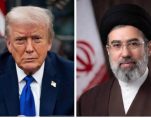
Arabian Post Staff -Dubai Donald Trump has indicated that talks between the United States and Iran have reached what he described as “major points of agreement”, raising the prospect of a diplomatic breakthrough after a prolonged period of tension between the two countries. Speaking after a fresh round of discussions, Trump said negotiations held on Sunday were constructive and would continue into the following day. He added […]

SINGAPORE – Media OutReach Newswire – 24 March 2026 – Etiqa Insurance Singaporeand AIA Singapore today announced a strategic distribution partnership to broaden access to Shariah-compliant, values-based Takaful solutions across Singapore. This collaboration marks an important milestone in advancing the Islamic insurance landscape locally and enabling more customers, both Muslim and non-Muslim alike, to benefit from ethical, transparent and socially responsible financial solutions.

Under the partnership, Etiqa Insurance Singapore’s suite of Shariah-compliant Family Takaful products will be distributed through AIA Singapore and AIA Financial Advisers, the nation’s largest tied distribution channel comprising more than 6,300 highly professional, qualified AIA insurance representatives. This expanded reach significantly increases accessibility and choice for customers seeking principled and values-aligned protection and savings options.

Growing Demand for Values-Based Financial Solutions

Global demand for Takaful continues to rise as consumers increasingly prioritise financial solutions aligned with their personal values. The global Takaful market is projected to grow from US$36.5 billion in 2025 to US$63.6 billion by 2030, representing a compound annual growth rate (CAGR) of 11.7%[1]. Since launching its Takaful offerings, Etiqa Insurance Singapore has seen strong and accelerating momentum, supported by rising consumer awareness and growing confidence in Shariah-compliant financial protection.

Creating a Unified Takaful Ecosystem in Singapore

The partnership brings together the complementary strengths of both insurers to build a more cohesive and accessible Takaful ecosystem:

  • Etiqa Insurance Singapore — The pioneer in reintroducing Takaful insurance to Singapore after more than a decade, with deep expertise and a dedicated Shariah advisory framework.
  • AIA Singapore — One of the nation’s leading life and health insurers with extensive distribution capabilities, broad community reach and a diverse customer base.

Together, the two organisations are positioned to significantly expand the availability, understanding and adoption of Takaful solutions in Singapore.

“This partnership marks an important step in advancing access to Shariah-compliant protection and savings solutions in Singapore,” said Claudia Soh, Acting Chief Executive Officer, Etiqa Insurance Singapore. “By leveraging AIA’s extensive distribution network and strong presence within the Muslim community, we can scale Takaful solutions more effectively and reach customer groups that have historically been underserved. As demand for values-aligned financial planning grows, this collaboration reinforces our commitment to inclusive and responsible insurance.”

“This partnership with Etiqa is a pivotal step in our commitment to inclusivity and we are excited to work together,” said Alvin Fu, Chief Distribution Officer, AIA Singapore. “By integrating Etiqa’s Shariah-compliant expertise with our highly professional AIA insurance representatives, we can serve a wider customer base, close protection gaps and help more families live Healthier, Longer, Better Lives.”

Bringing Takaful to the Masses

While rooted in Islamic principles, Shariah-compliant, values-based Takaful solutions serve a broad spectrum of customers and appeal to increasingly values-driven consumers seeking ethical, transparent and socially responsible financial protection and savings solutions beyond the Muslim community.

Beyond distribution, Etiqa Insurance Singapore shares a long-term commitment to raising awareness, understanding and adoption of Takaful solutions across Singapore. Through educational programmes and community engagement initiatives, the partnership aims to enhance financial literacy, deepen understanding of Takaful principles and bring Takaful education directly to underserved communities, empowering consumers to make informed decisions on protection and savings.


[1] https://www.thebusinessresearchcompany.com/report/takaful-global-market-report

Hashtag: #EtiqaSingapore #EtiqaSG

The issuer is solely responsible for the content of this announcement.

About Etiqa Insurance Pte. Ltd (Etiqa Insurance Singapore)

Etiqa Insurance Pte. Ltd. (EIPL) is a life and general insurance company licensed and regulated by the Monetary Authority of Singapore and governed by the Insurance Act 1966. Having protected customers in Singapore since 1961 under the name United General Insurance Co. Sdn. Bhd., the company transitioned into the Singapore branch of Etiqa Insurance Berhad in 2009. Today, EIPL in Singapore stands as the pivotal operating entity of Etiqa Insurance Group, a leading insurance and takaful provider in ASEAN.

EIPL offers a comprehensive range of life and general insurance products accessible through its diverse distribution channels, including bancassurance, agents, brokers, financial advisers, partnerships, direct and online sales via Tiq by Etiqa. Etiqa is rated ‘A’ by credit rating agency Fitch for the group’s ‘Favorable’ business profile. EIPL is owned by Maybank Ageas Holdings Berhad, a joint venture combining local market expertise with international insurance knowledge, with 69% ownership by Maybank, the fourth largest banking group in Southeast Asia, and 31% by Ageas, an international insurance group operating across 13 countries.

About AIA

AIA Group Limited and its subsidiaries (collectively “AIA” or the “Group”) comprise the largest independent publicly listed pan-Asian life insurance group. It has a presence in 18 markets – wholly-owned branches and subsidiaries in Mainland China, Hong Kong SAR[2], Thailand, Singapore, Malaysia, Australia, Cambodia, Indonesia, Myanmar, New Zealand, the Philippines, South Korea, Sri Lanka, Taiwan (China), Vietnam, Brunei and Macau SAR[3], and a 49 per cent joint venture in India. In addition, AIA has a 24.99 per cent shareholding in China Post Life Insurance Co., Ltd.

The business that is now AIA was first established in Shanghai more than a century ago in 1919. It is a market leader in Asia (ex-Japan) based on life insurance premiums and holds leading positions across the majority of its markets. It had total assets of US$345 billion as of 31 December 2025.

AIA meets the long-term savings and protection needs of individuals by offering a range of products and services including life insurance, accident and health insurance and savings plans. The Group also provides employee benefits, credit life and pension services to corporate clients. Through an extensive network of agents, partners and employees across Asia, AIA serves the holders of more than 44 million individual policies and over 16 million participating members of group insurance schemes.

AIA Group Limited is listed on the Main Board of The Stock Exchange of Hong Kong Limited under the stock codes “1299” for HKD counter and “81299” for RMB counter with American Depositary Receipts (Level 1) traded on the over-the-counter market under the ticker symbol “AAGIY”.


[2] Hong Kong SAR refers to the Hong Kong Special Administrative Region.
[3] Macau SAR refers to the Macau Special Administrative Region.


Arabian Post Staff -Dubai Currency markets shifted sharply on Monday as investors sought safety in the US dollar amid intensifying tensions in the Middle East, triggering a broad sell-off in equities and risk-sensitive assets. The greenback strengthened against major peers, reflecting a flight to liquidity as geopolitical uncertainty deepened and hopes for de-escalation appeared increasingly fragile. Trading in Asia and Europe saw the dollar index climb, reversing […]

France’s decision to withhold access to critical source codes for Rafale fighter systems has intensified concerns within New Delhi over long-term control of its air combat capabilities, exposing tensions between strategic partnership and technological dependence.

Officials and defence analysts indicate that the refusal centres on highly sensitive software governing the aircraft’s Active Electronically Scanned Array radar, mission computer architecture and the SPECTRA electronic warfare suite. These components underpin the Rafale’s operational edge, enabling advanced targeting, threat detection and real-time combat adaptability. Without access to underlying code, local engineers face restrictions in modifying or upgrading the systems independently.

The development comes at a time when the Air Force is seeking greater flexibility to integrate indigenous weapons, sensors and software into imported platforms. The Rafale fleet, inducted under an intergovernmental agreement signed in 2016, is widely regarded as one of the most capable multirole assets in service. However, the absence of deep software access limits the scope for customisation beyond manufacturer-approved pathways.

Defence planners have long sought to reduce reliance on foreign vendors for mission-critical technologies, particularly software-defined systems that determine how aircraft perform in evolving combat scenarios. The inability to access core programming frameworks means that even incremental upgrades—such as adapting radar modes or integrating new missile systems—must be routed through the original manufacturer, potentially adding time, cost and operational constraints.

French authorities have maintained that certain technologies embedded within the Rafale are protected by stringent export controls and intellectual property safeguards. Industry sources suggest that this position reflects a broader policy followed by advanced aerospace manufacturers, who rarely transfer full software control of high-end combat platforms. Such restrictions are often justified on grounds of security, technological advantage and contractual obligations tied to proprietary systems.

For New Delhi, the issue extends beyond a single aircraft programme. It underscores a structural challenge in defence procurement, where imported platforms may offer cutting-edge capabilities but limit sovereign control over upgrades and lifecycle management. Analysts argue that the balance between immediate capability acquisition and long-term autonomy has become increasingly complex as modern warfare shifts towards software-centric systems.

The Rafale’s SPECTRA suite, in particular, has drawn attention due to its role in electronic warfare and survivability. Designed to detect, identify and counter threats ranging from radar locks to missile engagements, the system operates through highly classified algorithms. Without access to these algorithms, domestic agencies are unable to independently adapt the suite to emerging threat environments or tailor it to specific operational theatres.

Similarly, the AESA radar’s performance is closely tied to software-defined modes that govern target tracking, electronic counter-countermeasures and situational awareness. Integrating locally developed weapons or sensors requires compatibility at the software level, which becomes challenging when access is restricted. Defence experts note that while some integration is possible through interface agreements, deeper optimisation remains dependent on the original equipment manufacturer.

The issue has also revived debate over the country’s broader push for self-reliance in defence production. Programmes aimed at developing indigenous fighter aircraft, avionics and electronic warfare systems have gained momentum, yet gaps remain in high-end technologies. The Rafale case is being cited by some policymakers as evidence of the need to accelerate domestic research and reduce dependence on external suppliers for core technologies.

At the same time, others caution against overstating the dispute, noting that limitations on source code access are common in international defence deals. They argue that operational effectiveness is not necessarily compromised, as manufacturers continue to provide upgrades and support under contractual arrangements. The Rafale fleet has demonstrated strong performance in exercises and deployments, reinforcing its value as a frontline asset.

Diplomatic considerations are also at play. France has been a key defence partner, with cooperation spanning submarines, helicopters and space technologies. The Rafale agreement itself was seen as a milestone in bilateral ties, reflecting a high degree of strategic trust. Any friction over technology transfer is therefore likely to be managed within the broader framework of long-standing cooperation.

Industry observers point out that negotiations over technology access often involve trade-offs between cost, capability and control. Full access to source codes would significantly alter the commercial and strategic dynamics of defence exports, potentially affecting pricing structures and intellectual property protections. As a result, such concessions are rarely granted, even to close partners.

The episode highlights a growing reality in modern military aviation, where software defines capability as much as hardware. Control over code translates into control over upgrades, interoperability and operational doctrine. For countries seeking to maintain strategic autonomy, this raises fundamental questions about how to structure future procurement and development strategies.

VISHNU RAJA
RYO YAMADA
HITORI GOTOH
IKUYO KITA