Arabian Post Staff -Dubai Al Ansari Exchange has expanded its partnership with Etihad Credit Bureau, enabling individuals to obtain official credit reports through more than 285 branches across the UAE in a move that broadens physical access to personal financial data and underlines a wider push towards transparency in consumer finance. The service marks an extension of a relationship that had already covered corporate credit reports, and […]
MADRID, SPAIN – Media OutReach Newswire – 14 April 2026 – Recently, the Department of Tourism, Culture, Radio, Television and Sports of Hainan Province, China, hosted a Hainan tourism promotion seminar for the local cultural and tourism industry at the China Cultural Center in Madrid. This event aimed to further advance cultural and tourism exchanges and cooperation between Hainan and Spain.
Hainan tourism promotion seminar held in Madrid, Spain.
Attendees included Yang Changqing, Director of the China Cultural Center in Madrid; Aranzazu Urbina Álvarez, Deputy Director for Sustainability and Tourism Development, Community of Madrid; and representatives from over 30 local cultural and tourism enterprises, travel agencies, and industry associations. Together, they conducted in-depth discussions on bilateral cooperation in culture and tourism. Local travel agencies, cultural and tourism companies, and industry association representatives in Madrid showed strong interest in Hainan’s tourism resources and engaged in extensive exchanges with the Hainan delegation, injecting new vitality into the future coordinated development of cultural tourism between the two regions.
Yang Changqing noted that the seminar provides Spanish travel operators with a window to deeply understand the latest developments in China’s inbound tourism market. She expressed China’s hope to enhance cooperation with Spanish cultural and tourism professionals, aiming for more concrete outcomes in joint tourism product development and two-way visitor exchanges, thereby elevating bilateral cultural and tourism cooperation to a new height.
Aranzazu Urbina Álvarez remarked that the event has created a valuable platform for dialogue between China and Spain, enabling both sides to share insights on core issues such as sustainable tourism development. She expressed her anticipation of visiting Hainan in the future to tour the local tourism sector and pinpoint cooperation opportunities that capitalize on the complementary strengths of the two sides.
Over the past year, cultural and tourism exchanges between Hainan and Madrid have seen remarkable progress. Hainan’s Food Week event in Madrid allowed European audiences to experience the unique charm of this Chinese tropical island firsthand. This year, Hainan officially set up a tourism promotion office in Madrid, which will further open channels for cultural and tourism enterprises from both sides to connect, boosting tourism promotion and cooperation on the ground.
Wang Yuechuan, Director of the International and Hong Kong, Macao, Taiwan Market Promotion Division of the Department of Tourism, Culture, Radio, Television and Sports of Hainan Province, stated that the Hainan Free Trade Port is actively working to launch a direct flight route from Madrid to Haikou. At the same time, it is continuously improving infrastructure, such as international payment systems and multilingual services, to offer European tourists a more convenient vacation experience.
Hashtag: #HainanTourism
The issuer is solely responsible for the content of this announcement.
China’s President Xi Jinping used talks in Beijing with Spain’s Prime Minister Pedro Sánchez on Tuesday to press for closer ties with Madrid, casting Spain as a useful partner at a time of what he described as a “crumbling” international order. The meeting placed Spain at the centre of China’s broader effort to keep channels open with Europe as trade frictions, security tensions and strategic rivalry with Washington continue to reshape diplomacy.
Sánchez, on his fourth trip to China in four years, arrived with a message that mixed engagement with caution. On the eve of meeting Xi, he told an audience at Tsinghua University that China should assume a larger role in tackling climate change, inequality, global health, responsible artificial intelligence and major conflicts, while also arguing that Europe must step up as the United States pulls back from several fronts. That language reflected Madrid’s attempt to deepen economic relations with Beijing without ignoring the strategic unease that still colours China’s ties with much of the West.
For Xi, Spain offers a politically valuable counterpart inside the European Union. Beijing has been looking for reliable European interlocutors as Brussels tries to defend industrial interests, scrutinise state-backed Chinese investment and manage disputes over electric vehicles and market access. Spain has often sounded less confrontational than some other European capitals. Sánchez has previously urged compromise over tariffs on Chinese-made electric vehicles and has continued to frame China as a strategic partner rather than only a rival. That posture does not place Madrid outside the EU mainstream, but it does make Spain one of the more open major economies for Chinese diplomacy.
Trade remains the hardest fact beneath the warmer language. Sánchez acknowledged in Beijing that China accounts for 74 per cent of Spain’s overall trade deficit, and Reuters reported that Spain’s deficit with China approached $50 billion in 2025 after more than doubling over four years. Madrid wants better access for agricultural and manufactured exports while preserving inward investment that could help its green transition and industrial base. Chinese capital has already been tied to projects in batteries, hydrogen and manufacturing in Spain, underlining why the government sees practical gains in staying engaged even as the imbalance in trade grows harder to ignore.
That commercial logic is colliding with a tougher geopolitical climate. Sánchez’s visit has drawn scrutiny because it comes as China seeks stronger European ties during a period of strain with Washington. Reuters reported before the trip that Sánchez’s independent line on China had already irritated U. S. President Donald Trump, while Spain also rejected sharp U. S. criticism of moves to expand trade with Beijing. Chinese officials, for their part, signalled before the visit that they wanted to use it to deepen strategic trust, cooperation and multilateral coordination. The result is a diplomatic balancing act in which Madrid is trying to protect its autonomy, retain access to both superpowers and avoid being forced into a binary choice.
The political symbolism runs beyond bilateral ties. Sánchez’s stop in Beijing follows a succession of other European leaders visiting China this year, suggesting that even governments wary of Beijing’s security posture and industrial policies still see a need for direct dialogue. China is encouraging that trend, presenting stable relations with Europe as proof that it is not isolated despite mounting tension elsewhere. Spain’s government has echoed part of that argument, with Sánchez saying in Beijing that Europe and China had prospered together before and could do so again. That sentiment fits neatly with Xi’s effort to frame China as a pillar of order against a backdrop of war, protectionism and institutional drift.
MSBuild, a legitimate Microsoft build tool embedded in many Windows and developer environments, is drawing renewed scrutiny after fresh threat research showed how attackers are using it to run malicious code in memory, evade signature-based defences and blend into normal system activity. Security researchers and defenders say the technique is not new, but its continued effectiveness underlines how cyber intrusions are shifting away from obvious malware files […]
A tanker under U. S. sanctions has passed through the Strait of Hormuz despite Washington’s new maritime restrictions around Iranian ports, raising fresh questions over how tightly the measures can be enforced and how much disruption they will inflict on a waterway central to global energy trade. Shipping data cited by Reuters showed the vessel, Rich Starry, moving through the chokepoint on Tuesday after loading methanol at […]
Arabian Post Staff -Dubai Countries should avoid hoarding fuel supplies and imposing export controls that deepen shortages, the International Monetary Fund, World Bank and International Energy Agency said in Washington on Monday, as war-linked disruption in the Middle East drove oil back above $100 a barrel and sharpened fears over inflation, growth and food security. The three institutions issued the warning while opening a coordinated response aimed […]
Washington has moved from threats to enforcement, with the U. S. military beginning a blockade on shipping to and from Iranian ports across the Gulf, the Gulf of Oman and the Arabian Sea, in a step that sharply raises the risk of a broader regional conflict even as a temporary ceasefire remains in place. U. S. Central Command said the restrictions took effect on Monday morning U. […]
Kraken said on April 13 that it is being extorted by a criminal group threatening to publish videos showing parts of its internal systems and limited client data, as the cryptocurrency exchange sought to reassure users that its core platform had not been breached and customer funds remained safe. The company’s public statement said the threat followed unauthorised access tied to a small number of accounts rather […]
Michael Saylor’s Strategy has expanded its Bitcoin stockpile by another $1 billion, buying 13,927 coins between April 6 and April 12 and taking its total holdings to 780,897 Bitcoin, according to a filing lodged on April 13. The latest purchase was made at an average price of $71,902 per coin, while the company’s average cost across its entire treasury now stands at $75,577. Bitcoin treasury push gathers […]
France and Britain are preparing to convene partner countries for what President Emmanuel Macron described as a peaceful multinational mission to restore freedom of navigation in the Strait of Hormuz, marking a European push to keep one of the world’s most important energy arteries open without joining Washington’s new blockade of Iranian ports. Prime Minister Keir Starmer said Britain would not support the US blockade and insisted […]
South Korea’s exports rose 36.7 per cent from a year earlier in the first 10 days of April, extending a powerful trade run driven by semiconductor demand and offering fresh evidence that the country’s technology cycle remains firmly supported by global spending on artificial intelligence infrastructure. Outbound shipments reached $25.2 billion in the April 1-10 period, the highest ever recorded for the opening 10 days of a month, according to Korea Customs Service data carried by Yonhap on Monday.
The early-April figures reinforce a broader pattern already visible through the first quarter. South Korea, one of the world’s most closely watched export economies because of its central role in memory chips, displays and consumer electronics, has been benefiting from a steep recovery in semiconductor sales after a prolonged industry downturn. Reuters reported at the end of February that the country’s chip exports had jumped 160.9 per cent in that month alone, passing $20 billion for a third straight month as AI investment and stronger memory prices lifted demand.
Semiconductors were again the main engine in the latest 10-day release. Chip exports surged 152 per cent from a year earlier, underscoring how heavily South Korea’s trade performance is now tied to data-centre investment, high-bandwidth memory demand and the wider AI build-out led by large technology firms. That strength has helped offset a less even backdrop in other parts of the economy, where investment, household demand and external policy risks remain more mixed.
The export rebound matters well beyond monthly trade headlines. South Korea’s central bank raised its 2026 growth forecast to 2.0 per cent in February and signalled that a chip-led upswing was giving policymakers more room to hold interest rates steady while watching inflation and financial stability risks. Reuters also reported this month that central bank officials see strong semiconductor exports and an extra budget as factors easing downward pressure on growth, even as won weakness and higher energy costs complicate the inflation outlook.
Factory data has pointed in the same direction. A Reuters report on S&P Global survey findings showed South Korea’s manufacturing activity expanded in January at the fastest pace in nearly a year and a half, helped by stronger export orders from China, North America and Europe. Manufacturers reported improving optimism as orders strengthened in sectors such as autos and semiconductors, indicating that the recovery is not only statistical but also visible in production and order books.
Still, the trade picture is not free of risk. South Korea remains highly exposed to swings in global demand, to US trade policy and to supply disruptions linked to tensions in the Middle East. Reuters polling before the March trade data showed imports rising sharply as higher oil prices pushed up the energy bill, even while exports surged on semiconductor strength. That combination can support headline trade values, but it also leaves the economy vulnerable to a renewed squeeze from commodity inflation and currency volatility.
Another uncertainty lies in concentration. The same chip boom that is lifting exports also raises dependence on a narrow cluster of products and companies. South Korea’s trade resilience is being powered largely by memory and advanced semiconductor demand, especially products linked to AI servers. Investment plans such as SK Hynix’s announcement in February of 21.6 trillion won in new facilities show confidence in long-term demand, but they also underline how central the semiconductor cycle has become to the country’s broader growth model.
For now, the momentum remains hard to ignore. Reuters polling ahead of the March data had already pointed to the fastest export growth in nearly five years, with shipments to the United States and China both showing strong gains alongside the semiconductor surge. Monday’s early-April figures suggest that pace has carried into the second quarter, strengthening the case that South Korea’s exporters are entering another period of outsized performance after a weak stretch in 2025.
Arabian Post Staff -Dubai Global bond markets fell on Monday as the collapse of US-Iran peace talks shifted investor attention away from hopes of de-escalation and back towards a harsher inflation outlook, with oil above $100 a barrel reinforcing bets that central banks will keep borrowing costs elevated for longer. Government bond yields moved higher across major markets as traders reassessed how persistent energy-driven price pressure could […]
Britain will not back a United States blockade in the Strait of Hormuz, Prime Minister Keir Starmer said on Monday, drawing a firm line between protecting shipping routes and joining a wider military escalation around Iran. His intervention came after Washington announced it would block maritime traffic entering or leaving Iranian ports, while saying vessels transiting between non-Iranian ports could still pass through the strategic waterway. Starmer’s […]
Brussels is preparing to urge European Union governments to cut electricity taxes and trim power-grid charges, betting that cheaper power can both shield households and industry from the latest oil and gas shock and speed the shift towards cleaner technologies. The move comes as the European Commission tries to contain the economic fallout from surging fossil-fuel prices without abandoning the bloc’s longer-term decarbonisation plans. The recommendation would […]
Arabian Post Staff -Dubai AD Ports Group is accelerating its effort to turn itself from a Gulf port operator into a broader trade and logistics network, using expansion in Egypt, Africa, Pakistan and the Mediterranean to win a larger role in global supply chains as companies seek more resilient routes and integrated cargo services. For the Abu Dhabi-based group, 2025 marked another year of record financial growth. […]
Arabian Post Staff -Dubai Dubai World Trade Centre Free Zone has partnered with Wio Bank to give businesses setting up or operating in the zone faster access to digital banking services, in a move aimed at easing one of the more persistent bottlenecks faced by new companies in the emirate: opening and managing a bank account during the early stages of incorporation. The agreement, announced on April […]
Arabian Post Staff -Dubai Oil vaulted above $100 a barrel and share markets retreated on Monday after President Donald Trump ordered a US naval blockade targeting traffic to and from Iranian ports, sharply escalating tensions around the Strait of Hormuz after weekend talks between Washington and Tehran collapsed in Islamabad. The move revived fears of a wider confrontation across the Gulf and renewed concern over inflation, shipping […]
Arabian Post Staff -Dubai Abu Dhabi-based Etihad Airways has unveiled one of its largest single-market expansions in years, adding five mainland China destinations and 28 weekly flights as it deepens its joint venture with China Eastern Airlines and sharpens its focus on a corridor carrying growing weight in trade, tourism and cargo. The move will lift Etihad’s mainland China operation to 35 weekly services across six gateways, […]
Arabian Post Staff -Dubai Central Bank of the UAE has appointed financial software group VERMEG to develop a central securities depository solution, a move that places the monetary authority more directly inside the country’s post-trade market infrastructure and signals a broader push to tighten the links between payments, settlement and capital markets. The announcement was made on 13 April, with CBUAE saying the project is intended to […]
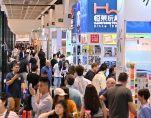
HONG KONG SAR – Media OutReach Newswire – 13 April 2026 – The Hong Kong Trade Development Council (HKTDC) will unite the global lifestyle industry with its seven lifestyle and licensing events from 27 to 30 April 2026. Encompassing gifts, houseware, fashion, printing, packaging, and licensing, these events offer buyers a streamlined and cross-sector sourcing journey. The Hong Kong Gifts & Premium Fair and Home InStyle will be hosted at the Hong Kong Convention and Exhibition Centre, where exhibitors will showcase curated international collection, enabling efficient and diverse sourcing across key lifestyle categories in one central location.
Connecting global suppliers and buyers with trending lifestyle products and innovative ideas.
In 2026, the Hong Kong Gifts & Premium Fair will spotlight four key focuses – personalisation, sustainability, health & wellness, and culture & creativity – guiding buyers to discover products that reflect the latest market trends and consumer preferences.
The fair will once again feature the highly acclaimed Hall of Fine Designs, a convergence point of reputed brands. First time exhibitors include Alpha Art Gifts LLC (United Arab Emirates), known for its unique and high-quality gift solutions; Crown Decor Pvt Ltd (India), a leading manufacturer for premium laminates. And the distinguished Hong Kong brands Camel and RedA will continue showcase their products at the fair. In addition, the Shanxi Pavilion will make its debut at the Hong Kong Gifts & Premium Fair 2026. This year, the Zhejiang Pavilion, for the first time led by the Department of Commerce of Zhejiang Province, will bring a large number of exhibitors. Meanwhile, the Korea Pavilion and Busan Pavilion will return with even greater presence.
Furthermore, the Hong Kong Exporters’ Association will assemble Hong Kong companies to form a pavilion, showcasing the design skills and branding excellence of Hong Kong’s product designers. The Smart Design Global, organised by Hong Kong Exporters’ Association, will also showcase shortlisted entries and signature products from its participating companies at the Gifts & Premium Fair, leveraging the fair as a platform to promote Hong Kong original designs to international markets.
Running concurrently, Home InStyle will focus on new materials, culture & creativity, and gerontechnology for silver‑age living, aligning with emerging lifestyle and consumer trends. The fair completes the sourcing journey by fostering meaningful connections and spark fresh inspiration across the design and lifestyle community.
A key highlight remains the signature Cultural and Creative Avenue, which will showcase distinguished designs from around the world and welcome international brands that blend unique design concepts with cultural heritage. The fair’s collaboration with Pantone will be elevated, with the Colour of the Year 2026 “Cloud Dancer” prominently featured in this zone. Through trend-focused displays and real-life applications, visitors will see the colour brought to life, helping buyers and exhibitors visualise its use in contemporary home and lifestyle products.
Furthermore, funded by the Innovation and Technology Commission, Home InStyle will launch the Gerontech and Innovative Material Pavilion, where nearly 20 local enterprises will present a wide range of innovative technology products and solutions designed for senior living, while highlighting the application of new materials in home spaces.
“Adding to the fair’s design-led highlights, the 2nd MOTIFX – Embracing the Beauty of Chinese Culture exhibition, organised by the Hong Kong Design Institute (HKDI) under the Vocational Training Council (VTC) and sponsored by the Cultural and Creative Industries Development Agency (CCIDA), invites emerging designers to reinterpret traditional Chinese elements for contemporary contexts. The project seamlessly integrating historical components into modern objects, interiors, and lifestyle products while deepening new generations’ engagement with their cultural heritage.”
Home InStyle will also host a selection of international brands known for their craftsmanship and creativity. Highlights include vibrant hand-blown Bohemian glassware, handmade baskets and bags woven from wild grapevines alongside classic bamboo steamers, and licensed DC Comics illuminated signs.
Throughout the fairs, a series of seminars and forums will bring together leading industry experts to share forward-looking insights on key trends and future developments, from creative thinking and the silver economy to sustainability and beyond. These sessions are crafted to foster meaningful dialogue and equip attendees with the latest market intelligence. As a comprehensive one-stop sourcing platform, the fairs unlock exciting business opportunities and deliver a diverse, world-class selection of lifestyle products and services tailored to every buyer’s needs.
Digital platform creates efficient exhibition experience Under the EXHIBITION+ model, the fairs integrate offline and online elements. Buyers can continue searching for products and services on the hktdc.com Sourcing platform and network through the Click2Match smart business-matching platform. During the physical fair, buyers can use the Scan2Match function of the HKTDC Marketplace App to scan exhibitors’ exclusive QR codes, bookmark favourite suppliers, browse product information and continue discussions with exhibitors online during or after the show.
Japan will release an additional 20 days’ worth of oil reserves from May as Tokyo tries to shield domestic fuel supplies from continued disruption in the Middle East and reduce its exposure to shipments that pass through the Strait of Hormuz. Prime Minister Sanae Takaichi told a cabinet meeting on April 10 that the move would come from the public stockpile, adding to emergency releases already under way since mid-March.
The decision marks a further escalation in Japan’s energy contingency response at a time when the Strait of Hormuz remains under severe strain despite a two-week ceasefire between the United States and Iran. The waterway is one of the world’s most important oil chokepoints, and its disruption has hit Japan especially hard because the country depends on the Middle East for about 95% of its oil imports. Takaichi’s government has been racing to prevent shortages, stabilise prices and reassure refiners, transport operators and households that fuel will continue to flow.
Tokyo had already moved ahead on March 16 with the release of reserves equivalent to 50 days of consumption, combining privately held stocks with state reserves and supplies jointly held with producing nations. That initial step was announced before a formal coordinated action by the International Energy Agency, underscoring the urgency felt by Japanese officials as tanker traffic through Hormuz became severely constrained. The new plan adds another layer of insurance rather than replacing the earlier programme, signalling that authorities believe the market shock may last longer than first expected.
Officials say Japan still has considerable room to act. As of April 7, the country held reserves covering 228 days, including 143 days in the public stockpile. That buffer gives policymakers flexibility, but it also reflects the scale of the threat they see. Refiners have already been forced to adjust operations as crude availability tightens, and the government is attempting to manage not only total supply but also how fuel is distributed across the country. Concerns have centred on keeping essential sectors supplied first, particularly healthcare, transport, agriculture, fisheries and livestock production.
Japan’s strategy goes beyond drawing down reserves. Takaichi said the government expects that by May more than half of oil imports will be secured through routes that do not involve the Strait of Hormuz. That shift is central to Tokyo’s effort to avoid becoming hostage to a single maritime corridor while conflict risk remains elevated. Officials have not identified every supplier publicly, but the Ministry of Economy, Trade and Industry has indicated that Japan is seeking alternative barrels from a wide range of countries, including Malaysia, Azerbaijan, Brazil, Nigeria and Angola.
The United States is set to play a larger role in that reshaping of supply. A ministry document cited by Reuters said oil imports from the US in May would be four times higher than a year earlier. Japan imported about 189,000 barrels a day from the US in May last year, equal to roughly 8% of total crude purchases for that month. Tokyo is also drawing on Middle East supplies that can bypass Hormuz, including shipments from Saudi Arabia’s Red Sea outlet at Yanbu and from Fujairah in the United Arab Emirates. Those routes do not eliminate vulnerability, but they reduce reliance on the narrow strait at the centre of the crisis.
Domestic politics and inflation pressures are also shaping the response. Takaichi has paired the reserve releases with fuel price measures meant to keep retail gasoline around a nationwide average of ¥170 a litre, even if crude prices remain elevated. Officials have warned that a prolonged supply shock could otherwise push pump prices much higher and strain households as well as businesses already dealing with cost pressures. Finance Minister Satsuki Katayama has also flagged the fiscal burden of existing subsidy measures, suggesting that energy security is becoming not only a supply issue but a budgetary one.
Asian buyers of liquefied petroleum gas are stepping up purchases from the United States and other Atlantic Basin suppliers as disrupted Gulf shipments upend one of the region’s most important fuel trades. India and China, the two biggest Asian importers of Middle East LPG, are at the centre of the shift, with traders, analysts and shipbrokers saying the scramble for replacement cargoes has pushed spot premiums to unprecedented levels and forced governments and industry to rethink supply security.
The immediate trigger has been the collapse in exports from the Gulf after the outbreak of war in late February and the severe disruption of shipping through the Strait of Hormuz. Middle Eastern LPG exports fell 73% in March from the previous month to 419,000 barrels per day, according to Kpler data cited by Reuters. The squeeze sent April-loading spot premiums for propane and butane from the Gulf to record highs of $250 a tonne over March Saudi contract price swaps, while Saudi Aramco lifted its April official selling price for propane by $205 a tonne to $750 and for butane by $260 a tonne to $800.
That shock is now reshaping trade flows. Preliminary Kpler data show U. S. LPG exports are expected to rise to a record 2.7 million barrels per day in April, with about 1.8 million barrels per day heading to Asia, up 14% from March. Traders say cargoes are also being drawn from Canada, Norway, Argentina and Australia, but the United States has emerged as the principal swing supplier because of its sheer export scale. Marex’s Vasudev Balagopal told Reuters that major importers were actively diversifying beyond the Gulf, although brokers caution that U. S. export terminals were already running close to capacity before the conflict and cannot fully replace Middle East barrels on their own.
The substitution is costly and slow. U. S. Gulf terminal fees for propane and butane hit record levels in March, and cargoes from the Gulf Coast to Asia typically take more than 30 days to arrive, compared with roughly two weeks from the Middle East. Even where a ceasefire has allowed some movement through Hormuz, traders are treating the route as fragile and unpredictable. Reuters reported on April 11 that some tankers had begun exiting the Gulf after a truce, but hundreds of vessels remained stranded or delayed, underlining how quickly physical dislocation can outlast any diplomatic pause.
India’s position illustrates the strain most clearly. The country consumed 33.15 million metric tonnes of LPG last year, with imports covering about 60% of demand and roughly 90% of those imports sourced from the Middle East. State-backed retailers have kept prices for 14.2-kg domestic cylinders unchanged to protect households, even as commercial LPG prices were raised in April and the government diverted supplies away from industry to shield cooking-gas consumers. Reuters also reported that India increased domestic daily LPG output by 40% to 50,000 tonnes and secured 800,000 tonnes of replacement cargoes from the United States, Russia, Australia and elsewhere.
Officials in New Delhi are also using the shortage to accelerate a structural shift towards piped gas. Emergency powers have been invoked to direct limited LPG toward households, while expansion of city gas networks has been fast-tracked. India added 580,000 new household piped-gas connections in March, up sharply from a year earlier, and credit-rating agency ICRA estimates the policy push could cut LPG imports by 10% to 15% by 2030. The fiscal logic is clear: household LPG is sold at deeply subsidised rates, while piped gas is priced closer to the market, easing pressure on public finances as well as on import dependence.
China faces a different kind of pressure. There, LPG is not only a cooking fuel but also a crucial petrochemical feedstock. Rystad Energy estimates regional steam crackers lost about 135,000 barrels per day of LPG demand in March from February levels, with further declines expected in April and May. In China, propane dehydrogenation plants, already running at only 60% to 65% because of weak margins before the conflict, are expected to cut operating rates again as feedstock shortages bite. That matters beyond the energy sector because PDH plants make propylene, a building block for plastics and a wide range of manufactured goods.
Arabian Post Staff -Dubai Saudi Arabia has restored full pumping capacity on its East-West pipeline to about seven million barrels a day, reactivating a strategic export artery that has become central to global crude flows during the disruption of shipping through the Strait of Hormuz. The Ministry of Energy said operational and technical teams brought the line back to full strength within days of attacks that had […]
DIAFA, the Abu Dhabi-based luxury hospitality investment platform affiliated with IHC Group, has completed a majority investment in Richard Caring’s hospitality portfolio in a deal described as ten-figure, placing a value of at least £1 billion on a collection of some of London’s best-known restaurants and private members’ clubs. The transaction brings The Ivy Brasseries, Caprice Holdings and The Birley Clubs under DIAFA’s control, while Richard Caring […]








 https://www.hktdc.com/event/hkgiftspremiumfair/en




