News related to
AI trade

SINGAPORE – Media OutReach Newswire – 10 April 2026 – The success and impact of the ASEAN–UK Advancing Creative Economy programme was on show at the recent 2nd ASEAN–UK Creative Economy Symposium 2026 in Manila. The Symposium showcased how research, capacity building, and regional collaboration are shaping the future of the creative economy across Southeast Asia, further advancing the goals of the ASEAN Creative Economy Sustainability Framework, adopted at the 46th ASEAN Summit. The Symposium also celebrated the 5th anniversary of the ASEAN–UK Dialogue Partnership, focused on deepening cooperation and connection.

The Department of Trade and Industry of the Philippines, together with the Foreign, Commonwealth and Development Office, the British Council and the ASEAN Secretariat, convened over 270 leaders, policymakers, creatives, and investors from ASEAN and the United Kingdom in Manila for the ASEAN–UK Creative Economy Symposium 2026, reinforcing the region’s push to harness the creative economy as a key driver of growth, innovation, and cultural identity.

Deputy Secretary-General of ASEAN for ASEAN Economic Community (AEC), Satvinder Singh, said:
“ASEAN is well-positioned to harness the full potential of the creative economy. Six out of eleven ASEAN Member States now rank among the top 70 globally in the WIPO Global Innovation Index’s creative outputs dimension. ASEAN recognises that intangible assets, such as intellectual property, brands, and design as the currencies of modern creative economy. The ideas, expressions, and innovations our creators produce must be protected, valued, and commercialised.”

UK Ambassador to ASEAN, Helen Fazey, said:
“The UK and ASEAN are advancing together through trust, cooperation, and shared priorities. This partnership reflects a strong and growing relationship built on mutual respect and a shared ambition to support sustainable economic growth, innovation, and opportunity across the region. Through initiatives like the ASEAN–UK Advancing Creative Economy programme, we are deepening collaboration, strengthening people-to-people links, and supporting the development of vibrant and resilient creative sectors.”

ASEAN-focused research highlights pathways for growth in the creative economy
New research under the ASEAN–UK Advancing Creative Economy initiative is providing critical insights into the evolution and economic potential of cultural industries across the region.

Arts and Technologies in ASEAN: Interconnected Parts, commissioned by the British Council, examines the fast-growing creative technology landscape across ASEAN. Drawing on more than 60 interviews and case studies, the report explores how artists are using digital tools—from AI to immersive media—while also analysing the regulatory environments shaping innovation. It highlights both the dynamism of the sector and the need for stronger support systems to sustain growth.

Complementing this, the Regional Perception Poll on the ASEAN Creative Economy offers a comprehensive view of how the sector is understood across the region. Based on insights from over 4,000 respondents, including both producers and audiences, the study highlights the interconnected nature of creative ecosystems and the relationships between artists, industries, policymakers, and communities. Its findings underscore the need for tailored, context-specific strategies and stronger regional collaboration to unlock further growth.

Together, these research outputs provide valuable evidence to inform policy, guide investment, and strengthen UK–ASEAN partnerships.Building on this work, a new ASEAN festival research and mapping initiative is underway, expanding earlier studies to provide a more comprehensive understanding of the region’s diverse festival landscape and identify opportunities for future collaboration.

Country Director Indonesia and Director South East Asia, Summer Xia, said:
“Through the ASEAN–UK Advancing Creative Economy initiative, we are investing in the research, skills, and partnerships needed to support long-term growth in the creative sector. The symposium in Manila was an important opportunity to share these resources and ensure they are shaped by and for the region. By working closely with the Foreign, Commonwealth and Development Office and the ASEAN Secretariat, we are helping to build a stronger, more connected creative economy across ASEAN countries.”

Underscoring the broader vision of the initiative, Deputy Secretary-General of ASEAN for ASEAN Socio-Cultural Community (ASCC) San Lwin has reaffirmed, in separate engagements, that the ASEAN-UK Advancing Creative Economy programme maximises the region’s creative potential to fuel socio-economic growth and cultural exchange. He reiterated the shared commitment to leveraging innovation and creativity as key connectors to drive prosperity, deepen cultural unity, advance social equity, and promote sustainable, inclusive development in order to forge an “ASEAN Community of Opportunities for All.”

Learn more at: ASEAN Creative Economy Initiative
Hashtag: #BritishCouncil

The issuer is solely responsible for the content of this announcement.

About the British Council

The British Council is the UK’s international culture and education organisation. We support peace and prosperity by building connections, understanding and trust between people in the UK and countries worldwide. We do this through our work in arts and culture, education and the English language. We work with people in over 200 countries and territories. In 2024–25, we reached 600 million people.

Arabian Post Staff -Dubai Saudi supply lines face deeper strain Attacks on Saudi energy facilities have knocked about 600,000 barrels per day from the kingdom’s oil production capacity and cut throughput on the East-West Pipeline by roughly 700,000 bpd, according to Saudi state media citing an Energy Ministry official, in a blow to the world’s top oil exporter at a time when its western pipeline route has […]

XRP could reach $1,000 by 2030, according to EasyA co-founder Dom Kwok, who has repeated the forecast in public interviews and defended it when challenged on valuation grounds. The call has reignited a familiar argument in crypto markets: whether XRP should be judged as a conventional token priced by circulating supply, or as a payments rail whose future worth could expand far beyond today’s market-cap logic. For […]

Gunzilla Games, the studio behind blockchain-linked shooter Off The Grid and the new owner of Game Informer, has been accused by current and former workers of failing to pay salaries for months, opening a fresh controversy around one of gaming’s more closely watched independent publishers. Multiple reports published on April 8 and April 9 said staff and contractors alleged they had gone unpaid since late 2025, while […]

South Korea is sending a special envoy to Iran as Seoul steps up efforts to secure passage for 26 South Korean-linked vessels stranded around the Strait of Hormuz, underscoring how a partial US-Iran ceasefire has done little to restore normal shipping through one of the world’s most critical energy chokepoints. Seoul’s foreign ministry has appointed former ambassador to Kuwait Chung Byung-ha for the mission, with the government […]

China has authorised state oil refiners to draw on commercial crude reserves as the Middle East war enters its sixth week, a move that points to mounting concern in Beijing over supply security, refinery operations and fuel stability in the world’s biggest crude importer. The decision marks a notable shift after reporting in March indicated that access to such reserves had been denied, underscoring how sharply the market backdrop has changed.

The policy adjustment comes as the conflict centred on Iran has disrupted flows through the Strait of Hormuz, a route that handled about 20 million barrels a day of crude and oil products in 2025 and remains one of the most critical chokepoints in global energy trade. The International Energy Agency said in March that the war had created the biggest supply disruption in oil market history, with flows through Hormuz falling from around 20 million barrels a day before the war to only a trickle.

For China, the timing is especially sensitive. State refiners have already been grappling with higher feedstock costs, disrupted shipping routes and a scramble for replacement barrels from outside the Gulf. Reuters reported in late March that Sinopec, the country’s largest refiner by capacity, had sought access to state reserves after deciding against buying Iranian crude, while also trimming refinery runs. Earlier reporting in mid-March said China had been building inventories rather than drawing them down, suggesting Beijing initially preferred to preserve stocks.

That stance now appears to have softened. Bloomberg reported on April 10 that authorities had given state refiners the green light to tap commercial reserves. While the precise volume and duration were not publicly disclosed, the move is significant because it signals Beijing is willing to use part of the country’s stock cushion to smooth supplies for domestic processing rather than rely solely on the spot market at a time of exceptional volatility.

The wider market has been under intense pressure even as talk of a ceasefire has briefly cooled futures prices. Reuters reported that physical crude markets in Europe and Africa remained extremely tight despite a temporary truce, with buyers in Asia and Europe competing aggressively for non-Middle East barrels. Another Reuters report said U. S. crude premiums had surged to record highs as importers sought alternatives to Gulf supplies. That matters for China because replacing lost or delayed Middle East cargoes has become more expensive just as refining margins in parts of Asia remain fragile.

Supply conditions deteriorated further this week after attacks on Saudi energy infrastructure cut output capacity by around 600,000 barrels a day and reduced throughput on the East-West Pipeline by about 700,000 barrels a day, according to Saudi state media cited by Reuters. The pipeline is vital because it allows exports to bypass Hormuz via the Red Sea. Damage there narrowed one of the few remaining alternative routes for Gulf producers trying to keep oil moving to Asian customers.

Asian refiners have already felt the strain. Reuters reported that seaborne crude imports into Asia in April were estimated at 19.22 million barrels a day, sharply below the three-month average of 25 million barrels a day. Although refined fuel prices eased after hopes of a truce, the same report said the market was still stressed and that it could take months for normality to return even if shipping improves. For Beijing, releasing commercial stocks is therefore less a dramatic emergency measure than a tactical effort to bridge a period of dislocation.

The decision also reflects China’s domestic balancing act. Authorities have been trying to keep fuel output steady even as weak underlying demand and higher crude costs squeeze refiners. Reuters reported on April 2 that officials had pressed independent refiners to maintain production despite the surge in oil prices and wartime disruption. That suggests Beijing is seeking to avoid sharp swings in fuel availability or industrial costs while preserving broader economic stability.

There is also a geopolitical layer. China has opposed any overtly force-based international response around Hormuz and has pushed for de-escalation at the United Nations, according to Reuters reporting on Security Council negotiations. At the same time, the reserve release shows that Beijing is preparing for a conflict that may not be resolved quickly and for shipping conditions that may remain uncertain even if diplomatic language softens.

Washington and Tehran head into talks in Islamabad this weekend with far more at stake than a temporary pause in fighting, as negotiators face pressure to tackle the entire dispute at once rather than salvage only a narrow ceasefire. Pakistan has helped bring the sides to the table after a two-week truce took shape, but the diplomatic opening is already under strain from disputes over uranium enrichment, […]

Advertisements

A cross-border espionage campaign that targeted journalists, civil society figures and some government-linked entities across the Middle East and North Africa between 2023 and 2024 has been tied by researchers to BITTER, a long-tracked South Asian threat actor, marking what investigators describe as the first documented case linking the group to attacks on civil society in the region. The attribution remains qualified rather than definitive: Lookout said […]

Arabian Post Staff -Dubai   Abu Dhabi has issued 11 new hazardous materials guidelines in a move officials say makes the emirate the first jurisdiction to apply the 11th revised edition of the UN Globally Harmonized System of Classification and Labelling of Chemicals, or GHS. The framework, launched by the Abu Dhabi Hazardous Materials Management Centre in coordination with the Abu Dhabi Quality and Conformity Council, is […]

Ethereum hovered near the $2,000 mark on Thursday after a choppy stretch that left the world’s second-largest cryptocurrency caught between stronger long-term supply dynamics and a fresh wave of geopolitical and macroeconomic uncertainty. Ether was trading around $2,178 during the session, after moving within an intraday range of roughly $2,167 to $2,264, underscoring the tight consolidation that has kept traders focused on whether the token can build […]

Arabian Post Staff -Dubai Attacks tied to the widening confrontation with Iran could spill far beyond the battlefield and damage global health, food security and the environment, the UAE told an international summit in Lyon, urging governments and institutions to rally around a “One Health” strategy that treats human, animal and ecosystem health as inseparable. The intervention came at a high-level gathering hosted by France on 7 […]

US unemployment benefit claims rose last week but stayed at levels that still point to a labour market holding together, even as investors and policymakers brace for a March inflation reading that could complicate the Federal Reserve’s next move. Initial claims for state unemployment benefits increased by 16,000 to 219,000 in the week ended April 4, according to Labor Department data released on Thursday. The prior week’s […]

Polygon’s token remained under pressure on Thursday even as the network’s stablecoin business gathered pace, highlighting a widening gap between on-chain usage growth and investor sentiment around POL, the token that replaced MATIC on Polygon’s mainnet in September 2024. POL was down about 4.7% over seven days on CoinGecko as of April 9, while Polygon continued to market itself as infrastructure for global payments and stablecoin settlement. […]

Tokenised perpetual swaps tied to commodities and equities have surged into a new phase of growth, with weekly trading volume reaching about $31 billion as oil volatility and broader macro uncertainty pulled traders towards round-the-clock synthetic exposure. Oil contracts accounted for roughly $6.9 billion of that weekly turnover after geopolitical tensions rattled energy markets, while stock perpetual swaps climbed 908% to around $4.9 billion, underscoring how quickly […]

Arabian Post Staff -Dubai Saudi medical devices distributor ProMedEx has renewed an 84 million riyal Islamic financing package with Riyad Bank for one year, extending a facility the company says will be used to fund existing projects and back expansion plans as healthcare suppliers across the kingdom continue to seek working capital for inventory, imports and contract execution. The facility is equivalent to about $22.4 million. The […]

South Africa’s net foreign reserves fell to $73.19 billion at the end of March from $75.84 billion in February, as the country’s gross reserves also dropped to $77.76 billion from $81.06 billion, according to central bank data released on Thursday. The decline came after a stronger February reading and marks a pullback from levels that had been supported earlier this year by higher reserve values and foreign-exchange […]

Sub-Saharan Africa’s growth is set to hold at 4.1% in 2026, but the World Bank has cut its earlier projection and warned that a more hostile external backdrop, led by conflict-linked jumps in fuel and fertiliser costs, is making the region’s recovery harder to sustain. The lender said the outlook had been revised down by 0.3 percentage points from its October 2025 estimate, even as governments across […]

South Africa is drawing a broader mix of overseas visitors who are staying longer, travelling with more intention and looking beyond checklist tourism, as global travel habits tilt towards slower, experience-led holidays and the country posts record inbound numbers. Official data show South Africa welcomed about 10.5 million international tourists in 2025, the highest annual total on record and above pre-pandemic levels. Statistics South Africa separately said […]

Dubai’s public parking operator Parkin has launched “Spots for Shops”, a scheme designed to let motorists recover parking fees when they spend at participating neighbourhood businesses, in a move that links curbside parking more directly to street-level retail trade. Under the pilot, customers park in a paid Parkin bay, pay the normal tariff, make a qualifying purchase set by the merchant, and then have the fee validated […]

Arabian Post Staff -Dubai Regional tensions showed little sign of easing on Wednesday as the United Arab Emirates reported a new wave of Iranian missile and drone attacks despite a ceasefire announced between Washington and Tehran. The UAE Ministry of Defence said air defences intercepted 17 ballistic missiles and 35 drones launched on April 8, adding to a mounting tally of projectiles intercepted since the wider confrontation […]

S&P Global Ratings has lowered the Philippines’ outlook to stable from positive, while affirming its long-term sovereign credit rating at BBB+, saying the war in the Middle East has raised the risks facing the country’s external accounts and public finances. The move keeps the nation within investment-grade territory but signals that a near-term upgrade is now less likely as higher energy costs, inflation pressure and a weaker peso complicate the policy outlook.

The ratings agency said elevated oil prices are likely to widen the current-account deficit this year and weaken external buffers, even as it still expects the economy to expand at a healthy pace and the fiscal deficit to narrow over the next two years. S&P projected growth of 5.8% in 2026 after the economy expanded 4.4% in 2025, with softer momentum in the first half and a rebound later in the year.

The decision lands at a delicate moment for Manila. The Bangko Sentral ng Pilipinas warned this week that higher fuel costs were already feeding into broader prices after March inflation accelerated to 4.1%, above the central bank’s 2% to 4% target band and sharply higher than February’s 2.4%. Transport costs were the main driver, with diesel prices up 59.5% from a year earlier and gasoline up 27.3%, while core inflation also edged higher, suggesting second-round effects may be starting to build.

That inflation pulse helps explain why S&P has become more cautious. A country that depends heavily on imported fuel is especially exposed when conflict disrupts Middle East energy flows, and the Philippines has been among the Asian economies hit hardest by the latest oil shock. Reuters reported that Brent crude had risen 55% since the Iran war began on February 28, while the Philippine peso slid to record lows against the dollar, adding another layer of imported inflation pressure.

The external vulnerability is not new, but the conflict has made it harder to ignore. Philippine officials have been scrambling to secure energy supplies, including seeking assurances over safe passage for Philippine-flagged ships and fuel cargoes through the Strait of Hormuz. Manila has also explored alternative sources of crude and emergency measures to protect domestic supply, underlining how quickly a geopolitical crisis can turn into a ratings issue for an energy-importing economy.

For investors, the key point is that S&P did not cut the rating itself. The agency kept the BBB+ grade in place, indicating that it still sees underlying strengths in the economy, including growth potential, remittance support and expectations of gradual fiscal repair. That distinction matters. An outlook change signals rising risk over the medium term, but it is not the same as a downgrade, and it leaves room for the sovereign to stabilise if external pressures ease and macroeconomic management holds firm.

Still, the downgrade in outlook will sharpen attention on the government’s fiscal path. The Philippines has already lowered its medium-term growth targets to reflect the impact of Middle East tensions and shifts in US trade policy. Official forecasts now put 2025 growth at 5.5% to 6.5%, down from 6% to 8%, while targets for 2026 to 2028 have been narrowed to 6% to 7%. That softer growth backdrop makes deficit reduction harder, particularly if the state is forced to spend more on fuel relief, transport support or other measures to cushion households and businesses.

There are signs, however, that the fiscal picture is not uniformly worsening. Treasury data showed the budget deficit in February narrowed marginally from a year earlier, while year-to-date figures improved sharply because of stronger revenues and earlier remittance of dividends. S&P’s own statement suggests it still expects fiscal metrics to improve, even if the war has made that path more vulnerable to setbacks.

Beyond the government balance sheet, the social cost of the energy spike is becoming harder to miss. Reuters reported that some farmers in Benguet province were abandoning harvests because higher fuel, labour and transport costs made it uneconomic to bring produce to market. That kind of strain matters for credit analysis because it shows how an oil shock can move from shipping lanes and currency markets into household spending, food supply chains and political pressure for intervention.

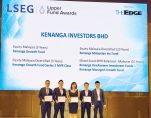
KUALA LUMPUR, MALAYSIA – Media OutReach Newswire – 9 April 2026 – Kenanga Investors Berhad (“Kenanga Investors“) has swept four accolades at the LSEG Lipper Fund Awards 2026 (“the Awards“).

Xav Feng, Asia Pacific Research director, LSEG Lipper, Christopher Kok, Head of Equities, Kenanga Investors Berhad, Lee Sook Yee, Chief Investment Officer, Mohd Faiz Hamsidi, Fixed Income Fund Manager, and Kuek Ser Kwang Zhe, Wealth editor, The Edge Malaysia.

The firm was recognised across various categories, a testament to its continued outperformance:

  1. Kenanga Growth Fund (“KGF“) – Best Equity Malaysia – Malaysia Provident Funds over 5 Years
  2. Kenanga Growth Fund Series 2 MYR Class (“KGFS2“) – Best Equity Malaysia Diversified – Malaysia Provident Funds over 3 Years
  3. Kenanga Malaysian Inc Fund (“KMIF“) – Best Equity Malaysia Diversified – Malaysia Provident Funds over 10 Years
  4. Kenanga Managed Growth Fund (“KMGF“) – Best Mixed Asset MYR Balanced Malaysia – Malaysia Provident Funds over 10 Years

Datuk Wira Ismitz Matthew De Alwis, Chief Executive Officer and Executive Director said, “We are honoured to be recognised by LSEG Lipper for our consistent performance in 2025 against a backdrop of volatility, underpinned by heightened trade wars. During the year, geopolitical risks and trade tensions caused sudden swings in sentiment, which affected small- and mid-cap stocks. We steered clear of headlines and focused on sustainable earnings. This allowed us to selectively position ourselves for when valuations turned compelling while reducing exposure when risks escalated which proved effective and underscores our expertise in Malaysian equities”.

Since the launch of KGF in 2000 and KGFS2 in 2018, both funds have demonstrated consistent performance. As of December 2025, each has surpassed RM1 billion in assets under management1, underscoring Kenanga Investors’ disciplined investment approach and commitment to long term value creation. This year’s Awards also mark KGF’s sixth Lipper title while KGFS2 celebrates its inaugural win.

Lee Sook Yee, Chief Investment Officer, elaborated on the firm’s approach, “We maintained a disciplined bottom‑up stock‑picking strategy anchored in company fundamentals, giving us the conviction to stay invested in high quality businesses with strong balance sheets and structural growth drivers. This was supported by a strict risk management framework focused on sector diversification, prudent buffers, and incremental rebalancing. In 2026, we will emphasise themes such as artificial intelligence and data centre expansion, infrastructure, utilities, and selective REITs, while remaining true to our investment philosophy”.

Over the five‑year period ended 31 December 2025, KGF delivered a total return of 48.82%, significantly outperforming its benchmark2 of 3.25%. Similarly, KGFS2 achieved a robust 49.92% return compared to its benchmark’s3 46.93%. KMIF also recorded solid results with a 32.67% return against a benchmark4 of 5.26%, while KMGF posted a commendable 25.88% return, exceeding its benchmark’s5 11.32%.

The firm also recently introduced the Kenanga Growth Fund Series 3 (“KGFS3“), the third fund within its flagship conventional fund series. The KGFS3 utilises the firm’s proven investment philosophy and is managed with an active investment strategy depending on the market conditions and outlook, combining a top-down asset and sector allocation process with a bottom-up stock selection methodology.

The LSEG Lipper Fund Awards, granted annually, highlight funds and fund companies that have excelled in delivering consistently strong risk-adjusted performance relative to their peers. The Awards are based on the Lipper Leader for Consistent Return rating, which is a risk-adjusted performance measure calculated over 36, 60 and 120 months. This year’s achievements will serve to strengthen Kenanga Investors’ market leadership and drive its focus on creating enduring value for its investors.

For more information about Kenanga Investors, please visit kenangainvestors.com.my.

1 Source: Lipper, 31 December 2025

2 Benchmark: FTSE Bursa Malaysia KLCI CR

3 Benchmark: 8% p.a.

4 Benchmark: FTSE Bursa Malaysia Top 100 CR

5 Benchmark: FTSE Bursa Malaysia Top 100 Index (50%) & All MGS Index by RAM Quant Shop (50%)

Hashtag: #Kenanga

The issuer is solely responsible for the content of this announcement.

Kenanga Investors Berhad 199501024358 (353563-P)

We provide investment solutions ranging from collective investment schemes, portfolio management services, alternative investments, as well as wills and trusts for retail, corporate, institutional, and high net worth clients via a multi-distribution network.

The LSEG Lipper Fund Awards 2026 recognised four funds under the Malaysia Provident Funds category; Kenanga Growth Fund was named Equity Malaysia (5 Years), Kenanga Growth Fund Series 2 was awarded Equity Malaysia Diversified (3 Years), Kenanga Malaysian Inc Fund was awarded Equity Malaysia Diversified (10 Years) while Kenanga Managed Growth Fund was recognised with the title Mixed Asset MYR Balanced – Malaysia (10 Years).

The Hong Kong-based Asia Asset Management’s (“AAM“) 2026 Best of the Best Awards awarded Kenanga Investors under the following categories, Malaysia Best Impact Investing Manager, Best Impact Investing Manager in ASEAN, Malaysia Best Equity Manager, Malaysia CEO of the Year (Co-Winner), Malaysia CIO of the Year, Malaysia Best House for Alternatives and Malaysia Best ESG Engagement Initiative.

At the AAM ETF Awards 2026, Kenanga Investors received an accolade under the category Malaysia Leverage and Inverse ETF of the Year for the Kenanga KLCI Daily 1x Inverse ETF. The IFN Investor Awards 2025 awarded the Kenanga Islamic Balanced Fund under the categories of “IFN Investor Best Balanced Mixed Assets Fund in Malaysia — MYR 2025”, “IFN Investor Best Balanced Mixed Assets Fund in Asia Pacific 2025”, and “IFN Investor Best Global Balanced Mixed Assets Fund 2025”.

The FPAM Financial Planning Leadership Award 2025 presented Kenanga Investors with the Platinum Award under the Charter Member Category, highlighting our dedication to shaping the future of financial planning. The FSMOne Recommended Unit Trusts Awards 2025/2026 has awarded the Kenanga Growth Fund Series 2 with the “Sector Equity — Malaysia Focused” award for the fourth consecutive year since 2022. For the ninth consecutive year, we were affirmed an investment manager rating of IMR-2 by Malaysian Rating Corporation Berhad, since first rated in 2017. The IMR rating on reflects the fund management company’s well-established investment processes and sound risk management practices.

This Press Release was issued by Kenanga Group’s Marketing, Communications & Sustainability department.

Arabian Post Staff -Dubai Dubai shares posted their strongest one-day rise in more than a decade on Wednesday after a two-week ceasefire between the United States and Iran eased fears over a wider regional conflict, soothed concern over energy shipping routes and triggered a broad relief rally across Gulf markets. Dubai’s benchmark index jumped as much as 8.5% intraday, while Abu Dhabi’s main market also recorded its […]

  What used to be dismissed as internet oddity is moving into the mainstream of fraud prevention, platform regulation and organised crime analysis: the distinction between sock-puppet accounts and catfishing is no longer academic. Authorities, platforms and researchers are increasingly treating fake digital personas as a wider security and financial risk, particularly as artificial intelligence makes them cheaper to create, easier to scale and harder for ordinary […]

VISHNU RAJA
RYO YAMADA
HITORI GOTOH
IKUYO KITA