Arabian Post Staff -Dubai Abu Dhabi has approved the consolidation of Abu Dhabi Developmental Holding Group’s portfolio under a newly created sovereign investor, L’IMAD, a move designed to sharpen capital allocation and scale the emirate’s investment reach across strategic sectors. The decision was issued by the Supreme Council for Financial and Economic Affairs, the body that sets public policy on finance, investment, the economy, petroleum and natural […]
Matein Khalid Something is dangerously wrong in a world where the price of gold rises 30% and silver surges a surreal 65% in a single month, as we witnessed in January 2026. True, an American carrier strike force with a full complement of 80 F-18 Hornet war planes and missile destroyers laden with Tomahawk cruise missiles has sailed from the South China Sea into the Gulf. Once […]
Donald Trump has chosen former Federal Reserve governor Kevin Warsh to succeed Jerome Powell as chair of the US central bank when Powell’s term concludes in May, signalling a sharp shift in tone at the Fed and reviving a long-running debate over the institution’s independence and policy direction. The selection places a frequent critic of the Fed’s crisis-era interventions at the helm of the world’s most influential […]
Souq Al Jubail welcomed more than 5.8 million shoppers during 2025, reinforcing its position as a central wholesale and retail marketplace and a critical node in Sharjah’s food supply chain. The footfall milestone reflects sustained demand across seafood, meat, poultry, fruit and vegetable categories, alongside complementary services that support traders, households and hospitality operators across the emirate. Located on the Sharjah waterfront, the souq operates as an […]
Ethereum slid sharply after losing key technical support near the $2,700 mark, triggering renewed anxiety about a deeper correction across digital asset markets and amplifying a risk-off tone that has weighed on crypto trading through January. The move extended a prolonged pullback for the world’s second-largest cryptocurrency, which has erased a significant portion of gains accumulated during the final quarter of last year and underperformed several large-cap […]
A warning from a long-standing crypto fund manager has reignited debate over Bitcoin’s long-term viability, with claims that the world’s largest cryptocurrency could face a structural security breakdown within the next seven to eleven years unless its economic model changes. Justin Bons, founder and chief investment officer of Cyber Capital, has argued that Bitcoin’s reliance on declining block subsidies will eventually undermine the incentives that secure its […]
Arabian Post Staff -Dubai A new investment cooperation pact between the United Arab Emirates and Scotland aims to widen capital flows, align priority sectors and give institutional backing to a growing commercial relationship between the Gulf state and one of the UK’s devolved governments. The Memorandum of Understanding was signed by the UAE Ministry of Investment and the Scottish Government, setting out a framework to promote two-way […]
Sheikh Mohamed bin Zayed Al Nahyan, President of the United Arab Emirates, arrived in Moscow on an official visit to the Russian Federation, underscoring a phase of high-level engagement between Abu Dhabi and Moscow as both sides seek to broaden cooperation across energy, trade, technology and geopolitics. As the presidential aircraft entered Russian airspace, a formation of military jets escorted it in a ceremonial welcome, a gesture […]
Bitcoin slid during Asian trading on Friday as speculation over the future leadership of the United States central bank unsettled risk appetite across global markets, adding to a cautious tone already shaped by shifting expectations for interest rates and liquidity. The world’s largest cryptocurrency fell below the psychological $40,000 level before stabilising, with traders pointing to heightened volatility after reports and commentary suggested renewed political debate around […]
Arabian Post Staff -Dubai Etihad Rail has taken a significant step towards reshaping freight transport in the Gulf after completing a magnetic levitation freight trial with Italy-based technology firm IronLev, marking the first time such a system has been tested in the Middle East. The trial, conducted at the Al Faya Depot, demonstrated the ability of a maglev platform to move heavy cargo efficiently, signalling a potential […]
A significant wave of liquidations surged through global cryptocurrency markets as leveraged long positions worth about $140 million were wiped out within a single hour, underscoring sharp price swings and persistent volatility that have unsettled traders and risk models alike. The liquidation event affected tens of thousands of leveraged accounts and came amid rapid price fluctuations in major digital assets, particularly Bitcoin and Ethereum, with derivatives trading […]
Kaspersky has introduced a new online tool aimed at helping industrial companies in the Middle East quantify cyber risk in operational technology environments, as manufacturers, energy firms and utilities face mounting pressure to justify cybersecurity spending with clearer financial metrics. The cybersecurity company said the OT Cybersecurity Savings Calculator is designed to translate technical exposure in industrial control systems into potential monetary losses, allowing executives to […]
By Nitya Chakraborty The meeting between Chinese President Xi Jinping and the British Prime Minister Keir Starmer on Thursday, January 29 in Beijing assumes special significance at a time when Britain is fighting its transatlantic ally U.S. over the sovereignty of Greenland and President Trump has mentioned security threat from China and Russia in Arctic […]
MEXICO CITY, MEXICO – Media OutReach Newswire – 29 January 2026 – As large AI models accelerate toward commercial application, intelligent algorithmic trading has made breakthrough progress in financial markets. Recently, Axis Quant AI announced the introduction of its product into cryptocurrency trading through API integration, marking a significant step toward more scalable applications of intelligent algorithms.
Unlike traditional trading tools, the core of Axis Quant AI lies in its dynamic algorithmic strategies. By continuously analyzing market data and leveraging API integration, Axis Quant AI connects cryptocurrency exchanges to form a comprehensive trading system covering decision-making, execution, and risk control.
The true value of intelligent algorithmic trading depends on long-term, stable returns. Previously, Axis Quant AI has conducted multiple batches of live account operations, demonstrating outstanding consistency in strategy execution and returns, attracting attention from numerous financial institutions and professional trading teams.
From the perspective of industry development, high volatility and round-the-clock trading have become the norm, making the limitations of manual operations increasingly apparent. Axis Quant AI has elevated intelligent algorithmic trading to a new level, demonstrating clear advantages in execution efficiency, discipline, and risk management.
Notably, the Axis Quant AI team stated in an interview that their current positioning is not to replace professional traders but to emphasize the role division of algorithmic systems within the trading framework. However, future product functions will inevitably become a core component of the financial trading market.
The product capabilities of Axis Quant AI are comprehensive and are entering a broader application phase. It is understood that multiple trading platforms and institutions have already initiated cooperation discussions. As AI algorithms transition from an “auxiliary role” to a “core function,” the trading methods in the crypto market will undergo a disruptive transformation.
Arabian Post Staff -Dubai Dubai has begun opening its high-value property market to smaller global investors by allowing completed homes to be bought and sold in fractional digital shares through blockchain-based platforms, a move that could reshape how international capital enters the emirate’s real estate sector. The approach, known as real-estate tokenisation, allows a finished apartment or villa to be divided into hundreds of digital units, each […]
Hong Kong’s first exchange-traded fund directly tracking physical gold prices posted a sharp rise on its trading debut on Thursday, underscoring renewed investor appetite for safe-haven assets as bullion climbed to a fresh all-time high in international markets.
The Hang Seng Gold ETF gained more than 9% within hours of listing, according to exchange data, drawing robust turnover from institutional and retail investors seeking exposure to gold without holding the metal outright. The launch coincided with spot gold touching a record level just below $2,500 an ounce, driven by a combination of monetary policy expectations, geopolitical uncertainty and sustained central bank demand.
Market participants said the strength of the debut reflected pent-up demand in Hong Kong for simple, exchange-based gold products that track global prices more closely. While futures-linked and commodity-basket funds have existed for years, the new ETF is structured to mirror spot prices using physical gold holdings, reducing tracking error and rollover costs.
Gold’s advance has been underpinned by expectations that major central banks are approaching an inflection point in interest-rate policy. Slowing inflation in the United States and Europe has reinforced the view that rate cuts could come later this year, weakening the dollar and lowering the opportunity cost of holding non-yielding assets such as gold. The metal has also benefited from persistent buying by central banks seeking to diversify reserves amid currency volatility and sanctions-related risks.
In Hong Kong, the ETF’s issuer said the product was designed to meet demand from investors who view gold as both a hedge against macroeconomic shocks and a portfolio diversifier. The fund allows trading in local currency during market hours, offering an alternative to offshore accounts or over-the-counter bullion purchases.
Analysts noted that the timing of the launch proved advantageous. Global gold prices have risen by more than 20% over the past year, supported by strong inflows into bullion-backed products in Asia and the Middle East. In contrast, flows into some gold ETFs listed in North America had been uneven earlier in the cycle, reflecting higher real yields and competition from cash-like instruments. That pattern has shifted as expectations around policy easing firmed.
Hong Kong’s exchange has been seeking to broaden its commodity and currency-linked offerings to attract regional capital, particularly from mainland investors using cross-border trading channels. Although access rules vary by product, fund managers said interest from family offices and private banks was a key driver of early demand for the gold ETF.
Spot gold’s climb to record territory has also been fuelled by geopolitical tensions spanning Eastern Europe and the Middle East, alongside concerns about sovereign debt sustainability in several advanced economies. Such factors have reinforced gold’s role as a store of value during periods of heightened uncertainty.
Bullion dealers in Asia reported steady physical demand from jewellery manufacturers and investors, even as higher prices tempered buying in some price-sensitive markets. Premiums in major trading hubs narrowed but remained positive, signalling underlying support rather than speculative excess.
The strong opening performance of the Hang Seng Gold ETF contrasts with more subdued debuts for some equity-linked funds in the city this year, highlighting the divergence between defensive assets and riskier sectors. Equity markets in the region have faced headwinds from uneven growth prospects and regulatory uncertainty, pushing some investors to rebalance portfolios towards commodities and hard assets.
Industry observers cautioned that gold prices can be volatile in the short term, particularly if inflation data or central bank guidance shifts market expectations. A stronger-than-expected rebound in growth or a delay in policy easing could trigger profit-taking after the metal’s sharp run-up. Even so, many strategists maintain that structural factors, including reserve diversification by monetary authorities and long-term fiscal pressures, provide a supportive backdrop.
Hyperliquid’s native token, HYPE, climbed past the $30 mark as a sharp increase in activity linked to silver trading propelled volumes across the decentralised derivatives platform. The move capped a multi-day rally that has drawn attention from both crypto-native traders and traditional commodities participants experimenting with on-chain markets. Market data showed HYPE posting gains of roughly 50 per cent over three sessions, coinciding with a spike in […]
U. S. spot exchange-traded funds tied to major cryptocurrencies saw a marked shift in capital flows on 26 January 2026, with Ethereum-linked products attracting the largest net inflows while Bitcoin, XRP and Solana ETFs drew comparatively lower interest. Data compiled from fund-flow trackers and trading platforms shows the spot Ethereum ETFs posted approximately $117m of net inflows during the session, overturning a streak of prior redemptions, and […]
Shiba Inu’s supply reduction drive has accelerated sharply, with community-led burns eliminating roughly 28.8 billion SHIB tokens and sending the burn rate soaring by more than 1,500%, according to on-chain trackers and project updates. The spike has reignited debate around scarcity dynamics in meme-linked assets and has coincided with a technical pattern that traders interpret as a potential upside continuation. The burn acceleration has been driven by […]
Large institutional investors are signalling a strong appetite to accumulate digital assets during market pullbacks, according to a survey indicating that four out of five professional participants would either hold steady or increase exposure even if prices slide by 10%. The finding underscores a shift in how major allocators view volatility, treating declines as entry points rather than exit signals. Major investors show readiness to buy downturns […]
Nairobi has been chosen to host the first Gulfood360 Africa in May 2027, marking a significant expansion of the global food and beverage platform into a continent whose food economy is valued at about $567 billion. The decision, announced on the sidelines of Gulfood 2026 in Dubai, formalises Kenya as the official African host and positions the East African hub at the centre of a strategy to […]
HONG KONG SAR – Media OutReach Newswire – 28 January 2026 – The Asian Financial Forum (AFF), Asia’s flagship annual financial event, successfully wrapped up its 19th edition yesterday (January 27), following two days of high-powered discussions and intelligence sharing involving more than 4,000 business leaders and officials from over 60 countries and regions.
Jointly organised by the Hong Kong Special Administrative Region (HKSAR) Government and the Hong Kong Trade Development Council (HKTDC) under the theme of “Co-creating New Horizons Amid an Evolving Landscape”, the AFF welcomed more than 150 distinguished speakers from around the world.
A new Global Business Summit was held throughout day-two of the AFF yesterday, to further integrate finance with key industries and drive innovation and economic development.
Co-organised by the Financial Services and the Treasury Bureau of the HKSAR Government, the HKTDC, and the Office for Attracting Strategic Enterprises, the summit explored how finance empowers businesses. It also examined how Hong Kong can support Chinese Mainland enterprises to “go global”, and the prospects for foreign enterprises entering the Mainland market.
In his opening remarks at the summit, Paul Chan, Financial Secretary of the HKSAR Government, highlighted trade, finance and innovation and technology as the three principal drivers of future economic growth.
“Hong Kong is not just a platform that connects capital, market, projects, talent and opportunity. Hong Kong is willing to be a strategic partner to help you grow, scale up and go global,” Mr Chan said.
On building a more vibrant tech ecosystem, Mr Chan said the HKSAR Government is determined to attract the world’s leading frontier-technology enterprises to establish a presence in Hong Kong.
“We welcome technology and industrial enterprises to establish a presence in the Northern Metropolis. Where justified, we are prepared to tailor incentive packages, which may include land grants, premium concessions, tax incentives and other facilitation measures. Everything is negotiable,” he said.
Prof Frederick Ma, Chairman of the HKTDC, in his welcome remarks at the summit, said: “In these unpredictable times, working together on shared goals adds to the agility and resilience of our economies, our industries and businesses, and our communities. Hong Kong, under the ‘one country, two systems’ arrangement, is perfectly suited to host these conversations and promote cross-sector collaboration, as a super connector, super value-adder and super collaborator.”
A series of plenary sessions held during the summit included the Business Plenary I – Chinese Mainland Enterprises Going Global, and Business Plenary II – Strategic Collaboration for Shared Growth, focusing on the latest opportunities in global market expansion and inbound foreign investment.
The Global Business Summit also featured a series of discussion sessions covering high‑growth, high‑value sectors, including biomedicine and healthcare, green energy, new consumer trends, artificial intelligence and robotics.
Speakers included representatives of prominent enterprises in the respective fields, such as Banking Circle, Infineon AG, Investcorp, JP Morgan, Revolut, Triton Partners, Amgen, Merck, DexForce Technology, JD.com, Pictet Group, AI² Robotics, Galbot and Tencent.
Paul Polman, a business leader, investor and philanthropist who is dedicated to advocating for systemic change, climate action, and social equality, delivered the Keynote Luncheon speech (January 27). He shared his “Net Positive” corporate sustainability strategy, which he has championed in recent years, focusing on advancing sustainable development.
Meanwhile, this year’s AFF Deal-making session, co-organised by the HKTDC and the Hong Kong Venture Capital and Private Equity Association, attracted over 280 investors and over 600 investment projects, resulting in more than 800 one-on-one meetings that successfully connected global capital with investment opportunities.
The AFF also marked the start of this year’s International Financial Week, featuring14 industry events that span a wide range of globally watched financial and business topics, including ASEAN opportunities, digital finance, green finance, family offices, private equity and alternative investments. Together, these events underscore Hong Kong’s unique role as the region’s most comprehensive and diversified international financial centre.
Fidelity Investments, the global asset manager overseeing about $6 trillion in client assets, is preparing to enter the fast-evolving stablecoin market with plans to issue its own digital token, signalling a deeper push by traditional finance into blockchain-based payments and settlement infrastructure. People familiar with the matter say the Boston-based firm has been working on the technical and regulatory framework for a dollar-linked stablecoin that would be […]
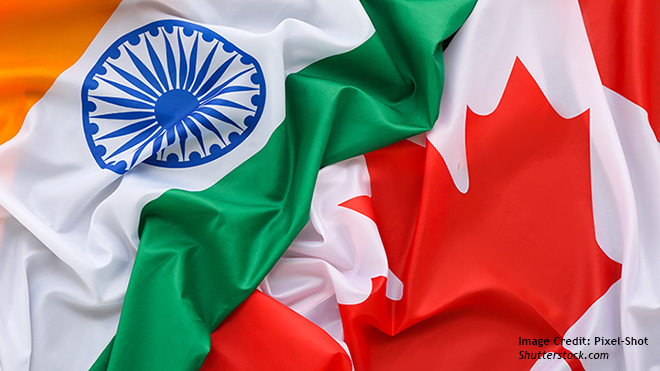
Ottawa and New Delhi are preparing for a high-level visit in March by Canadian Prime Minister Mark Carney, with negotiations entering an advanced stage on a cluster of agreements covering uranium supply, clean energy cooperation, critical minerals and artificial intelligence. Officials familiar with the talks say the visit is being positioned as a reset in economic engagement after a period of diplomatic strain, with both sides keen to lock in commercially binding deals that reflect shifting global supply chains and technology priorities.
The centrepiece of the expected package is an expansion of civil nuclear cooperation, anchored in long-term uranium supply contracts. Canada is among the world’s largest producers of uranium, while India has been seeking diversified and reliable fuel sources to support its nuclear power programme, which is projected to grow sharply over the next decade. Negotiators have been working to streamline regulatory clearances and pricing mechanisms to give utilities and suppliers greater certainty, while ensuring safeguards and compliance obligations are met.
Energy cooperation is set to extend beyond nuclear. Talks have included collaboration on clean hydrogen, carbon capture and storage, and grid-scale renewable integration. Canadian firms bring experience in cold-climate energy systems, advanced storage and emissions management, while India offers scale, manufacturing depth and ambitious deployment targets. Officials describe the approach as moving from memoranda of understanding towards projects with defined investment timelines and joint development structures.
Critical minerals form another pillar of the discussions. Canada’s reserves of lithium, nickel, cobalt and rare earths are increasingly viewed as strategic assets as governments seek alternatives to concentrated supply routes. India, pushing to build domestic battery and electronics manufacturing capacity, has been exploring offtake agreements, joint exploration and downstream processing partnerships. The proposed framework is designed to align mineral extraction with environmental and community standards, while enabling long-term supply security for manufacturers.
Artificial intelligence cooperation has emerged as a newer, fast-moving track. Policymakers on both sides have been weighing arrangements that combine Canada’s research ecosystem and talent pipeline with India’s large-scale data capabilities and application-driven innovation. Areas under discussion include healthcare diagnostics, climate modelling, financial services and public-sector digital infrastructure. Officials have emphasised the need for guardrails on data governance, intellectual property and ethical use, reflecting growing global scrutiny of AI deployment.
Trade officials say the March visit, if confirmed as planned, would also provide political momentum to broader commercial ties. Bilateral trade has grown steadily over the past decade but remains below potential, particularly in high-value manufacturing and services. Business groups in both countries have been urging clearer pathways for investment approvals, mobility of skilled professionals and dispute resolution mechanisms to reduce friction for companies operating across jurisdictions.




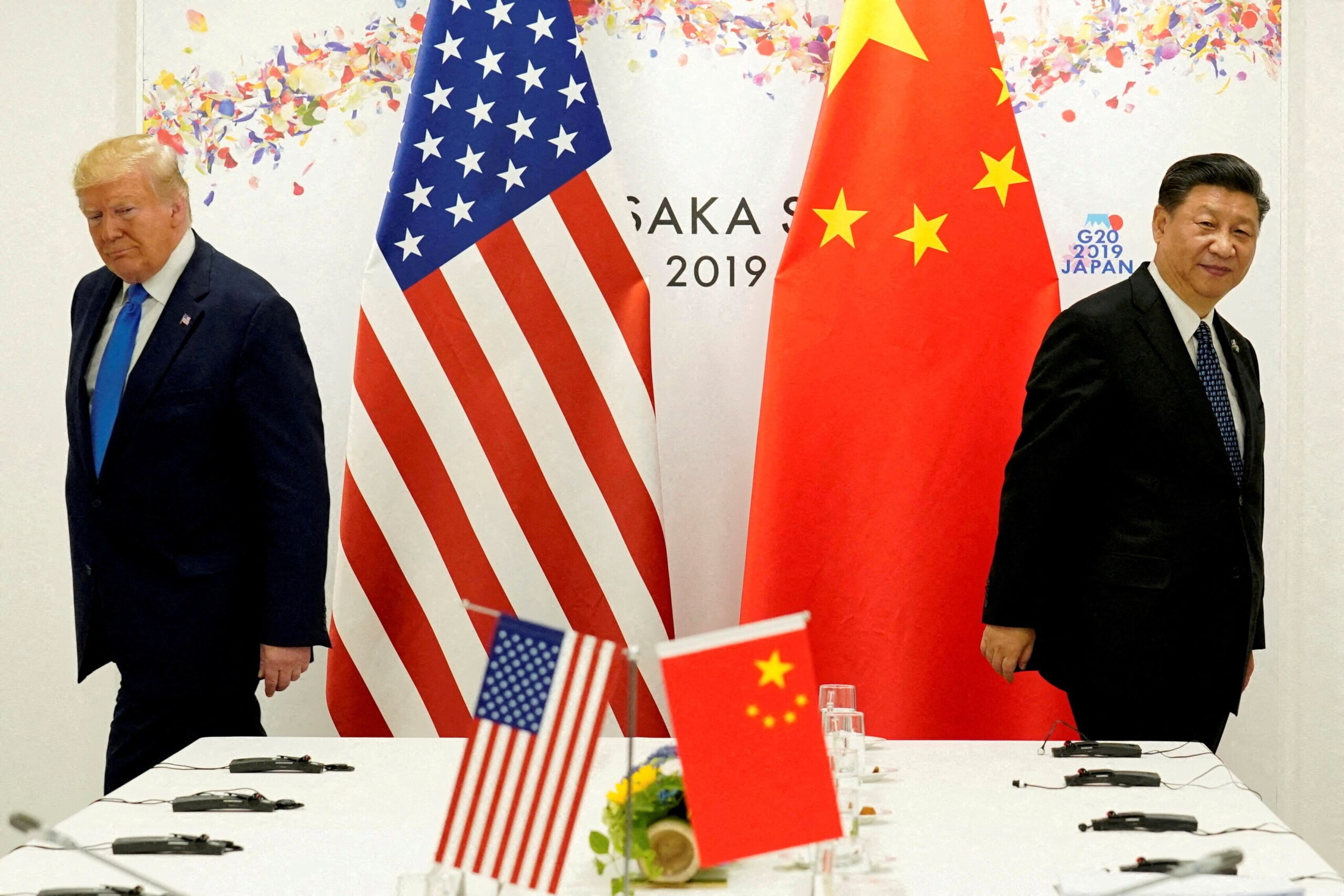
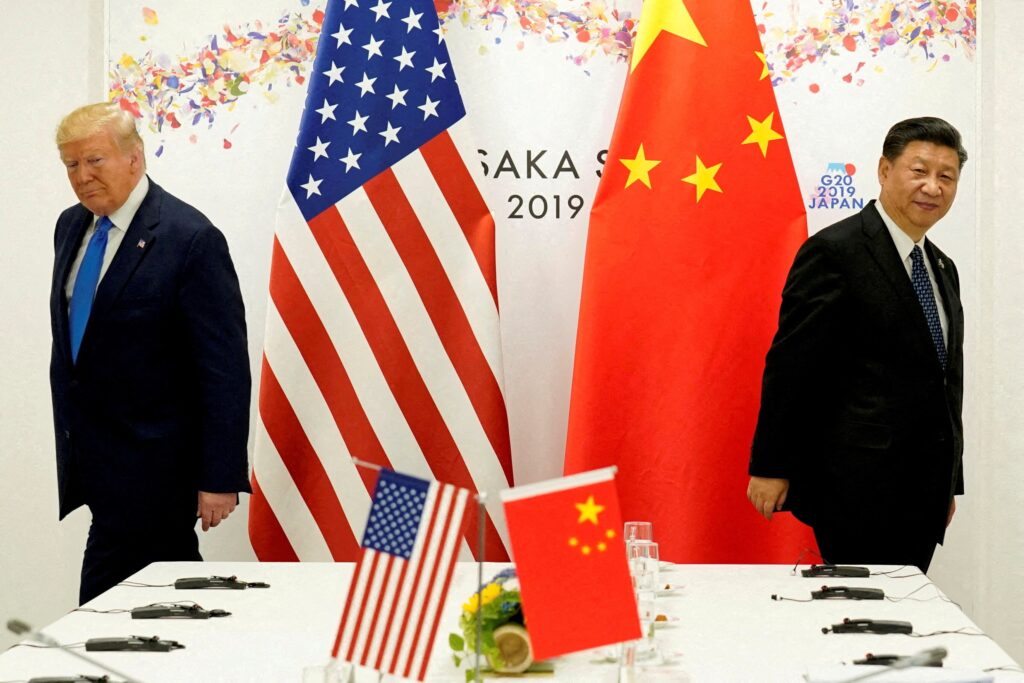 By Nitya Chakraborty The meeting between Chinese President Xi Jinping and the British Prime Minister Keir Starmer on Thursday, January 29 in Beijing assumes special significance at a time when Britain is fighting its transatlantic ally U.S. over the sovereignty of Greenland and President Trump has mentioned security threat from China and Russia in Arctic […]

 https://www.axisquantai.com/





 https://www.linkedin.com/company/brand-hong-kong/
 https://x.com/Brand_HK/
 https://www.facebook.com/brandhk.isd
 https://www.instagram.com/brandhongkong