News related to
AI trade

BEIJING, CHINA – Media OutReach Newswire – 15 September 2025 – In Shougang Park, a former ironworks site in western Beijing, new technologies from AI to cloud computing and green innovation are on display amid the rusty blast furnaces and steel relics. The 2025 China International Fair for Trade in Services (CIFTIS), featuring digital innovation and intelligent technologies, is underway in the park, gathering nearly 2,000 enterprises, […]

Gold surged past levels not seen in over four months after growing confidence that the Federal Reserve will cut interest rates this month boosted demand for bullion, while silver climbed above $40 per ounce for the first time in over a decade.

Spot gold rose around 0.9% to roughly US$3,486.86 per ounce, reaching highs last marked in late April. US gold futures for December delivery also advanced, riding momentum from dovish comments by San Francisco Fed President Mary Daly and a U. S. appeals court decision that struck down most of former President Trump’s tariffs, which weighed on the dollar. Silver jumped about 2.2%, to near US$40.56, its best since September 2011. Other precious metals followed: platinum added 1.5% and palladium rose around 0.8%.

Investors have been digesting a weakening US dollar, cautious labour market indicators, and signals from policymakers suggesting the Fed could lower rates by 25 basis points. Some traders contemplate a larger cut, although forecasts remain varied. Demand for gold as a hedge has been reinforced by geopolitical uncertainty and concerns around the independence of central banking.

Analysts at ANZ and UBS have revised their forecasts for gold upward. ANZ now expects gold to average about US$3,800 per ounce by year-end, with upside toward US$4,000 by mid-2026. UBS similarly raised its year-end target, citing robust central bank buying, persistent inflation pressures, and the likelihood of further policy easing.

Silver’s rally, driven by industrial demand and tight supply, outpaces gold in percentage gains. ETF inflows have also favoured silver, reflecting investor appetite for high-beta exposure in the precious metals space.

JAKARTA, INDONESIA – Media OutReach Newswire – 15 September 2025 – Finex, an acclaimed Indonesian broker, announces the grand winner of the Get X2 promo, a 2025 New Year’s promotion celebrating skill, persistence, and rewarding trading. Finex started 2025 with an ambitious event: the Get X2 promo. Finexers were invited to showcase their trading skills while exchanging traded lots for valuable prizes. The promotion ended with the […]

Memecoins have surged across cryptocurrency markets as traders shift bets toward a probable interest-rate cut by the Federal Reserve and the possibility of U. S. altcoin ETF approvals. Bitcoin’s market share has declined by about 3.5% over the past month, while indexes comparing altcoin performance versus Bitcoin have entered so-called “altseason” territory.

Expectations that the Federal Reserve may reduce rates by 25 basis points later this month are currently priced in at over 90% by market observers using tools such as Polymarket and the CME’s FedWatch. A rate cut is widely seen as a trigger boosting risk-assets by lowering the comparative appeal of fixed-income securities.

The CoinDesk Memecoin Index rose roughly 7.1% over 24 hours, led by tokens like SHIB and BONE. These gains came despite Shiba Inu’s layer-2 network, Shibarium, being hit by a flash-loan exploit, which did not dampen investor enthusiasm.

Analysts point out that falling Bitcoin dominance, which reflects a shrinking slice of total crypto market capitalisation for the biggest token, often heralds a shift into altcoins. Indexes from providers including CoinMarketCap and CoinGlass have signalled this rotation of capital away from Bitcoin toward altcoins.

Institutional momentum is also tightening around altcoin exchange-traded funds; proposals for ETFs covering DOGE and TRUMP tokens are reportedly under consideration for U. S. markets in the final quarter of the year. Approval of such funds could draw both retail and institutional capital into memecoin-adjacent assets.

The India-Nepal border has begun reopening across several crossings following days of closure caused by violent protests in Nepal. Checkpoints at Sonauli, Rupaidiha, Kheri, Siddharthnagar and Balrampur have resumed partial movement of goods, under enhanced security and supervision by the Nepal Army.

At Rupaidiha’s Integrated Check Post, over 20 tankers loaded with petroleum, diesel, cooking gas and medicines have entered Nepal, helping to curb shortages of essentials. Nearly 1,000 trucks carrying foodstuffs, machinery and medical supplies await clearance amid prioritisation of life-saving and energy supplies. Market traders and transporters, impacted by steep price rises of commodities such as biscuits and cooking gas, have expressed relief. The border reopening comes amid tight controls, with curfews still in place in sensitive areas and heightened security patrols, including drone surveillance. Authorities warn that full restoration of trade and cross-border traffic will be gradual, given damage to infrastructure and logistical disruptions caused during the unrest.

Nepal is now under an interim government led by Sushila Karki, who took office after anti-corruption protests driven by Gen Z activists forced Prime Minister K. P. Sharma Oli to resign. Her appointment as the first woman to lead the government was confirmed after negotiations involving the president, military leadership and protest representatives. Parliament has been dissolved, and new elections are scheduled for 5 March 2026.

Protesters had demanded transparency, political accountability and an end to nepotism and corruption. The protests were triggered by a controversial social media ban, but escalated rapidly, resulting in more than 50 deaths and over 1,300 injuries in clashes with security forces. Many government buildings, including parliament and the presidential residence, were set ablaze. Curfews were imposed in Kathmandu and neighbouring districts while transport, banking and other services came to a standstill.

With the new government now operating, authorities in Nepal are prioritising restoring law and order and ensuring that those who died or lost property during the unrest receive appropriate investigation and accountability. International reaction has been largely supportive of the transition, with neighbouring countries invoking hopes of stability and peace.

By Nitya Chakraborty Prime Minister Narendra Modi has been talking of Neighbourhood First programme since he took over power in 2014. In these eleven years of his rule, India has got isolated from most of the countries who are its neighbours and belong to the South Asian Association of Regional Cooperation (SAARC). The latest developments […]

Harare has been thrust into the spotlight over severe human rights violations linked to mining operations, as watchdog groups and local activists issue alarming reports of forced displacement, environmental destruction and labour abuse. The Crisis in Zimbabwe Coalition has accused mining firms and state actors of orchestrating “grave human rights violations” against residents in mining regions. These include evictions without proper compensation, widespread water and air pollution, […]

Advertisements
By D. Raja The coming to power of the BJP with an absolute majority in the 2014 general elections was not merely a routine transfer of power from one democratically elected government to another. It marked a qualitative shift in the very nature of our polity. The BJP is the political arm of the Rashtriya […]

HONG KONG SAR – Media OutReach Newswire – 12 September 2025 – The 10th edition of the Belt and Road Summit in Hong Kong (September 10-11) gathered about 6 200 high-profile participants from governments, international organisations, companies and the global media to celebrate a decade of achievements in promoting the Belt and Road Initiative (B&RI). Jointly organised by the Hong Kong Special Administrative Region (HKSAR) Government and […]

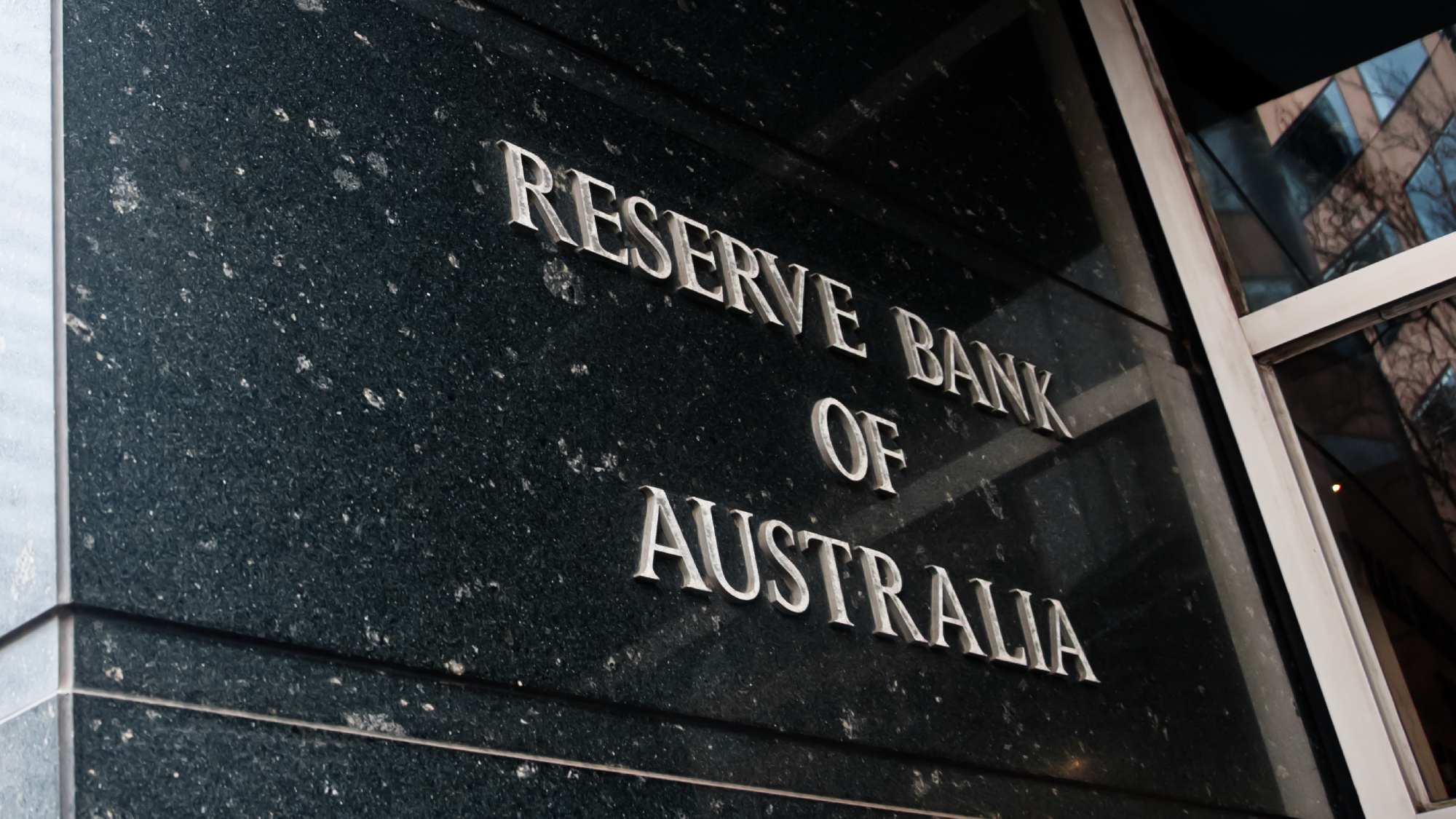
Australia’s Reserve Bank, through Assistant Governor Brad Jones, has warned that the era of stability and integration following the Cold War has given way to a more contested strategic environment that carries elevated risk for governments, financial institutions, and markets. At a FINSIA event in Sydney on 12 September, Jones declared that “the era of the peace dividend is over,” citing geopolitical, technological and operational disruptions reshaping the global financial order.

Jones described the international security and economic system as undergoing “seismic adjustment — on a scale and speed unseen in eight decades.” He flagged multiple forces contributing to instability: rising strategic rivalry, weakening tenets of the rules-based order, frictions in globalisation, and increasing emphasis on self-insurance by nations and firms against a broader set of possible harms.

Technological advances form one front of the risk profile. Jones spoke of an expanding surface for cyber-attacks driven by digitalisation, concerns over concentration risk in cloud services, and quantum computing’s looming threat to encryption systems. Artificial intelligence, while promising productivity gains, poses risks of misinformation, fraud, and systemic instability due to herding behaviour.

Critical infrastructure exposures were cited as especially vulnerable: telecommunications networks, the electrical grid, payment systems, and market infrastructure. Jones referenced a recent example in Europe, where cascading power outages in the Iberian Peninsula disrupted both households and economic activity, pointing out that such disruptions would be far more dangerous if key financial infrastructure were affected.

To respond, the RBA is pressing for what it calls an “anti-fragile” financial system—one not simply capable of withstanding shocks but able to adapt and improve because of them. Innovation, competition, and efficiency are being positioned not as opposing goals to resilience but as complementary. Initiatives under way include work with industry to bolster payments resilience, frameworks to ensure that future payments systems embed reliability and recoverability, migration to quantum-safe encryption standards, and reforms aimed at enabling new entrants in financial market infrastructure to reduce concentration risk.

These concerns build on earlier warnings in the RBA’s Financial Stability Review, which noted that heightened geopolitical tensions, trade uncertainty, and technological vulnerabilities could interact with existing financial system risks. The review flagged operational risks from interconnectedness and dependency on third parties for infrastructure and services.

The shift has implications for monetary policy, regulatory oversight, and business strategy. Regulators are likely to place greater emphasis on risk scenarios involving geopolitics, cyber-threats and supply-chain disruptions; financial institutions will need to review and stress-test against non-traditional threats while ensuring agility; and policy frameworks may need to evolve to address threats outside standard macroeconomic shocks.


Discussions between Washington and New Delhi are said to have reached a critical stage, with US officials making India’s cessation of buying Russian oil a central condition for sealing a bilateral trade agreement. Ambassador-nominee Sergio Gor, during his Senate Foreign Relations Committee hearing, stated that the two sides are “not that far apart” and are now negotiating “the nitty-gritty” of deal terms. He added that ending oil purchases from Russia is one of the Trump administration’s highest priorities. Those talks are expected to involve India’s trade and commerce ministers in Washington next week.

Commerce Secretary Howard Lutnick echoed Gor’s position in an interview, saying the US will resolve trade barriers with India once India stops purchasing Russian oil. The US has imposed a 50% tariff on certain Indian goods, partly as a penalty tied to India’s energy imports from Russia, while insisting that market openness and reciprocal concessions are essential.

India’s leadership has defended its energy procurement strategy as aligned with national interests, citing economic factors and global market conditions. Finance Minister Nirmala Sitharaman reaffirmed that New Delhi intends to continue buying Russian crude, describing it as a practical choice given price and supply stability. She referenced the high import dependency for energy and refined fuels and argued that decisions about suppliers are driven by utility and cost.

Diplomatic signals suggest that the trade impasse stems from more than tariffs and oil. Gor characterised previous delays as “hiccups” and praised the personal rapport between President Donald Trump and Prime Minister Narendra Modi as playing a pivotal role in reopening the dialogue. He noted shared strategic goals, including countering Chinese influence, enhancing regional stability, and expanding cooperation in defence and infrastructure.

Analysts warn that making the Russian oil condition a non-negotiable requirement may limit India’s flexibility. New Delhi has maintained that certain sectors — agriculture, dairy, small producers — cannot absorb full opening of its markets without harming domestic stakeholders. As US pressure mounts through tariffs and public statements, India seeks assurances about trade access, particularly for its exports, while preserving sovereign control over energy policy.

UAE residents will be able to pre-order Apple’s new iPhone 17 models from 12 September, with deliveries and in-store availability from 19 September. The launch will include the iPhone 17, iPhone 17 Pro, iPhone 17 Pro Max, and a newly introduced ultra-slim model called the iPhone Air. Apple’s iPhone 17 is powered by the A19 chip, offering upgraded performance across the lineup. The base iPhone 17 model […]

Digital assets are no longer a Wild West – governments worldwide are setting clear rules. Any company that exchanges, trades, or safeguards crypto now needs a proper license. It’s not just about meeting AML and CTF laws: a license builds client trust and gives businesses the legal ground to grow. With it, firms can offer exchange, custody, and payments to global clients. But every country has its […]

BEIJING, CHINA – Media OutReach Newswire – 11 September 2025 – Against the backdrop of repurposed blast furnaces and industrial relics of Shougang Park in western Beijing, the 2025 China International Fair for Trade in Services (CIFTIS) opened on Wednesday, striking a tone of open markets and digital innovation. People visit a booth of Pop Mart during the 2025 China International Fair for Trade in Services (CIFTIS) […]

China has seen financial flows totalling about US$4.5 trillion, a figure that many analysts believe marks a turning point in how its markets are engaging with the world. The scale of cross-border investment—both inbound and outbound—is now surpassing trade in many respects, reflecting Beijing’s accelerating liberalisation efforts and a growing confidence among foreign and domestic investors.

The financial sum comprises equity, bond, and other capital movements, and corresponds with recent policy moves designed to reduce restrictions and open up China’s capital markets. One key driver is the Stock Connect programme, which allows mainland Chinese investors to purchase eligible Hong Kong–listed stocks and gives international investors access to A-shares. Southbound flows—money moving from mainland China into Hong Kong—have been especially significant, gathering close to US$100 billion within the first half of 2025. That alone matched the total stock in 2024 via that channel.

Yields on Chinese government bonds have hit highs not seen since late 2024, suggesting investors are now demanding greater returns, but also that they perceive risks such as inflation and currency pressures to be easing. The 10- and 30-year yields climbing indicates that institutions expect stabilization in key macro indicators, even if headline economic growth remains uneven. The bond market, however, has also become more volatile, driven by leveraged buying of equities and speculative pressure in certain sectors.

Another contributing factor is the behaviour of domestic institutional investors. With over 160 trillion yuan in household savings, China’s policy makers are encouraging pension funds, insurance companies, and sovereign funds to shift more capital into domestic equities. These kinds of flows reinforce the internal market strength, even as external capital enters or exits depending on global risk appetite.

Hong Kong’s IPO market has benefited greatly. Several major mainland firms—including tech and battery makers—have either listed in Hong Kong or signalled plans to do so. This has helped Hong Kong reclaim its spot among the world’s most active IPO hubs in 2025. The changes to listing rules, including shorter approval times for eligible mainland firms, have been essential in this revival.

Senator Ron Wyden is pressing the Federal Trade Commission to investigate Microsoft over what he terms its “gross cybersecurity negligence,” asserting that inherent weaknesses in Microsoft’s security framework enabled a damaging ransomware attack on a hospital system. Wyden’s letter, dated 10 September 2025, identifies how default encryption settings and flawed user-interface design played pivotal roles in the infiltration of Ascension, one of the largest non-profit health systems […]

Matein Khalid Klarna hits the IPO hit parade in New York on Wednesday and the grapevine suggests that the Swedish fintech IPO is oversubscribed by at least 10X. The investment bankers priced Klarna last night at $40, even above the 35-37 range where Sequoia capital, Silver Lake and lesser grandees on Sand Hill Road, Dai Nippon, Sing and Oz will now pocket a multi-billion dollar paydirt as […]

HONG KONG SAR – Media OutReach Newswire – 10 September 2025 – On the occasion of the 100-day countdown to the island-wide independent customs operation of the Hainan Free Trade Port (Hainan FTZ), the Hainan FTZ Promotion Conference and Policy Interpretation Conference themed “Hainan-Hong Kong Cooperation for a Win-win Future” was organized at the Hong Kong Convention and Exhibition Center on September 9th. On September 9th, stakeholders […]

Bitcoin reclaimed the $112,000 level as markets remain focused on the week ahead, with investors balancing caution against emerging momentum across select digital assets. Solana and Dogecoin have seen notable uplift as traders reallocate positions amid mounting anticipation of U. S. macroeconomic releases and Federal Reserve developments.

Bitcoin traded in a tight range near $111,500 to $112,300 as market participants paused, waiting for fresh cues from upcoming Consumer Price Index, Producer Price Index and central bank announcements. This positioning reflects prudence amid heavier macroeconomic noise.

Solana climbed to around $218 to $220, marking a multi-month high as renewed interest drew capital from more established tokens. Meanwhile, Dogecoin extended a weekly gain to approximately $0.24, buoyed by optimism surrounding the imminent debut of the first U. S. memecoin exchange-traded fund.

SignalPlus head of insights Augustine Fan noted that crypto markets have been relatively flat recently, with Bitcoin underperforming both its major peers and traditional assets such as equities and spot gold. That underperformance accompanied weaker inflows into digital asset trusts and reduced activity on centralised exchanges.

Economists have also dialled back inflation and recession worries following revisions to U. S. labour data, prompting some rebound in market sentiment. Bitcoin, alongside European equities, saw support as experts downplayed fears of stagflation.

Prediction markets suggest that a rate cut from the Federal Reserve is increasingly likely, with sentiment split between a further cut or a hold in October. Gold reached record levels in anticipation of looser monetary policy, even as U. S. equity indices pushed higher.

Positioning remains defensive, but the rotation into altcoins signals willingness among traders to explore higher-beta opportunities. Reflecting this, the phrase Traders Push Bitcoin Above $112K captures the shifting dynamic in crypto allocations—but notably, attention remains fixed on upcoming U. S. data releases shaping the next phase of the market.

Liquidity has stayed modest. Reference points in the $110K–$112K zone appear increasingly important as support amid a backdrop of uncertainty.

Protesters breached Nepal’s federal parliament complex in Kathmandu and set parts of the building on fire on Tuesday, escalating a youth-led movement that has convulsed the country and prompted the prime minister’s resignation. Authorities confirmed fatalities and hundreds of injuries over two days of clashes that centred on the New Baneshwar area housing the legislature. The death toll rose to 19 after security forces used live ammunition, […]

By Nitya Chakraborty Is the Prime Minister Narendra Modi retracting from his commitment to the SCO declaration issued on September 1 and the BRICS statement of July 6 this year to send some sort of signals to US President Donald Trump about restoring reciprocity in the India-US relations? The question is very relevant as one […]

Matein Khalid My readers and friends know that I have been a boring perma-bull on gold since early 2024, when it became obvious that the People’s Bank of China was accumulating gold bullions as a hedge against an overvalued King Dollar and a capricious White House, which had just seized $300 billion in Russian central bank reserves to punish Putin’s invasion of Ukraine. The bullish gold trade […]

Markets are sending urgent signals. Gold has burst above $3,600 an ounce, a record that reflects both anticipation of rate cuts and a broader scramble for safety. Treasury yields have swung sharply, with shorter maturities pulled lower by expectations of central bank easing while long-dated bonds creep toward multi-year highs, and across equities, momentum has become fragmented, with volatility rising around political headlines and economic uncertainty. These […]

By Nantoo Banerjee One’s pain could be another’s gain. The phrase aptly describes those big business gainers across the world out of the three-and-a-half-year-old Russia-Ukraine war, killing thousands of soldiers and civilians on both sides. The list of such gainers may be short but very impressive. They include some of the giant US defence manufacturers […]

VISHNU RAJA
RYO YAMADA
HITORI GOTOH
IKUYO KITA