News related to
AI trade

By Nitya Chakraborty On October 10, the Nobel Prize Committee awarded the Peace prize for the year 2025 to the Venezuelan right wing politician Maria Corina Machado who has been working for the last few years for the removal of the President Nicholas Maduro from his office. The White House initially reacted that the Nobel […]

The article Trump Has Not Got Nobel Peace Prize But The Winner Machado Is His Acolyte In Latin America appeared first on Latest India news, analysis and reports on Newspack by India Press Agency).

Crude futures are signaling a shift towards contango as market participants brace for an oversupply wave in 2026, driven by aggressive production from OPEC+ and non-OPEC players and uncertain demand growth. U. S. oil futures are showing the narrowest backwardation since early 2024, with the November 2025 WTI contract trading at a slim premium over May 2026—a structure ill-suited to limits on physical demand. This flattening of […]

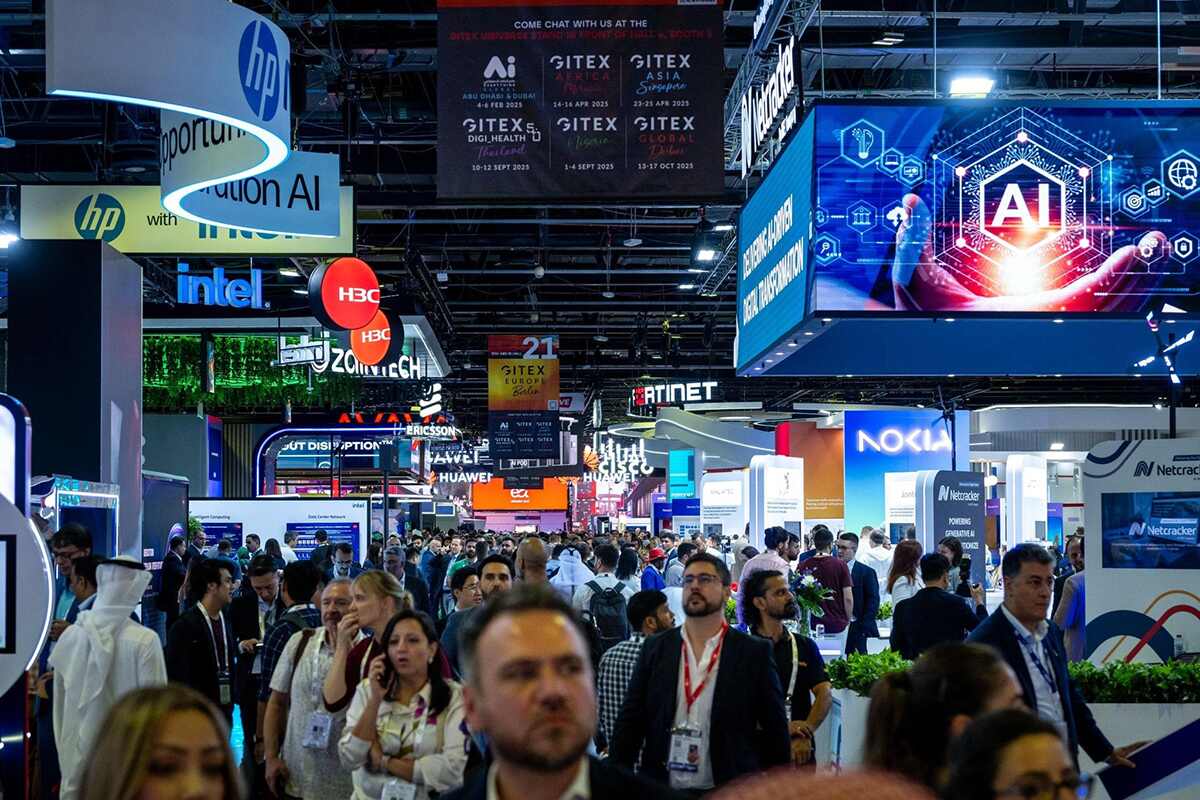
Dubai’s 45th edition of GITEX GLOBAL opened on 13 October at the Dubai World Trade Centre, attracting what organisers call unprecedented global participation. The event hosts more than 6,800 exhibitors, 2,000 startups and 1,200 investors from over 180 countries. Sheikh Mohammed bin Rashid Al Maktoum inaugurated the event, underscoring the UAE’s ambition to lead in AI-driven economies. Dubai’s leadership has signalled this edition will be the last […]

German Pavilion “Wa! Germany” closes after 184 days with over three million visitors Koelnmesse, as the organisation responsible for operations, reports resounding success COLOGNE, GERMANY and OSAKA, JAPAN – Newsaktuell – 13 October 2025 – After 184 days, the German Pavilion “Wa! Germany” at Expo 2025 in the Japanese city of Osaka has closed its doors. More than three million people from around the world visited the […]

Dubai has recorded a landmark quarter in its upper-tier residential sector, with 103 homes sold for over US$ 10 million in Q3, representing a 24 % rise compared with Q3 of 2024. Demand in the ultra-luxury segment translated into 17 sales above US$ 25 million — more than double the tally from the same period last year. By the end of September, the cumulative number of US$ […]

The United Arab Emirates has asserted that open, rules-based trade is vital to sustainable development, while unveiling strategic moves to strengthen its global trade footprint at the G20 Trade & Investment Ministerial Meeting in Gqeberha, South Africa. At the opening sessions, Dr Thani bin Ahmed Al Zeyoudi, UAE Minister of Foreign Trade, emphasised that trade frameworks anchored in transparency and fairness are the cornerstone for inclusive growth […]

Washington pressed Beijing to adopt a more conciliatory stance in an intensifying trade dispute over rare earths, as Vice President JD Vance asserted that President Donald Trump holds superior leverage in any escalating confrontation. Speaking on Fox News’s Sunday Morning Futures, Vance warned that China’s reaction will largely decide whether the standoff becomes a full-blown trade war or returns to negotiation. China responded with defiance. Its Ministry […]

Advertisements

Intercontinental Exchange, which owns the New York Stock Exchange, is committing up to $2 billion in Polymarket, valuing the event-prediction platform at about $8 billion before the investment. ICE will serve as a global distributor of Polymarket’s event-driven data and will collaborate on tokenisation and related infrastructure.

Polymarket is gearing up for its return to U. S. markets following a multi-year regulatory hiatus. The firm acquired QCEX, a derivatives exchange and clearinghouse with CFTC licensure, for $112 million, enabling it to operate under U. S. regulation. The Commodity Futures Trading Commission has granted a no-action letter for event contracts, clearing a path for U. S. users to trade again.

Born in 2020 under the leadership of CEO Shayne Coplan, Polymarket permits users to wager on outcomes by purchasing “Yes” or “No” tokens. The market price implies a probability. Winning tokens settle at $1, while losing ones expire worthless. All trades occur via peer-to-peer smart contracts built on the Polygon blockchain.

Polymarket saw a surge in profile during the 2024 U. S. presidential campaign, when trading volume on election markets surpassed $3 billion. Its probability signals have since been picked up by mainstream outlets and financial analysts as indicators of public sentiment and forecasting.

ICE’s strategic investment reflects growing institutional interest in prediction markets. With control over NYSE infrastructure and deep data capabilities, ICE aims to monetise sentiment analytics and integrate such signals alongside traditional financial indicators. ICE has maintained that the investment will not materially affect its 2025 financials.

Coplan has acknowledged the significance of the tie-up, saying the partnership “marks a major step in bringing prediction markets into the financial mainstream.” Jeffrey Sprecher, ICE’s CEO, praised the union as an alignment between legacy market infrastructure and next-generation decentralised finance innovation.

Observers suggest that navigating regulatory risk is central to Polymarket’s success. Its three-year exit from U. S. users followed a 2022 settlement with the CFTC over unregistered derivatives operations. That settlement barred U. S. users from accessing the platform, and investigations into U. S. usage had been a cloud over the company. With the regulatory clearance and ICE backing, Polymarket is now executing a comeback in the U. S. domain.

Polymarket also attracted backing from 1789 Capital, a venture fund backed by Donald Trump Jr., which joined its advisory board earlier this year. Kalshi, a peer prediction market, won a favorable court ruling against the CFTC last year, setting precedents that influence Polymarket’s legal and operational landscape. The broader industry is watching closely, as the success or failure of this bet by ICE may signal whether prediction markets can transition from niche crypto tools to mainstream financial instruments.

Shayne Coplan, born in 1998 and a former dropout from New York University, is now recognised as the youngest self-made billionaire under the Bloomberg index following the deal. His trajectory illustrates the accelerating nexus among finance, tech and speculative market platforms.

By Nitya Chakraborty There is a big possibility of renewal of India-US bilateral ties impacting the ongoing trade talks following the proposed one on one meeting between the Indian Prime Minister Narendra Modi and the U.S. President Donald Trump during their presence in Kuala Lumpur to attend the summit of ASEAN members on October 26 […]

The article Trump-Modi Meet At ASEAN Summit In Malaysia Can Remove Irritants In Indo-US Ties appeared first on Latest India news, analysis and reports on Newspack by India Press Agency).

China’s expanded export controls on rare-earth materials have jolted global semiconductor supply chains, with firms scrambling to assess vulnerabilities while the United States countered by threatening a sweeping 100 % tariff and new software export curbs. The Chinese Ministry of Commerce broadened restrictions to 12 elements and extended licensing requirements to include mining, refining and recycling equipment—pressing that any dual-use or defence-tied requests will be denied. Foreign […]

DP World has struck a joint venture with Tashkent Invest, a firm under the Tashkent City Administration, to build and manage a multimodal logistics terminal in the Yangi Avlod Special Industrial Zone in the Yangihayot district on the outskirts of Tashkent. Under the deal, DP World will own 85 percent of the venture and Tashkent Invest will contribute 15 percent. The overall investment across three phases is […]

Cryptocurrency markets endured a historic collapse as leveraged positions were liquidated en masse – over 1.6 million traders wiped out $19.13 billion in bets within 24 hours, data from Coinglass shows.

The crash accelerated sharply after U. S. President Donald Trump announced an additional 100 per cent tariff on Chinese imports and threatened export controls on critical software, heightening fears of a full-blown trade war. Bitcoin plunged more than 12 per cent from its recent highs, briefly sliding below $102,000 before rebounding above $113,000.

Before the sell-off, Bitcoin had breached a new all-time peak above $125,000, buoyed by institutional inflows into crypto exchange-traded funds. Governments and institutional investors had viewed digital assets as a hedge amid macroeconomic uncertainty.

Today’s market rout, however, exposed the fragility of overleveraged positions in a thinly capitalised market. In a single hour on Friday, more than $7 billion of liquidations occurred. The top losses were seen among long positions, particularly in Bitcoin and Ethereum derivatives, which accounted for a substantial share of the forced unwinds.

Institutional players and high-net-worth traders were swept up in the cascade. Market watchers noted that order books lacked the depth to absorb such a severe shock, triggering knock-on effects through futures and perpetual swap markets.

Beyond crypto, equity indices faltered under the weight of renewed global risk aversion. The S&P 500 dropped 2.7 percent, while tech stocks, sensitive to trade tensions, bore steep losses.

Some analysts likened the event to a “black swan” moment for crypto markets — a sudden shock revealing systemic vulnerabilities in a still nascent asset class. Traders operating with high leverage, little hedging, and aggressive margin policies found themselves particularly exposed.

Efforts to assess contagion effects to traditional finance are underway. Banks offering crypto derivatives and prime brokers are now scrutinising counterparty risks. Regulators in several jurisdictions may use today’s crash to justify stricter margin and leverage rules for crypto trading.

Reviewing policy implications, the tariff escalation marks a sharp pivot in U. S.–China trade strategy. Trump framed the measures as retaliation for China’s export curbs on rare earth metals, which are critical for tech manufacturing. The move signals willingness to escalate economic confrontation, with markets already pricing in broader disruption to global supply chains.

Despite the volatility, some investors are still betting on long-term resilience of digital assets. The week before the crash saw a record $5.95 billion flow into global crypto ETFs, led by U. S. allocations, suggesting that capital rotation into crypto remains strong over medium timeframes.

Liquidity providers and market makers face fresh trials. Some have temporarily withdrawn from funding markets or widened spreads to mitigate risk exposure. In highly volatile hours, arbitrage desks and algorithmic liquidity engines contributed to exaggerated price swings.

Wider sentiment has turned cautious: on-chain analytics show a rise in stablecoin inflows to exchanges, possibly reflecting flight from risk. Options markets registered growing demand for deep out-of-the-money puts, as traders brace for further downside.

Saudia’s inaugural direct passenger flight from Riyadh to Moscow landed on Friday at Sheremetyevo airport, signalling a new chapter in Saudi–Russian air connectivity. The airline plans to operate three weekly round-trip services, integrating tourism, business and diplomatic traffic between the two capitals.

The launch positions Saudia alongside Flynas, which commenced direct operations between Riyadh and Moscow’s Vnukovo airport in August with three weekly flights. Flynas is also slated to begin a Jeddah–Moscow route come December. The twin developments reflect a concerted push by both states to deepen bilateral ties through aviation links.

The Riyadh–Moscow air bridge is underpinned by the Saudi Tourism Authority and the Air Connectivity Program, designed to promote cross-border mobility and support Saudi Vision 2030. Saudia officials say ticketing and scheduling are aligned to accommodate business travellers, diplomats and leisure tourists. The route’s launch was celebrated in both capitals, where it was honoured with a water cannon salute at Sheremetyevo and a gala in Moscow attended by diplomatic representatives and aviation executives.

Russia has experienced a surge in travellers from Saudi Arabia. In 2024, over 52,400 Saudis visited Russia, a leap from just 9,300 the previous year, following Moscow’s August 2023 e-visa reform that enabled Saudis easier access. Likewise, Russian visitors to the Kingdom have grown steadily, aided by anticipatory visa liberalisation and reciprocal travel facilitation efforts.

Russian Foreign Minister Sergey Lavrov, during talks with his Saudi counterpart, described the launch as an enabler of “tourist exchanges and business contacts,” citing that growing demand warranted direct air links. On the ground, Sheremetyevo’s scheduling system already lists flights to Riyadh beginning mid-October, operating up to five times weekly.

The timing dovetails with a broader recalibration in Saudi foreign policy and energy diplomacy. The personal rapport between Crown Prince Mohammed bin Salman and President Vladimir Putin has been instrumental in facilitating cooperation within the OPEC+ framework. Cooperation in trade, energy and security has steadily flourished in recent years, and aviation ties now offer a tangible bridge between economies.

Saudia’s fleet expansion and network strategy underscore that the Moscow link is more than symbolic. The airline now serves over 100 destinations across four continents, with plans to expand to 145 destinations by 2030. Performance figures underscore ambition: in the first half of 2025, Saudia carried 17.5 million passengers and operated 100,000 flights.

The route is expected to spur ancillary sectors. Saudi tour operators are preparing Russia-focused packages including Moscow, St Petersburg, and beyond, while Russian travel agencies are packaging Saudi cities and pilgrimage circuits. Pilgrim traffic is especially significant: the Moscow launch could funnel more Russian pilgrims directly to Mecca or Medina via Riyadh.

Dubai’s GITEX GLOBAL 2025 is turning the spotlight on East Africa as a rising force in the artificial intelligence landscape, with regional governments and private players leveraging the event to signal ambition across infrastructure, AI research and startup ecosystems. More than 6,800 tech enterprises and 2,000 startups from 180 countries will convene in Dubai from 13 to 17 October under the GITEX banner, showcasing breakthroughs in biotech, […]

Ethereum’s value slipped beneath the psychologically and technically significant $4,000 mark today, intensifying fears that the second-largest cryptocurrency may be entering a deeper correction. On Binance, ETH dipped to $3,988.89, down almost 8 per cent in 24 hours.

The abrupt drop triggered widespread liquidations, especially among leveraged positions. On-chain liquidation trackers show nearly $188 million in crypto was liquidated in just one hour during the sharp move.

Persistent macroeconomic headwinds, alongside renewed U. S.–China trade tensions, appear to have compounded selling pressure. The Nasdaq and other equity benchmarks also suffered, amplifying risk aversion among crypto investors.

Technical analysts now view the breakdown below $4,000 as a turning point. From a charting perspective, the fall invalidated previously bullish setups such as bull flags, leaving Ethereum exposed to further downside. One analyst cautioned that extended weakness could push ETH toward the $3,750 to $3,500 zone if pivotal support fails.

Support between $4,200 and $4,300 had held in recent sessions, but now that zone is under siege. Should it collapse, the stage may be set for a retest of $3,900 or lower. Traders are watching whether buyers will defend this corridor or capitulate.

Despite today’s plunge, some investors see accumulation underway. Ethereum’s total on-exchange supply has declined to a nine-year low, with large holders withdrawing ETH from exchanges—an indicator that long-term confidence may still remain intact.

Longer term, expectations remain cautiously optimistic. Standard Chartered recently raised its year-end target for ETH to $7,500, citing heightened institutional adoption and increasing use of the Ethereum network in stablecoin and DeFi infrastructures. Meanwhile, Citigroup offers a more conservative forecast of $4,300 by end-2025, warning that current prices may be more sentiment-driven than fundamentals-rooted.

Major upgrades on Ethereum’s roadmap could yet shift sentiment. Among them: the Glamsterdam upgrade, which integrates enhanced proposer-builder separation. However, a fresh academic study warns of a “free option” risk under high volatility, whereby builders may cancel committed payloads without penalty—posing challenges to network liveness during stress.

In the short term, analysts are split. Some argue that the slide is a healthy reset before ETH resumes an uptrend, provided support zones hold. Others say the breach of $4,000 suggests a loss of momentum strong enough to spark a deeper correction.

Crypto markets are already exhibiting signs of strain beyond Ethereum. Bitcoin is under pressure as well, and risk assets broadly are being squeezed by mixed macro data and higher real-interest rates. Some strategists say the crypto pullback could morph into a broader derisking wave unless fresh catalysts emerge.

Looking ahead, observers point to a few key variables: whether ETH can reclaim and sustain above $4,500; whether buyers will step in at $4,200–$4,300; and whether the network upgrades can deliver tangible improvements to gas, scalability, and decentralisation.


Matein Khalid Private equity and money center banks on Wall Street are in free fall even as the private credit market is in classic contagion mode, without a lender of the last resort for overleveraged shadow banks/hedge funds whose illiquid assets now disappear into Wall Street’s structured vehicles blackholes. Peekaboo Finance 101! When Citigroup and Brent crude both fall 8% in a synchronized bearish death dive, I […]

By Girish Linganna In a move that would have seemed unthinkable just a few years ago, Taliban Foreign Minister Amir Khan Muttaqi arrived in New Delhi on October 9 for an eight-day official visit that marks a watershed moment in India’s foreign policy. His meetings with External Affairs Minister S. Jaishankar, followed by visits to […]
The article The Price Of Pragmatism: What India Gains (And Loses) By Courting The Taliban appeared first on Latest India news, analysis and reports on Newspack by India Press Agency).

India is dispatching over 450 technology firms and startups to GITEX Global 2025 in Dubai, anchoring the India Pavilion under the aegis of ESC. The pavilion will span multiple halls and spotlight more than 100 Indian enterprises across sectors such as AI, cybersecurity, cloud computing, IoT, smart mobility, fintech and digital infrastructure. Organisations will also engage in high-stakes networking, investor roundtables and B2B matchmaking.

GITEX Global 2025, running from 13 to 17 October at the Dubai World Trade Centre, draws more than 6,800 tech companies and some 2,000 startups from about 180 countries. It is expected to be the largest edition to date, integrating themes such as physical AI, quantum computing, biomedicine and semiconductor innovation. Across the co-located Expand North Star event, over 1,200 investors managing assets exceeding US$1.1 trillion will scout opportunities among scale-ups and unicorns.

The India Pavilion marks a concerted push to convert India–UAE strategic frameworks into tangible tech commerce. With the India–UAE Comprehensive Economic Partnership Agreement and the Local Currency Settlement System operational, cross-border ICT trade has surged. Bilateral trade crossed US$100 billion during fiscal year 2024–25, and electronics exports alone reached US$3.7 billion, positioning the UAE as a key destination for Indian hardware shipments.

At a preparatory briefing, Kamal Vachani, ESC’s regional director for Dubai, described the pavilion as more than a display — “a living showcase of India’s tech prowess and growing synergy with the UAE.” ESC’s CEO, Gurmeet Singh, noted that many participating companies are MSMEs or first-time exporters, and that the pavilion aligns with India’s ambition to emerge as a global electronics hub.

India’s strategy at GITEX goes beyond sheer numbers. Firms are bringing solutions purpose-built for global markets — from smart city platforms to blockchain-enabled supply chains. The pavilion will host curated sessions on cross-border compliance, regulatory alignment, and scalable deployment across Middle Eastern and African markets.

For the UAE, the event reinforces its vision of acting as a global nexus for innovation and capital. Major corporate names such as G42, e&, IBM, AMD, Huawei, Microsoft, Oracle and Amazon Web Services will anchor the exhibitions. New entrants including Cerebras, Tata Electronics, Qualcomm and Tenstorrent will attempt to break in. The show also emphasises future-critical infrastructure: hyperscale data centres, quantum systems, and semiconductor roadmaps are front and centre.

Globally, one of the event’s linchpin themes is the maturation of AI into domain-specific systems. The AI Semicon track will address sovereign technology imperatives in chip design, while the Quantum Expo will present fault-tolerant architectures. At the intersection of AI and healthcare, companies like Mammoth Biosciences and Paradromics will illustrate how gene-editing and neurotech are being reimagined. Robotics firms will showcase humanoid prototypes and autonomous “robocars,” underscoring the pivot to “physical AI.”

Strategic partnerships form a parallel narrative. India and the UAE are finalising memorandum exchanges via the UAE-India Business Council to deepen collaboration across fintech, logistics, digital infrastructure and state-level investment. The CEPA Start-up Series launched earlier this year in New Delhi underscores a joint intent to foster innovation-led cross-border growth.

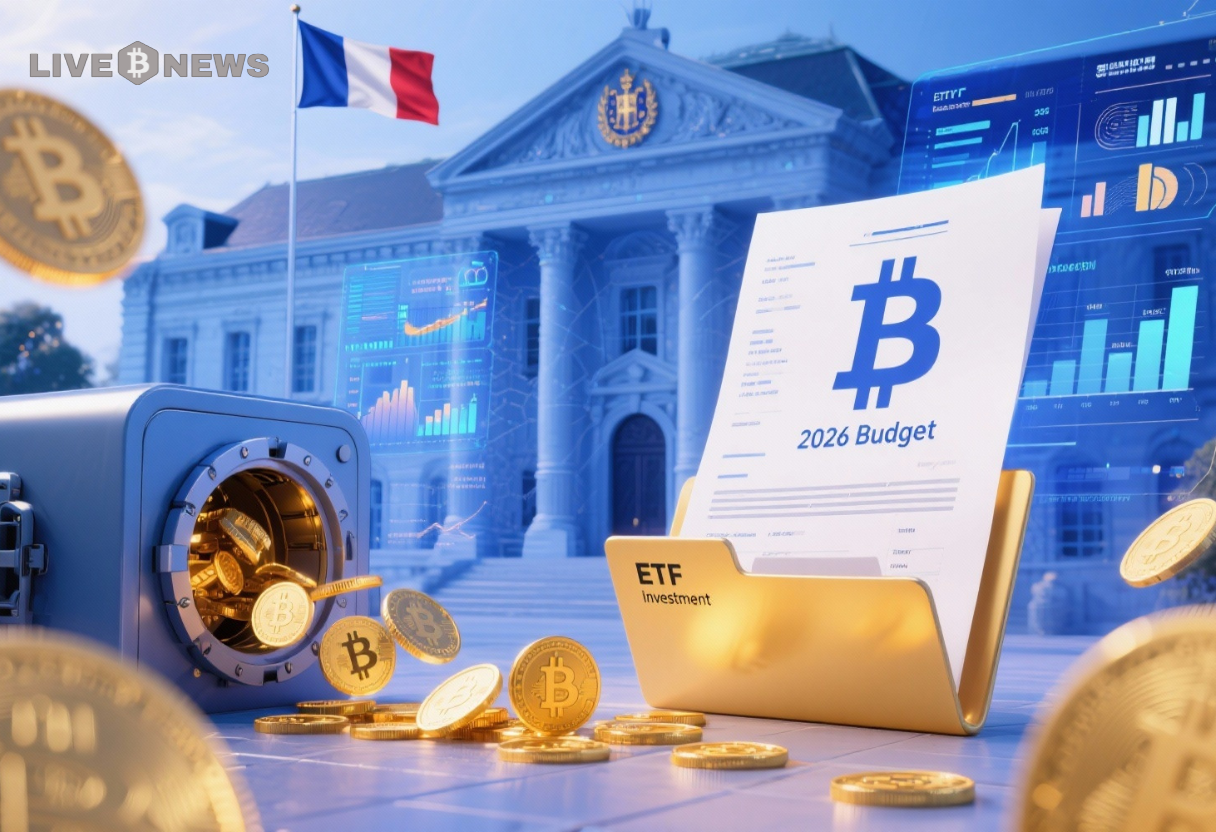
Luxembourg’s Intergenerational Sovereign Wealth Fund has placed 1 per cent of its assets into Bitcoin exchange-traded funds, making it the first sovereign fund in the Eurozone to adopt such exposure. The move was unveiled during the presentation of the 2026 national budget by Finance Minister Gilles Roth.

Under a new investment mandate approved in July 2025, the FSIL is authorised to allocate up to 15 per cent of its portfolio into alternative investments, including private equity, real estate, and digital assets. The 1 per cent allocation to Bitcoin ETFs reflects a cautious approach: the fund avoids direct crypto holdings to limit custody and operational risk.

At present, the fund’s total assets are estimated between €700–900 million, with the Bitcoin allocation amounting to about €7–9 million. Bob Kieffer, Director of the Treasury, described the sum as a symbolic yet measured step. He noted that given FSIL’s mission and structure, the 1 per cent level “strikes the right balance while sending a clear message about Bitcoin’s long-term potential.”

Advocates argue the allocation signals growing institutional acceptance of digital assets within sovereign portfolios. Critics caution that Bitcoin’s volatility may be ill-suited for public-sector funds. Some observers contend that 1 per cent is negligible in impact yet potent in signalling. The fund’s leadership anticipates that monitoring performance will shape future adjustments within the 15 per cent limit.

Luxembourg’s decision departs from the pattern of European states owning Bitcoin only through seizure or law-enforcement action; here, the allocation is proactive and policy-based. Analysts place the development in the context of Luxembourg’s ambition to serve as a crypto and fintech hub under the European Union’s Markets in Crypto-Assets regime. Already hosting numerous crypto firms, Luxembourg aims to reinforce credibility by integrating digital assets into sovereign investment strategy.

Other European institutions have taken indirect exposure paths. Norway’s sovereign fund has gained crypto-linked exposure through equities, while some central banks in Finland and the Czech Republic have expressed interest in digital assets. The Luxembourg move may prompt broader rethinking of asset allocation norms among state funds.

FSIL’s strategy places the Bitcoin position in ETFs rather than direct holdings, a choice intended to manage custody risk and improve regulatory oversight. The law permitting cryptocurrency exposure came amid internal policy debates, with critics warning of reputational and financial risk in volatile markets. Kieffer acknowledged that “some may argue that we’re committing too little too late; others will point to the volatility and speculative nature of the investment.”

Luxembourg’s financial regulator, the Commission de Surveillance du Secteur Financier, has adapted rules governing virtual assets and alternative funds, creating a regulatory backdrop conducive to this experiment. The fund will continue to invest primarily in bonds and equities, with the digital assets portion complementing a diversified portfolio.

Cameroonian fintech startup REasy has secured a $1.8 million pre-seed investment to expand its cross-border payment and trade infrastructure for small and medium enterprises. The funding was led by Ingressive Capital, Launch Africa, 54 Collective and Digital Africa, alongside fintech angels including Christophe Chausson, Mathias Léopoldie and Joël Nana Kontchou. REasy intends to deploy the capital toward technology development, regulatory licensing across new markets and accelerated customer […]

Ethiopia’s central bank has held its benchmark rate at 15 per cent while expanding the cap on credit growth to 24 per cent for the 2025/26 fiscal year, balancing a cautious monetary stance with support for economic expansion. The move coincided with the country’s inaugural export shipments under the African Continental Free Trade Area, marking a defining moment in Ethiopia’s trade and financial policy strategy. The National […]

Saudi Arabia’s sovereign wealth fund, the Public Investment Fund, has scaled back work on a number of planned share sales inside the kingdom, people with knowledge of the matter said, indicating shifting strategy amid weak valuations and soft investor appetite. Bloomberg first reported the development, and its reporting aligns with assessments in market commentary. Executives and advisers close to the red-sea fund say that a subdued climate […]

Matein Khalid Gold is in its most spectacular bull run since 1976-1980, when prices rocketed from $91 to over $800 an ounce. The current cycle found its floor near $1,800 in late 2022, as the Powell Fed’s rate-hike campaign peaked and Washington froze $300 billion in Russian reserves in response to the invasion of Ukraine. “Dr Auric” now trades at just over $4,000 an ounce – a perfect vindication of […]

Abu Dhabi’s government will lead a major showcase at GITEX Global 2025, unveiling a new era of AI-native public services under its Digital Strategy 2025–2027. The Department of Government Enablement will coordinate over 30 government and academic institutions in a pavilion displaying 55 flagship initiatives.

The event, held from 13 to 17 October at the Dubai World Trade Centre, will feature the launch of TAMM 4.0, positioning it as a flagship AI-driven government platform. Other key displays include AI Supervisor and Smart Investigator by the Abu Dhabi Police, Smart Hotel Check-In by the Department of Culture and Tourism, QMobility’s barrier-free parking pilot, the Personal AI Recruitment Companion, and Rayah, a student-parent tracking app from the Department of Education and Knowledge. The DGE expects many projects to be shown publicly for the first time, alongside immersive VR experiences aimed at portraying the impact of AI on diverse stakeholders.

Chairman of the DGE, Ahmed Tamim Hisham Al Kuttab, emphasised that public services are being designed around human needs, saying the “AI-Native by Design, Community-Driven by Purpose” approach drives a reimagined, intuitive government. DGE Director General Wesam Lootah added that over 100 high-impact AI solutions have already been deployed across the emirate, following assessments of nearly 400 options, moving toward the vision of being the world’s first fully AI-native government by 2027.

Abu Dhabi’s announcement underscores more than a display of technological ambition—it highlights strategic public sector transformation at scale. The emirate claims to have rolled out AI across more than 40 government entities, automating predictive service delivery, compliance analysis, and multilingual assistance. The upcoming pavilion will also showcase Sahatna, a health services initiative, and AI Majlis forums intended to foster public dialogue on ethical and inclusive AI adoption. Workforce transformation forms a core pillar: over 95 percent of Abu Dhabi’s 30,000 government employees have reportedly undergone extensive AI awareness and skills training, with AI leadership roles now embedded in all Abu Dhabi entities.

The Digital Strategy 2025–2027 backs this push with an investment of AED 13 billion dedicated to creating an AI-first government. Key transformation axes include lifecycle orchestration of public services, predictive governance, intelligent infrastructure, and a talent ecosystem to support long-term innovation. Abu Dhabi’s approach draws attention not only for local modernization but for its ambition to set a benchmark in government digital transformation globally.

GITEX Global 2025 is positioned as a pivotal stage for these ambitions. Now in its 45th edition, the event spans multiple intersecting tech domains—including AI, blockchain, sustainability, and digital infrastructure—and serves as a convergence point for technology, policy and innovation. Abu Dhabi’s participation marks its 14th consecutive presence, reinforcing continuity in its evolving digital narrative.

VISHNU RAJA
RYO YAMADA
HITORI GOTOH
IKUYO KITA