Fidelity Investments, the global asset manager overseeing about $6 trillion in client assets, is preparing to enter the fast-evolving stablecoin market with plans to issue its own digital token, signalling a deeper push by traditional finance into blockchain-based payments and settlement infrastructure. People familiar with the matter say the Boston-based firm has been working on the technical and regulatory framework for a dollar-linked stablecoin that would be […]
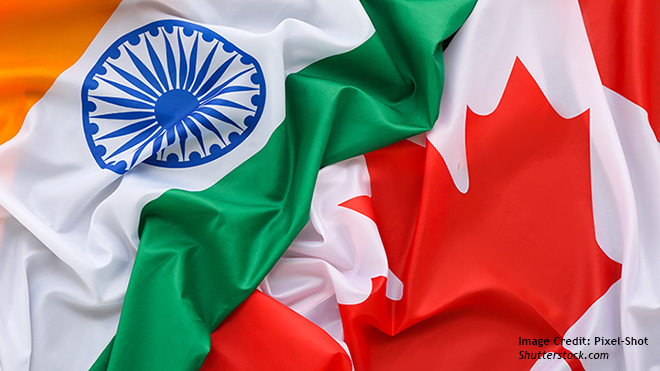
Ottawa and New Delhi are preparing for a high-level visit in March by Canadian Prime Minister Mark Carney, with negotiations entering an advanced stage on a cluster of agreements covering uranium supply, clean energy cooperation, critical minerals and artificial intelligence. Officials familiar with the talks say the visit is being positioned as a reset in economic engagement after a period of diplomatic strain, with both sides keen to lock in commercially binding deals that reflect shifting global supply chains and technology priorities.
The centrepiece of the expected package is an expansion of civil nuclear cooperation, anchored in long-term uranium supply contracts. Canada is among the world’s largest producers of uranium, while India has been seeking diversified and reliable fuel sources to support its nuclear power programme, which is projected to grow sharply over the next decade. Negotiators have been working to streamline regulatory clearances and pricing mechanisms to give utilities and suppliers greater certainty, while ensuring safeguards and compliance obligations are met.
Energy cooperation is set to extend beyond nuclear. Talks have included collaboration on clean hydrogen, carbon capture and storage, and grid-scale renewable integration. Canadian firms bring experience in cold-climate energy systems, advanced storage and emissions management, while India offers scale, manufacturing depth and ambitious deployment targets. Officials describe the approach as moving from memoranda of understanding towards projects with defined investment timelines and joint development structures.
Critical minerals form another pillar of the discussions. Canada’s reserves of lithium, nickel, cobalt and rare earths are increasingly viewed as strategic assets as governments seek alternatives to concentrated supply routes. India, pushing to build domestic battery and electronics manufacturing capacity, has been exploring offtake agreements, joint exploration and downstream processing partnerships. The proposed framework is designed to align mineral extraction with environmental and community standards, while enabling long-term supply security for manufacturers.
Artificial intelligence cooperation has emerged as a newer, fast-moving track. Policymakers on both sides have been weighing arrangements that combine Canada’s research ecosystem and talent pipeline with India’s large-scale data capabilities and application-driven innovation. Areas under discussion include healthcare diagnostics, climate modelling, financial services and public-sector digital infrastructure. Officials have emphasised the need for guardrails on data governance, intellectual property and ethical use, reflecting growing global scrutiny of AI deployment.
Trade officials say the March visit, if confirmed as planned, would also provide political momentum to broader commercial ties. Bilateral trade has grown steadily over the past decade but remains below potential, particularly in high-value manufacturing and services. Business groups in both countries have been urging clearer pathways for investment approvals, mobility of skilled professionals and dispute resolution mechanisms to reduce friction for companies operating across jurisdictions.
Automated software agents powered by generative artificial intelligence are taking control of programmatic advertising workflows in 2026, shifting decision-making from human traders to systems that plan, execute and optimise campaigns with minimal oversight. Major ad-tech platforms and industry bodies say the change is redefining how digital advertising is bought and sold, accelerating efficiency while raising questions around transparency, accountability and market power. Programmatic advertising, which already accounts […]
Soybean and corn futures edged higher in global trade as a softer US dollar improved export competitiveness and intensifying heat across Argentina raised questions over yield prospects, even as ample worldwide supplies continued to cap gains and keep prices well below the highs seen during 2022. Soybeans led the advance, with prices supported by currency moves that made US shipments more attractive to overseas buyers and by […]
By K Raveendran Gold pushing decisively past the $5,000-a-troy-ounce threshold at the same moment the US dollar slides to a four-month low is not just a dramatic coincidence of charts. It marks a psychological rupture in global markets, challenging assumptions that have underpinned portfolio construction and macroeconomic thinking for decades. What once belonged to the […]
Bangkok will host Wiki Finance Expo Thailand 2026 in April, positioning the Thai capital as a focal point for discussions on financial technology, digital assets and Web3 innovation across Southeast Asia. The event is scheduled to take place at the Bangkok Marriott Marquis Queen’s Park, bringing together industry executives, policymakers, investors and technology developers at a time when the region’s digital finance ecosystem is expanding at pace.
The expo is expected to draw thousands of participants from Asia, the Middle East and Europe, reflecting Bangkok’s growing role as a neutral convening hub for global fintech dialogue. Organisers have indicated that the programme will centre on payments innovation, decentralised finance, blockchain infrastructure, digital asset regulation and the integration of artificial intelligence into financial services. These themes mirror broader shifts in global finance, where traditional institutions and technology-driven platforms are increasingly intersecting.
Thailand’s selection as host underscores the country’s strategic importance within Southeast Asia’s fintech landscape. Bangkok already serves as a base for regional operations of banks, digital payment firms and cryptocurrency exchanges, supported by a large consumer market with high smartphone penetration and rising adoption of cashless payments. Regional analysts note that Southeast Asia’s fintech sector has moved beyond experimentation, with platforms scaling rapidly across borders in areas such as e-wallets, buy-now-pay-later services and tokenised assets.
Wiki Finance Expo has established itself as a travelling forum, with earlier editions held in cities including Dubai, Hong Kong and Singapore. The Thailand edition is expected to build on that track record by offering a mix of keynote addresses, panel discussions and business matchmaking sessions. Industry leaders from blockchain firms, digital asset custodians, payment processors and trading platforms are likely to outline strategies for navigating regulatory complexity while pursuing growth in emerging markets.
A central focus of the Bangkok gathering will be Web3, an area attracting increasing interest from both venture capital and established financial institutions. Developers are using blockchain-based architectures to reimagine trading, lending and data ownership, while governments across Asia are assessing how to balance innovation with consumer protection. Participants are expected to debate how decentralised technologies can coexist with existing financial systems rather than replace them outright.
Regulation is set to be another major thread. Southeast Asian jurisdictions have taken varied approaches to digital assets, ranging from proactive licensing frameworks to tighter restrictions on retail participation. Thailand has introduced structured oversight for digital asset businesses, aiming to reduce systemic risk while allowing innovation to continue. Discussions at the expo are expected to explore how clearer regulatory pathways can attract institutional capital and encourage responsible product development.
The event also comes as cross-border payments remain a priority for the region. High remittance flows, driven by labour mobility and trade, have highlighted inefficiencies in legacy systems. Fintech firms are increasingly promoting blockchain-based settlement and real-time payment networks as solutions. Panels in Bangkok are expected to examine whether these technologies can achieve scale while meeting compliance and security requirements.
Beyond policy and technology, the expo is positioned as a commercial platform. Start-ups will have opportunities to pitch to investors, while established companies can seek partnerships or market entry strategies. Organisers have emphasised the importance of connecting global capital with Southeast Asian innovation, particularly as funding patterns shift towards projects with clearer revenue models and regulatory alignment.
Tourism and hospitality stakeholders in Bangkok are also expected to benefit from the influx of international delegates. Large-scale business events have become an important segment of the city’s post-pandemic recovery strategy, complementing leisure tourism. Hosting a high-profile fintech expo aligns with efforts to brand Bangkok not only as a travel destination but also as a regional business and technology centre.
Bitcoin slipped below a widely watched technical support zone as BlackRock moved to expand its digital-asset line-up with a filing for a premium income exchange-traded fund linked to the world’s largest cryptocurrency, underscoring how product innovation is accelerating even as prices wobble. Market charts showed Bitcoin breaking beneath the lower boundary of an inverted flag formation, a pattern traders often read as a pause before a continuation […]
Arabian Post Staff -Dubai Saudi Arabia is broadening its hunt for funding by engaging some of the kingdom’s wealthiest families, a move aimed at easing pressure on public finances while underwriting an ambitious pipeline of economic transformation projects. The approach marks a shift from a strategy that has leaned heavily on state balance sheets and foreign investors, signalling a desire to mobilise domestic private wealth alongside sovereign […]
Oil prices pushed higher on Wednesday, extending gains as disruptions to crude output and exports from the United States kept supply risks in focus, while simmering tensions across the Middle East added a geopolitical premium to the market. Brent crude futures traded at $67.85 a barrel in early Asian hours, up 28 cents, while U. S. West Texas Intermediate rose 35 cents to $62.74 a barrel. The […]
HONG KONG SAR – Media OutReach Newswire – 28 January 2026 – As the global economic landscape grows increasingly complex, precious metals and foreign exchange markets have become pivotal hubs for investors seeking safe-haven asset allocation. At the 3rd Annual “Golden Honor Awards” recently held in Macau, Ming Tak Financial (MTF) emerged from hundreds of global financial institutions to officially win the prestigious “Most Growth-Potential Broker 2025” award, credited to its outstanding technological innovation, transparent trading environment, and rapid expansion in market share.
This honor serves as a testament to MTF‘s exceptional growth trajectory and a high-level affirmation of its professional standing as a cornerstone institution in Hong Kong‘s financial sector—a Type AA Member of the Hong Kong Gold Exchange (HKGX), Member No. 194.
I. Authoritative Endorsement: The Security of a Century-Old Exchange
In selecting a trading platform, security remains the paramount concern for investors. Based in Hong Kong, MTF is strictly regulated by the Hong Kong Gold Exchange (HKGX) and holds the highest-tier Type AA Member License (No. 194).
Compliant Operations: Every trading process adheres strictly to HKGX regulations, eliminating any improper practices and ensuring that every transaction is fair and transparent.
Asset Safety: Client funds are managed under a rigorous independent custody system, safeguarding the integrity and security of every deposit—providing the most solid foundation for safe-haven investments.
II. Core Advantages: Defining Standards for Transparency and Efficiency
MTF is committed to building a leading trading ecosystem in Hong Kong, leveraging technology to solve key investor pain points:
Challenging the Lowest Costs Globally: MTF focuses on optimizing investor costs by offering Fixed Gold Spreads as low as $0.15—a saving of over 60% compared to industry averages. Coupled with a Lifetime Zero-Commission and no-fee policy, MTF truly returns value to its clients.
Ultra-Fast Fund Settlement: Through upgraded payment gateways, MTF achieves deposits arriving in as fast as 5 minutes, a top-tier industry standard that allows global investors to seize opportunities in volatile markets instantly.
Professional Technical Support: Fully supporting the mainstream MT5 platform and EA (Expert Advisors) automated trading, MTF provides millisecond execution speeds and a low entry barrier of $10, democratizing professional investment tools.
III. Brand Strength: MTF Channel Leading Investor Education in Asia-Pacific
A core pillar of MTF‘s competitive edge is its deep-rooted foundation in market education. The official MTF Channel has amassed over 110,000 subscribers, serving as a central hub for Asia-Pacific precious metals investors seeking real-time market analysis and financial insights. Through high-frequency professional commentary and community engagement, MTF has built a seamless online-offline service ecosystem, providing robust decision support for over 100,000 active traders worldwide.
IV. Future Outlook: Driven by Honor, Raising Industry Standards
“Winning this award is not the finish line, but the beginning of a greater responsibility,” stated an MTF representative at the ceremony. Over the coming year, the company will allocate more resources toward upgrading Physical Gold Services and its Online Investor Education Platform to make trading more intuitive and accessible. Ming Tak Financial will continue to uphold its core principle of “Professionalism First, Intelligence for the Future,” with the core mission of “Challenging the Lowest Spreads Globally” to lead the precious metals industry toward higher standards. Hashtag: #MingTakFinancial #MTF
The issuer is solely responsible for the content of this announcement.
About Ming Tak Financial (MTF)
Headquartered in Hong Kong, Ming Tak Financial (MTF) is a premier precious metals broker in the Asia-Pacific region. As a Type AA Member of the Hong Kong Gold Exchange (Member No. 194), MTF adheres to the principles of compliance and transparency under strict regulatory oversight. Leveraging its core competitiveness in offering the lowest spreads globally—such as fixed gold spreads at $0.15, zero commissions, and 5-minute lightning deposits—MTF has become a trusted safe-haven asset platform for investors worldwide.
Global Brand Ambassador Lando Norris and Asia-Pacific Brand Ambassador Wei Daxun gear up to launch the latest evolution of TUMI Alpha.
HONG KONG SAR – Media OutReach Newswire – 28 January 2026 – Today, international travel, lifestyle, and accessories brand TUMI unveils the next generation of the Alpha collection, brought to life through individual campaigns starring Formula 1 World Champion and Global Brand Ambassador Lando Norris, and Asia-Pacific Brand Ambassador and actor Wei Daxun. Together, they embody a revitalized expression of Alpha: sleek, precise, and intentionally understated — designed for modern movement.
Wei Daxun pictured with the Alpha TUMI Brief Pack TM in Navy.
Lando Norris pictured with the Alpha Double Expansion Duffel in Black.
The global campaign, directed by Alice Schillaci and photographed by Reto Schmid, casts Norris in a cinematic, suspense-driven narrative. Framed as a man preparing for a mission, the visuals draw from classic action storytelling, defined by precision, focus, and intent.
“When you’re preparing for something important, you don’t want distractions — you want everything to work exactly as it should,” says Norris. “Whether I’m racing or on the move, it’s about being ready. Alpha feels built for that mindset.”
That same sensibility continues in the campaign starring Asia-Pacific Brand Ambassador Wei Daxun. Directed by David Pun and photographed by GK (国琨), the campaign captures Daxun moving through sleek, modern spaces, highlighting Alpha’s clean lines, smooth movement, and refined design.
“Alpha is designed with real intention — you feel it in the materials, the balance, the way it moves with you. It’s something I trust to be there, no matter where the day takes me.” says Wei.
“Alpha represents a blueprint for modern movement,” says Victor Sanz, TUMI Global Creative Director. “It’s where we return to rethink performance. We look at how people move, what they carry, and how design can support that journey.”
“Both Lando Norris and Wei Daxun represent that next generation. Alpha isn’t just designed to keep up with them; it’s designed to perform alongside them.”
Across both campaigns, Alpha’s design intelligence takes focus. Signature FXTTM Ballistic Nylon anchors the collection, paired with streamlined pocketing, silent magnetic closures, and intuitive access points engineered for efficiency. Core styles — including the Dual Access Expandable Carry-On, TUMI Brief PackTM, Double Expansion Duffel, and Convertible Clutch Crossbody — are refined to support movement without interruption.
To celebrate Alpha’s latest evolution, TUMI debuts Ultra Blue, identified by vivid blue accents across key touchpoints on six iconic Alpha silhouettes. The colorway aims to commemorate TUMI’s relentless innovation and commitment to excellence.
This next generation of Alpha reflects TUMI’s enduring commitment to understanding its customer and supporting every moment of their journey, wherever it leads.
PRODUCT HIGHLIGHTS
* TUMI Brief PackTM
Built for those who demand more from every journey. Take your office with you — and then some — with our iconic design. Intuitively crafted to be spacious and well-organized, every item has its place, from the organizational panel to the hidden phone pocket.
* Double Expansion Duffel
Built for travelers who demand more from every journey. Cleverly crafted to maximize packing
capacity, this bestselling duffel features impressive depth and expansion, making it the ultimate companion for long weekends.
* Dual Access Expandable 4 Wheeled Carry-On
Built for travelers who demand more from every journey—this large-capacity, dual-access
expandable carry-on features our signature FXTTM Ballistic Nylon and best-in-class functionality.
* Convertible Clutch Crossbody
Built for those who demand more from every journey. This compact style features signature TUMI design elements and is versatile by design. Carry as a crossbody, wristlet or clutch by
interchanging the included straps accordingly.
Explore the TUMI Alpha Collection now at TUMI.com and in TUMI stores worldwide. Follow @TUMITravel for exclusive behind-the-scenes content from the campaign.
Hashtag: #TUMI
The issuer is solely responsible for the content of this announcement.
About TUMI
Since 1975, TUMI has been creating world-class business, travel, and performance luxury essentials, designed to upgrade, uncomplicate and beautify all aspects of life on the move. Blending flawless functionality with a spirit of ingenuity, we’re committed to empowering journeys as a lifelong partner to movers and makers in pursuit of their passions. For more about TUMI, visit TUMI.com and follow on Instagram, TikTok, Facebook, and YouTube.
Negotiators from India and the European Union have moved into the final stretch of talks on a long-pending free trade agreement that both sides now describe as a strategic necessity, as uncertainty over United States trade policy reshapes global supply chains and export strategies. Officials involved in the discussions say most market-access chapters are broadly settled, with remaining work focused on sensitive tariff lines, regulatory safeguards and timelines for implementation.
The proposed pact, under negotiation for more than a decade with several pauses, has regained momentum over the past two years as Brussels and New Delhi seek to reduce exposure to external shocks. For the European Union, diversifying trade ties beyond the US and China has become an explicit policy goal. For India, securing preferential access to one of the world’s largest consumer markets offers a counterweight to potential tariff pressures elsewhere.
Trade specialists say the structure of the deal reflects this shared urgency. India is expected to secure phased tariff reductions on a wide range of labour-intensive exports, including textiles, apparel, leather goods, footwear, gems and jewellery, and certain engineering products. These sectors employ millions and are among the most exposed to changes in external demand. Ajay Srivastava, a former trade official, has said that improved access to the EU market would help exporters partly offset the impact of higher duties or restrictive measures imposed by the US on selected product categories.
European manufacturers, in turn, are seeking lower tariffs and clearer rules for automobiles, high-end machinery, wines and spirits, medical devices and chemicals. Current import duties on some of these products remain among the highest faced by EU exporters in major economies. Brussels has also pressed for stronger commitments on intellectual property protection, government procurement and regulatory transparency, areas that have historically slowed progress.
People familiar with the talks say negotiators have narrowed differences on goods tariffs by agreeing to longer transition periods for politically sensitive items, allowing domestic industries time to adjust. Agriculture remains a delicate chapter, with India resisting broad concessions on dairy and certain farm products, while offering limited quotas and safeguards to protect small producers. The EU has signalled flexibility, recognising the social and political weight of agriculture in India’s economy.
Beyond goods, services and investment provisions are central to the pact’s commercial value. India is pushing for easier movement of professionals in information technology, engineering and healthcare, alongside mutual recognition of qualifications. European counterparts are cautious, balancing labour-market concerns with industry demands for skilled talent. Investment protection rules are also under discussion, with both sides aiming to avoid disputes that have characterised earlier bilateral treaties.
Geopolitics has added another layer to the negotiations. Heightened trade frictions involving the US have reinforced the case for dependable partners and rules-based commerce. European policymakers increasingly view India as a key pillar in their Indo-Pacific strategy, while New Delhi sees the EU as a stable market that complements its manufacturing and export ambitions. The alignment is evident in parallel talks on a separate investment protection agreement and a framework for cooperation on sustainable development.
Environmental and labour standards have emerged as important, though contentious, elements. The EU has sought binding commitments linked to climate goals and workers’ rights, consistent with its newer trade agreements. India has pushed back against provisions it views as intrusive or misaligned with domestic development priorities, arguing for cooperation rather than enforcement-driven clauses. Compromise language is being explored to bridge these positions without derailing the broader deal.
Economists note that the scale of potential gains is significant, though uneven across sectors. The EU is already one of India’s largest trading partners, with bilateral goods trade running into tens of billions of euros annually. A comprehensive agreement could lift trade volumes further by lowering costs, improving predictability and encouraging investment flows. Export-oriented clusters in states with strong manufacturing bases are expected to be among the main beneficiaries.
Industry groups on both sides have stepped up engagement, urging negotiators to maintain momentum. Indian exporters highlight the risk of losing market share to competitors that already enjoy preferential access to the EU. European businesses argue that delayed agreement leaves them at a disadvantage in a fast-growing market with rising consumer demand and infrastructure spending.
By Asad Mirza In today’s fractured world, fissures caused mostly by the ongoing Trumpomania, every nation is working post haste to forge new alliances particularly focussed on trade. The best example of this is the India-EU partnership FTA, to be formalized on January 27.. The enhanced partnership is going to eliminate tariffs on more than […]
Emirates NBD, Dubai’s largest bank by assets, posted a four per cent rise in full-year net profit on Monday, underpinned by record lending growth as borrowing demand strengthened across domestic and international markets. The lender said net profit reached 24 billion dirhams for the year, surpassing market expectations of about 22.8 billion dirhams based on analyst estimates tracked by LSEG. The performance was driven by what the […]
Arabian Post Staff -Dubai Kuwait has cancelled nine upstream oil tenders with a combined value approaching $10 billion after bids submitted by overseas contractors exceeded the approved budget by a wide margin, signalling a pause in the country’s near-term expansion plans and a reset of procurement expectations across the energy sector. The tenders were issued by the state-owned Kuwait Oil Company, the upstream investment arm tasked with […]
HONG KONG SAR – Media OutReach Newswire – 26 January 2026 – The 19th Asian Financial Forum (AFF), opened this morning (January 26) at the Hong Kong Convention and Exhibition Centre with more than 3,600 influential leaders from over 60 countries and regions joining the two-day summit, the region’s first major international financial event of 2026.
Co-organised by the Hong Kong Special Administrative Region (HKSAR) Government and the Hong Kong Trade Development Council (HKTDC), this year’s AFF, themed “Co-creating New Horizons Amid an Evolving Landscape”, takes on added significance being the first such event of China’s 15th Five-Year Plan period (2026-2030).
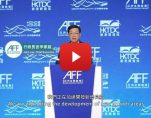
“Featuring more than 150 prominent speakers, from Hong Kong, throughout the Asian region and around the world, the Forum will inspire insight and innovation, create partnerships and explore fresh business opportunities,” John Lee, Chief Executive of the HKSAR, said in his opening remarks at the Forum.
Mr Lee also spoke of the boundless opportunities for Hong Kong under the unique principle of “one country, two systems”, that assures Hong Kong of the unwavering support of China, while continuing to expand its global markets and reach.
“This unparalleled positioning solidifies our institutional strengths: the rule of law, a judiciary that exercises its power independently, an open and transparent market, the free flow of capital and a low and simple tax regime,” Mr Lee said.
Mr Lee later witnessed the signing of a co-operation agreement between the Financial Services and the Treasury Bureau and the Shanghai Gold Exchange, marking a new milestone in deepening co-operation between the gold markets of Hong Kong and Shanghai.
The agreement was signed by the Secretary for Financial Services and the Treasury, Christopher Hui, and the Chairman of the Shanghai Gold Exchange, Yu Wenjian.
“The agreement just now signed is far more than a formal document,” said Mr Hui.
“It represents a resolute commitment to advancing the synergistic development of Hong Kong and Shanghai as premier international financial and gold markets. It reflects our joint determination to deepen the integration and complementary strengths of Hong Kong and Shanghai, so that together we can expand our share and influence in the global gold market, and better support Renminbi internationalisation.”
Mr Hui outlined the strategic significance of the agreement and the overall development blueprint for Hong Kong’s gold market.
“In recent years, amid heightened geopolitical uncertainty, inflationary pressures, and ongoing restructuring of the international monetary system, the strategic importance of gold has become even more pronounced,” Mr Hui said.
The agreement covers two major forward-looking areas of co-operation: establishing a high-level, collaborative governance structure for Hong Kong’s new gold central clearing system; and opening new avenues for physical infrastructure synergy and market interconnectivity.
“The signing of this agreement with the Shanghai Gold Exchange marks the dawn of a new chapter—one in which Hong Kong and Shanghai join forces to shape the future of global gold markets,” Mr Hui said.
A discussion session on gold trading themed “Global Spectrum – Gold Exchange” features expert panelists invited to examine recent market developments and share insights on Hong Kong’s role, potential and opportunity as a world-class gold trading centre. Speakers include overseas experts James Emmett, Chief Executive Officer, MKS PAMP SA and David Tait, Chief Executive Officer, World Gold Council.
Other highlights on day one of the AFF include a keynote luncheon speech by Dr José Manuel Barroso, former President of the European Commission, former Prime Minister of Portugal, and current Chairman of Goldman Sachs International Advisory Board, to share his insights on the current global landscape and macro‑level challenges.
Other notable speakers today include Zou Jiayi, President of Asian Infrastructure Investment Bank; Scott Morris, Vice-President (East and Southeast Asia, and the Pacific) of the Asian Development Bank; Mehmet Şimşek, Minister of Treasury and Finance of Türkiye; Klemen Boštjančič, Deputy Prime Minister and Minister of Finance of Slovenia; H.E. Waleed Saeed Abdul Salam Al Awadhi, Chief Executive Officer of Securities and Commodities Authority of United Arab Emirates; Burkhard Balz, Member of the Executive Board of the Deutsche Bundesbank; Rhee Chang-yong, Governor of the Bank of Korea; and Gokul Laroia, Chief Executive Officer Asia of Morgan Stanley.
The AFF serves as the opening event of the International Financial Week in Hong Kong, featuring over 10 partner activities covering a range of global financial and business topics, including ASEAN opportunities, asset and wealth management, and artificial intelligence.
Traffic across key commercial corridors in Dubai has slowed markedly as Gulfood 2026 opens its doors, prompting authorities to issue travel advisories and urging commuters to plan additional time for journeys near major exhibition hubs. The scale of the food and beverage show, running from January 26 to 30, has brought an exceptional influx of visitors, exhibitors and logistics traffic into the city during a working week […]
Advancing R&D, talent development and the region’s energy transition
SINGAPORE – Media OutReach Newswire – 26 January 2026 – ST Telemedia Global Data Centres (STT GDC), one of the world’s fastest growing data centre colocation providers headquartered in Singapore, today announced two significant initiatives that strengthen Singapore’s position in the global digital and energy transition: the launch of the FutureGrid Accelerator, Southeast Asia’s first live High Voltage Direct Current (HVDC)-powered AI infrastructure testbed; and a suite of strategic Memoranda of Understanding (MOUs) with four Institutes of Higher Learning (IHLs) to advance skills development and expand internship and early career pathways for Singaporeans entering the workforce. These initiatives align with national efforts to support talent graduating into a challenging job market, while building the specialised capabilities required for next generation power and digital infrastructure.
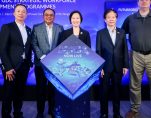
Celebrating the official launch of the FutureGrid Accelerator; a new benchmark for HVDC-powered AI infrastructure in the region.
[Pictured from left to right] Lim Kian Tiong, Chief Financial Officer, LITEON; Bruno Lopez, President & Group Chief Executive Officer, ST Telemedia Global Data Centres; Minister Gan Siow Huang, Minister of State, Ministry of Foreign Affairs & Ministry of Trade and Industry; Professor Lam Khin Yong, Vice President (Industry), Nanyang Technology University Singapore; Brian Dow, Chief Executive Officer, Amperesand.
Officiated by Ms Gan Siow Huang, Minister of State for Foreign Affairs and Trade & Industry, the announcement underscores a national push to build capabilities not only for AI-ready data centres, but also for the wider energy ecosystem, as Singapore and the region pursue net-zero ambitions.
FutureGrid Accelerator: HVDC innovation for AI and the wider energy transition Located at the Nanyang Technological University, Singapore (NTU Singapore) Electrification and Power Grids Centre (EPGC) on Jurong Island, the FutureGrid Accelerator is a pioneering initiative jointly developed by STT GDC and LITEON, supported by the Energy Research Institute @ NTU (ERI@N) and NTU deep-tech spinoff Amperesand. It is the region’s first live testbed demonstrating HVDC integration with real AI workloads, addressing the high-density and high-resiliency requirements of next-generation AI computing.
While central to the future of AI data centre architecture, HVDC represents a broader opportunity: it is a foundational technology that supports more efficient, resilient and integrated power systems. This is critical for Singapore’s long-term energy strategy, its transition to low-carbon energy grids and the region’s increasing need for sustainable power delivery.
Why HVDC Matters: A scalable platform beyond the data centre As AI and high-performance computing workloads scale, traditional alternating current (AC) power systems face inherent limitations. HVDC overcomes these constraints and delivers several transformative benefits:
Up to 30% overall energy savings compared to conventional AC systems
A reduction of up to 400 tonnes of CO2 equivalent (CO2e) per megawatt per year
45% lower copper consumption and a 30–40% smaller power-infrastructure footprint
The ability to support ultra-high-density racks exceeding 1,000kW, with higher reliability and lower cost
Native compatibility with renewable power sources able to feed directly to the direct-current system, avoiding inefficient power conversions
“The FutureGrid Accelerator is a strategic investment in Singapore’s long-term digital leadership,” said Bruno Lopez, President and Group Chief Executive Officer, ST Telemedia Global Data Centres. “By bringing together global industry leaders like LITEON with local deep-tech talent such as Amperesand, we are building infrastructure that is ready for future AI workloads while pioneering sustainable practices and setting new benchmarks for energy efficiency and carbon-conscious innovation. This initiative reflects our commitment to future-ready technologies and reinforces Singapore’s position as a global Centre of Excellence for advanced sustainable digital infrastructure. It is a bold step forward in shaping the future of data centres and accelerating energy transition across the region.”
Ms Gan Siow Huang, Minister of State for Foreign Affairs & Trade and Industry, said: “The FutureGrid Accelerator demonstrates how industry and academia can work together to drive innovation and strengthen Singapore’s global leadership in cutting-edge technologies. I also welcome STT GDC’s partnerships with ITE and SP, which will add to the suite of training options for the rapidly growing areas of AI and energy-efficient systems.”
The FutureGrid Accelerator will validate HVDC system performance at power loads of at least 325kW, incorporating the latest AI servers. The environment incorporates LITEON’s data centre reference architecture with Amperesand’s Solid State Transformer (SST) technology—an enabling innovation for next-generation HVDC deployment. STT GDC plans to deploy this technology in future data centres in Singapore and progressively scale adoption across its global operations.
“LITEON is committed to advancing the frontier of power management efficiency, and our collaboration with STT GDC and Amperesand is key to establishing the next standard for sustainable AI infrastructure in Asia,” said Jason Tsao, Head of Direct Current Microgrid at LITEON. “By deploying an end-to-end data centre reference architecture and integrated power management system in a live environment with STT GDC and partners, we are validating a high-density, energy-saving solution ready to meet the extreme demands of global technology leaders.”
“The FutureGrid Accelerator underscores NTU’s role as a strategic partner in shaping the future of sustainable AI infrastructure”, said Prof Lam Khin Yong, NTU’s Vice President (Industry). “By integrating cutting-edge HVDC technologies with our research capabilities and the entrepreneurial drive of NTU spin-offs like Amperesand, we are advancing impactful solutions that can significantly enhance energy efficiency and grid resilience. This collaboration showcases how universities can drive transformative innovations at the intersection of energy, digitalisation and sustainability.”
“Amperesand is obsessed with revolutionising Medium Voltage to critical load power delivery for next-generation AI data centres, defence, and other essential electrified assets. We focus on first principles to achieve market leading power density, efficiency, and reliability,” said Brian Dow, CEO and Co-Founder of Amperesand. “In this era of AI data centre and other critical power systems becoming economic and national security interests for many countries, Amperesand’s MV SST Platform enables in-country cyber-secure controls and data, regionally available supply chains, and low CAPEX intensity local manufacturing. Our solution is an intelligent, universal Medium Voltage power source that works on-and-off grid to improve critical infrastructure resilience as new large electrical loads come online.”
Developing Energy-Ready Skills: Partnerships with ITE, SP, NTU and NUS STT GDC signed MOUs with the Institute of Technical Education (ITE), Singapore Polytechnic (SP), NTU Singapore and National University of Singapore (NUS). These partnerships will benefit more than 8,000 Singaporeans over five years through industry-aligned training in AI infrastructure and sustainable energy systems. This ensures the scaling of HVDC—and the broader energy transition—is matched by the transformation and availability of skills, jobs and talent development pathways.
Mr Lopez added, “Talent is the decisive enabler as we advance AI and sustainability infrastructure. These partnerships build a skilled workforce needed to strengthen Singapore as a global hub for advanced digital and energy systems.”
Key initiatives and impact:
Building a talent pipeline: STT GDC will provide internship placements across ITE, SP, NTU and NUS over the next five years, with support from Enterprise Singapore. The programme offers immersive, hands-on experience in data centre operations and corporate functions such as IT, sustainability, finance and marketing, supported by mentoring from industry professionals. In addition, STT GDC will offer 100 sponsorships for Data Centre Foundation Certificate (DCFC®) offered by EPI, a global certification body for data centre facilities, data centre operations and industry professionals, accelerating entry into the sector.
Developing industry-ready talent with ITE: The collaboration with ITE will benefit approximately 800 students annually — totalling 2,400 students over three years — from ITE’s engineering and information and communications technology (ICT)-related Higher Nitec and Work-Study Diploma courses. Key initiatives include co-developing industry-relevant curricula for full-time and Continuing Education & Training (CET) courses in data centre operations and sustainability; deploying a data centre virtual reality system at the ITE Extended Reality Centre for immersive training; supporting lecturer attachments and student internships; and enabling students to pursue the sponsored DCFC® course.
Sustainability leadership with SP: The partnership with SP develops expertise in environmental sustainability and green data centre solutions. Initiatives include joint exploration of green technologies and practices; industry seminars and events to promote sustainable solutions; and targeted programmes for training, mentorship, applied projects and internships.
Innovation and research leadership with NTU: The partnership with NTU combines cutting-edge joint R&D of solutions for AI data centres powered by direct current sources; training, curriculum and talent development for the AI data centre sector; industry and career talks; and internship opportunities across STT GDC’s group of companies.
Graduate pathways with NUS: STT GDC’s collaboration with NUS supports accessible entry points for graduates through internships, training opportunities and ongoing career and industry engagement to raise awareness of digital infrastructure pathways.
The issuer is solely responsible for the content of this announcement.
About ST Telemedia Global Data Centres
ST Telemedia Global Data Centres (STT GDC) is one of the fastest-growing data centre providers with a global platform serving as a cornerstone of the digital ecosystem that helps the world to connect. Powering a sustainable digital future, STT GDC operates across Singapore, the UK, Germany, Italy, India, Thailand, South Korea, Indonesia, Japan, the Philippines, Malaysia and Vietnam, providing businesses an exceptional foundation that is built for their growth anywhere. For more information, visit https://www.sttelemediagdc.com/
Appendix: Partner Quotes
Mr Peter Lam, Chief Executive Officer, Institute of Technical Education (ITE): “At ITE, our focus is on equipping our students with future-ready skills for Singapore’s evolving economy. Through the partnership with STT GDC, our students gain valuable real-world training and exposure to advanced tools in data centre operations. This strengthens our efforts to prepare career-ready students and develop talent for Singapore’s growing digital infrastructure sector.”
Mr Soh Wai Wah, Principal and CEO of SP: “Singapore Polytechnic is committed to developing a future-ready workforce that can support Singapore’s growing demand for sustainable and resilient data centre operations. This partnership with STT GDC brings together our strengths in training, applied learning and industry collaboration to nurture talent in environmental sustainability and green solutions for data centres. Through co-developed programmes, mentorship, student projects and internships, we will build deeper capabilities and broaden pathways for learners to contribute to this important sector. SP looks forward to advancing this effort with STT GDC to support Singapore’s long-term industry and sustainability goals.”
Professor Lam Khin Yong, Vice President (Industry), Nanyang Technological University: “STT GDC is a partner that shares our commitment to advancing impactful research and developing future-ready talent. Leveraging NTU’s strengths in artificial intelligence, energy-efficient systems and translational innovation, this partnership will accelerate the co-development of next-generation AI data centre technologies while providing our students and researchers with valuable real-world experience. Together, we are helping to build a robust pipeline of skilled professionals who will support Singapore’s ambitions in sustainable and AI-driven digital infrastructure.”
Ms Joan Tay, Senior Director, NUS Centre for Future-ready Graduates: “NUS’ partnership with STT GDC is timely, as demand grows for skilled professionals to manage complex, high-density AI infrastructure. Through internships, training, industry engagement and access to recognised certification, we bridge education and industry to equip students with the skills and experience needed to thrive in today’s fast-evolving digital infrastructure space.”
US lawmakers have called on the Federal Trade Commission to take an expansive and rigorous look at the proposed roughly $55 billion acquisition of Electronic Arts by a consortium led by the Saudi Arabian Public Investment Fund, urging scrutiny of its potential impact on workers, studios and competition across the video-game sector. Leaders of the Congressional Labor Caucus and a broader group of House Democrats warned that […]
Arabian Post Staff -Dubai GivTrade has rolled out a major regional brand campaign in collaboration with Spain’s top professional league, LaLiga, designed to amplify its visibility across the Middle East and North Africa during key league fixtures featuring marquee clubs such as Real Madrid, FC Barcelona and Atlético Madrid. The marketing drive places GivTrade prominently on broadcast screens and digital channels during match coverage, giving the trading […]
Shiba Inu has moved into what market analysts describe as a yearly demand zone, a price range where buying activity has historically intensified, coinciding with a sharp acceleration in token burns that has removed a sizeable volume of SHIB from circulation. The shift has drawn attention across the digital asset market because a comparable alignment of price consolidation and aggressive supply reduction preceded a powerful rally during […]
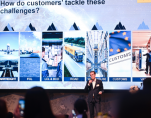
HONG KONG SAR – Media OutReach Newswire – 26 January 2026 – Dachser, a global logistics provider with over 90 years of experience, recently hosted a customer event in Bangkok, Thailand, bringing together customers and industry stakeholders to discuss the 2026 air and sea freight market outlook and the role of Supply Chain Optimization in navigating a challenging global trade environment.
Philipp Ramsbacher, Team Leader Supply Chain Optimization at Dachser, says today’s supply chains are too complex to rely on assumptions or past patterns. Data-driven simulation, rather than guesswork, helps create transparency, align expectations, and design logistics networks.
The event highlighted key developments shaping international trade flows, including geopolitical tensions, evolving sourcing strategies, capacity dynamics, and cost developments across air and sea freight markets. The discussions also underscored the growing importance of structured Supply Chain Optimization as companies adapt their logistics networks to changing market conditions.
“After several years of volatility, the air freight market is gradually moving toward a more balanced environment,” said Daniel Chua, Head of Air Freight, Air & Sea Logistics Asia Pacific at Dachser. “While demand fundamentals remain positive, careful capacity planning and realistic forecasting will be increasingly important as the market continues to normalize.”
In air freight, Dachser expects demand in 2026 to grow at a single-digit rate, supported by moderate capacity expansion and a normalization of rate patterns. While stable yields are anticipated, growth will continue to be driven by e-commerce, electronics – particularly AI-related components – and pharmaceuticals, alongside a structural shift of trade lanes toward Southeast Asia.
In sea freight, Dachser forecasts global demand growth to slow below three percent in 2026, despite continued strength in intra-Asia trade and Asia-Europe volumes. While fleet growth remains significant, supply and demand are relatively balanced, supported by blank sailings and vessel scrapping. Freight rates are expected to stabilize into early 2026, although uncertainty remains due to high operating costs and ongoing geopolitical developments.
“Even as rates soften, the market remains far from predictable,” said Eunice Yu, Head of Ocean Freight, Air & Sea Logistics Asia Pacific at Dachser. “Flexibility, diversified routing options, and realistic lead-time planning are essential for building resilient supply chains in the year ahead.”
Beyond outlooks: enabling resilience through Supply Chain Optimization
Beyond market analysis, Dachser sees that supply chains increasingly depend on structured, data-driven planning by taking a Supply Chain Optimization approach, which supports customers in analyzing, modeling, and redesigning logistics networks based on real operational data.
Philipp Ramsbacher, Team Leader of Supply Chain Optimization at Dachser says, “By applying Supply Chain Optimization with data-driven simulation, Dachser enables customers to evaluate scenarios, align stakeholders, and develop optimized and implementable supply chain solutions. These solutions help design logistics networks that are robust, efficient, and sustainable.”
Projects showcased during the event demonstrated measurable improvements, including cost savings, reduced CO₂ emissions, and enhanced delivery performance, underscoring the value of a structured Supply Chain Optimization approach.
With integrated air, sea, and contract logistics solutions and its strong presence across Asia Pacific as well as a well-established European road logistics backbone, Dachser continues to support customers navigate changing market conditions while strengthening long-term supply chain performance.
Hashtag: #Dachser
The issuer is solely responsible for the content of this announcement.
About Dachser
Dachser, a family-owned company headquartered in Kempten, Germany, provides transport logistics, warehousing, and customized services in two business fields: Dachser Air & Sea Logistics and Dachser Road Logistics. The latter consists of two business lines: Dachser European Logistics and Dachser Food Logistics. Comprehensive contract logistics services and industry-specific solutions round out the company’s range. A seamless shipping network—both in Europe and overseas—and fully integrated IT systems ensure intelligent logistics solutions worldwide.
Thanks to some 37,300 employees at 433 locations all over the globe, Dachser generated consolidated net revenue of approximately EUR 8 billion in 2024. The same year, the logistics provider handled a total of 83.2 million shipments with a tonnage of 44.1 million metric tons. Country organizations represent Dachser in 43 countries. For more information about Dachser, please visit dachser.com
In the DACHSER magazine, you will regularly find up-to-date reports, articles, and interviews on topics that concern us today and tomorrow: magazine.dachser.com
Matein Khalid Zohran Mamdani’s election as Mayor of New York City is the worst nightmare for the Big Apple’s commercial landlords, the reason why the shares of SL Green and Vornado have been sandbagged on the NYSE. The last thing a soft Manhattan office market with a plunge in inbound foreign tourism and spike in the 10-year US Treasury yield needed was a 35 year old self […]
Arabian Post Staff -Dubai Gold surged beyond the $5,000-an-ounce mark on Monday, setting a fresh record as investors moved decisively into the traditional safe haven amid heightened geopolitical tensions and expectations that monetary policy in major economies will stay supportive. The rally gathered pace in early Asian trading, with spot prices climbing 1.79% to $5,071.96 an ounce by 0159 GMT after touching an intraday peak of […]




 https://mingtakfn.com/
 https://www.youtube.com/@mingtakfn




 Instagram
 TikTok
 Facebook




 https://www.linkedin.com/company/brand-hong-kong/
 https://x.com/Brand_HK/