News related to
AI trade

Colonel Michael Randrianirina has officially assumed the presidency of Madagascar, following the forced departure of former president Andry Rajoelina. The transition of power occurred amidst growing anti-government protests, which culminated in Rajoelina fleeing the country. Randrianirina, a 48-year-old former commander of the Malagasy Armed Forces, has been sworn in as the new leader in a shift that could reshape the island nation’s political landscape. The unrest in […]

Sharjah Economic Development Department and Sharjah Digital Department have introduced an AI-powered Trade Name Issuance Service at GITEX Global 2025 that can cut name issuance time by as much as 98 per cent. The initiative, built into the DS Assistant tool on the Digital Sharjah platform, analyses business activity data and generates compliant trade name suggestions without human intervention.

The system assesses a company’s industry, preferred naming style and regulations, then offers tailored naming options. By automating the approval workflow, it dramatically reduces processing delays and human error. Officials say this service marks the world’s first fully AI-based trade name issuance mechanism.

Hamad Ali Abdallah Al Mahmoud, Chairman of SEDD and member of the Sharjah Executive Council, said the move underscores the emirate’s goal to streamline business setup and reinforce its position as a regional innovation hub. He noted that SEDD is deepening collaboration with other government entities to expand digital transformation across regulatory and business services.

The service dovetails with broader efforts at the Sharjah Government Pavilion to showcase human-centred digital governance. Among other highlights at GITEX, the Hamriyah Free Zone Authority unveiled a Remote Company Formation project using a Vision LLM to validate identities and documents via live video calls. SDD’s pavilion also featured infrastructure systems for energy management, smart building monitoring and citizen-oriented digital welfare platforms.

Across the UAE, government agencies at GITEX are unveiling AI systems to modernise public services. Dubai Customs launched its “Voice of Customer” platform, which ingests feedback from multiple channels, applies sentiment analysis, and converts insights into action points to improve operations. The platform supports strategic decision-making by flagging emerging client concerns in real time.

Meanwhile, the broader GITEX 2025 agenda focused heavily on sovereign AI, data sovereignty and smart city ecosystems. The event drew over 6,800 exhibitors, 2,000 startups and delegates from 180 countries. Tech firms rolled out next-generation AI, quantum computing and biotechnology solutions aimed at accelerating public sector transformation.

Analysts view Sharjah’s trade name issuance system as filling a niche in the process of company formation—one that has typically remained manual and fragmented in many jurisdictions. By embedding naming rules, business-activity semantics and regulatory checks into algorithmic logic, the system could reduce friction for entrepreneurs. Yet its success will depend on the AI’s ability to interpret diverse naming preferences, local culture, language nuance and prevent politically or culturally sensitive outputs.

Arabian Post Staff -Dubai Apple is reportedly ready to unveil a major revamp of its MacBook Pro line, introducing a touch-enabled OLED display and a hole-punch front camera in models expected during 2026 or early 2027, according to people familiar with the matter. The upgrade is slated for Apple’s high-end 14- and 16-inch Pro models, internally codenamed K114 and K116, and will be powered by the forthcoming […]

Matein Khalid Stock exchange folklore in pre-1929 Jazz Age New York has one priceless insight for me – “you be buying when they are crying, you be selling when they are yelling”. So as I scan the markets, I realized that the mother of all yelling is taking place in the AI arena and its decibel count is loudest where the ignorance about its nuances is the […]

By Nitya Chakraborty Prime Minister Narendra Modi’s diplomatic woes are mounting as Russian President Vladimir Putin’s proposed visit to India on December 5 and 6 is approaching. US President Donald Trump is determined to ensure substantial reduction in Indian imports of Russian oil by November and this has been linked with the progress of the […]

The article Narendra Modi’s Mounting Dilemma Over President Putin’s Visit To India In December appeared first on Latest India news, analysis and reports on Newspack by India Press Agency).

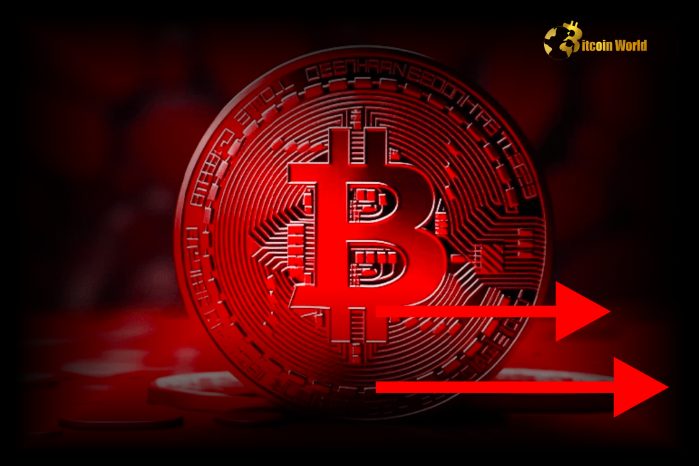
Bitcoin’s price dropped below $105,000 early Friday in London trading, recovering marginally later but signalling mounting pressure in crypto markets. Bloomberg data showed a fall of as much as 3 percent before a modest bounce. The slide comes after a week of heightened volatility that has dragged digital-asset valuations lower.

The crypto sector has shed billions. Total market capitalisation fell to its lowest point since July, as institutional and leveraged positions faced heavy liquidations. Ethereum, the second-largest token, also fell sharply, trading under $3,800.

One key driver has been intensifying stress in U. S. regional banks. Shares of Zions Bancorp plunged after it disclosed a $50 million loan impairment, while Western Alliance is embroiled in fraud allegations tied to borrowers. Those troubles have sparked a “flight to safety” across risk assets, nudging investors away from speculative trades.

The collapse in derivatives markets was steep: over $1 billion in long and short positions were wiped out in rolling liquidations, especially on exchanges with aggressive leverage mechanics. The drop below the 200-day moving average—around $107,500—has undermined a long-term support zone, fuelling further anxiety among traders.

At the same time, trading volume surged. Weekly volume for Bitcoin hit its highest level since March, suggesting heavy participation even amid panic. Some analysts see that as a sign of re-accumulation by institutional players, though it remains unclear whether those inflows will stabilise prices.

Technical watchers are eyeing potential floor zones near $100,000, while others suggest $88,000 could act as an “open target” if selling accelerates. Meanwhile, on-chain data reveals that wallets holding between 100 and 1,000 BTC—sometimes called “shark wallets”—are accumulating aggressively, marking the fastest rate of inflow since 2013. Those trends echo previous panic phases, which often preceded longer rallies.

Some observers caution that Bitcoin’s repeated failure to behave as a “safe harbour” during market stress undermines one of its selling points. Still, others argue that the fundamentals remain intact—citing diminishing supply on exchanges, renewed institutional interest, and the durability of blockchain infrastructure.

Volatility is unlikely to subside soon. The week ahead includes major U. S. economic data releases and potential policy statements from central banks that could sway risk sentiment. In parallel, geopolitical frictions—particularly over trade and supply chains—may further rattle markets already in flux.

Over $250 million has been wiped out from leveraged positions across major cryptocurrency markets within the last 60 minutes, according to real-time tracker alerts. The bulk of the liquidations hit long bets, triggering a sharp lash of volatility that rattled traders across exchanges.

Data from multiple crypto-analytics feeds show that Bitcoin and Ethereum bore the brunt of the forced closures, with long positions cascading under mounting downward pressure. The alerts indicate that around $200 million of that total was liquidated in just the preceding 15 minutes. Margin calls and automatic stop-loss triggers have sharply pared back open interest.

Market participants point to a combination of lower-than-expected macro signals and heightened global risk aversion as catalysts for the sudden liquidation wave. Macro equity markets have seen risk assets fall under pressure over the past sessions, prompting a spillover into speculative crypto positions. The added strain from derivatives exposure amplified the move.

Crypto exchange data show that Binance, Bybit and OKX recorded the highest volumes of liquidations, especially in their perpetual futures markets. On Binance alone, over $80 million in long positions may have been forcibly closed, according to traders cross-checking the on-chain and order-book flows. Ethereum perpetuals also registered substantial losses, particularly in mid- and high-leverage tiers.

Analysts observing funding rates and open interest across exchanges have flagged an abrupt deleveraging. The funding rates for many altcoins flipped negative, signalling that the short side was gaining dominance as leverage unwound. Open interest across high-risk tokens dropped by 15 – 20 % in many cases, suppressing liquidity and heightening slippage.

Several algorithmic trading desks and quant funds experienced knock-on effects. As large liquidations pulled prices lower, stop orders cascaded, exacerbating the decline in thin markets. Some trading firms reported losses due to slippage and forced exits—even though positions were hedged—with automated strategies failing to escape the downdraft in time.

A few larger holders, often designated as ‘whales’, appear to have opportunistically repositioned. Some have placed bids closer to now-discounted levels in anticipation of a bounce; others reduced exposure altogether. On-chain indicators suggest increased inflows to stablecoin pools and accumulation in non-spot holdings, hinting at a cautious redeployment rather than wholesale exit.

Institutional interest remains muted amid the turmoil. According to contacts in digital-asset fund management, most institutions were already operating with limited leverage and hedges in place. Few entered new positions during the seizure of volatility, and many paused trades to watch whether support levels would hold.

Advertisements

Abu Dhabi’s Stargate UAE project is advancing swiftly, with G42 and its affiliate Khazna Data Centers confirming that construction has moved past preliminary stages and that the design-to-build effort is now in full execution. The first 200 MW of capacity is slated to go live in 2026, forming part of a 1 GW AI cluster within the broader 5 GW UAE–U. S. AI Campus. Civil, structural and […]

Citizens Bank has launched coverage of SharpLink Gaming, assigning it a “market outperform” rating and a price target of $50, implying upside in excess of 200 percent from current levels.

The bank’s analysis hinges on SharpLink’s positioning as a publicly traded entity that actively manages an Ether treasury, combining yield-bearing deployment strategies with equity-market mechanisms to enhance value. Citizens projects that ETH’s long-term price trajectory, together with SharpLink’s operational model, could underpin substantial growth.

Citizens expects SharpLink’s net asset value to rise as the company compounds returns from staking, liquid restaking, and other on-chain yield strategies. The bank cites management’s capacity to issue equity above NAV or repurchase shares when trading below NAV as a leverage point for shareholder value.

SharpLink is led by Ethereum co-founder Joseph Lubin, who serves as Chairman, and Joseph Chalom, formerly of BlackRock, as Co-CEO. The bank underscores this combination of crypto ecosystem pedigree and traditional capital markets acumen as a competitive advantage.

In its report, Citizens forecasts ETH could exceed $7,000 by 2026, potentially pushing beyond $20,000 by 2030, and argues that SharpLink offers one of the few pure-play equity vehicles tied to Ether exposure. The bank describes SharpLink’s operating model as a “flywheel” in which yield-generated returns accelerate NAV per share, further facilitating growth capital.

Citizens’ valuation assigns a premium multiple to SharpLink’s NAV, justified by management execution and the structural optionality inherent in an actively managed ETH treasury. The report points to the possibility that investor recognition of this optionality could drive valuation multiple expansion.

SharpLink has also taken steps consistent with the thesis. It has initiated a share buyback programme, repurchasing approximately 939,000 shares at an average price of $15.98, and the board has authorised up to $1.5 billion in share repurchases for capital allocation flexibility. In tandem, SharpLink disclosed it holds around $3.6 billion in ETH, nearly all staked to produce yield.

Meanwhile, B. Riley has initiated coverage of SharpLink with a “Buy” rating and a $32 target, casting some contrast in outlook. B. Riley emphasises that the company’s discount to modified NAV is attractive — currently trading at 0.8× mNAV — and expects upward re-rating to 1.5× mNAV within 12 months, contingent on ETH accumulation and damping equity issuance dilution.

Multiple posts flooding social media demand accountability—users call for a regulator-led probe, the CEO’s arrest, and deep scrutiny of Binance’s internal systems. The outcry follows recent chaos around synthetic tokens USDe, BNSOL, and wBETH, which lost their pegs on Binance amid massive liquidations. Compensation is flowing, but the narrative now centers on whether the crash was a desperate scramble or a deeply orchestrated exploit.

When Binance announced it would pay $283 million to users affected by depegging and associated liquidations, it framed the move as a goodwill gesture to restore stability. The payout applies to users whose positions used USDe, BNSOL, or wBETH as collateral between 21:36 UTC and 22:16 UTC on October 10. The exchange said compensation covers the difference between liquidation price and market price at 00:00 UTC on October 11, plus fees. It also promised to improve its risk-control systems and change how its indices weigh collateral assets..

These remedial steps, however, have not assuaged skeptics. Analysts at Uphold argued the event was no accident: they see the crash as a coordinated exploit of a vulnerability in Binance’s unified margin system, in which USDe, BNSOL, and wBETH were accepted as collateral. Because the exchange valued collateral based on internal order-book data instead of aggregated external prices, they say the system could be manipulated from within the venue itself. That, they believe, allowed an attacker to locally crash prices and trigger a cascade of liquidations.

One widely cited theory points to timing. Binance announced on October 6 it would update its pricing mechanisms to rely more on external oracles, with the changes scheduled for October 14. The incident happened on October 10—right in the middle of that eight-day window. In effect, critics argue, the exchange had acknowledged the flaw but had not yet implemented the fix, leaving a vulnerability no one should have touched. On-chain data shows USDe dropped to as low as $0.65 on Binance while remaining near parity across other markets, and wBETH and BNSOL showed similar divergence. The fact that only these three tokens—and only on Binance—were massively disrupted raises the specter that this was a targeted strike, not a systemic weak spot.

The theory gains further support from social media researchers. A thread by a user called “ElonTrades” describes how roughly $60–90 million of USDe was dumped on Binance to manipulate its order book, triggering forced liquidations in unified-account positions. That thread also links to outsized short positions opened elsewhere in anticipation of a broad market drop. Combined, the strategy would allow the attacker to profit while setting off mayhem across crypto markets.

Binance has rejected claims of an external exploit. In its public statement, the company argues that extreme market volatility predated the depegs, and that local platform issues amplified rather than initiated the crash. It also suggests some of the price distortions stemmed from interface display glitches—tokens with very small values were rendered as zero on users’ screens—while others reflect execution of long-dormant limit orders. The company contends liquidation volume occurring on its platform was only a fraction of broader market activity.

Even some industry voices have pushed back against blanket condemnation of Binance. One analyst told reporters that attributing the crash entirely to internal failure is premature, and that extreme leverage and macro market turmoil may have interacted with, not originated from, the exchange’s anomalies.

Yet the optics are harsh and the damage is real. The crypto community remains intensely uneasy. Many traders point to how precisely the exploit—or crash—focused on three collateral tokens, how it preceded a planned patch, and how quickly the stains were cleaned up by compensation. To many, the $283 million seems less like accountability than a strategic PR move to calm markets and buy time.

BNB, the exchange’s native token, soared after the compensation announcement, reaching a high near $1,370. That rally suggests some market participants interpreted the payout as a signal that Binance could backstop risks if needed. But it has not quelled deeper anxieties: users are now demanding full transparency about trades, collateral decisions, and the CEO’s role in risk oversight.

Amanda, a margin trader who lost funds in the incident, told crypto forums: “This wasn’t a market tantrum. The order flow was too precise, too surgical. It felt like someone pulled the plug on us.” Other users posted examples of margin calls executed within fractions of seconds after the depeg, with little time or warning to react.

The sequence of events presents too many coincidences: a pricing flaw known and scheduled for repair, large collateral-related token dumps executed mid-window, massive liquidations cascading in an insular system, and a rapid compensation move. Taken together, the evidence aligns with a narrative of design-level risk exploited rather than location-level chaos.

If the worst scenario proves true—that Binance’s unified margin design was manipulable from inside its own infrastructure—the implications ripple far beyond a single crash. Centralized exchanges, hailed for their convenience and liquidity, might now be exposed as fragile ecosystems. Traders could demand stricter oversight, regulators more frequent audits, and entire collateral frameworks could be reassessed.


CME Group has launched its first physical base in the Middle East with an office at the Dubai International Financial Centre, to serve as its hub for the region under a licence from the Dubai Financial Services Authority. Sharif Jaghman, relocated from London, will head the new Middle East and Africa operations. The move follows a 16 per cent rise in average daily trading volumes from the […]

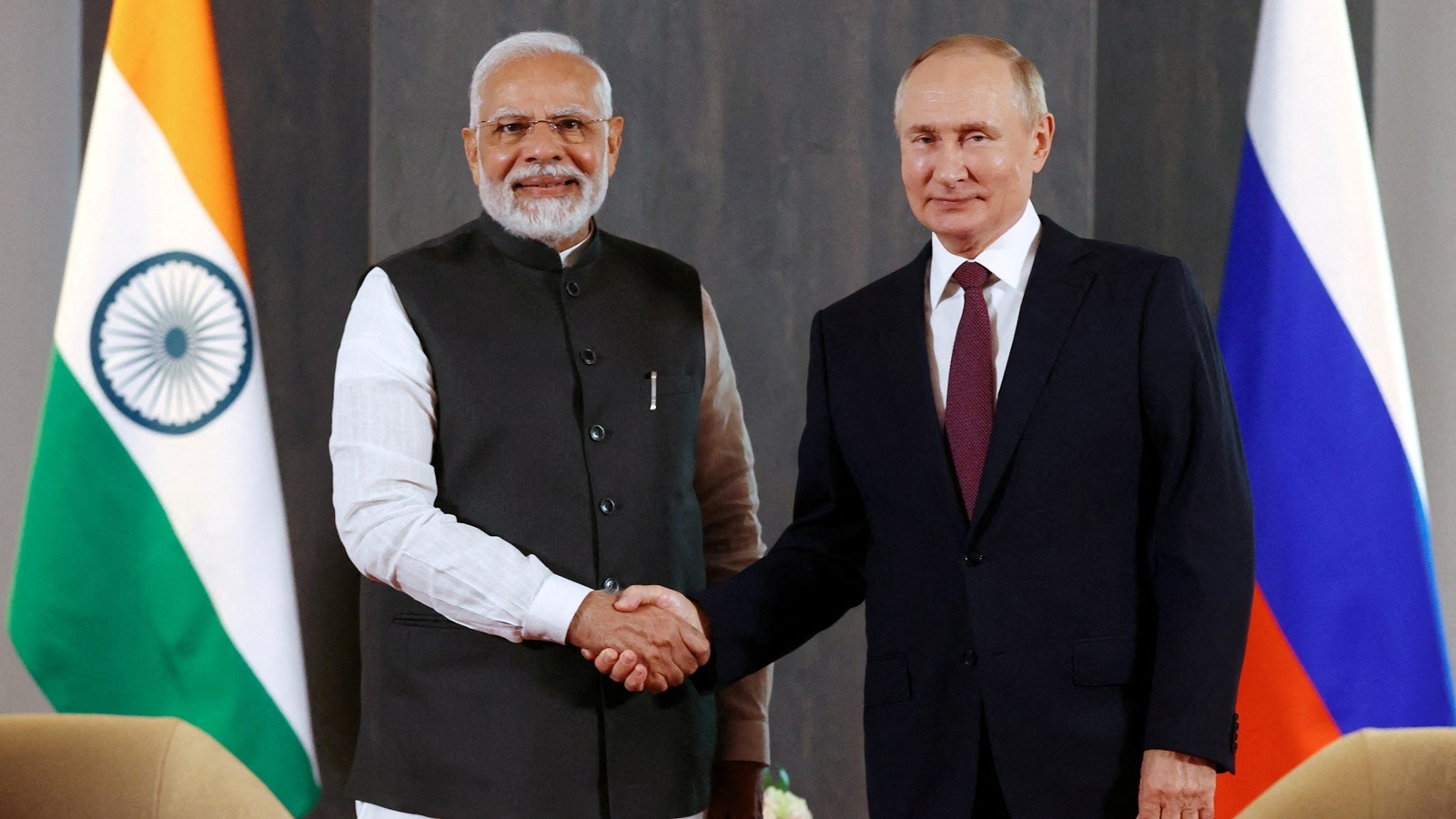
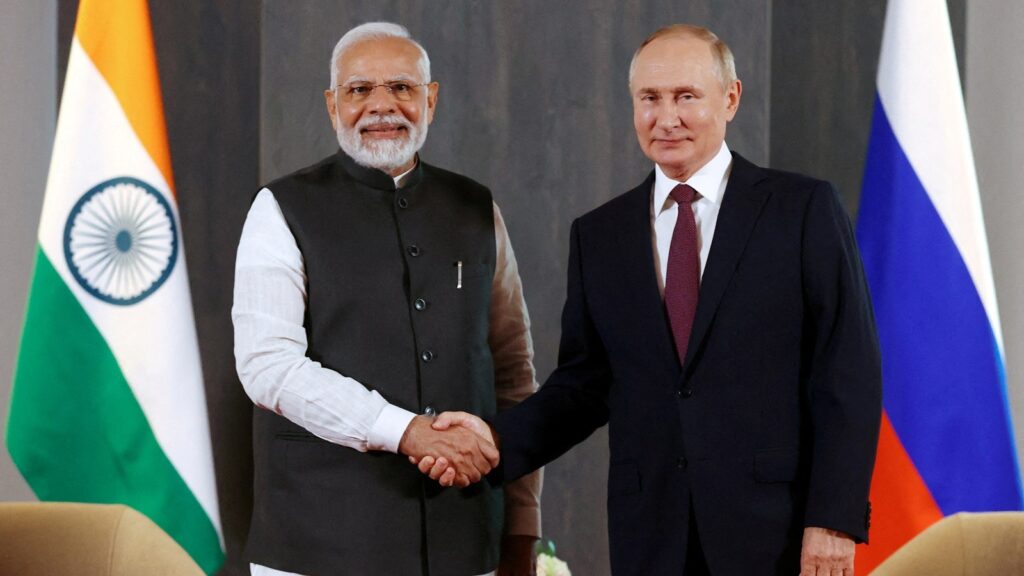
U. S. President Donald Trump declared that Indian Prime Minister Narendra Modi has pledged to halt India’s purchases of Russian crude oil, a shift that would significantly upend global energy flows if implemented. Trump told reporters that Modi made the commitment during their conversation, stating that phasing out Russian imports would not happen overnight but would take place “within a short period of time.” The Indian embassy […]

South Africa’s township economy, long relegated to the informal fringes of growth, is now drawing deliberate attention from government, corporates and fintech innovators alike as a pivotal engine for broad-based development. The sector is increasingly viewed not as a peripheral “slack” market but as a strategic frontier offering scale, resilience and social inclusion. Analysts estimate that the township economy could be worth between R900 billion and over R1 trillion, […]

Volkswagen’s truck arm Scania has inaugurated its first wholly-owned manufacturing facility in China, signalling a bold push to deepen its footprint in Asia and buffer against global trade risks. The plant, built at Rugao in Jiangsu province, commands an investment of €2 billion and is designed to produce both for the domestic Chinese market and export destinations across Asia and Oceania. CEO Christian Levin said the facility […]

KUALA LUMPUR, MALAYSIA – Media OutReach Newswire – 15 October 2025 – Organised by the Ministry of Natural Resources and Environmental Sustainability (NRES) and co-organised by the Malaysian Green Technology and Climate Change Corporation (MGTC), the International Greentech & Eco Products Exhibition and Conference Malaysia (IGEM) 2025 opened its doors today at the Kuala Lumpur Convention Centre, marking the start of three days dedicated to innovation, collaboration, […]

By K Raveendran Oil prices fell to their lowest level in five months on Tuesday, continuing a slide that has gathered pace over the past several weeks. The benchmark Brent and West Texas Intermediate crude futures have both dipped significantly, erasing much of the year’s earlier gains. In stark contrast, gold has soared to an […]

The article Gold Feeds On Oil’s Misfortune; One Hits The Roof, The Other Down In The Dumps appeared first on Latest India news, analysis and reports on Newspack by India Press Agency).

Traders on the U. S. prediction market Kalshi are assigning a 55 percent chance that Bitcoin will exceed $130,000 by the end of 2025, with probabilities of 34 percent for surpassing $140,000 and 24 percent for topping $150,000. That places the market’s expected annual high at roughly $132,000.

Those figures reflect a steadily intensifying optimism about Bitcoin’s trajectory, drawing attention from institutional and retail participants alike. Kalshi’s “How high will Bitcoin get this year?” market is driving price discovery around extreme outcomes for the cryptocurrency.

That optimism today sits alongside growing institutional flows into related assets. Bitcoin spot ETF issuers have been attracting multi-billion dollar inflows across several jurisdictions; analysts view that as a cornerstone of structural demand, tightening supply in spot markets. At the same time, the derivatives market is registering sharply skewed positioning in favour of upside moves, especially in out-of-the-money call options.

Crypto research platforms note that exchange reserves of Bitcoin are at multi-year lows, meaning a smaller buffer for large sell orders to exert downward pressure. Some large holders are moving coins to cold storage or long-term custody, reducing the circulating float further. That dynamic can magnify even moderate inflows into a pronounced price rise.

Macroeconomic factors are reinforcing these tailwinds. Markets broadly expect the U. S. Federal Reserve to shift toward a less restrictive stance in the months ahead, which would lower the opportunity cost of holding a risk asset like Bitcoin. Inflation pressures, geopolitical uncertainty, and currency devaluation narratives have been pushing capital toward non-sovereign stores of value — a trend some asset allocators perceive as supportive for digital assets.

Kalshi itself has expanded rapidly. In October 2025, the company announced growth into over 140 countries following a $300 million funding round that values it at $5 billion. This capital boost is intended to improve infrastructure, broaden partnerships, and scale its product stack beyond simple yes/no event contracts. The valuation surge underscores confidence in prediction markets as a means of tapping collective foresight.

Kalshi is currently viewed as a leader in the prediction-market space, outpacing rivals like Polymarket. As of mid-October, Kalshi’s valuation exceeds that of Polymarket by a wide margin, though the latter retains star appeal in crypto circles.

Alibaba’s most advanced vision-language model, Qwen3-VL 235B, is now accessible via Ollama’s cloud infrastructure, signalling a milestone in multimodal AI deployment. The dense and sparse variants of the Qwen3 family—4B, 8B, 30B and 235B—are slated to become available for local use in due course. Qwen3-VL elevates visual reasoning capabilities: it can interpret graphical interfaces, recognise GUI elements, press buttons, call external tools and complete tasks autonomously. Its […]

OwlTing, a Taiwan-based fintech focussed on stablecoin infrastructure, is set to begin trading its Class A common shares on the Nasdaq via direct listing on 16 October under the ticker “OWLS”. The move marks what the company calls a milestone in its evolution from hospitality and e-commerce into a compliance–led blockchain payments firm.

In its public filings, OwlTing reported revenue of US 7.6 million in 2024 and a payment volume across its platforms of approximately US 218 million. Though still unprofitable, the listing underscores growing confidence in the fragmented stablecoin infrastructure space.

The listing comes at a moment when several high-profile developments are shaping the stablecoin and payments ecosystem. Stripe’s Bridge unit is reportedly preparing to apply for a federal banking charter, aiming to navigate evolving U. S. stablecoin regulation. Meanwhile, major financial and technology firms are said to be in advanced talks to acquire BVNK, a London-based stablecoin platform.

OwlTing’s pivot from hospitality and blockchain traceability to payments and stablecoin services has been underway for some years. Its OwlPay platform enables businesses to accept stablecoins or fiat and settle globally. The company has obtained money transmitter licences in multiple U. S. states and holds themselves out as a “compliance-first” operator in a space that often struggles with regulatory uncertainty.

By listing via direct listing rather than a traditional IPO, OwlTing seeks to avoid dilution of existing shares and allow market-based price discovery. The company will ring the Nasdaq opening bell on 16 October to commemorate the debut. Analysts view the listing as Asia’s first fintech with a pure direct listing on Nasdaq, positioning OwlTing as a regional trailblazer in blockchain payments.

In parallel, Stripe’s ambitions in stablecoin continue to intensify. Its Bridge arm, acquired earlier this year, is now seeking a national trust charter to get ahead of U. S. regulation on digital assets and stablecoins. The charter would permit holding deposits and issuing stablecoins more directly under U. S. oversight.

Roughly $706 million in leveraged crypto positions were liquidated over the past 24 hours, with long bets accounting for $456 million and shorts making up more than $249 million, according to Coinglass data. Ethereum led by asset class with $234 million in liquidations, Bitcoin followed with $168 million, and other altcoins totaled about $68 million. Meanwhile, U. S. spot Bitcoin and Ethereum ETFs recorded sharp capital withdrawals of $326 million and $428 million respectively, marking a second straight session of outflows for both.

The wave of forced sell-offs comes amid intensifying volatility across crypto markets, driven by macro uncertainties and amplified leverage. Analysts point to U. S.–China trade tensions and abrupt tariff escalations as triggers that rattled institutional positioning. The ensuing “flight to safety” saw leveraged traders squeezed out, pushing volatility higher.

Ethereum’s dominance in the liquidation mix underscores its exposure to leveraged structures: its liquidations outpaced Bitcoin by roughly 40%. That suggests traders running shorter time horizons or more aggressive leverage in the ETH derivatives market. Some observers interpret this as symptomatic of recent rotations within crypto capital flows, where speculative bets on altcoins become more vulnerable during stressed conditions.

ETF outflows add another layer to the stress narrative. The $326 million pulled from spot Bitcoin ETFs and the $428 million withdrawn from Ethereum ETFs reflect a broader retreat by institutional capital. For Ethereum ETFs, Monday’s $428 million exodus represented the steepest daily outflow in several weeks. Within those redemptions, BlackRock’s ETHA alone led with over $310 million withdrawn.

Those moves reverse inflows seen in prior weeks: Ethereum funds had aggregate positive flows of nearly $488 million in the prior week, while Bitcoin products had also drawn substantial capital. Market analysts caution, however, that the shifts may not signal structural withdrawal from crypto exposure but rather tactical repositioning under duress.

Volatility in derivatives markets has drawn scrutiny to structural stress points. Funding rates, margin requirements, and thin liquidity in some trading venues magnify the impacts of sudden directional moves. Experts suggest that while ETF outflows may exacerbate short-term weakness, sustained pressure will hinge on macro stability.

GITEX Global 2025 in Dubai has become a battleground for dominance in nation-scale artificial intelligence, as governments and tech giants compete to control the infrastructure that will underpin the next wave of the digital economy. The event has already featured multiple high-stakes unveilings of sovereign AI platforms, hyperscale data centres, and public-service automation systems illustrating how computing power is being weaponised as strategic capital. The opening day […]

The International Monetary Fund has lifted its projection for the United Arab Emirates’ economic expansion to 4.8 per cent in 2025 and sees 5.0 per cent growth in 2026, citing accelerating non-hydrocarbon activity and a rebound in oil output.

Stronger-than-expected performance in tourism, construction, trade and financial services is underpinning the upward revision. The IMF attributes resilience to the country’s diversified strategy and structural reforms such as enhanced trade agreements and sustained investment in infrastructure.

Analysts say the revision contrasts sharply with broader regional downgrades. The IMF now expects growth across the Middle East and North Africa to expand by only 2.6 per cent in 2025, constrained by policy uncertainty, volatile energy markets and geopolitical tensions.

Within the UAE, central bank data reinforce the narrative of dual expansion. The non-hydrocarbon sector is forecast to grow by around 4.5 per cent annually in both 2025 and 2026, while the hydrocarbon segment is expected to rebound more sharply—by 5.8 per cent in 2025 and 6.5 per cent in 2026—on increased output as OPEC+ quotas are relaxed.

When IMF staff visited the UAE in January 2025, they noted that domestic demand remained robust amid modest oil production, forecasting real GDP growth at about 4 per cent for the year. They projected that fiscal and external surpluses would remain comfortable, helped by elevated non-oil revenues and cautious fiscal management.

Still, risks linger. The UAE’s banking sector, while well capitalised, faces exposure to real estate, and high house prices pose concerns for asset quality. In mid-2025, exposure to property in banks’ portfolios stood at around 18 to 19 per cent of risk-weighted assets. A sudden shift in investor sentiment or capital flows could test the stability of credit markets.

On the external front, the current account surplus is projected at about 7.5 per cent of GDP, supported by stronger non-oil exports and moderating import growth. Liquidity buffers remain healthy, with international reserves covering more than eight months of imports.

Kigali has become the launchpad for the Rwanda chapter of the Africa Trade Gateway, a comprehensive digital trade ecosystem developed by the African Export-Import Bank in partnership with the African Continental Free Trade Area Secretariat. The rollout aims to accelerate uptake of the platform across the nation and integrate Rwandan firms more closely into Africa’s digital trade networks. The ATG combines five integrated modules—including PAPSS, MANSA, ATEX, […]

Russia and China have endorsed an ambitious joint action plan to expand shipping via the Northern Sea Route, setting freight targets and launching collaborative projects that signal a deepening strategic partnership in the Arctic domain. At a meeting of the bilateral NSR sub-commission in Harbin, officials agreed on a roadmap aimed at scaling cargo traffic to 20 million tonnes by 2030, while pursuing development in shipbuilding, logistics, […]

VISHNU RAJA
RYO YAMADA
HITORI GOTOH
IKUYO KITA