News related to
Dubai’s

From left, Kamran Muhammad (6th in frame), CEO of Mashriq Elite, and from right, Aamil Tabani (4th in frame), CEO of Golden Bridge. Launched in September 2023, the project has progressed to delivery as committed, a milestone that underscores investors’ confidence in Dubai’s real estate market  Mashriq Elite Developments and Golden Bridge (exclusive sales and marketing partner) have marked the successful on-time handover of Floarea Residence in […]

Dubai has issued Law No. of 2025 to regulate the professional practice of engineering consultancy firms, forbidding unlicensed operations and introducing a tiered classification system.

Under the law, no individual or office may conduct consultancy across fields such as architectural, civil, mechanical, electrical, chemical, geological or coastal engineering in the emirate without proper authorisation. Firms must hold a valid trade licence, register with Dubai Municipality, and submit detailed disclosures regarding their licensed scope, classification, and technical staff credentials.

A unified electronic platform, to be integrated with “Invest in Dubai,” will centralise firm registration, classification, issuance of competency certificates, and updates to consultancy qualifications.

A permanent “Committee for the Regulation and Development of Engineering Consultancy Activities” will be established under the law, chaired by a Dubai Municipality representative and comprising stakeholders from relevant authorities, tasked with overseeing implementation and resolving sectoral disputes.

The legislation classifies eligible firms into several categories: local Dubai-based companies; branches of UAE-based consultancies with at least three consecutive years of experience; branches of foreign consultancies with at least ten years of global experience; joint ventures between local and foreign players with at least a decade of consultancy track record; advisory offices led by registered engineers with a decade of experience; and engineering audit offices providing third-party evaluations.

Firms are barred from operating beyond their licence scope, hiring unregistered engineers or subcontracting to unlicensed entities. Violations can attract fines up to AED 100,000, stricter penalties for repeat breaches, suspension, downgrading classification, removal from the registry, licence cancellation, or revocation of professional certificates. Affected parties may file appeals within 30 days and decisions must be issued within 30 days, communicated within five working days.

Existing regulations under Local Order No. 89 of 1994 and its amendments will remain effective until new implementing regulations are issued, provided they do not conflict with the new law.

Consultancy firms and staff will have one year from the law’s effective date to regularise their status; extensions may be granted, and expired registrations can be renewed by committing to full compliance.

Dubai’s move mirrors the emirate’s broader legal recalibration of the infrastructure sector. In July 2025, Law No. 7 of 2025 was enacted to regulate contracting activities, consolidating prior laws and mandating registration, classification, subcontracting oversight and ethics codes across construction and engineering services. The new consultancy law can be seen as a complementary measure to ensure that consultancy services feeding into contracting projects meet defined quality and governance standards.

Industry stakeholders have expressed cautious optimism about the changes. Some consultancy firms believe the law will reduce unfair competition by eliminating unlicensed operators, thus raising standards overall. Others warn of compliance costs, especially for smaller local consultancies that may struggle to meet classification thresholds or hire adequately certified staff.

Regional and international firms see opportunity in the rule clarity and the potential to compete more transparently. Observers expect the new digital registry and classification framework to influence government procurement and tenders by favouring higher-ranked consultancies.

 by Mahboob Subuhani, Regional Director, IT Solutions – MEA & APAC at Sigma Software Group Dubai stands as a global benchmark for government digitalisation. In 2025, 99.5% of its services are digitised (120+ gov apps), with over 173 million digital transactions processed across 1400+ services, serving 57 million beneficiaries.    Today, Dubai ranks 4th globally in the IMD Smart City Index 2025, and 1st in the GCC, […]

Strong demand and constrained inventory have pushed Dubai’s residential rents upward for several years. However, multiple indicators now suggest that 2026 will bring slower growth—perhaps even declines—in many segments of the market.

Headline figures already point to a deceleration. Yearly rental growth across residential properties in Dubai fell to about 8.5 percent by May 2025, down from 14.3 percent at the start of the year and 21.1 percent a year earlier. The long-term rental sector is under pressure as new supply enters the market: in the second quarter of 2025, long-term rental contracts fell 6.3 percent year on year, new contracts dropped nearly 8.9 percent, and overall rents declined 12.9 percent in quarterly comparison.

Analysts attribute the cooling largely to a surge in forthcoming housing supply. Some 150,000 new homes are expected to be completed between 2025 and 2027, representing a stock increase of nearly 20 percent in many parts of the market. Fitch Ratings projects residential property values could pull back by as much as 15 percent during late 2025 and into 2026, citing that the volume of handovers will likely outpace demand.

In the mid- and affordable segments, the impact may be most visible. Experts expect that communities with heavy handovers—such as Jumeirah Village Circle, Al Furjan, Dubai South, and surrounding areas—will experience downward pressure on asking rents. Nevertheless, prime areas like Downtown Dubai and Palm Jumeirah are forecast to continue seeing double-digit rent growth, buoyed by scarcity and sustained demand for luxury housing.

A tale of two markets is emerging. In central, premium sectors, landlords maintain leverage, while suburban and emergence zones will offer more negotiation room for tenants. Springfield Properties’ chief executive, Farooq Syed, observes that the large transaction volume and development pipeline into 2026 will provide tenants greater choice—especially in the apartment segment. Cushman & Wakefield Core’s head of research, Prathyusha Gurrapu, describes the trend as “clear signs of stabilisation,” especially outside the top-tier districts.

Beyond supply and demand dynamics, shifts are occurring in tenant preferences. Short-term and flexible lease arrangements continue to gain popularity, particularly among transient professionals and investors seeking yield. In Q2 2025, short-let occupancy remained strong—AirDXB, a key player in Dubai’s short-term rental market, achieved 90 percent occupancy compared to citywide averages around 63 percent. Technology trends are also creeping into real estate: blockchain-based platforms are being tested to automate rent payments and maintenance workflows.

On the investor side, yields remain attractive. Knight Frank reports residential yields are holding in the 5–7 percent range for apartments and 4.5–6 percent for villas and townhouses. But concerns are rising about overleveraged speculative investment, especially in lower-end segments. The Financial Times recently noted that many flippers—investors hoping to resell properties quickly for a profit—are already struggling to offload unfinished units as competition mounts.

Regulatory efforts may also temper volatility. Dubai’s Real Estate Regulatory Agency continues to push for transparency and consistent valuation practices, while the broader Dubai Land Department is moving toward digital registration and enhanced oversight. For tenants, the requirement to declare all occupants in Ejari contracts—an enforcement step introduced in 2025—tightens accountability in co-living arrangements.

Macro-economic fundamentals still support the market, albeit with caution. The emirate’s population passed 3.8 million in 2025, reflecting steady migration and growth—fuelling housing demand. Moreover, Dubai continues to attract global capital, drawn by tax benefits, infrastructure, economic diversification, and a relatively stable environment across the Gulf region.

Pressures are evident however. UBS’s 2025 index flagged Dubai at “bubble risk,” warning that rapid appreciation may not be sustainable without moderation. If large-scale oversupply hits the market at once, correction cycles may deepen in specific micro-markets.


Dubai’s ride-hailing landscape has shifted dramatically as the UAE-based Zed app now encompasses 10,764 taxis across the emirate—equivalent to more than four in five licensed cabs. The move was enabled through strategic partnerships with Dubai Taxi Corporation and National Taxi, folding in the fleets of three major operators.

Under the new arrangement, DTC’s entire fleet and those of National Taxi and Kabi by Al Ghurair become bookable via the Zed platform, effectively making Zed the host of Dubai’s second-largest taxi fleet. Zed executives describe the expansion as a means of enhancing coverage, cutting cancellations, and lowering wait times, especially across areas traditionally underserved.

Badr Al Ghurair, Zed’s Chief Executive, emphasised the home-grown nature of the platform and its deep knowledge of Dubai’s commuting patterns: “this collaboration … further strengthens Dubai’s mobility ecosystem while ensuring that our communities have access to reliable, everyday transport solutions” he said. Abhinav Patwa, Zed’s EVP and Head, added that the alliances provide scale and reliability without losing sight of a customer-first approach.

The accord comes amid Dubai’s broader ambition of converting 80 per cent of taxi bookings to digital platforms—a target within reach through the emirate’s Smart City 2025 programme. The integrated fleet also introduces more electric and hybrid taxis into Zed’s pool, aligning with the city’s sustainability goals.

This consolidation represents a notable realignment in Dubai’s mobility market. For years, taxis and e-hailing apps operated largely in parallel, with limited overlap in booking channels. The new model bridges that divide, bringing traditional operators into the digital fold via a single platform. Analysts say the move may accelerate the decline in usage of standalone taxi apps and push rivals to forge similar alliances or risk falling behind.

Dubai Taxi Company, now a public joint stock firm under Law No. 21 of 2023, operates more than 10,000 vehicles, of which 6,200 taxis were folded into the agreement. Kabi by Al Ghurair contributed another 3,680 vehicles under the tie-up. According to RTA data, Dubai’s taxi sector expanded by 7 per cent in the first half of 2025 compared with the same period in 2024, signalling growing demand for urban mobility services.

Through the arrangement, newly commissioned taxis across the partner fleets will automatically integrate into Zed’s system—making service expansion incremental and scalable. Several of the added vehicles are electric or hybrid, helping Zed accelerate its greening efforts.

Passengers can now access all these taxis via Zed’s iOS and Android apps, with the platform continuing to offer features such as guaranteed on-time pickups for pre-booked premium rides. The enhanced capacity is expected to reduce wait times during peak hours, improve service in remote zones, and lower the incidence of ride cancellations.

Why Flowers Are Central to Anniversary Traditions Anniversaries are more than calendar reminders—they are emotional milestones that mark the journey of two people growing together through time. Over the years, couples find ways to celebrate these occasions, whether with gifts, trips, or intimate moments. Among all possible gestures, flowers have remained the most enduring. The tradition of associating flowers with anniversaries goes back centuries. Each bloom has […]

DoBeGo announces the launch of its all-in-one digital platform designed to transform the way cars are purchased, leased, financed, and resold in the UAE and beyond. Built to serve both individual drivers and automotive businesses, DoBeGo integrates every step of the vehicle journey — from acquisition to resale — into a single, seamless ecosystem. A Connected Ecosystem for Smarter Mobility DoBeGo bridges key stages of car ownership […]

Advertisements

The Central Bank of the UAE and Dubai Finance today formalised an agreement to deepen collaboration in the development of the country’s capital markets, enabling Dubai to draw on the central bank’s infrastructure to issue dirham-denominated government bonds.

Khaled Mohamed Balama, Governor of the CBUAE, and Abdulrahman Saleh Al Saleh, Director-General of Dubai’s Department of Finance, signed the Memorandum of Understanding in Abu Dhabi before senior officials and assistant governors.

Under the pact, Dubai Finance gains access to the central bank’s systems and platforms to support bond issuance, while both parties commit to joint efforts in fintech, payment systems, and digital currency development. The agreement further encompasses capacity building, knowledge exchange and coordination in regulatory and infrastructural domains.

Balama described the partnership as “an important step toward advancing the country’s financial markets, supporting their growth, and ensuring their readiness to adapt to future changes.” He affirmed that the nation’s leadership is focused on promoting innovation and digitisation in financial services to boost private-sector participation and investor confidence.

Al Saleh said the MoU would help diversify the UAE’s investment tools and align capital market expansion with the vision of the country’s leadership. He emphasised the importance of collaboration with regulatory bodies at both federal and local levels to elevate the nation’s reputation as an investment hub.

The MoU aligns with broader moves by the central bank in strengthening financial infrastructure and market regulation. The central bank has recently advanced its “Financial Infrastructure Transformation” programme, which includes the rollout of the domestic card scheme Jaywan and development of a Central Bank Digital Currency, known as the Digital Dirham. The institution also introduced regulations on Open Finance platforms and has conducted stress tests affirming resilience in the banking sector under diverse macroeconomic pressures.

The UAE’s push to build robust capital markets fits into a regional trend of using debt instruments to broaden funding sources beyond oil and real estate. In December 2024, the CBUAE signed an MoU with the Hong Kong Monetary Authority to enhance cross-border debt issuance and settlement between the UAE and Asia, aiming to foster deeper connectivity between debt markets.

Analysts see the newly inked agreement as a mechanism to centralise the infrastructure layer of government debt issuance under one roof, avoiding fragmentation across emirates. Doing so could lower costs, standardise procedures, and deepen liquidity in domestic markets. It may also foster greater issuance activity from state and municipal entities.

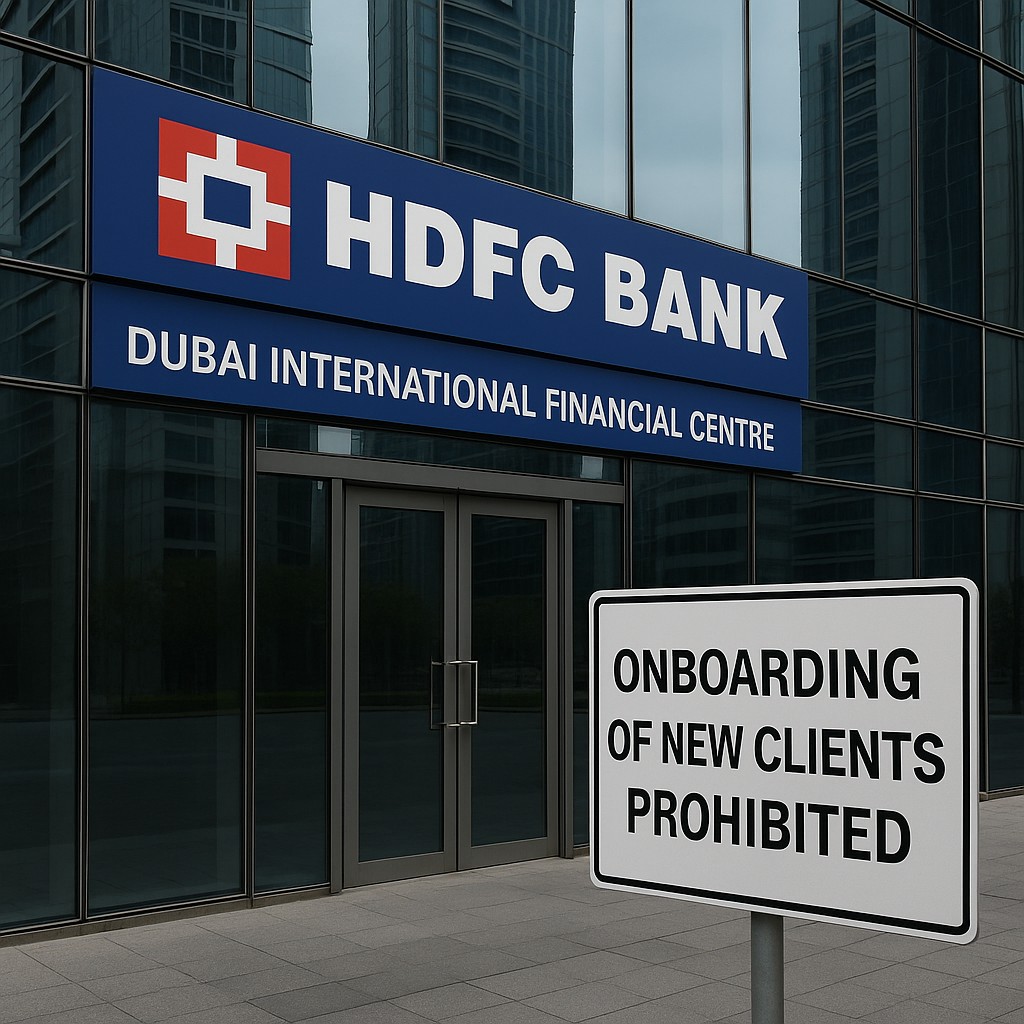
Dubai’s financial regulator has barred HDFC Bank’s Dubai International Financial Centre branch from soliciting, onboarding or servicing new clients, citing compliance lapses.

The order, issued by the Dubai Financial Services Authority and effective from 26 September, remains in force “until otherwise amended or revoked,” the bank stated. HDFC said it is taking steps to comply with the directive while engaging with the DFSA to address concerns.

HDFC clarified that the restriction does not apply to existing clients of the DIFC branch, nor to those who had already been offered services prior to the notice. As of 23 September, the branch had 1,489 customers, including joint holders.

According to HDFC, the bank does not expect this to materially affect its overall operations or financial position, noting that the Dubai branch’s business is not significant relative to its global activities.

The DFSA’s decision notice accuses the branch of servicing clients who were not properly onboarded, deficiencies in client onboarding processes, and other unspecified compliance shortcomings. The prohibition extends to advising on financial products, arranging deals, extending credit, custodial services, and financial promotions for new clients.

Analysts point to a backdrop of scrutiny over HDFC’s role in selling risky instruments—particularly Credit Suisse additional tier-1 bonds—to retail investors in the UAE. Those clients accused the bank of misclassification and inadequate risk disclosures. Investor accounts allege that KYC records were manipulated to designate them as “professional clients,” a requirement under DIFC rules for high-risk products.

Some UAE-based investors welcomed the DFSA’s move but urged stronger action, stating the suspension of new client intake is a limited measure given potential damage already done.

HDFC has a broader international presence including representative offices in Abu Dhabi, Kenya, London and Singapore, and branches in Bahrain and Hong Kong. The bank faces parallel scrutiny in India regarding related sales practices, prompting investigations by Indian enforcement agencies.

As the DFSA and HDFC engage in remediation talks, markets will closely watch whether the regulator escalates sanctions or lifts the ban after compliance is demonstrated.

Dubai has secured a position among the world’s top four FinTech centres, according to the latest Global Financial Centres Index published on 25 September, signalling a pivotal shift in the emirate’s financial technology trajectory.

The GFCI report places Dubai at 11th globally in the overall ranking of financial centres, but underscores its standing as one of the most dynamic hubs for FinTech innovation. The Dubai International Financial Centre has played a central role in driving this transformation.

DIFC now houses over 1,500 companies focused on AI, FinTech, and innovation, making it the region’s largest cluster of its kind. These firms have collectively raised more than US$4.2 billion in funding, strengthening the UAE’s appeal as a destination for growth-stage tech ventures. Sheikh Maktoum bin Mohammed bin Rashid Al Maktoum, First Deputy Ruler of Dubai and Minister of Finance, credited the rise to the strategic goals of the Dubai Economic Agenda D33 and to Dubai’s business-friendly infrastructure and regulatory regime.

Essa Kazim, Governor of the DIFC, stressed that the momentum reflects long-term planning and deep investment. He noted that positioning Dubai among the top global FinTech players has required calibrated incentives, robust legal frameworks, and international partnerships. Arif Amiri, Chief Executive Officer of the DIFC Authority, said the locale’s success stems from synergy among institutional support, talent attraction, and ecosystem-building efforts.

Dubai’s ascent in the FinTech league emerges amid intensifying global competition. Traditional financial centres such as London, Singapore, and Hong Kong continue to maintain strong footholds, leveraging established networks, global institutions, and mature regulatory systems. Yet Dubai’s rapid rise indicates that newer hubs with nimble regulation and aggressive incentives can leapfrog in the tech-driven financial services landscape.

The GFCI 38 ranking shows Dubai overtaking several peers in the Gulf and Asia, with the city gaining one rank to 11th place overall and closing gaps in score metrics used to assess competitiveness, such as human capital, reputation, and business environment. The GFCI emphasises that “expected future significance” is one of the domains in which Dubai leads globally—an indication that market participants foresee further growth in its influence.

Dubai’s Roads and Transport Authority has revealed a 15-kilometre Dubai Autonomous Zone, an integrated corridor designed to link driverless land and water transport modes. The zone will stretch from Creek Station on the Metro Green Line through Al Jaddaf toward Dubai Creek Harbour and Festival City. The plan aims to weave Metro, RoboTaxis, RoboBuses, self-driving shuttles, autonomous abras, driverless logistics vehicles and street-sweeping bots into one seamless […]

Nasdaq Dubai has admitted a US$450 million Sukuk issued by Arada Developments LLC under Arada Sukuk 2 Limited’s US$1 billion trust certificate programme. The securities carry a maturity in 2030 and were priced at a profit rate of 7.150 percent. The offering drew orders in excess of US$2 billion, representing over four times oversubscription. The listing increases Arada’s cumulative Sukuk outstanding on the exchange to US$1.5 billion […]

Dubai’s Roads and Transport Authority has unveiled a new strategic focus for the 5th Dubai World Challenge for Self-Driving Transport, scheduled for 2027: smart integrated infrastructure. Mattar Al Tayer, Director-General and Chairman of the Board of Executive Directors of the RTA, said the competition will pivot to challenges that bind sensing, connectivity and analytics to urban infrastructure across Dubai.

At the closing of the Dubai World Congress for Self-Driving Transport held at the Dubai World Trade Centre, RTA inked four key agreements with Emaar Properties, Al Futtaim Group, and the winners of the 2025 challenge—WeRide and Deutsche Bahn consortium, together with Zelos Technology—to deploy and test autonomous systems in Festival City, Creek Harbour and other strategic urban zones. Al Tayer affirmed that the move aligns with Dubai’s ambition to serve as a global testbed for mobility innovation.

This year’s theme shifts from discrete vehicle-centric competition to a systems-level mandate: entrants will be judged on how well their solutions embed into city-wide networks of sensors, roads, communication links and data platforms. The RTA framework calls for designs that anticipate traffic dynamics, weather variations and public transit interaction, while maintaining safety, resilience and sustainability.

Over 3,000 participants and more than 80 expert speakers participated in the Congress, spanning government, academia and industry. The gathering marked the formal launch of the 2027 edition. The Congress also highlighted Dubai’s strategic goal that by 2030, one quarter of all journeys within the emirate will be autonomous or smart-enabled—an ambition already embedded in the RTA’s transport roadmap.

Stakeholders see this shift as an essential maturation of the challenge format. Rather than focusing only on individual vehicle prototypes, the next competition will test ecosystem coherence and scalability across urban modules. According to industry analysts, the new direction presses participants to align with evolving demands in mobility, where digital and physical layers must fuse.

Dubai’s prior edition in 2025 carried the theme “Dubai Autonomous Transport Zone,” pushing contestants to integrate multiple autonomous mobility modes in defined neighbourhoods. That foundation now gives way to a broader remit, with RTA officials stressing that smart infrastructure is the backbone for reliability and public acceptance of self-driving systems.

The agreements struck with developers and past challenge winners will see pilots in zones like Festival City and Creek Harbour, where road layouts, sensor grids and vehicle operations will be tested side by side. RTA counts on these field deployments to validate technical performance, operational cost and citizen experience before full-scale adoption.

Critics caution that the complexity of integrating diverse systems—communications, edge computing, failsafe control layers—could raise cost, regulatory and interoperability risks. Some stakeholders argue the success of the 2027 challenge will depend on whether entrants can navigate not only technical but institutional challenges across urban agencies and telecommunications providers.

For technology firms and research groups, the new emphasis offers both opportunity and challenge. It rewards proposals able to harmonise hardware, software, data and governance. Observers expect to see consortia spanning telecom operators, municipal agencies, AI firms, and road infrastructure specialists.

Emaar has announced Dubai Mansions, a highly exclusive enclave of ultra-luxury homes positioned adjacent to Dubai Hills Estate. The development will include mansions available in 10,000, 15,000 or 20,000 square feet configurations, targeting elite global buyers seeking exceptional scale, privacy and design. The founder, Mohamed Alabbar, has framed the project as a statement of understated luxury: “There’s a kind of luxury that isn’t loud … from knowing […]

Dubai’s engineering and construction powerhouse ALEC Holdings PJSC has fixed its IPO share price between AED 1.35 and AED 1.40, opening subscriptions for a 20 percent stake in the company. The offering will feature 1 billion existing shares, valuing the company at AED 6.75 billion to AED 7 billion at the time of listing. The subscription period began on 23 September and will close on 30 September […]

UAE’s construction sector is projected to reach US$ 130.8 billion by 2029, up from US$ 107.2 billion in 2024, as government-led projects and developmental pipelines drive a sustained growth trajectory of about 4% annually. Construction makes up 62% of all future pipeline projects across the Emirates, dwarfing the contribution from transport, power and water. Among construction subsectors, mixed-use projects lead the pipeline with about 42%, followed by […]

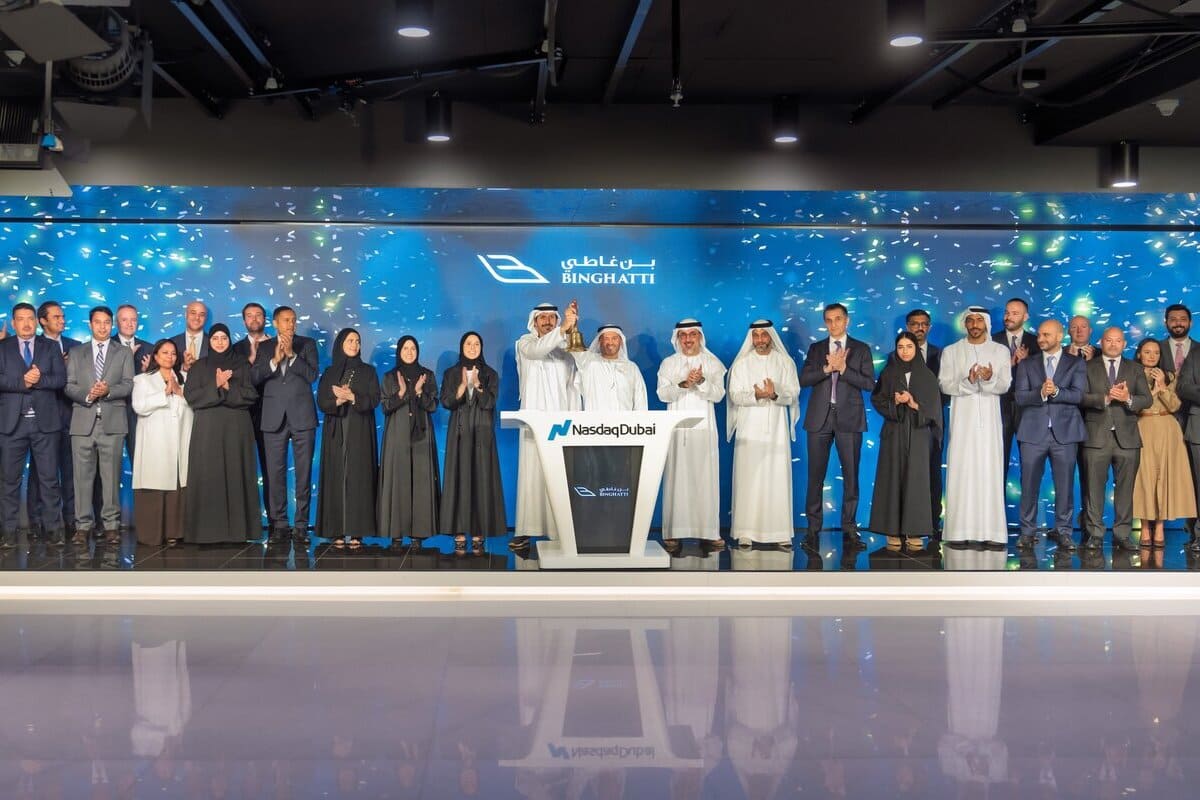
Binghatti Holding Limited has appointed a slate of banks to lead its first USD Reg S senior unsecured three-year green sukuk under its $1.5 billion Trust Certificate Issuance Programme. The developer, rated Ba3 by Moody’s and BB- by Fitch with both outlooks stable, has kick-started global investor calls and fixed income meetings. The mandate names Abu Dhabi Islamic Bank, Dubai Islamic Bank, Emirates NBD Capital, JP Morgan and Mashreq as Joint Global Coordinators; Abu Dhabi Commercial Bank, Ajman Bank, Arqaam Capital, Crédit Agricole CIB, First Abu Dhabi Bank, RAKBANK, Sharjah Islamic Bank and Warba Bank will act as Joint Lead Managers and Joint Bookrunners.

The green structuring is overseen solely by Mashreq, with DNV, based in Oslo, providing the Second Party Opinion on Binghatti’s Green Financing Framework. The issuance will make use of Binghatti Sukuk 2 SPC Limited under its wider Trust Certificate Issuance Programme.

Binghatti’s credit profile strengthened earlier this year when Moody’s assigned it its first ever corporate family rating of Ba3 with a stable outlook, citing its strong market position in Dubai’s luxury real estate sector, a vertically integrated model, low leverage, strong liquidity and disciplined cost controls. Shortly after, Fitch upgraded its long-term issuer default rating to BB- from B+, also citing its resilient growth, liquidity position and ability to self-fund projects through internal cash flows.

The developer’s previous sukuk issued under the same Programme—a five-year senior unsecured benchmark in August—was priced at a profit rate of 8.125%. That issuance attracted over USD 2.5 billion of orders, making it oversubscribed about five times and confirming significant demand from global and regional investors. That sukuk was dual listed on the London Stock Exchange and Nasdaq Dubai.

National Industries Park, the DP World-run industrial zone in Dubai, has secured over AED 1 billion in new project investments between January and September 2025, underpinned by a major push into greenfield manufacturing. It has leased more than 7 million square feet of land during that period, with much of the allocation going to fresh build-outs rather than expansions of existing facilities. The tenant roster has grown […]

Record trade worth AED 336 billion from the Dubai Integrated Economic Zones Authority across its three free zones marked a 19% increase over 2023, with the zone authority accounting for 13.7% of Dubai’s non-oil foreign trade—the highest share recorded.

Dubai Airport Free Zone, Dubai Silicon Oasis and Dubai CommerCity together processed trade volumes of 444,300 tonnes, representing a rise of over 28% compared with 346,700 tonnes the year prior. Sector-wise, machinery, electrical and electronics led the growth, making up about 72% of total trade and increasing by approximately 17%. Precious stones, metals, jewellery and ornaments grew by 33% and contributed about 22%. Combined, both sectors accounted for nearly 94% of total trade activity.

Sheikh Hamdan bin Mohammed bin Rashid Al Maktoum, Crown Prince of Dubai and Chairman of the Executive Council, stated that these outcomes reflect Dubai’s ambition under the Economic Agenda D33, enhancing its role as a global hub through innovation and competitiveness. Sheikh Ahmed bin Saeed Al Maktoum, Chairman of DIEZ, affirmed this was the fourth year of sustained growth, noting increasing investor confidence and strengthened global trade partnerships.

Volume growth and value growth were supported by improved infrastructure and “integrated services” across the three zones, which reduced friction in supply chains. DIEZ’s performance coincided with Dubai as a whole achieving record highs in non-oil foreign trade.

While machinery, electronics and precious materials drove most of the expansion, other sectors are underrepresented, indicating a dependency on high-value goods. The focus now may turn to diversification to prevent vulnerabilities to sector-specific global headwinds. Economists suggest sustaining infrastructure investment and expanding trade ties beyond traditional markets will be critical for maintaining momentum.

Dubai’s telecommunications provider du has begun rolling out its upgraded 5G+ network, aiming to double existing 5G speeds and unlock new technology-driven opportunities for both urban infrastructure and entrepreneurship. The rollout is concentrated initially in central zones of Dubai, Abu Dhabi and other major emirates, with plans to extend coverage more widely by the end of 2025.

Karim Benkirane, chief commercial officer at du, said 5G+ will enable the UAE to advance its smart city and sustainability agendas, while creating an ecosystem where start-ups can “really innovate in the future”. He added that the network will offer faster download speeds, lower latency, and more seamless connectivity—features vital for AI-powered applications, ultra-HD streaming, gaming and real-time virtual or augmented reality experiences.

The infrastructure uses 5G‐Advanced architecture, operating independently of existing LTE networks, and requires compatible devices and SIMs or eSIMs to access the enhanced service. du has said that users leveraging the 5G+ network in busy or downtown areas can expect significantly improved performance.

Enterprise uses are being emphasised as well. du believes that the upgraded network will support government initiatives and private sector innovation, particularly in fields that depend heavily on low latency and reliable data throughput—such as smart traffic systems, IoT deployments, creator-led content, and AI for public services.

Smart city ambitions are aided by 5G+’s ability to maintain connectivity even in crowded zones and to deliver consistent performance as demand grows. The network’s enhancements are intended to sustain video calls, streaming and online collaboration, even in high-traffic environments. du has framed 5G+ as a cornerstone for future digital infrastructure across the UAE.

Dubai Opera has unveiled its 2025–26 season, featuring over 50 international productions and more than 150 performances spanning opera, ballet, musicals, concerts, Arabic music, theatre and comedy. The programme brings together in excess of 1,000 artists from around the world, reinforcing Dubai’s ambition to position itself as a leading global cultural centre. The season opens in September with a remarkable trilogy: Puccini’s La Bohème, Beethoven’s Fifth Symphony […]

Alec Holdings is set to list about 20% of its shares in an initial public offering on the Dubai Financial Market, while Binghatti Holding is preparing for a possible IPO, as both seek to harness surging demand in Dubai’s real estate sector. These moves reflect growing confidence among developers and investors in a rapidly expanding market. Alec, wholly owned by the Investment Corporation of Dubai, will offer […]

Dubai Investments has unveiled plans to sell up to 25 per cent of its real-estate arm, Dubai Investments Park, through an initial public offering that may value the unit at $2.5 billion. The company is in discussions with banks, while key details — including exact timing — are yet to be finalised. The mixed-use development across 2,300 hectares comprises industrial, commercial and residential zones, housing over 160,000 […]

Dubai Future Foundation has sealed a Memorandum of Understanding with XSOLLA, a global video-game commerce company, under the framework of the Dubai Program for Gaming 2033. The agreement seeks to reinforce Dubai’s position as a gaming innovation hub, drive thought-leadership in the sector, and deliver economic impact with goals of 30,000 new jobs and an additional US$1 billion in GDP by 2033.

DPG33, launched in November 2023 under the patronage of His Highness Sheikh Hamdan bin Mohammed bin Rashid Al Maktoum, Crown Prince of Dubai and Chairman of the Board of Trustees of DFF, aims to place Dubai among the world’s top ten gaming hubs over the next decade. The XSOLLA deal was inked during Dubai’s participation in Gamescom 2025 in Germany, where the DFF-led pavilion showcased local developers and gaming initiatives.

Under the MoU, the partners will co-operate on generating thought leadership initiatives and spotlight key activities in content, monetisation, infrastructure, and talent development. DFF also will use its platform to attract investment and cultivate a supportive ecosystem for game developers.

Local game studios have already been gaining traction. Dubai-headquartered iBLOXX secured US$5 million in funding to further develop its online game Strayshot, and Artisan Studios’ Lost Hellden drew over 15,000 wishlist additions on Steam plus more than 300,000 views of its promotional video across platforms such as IGN, PlayStation and Nintendo of America during the Gamescom showing. These examples illustrate growing visibility for indie development as well as commercial promise in Dubai’s gaming sector.

Abdulaziz AlJaziri, Deputy CEO of DFF, said that the level of local and international interest in Dubai’s gaming sector reveals “a real appetite to explore and partner with one of the industry’s most promising markets.” He emphasised Dubai’s advantages in infrastructure, investment, and competitive advantages under DPG33.

The economic projections tied to these initiatives rely heavily on success in three arenas: scaling game creation and publishing, enhancing monetisation capabilities, and developing skilled talent. The MoU with XSOLLA is expected to assist especially in the monetisation and scaling end, leveraging XSOLLA’s global commerce tools and developer support services. Analysts note that aligning global platforms like XSOLLA with local innovation programmes is a strategy used in other leading gaming hubs, helping to bridge gaps in market access, revenue optimisation, and international distribution.

Regulatory and infrastructure support remain under scrutiny, as talent attraction—both local and international—depends not only on capital and tools, but also on clarity in regulation, availability of education and training, creative incentives, and digital and physical infrastructure. Dubai’s gaming strategy, via DPG33, aims to address many of these pain-points through government partnership, industry collaboration, and ecosystem development.

VISHNU RAJA
RYO YAMADA
HITORI GOTOH
IKUYO KITA