News related to
Dubai’s

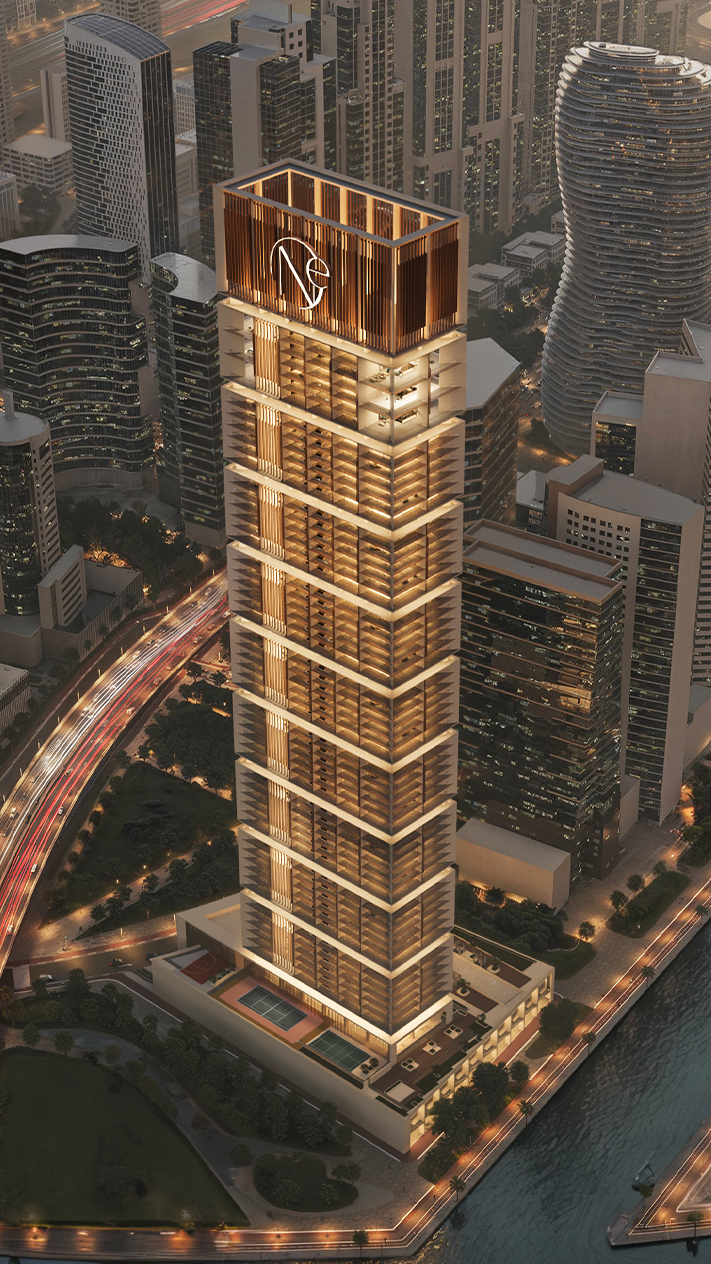
Damac Chelsea Residences is more than just a real estate project — it’s a long-term investment in lifestyle, brand equity, and high-growth potential. Situated in the prime seafront district of Dubai Maritime City, this development by DAMAC Properties brings the prestige of Chelsea Football Club to Dubai’s property scene. As branded residences become one of the most in-demand asset classes worldwide, investors are turning their eyes toward Chelsea Residences by […]

voco Dubai The Palm has unveiled an expanded private beachfront, enhancing its leisure offering on Palm West Beach with additional space, panoramic sea views, and a curated beach day experience tailored for non-resident guests. The development adds a premium draw to Dubai’s hospitality sector, capitalising on the city’s demand for upscale coastal experiences without the need for an overnight stay. Located along the West Beach stretch of […]

Dubai-listed Deyaar Development has announced ambitions to achieve sales of nearly AED 2 billion from its Downtown Residences project in Business Bay, CEO Saeed Mohammed Al Qatami confirmed to CNBC Arabia. The mammoth twin‑tower, rising over 110 storeys and reaching 445 metres in height, is slated to commence construction in the fourth quarter of 2025. Completion is targeted for the end of 2030, with the project offering 522 residences, including one‑ to […]

A minor yet persistent air leak inside the Zvezda service module of the International Space Station has led NASA to indefinitely postpone Axiom Mission 4, highlighting widening concerns over the station’s ageing infrastructure and safety. Though currently stable, pressure readings in the affected segment continue to require close monitoring by NASA and Roscosmos, reinforcing questions over the ISS’s longevity and future viability. The anomaly was detected in […]

Greenlogue/AP Aptly named California Residences, the latest green‑living enclave by Infracorp has launched sales in Dubailand, with one‑ to three‑bedroom apartments starting at AED 1 million. Positioned within the broader California Village master‑plan, the AED 600 million project embraces minimalist design, expansive landscaping and wellness‑focused amenities, marking a notable entry in Dubai’s sustainable real estate sphere. The California Village community spans 112,127 sqm and comprises the California Residences apartments alongside villas and […]

If you’re considering investing in or moving to Takaya at Motor City by Union Properties, one of the smartest first steps is reviewing the official brochure. This comprehensive document gives prospective buyers a detailed overview of the project’s master plan, unit layouts, key features, and lifestyle offerings. Whether you’re interested in Takaya apartments, Takaya villas, or Takaya townhouses, the brochure provides essential information that helps you make informed decisions — from […]

Bitcoin.com has established its first Middle East and North Africa regional headquarters at Dubai’s DMCC Crypto Centre, signalling a strategic expansion in the emirate’s blockchain ecosystem. The move secures its place among over 650 companies specialising in blockchain infrastructure, decentralised finance, tokenisation and metaverse development within the DMCC’s Crypto Centre in Uptown Tower. Dubai’s position as a global cryptocurrency hub is underscored by the establishment of the […]

Advertisements

Palazzo Versace Dubai has been listed for online auction beginning at AED 600 million, a steep reduction from its former valuation exceeding AED 1.3 billion–1.4 billion. The move follows growing financial pressure on its owner, Emirates PVD and unnamed lenders, who now appear prioritising debt reduction over maximising sale price. Built in 2015 on Dubai Creek’s Culture Village waterfront, the hotel occupies a 130,000 m² site and combines 215 rooms and suites, 169 private […]

Dubai’s iconic Palazzo Versace Hotel is being offered at auction with an opening bid of approximately $163 million, a sharp reduction from its last estimated value above $380 million, signalling a major shift in the fortunes of the luxury hospitality landmark. A Swiss‑Italian financier, Christopher Aleo, is among a select group of potential buyers believed to be evaluating the purchase as online bidding gets underway. Union Properties, the Dubai‑based developer […]

Binghatti Holding Ltd has launched Binghatti Capital in the Dubai International Financial Centre, aiming to manage approximately $1 billion in Shariah-compliant private credit and real‑estate investments. Licensed by the Dubai Financial Services Authority to deal exclusively with professional clients, the firm marks Binghatti’s strategic pivot from pure property development to full-spectrum asset management.

The new entity will implement dual strategies: acquiring and selling off‑plan residential assets and developing residential projects; and providing private‑credit finance targeted at construction, property management firms and suppliers in the Dubai real‑estate supply chain. Beyond private funds, clients can access bespoke discretionary and non‑discretionary portfolio mandates tailored to their investment goals.

Executive Director Katralnada Binghatti described the move as “a strategic initiative to deepen Binghatti Holding’s investment footprint and enhance access to alternative capital,” underlining ambitions to drive high‑value, income‑generating growth and bolster Dubai’s appeal as a global investment destination. CEO Shehzad Janab added that the firm’s “inaugural suite of unique strategies represents a disciplined, well‑structured approach” designed for strong governance and long‑term resilience.

DIFC Authority’s Chief Business Development Officer, Salmaan Jaffery, welcomed the launch, noting that the centre, home to more than 46,000 financial professionals and over 400 wealth and asset managers, remains the region’s top asset-management hub. He said Binghatti’s addition would further reinforce DIFC’s financial ecosystem.

The launch reflects broader market trends in the Gulf, where firms like Amwal Capital Partners are expanding into private‑credit—a form of non‑bank lending offering direct finance to mid‑tier real‑estate developers and other asset‑backed borrowers. Dubai’s policy environment, characterised by robust infrastructure investment and tax incentives, has boosted demand for these private‑credit solutions.

Industry observers note the move signals a maturing of Dubai’s real‑estate landscape, with residential unit completions projected to exceed 243,000 by 2027, presenting ample opportunity for asset managers specialising in this market—particularly with Shariah‑compliant structures gaining traction among global and Gulf investors.

Binghatti’s pedigree in luxury development, seen in flagship schemes such as Binghatti Ghost in Al Jaddaf, complements its newfound investment ambitions. The firm’s announcement of more than 12 projects valued at $2.7 billion reinforces its market clout and provides a foundation for its asset‑management division.

By branching into private credit and real‑estate fund management, Binghatti aligns with Dubai’s economic diversification goals, channelling institutional capital into strategic sectors and reinforcing the emirate’s role as a conduit between East, West, and the Islamic finance community.

As the firm rolls out its Shariah‑compliant investment vehicles, its governance frameworks and active management approach will be key to winning trust among discerning professional clients. It will also test how effectively Binghatti can manage investor interests alongside its parent’s development pipeline.

Greenlogue/AP Dubai will host the 11th World Green Economy Summit on 1 and 2 October 2025 at the Dubai World Trade Centre, underlining its ambition to accelerate global climate action and sustainable innovation. This flagship event, convened by the Dubai Supreme Council of Energy, Dubai Electricity and Water Authority and the World Green Economy Organisation, will gather industry leaders, policymakers and technical experts around the theme ‘Innovating […]

Markets across the Gulf and beyond plunged on Friday following a sharp military escalation after Israel struck Iranian nuclear and military sites, triggering drone counter‑attacks by Iran and a broader risk‑off reaction among investors.

Dubai’s benchmark index tumbled 5.1%, its steepest single‑day loss since May 2022, while Abu Dhabi’s dropped 3.5% before paring losses. The rout extended into Israel, where the shekel slid as much as 3.5% against the dollar, with long‑dated Israeli bonds and select regional government debt also weakening.

Commodity markets mirrored investor anxiety. Brent crude surged over 6%, touching its highest level in nearly five months, as traders assessed the risk of supply disruptions through the Strait of Hormuz. Gold likewise rallied, reaching two‑month highs as capital flowed into safe‑haven assets.

Airline stocks were among the hardest hit. Air Arabia shares plunged more than 4%—some reports suggest nearly 8%—as carriers rerouted flights away from airspace over Iran, Israel, Iraq and Jordan. Regional exchanges in Riyadh and Doha were closed on Friday, with trading set to resume on Sunday amid anticipation of continued volatility.

The market shockwaves reverberated worldwide. Europe, Asia and US indices all registered dips: the S&P 500 dropped roughly 0.4% mid‑day, the Dow slipped nearly 1.8% and the Nasdaq around 1.3%, while Tokyo’s Nikkei and Hong Kong’s Hang Seng also declined.

Analysts warned that while markets historically absorb such shocks fairly quickly, the sustained threat of conflict brings inflation and growth risks. Chris Scicluna of Daiwa Capital Markets noted the initial oil spike “hasn’t been too extreme” but cautioned that a sustained rise toward US $80 oil would be problematic for central banks. Meanwhile, Tariq Kakish of FH Capital pointed out that geopolitical instability remains “the key factor affecting investors’ sentiments”.

Concerns centred on the Strait of Hormuz, which channels approximately one‑third of global seaborne oil, raising the potential for disruption. Demand for insurance on tankers in the Gulf surged, and traders remain on edge over possible Iranian retaliation targeting shipping or oil infrastructure. However, OPEC+ sources suggest that Saudi Arabia and others retain sufficient spare capacity and are monitoring the situation closely.

Financial markets also showed classic risk‑off behaviour: US Treasury bonds rallied even as yields ticked higher, reflecting investor concerns about energised inflation, as per Axios commentary. The dollar strengthened, while gold and the Swiss franc benefited from increased flight‑to‑safety demand.

In Asia, the ASX 200 slipped modestly, offsetting losses in financials and consumer sectors with gains in energy and mining stocks. In Mumbai, Reliance Industries’ shares fell nearly 1.8% as Brent crude surged past $75 per barrel amidst the tensions.

Political and economic analysts emphasise two themes: the possibility of an enduring inflation shock from energy price escalation, and the risk of prolonged conflict dragging in wider regional powers. While some argue Gulf states may help mitigate supply-side shocks via increased production, others highlight that even modest increases in oil prices could influence global inflation and central bank policy.

Despite the turbulence, multiple analysts noted past flare‑ups between Israel and Iran tended to cool within weeks, with markets rebounding once diplomatic pathways re‑opened. Yet this episode differs: it involves overt attacks deep into Iranian territory, targeting nuclear and ballistic infrastructure, and marking a new phase in the conflict. The outcome may recalibrate norms for military engagement in the region—and investor expectations alongside them.

Dubai’s Roads & Transport Authority has confirmed the Blue Line of the Metro will begin operations on 9 September 2029, coinciding deliberately with the 20th anniversary of the Red Line’s inauguration on 9 September 2009, signalling a significant milestone in the city’s transport evolution. The 30 km line will feature 14 stations, linking residential and commercial hubs such as Al Jaddaf, Dubai Silicon Oasis, and Dubai Academic City, and is projected to […]

Dubai has unveiled a landmark recruitment drive, inviting skilled expatriates to fill key roles across public-sector departments with monthly salaries reaching AED 40,000. The official Dubai Careers Portal currently lists ten positions spanning healthcare, education, IT, infrastructure, social welfare and urban planning, signalling a strategic move to diversify talent in government ranks. Audit Manager roles in energy and industry auditing, Air Traffic Controller posts at Dubai International Airport, […]

Emaar Properties today unveiled VYOM, its global digital platform for reselling homes, offering users a streamlined, secure and transparent alternative to conventional resale methods. The platform enables homeowners and investors to list properties, upload images and directly manage buyer inquiries through a single online portal, granting full autonomy over the resale process. Emaar’s founder, Mohamed Ali Alabbar, described VYOM as more than a tool—it represents a shift in resale […]

UAE’s economy is set to expand by 4.6% in 2025, bolstered by a strong non‑oil core and a gradual return in oil output, according to projections from the World Bank’s June “Global Economic Prospects” edition. This represents a 0.6‑point upward revision from January. The outlook for 2026 has also been upgraded to 4.9%, with growth anticipated to hold at that level in 2027. At the heart of […]

Sharjah Islamic Bank and Warba Bank have spearheaded a flurry of USD‑denominated Additional Tier 1 sukuk issuances across the Gulf Cooperation Council, as institutions capitalise on narrower spreads, robust investor demand and abundant liquidity to bolster capital under Basel III norms. Sharjah Islamic priced a US$500 million perpetual issuance with a six‑year non‑call period at 6.125%, tightening from initial guidance of 6.5%, after books exceeded US$1 billion. Simultaneously, Kuwait’s Warba Bank […]

Dubai Land Department’s second tokenised property offering was fully subscribed in just one minute and 58 seconds, marking the fastest-ever blockchain-backed real estate transaction globally. The project, made available through the PRYPCO Mint platform, attracted 149 investors across 35 nationalities, while more than 10,700 others joined a waitlist to participate. The speed of uptake underscores growing trust in digital property ownership within the emirate’s broader Property Tokenization Initiative.

The feature property—a one‑bedroom apartment in Kensington Waters on Mohammed Bin Rashid City—was valued at AED 1.5 million, discounted from an estimated AED 1.875 million. Fractional ownership began at AED 2,000, enabling micro‑investing in prime Dubai real estate. This landmark offering followed an inaugural tokenisation in May 2025, which sold out within 24 hours, suggesting escalating global appetite for fractional property investments.

PRYPCO Mint is jointly operated by the Dubai Land Department and PRYPCO, under a regulatory framework accredited by the Virtual Asset Regulatory Authority, the UAE Central Bank, and Dubai Future Foundation within the Real Estate Sandbox initiative. The blockchain infrastructure is built by Ctrl Alt on the XRP Ledger and supported by Zand Digital Bank, ensuring tokens align with official title deeds.

Market data indicates robust momentum behind this pivot to tokenisation. In May, Dubai recorded total real estate sales of AED 66.8 billion, a 44 per cent increase year-on-year. The surge was driven by a 314 per cent rise in primary sales, with experts citing tokenisation as a catalyst for further growth. Scott Thiel, CEO of Tokinvest, observed that “tokenisation will not just accompany the next record, we believe, it will help drive it,” signalling strong confidence in the emerging asset class.

Dubai’s roadmap for tokenised real estate charts transformative ambitions. The DLD estimates that by 2033 tokenised assets could account for 7 per cent of the city’s total real estate market—equivalent to roughly US$16 billion. The first offering had drawn 224 investors from over 40 countries, with certificates of ownership now logged on the blockchain to ensure legal validity.

Industry insiders have noted the implications across the investment ecosystem. Zaher El Orm, a blockchain advocate in Dubai, commented that the asset “sold out in less than two minutes … with an average investment of around AED 10,000, a clear demonstration of the market’s appetite for on‑chain, fractional property investment,” adding that title certifications were issued within hours.

Earlier in the year, DAMAC Group—one of the UAE’s major developers—agreed to tokenize its assets worth US$1 billion via the MANTRA platform, reinforcing Dubai’s ambition to become a global digital assets hub. This aligns with regulatory updates from VARA in May extending tokenisation frameworks to real-world assets, bolstering transparency and operational efficiency.

Dubai Land Department and PRYPCO are now preparing to expand PRYPCO Mint’s offerings, encouraging investors to register early. Future phases aim to include international participants and onboard additional developers, scaling the initiative beyond its pilot phase.

Tokenisation is reshaping Dubai’s real estate landscape. By lowering barriers to entry, increasing liquidity, and embedding ownership in blockchain-secured records, Dubai is forging a path toward a digitally enabled property market that caters to both local and global investors. As the platform extends its reach, tokenised offerings may soon become a mainstream vehicle for property investment.

Dubai International Airport has introduced sharply reduced long‑stay parking rates across all terminals, aiming to ease travel costs and reduce traffic congestion as passenger volumes surge. From 10 to 30 June, motorists can park for three days at AED 100, a week at AED 200, or up to 14 days at AED 300—a significant reduction from regular tariffs. The move addresses growing demand at DXB, where the airport expects to […]

Mashreq Bank has secured a US$500 million Sukuk issuance through its special-purpose vehicle, Mashreq Al Islami Sukuk Company Ltd, with a secondary listing on Nasdaq Dubai. The trust certificates, set to mature in 2030, were unveiled under the bank’s US$2.5 billion Trust Certificate Issuance Programme. The issuance drew overwhelming appetite in the primary market, with subscriptions reaching nearly US$2.9 billion—almost six times the issued amount—before being admitted for trading on Nasdaq Dubai. […]

Deyaar Development PJSC has officially launched Downtown Residences, a twin-tower residential project rising to a striking 445 metres in Dubai’s golden triangle where Sheikh Zayed Road meets Downtown Dubai and Business Bay. The development will house 522 units across one- to three-bedroom apartments, duplexes, penthouses and an exclusive Royal Palace perched at the summit, marking a new milestone in vertical luxury living.

Dubai is amid a surge of super‑tall skyscraper projects. Alongside Deyaar’s venture, Burj Azizi is planned to reach approximately 725 metres, while Burj Binghatti Jacob & Co is projected at around 557 metres. Downtown Residences, with more than 110 floors, will rank among the tallest residential towers in the emirate and is set for delivery in the fourth quarter of 2030.

Deyaar’s chief executive, Saeed Mohammed Al Qatami, described the project as a transformation of urban living, combining comfort, style and advanced amenities. He emphasised its potential to attract both residents and investors while enhancing the Dubai skyline. The company signals that the project is part of its strategy, expanding its 2025 pipeline beyond an earlier target of AED 8 billion through new launches.

Drawing inspiration from Maslow’s Hierarchy of Needs, the design concept organises the residential experience into five vertical zones, each catering to a different level of wellbeing and lifestyle aspiration. The lower zone—Dynamic Avenue—will include family areas such as children’s creative spaces, playrooms, and communal lounges, fostering social connection. The Sensory Oasis, positioned midway, will offer floating gardens, air yoga zones, AI-powered meditation pods and an “invisible spa” combined with fitness amenities.

At roughly 100 floors high, Summit Society will provide private dining venues, exclusive lounges, and a screening room. The Residents’ Club will include AI-enhanced workspaces, executive pods and networking hubs, while the Sky Pinnacle 360 zone culminating in the Sky Mansion and Royal Palace will represent the architectural pinnacle.

Architecture highlights include a dramatic central slit, vertical gardens woven through the structure, and podium-level urban oases. Outdoor terraces and community spaces such as The Collective and Serenity Haven aim to blend urban energy with serenity. Panoramic views of the Burj Khalifa, Arabian Gulf and Sheikh Zayed Road will feature prominently, underscoring the building’s centrality and visual impact. The site is also adjacent to the Business Bay metro station, emphasising convenience and connectivity.

In context, Downtown Residences forms part of a robust real estate market supported by government initiatives such as long‑term residency schemes and golden visa programmes, along with strong investor interest. Last year, Dubai recorded AED 761 billion in real estate deals, a 20 percent year-over-year increase, while unit prices rose nearly 19 percent. However, recent analysis from Fitch warns of a potential 15 percent price correction in the face of increasing supply as new units deliver in 2025 and 2026.

Within the current landscape, several super‑tall residential towers are either in planning or under construction. For instance, the 557‑metre Burj Binghatti Jacob & Co is expected to top out in 2027. Meanwhile, the 725‑metre Burj Azizi and a host of other vertical developments are progressing. Downtown Residences will complement these, contributing to a vertical growth strategy that increasingly defines Dubai’s urban identity.

Deyaar, with a 23‑year history in the UAE real estate sector, has previously completed numerous projects across Business Bay and downtown districts. The developer anticipates concluding the current series of launches with AED 4 billion in sales for 2025.

Compared with the tallest completed residential towers in Dubai, such as Marina 101 and Princess Tower, Downtown Residences will exceed these heights, adding further prestige to the skyline. In the under‑construction category, towers like Bayz 101 and Six Senses are among peers.

Dubbed a “vertical residential community”, Downtown Residences aims to offer more than luxury living; it’s intended as a lifestyle destination combining wellness, exclusivity and high‑end design. By aligning with evolving buyer preferences—especially among high‑net‑worth and remote‑worker demographics—the development emphasises contextually relevant amenities, location and architectural prominence.

As Dubai positions itself at the forefront of global luxury real estate, Deyaar’s Downtown Residences emerges as a test case in balancing scale, innovation and market demand. With units reportedly starting from AED 1.8 million, early indicators suggest strong investor interest in the lower‑priced tiers. Simultaneously, the Royal Palace and sky‑level offerings reflect ambitions to cater to ultra‑luxury buyers.

Deyaar’s vision, articulated by both Al Qatami and Patrick Bernard Rouse, frames Downtown Residences as more than just a building—it is a calibrated response to hierarchical human needs and emerging market dynamics. By integrating connectivity, wellbeing, community and status across vertical zones, the concept attempts to redefine high‑rise living.

ENOC Group and DP World have formalised a significant Memorandum of Understanding today in Dubai to enhance emergency response capabilities across the emirate’s energy and logistics infrastructure. The agreement mandates an annual coordinated drill and shared updates to crisis protocols, underlining a commitment to reducing response times and bolstering resilience.

The pact was signed at ENOC’s headquarters by Saif Humaid Al Falasi, Group CEO of ENOC, and Abdulla Bin Damithan, CEO and Managing Director of DP World GCC. Al Falasi commented that the MoU “marks a significant stride forward in solidifying our commitment to the highest safety standards and emergency preparedness”, while Bin Damithan emphasised that safety “underpins everything we do at DP World”.

Under the MoU, ENOC and DP World will conduct a yearly joint exercise involving both companies’ emergency teams. This drill aims to sharpen training, preparedness and coordination. Additionally, both firms will regularly revise emergency response plans and align on external engagement protocols for rapid and unified action.

The agreement builds on ENOC’s ongoing investment in emergency readiness. In 2022, the company launched an Emergency Response Centre in Jebel Ali in collaboration with Dubai Civil Defence. Its personnel have also undergone advanced HAZMAT and fire-risk assessment training at the International Fire Training Centre in the UK—equipping first responders to handle complex rescue operations in high-risk settings.

Industry observers note that this partnership addresses key vulnerabilities in energy and logistics sectors—areas crucial to Dubai’s economic stability. By synchronising emergency plans and conducting joint drills, both entities aim to strengthen institutional preparedness and minimise disruption.

From a strategic standpoint, DP World’s endorsement of this MoU underscores its broader resilience agenda. The global ports and logistics firm has in the past engaged in humanitarian logistics initiatives, such as disaster-relief coordination via its Logistics Emergency Team in crises like Ukraine and Haiti. Aligning with ENOC’s fire and hazmat capabilities provides the potential for a more comprehensive emergency response ecosystem.

Public safety experts say coordinated exercises are vital for effective crisis management, as they test systems, highlight operational shortcomings, and reinforce communication between organisations—especially in high-stakes environments like oil terminals and container ports.

Dubai continues to elevate its emergency preparedness. Government entities regularly collaborate with corporate partners to mount drills and capacity building, aiming to keep pace with the complexities of rapid urban growth and sectoral interdependence.

With this MoU, ENOC and DP World are not merely aiming to improve reactive measures; they are fostering a forward-looking culture of continuous preparedness. Regular joint drills, shared emergency planning and cross-company collaboration set a benchmark for crisis readiness across the UAE’s critical infrastructure sectors.

Business registration has officially opened for retail and food outlets wishing to participate in Season 30 of Global Village, with organisers announcing that entrepreneurs can now apply for stalls across a wide range of high-traffic zones, including the vibrant Road of Asia and the buzzing Global Bazaar. Global Village, one of Dubai’s most prominent cultural and commercial attractions, is preparing for its 30th season by calling on […]

Dubai’s Crown Prince Sheikh Mohammed bin Rashid Al Maktoum has marked the commencement of work on the long-planned Dubai Metro Blue Line, laying the foundation stone for its first station—an architectural masterpiece poised to become the world’s highest metro stop at 74 metres. The AED 56 billion project will see construction of a 30 km rail corridor featuring 14 stations and 15.5 km of tunnels. When completed in 2029, it will extend Dubai’s transit network to 131 km with 78 stations, serviced by 168 trains.

Laying out the design, Sheikh Mohammed described the station—named ‘Emaar Properties’—as an “architectural icon” that aligns with Dubai’s cultural landmarks. Designed by Skidmore, Owings & Merrill, the station spans approximately 11,000 m² and is expected to handle 160,000 passengers daily, rising to 70,000 by 2040. Built to bridge Dubai Creek via a 1.3 km viaduct, the alignment also encompasses advanced sustainable features and full Platinum-level green building certification.

The Blue Line will connect nine key districts, from Bur Dubai/Deira through Dubai Silicon Oasis to Academic City, also establishing interchanges with the existing Red and Green lines at Al Rashidiya and Al Jaddaf respectively. Travel time is expected to be between 10 and 25 minutes, with a projected ridership of 200,000 by 2030 and up to 320,000 by 2040.

Oversight for the project was awarded five months ago to a consortium led by Turkey’s MAPA and Limak, with China’s CRRC delivering rail systems. The contract, valued at AED 20.5 billion, follows an international tender detailed by the Roads and Transport Authority. Construction began in April under RTA supervision and is slated to complete by September 2029, coinciding with the Metro’s 20th anniversary.

The Blue Line is not only a transport project but also a key driver of Dubai’s broader economic and urban strategy, under the Dubai 2040 Urban Master Plan. Analysts predict it could deliver AED 2.60 in economic, social, and environmental benefits for every dirham invested by 2040, with potential reduction of road congestion by 20% and a 25% uplift in land values near stations.

At a ceremony held on June 9 2025, Sheikh Mohammed was accompanied by Mattar Al Tayer, RTA Director‑General, and representatives from the MAPA-Limak-CRRC group, as he laid the foundation stone for the Emaar Properties Station in Dubai Creek Harbour. The station’s design reflects a fusion of traditional stone, bronze, and glass to evoke a modern heritage, with natural lighting enhancing passenger experience.

Beyond the landmark station, the Blue Line includes Dubai’s largest underground interchange station at International City 1, covering 44,000 m² and capable of processing 350,000 passengers per day. The elevated–subterranean route is engineered for flexibility: a Y‑junction system allows trains to run directly from Academic City to either Creek or Centrepoint without passenger transfers.

An important feature of the new line is the metro’s first-ever bridge spanning Dubai Creek—a 1.3 km link set to provide scenic and efficient connectivity between the city’s burgeoning north‑east and the urban core.

Emaar Properties has secured naming rights for the iconic station under a ten-year agreement beginning at its 2029 inauguration. Similar agreements for other stations are expected to follow.

Since opening in 2009, the Dubai Metro has carried over 2.5 billion passengers, averaging 900,000 day-to-day users. With the Blue Line operational, that figure is projected to only grow—annual ridership is expected to surpass 300 million by 2026.

SOM’s involvement as design lead brings a legacy of landmark architecture—its portfolio includes global icons such as the Burj Khalifa, New York’s Olympic Tower, and Chicago’s Willis Tower. The firm’s concept of a “crossing gateway” symbolises Dubai’s ambition to blend aesthetics and connectivity in its infrastructural projects.

As Dubai develops rapidly under its 2040 plan, transport-oriented infrastructure such as the Blue Line serves multiple objectives: reducing road travel times, supporting high-density developments like Dubai Creek Harbour and Academic City, and promoting sustainable urban growth. Amenities across Blue Line stations will include bus bays, taxi ranks, bike and e-scooter zones, and full accessibility provisions tailored to ‘people of determination’.

The $5.6 billion deal for the Blue Line contract, confirmed by Reuters in December 2024, sets high expectations for the consortium’s delivery through to 2029. Monthly monitoring by the RTA forecasts a phased construction schedule that aligns with urban expansion milestones tied to Expo City Dubai and continuing population growth.

By 2040, the RTA projects that the Metro network will serve 320,000 riders per day on the Blue Line alone, integrated with over 80% of city services reachable within a 20-minute public transit ride—supporting the ‘20‑Minute City’ goal.

The Blue Line is expected to be a catalyst for new patterns of mobility, shaping development in under-served districts like Mirdif, Al Warqa, and Ras Al Khor, while reinforcing Dubai’s status as a testbed for smart and sustainable infrastructure. The combination of landmark design, intermodal connectivity, and environmental ambition positions the line as a model for future metro expansions globally.


VISHNU RAJA
RYO YAMADA
HITORI GOTOH
IKUYO KITA
Just in:
Public Protests Challenge Elected Power In Europe And India // European refrigeration hacks expose Gulf retail security risks // North Korean hackers channel Binance funds through fake tokens // Google patches actively exploited Chrome XML security flaw // Republicans Struggling To Come Out Of Nov 3 Debacle To Prepare For 2028 Prez Polls // Abu Dhabi court holds NMC executives liable for fraud // FAB takes full ownership of Bahrain fund administrator Yasira // Abu Dhabi unveils restored Porsche from royal motorcade // Sber announces results of GigaArt AI-art festival: Nearly half a million images // AutoSwift secures close to A$10 million from Singapore’s X Star Technology to scale AI WINGMAN // Trump’s Defeat In Midterm May Lead To Both Challenges And Opportunities For Indian Economy // NIA Highlights Three Exemplary Breakthroughs from National Innovation Awards, Driving Thailand Toward a Global ‘Innovation Nation’ // LNG tanker exits through Hormuz reach wartime peak // Lee Kum Kee Sauce-Sponsored 2026/27 Hong Kong Windsurfing Circuit – iQFOiL Championships Conclude Successfully // PhotonPay Strengthens North American Regulatory Footprint with Canada’s RPAA Registration // AI stock rout erodes sovereign and pension holdings // BJP leader condemns cyber attacks over Mammootty wedding visit // Jailbroken AI agent targets European telecom infrastructure // Deemed status for high-performing aided colleges // FinCEN identifies $8 billion in suspect overseas payments //