Just in:
Trump’s Defeat In Midterm May Lead To Both Challenges And Opportunities For Indian Economy // FAB takes full ownership of Bahrain fund administrator Yasira // Recognition under the U.S. Green Building Council’s rating system confirms the 22-residence tower is on track for full certification on completion // Public Protests Challenge Elected Power In Europe And India // Google patches actively exploited Chrome XML security flaw // Republicans Struggling To Come Out Of Nov 3 Debacle To Prepare For 2028 Prez Polls // Japan’s Nikkei advances as buyers return after sell-off // Lee Kum Kee Sauce-Sponsored 2026/27 Hong Kong Windsurfing Circuit – iQFOiL Championships Conclude Successfully // AutoSwift secures close to A$10 million from Singapore’s X Star Technology to scale AI WINGMAN // From Seoul to Wuzhen: Korean Celebrities and Creators Spark a Water Town Slow-Living Trend // Vasavan alleges one-man show by CM Satheesan // Jailbroken AI agent targets European telecom infrastructure // PhotonPay Strengthens North American Regulatory Footprint with Canada’s RPAA Registration // Sber announces results of GigaArt AI-art festival: Nearly half a million images // Trump directs Justice Department scrutiny of Democratic threats // AI stock rout erodes sovereign and pension holdings // BJP leader condemns cyber attacks over Mammootty wedding visit // European refrigeration hacks expose Gulf retail security risks // NIA Highlights Three Exemplary Breakthroughs from National Innovation Awards, Driving Thailand Toward a Global ‘Innovation Nation’ // Setback for Usha in Olympic body //

News related to
Dubai’s

Prepare for an evening where history comes to life. This December, the iconic Dubai Opera will become the epicenter of the musical universe as it hosts a once-in-a-lifetime convergence of talent. The legendary tenors José Carreras and Plácido Domingo will reunite for the “Stars of the Century” gala — a performance destined to be remembered for years to come. Scheduled for December 22, 2025, at 7:00 PM, this […]

Dubai’s leadership has endorsed a comprehensive architectural identity for the emirate’s road network, signalling a major shift in how transport infrastructure is designed and experienced. Sheikh Hamdan bin Mohammed bin Rashid Al Maktoum, in his capacity as Chairman of the Executive Council of Dubai, approved the framework that aligns with the city’s broader ambition to deliver integrated, sustainable and visually coherent urban environments. The initiative, overseen by […]

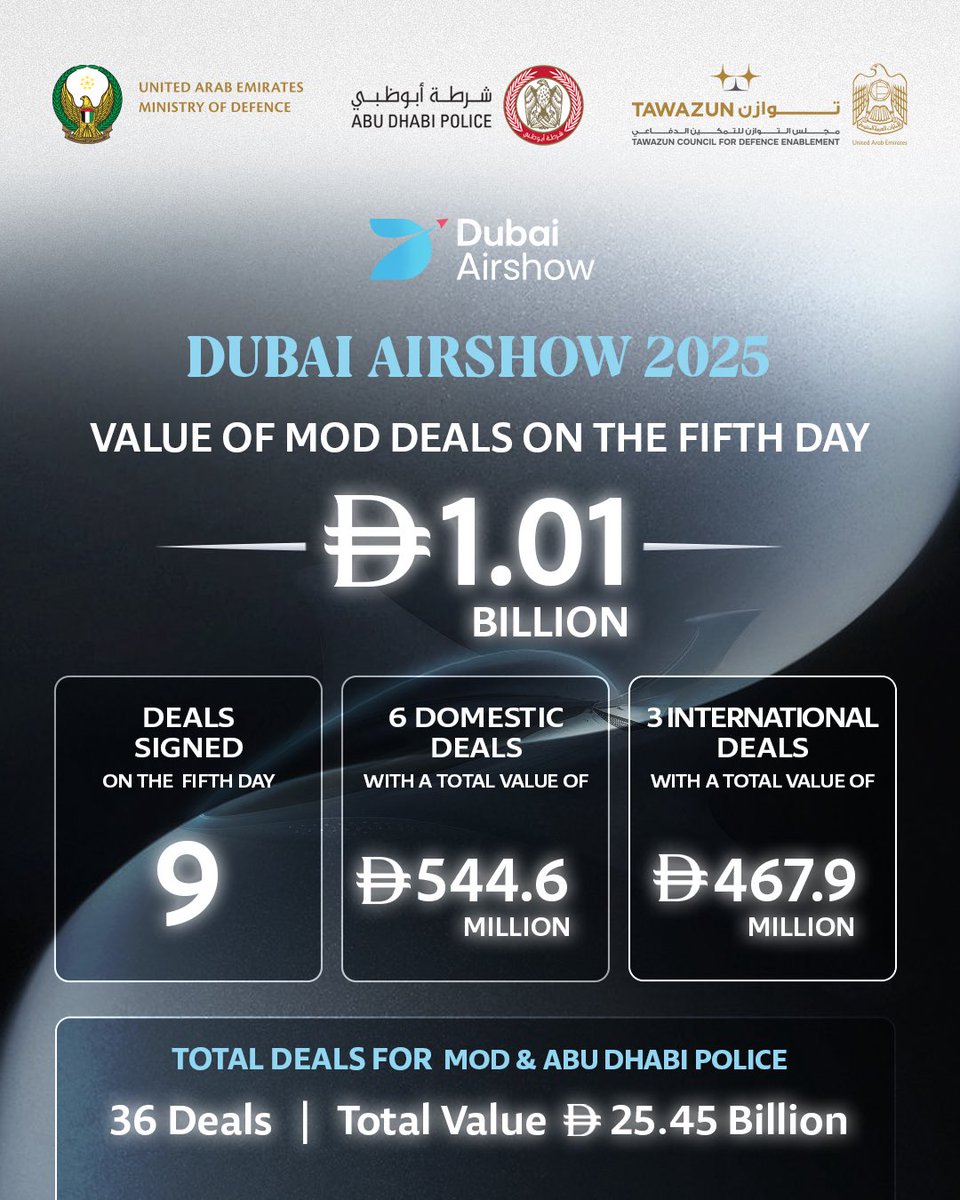
The Tawazun Council for Defence Enablement recorded nine new contracts worth AED 1.012 billion on behalf of the Ministry of Defence on the fifth and final day of the Dubai Airshow 2025, elevating the event’s five-day total to 36 agreements with a cumulative value of AED 25.455 billion.

At a press conference in Dubai attended by spokespersons Majed Ahmed Al Jaberi, Abdulla Ahmed Al Saeedi and Manea Abdulkarim Al Mansoori, the council detailed that six of the final-day contracts, sized at AED 544.675 million, were with local firms, while the balance, AED 467.913 million, involved international companies.

Among the domestic deals, two contracts with the Abu Dhabi-based M4 Trading comprised a AED 57.636 million order for a Grand Control Station and a AED 161.634 million deal for aircraft procurement. A AED 29 million contract went to Al Taif Technical Services Company for cooling-equipment and power-generator maintenance, while MP3 Company secured a AED 154.5 million agreement for aerial-rescue systems and spare parts. International Golden Group received AED 65.905 million for aerial drop systems and AED 76 million went to Abu Dhabi Autonomous Systems Investments for drone procurement.

On the global front, two agreements with Lockheed Martin amounted to AED 184 million and AED 63.551 million respectively for maintenance and spare-parts support. A third contract with Raytheon Technologies was valued at AED 220.362 million for friendly-force identification systems.

Across the event, earlier announcements show the council had already signed 20 contracts worth AED 18.01 billion during the first three days of the airshow. This underlines a consistent pace of deal-making spanning both national and international industrial partners.

The contract portfolio highlights the UAE’s emphasis on building a robust domestic defence-and-security-industrial ecosystem, spanning aircraft systems, drones, radars, simulation and service-support infrastructure. Analysts note this reflects a shift from traditional procurement towards localisation, technology transfer and national capability building.

Tawazun’s officials emphasised that the partnerships frame more than incremental orders; they represent structural steps toward embedding industry in sovereign defence strategy. Ms Mansoori observed that the council “continues to foster a competitive and enabling environment for the private sector” and that the outcomes achieved through the airshow “reflect the UAE’s vision of developing an integrated, innovative and strategically driven defence and security sector.”

While the headline figure of AED 25.455 billion positions Dubai Airshow 2025 among the region’s most commercially active defence gatherings, some independent observers caution that the true measure of success will rest on execution, delivery timelines and domestic-industry uptake. Questions remain about how many contracts include meaningful offsets, R&D components and long-term local value-creation versus straightforward procurement.

Nevertheless, the event’s records reinforce Dubai’s growing role as a hub for aerospace-defence engagement, with deals touching both military and dual-use capabilities. Compared with earlier editions, this year’s flow involves a higher proportion of contracts that combine hardware, maintenance-services and technology-transfer features — signalling deeper industrial ambition rather than purely kit acquisition.

The spread of contract-values — from tens of millions of dirhams for niche specialised systems to multi-hundred-million agreements with global primes — reveals a multipronged strategy. Domestic SMEs are being drawn into the supply chain alongside major established defence-sector players, thereby diversifying participation and reducing reliance on external supply.

As the UAE moves ahead with its national defence-industrial roadmap, the final-day flurry of deals from Tawazun brings the focus firmly onto the implementation phase of those agreements and the strategic partnerships that will underpin them over the coming years.

Starting a business in Dubai is one of the most exciting ventures you can undertake in 2026. The city’s dynamic economy, global connectivity, and investor-friendly policies make it an ideal destination for entrepreneurs and corporations alike. However, navigating government approvals, visa processing, and licensing can be time-consuming if you go it alone. That’s where PRO services in Dubai comes into the picture. These professional support services simplify […]

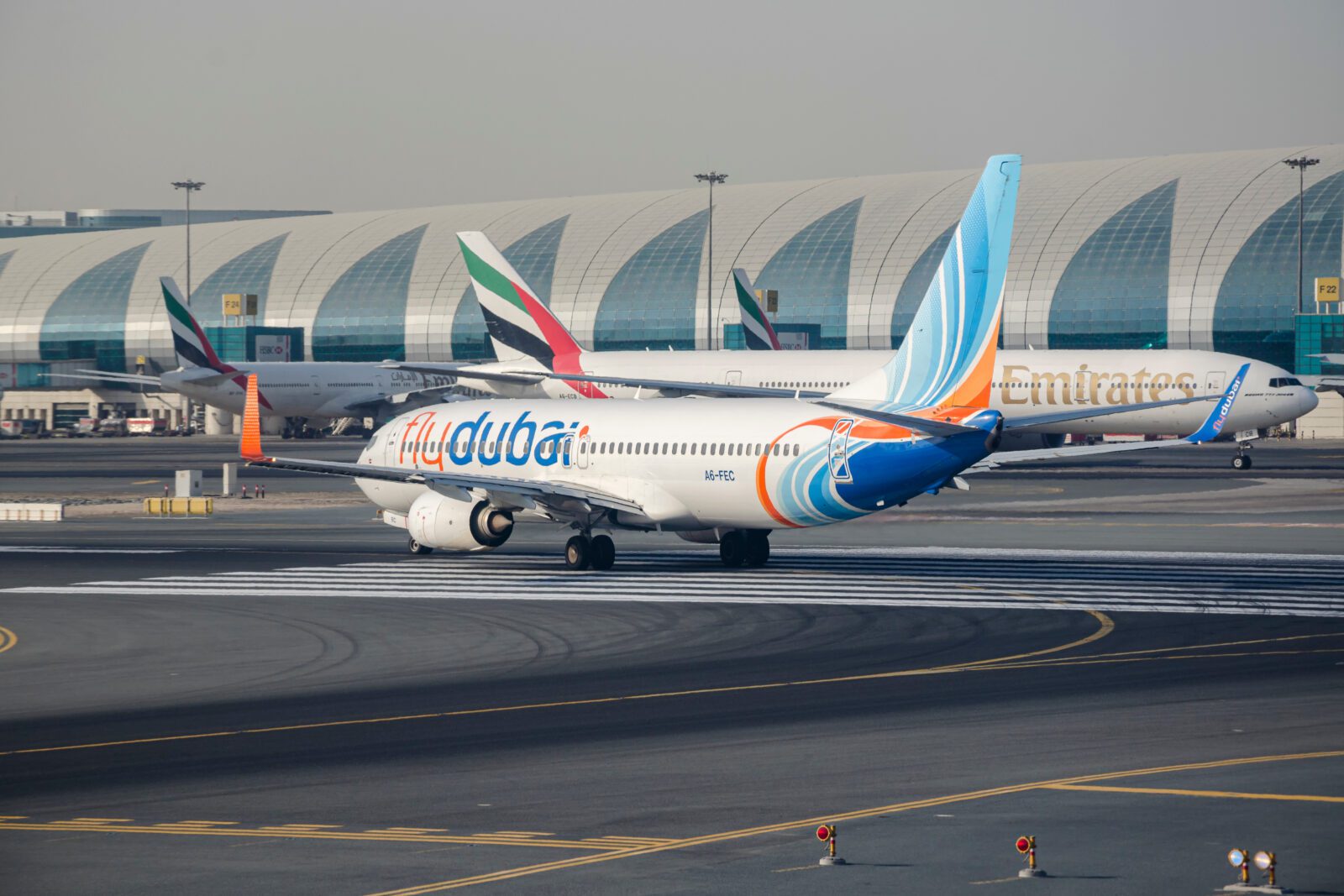
Dubai – GE Aerospace has secured two high-value engine agreements with Dubai-based carriers Emirates Airline and Group and flydubai at the 2025 Dubai Airshow 2025, underscoring the resilience and expansion of the UAE’s aviation sector. Emirates has committed to 130 additional GE9X engines to power 65 new Boeing 777-9 aircraft, bringing its total order for that engine type to more than 540 units. The contract includes spares and long-term service provisions. At the same time, flydubai has agreed to acquire 60 GEnx-1B engines with full support services for its first wide-body fleet of 30 Boeing 787-9 aircraft.

Emirates’ deal with GE not only affirms its status as the largest global customer for the GE9X engine, but also reinforces its long-standing partnership with Boeing Commercial Airplanes. Emirates’ chairman and chief executive, Sheikh Ahmed bin Saeed Al Maktoum, described the transaction — valued at US$38 billion at list prices — as “a long-term commitment and testament to our partnership with Boeing and GE”. This investment aligns with Dubai’s wider ambition to develop into a major aerospace hub.

On the flydubai front, the selection of the GEnx-1B engine marks a strategic shift for the carrier, which has historically operated a 737-only fleet. The agreement is structured to support the airline’s entry into long-haul operations and buttresses its network expansion into new markets. flydubai’s chief executive, Ghaith Al Ghaith, noted that engine performance, durability and services will play a critical role as the airline moves into wide-body territory amid intensifying competition and growing demand for air travel through Dubai’s gateway.

The significance of these deals extends beyond fleet numbers. For GE Aerospace the twin contracts cement its dominance in the high-thrust engine market, particularly in a region with challenging operating conditions and high growth potential. The GE9X engine — developed exclusively for the Boeing 777X family — boasts a 10 per cent improvement in specific fuel consumption compared with its predecessor, the GE90-115B, and has been certified to run on approved sustainable aviation fuel blends. The GEnx-1B, likewise, powers a majority of the Boeing 787 fleet and is already deployed widely in long-haul service.

For Emirates, the 65 additional 777-9 airframes raise its total 777X orderbook to 270 units, making it Boeing’s largest customer for that aircraft family. With this deal, the airline has options to convert some of the order to the future 777-10 or 777-8 variants, signalling confidence in the production programme despite earlier certification and delivery delays. The carrier expects deliveries of the initial 777-9 aircraft to begin from the second quarter of 2027. Emirates’ fleet strategy centres on operating a young, modern wide-body fleet aligned with Dubai’s infrastructure expansion.

Flydubai’s expansion into wide-body aircraft, powered by GEnx engines, places the carrier at a pivotal juncture in its evolution. Having grown rapidly in point-to-point markets, reserving its primarily single-aisle fleet for short to medium-haul routes, the move to wide-body aircraft reflects a transition towards intercontinental services. The engine order includes spares and a long-term services agreement, highlighting the importance of lifecycle support and operational reliability in emerging growth trajectories.

The UAE’s positioning as a major aviation hub is reinforced by these developments. The engine orders strengthen the supply-chain footprint in the region, benefit maintenance-, repair-and-overhaul infrastructure, and support the country’s ambition to attract high-value aerospace manufacturing and engineering activities. GE Aerospace announced a US$50 million investment in a new “On Wing Support” facility in Dubai South alongside the shows, underscoring its commitment to local presence.

From an industry-perspective the deals reflect broader trends: airlines placing large long-haul orders amid intense competition for slots and access, engine manufacturers capturing value through integrated services and support, and the Middle East remaining a key battleground for aerospace OEMs seeking growth beyond legacy domestic markets. For Emirates and flydubai, the agreements mark purposeful steps in fleet renewal and network expansion, though execution risks remain — notably aircraft delivery timelines, engine certification, and global economic headwinds.

Analysts caution that while the headline order values are striking, actual transaction prices typically fall beneath list values, and aircraft-programme delays can erode carrier scheduling and capacity planning. For Emirates the 777-9 programme has been subject to repeated postponements, while for flydubai the challenge lies in transitioning from narrow-body operations to wide-body logistics, route infrastructure and long-haul network economics.


Global alternative asset manager KKR & Co. has inaugurated a new office within the Abu Dhabi Global Market financial district, marking a significant expansion of its Middle East footprint. The office will be led by Julian Barratt‑Due, Managing Director and Head of Middle East Investing at KKR, with David Petraeus serving as Chairman of KKR Middle East, reinforcing the firm’s commitment to the region.

KKR’s decision underscores its confidence in Abu Dhabi as a gateway for global capital targeting the Gulf region. With assets under management totalling around US$720 billion, the firm already operates hubs in Dubai’s DIFC and Riyadh and views ADGM as a strategic next step.

The Abu Dhabi office aims to enhance KKR’s capacity to serve institutional clients and invest in a range of sectors including infrastructure, technology, and alternative assets across the Gulf. The move aligns with the firm’s broader strategy of partnering for long-duration assets in the region, as evidenced by its acquisition of a minority stake in ADNOC Gas Pipeline Assets LLC and investment commitments in the data centre platform Gulf Data Hub.

Abu Dhabi’s appeal lies in its stable economic foundations, regulatory clarity via ADGM’s common-law framework, and its ambition to become a major global financial centre. ADGM emphasised that KKR’s arrival reflects the city’s expanding role in the global investment ecosystem.

From KKR’s perspective, the firm has stated that the new presence will enable closer collaboration with regional partners and enhance responsiveness to market opportunities. The leadership structure signals that KKR is aiming for a long-term, on-the-ground commitment rather than a passive regional representation.

This move comes amid a broader industry trend of asset managers shifting focus toward the Gulf region. Firms such as PGIM have previously opened offices in ADGM, responding to abundant regional capital, favourable tax regimes, and dynamic infrastructure programmes.

Investors highlight that the Gulf markets are undergoing structural transformation, driven by diversification away from hydrocarbon dependence, growth of digital economies and infrastructure modernisation. KKR’s investments in energy and data-centre platforms illustrate how global managers are aligning with those shifts.

For Abu Dhabi, the addition of a major player like KKR bolsters its ambition to attract global financial services and alternative-capital players. ADGM’s track record of rising company registrations and assets under management suggests the jurisdiction is gaining momentum.

However, experts caution that competition is intensifying: neighbouring hubs such as Dubai and Riyadh are also targeting global managers, meaning KKR and similar firms will need to demonstrate differentiated value-propositions to win deal flow and client mandates. Some analysts note that while large sovereign wealth funds in the region remain dominant allocators, attracting third-party capital remains a challenge.

Operationally, establishing a local hub brings costs, regulatory obligations and talent-acquisition hurdles. While KKR cites its established regional presence and leadership under Petraeus and Barratt-Due as advantages, execution will be scrutinised by investors seeking measurable regional capital deployment and returns.

In the context of broader global asset-management dynamics, the Gulf real-assets market offers long-term, low-yield, inflation-hedged opportunities—an appealing counterbalance to the high-rate, equity-valued portfolios that dominate Europe and North America. KKR appears to be positioning itself to capture that shift, reinforcing its global expansion strategy.

A groundbreaking performance of Giuseppe Verdi’s Rigoletto by the renowned St. Petersburg Opera will soon grace Dubai’s Zabeel Theatre. Known for its lavish productions and exceptional vocal talent, the company, under the direction of acclaimed Russian director Yuri Alexandrov, brings a fresh and daring interpretation of this iconic opera. This marks the company’s return to Dubai after their successful appearance at Expo 2020, where they garnered international […]

Advertisements

Dubai has earned a coveted position as one of the world’s top travel destinations, securing third place in the 2025 Tripadvisor Travelers’ Choice Awards, trailing only London and Bali. The accolade underscores the city’s growing appeal among global travellers, who continue to flock to its iconic landmarks, luxurious shopping experiences, and vibrant cultural offerings. With its blend of modernity and tradition, Dubai has long been a prominent […]

Dubai’s ambitious urban landscape is set to evolve with the debut of Palm Jebel Ali, a new palm-shaped island poised to transform the city’s skyline and luxury real estate market. Located just off the coast of Dubai, Palm Jebel Ali is part of the broader expansion of the city’s coastline, reinforcing its reputation as a global hub for innovation in both architecture and tourism. The first beachfront […]

The Dubai International Financial Centre Authority has reported that US companies account for approximately 7% of the financial services firms operating within the DIFC, a landmark financial hub that has been active since its inception in 2004. This data highlights the increasing influence of US-based businesses in the Middle East’s burgeoning financial sector, with a noticeable presence of American institutions across various finance-related services. Arif Amiri, CEO […]

The Bank of China’s Dubai branch is moving forward with plans to issue a new dollar-denominated bond, a three-year senior unsecured floating rate note. Initial price guidance has been set at SOFR plus 100 basis points, a sign of the bank’s effort to tap international capital markets despite current economic challenges. This move comes in light of the issuer’s credit ratings, with Moody’s assigning an A1 rating, […]

Airbus is on the brink of securing a landmark deal with flydubai for the delivery of approximately 100 A321neo jets, marking a significant shift in the competitive dynamics of the Middle East’s rapidly expanding budget airline sector. The deal, expected to be finalised at the Dubai Airshow, would see Airbus surpass its US rival Boeing, which has traditionally been the dominant supplier to flydubai.

The discussions, which have been ongoing for several months, signal a potential turning point in the airline’s long-standing relationship with Boeing. Flydubai, a key player in the region’s low-cost carrier market, has been an exclusive Boeing customer for a significant portion of its fleet, operating predominantly 737 models. However, with demand for air travel surging across the Middle East and beyond, flydubai has been seeking to expand and modernise its fleet, considering a shift towards a more diversified aircraft portfolio.

Industry experts suggest that the A321neo, a more fuel-efficient version of Airbus’s popular A320, offers several advantages in terms of cost efficiency and operational flexibility. With its ability to serve both short-haul and medium-haul routes, the A321neo is well-suited to flydubai’s route network, which spans key destinations across Europe, Asia, and Africa. The aircraft’s larger seating capacity, improved fuel economy, and quieter engines also make it an attractive option for budget airlines looking to maximise profitability while meeting increasing passenger demand.

This potential order would represent a significant victory for Airbus, especially considering Boeing’s dominant presence at flydubai for over a decade. Flydubai has been a staunch supporter of Boeing’s 737, having placed orders for more than 200 of the aircraft in the past. The shift to Airbus jets, if confirmed, would be a blow to Boeing, which has faced various challenges in recent years, including the fallout from the grounding of the 737 MAX in 2019 following two fatal crashes. Despite regaining its footing with the 737 MAX’s return to service, the aircraft manufacturer has struggled to secure major deals in the region, especially with emerging budget carriers such as flydubai.

The deal, which would be one of the largest in Airbus’s history for a single customer in the region, is expected to strengthen the European planemaker’s foothold in the Middle East, a region that has traditionally been a battleground between Boeing and Airbus for dominance. The A321neo’s suitability for the region’s expanding budget carrier market, alongside its competitive pricing and operational efficiencies, has positioned it as a key player in the ongoing competition between the two aerospace giants.

Flydubai, for its part, has been exploring a range of options to modernise its fleet. While the A321neo deal with Airbus is likely to be the primary focus, the airline is also in advanced talks to secure a smaller order of Boeing 737 MAX jets, sources suggest. This mixed approach, opting for both Airbus and Boeing aircraft, would provide flydubai with increased operational flexibility and allow it to diversify its fleet to meet different market demands.

Flydubai’s decision to expand its fleet is driven by the rapid recovery of air travel in the Middle East following the pandemic. As the region’s tourism and business sectors continue to rebound, low-cost carriers such as flydubai are seeing increasing passenger numbers, making fleet expansion an urgent priority. The A321neo’s capabilities in terms of range and capacity are expected to help the airline capitalise on the growing demand for both domestic and international flights.

Fernando Eiroa, CEO of Dubai Holding Entertainment, has shared insights into the company’s ambitious plans to extend its reach globally, with a particular focus on the growing market for immersive attractions. The company, which oversees a portfolio of entertainment ventures, is positioning itself to capitalise on the burgeoning demand for innovative experiences that blend entertainment with cutting-edge technology. Under Eiroa’s leadership, Dubai Holding Entertainment is actively expanding […]

Grant Williams, a globally recognised commentator in the fields of gold and finance, has been confirmed as the keynote speaker for the upcoming Dubai Precious Metals Conference, organised by the Dubai Multi Commodities Centre. The conference, scheduled to take place in the coming weeks, is set to attract a wide range of industry professionals, investors, and experts within the precious metals sector.

Williams, known for his insightful analysis and expert commentary, has a reputation for his deep understanding of global financial markets, with a particular focus on commodities and gold. His involvement in the conference underscores DMCC’s ambition to reinforce Dubai’s position as a key player in the global precious metals industry. This year’s event is expected to explore critical issues facing the precious metals market, including regulatory shifts, technological advancements, and economic challenges.

The Dubai Precious Metals Conference has become a highly anticipated gathering, drawing key figures from across the financial and commodities sectors. Attendees can expect discussions on market trends, investment strategies, and the evolving landscape of gold trading, with Williams offering his expert perspective on global macroeconomic factors that influence the precious metals market. His analysis is expected to provide attendees with a thorough understanding of the dynamics shaping the industry.

In addition to Williams, the conference will feature a host of other prominent speakers and panellists from leading financial institutions and trading platforms. These experts will delve into a range of topics, from the impact of geopolitical events on commodity prices to the growing role of digital platforms in precious metals trading. This year’s conference is poised to be one of the most significant gatherings for industry professionals, highlighting the importance of staying ahead of market shifts and understanding the factors that drive the sector’s growth.

The DMCC’s efforts to host such a high-profile event reflect the centre’s continued commitment to expanding Dubai’s influence in global trade and commodities. As the world’s largest free zone for precious metals trading, DMCC has long been a hub for the buying, selling, and storage of gold, silver, and other precious commodities. By inviting top-tier speakers like Grant Williams, DMCC is ensuring that its events remain at the forefront of global discussions on precious metals, providing invaluable insights for businesses and investors in the sector.

The importance of the conference is amplified by the growing interest in gold as an investment asset, particularly amid volatile market conditions. As the world navigates uncertain economic times, many investors are turning to gold and other precious metals as safe-haven assets. The conference will offer timely discussions on how investors can optimise their portfolios in light of current economic trends, as well as exploring the emerging opportunities and risks in the precious metals market.

Dubai’s strategic location as a key global financial hub makes it an ideal venue for such discussions, especially as the city continues to strengthen its position in the commodities sector. The DMCC, with its robust infrastructure and regulatory framework, provides a conducive environment for the growth of the precious metals industry. The Dubai Precious Metals Conference is a vital event for all those involved in or seeking to enter the precious metals market, and the involvement of Grant Williams as a keynote speaker further elevates the stature of the event.

Dubai’s skyline is set to welcome a new architectural marvel with the opening of Ciel Dubai Marina, soon to claim the title of the tallest hotel in the world. Standing at an impressive 377 metres, the tower will be a dominant presence in the city’s Marina district and promises to redefine luxury hospitality. The ambitious project, developed by the famous Dubai-based developer, The Lux Group, includes 1,004 […]

Dubai Electricity and Water Authority has opened the door for qualified companies and consortiums to submit their proposals for the seventh phase of the Mohammed Bin Rashid Al-Maktoum Solar Park, one of the largest renewable energy projects in the world. This expansion is set to significantly enhance Dubai’s efforts to diversify its energy mix and meet its sustainability targets. The upcoming phase will incorporate 2,000 megawatts of […]

The high-end Solaya waterfront development in Dubai has already garnered significant attention, despite the fact that construction has yet to begin. With luxury penthouses priced upwards of $24 million, wealthy individuals from across the globe are competing in an intense bidding process. This unique approach to real estate sales has elevated the project’s status as one of the most anticipated luxury developments in the region. The project, […]

SRV, a leading global player in its field, has made a significant move by opening a new office in Dubai, marking a pivotal moment in the company’s growth strategy. This new location is not merely an addition to its network but a strategic step towards building stronger international partnerships, fostering collaboration, and setting a new benchmark for excellence in the industry.

Dubai has long been a hub for innovation and commerce in the Middle East, making it an ideal location for SRV to enhance its reach and capabilities. The opening of the office signals SRV’s commitment to strengthening its presence in the region, as well as its desire to expand its impact on a global scale. Dubai’s strategic position at the crossroads of Europe, Asia, and Africa presents an opportunity for SRV to connect with clients, partners, and markets across multiple continents.

The Dubai office is set to serve as a key hub for SRV’s operations in the Middle East, offering a range of services that align with the company’s core values of innovation, agility, and excellence. With this expansion, SRV aims to meet the growing demand for its services while continuing to deliver high-quality solutions that exceed client expectations. The company’s decision to establish itself in Dubai highlights its dedication to delivering value and fostering long-term relationships with its partners.

The company’s leaders emphasized the importance of Dubai as a strategic gateway to new business opportunities, as well as its potential to drive collaborative efforts that span different industries. With its state-of-the-art infrastructure, world-class business environment, and dynamic workforce, Dubai offers a fertile ground for SRV to enhance its technological offerings and scale its operations to meet the needs of a rapidly evolving global market.

This move also aligns with SRV’s broader vision of becoming a global leader in its sector by fostering a culture of collaboration across borders. By tapping into the diverse and highly skilled talent pool available in Dubai, SRV is poised to bring fresh perspectives and innovative solutions to its clients. The company’s approach to talent acquisition and retention will play a crucial role in driving its success in the region, ensuring that it continues to set new standards for performance and excellence.

The Dubai office is expected to serve as a vital point of contact for clients in the region, offering both strategic and operational support. As the business landscape in the Middle East continues to evolve, SRV’s presence in Dubai will allow the company to remain at the forefront of industry trends, driving advancements in technology and service delivery that align with the needs of the local market.

As part of its ongoing commitment to innovation and growth, SRV is also focused on building partnerships with local businesses and stakeholders to ensure that its services are not only cutting-edge but also relevant to the specific needs of the region. The company aims to create a collaborative environment where local and global teams can work together seamlessly to develop solutions that drive meaningful change.

Dubai’s economy has demonstrated remarkable strength in the first half of 2025, with growth surpassing projections and reaffirming the emirate’s status as a global economic powerhouse. The city’s GDP expanded by 4.4 percent, reaching AED 241 billion, while the second quarter saw a notable 4.7 percent growth, bringing the total GDP for Q2 to AED 122 billion.

Key sectors played a pivotal role in driving this impressive performance. Dubai’s diversified economy, marked by a robust blend of finance, tourism, real estate, and trade, continues to thrive despite global uncertainties. The construction sector also witnessed significant growth, with an influx of infrastructure projects reflecting Dubai’s ambition to maintain its position as a leading global business hub.

One of the standout performers has been Dubai’s financial services industry, which has grown by a substantial margin. This sector’s success is largely attributed to Dubai International Financial Centre, which continues to attract a global clientele seeking access to the region’s thriving markets. With new regulatory reforms and the expansion of digital financial services, the financial services sector remains a cornerstone of Dubai’s economic resilience.

In addition, the real estate sector has shown signs of recovery after a few years of downturn, with both residential and commercial properties seeing increased demand. This growth can be linked to Dubai’s competitive positioning within the global property market, particularly in the luxury and hospitality segments. The city’s focus on international investors and high-net-worth individuals, combined with attractive incentives such as long-term visas and ease of doing business, has further bolstered investor confidence.

Tourism has also been a driving force behind Dubai’s economic growth. The city has seen a steady rise in international visitors, who are drawn to its world-class attractions, shopping festivals, and hospitality offerings. The Dubai Expo 2020, now extended into 2025, has had a ripple effect on the tourism sector, generating further investments and exposure to new global markets. Events and conferences have continued to bring in significant numbers of international guests, contributing to growth in the hospitality, retail, and leisure sectors.

The transportation and logistics sectors have been equally important to Dubai’s continued success. Dubai’s strategic location as a transport and logistics hub for the Middle East, Africa, and Asia continues to give it a competitive edge. Dubai International Airport, which consistently ranks among the world’s busiest airports, has witnessed a surge in passenger traffic, further solidifying its position as a key global aviation hub. Meanwhile, the port sector remains robust, with Dubai Ports World continuing to expand its reach internationally through strategic acquisitions and partnerships.

The emirate’s government has played a significant role in fostering a business-friendly environment, attracting foreign investment and enhancing the ease of doing business. New initiatives such as the Dubai Future Foundation and Dubai 2040 Urban Master Plan have injected fresh momentum into the city’s long-term growth trajectory. Dubai’s commitment to sustainable development, with a focus on green energy and technological innovation, ensures its competitiveness in a rapidly changing global economy.

Dubai’s resilience in the face of global economic challenges speaks to the emirate’s strategic focus on diversification and innovation. The city has managed to stay ahead of the curve by adopting advanced technologies in sectors like finance, healthcare, and education. In particular, the embrace of artificial intelligence, blockchain, and digital innovation has helped Dubai stay at the forefront of global economic trends.

Dubai’s property market is grappling with a widening supply-demand gap, as the number of completed units lags behind the increasing volume of new project announcements. While developers continue to launch projects at an accelerated pace, experts warn that this could lead to a critical imbalance in the coming years. According to real estate agency Allsopp & Allsopp, a significant discrepancy is emerging between the number of new […]

A forecast from global property and advisory firm BlackBrick indicates that villa communities in Dubai are entering a phase of measured growth, as end-users and investors increasingly favour data-driven decisions over speculative leaps. The firm highlights key drivers behind villa demand in Q4 2025, underlining Dubai’s resilience in luxury real-estate.

According to founder and CEO Matthew Bate, the villa segment is evolving into “an era of intelligent luxury” where lifestyle and long-term value count more than sheer size or opulence. He states that buyers are now prioritising spaces with breathing room, community connection and ownership of land rather than just lavish finishes.

BlackBrick’s outlook identifies several communities expected to outperform over the next 12 months. Among them are Al Barari and Arabian Ranches where projected gains of 15-20 per cent are indicated, while Jumeirah Islands and Jumeirah Golf Estates are assigned more modest growth expectations of 7-12 per cent.

The underlying dynamics reflect broader trends in Dubai’s residential market. Analyst estimates show that prime villa prices increased by 94 per cent between Q1 2020 and Q4 2024, signalling sustained appetite for villa ownership in the emirate. Supply remains tight in several key enclaves, underpinning market strength. According to market commentary, villas continue to command a premium due to their scarcity and appeal to families, expatriates and high-net-worth individuals seeking long-term domiciliation.

BlackBrick’s forecast emphasises five main demand drivers. These include the appeal of open layouts and natural light; ownership of land; upgrade potential in older stock; community-focused living in gated compounds; and timeless design replacing overt extravagance. Bate argues that sustainable growth founded on genuine demand and limited supply reinforces market quality.

From a broader perspective, villa markets in Dubai are benefiting from macro-drivers such as population growth, global mobility and favourable tax frameworks. Consultant data suggests villa and townhouse sales accounted for 20 per cent of transactions but 42 per cent of total sales value in one recent quarter-year period — pointing to concentrated value capture in this segment. Meanwhile rental yields for villas and townhouses continue to remain attractive, further bolstering investor interest.

However, the market is not without caveats. The high entry cost for villas means that affordability remains a barrier to broader participation. While growth has been strong, analysts caution that the pace of appreciation may moderate as the market enters its maturity phase. One consultancy anticipates single-digit annual growth in prime villas going forward. Additionally, investors and buyers are advised to carefully consider developer track-records and listings pipelines, given limited resale inventory in select luxury enclaves.

Data-led brokers like BlackBrick suggest that the path ahead is less about aggressive expansion and more about sustained value capture. End-users, long-term residents and seasoned investors are shaping the villa market’s next chapter — one anchored in lifestyle, location and land ownership, rather than speculative upside alone. The hallmark now is thoughtful investment in vetted communities with established infrastructure, strong connectivity and recognized quality.

A new community-centric retail development by KeyMavens Group is under construction in Wadi Al Safa 5 and is scheduled to open in the third quarter of 2026. The project, named The Villa Square, spans more than 124,000 square feet and positions itself as a boutique shopping and lifestyle hub with a focus on sustainability and wellness. Located at the heart of one of Dubai’s fast-growing residential zones, […]

Dubai’s fuel-retail market marked a shift this week as Emirates Petroleum Company opened its 158th service station, the “Al Buhaira” site in Barsha South, incorporating what the company describes as the GCC’s first dedicated Electric Vehicle Service Centre. This move underscores Emarat’s response to evolving mobility trends as electric vehicles gain traction across the region. Located in Dubai’s New Dubai zone, the Al Buhaira station not only […]

A new initiative unveiled by the Dubai Future Foundation in collaboration with the MIT Senseable City Lab presents a data-intensive approach to urban greenery by applying artificial intelligence to evaluate the cooling effect of trees in multiple global cities. The project, named “Re-Leaf”, harnesses satellite imagery, street-level visuals and thermal data across locations such as Dubai, Amsterdam, Los Angeles and Rome to measure how trees can function as natural cooling infrastructure.

Re-Leaf reveals that shade and evapotranspiration from trees can reduce local surface temperatures by up to 15 °C compared with surrounding paved or built areas. One key finding is that drought-resistant species such as neem trees outperform more commonly planted palms in arid urban environments. DFF described the work as a shift in treating urban vegetation “as essential infrastructure for the cities of tomorrow”.

The initiative emerges under the banner of the 19th International Architecture Exhibition in Venice, curated by Carlo Ratti, in which Re-Leaf features as a special project. The exhibit presents city-scale “skyscraper-like” visualisations that depict greenery levels across the participating cities, with taller towers indicating higher vegetation cover.

Dubai’s establishment of the first Middle East-based Senseable City Lab via DFF provides a focal point for this research. The lab, working in partnership with MIT, developed the algorithms and datasets behind the project. From a strategic perspective, the work aligns with Dubai’s ambition to be an innovation hub and to address the demands of climate-resilient urban planning.

Beyond the headline figure of 15 °C cooling, the dataset comprises more than 2,000 trees across the four cities, allowing comparative analysis of species performance in different climates and urban morphologies. The research team emphasises that while the act of planting trees is well-known, the novelty lies in quantifying their impact using high-resolution AI tools and translating the results into actionable urban design decisions. “In a hotter world, trees must be seen as essential infrastructure, not just decoration,” Ratti said.

Urban planners and environmental scientists are responding to the project by pointing out its potential to shift policy focus from reactive mitigations—such as heavy air-conditioning—to proactive green infrastructure deployment. According to one expert, tree shading and transpiration “are vital for climate-responsive urban design”. For cities in arid or semi-arid zones—where energy use for cooling is high and water scarcity is acute—the findings are particularly relevant. The identification of species that deliver stronger cooling while requiring less water offers practical guidance for future planting strategies.

However, the project also faces scepticism around questions of scalability and implementation cost. Critics ask whether data-rich analyses can translate into large-scale urban forestry programmes in dense built environments, and note that factors such as soil depth, maintenance regimes and tree lifespan require further study. One architecture-critique article raised a broader question: “Do we need AI to confirm that trees cool cities?” highlighting the risk of attending to measurement rather than action.

The choice of cities for analysis – Dubai, Los Angeles, Amsterdam and Rome – reflects a mix of climatic zones and urban typologies, offering the chance to test how vegetation behaves across contexts. Amsterdam, with a temperate maritime climate, provides contrast to Dubai’s arid conditions, while Rome offers a dense historical fabric and Los Angeles a sprawling low-rise geography. Re-Leaf’s catalogue of thousands of tree species and urban cooling maps explicitly aims to support urban designers and policymakers.

For DFF and its partners, integrating tree-cooling metrics into master-planning holds promise beyond aesthetics. The project’s immersive display at Venice functions not only to showcase technology but to prompt debate on how cities invest in nature-based solutions. DFF Director of Dubai Future Labs, Khalifa Al Qama, described the work as generating insights with global value.

VISHNU RAJA
RYO YAMADA
HITORI GOTOH
IKUYO KITA